
Ask an AI search engine a question today and it just answers you. No ten blue links, no scrolling.
That’s the whole reason AI search optimization exists as its own thing now. Some people call it generative engine optimization instead, same idea, different label.
Some of what it takes is stuff you already know from regular search. Some of it isn’t. Here’s how AI search optimization actually breaks down.
Key Takeaways:
- E-E-A-T and structured data still carry informational queries.
- Commercial queries run on structured brand mentions across third-party content, not your own site.
- Getting cited comes down to link building. Same tedious work, new destination.
- Traditional SEO isn’t dead, it just doesn’t finish the job by itself anymore.
Link building cheat sheet
First Things First, E-E-A-T Didn’t Go Anywhere
Google’s mantra has always been good UX, and that hasn’t changed just because AI systems are the ones reading your page now.
If you want your own content to actually get pulled into an AI generated answer, you still need to follow E-E-A-T best practices for AI search optimization.
Real expertise, real authorship, content that answers the question instead of circling it.
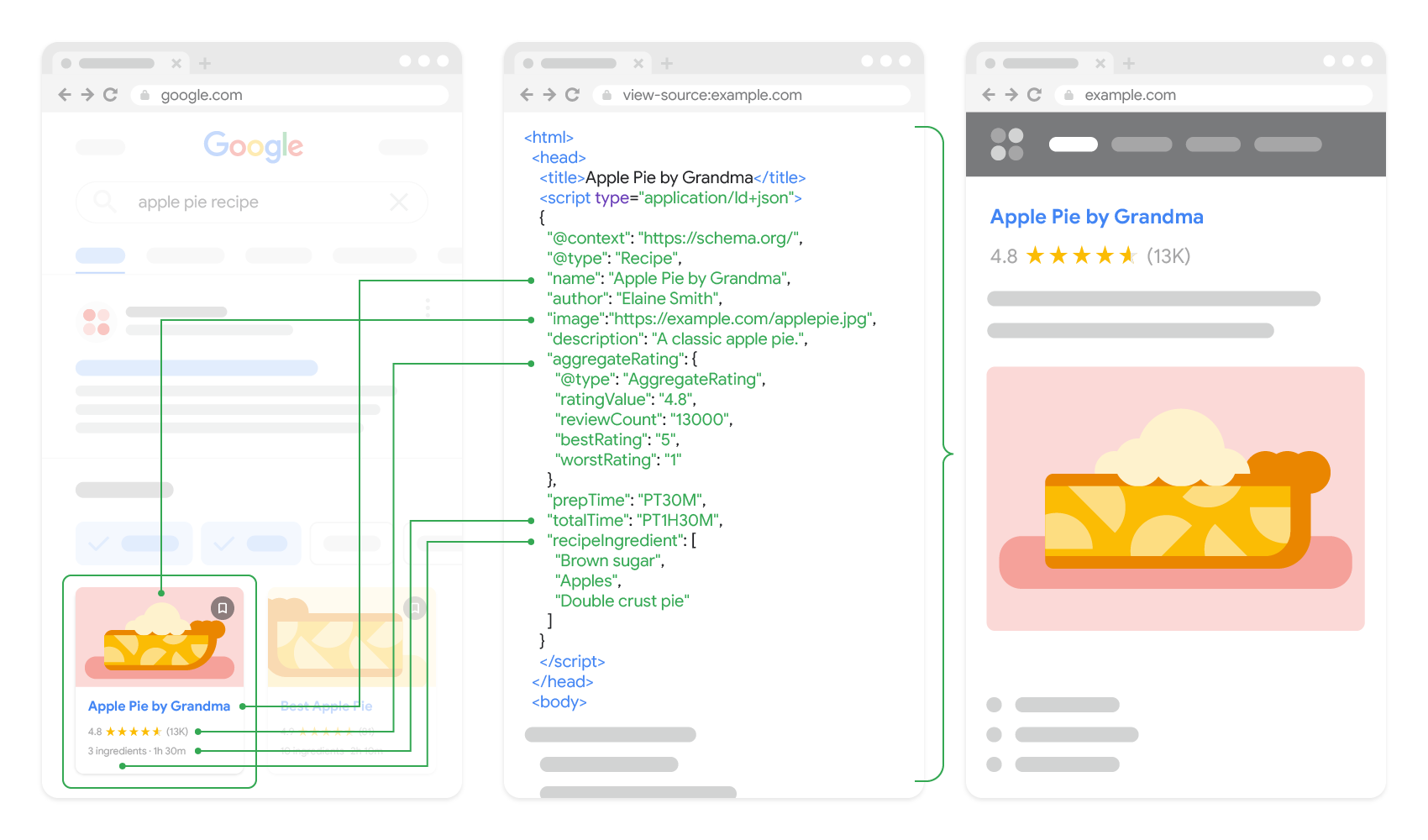
Pair that with structured data and schema markup so AI systems have an easier job parsing what your page is actually about instead of guessing from loose paragraphs.
Schema markup is still worth the setup time, and so is keeping your structured data current as pages get updated. Skip this and you’re making the AI crawlers work harder than they need to, which never helps your odds.
None of this is really AI optimization for its own sake, it’s just table stakes every AI platform expects before it’ll even consider citing you, whether that’s an AI engine built for direct answers or an AI tool bolted onto an existing product.
None of this replaces the technical SEO basics either. A crawler still has to be able to reach your page before any of the rest matters, and Search Console is still the tool for checking that you’re indexed the way you think you are.
Here’s the catch though: this approach really only carries you on informational queries. Think “how to do x,” definitions, explainers, anything where a single well-built page can answer the whole question.
Google search and AI search engines alike can pull directly from a page like that and hand back an AI generated answer built almost entirely from your own content, no other sources needed, and a well-built page like that can show up in the search results on its own without anyone else vouching for it.
Commercial queries are a different animal entirely, and that’s the next section.
For Commercial Queries, It’s All About Structured Brand Mentions
This part actually hasn’t changed much from traditional SEO, it’s just running through a new pipe now.
Before, someone looking for a specific product or service would research reviews and “top x” articles on third-party sites before buying, running their own Google searches and clicking through a handful of results the old traditional search results used to hand them one link at a time.
Not just business directories either, blog posts by people with real authority in the niche carried real weight.
That’s always been true. What’s different is who’s doing the reading now.
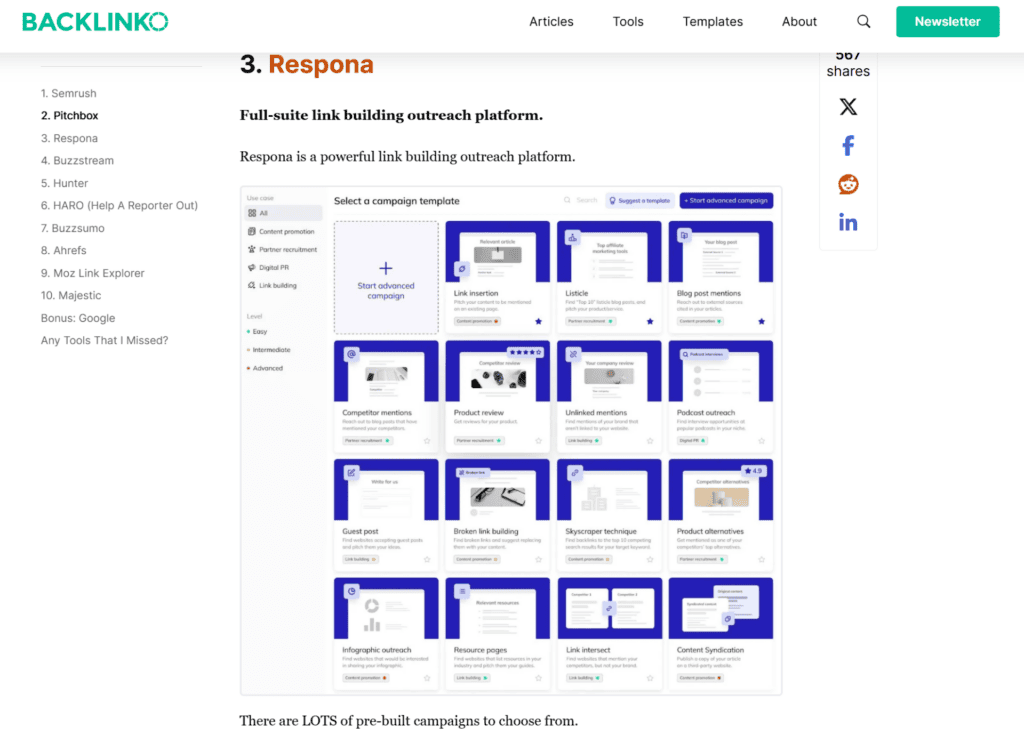
AI systems do that research work for the person asking. Someone types “best tool for x” into ChatGPT search, Gemini, Google AI Mode, whatever generative AI search product they’re using, and the AI search platform hands back a shortlist built from exactly the kind of third-party content people used to click through themselves.
Google AI Overview does the same thing sitting right inside regular results. Some of these run more like full generative engines with AI agents pulling the research together across multiple steps, others are closer to a traditional search engine with an AI generated response bolted on top.
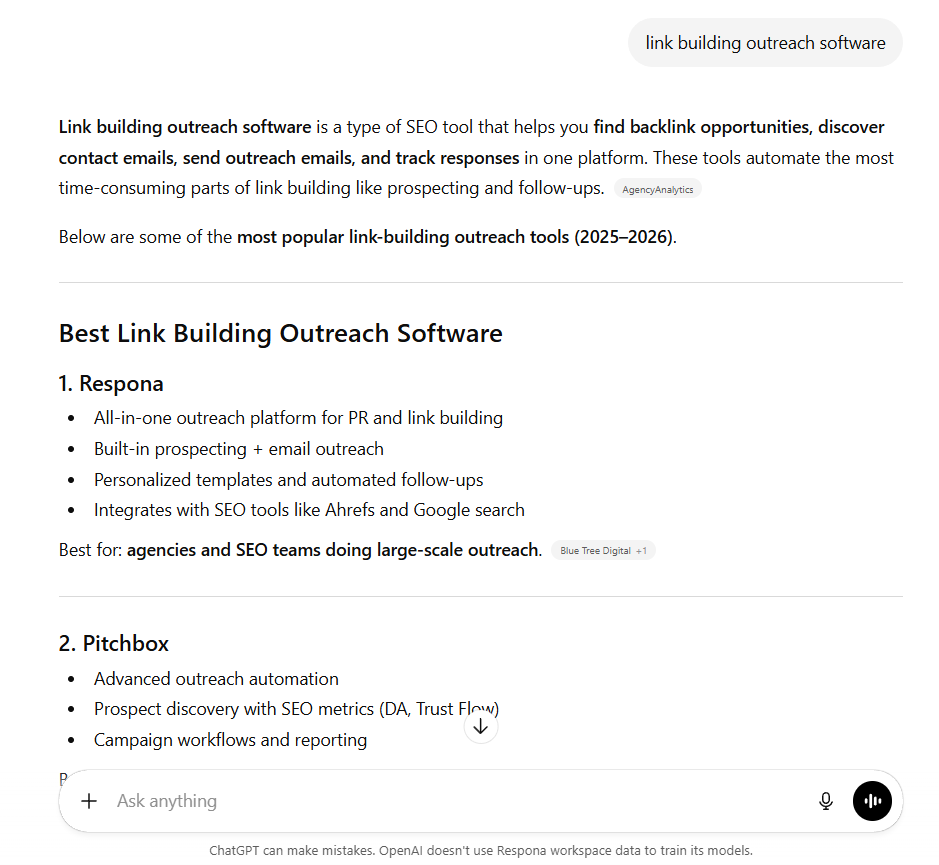
Either way, you’re being judged by an AI model you don’t control, and the AI generated answers, AI summaries, and AI generated results it hands back all draw from the same pool of third-party mentions.
So how do you make sure you’re part of that shortlist? Structured brand mentions, specifically on the articles an answer engine is already pulling from for that query.
Getting into those articles is its own job, and it’s the one most people underestimate.
How Do You get AI Citations?
Good old link building, honestly.
Real AI optimization, the kind that actually earns a citation across these AI platforms, always comes back to this same manual step, no shortcut skips it.
The AI platforms behind ChatGPT, Perplexity, and Gemini all reward the exact same signal: real mentions on independent sites. Every one of these AI platforms refreshes its sources on its own schedule, and the AI engines running the actual answers don’t care which agency did the outreach, just that the mention exists.
AI systems don’t reward effort, they reward evidence, and a real link is evidence.
None of it counts as real AI optimization until a citation actually shows up. That’s the entire loop behind AI search optimization once you strip away the buzzwords.
Find the sites already getting cited for the queries you care about, dig up the right contact at each one, reach out, and work out a real link collaboration.
That’s the whole mechanic behind earning a structured brand mention instead of hoping one shows up on its own.
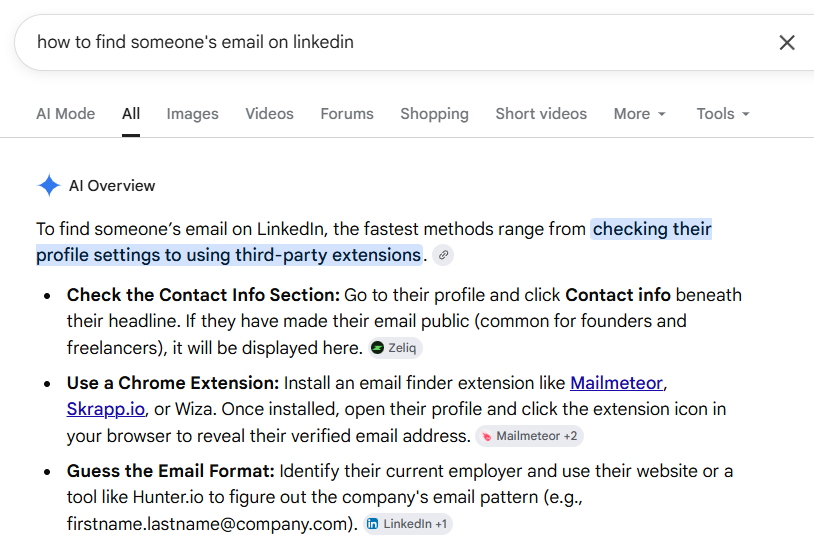
The same outreach mechanic works whether you’re chasing citations across one of these AI powered search engines or all six.
It’s tedious at best and a nightmare at worst.
Doing it once is manageable.
Doing it consistently, across every query and every answer engine that matters to your business, takes a level of manpower most teams don’t have sitting around.
And it’s not a one-and-done project either, because AI search visibility drifts as new content gets published and old citations age out.
This is exactly the gap Respona’s built to close, and it’s built specifically for digital marketing teams that don’t have a full-time person to spare on outreach.
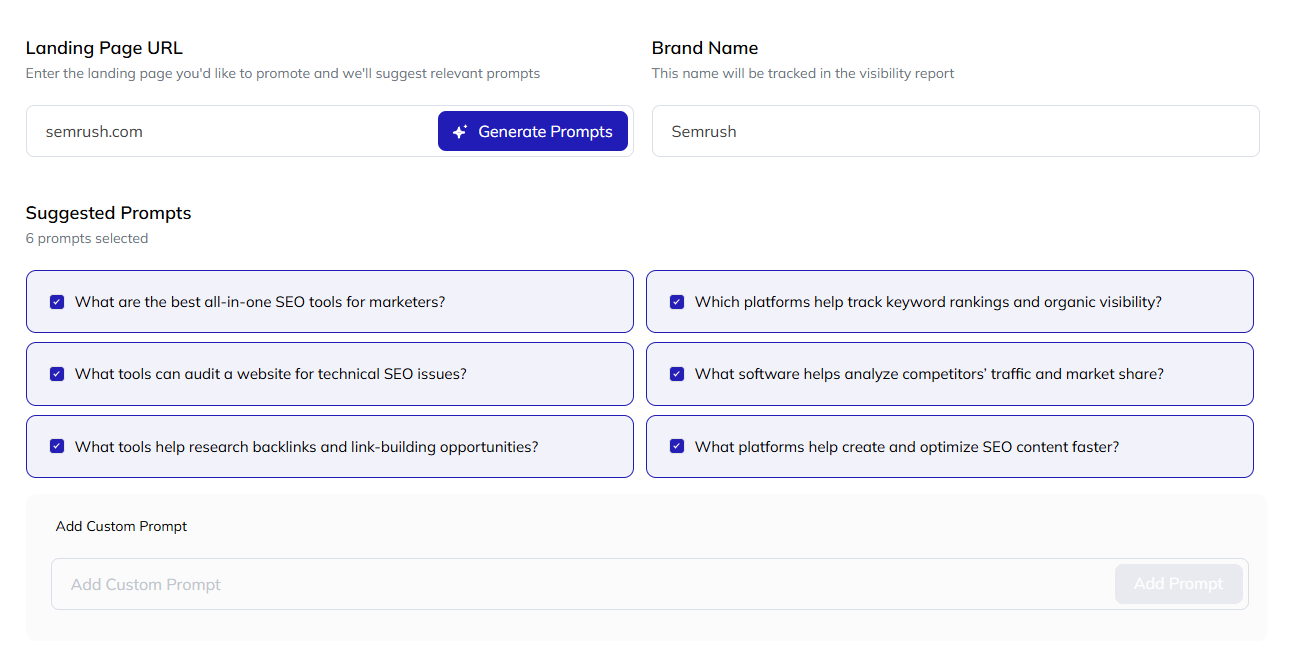
You hand us the target prompts and URLs you want cited for, and our done-for-you link building service runs the outreach end to end: finding the sites already earning citations in your space, tracking down the right contact, pitching the collaboration, following up until it lands.
The tool also comes up with a tailored link building action plan based on your current AI visibility, and the types of articles that are being cited for your target AI prompts.
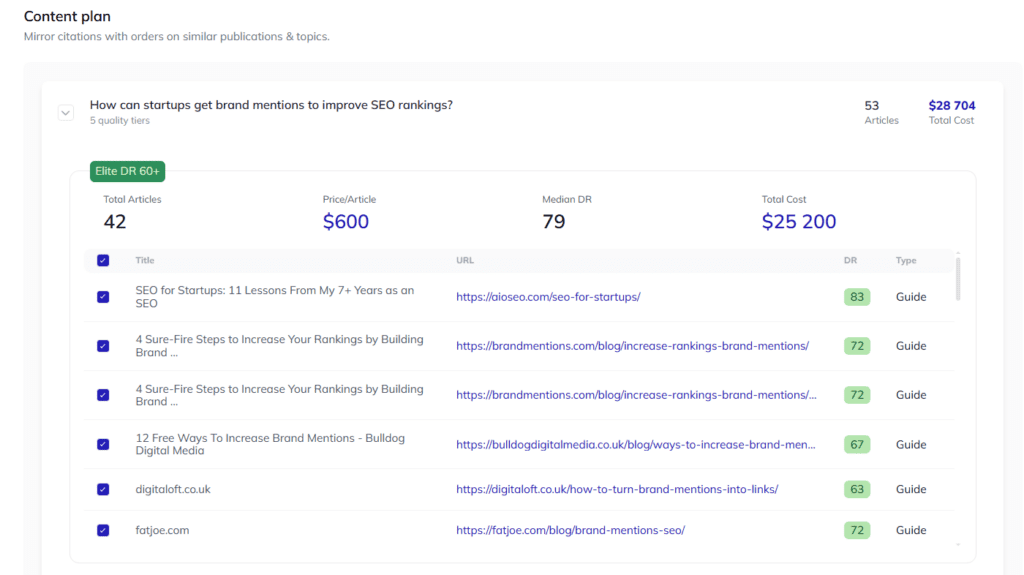
Every placement is a real editorial mention on a page that’s already part of the content AI systems pull from, not a directory listing nobody clicks.
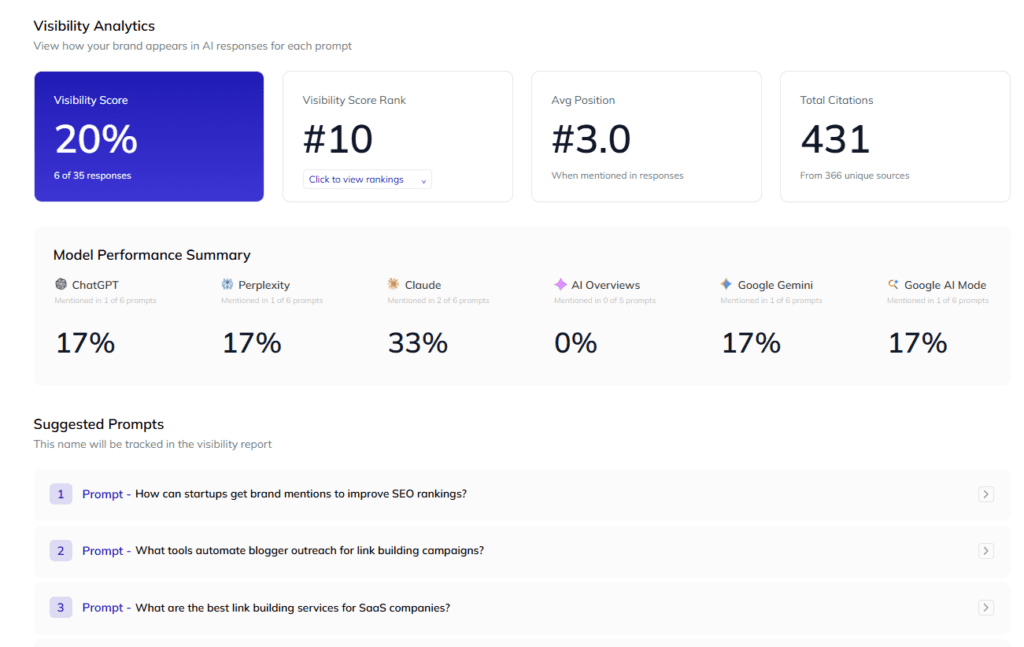
The bundled AI visibility tracker runs your prompts across six answer engines, ChatGPT, Perplexity, Google AI Overviews, Gemini, Claude, and Microsoft Copilot, so you can watch your citations climb as the placements land instead of guessing whether any of it is working.
Around 80% of our customers are agencies running this under their own name for their clients.
So whether you’re a small business, SaaS, or a full-size agency, place your first order today and we’ll help you get AI citations, no matter the scale of your project.
Link building cheat sheet
Now Over to You
AI search optimization isn’t one thing. E-E-A-T and structured data cover informational queries. Structured brand mentions, earned through actual link building, cover the commercial ones.
Nail both and AI search optimization stops being a mystery and starts being a checklist.
Need help getting into AI answers?
Place your first order with Respona and let our team do all the heavy lifting.
Frequently Asked Questions (FAQ)
Does E-E-A-T still matter for AI search optimization?
Yes, particularly for informational queries. AI systems still need a well-authored, genuinely expert page to pull from when they’re answering a “how to” or definitional question.
Is structured data required for AI search optimization?
Not strictly required, but it makes a real difference. Schema markup and structured data help AI systems understand what your page covers without having to infer it, which matters most for the informational side of this.
What’s different about commercial queries?
They run on third-party content instead of your own site. AI systems build their shortlist from comparison posts and reviews already circulating, so you need to be mentioned there, not just optimized on your own page.
Does my keyword strategy need to change for AI search optimization?
Not dramatically. The same keyword research that tells you which queries to chase for regular search still applies, you’re just adding a citation layer on top of ranking for that keyword.
How do I actually get an AI citation?
Link building. Find the sites already getting cited for your target queries, get in touch with the right contact, and earn a real mention. There’s no shortcut around the outreach itself.
Do I need a different strategy for every answer engine?
Not really. The same structured brand mentions that get you cited in ChatGPT tend to carry over to Perplexity, Gemini, and the rest, since they’re often pulling from overlapping sources. Tracking each one separately just tells you where the gaps are.
Is traditional SEO still worth doing?
Yes, it’s the foundation for the informational side of this and it keeps your own site crawlable and indexed. It just doesn’t guarantee a citation on commercial queries by itself anymore.