
I didn’t switch rank trackers because I like testing tools.
I switched because bad ranking data kept leading to bad decisions.
When you work in a competitive niche, you don’t need pretty charts. You need to know whether you actually moved in search results or if your rank tracking tool is lying to you. That is why I have cycled through three of the biggest rank tracker tools in the industry.
I started with Moz.
Then I moved to Semrush.
And eventually, I landed on what I now consider the best rank tracker for serious SEO work.
Along the way, I also tested a handful of random, no-name rank trackers that promised the same thing for a fraction of the price. They all failed for the same reasons.
This article is the real story of why I switched, what broke each time, and how I ended up choosing rank tracking software I actually trust.

Link building cheat sheet
The First Rank Checker I Used: Moz
Moz was the “safe” starting point. It’s built for people who want keyword rank tracking without turning it into a whole data engineering project. I could set up a campaign, add keywords, and get a clean view of whether pages were moving up or down in search engine rankings without spending an hour configuring dashboards.
It felt like a solid tracking tool for where I was at back then: small keyword set, simple reporting, and a workflow that didn’t punish you for not being a full-time analyst.
What Moz gets right about rank tracking
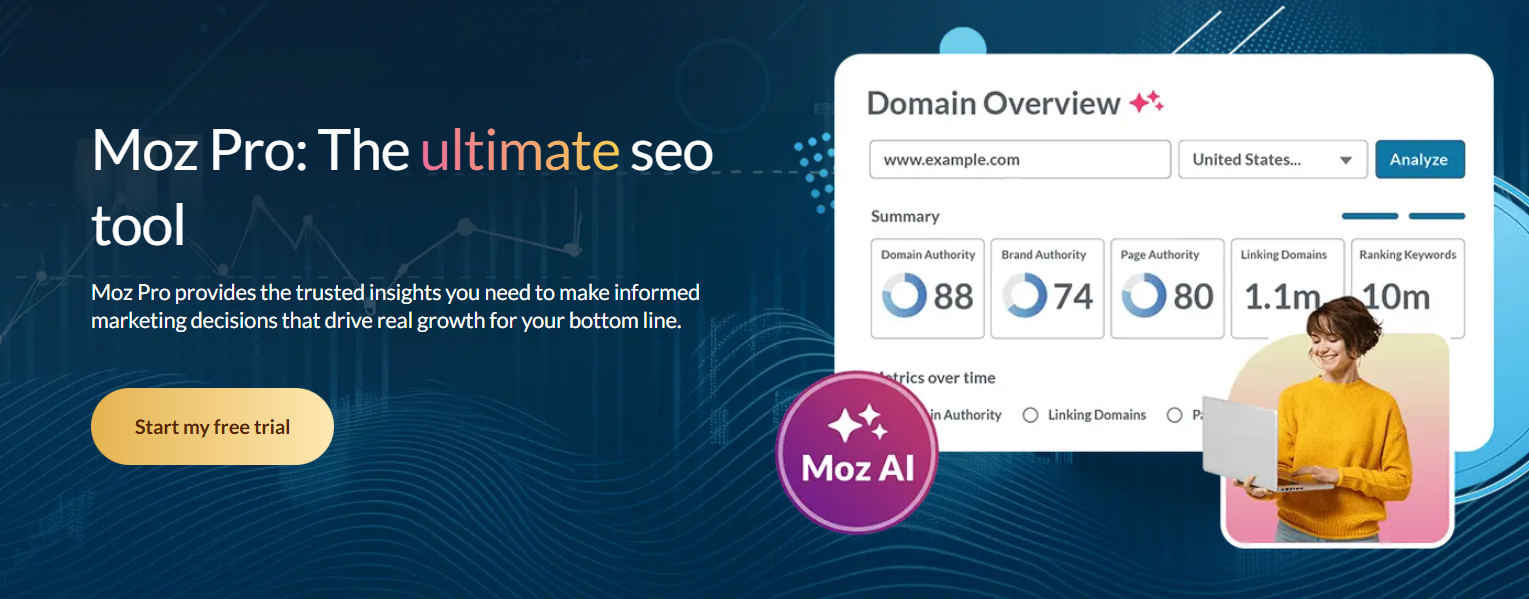
Moz Pro Campaigns make it straightforward to connect rankings to the site you’re actually working on. You’re not stitching together five different tools to answer one question.
The core stuff is there:
- Keyword ranking position tracking over time (so you can see movement, not just a snapshot)
- SERP feature visibility baked into the rank view (so rankings aren’t just “blue links”)
- A high-level visibility metric so you can tell if you’re trending in the right direction even when individual tracked keywords wobble
- The experience is beginner-friendly, which matters when you just want answers fast
Where Moz started to break for me
Moz was fine until I needed the rank tracker to behave like an instrument panel instead of a nice report.
Once the niche got more competitive, I ran into three problems:
1) I needed faster, clearer signals
In a competitive niche, rankings move daily. If your tracking tool isn’t helping you separate real movement from noise, you end up wasting time.
2) I needed rank tracking to scale with the work
As soon as I expanded beyond a small set of keywords and started tracking multiple pages, topics, and competitors, Moz started to feel like it was designed for a simpler version of SEO than what I was doing.
3) I needed “trustworthy enough to act on”
This is the big one. Rank tracking is only useful if you’ll actually change your strategy based on it. The moment I started second-guessing the numbers, the tool stopped being a decision-maker and turned into a “maybe” machine.
The takeaway
Moz was a solid first step. It gave me structure, a clean workflow, and enough keyword tracking to learn what mattered.
But once rankings became something I needed to monitor like a hawk, not review like a report, that’s when I outgrew it and moved to Semrush.
The Second Switch: Semrush
Once Moz started showing its limits, I needed rank tracking software that could handle real SEO work at scale. I needed consistent updates, better competitive context, and ranking data I could actually act on. That is why I switched to Semrush.

It felt like the first tool that treated rank tracking as an operational system, not just a reporting layer.
What Semrush Gets Right
The Semrush Position Tracking tool allows you to track keyword positions daily and measure visibility trends over time instead of relying on one-off snapshots. If you also use Google Search Console and Google Analytics alongside it, you get a fuller picture of your SEO performance.
Key features that mattered most to me were:
- Daily keyword position tracking
- Desktop and mobile rank tracking
- Location-based tracking by country, region, or city
- Visibility score that aggregates keyword performance
- SERP feature tracking including featured snippets and local results
- Built in competitor comparison inside the rank tracking view
This made it much easier to understand whether a page was actually improving or just bouncing around due to normal Google SERP volatility.
Semrush Pricing and Rank Tracking Limits
Semrush pricing is structured around three main SEO plans:
- Starter plan at $199 per month includes tracking for up to 500 keywords
- Pro+ plan at $299 per month includes tracking for up to 1,500 keywords and access to historical data
- Advanced plan at $549 per month includes tracking for up to 5,000 keywords and higher overall limits
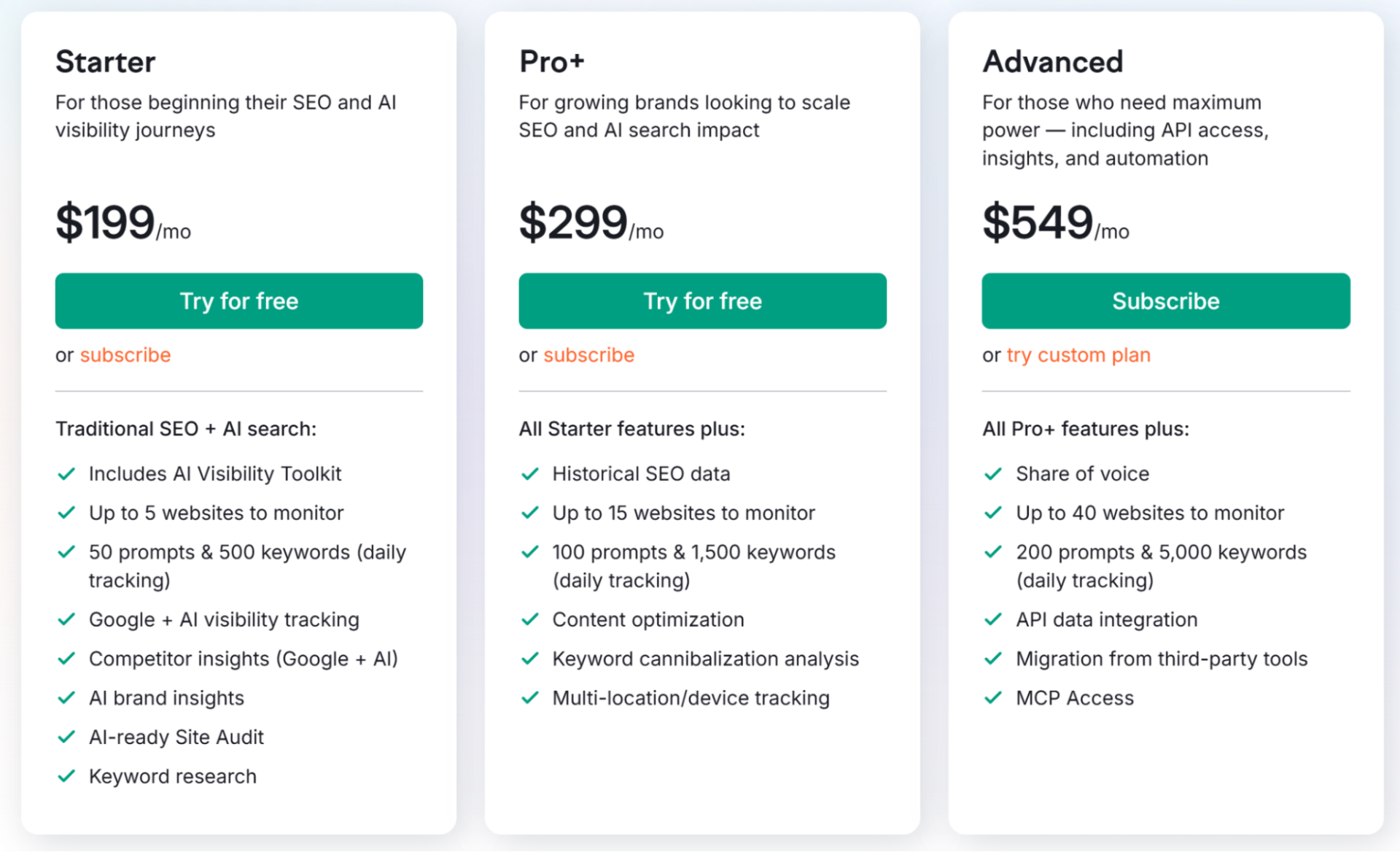
Most teams quickly outgrow the Starter plan. The Pro+ plan is where Semrush starts to feel usable for competitive niches.
Why Semrush Still Was Not the End Game
Despite the improvements, Semrush still was not perfect for how I work.
The interface in particular is VERY cluttered. You get used to it, sure, but the informational overload is real.
Also, accuracy on very competitive keywords still did not fully match what I saw manually when checking Google search results.
It just was not the most precise option available, which is what eventually pushed me to try Ahrefs.
The Final Switch: Ahrefs

By the time I got to Ahrefs, I was already tired of switching rank tracker tools… I had also tested a handful of smaller rank trackers that promised accuracy and delivered random numbers.
I was not looking for more dashboards. I just wanted rankings I could trust enough to make decisions without double-checking everything manually.
Ahrefs was the last one I tried, mostly because of its reputation for data quality.
First Impressions
Ahrefs did not try to impress me with animations or complex reports. It showed me where my pages ranked and how those ranking positions changed over time.
That sounds basic, but it mattered.
When rankings moved in Ahrefs, they usually stayed moved. When something dropped, there was almost always a clear reason. That alone made the tool feel calmer and more reliable than what I had used before.
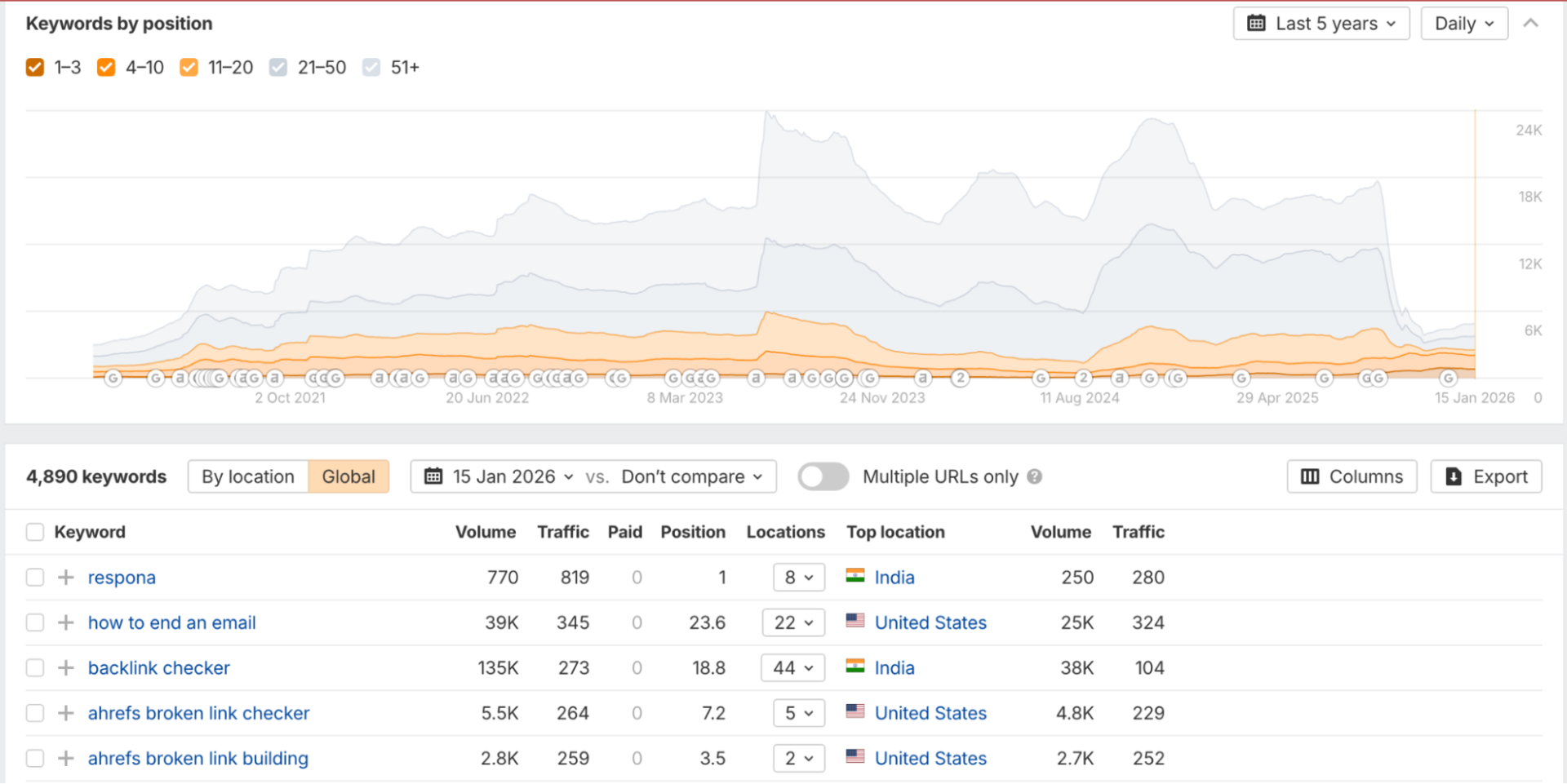
It’s also much easier on the eyes than Semrush:
What Felt Different About Ahrefs
The biggest difference was consistency in tracking software.
In competitive SERPs, most rank tracking tools exaggerate movement. Positions jump, fall, and jump again, even when nothing meaningful changed. Ahrefs still showed volatility, but it felt grounded.
A few things stood out right away:
- Rankings aligned closely with what I saw when checking manually
- Movement felt like real change, not random noise
- Competitive keywords were tracked more cleanly than before
That made it much easier to separate actual progress from normal SERP shuffling.
How I Use Ahrefs for Rank Tracking
I stopped treating rank tracking like something I check occasionally and started using it as a decision tool.
In fact, it’s the backbone of my SEO decision-making today.
Instead of watching every keyword obsessively, I focus on:
- Overall visibility trends over time
- Groups of keywords tied to the same page or topic
- Movement that holds for more than a day
Another feature I love is the keyword research tool. It gives you keyword suggestions, and paired with ChatGPT to generate me a bunch of long-tail keyword ideas, you can make a decent content calendar fairly quickly.
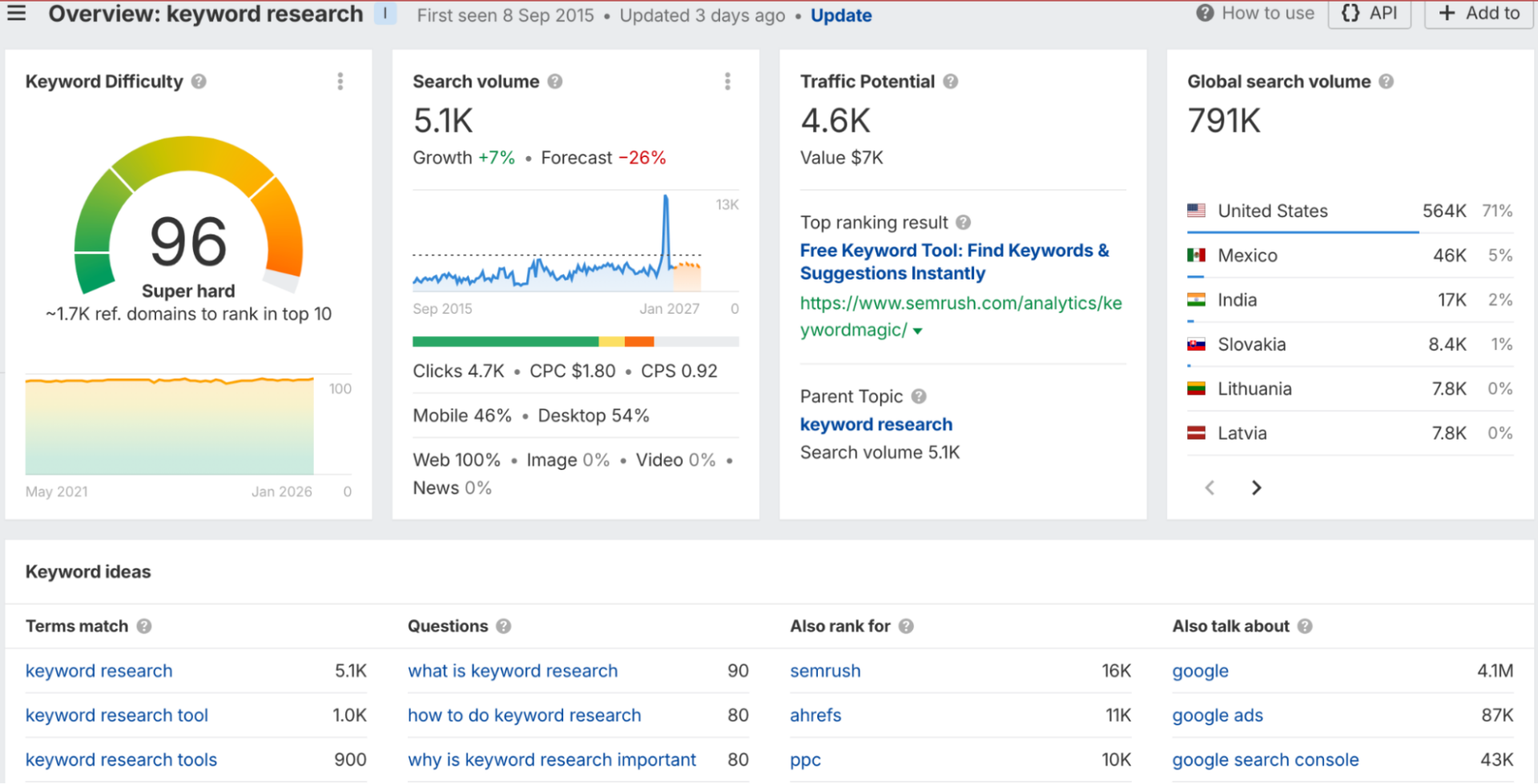
Just bulk import GPT’s ideas into Ahrefs to make sure they’re worth going for based on search volume and competition.
I also regularly run a site audit with Ahrefs to fix up overlooked issues and monitor our link profile with its backlink checker.
Don’t Bother with Random Rank Tracker Tools
I get why people hesitate on Ahrefs.
It is not cheap.
It is not very beginner-friendly.
And it can definitely feel like overkill if you only track a small keyword set.
But once you have relied on rankings to make real decisions, you realize that the price is not about features. It is about whether the ranking data is real.
I have tested plenty of smaller rank tracker tools including SE Ranking, Advanced Web Ranking, Pro Rank Tracker, Rank Ranger, and Authority Labs.
Almost all of them produce noisy, inconsistent data. Rankings jump around for no clear reason. Positions do not line up with what you see manually. Updates lag behind reality. It all looks believable until you act on it and nothing happens.
That is where cheap tools quietly cost you more. You optimize pages that did not actually drop. You chase gains that were never real. Over time, you stop trusting your own process.
Some users try to work around this by exporting data to Google Looker Studio or building custom dashboards. While this helps with visualization, it doesn’t fix the underlying accuracy problems with the rank tracking tool itself.
Moz, Semrush, and Ahrefs are not perfect, but they are the only tools I have used that consistently deliver usable rank data at scale. Ahrefs costs more, but you are paying for accuracy. And when rankings matter, accuracy is the only thing that actually counts.
Link building cheat sheet
Now Over To You
Switching rank trackers taught me something simple. Rankings only matter if you trust the data behind them. Once I stopped guessing and started relying on accurate keyword rank tracking, it became obvious where to invest time, content, and links.
But tools alone do not win competitive niches. Rankings move because authority moves. And authority still comes from high quality backlinks and brand mentions on pages that already matter.
That is exactly why we offer done-for-you link building at Respona.
We earn real brand mentions and listicle placements on authoritative sites that already rank.
If you want rankings you can trust and links that actually move them, this is the fastest way to get there.
Frequently Asked Questions
Do rank trackers help you rank higher on their own?
No. Rank tracker tools do not improve rankings directly. They help you measure what is working so you can invest in the right content and link building strategies instead of guessing.
Why does rank tracking accuracy matter so much?
Because bad ranking data leads to bad decisions. If your rankings are wrong, you will optimize the wrong pages, chase the wrong keywords, and waste time reacting to noise.
Can link building really improve rankings in competitive niches?
Yes. In competitive niches, backlinks and brand mentions are often the deciding factor. Content quality matters, but authority is what separates page one from page three.
Why focus on listicle placements and brand mentions?
Because listicles already rank and are heavily used by Google AI overviews and answer engines. Being mentioned on those pages can surface your brand even if your own page does not rank at the top.
Is done-for-you link building worth it?
If you value speed, consistency, and results, yes. Manual outreach takes time and experience to do well. A managed service removes the busywork and focuses entirely on earning placements that move rankings.