
Backlinks are still one of the strongest signals used by search engines to determine rankings.
But the moment you start talking about buying backlinks, things get messy. You’ll hear that buying links is against Google’s guidelines, that paid backlinks can get you penalized, and that you should only rely on organic backlinks.
So what’s actually true?
The reality is that there’s a big difference between buying backlinks the wrong way and paying for link building done properly. One can hurt your backlink profile, while the other can significantly improve your rankings, visibility, and overall performance.
In this guide, we’ll break down how buying backlinks works today, what Google actually cares about, and how to approach link building in a way that’s both effective and safe.
Key Takeaways:
- Buying backlinks directly from resellers, link farms, or private blog networks can harm your rankings
- Paying for link building is different from buying links outright and can be done safely
- High quality backlinks built through outreach and content creation improve your backlink profile
- Listicle placements are among the most valuable backlinks for both rankings and visibility

Link building cheat sheet
Isn’t Google Against Buying and Selling Links?
Yes, Google is against buying links.
But not in the way most people interpret it.
What Google actually targets is manipulative link buying. This usually means things like paid backlinks from random resellers, cheap backlinks from a link farm, or placements on a private blog network filled with low-quality content.
If you’ve ever seen someone offering “high DA backlinks” from a generic Gmail address, that’s exactly what Google is trying to prevent.
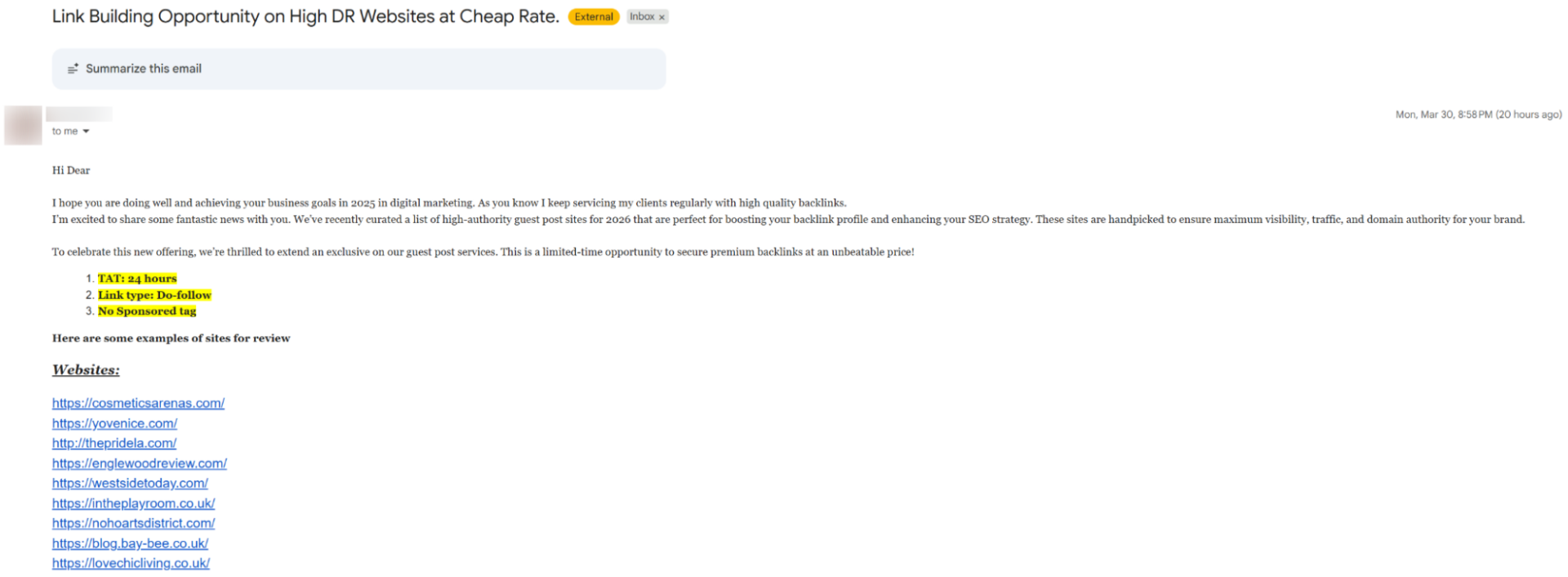
These types of paid links exist purely to manipulate search engine ranking signals. They’re not placed within meaningful content, they’re not relevant, and they don’t provide any real value to users. That’s why they can damage your backlink profile instead of helping it.
That’s the risky side of buying links.
But there’s a clear distinction between that and modern link building.
When you work with a legitimate provider, you’re not just buying backlinks or purchasing backlinks directly. You’re paying for the work that goes into earning them. That includes prospecting relevant sites, reaching out to a website owner, pitching content, and securing a natural link placement.
The backlink itself is earned through content creation and outreach, not inserted artificially through a link insertion or niche edits on low-quality pages.
And that matters.
Google has even acknowledged that outreach is perfectly fine. John Mueller has stated that reaching out and suggesting your content as a useful resource is a normal part of how the web works.
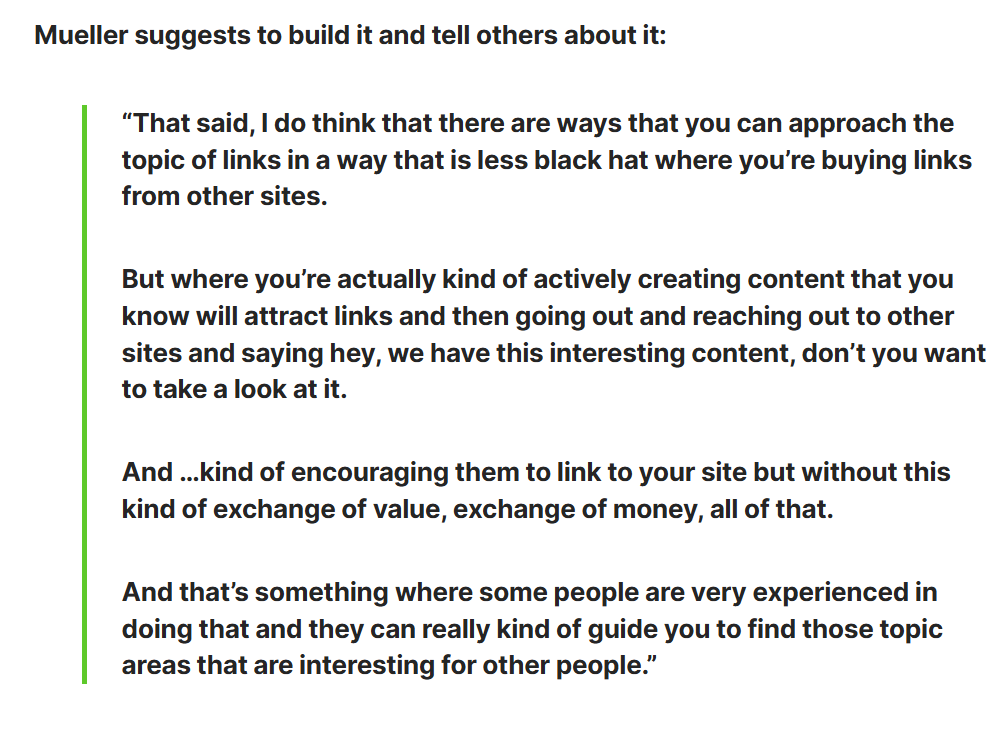
That’s essentially what modern link building is.
So instead of thinking in terms of “buying links,” it’s more accurate to think of it as paying for a process that results in high quality backlinks.
That’s a completely different approach from buying links off a spreadsheet or relying on paid link building tactics that try to game the system.
Benefits of Buying Links
Link building is a lot of work.
You need to find sites, reach out, create content, follow up, and keep everything organized. Most companies either don’t have the resources to do this properly, or it just doesn’t make sense to build a whole team around it.
And for larger companies, it’s often cheaper to outsource than to hire people, buy tools, and manage the entire process internally.
So right away, you’re taking a huge workload off your plate.
But the bigger benefit is control over what you’re actually getting.
With a proper link building provider, you’re not just getting random backlinks. You can choose exactly what kind of placements you want.
For example, instead of getting generic link insertion placements or random niche edits, you can focus on getting featured in listicle articles like “best tools” or “top services.”
Like this article on the best link building tools by Backlinko:
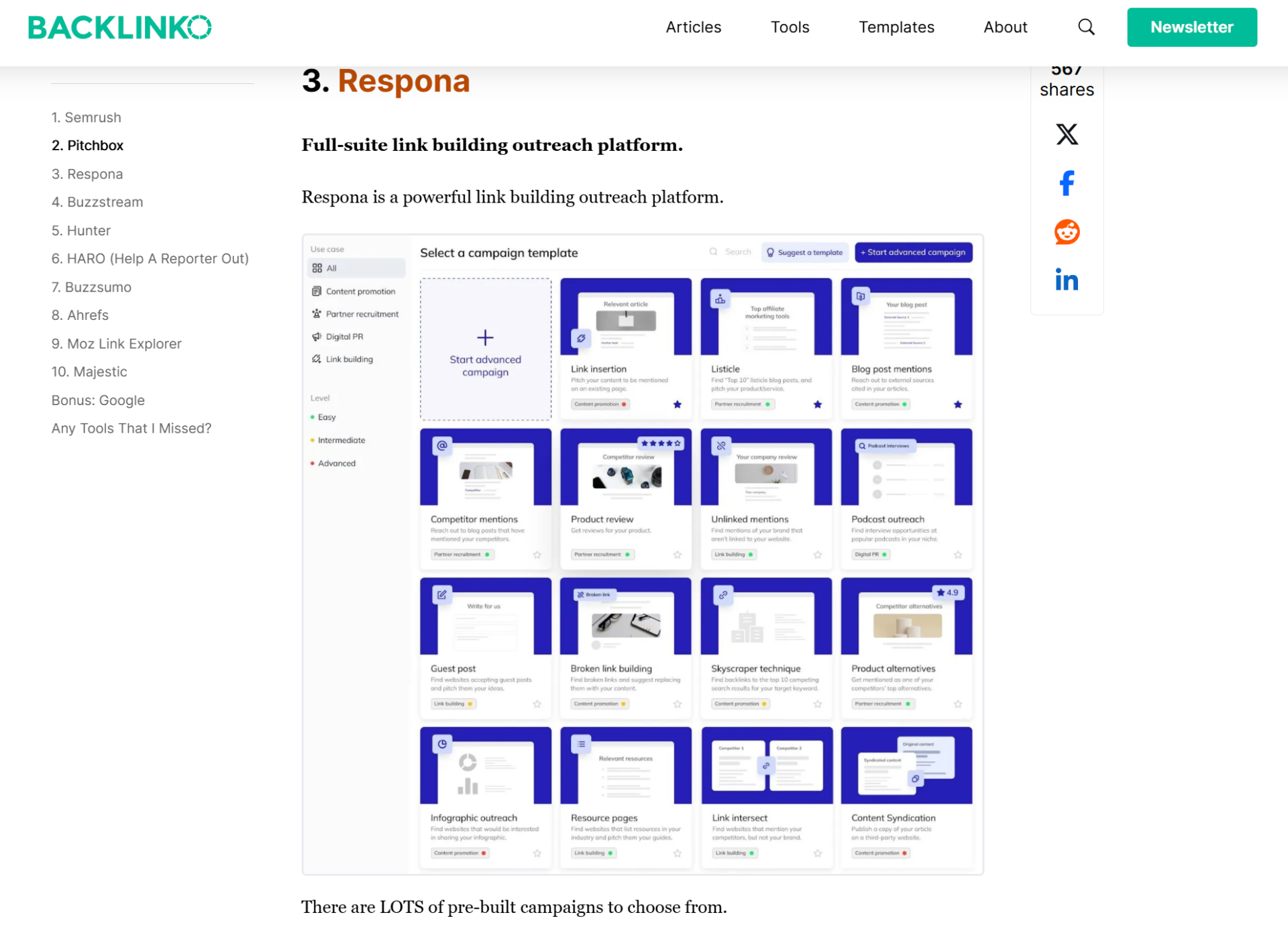
And these are on a completely different level.
They don’t just exist to pass a link and maybe help your rankings a bit. They sit on pages that already rank, already get traffic, and already have strong intent behind them.
That means they:
- Drive commercial traffic from people actively looking for solutions like yours
- Strengthen your backlink profile with relevant backlinks from real sites
- Actually move your rankings, not just pad your numbers
And there’s another layer to this that most people are still missing.
These placements also help with AI visibility.
Tools like ChatGPT don’t just pull from one source.
They look for patterns across the internet. So if your brand keeps showing up in “best X” or “top Y” articles, you’re much more likely to be included in those answers.
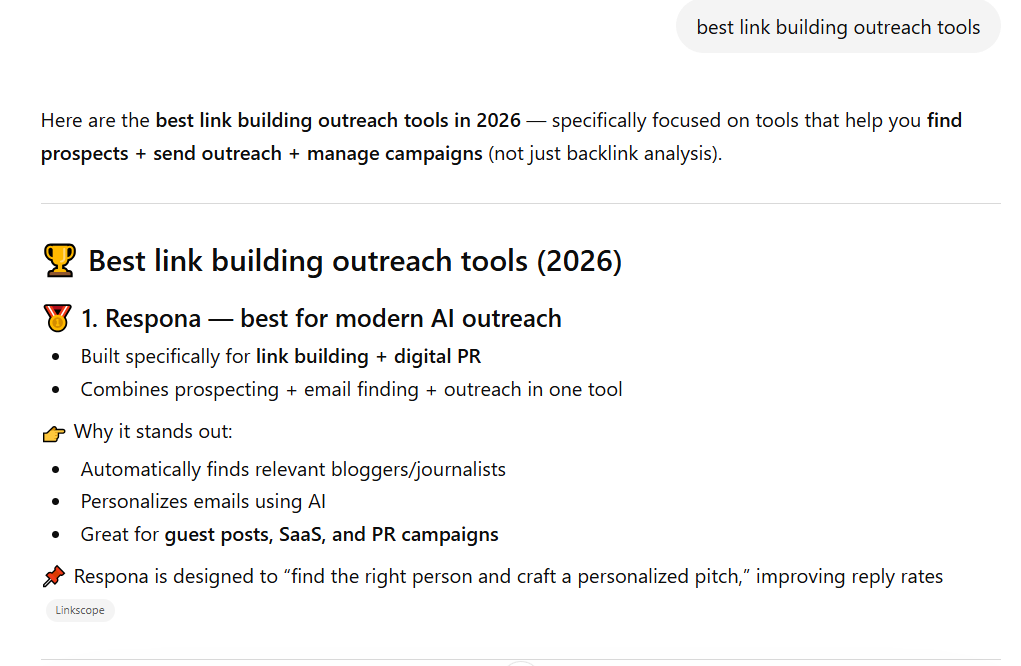
If your competitors aren’t doing this yet, you can get ahead pretty quickly. And once you start showing up consistently, that visibility starts to snowball.
Where to Buy Backlinks?
If you’re going to buy backlinks, where you get them from matters more than anything else.
There’s a huge difference between buying links from random resellers and working with a proper link building provider.
You want to avoid anything that looks like this:
- Bulk offers of cheap backlinks
- Sellers pushing links from a private blog network
- Link farms or lists of sites that exist only to sell links
- Generic outreach from someone who clearly doesn’t know your business
These usually lead to low-quality backlinks that don’t help your rankings and can actually hurt your backlink profile.
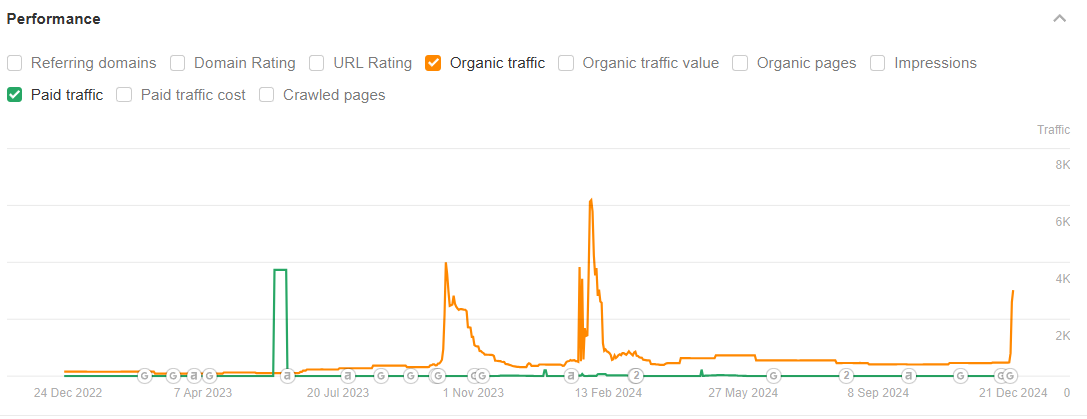
You can easily spot link farms by “spiky” organic traffic charts or pages ranking for weird or spammy keywords:
Instead, you want backlinks from real sites, inside real content, that actually get traffic.
That’s where a provider like Respona comes in.
You’re not buying a link directly. You’re paying for the process that gets you there.
It starts with placing an order.
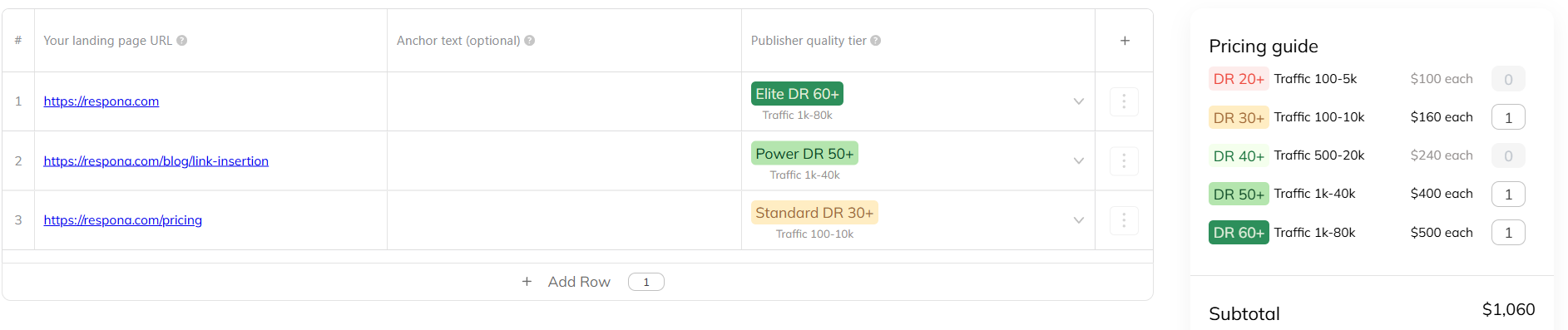
You submit your target page, the keywords you want to rank for, and any preferences around anchor text or the type of content you want to be featured in.
For example, you can specifically request placements in listicle articles instead of generic niche edits or link insertion opportunities.
From there, everything else is handled for you.
The team finds relevant sites, reaches out to website owners, pitches your content, and secures placements on pages that already have authority and traffic.
These are real referring domains, not recycled lists or networks.
And you only pay for backlinks that actually get placed.
On top of that, you’re not just blindly building links.
The Campaigns feature lets you track how your backlink placements impact your AI visibility over time.
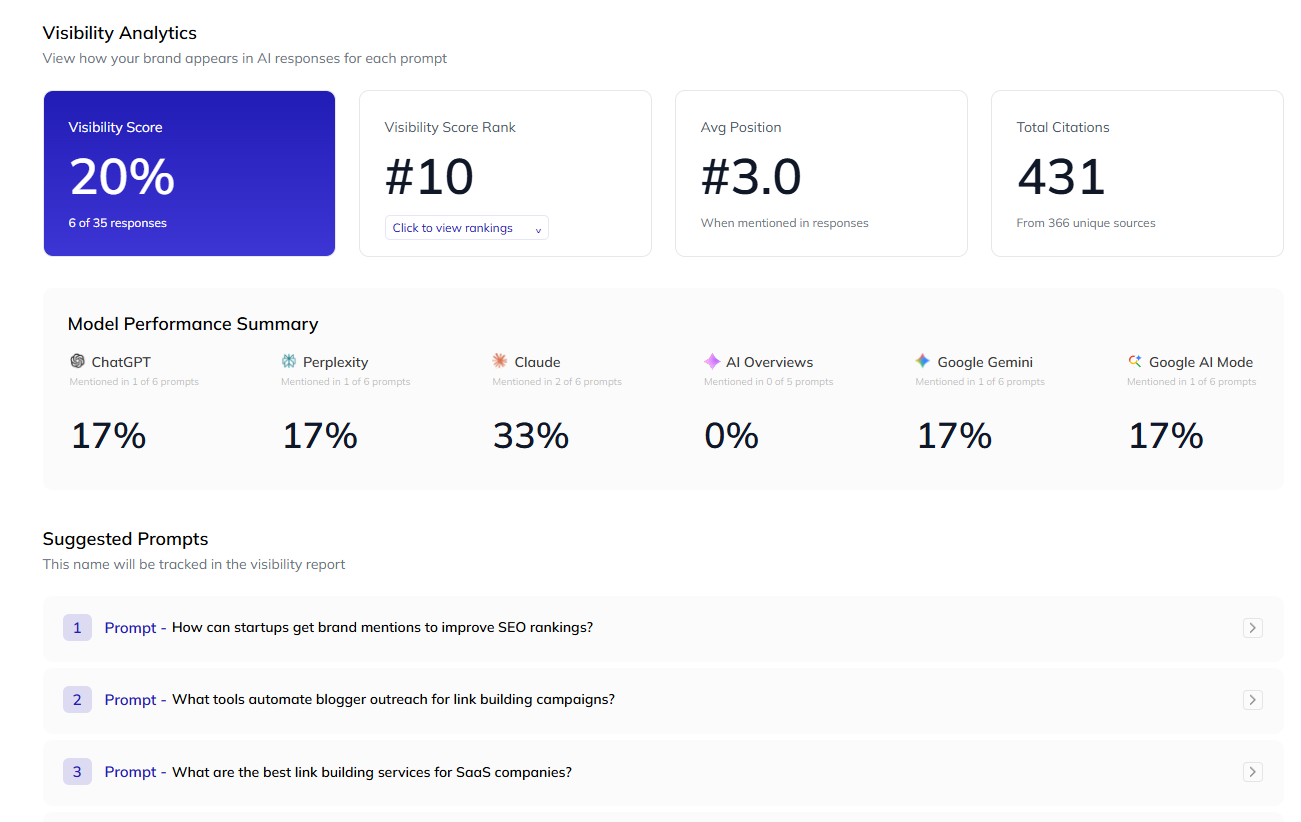
You can see where your brand is showing up, which pages are getting picked up, and how your presence grows compared to competitors.
So instead of guessing whether your link building is working, you can actually see the results.
Link building cheat sheet
Now Over To You
Buying backlinks isn’t the problem.
Buying the wrong backlinks is.
If your approach to link building is based on relevance, real content, and actual placements on sites that get traffic, you’re not doing anything shady. You’re just promoting your content the right way and building a strong backlink profile over time.
That’s the difference.
If you want to skip the manual work, our done-for-you link building handles everything for you.
From finding opportunities to securing placements on high-quality pages, the focus is on getting backlinks that actually improve your rankings, drive traffic, and increase your visibility across search engines and AI search.
Frequently Asked Questions (FAQ)
Is it safe to buy backlinks?
It depends on how you do it. Buying backlinks from link farms, private blog networks, or random resellers is risky. Paying for link building done through outreach and content is a much safer approach.
What’s the difference between buying links and link building?
Buying links usually means paying for direct placements with no real process behind them. Link building involves outreach, content creation, and earning backlinks naturally.
Do backlinks still matter for SEO?
Yes. Backlinks are still one of the most important ranking factors used by search engines to determine authority and rankings.
Are niche edits and link insertions worth it?
They can work, but most niche edits and link insertion placements don’t have the same impact as placements on high-traffic, high-intent pages.
What are the best types of backlinks?
The best backlinks come from relevant content on pages that already rank and get traffic. These are typically listicles, comparisons, or other high-intent content.
How many backlinks do I need to rank?
There’s no fixed number. A smaller number of high-quality backlinks from strong pages will usually outperform a large number of low-quality links.
Can buying backlinks help with AI visibility?
Yes. If your brand appears consistently across high-quality content, especially listicles and comparison pages, it increases your chances of being picked up by AI systems like ChatGPT.