

In 2026, there are more marketing software choices than ever, yet this has inadvertently become our marketing stack’s biggest issue.
There are thousands of digital marketing tools fighting over marketing budgets, all of them claiming to simplify your marketing efforts.
Creating a modern digital marketing stack is not about finding the good tools, it is about figuring out which are worth the price and which are holding back your marketing team.
In my career I’ve worked with lot’s of marketing tools and I can assure you, not all of them are created equal.
The following are the marketing tools that made the cut.
They serve the digital marketing functions most modern-day digital marketers need, including outreach, SEO, video marketing, email marketing, marketing automation, CRM, customer support, design, marketing analytics, project management, and social media.

Link building cheat sheet
How I chose the marketing tools in this list
Marketing tools here had to clear three hurdles:
1) at least one of the marketing teams I work with uses the tool in real-world situations;
2) pricing is published on the website, not hidden behind a demo;
3) the tool has been shown to integrate well with three other digital marketing tools.
Anything below a four-star rating on G2 was discarded.
The following 21 digital marketing tools serve the marketing functions that most marketing teams need to power their marketing efforts. You likely do not need all of these. Select the ones that align with your company size, budget, and digital marketing strategy.
What is Marketing Software?
This category encompasses:
- email marketing
- marketing automation
- marketing analytics
- content marketing
- SEO
- customer engagement
- customer support software
Modern marketers tend to use between 8-12 of these different software categories at a time, which makes the sheer size and complexity of this market one of the most significant problems this article is trying to solve.
However, marketing software is also different from standard SaaS in an important way.
Nearly every piece of marketing software you can find is designed around a single marketing task (email marketing or video marketing) yet they all position themselves as a holistic marketing solution for businesses and teams to leverage.
The challenge for marketers, then, becomes figuring out which software products have defined the category and which ones are expanding their definition to encompass multiple categories.
The 21 choices below sort those software options out for you by breaking them down according to their specific marketing function.
Best Outreach Marketing and Link building Software
1. Respona: Best for Done-For-You Link Building
Respona is a done-for-you link building service.
The model is simple: you place an order by sharing what pages you want ranking and what AI prompts you want to show up in, and Respona’s team handles the prospecting, pitching editors, drafting the angle, running follow-ups, and securing the live placement.
The team focuses on the kinds of placements that drive both organic search and AI visibility: listicle inclusions, editorial features, and brand mentions inside high-traffic publications.
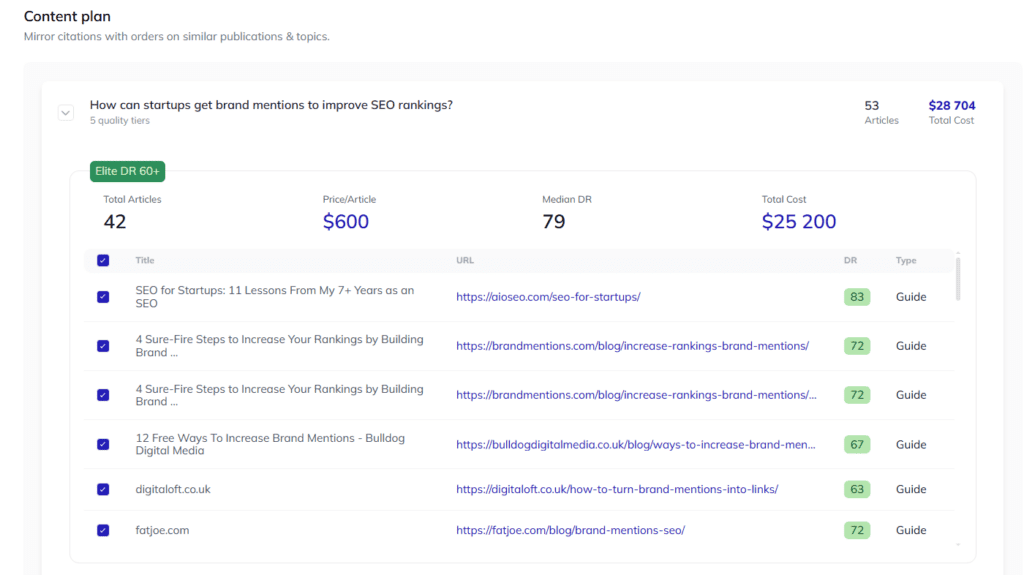
In fact, the Campaigns feature finds these articles so you can order placements on articles that you know for a fact perform well in Google and get picked up by AI.
Pricing is per-placement, starting at $100 and scaling by Domain Rating. No retainer, no hourly time tracking, no contract minimums. You pay for placements that actually land, which is rare in this category.
The service also includes built-in tracking across six AI engines (ChatGPT, Perplexity, Google AI Overviews, Gemini, Claude, and Copilot), so when a placement lands you can see whether it’s contributing to AI citations alongside the traditional SEO impact.
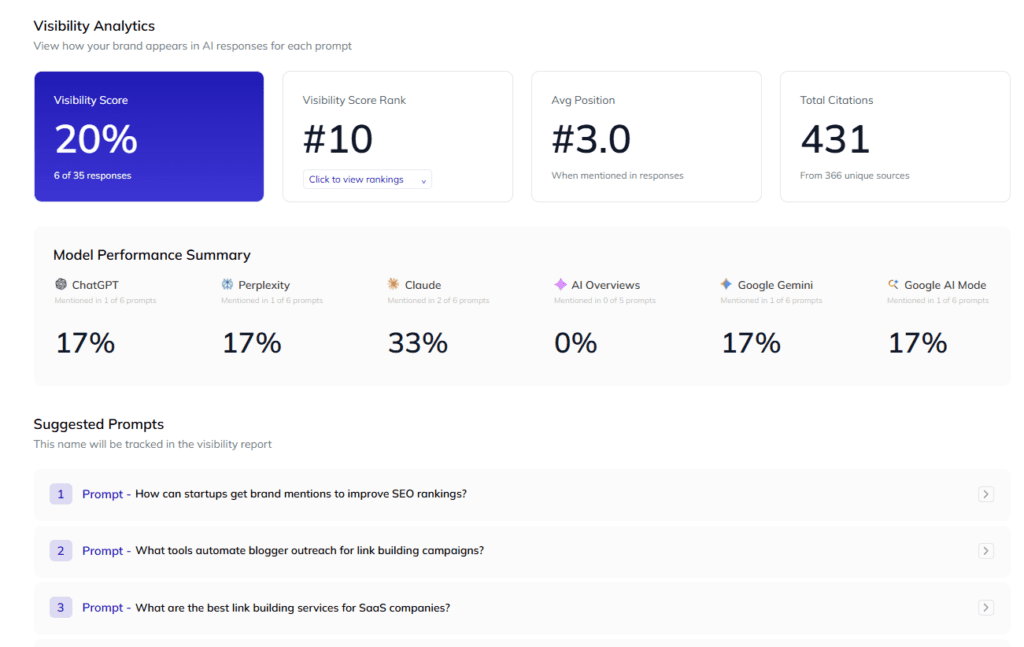
For marketing teams treating AI visibility as a real channel in 2026, that built-in measurement is genuinely useful.
For most marketing teams I work with, the bottleneck on link building isn’t strategy, it’s bandwidth. Respona solves that cleanly.
Best Video Marketing Software
2. Synthesia: Best for AI video and localization
Synthesia is the most popular AI video production platform for marketers. The user types in a video script, selects an AI avatar, and Synthesia produces a full video with matching lips and voiceover in over 160 languages.
For digital marketing teams needing to localize a single marketing campaign for various markets, or for those needing to generate large volumes of training and product video without a production team, it is the best platform on the market.
The workflow is genuinely as simple as it sounds: write your script, pick from a library of hundreds of stock AI avatars (or train a custom AI avatar to match your brand spokesperson), and a finished video is in your hands in minutes.
More than half of the Fortune 100 companies use Synthesia precisely because of that.
The marketing use cases I see most often are localized product videos for international launches, training and onboarding content that needs to refresh quarterly, and personalized prospect videos that sales teams send out at scale.
Each of those workflows used to require a production team, a studio, and a marketing budget that put video out of reach for smaller marketing teams. Synthesia collapses that into a single marketing software subscription.
Beyond the avatar and script-to-video pipeline, the platform also includes screen recording, AI dubbing for translating existing videos into new languages with lip-sync intact, and collaboration features that let multiple marketers edit and approve a video the same way a marketing team would edit a doc together.
If you are a digital marketer who has been unable to implement video marketing as a channel for your company due to prohibitive cost, this tool allows you to finally do so.
It also acts as a central repository for managing video assets across global markets, which will become essential to large enterprise content marketing.
Pricing starts at $26 a month for the Starter plan, with enterprise pricing for marketing teams running Synthesia at scale.
3. Loom: Best for quick screen recordings
Loom is best for fast, short screen recording. Great for product marketing demos, client success videos, and asynchronous team communication within a marketing department.
It’s also an excellent lightweight add-on to a comprehensive AI video marketing tool like Synthesia.
I personally fire up Loom a few times a day for quick walkthroughs, async approvals, and product feedback. Marketers rely on it each and every day for prospect outreach and internal announcements.
It is the wrong fit for video that needs production polish. Loom outputs are recorded, not produced, so anything client-facing usually needs to be created in Synthesia or hosted on Wistia.
The free plan covers basic usage, and paid plans start at $18 per user per month for the Business tier with the editing and branding features marketing teams actually need.
4. Wistia: Best for marketer-focused video hosting
Wistia is a video hosting platform with features and marketing analytics that are tailor-made for marketers, including lead capture forms, heatmaps, and engagement scoring.
Its marketing analytics are cleaner than any I’ve come across, and there are far more options for customizing the video player than there are with standard YouTube embeds. Video will eventually be a critical lead generation channel for marketing teams.
Wistia is the video host I see most marketers eventually adopt. A free tier is available to smaller marketing teams, and paid plans start at $79 a month for the Business tier.
Best SEO Software
5. Semrush: Best all-in-one SEO and paid search research
Semrush is the SEO tool I turn to for SEO research paired with a deeper paid search and content marketing toolkit in the same platform.
If the team you serve also runs Google Ads, Semrush’s content marketing workflows are robust, and the Position Tracking dashboard has the cleanest interface of any SEO tool I’ve tested.
Many SEO and paid marketers will opt for Semrush because they need to do their paid ads research on the same platform as organic.
Prices start at $139.95 a month for the basic Pro tier, and the integration with the rest of a typical marketing stack (analytics, CRM, content management) is well-supported.
Best Email Marketing Software
6. Constant Contact: Best email marketing tool for small business owners
If I could pick one email marketing tool that I recommend most to small business owners and service-based marketers, it’s this one.
Constant Contact was designed with the real-world challenges of running email campaigns without a dedicated marketing team in mind. It’s got user-friendly templates, an uncluttered editor, email marketing automation software that doesn’t take a manual to configure, and the functionality for SMS marketing and event marketing baked right in.
And unlike most other email marketing tools, its marketing analytics are straightforward in calling out which email campaign has been a success, and which is struggling, a trait that is pretty unusual as of 2026.
If you’re a small business marketer and you need to launch your email campaigns this week, look no further.
This is where you start.
7. Warmy: Best email warmup tool
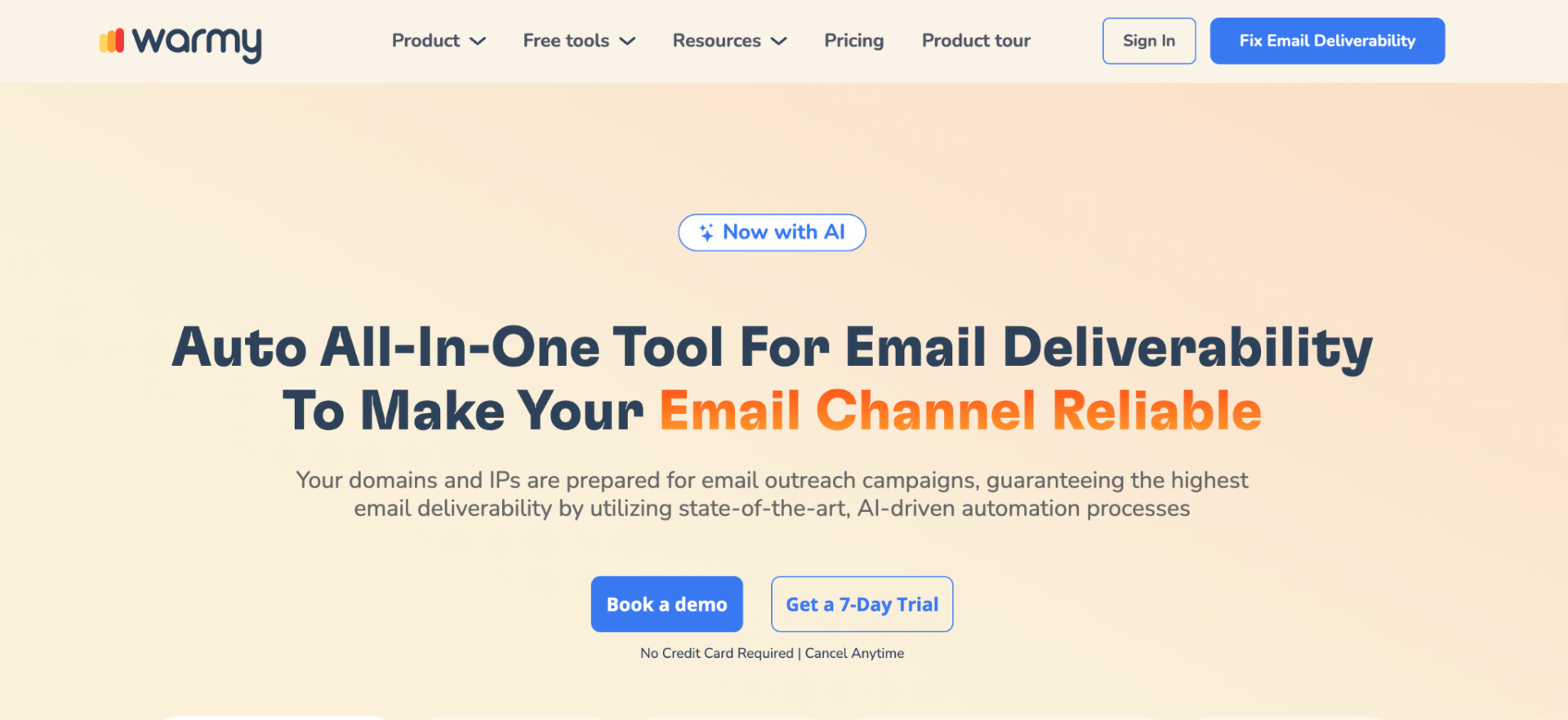
For teams investing in cold outreach or newsletter campaigns, ensuring your emails actually reach the inbox is just as important as the content inside them. Warmy.io is a dedicated email warmup tool that gradually builds your sender reputation by automating the warmup process,so your domain is trusted by email providers before your first campaign ever goes out.
It works by simulating natural email activity, sending and receiving emails on your behalf to establish credibility with inbox providers like Gmail, Outlook, and Yahoo. The result is a significantly lower chance of landing in spam, higher open rates, and a sender score that supports your outreach at scale.
For marketing teams running cold email sequences or launching new domains, Warmy.io removes one of the most frustrating and overlooked bottlenecks in email marketing deliverability so your copy, targeting, and timing can actually do their job.
Best marketing automation software
8. HubSpot Marketing Hub: Best all-in-one marketing automation software
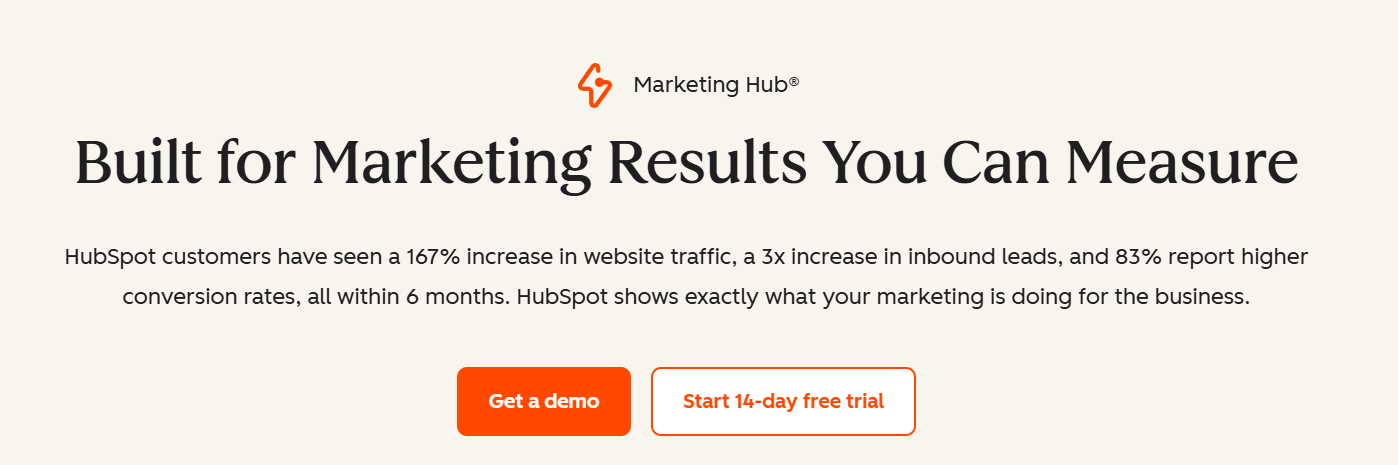
For good reason, HubSpot Marketing Hub is probably the most used marketing automation software and the most recognized automated marketing software brand, and most teams will tell you it is the best marketing automation software for the all-in-one use case.
I’ve onboarded dozens of marketing teams onto HubSpot, and almost every one of them stays on it for years before they ever look at an upgrade.
It bundles CRM, email marketing, marketing automation tools, content marketing, content management, and marketing analytics in one package.
That’s all well and good, but the problem is that some marketing teams move past it in terms of the marketing automation software features they actually need, often graduating to Marketo Engage for enterprise marketing automation.
For most marketing teams under 50 employees, this all-in-one solution makes the most sense, as the integration depth alone is worth the extra expense.
It costs $15 a seat per month to get your foot in the door on the Starter plan, then the more marketing contacts you add, the more it’ll cost you.
9. AnyBiz: best AI-powered sales automation platform
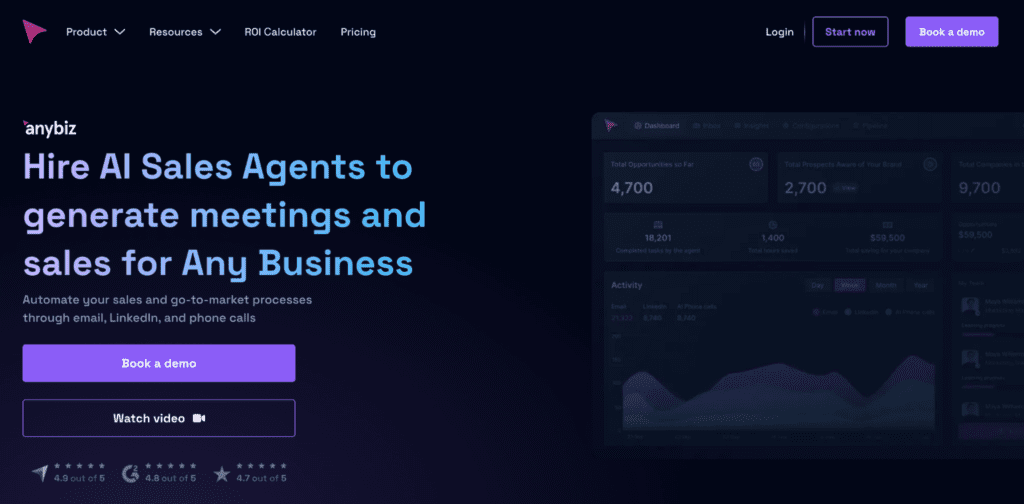
For teams looking to take their outbound strategy beyond manual prospecting, AnyBiz is an AI-powered sales automation platform that handles the entire outreach process from start to finish. Unlike traditional cold email tools that require you to build sequences manually,
AnyBiz uses AI agents to identify the right prospects, craft personalized messages, and engage leads across multiple channels including email, LinkedIn, and Twitter without human input at every step. The platform continuously learns from engagement signals to refine its targeting and messaging over time, meaning your outbound engine gets smarter the longer it runs.
For marketing and sales teams that want to scale pipeline generation without scaling headcount, AnyBiz offers a compelling alternative to traditional SDR-heavy models automating the repetitive, time-consuming parts of outreach so your team can focus on closing rather than prospecting.
Best CRM and Marketing Cloud Software
10. Agentforce Marketing (Formerly Salesforce Marketing Cloud): Best enterprise marketing platform
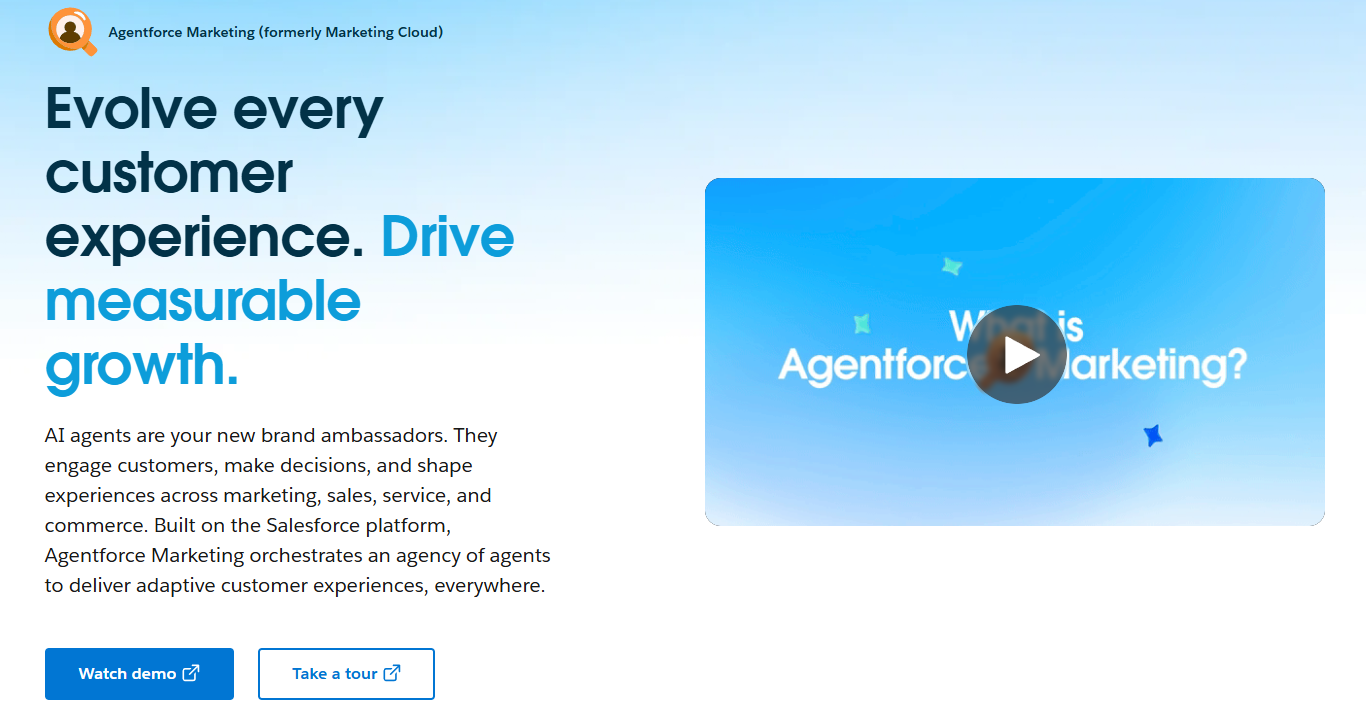
Agentforce Marketing is the go-to marketing automation tool for any marketing team on a large scale, particularly when the marketing cloud has to cover multiple business units and/or multiple global regions.
It requires an extensive configuration effort to get set up properly, but once set up correctly, it can handle intricate customer engagement and campaign management processes to the extent that no other marketing automation platform can.
The Pardot Engagement Studio, which is a part of the Salesforce Marketing Cloud, is a B2B marketing automation tool that’s used by enterprise marketing teams for B2B nurturing.
11. HubSpot CRM: Best free customer relationship management tool
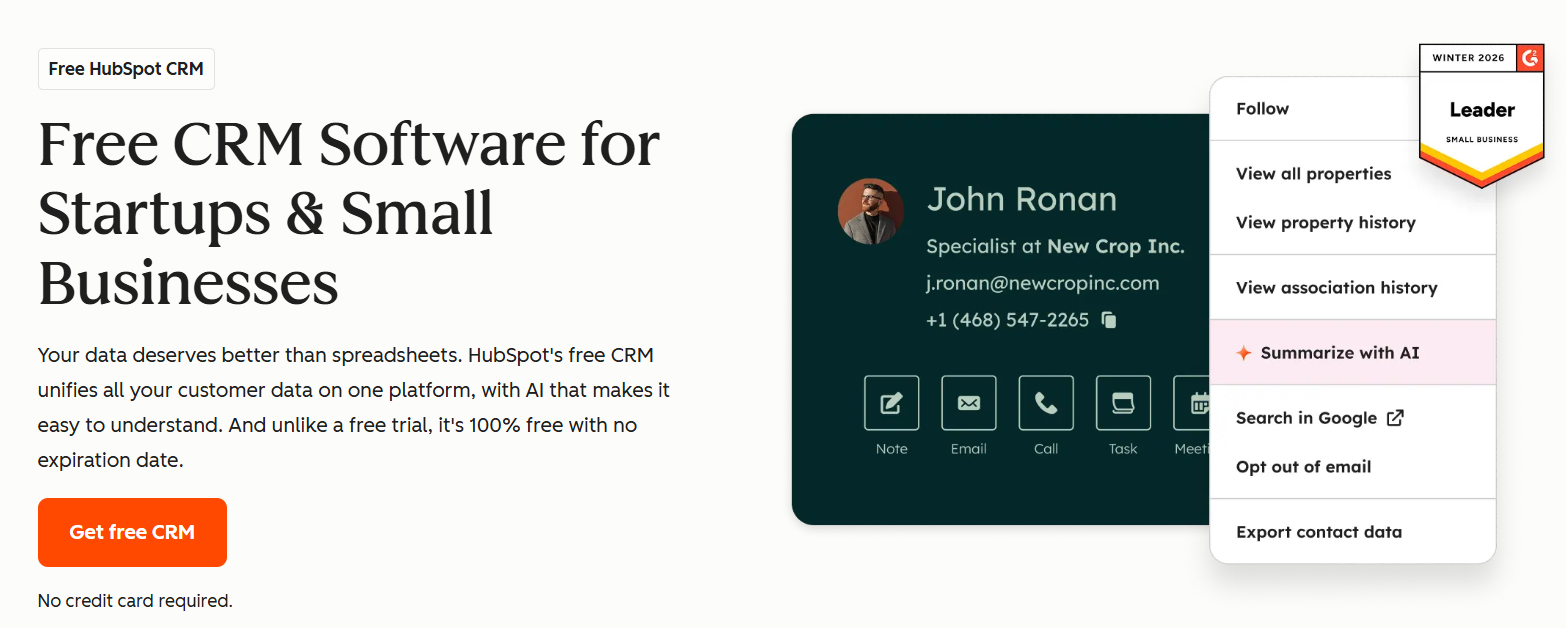
HubSpot CRM is the free CRM tool I start almost every small marketing team I advise on. It integrates natively with HubSpot Marketing Hub and provides a full-featured customer data platform out of the box.
The free version provides enough customer data, customer behavior tracking, and reporting for marketing teams sitting at around 1,000 contacts.
And if you need to go up a level and switch to HubSpot Marketing Hub, the upgrade process is pretty streamlined.
Pricing scales once you outgrow the free tier: paid HubSpot CRM seats start at €49 per seat per month, and the Marketing Hub Professional plan jumps to $880 per month.
Most marketing teams I work with either stay on the free CRM tier indefinitely or skip the middle and go straight to the full Marketing Hub when they’re ready for the upgrade.
It is the wrong fit for marketing teams that need the deep configurability or industry-specific workflows the way Salesforce delivers them, particularly for regulated industries.
Best Customer Support Software for Marketers
12. CloudTalk: Best for customer support and call analytics
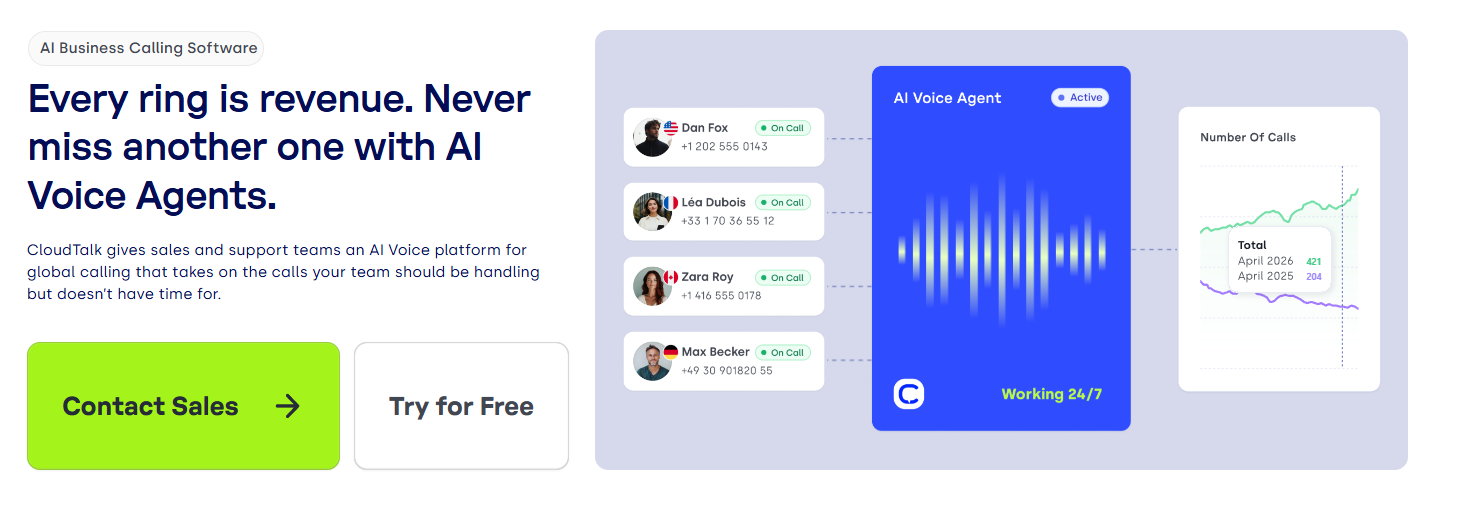
CloudTalk is the customer support tool I recommend most frequently for marketing aware organizations that also need a phone and call center solution with their digital customer service channels.
CloudTalk is a cloud-based calling solution built specifically for sales and customer support teams, and it has a call center feature with the ability to click-to-call, record the conversation, and view comprehensive call performance metrics.
In case you are a B2B marketer who needs to track marketing campaign impact in inbound calls, CloudTalk will have an integration that allows you to track that accurately.
In addition, the CloudTalk reporting tool can give you the ability to track how your marketing campaign contributes to the number of qualified customer interactions, closing the loop between marketing efforts and revenue and telling you what is and isn’t working across your marketing.
Pricing starts at $34 per user per month for the Starter plan.
13. Zendesk: Best for customer service ticketing across digital channels

Zendesk is the gold standard for customer service ticketing across email, chat, and web.
On the marketing teams I support, Zendesk shows up the moment the brand crosses the threshold where Gmail and a shared label can’t keep up anymore.
It’s a great way to complement a phone-first customer support platform like CloudTalk and provide a streamlined customer experience that covers your other contact channels.
Marketing teams involved end-to-end in the customer journey should be looking at Zendesk to serve as the backbone for their customer service department.
Zendesk even has reporting available that can help support marketing teams by funneling data on customer service issues into content marketing and product marketing efforts.
Pricing starts at $55 per agent per month for the Suite Team plan, and most marketing-aware customer support teams end up on the Suite Professional tier at $115 per agent.
It is though the wrong fit for small marketing teams that just need a shared inbox for that use case.
Best design and creative software for marketers
14. Canva: Best DIY design tool for marketers
Canva is the day-to-day creative marketing tool most marketers default to for social graphics, presentations, and ad creative.
Honestly, I open Canva myself multiple times a week for one-off graphics, and it’s the marketing tool I’ve personally used the longest. It is the right tool for when your marketing team needs to ship a marketing asset today and doesn’t have a custom designer in the budget.
The free tier is enough for most solo marketers, and the Pro plan at $15 a month unlocks the brand kit, background remover, and the
Magic Studio AI features that marketing teams actually use day to day. However it is the wrong fit for serious brand identity work or high-fidelity print design.
Best Analytics and Reporting Software
15. Google Analytics 4: Best free marketing analytics
Google Analytics 4 is the free default and foundation of most digital marketing analytics stacks.
Every analytics audit I run starts with GA4. If it’s not configured cleanly, nothing downstream tells the truth.
It’s got a steeper learning curve than the prior version, but the data quality is unmatched at the price point.
Pair it with Google Search Console for search-side analytics and you have most digital marketing measurement covered.
Google Ad campaign attribution flows directly into Google Analytics 4, so marketers can close the loop on paid campaigns inside the same analytics tool already powering their digital marketing reporting.
The free tier scales to almost any traffic level a marketing team will hit before they reach enterprise volumes.
It is the wrong fit for marketers who need real-time, second-by-second behavior tracking the way Mixpanel offers.
For that workflow, a product-led analytics tool will get you there faster than the GA4 BigQuery export workflow ever will.
16. Hotjar: Best for qualitative analytics and behavior insights
Hotjar injects qualitative analysis into a marketing stack that otherwise relies on quantitative tools like Google Analytics.
Its heatmaps, scroll maps, and session recordings provide deep insights into exactly how users move through websites, information that quantitative data will never tell you.
If you’re optimizing a landing page, Hotjar helps answer “Why did my conversion rate drop?”
For a small business marketer or a growth team, the free tier covers most of the qualitative analytics work, and the Plus plan at $32 per month adds unlimited heatmaps and the longer session-recording retention marketing teams actually need.
17. Mixpanel: Best product-led marketing analytics
Mixpanel is the marketing analytics alternative product-led marketing teams prefer because it tracks customer behavior and feature usage more granularly than Google Analytics.
Marketers running activation and retention marketing campaigns inside a SaaS product use Mixpanel to attribute behavior back to marketing efforts at the cohort level.
The free plan covers most early-stage product-led marketing teams up to 1 million tracked events per month, and the Growth plan adds the cohort and impact reporting that growth marketers spend most of their time in.
Best project management tools for marketing teams
18. Asana: Best project management tools for marketing teams
Asana is the project management tools default for most marketing teams.
I push every marketing team I onboard onto Asana, and it’s the one project tool that’s never been the bottleneck in a campaign launch.
It handles marketing tasks across multiple marketing campaigns, integrates with the rest of your marketing stack, and scales from a five-person marketing team to a hundred-person marketing org without a redesign.
For most marketers, picking project management tools is less about which is the best platform and more about which one the marketing team will actually use consistently.
The free plan handles small marketing teams with the core project management features, and paid plans start at $10.99 per user per month with the dashboard and timeline features marketing teams actually use for marketing campaign management.
Monday and ClickUp are the alternatives marketing teams most commonly pick when Asana’s interface doesn’t click: Monday for the visual approach, ClickUp for the deeper feature set.
Best social media marketing software
19. Buffer: Best simple social media marketing software
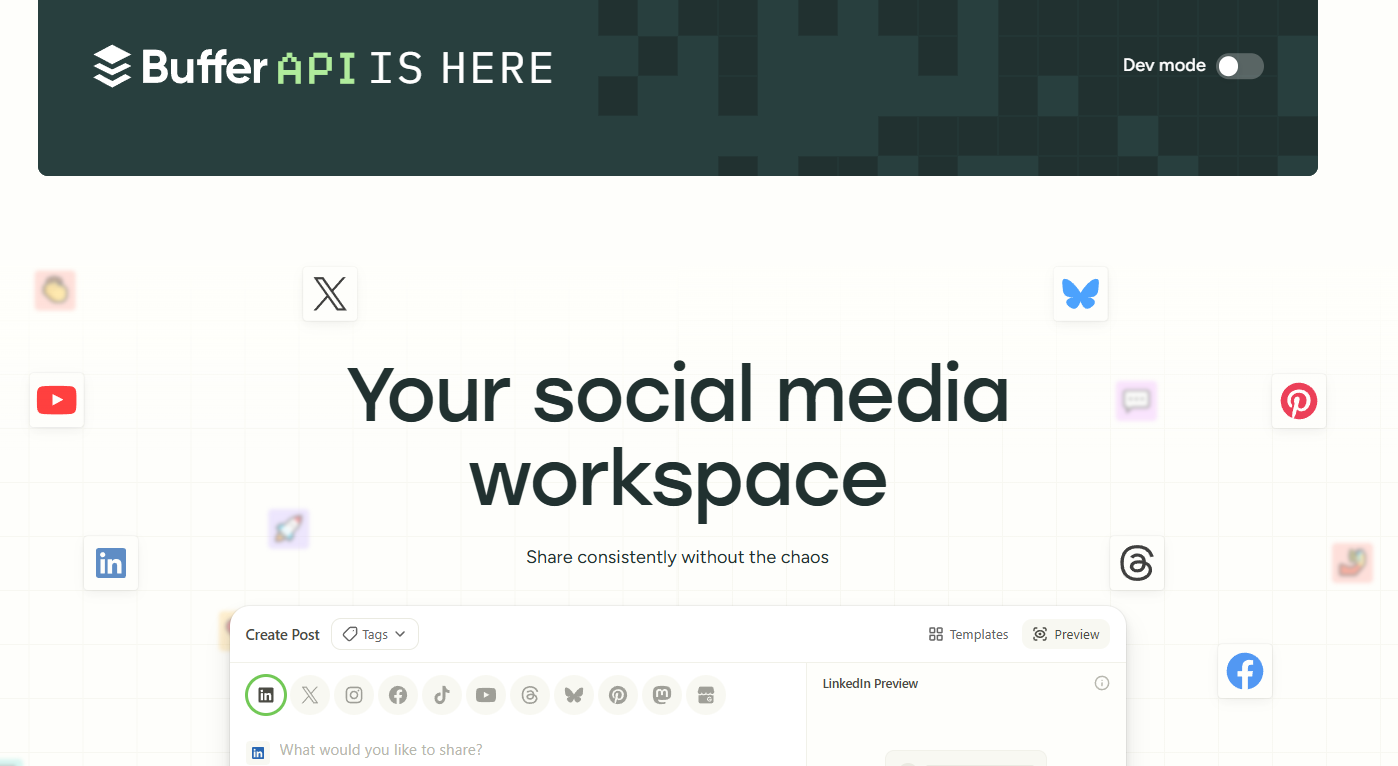
Buffer is the simplest of the social media schedulers and the right pick for solo marketers and small marketing teams. It handles posting, basic analytics, and approval workflows across all the major social platforms.
Pricing starts at $5 per month, per channel on the Essentials plan.
It is the right tool for marketing teams that want to schedule and approve content without learning a heavier social media management platform.
For analytics-led marketing teams running social as a real growth channel, Sprout Social is the upgrade. For visual-first marketing teams running Instagram and TikTok content, Later is the alternative I see picked most often.
20. Sprout Social: Best premium social media management software
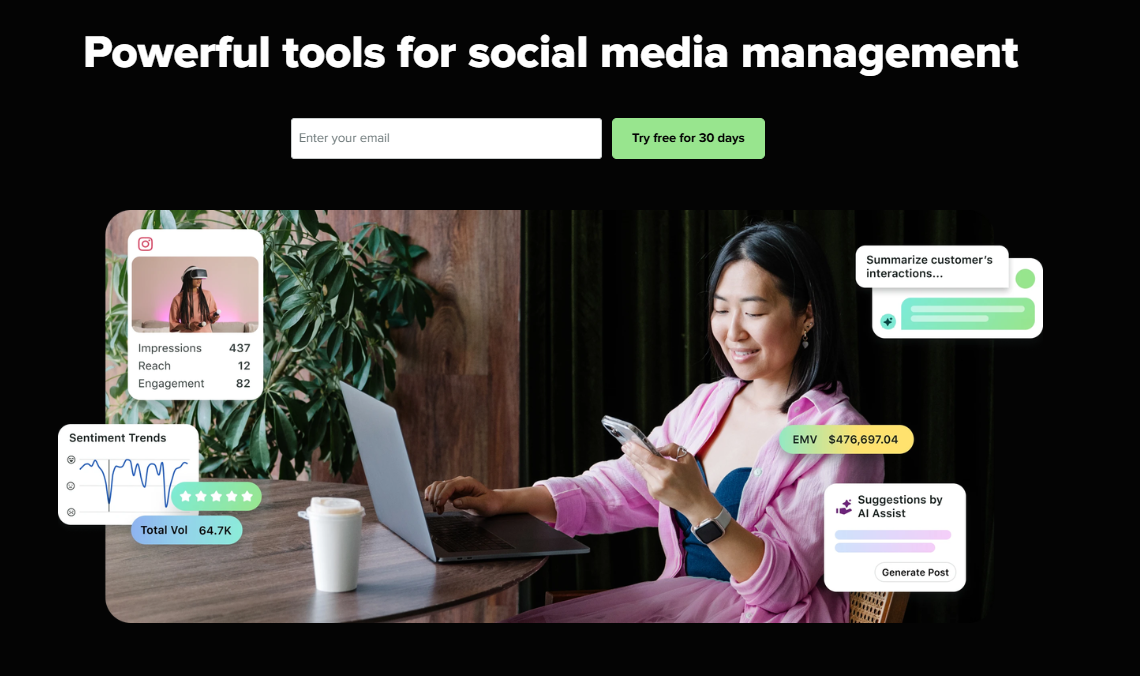
Sprout Social is the premium pick with the best analytics for marketing teams that actually use the data. Sprout is the tool I see analytics-led social teams pick once they’ve outgrown Buffer’s simplicity.
The reporting is the cleanest in the category, and the social listening features integrate with the rest of your marketing automation platform stack in a way Buffer cannot match.
If you have a sizeable marketing team running social as a legitimate growth channel, Sprout Social is your upgrade. For marketers who still need design control and approval workflows on email campaign tooling, Campaign Monitor still rates as a credible alternative option.
21. Nuelink: Best for hands-off social media automation
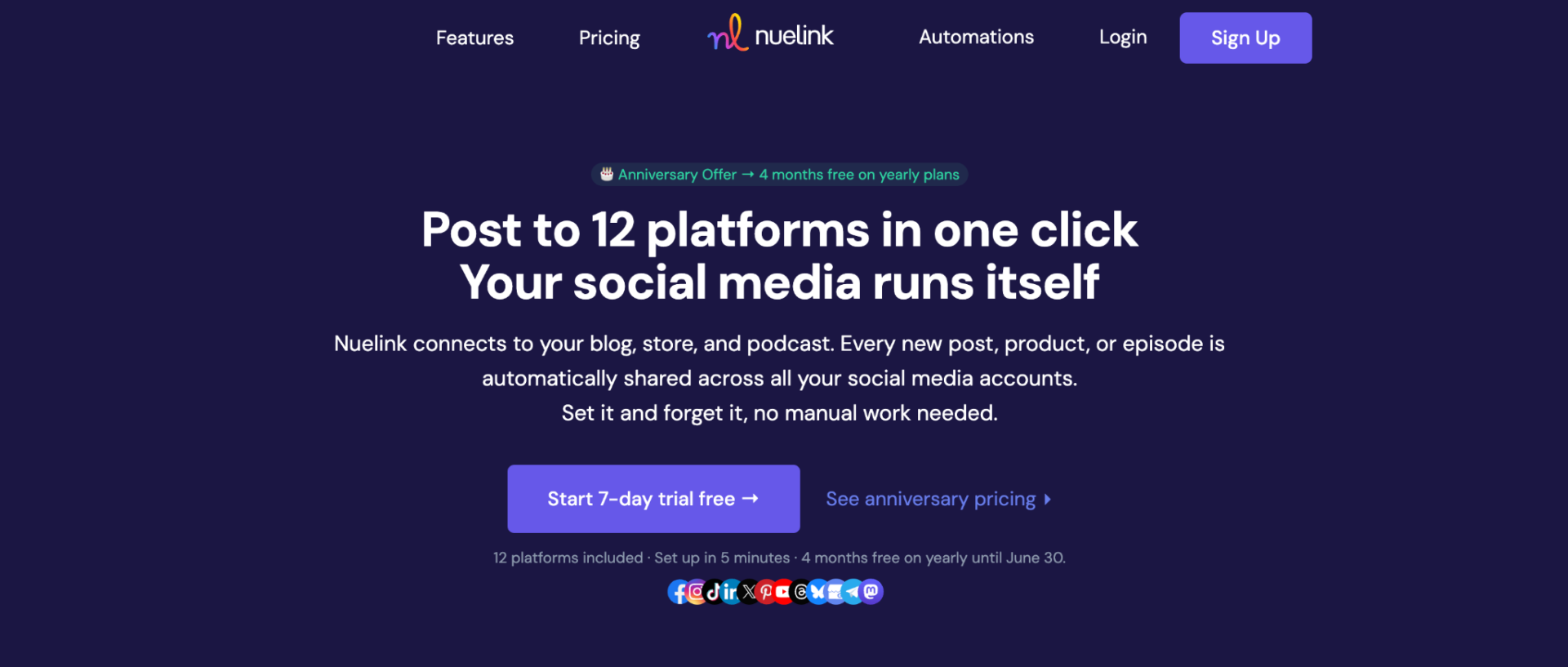
Nuelink is the social media tool I reach for when the goal is less about manually scheduling every post and more about putting the busywork on autopilot. Where Buffer keeps things simple and Sprout leans premium, Nuelink sits in the spot most small teams actually live in: scheduling, automating, and recycling content across every major platform without babysitting a calendar all day.
What sets it apart is the automation layer. Nuelink can pull content straight from sources you already publish to, like your blog RSS feed, your store’s product catalog, your podcast, or your YouTube channel, and turn those into scheduled social posts without you copy-pasting anything. Set up the connection once and the queue keeps itself fed.
It is the right tool for solo marketers, creators, and small teams who want to automate the repetitive parts of social and reclaim the hours that scheduling normally eats. It is the wrong fit for large enterprise teams that need deep social listening and advanced analytics at the level Sprout Social delivers.
Pricing starts at $18 a month, with a free trial available so you can test the automations before committing.
How to Pick Marketing Software for Your Team
Three guidelines should cover 90% of your marketing software buying and marketing management decisions.
First, integration depth wins out over feature depth.
A marketing tool that has 80% of the features that integrates perfectly with the rest of your marketing stack will perform better than a 100% feature-rich tool that requires custom integration.
Marketing automation tools, CRMs, and marketing analytics tools are particularly sensitive to this guideline.
Second, real-world pricing beats pricing on a website.
Ask every vendor for a price quote that accounts for the seats, integrations, and overages you will actually use over the next 12 months.
Vendor pricing pages are best-case scenarios. Marketing automation software pricing in particular is notorious for skyrocketing once you hit specific contact thresholds.
Third, your user should be your buyer.
If the person who signs the check is not the marketer who uses the marketing tool every day, the implementation struggles.
Have the marketer who owns the marketing campaigns in question lead the product evaluation. This applies especially to email marketing software, marketing automation platform decisions, and CRMs.
Common Mistakes When Buying Marketing Software
The most expensive mistakes that I see marketing teams make tend to be structural.
Buying two different marketing tools that solve the same problem in two different ways.
Paying for unused seats because no one audited your list of users this year. Signing an annual contract on marketing software before validating that your marketing team is actually going to use it.
Switching marketing automation platforms in the middle of a quarter without budgeting for a data migration. Treating your marketing analytics as an afterthought instead of a fundamental foundation of every marketing strategy decision.
If you remember only one takeaway from this list of best marketing software, remember this: the biggest cost line item is never the software. It’s the marketing campaign that didn’t happen because there was a bad marketing tool in the way.
Link building cheat sheet
Now Over to You
Pick the marketing software products that apply to your existing marketing strategy. Pick up the others when your campaigns need them. The best marketing tool stack in 2026 isn’t necessarily the one with the most marketing products.
It is the one that allows your marketing team to consistently produce, truthfully measure, and meaningfully improve upon its quarterly results.
If link building is one of the gaps you’re filling this quarter, that’s where Respona fits in your stack.
Place an order by sharing your target pages and target keywords with our team, and we’ll handle the prospecting, pitching, and securing live placements that drive both Google rankings and AI citations.
Frequently Asked Questions (FAQ)
Which is the best marketing automation software for small businesses?
For the small business marketer, the ideal marketing automation software typically marries email marketing, basic CRM, content management, and rudimentary automation.
HubSpot Marketing Hub is by far the most common solution that fits this description, and Constant Contact covers the email-led version of the same workflow for service-based businesses.
What is the price of marketing software?
It really depends. Email marketing solutions start free and go all the way up to thousands of dollars a month at the highest tier.
Marketing automation software generally starts around $20 a month for solo marketers and goes up to thousands a month for enterprise marketing teams.
Always have the sales rep run you a pricing plan that has been adjusted for annual payment, overages, and extra seats.
Do I need separate tools or all-in-one marketing platforms?
This one has no universal right answer. All-in-one marketing suites like HubSpot Marketing Hub and Salesforce Marketing Cloud save you on integration costs at the expense of paying for features you won’t use.
Conversely, an unbundled “best-of-breed” tool stack gives you superior tools in any given category, but you will have to actually get those tools to integrate properly.
Teams below the size of 20 marketers are better off with an all-in-one solution; larger marketing teams almost always end up with a hybrid.
Can I run my affiliate marketing program in the same tool stack?
Yes.
Most current marketing automation suites and email marketing software provide for affiliate marketing tracking and partner commission payments through native integrations with dedicated affiliate platforms.
The marketing automation software you’re going to be using for email marketing campaigns is also the ideal space to maintain communications with your marketing affiliates.
Which is the best free marketing software?
Google Analytics 4, Google Search Console, HubSpot CRM, Canva’s free plan, and Trello can serve as your entire marketing tool stack for zero cost.
None of these tools are leaders in their field, but for the marketer working for a small business or solo practitioner, these are more than adequate to operate a legitimate marketing department.