
Rank tracking sounds like one of those problems that should have been solved years ago. Pick a tool, plug in your keywords, get a chart. Done.
It isn’t that simple in 2026.
What you actually need to track has expanded. Beyond Google rankings, modern SEO tracking has to cover device-specific results, geographic variation, SERP feature changes, competitor movement, and increasingly, citations inside AI engines like ChatGPT and Perplexity.
A rank tracker that only tells you “you’re #4 for keyword X” is doing maybe half the job.
The list below covers 20 SEO rank tracking tools worth looking at this year, from the obvious enterprise players to the lesser-known options that punch above their weight.
Each has a different strength: some lead on tracking accuracy and update frequency, others on local SERP coverage, others on price for unlimited keyword tracking.
Let’s get into it.
Key Takeaways:
- Rank tracking in 2026 isn’t just about Google rankings. A modern SEO strategy needs visibility across Google, Bing, mobile vs desktop, geographic SERPs, and now AI search engines. Picking a tool that only tracks one of these means you’re flying blind on the rest.
- Free tools exist, but they hit limits fast. Google Search Console gives you ranking data for free, but it’s averaged, delayed, and doesn’t track competitors. For any serious SEO effort beyond a personal blog, you’ll outgrow free options within a few months.
- Match the tool to your use case. An in-house SEO professional managing a single brand needs different features than an agency tracking 50 client accounts. Look for daily rank tracking, white-label reporting, and competitor tracking if you’re agency-side. Look for clean keyword position data and integrations if you’re in-house.
- Don’t overpay for enterprise features you’ll never use. The seo tool market is bloated with platforms charging $400+/month for features 80% of teams never touch. Most marketing teams get more value from a $50-$100/month rank tracker plus a separate keyword research tool than from one bloated suite.
- Daily rank tracking matters more than weekly. A weekly update tool will miss most of the SERP volatility that actually affects your business. Ranking position can swing 5-10 spots in a day around algorithm updates, and you want to see that movement as it happens, not five days later.
- The seo metrics you track shape the decisions you make. Teams that only watch keyword rankings tend to optimise for the wrong things. Pair your rank tracking with click data from GSC and conversion data from your analytics to actually understand which rankings matter.
Link building cheat sheet
AccuRanker
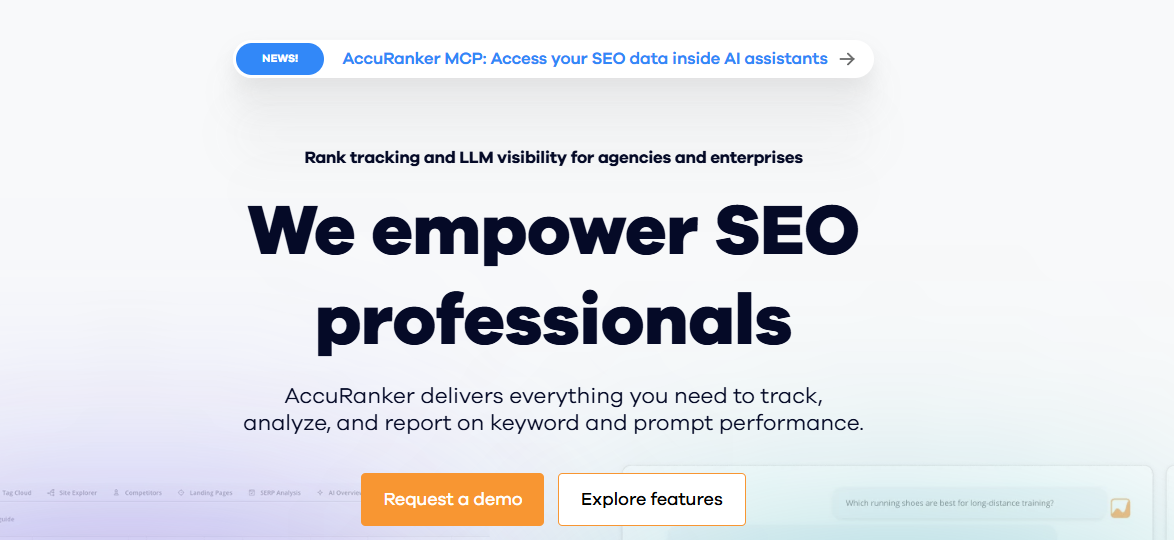
AccuRanker has earned its reputation as the fastest rank tracker on the market. The platform updates keyword rankings on demand, which sounds like a minor feature until you’ve sat through the 24-hour delay most competitors charge for.
The pricing is on the higher end, but you’re paying for the accuracy and the speed. Enterprise SEO teams and agencies use it for the daily rank tracking precision, the granular SERP feature monitoring (featured snippets, knowledge panels, video carousels), and the share-of-voice metrics that aggregate keyword rank across your tracked set. Integration with Google Analytics, Google Search Console, and Looker Studio is built in, so the ranking data flows into whatever reporting stack you already use.
If your team needs sub-hour rank refreshes and granular SERP intelligence, AccuRanker is hard to beat. If you’re a small site with 100 keywords to track, you’re probably overpaying.
Keywords Everywhere
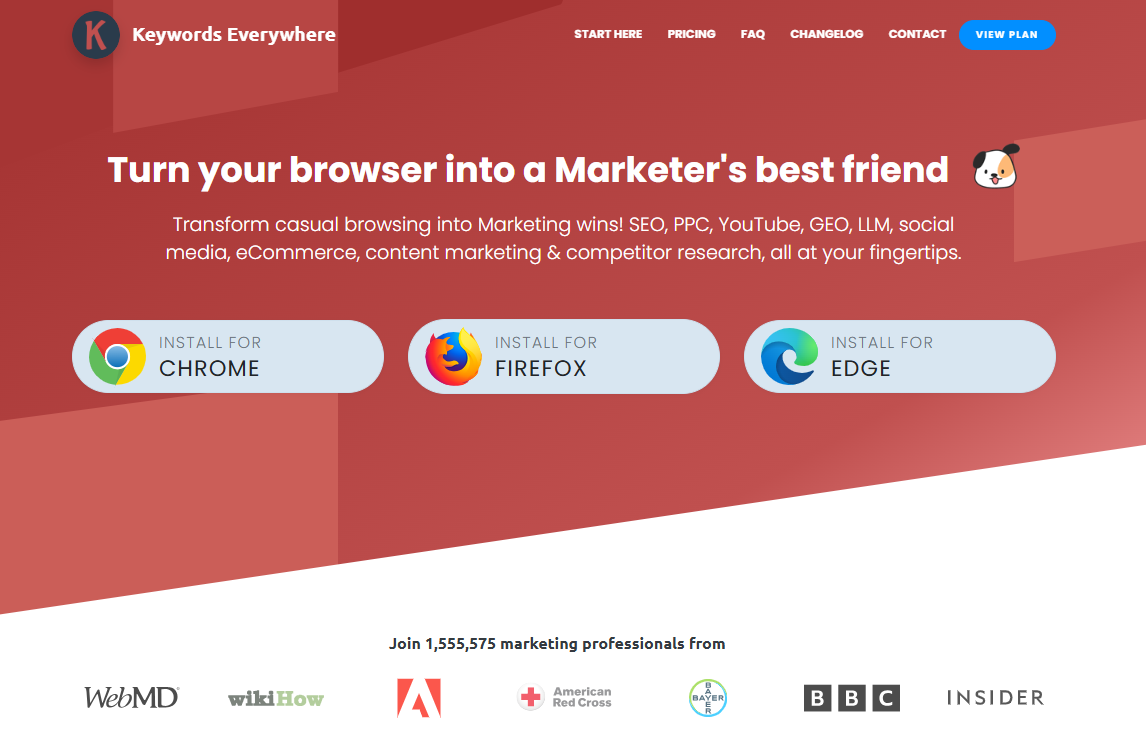
Keywords Everywhere is a browser extension and keyword research toolkit that covers far more ground than most of the SEO tools on this list. It has a free Organic Ranking Checker that shows which keywords any website ranks for in Google, along with their position, search volume, CPC, and traffic estimates. You can use it without creating an account or paying for a subscription.
What makes Keywords Everywhere different is how it fits into a real research workflow. Instead of logging into a platform, you can get keyword data directly on Google, Amazon, eBay, Etsy, YouTube, and dozens of other sites as you browse. Search volume, CPC, competition score, SEO difficulty, trend graphs, and keyword ideas appear on the page in seconds, which keeps competitive analysis fast and practical.
It also comes with a library of free standalone tools, including a CPC checker, SERP analyser, backlink checker, and traffic checker, all usable without spending any credits.
Pricing is credit-based rather than subscription-based. Credits start at $15 for 100,000 lookups, with a free tier that requires no account. And with MCP support, Keywords Everywhere is the first keyword tool that lets users pull live keyword data directly inside Claude and ChatGPT.
SE Ranking
SE Ranking is the all-in-one SEO platform that quietly does most things well without charging Ahrefs or Semrush prices. The rank tracking module is its strongest feature, with accurate keyword position data across desktop, mobile, and any geographic SERP you need to monitor.
What makes SE Ranking different is its agency focus. White-label reports, client portals, and team permissions are baked in rather than bolted on, which is why so many small-to-mid SEO agencies have moved off pricier platforms onto SE Ranking.
It also bundles a site audit, backlink checker, and keyword research tools under one subscription, which keeps your total tool spend lower.
Daily ranking updates are included on all paid plans. Plans start around $55/month for the entry tier, which buys you 250 tracked keyword positions and access to most modules.
Wincher
Wincher is the rank tracker for people who want one job done well. No site audits, no content optimisation modules, no AI assistants. Just clean keyword tracking with a clean interface.
That focus is the appeal. You add your domain, paste in your keywords, and Wincher tracks them daily across Google, Bing, and Yahoo. The reports are simple and email-deliverable. The dashboard shows movement at a glance. Integration with Google Search Console pulls in the keywords you’re already ranking for, so you can quickly identify what’s worth actively tracking.
Pricing starts around $29/month, making Wincher one of the most affordable serious rank tracking tools out there. For solo founders, small content sites, and SEO consultants managing a handful of brands, it hits the sweet spot between “free but limited” and “powerful but expensive.”
Nightwatch
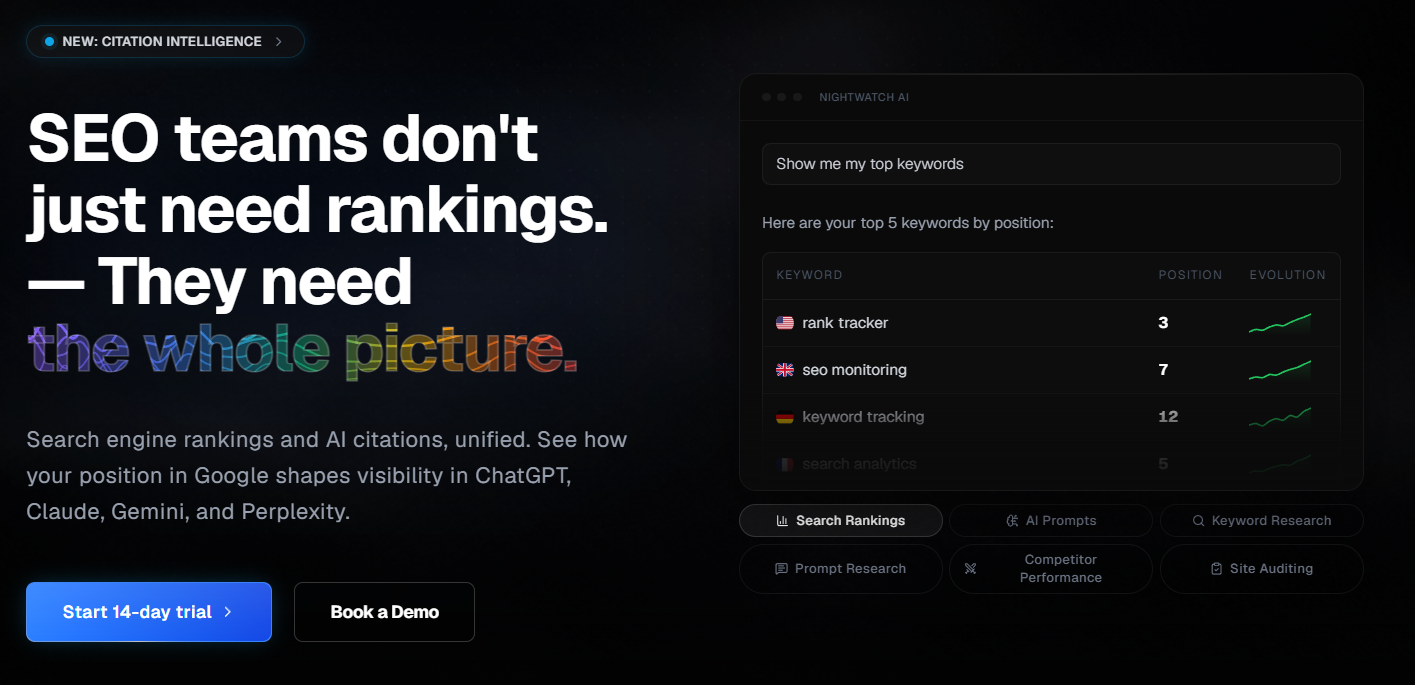
Nightwatch positions itself as the rank tracking tool for SEO professionals who care about presentation. The dashboards are genuinely beautiful, the reporting is highly customisable, and the platform handles segmentation by location, device, and search engine cleanly.
Beyond rank tracking, Nightwatch includes backlink monitoring and on-page SEO audits, which makes it more of a lightweight SEO suite than a pure rank tracker. The location tracking is particularly strong: you can monitor keyword rankings down to the city or zip code level, which matters for any business with local seo concerns or franchise operations.
Pricing starts around $39/month for the entry tier with 250 tracked keywords. For mid-sized agencies that need polished client reporting plus solid technical rank tracking under one roof, Nightwatch is a sensible middle ground between budget tools and enterprise platforms.
Ahrefs Rank Tracker
Ahrefs Rank Tracker is part of the broader Ahrefs platform, which most SEOs already use for backlink research and keyword research. The rank tracking module benefits from Ahrefs’ massive index of historical SERP data, which means you can analyse keyword rank movement going back years for any domain, not just yours.
Daily updates are available on higher plans. Standard plans update weekly, which is fine for monitoring but not great for catching algorithm-update volatility. The visualisations are clean, the competitor tracking is strong, and the integration with the rest of the Ahrefs platform means you can move from a ranking dip straight into investigating the backlink or content change that caused it.
The catch is that you’re not really paying for a rank tracker. You’re paying for Ahrefs ($129+/month) and getting rank tracking included. Worth it if you already need Ahrefs. Overkill if you don’t.
Semrush Position Tracking
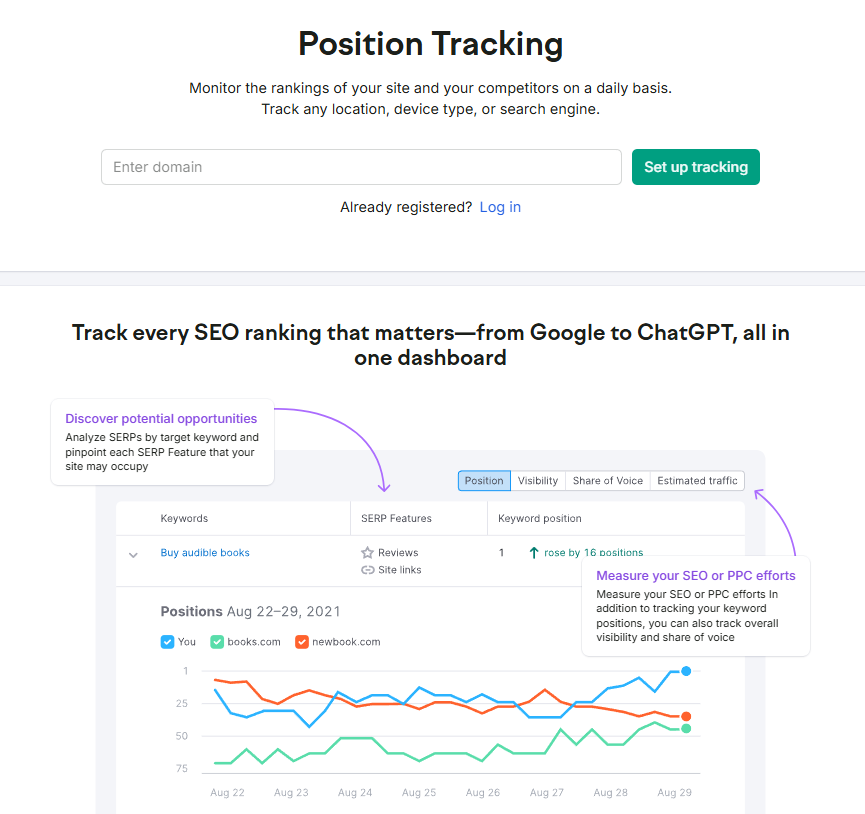
Semrush Position Tracking is Semrush’s equivalent module, bundled into their broader marketing platform.
The feature set is enterprise-grade: position tracking across 140+ countries, device and location segmentation, competitor monitoring, SERP feature alerts, and integration with Google Analytics for the full path from ranking to revenue.
The “Sensor” feature is a useful extra. It tracks SERP volatility across your industry so you can tell whether a ranking drop is your problem or a Google update affecting everyone.
Cannibalisation reports, share-of-voice charts, and visibility scores are all included.
Pricing starts at $139/month for the Pro plan, which includes 500 tracked keywords across 5 projects. Like Ahrefs, you’re not really paying for the position tracking alone, you’re paying for the full Semrush suite and getting it included. The fit is best for teams that already use Semrush for keyword research and competitive analysis.
Serpstat
Serpstat is the affordable all-in-one alternative to Ahrefs and Semrush, originally built in Ukraine and now used by SEO teams worldwide. The rank tracking is solid, with keyword position monitoring across 230+ Google databases and full SERP feature coverage.
What you actually get on Serpstat for $59/month is comparable to what costs $139/month elsewhere.
The interface isn’t as polished as Semrush or as deep as Ahrefs, but the core rank tracking, competitor analysis, and keyword rankings features all work as advertised. The team analytics module lets multiple SEOs collaborate inside one workspace, which is useful for in-house teams that don’t want to pay per-seat agency pricing.
For brands that want enterprise-style features without enterprise-style pricing, Serpstat is one of the best-kept secrets in the space.
SERPWatcher (by Mangools)
SERPWatcher is the rank tracking tool inside the Mangools suite, which also includes KWFinder (keyword research), SERPChecker (SERP analysis), LinkMiner (backlink checking), and SiteProfiler (domain metrics). The whole bundle starts at $29/month, which is unusually cheap for what you get.
The tracker itself is straightforward rather than feature-rich. You add keywords, pick a location and device, and SERPWatcher tracks them daily. The “Dominance Index” metric aggregates all your keyword rankings into a single score that’s useful for high-level reporting to non-SEO stakeholders.
The catch is that SERPWatcher doesn’t scale well past a few thousand keywords. For solo SEOs, small agencies, and content businesses, the price-to-feature ratio is excellent. For enterprise needs, you’ll outgrow it.
Pro Rank Tracker
Pro Rank Tracker is one of the few platforms that focuses exclusively on rank tracking, with no keyword research, no content tools, no backlink modules cluttering the interface. That focus translates into more depth on the tracking itself.
The platform supports Google, Bing, Yahoo, YouTube, Amazon, and even Google Maps tracking for local businesses. White-label reporting is included on all plans, which has made it popular with agencies that need to brand their client deliverables. Multi-language and multi-region tracking is genuinely robust, not just supported in name.
Pricing starts at $13.50/month for the entry tier, which is unusually accessible for a tool of this depth. Higher tiers scale to thousands of tracked keyword positions. If rank tracking is the only feature you need, this is one of the few specialists worth considering over the all-in-one suites.
Advanced Web Ranking
Advanced Web Ranking is one of the oldest names in rank tracking, going back to the early 2000s, and has evolved into a cloud-based platform with one of the most comprehensive feature sets in the category. Geographic SERP coverage, device segmentation, SERP feature monitoring, competitor visibility tracking, and white-label reporting are all included.
What AWR does particularly well is historical ranking data. The platform retains keyword rank history for years, which makes it valuable for case studies, executive reporting, and SEO retrospectives. The interface shows less day-to-day polish than newer tools, but the underlying data and customisation depth are hard to match.
Pricing starts around $99/month for the cloud version. For SEO teams that value depth over polish and want a platform with a proven track record, this is a solid choice.
SerpRobot
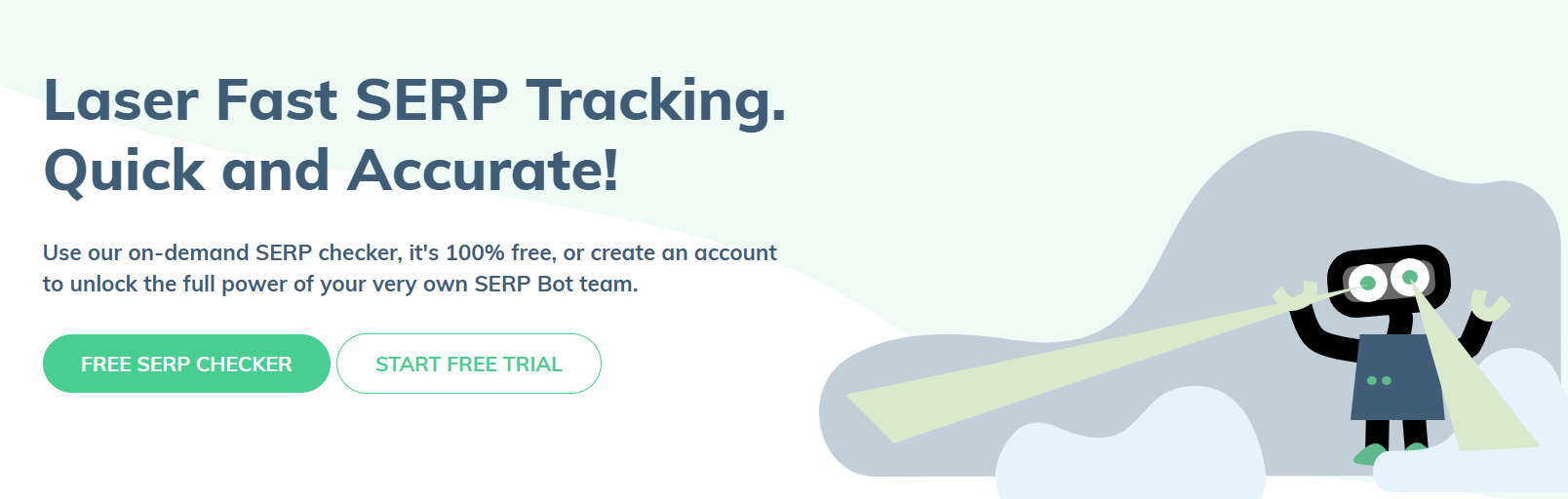
SerpRobot is one of the cheapest serious rank trackers available, with paid plans starting at around $9/month. The tool covers the basics well: daily updates, multi-engine support (Google, Bing, Yahoo, YouTube), location and device targeting, and a clean dashboard that shows keyword position changes at a glance.
What you don’t get is depth. There’s no built-in backlink monitoring, no keyword research, no on-page audit features. It’s a focused rank tracking tool and nothing more. The platform is fully cloud-based, which makes it a faster setup than desktop alternatives like SEO PowerSuite, where you need to keep the application running on a local machine to refresh data.
For freelancers, indie hackers, and content sites where the budget for tooling is genuinely tight, SerpRobot does the essential job at a price that’s hard to argue with.
Keyword.com
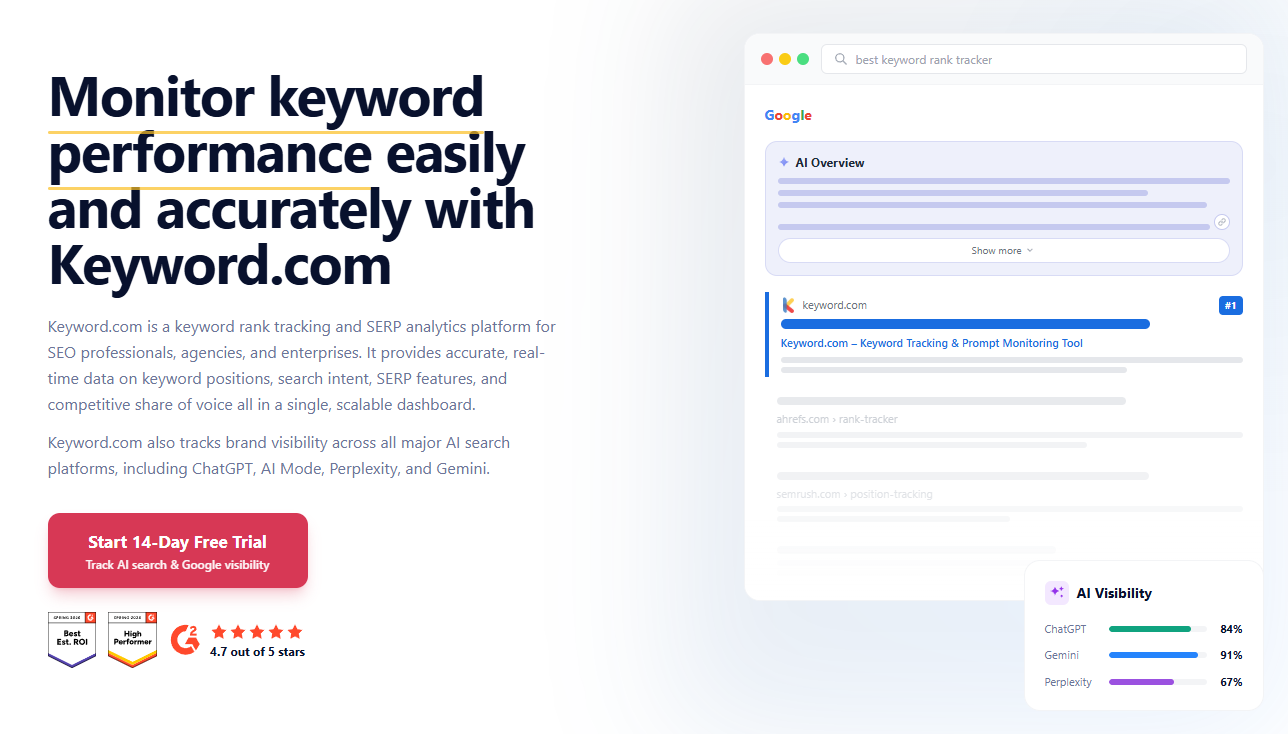
Keyword.com (formerly SERPs.com) targets the higher end of the agency market with a focus on accuracy and reporting polish. Daily rank refreshes, hourly updates available on enterprise plans, and a generous SERP feature monitoring set make it competitive with AccuRanker on the precision front.
The white-label reporting is where Keyword.com pulls ahead for agency use cases. Branded PDF reports, custom domains on client dashboards, and team workflows are built for SEO agencies that bill premium rates and need their deliverables to match. The platform also integrates cleanly with Google Analytics and Google Search Console, so the ranking data ties back into broader SEO performance reporting.
Pricing starts around $79/month for the entry tier, scaling up significantly for agency volume. It’s a premium product, priced accordingly.
RankActive
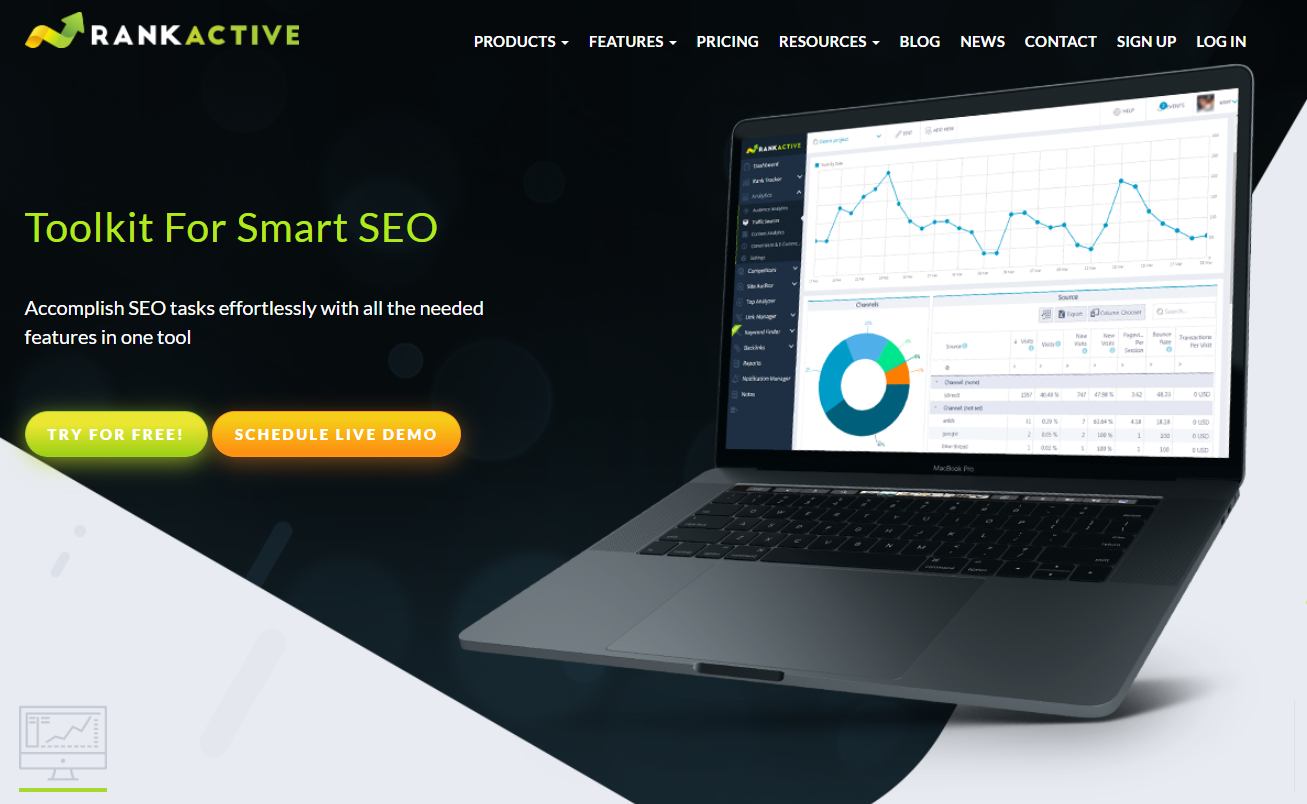
RankActive is another Eastern European all-in-one SEO platform, comparable to Serpstat in scope but with a different feature emphasis. The rank tracking module supports unlimited keyword tracking on certain plans, which is rare at this price point. You can also track an unlimited number of competitors against your tracked keywords, which most platforms charge extra for.
Beyond tracking, RankActive includes a backlink checker, keyword research, site audit, and SERP feature monitoring under one subscription. The interface is functional rather than beautiful, but the underlying tools work as advertised.
Pricing starts around $49/month for the entry tier with thousands of tracked keywords. For mid-sized SEO teams that want a wide feature set without paying enterprise prices, RankActive is one of the more sensible all-in-one platforms worth a free-trial test.
Sitechecker
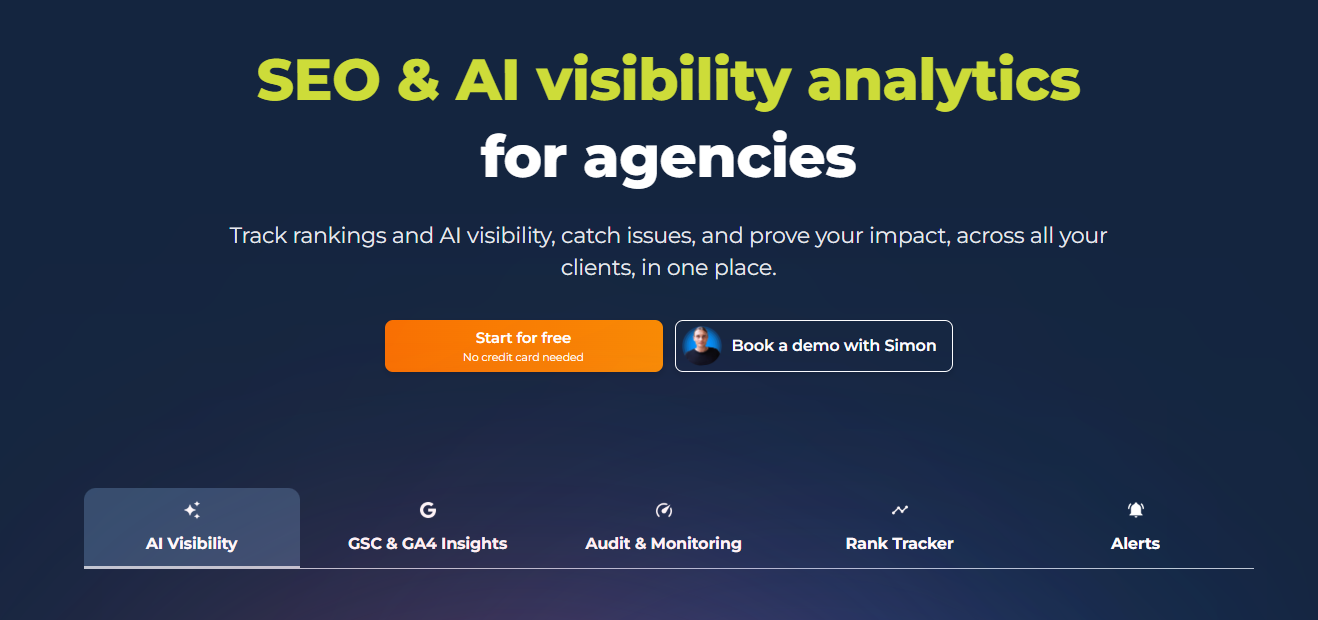
Sitechecker positions itself as a technical-SEO-first platform with rank tracking included rather than the other way around. The site audit module is the centrepiece, scanning your site for hundreds of on-page and technical issues, and the rank tracking sits alongside it as a way to connect technical fixes to keyword rank movement.
For in-house teams that own the entire SEO stack (technical, content, and off-page), this integration is genuinely useful. You can spot a ranking drop, jump into the audit module, and see whether it correlates with a recent technical change. Most rank tracking tools force you to switch platforms for that kind of investigation.
Pricing starts around $59/month, with higher tiers unlocking more tracked keywords and audit pages. A solid choice for technical SEOs and in-house teams that value workflow integration.
SERP Sonar
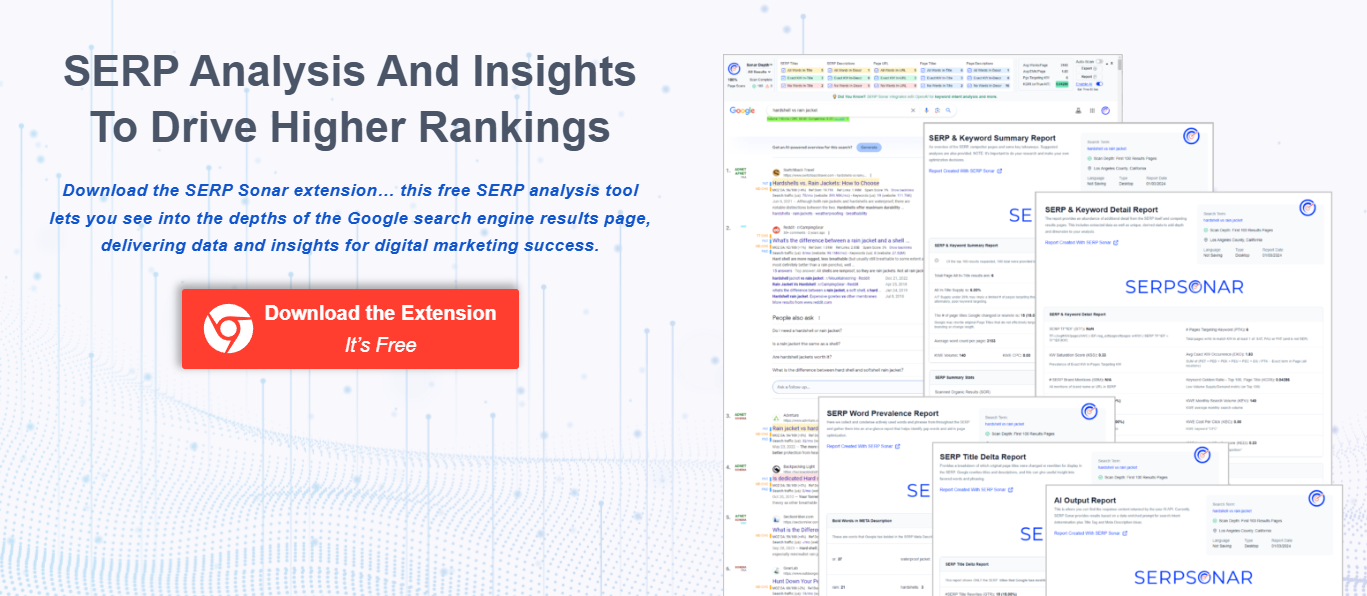
SERP Sonar is one of the lesser-known options on this list, focused specifically on real-time SERP monitoring and alerting. Where most rank tracking tools email you a daily summary, SERP Sonar can ping you within minutes of a significant ranking change for any tracked keyword.
That alert-first design makes it useful for SEO teams managing high-stakes commercial keywords where ranking shifts directly impact revenue, or for agencies that want to spot algorithm-update volatility before clients notice. The tool also tracks SERP feature changes (new featured snippets, knowledge panel appearances, schema changes) and alerts on those.
Pricing is in the mid-range, and the tool is best used as a complement to a primary rank tracker rather than a standalone solution. For teams that need fast detection on a specific subset of high-value keywords, SERP Sonar fills a real gap.
Authority Labs
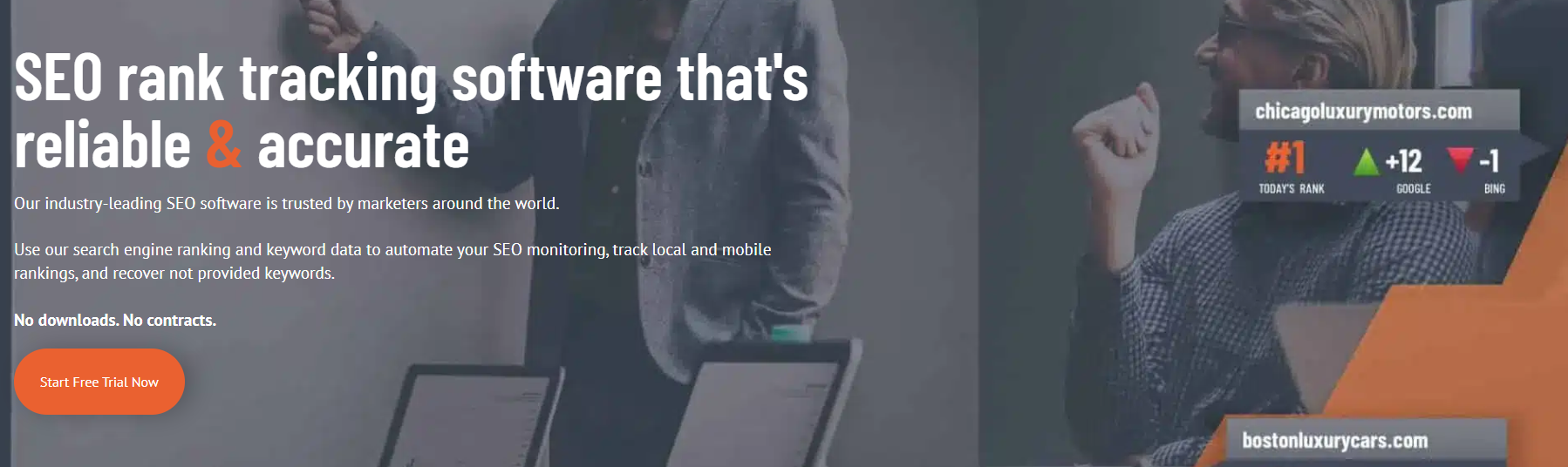
Authority Labs is one of the longest-running rank tracking tools that’s still actively developed, with a particular strength in local seo monitoring. The platform tracks keyword positions across thousands of cities and zip codes, which is essential for multi-location businesses, franchise operations, and local search agencies.
The interface is dated compared to newer entrants like Nightwatch, but the underlying data is reliable. White-label client reporting, daily updates, and competitor tracking are included on paid plans. The API access is solid for teams that want to pipe ranking data into custom dashboards or BI tools rather than relying on the built-in reporting.
Pricing starts around $49/month. For agencies whose client base skews local, or for teams that already use SEO PowerSuite and want a cloud-based alternative with stronger local coverage, Authority Labs is worth evaluating.
Wordtracker
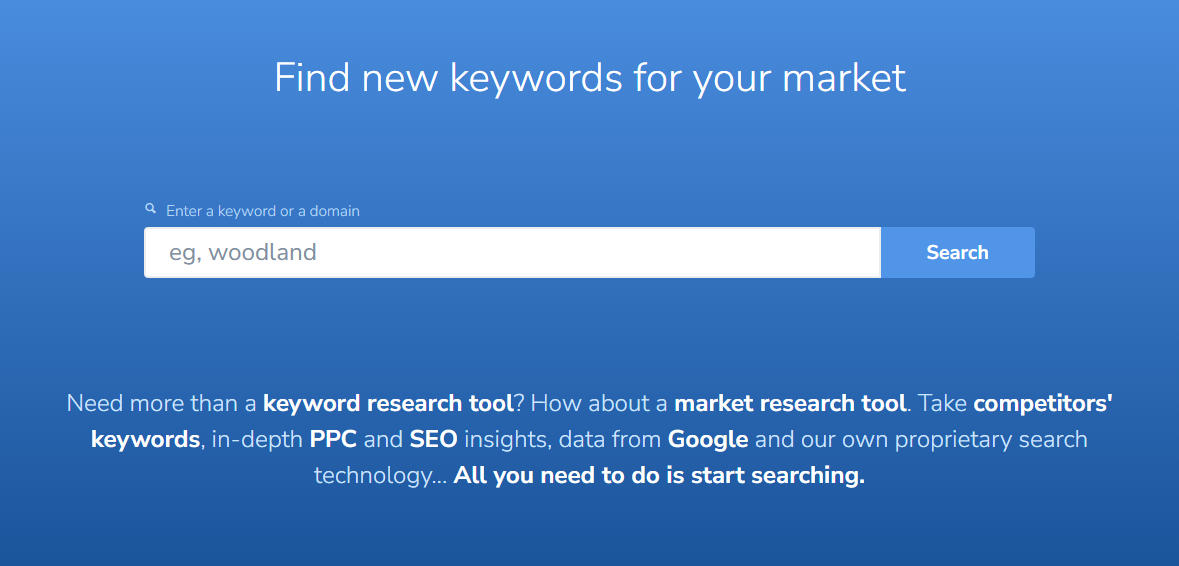
Wordtracker started in the late 1990s as one of the original keyword research tools, and the platform has evolved over the years to include rank tracking alongside its original feature set. The UK roots mean strong coverage of European search engine data, which is often weaker on US-built tools.
The keyword tracking is solid but not exceptional. Daily updates, geographic and device segmentation, and the basics are all there, though without the polish of pure-play rank trackers like AccuRanker. Where Wordtracker shines is the connection between its keyword research database and its tracking module: you can identify gap keywords in the research tool, add them to tracking, and watch the impact of new content directly.
Pricing starts around $27/month. For content-focused SEOs who want keyword research and tracking under one roof, Wordtracker is a sensible pick. It’s also a credible alternative to SEO PowerSuite for teams that prefer cloud-based tooling.
Whatsmyserp
Whatsmyserp started as a free Chrome extension that pulled real Google SERP results without the personalisation Google normally applies to your account. That extension is still free and widely used, and the platform has expanded into a full rank tracking offering on top of it.
The paid platform handles standard rank tracking duties (daily updates, location targeting, competitor tracking) at a more accessible price point than most. Where Whatsmyserp stands out is the free tier and Chrome extension, which let you do quick SERP checks and basic keyword ranking lookups without paying anything. For SEOs who want to validate a position on a single keyword fast, the extension alone is genuinely useful.
Paid plans start around $19/month. A pragmatic choice for budget-conscious teams and for SEOs who want a free tool to supplement their main tracker.
Bonus: Respona
Every tool above tells you where your keyword rankings stand. Respona is the only one on this list that also moves the needle.
That’s because Respona isn’t really a traditional seo rank tracking tool. It’s an AI visibility platform with a done-for-you option attached, which is two things most SEOs currently buy separately.
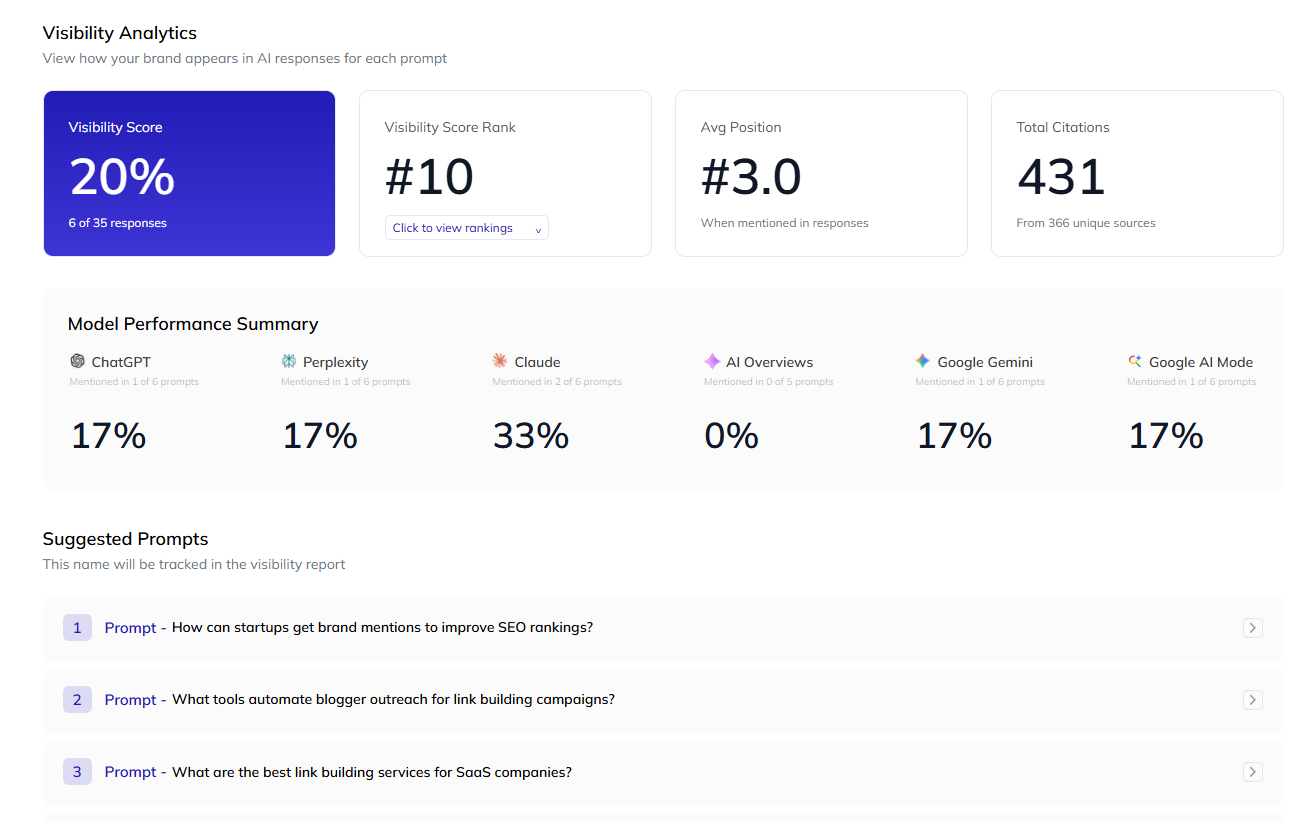
The visibility tracking side monitors your brand presence across 6 major AI answer engines, including ChatGPT, Perplexity, Google AI Overviews, and Gemini.
For each tracked query, you can see whether your brand gets cited, which listicles or sources the engines are pulling from, and how the picture shifts week to week.
This is data most rank tracking tools can’t give you because they’re still oriented around blue-link rankings inside the traditional search engine.
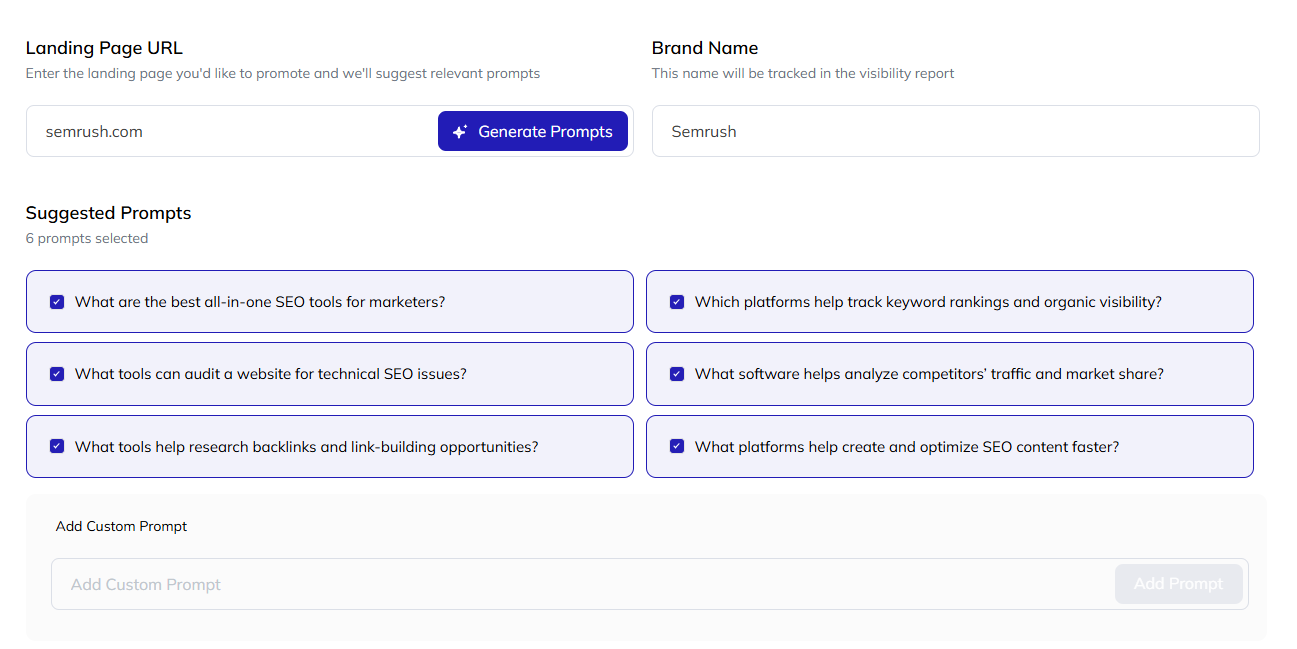
The action side is what makes Respona different from every other AI visibility dashboard hitting the market.
When the tracking flags a gap (you’re not showing up for “best [your category] tools” inside ChatGPT, or a competitor dominates the local seo queries an AI engine returns in your region), Respona’s done-for-you team can run the outreach to fix it.
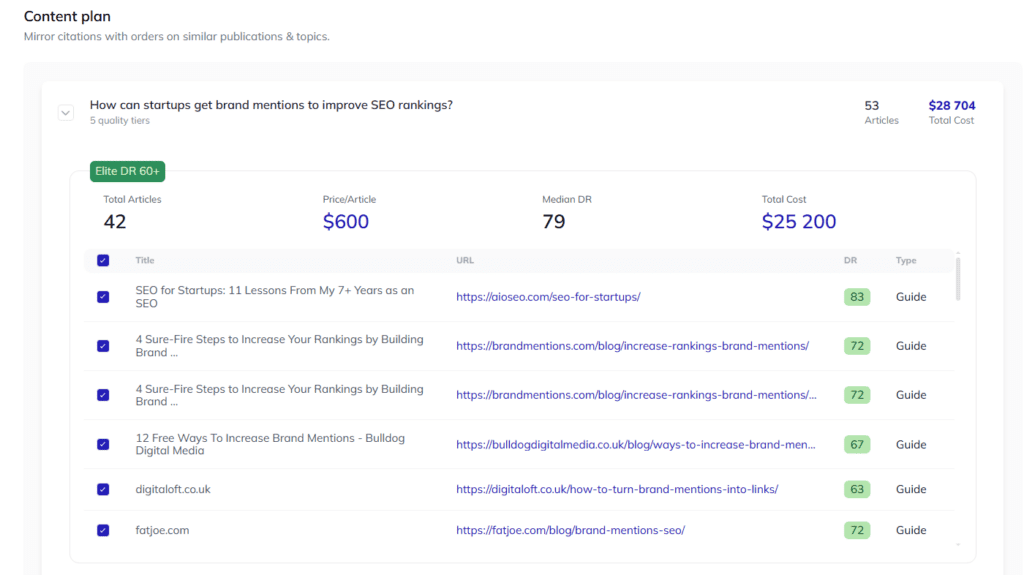
Mentions inside the listicles AI engines pull from. Editorial placements on the publications they cite.
The team handles the prospecting, pitching, and placement, while the dashboard tracks the impact on your AI visibility over time.
That’s the combination. Visibility you can see, plus the action layer to actually change what shows up.
Link building cheat sheet
Now Over to You
There’s no single best rank tracker for every team.
The right pick depends on what you’re tracking, how much you want to spend, and whether your priorities skew toward depth (Ahrefs, Semrush, AccuRanker), accessibility (Wincher, Whatsmyserp, SerpRobot), or a specialised use case like local SEO, agency-focused white-label reporting, or enterprise-grade SERP intelligence.
If you’re starting to think about visibility beyond Google rankings, Respona is worth a look.
The AI answer engines are pulling from a smaller set of sources than Google does, which means a brand can become “the recommended answer” inside ChatGPT or Perplexity much faster than it can rank #1 in a competitive SERP.
Tracking that visibility and acting on it is the new frontier of SEO, and Respona is purpose-built for it.
Place your first order and get started today.
Frequently Asked Questions (FAQ)
What’s the best free rank tracker?
Google Search Console is the closest thing to a free rank tracker that’s actually useful, showing average position for keywords you already rank for.
Beyond that, Whatsmyserp’s Chrome extension, Wincher’s free tier, and various small seo tools online give spot-check capabilities. None replace a paid tracker for ongoing monitoring, but as a quick google rank checker, they work fine.
How is keyword rank tracking different from position tracking?
The terms mean the same thing in practice. “Keyword rank tracking” emphasises which keyword you’re following; “position tracking” emphasises the position result you’re measuring. Both refer to the same underlying activity: watching where your pages show up over time as you track keyword performance.
Do I need local rank tracking?
If your business serves a specific geographic area, yes. Local rank tracking shows where you appear for “near me” searches and city-specific queries, which often differ significantly from national results.
A dedicated keyword rank tracker that handles location-specific SERPs (Authority Labs, Pro Rank Tracker, Nightwatch) tends to do this better than the generic enterprise platforms.
How do I check Google rankings without a paid tool?
Google Search Console gives you average position data for keywords you already rank for. Incognito mode in your browser shows a Google SERP that’s not personalised to your account history.
A free Chrome extension like Whatsmyserp pulls real ranking data on the fly. For tracking google ranking over time without paying for a rank tracker tool, none of these are perfect, but they cover quick lookups fine.
What about SEO PowerSuite and desktop trackers?
Desktop tools like SEO PowerSuite work differently from cloud-based options.
You buy the tracking software once and run it locally, but the application has to be running for updates to refresh, and the seo rank tracking software depends on your local IP for SERP fetches. Cloud-based tools fix both issues but charge monthly.
Are there free seo review tools that include rank tracking?
Some all-in-one platforms offer free tiers with limited rank tracking. Ubersuggest, Mangools’ free trial, and a few free seo review tools online let you track a small handful of keywords without paying.
The free tiers cap out at 5-10 keywords in most cases, which isn’t enough for any serious SEO program.
How accurate is rank tracking data, really?
Rank tracking data is approximate, not exact. Google personalises results based on location, device, search history, and recent queries, so what your tool reports as “position 4” might appear as position 2 or position 6 to different users searching the same query.
The good tools minimise this by simulating searches from neutral locations and clean accounts, but no tool gets it perfect. Trust the trends more than the absolute numbers.