
For years, SEO meant one thing: rank in the top 10.
Now, AI search engines are answering the question before anyone clicks.
Google AI Overview summarizes results.
ChatGPT and Perplexity AI generate AI answers instantly.
Bing Copilot does the same.
That’s where AI citation optimization comes in.
Some call it generative engine optimization or answer engine optimization. It’s all pointing to the same shift: visibility is moving from blue links to AI answers.
AI models don’t cite randomly. They quote brands that are consistently mentioned, referenced, and validated across the web.
This isn’t about gaming an AI bot.
It’s about building authority that AI systems can’t ignore.
Here’s the 4-step framework we’re using to increase AI visibility and turn brand mentions into AI citations.
Key Takeaways:
- AI citation optimization is about getting referenced inside AI answers, not just ranking in search results.
- Google AI Overviews often pull from top-ranking pages, but other AI search engines rely heavily on repeated brand mentions across the web.
- Listicle placements, editorial coverage, and industry platforms directly influence AI visibility.
- This is a scaling game. Stack consistent citations, and AI models start quoting you naturally.

Link building cheat sheet
Step 1: Understand How AI Models Decide What to Cite
Before you try to optimize for AI citation, you need to understand one thing:
Not all AI systems choose sources the same way.
Let’s start with Google AI Overview.
In most cases, Google AI Overviews pull heavily from pages already ranking in the top 10 search results. If you’re not visible in traditional SEO, your chances of being included are low.
So for Google AI, traditional search engine optimization still matters. Rankings influence citations.
Now compare that to ChatGPT, Perplexity AI, or Bing Copilot.
These AI search engines don’t just look at who ranks #1.
They rely on broader citation patterns across the web.
If your brand is consistently mentioned in listicles, industry blogs, comparison pages, forums, and trusted publications, AI models pick up on that repetition. It’s not about one strong ranking. It’s about being referenced often.
That’s why brand mentions matter so much.
AI systems are trained on massive datasets. They recognize which companies are repeatedly associated with specific topics. When those patterns are strong enough, your name shows up in the AI answer.
So the first rule of AI citation optimization is simple:
If the internet keeps mentioning you, AI will too.
If it doesn’t, it won’t.
Step 2: Create Citation-Worthy Content
Not all AI citations come from the same type of content.
For informational intent, especially in Google AI Overviews, the pattern is clear:
Google AI Overview usually pulls from pages already ranking in the top search results.
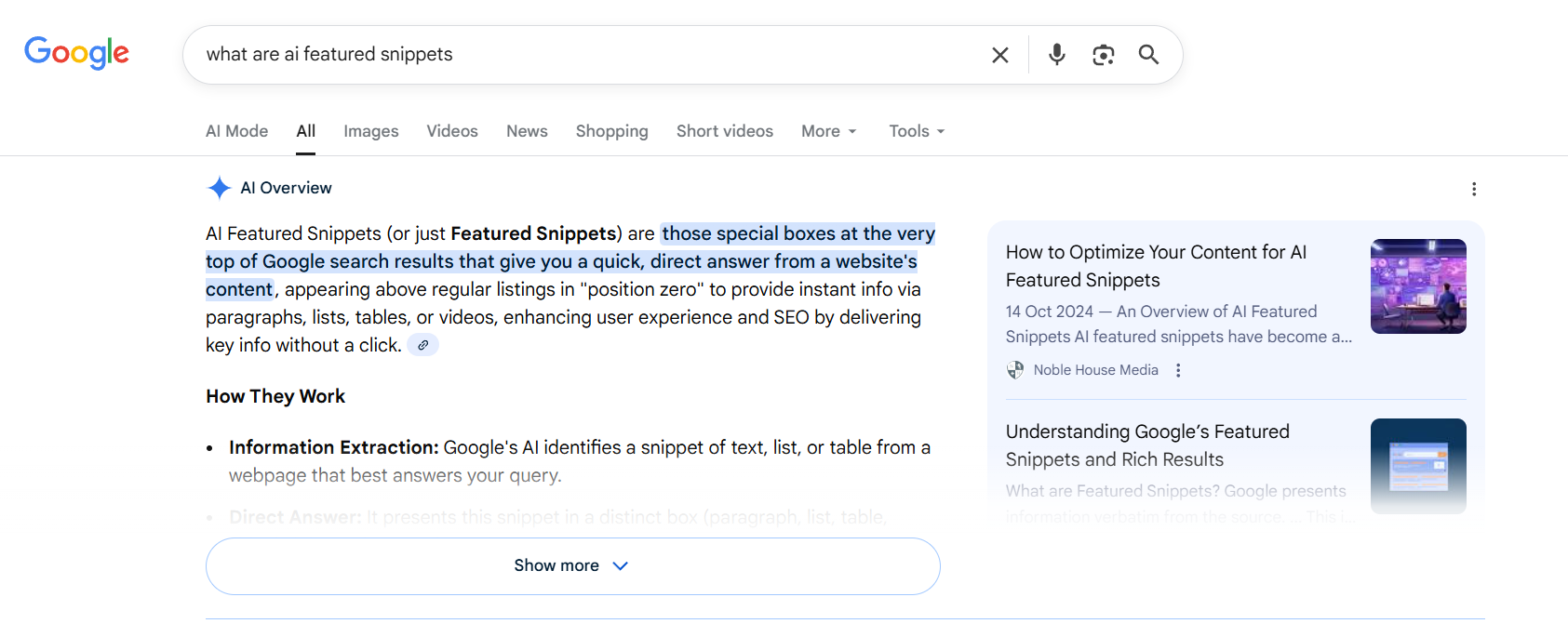
If you want to appear in AI answers for educational queries, you still need strong traditional SEO. That means:
- Targeting clear informational keywords
- Structuring content cleanly
- Answering the question directly
- Using descriptive headings
- Including structured data where it makes sense
Google AI doesn’t invent new sources. It summarizes what it already trusts in the search results.
So if you’re not ranking, you’re unlikely to be included.
This is where AI content optimization overlaps with traditional SEO. The goal is simple: create the most structured, useful version of that answer on the page.
Clear definition in the first 100 words. Direct explanation. Supporting examples. No filler.
Now compare that to commercial intent queries inside AI search engines.
When someone asks:
- “Best link building tools”
- “Top AI outreach software”
- “Alternatives to X”
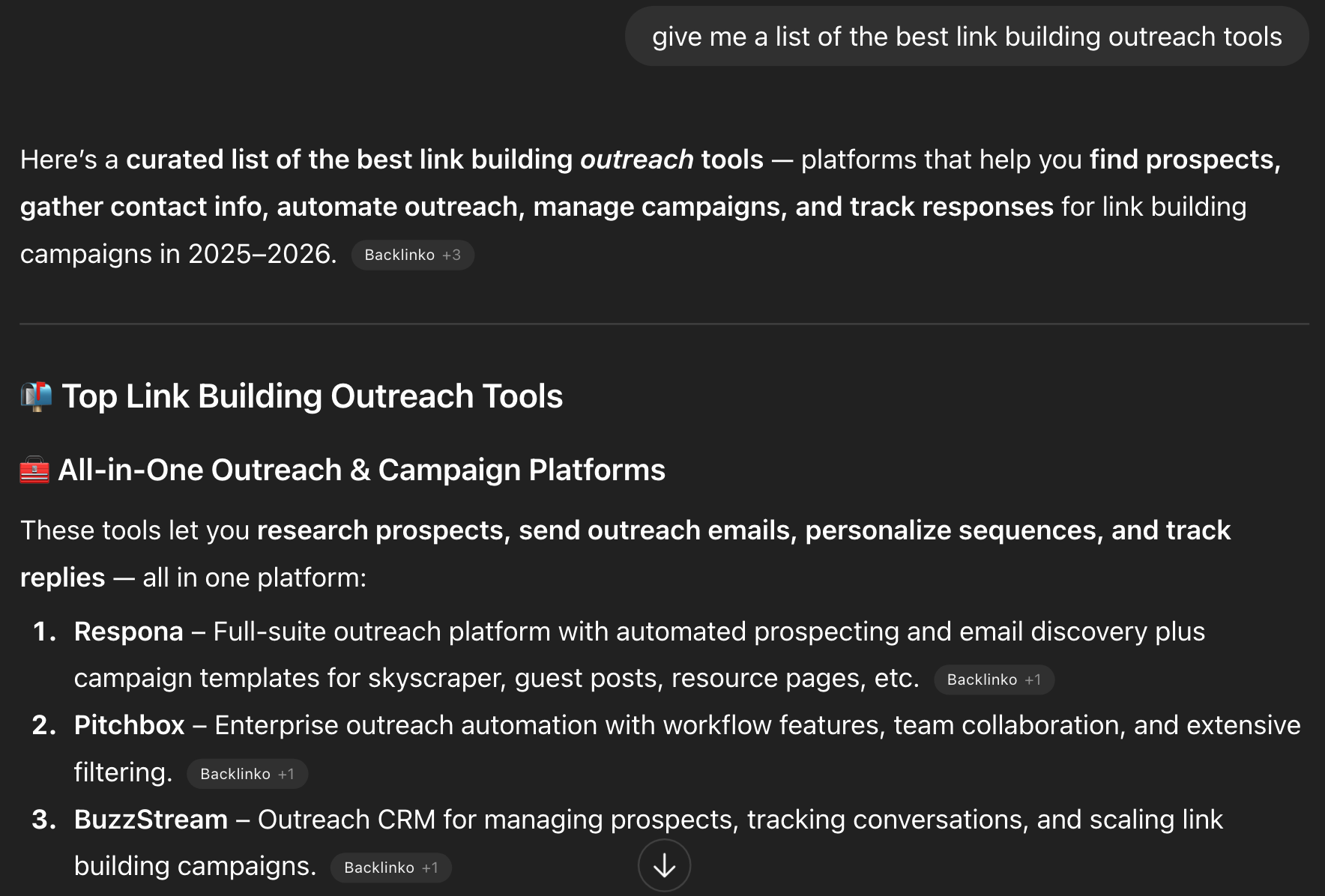
AI models often rely more heavily on listicles, comparison pages, review platforms, and repeated brand mentions across multiple sites.
This is where citation patterns matter more than just rankings.
For informational intent, optimize to rank and structure your content clearly so Google AI Overview can use it.
For commercial intent, you need presence across listicles, review sites like G2 and Capterra, and industry publications.
Different intent. Different citation sources.
Step 3: Get Listicle Placements and Other Brand Mentions
For commercial queries, things shift. The answer is rarely based on one ranking page.
It’s based on consensus.
AI models look at which brands are consistently included in third-party comparisons, industry roundups, and review platforms.
If your name keeps appearing across independent sites, that pattern strengthens your position inside AI answers.
Take our placement on Backlinko.
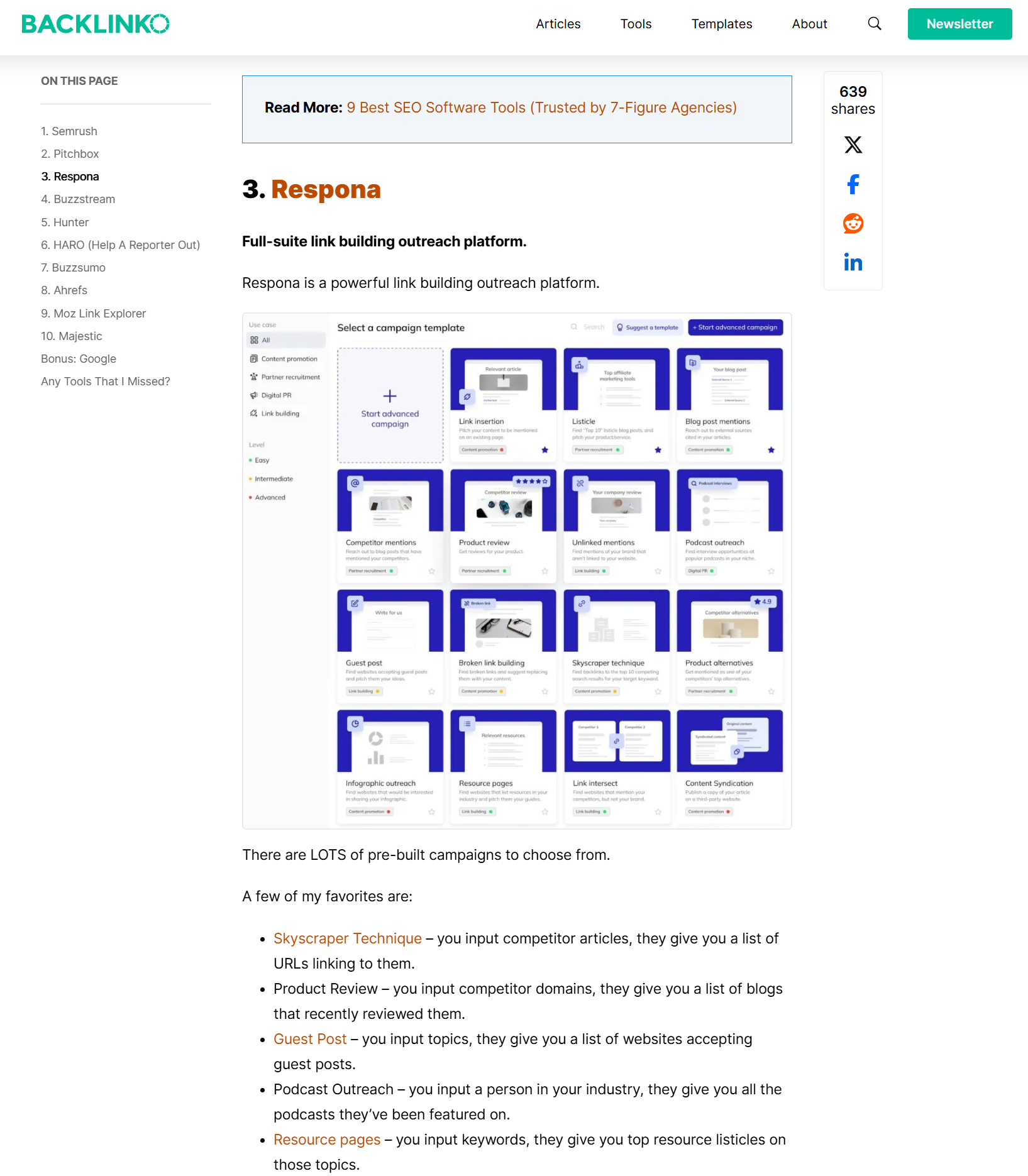
That mention did more than send traffic. It reinforced category authority on one of the most trusted SEO publications online. When authoritative sites associate your brand with a specific use case, that signal stacks up.
The same approach drove results in our Opus case study.
Over six months, we focused on earning placements on relevant, high-trust domains. Not random links. Not directories. Strategic brand mentions tied to their core category.
They moved to the #1 spot in AI visibility in their space.
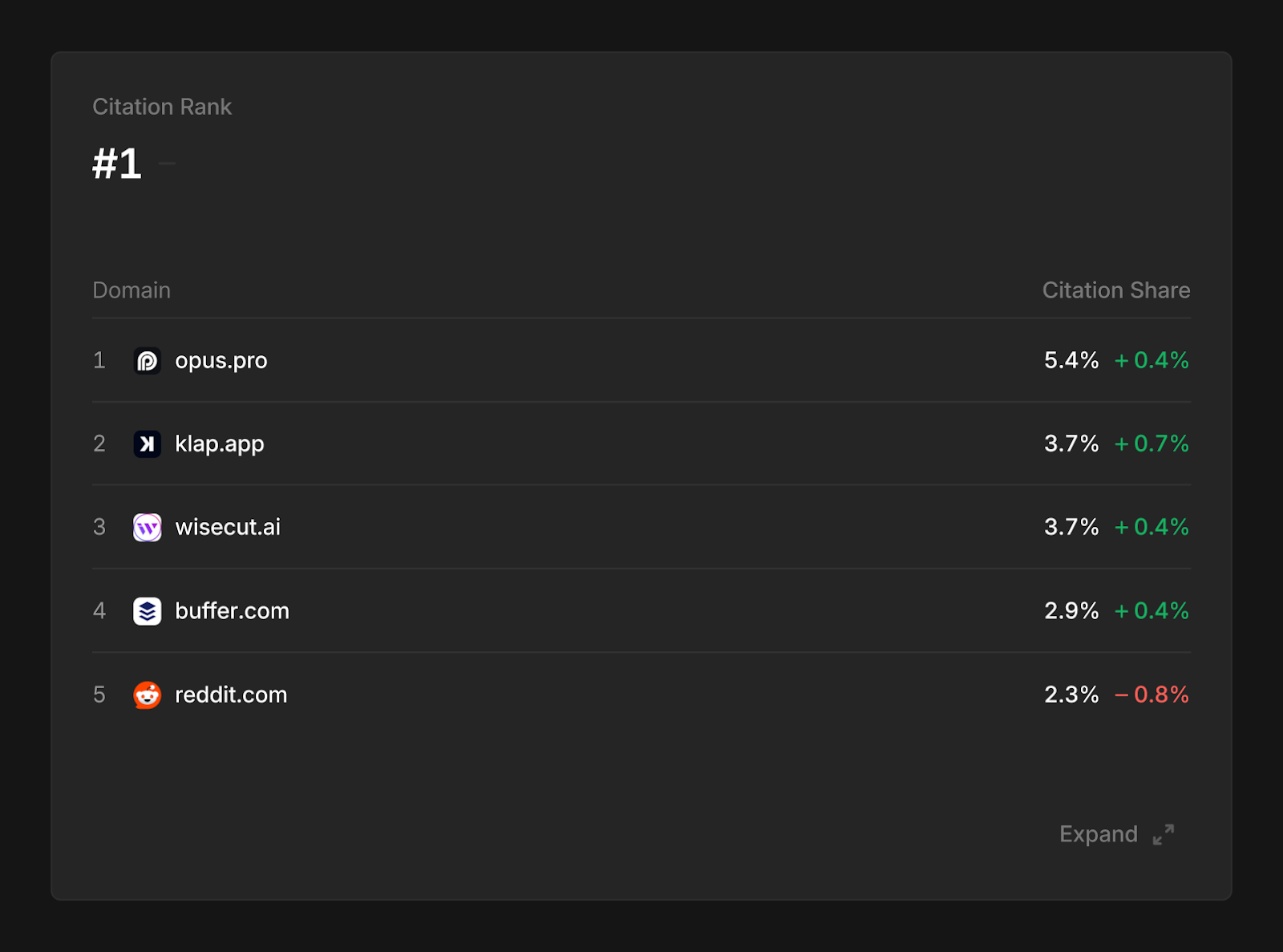
Not because of prompt tricks.
Because credible sites kept referencing them.
Review platforms like G2 and Capterra play a similar role. They create structured, third-party validation around your brand and category. That consistency matters.
This is why AI citation optimization isn’t just a content strategy.
It’s a distribution strategy.
And it’s exactly what our done-for-you link building is built for: securing placements that strengthen both traditional SEO and AI visibility at the same time.
Step 4: Scale!
Like traditional SEO, this only works if it’s repeatable.
One placement won’t move much. One mention won’t change how AI models treat you.
But a system will.
Once you understand:
- What type of content earns citations
- Which placements influence commercial AI answers
- Which publications reinforce your category
The next step is simple.
Do it again.
Build a pipeline for listicle outreach. Turn digital PR into a monthly process. Keep publishing structured, citation-worthy content. Track AI visibility alongside rankings.
This is compounding work.
At first, you won’t notice much. Then your brand starts appearing more often in AI answers. Then it becomes normal.
Results come faster than most people expect, but only if you stay consistent.
Link building cheat sheet
Now Over to You
AI citation optimization isn’t a new channel.
It’s the next layer of search.
Google AI Overview pulls from pages that already rank.
ChatGPT, Perplexity AI, and other AI search engines rely on repeated brand mentions across the web.
If you want to show up in AI answers, you need both:
Strong content. Strong distribution.
That’s exactly what our done-for-you link building is built for.
We help you earn placements on authoritative sites, secure listicle mentions, and build the kind of category presence that increases both rankings and AI visibility.
You focus on creating great content.
We make sure the internet keeps referencing it.
Frequently Asked Questions (FAQ)
What is AI citation optimization?
AI citation optimization is the process of increasing the likelihood that your brand is mentioned inside AI answers. Instead of focusing only on search engine rankings, the goal is to earn citations across trusted websites so AI models recognize your authority.
How is AI citation optimization different from traditional SEO?
Traditional SEO focuses on improving rankings in search results. AI citation optimization focuses on being included inside AI generated answers, such as Google AI Overviews or responses from AI chatbots. Rankings still matter, but brand mentions and repeated citations play a bigger role.
Do Google AI Overviews use top-ranking pages?
In most informational queries, Google AI Overviews rely heavily on pages ranking in the top search results. That’s why strong search engine optimization is still critical for visibility.
Do AI search engines only cite ranking pages?
Not always. Platforms like ChatGPT, Perplexity AI, and Bing Copilot rely more broadly on citation patterns across the web. If your brand is consistently mentioned in listicles, industry blogs, and review platforms, your chances of being included increase.
How can I measure AI visibility?
You can track AI visibility by manually testing key commercial and informational queries across AI platforms, monitoring brand mentions, and comparing changes alongside tools like Google Analytics. Over time, increased citations usually correlate with stronger overall visibility.