![10 Backlink Monitoring Tools for Prospecting [Free & Paid]](https://respona.com/wp-content/uploads/backlink-monitoring-tools-1024x683.png)

Looking for a backlink monitoring tool that helps you actually find prospects, not just monitor backlinks you already have?
This guide covers 10 backlink monitoring tools (free and paid) that handle both prospecting and ongoing backlinks tracking. Some are full backlink checker suites with deep backlink analysis databases.
Others are lightweight link monitoring add-ons. We’ve grouped them by use case so you can pick the right backlink monitor based on what you’re trying to do, whether you’re monitoring backlinks for a single ecommerce site or building a link prospecting workflow from scratch.
Key Takeaways:
- A backlink monitoring tool isn’t just about tracking your own backlink profile. The best ones double as link building research engines, helping you find competitor link patterns worth pursuing for your own site.
- Pay for one paid tool with deep backlink data, then layer on free options like Google Search Console for direct monitoring of your earned links. Stacking two complementary tools usually outperforms paying for a single premium suite.
- Track new links (wins) and lost links (work to redo) in your link profile weekly. Long gaps between checks let lost backlinks compound and toxic patterns build up before you notice.
- Quality backlinks beat quantity every time. Domain authority, topical relevance, link quality, and traffic to the linking page matter more than total referring domain count.
- AI search is reshaping what “backlinks worth pursuing” actually means. Citations inside ChatGPT, Perplexity, and Google AI Overviews now compete with traditional SEO ranking signals for attention, so backlink analysis in 2026 has to factor both in.
Link building cheat sheet
Respona
Most backlink monitoring tools were built for the pre-AI era. Respona was built specifically for what comes next: link building that drives both traditional rankings and AI search visibility.
Here’s how the platform handles each part of the workflow.
A free checker for quick competitor research
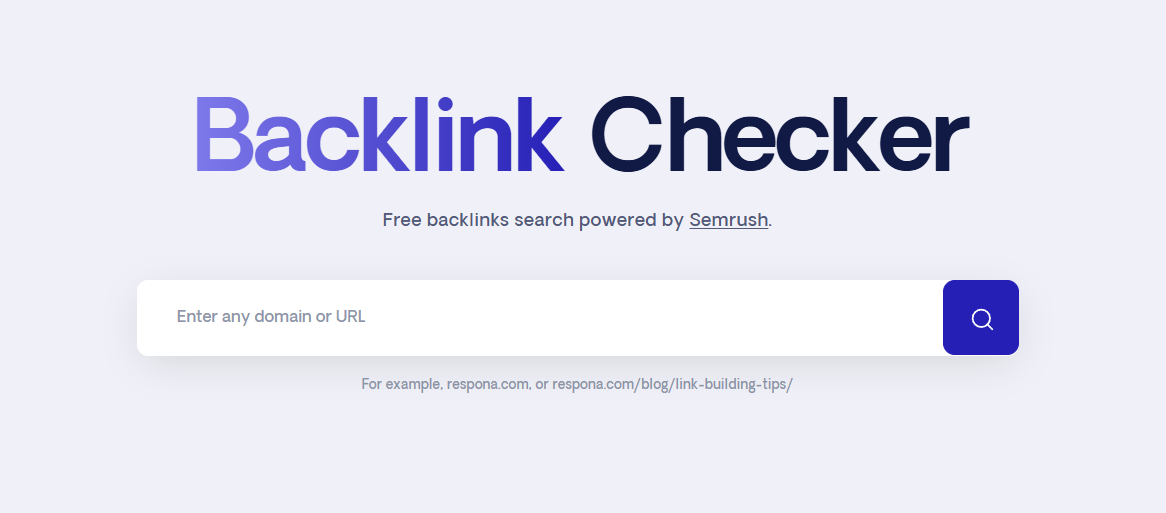
Before you commit to a paid plan, Respona’s free backlink checker lets you pull backlink data on any domain. You get referring domains, anchor text, and basic authority metrics for one-off competitor research.
An AI visibility tracker across six engines
This is the differentiator versus every other backlink monitoring tool on this list.
Respona’s AI visibility tracker monitors your brand mentions across all six major AI engines (ChatGPT, Perplexity, Google AI Overviews, Gemini, Claude, and Copilot).
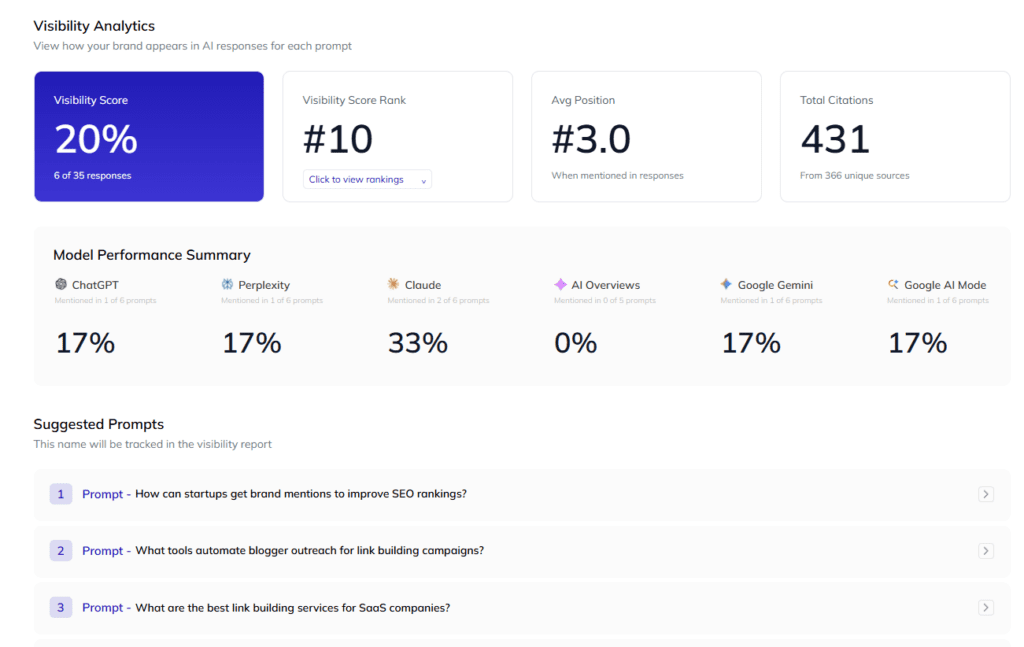
For any query you care about, you can see whether your brand is being cited, which articles are sending those citations your way, and how your share of voice compares to competitors over time.
A link building action plan generated from your AI tracking data
Here’s where it pulls everything together. The AI tracker doesn’t just report what’s happening, it generates a specific link building action plan based on the gaps it identifies.
If your competitor backlinks include placements on the exact articles AI engines cite for your target queries but yours don’t, the platform flags those articles as your highest-priority targets.
You get a ranked list of placements to pursue, complete with publisher data, ranking position, and AI citation status.
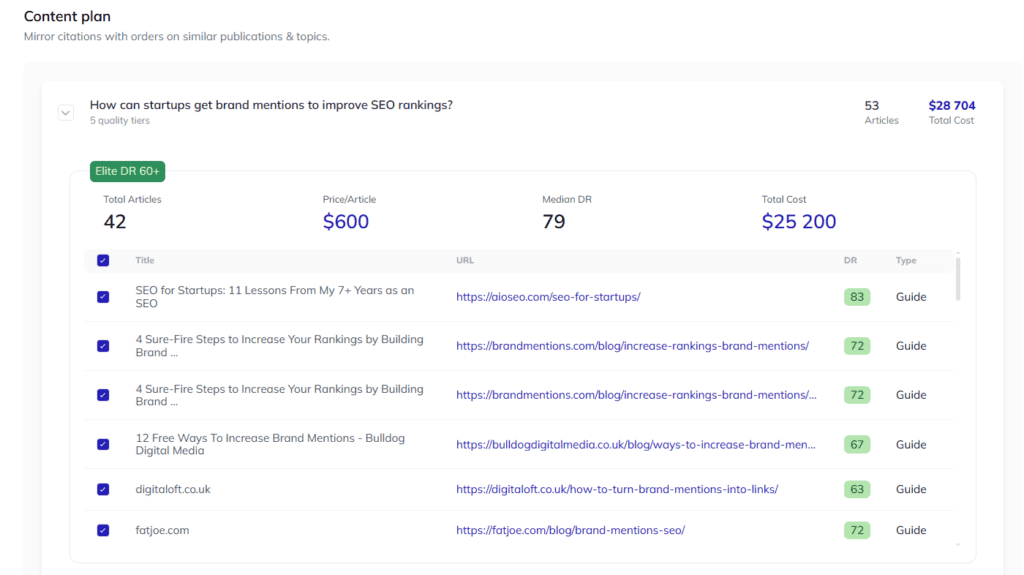
That removes the guesswork from link building prospecting. Instead of pulling a generic competitor backlink list and hoping the right placements are in there, you get a prioritized roadmap tied directly to the queries that matter for your AI search visibility.
Done-for-you link building if you’d rather not run outreach yourself
If executing on that action plan in-house isn’t realistic, our done-for-you link building service handles the entire workflow end-to-end.
Prospecting publishers, personalizing pitches, follow-ups, negotiation, live placement. Every opportunity can be pre-approved by you before any email goes out, so you stay in control of which articles you appear on.
Pricing: Pay-per-placement, no monthly retainer. Tiers run from $100 to $500 per placement based on the publisher’s domain rating.
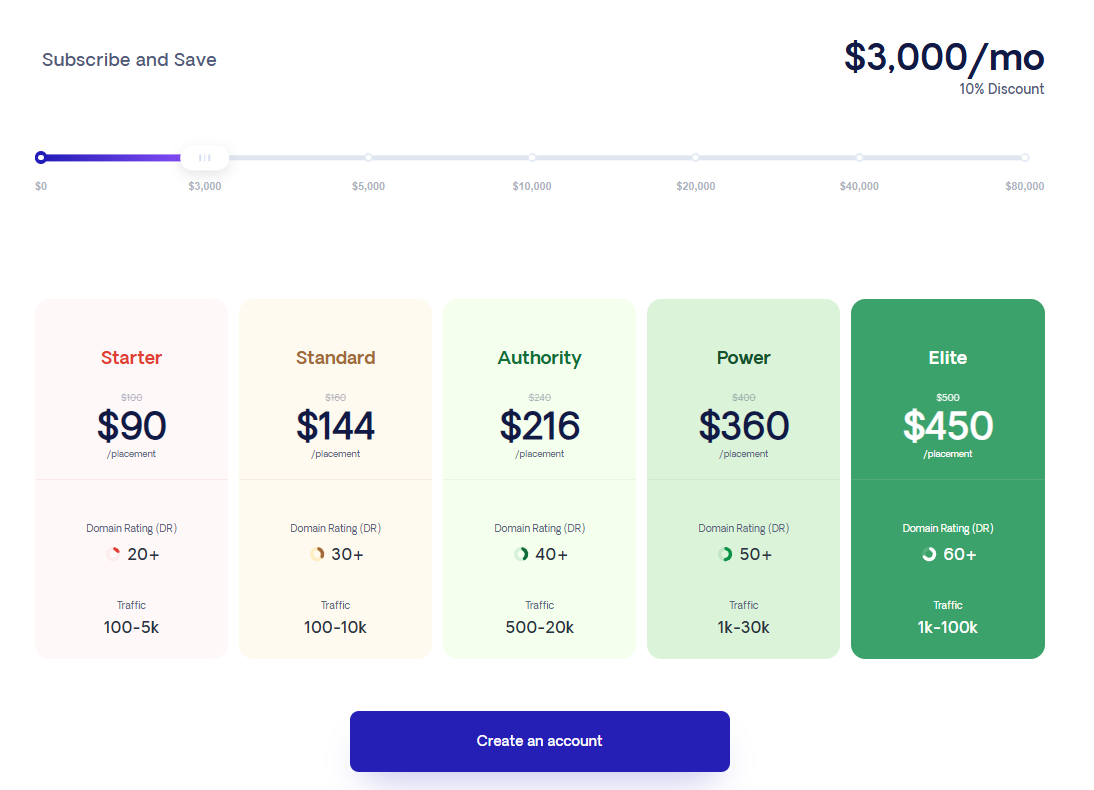
Best for: Agencies and in-house teams that want a backlink monitoring tool built around AI search visibility, with the option to hand execution over rather than running outreach manually.
Pace your first order to get started today.
Ahrefs (Paid + free WT)
Ahrefs is the industry standard for backlink monitoring at scale. Site Explorer indexes one of the largest live backlink databases on the market, with Domain Rating, URL Rating, and traffic estimates for every referring domain.
For prospecting work, the most useful features are Backlink Gap (find competitor backlinks pointing to your competitors but not to you) and Content Explorer (find articles by topic and link patterns). Both are designed around qualifying prospects through your own backlink profile gaps.
The free Ahrefs Webmaster Tools tier gives verified site owners limited access to their own backlink data. It also includes a public backlink checker that anyone can use for one-off competitor lookups.
Alerts for every new backlink (good news) and every lost link (work to redo) are standard across both tiers.
Pricing: Multiple paid tiers from Lite to Enterprise. Ahrefs Webmaster Tools is free for verified domains.
Best for: Teams needing the deepest backlink data available.
Semrush (Paid + free tier)
Semrush’s Backlink Analytics covers the same ground as Ahrefs (referring domains, anchors, link types) but its Backlink Gap tool is particularly strong for prospecting. You can compare multiple domains at once and see every site linking to your competitors backlinks but not to your own.
The Backlink Audit tool flags potentially problematic links and helps you build disavow files when needed. The integration with the rest of Semrush (keyword research, content gap, traffic analytics) is the main reason most teams pick it over Ahrefs.
Pricing: Paid tiers from Pro to Business. Free account gives limited daily backlink checks.
Best for: Teams already using Semrush for keyword research who want everything in one platform.
Majestic (Paid)

Majestic was one of the original link research tools and still has one of the largest historical link databases on the market. Its differentiator is Topical Trust Flow, which scores backlinks not just by quality but by niche relevance.
If you’re prospecting in a specific category, Topical Trust Flow helps you filter out high-authority but irrelevant domains. A DR 80 cooking blog isn’t useful if you’re a fintech, and Majestic is the tool that makes that filter obvious in your link profile work.
The historical depth is the other major strength. Majestic has indexed link data going back further than most competitors, which helps when you’re researching the long-term link profile of an established competitor.
Pricing: Lite, Pro, and API tiers, billed monthly with annual discounts available.
Best for: Link builders working in specialized niches where topical relevance matters more than raw authority.
Moz Pro (Paid + free tools)
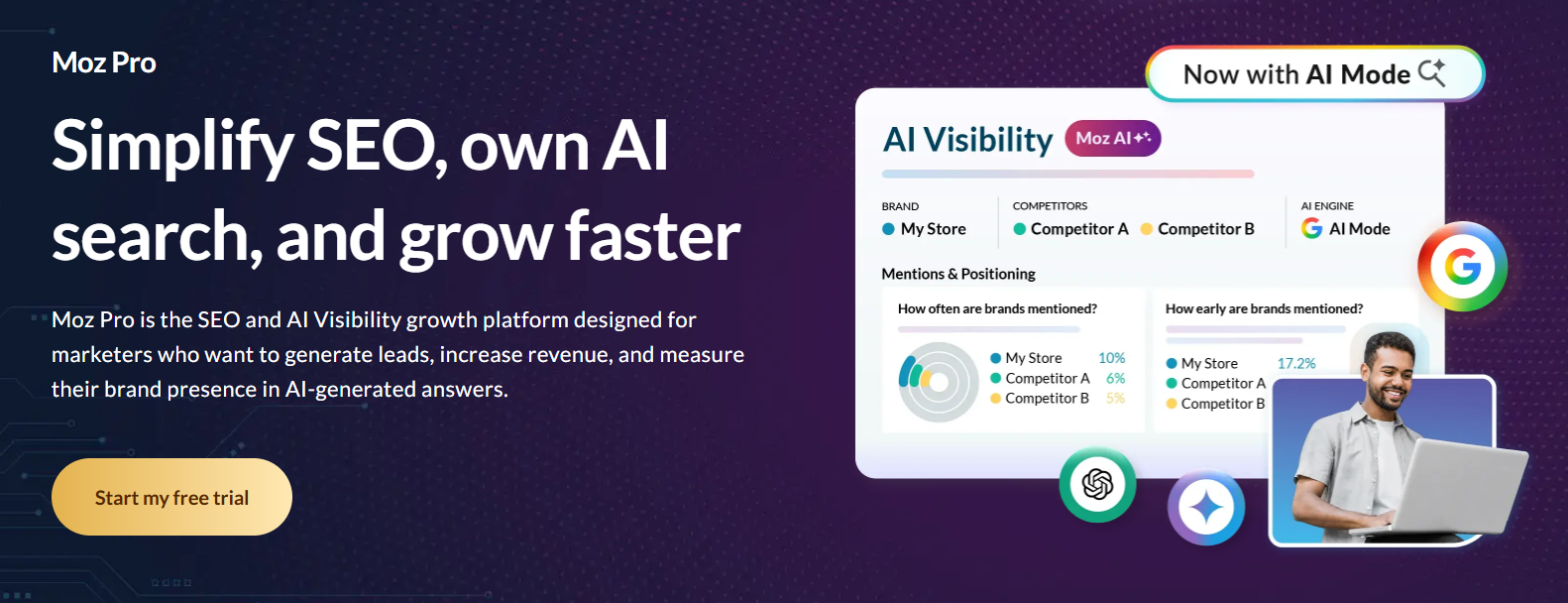
Moz Link Explorer is the third leg of the major paid backlink tool stool. Its standout feature for prospecting is Link Intersect, which finds sites linking to multiple competitors at once. Those are usually the highest-value prospects because they’ve already shown a pattern of linking to your category.
Domain Authority (DA) is the metric most outreach templates and publisher conversations reference, which can be useful leverage during negotiation. The Spam Score helps you flag toxic backlinks and keep any bad backlink from slipping into your profile through guest-post arrangements gone wrong.
For lightweight link analysis without a subscription, Moz also offers free public tools (MozBar browser extension and limited Link Explorer queries).
Pricing: Multiple paid tiers. Free public tools available via the Moz Free Tools page.
Best for: SEO teams comfortable in the Moz ecosystem who want clean Link Intersect workflows.
SE Ranking (Paid)
SE Ranking offers similar features at a noticeably lower price point than the top three (Ahrefs, Semrush, Moz). The data isn’t as deep, but it covers the essentials: a built-in backlink monitor, competitor analysis, and alerts for harmful links sneaking into your profile.
What sets SE Ranking apart for many teams is the integrated rank tracking. You can monitor SERP positions for target keywords alongside your backlink growth, which makes it easier to connect link gains to actual ranking movement.
Pricing: Subscription tiers across Essential, Pro, and Business plans. Significantly cheaper than Ahrefs and Semrush at comparable feature levels.
Best for: Solo SEOs and small agencies needing functional backlink data without enterprise pricing.
LinkMiner (Mangools)
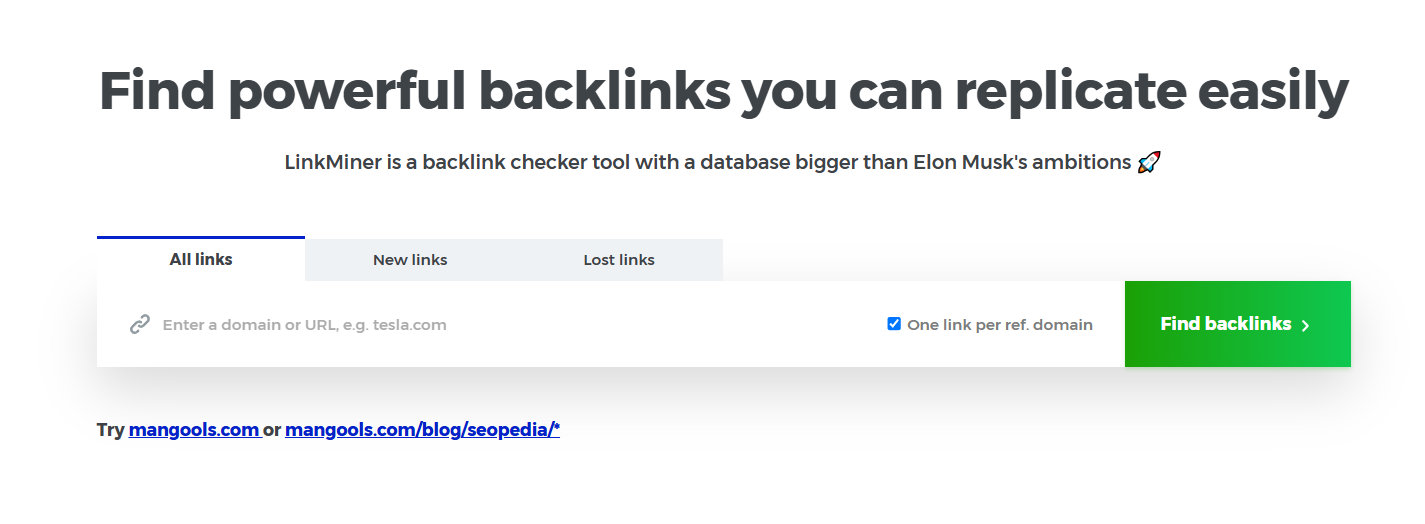
LinkMiner is part of the Mangools suite (KWFinder, SERPChecker, SERPWatcher) and focuses specifically on backlink analysis. The interface is one of the cleanest in the category, and the data is solid for most prospecting workflows.
The standout feature is the Link Strength metric, which qualifies link quality at a glance without you having to dig through multiple data points. Useful when you’re processing dozens of prospects in a session and trying to decide which quality links are worth pursuing.
LinkMiner also flags fresh backlinks to monitored sites in close to real time, so you catch competitor wins early in your backlink analysis routine.
Pricing: Subscription as part of Mangools, with annual billing discounts. Significantly cheaper than top-tier tools.
Best for: Solo SEOs and small in-house teams who want a clean, affordable backlink tool.
Ubersuggest (Freemium)
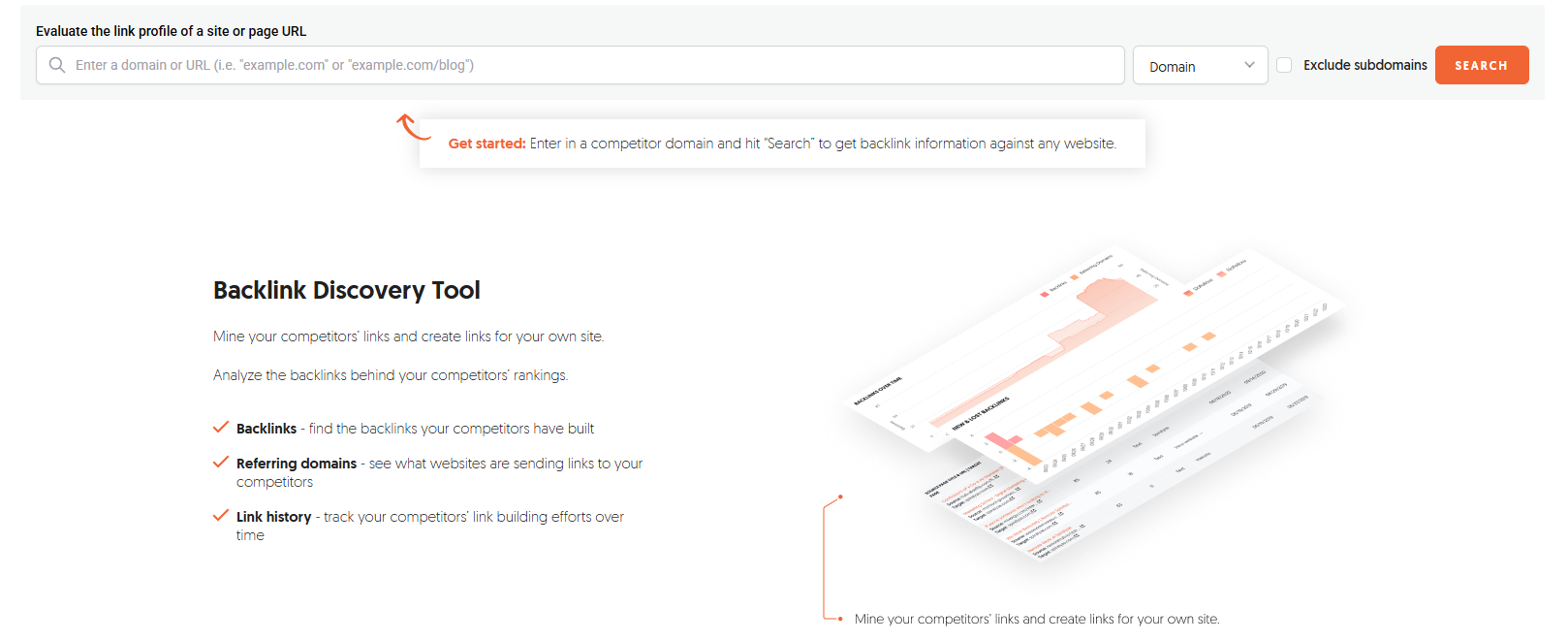
Ubersuggest (Neil Patel’s tool) has a generous free tier that includes basic backlink data alongside keyword research and site audit features. The data isn’t as deep as the paid tools above, but it’s enough for early-stage SEOs running their first prospecting campaigns.
You get a backlink overview with referring domains, lost backlink and new backlink tracking, and competitor analysis. The free tier limits daily searches but you can do meaningful research without paying upfront.
Paid plans unlock higher limits and a richer view of your backlink profile.
Pricing: Free tier with daily limits. Individual, Business, and Enterprise paid plans available.
Best for: Beginners and bootstrapped SEOs who want to start prospecting without paying anything to start.
Google Search Console (Free)
Google Search Console (formerly Google Webmaster Tools) doesn’t do competitor analysis or external prospecting, but it shows you the most accurate picture of your own backlinks: the ones Google has actually indexed. That’s the data that affects your rankings, regardless of what any third-party tool reports.
For prospecting, Google Search Console pairs with any of the paid tools above. Use a paid platform for competitor research, then check Google Search Console to confirm which of your earned links the search engine is actually counting.
You get top linking sites, top linking pages, anchor text data, and direct exports for ongoing tracking.
Pricing: Free with a Google account.
Best for: Every SEO and site owner. Should be set up regardless of which paid tool you choose.
Sitechecker (Freemium)
Sitechecker offers a backlink checker tool as part of its broader SEO toolkit, with a free tier that lets you pull basic backlink data on any domain without signing up. The data isn’t as fresh as Ahrefs or Semrush, but it works for one-off competitor scouting.
Paid tiers turn it into a more complete backlink monitoring software with ongoing link tracking, toxic link detection, and site audit integration. For agencies running a quick monitoring tool stack alongside a primary platform, Sitechecker’s backlink monitor handles the secondary cross-reference role well.
Pricing: Free tier for basic checks. Paid plans for ongoing monitoring and deeper data.
Best for: Quick competitor scouting before investing in a paid tool, or as a secondary SEO tool for cross-referencing data.
Link building cheat sheet
Now Over to You
You’ve now got 10 backlink monitoring tools to choose from, ranging from fully free options like Google Search Console to AI-search-focused platforms like Respona.
A few quick recommendations:
- If you’re just starting out, run GSC plus one freemium tool (Ubersuggest or Sitechecker) and only upgrade when you hit their limits.
- If you’re scaling outreach, pick one of the paid tools (Ahrefs, Semrush, or Majestic for depth; Moz, SE Ranking, or LinkMiner for value) and pair it with GSC to monitor backlinks Google has indexed.
- If you care about AI search visibility as well as traditional rankings, layer Respona on top of whatever stack you choose. For ongoing rank tracking alongside backlink monitoring, most paid tools (Semrush, SE Ranking, Mangools) bundle both in a single subscription.
There’s no single best backlink monitoring tool. The right one depends on what you’re trying to accomplish, your budget, and whether your link management workflow leans heavily on competitive research or on monitoring your own profile.
If you’d rather skip the manual outreach altogether and have a team do it for you, Respona’s done-for-you link building service handles end-to-end execution. You bring the targets and approval rules, we run the campaigns.
Pace your first order to get started today.
Frequently Asked Questions (FAQ)
How often should I monitor backlinks?
Weekly checks are enough for most sites. Set up alerts in your backlink monitor for new links and lost links so you can react quickly when something changes. Monthly audits of your overall profile catch slower trends like decaying anchor distribution or sudden spam patterns.
What’s the difference between monitoring backlinks and tracking lost links?
Monitoring backlinks is the broader practice of tracking every link to your site (new ones, lost ones, anchor changes, toxic patterns).
Tracking lost links specifically is a subset focused on links that used to exist but no longer do. Lost links matter because they often signal opportunities for reclamation outreach.
Many of the lost links you see are simple page deletions. Every lost link is a potential reclamation email or accidental removals, and a polite email gets them back.
Do I need a paid backlink monitoring tool if I have Google Search Console?
Not always, but usually yes. Google Search Console shows you the most accurate picture of your own indexed links, but it doesn’t show competitor data, doesn’t include URL-level metrics like Domain Rating, and doesn’t let you analyze patterns across multiple sites at once.
For monitoring your own backlinks, GSC alone is often enough. For prospecting via competitor research, you’ll want a paid tool. Most of them also include rank tracking, which makes it easier to connect link gains to actual ranking movement.
How do I find high-quality backlinks worth pursuing?
A high quality backlink usually shares three traits: relevant niche, authoritative domain, and meaningful traffic on the linking page.
Anchor diversity matters too: a mix of branded, partial-match, and exact-match anchors looks more natural than a pile of one anchor type.
The most valuable backlinks come from editorial mentions on respected industry sites, where link quality compounds over time, not from generic directory listings.
Should I track nofollow links in my backlink monitoring tool?
Yes, but with context. A nofollow link doesn’t directly pass ranking equity, but it still drives referral traffic, brand awareness, and (increasingly) AI citation signals.
The major AI engines weight mentions in editorial context regardless of whether the link is dofollow or nofollow. So a nofollow placement on a high-authority publication often outperforms a dofollow link on a low-quality site in 2026.
What’s the best free backlink monitoring tool?
For monitoring your own site, it’s GSC without question. For one-off competitor lookups, free options like Ahrefs Webmaster Tools (for verified domains), Ubersuggest’s free tier, and Sitechecker’s free backlink checker all cover the basics.
None of them match a full paid backlink monitoring software for ongoing competitor tracking, but they’re enough to get started.