
Gemini isn’t a new search engine.
It’s Google, just with answers layered on top.
When someone searches, Google Gemini looks at the same results you see, pulls from multiple sources, and turns them into a single response. No new index, no separate crawler. Just a different way of using what already ranks in search engines.
That changes what you’re optimizing for.
You’re not just trying to rank anymore. You’re trying to be one of the sources Google Gemini includes in its AI responses.
And that selection isn’t random.
In this article, we’ll break down how Gemini SEO actually works, how it fits into AI search, and what you can do to consistently get your content cited.
Key Takeaways:
- Google Gemini runs on top of search engines, not a separate system
- Strong traditional SEO still drives Gemini visibility
- AI responses rely on multiple sources, not just one page
- Structured content is easier for AI systems to extract
- Listicle placements are one of the most reliable ways to get cited
- Off-page SEO plays a bigger role in AI search than before

Link building cheat sheet
First of All, What is Gemini?
Google Gemini is Google’s AI platform built on top of its existing search infrastructure.
It doesn’t crawl the web on its own or maintain a separate index. Instead, Google Gemini AI pulls directly from existing search results and turns them into AI-generated answers.
When a user searches, the system looks at top-ranking pages, extracts relevant information, and combines it into a single response.
That’s why the same sites that rank in search engines often appear in Gemini answers.
This is important for AI SEO.
Because your visibility in Gemini is directly tied to your visibility in Google. If your content isn’t indexed or ranking, it won’t be included in AI responses.
So while it feels like a new AI platform, it’s really just Google AI presenting information in a different format.
Is Gemini SEO Any Different?
Not really. At least not in a major way.
Gemini SEO is still built on traditional SEO.
Since Google Gemini pulls from existing results, the same fundamentals apply. If your content ranks, matches search intent, and has authority, it already has a chance to be included.
There’s no separate ranking system or hidden algorithm you need to optimize for.
But there are a few differences.
The biggest one is how AI systems generate answers.
Instead of relying on a single page, Gemini pulls from multiple sources and looks for consistency. It’s trying to understand what most credible pages agree on.
It even shows you the exact sources it pulls from at the bottom of every answer:
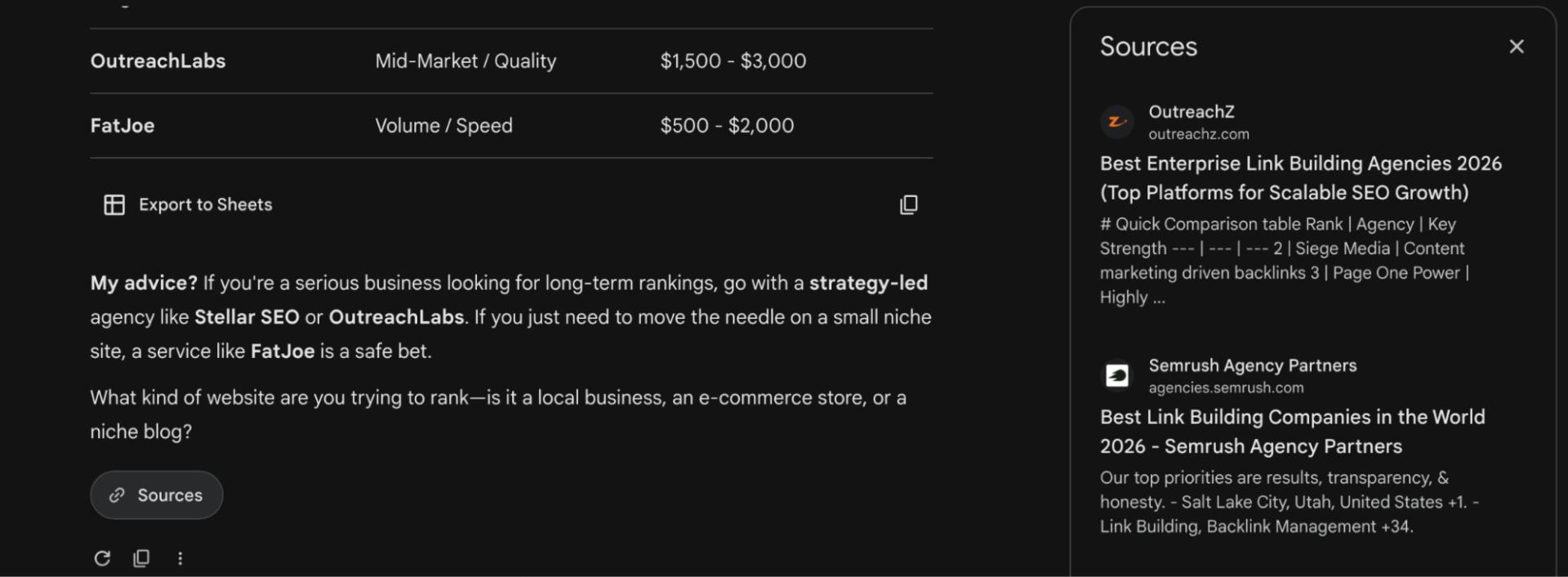
Links, brand mentions, and citations matter more because they reinforce your presence across multiple sources. The more often your brand appears, the more likely it is to be included.
At the same time, content needs to be easier to extract.
Gemini scans for clear sections it can use in AI summaries. If your content is hard to parse, it’s less likely to show up.
So while the foundation is the same, AI SEO puts more weight on:
- structured content
- consistent mentions across sites
- strong off-page SEO
Start By Optimizing Content for AI Answers
If you want your content to show up in AI answers, it needs to be easy to extract.
That starts with structure.
AI systems don’t read content like people do. They scan for clear, direct sections they can reuse. If your content is buried in long paragraphs, it’s less likely to be used.
So keep things simple.
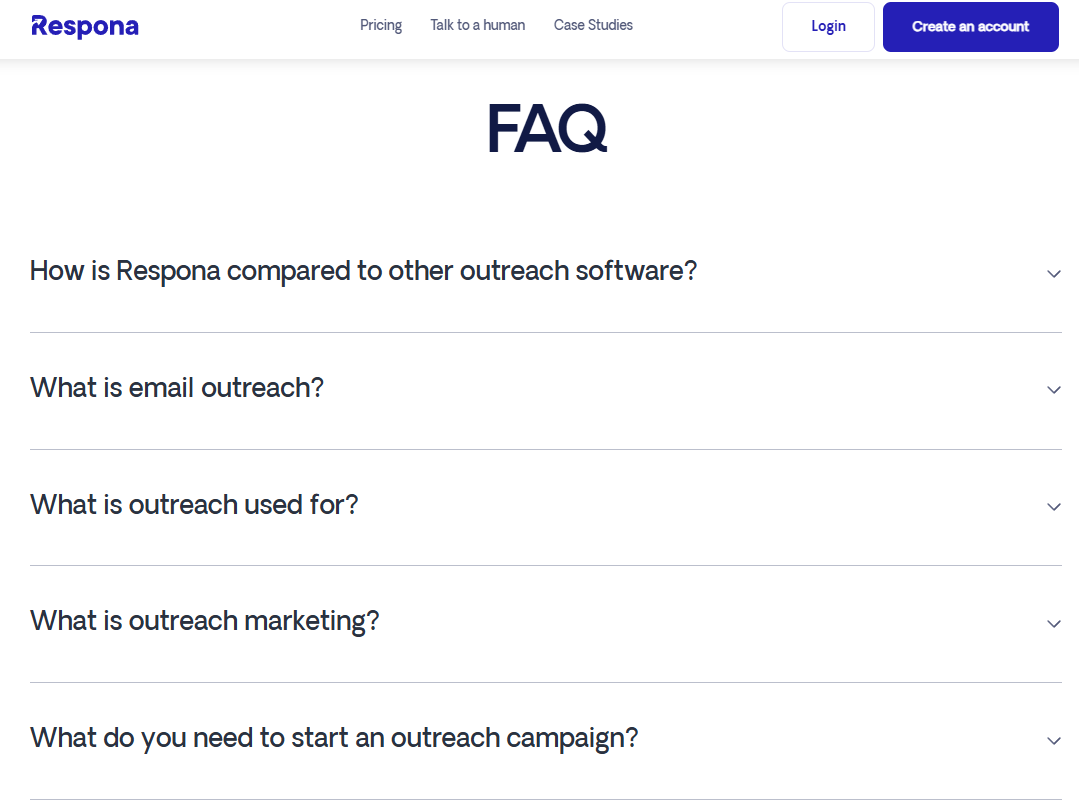
Use clear headings, short paragraphs, and sections that directly answer questions. Each section should serve a clear purpose. FAQs are awesome for this:
Keyword research still matters, but the approach shifts slightly.
Instead of only targeting broad terms, focus on long-tail queries people actually search for. Questions, comparisons, and specific use cases are much easier for AI engines to process.
This also ties into search intent.
Your content should match exactly what the user is looking for, not just loosely related topics. The closer the match, the more likely the AI systems are to pull from your content.
On the technical side, things like schema markup, clean HTML, and strong technical SEO help search engines understand your content better.
And if Google understands your content better, Gemini can use it more effectively.
A simple way to think about it:
If a section of your content can stand alone as an answer, it’s optimized correctly.
If Gemini is going to cite your content, it needs to be able to pull something useful from it quickly.
Focus More on Off-Page SEO
This is where Gemini SEO starts to shift.
Ranking in Google is one thing. Being included in AI responses is another.
Gemini doesn’t rely on a single page. It looks across multiple sources and builds a response based on what it finds.
So if your brand only appears in one place, it’s easy to ignore.
But if it shows up across multiple sites, your visibility increases significantly.
That’s why off-page SEO matters more.
Links, mentions, directory listings, and citations all contribute to your overall visibility. They help build topical authority and reinforce your presence across the web.
The most effective placements right now are listicles.
“Best tools,” “top agencies,” “alternatives to X.”
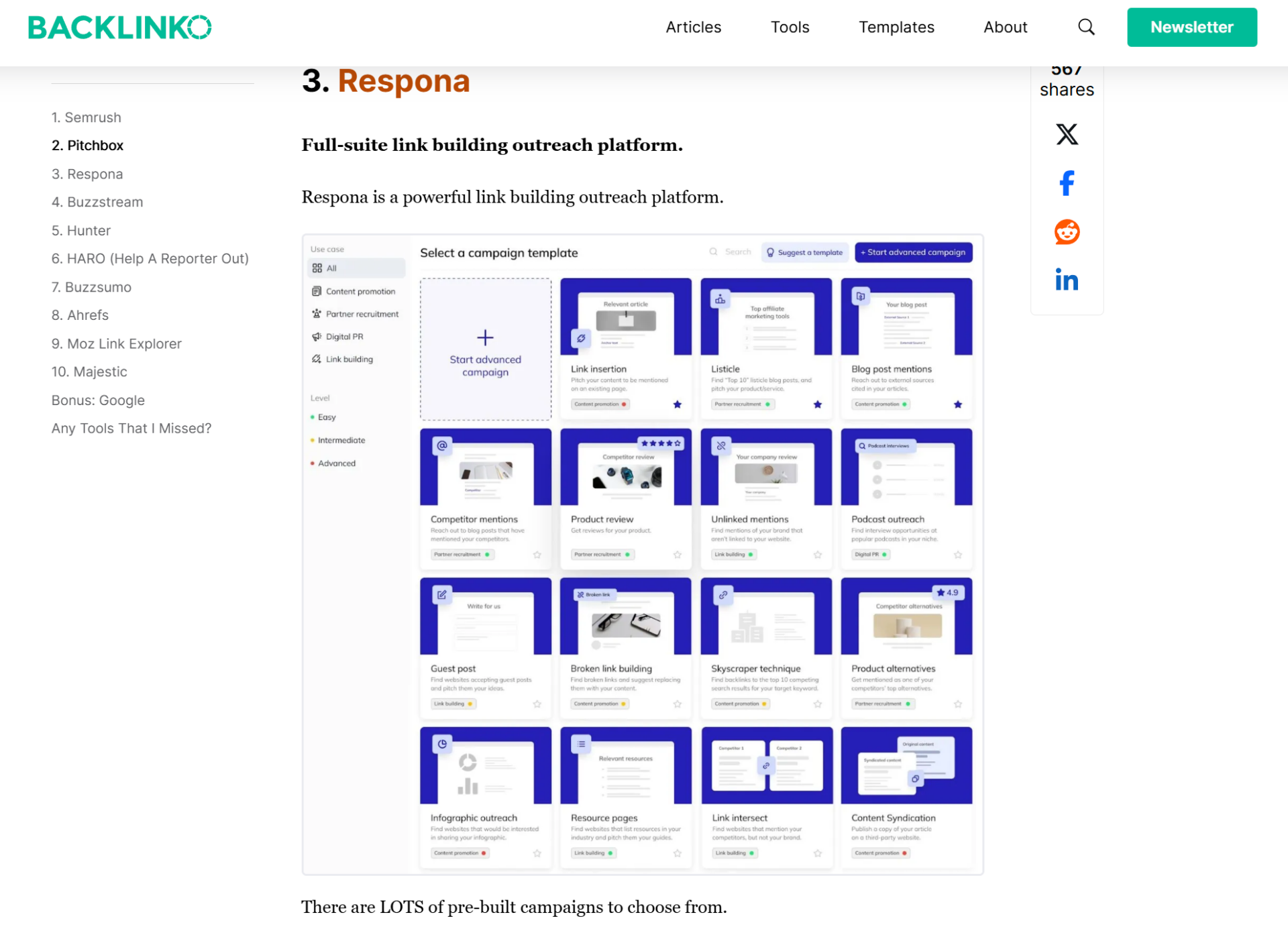
These pages are ideal for AI systems because they clearly outline features, pricing, and comparisons. That makes them easy to extract from.
And when those placements include a link, you get both SEO value and AI visibility at the same time.
This is exactly what we focus on with our done-for-you link building.
Instead of building random backlinks, we focus on placements that already rank and are already used in AI-generated answers.
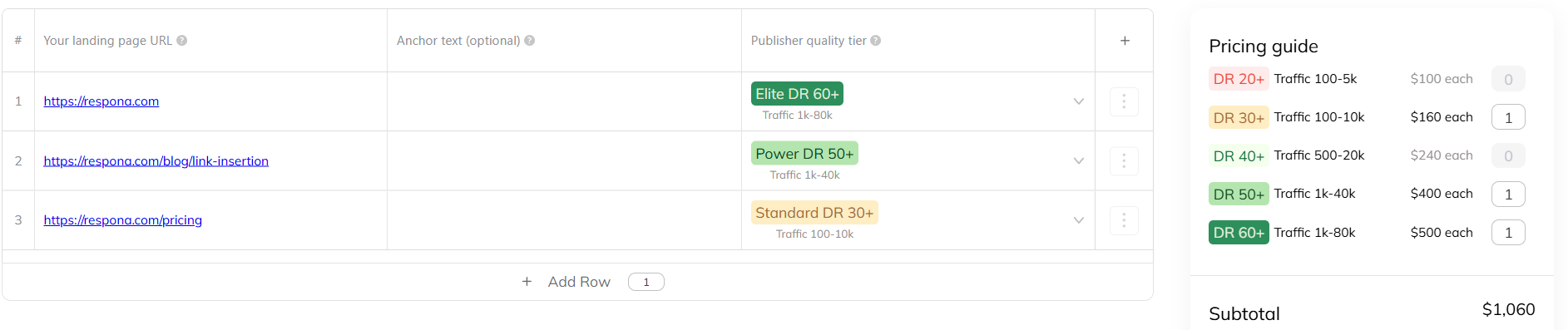
Just place an order along with your requirements/guidelines and we’ll handle the rest.
On top of that, our Campaigns feature lets you track where your brand is showing up across AI systems, including Gemini, and where you’re missing coverage compared to competitors.
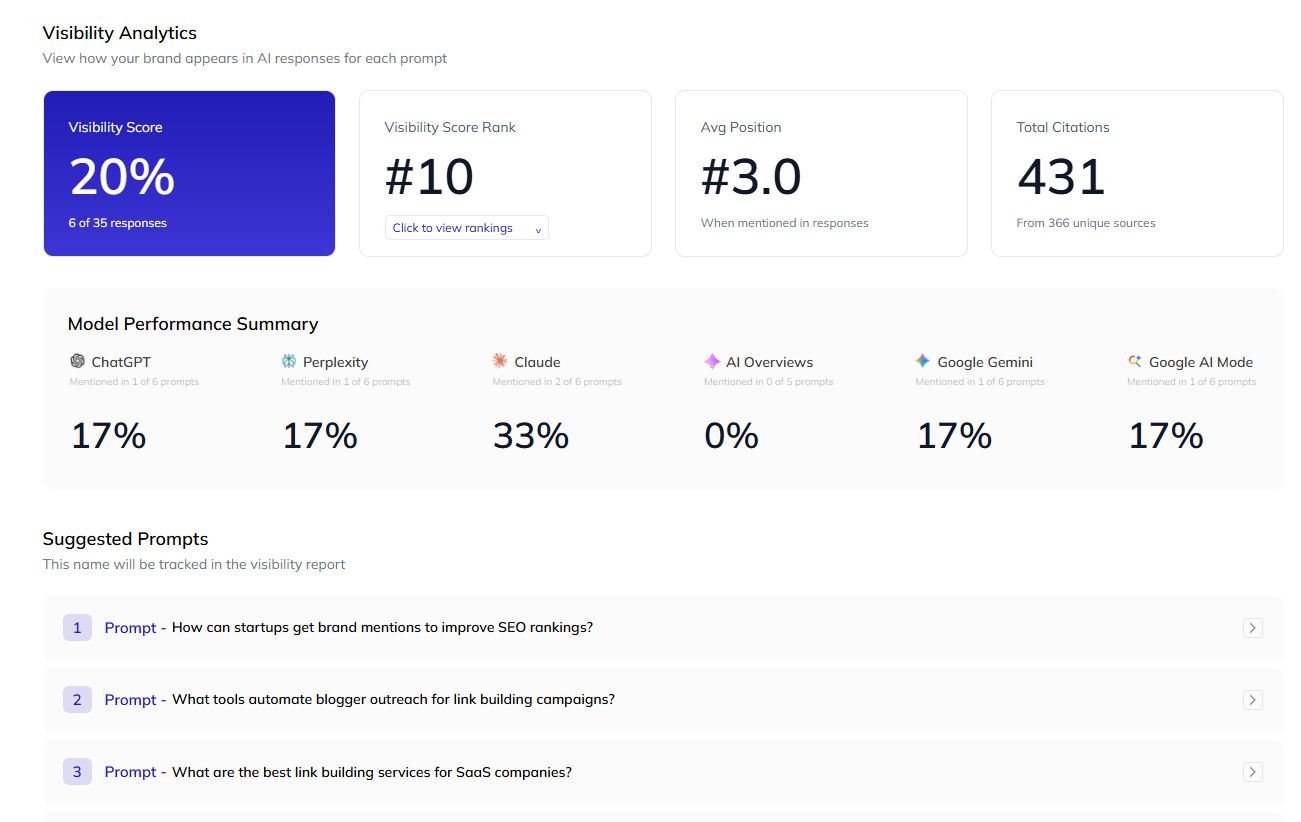
So instead of guessing what to do next, you can see exactly where to build links to improve your visibility.
Link building cheat sheet
Now Over To You
Gemini SEO isn’t a completely new strategy.
It’s the same fundamentals, just applied to AI search.
If your content is structured properly and your brand shows up across enough sources, your chances of being included go up.
That’s really what this comes down to.
Be visible in search engines, and be present across the web.
If you want to accelerate that, off-page SEO is the fastest lever.
That’s where Respona comes in.
We help you secure placements on pages that already rank and already show up in AI responses, so you improve both search and AI visibility at the same time.
Frequently Asked Questions (FAQ)
What is Gemini SEO?
Gemini SEO is the process of optimizing content and off-page signals to improve visibility in Google Gemini answers.
Does Google Gemini use a separate index?
No. It pulls from existing Google search results and does not have a separate index.
Is Gemini SEO different from traditional SEO?
Not significantly. The main difference is that AI responses rely on multiple sources, so consistency across sites matters more.
What type of content works best?
Structured content that directly answers questions and matches search intent performs best.
Do backlinks still matter?
Yes. Links and mentions help reinforce authority across multiple sources, which increases visibility in AI responses.
How do I improve Gemini visibility?
Focus on structured content, strong keyword research, and building mentions across relevant sites.
Can I track Gemini visibility?
Yes. You can monitor where your brand appears in AI responses and identify gaps compared to competitors.