![How to Find and Rank for Geographic Keywords [2026]](https://respona.com/wp-content/uploads/geographic-keywords-1024x576.jpg)

If you run a local business, geographic keywords are what drive real customers to your site.
These are search terms tied to a specific geography. Someone searching for a service in a specific location already knows what they need. That’s why these searches convert better than generic keywords.
Instead of competing for broad terms, you’re showing up in local search results where intent is clear.
This is the foundation of local SEO. If you’re not targeting the right geographic keywords, you’re missing out on high-intent traffic.
The challenge is figuring out which keywords are actually worth targeting and how to turn them into content that ranks.
Let’s break it down.
Key Takeaways:
- Geographic keywords combine a service with a specific geography and are essential for local SEO.
- These keywords have strong local intent and tend to convert better than generic keywords.
- Keyword research helps you find relevant keywords with enough search volume to be worth targeting.
- Tools like Ahrefs or other keyword research tools help validate real search demand.
- Targeting local keywords improves your visibility in local search results and across search engines.
- The right keywords need to match both the search term and the intent behind it.

Link building cheat sheet
What Are Geographic Keywords?
Geographic keywords are search terms that include a specific location.
In most cases, they follow a simple structure: service or product plus a geographic area.
Examples:
- car wash Atlanta
- personal injury lawyer Chicago
- dentist near me
They’re not fundamentally different from long tail keywords. The difference is the geographic modifier. That’s what turns a general search term into something with local intent.
Instead of searching broadly, users are looking for a solution in a specific location. That’s what makes these keywords so valuable for local SEO.
You’ll also see variations of geographic keywords depending on how people search:
- City-based keywords: “plumber Austin”
- Region-based keywords: “roof repair North Texas”
- Near-me searches: “coffee shop near me”
- Neighborhood-level keywords: “gym Brooklyn Heights”
All of these fall under the same category of location based keywords or geo modified keywords.
From a search engine perspective, these keywords have clear commercial intent. The user is not just exploring options.
They are trying to find a business in a specific geography.
How to Find Geographic Keywords to Target?
Geographic keywords are usually pretty simple to come up with.
In most cases, it’s just your service plus a location.
You probably already have a rough idea of what these look like if you know your business.
But don’t stop there.
Just because something sounds right doesn’t mean people are actually searching for it. You need to spend sime time on keyword research.
Start with a list of your core services. Then pair each one with the locations you serve. Cities, neighborhoods, even nearby areas if relevant. That gives you a solid starting point of local keywords.
From there, plug those into a keyword research tool like Ahrefs or Google Keyword Planner.
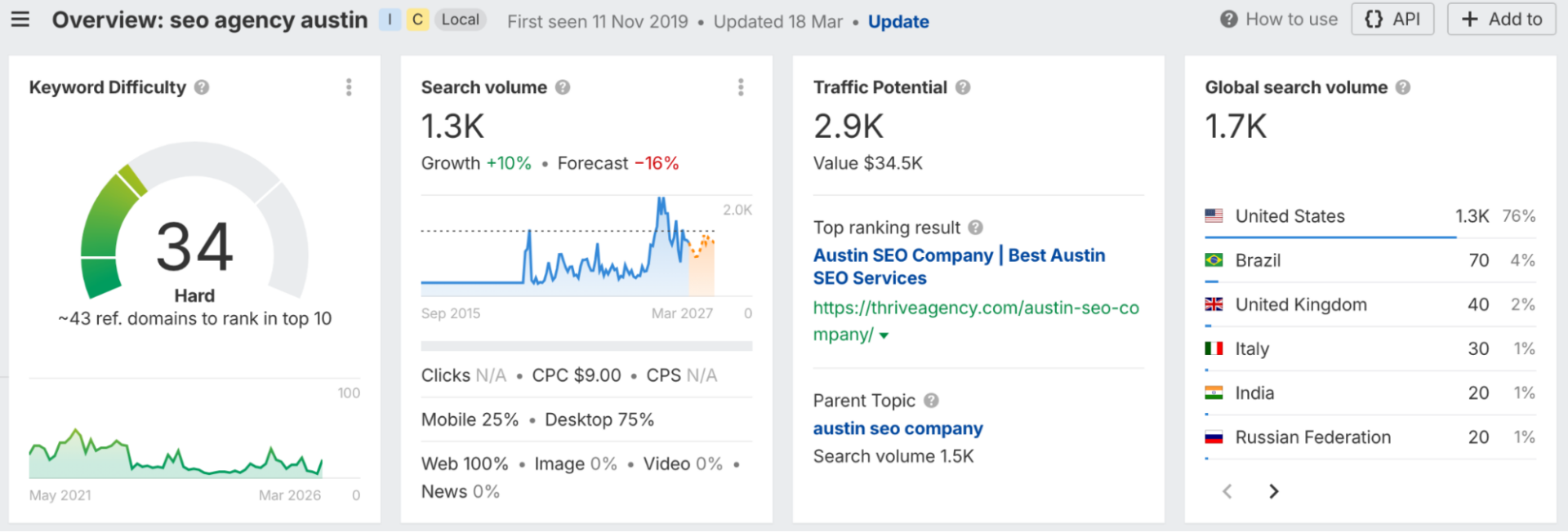
What you’re looking for is simple:
- search volume
- how competitive the keyword is
- other related keywords you might be missing
Sometimes you’ll find that a keyword you expected to work has almost no search volume. Other times, a slightly different variation gets way more searches.
And if you want to speed things up, you can use ChatGPT to brainstorm ideas. Just ask for variations of your service in a specific geographic area. It’ll give you a big list fast.
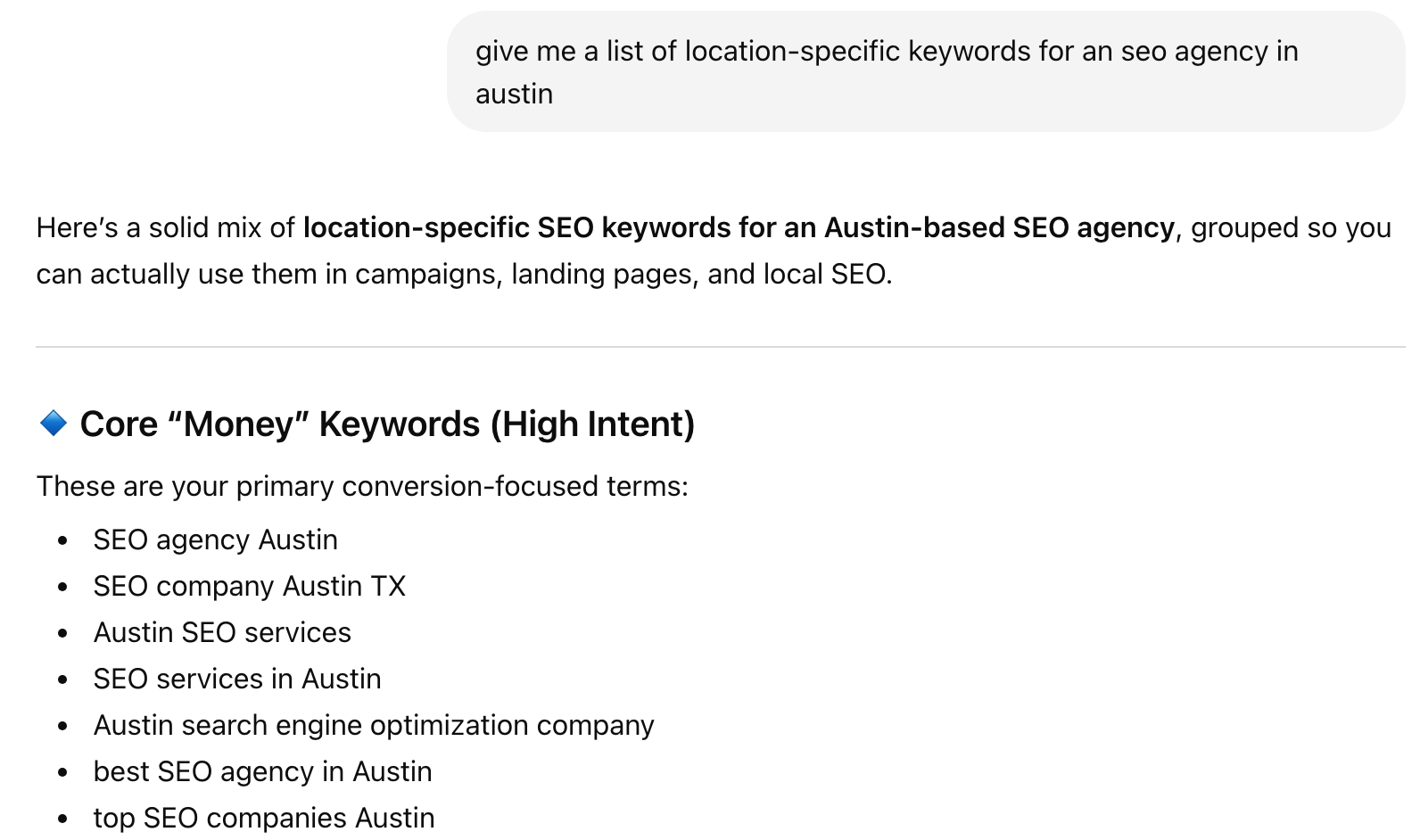
Then you take those ideas and validate them in your keyword tool.
One more thing that helps a lot is just checking the search results.
Look at what’s already ranking. Are they service pages, directories, blog content? That tells you what kind of content you’ll need to compete.
At the end of the day, you’re just trying to find the right keywords. The ones that match what you offer, have real search volume, and are tied to your specific location.
Make The Most of Your Local SEO With Local Links
Ranking your own pages is important, but it’s not enough anymore.
Search engines still matter, but now you also have AI answer engines pulling from multiple sources to generate results. They don’t just look at your website. They look at what other sites say about you.
That’s where local links come in.
Think about articles like:
- “top lawyers in Washington”
- “best dentists in Chicago”
- “top auto repair shops near you”
These are some of the best link building opportunities for a local business.
If you’re featured in those pages, two things happen.
First, you get direct referral traffic from people actively looking for a service in your area.
Second, you get a strong ranking signal. These are contextual backlinks from real pages that already rank in search results, which helps your own pages perform better.
There’s also a third benefit that most people overlook.
These list-style pages are exactly the kind of content AI models rely on.
When your business shows up consistently in these types of pages across different sites, it increases the chances of being recommended in AI-driven searches.
So if someone gets a flat tire and asks a voice assistant where to fix it, your shop is more likely to come up.
That’s the upside.
The downside is the amount of work it takes to get there.
You need to find the right sites, reach out, pitch your inclusion, follow up, and keep doing that over and over again.
For most local businesses, that either eats up a big part of the day or turns into something you have to hire for and manage.
That’s why a lot of businesses end up outsourcing it.
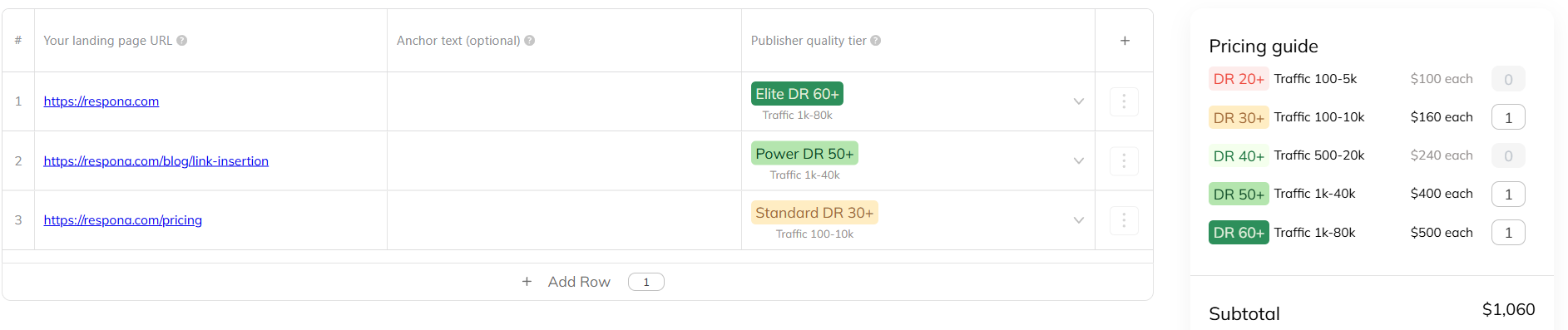
Instead of doing everything manually, you can place an order for local listicle placements and let the team handle the rest.
From finding opportunities to securing placements, the whole process is taken care of.
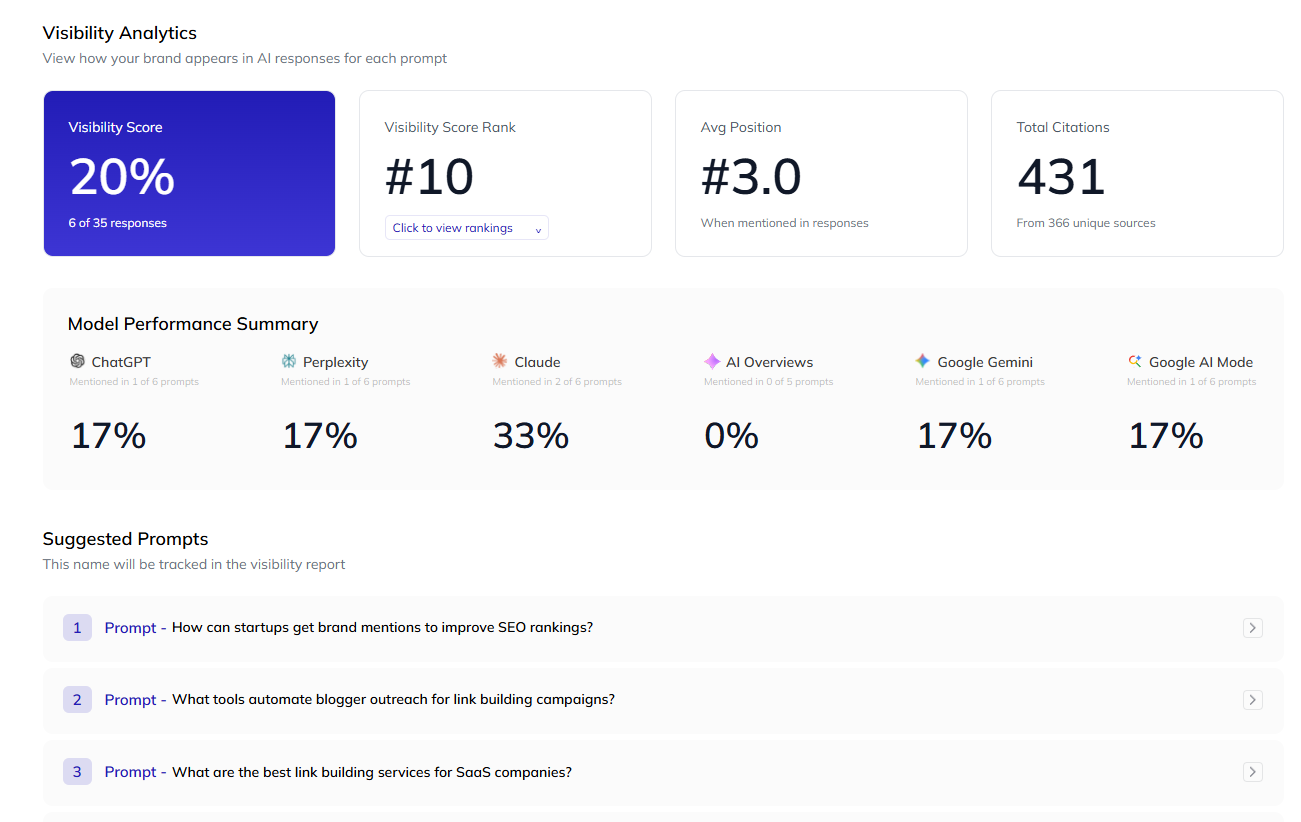
And once those links start going live, you can track how your visibility grows over time, including how often your business shows up in AI-driven results, using the Campaigns feature.
That way you’re not guessing what’s working. You can actually see the impact.
Link building cheat sheet
Now Over to You
Geographic keywords are what bring in customers who are actually ready to take action.
If you target the right keywords and build pages around them, you can show up consistently in local search results. But that’s only part of it.
To really compete, you also need to show up outside your own site. That means getting mentioned on pages that already rank and already get traffic.
The problem is the time it takes to do that consistently.
You either handle outreach yourself, which quickly turns into a full-time task, or you hire and manage someone to do it.
Or you can skip all of that.
With Respona, you can place an order for local listicle placements and let the team handle everything. From finding the right opportunities to securing placements, it’s all taken care of.
Frequently Asked Questions (FAQ)
What are geographic keywords?
Geographic keywords are search terms that include a service and a specific geography. They help businesses show up in local search results when people are looking for something in a specific location.
Why are geographic keywords important for local SEO?
They target users with clear local intent. Instead of broad traffic, you’re attracting people searching for a service in a specific area, which makes them more likely to convert.
How do I find the right geographic keywords?
Start with your services and combine them with the locations you serve. Then use a keyword research tool to check search volume and competition so you’re targeting keywords that actually get searched.
Do geographic keywords work for multiple locations?
Yes. If you serve multiple locations, you can create separate pages targeting each geographic area. Just make sure each page has unique content to avoid keyword cannibalization.
Should I only rely on geographic keywords to rank?
No. Targeting geographic keywords is the foundation, but you also need supporting content and external mentions to improve your visibility in both search engines and AI results.
How long does it take to rank for geographic keywords?
It depends on your local market and competition. Lower competition areas can see results faster, while more competitive locations take longer and require stronger content and backlinks.