
If you’ve ever done keyword research, you’ve already worked with seed keywords, even if you didn’t call them that.
Seed keywords are the starting point of any SEO strategy. They represent the broad topics your business is built around and shape the direction of your content, keyword strategy, and overall visibility in search engines.
The mistake most people make is treating them as the end goal instead of the starting point.
They find a few seed keywords, check the search volume in a keyword research tool, and try to rank for them directly. In most cases, that’s either extremely difficult or outright unrealistic.
The real opportunity comes from what you do next.
Once you have the right seed keywords, you can expand them into dozens of related keywords that better match your target audience and are far more achievable from a ranking perspective.
That’s how you turn a simple keyword idea into a scalable content strategy that actually drives traffic.
Key Takeaways:
- Seed keywords are broad, high-level topics that form the foundation of your keyword research and SEO strategy.
- You can find seed keywords using a keyword research tool, keyword explorer, or by analyzing related searches and keyword suggestions.
- Search volume alone is not enough. You also need to consider keyword difficulty, user intent, and how well a keyword fits your target audience.
- Expanding seed keywords into more specific keyword phrases is where most of your organic traffic will come from.
- Long tail keywords are easier to rank for and help you build traffic faster, especially if you are not already an authority.

Link building cheat sheet
What is a Seed Keyword?
A seed keyword is a broad, top-level keyword that represents a core topic in your niche.
It’s usually one or two words, sometimes a short keyword phrase, and it acts as the foundation for your entire keyword research process. Think of it as the starting point you use to discover more specific keyword opportunities.
For example, if you run an SEO blog, your seed keywords might be things like “link building”, “keyword research”, or “content marketing”. Each of these is a big topic that can branch out into dozens or even hundreds of related keywords.
That’s why they’re called seed keywords. You plant one seed, and it grows into an entire cluster of content.
From an SEO strategy perspective, seed keywords are important because they define the direction of your content and how search engines understand your site.
They help you identify what topics you want to be associated with and what your target audience is searching for at a high level.
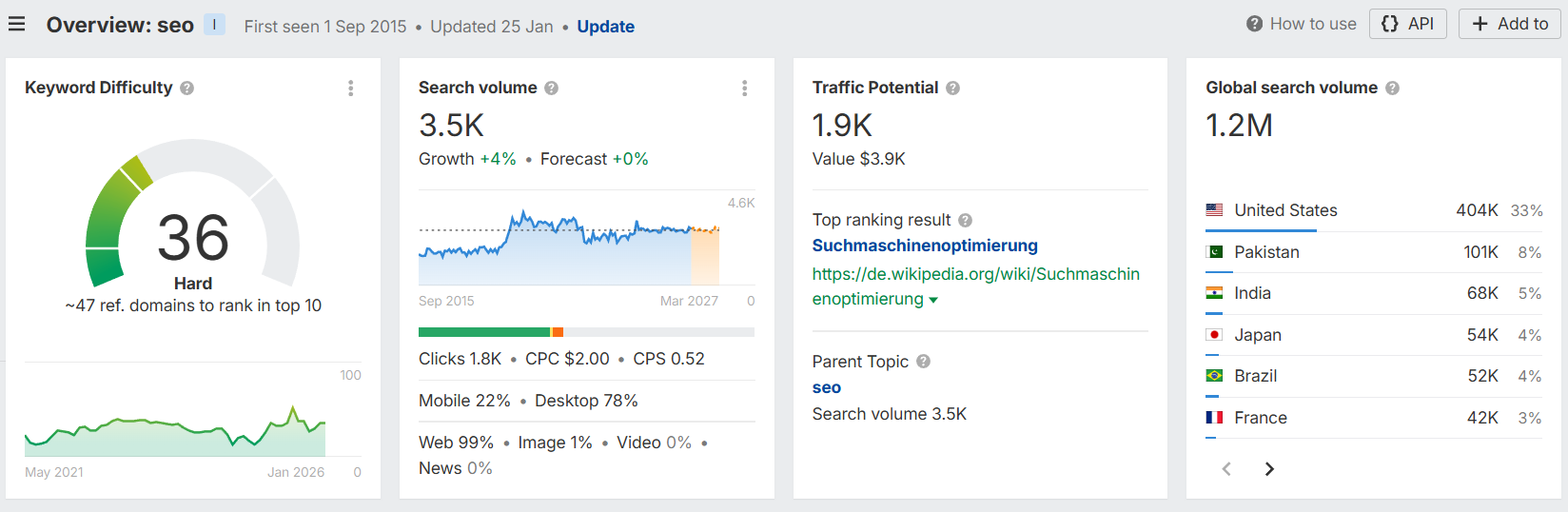
The upside is obvious. Seed keywords usually have high search volume and can bring in a lot of traffic if you manage to rank for them.
The downside is just as clear.
These keywords are often extremely competitive.
In many niches, ranking for a seed keyword can require a strong backlink profile, high domain authority, and a well-developed content strategy. Without that, you’re competing against sites that have been building authority for years.
That’s why most websites don’t rank for seed keywords directly, at least not at the beginning.
Instead, they use them as a base for keyword research.
A single seed keyword can generate dozens of related searches, keyword suggestions, and specific keyword ideas that are much easier to target. These related keywords often have lower keyword difficulty and clearer user intent, which makes them far more realistic to rank for.
How to Find Seed Keywords?
Finding seed keywords is not complicated. The challenge is finding the right ones that actually align with your business, your target audience, and your overall keyword strategy.
The easiest way to start is with a keyword research tool like Ahrefs, Semrush, or any other keyword explorer.
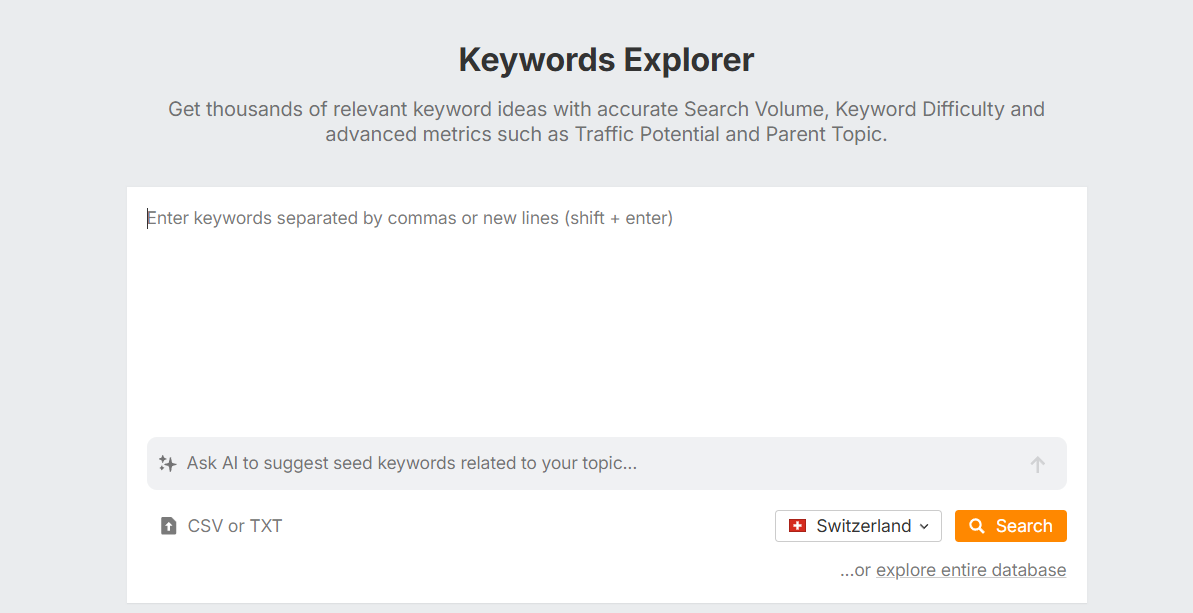
These tools are built specifically to help you generate keyword ideas, analyze search volume, and understand how competitive a keyword is before you commit to creating content around it.
For example, you can plug a simple term into a keywords explorer and get a full keyword overview.
This will usually include search volume, keyword difficulty, related keywords, and keyword suggestions based on real search data. From there, you can start building a seed keyword list that reflects the main topics in your niche.
If you want a free option, Google Keyword Planner is still a solid place to start. It can give you keyword suggestions and rough search volume estimates based on data from Google Ads. You can also look at related searches at the bottom of Google search results to find additional related terms and keyword ideas.
Another simple approach is to use AI to speed things up.
You can take a general topic and ask a tool like ChatGPT to generate seed keyword ideas or potential seed keywords based on your industry.
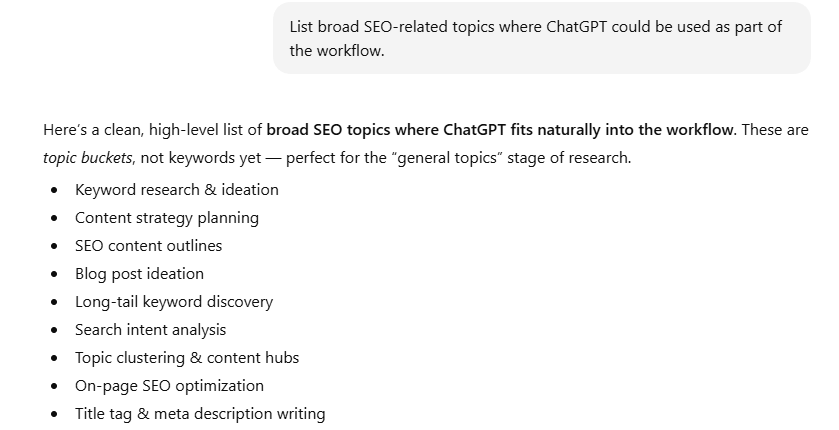
This is especially useful when you are starting from scratch or trying to expand into a new area. The important part is not to rely on AI blindly. Use it to generate ideas, then validate those ideas in a keyword research tool.
At this stage, you are not looking for perfection. You are looking for direction.
Focus on finding relevant seed keywords that:
- match what your target audience is searching for
- clearly relate to your product, service, or content
- can realistically be expanded into multiple pieces of content
You should also pay attention to search volume and keyword difficulty, but don’t overthink it. A seed keyword is not something you necessarily need to rank for directly. It’s something you use to uncover better keyword opportunities.
Seed Keywords vs Long-Tail Keywords
This is where most people get tripped up.
On paper, seed keywords look like the obvious choice. They have higher search volume, they represent big topics, and they seem like the fastest way to grow traffic.
In reality, they’re usually the hardest keywords to rank for.
A typical seed keyword might have a keyword difficulty of 50, 60, even 70+.
That means you’re competing with established sites that already have strong authority, thousands of backlinks, and a well-developed content strategy. For most websites, especially early on, that’s not a realistic keyword opportunity.
Long tail keywords are the opposite.
Instead of targeting a broad keyword like “link building”, you’re targeting something more specific like “how long can keywords be?”. The search volume is lower, but so is the keyword difficulty. In many cases, you’ll find long tail keywords sitting at a difficulty of 0 to 10.
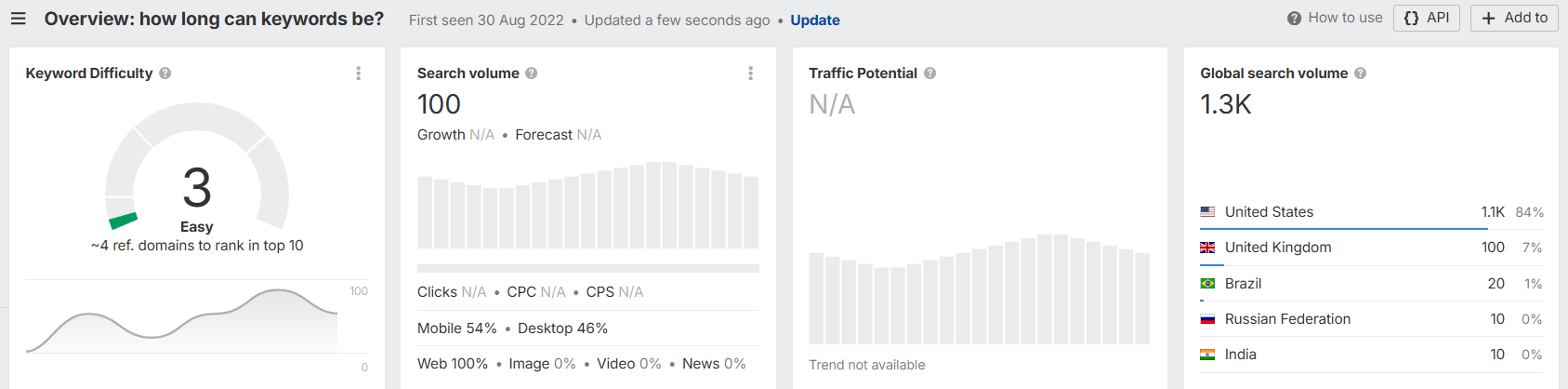
That’s where things start to click.
Long tail keywords are easier to rank for because they match more specific search intent and align more closely with what your target audience is actually looking for.
When someone types in a detailed search query, search engines have a much clearer idea of what kind of content to show in the search results.
From a keyword strategy perspective, this is how you build momentum.
Instead of trying to rank for one seed keyword, you expand it into dozens of related searches and specific keyword phrases.
Each piece of content targets a different variation, and over time, those rankings start to stack.
This is especially important if you’re a startup or a smaller site.
You’re not going to outrank established players for a short tail keyword overnight. But you can compete on long tail keywords by creating relevant content that directly answers specific queries.
You start with a seed keyword as your main topic, then build out supporting content around related keywords.
Each article targets a different angle, but they all connect back to the same core idea. That structure helps search engines understand your site better and strengthens your overall SEO strategy.
So while seed keywords define your direction, long tail keywords are what actually drive results.
Link building cheat sheet
Now Over To You
Seed keywords are where everything starts, but they are not where most of your results come from.
The real value comes from how you expand them. When you take a single seed keyword and turn it into a structured keyword strategy, you give yourself dozens of realistic opportunities to rank, drive traffic, and build authority over time.
That is what separates content that sits idle from content that actually grows.
But even with the right keywords and solid content, rankings do not happen on their own. You still need visibility, backlinks, and consistent promotion to compete in search engines.
That is where we come in.
Our done-for-you link building helps you turn your content into something that actually ranks. We handle the entire process, from prospecting to outreach to placements, so you can focus on content while we focus on getting it seen.
If you want your keyword strategy to translate into real traffic, not just ideas, this is exactly what we do.
Frequently Asked Questions (FAQ)
Frequently Asked Questions (FAQ)
What are seed keywords in SEO?
Seed keywords are broad keywords that represent the main topics of your website or business. They are used as a starting point in keyword research to discover more specific keyword ideas and build a content strategy.
How do you find seed keywords?
You can find seed keywords using a keyword research tool like Ahrefs, Semrush, or Google Keyword Planner. You can also look at related searches, keyword suggestions, and existing search queries in Google Search Console to generate new ideas.
Are seed keywords the same as long tail keywords?
No. Seed keywords are broad and usually have higher search volume and competition, while long tail keywords are more specific, easier to rank for, and often have clearer user intent.
Why are seed keywords important for SEO?
Seed keywords help define your keyword strategy and guide your content creation. They allow you to identify core topics, understand your target audience, and expand into related keywords that can drive organic traffic.
How do you turn seed keywords into content ideas?
You expand seed keywords into related keywords, keyword phrases, and topic clusters. This process helps you create multiple pieces of content around a single topic, making it easier to rank in search engines and capture more traffic over time.