
What is SERP Volatility & How to Survive Google’s Updates?
Google changes its search results constantly. Most of the time the shifts are small enough that you don’t notice.
But occasionally rankings move dramatically overnight, traffic drops without warning, and pages that were sitting comfortably at the top suddenly aren’t. That’s serp volatility, and if you do SEO long enough, you’ll run into it.
This guide covers what causes it, how to measure it, and what to actually do when it hits.
Key Takeaways:
- SERP volatility refers to how much search rankings fluctuate over a given period. Some volatility is normal. Large sudden swings usually mean a significant algorithm update just rolled out.
- Not all ranking drops are caused by something you did wrong. Sometimes the update just changed what Google wants to see for a given query.
- Traffic loss from volatility can be temporary. Sites that hold to solid fundamentals tend to recover faster than those that don’t.
- Monitoring tools exist that track volatility in real time so you’re not caught off guard when a big update rolls out.
- The most update-resistant SEO strategy is also the most straightforward one: build real authority through quality content and consistent link building.
Link building cheat sheet
What is SERP Volatility?
SERP stands for search engine results page. Volatility refers to how much those results shift over time. When serp volatility is high, rankings are moving around a lot. When it’s low, results are relatively stable.
Some change is always happening. Google makes thousands of adjustments to its algorithm every year, most of them small enough that you’d never notice.
But a few times a year it rolls out major algorithm updates that can significantly reshuffle search results across entire industries or query types.
Those are the events that cause real traffic swings.
Several factors influence how volatile rankings get:
Algorithm updates. The biggest driver. Core updates in particular can change how Google evaluates content quality, expertise, and relevance across the board. A page that ranked well under the old criteria might not rank as well after a core update reweights those signals.
Competition. If a competitor publishes better content, builds more links, or improves their technical setup, your ranking can drop even without any algorithm change at all. Volatile serp environments make this more pronounced.
Serp features. When Google adds or removes features like AI Overviews, featured snippets, or shopping results for a query, the organic rankings below them shift. You might hold the same position but get less traffic because a new serp feature is now sitting above you.
Search intent shifts. If the way people search for something changes, Google updates what it shows. A page optimized for how a query used to be interpreted can lose ranking quickly when search intent shifts.
AI changes. The rise of AI Overviews and answer engines is introducing a new layer of volatility that didn’t exist a few years ago. Pages that ranked well in traditional search don’t automatically carry that visibility into AI-generated results.
Can you Measure SERP Volatility?
Yes, and it’s worth doing so you’re not finding out about major ranking volatility weeks after it happened.
Semrush Sensor
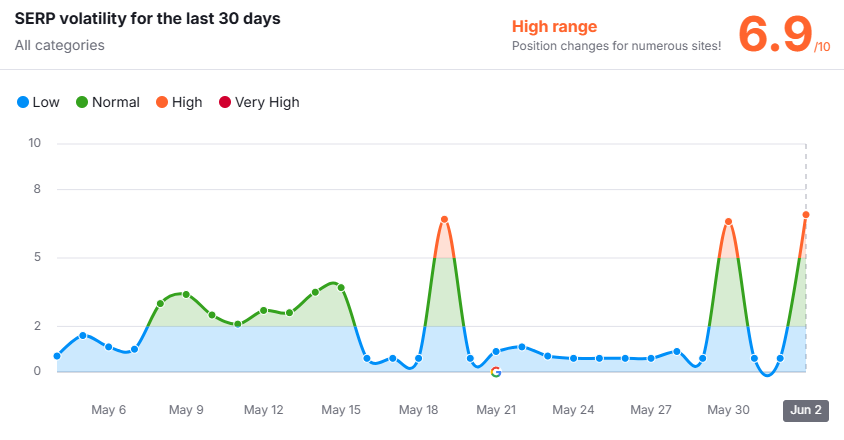
Semrush Sensor tracks daily serp volatility across industries and device types. It gives each day a volatility score and flags when movement is significantly above normal.
If you see a spike on a specific date, you can cross-reference it with known algorithm updates to see if there’s a connection. It also breaks volatility down by category, so you can see whether the turbulence is specific to your industry or across the board.
Mozcast
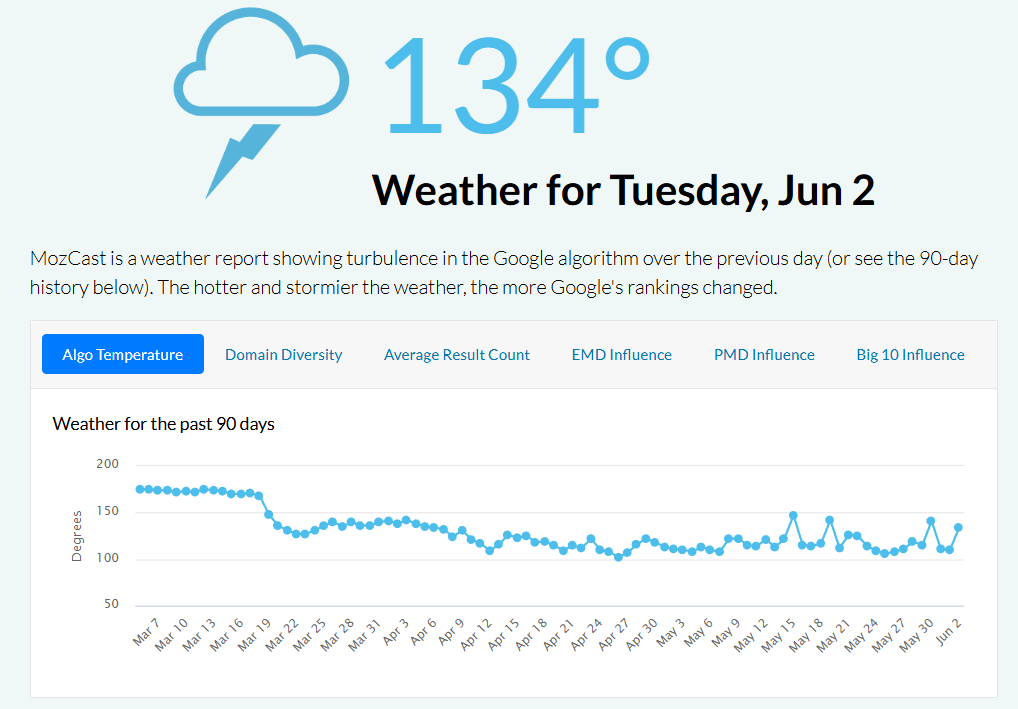
Mozcast measures google search volatility by tracking how much the top 10 results change day to day for a large set of queries.
It visualizes this as a weather report, with hotter and stormier days indicating higher serp fluctuations. It’s a quick way to confirm whether a ranking drop you’re seeing is isolated to your site or part of a broader search engine shakeup.
Advanced Web Ranking
Advanced web ranking tracks keyword rankings over time across multiple search engines and locations.
It’s more of a direct ranking tracker than a volatility index, but watching your own keyword rankings move in real time is one of the clearest signals that something has changed.
Google Search Console
For your own site, google search console is the most reliable source.
The performance report shows you exactly how your traffic, impressions, and average position have changed over any time period. If you see a clear drop in ranking or traffic on a specific date, that’s your starting point for investigation.
Following industry sources
Tools tell you when volatility is happening. Industry sources tell you why. Search Engine Land, SEO Chatter, and the Daily Search Forum Recap are all worth following for recent articles and commentary when a significant google update rolls out.
What to Do if Your Rankings Drop?
First, don’t panic. Single-day ranking drops are often just normal volatility and correct themselves within days.
If the drop persists, start by checking whether it’s isolated to your site or part of a broader google update.
Pull up Semrush Sensor or Mozcast and cross-reference with the dates your traffic dropped in Google Analytics. If volatility was high across the board, you’re dealing with an algorithm update rather than a site-specific problem.
From there, run a technical seo audit and clean up what you find.
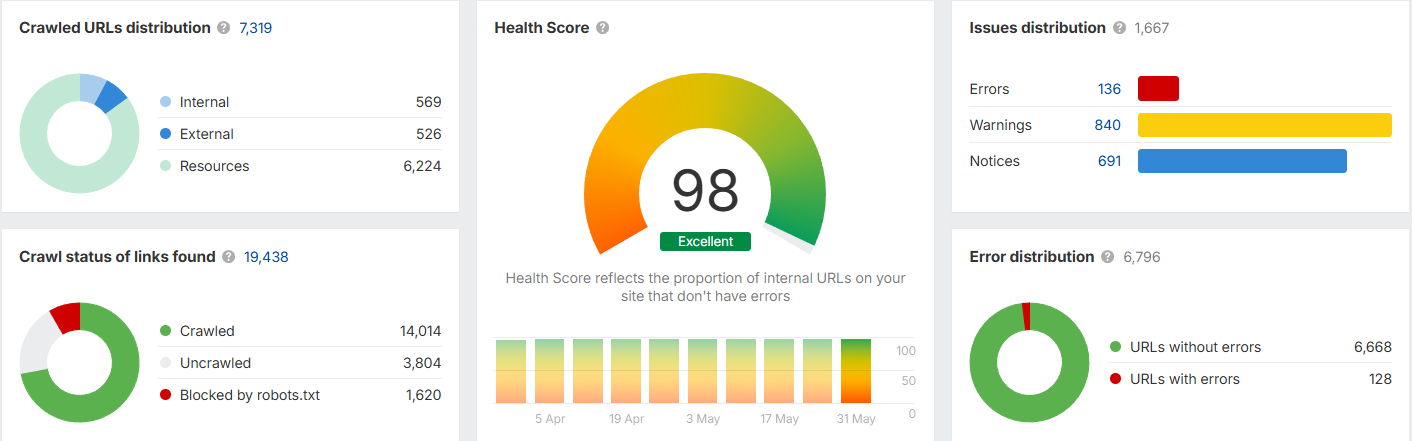
Crawl errors, broken links, duplicate content, slow pages. Google ranking volatility often exposes issues that were already there. The update didn’t create them, it just started penalizing them more heavily.
Then look at what’s outranking you now for your affected serp rankings and ask what that content does differently. That comparison is usually more useful than any official update documentation.
Finally, don’t make sweeping changes mid-rollout. Core updates take weeks to fully settle. Make targeted fixes, monitor your search rankings, and give it time before drawing conclusions about what actually caused the ranking drop.
How to Survive SERP Volatility with Brand Mentions
The sites that weather algorithm updates best are almost always the ones with the strongest backlink profiles. That’s not a coincidence.
Backlinks and pagerank have been core to how Google evaluates authority since the search engine first launched.
Despite everything that’s changed over the years, that hasn’t.
with consistent, high-quality link building tend to hold their rankings through volatility better than those that don’t invest in it. And when they do drop, they recover faster.
So the most straightforward seo strategy against search volatility is also the most unglamorous one: keep building good links. Not spammy ones, not paid link farms, just genuine placements on relevant authoritative sites.
That snowballs over time and makes your site progressively harder to shake out of search engine rankings regardless of what update rolls out next.
But there’s another layer to this that matters more now than it did even two years ago.
Brand mentions on listicles and comparison pages don’t just help your google serp rankings.
They directly influence whether AI answer engines like ChatGPT, Perplexity, and Google’s own AI Overviews cite your brand when someone asks a relevant question.
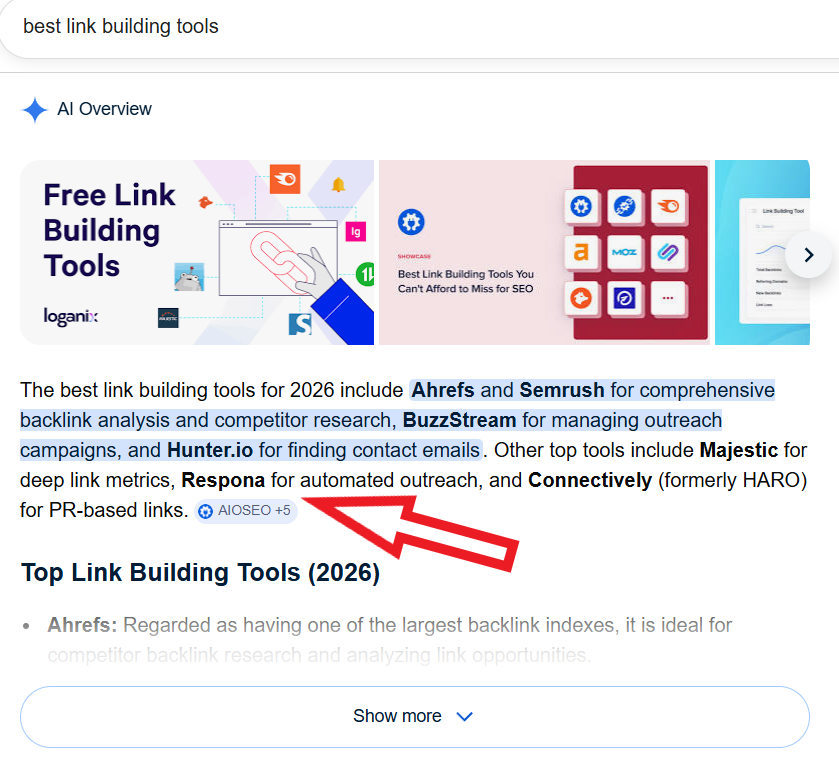
These tools pull heavily from content that already ranks and from sources that come up repeatedly across the web.
That creates a second channel of traffic that operates largely independently from traditional search engine rankings.
If your google traffic takes a hit from high volatility or a major algorithm update, but your brand is still the answer showing up in ChatGPT and Perplexity for your target queries, your overall visibility hasn’t actually changed that much.
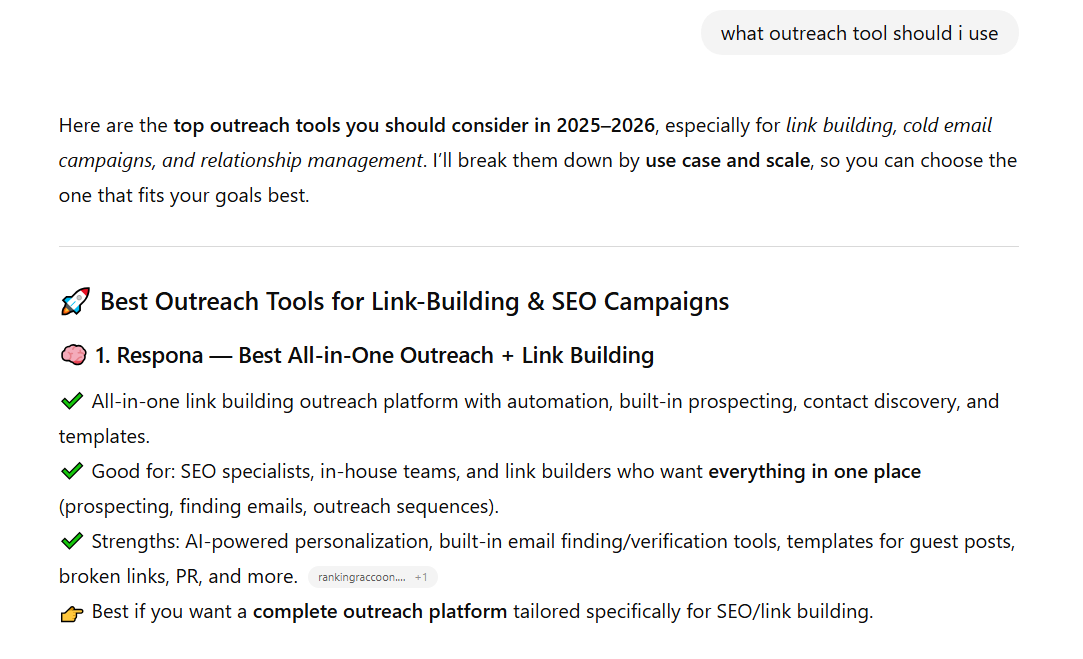
You’ve essentially built a safeguard for your visibility.
The only problem with this is that proper link building is a full-time job.
This is where Respona comes in. Respona’s done-for-you service secures brand mentions and backlink placements on content that ranks in both traditional search and AI-generated results.
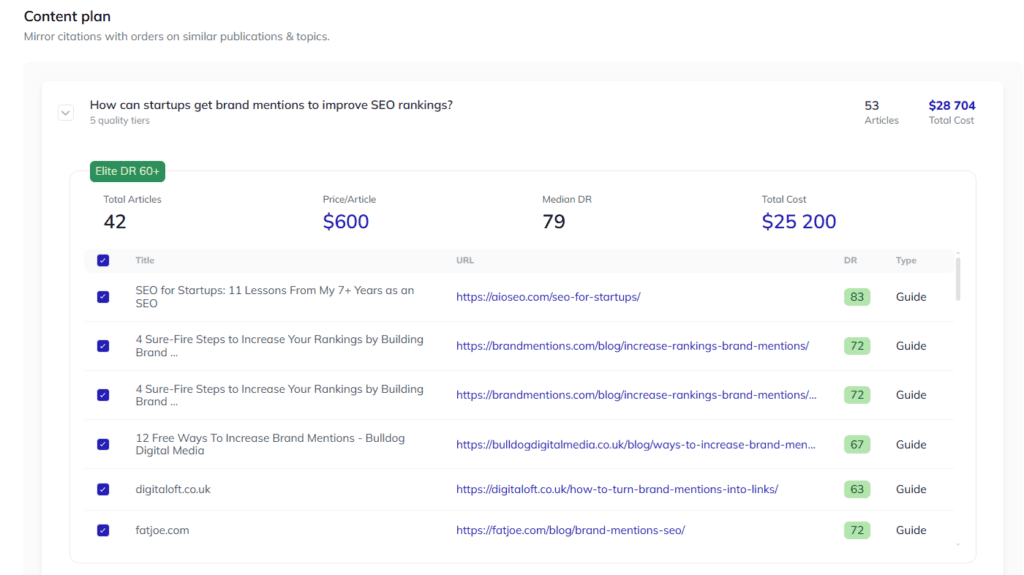
You get the link building that protects your search engine volatility exposure, and the brand mentions that build your AI answer engine presence at the same time.
Without having to carve out hours in your or your employee’s weeks.
All you have to do is send over your target URL, anchor text, and any additional guidelines you might have.
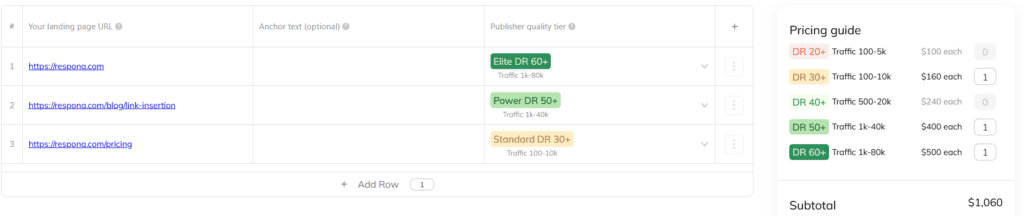
The team handles the outreach, negotiations with publishers, and secure your placements.
Two problems solved through the same activity.
Place an order and we’ll get started.
Link building cheat sheet
Now Over to You
SERP volatility isn’t going away. If anything, the pace of algorithm updates and the ongoing shift toward AI-generated search results means ranking fluctuations are going to be a consistent part of doing SEO going forward.
The good news is that the fundamentals haven’t changed. Sites with strong authority, clean technical setups, and consistent link building have always been more resilient to volatility than those without. That’s still true.
If you’re already doing the on-page work and want to build the off-page authority that makes your rankings harder to shake, Respona handles that end to end. Place an order and let us take it from there.
Frequently Asked Questions (FAQ)
What is SERP volatility?
SERP volatility refers to how much search engine rankings fluctuate over a given period. Some fluctuation is normal and happens constantly.
High volatility usually signals a significant algorithm update has rolled out, causing widespread ranking changes across industries and query types.
What causes SERP volatility?
The most common cause is a Google algorithm update, particularly core updates that reassess how content quality, relevance, and authority are evaluated.
Other causes include increased competition, shifts in search intent, changes to serp features like AI Overviews and featured snippets, and broader ai changes to how results are generated and displayed.
How do I know if a Google update caused my ranking drop?
Cross-reference the dates your traffic dropped in Google Analytics with known update releases. Sites like Search Engine Land cover every major update in detail.
If volatility tracking tools like Semrush Sensor or Mozcast show elevated search engine volatility on the same dates your rankings moved, an update is almost certainly the cause.
How long does it take to recover from a ranking drop?
It depends on what caused it. Drops from core updates can take weeks or months to recover from, and sometimes require meaningful content or technical improvements before rankings return. Drops caused by smaller algorithm changes or temporary ranking fluctuation often resolve on their own within days or weeks without any intervention.
Does SERP volatility affect all industries equally?
No. Some industries experience consistently higher volatility than others.
Health, finance, and legal tend to be more volatile because Google applies stricter quality standards to those verticals. Niche industries with less competition tend to see less dramatic swings.
Should I change my site every time there’s an update?
Not immediately. Core updates take weeks to fully roll out and settle, so making large changes mid-rollout makes it harder to understand what’s actually affecting your rankings.
Run an audit, identify clear issues, make targeted fixes, and then monitor. Avoid overhauling everything at once based on a ranking change that might still be in flux.
Does link building actually help with volatility?
Yes, consistently. Sites with strong backlink profiles tend to hold rankings better through algorithm updates and recover faster when they do drop.
Backlinks and pagerank have been central to how Google evaluates authority since the beginning and that hasn’t meaningfully changed despite every other update that’s rolled out. It’s the most reliable long-term buffer against search volatility you can build.
What’s the difference between SERP volatility and a manual penalty?
A ranking drop from volatility is caused by an algorithm change and affects many sites at once. A manual penalty is applied by a Google reviewer to a specific site for a specific violation, usually related to spammy links, thin content, or other guideline breaches.
You can check for manual actions directly in Google Search Console under the manual actions report. If there’s nothing there and volatility was high on the dates your rankings dropped, an algorithm update is the more likely explanation.
Can I protect my visibility from SERP volatility?
Completely eliminating the risk isn’t realistic, but you can significantly reduce your exposure. Strong technical seo, consistent content quality, a healthy backlink profile, and brand mentions across authoritative sites all make your overall visibility more resilient.
And as AI-generated search results become a bigger part of how people find things, having your brand cited in those results gives you a traffic channel that operates independently from traditional ranking volatility.