
UGC links confuse a lot of people.
On one hand, you’ll hear that any link is good for SEO. On the other, you’ll see people say that user-generated links are basically useless because they don’t pass value.
So which is it?
The reality sits somewhere in the middle.
UGC links show up everywhere. Blog comments, forum posts, review sites, social media threads. They’re a natural part of how content spreads across the web. And search engines are very aware of them.
But they don’t treat them the same way as other links.
To understand whether UGC links actually help, you need to look at how they work, how search engines interpret them, and where they still fit into a modern SEO strategy.
Key Takeaways:
- UGC links are links created by users in places like blog comments, forum posts, and social media platforms
- These links typically use the UGC attribute, which tells search engines how to treat them
- Most UGC links are treated similarly to nofollow links, meaning they don’t pass link equity or link juice
- Even without direct ranking impact, UGC links can still support visibility and brand presence across the web
- User-generated content plays a growing role in how AI search systems interpret consensus and relevance

Link building cheat sheet
What Are UGC Links?
UGC links are links that come from user-generated content.
In other words, they’re not placed by the website itself. They’re added by users.
This usually happens in places like blog comments, forum posts, review platforms, or threads on social media. If someone mentions your site in a Reddit discussion or drops a link in a comment section, that’s a UGC link.
These links exist because websites allow users to contribute content.
And because of that, search engines treat them differently.

If you look at the HTML of a UGC link, you’ll usually see a rel attribute like rel=”ugc”. This is called the UGC attribute, and it tells search engines that the link was created by a user, not the site owner.
That distinction is important.
Search engines don’t want to treat a random link in a comment section the same way they treat a link placed inside an article by an editor.
So UGC links are handled more like nofollow links. They don’t pass link equity in the same way a regular backlink does.
You’ll often see them combined too, something like rel=”ugc nofollow”.
So while they’re still links, they sit in a different category.
They’re part of how content spreads across the web, especially in community-driven spaces, but they’re not treated as strong ranking signals on their own.
Do UGC Links Help SEO?
The honest answer is yes and no.
From a strict SEO perspective, UGC links don’t do much on their own.
Because of the UGC attribute and how it’s treated, these links are handled very similarly to nofollow links.
That means they don’t pass PageRank, they don’t pass link equity, and they’re not going to directly improve your ranking in the same way a dofollow backlink would.
But that doesn’t mean they’re useless.
UGC links still show up on review sites, forums, comment sections, community platforms. All of these platforms are used by real people. That content is still crawled, indexed, and used as part of the broader picture.
If people are talking about you, that’s a signal. Not in the “this link passes authority” sense, but in the “this brand keeps showing up in relevant conversations” sense.
Take G2 or Capterra reviews, for example.
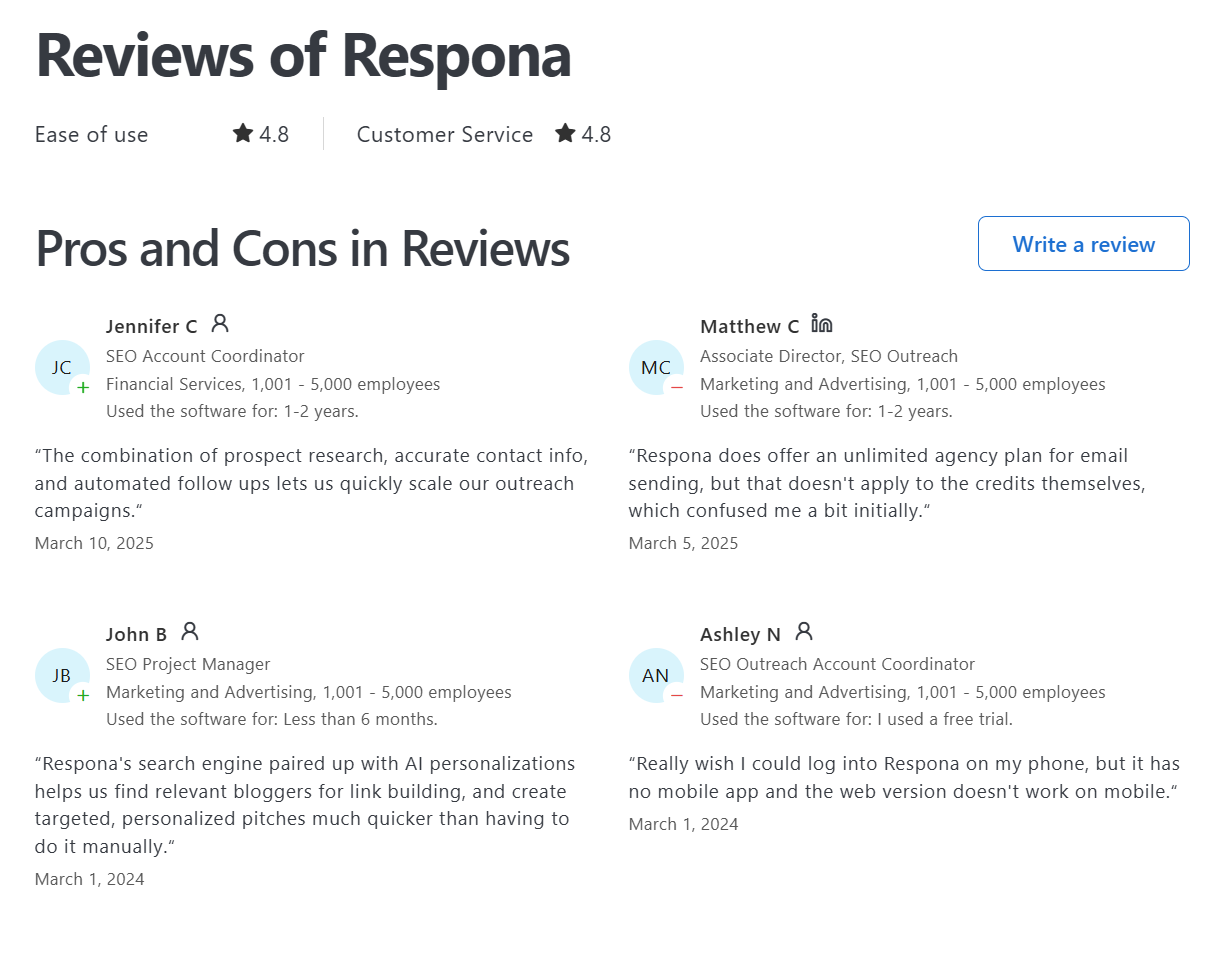
The links themselves are nofollowed, so they’re not passing link equity.
But you wouldn’t doubt that they are useful.
Because they’re in a review that can potentially influence another potential buyer’s purchasing decision.
Do UGC Links Improve AI VIsibility?
This is where UGC links actually matter more than people expect.
With traditional search engines, the link itself is the main thing that matters. Does it pass PageRank, does it help ranking, etc.
But with AI search, it’s different.
Tools like ChatGPT or other AI-driven engines aren’t just looking at links.
They’re looking for consensus. What people are saying, where brands are mentioned, and how often they come up in relevant conversations.
And a lot of that comes from user-generated content.
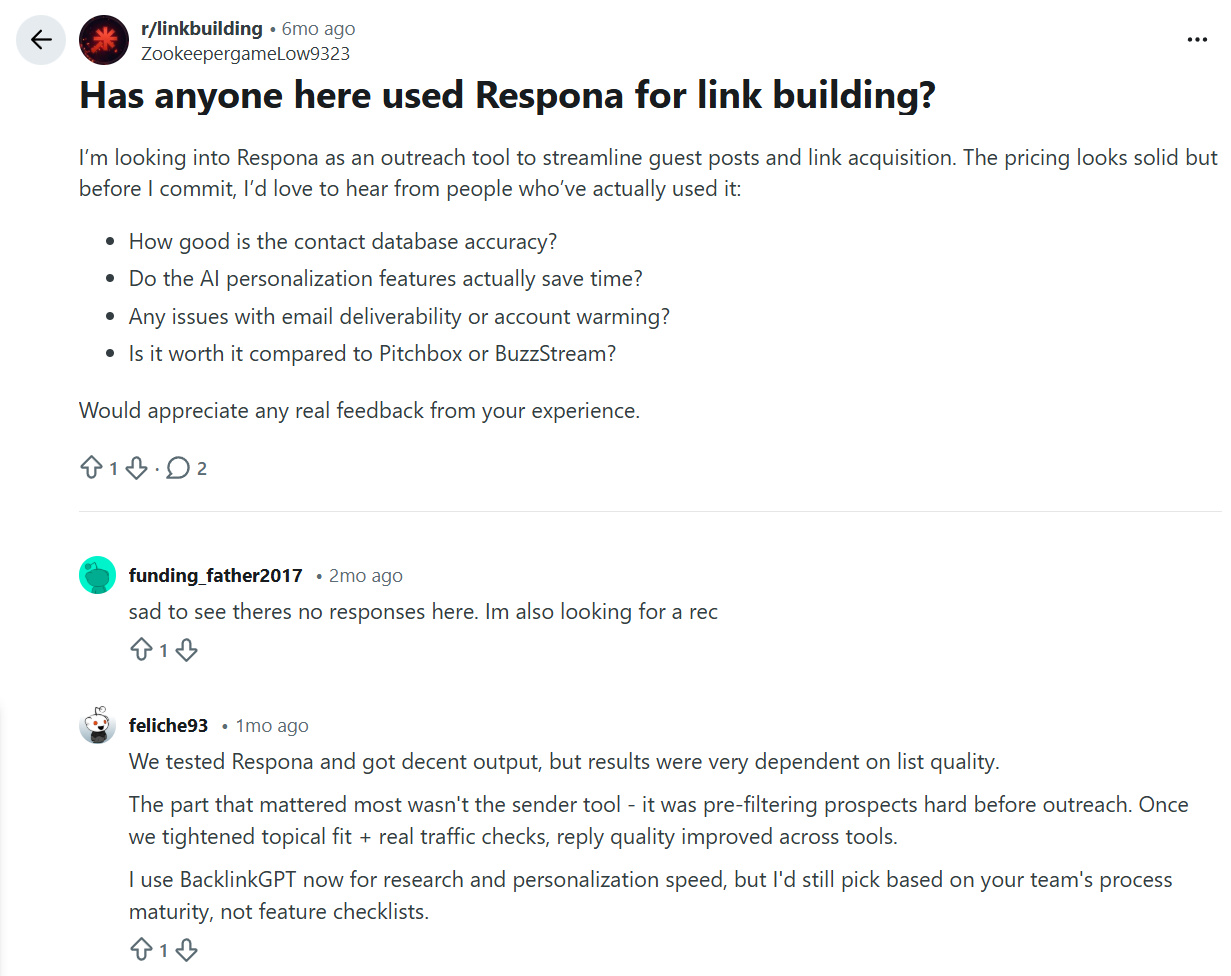
Think about places like Reddit, review sites, or forum posts. That’s where people are actually discussing tools, comparing options, and sharing opinions. All of that content gets picked up and used to form answers.
So in this case, the UGC link itself isn’t doing much.
What matters is the mention around it.
If your brand keeps coming up in a positive context across different platforms, especially in structured discussions like “best tools” lists or comparisons, it becomes much easier for AI systems to recognize you as a relevant option.
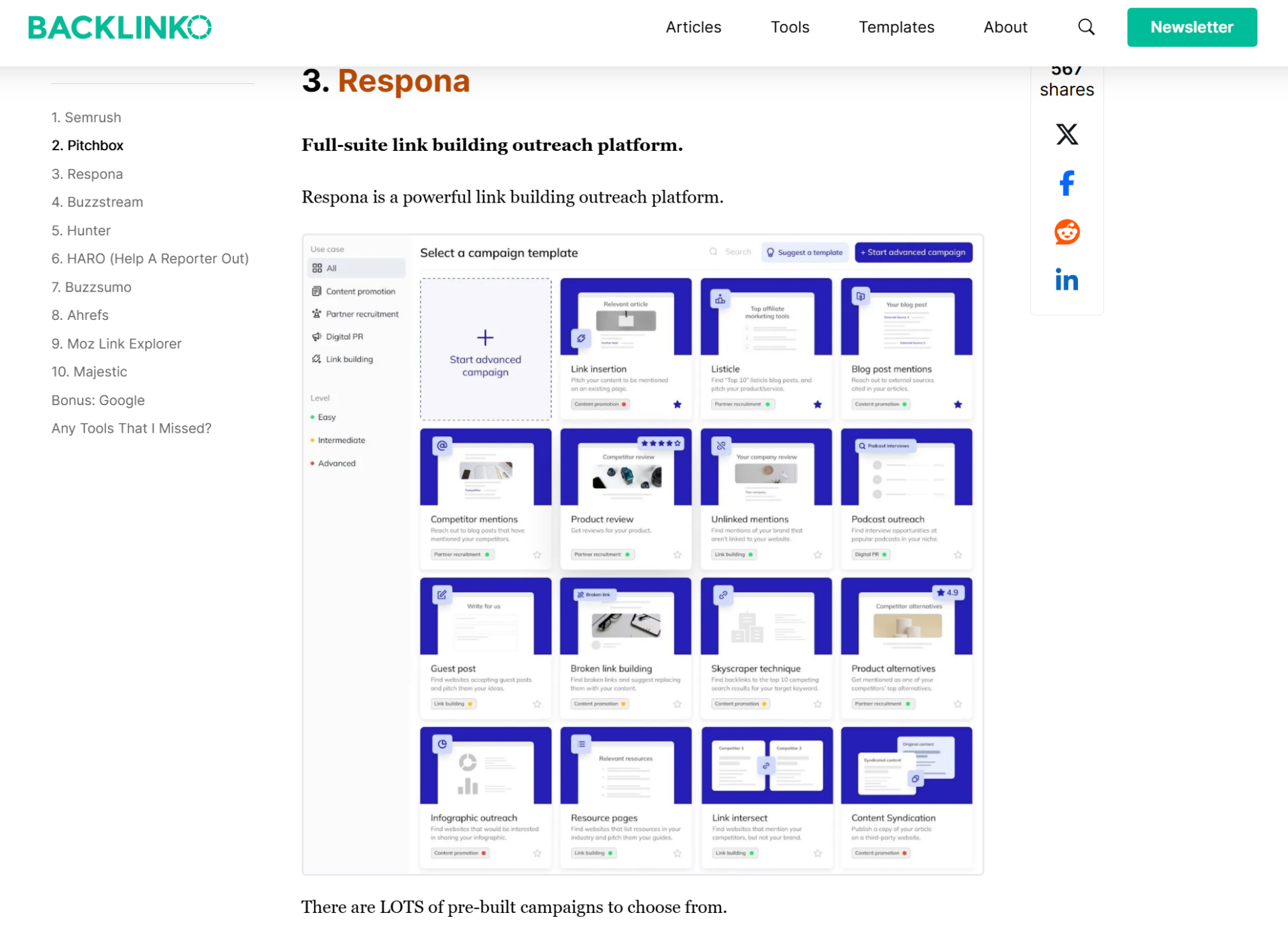
That’s how you end up getting recommended.
So while UGC links don’t help much with traditional SEO, they can absolutely support AI visibility.
Which Links Are Best For SEO And AEO?
UGC links have their place.
They help you show up in conversations, build presence across platforms, and support visibility in AI search. But if you’re thinking about actual ranking impact, they’re not what moves the needle.
What you really want are editorial placements.
More specifically, listicle placements.
These are the kinds of pages where tools or services are compared in a structured way. Think “best outreach tools,” “top SEO tools,” things like that. They usually follow a clear format, features, pricing, pros and cons, reviews.
And that structure matters.
From an SEO perspective, these pages rank well in search engines and pass real value through a dofollow link. That means actual impact on your rankings, not just visibility.
From an AI perspective, they’re even more powerful.
Because the content is structured, it’s much easier for AI systems to process. When your brand shows up consistently in these types of pages across different websites, it creates that same signal of consensus.
So you’re getting both:
- a backlink that helps with rankings
- a brand mention that helps with AI visibility
That’s the best of both worlds.
And this is exactly where most teams run into a wall.
Getting these placements consistently takes time. You need to find the right websites, reach out, pitch your inclusion, and follow up. Then repeat that process over and over again.
That’s why a lot of companies end up outsourcing it.
With Respona, you can skip all of that.
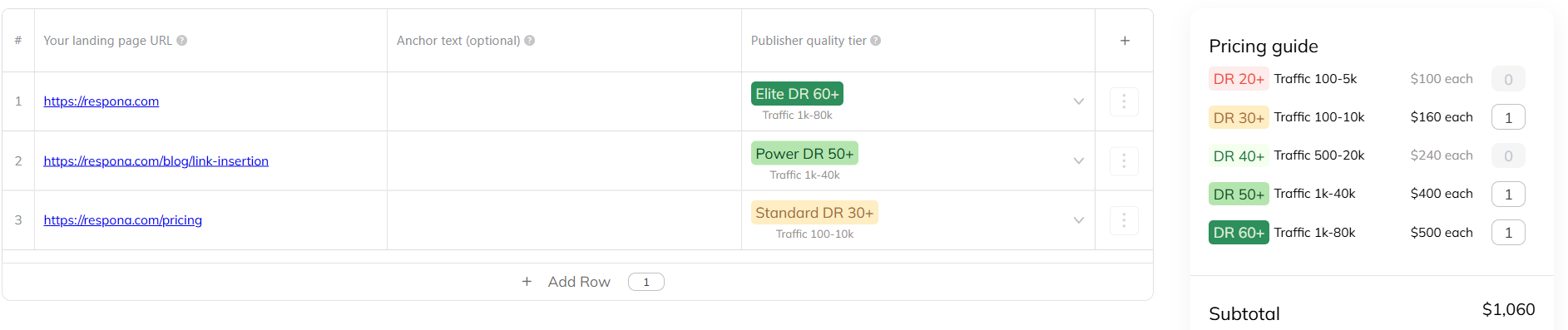
You place an order with your target page and guidelines, and the entire link building process is handled for you. From prospecting to outreach to securing placements on the right websites.
And it doesn’t stop at just getting the link.
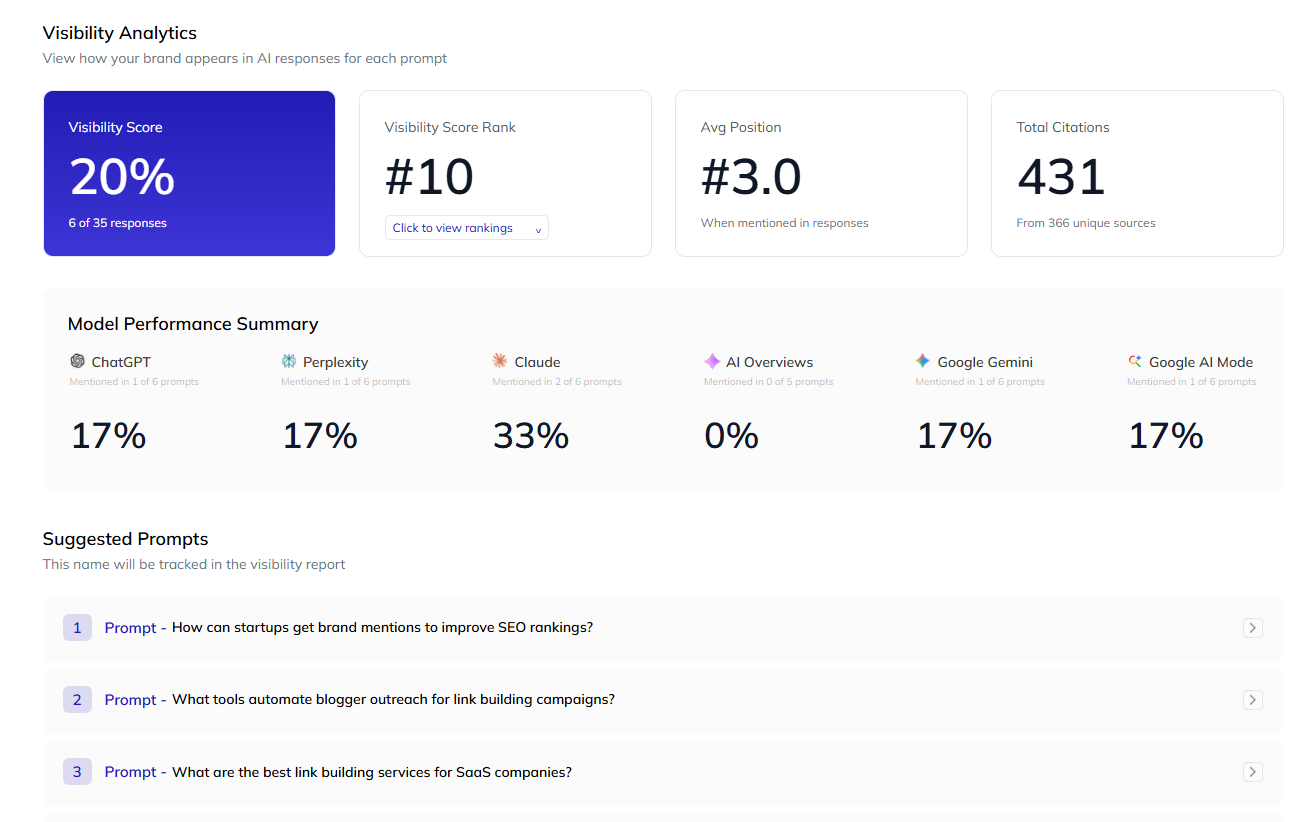
With the Campaigns feature, you can actually track how your visibility evolves over time, not just in traditional search engines, but across AI answer engines.
So instead of guessing whether your efforts are working, you can see how your presence grows as you get placed in more of these high-impact pages.
Link building cheat sheet
Now Over to You
UGC links aren’t useless.
They just play a different role.
They won’t help much with ranking because they don’t pass PageRank, but they do help you show up in conversations. And in a world where AI is pulling from all over the web, that still matters.
But if you actually want to move rankings and drive results, you need more than that.
You need links that pass value.
That’s why the focus should always be on getting placed in the right kind of content. Pages that rank, get traffic, and put your brand in front of people who are actively looking for solutions.
And this is usually where things get tricky.
Because getting those kinds of placements consistently takes time. Finding the right sites, reaching out, pitching, following up. It adds up quickly.
That’s why a lot of teams end up handing it off.
Instead of managing the whole process yourself, you can just define what you’re looking for and let it get done for you. That way you’re focused on results, not the busywork behind link building.
Frequently Asked Questions (FAQ)
What are UGC links?
UGC links are links that come from user-generated content, such as blog comments, forum posts, or discussions on social media platforms. These links are typically marked with the UGC attribute in the HTML.
Do UGC links pass SEO value?
No, UGC links usually don’t pass link equity because they are treated similarly to nofollow links. That means they don’t pass link juice for ranking purposes, even though they are still visible to search engines.
What is the difference between UGC, nofollow, and sponsored links?
These are all types of rel attributes used to classify links.
- UGC attribute → user-generated content
- nofollow tag → tells search engines not to pass value
- sponsored links → used for paid placements or affiliate links
They help search engines understand how a link should be treated.
Are UGC links considered backlinks?
Yes, they are technically backlinks because they point to your website. But they’re treated differently from editorial backlinks since they don’t pass link equity in the same way.
Do UGC links help with rankings?
Not directly. UGC links are not a strong ranking factor because they don’t pass PageRank. But they can still support your overall SEO strategy by increasing visibility and reinforcing brand presence.
Can UGC links help with AI search?
Yes. UGC links often appear in forum posts, blog comments, and reviews, which are all used as sources in AI search. These mentions help AI systems understand which brands are relevant based on real user discussions.
Should UGC links be part of your link building strategy?
They can be part of a broader link building strategy, but they shouldn’t be your main focus. The real SEO value comes from editorial links that pass authority.
Are UGC links bad for SEO?
No, unless they’re used for link spam. When used naturally, they are a normal part of how content spreads across the web and are expected by search engines.
What are best practices for using UGC links?
Focus on:
- adding value in forum posts and discussions
- avoiding spammy link drops
- participating in conversations where your product is relevant
UGC links should come from real engagement, not forced placement.
Do search engines ignore UGC links completely?
No. Search engines still crawl and index UGC content. Even though these links don’t pass link equity, they still contribute to how your brand is understood across the web.