
Ranking number one does not matter if AI never mentions you.
That is the uncomfortable truth I ran into when ChatGPT started answering questions in our niche and quoting competitors who ranked below us.
So we stopped obsessing over pages and keywords.
We focused on something bigger. Making our brand unavoidable to AI systems.
The result was simple. ChatGPT, Google AI Overviews, and other answer engines started quoting us by name.
In this article, I will break down what Generative Engine Optimization really is, how it differs from traditional SEO, and the four strategies we used to get AI to talk about our business.

Link building cheat sheet
What is Generative Engine Optimization
Generative Engine Optimization, or GEO, is the practice of optimizing your brand so AI systems choose to talk about you.
Not rank you. Not link to you. Quote you.
Tools like ChatGPT, Google AI Overviews, Claude, and Perplexity do not behave like traditional search engines. They do not crawl the web and decide which single page deserves the top spot. Instead, they read the web as a whole.
They scan articles, listicles, reviews, comparisons, directories, schemas, and brand mentions across hundreds of sources. Then they synthesize answers based on patterns in your content.
If your brand shows up consistently in those sources, the AI starts to associate you with the topic. That is when it begins to reference you naturally, even when the prompt does not mention your brand at all.
That is exactly how we started seeing ChatGPT quote Respona.
It did not happen because we published one great blog post. It happened because our name kept appearing in the same context, on the same types of pages, across the web.
Once that association was strong enough, generative AI did the rest.
GEO is about building that association on purpose.
Is GEO Any Different From SEO?
At a fundamental level, GEO is not some brand new discipline that replaces traditional SEO.
It builds on the same principles. Links still matter. Relevance still matters. Trust still matters. If your site is weak, technically broken, or disconnected from your niche, no amount of GEO will save you.
Where things change is in how AI visibility is created.
Traditional SEO is mostly page-centric. You optimize a page, try to rank it for a specific keyword, and measure success by where that page lands in the SERPs. If you do not rank high enough, you are effectively invisible.
AI search does not work that way.
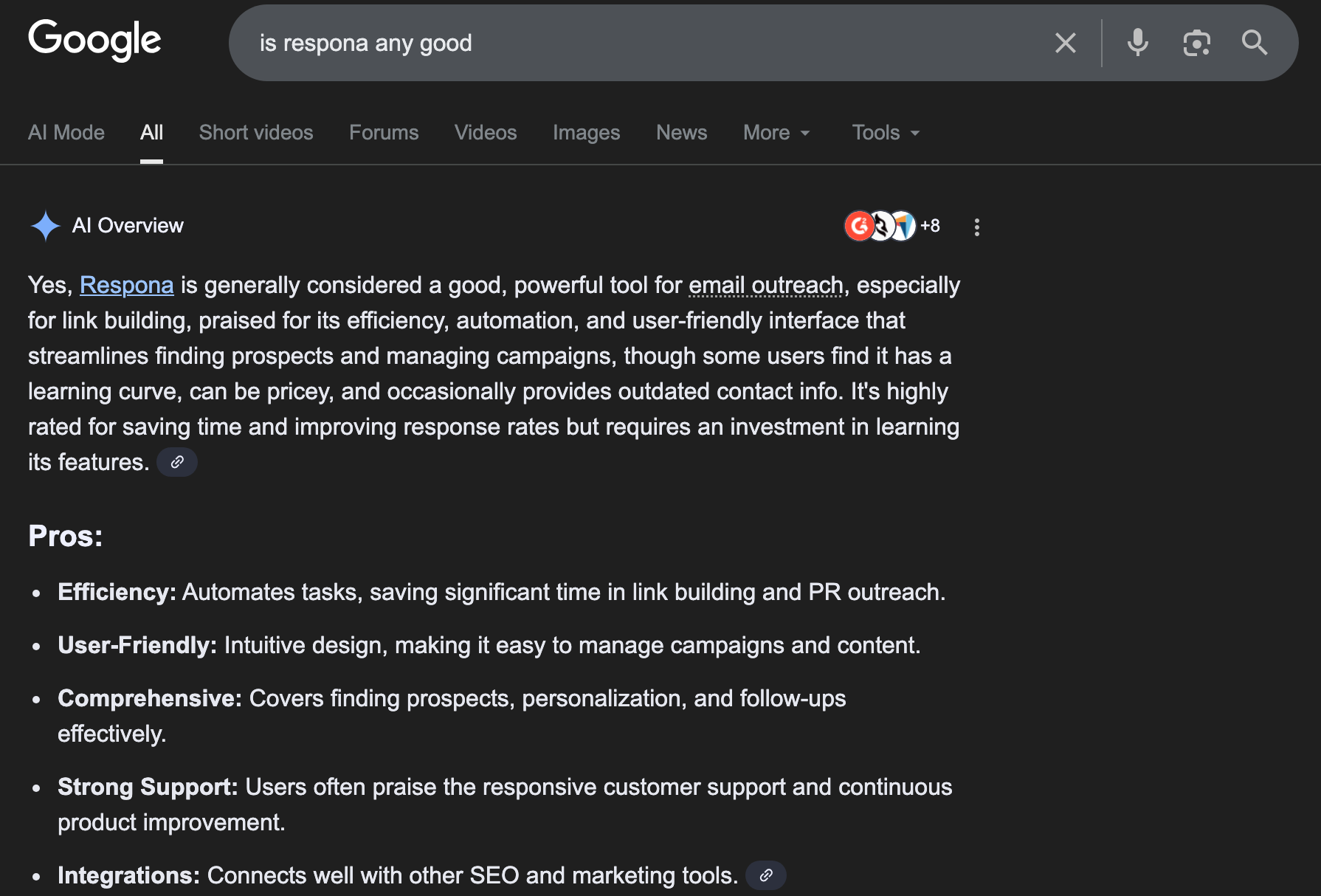
Tools like ChatGPT, Google AI Overview, and Claude do not pick a single “best page” and call it a day.
They read broadly. They absorb information from many different sources, then generate answers based on patterns they see across the web.
That means your brand does not need to win the SERP on its own to win visibility in AI-driven search engines.
If your product keeps getting mentioned in relevant articles, listicles, comparisons, and directories, generative AI starts to recognize you as part of the conversation. Over time, those repeated mentions carry more weight than any single search result.
Get High-Quality Brand Mentions
Link building still matters. There’s no way around it.
If you want Google AI Overviews to even look at your content, your pages usually need to be close to the top of the search results. Backlinks are still what push pages up there. Without them, your site just does not get enough visibility for AI platforms to pull from it.
ChatGPT and other answer engines are a bit different, but the idea is similar.
They pull from lots of places, not just one search result, but they still lean on content that already gets seen.
Where GEO changes things is that this no longer applies only to your own site.
This is why listicle placements like this work so well:
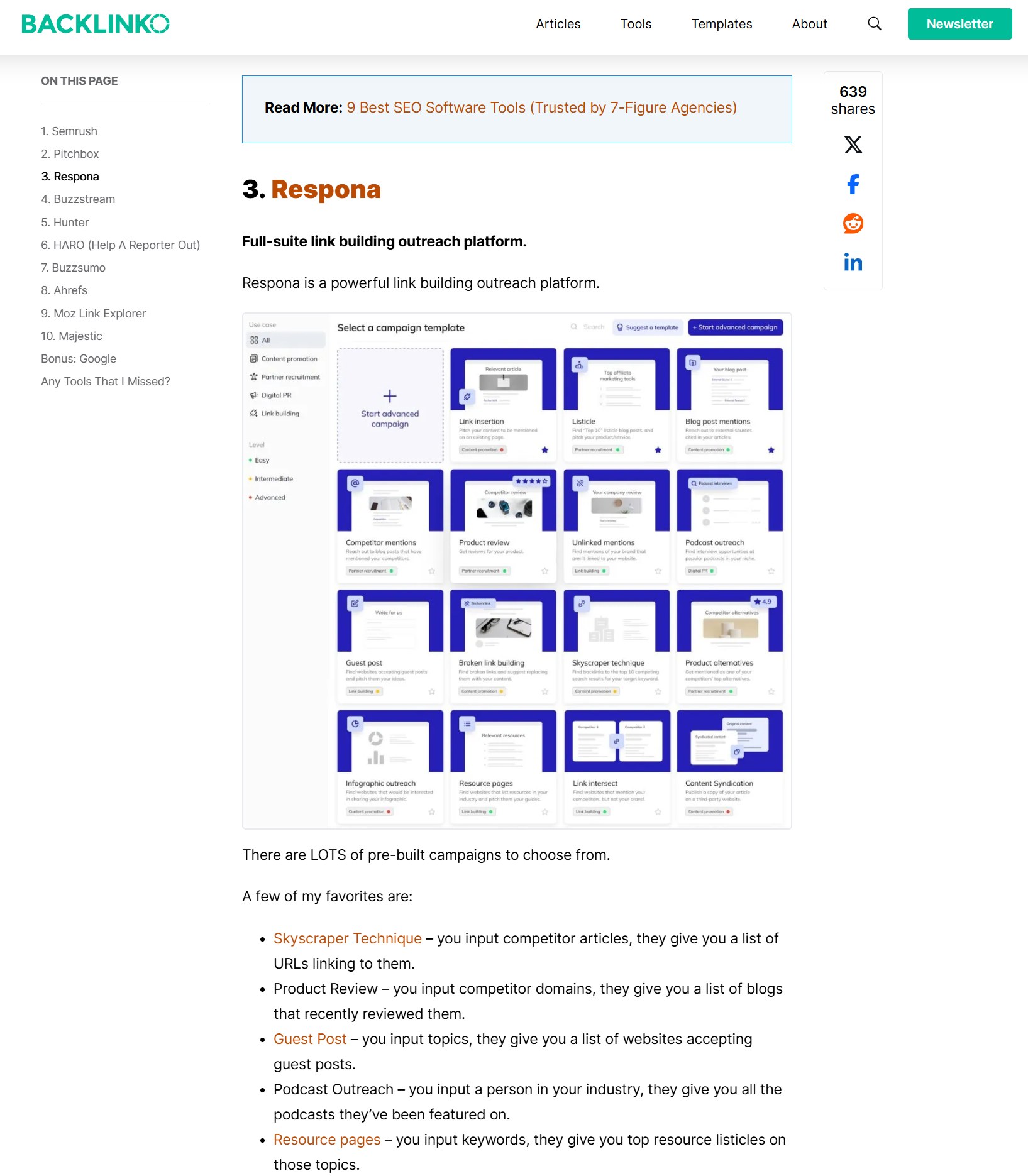
“Best tools” and “top platforms” posts usually describe products in a very straightforward, structured way. That makes it incredibly easy for AI-driven search to understand and reuse that information.
Get mentioned in enough of those, and patterns start to form.
That is exactly how ChatGPT started quoting Respona as a link building solution.
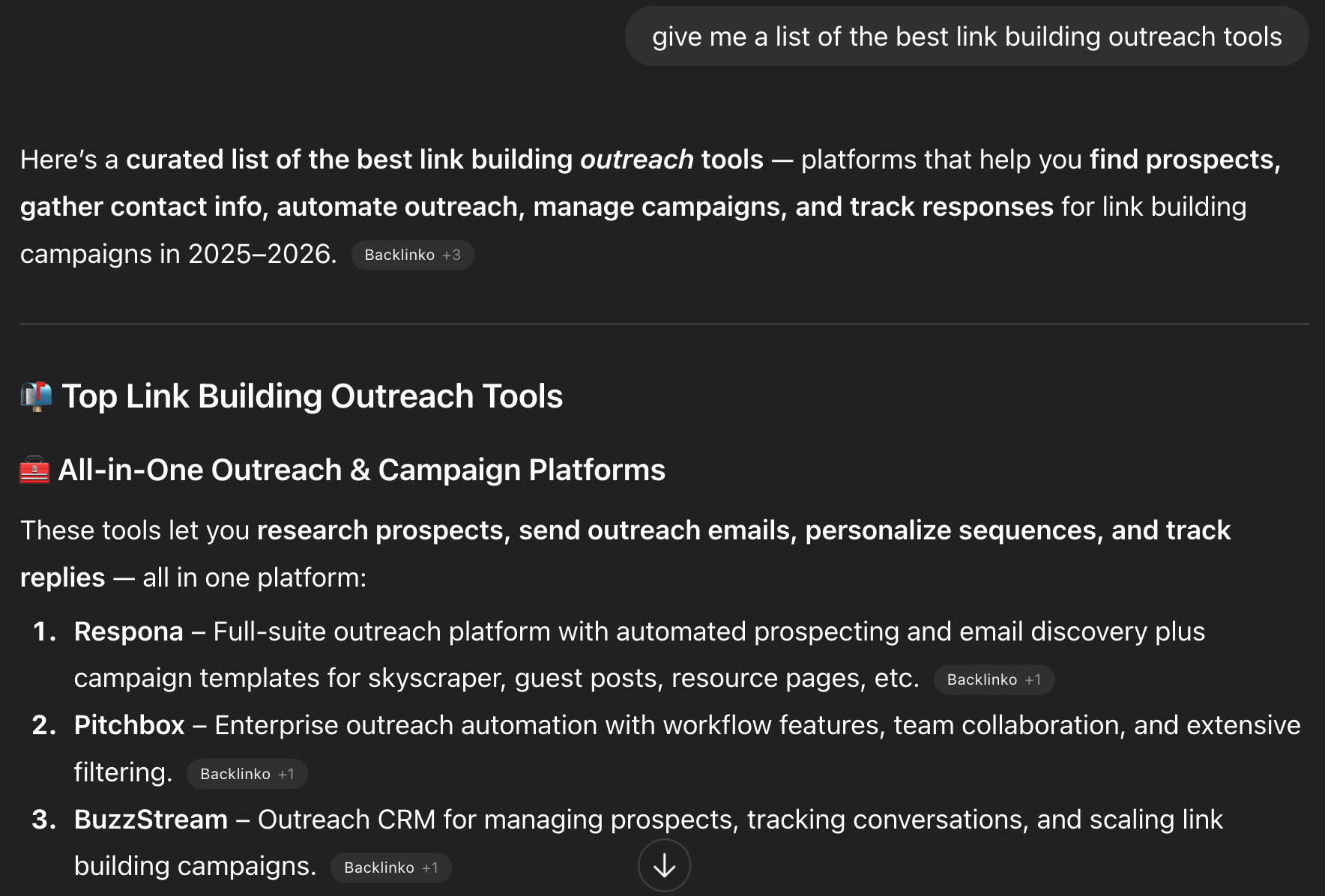
It was not one blog post or one lucky mention. It was our name showing up again and again in listicles and content marketing articles that already get traffic.
The downside is that getting those placements takes a lot of work.
You have to find the right listicles, figure out who wrote them, pitch your product, follow up, and do it all without annoying people. Doing this consistently is a grind.
That is why we offer done-for-you link building.
We handle the outreach and secure these kinds of brand mentions and listicle placements for you, so your product shows up in the places AI systems already pull from.
Claim Listings on All Possible Platforms
This is one of the easiest wins in GEO, and it is shocking how often it gets ignored.
AI systems do not just read blog posts. They also pull information from company profiles, review platforms, directories, and business listings.
If your brand shows up there, consistently and clearly, it becomes much easier for generative AI to understand who you are and what you do.
Start with the obvious ones.
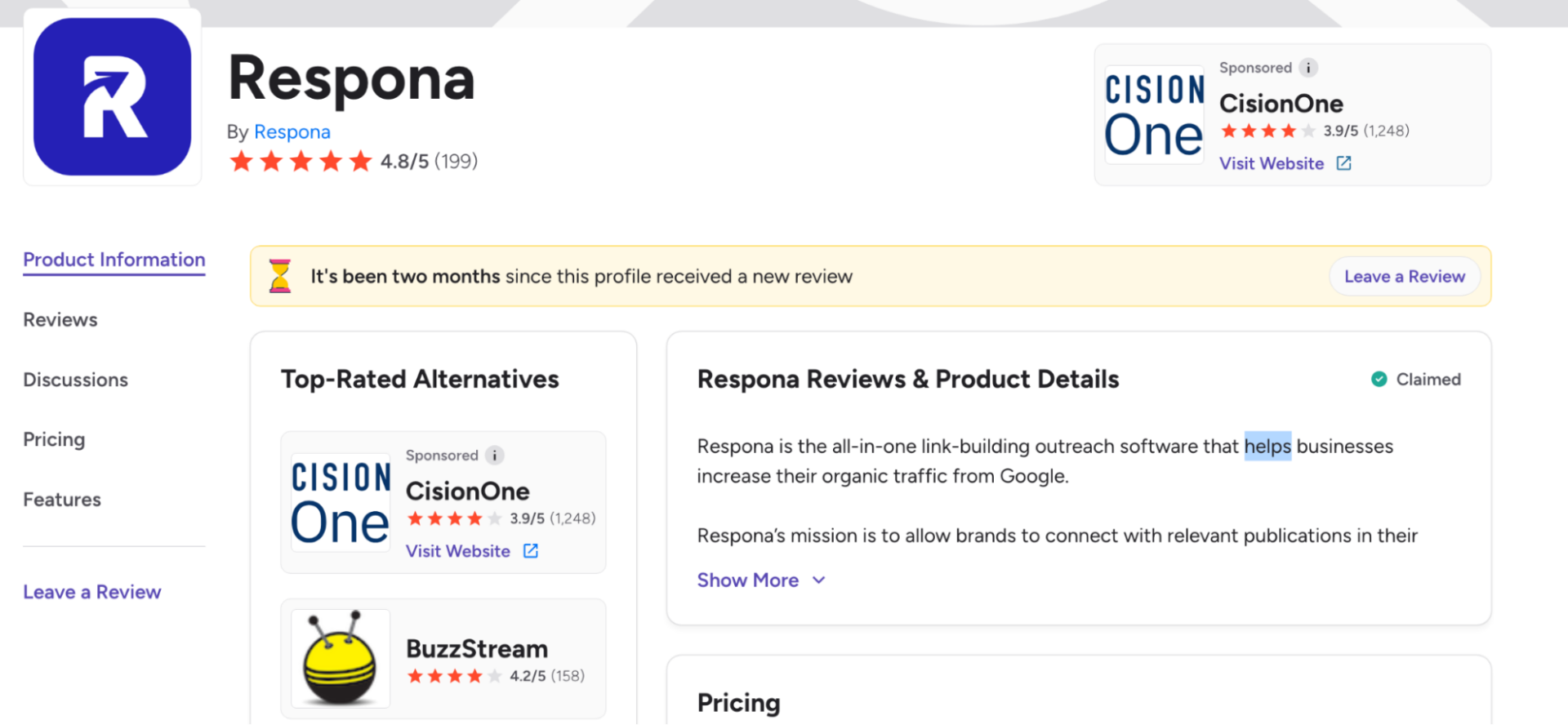
If you have not claimed your Google Business Profile, do that first. Even for SaaS companies, it helps anchor your brand to a real entity.
Same goes for platforms like G2, Trustpilot, Capterra, Product Hunt, Crunchbase, LinkedIn, and even social media profiles.
These platforms already get a lot of traffic, and they tend to be well indexed.
When your profile exists, is filled out properly, and matches everywhere else online, it reinforces the same signals AI systems look for when deciding what information to trust and reuse.
Use Schema
Schema is one of those things that sounds technical and intimidating, so people skip it.
They should not.
At a basic level, schema helps machines understand your content.
Not just crawl it, but actually know what it represents. When your site clearly labels what your page is about, who the entity is, and how different pieces of information relate to each other, it becomes much easier for AI crawlers to extract and reuse that information accurately.
Humans can infer that instantly. AI systems can, but unless you make it explicit, they might not do a very good job at it.
You are basically doing the interpretation work for the machine.
That is why schema matters for GEO.
The good news is that you do not need to be technical to do this.
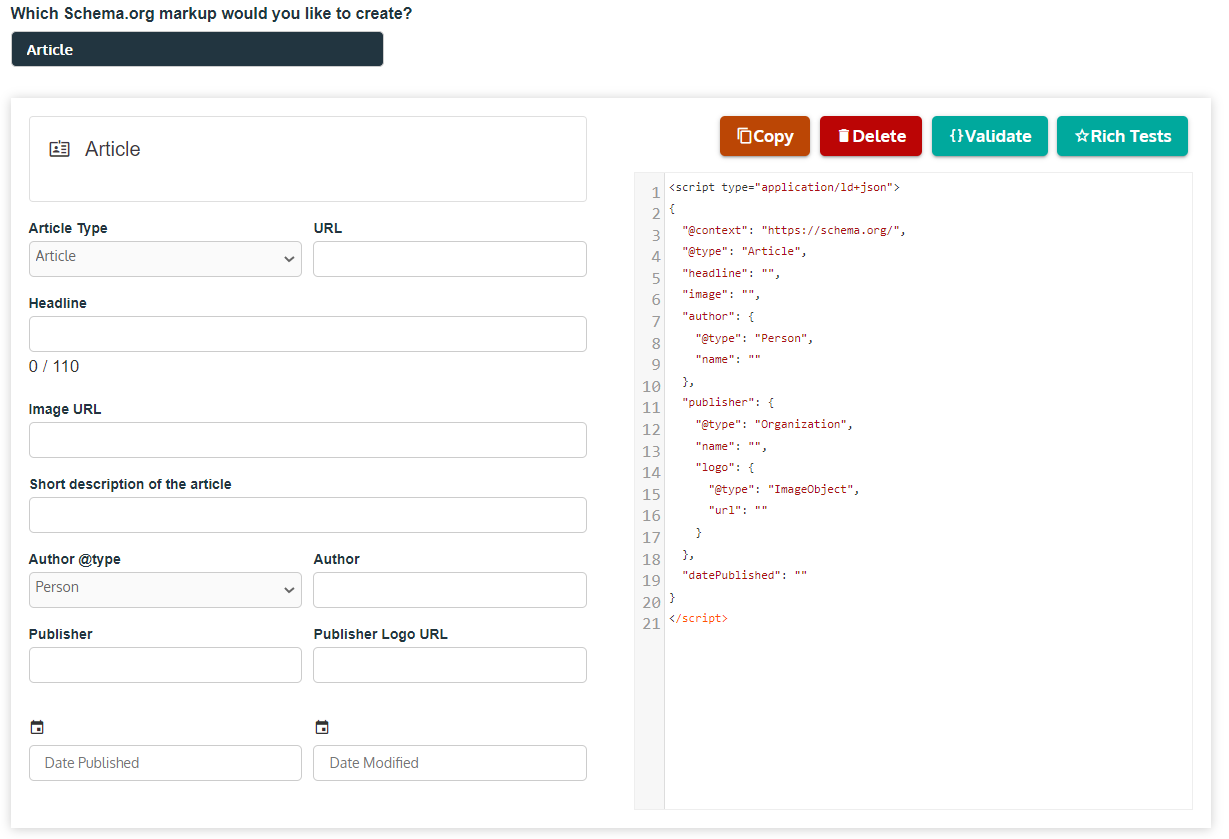
You do not need to write schema by hand or understand JSON. There are plenty of free schema generators that do the heavy lifting for you. You just fill in the fields and copy the code.
Proper schema markup improves how AI algorithms interpret your content and increases your chances of getting AI citations in generative search results.
Optimize Content for AI Overviews
This is the part most people overcomplicate.
They hear “AI Overviews” and immediately assume there must be some secret trick or brand new optimization playbook. In reality, Google’s AI is doing something very familiar. It is reading the pages that already perform well and pulling the clearest answers it can find.
That’s it.
What has changed is the tolerance for vague or bloated content. If your page circles the answer, buries it halfway down, or wraps it in fluff, it might still rank, but it probably won’t get quoted.
AI Overviews reward clarity more than cleverness.
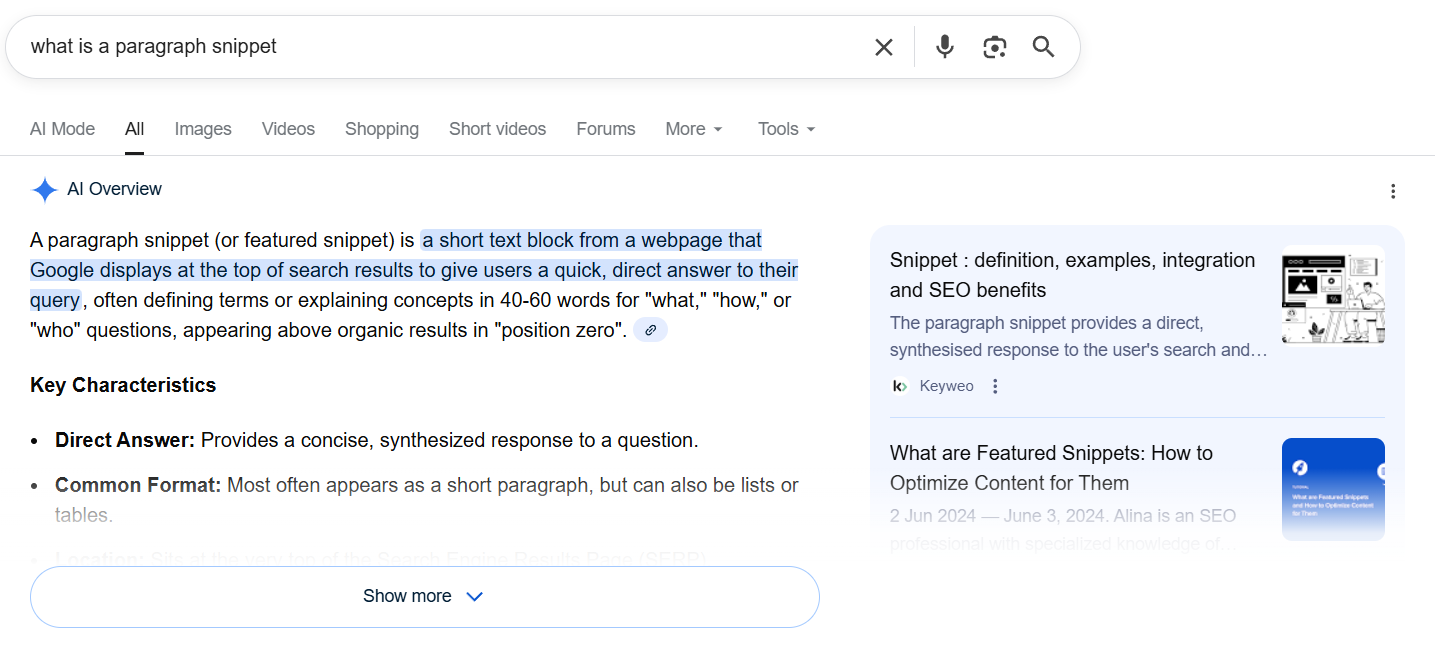
When someone searches a question, Google is trying to assemble a clean, usable explanation from multiple sources. If your page offers a tight answer that stands on its own, it becomes an easy piece to include. If it doesn’t, Google just moves on to the next source.
This is why structure matters so much in modern SEO and content creation.
Pages that perform well in AI Overviews tend to answer questions head-on. The heading matches the query. The paragraph underneath actually answers it.
No warmup. No storytelling. Just the point, written the way a human would explain it to another human.
Lists and tables help for the same reason.
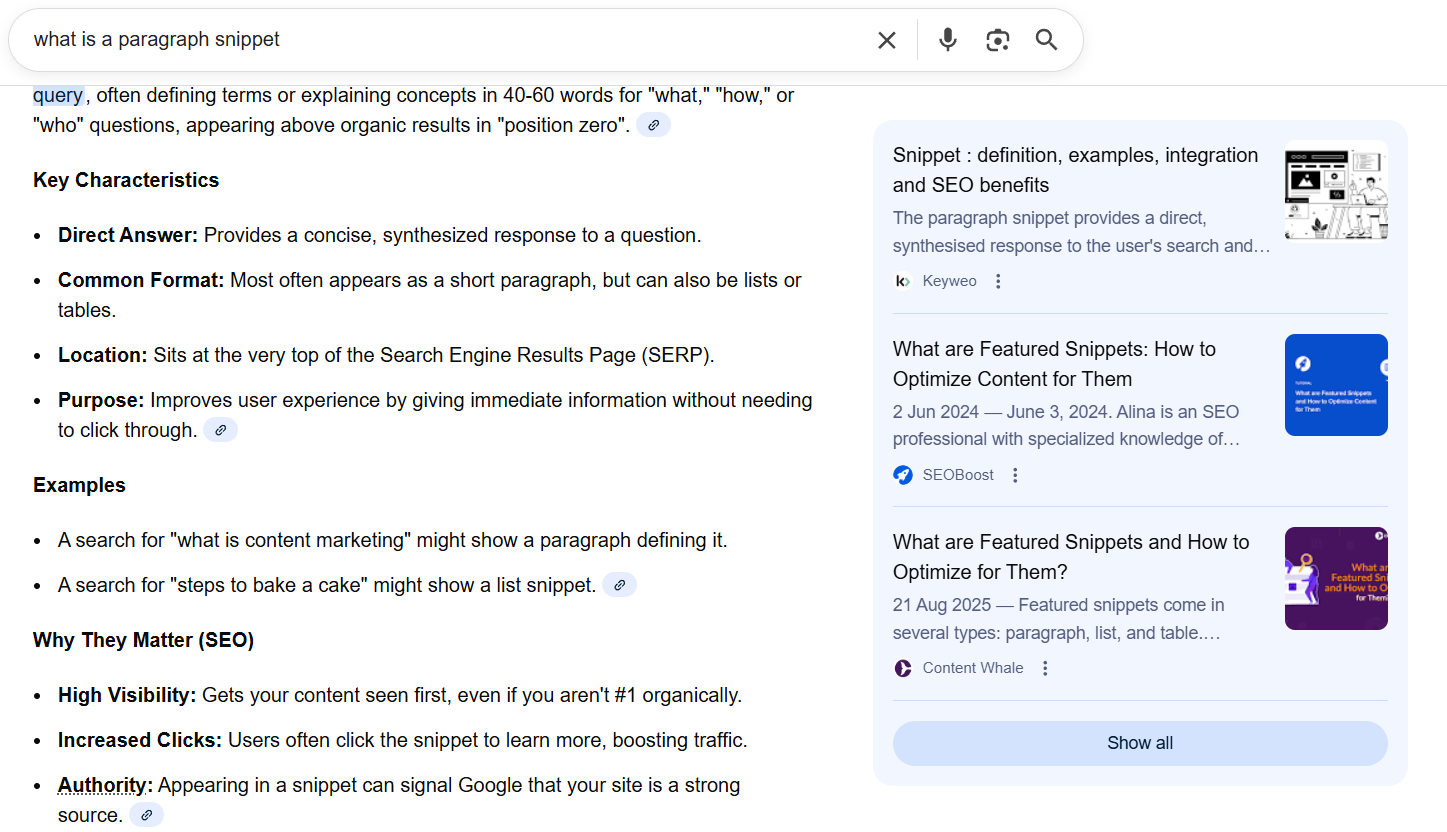
If a query implies steps, options, or comparisons, Google would rather lift a clean list or a simple table than try to summarize a long paragraph. That information survives the AI layer better because it is harder to distort.
Text answers often get compressed or rewritten inside an overview. Video can’t be. Instead, Google highlights a specific moment and sends people to watch it. For anything instructional or visual, video is still one of the best ways to stay visible even when AI Overviews appear.
One thing that surprised me when we started paying attention to this is how much tone matters.
Content that sounds overly polished or obviously machine-written often gets skipped. It can rank just fine, but it doesn’t get reused.
Understanding how AI chatbots and large language models process information helps you create content optimized for both Search Generative Experience (SGE) and Google SGE, which are reshaping search everywhere optimization.
You can track this GEO success using tools like Google Analytics to measure AI-driven traffic patterns.
Link building cheat sheet
Now Over To You
Getting quoted by AI is not a hack. It is not luck. And it is definitely not about chasing one perfect page.
It happens when your brand keeps showing up in the places AI systems already read. Articles that rank. Listicles that get traffic. Profiles and listings that clearly explain what you do. Content that answers questions without making the reader work for it.
That is what GEO really is.
You can try to do all of this yourself, but it adds up fast. Prospecting. Outreach. Follow-ups. Negotiations. Relationship management. Doing it consistently is where most teams fall off.
That is exactly why we built our done-for-you link building service.
We earn high-quality brand mentions and listicle placements on sites that already get traffic, so your product becomes visible to Google AI Overviews, ChatGPT, and every other generative engine that’s learning from the web.
If you want AI to start talking about your business, this is the fastest way to make it happen.
Frequently Asked Questions (FAQ)
What is GEO SEO?
GEO, or Generative Engine Optimization, is the practice of making your brand visible to AI systems like ChatGPT and Google AI Overviews. Instead of optimizing only for rankings in traditional search engines, GEO focuses on brand mentions, structured content, and consistency across the web.
It’s an evolution of search engine optimization designed for the AI mode era.
Is GEO replacing traditional SEO?
No. GEO builds on top of traditional SEO rather than replacing it. You still need solid content and links, but GEO expands the focus from individual pages to your overall brand presence across AI-driven search engines and platforms.
Do I need to rank number one to be quoted by AI?
No. For Google AI Overview features, being near the top helps, but other AI tools pull from a wider range of sources. In many cases, being mentioned on pages that already rank or get traffic is enough to gain AI visibility.
Why are listicles so important for GEO?
Listicles explain products in a clear, structured way that generative AI can easily understand. When your brand appears in multiple relevant listicles, AI systems can confidently associate you with a specific category or solution, improving your chances of appearing in AI answers.
Can link building really influence ChatGPT and other AI tools?
Yes. Repeated brand mentions across articles, comparisons, and lists help AI systems learn when to recommend you.
Link building is still one of the most effective ways to create those mentions at scale and improve your performance in ChatGPT search and similar AI platforms. You can measure these GEO metrics through various analytics tools to track your progress.