
Google keeps updating its ranking algorithm to provide the best user experience possible. Especially with the rise of AI-generated content, the importance of link building has only increased, not diminished.
So if you’re wondering if it’s worth investing the resources into growing your inbound link profile, the answer is a resounding yes.
Let’s talk a bit more about why that is.
Key Takeaways:
- The importance of link building has not decreased in 2026. If anything, quality backlinks matter even more now for both search engines and AI-generated recommendations.
- Search engines still rely heavily on backlinks, link equity, anchor text, and referring domains to evaluate website authority and ranking potential.
- Building links from reputable websites can improve search engine ranking, referral traffic, visibility, and overall SEO success.
- High quality backlinks on pages already ranking in search engines can also improve AI citations inside ChatGPT, Gemini, and Google AI Overviews.
- Effective link building focuses on relevance, quality content, and placements that drive both authority and targeted traffic.
Link building cheat sheet
Backlinks are a Core Part of Google’s Algorithm
For over two decades, backlinks have formed a cornerstone of Google’s search algorithm, a testament to their enduring importance.
To understand why, we need to rewind to the internet’s early days.
Initially, search engines relied on simple keyword analysis to determine content relevance.
This quickly became an easily abused issue with manipulative practices like keyword stuffing.
The Concept of PageRank
PageRank was basically Google’s way of trying to understand “word-of-mouth” on the internet.
Instead of people talking, websites were “talking” by linking to each other. These links pass
PageRank, and the more PageRank your website receives, the higher its will show up on search results.
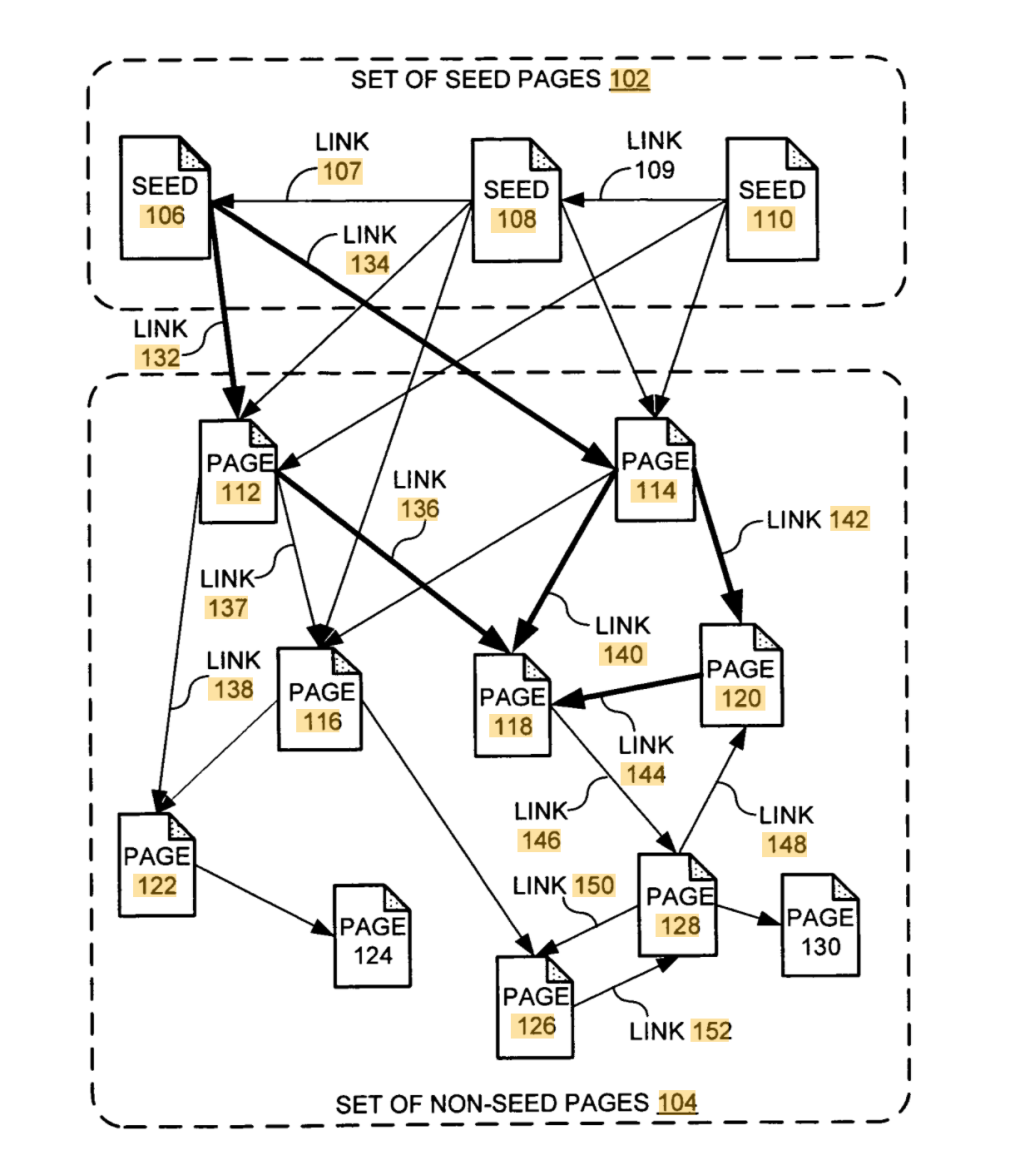
If a website that’s considered a reliable source (like a well-known news site) links to your website, that’s a strong recommendation.
It’s like a friend telling you, “Hey, this is a good place to get information.”
It’s not just about how many recommendations you get; it’s about who is giving them.
A high quality link from a respected source carries much more weight than one from a random site with no traffic.
Google’s smart enough to know that not all links are equal. They look at the quality and relevance of those votes.
Internal links also pass PageRank, so you should always optimize your internal linking structure to help boost newer pages.
Outbound links from your sites to others also pass PageRank, but you don’t “lose” it by linking out.
And this is how it works to this day – which is why the importance of link building is unlikely to ever diminish.
Dofollow vs Nofollow Links
It’s important to note that not all backlinks pass PageRank.
Dofollow links pass link equity (authority) from one website to another, directly influencing its ranking.
Nofollow links do not pass link equity. They tell search engines not to associate the linking website with the linked website in terms of authority.
While they can still drive traffic, they do not directly improve search engine rankings.
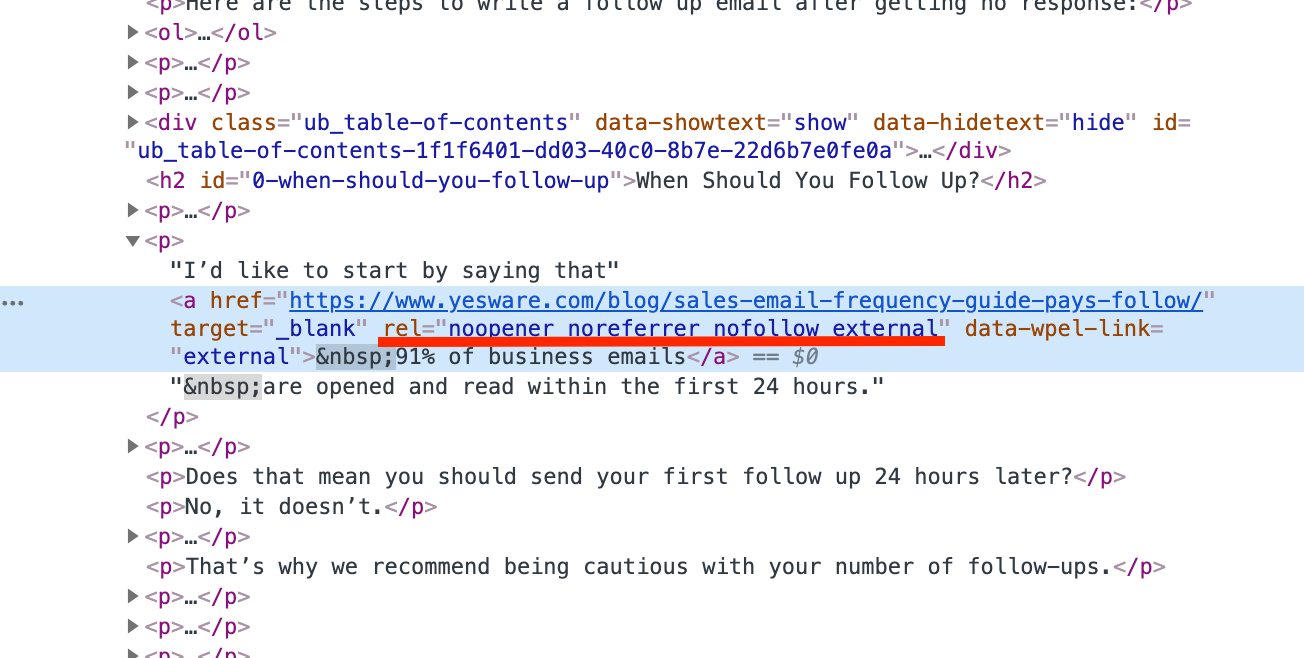
Here’s how you can check if a link is dofollow or nofollow:
- Right-click on the link you want to check.
- Select “Inspect” or “Inspect Element” (the wording might vary slightly depending on your browser).
- This will open the browser’s developer tools, showing you the HTML code of the page.
- Look for the <a> tag (the HTML tag for a link).
- Within the <a> tag, check for the rel attribute.
- If you see rel=”nofollow”, the link is nofollow.
- If you see rel=”dofollow”, or no rel attribute at all, the link is generally considered dofollow.
- If you see rel=”ugc” or rel=”sponsored”, the link can be considered nofollow as Google as against buying or spamming links to manipulate rankings.
Improved Rankings on Search Engine Results Pages
Dofollow links from relevant, authoritative sources carry the most weight, since they transfer “link equity,” (aka “link juice”) boosting your site’s authority in the eyes of search engines.
And, of course, links from pages that actually receive traffic are even more valuable.
The more traffic a page receives, the higher the chance that a user will encounter and interact with your valuable content, or even convert into a customer.
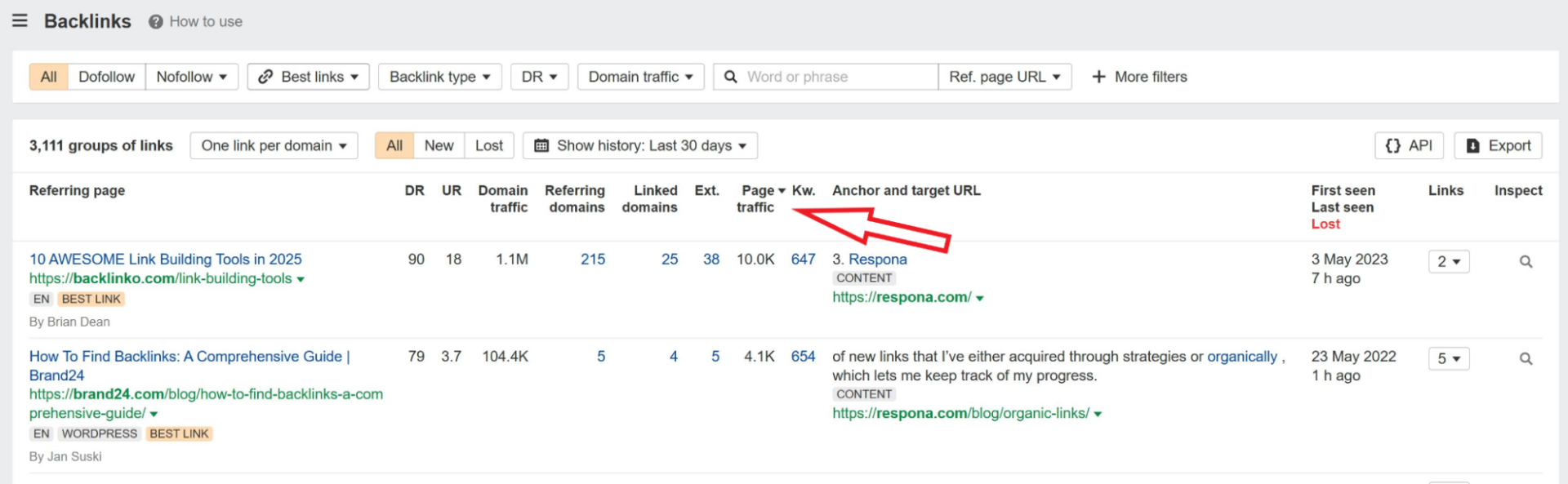
While a link from a page with zero traffic might seem insignificant, it still contributes to your overall link profile and can aid in website discovery. Even a small signal is better than none at all.
It’s also way more important to get links from a wide array of unique websites (referring domains) than to repeatedly get links from the same few sources.
Each referring domain acts as an independent endorsement and signals to search engines that your website has a more natural and robust backlink profile, ultimately leading to improved search engine rankings.
AI Citations
One of the biggest benefits of link building in SEO right now is that backlinks no longer only influence organic search.
They also get you AI citations.
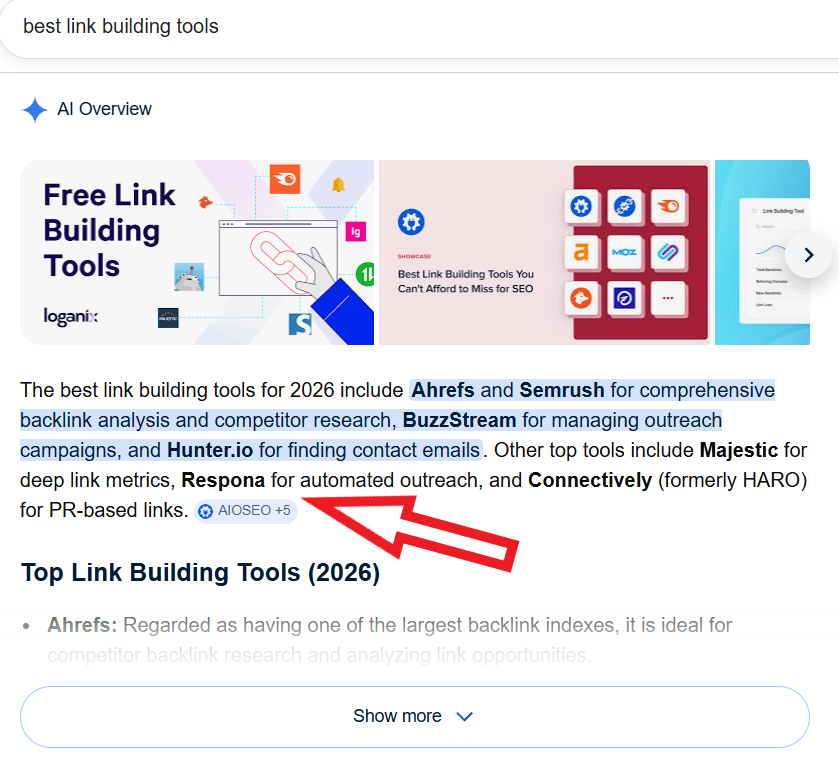
Google AI Overviews, ChatGPT, Gemini, Perplexity, and other AI systems rely heavily on pages already ranking well in search results when generating answers.
Especially listicles, roundup posts, and comparison pages.
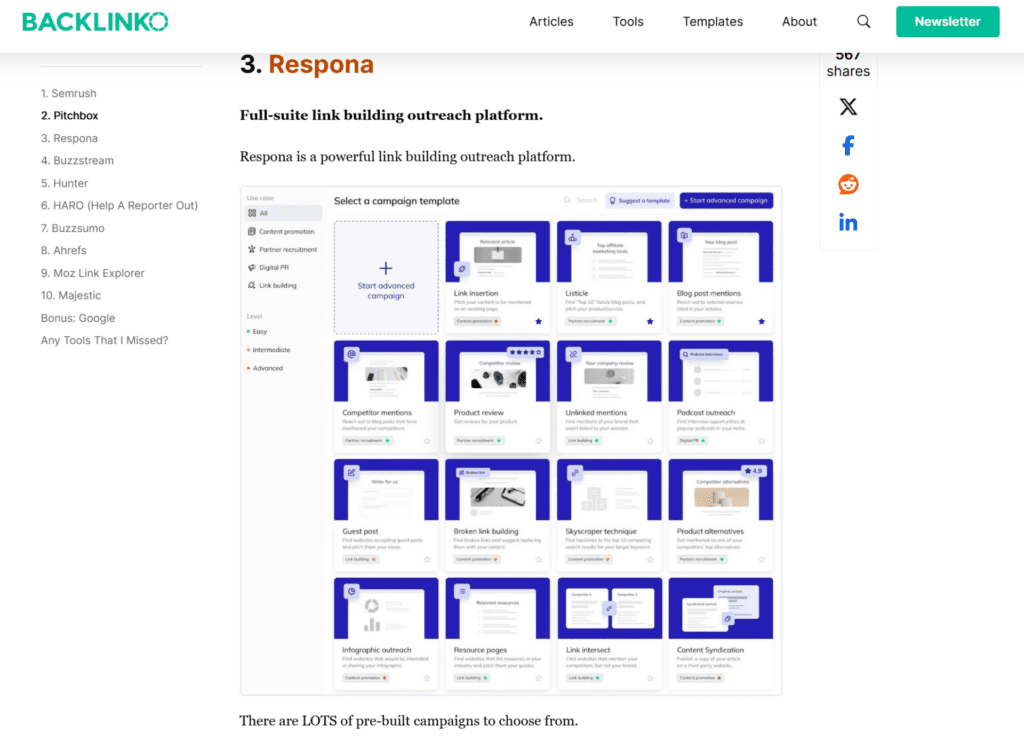
So if your website gets mentioned on those pages, there’s a good chance those mentions start appearing inside AI-generated answers too.
That makes the importance of link building even bigger than before.
A quality backlink on a page that ranks in SERPs and gets cited by AI can now:
- Improve ranking organically
- Pass link equity
- Drive referral traffic
- Increase visibility inside AI-generated results
And unlike “traditional” search where you need your own web page ranking near the top first, AI citations can happen simply because another page mentions your brand.
Highly Targeted Referral Traffic
Referral traffic refers to website visitors who arrive at your site by clicking on a link from another website, rather than directly typing your URL or finding you through a search engine.
While Google traffic is valuable, it can sometimes be broad and less targeted. Referral traffic, on the other hand, can be highly specific.
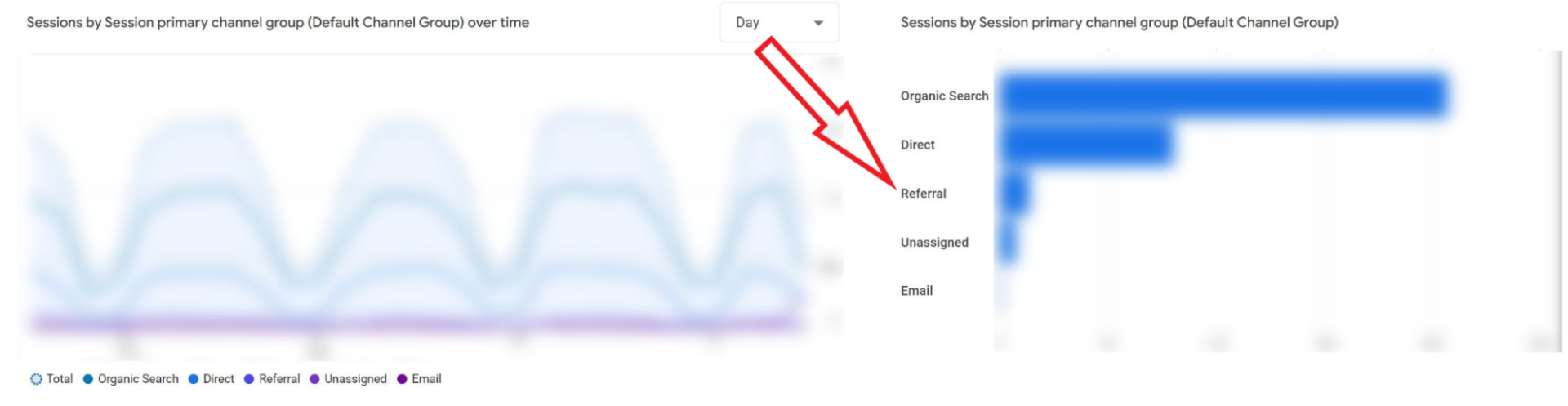
For instance, a link from a niche industry forum can drive highly qualified leads who are already interested in your products or services.
Imagine you sell specialized hiking gear. A quality link on a hiking trail website will drive highly targeted traffic, people who are very likely to be interested in your products.
This traffic is much more qualified than someone who searched for “hiking” on google, and may or may not be looking to purchase anything.
In addition to the organic traffic of the referring page, a factor that hugely influences how much traffic a link is able to generate is its placement.
Links closer to the top of the page typically see a much higher CTR (click-through rate) than those further below.
Examples of effective link placements include:
- Links within the body of a related blog post on a relevant anchor text.
- Links on resource pages that cater to your target audience.
- Links within online forums or communities frequented by your ideal customers.
- Links placed within the content of a page, rather than in a footer or sidebar, are more likely to be seen and clicked.
Increased Domain Authority
Domain Authority (DA) and Domain Rating (DR), are metrics developed by SEO tools like Moz and Ahrefs, to estimate a website’s overall strength.
These metrics essentially look at a site’s backlink profile and quantify it with a single, easily digestible score.
They analyze the link quality and quantity, check aspects like the number of unique referring domains, the authority of those domains, and the overall relevance of the links.
A robust and diverse backlink profile naturally translates to a higher DA/DR score.
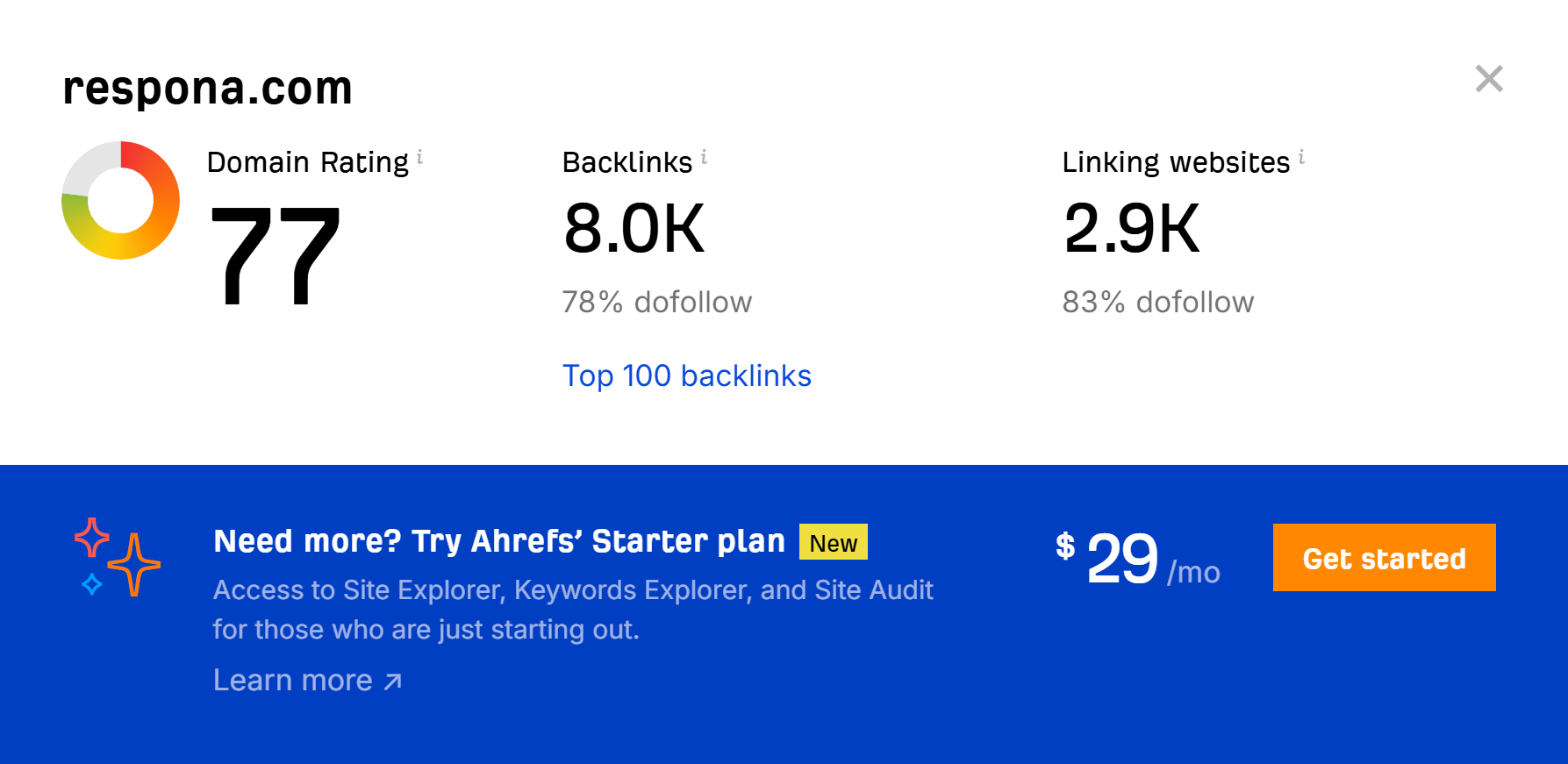
While DA/DR isn’t a direct search engine ranking factor in Google’s algorithm, it’s typically associated with better search engine performance.
This is because both DA/DR and Google’s ranking system revolve around the strength of a website’s backlink profile.
It’s important to keep in mind that these scores are predictions, and not guarantees of ranking.
Beyond organic traffic, marketers leverage DA/DR as one of the core metrics for identifying collaboration opportunities.
Reputable websites with higher DA/DR scores are often prioritized for guest posting, link exchanges, and other partnership initiatives.
While DA/DR shouldn’t replace in-depth analysis, it serves as a convenient and insightful metric for evaluating a website’s overall strength and potential.
Outrank Your Competition
Even when your content and offerings are on par with your competitors, a stronger backlink profile can be the deciding factor in outranking them in search results.
Imagine two websites selling identical products.
One has built tons of links from numerous authoritative industry publications, high-traffic blogs, and relevant directories, while the other has a limited number of backlinks from less reputable sources.
Who’s going to rank higher?
You guessed it – the one with more, better links.
How to Get Links That Move the Needle
The hard part about link building is not understanding why backlinks matter.
It’s getting quality links consistently.
Finding reputable websites, identifying placement opportunities, sending outreach, following up, negotiating placements, and managing link building campaigns manually takes a huge amount of time.
Especially once you start scaling SEO efforts.
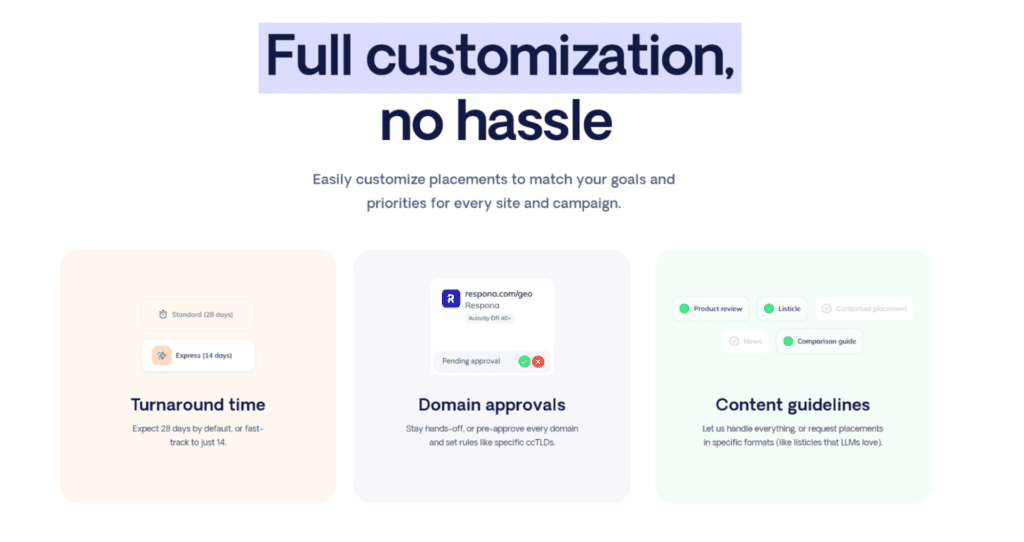
At Respona, the process is built around solving exactly that problem.
Instead of building random backlinks, the Campaigns feature helps identify articles already ranking in search engines and already getting cited inside AI-generated answers for your target queries.
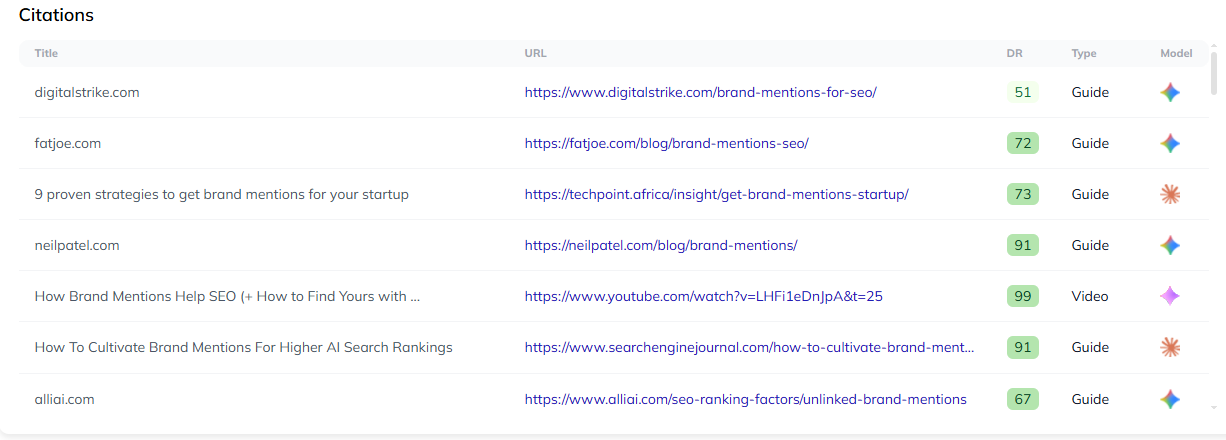
That means the placements are not just valuable for organic ranking signals.
They also help improve:
- AI visibility
- Referral traffic
- Search engine ranking
- Overall visibility across search results
You start by placing an order with your target pages, anchor text preferences, keywords, and niche requirements.
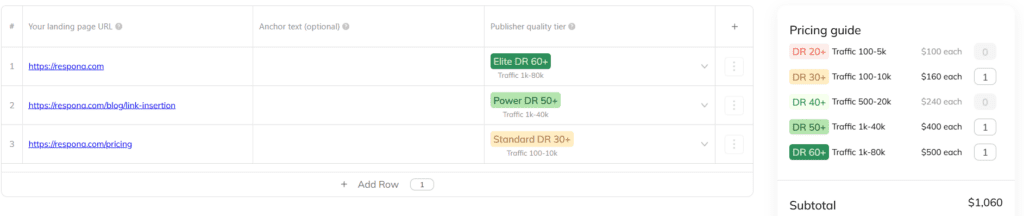
Then you can review placement opportunities directly inside the platform before the team handles the outreach, relationship building, negotiations, and placement acquisition process for you.
Since it’s pay-per-result, it works whether you need a few quality backlinks for one web page or larger ongoing link building efforts across multiple campaigns.
Link building cheat sheet
Now Over to You
In conclusion, the importance of link building is still massive in 2026.
Search engines still rely heavily on backlinks, link equity, anchor text, and authority signals to evaluate websites and rankings. The difference now is that those same signals are also influencing AI-generated recommendations and AI citations.
So good link building no longer only improves rankings. It improves visibility everywhere people search.
And if you want help securing the kinds of placements that improve both rankings and AI visibility, you can simply place an order and let Respona handle the outreach, relationship building, and placement process for you.
Frequently Asked Questions (FAQ)
Is link building important with the rise of AI-generated content?
Yes, absolutely.
With the ease of content creation through AI, backlinks have become even more critical in verifying credibility and authority.
They act as signals to search engines that your content is trustworthy and valued by other reputable sources, helping it stand out in a crowded digital landscape.
How do I get high quality backlinks?
Focus on creating valuable, shareable high quality content that naturally attracts links.
Engage in outreach to relevant websites and blogs, and use a variety of link building strategies such as link insertion, guest posting, broken link building, listicles, etc.
Build genuine relationships with other website owners in your niche, and always prioritize quality over quantity.
What’s the difference between dofollow and nofollow links, and which is better?
Dofollow links pass link equity and influence search rankings, while nofollow links do not.
Dofollow links are generally more valuable for SEO, but nofollow links can still drive website traffic and increase brand awareness.
A healthy backlink profile should ideally have a mix of both.
How many backlinks do I need to rank higher?
There’s no magic number.
The quality and relevance of your backlinks matter far more than quantity.
Focus on acquiring natural links from authoritative websites in your niche.
A few high quality links are more effective than numerous low-quality ones.
Why is link building important for SEO success?
Link building helps search engines evaluate website authority, trust, relevance, and popularity through backlinks from external websites.
What is white hat link building?
White hat link building refers to ethical link acquisition methods focused on earning quality backlinks naturally through valuable content and legitimate outreach.
What is black hat link building?
Black hat link building refers to manipulative tactics designed to artificially influence rankings, often violating search engine guidelines.
Do internal links matter for SEO?
Yes. Internal links help distribute link equity across your website and improve navigation for both users and search engines.
What is internal link building?
Internal link building is the process of strategically connecting pages within your own website to improve crawlability, authority distribution, and user experience.
What makes a quality backlink?
A quality backlink usually comes from a relevant, authoritative website with real traffic, strong content, and contextual relevance.
What is broken link building?
Broken link building is a strategy where you identify broken links on external websites and suggest your own content as a replacement.
What is the skyscraper technique in link building?
The skyscraper technique involves creating better, more valuable content than competing pages and then promoting it to websites already linking to similar resources.
Can link building help local SEO?
Yes. Quality links from relevant websites can improve local SEO visibility and help local businesses rank better in regional search results.
Why does anchor text matter?
Anchor text helps search engines understand the context and topic of the linked page, which can influence relevance and ranking signals.