
Learn how Google indexing priorities are shifting, how these changes impact your SEO, and what you can do to maintain strong search visibility.
Google’s search index contains hundreds of billions of web pages and over 100 million gigabytes of data, yet we only see a tiny percentage of the content that is out there.
As Google becomes home to more and more websites and now processes over 6.3 million searches every single minute, its algorithms are continually being fine-tuned to ensure users are being presented with the most relevant content.
Keeping on top of all of Google’s indexing priorities can feel like a never-ending task, but at the end of the day, all they are really looking for is original and relevant content that answers user queries.
Let’s summarise the different Google updates that have taken place throughout last year and the impact they could have on your business.
Key Takeaways:
- Indexing is the gatekeeper. Before anything else, your pages have to make it into the google index for any of your other SEO work to matter. If google crawl skips your URL or marks it as not worth indexing, you might as well not exist in any search engine.
- Google has been quietly shrinking what it indexes. The shift toward “quality over quantity” means more pages get pushed into noindex limbo. Bulky sitemaps full of thin content actually hurt you more than help.
- Important pages need to be your focus. Trying to force every single page into the index creates noise. Pruning weak content, fixing technical seo gaps, and signaling to googles crawler which pages matter most is now table stakes.
- Backlinks still tell Google what’s worth indexing fast. Pages with a strong backlink profile get crawled and indexed faster than orphan pages with no link equity pointing at them. This is also where listicle mentions and quality content placements compound over time.
- AI Overviews change the indexing math too. Google now indexes content with one eye on traditional google search results and another on whether the content can be cited in AI-generated answers.

Link building cheat sheet
Why Indexing Matters More Than Ever
If your web page isn’t indexed, it’s not going to show up in Google results, leaving your organic traffic at zero. This loses you endless opportunities to reach a wider audience and grow your business, so it should be a key focus.
The first position in Google’s organic search results has an average click-through rate of over 27%, so it’s no wonder businesses are continuously competing to reach the top spots.
Although many people see indexing as a technicality that requires advanced knowledge, this isn’t the case, and since it has the power to determine how much your website gets seen, making sure you familiarize yourself with the ranking factors can have a huge payoff.
In fact, you can just go ahead and manually request indexing in Google Search Console.
Although that might not be feasible if you have hundreds of pages to index.
From the moment you create a website, every decision you make is bound to have some kind of impact on your web rankings.
When you buy a domain name, design your website structure, and write up your content, Google’s algorithms will be assessing how relevant they consider your website to be, so quality should be your top priority at every step of the way.
Recent Changes to Google’s Indexing Algorithms
Google is continuously working to improve its algorithms and provide users with a better browsing experience. Let’s discuss some of the recent changes that have been made and how they could affect your business.
Perspective Update
In September, Google’s Perspective Update was launched, and one of the key takeaways is that the mobile experience comes first.
Since mobile is now the primary device for browsing the web, it’s no surprise that Google has updated its indexing criteria.
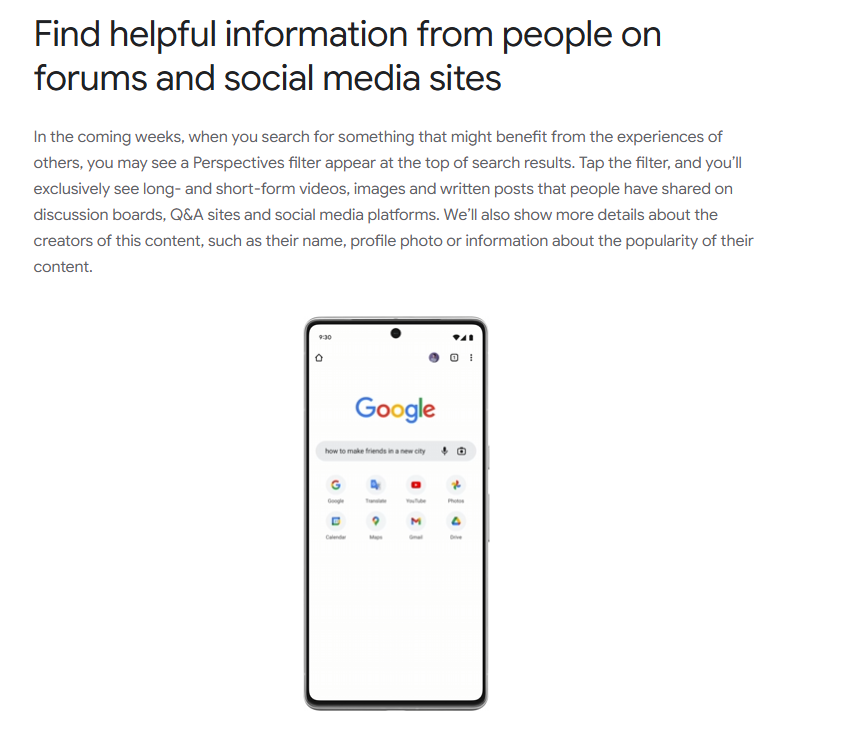
If a website is strong for desktop, but isn’t suitable for mobile, it creates a completely different user experience.
Although mobile-first indexing has been lightly enforced for some time, this update shows how vital having an optimized site is nowadays.
Google will be establishing how suitable a site is considered for different users, and if the mobile version isn’t up to scratch, it can impact the overall rankings of the page.
How your business can adapt:
- Optimize for mobile. To ensure mobile viewers can enjoy an easy browsing experience, images should be scaled to fit the screen, text should be readable on smaller devices, and CTA buttons should be clear. Using a modern website builder will ensure that designs are automatically optimized for mobiles, automatically adjusting content to fit on any screen size.
- Test on different devices. To ensure that your website is meeting Google’s criteria, make sure to check how your site looks and performs on different device types. PageSpeed Insights is great for that.
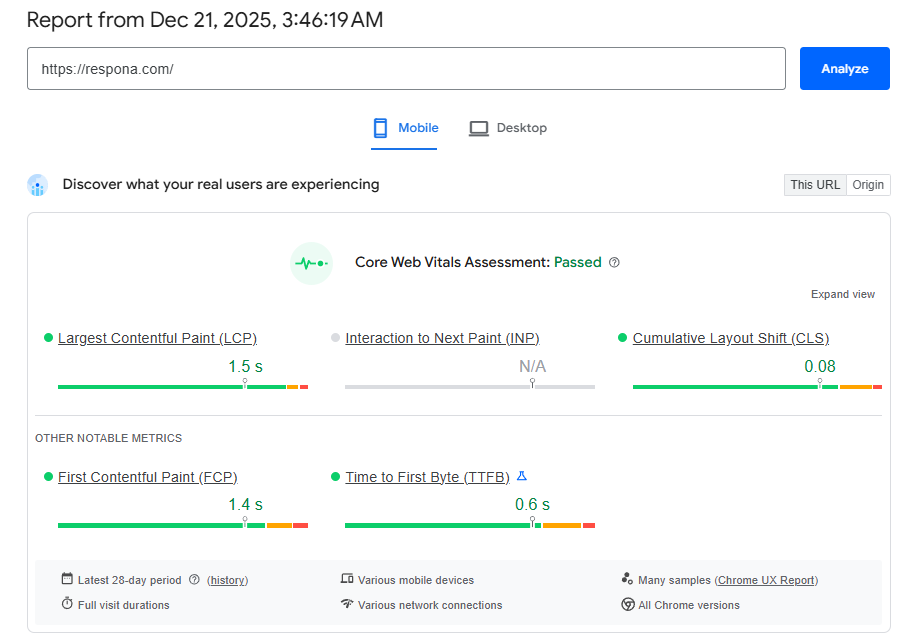
- Check load times: Did you know that a page’s render time has a huge impact on the user experience? This is especially important for modern web apps built with frameworks like Node.js, where poor hosting or inefficient rendering can slow down both the user experience and the effectiveness of search engine crawling. Opt for a web app hosting setup that supports performance and server-side rendering, and makes your content easier for search engines to crawl and index.
Core Updates
Google’s Core Updates are something we’ve all been hearing about over the last few years since the initial launch back in 2018, but the more recent updates have stayed under the radar.
Throughout last year, there were three different updates to the algorithms, which created a whole lot of volatility. Let’s talk through them one by one:
- The March update had a key focus on ranking more useful content. This was a part of their bigger plan to show more content from actual creators rather than forum sites. There was a notable shift in authentic pages ranking higher on Google following this update, favoring websites that regularly produce quality user-centric content.
- Following this, the June update saw notable changes around AI overviews. This is something that has been changing the landscape for SEOs for a while now, but as of June, they are now displayed more often and contain a higher level of information. As a result, users now do not need to turn to websites to find answers to their questions as often.
How your business can adapt:
- Focus on quality over quantity. Less is often more when you are producing content to add value to readers, so your efforts should lie in creating unique content which is likely to be favored by search engines.
- Repurpose old content. Since you’ve already done the hard work, make sure to revisit existing blog posts and rework them to include up-to-date information.
- Write for AI overviews. Since many users are now turning to AI overviews instead of websites, this is the place to be. By optimizing your content to appear in AI search results, your content is more likely to be included.
Noindex pages
Recently, many business owners noticed that the pages that had once been ranking well suddenly stopped showing up at all. This was the result of a new Google update that not many people were aware of.
Google made significant changes to the number of web pages it considered worth indexing. It goes back to their ongoing efforts to improve content quality and saw their index considerably shrink as they finetuned their algorithms.
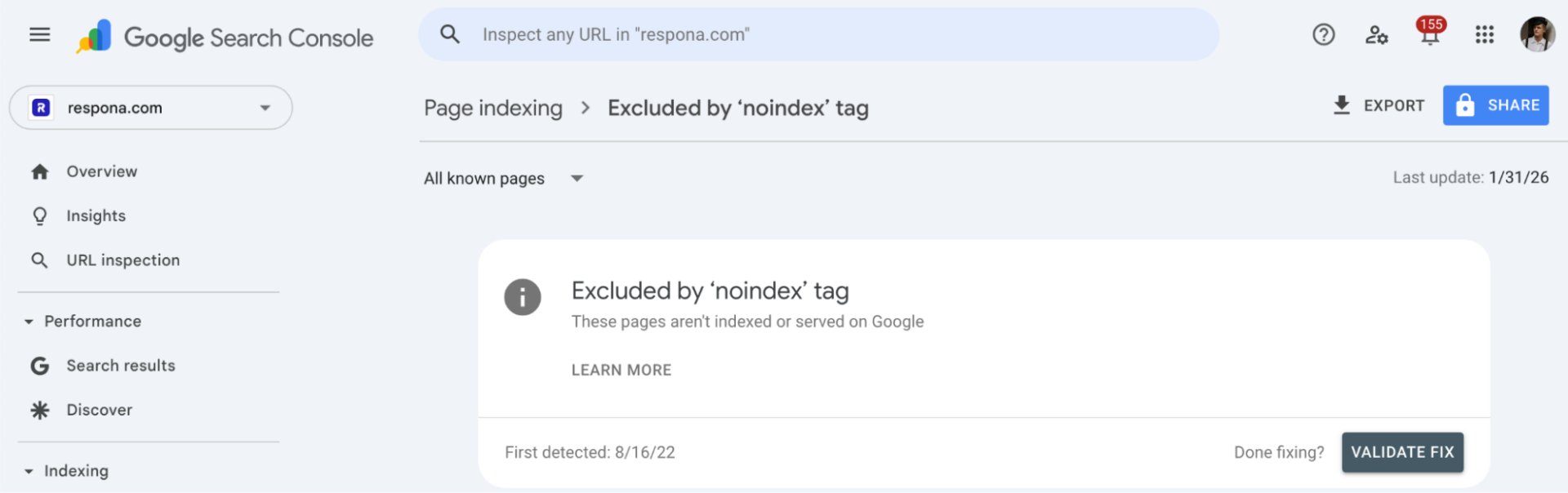
For many SEOs who noticed a large increase in the number of web pages that were not indexed in Google Search Console, it was initially a huge concern since sites with multiple noindex pages had previously been penalized by Google.
However, the aim is not to penalize, but for Google to provide quality over quantity. Their criteria have become more advanced, and they will only rank content that is considered to be high quality, up-to-date, and original.
How your business can adapt:
- Merge weaker pages. If you have multiple blog posts that cover similar topics, Google may not see enough value in them. Combining them or even pruning some help increase the chance of them being indexed.
- Tidy up your site. If you are trying to get every single page on your site indexed, it can give the wrong signals and harm the rankings of your more powerful pages. Apply noindex to pages like outdated blog posts, old landing pages, and portal logins.
- Focus on your key pages. If you’ve noticed some noindex pages which were once ranking well and bringing in a lot of traffic, put your focus on these. Work on optimizing the content and refreshing the page to show the algorithms that it is still relevant.
Spam-prevention systems
Google released another update in August 2025 which was designed to tighten its protection around spam policies.
Now that AI content is easy to produce and people are able to mass-produce articles, the web is undeniably being filled with poor-quality content that doesn’t bring any value to users.
When genuine creators are continually having to compete to rank against this type of content, it gives businesses less drive to create unique content and also provides users with a poorer browsing experience.
Google’s spam policies have been around for some time, so creators should know how to remain compliant, but the update has made the algorithms more effective at filtering out content that lacks authenticity and rewarding quality content.
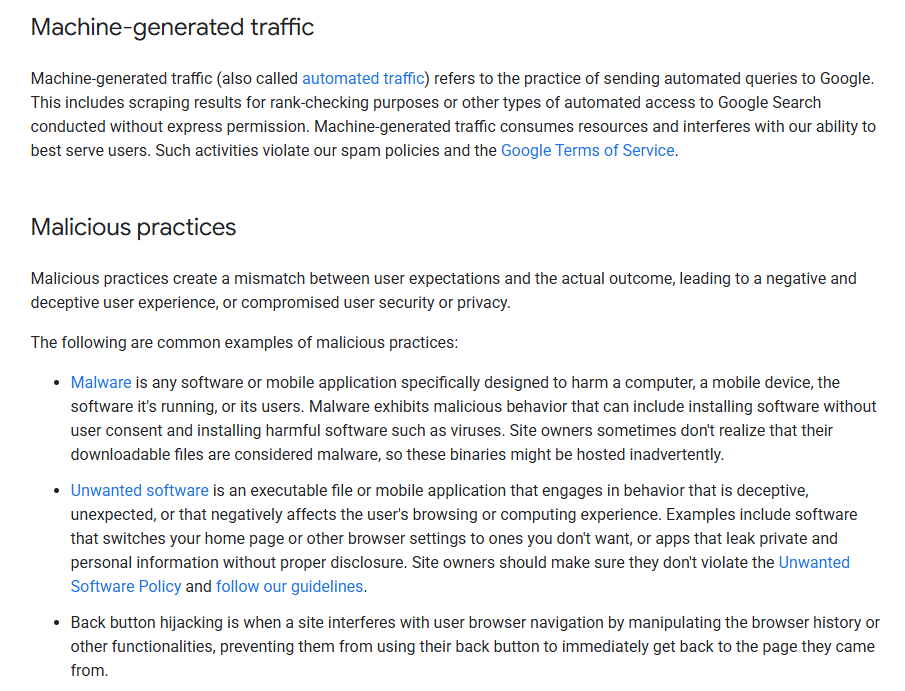
This update means that pages which trigger Google’s spam filters can be removed from the search engine results page, giving more room for the genuine creators who can offer real value.
How your business can adapt:
- Avoid taking content shortcuts. As much as it can be tempting to produce quick blogs to keep up with your posting schedule or use AI to help you along, this won’t work in your favor. Instead, add quality by talking about your own learnings, including case studies, and adding imagery.
- Review your backlinks. If your backlink profile is full of links to pages that are considered spammy or irrelevant, this is likely to have an impact on your own rankings. Keeping an eye on these and using white-label link-building services can help you keep up your quality score.
Making Sure Your Website Stays Visible in 2026
So you’ve handled the technical fundamentals. Your xml sitemap is clean, you’ve fixed each indexing issue showing up in Google Search Console, and your important pages are signaled correctly through internal link structure and meta tags.
That gets you to the starting line.
The next layer is external signals.
The google index doesn’t just look at what’s on your site to decide what’s worth ranking. It also looks at who’s linking to you, who’s mentioning your brand, and where your name shows up across the web.
The most impactful external signal in 2026 is mentions on listicles and editorial roundups.
Pages like “best [tool] for [use case]” or “top [service] in [niche]” tend to rank well in google search results AND get cited inside AI Overviews.
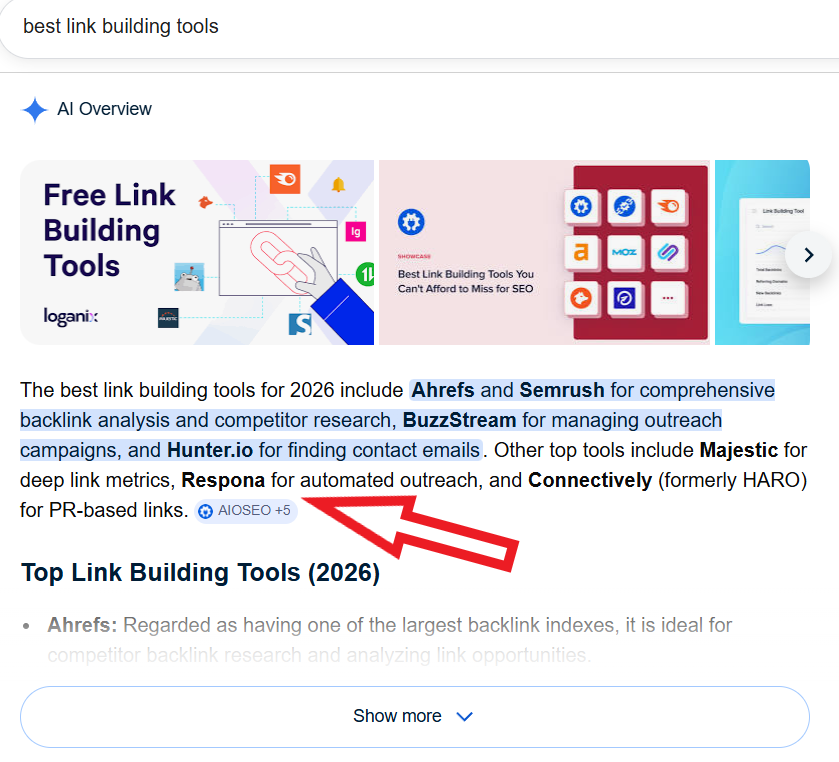
Getting your business named in those pages gives you two benefits over competitors that don’t:
- Each placement is a quality backlink pointing at your site, which helps indexing speed and the authority signals Google uses to rank you.
- Each placement also gets you cited in AI-generated answers, which is increasingly where buyers find new vendors before they ever visit your site.
Both of those signals reinforce indexing decisions in Google’s favor and accelerate the indexing process for new pages.
The problem is that securing those listicle placements takes time.
We are talking at least an hour or two per placement on average. If you know what you’re doing.
Prospecting publications, writing personalized pitches, following up, negotiating placement details.
Most teams don’t have the capacity to do this manually at any meaningful scale.
Which is why so many of them choose to oursource this to a pay-per-result link building service like Respona.
Respona handles the entire workflow.
To get started, just place an order with your target pages and target keywords, and our team handles prospecting, pitching, follow-ups, and negotiation until each placement goes live.
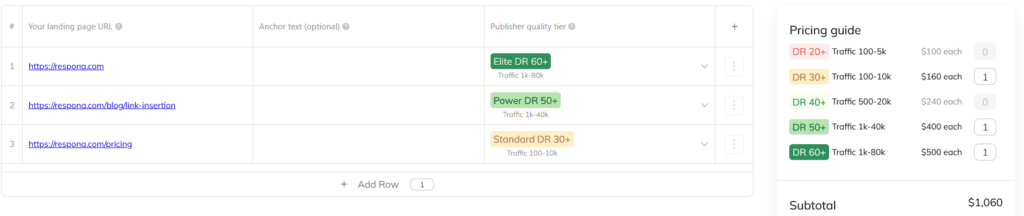
Every prospect comes to you for approval before outreach goes out, so nothing lands on a site you would not approve of yourself.
Pricing is pay-per-result. Placements start at $100 and scale to $500 based on the domain rating of the publication. You only pay when a placement publishes. No retainer.
The built-in AI visibility tracker monitors brand mentions across ChatGPT, Perplexity, Google AI Overviews, Gemini, Claude, and Copilot.
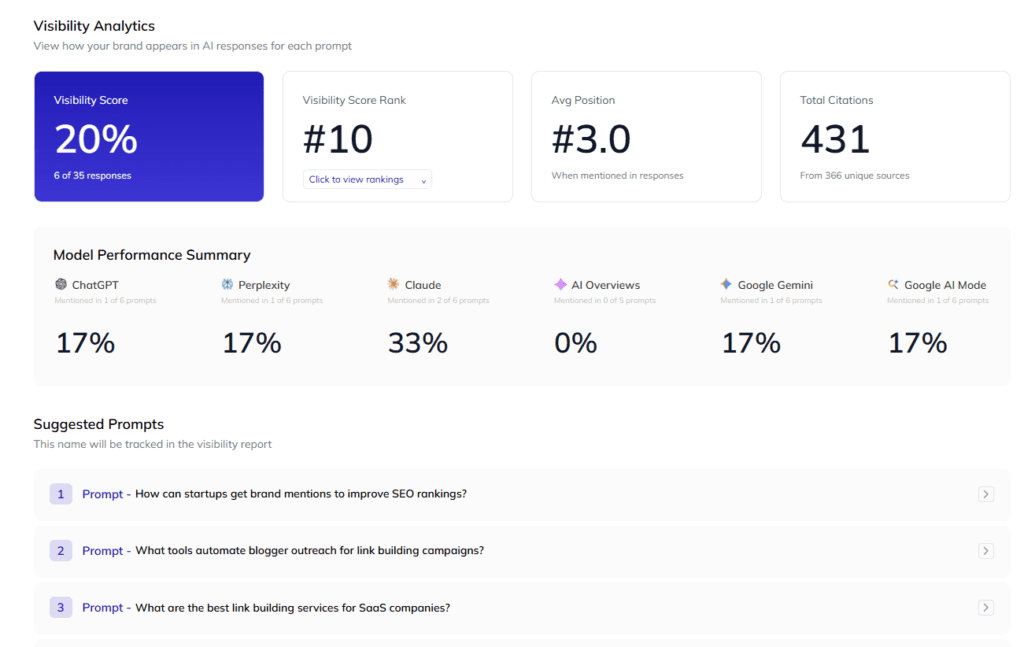
You can measure exactly how each placement translates into both organic google search visibility and AI citation share.
Not only that, but the tool also generates a personalized link building action plan based on the AI prompts you want to show up in.
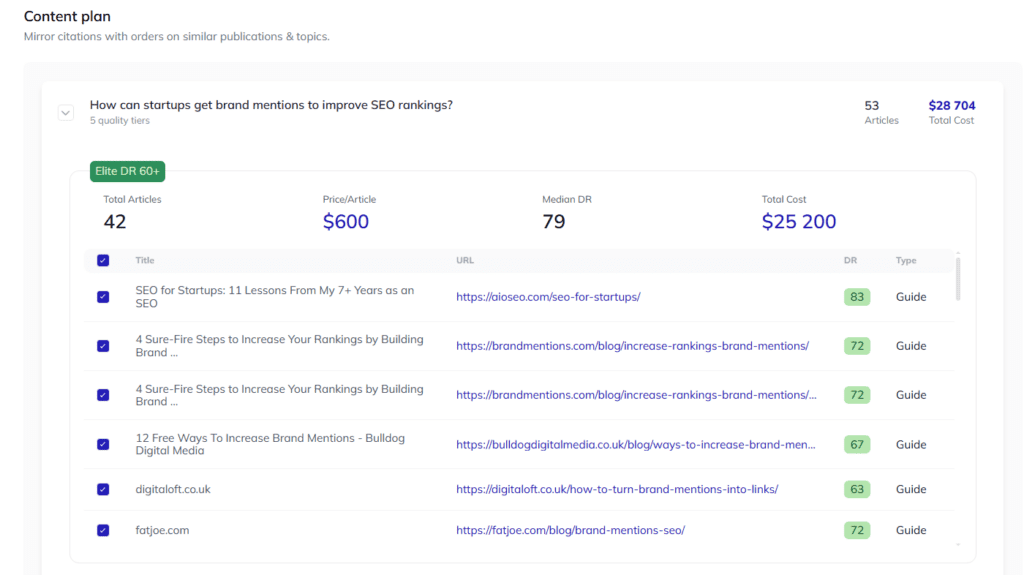
So you can target them specifically and be sure your links are driving visibility across channels your users are using.
Link building cheat sheet
Now Over to You
Indexing is not going back to the “more is better” era. Google’s priorities are shifting toward quality content, relevance, and external authority signals.
That means in 2026, you need to:
- Fix the basics so your important pages can actually get indexed
- Build backlinks and brand mentions that signal to Google your content is worth indexing fast
- Track how your content shows up in both google search and AI Overviews
Respona handles the backlink and brand mention side for you.
Place an order with your target page and keywords, tell us what kind of placements you are after, and our team handles the rest: prospecting, pitching, follow-ups, and negotiation, until each link goes live.
Pay-per-result pricing. AI visibility tracking built in. No retainer.
Frequently Asked Questions (FAQ)
Why is google indexing important for SEO?
Google indexing is what gets your page into googles index in the first place. Without an indexed page, you cannot show up in google search at all, no matter how good your content is. That is why google indexing important questions tend to come up before ranking questions in any SEO discussion.
How does google indexing work?
The google indexing work process has three steps: a google crawler (sometimes called a google bots system) finds your URLs by following links, then it processes the content, then it decides whether to add it to googles index. Internal links and a clean structure help google crawler get to your pages faster.
How do I check the indexing status of my pages?
Use the url inspection tool in Google Search Console. The url inspection feature lets you check whether a specific URL is indexed, when it was last crawled, and what the current indexing status looks like. For bulk url inspection across many pages, the Coverage report inside Google Search Console gives you the overview.
What is the difference between an xml sitemap and the google indexing api?
It lists all your URLs so Google can find them by crawling. The google indexing api is more direct: it lets you submit URLs for indexing programmatically rather than waiting for crawling. Most sites rely on the former alone; programmatic submission is typically reserved for high-volume use cases like news sites and job boards.
What are common indexing problems and how do I fix them?
The most common indexing problems are duplicate content, thin content, slow page speed, and broken internal link structures. If you are seeing indexing issue patterns in Google Search Console, start with the technical basics: fix any meta tag mistakes (like accidental noindex tags), improve content depth, and check that your important pages have at least a few internal links pointing at them.
Can social media or google ads help with indexing?
Social media and google ads do not directly improve indexing, but they can drive traffic and engagement signals that help Google decide which pages matter. Google analytics also does not impact indexing directly, though the data it provides helps you identify which pages need indexing attention. None of these are substitutes for backlinks when it comes to indexing speed.
How does Google Search Central help with indexing?
Google Search Central is Google’s official documentation hub for technical seo and indexing guidance. It is where Google publishes updates about indexing changes, sitemaps best practices, and what the google index looks for in quality content. If you are trying to figure out why pages are not indexing, this documentation is the canonical source.
Does local seo affect how my pages get indexed?
Local seo can influence indexing priorities for businesses targeting specific geographic markets. Pages with strong local signals (NAP consistency, local citations, location-specific content) often get crawled more frequently because Google has clearer signals about their relevance. High quality content tied to a specific location tends to get indexed faster than generic pages.
What is Google Discover and how does it relate to indexing?
Google Discover is a personalized feed of articles Google shows users based on their interests. Pages need to be indexed first before they can show up there, but Discover has its own quality bar above standard indexing. Strong images, fresh content, and authoritative sources tend to perform best.
Should I use Rank Math for managing indexing?
Rank Math is a popular WordPress plugin that helps with sitemaps, meta tag management, and indexing controls. It is not better or worse than alternatives like Yoast SEO, but it gives you direct control over which pages are visible to googles crawler. The main benefit is that you do not need to edit code to manage indexing rules.
What is a google search result and how is it generated?
A google search result is what Google shows users in response to a query. The page must already be in the google index, then ranking algorithms determine the order. Each result includes a title, URL, and meta description. Often the result also includes a featured snippet, knowledge panel, or AI Overview pulled from indexed pages.