
The line between optimization and keyword stuffing can get pretty thin sometimes.
Especially now that everybody is trying to optimize content for both traditional search engines and AI search at the same time.
Eyeballing it won’t cut it.
Neither will throwing the target keyword into headings a few times, repeating the same phrase across the page, or jamming a few extra keywords into the meta description.
Stuffing doesn’t happen because somebody intentionally tries to manipulate search engine rankings, but because they overoptimize without realizing it.
The tricky part is that you do want to include as many relevant keywords and related terms as possible.
You just need to do it in a way that still sounds natural.
In this guide, I’ll show you the exact process I use to optimize web content properly without crossing the line into keyword stuffing.
Key Takeaways:
- Keyword stuffing usually happens when people focus too heavily on keyword density instead of writing content naturally.
- Start with proper keyword research and choose a primary keyword with realistic ranking potential, ideally long tail keywords with lower competition.
- Secondary keywords, related terms, and semantic phrases help search engines understand your content without needing excessive keyword repetition.
- There is no universal “ideal keyword density.” Focus more on content quality, readability, and natural keyword usage.
- Key takeaways, FAQ sections, headings, anchor text, meta tags, and meta descriptions are all good places to integrate keywords naturally without overdoing it.
Link building cheat sheet
Start with Keyword Research
To know what to optimize for, you first need the main target keyword.
For blog content, ideally this should be a long tail keyword with relatively low difficulty and clear informational intent behind it.
Those are usually much easier to rank for than broad head terms and they tend to bring in better traffic too, because the searches are more specific.
I start in Ahrefs.
Sometimes I’ll use ChatGPT first to brainstorm keyword ideas faster, but I still validate everything manually in Ahrefs afterward.
You want to check:
- whether it’s a real keyword with actual search volume
- whether the difficulty is realistic
- whether the SERP is dominated by huge sites
- what types of pages are actually ranking
That last part is important.
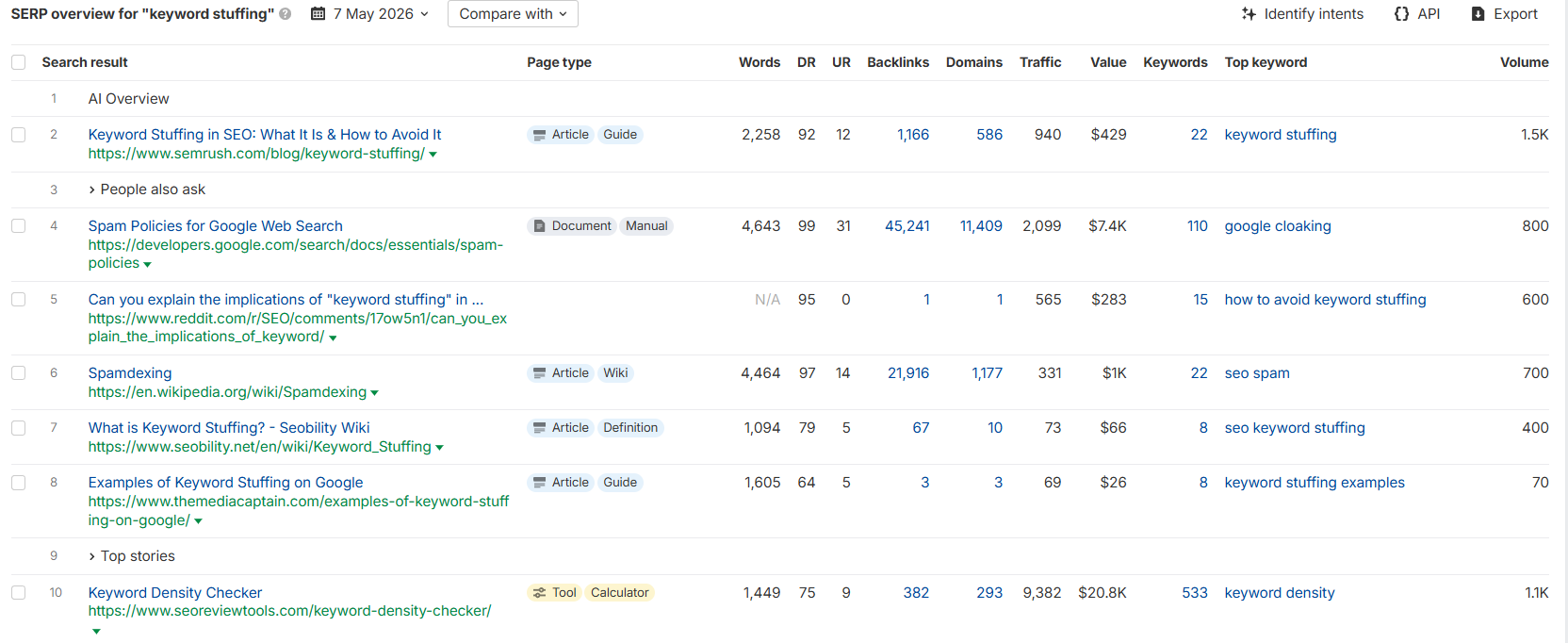
Sometimes a keyword looks great until you open Google search and realize every ranking page is a tool page, category page, or forum thread instead of the kind of content you planned to create.
That means the search intent does not match.
You also shouldn’t obsess over finding one perfect keyword.
Usually, there are multiple keyword variations with almost identical intent behind them.
Just find one wiith the most traffic potential and the lowest difficulty score.
Next, Find Related Keywords
Just including your target keyword in the headings a few times is not enough.
That’s the bare minimum.
To rank consistently, especially now, you need semantic coverage too.
Meaning related terms, secondary keywords, and phrases connected to the topic that search engines expect to see naturally throughout the content.
Some of them are obvious, others are not.
That’s why I usually run the target keyword through MarketMuse or SurferSEO after picking it.
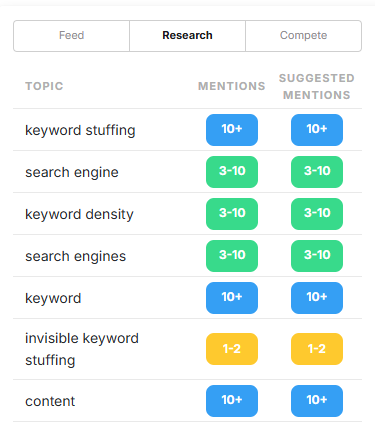
These tools analyze other pages already ranking for the keyword and pull out phrases, related terms, and recurring topics commonly used across those articles.
That helps you figure out:
- which secondary keywords show up repeatedly
- which phrases are missing from your content
- where your keyword density is too low or too high
- whether the content actually covers the topic fully
They also give you a content score.

But I would not treat that score like gospel.
A lot of keyword stuffing happens because people chase optimization scores too aggressively and start forcing repetitive keywords into every paragraph just to push the number higher.
As long as you’re above the average score for the SERP, you’re usually fine.
The bigger thing is making sure the content still flows naturally.
Integrate Them Naturally!
What I usually do is build the outline manually first and dump a ton of notes under every section.
Then I’ll have ChatGPT plan out the keyword usage around the outline before writing the content itself.
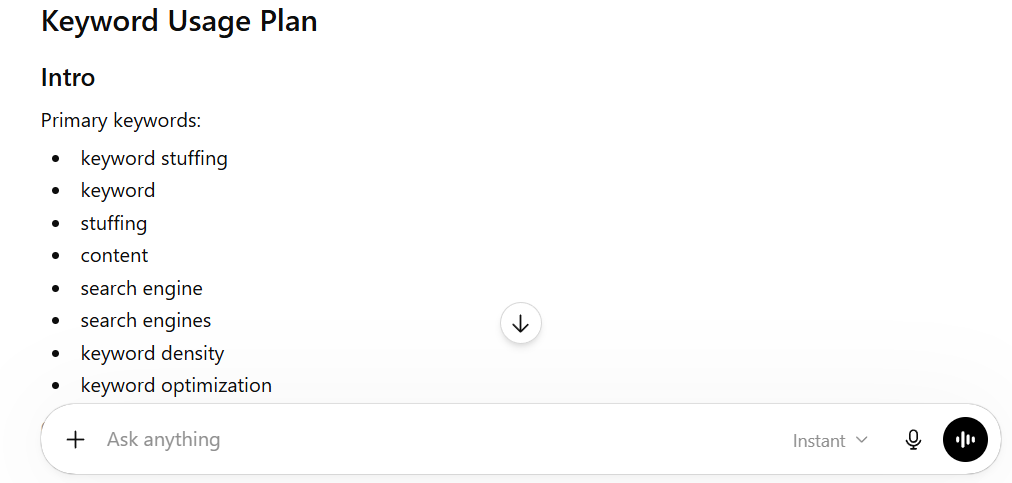
That helps a lot because the keywords are already spread throughout the article naturally instead of being awkwardly added in later.
A lot of keyword stuffing comes from trying to optimize after the content is already written.
You realize the target keyword only appears a few times, then start forcing it into random sentences to increase keyword density.
Same thing with optimization tools.
People get obsessed with the score and start repeating the same phrase over and over because Surfer or MarketMuse says they need more mentions.
I mostly use those tools to find secondary keywords, related terms, and phrases connected to the topic that should probably appear somewhere naturally.
FAQ sections and key takeaways help a lot with this too because they give you extra places to include keywords without making the main sections feel repetitive.
If you’re using AI to write, make sure to heavily edit its outputs.
Even with good prompts, AI tends to repeat the same phrase too much or force awkward keyword usage into places where it clearly does not belong.
Link building cheat sheet
Now Over to You
Keyword optimization alone can absolutely rank content for lower-difficulty searches.
Especially long tail keywords with clear search intent behind them.
But once you start targeting more competitive searches, on-page optimization by itself usually is not enough anymore.
At some point, you need backlinks.
And not just random backlinks either.
You need placements on relevant pages already getting traffic and visibility in search engines.
Especially listicles and comparison pages if you care about AI visibility too.
Because those are the kinds of pages AI systems constantly pull recommendations and citations from.
That’s why link building still matters so much even with all the changes happening in SEO right now.
If you want help with that side of things, Respona works as a pay-per-result link building service.
You can place orders based on your preferred DR and traffic ranges or use Campaigns to target specific keywords and topics.
From there, the Respona team handles the outreach, publisher conversations, negotiations, and placements for you.
Frequently Asked Questions (FAQ)
What is keyword stuffing?
Keyword stuffing is the practice of overloading content with repetitive keywords in an attempt to manipulate search engine rankings.
Usually this means repeating the same keyword or phrase unnaturally throughout a page instead of writing naturally for actual readers.
Is keyword stuffing bad for SEO?
Yes.
Keyword stuffing bad practices can hurt both content quality and search engine ranking performance.
Modern search engines are very good at detecting excessive keywords, repetitive wording, and unnatural optimization patterns.
What is ideal keyword density?
There is no universal ideal keyword density.
A lot of SEO experts still obsess over percentages, but modern search engines focus much more on relevance, natural language, and overall content quality than exact density numbers.
If the content flows naturally, you are usually fine.
What are examples of keyword stuffing?
A common keyword stuffing example is repeating the same target keyword over and over in headings, paragraphs, anchor text, alt text, and meta tags even when it sounds unnatural.
Older forms of visible keyword stuffing also included awkwardly repeating keywords inside sentences purely for SEO purposes.
What is invisible keyword stuffing?
Invisible keyword stuffing is an outdated tactic where people hide keywords on a page using hidden text, tiny font sizes, or matching text colors to the page background.
This used to be more common years ago but modern search engines catch it very easily now.
How do search engines detect keyword stuffing?
Modern search engines use natural language processing to analyze keyword usage, phrase repetition, content quality, and readability patterns.
That means they can usually tell when web content was written naturally versus when somebody is forcing repetitive keywords into every paragraph.
What are secondary keywords?
Secondary keywords are related terms and supporting phrases connected to your primary keyword.
They help search engines better understand the broader topic of your content without needing constant exact-match keyword repetition.
Some people also refer to these as LSI keywords, although that term gets overused a bit.
Should keywords go into meta tags?
Yes, but naturally.
Your meta description, title tag, alt text, and other meta tags are all good places to include relevant keywords where appropriate.
Just avoid stuffing keywords into every meta tag unnaturally.
What causes keyword stuffing most often?
Usually it happens when people chase SEO scores too aggressively.
They focus too much on keyword density tools, targeted keyword counts, or exact-match repetition instead of writing naturally and covering the topic thoroughly.
How many keywords should a page target?
Most pages should focus on one primary keyword along with multiple related terms, secondary keywords, and variations tied to the same search intent.
Trying to force too many irrelevant keywords into the same piece of content usually creates weaker optimization overall.