
Targeted link building is about finding the “golden” link opportunities and taking full advantage of them.
You’ve probably received a million emails asking for a “mutually beneficial link opportunity” from a random email – this ain’t it.
Targeted link building laser-focuses on hyper-relevant opportunities and securing them with an AWESOME pitch.
In this article, we’ll dive more into the difference between the sniper and shotgun link building approaches, and walk you through 5 targeted link building strategies.
Let’s get into it.
Key Takeaways:
- Targeted link building is about quality over quantity. You’re focusing on a smaller number of highly relevant placements instead of chasing as many links as possible
- The best links don’t just help with rankings, they also bring in the right audience and actual leads
- Most effective strategies come down to finding the right opportunities and reaching out with a strong, relevant pitch
- Personalization matters. Generic outreach gets ignored, while tailored messages get replies
- A few strong placements on the right websites can outperform dozens of weaker links
- Consistency is key. Even the best strategy won’t work if you’re not executing it regularly

Link building cheat sheet
What is Targeted Link Building?
You already know that not all links are created equal.
Targeted link building is about precision.
It’s the process of identifying and securing backlinks from a select, highly authoritative website group.
So, no email blasts – small email batches and hyper-personalized link pitches.
Besides the SEO benefits, targeted link building also aims to drive hot leads your way – by handpicking placements where your ideal users are visiting.
Sniper vs Shotgun Approach
Now let’s look a little deeper into the differences between targeted link building and the more common, shotgun approach.
This approach is characterized by large-scale campaigns. The goal is to get as many links as possible, from as many referring domains as possible.
It’s a numbers game, focusing purely on getting ranking signals.
Relevance often takes a backseat to volume. You might get links from sites that aren’t a perfect fit, or even remotely related to your niche.
That’s not to say that they’re bad – as long as they make at least some sense, they still direct link juice your way.
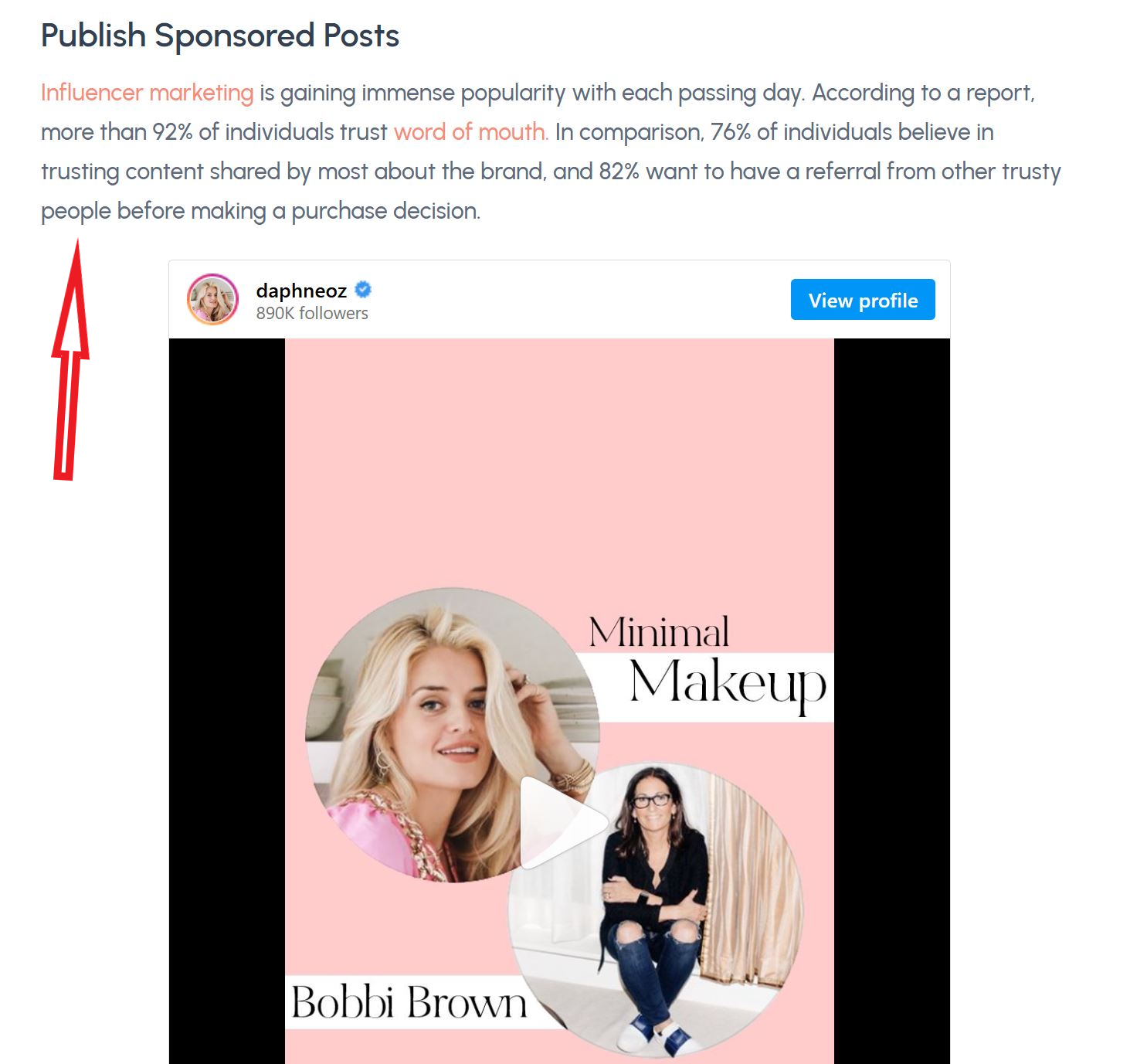
For example, we got this link as part of a shotgun campaign. It’s still relevant in the context of the article, and leads to our guide on influencer marketing.
But Respona isn’t really an influencer marketing tool. So it doesn’t quite drive our perfect customers to our site.
See what we mean? It’s still relevant, but not perfect. And we got it from a high-volume link building campaign targeting just about every keyword our blog covers.
This approach is purely focused on getting ranking signals from as many referring domains as possible.
Now let’s take a look at a prime example of targeted link building in action.
Like our mention on Backlinko’s link building tools listicle.
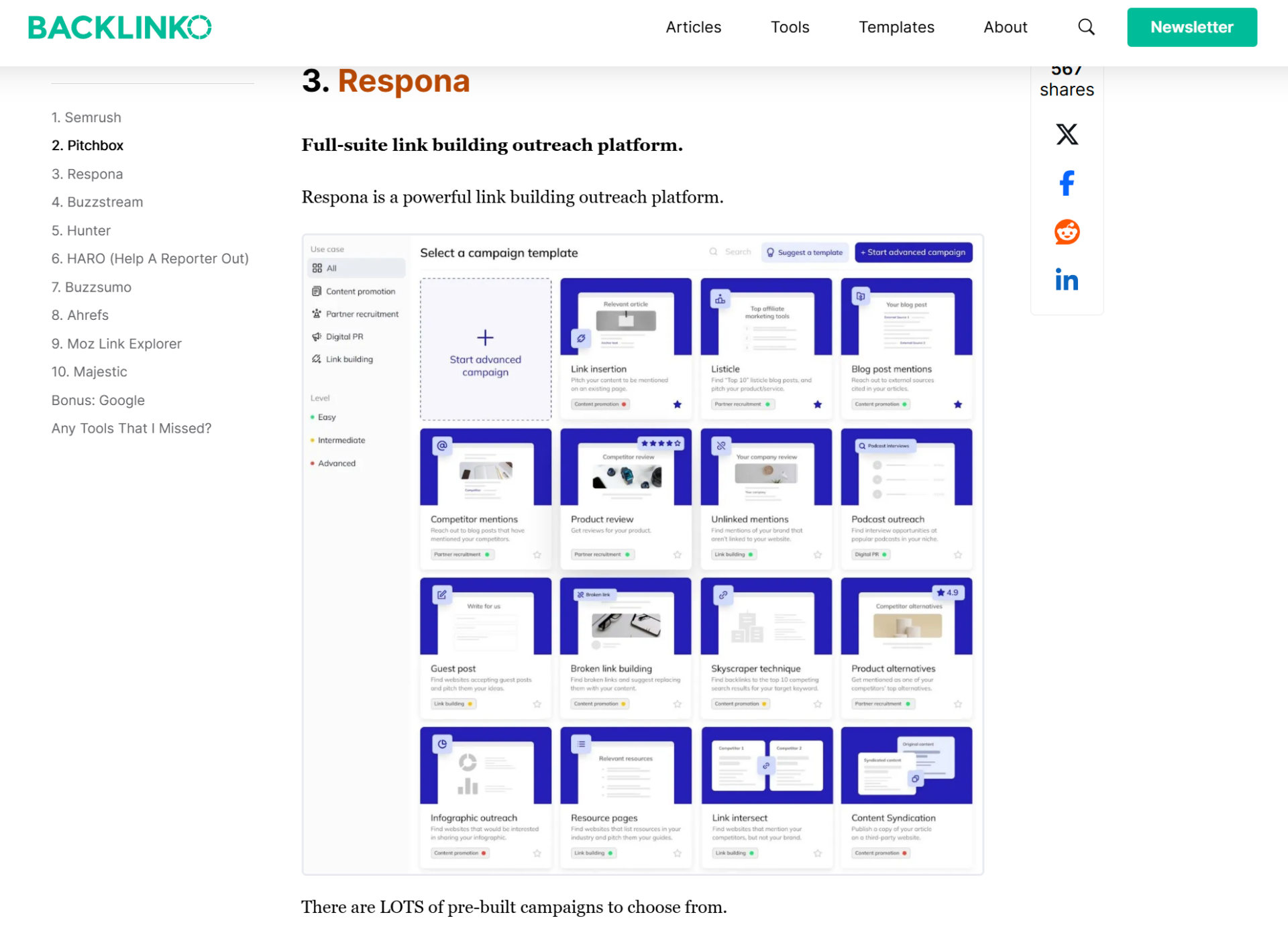
This is huge for us because:
- Backlinko is a highly respected blog with ~1.5M monthly visitors
- It’s frequented by our target audience – SEOs, link builders, and agency owners
- Our mention is high on the list
Needless to say, this placement alone has netted us quite a few leads.
So how can you get these kinds of placements for yourself?
Use one of the strategies outlined below.
Guest Posting
Why don’t we start the list with finding listicles that we just praised?
We’ll tell you – because it’s extremely rare for somebody to give you a placement for free. You have to offer something in return.
But wait, isn’t Google against link exchanges?
Yes – but not all types. Google devalues reciprocal links, but it can’t track ABC link exchanges.
Meaning, exchanges between three separate websites. And the best way to set these up (to avoid direct exchanges) is through guest posting.
It works like this: you write a guest post for site A and include a link to your link partner, site B in the content. In return, they give your site, site C a link from their own.
Everyone gets a link – and you even get multiple, since guest posting sites often allow multiple supporting links in the content in addition to the one in your author bio.
Finding sites that accept guest posts on Google is extremely easy. Just use one of these search strings:
- “write for us” + [your keyword]
- “guest post” + [your niche]
- “submit a guest post” + [topic]
- “contribute to” + [industry]
- “become a contributor” + [keyword]

Most sites that accept guest posts either have a contact form or a contact email listed right there on the page.
You can also send out LinkedIn connection requests at this stage to make the most out of your outreach.
Listicle posts
Now that you have a way to return the favor for your inclusion, let’s talk about other strategies.
Listicles are an absolute goldmine for both links and leads for reasons we discussed earlier in the article.
Now let’s see how you can find them. The process in Respona is very similar to what we just described above, so let’s look how you can find these in Google manually.
You’ll need to use a few advanced Google search operators here.
Here’s an example:
Let’s say you’re in the business of selling project management software. You’d want to search something like this:
intitle:”top” intitle:”project management software” -“[Your Company Name]” -“[Your Company Domain]”
Just replace “[Your Company Name]” and “[Your Company Domain]” with your actual business details.
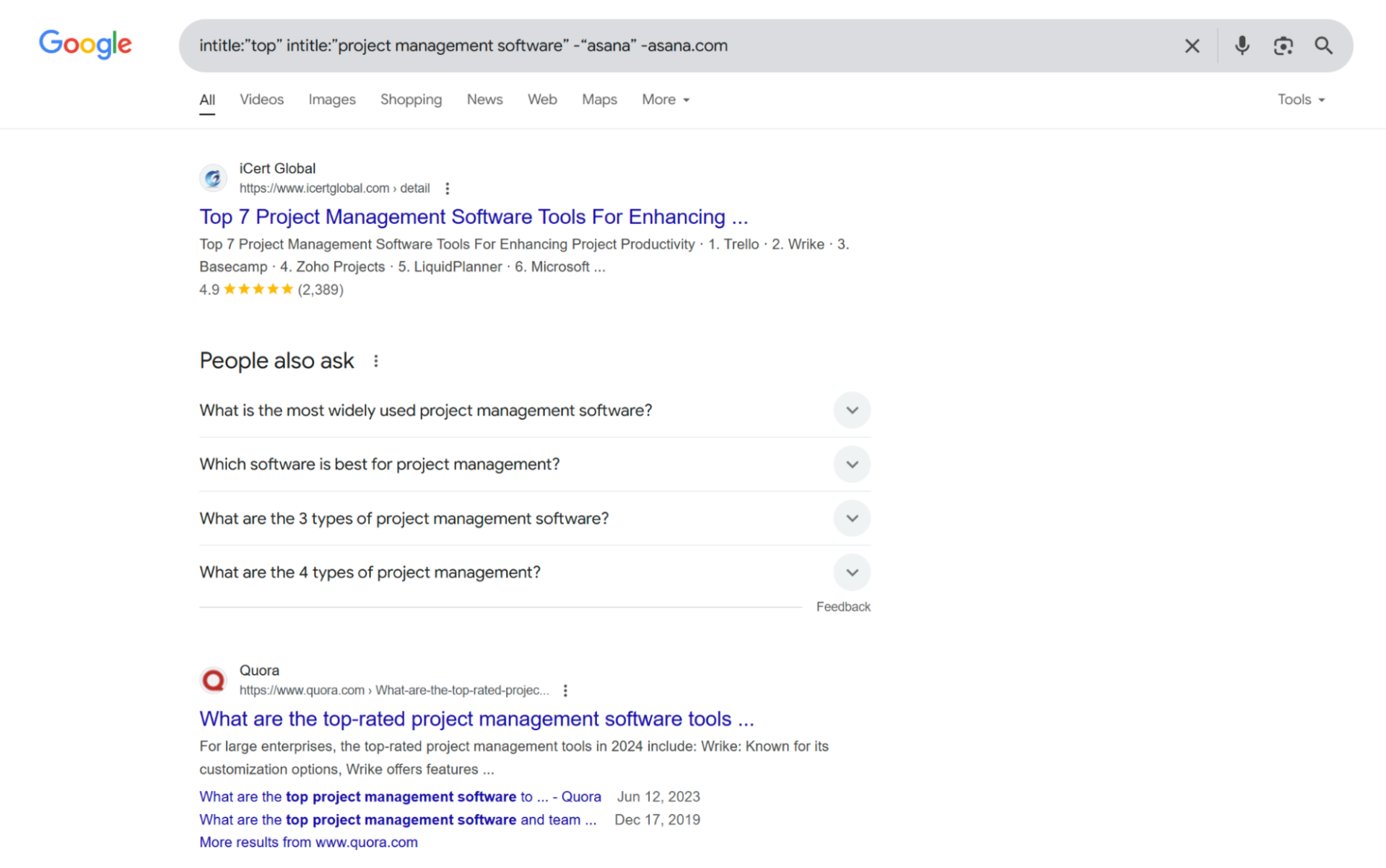
Let’s break the search string down:
- intitle:”top”: This narrows down results to pages with “top” in their title, indicating a listicle.
- intitle:”project management software”: This further refines the search to listicles specifically about project management software.
- -“[Your Company Name]” and -“[Your Company Domain]”: This excludes any results that mention your own company, preventing you from seeing pages you’re already on.
Using these will save you a ton of time on manual link building.
Link Insertion
Link insertion is super effective as a targeted link acquisition strategy because it lets you pinpoint articles that already mention your specific target keywords.
The trick here is that these articles need to be non-competing.
That means they shouldn’t have your anchor text included in the title – just the body.
You’re looking for supporting mentions, not direct rivals.
Once again, you’ll be using some advanced search operators:
- inurl:blog
- intext:”keyword”
- -intitle:”keyword”
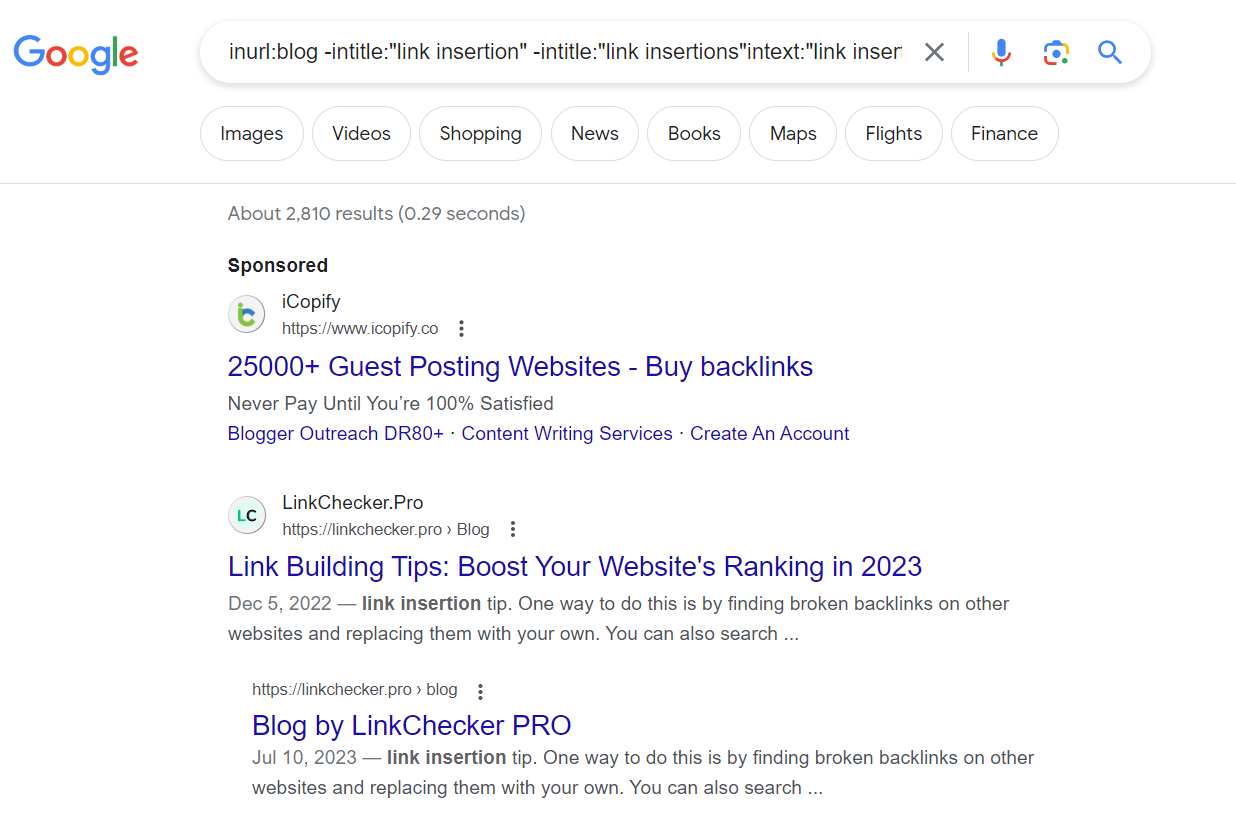
So, for example, if we were looking for valuable backlink insertion opportunities for our link insertion guide, this would be the search string:
inurl:blog intext:”link insertion” -intitle:”link insertion”
Podcasting (as a Guest)
What does podcasting have to do with link building? Everything.
Think about it – it put you directly in front of your target audience, and allows you to carry yourself as an expert in your field.
And, of course, every podcast appearance comes with at least a few links: one from the podcasting platform, and a few from supporting social media posts.
In fact, we’ve used podcast outreach to get our Co-Founder, Farzad over 100 appearances over two years, like this one:

If you’re not using Respona, you’ll have to find opportunities on podcasting platforms such as Listen Notes.
It’s free to use, but again, if you’re not using an outreach tool to speed up the process, it’s going to take quite a bit of time.
Which is well worth it.
Skyscraper Technique
The skyscraper technique is a classic targeted link building strategy that cleverly leverages your competitors’ existing link placements.
It’s about finding what’s already working for them and making it even better for yourself.
Essentially, you’re looking to create a piece of content that’s superior to what your competitors have, then reaching out to the websites that are already linking to their content.
You’re building an extra floor on top of the skyscraper – hence the name.
Now, you don’t necessarily need to base your content around your competitors – you can just work on your existing content plan and simply check the links of all competing content.
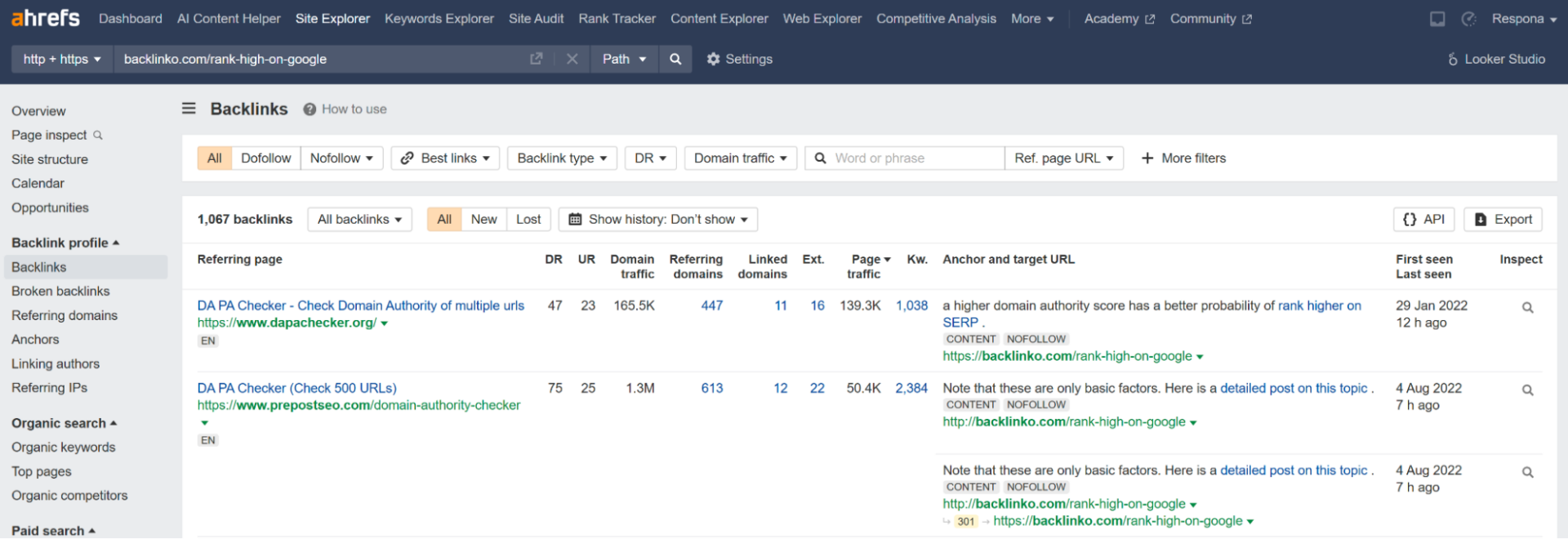
Now, if you’re not using Respona, you’ll need the help of an SEO tool like Ahrefs.
Just paste the competing URL into the search bar, export its backlinks and get ready for link building outreach.
A Better Way to Build Links
All of these strategies work.
Guest posting, broken link building, listicle outreach, even the skyscraper technique — they’re all proven ways to build links and improve your backlink profile.
But they all have the same problem.
They take time.
You need to find link prospects, vet relevant websites, run outreach, follow up, and manage everything in a Google Sheet just to keep track of your link building campaign. And even then, there’s no guarantee you’ll land enough quality backlinks to make a real impact.
That’s why most link building efforts stall.
The strategy is solid, but the execution is slow.
A better way to approach this is to keep the strategy, but remove the manual work.
Instead of handling link building outreach yourself, you can just place an order and define what you’re looking for. That includes your target audience, preferred placement type, and link tier.
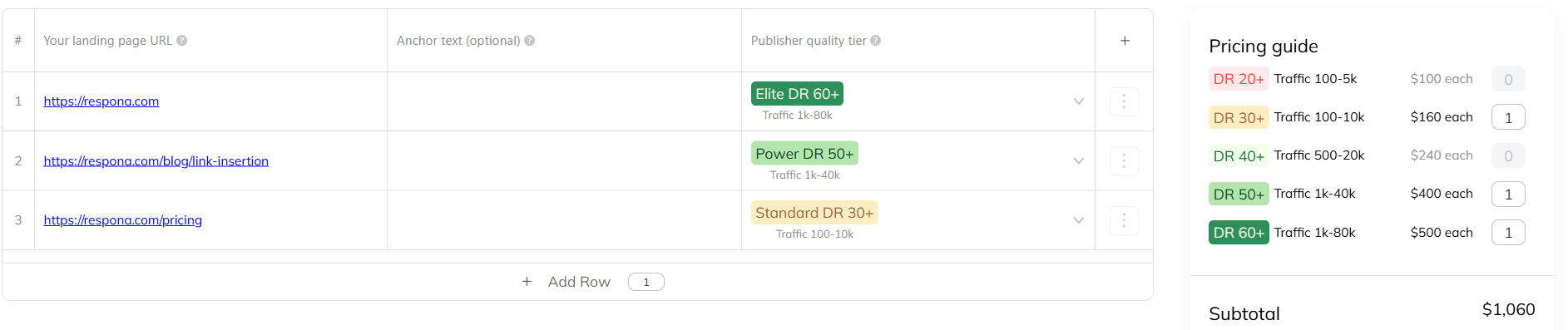
From there, everything is handled for you.
The team combines an internal database of relevant websites with real outreach to secure placements on authoritative sites. That means you’re still using targeted link building, just without the bottleneck of manual outreach.
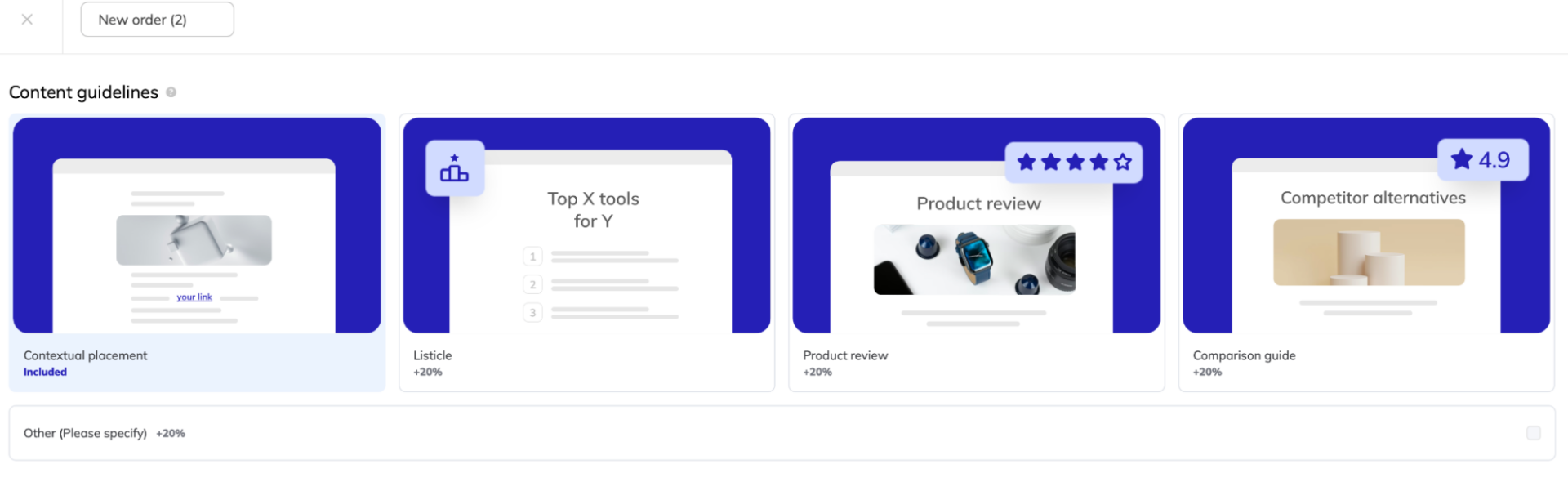
You stay in control the entire time.
Every link opportunity is vetted, and you can approve or reject placements before they go live. This helps maintain link quality, avoid spammy links, and keep your backlink profile clean.
You can also use the campaigns feature to go a step further.
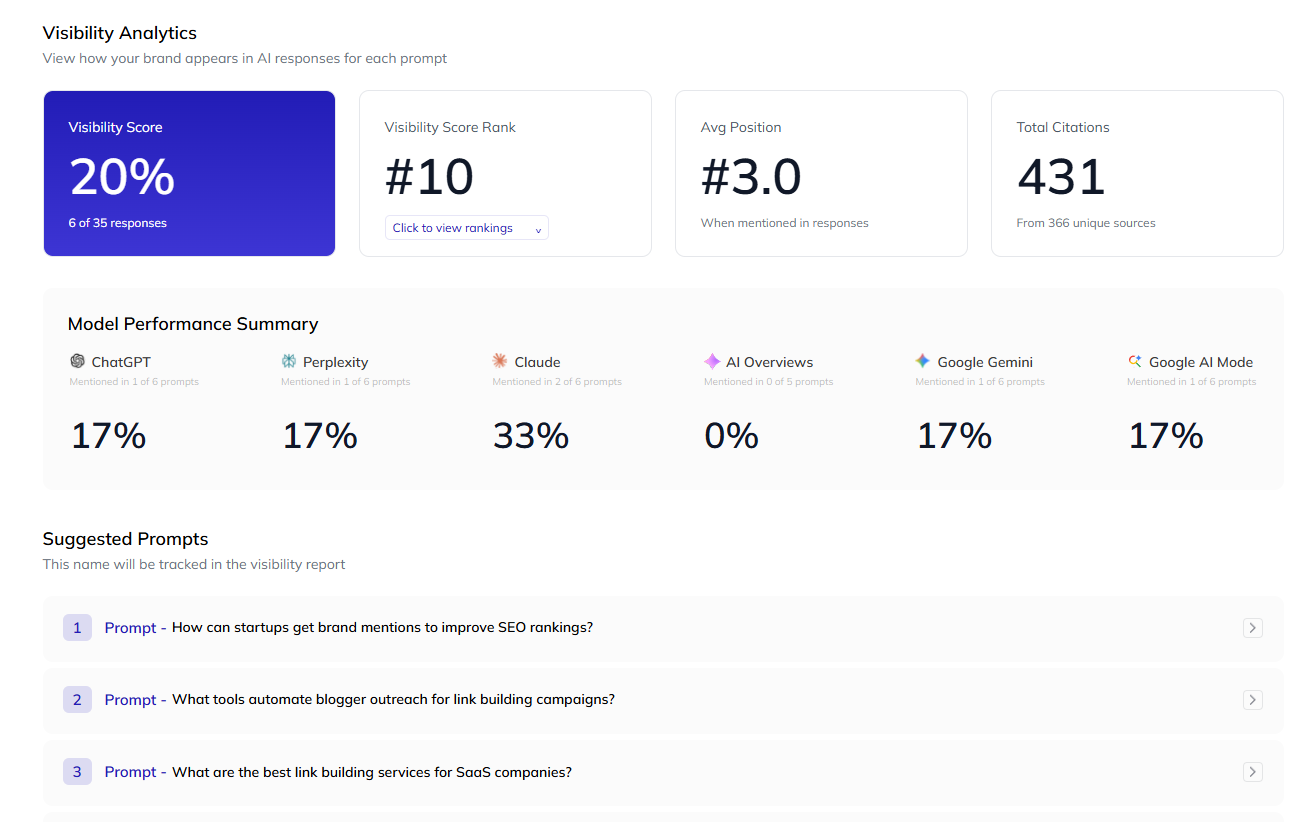
It doesn’t just track your visibility across multiple answer engines, it also helps identify high-intent link opportunities based on queries your target audience is actively searching for. That means your link building strategy becomes more focused over time, not less.
So instead of juggling tools, spreadsheets, and outreach, you’re focusing on outcomes.
More quality links, better referral traffic, and a stronger position in search engines.
Link building cheat sheet
Now Over to You
Targeted link building works.
But only if you actually execute.
You can spend weeks building lists, running outreach, and trying to secure backlinks… or you can skip straight to the results.
If you want to build links without handling everything yourself, the next step is simple.
Place an order and start securing placements on relevant websites that actually move the needle.
Frequently Asked Questions (FAQ)
What exactly makes targeted link building different from regular link building?
Targeted link building is about quality over quantity.
Instead of casting a wide net, you’re focusing on a smaller pool of highly reputable websites that can bring both SEO benefits and qualified leads.
It’s a sniper approach, aiming for precision and impact.
Is targeted link building more time-consuming than other methods?
Yes, it generally requires more time and effort per link secured because it emphasizes personalization and relevance.
Especially if you focus on low-volume strategies like broken link building.
However, the higher quality and lead generation potential often outweigh the extra effort. You’re investing in links that truly move the needle.
How do I know if a website is “relevant” for targeted link building?
Relevance goes beyond just topic similarity. Consider if the website’s audience aligns with your target customers.
Check their domain authority, traffic, and the overall quality of their content. If it resonates with your ideal customer, it’s likely relevant.
Can I automate targeted link building, or does it always require manual outreach?
While tools like Respona can automate parts of the process, such as finding opportunities and personalizing outreach, the core of targeted link building involves human connection.
Building relationships and crafting genuine pitches still requires manual effort.
Automation enhances, but doesn’t replace, the human touch.
How can I measure the success of my targeted link building efforts?
Track metrics like referral traffic, lead generation, and keyword rankings.
Monitor the quality of high quality backlinks you acquire, focusing on domain authority and relevance.
Use analytics to see how these links contribute to your overall business goals, not just the backlink profile.