
Looking for a reliable provider but worried about black hat link building?
I’ll tell you what to look for.
Most “cheap link packages” you see floating around the SEO world fall somewhere on the black hat spectrum. Some are blatant (a PBN provider openly advertising what they sell), and some are sneakier (an agency claiming “white hat outreach” while quietly running automated comment bots in the background).
Either way, the result is the same: wasted budget, zero ranking improvement, and a backlink profile cluttered with junk that Google will eventually devalue, if it hasn’t already.
This guide walks through the black hat tactics still floating around in 2026, how to spot each one, and what to do if you find any of them in your own profile. By the end you’ll know exactly what a shady link building agency looks like, and how to build a clean seo strategy instead.
Key Takeaways:
- Black hat link building rarely “tanks” your site outright in 2026. Google has gotten very good at devaluing junk links rather than penalising them. The real cost is wasted money on links that do nothing, plus the opportunity cost of not running a real campaign.
- The most common black hat seo tactics you’ll run into are PBN links, link farms, paid blog comment spam, negative link attacks, and hidden or cloaked links. Each leaves a distinct fingerprint.
- You can spot most black hat seo tactic patterns with a single SEO tool. Run the linking site through Ahrefs’ Top Pages report. If it ranks for normal niche keywords, you’re probably fine. If it ranks for random unrelated junk in three different languages, it’s a link farm.
- If you spot black hat links in your own profile, don’t panic. Google’s algorithm devalues most of them automatically. The disavow tool is a backup, not a first response.
- A genuinely ethical seo approach is slower, but compounds. Earning real placements through outreach (or hiring a done-for-you service to handle it) takes longer than buying 500 PBN links, but the links actually move the needle and stick around. Every black hat technique on this list is a shortcut that costs you in the long run.
- The dividing line between black hat seo strategies and white hat is intent. Are you creating something the linking site genuinely benefits from referencing, or are you trying to trick the search engine into thinking your site is more authoritative than it is? The first wins. The second eventually breaks.
Link building cheat sheet
Is Black Hat Link Building Really Harmful?
Yes, but probably not in the way you’d expect.
A few years ago, black hat link building could get your site outright wiped from the search engines. Google would issue a manual action, and you’d watch your traffic disappear overnight. That still happens occasionally, but it’s now the exception rather than the rule.
These days, Google’s algorithm has gotten so good at recognising junk links that it usually just devalues them.
The links exist, they technically point to your site, but they pass zero authority. Your search engine ranking doesn’t move. Neither does your organic traffic. You spent money on something that, functionally, didn’t happen.
That’s the real cost of black hat tactics in 2026.
It’s not the punishment. It’s the waste.
You paid for 500 backlinks that do nothing while a competitor paid for 50 real placements that did.
Three months later, they’re outranking you and you’re wondering why.
There’s also the longer-term risk. Google’s tolerance shifts.
A black hat seo technique that gets devalued today might trigger a penalty tomorrow if Google decides to start enforcing more aggressively.
The brands that stay clean don’t have to worry about future algorithm updates. The brands with 5,000 PBN backlinks in their profile do.
PBN Links
PBN stands for private blog network, and it’s exactly what it sounds like: a network of websites owned (usually secretly) by one person or company, built for the sole purpose of selling backlinks.
Here’s how it works. The operator hunts for an expired domain that still has authority from its previous owner, buys it up, then repeats the process across dozens or hundreds of sites to build out the network.
They throw a thin layer of generic content on each one and start renting out links to anyone willing to pay. The whole network exists to sell paid links, nothing else.
Some services don’t even hide it. They’ll openly advertise “100 PBN backlinks for $99” because the bulk pricing sounds great to someone new to SEO who doesn’t know what they’re actually buying.
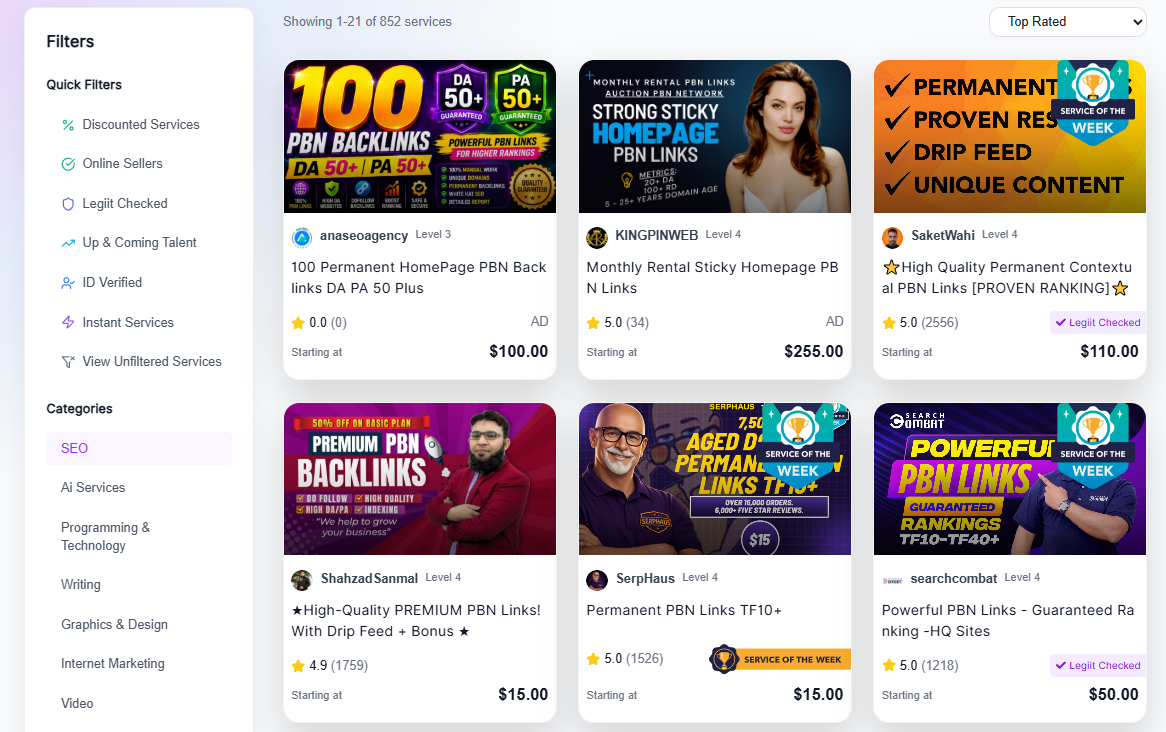
The problem is that every site in a PBN has zero real SEO value.
Google has spent over a decade getting good at identifying these networks, and the anchor text patterns, hosting fingerprints, and content footprints make them very easy to detect.
When Google figures out a PBN exists, every link from that network gets devalued at once. The links technically still exist, but they don’t help your site at all.
You can spot a PBN by checking the linking site.

If the content is generic, the topics jump randomly across niches, the writing reads like it was produced in bulk, and you can’t find any sign of a real audience (no comments, no social shares, no return visitors), you’re probably looking at one.
Link Farms
Link farms are closely related to PBNs, but they’re not always the same thing.
These sites have one primary purpose: hosting outbound links rather than serving real readers.
The difference from PBNs is that PBNs are usually built that way from day one, while many link farms start out as legitimate websites.
They build up real audiences, rank for real keywords, and earn real backlinks. Then, somewhere along the way, the owner notices they can monetise the traffic and rankings by selling links, and gradually the site shifts.
More sponsored posts. More outbound links. Less original editorial. Within a year or two, the site has crossed the line.
This gradual decline is what makes link farms harder to spot than PBNs. The site might still have a respectable domain authority, real traffic, and a decent-looking homepage. Underneath, though, the actual link graph is full of unrelated junk.
The best way to spot a link farm is to pull the site into Ahrefs and check the Top Pages report.
If it’s ranking for normal niche keywords related to its stated topic, you’re probably fine.
Even if the content has a lot of external links, that just means the site is currently in its early stages of going downhill, and it might still pass some value (for now).
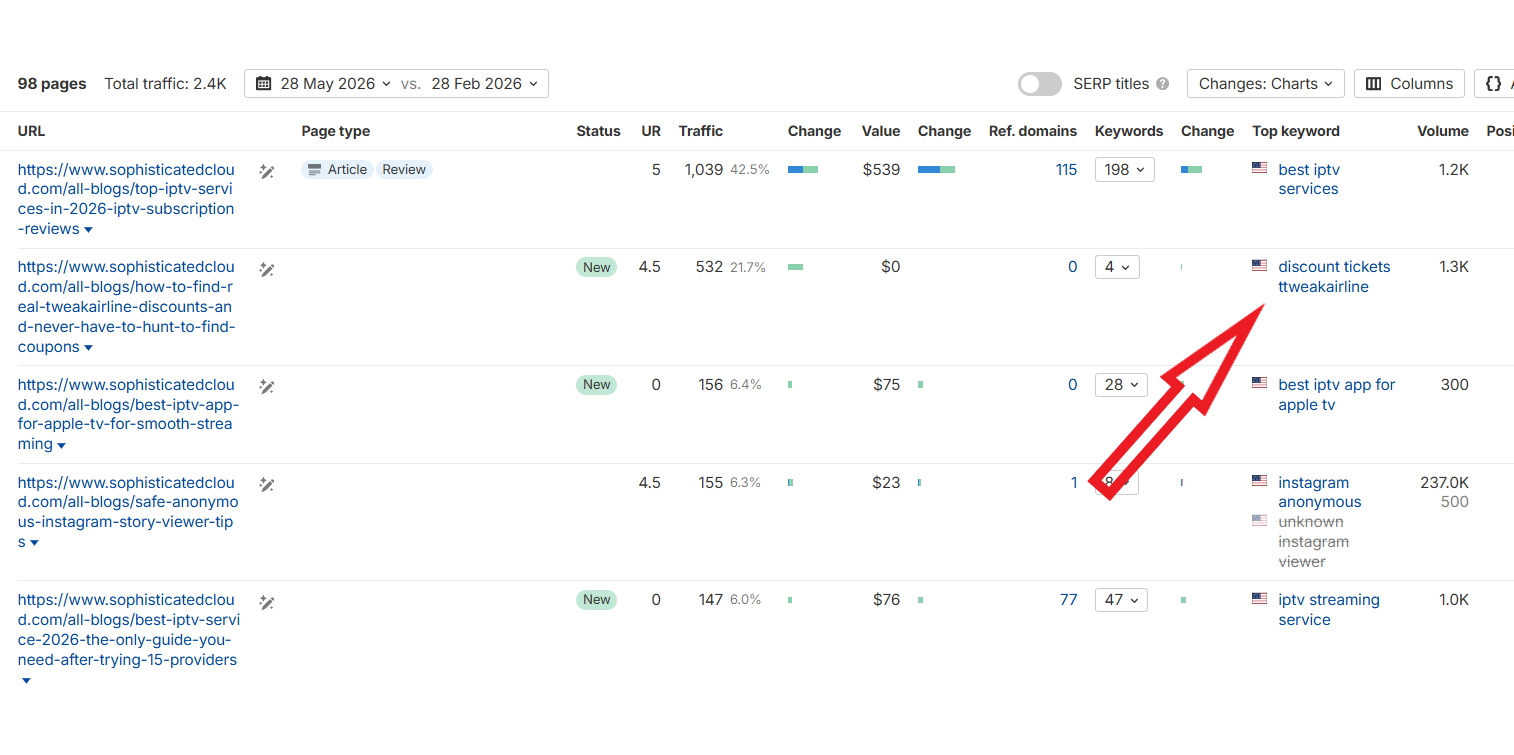
But if the Top Pages report shows random unrelated keywords (one page about crypto, one about loans, one about online gambling in a different language), you’re looking at the real thing. The site might have high DR and seemingly real traffic, but the link spam pattern in the rankings tells you everything.
Spammy backlinks from sites like these are useless. Treat any agency that pitches them as a hard pass.
Negative Link Attacks
Negative link attacks are a form of negative seo where someone deliberately tries to tank a competitor’s rankings by pointing a flood of junk links at their site.
The usual pattern is a sudden spike of backlinks from adult sites, gambling pages, foreign-language spam domains, or comment-spammed forums.
The hope is that Google will look at this sudden, unnatural-looking backlink profile and assume the targeted site has been involved in shady link schemes, then drop its ranking as punishment.
Here’s the good news. This almost never works in 2026.
Google’s algorithm has gotten very effective at recognising when a sudden link spike is hostile rather than earned. The links get devalued automatically. The targeted site’s ranking doesn’t move. The attacker spent their money for nothing.
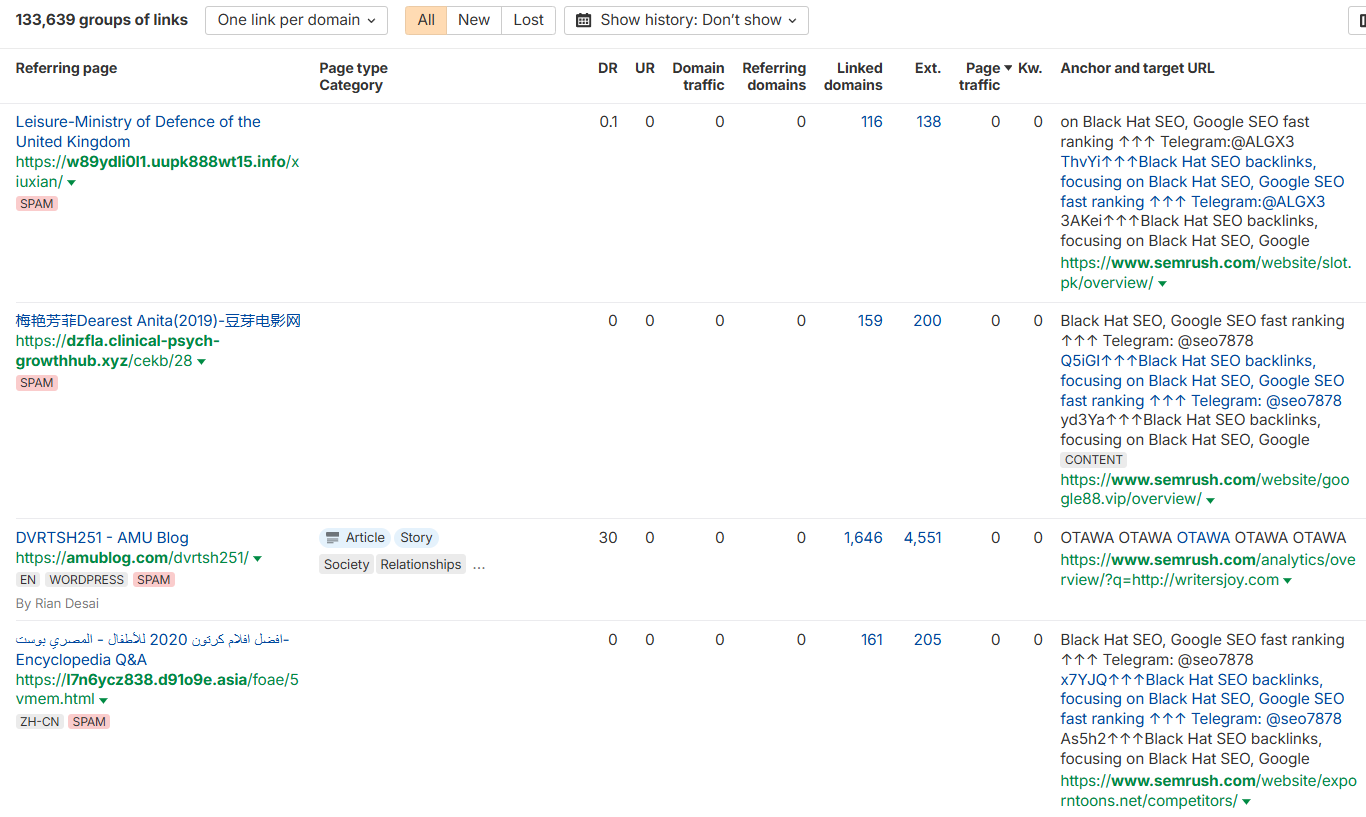
If you check your own backlink profile and see a bunch of obviously weird links you didn’t earn (Russian gambling domains, adult content sites, a wall of comment spam from a single domain), don’t panic.
Those links are almost certainly already discounted by Google. The whole “negative SEO service” industry is largely a scam preying on website owners who don’t realise this, charging hundreds or thousands of dollars to “remove” links that weren’t hurting anything to begin with.
We’ll cover what to actually do if you spot these in your profile in a later section. Short version: usually nothing.
Comment & Forum Links
This is the one category that isn’t always black hat.
There’s a real, legitimate version: someone genuinely active on Reddit, Quora, Stack Overflow, or niche industry forums, who drops a helpful link to their own content when it actually answers someone’s question.
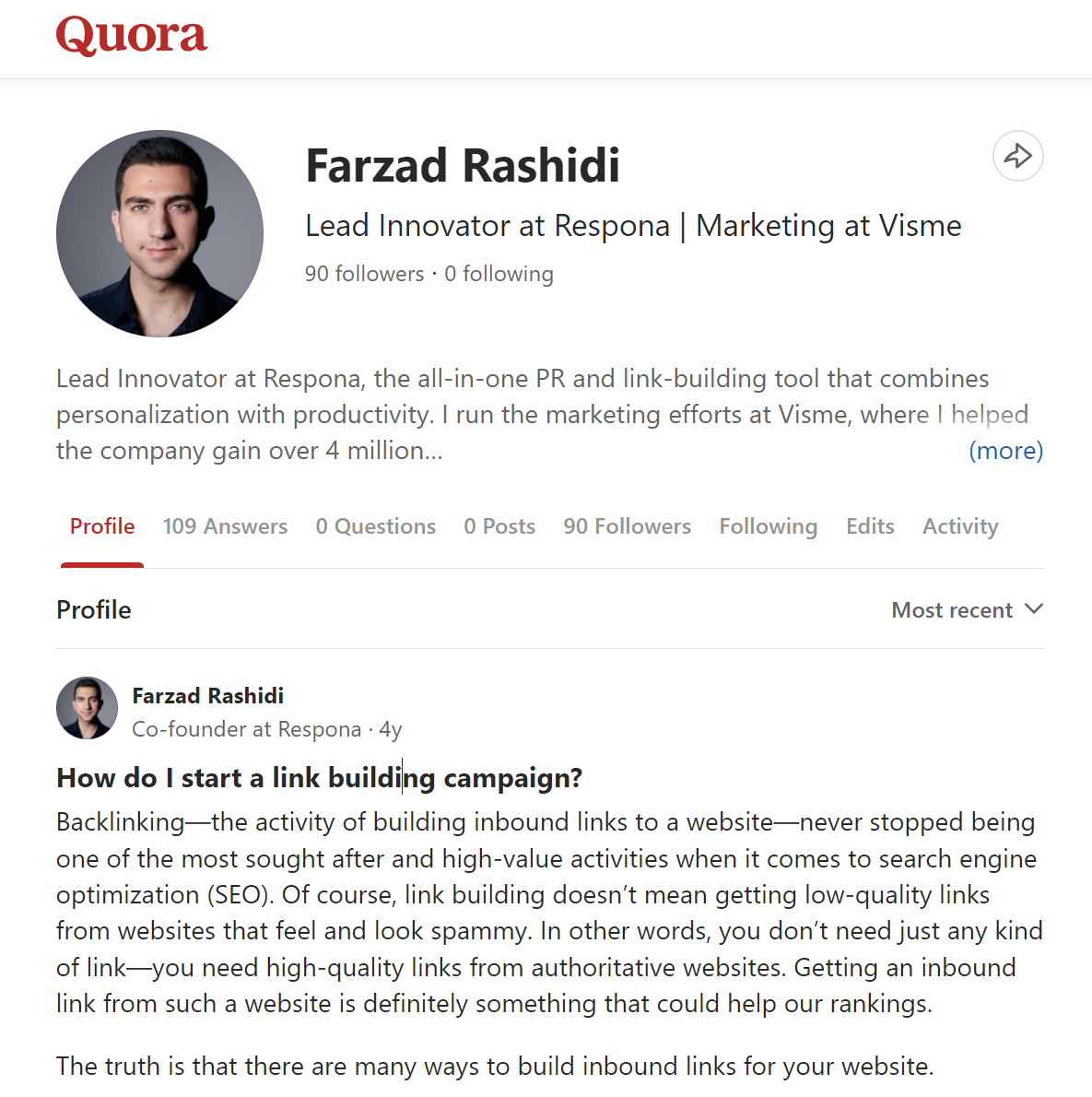
That’s just good community participation, and it can drive real referral traffic plus a bit of visibility. If you have a social media manager engaging authentically with your audience and occasionally referencing your blog where relevant, that’s not black hat.
That’s just doing SEO and community work at the same time.
The black hat version is paying for an automated commenting service.
You’ve probably seen the offers. “10,000 blog comments from $50.” The service spins up bots that crawl thousands of blogs, paste generic comments (“Great post, very informative!”) with a link back to your site, and call it done. Every link is on a page with zero topical relevance, zero engagement, and a comment section already buried in similar spam.
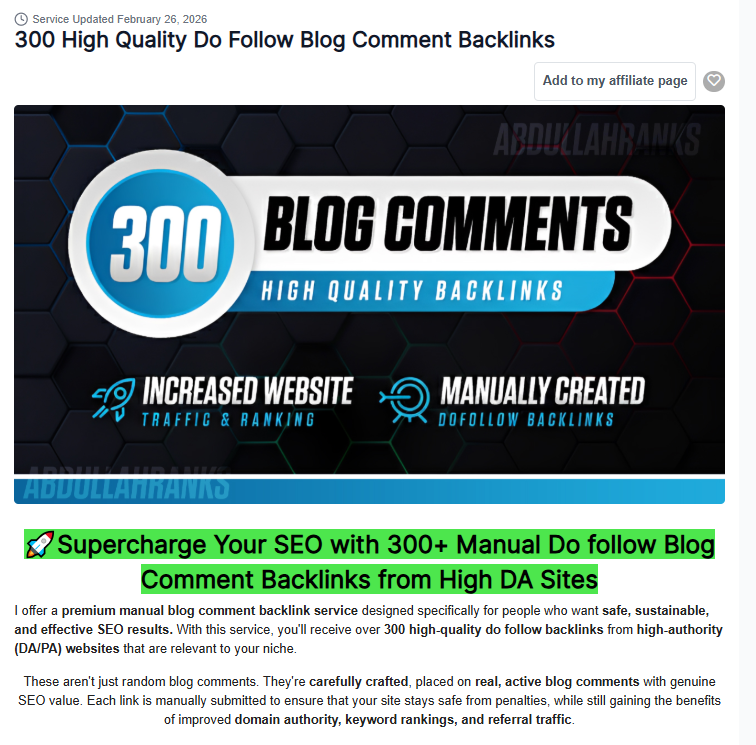
These links do absolutely nothing for your SEO.
Google has been discounting blog comment links since roughly 2012. What’s worse, the actual humans who run those forums and blogs see the comments, recognise them as automated spam, and form a negative impression of your brand.
You’re paying to make yourself look amateurish.
If you want to use forums and comments as a real channel, do it yourself or have a real person on your team handle it. Anything else is wasted money.
Hidden, Cloaked, or Misleading Links
This one’s self-explanatory.
Hidden links are placed in code or styled so they’re invisible to readers (white text on a white background, links hidden in the CSS, links inside punctuation).
Cloaked links show one URL to Google’s crawler and a different one to actual visitors. Misleading links use anchor text that promises one thing and points somewhere completely unrelated.
All three violate Google’s guidelines and can trigger a manual action if Google catches on. If an agency offers any of these, walk away.
What to Do if You Spot Black Hat Links in Your Profile?
Honestly? Nothing.
Google’s algorithm already devalues the vast majority of junk links automatically. If you check your backlink profile and see a wave of obviously spammy domains pointing at your site, those links are almost certainly already discounted. They’re not hurting your rankings, even if they look ugly in a report.
If you’re still worried (say, you’ve inherited a site with a long history of shady SEO work, or you’re seeing a sudden suspicious spike), you can use Google’s disavow tool as a backup. It’s not a first response, just a safety net.
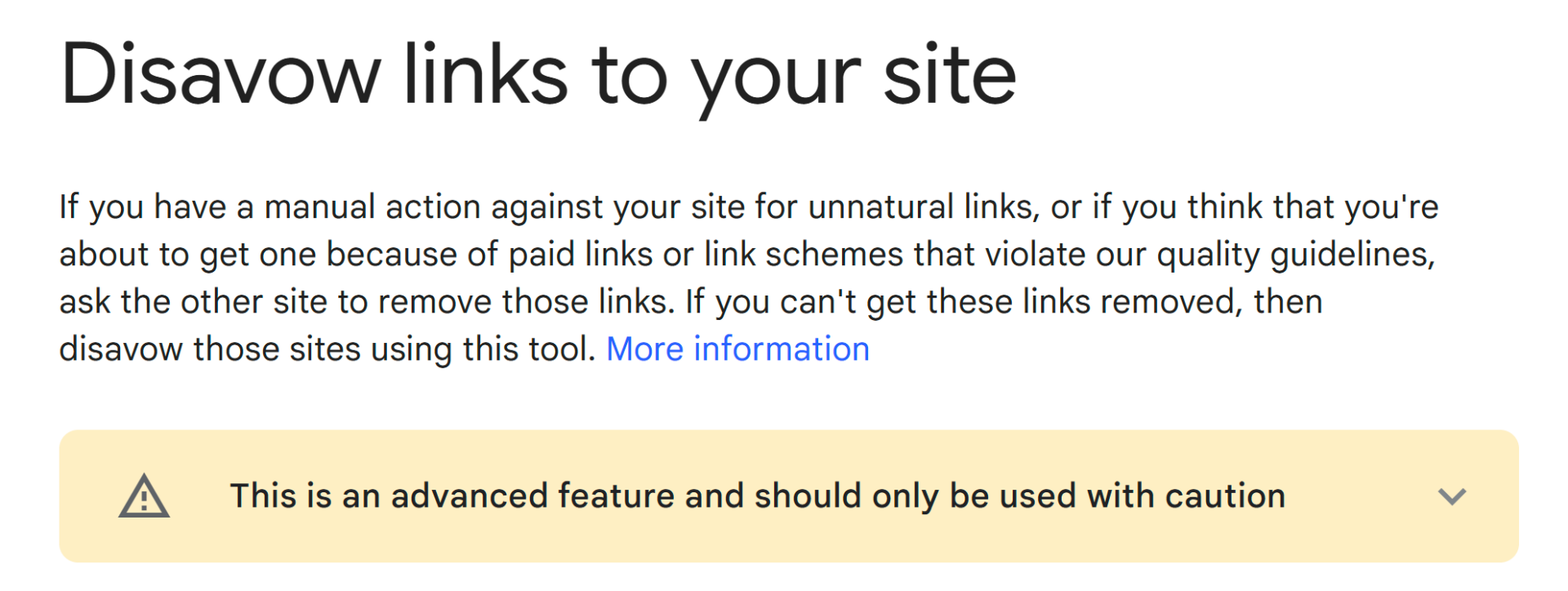
Submit a disavow file listing the domains you want Google to ignore, and Google will treat those links as if they don’t exist. Just be careful not to disavow actually helpful links.
Also don’t pay anyone to “clean up” your profile for you. The whole link removal industry exists because the average site owner doesn’t know the algorithm already handles this. Save your budget for actual link building work.
How to Get White Hat Links?
White hat link building is the long way around. There’s no automation, no bulk packages, no shortcuts.
The basic loop is straightforward: create something worth linking to (original research, a free tool, a comprehensive guide, or just a piece of relevant content that goes deeper than what’s already out there), find people who’d genuinely benefit from referencing it, and pitch them well enough that they actually do.
White hat seo at its core depends on you having an asset worth promoting in the first place.
From there, you’re already familiar with the tactics: guest post outreach, brand mentions inside listicle articles, broken link replacement, unlinked mention reclamation, and resource page placements.
Each delivers quality links from sites with real audiences and real authority. The catch is that ethical link building is slow.
A real outreach campaign for a single piece of content marketing might involve 200 prospects, 200 personalised pitches, two or three follow-ups each, and 5-15 placements at the end.
Most marketing teams can’t sustain that volume in-house, which is exactly the problem Respona solves.
Respona is a done-for-you white hat link building service.
You hand over your target pages, target keywords and AI queries you want to show up in, and any anchor preferences.
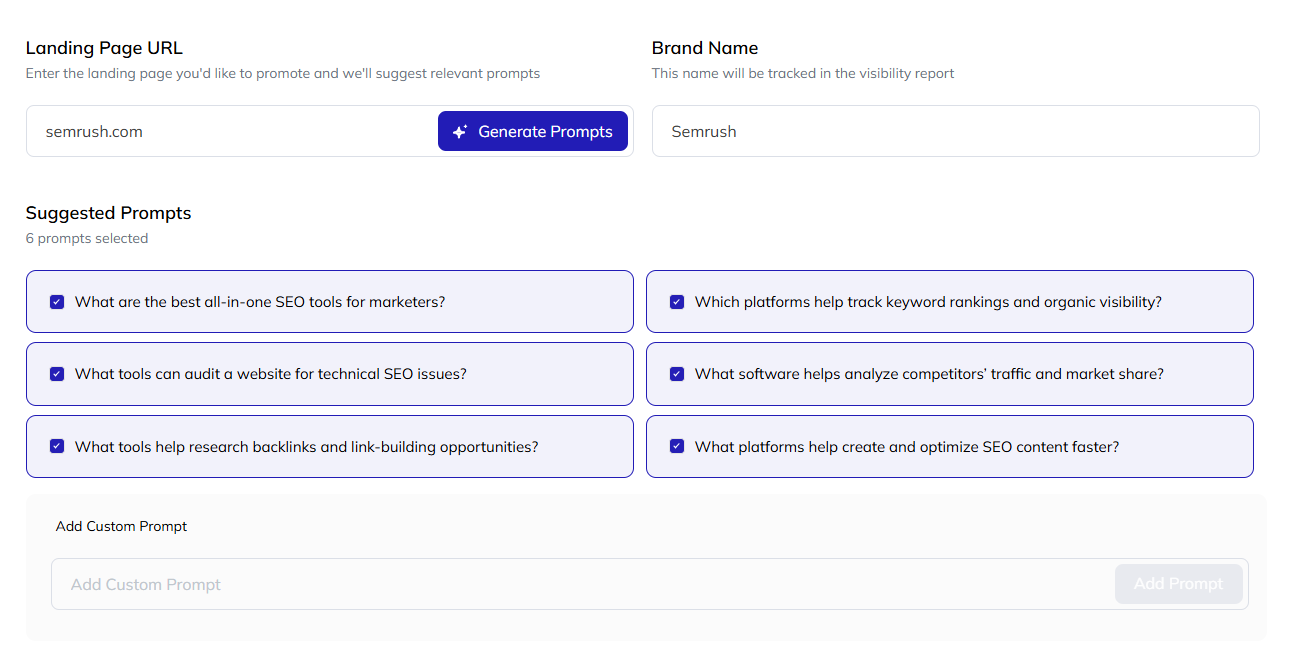
The Respona team handles the rest: prospecting niche-relevant sites, drafting personalised pitches, managing follow-ups, negotiating each placement, and securing the live link.
The whole outreach grind that takes most in-house teams 20+ hours a week gets absorbed entirely.
What sets the model apart is what gets prioritised.
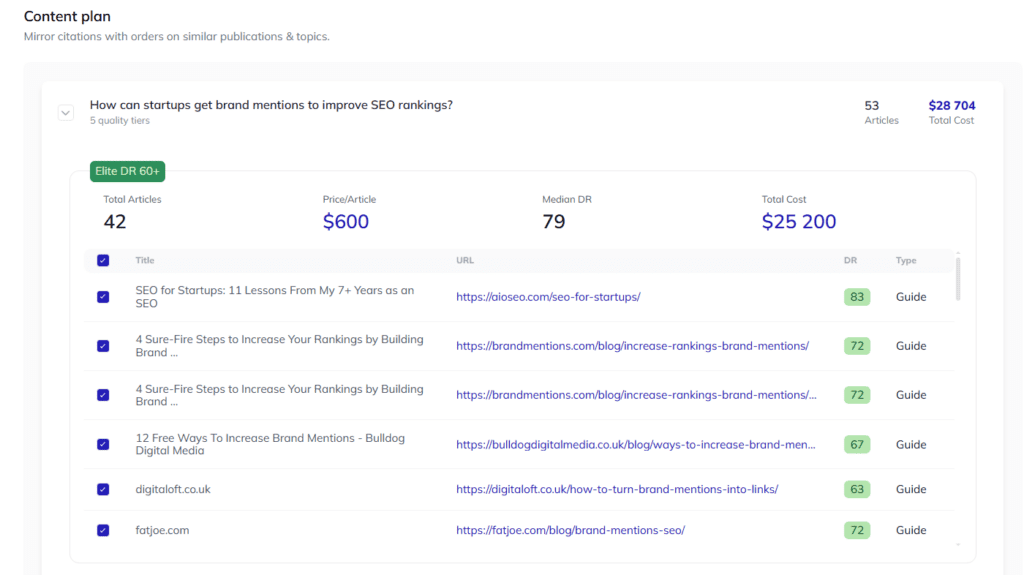
The team focuses on listicle placements, brand mentions, and editorial features on sites that already rank in Google AND already get cited inside ChatGPT, Perplexity, and Google AI Overviews.
That dual focus matters because brand mentions inside well-ranked “best of” articles are now the single biggest driver of citations in AI search.
You get the traditional SEO benefit (link equity, rankings, organic traffic) plus the newer AI visibility benefit at the same time.
Every opportunity is reviewed and approved by you before outreach goes out. Nothing lands in your profile that you haven’t said yes to.
That’s important if you’ve previously been burned by an agency that delivered junk placements (the kind of links this article was written to help you avoid).
With Respona, the placements landing in your profile are the kind of links you’d be proud to point at your site, not the spam that prompted you to read this article in the first place.
And it helps you track your visibility increase over time.
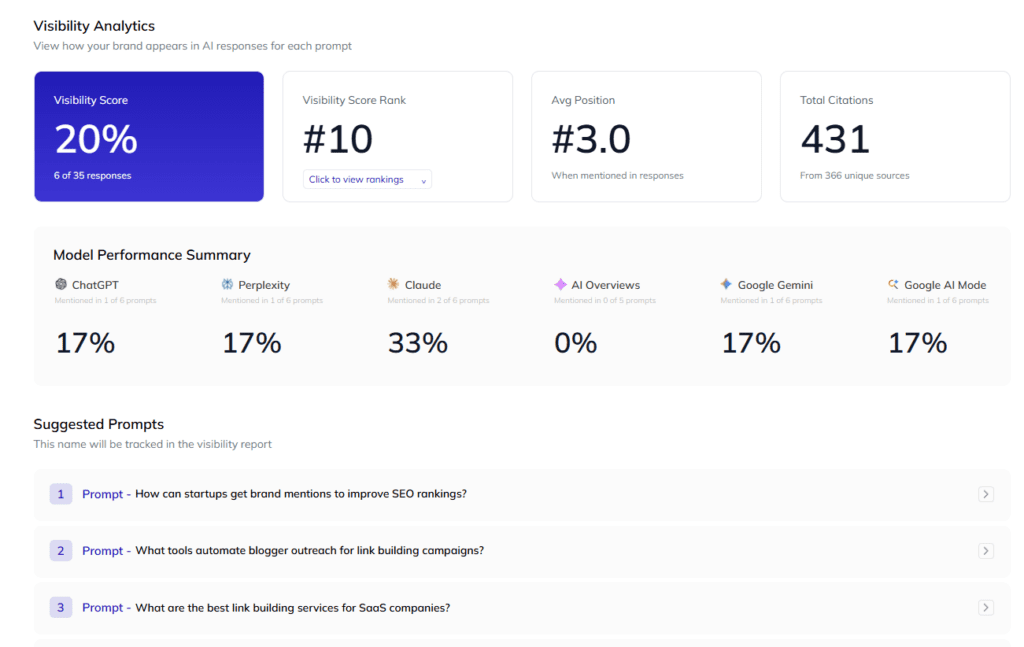
Pricing is pay-per-placement and tiered by Domain Rating rather than a monthly retainer, so the spend lines up with the actual links you receive.
For brands that want the benefits of ethical seo without burning out an internal team running outreach, this kind of done-for-you model handles the part of the work that’s hardest to scale.
Link building cheat sheet
Now Over to You
There you have it. Black hat link building hasn’t gone away, but the landscape has shifted. Search engines don’t usually punish junk links anymore. They just ignore them. The real cost of going down the black hat tactic route is the time and money you wasted on links that did nothing.
If you’d rather build the real thing, let Respona do the heavy lifting. Share your target pages and target keywords, and we’ll handle the prospecting, pitching, and securing of clean, white hat placements that actually move rankings.
Frequently Asked Questions (FAQ)
What’s the difference between white hat and black hat link building?
White hat work means earning links by creating something genuinely useful (research, tools, guides, expertise) and reaching out to publications that benefit from referencing it. White hat seo prioritises long-term authority and survives algorithm updates.
Blackhat link building shortcuts that process by buying, faking, or otherwise manufacturing links the linking site never really intended to give you. The first one compounds. The second one stops working the moment Google notices.
Is gray hat seo safer than black hat?
Gray hat seo sits in the grey zone between fully ethical and openly manipulative tactics. Think aggressive guest posting at scale, paying for placements on sites that pretend to be editorial, or buying links in ways designed to look organic.
It’s “safer” than overt black hat in the sense that Google has a harder time catching it instantly, but the underlying logic is the same: you’re trying to make your site look more authoritative than it actually is. The risk just kicks in later instead of immediately.
Are blackhat backlinks always devalued by Google?
Not always, but most of the time, yes. The major search engines have spent over a decade training their algorithms to recognise the fingerprints of low-quality link sources, and the rate of automatic devaluation keeps improving.
A few obvious blackhat backlinks slip through and pass a tiny bit of value temporarily, but the search engine catches up sooner or later. Counting on those links to keep working is a losing bet.
Does broken link building count as a black hat technique?
No, broken link building is fully legitimate. You find a dead link on someone’s resource page or article, then suggest they replace it with a relevant link to your own content.
The site owner gets a free fix to a problem on their page. You get a contextually relevant link from a real audience. Both sides win. It’s a classic approach used by legitimate SEO teams everywhere, and there’s nothing shady about it as long as the replacement content actually fits.
What is article spinning and is it still used?
Article spinning is a black hat seo technique where a single piece of content gets run through software that swaps words and phrases for synonyms, producing dozens of “different” articles that are technically unique but read like nonsense.
Operators used to fire these out across PBNs and link farms to host outbound links. It’s mostly dead in 2026. AI-generated content has filled the same niche, but Google has gotten just as good at detecting low-effort AI spam, so the results are similar.
How can a website owner spot black hat anchor text in their own profile?
Check your backlink profile in Ahrefs or Semrush and look at the anchor text distribution. A natural profile has a mix: branded anchors, generic (“click here,” “this article”), partial-match keywords, naked URLs, and a small percentage of exact-match keyword anchors.
If you see hundreds of identical exact-match anchors all pointing at the same page, that’s a black hat fingerprint and probably hurting your search engine ranking. The fix is usually to disavow the worst offenders and stop working with whoever built them.