
Short answer: not really.
Google has gotten too good at sniffing out rank-manipulating tricks, and the gap between what’s “kind of okay” and what’s flat-out penalized has narrowed to almost nothing.
Grey hat SEO sits between black hat (the stuff that gets you banned) and white hat (the stuff Google rewards). The whole category exists because some tactics worked fine for years without being officially against the rules, even though they walked a fine line. In 2026, most of those tactics either don’t work anymore, work for a few weeks before being devalued, or quietly nuke your ranking without warning.
This article breaks down what grey hat SEO actually means in 2026, the techniques that still circulate, and whether any of them are worth the risk.
Key Takeways:
- Grey hat SEO sits in the gap between white hat (Google-approved) and black hat (penalty risk). In 2026, that gap is almost gone.
- The classic grey hat seo tactics still circulating (PBNs, link exchanges at scale, paid links without disclosure) either don’t work anymore or get devalued fast.
- Google’s algorithm now catches most rank-manipulating signals quietly. You won’t get a manual penalty notification. You’ll just stop ranking.
- The smartest seo strategy in 2026 is to skip grey hat entirely. White hat techniques compound. Grey hat gambles burn out.
- AI search engines (ChatGPT, Perplexity, Google AI Overviews) reward the same things Google does: real editorial mentions on authoritative sites. No shortcut works there either.
Link building cheat sheet
What is Grey Hat SEO?
Grey hat SEO covers any technique that sits between the cleanly ethical and the clearly forbidden. Not quite white hat seo (Google’s officially blessed approach), not quite black hat seo (the stuff that gets penalty hammers swung at you), but somewhere in the middle.
The defining trait: these are tactics that aren’t explicitly against Google’s guidelines, but they exist in a gray zone where the intent is clearly to manipulate ranking signals rather than to genuinely help users.
A few examples of what typically falls under grey hat:
- Buying links from sites that exist primarily to sell links (sometimes called “guest post networks”)
- Heavy keyword stuffing in alt text, meta descriptions, and content footers
- Aggressive internal link manipulation specifically to pump PageRank to money pages
- Article spinning to repurpose existing content with synonyms
- Building expired domains back up with the sole goal of redirecting their link equity
The grey hat seo definition shifts over time. What was considered fine ten years ago (like aggressive directory submissions) is now flatly black hat seo.
What’s considered grey hat today might be reclassified as black hat in another algorithm update.
That’s why the smartest move is to skip the entire category. Traditional seo built on ethical seo practices and real content production stays valuable across updates.
Grey hat seo practice (or gray hat seo, same thing) burns hot, then disappears.
Mileage may vary, as they say. In 2026, the variance is mostly downward.
Grey Hat SEO Techniques
The three most common grey hat seo techniques you’ll see floating around in 2026 are link farms and PBNs, large-scale link exchanges, and paid links. Each has its own risk profile, and each gets caught at different rates.
Worth noting upfront: most of these grey hat seo tactics overlap with what Americans call gray hat seo tactics. The naming is just regional. The risk is the same.
Let’s break each one down.
Link Farms & PBNs
A link farm is a network of websites that exist purely to link to each other, with no real audience or editorial value. PBNs (private blog networks) are the same idea but slightly more sophisticated: they’re networks of “real-looking” sites built to pass link equity to the operator’s money pages.
This is a grey hat seo technique that crosses into black hat seo technique territory pretty fast. Some PBNs operate for years without getting caught. Others get deindexed in batches when Google’s spam team identifies the footprint.
The risk profile is binary: nothing happens, or everything tanks at once.
What gets PBNs caught:
- Shared hosting IP ranges across multiple “independent” sites
- Identical themes, plugins, and footer templates
- Low-quality content on all the sites in the network
- Inbound link patterns that map back to the same operator
- Reverse DNS lookups that connect the dots
When Google connects a network, every link from it gets devalued at minimum, and sites in the network can get fully deindexed. Your own site can take a hit too, especially if a meaningful chunk of your link building came from the network.
Link Exchanges
Link exchanges are exactly what they sound like: two sites agreeing to link to each other. A small amount of this happens naturally in any niche where people genuinely cite each other’s work. That’s fine.
The problem is when link exchanges get systematized.
Three-way trades (A links to B, B links to C, C links to A), entire Slack communities dedicated to swap requests, exchanges between sites with no editorial relevance whatsoever. That’s the grey hat seo tactic version. That’s what gets devalued.
Here’s the thing: this is one of the lower-risk grey hat tactic options.
If Google catches a reciprocal pattern, the worst case is usually that the specific links get devalued. Your domain doesn’t get penalized, your site doesn’t get deindexed, you just stop benefiting from the swap.
But “low risk” isn’t the same as “worth doing.” Devalued links are wasted effort. The hours spent setting up exchanges could’ve gone into creating better content or earning real editorial mentions.
If you’re tempted to lean into exchanges because earning organic links feels slow, the better move is to outsource to seo professionals who already have publisher relationships.
That’s a lot of what Respona handles for clients: editorial placements on real sites, no swap arrangements, no PBN risk.
Our most-shared case study covers OpusClip hitting #1 AI visibility on Profound after 7 months of editorial placements, not link trades.
Paid Links
This is where things get murky. There are two very different things people mean when they say “paid links“:
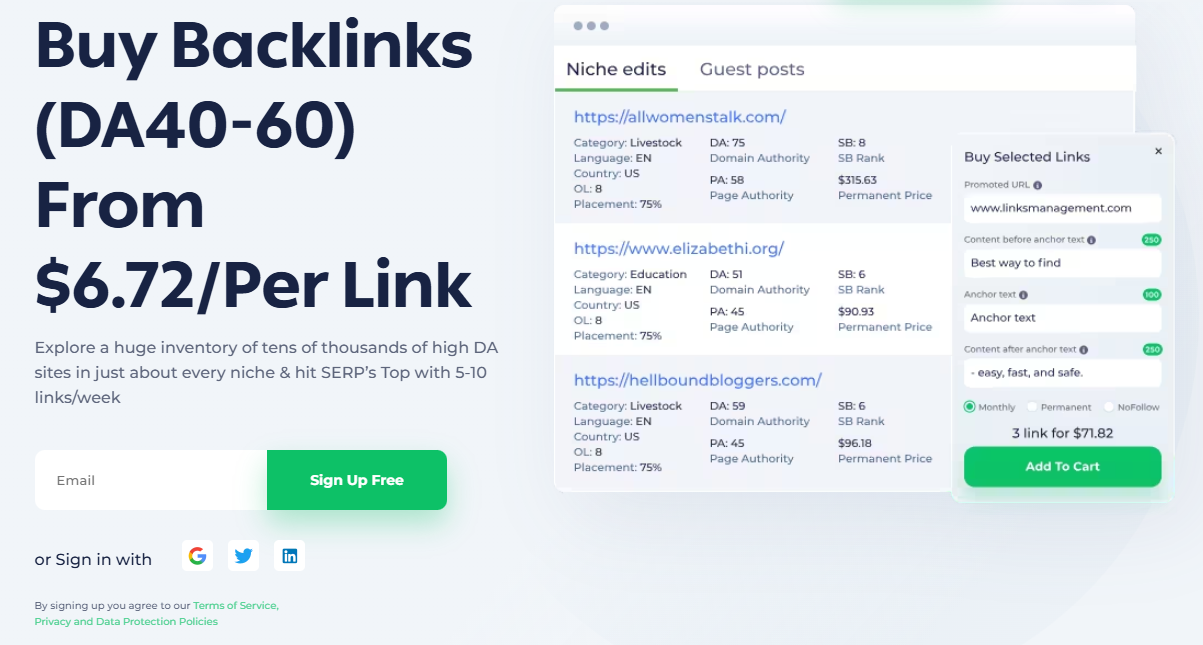
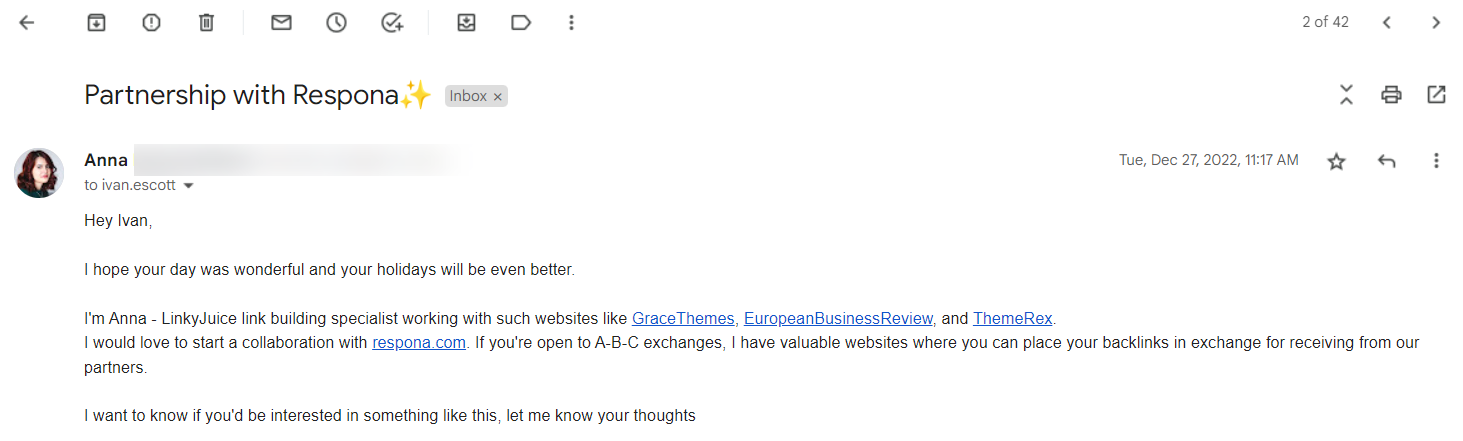
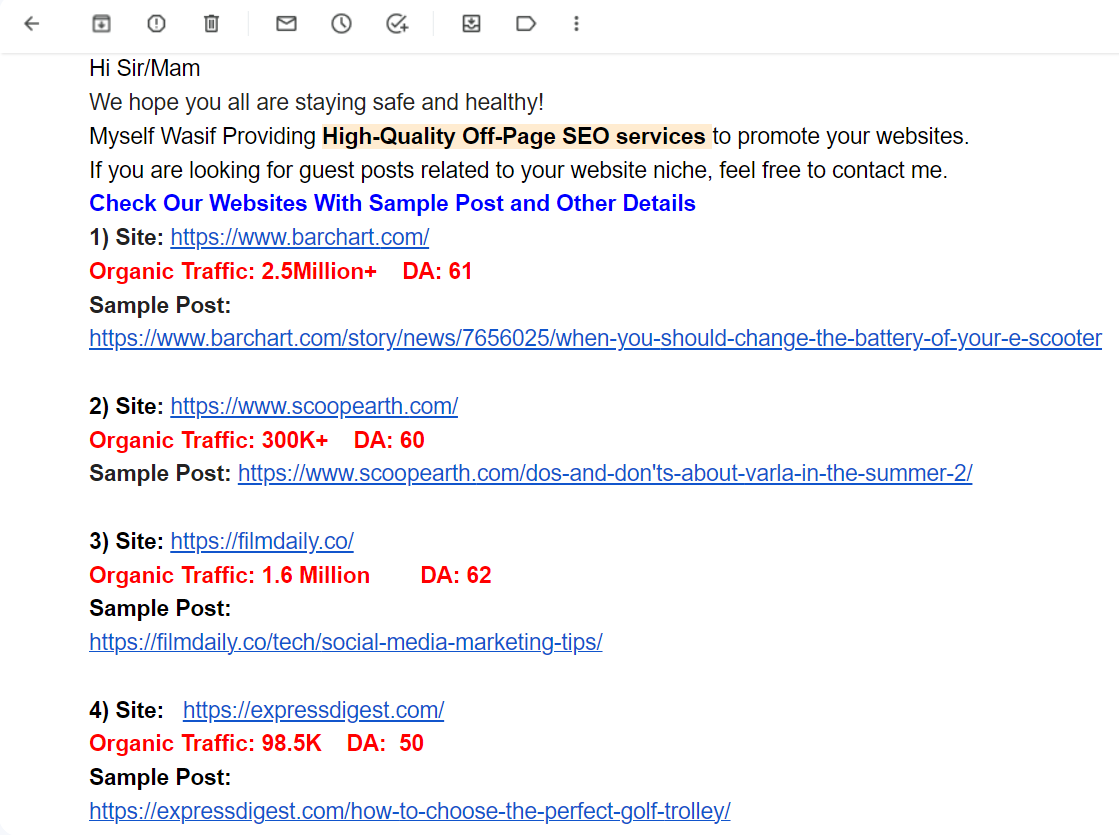
- Paying a publisher directly for a placement on their site, often via a “guest post network” that publishes content for cash without editorial review.
You’ve gotten these emails before:
- Paying an SEO service or agency that does real outreach to earn editorial placements through pitching.
The first one is a black hat tactic and a clear black hat technique combined into one, full stop.
Google explicitly forbids it, the links get devalued when discovered, and operating at scale here is the fastest way to get a site deindexed. The grey hat technique version is when these networks try to disguise the transaction by making the placements look editorial. Same outcome when caught.
The second one is genuinely fine. You’re paying for the labor and outreach work, not for the link itself.
The publisher decides editorially whether to include you. Almost every successful outreach program in 2026 pays for the work in some form, whether that’s an in-house outreach hire, a freelancer, or a done-for-you service.
A third bucket worth mentioning: sponsored content and paid reviews.
These are fine as long as they’re labeled. Use the rel=”sponsored” attribute or an “ad” disclosure, and Google treats them as paid promotional content rather than as link manipulation.

The grey hat techniques in this space are the unmarked versions: paid reviews dressed up as organic, sponsored pieces with no disclosure, paid testimonials that pretend to be earned.
What’s The Best Way To Get Organic & AI Visibility?
The shortest possible answer: brand mentions on sites that already have real audiences.
Google rewards them. AI search engines (ChatGPT, Perplexity, Google AI Overviews, Gemini, Claude, Copilot) reward them too.
The mechanism is different (AI engines parse mentions inside their training and retrieval data, Google uses link signals), but the upstream input is the same: real editorial placements on real publishers.
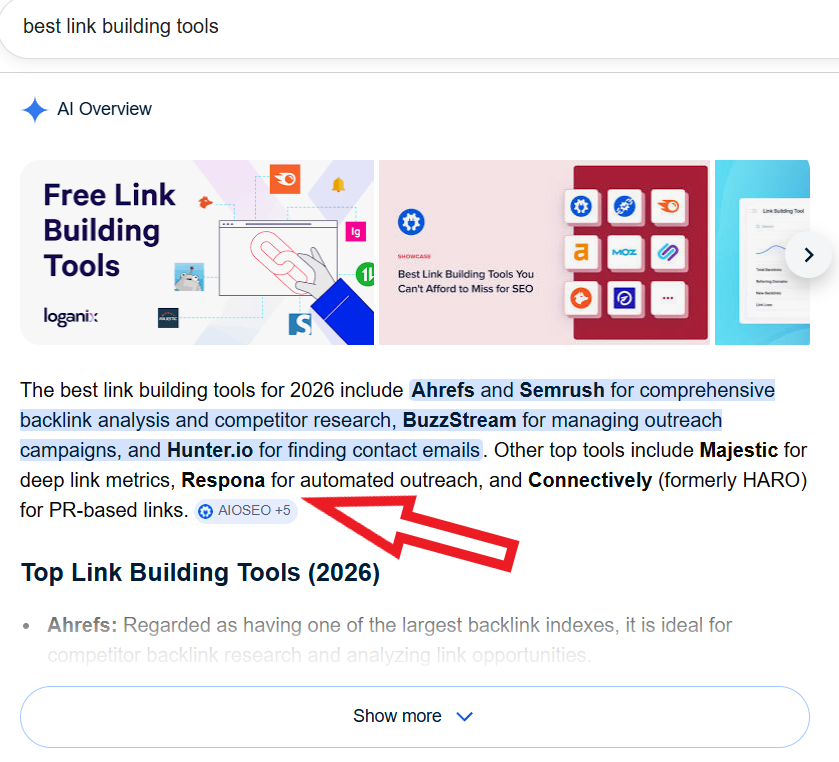
That’s the entire game in 2026. Not grey hat techniques. Not clever workarounds. Just consistent brand mentions on articles that people are actually reading.
For a small business with a limited team, the cleanest white hat methods break down into three buckets:
- High quality content on your own site that’s worth linking to. This is the foundation. No outreach effort overcomes a thin blog.
- Outreach to relevant publishers, asking to be included in listicles, roundups, and “best of” articles. The white hat seo technique most teams underuse.
- Local relationships and local seo work for businesses with a geographic component. Local chambers of commerce, regional industry publications, niche blogs in your area.
Layer in white hat seo techniques like internal linking, on-page optimization, and topical authority via clusters of related content, and you’ll grow organic traffic without ever needing to touch grey hat strategy.
Real outreach to real publishers is basically what we do at Respona day-to-day.
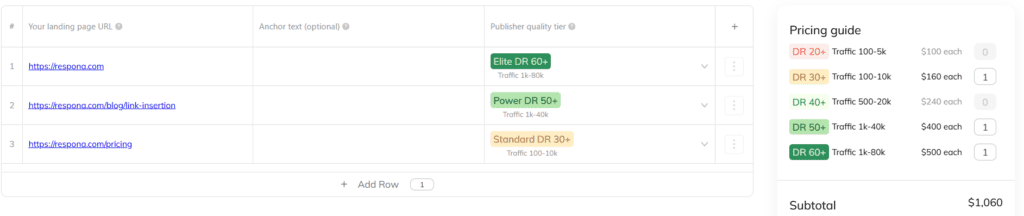
The platform finds listicle and roundup placements that rank in Google AND get cited by AI engines, you pick the ones you want, our team runs the outreach.
All you have to do is place an order for your target URLs along with your preferred anchor texts.
Optionally, if your goal is AI visibility, you can add AI prompts you want to show up in.
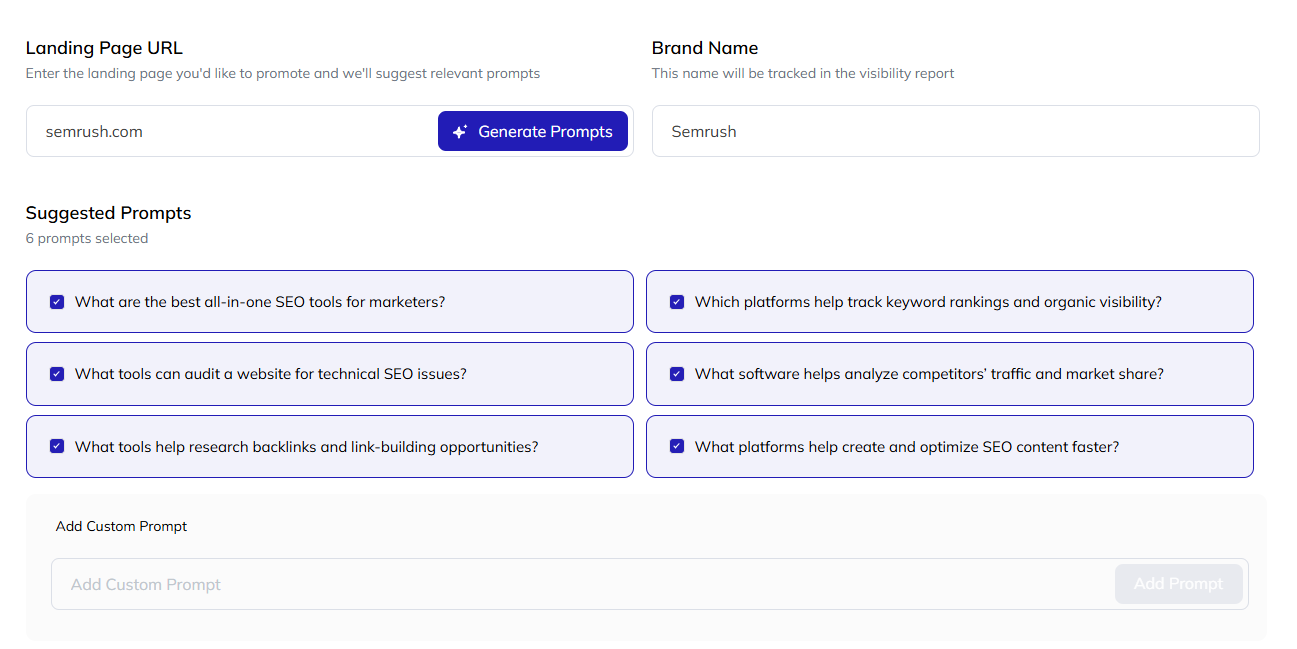
Then, based on that, the tool will generate an AI visibility report across the answer engines of your choosing:
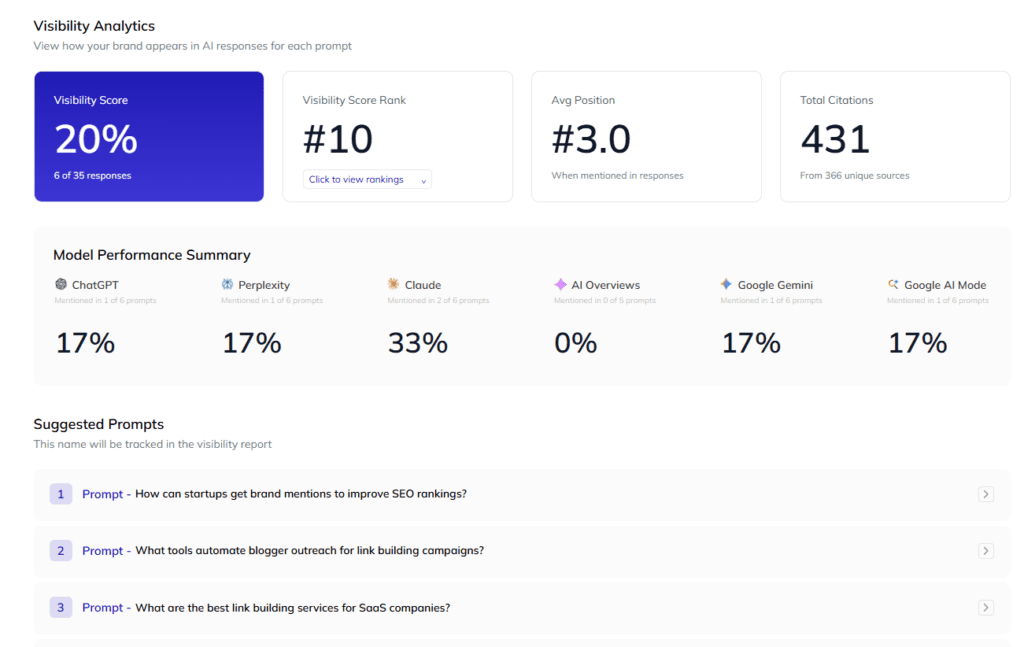
Not only will it track your current standings for the prompts of your choosing, it will also give you a link building action plan to improve your standings for these keywords/prompts based on other websites and articles currently ranking for your queries:
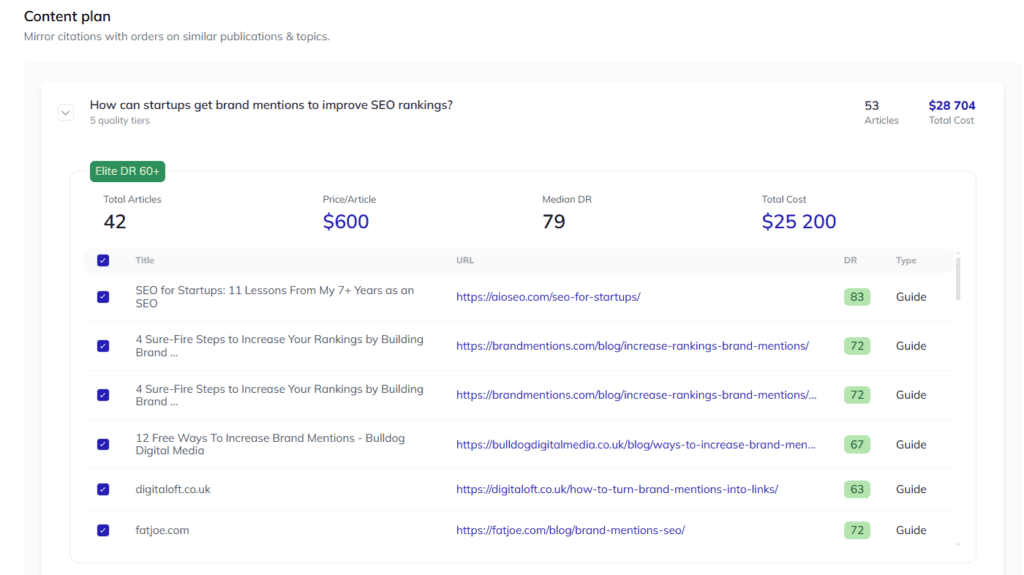
From there, our team will handle the hard part: actually landing these placements to help you rank higher.
No PBNs, no exchanges, no gray hat techniques.
Not the fastest path. But it’s the one that survives Google updates and keeps you ranking consistently.
Link building cheat sheet
Now Over to You
Grey hat SEO had its moment. That moment was a decade ago.
In 2026, the gap between white hat (the slow, compounding approach that keeps working) and black hat (the fast, fragile approach that gets you deindexed) has collapsed into something close to a hard line.
The tactics that used to live in the grey area between them are now mostly devalued, mostly penalized, or mostly pointless.
If you want results that hold up across Google updates AND inside AI search engines, the cleanest path is brand mentions on real publishers.
That’s what we built Respona to deliver: editorial placements through a done-for-you outreach service, with AI visibility tracking built in.
Place your first order to get started today.
Frequentl y Asked Questions (FAQ)
What’s the difference between grey hat, white hat, and black hat SEO?
White hat seo follows Google’s published guidelines exactly: real content, real outreach, real editorial value. Black hat seo openly breaks the rules: link farms, PBNs, automated content spam, cloaking, hidden text.
Grey hat sits between the two. It bends rules without explicitly breaking them, and the lines get redrawn every time Google updates its algorithm.
Can grey hat SEO hurt my website ranking?
Yes. The worst-case scenario is a manual penalty that drops your website ranking sharply. The more common scenario is quiet devaluation of specific links or pages, where you simply stop ranking for queries you used to rank for. You won’t get a notification. You’ll just see the traffic decline.
Are any grey hat tactics worth the risk?
For most businesses, no. Grey hat tactics deliver short-term gains followed by long-term cleanup costs.
The organic traffic you build through white hat work compounds. Grey hat work has a half-life. If you’ve ever inherited a site with a messy backlink profile from previous campaigns, you know how long the cleanup takes.
Does keyword stuffing still count as grey hat?
It depends on the degree. Light keyword inclusion in headings and meta descriptions is fine. Aggressive keyword cramming (the same term in every paragraph, alt text, and footer) crosses into spammy territory that Google’s content quality filters catch easily.
It’s one of the older grey hat seo techniques that just doesn’t work anymore. Either way, it doesn’t help readers, and readers are what Google is trying to model with each algorithm refresh.
Is paying for backlinks grey hat?
Paying for outreach work isn’t grey hat. Paying for the link itself is. The distinction matters: hiring an outreach team or done-for-you service to pitch publishers on your behalf is standard practice across the industry.
Buying placements directly from publishers (especially without disclosure) is what Google’s guidelines warn against. The grey hat seo technique line sits at the moment you start paying the publisher rather than the outreach.
What’s the safest white hat SEO approach for a new site?
Content first, outreach second. Build a small library of genuinely useful articles on your site (10-20 pieces minimum), then pitch them to publishers writing on related topics. The white hat seo techniques that work best for new sites are listicle outreach (asking to be added to “best of” articles),
HARO-style source listening (responding to journalist queries), and guest post pitches with clear value beyond the link itself.