
Writing an email isn’t always a walk in the park.
Even tougher is when it’s a business email that needs thorough thinking and the right structure that’ll make it look as professional as possible.
That’s exactly why we put the following guide together; to help you create an effective email through good examples and business email templates that you can take advantage of.
To be more specific, some of the email templates we’ll be looking at are content promotion email templates, collaboration email templates, influencer outreach email templates plus many more to get you inspired in order to create an efficient email outreach!
We’ve got lots to cover, so let’s get started.
Key Takeaways:
- Every effective email needs five core elements: subject line, opening line, email body, CTA, and sign-off. Get all five right and your reply rate improves dramatically.
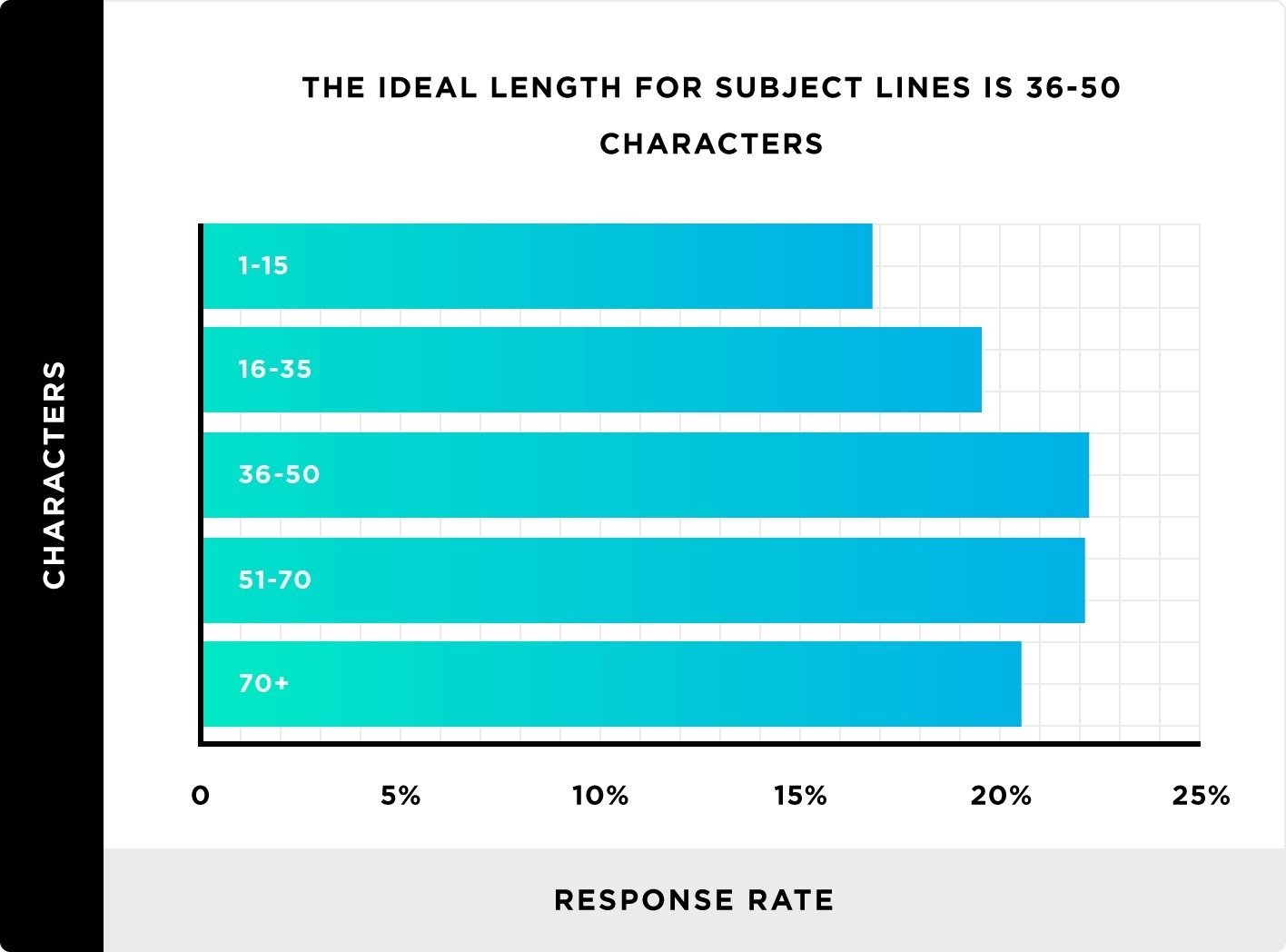
- Personalized subject lines get one-third more replies than generic ones, and the ideal length is 36-50 characters.
- The ideal body length is 50 to 125 words. Anything shorter feels thin, and anything longer risks being skimmed past or ignored entirely.
- A good email template removes the guesswork. The right business email templates work as starting points for any outreach email, follow up email, or onboarding email, then personalize each one for the recipient.
- Whether you’re running a small business sending your first round of cold emails or a marketing team scaling outreach, the right template paired with thoughtful personalization beats generic mass marketing emails every time.
- What are the Main Elements of a Business Email?
- Category #1: Business Development Email Templates
- Category #2: Collaboration Email Templates
- Category #3: Product/Service Promotion Email Templates
- Category #4: Content Promotion Email Templates
- Category #5: Cold Sales Email Templates
- Category #6: Influencer Outreach Email Templates
- Category #7: Meeting or Call Request Email Templates
- Category #8: Follow-Up Email Templates
- Now Over to You
- Frequently Asked Questions (FAQs)
Link building cheat sheet
What are the Main Elements of a Business Email?
When writing any type of email, you shouldn’t dive right into it, but rather create a nice structure that looks professional and makes sense.
After all, the right formatting is essential to any successful email outreach and there are many elements that contribute to it.
If you’re not sure which ones we’re referring to just yet, no need to worry!
We’ll cover everything in detail in the following guide; by the end of it, you’ll see that writing emails can be a hassle-free process.
Let’s get into it.
Element #1: Subject line
Did you know that the average number of business emails sent and received per user totals 122 emails per day?
That’s quite impressive, but it can also be somewhat overwhelming for someone receiving such a large amount of professional emails in their day.
That’s why they’ll be quite selective when it comes to which ones they open; one of the most important factors in that decision is the email’s subject line.
From cold email subject lines to follow-up emails, a captivating subject line can do wonders for your email’s open rate and should be a thoughtful process.
According to a Backlinko study, the ideal subject line is between 36-50 characters long.
Some other good practices include not using spammy words, avoiding all caps, and personalizing each subject line according to your recipient.
The same study actually found that personalized subject lines get one-third more replies than those without personalization.
Look at the following example to get an idea:
Subject: Rebecca, I love what you're doing with your podcast
It’s simple, engaging, and the name adds a great personalized touch!
Now, all you have to do is come up with a great format for the rest of your email.
Let’s continue to the next element.
Element #2: Opening line
You’ve gotten through the tough part of getting your email opened with a great subject line. Congratulations!
Now it’s time to continue your email writing with a catchy opening line.
Online communication doesn’t allow you to shake someone’s hand, but think of this element as something similar.
It always comes after your salutation, which can be something like “Dear Mr. Escott” or “Hey Rebecca”, depending on the situation and its level of formality.
You’ll then have to introduce yourself – if needed – and add the right information in the opening line that’ll explain the purpose of your email.
Subject: Rebecca, I love what you're doing with your podcast
Hey Rebecca,
Ivan here from Respona. I was listening to your podcast today about content marketing and was really impressed by your knowledge on the subject.
Keep it up!
The sample email above helps your recipient understand why you’re reaching out to them and talking about something specific – “I was listening to your podcast…” – creates a connection.
What’s more, by adding your name – “Ivan here…” – you personalize your email and are one step closer to building a relationship.
Pretty cool, right?
When it comes to opening lines, the elements that we just covered are vital but that doesn’t mean you can’t get creative.
Some people even use emojis and GIFs as a way to make their email fun and catchy.
Just make sure it’s appropriate to the situation and don’t go over the top with it, then you’ll be just fine.
Moving on.
Element #3: Email body
What you need to remember when creating your email body is that, chances are, your recipient will skim through it instead of reading it line-by-line.
This is especially true when talking about a lengthier email.
What can you do in order for your key points to not get lost in the text?
First of all, the length is an important aspect since, according to research, the ideal email copy length is 50 to 125 words.
You don’t want to make it too short, but neither too long which will make it overwhelming for someone to read.
A good tactic to make your email message more readable is to add bullet points to break up the text and highlight key pieces of information.
Subject: Rebecca, I love what you're doing with your podcast
Hey Rebecca,
Ivan here from Respona. I was listening to your podcast today about content marketing and was really impressed by your knowledge on the subject.
Keep it up!
What impressed me the most was the fact that you mentioned link building as an important aspect of your process.
I happen to work in that field and have some interesting ideas on the topic.
I was wondering whether you accept new guests for your podcast; I’d love to chat with you about:
– Link building
– Email outreach
– Backlinks
Plus, many more that I believe your audience will find interesting!
The most important thing to keep in mind is that you always need to be concise and to the point, without tiring your recipient with too much information.
That’s what makes a good email engaging.
Let’s see what comes after the body text.
Element #4: Call-to-action (CTA)
The whole purpose of an email is to lead to action, right?
Whether that’s to:
- Book a phone call
- Arrange a business meeting
- Request a testimonial
- Request a reply
Or anything else.
The way you can do that is by adding a call-to-action (CTA) before you sign off your email.
Some that you can use – depending on the occasion – are “let me know which day works best for you” or “watch my video in the link below”.
Subject: Rebecca, I love what you're doing with your podcast
Hey Rebecca,
Ivan here from Respona. I was listening to your podcast today about content marketing and was really impressed by your knowledge on the subject.
Keep it up!
What impressed me the most was the fact that you mentioned link building as an important aspect of your process.
I happen to work in that field and have some interesting ideas on the topic.
I was wondering whether you accept new guests for your podcast; I’d love to chat with you about:
– Link building
– Email outreach
– Backlinks
Plus, many more that I believe your audience will find interesting!
If you agree, I suggest we book a chat to discuss it.
Please have a look at my calendar and let me know which day works best for you: [calendar link]
Whatever your CTA, remember to be polite and not add more than one; too many options will confuse your recipient and make it less likely for them to take action.
Let’s move on to the last part of your email format.
Element #5: Email sign-off
Your email is almost ready to go!
All that’s left is ending it in a polite and professional manner.
It’s also the last thing your recipients will read, so keep in mind that the last impression they get will most likely stick with them the most.
First of all, you need to match the tone of the closing line to the person you’re reaching out to.
For formal emails, sign-offs like “Sincerely”, “Best regards”, and “Respectfully” are more appropriate, while for personal emails “All the best” and “Thanks” fit well.
After that, you’ll have to add your full name or simply your first name if you want to use a friendly tone.
Subject: Rebecca, I love what you're doing with your podcast
Hey Rebecca,
Ivan here from Respona. I was listening to your podcast today about content marketing and was really impressed by your knowledge on the subject.
Keep it up!
What impressed me the most was the fact that you mentioned link building as an important aspect of your process.
I happen to work in that field and have some interesting ideas on the topic.
I was wondering whether you accept new guests for your podcast; I’d love to chat with you about:
– Link building
– Email outreach
– Backlinks
Plus, many more that I believe your audience will find interesting!
If you agree, I suggest we book a chat to discuss it.
Please have a look at my calendar and let me know which day works best for you: [calendar link]
Best regards,
Ivan
There you have it! Your email is ready.
After you double-check and proofread it, the only thing missing before hitting Send is a good-looking email signature with your contact information, but that’s entirely up to you.
What’s important to remember is the basic format of an email and ways you can make the content more engaging.
To make things more clear, let’s have a look at some email templates we made so that you’re prepared for every occasion.
Category #1: Business Development Email Templates
The first category we’ll show you is business development email templates.
These kinds of emails are great for business development employees, marketers, and entrepreneurs to reach out to companies they want to help grow through the products and services they offer.
They’re essentially like cold sales emails that highlight a value proposition, but try not to make them too “sales-y” as there’s the risk of your email going to the spam folder.
You can use the following templates to get you started.
Author’s Tip: In our templates, you’ll see {text in braces} which is information that can be auto-filled by Respona, and [text in brackets] which you’ll need to personalize yourself.
Template #1: The “Let’s grow your company” one
This is the first template we recommend for business development purposes.
If it’s your first time contacting a person, make sure you let them know who you are and what you have to offer, as well as why they should use it.
Author’s Tip: Remember that the first thing you want to achieve is to establish a connection and start building a potential relationship.
Subject: Subject
Hey {Name},
Hope you’re having a good and productive {day of the week}!
My name is [your name] and I’m a business development associate here at [company].
You know, the title of business development associate is just a more fabulous way to say “I’m helping companies grow!”
Having said that, my team and I just launched a new [tool/service] that helps companies [describe your value proposition in short].
I’m wondering, how are you dealing with [pain point] so far?
I look forward to hearing from you and working together!
All the best,
[Your name]
Template #2: The “I give you free value” one
An alternative way to say “use my new product” is finding an actual problem your prospect has, pinpointing it to them, and letting them know that you can fix it.
That way you provide free value to them because, even if they don’t use your product, you’ve still provided valuable information which they’ll appreciate.
Sounds good, right?
Subject: Subject
Hey {Name},
Hope you’re having a productive {day of week}!
I was going through some reviews about [prospect’s company] and identified a few pain points you guys seem to be facing lately.
More specifically, [talk about a specific pain point in brief].
To be honest, my team and I think that we can help you overcome some of these.
On that note, we’ve often helped companies in your niche grow. To mention a few:
- [X Company name – solution]
- [Y Company name – solution]
- [Z Company name – solution]
Let me know if we can set up a call to chat further.
I look forward to hearing back from you!
All the best,
[Your name]
Template #3: The “Small business introduction” one
This email template is a targeted approach when reaching out to a small business prospect who’d benefit from your product or service. This template works especially well when you can reference something specific about their business and lead with immediate value rather than a generic pitch.
Subject: Quick idea for {business name}
Hey {Name},
[Your name] here, founder of [Company]. I’ve been running a small business myself for a while, so I know how packed your inbox already is. I’ll keep this short.
I noticed [specific thing about their business] and thought you might find our [tool/service] useful. We built it specifically for small business teams that need [pain point] without enterprise-level overhead.
A quick rundown:
- [Benefit 1]
- [Benefit 2]
- [Benefit 3]
Worth a 10-minute chat next week?
Cheers, [Your name]
Template #4: The “Marketing leader intro” one
A solid email template for opening conversations with marketing leaders who might be evaluating new partners. This template positions you as a strategic thinker rather than a vendor, which usually earns more replies.
Subject: Question about {Company}'s approach
Hi {Name},
[Your name] here from [Your company]. I’ve been following how {Company} approaches [specific marketing channel] and I’m impressed by [specific observation].
I work with marketing teams at companies like [Client 1] and [Client 2] on their marketing strategy, specifically helping them [outcome]. A few patterns I’ve noticed in your category:
- [Insight 1]
- [Insight 2]
- [Insight 3]
If any of that resonates with where {Company} is right now, I’d love to compare notes for 15 minutes.
Best,
[Your name]
Template #5: The “New connection welcome” one
A quick intro for someone who just connected with you on LinkedIn, signed up for your newsletter, or attended your webinar. The goal is professional communication that builds rapport without pitching anything.
Subject: Welcome, {Name}, glad you're here
Hey {Name},
[Your name] here. Thanks for [signing up / connecting / attending].
Quick context: I run [Company] and we focus on [what you do]. Most of what I share is around [topic 1] and [topic 2].
A few resources you might find useful right away:
- [Resource 1]
- [Resource 2]
- [Resource 3]
If you ever want to talk shop about [topic], my calendar is always open. No pitch, just curious about what you’re working on.
Welcome aboard,
[Your name]
Category #2: Collaboration Email Templates
Collaboration emails are widely used by various types of professionals, such as marketers and content creators.
What you’ll have to keep in mind here is that the collaboration should be a win-win situation.
Remember to make your points clear and include any additional information needed for your recipient to have a better understanding of what you propose.
Let’s see some email samples.
Template #6: The “Let’s work together” one
Finding the right person to propose a collaboration to isn’t easy, so when you do you should state in detail what you have to offer and what the other side will gain from this.
Another good tactic is to prove with numbers and facts what you’ve achieved in order to create social proof and be seen as an authority figure in the other person’s eyes.
Subject: Subject
Hey {Name},
[Your name] here.
I’ve been a blogger for over [years] now and have created a website that gets over [visits] visits on a monthly basis.
With my blogging activity, I’m helping brands like [A], [B], and [C] sell more products online.
I’ve checked you out on [social media] and really like your products.
Would you be interested in discussing a collaboration between us?
If yes, here’s the process I usually follow:
- You send me a few samples of your products
- I try them and see what I like most about them
- We decide – together! – on the way we’re going to use to promote them – e.g. Instagram giveaways, paid partnerships
Looking forward to hearing back from you!
Thanks,
[Your name]
Template #7: The “Review my product” one
Creators don’t necessarily have to reach out to companies to promote their products; it actually works both ways.
If you have a product and want to find bloggers to review it, here’s a template you can use in order to increase the chances of getting a reply.
Subject: Subject
Hey {Name},
Hope you’re having a good and productive {day of the week}!
I wanted to reach out because I was watching some review videos on YouTube about [company/product] and I ended up coming across yours: {video url}.
Honestly, I keep thinking about how engaging and detailed your video review was.
I really enjoyed your deep dive into the special features and benefits of using [company/product].
Our team just released a new [your niche product] called [product name] which [explain what your product/tool does].
Since you’re obviously familiar with [niche], I’d love to set you up with a premium account in return for a detailed and honest video review.
No strings attached!
Let me know if you’re interested and I’ll send over some additional info.
Thanks,
[Your name]
Template #8: The “Content partnership” one
This is a good one.
Proposing a content partnership should always be a win-win situation for both sides; creators get extra content and even a monetary reward, and companies gain awareness.
However, the advantages all sides get should be clearly stated; they’re what will make or break a deal.
Have a look below.
Subject: Subject
Hey {Name},
Happy {day of week}!
Just finished reading through your post, {url}, and I found your list of tools to be spot on!
Actually, I shared it with my team over here at [company] to see if they think any of them could help us out.
I wanted to share a little more about what we do to see if we could find a way to work together :-)
[Two to three sentences describing your company and what you do]
Would you be interested in a collaboration between us? I think our audiences could really benefit from us working together.
Let me know what you think.
Regardless, I love your content. Keep it up!
Thanks,
[Your name]
Template #9: The “Podcast guest swap” one
A clean way to propose a podcast collaboration where both sides appear on each other’s shows. Works well when both podcasts target similar audiences but cover different angles.
Subject: Podcast swap idea, {Name}?
Hey {Name},
Loved your recent episode with [Guest] on [topic]. The point about [specific takeaway] stuck with me.
Quick idea: I host [Your podcast], where we talk about [topic]. Most of our episodes get [traffic/download numbers], with an audience of [audience description].
What if we did a podcast swap? You come on mine, I come on yours. Both audiences get exposure to a new voice, and we both walk away with a piece of content we can promote.
Worth exploring?
Thanks,
[Your name]
Template #10: The “Joint webinar” one
A win-win collaboration template for proposing a joint webinar with another brand. Especially useful when your audiences overlap but don’t fully duplicate each other.
Subject: Joint webinar idea for {Company} + {Your company}
Hey {Name},
[Your name] here from [Your company]. I’ve been following {Company}’s content for a while and our audiences seem to have a lot of overlap, especially around [shared topic].
I wanted to float a joint webinar idea: “[Proposed title]”. The format would be a 30-minute conversation between you and me on [angle], followed by audience Q&A.
What’s in it for both sides:
- Cross-promotion to both email lists
- A piece of content we can both repurpose
- Real-time engagement with each other’s audiences
Open to it? Happy to do the heavy lifting on logistics if you’re in.
Thanks, [Your name]
Template #11: The “Data study collaboration” one
A high-value collaboration pitch built around co-producing original research. Data studies generate links, PR coverage, and authority for both partners.
Subject: Co-producing a data study on {topic}
Hey {Name},
I’ve been a fan of how {Company} approaches [topic] for a while. Your last piece on [specific article] was the clearest take I’ve read on it.
I’m putting together a data study on [topic] and the dataset I have access to would pair well with the angle {Company} usually takes. The idea: we co-publish the findings, both promote it, and split inbound interest.
The deliverables would include a primary article, a downloadable PDF, and a press-ready summary. I’m happy to handle the analysis and writing if you’re open to co-branding it and sharing it through your channels.
Worth a quick call?
Best, [Your name]
Category #3: Product/Service Promotion Email Templates
Promotional emails are an integral part of most email marketing campaigns; they’re an effective way of reaching out to potential customers.
When creating your own, remember to elaborate on who you are, what you have to offer, as well as why you’re different compared to other players in the industry.
Last but not least, don’t forget about adding a CTA to help you land more deals!
Here are a few templates to get inspired.
Template #12: The “Have a look at my product” one
This is a good example of what you can craft when reaching out to prospects for lead generation.
Remember to use short paragraphs to make your email easy to read and always state your USP, or unique selling point.
After all, why would someone buy your product if they don’t gain something special from it?
Subject: Subject
Hi {Name},
Happy {day of week}!
I was looking to connect with fellow [people from your industry] to start the quarter, so I thought I’d reach out.
My team and I just launched [briefly describe your product/service] and wanted to run it by you.
Think [competitors], but with [unique differentiating feature]. Actually, we just brought on [one or two notable companies] recently. Would love for you to take a look and get your thoughts and comments, too!
Let me know if you’d like me to send through some more info!
Thanks,
[Your name]
Template #13: The “product/service review” one
A great way to promote your product or service is by sending a free sample to people who create content relevant to what you do.
That way, you can ask them to review it for their audience in exchange for a reward, a shoutout, or the free samples themselves.
If it’s your first email to a particular person, always state who you are in the opening sentence and compliment them on their work.
Knowing that their work is appreciated is a great way to build a professional relationship.
Look at the following template:
Subject: Subject
Hey {Name},
How have you been?
It’s [Your name] here with [company].
Just wanted to say that we absolutely love your teardowns and review posts here at [company].
I particularly liked the one you did for [Name of reviewed company].
To cut a long story short, I’m the [osition] of the company and I’d be thrilled if you could put together a review of [product/products/services to be reviewed].
We can [describe the process of how you will provide the products for the review].
Let me know what you think and we can work something out!
Many thanks,
[Your name]
P.S. I hope you won’t have too many bad things to say about our product! :)
Template #14: The “Product launch announcement” one
A launch announcement email aimed at existing prospects or warm leads. The key is leading with the customer outcome rather than the product feature list.
Subject: We just launched {product}
Hey {Name},
Big news from our side. We just launched [product], built specifically for teams that need [primary outcome] without [common pain point].
Here’s the short version of what it does:
- [Capability 1]
- [Capability 2]
- [Capability 3]
We had [Client/beta tester] running it for the past few months. Their feedback: [brief testimonial or stat].
If [outcome] is on your roadmap this quarter, [product] might be worth a quick look. Here’s a walkthrough demo: [link]
Reply if you want a personalized walkthrough.
Cheers, [Your name]
Template #15: The “Sale or discount” one
A clean promotional email for a time-bound discount or promotion. The structure works for product sales, service discounts, or limited-time offers.
Subject: {Name}, X% off through {date}
Hey {Name},
Quick heads up. We’re running [X]% off on [product] through [end date].
If you’ve been on the fence, this is the cleanest window to try it. Here’s what changes at the discounted rate:
- [Plan/tier 1]: was $X, now $Y
- [Plan/tier 2]: was $X, now $Y
No fine print, no upsell at the end. Same product, lower price, for this window only.
If you want to lock it in: [link]
Thanks, [Your name]
Template #16: The “Customer service check-in” one
A support touchpoint email that doubles as a relationship-builder with each long-term client. The goal is to keep the door open rather than upsell.
Subject: Quick check-in from {Your company}
Hey {Name},
[Your name] here from [Your company]’s customer service team. You’ve been using [product] for [time period] now, and I wanted to check in personally.
Two quick questions:
- What’s working well so far?
- What’s one thing that’s annoying you that we should fix?
I read every reply and pass feedback directly to our product team. You’ll usually see action on it within a few weeks.
If everything’s working great, no need to reply. If something’s off, I’d rather hear about it.
Thanks for being a loyal customer, [Your name]
Category #4: Content Promotion Email Templates
This category contains emails about reaching out to people in an effort to promote your own content through their work.
There’s no strict content format since blog posts, videos, podcasts, and anything else can work.
However, presenting your email in a well-written manner is key.
Let’s see how you can do that.
Template #17: The “Let me create an infographic for you” one
This first template is about contacting bloggers and asking them whether you can contribute to their content.
Not writing it, since it’s already published, but creating a nice visual – in our case an infographic – so they can add it in their article.
They gain a high-quality piece of multimedia that improves their content and you can brand your infographic in order to raise some awareness through it.
Not bad, right?
Subject: Subject
Hey {Name},
It’s [Name] here with [your company name].
How are things over in [city]?
I’m writing to tell you that I’ve just finished reading your [topic] article – it was awesome!
I already shared it with our team here at [your company name]. We’ve taken on an assignment to find our favorite blog posts and create visuals to better inform the audience.
On that note, I wanted to have our fabulous design team create a custom infographic for this article, on the house.
I’m attaching samples of a couple of infographics we’ve done for other blog posts in the past.
Let me know if you’re interested in seeing some more of our work!
Thanks,
[Name]
Template #18: The “Let me provide you with a source” one
Do you want more people to visit your page?
Why not reach out to bloggers creating content in your area of expertise and provide them with free resources you made?
It could be another blog post or a video.
That way, you get more traffic and they elevate their content by adding a trustworthy source their readers might find useful.
Subject: Subject
Hey {Name},
Hope you’re having a great, productive week!
It’s [Name] here with [Company].
I’m writing to tell you that I’ve just finished reading your post on [topic] and loved the way you talked about [insert article summary].
However, I noticed that your post doesn’t present [a step-by-step process on topic description].
Having that said, we happen to have a nice and detailed [type of resource] on [topic].
It seems like it’s your lucky day!
You can have a look at the [type of resource]:
[link to your resource]
Would love to hear your thoughts!
Thanks,
[Name]
Let’s move on to the next category.
Template #19: The “Broken link replacement” one
A practical content promotion approach that helps the recipient (by flagging a broken link on their site) while creating an opportunity to replace it with your content.
Subject: Heads up about a broken link on URL
Hey {Name},
[Your name] here from [Company]. I was reading your article on [topic] and noticed one of the external links is broken: [broken URL].
Not a big deal, but I figured you’d want to know.
While I was there, I noticed we have a piece on [related topic] that covers a similar angle and might work as a replacement: [your URL].
Either way, just wanted to flag the broken link. Always happy to return the favor if you spot anything off on our side.
Thanks, [Your name]
Template #20: The “Newsletter feature pitch” one
An email campaign template designed for pitching your content to be featured in someone else’s newsletter. Works well when you already have a relationship or shared connection.
Subject: Newsletter feature idea for {Name}
Hey {Name},
I’ve been a subscriber to your newsletter for [time] now and I love how you curate [topic].
I just published [content piece title] and the angle feels like a fit for your audience. The short pitch:
- [Hook 1]
- [Hook 2]
- [Hook 3]
Read time: [X minutes]. Here’s the link: [URL]
If it’s a fit for an upcoming issue, I’d be honored. If not, no worries. Either way, thanks for the work you put into the newsletter every week.
Thanks, [Your name]
Template #21: The “Case study contribution” one
A content promotion approach where you offer to contribute case study data or insights to an article the recipient is working on. Low effort for them, high authority gain for you.
Subject: Case study data for your {topic} piece
Hey {Name},
Saw you’re working on [article topic] (caught it on [source]). Excited to see how it shapes up.
A brief description of what we’ve been seeing on our side: we recently ran [campaign/study/experiment] and the results were [specific data point or finding].
If any of that would be useful as a quoted source or case study in your piece, I’d be happy to share the full data and a few takeaways. No spin, no link required. Just thought it might add some flavor to the article.
Let me know either way.
Thanks, [Your name]
Category #5: Cold Sales Email Templates
There’s not much to say about this category.
Cold sales emails have been around for a long time and people are constantly finding ways to make them more efficient.
Since it’s a business email, you want to keep it professional, but it doesn’t hurt to add a friendly tone.
Let’s have a look at a couple of templates.
Template #22: The “Look at who my clients are” one
Adding social proof in any type of email is important; let alone when you’re trying to close a deal.
That’s why, in the following template, we’ve added the chance for you to mention which clients you already have.
This will potentially make your prospect consider your services after seeing which companies trust you already.
Subject: Subject
Hey {Name},
How’s your {day of week} going?
My name is [Name] and I’m the [position] here at [Company].
I came across a case study by [Competitor company] and learned that you’re using the [competitive tool] to [mention benefit or reason of using it].
Wanted to reach out to share with you how we’re doing things here at [Company].
In one sentence, we’re helping companies do [pain points your company is helping to solve] and that’s why we’ve created the [name of your tool].
I think you’ll be excited to know that some of our clients are:
- [Client 1]
- [Client 2]
- [Client 3]
If you’d like to explore how our [name of tool/service] can particularly help you guys, let me know and I can send some more info over.
I look forward to hearing back from you :)
Cheers,
[Your name]
Template #23: The “Let’s jump on a call” one
“Let’s jump on a call”.
How many times have you heard that?
It’s one of the most widely used CTA’s and the reason is simple… It’s effective!
After creating a connection with your prospect and providing them with something valuable – such as content pieces they might find helpful – you can go ahead and explain the reason you’re reaching out.
You don’t have to go into too much detail, since you’ll – hopefully – be able to talk more on your call.
Subject: Subject
Hey {Name},
How have you been?
I saw that you recently reacted to one of my LinkedIn posts about [topic].
From what I can see, you’re interested in [topic], so I wanted to reach out and share some additional resources you might find helpful:
- [Blog post 1]
- [Blog post 2]
- [Blog post 3]
On top of these resources, I’d like you to know that our company also offers [talk about your product/service] which could help you with [issue/pain point].
Would you like to jump on a call and discuss further?
Cheers,
[Name]
Template #24: The “Pain point research” one
A cold outreach email built around a single, specific pain point you’ve identified through research. The trick is to make the recipient feel seen rather than sold to.
Subject: Question about {specific pain point}
Hey {Name},
I noticed {Company} recently [specific signal: hired for X role, launched Y, posted Z on LinkedIn]. Usually when companies do that, they’re working through [pain point].
If that’s roughly accurate, we help companies in that exact moment by [solution]. A potential client recently told us [brief testimonial or outcome].
If you’re curious whether it’s worth a 15-minute conversation, just reply and I’ll send a few specifics. If not, no problem, I’ll go find something else to do.
Thanks, [Your name]
Template #25: The “Competitor comparison” one
An outreach email that opens with a direct competitor comparison. Risky but effective when the recipient is clearly evaluating options or has expressed dissatisfaction with their current tool.
Subject: {Name}, alternative to {Competitor}?
Hi {Name},
Saw that {Company} uses [Competitor] for [function]. Solid tool, but I’ve heard from a few customers who’ve made the switch that [specific limitation of competitor].
We built [product] for that exact gap. Three things we do differently:
- [Difference 1]
- [Difference 2]
- [Difference 3]
If [Competitor] is working great, ignore this. If you’ve been quietly frustrated, here’s a quick rundown of what migration looks like: [link/document]
Happy to send a side-by-side comparison if useful.
Thanks, [Your name]
Template #26: The “Demo invitation with a hook” one
A cold sales template that ends with a demo CTA but leads with curiosity rather than a pitch. Especially effective for product launches or new features.
Subject: 2-minute demo of how {company type} handles {problem}
Hey {Name},
Quick question. How does {Company} currently handle [specific workflow or problem]?
I ask because we just shipped a feature in [product] that compresses that whole process from [time] to [time], and I’m trying to see if it’s actually useful in real workflows.
If you’ve got 15 minutes this week, I’d love to walk you through it and get your honest read. No pitch, no slides. Just a working demo and a conversation.
If 15 minutes is too much: here’s a 2-minute video that covers the basics. [link]
Either way, would love your take.
Thanks, [Your name]
Category #6: Influencer Outreach Email Templates
If you’re into influencer marketing, you’ll know that finding the right influencers is no easy task.
Once you’ve done it, you need to send them an awesome personalized message proposing a collaboration.
Here are two good templates to get you started.
Template #27: The “I’ve been following you” one
As weird as the title of this template may sound, it’s actually great for getting influencers to work with you.
After introducing yourself, you basically let them know that you’ve been a follower or fan of their content and that you believe they can promote your product to their audience.
Let’s have a look.
Subject: Subject
Hey {Name},
Happy {day of week}!
[Your name] here with [Your organization].
I’ve been following you on [social media, blog, channel] for quite some time now and I really admire how you [reference to their content]!
I wanted to reach out to tell you that my team and I would love to have the opportunity to work with you.
To give you a bit of context, our company [explain some of your activities and say why you think it would be interesting to the influencer’s audience].
Give it some thought and let me know if you’d be interested in something like this.
Have a great day,
[Name]
Template #28: The “We’ve been looking for people like you” one
Another similar way to reach out to influencers is pointing out that you’ve been looking for content creators like them.
By saying that, it shows that you’ve done your research and are confident that they’re suitable to work with you.
Subject: Subject
Hey there {Name},
How are things going over in [City]?
It’s [Name] here with [Company name].
We are [description] and [describe what you do].
The reason why I’m reaching out is to tell you that we’ve been following your work for a while now and we’ve been loving your content in relation to [topic of interest].
Really liked what you posted recently on your [social media platform] about [topic].
We’re looking for people like you to partner up and help us spread the word about [Company name].
Is that something you’d be interested in?
Let me know how that sounds and we can jump on a call to discuss things further.
Thanks,
[Your name]
Template #29: The “First-time gift” one
This email template opens with a no-strings-attached free product. Reduces the perceived risk for the influencer and builds goodwill before any ask.
Subject: Sending you {product}, no strings
Hey {Name},
[Your name] here from [Your company]. Big fan of what you do on [platform], especially [specific piece of content].
We make [product] for people who [audience description] and I think you’d genuinely enjoy it. I’d love to send one your way, no review requirement, no obligation. Just want it in your hands.
If you end up loving it and decide to mention it, awesome. If not, no problem. The product is yours either way.
What’s the best shipping address? I’ll send it out this week.
Thanks, [Your name]
Template #30: The “Ambassador program” one
A longer-term influencer pitch built around an ongoing partnership rather than a one-off post. Works best with creators whose audience overlaps strongly with your customer base.
Subject: Ambassador program for {Name}?
Hey {Name},
I’ve been a quiet follower of your work for a while now. Your content on [topic] is consistently among the best in the category.
I’m reaching out because we’re putting together an ambassador program for [Your company] and you’re at the top of my shortlist. Here’s the rough structure:
- Quarterly product credits + base monthly retainer
- Creative freedom on how you feature [product]
- Co-marketing opportunities (newsletter features, podcast appearances)
- First access to new products and features
Long-term, not transactional. We’re looking for two or three people, not twenty.
Curious? Happy to share the full brief.
Thanks, [Your name]
Template #31: The “Social mention thank-you” one
A relationship-builder for influencers who’ve already mentioned you organically. The goal is to convert an unprompted mention into a longer relationship without pitching anything immediately.
Subject: Thanks for the mention, {Name}
Hey {Name},
Saw you mentioned [Your company] in [post/video]. Genuinely appreciated, and the framing was spot-on.
I run [Your role] over here and I wanted to reach out directly to say thanks. We don’t pay for mentions, so when one happens organically, it’s a big deal for us.
If there’s ever a story, feature request, or product question you want to dig into for your audience, my inbox is open. I can usually get you on a call with [relevant person] within a few days.
Thanks again, [Your name]
Category #7: Meeting or Call Request Email Templates
Scheduling calls and meetings are an integral part of everyday work life.
Whether you’re requesting a quick video call or an in-person meeting to establish a relationship, you need to be able to structure your proposal nicely in an email.
After all, what you’re essentially asking is for the other person to invest time in you.
Let’s see how you can do this through a couple of great email templates.
Template #32: The “Let’s meet up” one
Getting someone you don’t know to meet you in person won’t always be easy.
Besides introducing yourself, you’ll have to talk about how you found out about them and potentially what the outcome of your meeting will be.
Subject: Subject
Hey {Name},
It’s [Your name] here – I’m the [position/role] here at [Company name].
I’ve been following your work ever since I started working at [Company].
When [Name of mutual connection] told me that you two know each other, I was thrilled and immediately asked for your contact.
It’s amazing to see how you’ve been approaching all the changes and obstacles in [industry] for all these years now.
I’d love to meet you in person and have a conversation with you.
Let me know what you think and we can find a date to suit us both.
Looking forward to hearing back :-)
Cheers,
[Name]
Template #33: The “Let’s have a quick call” one
Especially since the pandemic began, video calls and meetings have been an everyday thing and they’re here to stay.
Therefore, using an email template to reach out to someone so you can jump on a call together should be very helpful.
Have a look at the following example.
Subject: Subject
Hey {Name},
How have you been?
It’s [Name] here – I’m the [position/role] here at [Company name].
Just wanted to say congrats on your recent achievement [mention achievement].
I know that this must mean a lot to you as the [position/role] of the company and all the hard work you’ve put into [project].
I’d love to have a chat and discuss your future plans at [Company]. Would you be interested in having a quick call?
Let me know and let’s try to find a date that works for both of us.
Regardless, I’m really looking forward to seeing you achieving more things moving forward!
All the best,
[Name]
Template #34: The “Quarterly review check-in” one
A meeting request email template for ongoing client relationships that need a regular touchpoint. Frames the meeting as mutually beneficial rather than vendor-led.
Subject: Quarterly check-in, {Name}?
Hey {Name},
We’re approaching the end of Q[X] and I’d love to set up a quick 30-minute call to review what’s working and what’s not on our side.
Specifically, I’d like to walk through:
- Results so far against the goals we set in [previous quarter]
- A few patterns I’m seeing in the data that might shape next quarter
- Any open questions or concerns from your end
If this week works, here’s my calendar: [link]. If not, name a time and I’ll make it work.
Thanks, [Your name]
Template #35: The “Conference meet-up” one
A meeting request for an in-person catch-up at a specific event. Works best when you can name the conference and a specific reason worth meeting.
Subject: Coffee at {Conference name}?
Hey {Name},
Saw you’re going to be at [Conference name] next month. So am I.
Would you have 20 minutes for coffee? I’d love to compare notes on [specific topic relevant to both of you] and hear how {Company} is approaching [related angle].
I’m there [days], and I can work around your schedule.
If a coffee doesn’t work, even a 5-minute “hello” in passing would be great. I’ll be in the [specific area] most of [day].
Cheers, [Your name]
Template #36: The “Expertise request” one
A call request that frames the recipient as the expert and asks for their input. Strong reply rates because it appeals to ego in a respectful way.
Subject: Picking your brain on {specific topic}?
Hey {Name},
I’ve been reading your work on [topic] for a while and a few specific points have stuck with me, especially [specific takeaway].
I’m working through a similar challenge at [Your company] right now and I’d love to pick your brain for 20 minutes. Not a sales call, not a partnership pitch. Just questions from someone trying to figure out [problem].
If you’re open to it, here’s my calendar: [link]. If you’d rather do it over email, I can send the questions in a list.
Either way, thanks for the work you put out there. It’s helped more than you probably realize.
Best, [Your name]
Category #8: Follow-Up Email Templates
Have you ever spent a lot of time writing an email without getting a reply?
Don’t worry, it happens to all of us.
That’s why sending reminder emails is a thing; you get to follow up on people who didn’t respond to you.
Actually, according to research, your first follow-up email has about a 40% higher response rate than your first email.
Impressive, right?
Let’s have a look at some templates you can use for this matter.
Template #37: The “Suggest an alternative” one
The first template is about letting your recipients know that they can feel free to suggest any alternative approaches or suggestions to your email.
This is a great way to follow up on them without feeling like you’re bothering or spamming them.
Have a look at the following template to get an idea.
Subject: Subject
Hey {Name},
Hope you’re doing well!
Not too long ago, I sent in a query with a couple of [types of content] that would be a great fit for your [website/blog].
As I’ve already mentioned, I have all my sources lined up for interviews.
If you’d like to suggest alternative approaches to the topic, please let me know and I’ll gladly share some additional ideas with you.
If you want to schedule a quick chat to kick around ideas, here’s my calendar, just schedule at your convenience!
[URL]
Thanks,
[Name]
Template #38: The “Guest post follow-up” one
Guest posts are an awesome way to build your online presence as a writer, as well as gain some valuable backlinks for your own website.
So, if you did some guest post pitching but never got a reply back, here’s a template that might be useful.
Subject: Subject
Hey {Name},
Hope you’re having a great and productive week!
This is just a quick follow-up on the email I sent last week.
My team and I have put together a list of topics that are missing from your [Company name] blog.
You can find it in the link below:
[link to sample list]
We’re convinced that covering these topics will help [Name of prospect’s company] expand its target audience.
To cut a long story short, we’d love to guest post for your awesome blog!
Can’t wait to hear back from you!
Thanks,
[Name]
Template #39: The “Collaboration follow-up” one
While not getting a response for suggesting a collaboration you’ve been excited about can be quite disappointing, you shouldn’t give up.
There are many great follow-up emails you can use in order to get a reply and – hopefully – seal the collaboration.
Let’s have a look at one of them.
Subject: Subject
Hey {Name},
Happy {day of week}!
I understand that you must be very busy at the moment so thought I’d send you a quick follow-up to remind you how much I could do for you guys at [Prospect’s company name].
I heard about [Prospect’s company name] from [source], checked you out on [social media], and can’t stop thinking how much I love your products and how working together could help us both expand our audiences.
If you’d like to learn more, please book a call on my calendar for this week:
[URL]
Looking forward to talking to you!
Thanks,
[Name]
Template #40: The “Abandoned cart recovery” one
An abandoned cart email aimed at potential customers who almost completed a purchase. Keep the tone helpful rather than pushy. A cart email recovers more revenue when it reads like a friendly nudge.
Subject: Forgot something, {Name}?
Hey {Name},
Noticed you were looking at [product] earlier but didn’t finish checking out.
No pressure, but in case something specific stopped you, here are the most common questions we get from new buyers:
- [Common question 1] – [Brief answer]
- [Common question 2] – [Brief answer]
- [Common question 3] – [Brief answer]
If price was the issue, here’s [X]% off if you complete the purchase in the next 48 hours: [coupon code]
Either way, your cart is saved if you want to come back later: [link]
Thanks, [Your name]
Template #41: The “Overdue invoice nudge” one
A payment reminder template for overdue invoices that maintains the professional relationship. The tone matters here. Friendly but clear beats apologetic or aggressive.
Subject: Friendly nudge about invoice {number}, {Name}
Hey {Name},
Just a quick payment reminder. Invoice [number] for [amount] was due on [date] and I haven’t seen it come through yet.
Probably just slipped through the cracks. Here’s the invoice again for reference: [link]
Two quick ways to pay:
- [Method 1]
- [Method 2]
If there’s anything holding it up on your end (approval process, missing detail, anything), just reply and let me know. Happy to work with you on timing if needed.
Thanks, [Your name]
Template #42: The “Long-term re-engagement” one
A follow-up email template for prospects who went cold months ago. The goal is to revive the conversation without referencing the silence in an awkward way.
Subject: Quick update from {Your company}
Hey {Name},
We last spoke a few months back about [topic]. I’m not sure where things landed on your side, so I figured I’d send a quick update.
A few things have changed since we talked:
- [Update 1: new feature, new pricing, new case study]
- [Update 2]
- [Update 3]
If any of that changes the picture for {Company}, happy to pick up where we left off. If timing still isn’t right, just let me know and I’ll stop reaching out.
Either way, hope things are going well on your end.
Thanks, [Your name]
Link building cheat sheet
Now Over to You
There you have it.
Our full list of business email templates and examples is ready for you to use.
We hope that by now you’ve got a better understanding of how to structure a good email, as well as which template you can use on each occasion.
They’re bound to help with everything from cold outreach to follow-ups, product launches, and partnerships.
One last thing: if you’re using these templates specifically to scale link building outreach, you already know how much manual work goes into each campaign. Prospecting publishers, finding contacts, personalizing pitches, following up, negotiating, and tracking placements.
That’s a real workflow that doesn’t always make sense to keep in-house.
Our done-for-you link building service handles the entire pipeline from prospecting to live placement. You share your target pages, keywords, and anchor text preferences, and our team handles the outreach. Every opportunity gets pre-approved by you before any email goes out.
Place your first order to get started today.
Frequently Asked Questions (FAQs)
Since emails aren’t always a simple task, we decided to briefly answer some of your frequently asked questions.
Let’s get started.
Q1. How do you introduce yourself in a business email?
If you’re wondering how to introduce yourself in a business email, remember that you can start with a few sentences on what your name is, where you work, and what your role is, as well as why you’re reaching out to the person.
Q2. What is the best way to end a business email?
There’s not a single way to finish an email, but some good sign-offs include “Regards”, “Sincerely”, “Best wishes”, “Thanks in advance”, and more.
What you should keep in mind is not all email endings fit every occasion; you should choose one that’s appropriate according to the formality of the situation.
Q3. Why are my business emails going to spam?
There are quite a few reasons that might lead your email to the spam folder.
Some of the most prominent ones are the use of spammy words, sending too many emails at once, having very low engagement rates for your previous emails, as well as your sender information being misleading.
Q4. What are the differences between personal and business emails?
A major factor when formatting an email is whether the situation is formal or informal.
Personal emails are usually informal and you can use a friendly tone when writing them, while business emails are usually formal and you should write them in a professional manner.
Q5. How do I write a professional email template that doesn’t feel generic?
The best professional email template uses a clear structure but leaves room for personalization in the subject line, opening, and middle. Generic templates fail because they read like mass marketing.
A strong template includes placeholders for the recipient’s name, business name, and a specific reference point unique to them. Use the template for structure, never for the actual words.
Q6. What’s the difference between a transactional email and a marketing email?
A transactional email confirms an action the recipient took: a purchase, a sign-up, a password reset. Marketing emails promote products, share updates, or nurture leads toward a purchase.
Transactional emails have higher open rates because they’re expected. Most professional email communication mixes both depending on the campaign and audience.
Q7. How can I improve email deliverability for my next marketing campaign?
Email deliverability comes down to sender reputation, list quality, and content. Avoid spammy phrases in your subject line, authenticate your domain, warm up new sending addresses gradually, and remove unengaged subscribers from your list regularly.
The cleaner your list and the more relevant your formatting, the higher the inbox placement rate across your marketing campaign.
Q8. What makes a good welcome email or product launch email?
A welcome message should set expectations and reinforce why the subscriber signed up.
A launch announcement should answer three questions: what is the product, why now, and what does the recipient do next. Both formats benefit from a single, clear CTA and a brief description of the value rather than a list of features.
Q9. How should a small business approach email marketing differently?
A small business owner usually has fewer resources but a closer relationship with each existing customer. That should shape every part of the strategy.
Use a small business email template that reads like it came from a real person, prioritize customer loyalty over scale, and focus on each loyal customer through personal communication rather than broadcast messaging.
Q10. What’s the best email design for promotional emails?
A responsive email template that adapts to mobile is non-negotiable, since most recipients read promotional emails on their phones first. Keep visual hierarchy clear: one hero image or headline, supporting copy, and a single prominent CTA button.
The best email design highlights one promotional email offer at a time, not three.
Q11. How do I write emails that actually convert?
Strong copy is direct, specific, and written for one person at a time. Open with a relevant hook, deliver value in 50 to 125 words, and end with a clear CTA.
Treat professional communication the same way you’d treat a one-on-one conversation: short sentences, no jargon, and a clear point. Test variations across email marketing templates to see what your audience responds to.
Q12. What should I include when signing off business communication?
A professional signature includes your full name, role, business name, contact details, and optional social links. Keep formatting simple to avoid rendering issues in different email clients.
The signature is part of your business communication and should reinforce credibility without overwhelming the reader.
Q13. Can I use the same email sample across different audiences?
You can use the same structural email sample as a starting point, but the specifics need to change for each audience. An email example aimed at a potential customer should focus on a different value proposition than one written for an existing customer.
Adjust the opening line, the body, and the CTA based on where the recipient is in their journey.