![How to Find Bloggers to Promote Your Business [In 2026]](https://respona.com/wp-content/uploads/FINDBLOGGERS-1024x642.jpg)

Looking for bloggers to promote your business and partner up with?
Here’s a step-by-step guide on how to find the right bloggers and influencers in your niche.
This isn’t your typical “look for relevant hashtags on social media” guide.
We’re actually going to break down the process of finding relevant, influential bloggers through modern blogger outreach.
We’re also showing you how to actually reach out to bloggers.
If you want to reach your target audience and partner up with relevant bloggers, you’re going to need this guide.
Let’s get into it.
Key Takeaways:
- Finding the right partners depends on your goal. Link building, affiliate recruitment, and paid placements all need different filtering criteria. Get specific on what you want before you build any prospect list.
- The bloggers worth partnering with publish quality content consistently and engage with their readers. Vanity metrics like raw subscriber counts matter less than engagement signals on each blog.
- Modern blogger discovery combines search engines, social tracking, and dedicated tools. A specialized email finder and a workflow for finding new creators in your space is what separates a strong list from random prospects.
- The pitch matters more than the prospect list. Personalized messages referencing specific posts get reply rates 3-5x higher than templated mass-blasts.
- If you want results without running every step yourself, done-for-you link building services handle the entire pipeline for you, from prospect discovery to live placement.
Link building cheat sheet
Step #1: Plan Your Goals
Before you start looking for bloggers, get crystal clear on what you actually want from the partnership. Different goals lead to different prospect lists, different pitch angles, and different success metrics.
The most common goals when companies look to find bloggers:
Link building: Earning backlinks from publishers in your space to improve your site’s authority and rankings on each blog you target. The most popular use case, especially for SaaS, ecommerce, and B2B brands.
Affiliate recruitment: Finding creators who will promote your product in exchange for affiliate commissions on conversions. Best suited to consumer-facing products with clear price points and conversion tracking.
Sponsored content: Paying bloggers (with proper disclosure) to publish a post about your product. More transactional but useful for product launches or campaign spikes.
Guest post placements: Getting featured on publishers in your niche through original articles you contribute. Different from link building because the article lives on their site under their editorial standards.
Brand awareness: Partnering with influential creators for ongoing brand mentions, social shares, and community building. Less measurable short-term but valuable for category leadership.
Podcast guest spots: Finding podcast hosts who interview guests in your space. Treated alongside blogger work because the prospecting logic overlaps.
Different blogging communities have different vibes. The bloggers who work for SaaS link building campaigns aren’t the same ones who do well with lifestyle paid promotions. Knowing your primary goal helps you filter your prospect list accordingly.
Step #2: Prepare Your Email Pitch
After we’ve worked on the first big step of setting up the initial points of our blogger outreach campaign, we now need to prepare our email pitch.
However, in this case, we thought that creating our own would be the most appropriate in this case.
Author’s Note: Keep in mind that elements like email subject lines and email opening sentences are of great importance.
A few quick rules that consistently raise reply rates on pitches like the one above:
Reference something specific: Don’t just compliment “your great writing.” Quote a sentence, name a section, mention something that proves you actually read the post.
Lead with value, not ask: Open with what you’re offering (free product, exclusive data, expert quote) before mentioning what you want.
Keep subject lines short and specific: “Quick question about your [topic] post” performs better than “Partnership opportunity.” Most pitches die at the subject line stage.
One ask per email: Don’t list five things you’d like. Pick the highest-priority ask. Save the rest for follow-ups after they respond.
Match the blogger’s tone: A casual lifestyle blog needs a casual pitch. A B2B publication needs more polish. Read three of their recent posts before writing the first draft.
Time the send: Tuesday-Thursday mornings (in the blogger’s timezone) usually have the best open rates. Use a tool like Respona to schedule sends rather than firing emails at 11pm your time.
Here’s our sample email in full:
Subject: Regarding your (topic) post
Hi {first name},
Hope you’re having a safe and productive {day of the week}.
I was reading up on some review posts about [company] and I ended up coming across yours: {URL_Title}.
I couldn’t stop thinking about how thorough your content was and really appreciated your deep dive into the different features of [company/tool].
Wanted to reach out and let you know that our team just released a new [tool called [tool name] that helps users [benefit].
It’s been our secret sauce so far, but we decided to share the love :)
Since you’re familiar with [industry], I’d love to set you up with a premium account in return for an honest review – no strings attached.
Can I send over more info?
Thanks,
[Your name]
Below, you can see that, for this campaign of ours, we’re also working on a follow-up email that’ll help us increase our chances of getting a reply.
Author’s Note: Think of follow-up emails as email reminders that can be very efficient in terms of helping you get a reply to your initial outreach email.
Here’s how our fellow blogger outreach email sequence looks.
Subject: Regarding your (topic) post
Hi first_name/there
Just following up in case my email got lost in the shuffle :)
Cheers,
Step #3: Find Opportunities and Contact Information for Influential Bloggers
After having set and reviewed our email sequence, we’re going to work towards finding posts along with contact information for the most influential bloggers in our niche.
Whether they’re brands looking for bloggers to write a teardown of their product or a company wanting to book bloggers to create optimized content ideas for their blog, the process of finding the bloggers’ contact information – from their email addresses to their LinkedIn accounts and other social network and social media platform accounts – will go as follows.
A few options for finding blogger email addresses at scale:
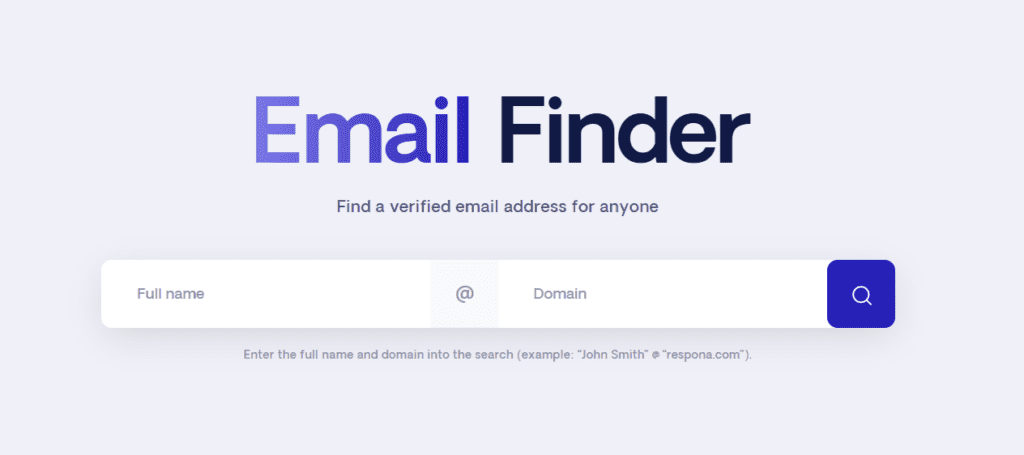
Free email finders: Respona’s free email finder at respona.com/email-finder lets you pull verified contact emails for any domain at no cost, with a daily search limit. Useful for low-volume work when you only need a handful of contacts.
Paid email finders: For higher volume, paid tools like Hunter, Snov.io, and Apollo offer bulk lookups, email verification, and integrations with your sequencing platform. Most start in the $50-150/month range.
Browser plugins: Tools like SalesQL and ContactOut are browser extensions that pull contact data from LinkedIn profiles. Useful when you’ve identified the right content creator on their social media profile but can’t find an email anywhere on their site.
Manual research: For high-value targets, a quick LinkedIn search plus a guess at the domain’s email pattern (firstname@, firstname.lastname@) often works. Verify before sending.
Step #4: Reach Out to Bloggers and Promote Your Product
We’re all good with finding the kind of bloggers who might be interested in reviewing a product like ours, as well as crafting our email pitch and identifying the right contact information for our outreach campaign.
You might still wonder how to get the right blogger to promote your product and how to get bloggers to write about you.
Well, whether you’re doing social media influencer outreach or top bloggers and writers from top blogs, when it comes to your marketing campaigns and top business blogger outreach, personalization is definitely key.
Put another way, as a marketer or a company owner, you need to find people who’ll be able to produce high-quality, fresh blog content ideas for your product and contact them in the best and most direct way possible.
Need Help Finding Bloggers for Link Building?
Running the entire blogger discovery and contact workflow in-house takes time. Between sourcing, vetting, finding emails, writing pitches, and following up, a single campaign easily eats 20-30 hours of focused work per week.
If that’s not realistic for your team, here’s how Respona’s done-for-you link building service handles the pipeline end-to-end.
Register
Create a Respona account. No onboarding calls, no kickoff meetings.
Place an order with your targets
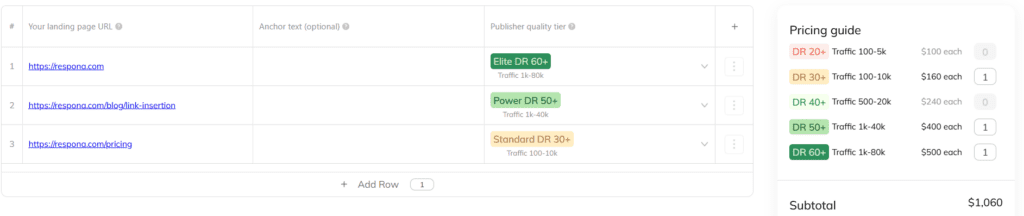
Submit your target URLs and anchor variations. Optionally, add AI prompts you want your brand to show up for (e.g. “best CRM for startups,” “top SaaS tools”).
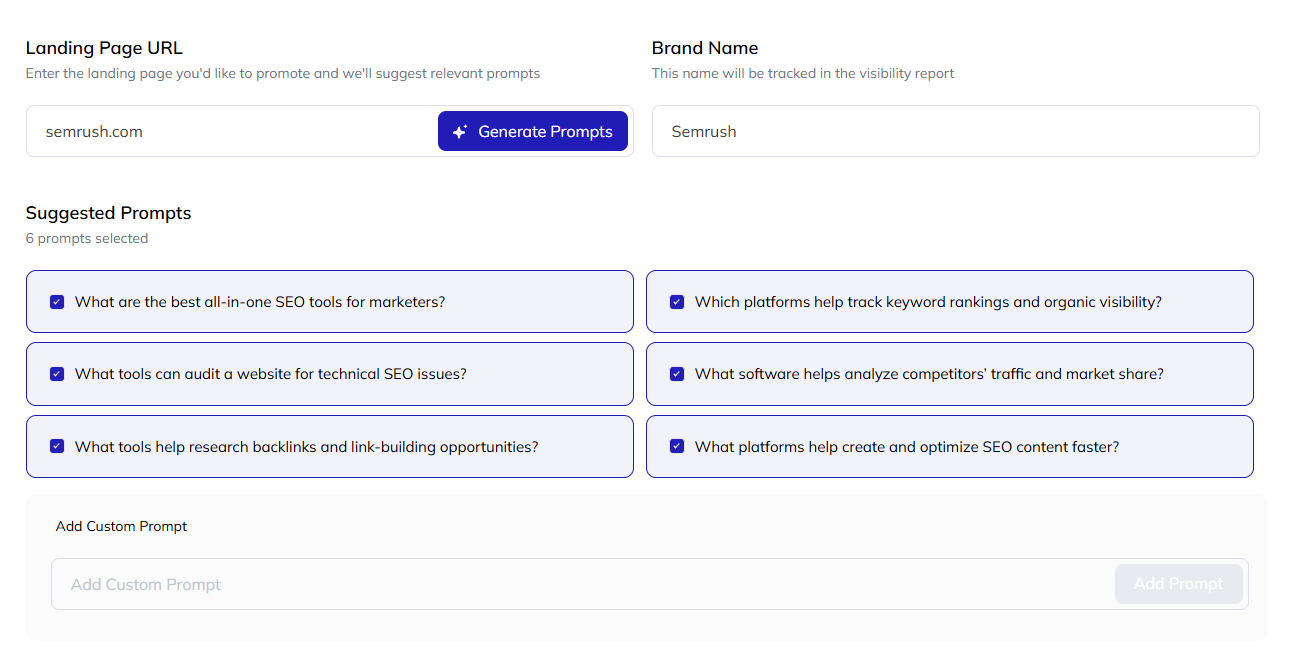
The tool generates your action plan
The platform pulls a ranked list of bloggers and editorial publications already ranking in Google AND being cited by AI engines for your prompts. Every prospect is filtered for relevance, domain rating, and active traffic.
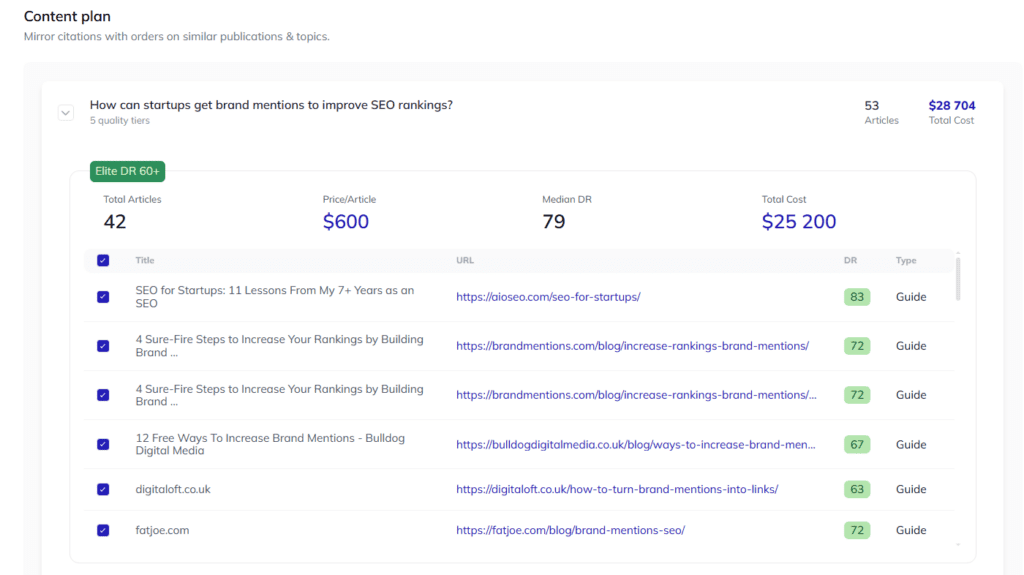
Place orders on placements you want
Browse the recommended placements, pick the ones worth pursuing, and place orders. Pricing is per placement, tiered by the publisher’s domain rating, with no monthly retainer.
Our team handles the rest
Once an order is placed, our team takes over the pitching, follow-ups, negotiation, and back-and-forth until the placement goes live. You only pay when each link is delivered to your defined specs.
Track results in the AI visibility tracker
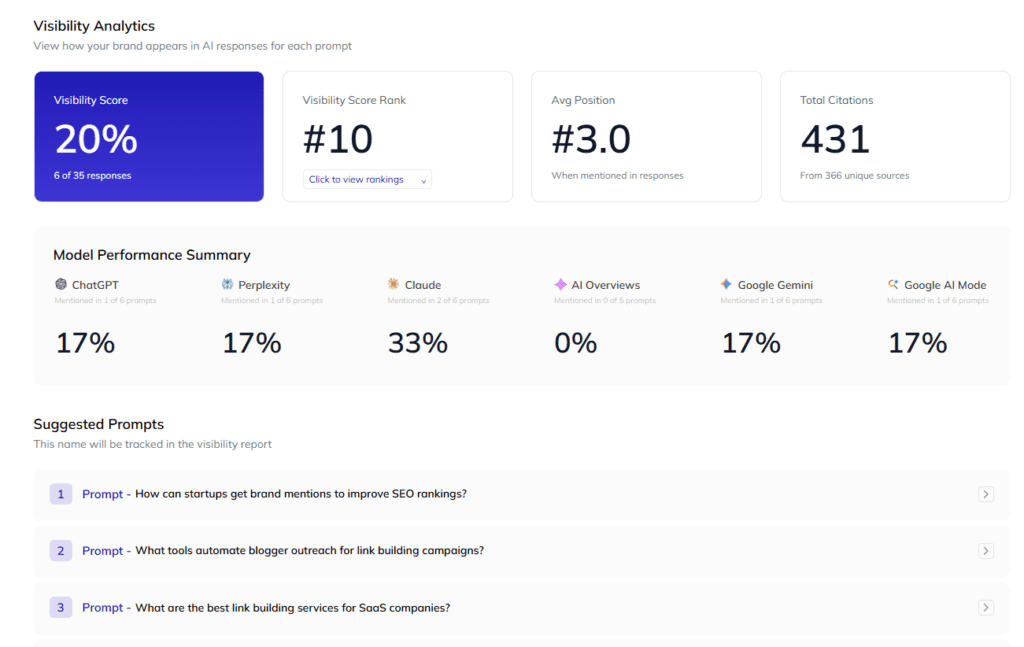
The built-in tracker monitors your brand mentions across the six major answer engines (ChatGPT, Perplexity, Google AI Overviews, Gemini, Claude, Copilot). You can see how your placements influence AI citation rates and where coverage gaps remain.
Optional: Pre-approval add-on (+20%)
If you want manual sign-off on every prospect before any contact, enable the pre-approval add-on. It puts every email on hold until you green-light the target.
Link building cheat sheet
Now Over to You
There you have it.
You now have a step-by-step process for finding bloggers and creators to partner with, regardless of your goal (link building, affiliate recruitment, paid placements, podcast guesting).
The process should be part of your broader marketing strategy. Raising brand awareness through the right partnerships compounds over time.
If running the full workflow in-house isn’t realistic, our done-for-you link building service handles the entire pipeline: prospecting, pitching, follow-ups, and live placement.
You pay per link delivered to your defined specs, with no monthly retainer or setup fees.
Place your first order to get started today.
Frequently Asked Questions (FAQs)
We understand that blogger outreach might make you want to ask a million questions.
We’re focusing on some of the most frequently asked questions in relation to it and trying to give you the best and most concise answers.
Let’s dive right into the first question.
Q1. How do I find bloggers for my brand?
There are several ways of finding a freelance blogger for your brand.
You could consider using a tailored blogger outreach software, like Respona, or ask industry experts you already know for a referral.
Additionally, you could use a blog post directory, like Technorati or Alltop, that can act as an influencer discovery tool and help you find the most popular bloggers and relevant blogs and are updated in real time.
Q2. What’s the difference between bloggers and influencers?
An influencer is a professional who has a presence on online platforms like social media (or any other influencer marketing platform), through which the influencer builds and grows their following, thus being able to inform buying decisions and shape trends of their follower group.
A blogger, meanwhile, is a professional with a blog on a website on which they publish helpful, relevant, trending, and original content to generate blog traffic.
An influential blogger can also be an influencer, as long as he runs a popular blog.
Q3. How do you approach a blog for collaboration?
Approaching a blog for collaboration can be as easy as creating an outreach campaign on Respona and crafting an automated, personalized email sequence.
You could also use the bloggers’ social media sites to connect with before you reach out to them.
Q4. How do bloggers get paid?
Bloggers might get paid by their freelance blogging job activities in one of the following popular ways:
- Affiliate marketing
- Pay per click ads
- Pay per impression ads
- Sponsored posts
- Affiliate commissions
However, in general, when a freelance blogger promotes a product or service, they get paid through affiliate commissions, by tracking the number of sign ups or conversions generated by the blogger.
This can be done by adding coding called UTM parameters to the URL that the blogger is using to promote your product or service.
Q5. How do I ask a blogger to review my product?
Reaching out to a blogger who’s previously published related posts online through email is one of the top ways of asking a blogger to review your products.
Create a tailored, personalized email sequence that’ll make it hard for them to say no. There is no need to hire a marketing agency to secure freelance writer reviews.
Q6. How do you approach a food blogger?
The best tactic when approaching a food blogger (or any kind of lifestyle blogger for that matter) is to actually approach local food bloggers in a friendly, personalized, and non-salesy way.
You could consider connecting with them on social media before you reach out to them through email, too.
Q7. How do you connect with an influencer?
You can do an influencer search by finding their contact info and social media profiles through Respona.
Q8. What’s the best blogger outreach software?
We might be a bit biased here, but we totally think Respona is a great blogger outreach software.
Respona gives you access to a number of features that can facilitate and help you efficiently manage the blogger outreach process as well as help get the most out of your outreach campaign.
Q9. How do I find travel bloggers for tourism brands?
Travel bloggers tend to cluster on Instagram, TikTok, and dedicated travel blogging platforms. Start with Google search queries like “best travel + [your region]” or “[destination] travel blog 2026.” Tools like Respona pull contact data for travel-focused creators.
Like with any niche, prioritize creators whose audience demographics match your customer profile, not just sheer audience size.
Q10. How do I find quality content bloggers worth partnering with?
Such a blogger usually has these signals: original research or unique perspective (not just rephrased material from other sites), regular publishing schedule, engaged comment sections, and editorial standards visible in their writing.
Search for “best [your niche] blog” or “[your topic] blogs to read 2026” and check each perfect blogger candidate against those signals before pitching. Your favorite blogs in the industry are usually a good starting point for vetting standards.
Q11. How do I use Facebook groups to find bloggers?
Many bloggers participate in niche-specific groups on Facebook around blogging, marketing, and industry topics. Join 5-10 active facebook groups in your space and observe who posts thoughtful posts (not just self-promotion).
Reach out via direct message after a few weeks of organic engagement. Cold pitching inside such communities usually gets you removed.
Q12. How do I work with an Instagram influencer for product reviews?
An instagram influencer brings a different dynamic than a blog-based creator: shorter format, higher engagement, but less SEO value (no follow links typically).
For these partnerships, expect to either pay a flat fee per post or supply free products with affiliate codes.
Their reach is real, but a single Instagram post has a much shorter shelf life than a piece that ranks on Google.
Q13. How can I find new blogs and interesting blogs to partner with?
A few useful tactics: subscribe to relevant RSS feeds in your industry, watch which blogs your competitors mention, and pay attention to publications that appear in podcasts you already follow.
A common pattern: most interesting blogs in any niche aren’t the ones with the biggest audiences.
They’re the ones that mid-tier industry experts actually read. New blogs often emerge from spinoff Substacks or independent newsletters too.
Q14. How do I assess if a successful blog is worth pitching?
Beyond traffic and domain authority, look at: how often comments get meaningful engagement, whether the bloggers reply to readers, and whether their existing posts already touch your category.
A successful blog with high readership but no engagement is often a worse partner than a smaller blog with active community dynamics.
A close read of the blogger blog comments tells you which writers actually engage with their audience versus those phoning it in.