
Niche edits. Aka link insertions. Whatever you want to call them, they’re one of the oldest tricks in the link building book, and they still work.
Here’s the short version: a niche edit is when you get your link added into an article that already exists. No writing a whole guest post, no waiting months for a new page to gain traction.
You find content that’s already out there, already ranking, already getting traffic, and you get your link placed right inside it. That’s why a good niche edit can be way more powerful than a guest post. You’re borrowing a page’s existing authority instead of building it from scratch.
And it gets better. If that placement happens to be a structured brand mention, like your name sitting in a “best tools for X” listicle, it doesn’t just help your rankings.
It also drives your AI visibility, because those are exactly the kinds of articles answer engines pull from when someone asks for a recommendation.
So that’s the hook.
Niche edits are fast, they’re powerful, and in 2026 they do double duty across both Google and AI.
Key Takeaways:
- A niche edit means getting your link added to a piece of existing content that’s already published and, ideally, already ranking. It’s the same core idea as a link insertion, just a different name for the same tactic.
- The best niche edits aren’t about volume anymore. A handful of placements inside relevant, high domain authority roundups will do more for you than a hundred random links thrown at a wall.
- Relevance and anchor text are everything. A contextual link sitting inside a topically aligned article passes real value, while one forced into an unrelated page barely moves the needle.
- Niche edits now pull double duty. They help your rankings in the search engine AND get you cited in AI answers, which is increasingly where real buying decisions are being made.
- Landing curated links like these takes genuine outreach and a lot of consistency. You can do it yourself with a full tool stack and a dedicated person, or hand the whole thing off to a done-for-you service and skip the grind.
Link building cheat sheet
Are Niche Edits Still Relevant in 2026?
Absolutely. But not just any niche edits.
The old “shotgun” approach doesn’t really work like it used to. You know the one, where you blast out as many links as humanly possible and hope enough of them stick to move you up the rankings.
That worked back when search was simpler. It doesn’t hit the same now that so much of search behavior has shifted toward AI generated answers.
Don’t get me wrong, the core idea behind link building hasn’t changed at the algorithm level. Links still pass PageRank, PageRank still improves your organic rankings in the search engine, and a strong link with real link equity is still a strong link.
That part is the same as it’s always been.
What changed is which niche edits actually move the needle.
So for example, instead of chasing a hundred links purely for the PageRank to climb into the top 3 organic results, it’s way more valuable to land just a few inclusions in the right niche roundups.
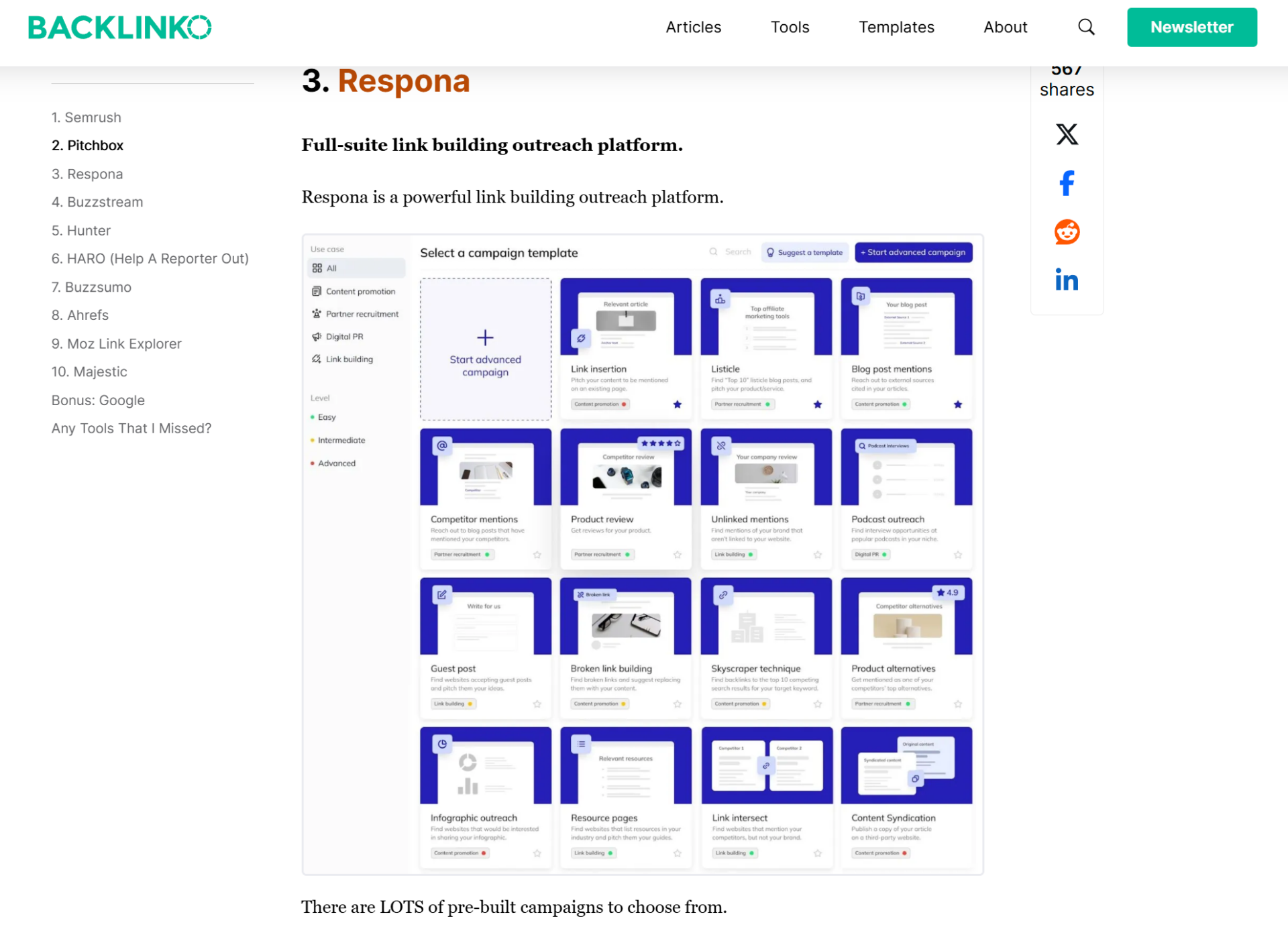
Roundups that highlight your service. Ideally ones that already get cited in AI search, or similar roundups on similar websites, think comparable domain authority, similar domain rating, matching keyword profiles, that kind of thing.
Pages like this post by Backlinko:
And here’s the neat part. Because AI citations change every couple of weeks, you don’t have to obsess over landing that one exact article every single time.
You just get similar mentions across enough of these roundups across similar websites with comparable metrics and keyword profiles, and the effect stacks up over time.
Then something interesting happens.
Even if your own site is stuck on page 2 or further back, answer engines start featuring you in their responses anyway. And that’s arguably even more important than a top organic ranking, because those AI answers directly influence buying decisions.
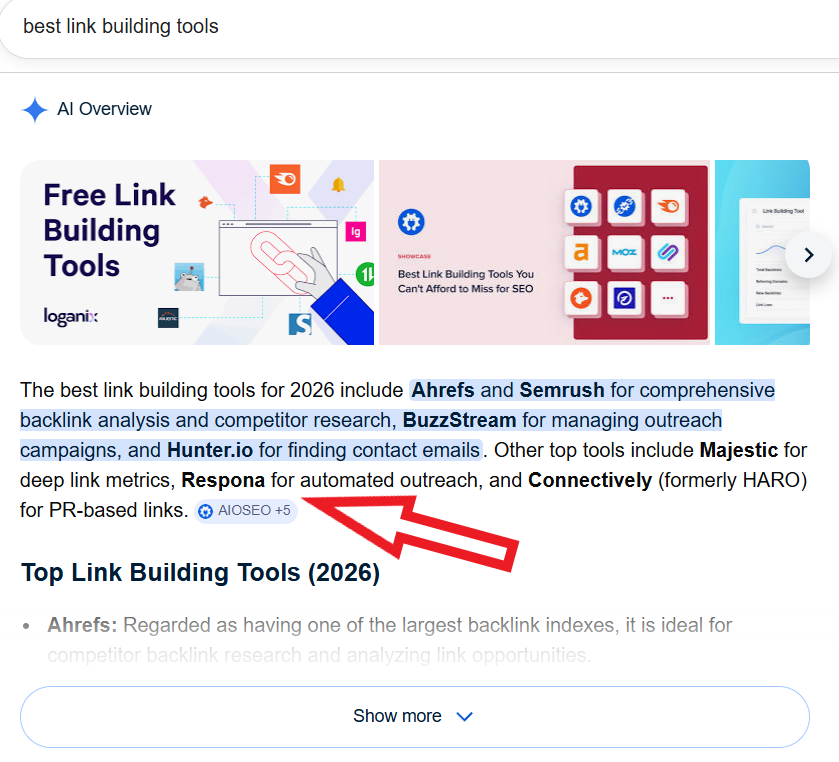
It’s doubly powerful because it’s a third party mentioning another third party that’s vouching for you.
That holds a lot more weight in the eyes of a customer than your own landing page saying how great you are. Anyone can say they’re the best on their own website. Not everyone can earn genuine visibility through real, organic brand mentions.
How to Get Niche Edits?
Through email outreach. And I’ll be straight with you: it’s quite a lot of work.
To do it effectively, you need at least one person on it full-time, and ideally a whole team.
On top of that, you need a proper tool stack and your strategy dialed in, so that what you’re actually getting is worth the effort you’re putting in.
Getting a single niche edit is easy enough. Getting them consistently, on the right pages, at scale? That’s the hard part.
Here’s the full breakdown of how it works.
Find Opportunities
First, you need to find the pages worth pitching. The goal is to track down an existing article that already mentions your topic (or your competitors) so that adding your link feels natural rather than forced.
You can do this manually with Google, or speed it up with an SEO tool like Ahrefs.
My go-to move is to pull the backlinks pointing at a competitor and look for listicles and roundups that mention them, since those are prime niche edit links waiting to happen.
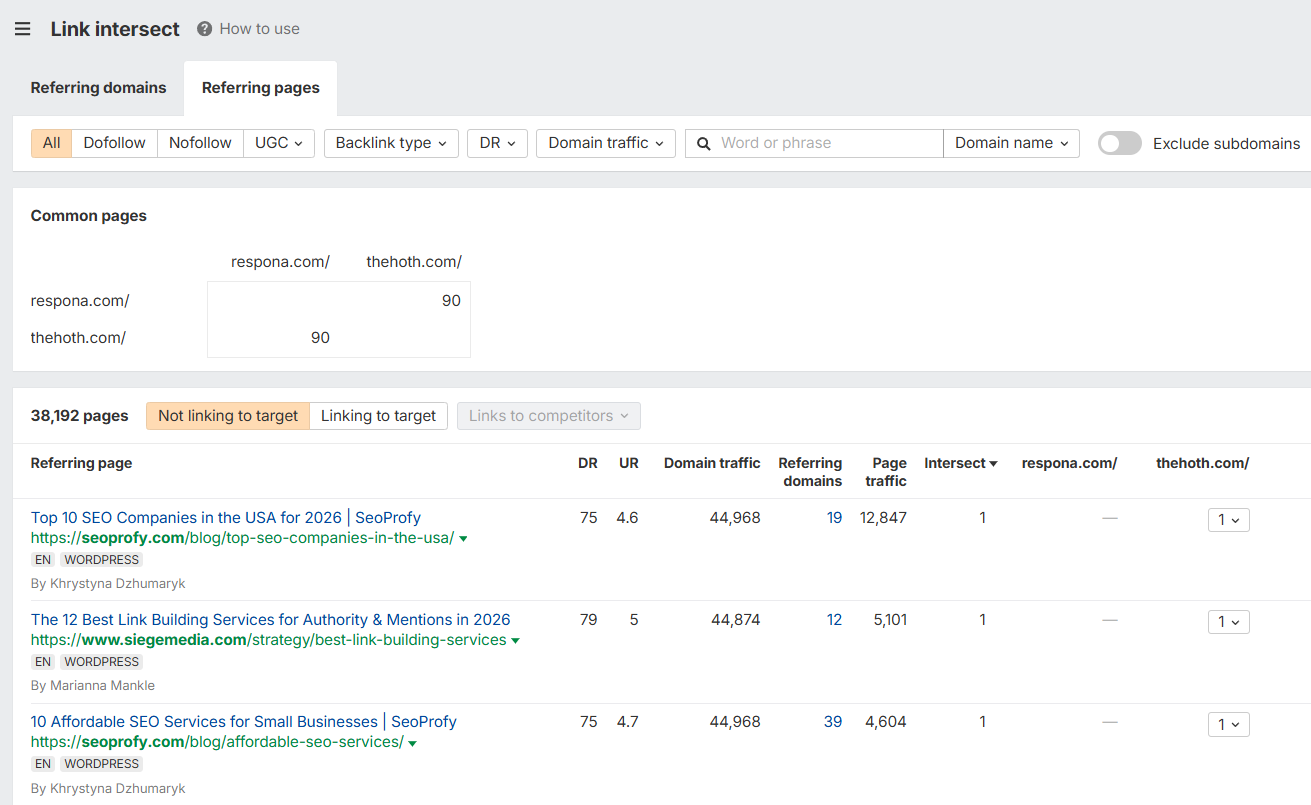
If a page already links out to three tools in your space, getting added as the fourth is a much easier ask than pitching a full guest posting collaboration from zero.
Find Valid Contact Information
Once you’ve got your list of pages, you need to reach the right person.
For small, low-volume campaigns, a free email finder like Respona’s does the trick.
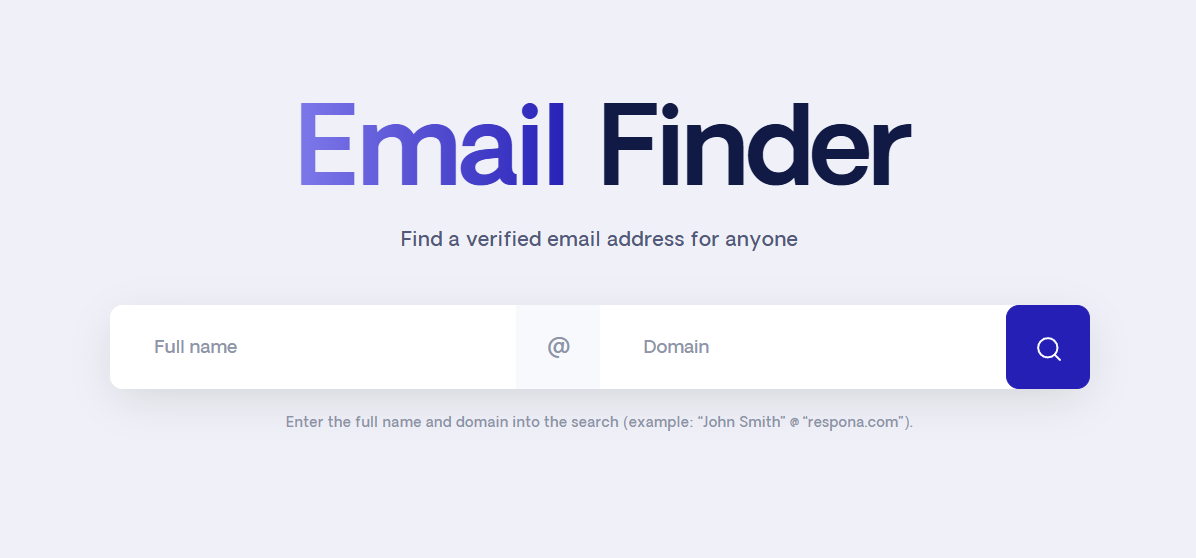
But it’s limited, so for anything serious you’ll want subscriptions to a couple of mass email finders, because the success rate on the really juicy links hovers around 1%.
That means volume matters, and one tool usually isn’t enough. Something like Hunter works well, and using more than one finder side by side gives you better coverage.
Then, and this part is non-negotiable, run every address through an email verifier like ZeroBounce before you send anything.
Some tools double as a finder and verifier, but I’d still double-check with ZeroBounce on any cold outreach.
Skip this step and you’ll burn your email domain reputation on bounces and spam traps, and then you won’t be able to reach anyone at all. Not the site owner, not the website owner, nobody. It’s worth the extra few minutes.
Write a Good Pitch
Now the pitch itself. And please, not the same tired one everyone else uses.
It needs to be short, straight to the point, and actually feel like a human wrote it, not like it got fired out of a mass email blast to five thousand people.
Lowercase subject lines help. So does dropping the stiff corporate tone and just writing like you’d talk.
But the single most important thing is the value proposition. Because nobody links to other people just because they’re nice. You have to give them something in return.
That could be a mention on your own site, a piece of original data, or a straightforward ABC link exchange.
Whatever it is, make it obvious and make it early. If your prospect can’t tell what’s in it for them within the first two lines, you’ve lost them.
Run the Outreach
Once your pitches are ready, you need an email management tool to actually handle the sending, because you’re going to be firing off hundreds of these.
And then you have to stay on top of the replies. This part trips a lot of people up. You want to catch someone the moment they reply back, while they’re still interested and the conversation is warm. Emails pile up, threads get buried, things get forgotten.
You know how it is.
A reply you answer two weeks late is a reply you basically wasted.
Consistently Keep Running It
Here’s the thing about niche edit link building that nobody likes hearing: it’s not a one-time thing.
To actually get results, it has to run all the time, and you need to establish long-term relationships with publishers and other businesses.
AI citations shift, new roundups get published, old ones fall off. So a batch of niche edits you land this month isn’t a “set it and forget it” win. You keep the campaigns going, or the results slowly fade. Just go in knowing that.
Which brings me to the next section.
Alternatively, Outsource
I’ll be honest, that whole process sounds like a hassle because it genuinely is one. There’s no real way around it.
Which is exactly why outsourcing the whole thing is such an attractive option, especially if you don’t have experienced staff who can consistently run through all of those steps week after week.
So maybe give Respona a shot?
It’s pay-per-result, no monthly retainer, kind of like a vending machine.
You log in, place an order with your target URL and anchor text along with the types of links you’re going for, and our team handles the rest.
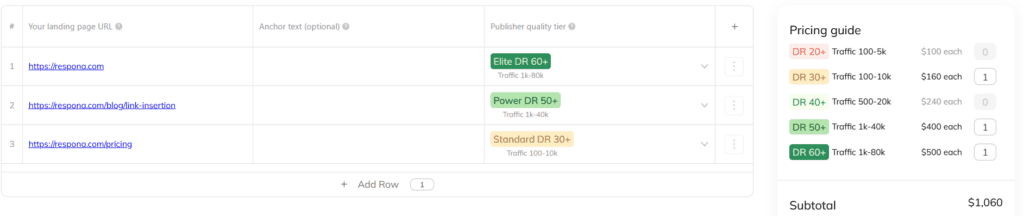
You just pay for the end result. No hourly billing, no retainer eating your budget whether we deliver or not.
For AI visibility specifically, it also comes with a pretty neat system.
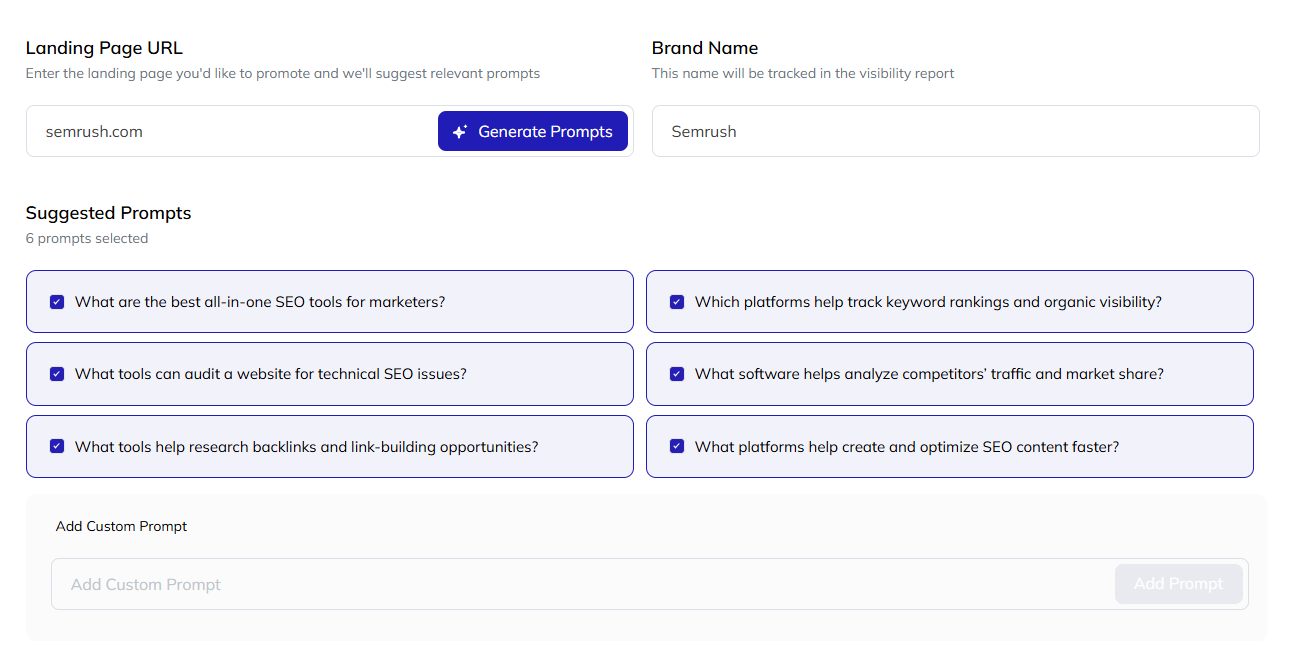
Once you enter the AI prompts you want to get cited in, Respona runs them across your selected answer engines and checks what’s actually getting cited right now, today, not six months ago.
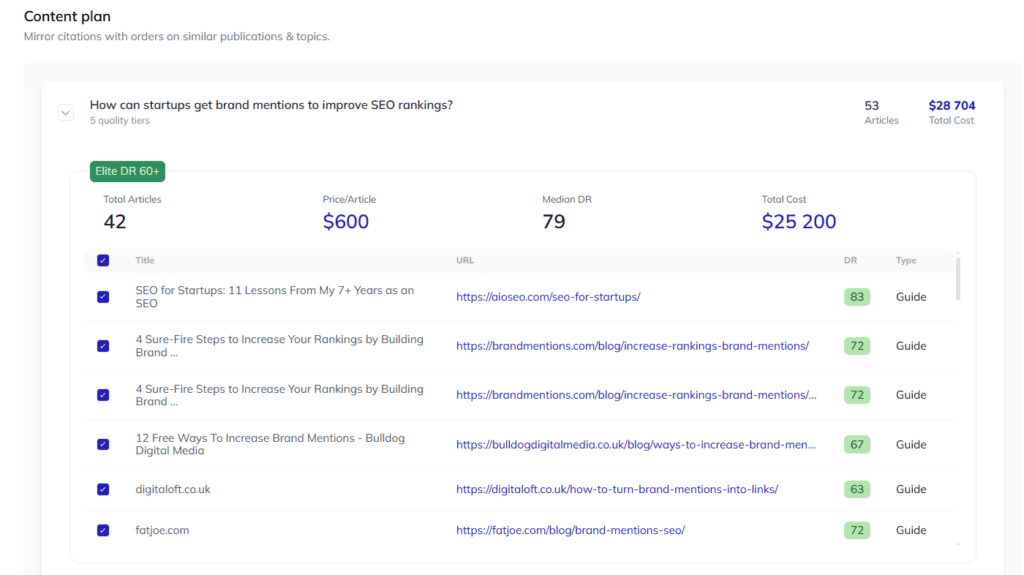
Based on that, it builds you an entire link building action plan. And here’s the part I really like: it doesn’t just hand you the few articles that are currently being cited.
It also finds other publications in the same space, ones with similar metrics and matching keyword profiles, and comes up with similar article topics that our team would then replicate and publish.
So instead of fighting to get into a handful of existing citations, you’re getting placed across a whole pool of relevant, comparable articles.
From there, all you do is approve the ones you want and watch your AI visibility climb.
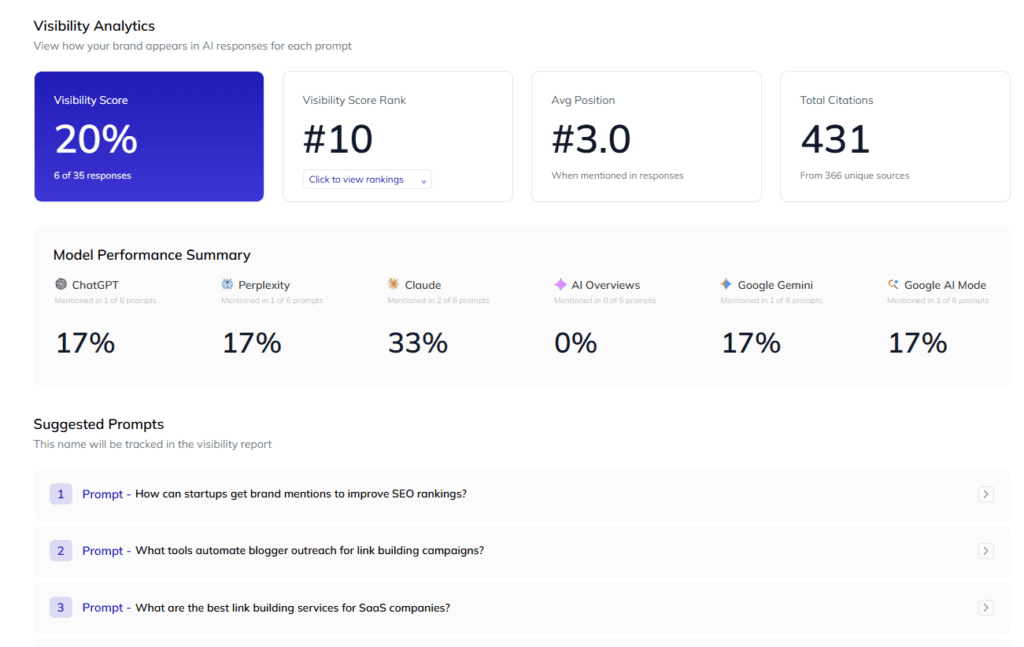
As a niche edit service, it takes everything we just walked through, the finding, the verifying, the pitching, the follow-ups, the consistency, and handles all of it for you.
It’s a solid pick whether you want a one-off batch or an ongoing niche edits service running in the background.
Place your first order to get started today.
Link building cheat sheet
Now Over to You
So that’s the full rundown on niche edits: what they are, why they’re still one of the most powerful visibility plays in 2026, and exactly how to get them.
The takeaway is simple. A few well-placed niche edit links on relevant, trafficked pages will do more for you than a hundred random links ever could, and now they pull double duty across both Google and AI answers.
The catch is that doing it right takes real outreach, the right tools, and consistency.
If that sounds like more than you want to take on, you know where to find us.
Place your first order and our team will handle the finding, pitching, and placing for you, so you can just watch your visibility climb.
Frequently Asked Questions (FAQ)
What’s the difference between white hat and black hat niche edits?
White hat niche edits are placed on real, relevant pages through genuine outreach, which is what makes them safe and effective. Black hat niche edits get dropped onto irrelevant or spammy sites at scale, and those quality niche edits you were hoping for turn into a liability that can get you penalized.
Are niche edits better than guest posts?
They serve different goals. A guest post means writing brand new content that a site publishes, while a niche edit adds your link to existing content that’s already live.
Niche edits are faster since there’s no new content to write or index, but a good guest posting campaign gives you more control over context. Most strong strategies mix niche edits and guest posting together.
How much does it cost to buy niche edits?
It depends on the page’s authority. When you buy niche edits from a legitimate niche edit provider, expect roughly $100 to $500+ per link depending on the site’s traffic and strength.
Bargain pricing to buy niche edit links in bulk almost always signals junk placements, so treat a cheap niche edit service with suspicion.
Do niche edits actually pass authority?
Yes, a niche edit backlink on an already-indexed page passes link equity right away, often faster than a fresh link because the page already has referring domains and authority built up.
Just check the page’s domain authority, domain rating, and whether it genuinely ranks in the search engine before you pursue it, since a strong page drives a real ranking boost.
What makes a good niche edit backlink?
Relevance, above all. The best niche edit backlinks sit on a relevant website in your space, with natural anchor text and a contextual backlink that fits the surrounding text as a clean contextual link. Prioritize topical relevance and niche relevance over raw metrics, and aim for relevant websites your audience actually reads.
Are niche edits the same as digital PR or press mentions?
Not quite, though they overlap. Digital PR and press mention niche edits earn you a valuable backlink through news coverage, while a standard niche edit is a quieter link placement inside existing content.
Both belong in a solid seo strategy, and neither should be confused with cheap link inserts or a spammy link insertion dropped onto irrelevant, low-value pages that offer no real relevant content. And unlike a guest post, a niche edit needs no new content at all, since the content is already there.