
It’s true that every niche is different. Not just in terms of topics discussed but also size.
Meaning, a highly-competitive niche such as digital marketing has no shortage of link prospects.
A smaller niche like coworking space management, on the other hand, is going to be much more limited.
But regardless of the niche you’re in, link building is instrumental to overtaking your competition on search engine results pages.
In this article, we’ll skip any strategies that might only work in larger niches and focus on the only niche link building techniques that works for everybody: niche edits (aka link insertions).
Let’s begin.
Key Takeaways:
- Niche edits work in every size niche. When the skyscraper technique and chasing broken links start running out of prospects in smaller industries, niche edit backlinks remain a reliable way to grow your backlink profile through contextual links inside existing content.
- Curated links inside relevant content beat homepage placements every time. A contextual link placed naturally in an article that already ranks passes more authority than a sidebar or footer mention, and it sends real referral traffic too.
- Link-worthy content is non-negotiable. You can’t earn niche backlinks at scale without a linkable asset behind them. Informative blog posts, original research, listicles, and free tools give you something worth pitching as an outbound link from a relevant website.
- Vet every prospect before outreach. Non-competitiveness is the most important filter, followed by referring page traffic, Domain Rating, and topical fit. Skipping this step wastes hours of outreach effort on opportunities that were never going to convert.
- Anchor text discipline matters. Niche relevant links lose most of their value when the anchor is over-optimized or off-topic. Aim for natural, descriptive anchors that fit the surrounding content.
- Manual niche edits are slow. Done-for-you link building lets you skip the prospecting, vetting, and outreach grind, so your team can focus on the content side while the placements get built behind the scenes.
Link building cheat sheet
What is Niche Link Building?
Niche link building, also known as niche editing or link insertions, is a focused strategy that zeroes in on existing content within your specific industry.
It involves identifying articles or web pages that already mention your target keywords, but aren’t direct competitors.
You then reach out to the site owner to propose a collaboration, often structured as an ABC exchange to maintain Google’s guidelines.
Strategies like the skyscraper technique or broken link building, which rely heavily on analyzing competitors’ backlink profiles, which may be limited in smaller niches, can be less effective in these situations.
Niche edit link building, however, remains consistent.
Even in the smallest niches, you can typically find a hundred or two relevant opportunities for link insertions.
In addition, websites in small niches are typically much more receptive to link building emails (as long as you’re providing something in return) because they don’t receive hundreds of them on a daily basis.
Start with Link-Worthy Content
To effectively build niche edit links, you’ll need content that goes beyond your standard home and product pages.
These pages are near impossible to build niche backlinks for organically, without resorting to paying for your link placement.
The idea is to create content that proviвуі genuine value to your audience.
This means covering a wide range of keywords relevant to your niche, and offering something that other websites and bloggers will want to reference.
Consider creating:
- Informative blog posts
- Curated listicles
- Original data studies
- Free tools & other freebies
For inspiration, check out Ahrefs’ website – it has all of these, executed to perfection.

While these types of content will naturally attract some niche relevant links, it’s important to set realistic expectations.
Yes, they will get you links organically – but don’t expect a miracle.
Especially in smaller niches, the primary purpose of creating this content is to have something to build links to, not create a passive link magnet.
You have to be proactively building links, otherwise you might just get a handful of links and that’s it.
How to Find Niche Edit Opportunities
Now, on to how to find contextual link insertion opportunities.
For this, you’re going to need Google and a bit of patience. Along with a few advanced search operators.
The goal here is to find highly relevant websites that have already mentioned your target keywords within their content, but aren’t direct competitors.
It’s about precision and relevance, not blasting out a million generic emails and hoping for the best.
Let’s use the “remote team collaboration tools” anchor text as a pretty niche example. To find these opportunities, we’ll use a specific Google search string:
inurl:blog intext:”remote team collaboration tools” -intitle:”remote team” -intitle:”collaboration” -intitle:”tools”
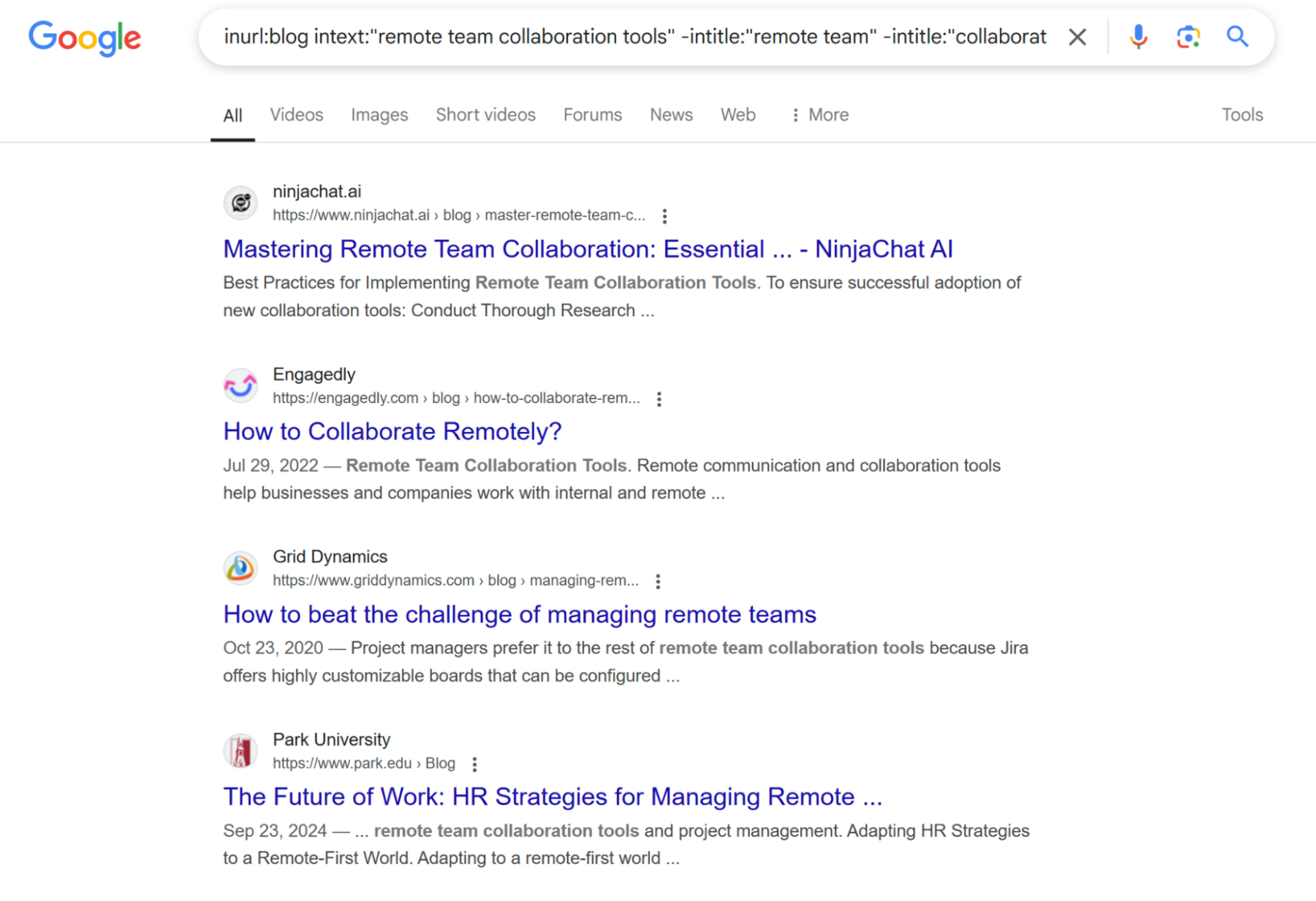
Here’s what each bit does:
- inurl:blog: returns ONLY pages that are part of a blog.
- intext:”remote team collaboration tools”: This ensures that the exact phrase appears within the body of the content.
- -intitle:”remote team” -intitle:”collaboration” -intitle:”tools”: This is important. By individually excluding “remote team,” “collaboration,” and “tools” from the title, we’re filtering out pages that might mention some variation of these words and saving time on running multiple searches.
Here’s an example of a page found through this search:
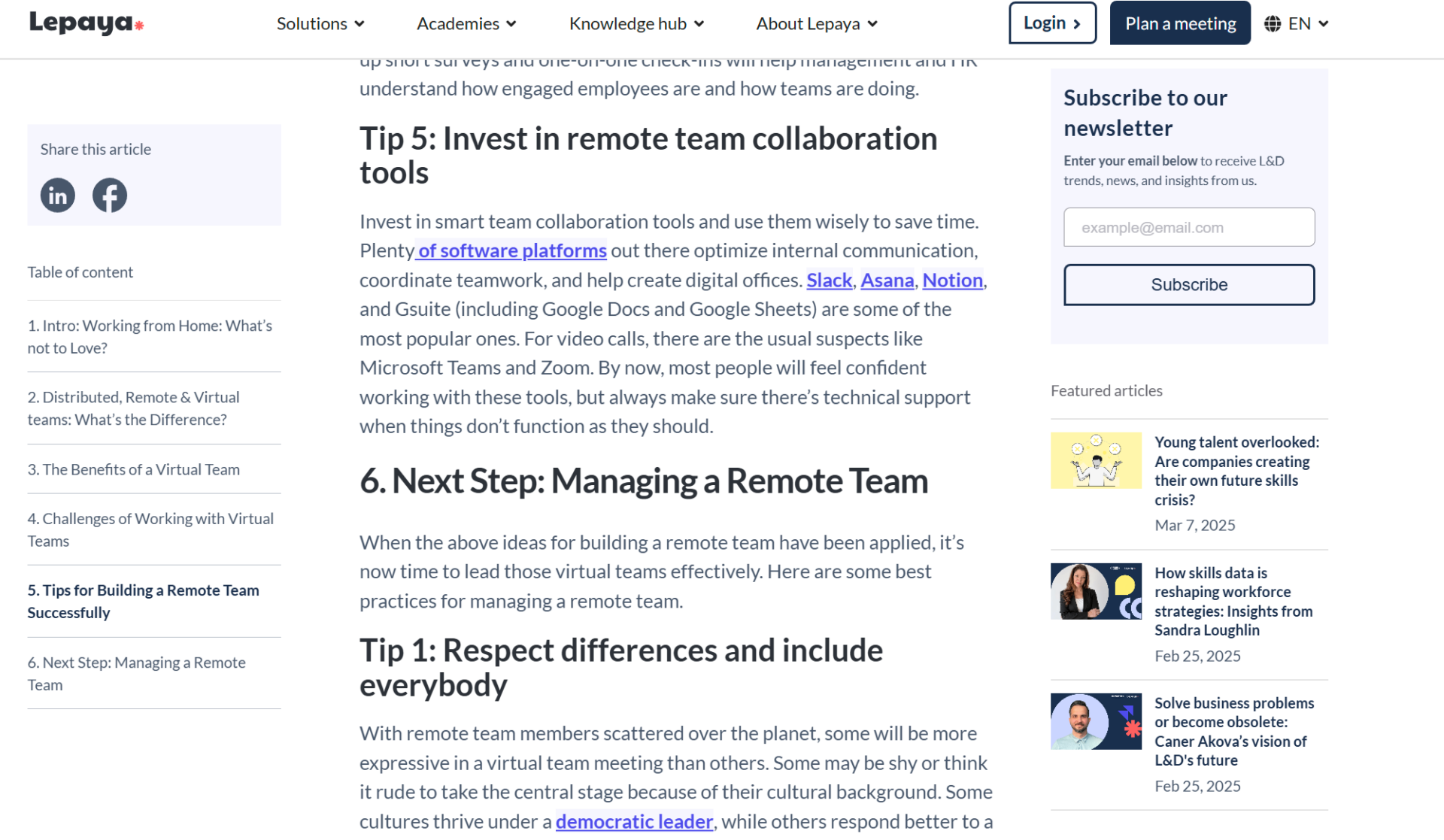
It’s a non-competing blog post by a company that does not sell a remote team collaboration tool.
So, this would be a prime opportunity for you (if you sell such a tool). The same logic applies to every other niche, no matter how big or small.
Now, obviously, not every niche site is going to be a good link building opportunity, so let’s talk a bit more about how to vet them.
Vet Websites Before Outreach
First and foremost, a super heavy emphasis must be placed on non-competitiveness.
Before reaching out, meticulously double-check that your prospect doesn’t have any similar content or sell similar products.
Don’t waste time by reaching out to competitors.
Once that’s out of the way, check the referring domains’ metrics.
Use tools like Ahrefs or Semrush to get a feel for the website’s overall traffic and authority.
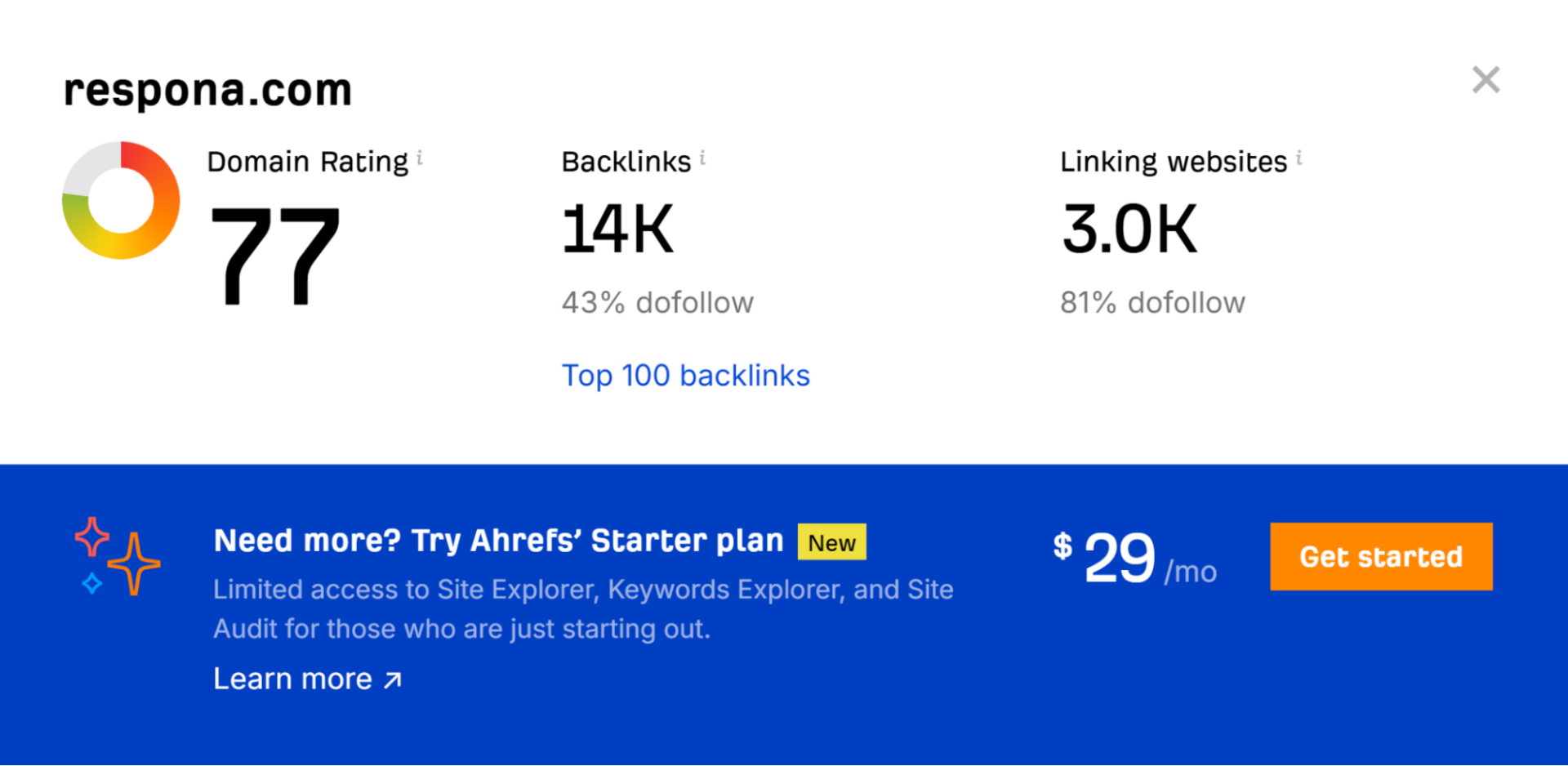
Higher traffic translates to greater potential exposure for your link, and a strong Domain Rating (DR) signifies a more valuable backlink due to the website’s established authority.
As a rule of thumb, focus only on sites that are getting at least 1000 organic traffic per month. The DR range will depend on your own site’s Domain Rating.
But, as you know, traffic may vary heavily on a page-by-page basis. So, the next step is to check that.
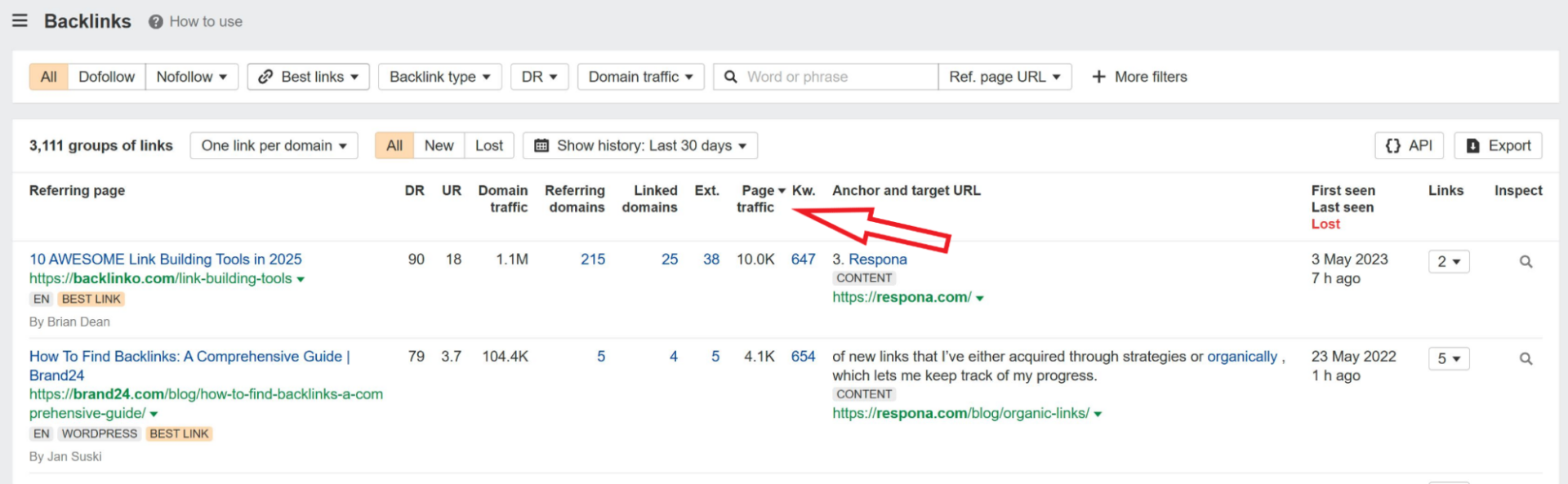
A page that gets zero traffic still passes link juice, but needless to say, it’s way better to have real referral traffic flowing through it as well.
Once you have a list of link building opportunities, it’s time to find contact information of the people responsible for these pages, and prepare for outreach.
You can spend hours doing it manually or daisy-chaining a dozen different solutions for each step of the process, or you could use Respona, which is tailor-made specifically for niche link building.
Speed it Up with Respona
By this point you’ve seen what running niche edits manually looks like: building search strings, sifting through results, checking each relevant website for competing content, pulling traffic and Domain Rating numbers, tracking down the right website owner, writing personalized pitches, and chasing follow-ups for weeks.
It works. It’s also brutal to keep going for more than a month or two without a dedicated team behind it.
That’s the gap Respona’s done-for-you link building is built to close.
You start by giving us the basics: the pages you want to point niche relevant backlinks to, the keywords and AI prompts you want to win, your preferred anchor text and anchor variations, and any guardrails on the kind of sites you’ll accept.
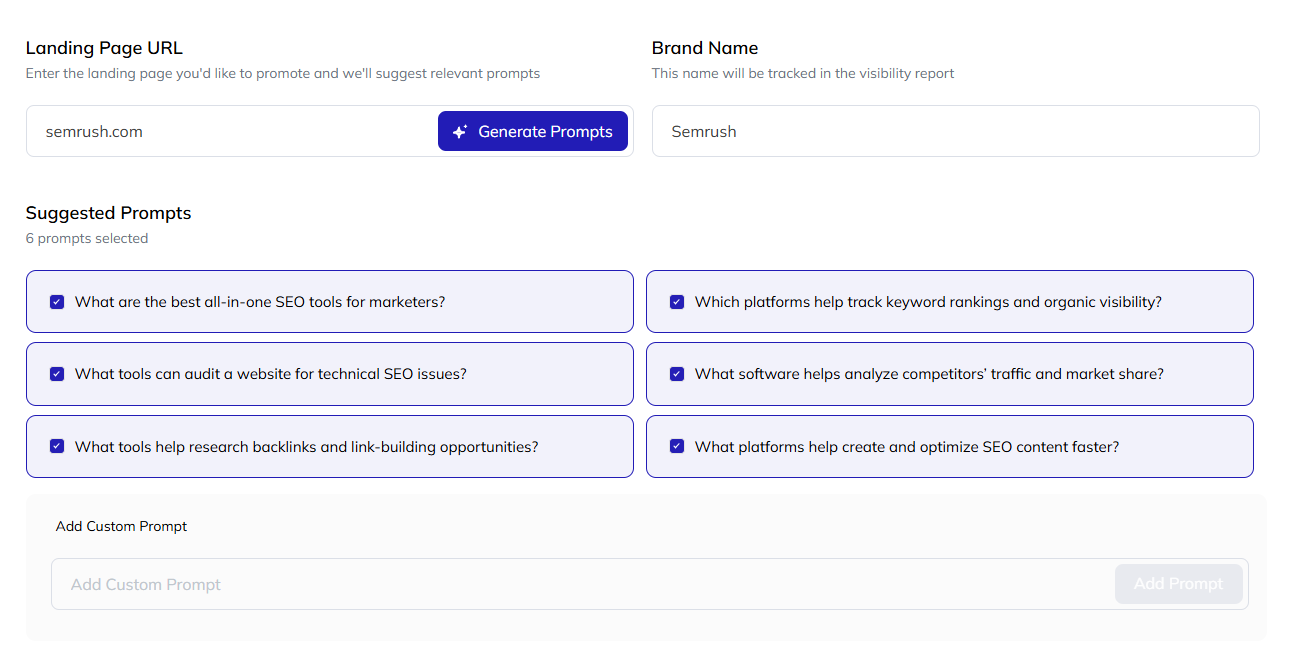
From there, our tool (and team) identifies non-competing pages that already rank for those queries, mention your target topics in-context, and have the kind of organic traffic and authority that makes a quality backlink worth chasing.
You see the opportunities before anything happens.
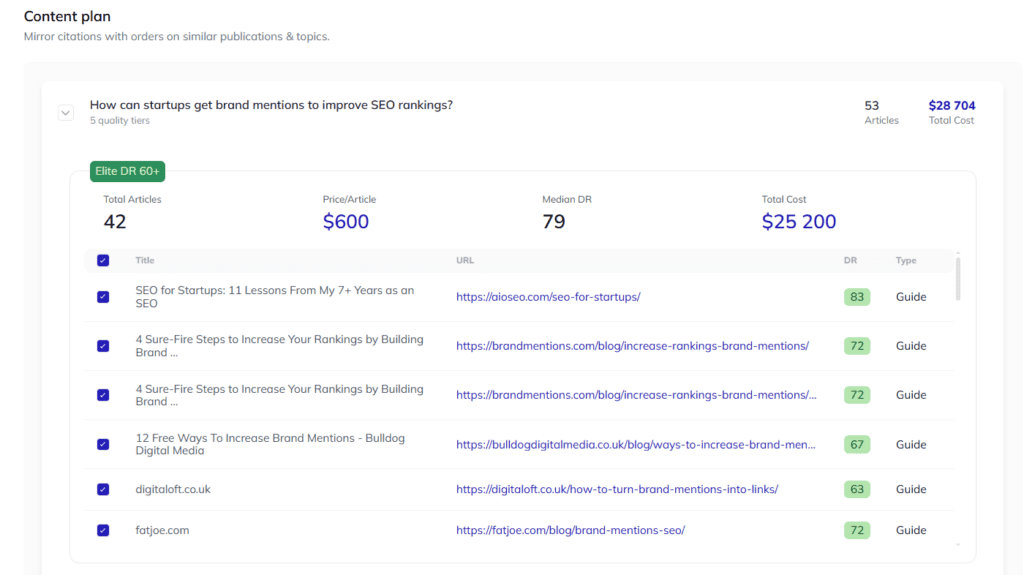
You greenlight the ones you want to go after, and the team takes care of the rest: contacting the site owner, negotiating the link insertion, agreeing on anchor text, and getting the contextual backlink placed live.
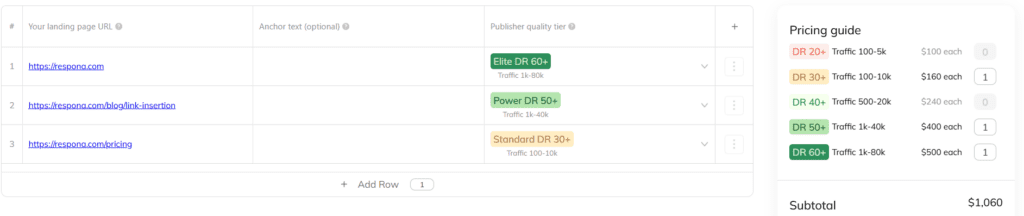
If you’d rather skip the per-placement review, you can also order in bulk inside a Domain Rating and traffic range that fits your niche.
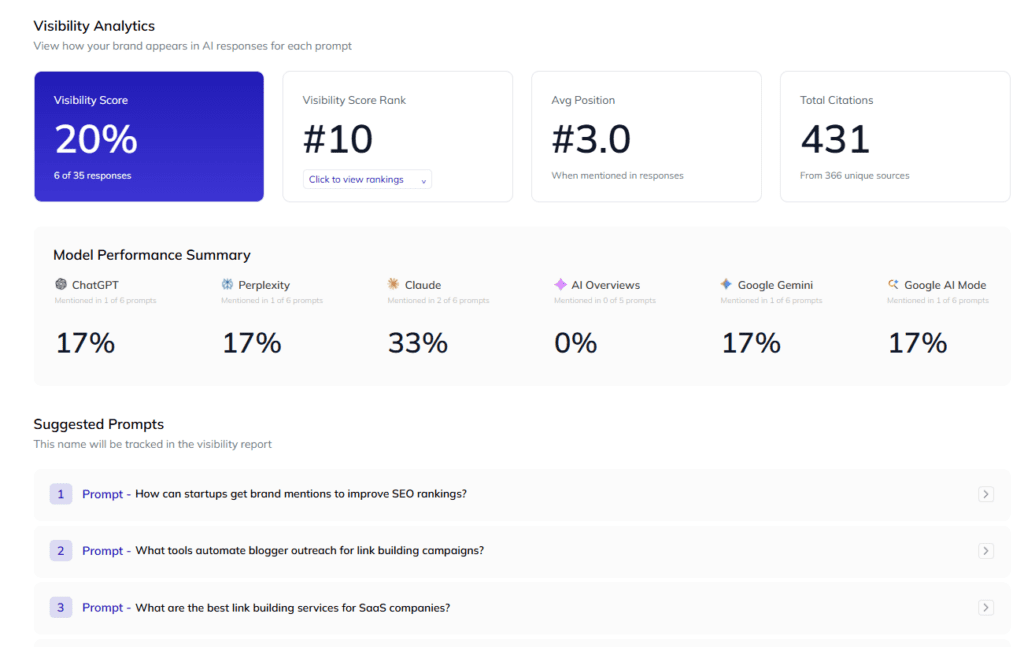
With Campaigns, you can also keep an eye on how your visibility shifts over time, including in AI answer engines where brand mentions inside niche edits increasingly drive citations.
So rather than running outreach yourself or buying placements from a private blog network, you get a hands-on link building service with every placement reviewed before it goes live.
Link building cheat sheet
Now Over to You
Niche edits still work in every niche, regardless of size. With the right strategy, a vetted list of relevant websites, and a bit of patience, you can earn niche edit links that move rankings, drive qualified traffic, and grow your overall backlink profile.
But running outreach yourself month after month is the hard part. In 2026, doing it well at scale takes more time than most marketing teams have to spare.
If you’d rather skip the prospecting, vetting, and follow-ups, place an order and let Respona’s team handle the work. Hand off your target pages, keywords, and anchor preferences, and we’ll take care of the rest.
Frequently Asked Questions (FAQ)
What is the main advantage of niche edits?
Niche edits put your link inside articles that already rank for your target topics on highly relevant websites, which means more qualified traffic and stronger ranking signals to search engines. The approach is particularly effective in smaller niches where broader strategies don’t return enough opportunities to fill a pipeline.
Why is non-competitiveness so important when building links?
Reaching out to direct competitors almost never results in a backlink, since you’re both fighting for the same audience and the same spot in search engine results. Focusing on non-competing websites that share an audience but sell different products gives you a far higher hit rate and protects the link building strategy long-term.
How do I identify a high-quality site for niche edits?
Look for relevant websites with strong Domain Rating, real organic traffic, and an established reputation in your space. An SEO tool like Ahrefs or Semrush will give you the metrics you need quickly. Beyond the numbers, make sure the page you’re targeting fits your topic and gets actual traffic, since a page with zero visitors only passes link equity to search engines, not real readers.
Are niche edits suitable for every niche?
Yes. They work in both large and small niches. Larger niches have more raw opportunities, but smaller ones tend to have higher reply rates and more receptive site owners because they aren’t getting buried under hundreds of outreach emails every week.
How can I improve my chances of landing more quality links?
Create a real linkable asset before you start outreach. Original data, free tools, in-depth guides, and curated links inside listicles all give you something worth pitching. Personalize every email, lead with the benefit to the prospect, and don’t be afraid to follow up two or three times before moving on.
What’s the difference between niche edits and guest posting?
Niche edits, or link insertions, place your link inside an existing article that already ranks and already has authority built up. Guest posting requires creating brand new content from scratch and publishing it on someone else’s site. Niche edit backlinks usually deliver faster results because you’re inheriting the existing page’s traffic, while guest posts work better for relationship building and brand exposure.
How are niche edits different from chasing broken links?
Broken link outreach involves finding dead outbound links on relevant pages and pitching your content as a replacement. Niche edits don’t depend on broken links at all, which is why they scale in industries where you simply can’t find enough broken link opportunities to run a campaign.
Can niche edits help with local SEO?
Yes. The same approach works for building local links, where you target relevant websites covering your geographic area instead of, or alongside, topical relevance. Local SEO services often combine niche edits with local directory placements to build a balanced profile of contextual backlinks pointing to a single location page.
Should I use the same anchor text on every link?
No. Over-optimized anchors get discounted by search engines and, in some cases, can trigger a penalty. Mix branded anchors, naked URLs, partial-match phrases, and a small percentage of exact-match anchor text. Most link building services and done-for-you link building providers will help you plan this anchor mix as part of the campaign.
How does internal linking fit into a niche edit strategy?
Internal linking is the SEO efforts equivalent of free real estate. Once you’ve earned high quality backlinks pointing to one strong page, you can pass that authority through to other pages on your site by linking to them internally with descriptive anchors. It’s the cheapest way to multiply the impact of every niche edit you build.