Link juice is a term that gets thrown around in the SEO community a lot.
However, despite its common usage, the exact meaning behind it can seem a bit vague – especially to beginners and non-SEOs.
In this article, we’ll do our best to define link juice, explain why link juice is important for search engine optimization and digital marketing, and address some common misconceptions that float around it.
Key Takeaways
- Link juice refers to the value, equity, and authority passed from one page to another through a link
- Not all links are equal. Domain authority, page authority, relevance, and traffic all impact how much link juice and link equity is passed
- PageRank is only one part of link juice. Referral traffic, organic traffic, and user intent also matter
- Links from relevant, high-authority content pass the most valuable link juice and improve rankings in search results
- You can build more link juice through consistent link building, internal linking, and strategic link placement on relevant sites

Link building cheat sheet
What is Link Juice?
“Link juice” refers to the value that a backlink has for a site’s SEO.
It’s also known as link equity.
Link juice, or link equity, is one of the core concepts in search engine optimization and plays a major role in how pages rank in search results across search engines.
Naturally, the “juicer” a link is, the bigger its contribution to your SEO will be.
Let’s break it down.
Essentially, when a webpage links to another site, it shares some of its own ranking power, link value, and link authority with the linked site, which can help improve the linked site’s position in search engine results, its visibility, and overall domain authority.
The concept hinges on the idea that not all links are created equal; links from high-authority, relevant sites are more valuable and therefore pass more “juice.”
Is Link Juice the Same as PageRank?
Link juice and Google PageRank are two terms that are often used interchangeably.
They are similar, yes, but not exactly the same.To put it bluntly, PageRank is part of Google’s overall ranking algorithm.
PageRank is part of what makes a link “juicy” – but it’s not the only factor.
Even if a link does not pass on any PageRank, it can still be “juicy” – for example, when placed on a “top 10 X” article that gets thousands of visits per month.
What I’m trying to say is that link juice is the combination of all benefits a link may bring – while PageRank is just one of those benefits.
This is why understanding how link juice works is important if you want to improve your search engine ranking and overall SEO value.
So, what are these benefits?
What Makes a Link “Juicy”?
The most important aspects of a link are:
- Linking page’s traffic
- The link’s topical relevance and alignment with user intent
- Linking domain’s authority
- Whether the link is “dofollow” or “nofollow”
- How many other outgoing links the page has
The most important aspects that affect link juice, link equity, and link authority are:
Let’s break each one down individually.
Traffic
First up – the obvious.
The more traffic a page gets, the more people will potentially click on your link, driving more organic traffic and improving your SEO performance, and some might even convert into customers.
Relevance and Intent
Now, let’s slowly start dipping our toes into the less obvious.
Topical relevance is also simple – for example, as a link building agency, you want links from articles that are about link building and SEO services – not cooking blogs.
But what often gets overlooked is the user intent.
When I’m working with other link builders, a mistake I see a lot is trying to get commercial links (homepage, landing page links etc.) into informational blog posts – “what is?” “how to’s”, and so on.
Sure, someone may click on the link, but they’ll expect to see another informational article.
So when they end up on your homepage, they immediately recognize it as content marketing and leave.
But, if you get your agency on a “top 10 link building agencies”-type blog post, the user intent is much different.
They’re already looking for agencies like yours, and are interested in checking you out.
Additionally, if you’re building links to your informational pages (blogs, courses, etc.), and proactively helping the user learn something, you’ll slowly start establishing yourself as the go-to guy for anything related to your niche.
Which is exactly what you want online.
Like linking to a blog on email outreach from a section on getting in touch with journalists:

Using the right anchor text within relevant content is key to making sure link juice flows properly and aligns with user intent.
Other Links on the Page
The more external links a page has, the less juice each individual link can pass along.
As easy as that.

Where your link is placed is also important – of course, the ideal scenario is to have it where everyone will see it.
This is different for every website and page, so there’s no set “rule” for it, but typically, the closer to the beginning of the article the link is (but not in the very intro!), the bigger its perceived value is.
Authority
Authority is also a bit vague of a term, because it’s not an official Google metric – and there are multiple tools that calculate their own versions of domain authority.
This includes both domain authority and page authority, which together determine how much link authority and link equity a page can pass.
However, despite using slightly different values, the rough idea of DA/DR is roughly the same.

Site authority is a measure of a website’s overall trustworthiness, credibility, and relevance as evaluated by search engines.
High-authority sites are considered reliable sources of information and tend to rank higher in search engine results. Various factors contribute to a site’s authority, including:
- Domain Age: Older domains often have more authority due to their established presence.
- Backlink Profile: The number and quality of inbound links from other reputable sites.
- Content Quality: Consistently high quality content that satisfies user intent.
- User Engagement: Metrics such as time on site, bounce rate, and repeat visits.
- Technical SEO: Proper site architecture, mobile-friendliness, fast loading speeds, and secure connections (HTTPS).
You can use different tools like Ahrefs, Semrush, and Moz to check the site authority of your prospective link partners.
You can’t check it with Google Search Console, unfortunately.
Dofollow vs Nofollow Tags
Not every link passes on PageRank. Obviously applies to broken links. What’s not as obvious is that links can have rel tags that you need to check the code of the page to see.
If a link has a “rel=nofollow” tag, it doesn’t pass on link juice or link equity like a dofollow link would.

But that doesn’t mean that a nofollow link can’t be “juicy”.
As I mentioned above, a placement on a listicle, even if the link is nofollow, has a much higher chance of translating into new customers than a dofollow link – but to a blog post.
And money is pretty juicy, if you ask me.
How to Get More “Juicy” Links?
So, how do you get the good links?
Traditionally, this is done through link building outreach as part of a broader SEO strategy. You find relevant sites, reach out to website owners, pitch your content, and try to secure a link placement.
This often includes strategies like guest posts, link insertions, and broken link building.
But doing this consistently is time-consuming.
You need to:
- find relevant opportunities
- vet them for authority and traffic
- find contact details
- send outreach
- follow up
And repeat that every week.
Instead of doing all of this manually, you can use a done-for-you link building approach.
Here’s how it works.
You simply submit:
- your target URL
- your target keywords
- any requirements like anchor text or niche
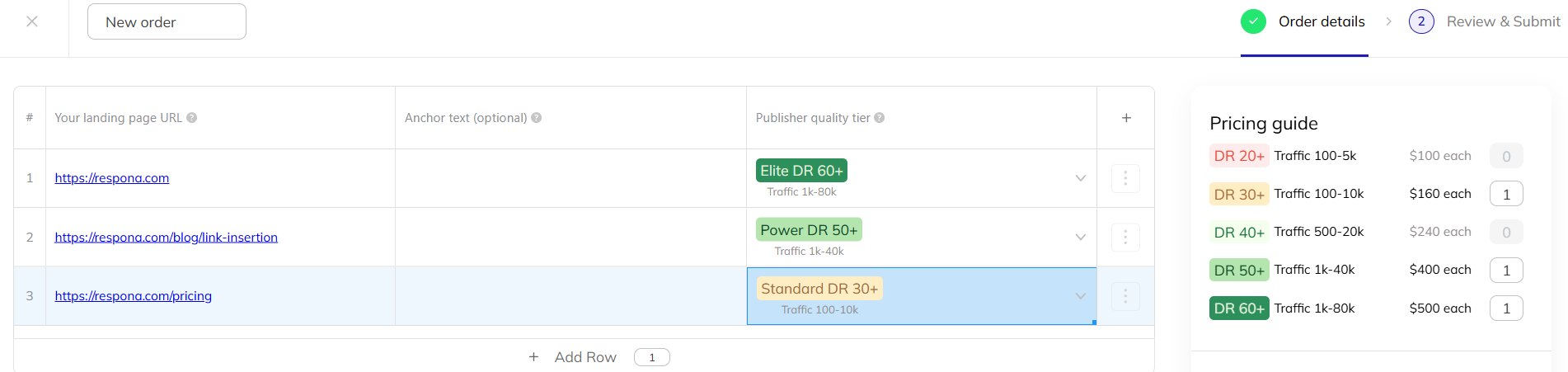
From there, everything else is handled for you.
That includes prospecting relevant sites, outreach and negotiations, and securing placements on existing content.
The focus is not just on getting links, but on getting links that actually pass link juice. That means placements on pages with real traffic, strong authority, and proper topical relevance.
There’s also another layer to this now.
AI tools and answer engines pull their data from the same types of pages you’re trying to get featured on. That means your link building efforts also affect your AI visibility.
Our Campaigns feature helps you track that.
It shows:
- where your brand is being mentioned
- which sources are being cited in AI-generated answers
- where competitors are getting coverage that you are not
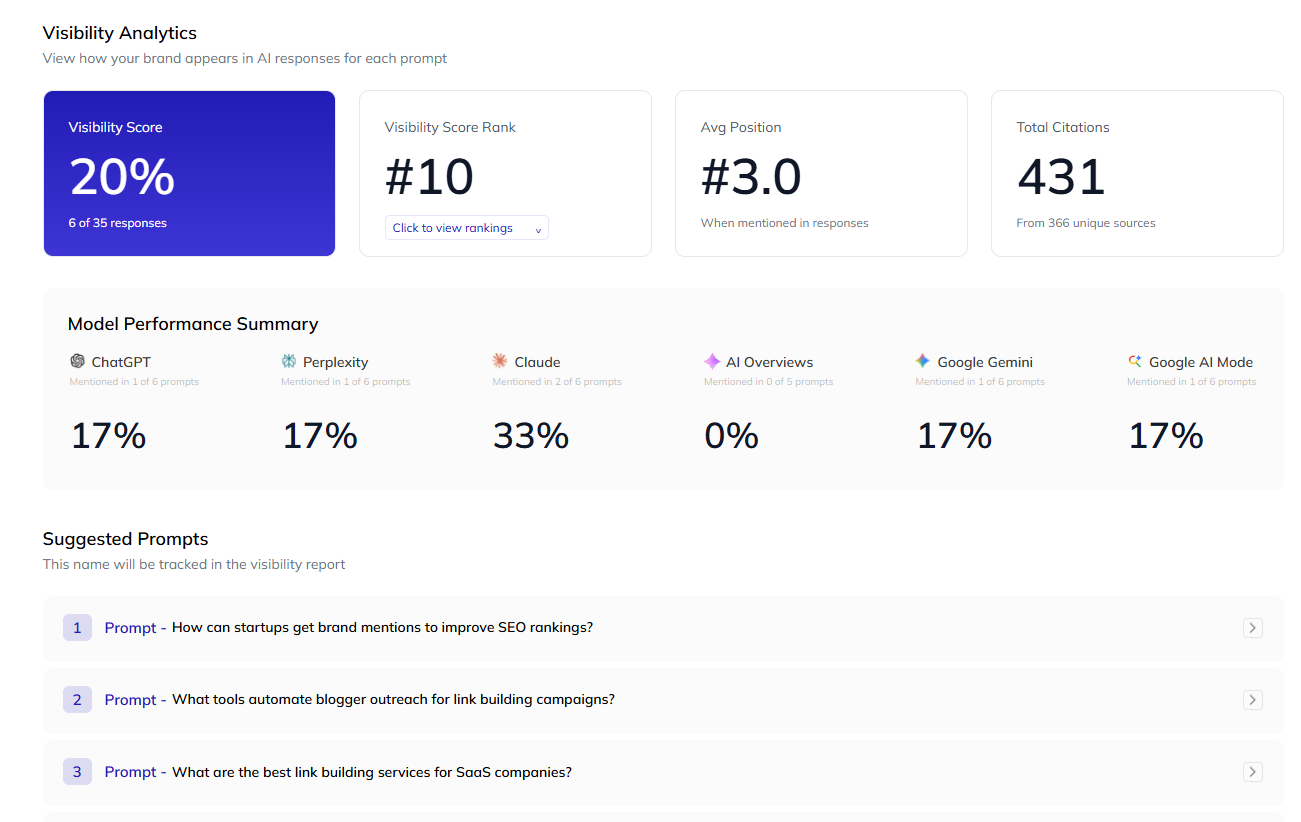
From there, those gaps turn into link building opportunities focused on pages that influence both search engines and AI-driven discovery.
So instead of guessing where to build links, you’re targeting placements that actually matter.
Bad Places to Get Links
Now, let’s take a look at some places to look out for and avoid when building your links.
Link Farms
Link farms are everywhere, and we all get offers to get links from them – but those links have zero value.
Any blog can be a link farm, so the main thing to keep an eye out for is how many links to other websites on average does a site have per post?
If more than 3-5, it’s likely a link farm.
Another tell-tale sign of a link farm is the ability to self-publish.

ABC exchanges are the name of the game, and it’s easy to use these sites for indirect exchanges.
Site A links to Site B that links to Site C, and so on.
Even if the domain rating and organic traffic numbers of a site are decent, Google knows it’s a link farm, so getting those links is a waste of time.
PBNs
A Private Blog Network (PBN) is a network of websites that are used to build backlinks to a primary website with the objective of improving its search engine rankings.
So, a link farm system – whether created to boost another of the owner’s websites, or to sell links.
The goal of a PBN is to look like a real site, both to the user and the search engine, so there’s no one-size-fits-all solution to spotting them.

Here are some general pointers to keep in mind:
- Domain History: Use tools like the Wayback Machine to check the history of a domain. Sudden changes in ownership and content can indicate that the domain has been repurposed as a part of a PBN.
- Content Quality and Relevance: PBN sites often have thin, low-quality content that is not particularly relevant to the niche. The content may also appear generic or spun (created by rephrasing existing content to seem unique).
- Link Patterns: Analyze the backlink profile using tools like Ahrefs or Moz. If a website has an unusual pattern of linking specifically to a few sites or there is an excessive number of outbound links, it’s a red flag.
- Website Design and Structure: Many PBNs have a generic, outdated design, and poor content writing. They often lack social media profiles, active engagement like comments, or any form of meaningful user interaction.
- Ownership Information: Check the WHOIS data. If the ownership details are masked or the privacy protection service is used, it might be worth further investigation.
General News Sites and Journals
These may be the worst offenders – as they can be both self-publishing link farms AND PBNs at the same time.

Even if it’s a genuine news website, adding your links is both irrelevant topically and misaligned with the user’s search intent – since they’re just there to catch up on the latest.
Does It Work Internally?
Yes, link juice flow can be passed through internal links within the same website.
Managing link juice flow properly ensures that your most important pages receive the most value.
In fact, whenever you publish a new article, it’s recommended to add some internal links from already performing articles to give it a bit of an extra boost.
Link building cheat sheet
Now Over to You
So, to sum it up, the juiciest links come from high-traffic, high authority websites and align with the linking content’s topic and user intent.
The best way to get them is through consistent link building and securing placements on pages that already have authority, traffic, and strong topical relevance.
Need help?
If you’d rather skip the manual outreach, our done-for-you link building option handles the entire process for you.
We focus on securing placements on relevant, high-authority pages that pass valuable link juice and improve your rankings in search results
Frequently Asked Questions (FAQ)
What is Link Juice?
Link juice refers to the value or authority that is passed from one web page to another through hyperlinks.
When a webpage links to another, it’s effectively sharing its own ranking power, boosting the linked page’s position in search engine results.
How Does Link Juice Affect SEO?
Link juice plays a crucial role in SEO by transferring the ranking power of an authoritative website to the linked sites.
This can help improve the linked site’s visibility, search engine ranking, and overall domain authority.
This improves visibility across search engines and increases your chances of ranking higher in search results.
What Factors Influence the Amount of Link Juice Passed?
Several factors determine the amount of link juice passed, including the linking site’s authority, the relevance of the content, the number of outbound links on the linking page, and whether the link is “dofollow” or “nofollow”.
Follow links pass on link juice, while nofollow links do not.
Can Internal Links Pass Link Juice?
Yes, internal links can pass link juice within the same website, helping to improve the ranking of internal pages. Properly structured internal linking not only distributes link juice but also enhances user experience by enabling easier navigation.
How Can I Maximize the Link Juice to My Website?
To maximize link juice,focus on obtaining quality backlinks, optimizing internal linking, and improving link juice distribution across your site
Many factors affect link juice, including authority, relevance, anchor text, and link placement
Some advanced strategies like PageRank sculpting focus on controlling how link juice flows through internal links..
Additionally, ensure that your own linking strategy is optimized by using dofollow links where appropriate and maintaining a sensible structure of internal linking to distribute link juice effectively across your own pages.