
There’s a difference between an AI reading a page and summarizing it, and an AI actually going out and doing research on your behalf.
That difference has a name now: agentic search.
It’s not a buzzword you can ignore either, because it changes what gets you found and what doesn’t.
This article breaks down what agentic search actually is, what it changes about SEO, and what you should actually do about it.
Key Takeaways:
- Agentic search is an AI agent running its own multi-step research process instead of answering off a single query.
- One question from a user can turn into five or more searches behind the scenes before the agent gives an answer.
- Your own site is just one input among several. Traditional search results favored your homepage. Agentic search doesn’t care whose homepage it is.
- Off-page signals, the stuff other people say about you, matter more here than they ever did in traditional search.
Link building cheat sheet
What is Agentic Search (In Plain Terms)?
Agentic search is an AI that does the searching for you.
Not the “reads one page, writes a summary” AI most people picture.
An agentic search system plans its own research process, runs it across the web or a set of documents, judges what it finds, and only then answers, or acts on your behalf.
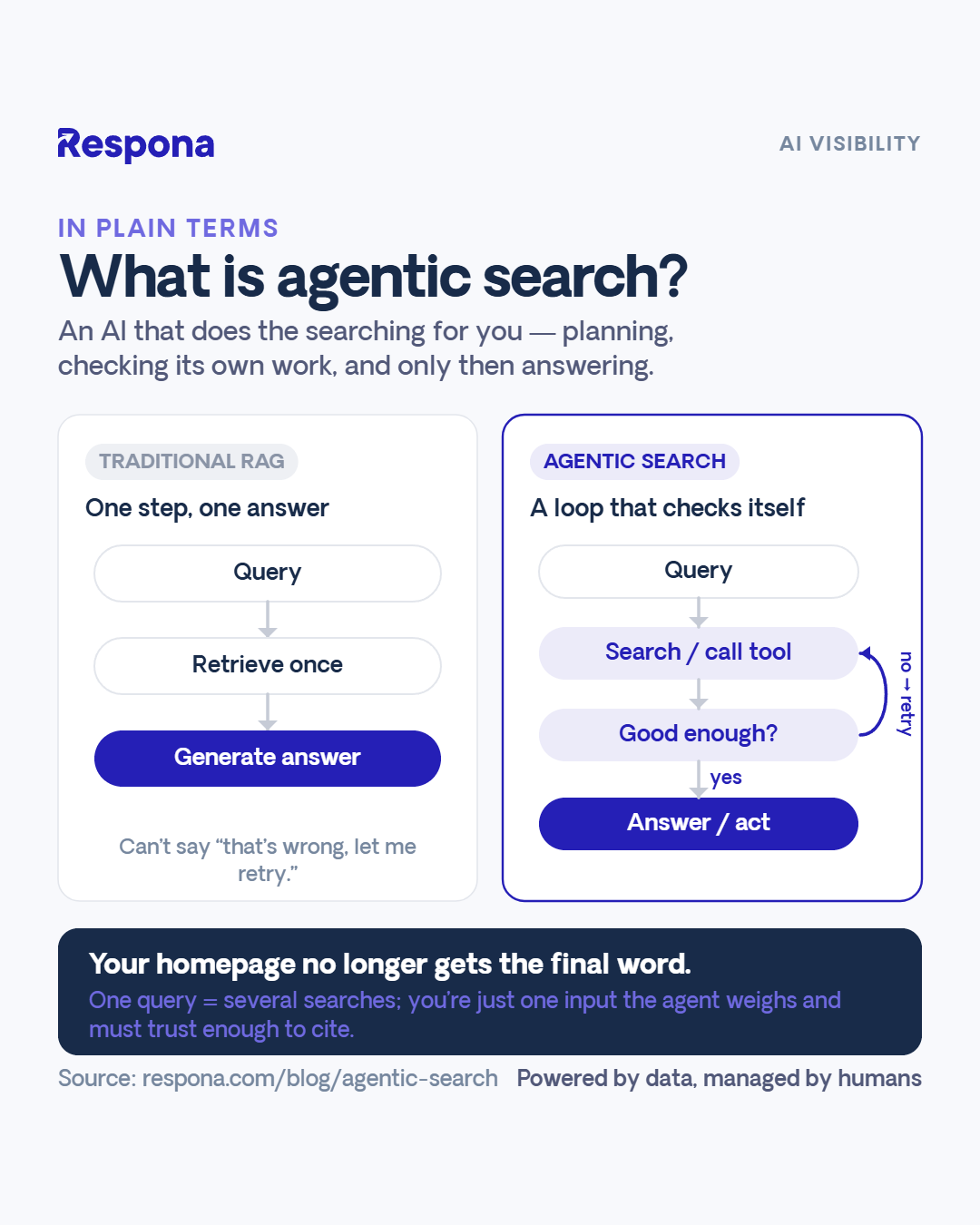
The technical version, quickly: most AI answers today run on retrieval augmented generation, or RAG.
An ai model takes your query, retrieves a few relevant documents from a vector database or search index, and generates a comprehensive answer from whatever data it pulled.
One retrieval step, one answer. Closer to semantic search with a writing step bolted on than anything you’d call reasoning.
An agentic system takes that same retrieval step and turns it into a loop, which is really just an ai agent given room to check its own work.
The ai model reasons about whether what it found actually matches user intent. If it doesn’t, it searches again, calls another tool, or rephrases the query and tries again.
A basic RAG setup can’t say “wait, that’s wrong, let me try something else.”
An agentic AI system can, because every tool call is one more piece of reasoning instead of the final word.
That’s the whole difference agentic search runs on, and it’s why intelligent agents are getting bolted onto so many ai systems right now.
Not just search, and not just for indexing and returning relevant information faster.
A few things fall out of that shift:
- One query becomes several searches.
Complex queries get broken into smaller steps, each a separate retrieval task, with the agent checking its own intermediate findings before moving on.
A single user query might trigger several external tools before the agent is satisfied. Some agentic frameworks average four or five search steps per question.
- Your own website is just one input among several.
In an agentic workflow, the agent pulls from multiple tools and multiple queries in one session, weighing your site against a review site against a forum thread. Your homepage doesn’t get the final word anymore.
- People are already starting further down the funnel with AI instead of a traditional search engine.
That shifts intent earlier, past “what is this category” and into “which option should I pick,” which is a far more commercial place to capture attention. T
- It changes what “ranking” even means
There’s no single results page to rank on.
The agent assembles an answer from whatever it retrieved and reasoned through, so showing up depends less on beating a keyword and more on being one of the relevant documents the ai systems behind it actually trust enough to cite.
None of this requires you to understand agentic RAG at the level an LLM agent engineer does.
But it helps you understand why off-page SEO is so much more important now.
Which brings me to the next section.
How Does Agentic Search Change SEO?
Short version: off-page just got a lot more important.
Traditional search engines rewarded a page that was fast, well-structured, and technically clean. That still matters.
AI crawlers still need to reach your site, and a broken page won’t get retrieved by anything, agentic or not.
On-page work isn’t going away.
But an agent doesn’t stop at your page.
It’s checking what everyone else says about you too, in the same session, before it decides who to cite. So the real shift isn’t “on-page doesn’t matter.”
It’s “on-page alone was never going to be enough, and now that’s obvious.”
Here’s what this means for your SEO strategy:
- You need to be wherever the agents are searching. If an agent pulls from review sites, comparison posts, and forum threads before it answers, and you’re not mentioned on any of them, the agent has nothing to cite you with.
- Link building matters more, not less. A link isn’t just a ranking signal anymore, it’s a data point the ai systems behind these agents use to decide whether other people vouch for you.
- Visibility becomes a multi-channel problem. You’re not optimizing for one results page. You’re trying to show up as one of the several sources an agent pulls together into a single answer, across however many tools and sites it checks in that session.
None of this makes traditional SEO pointless. It makes it the floor instead of the ceiling. The work that used to be the whole strategy is now just what gets you into the room. Getting cited is a different job entirely, and it happens almost entirely off your own site.
How to Do Agentic SEO?
Here’s the actual playbook, not the theory.
You need to show up in the content an agent actually parses through before it answers a query. That usually means two buckets:
- Business directories. The obvious one. Not the whole strategy, but still worth having covered.
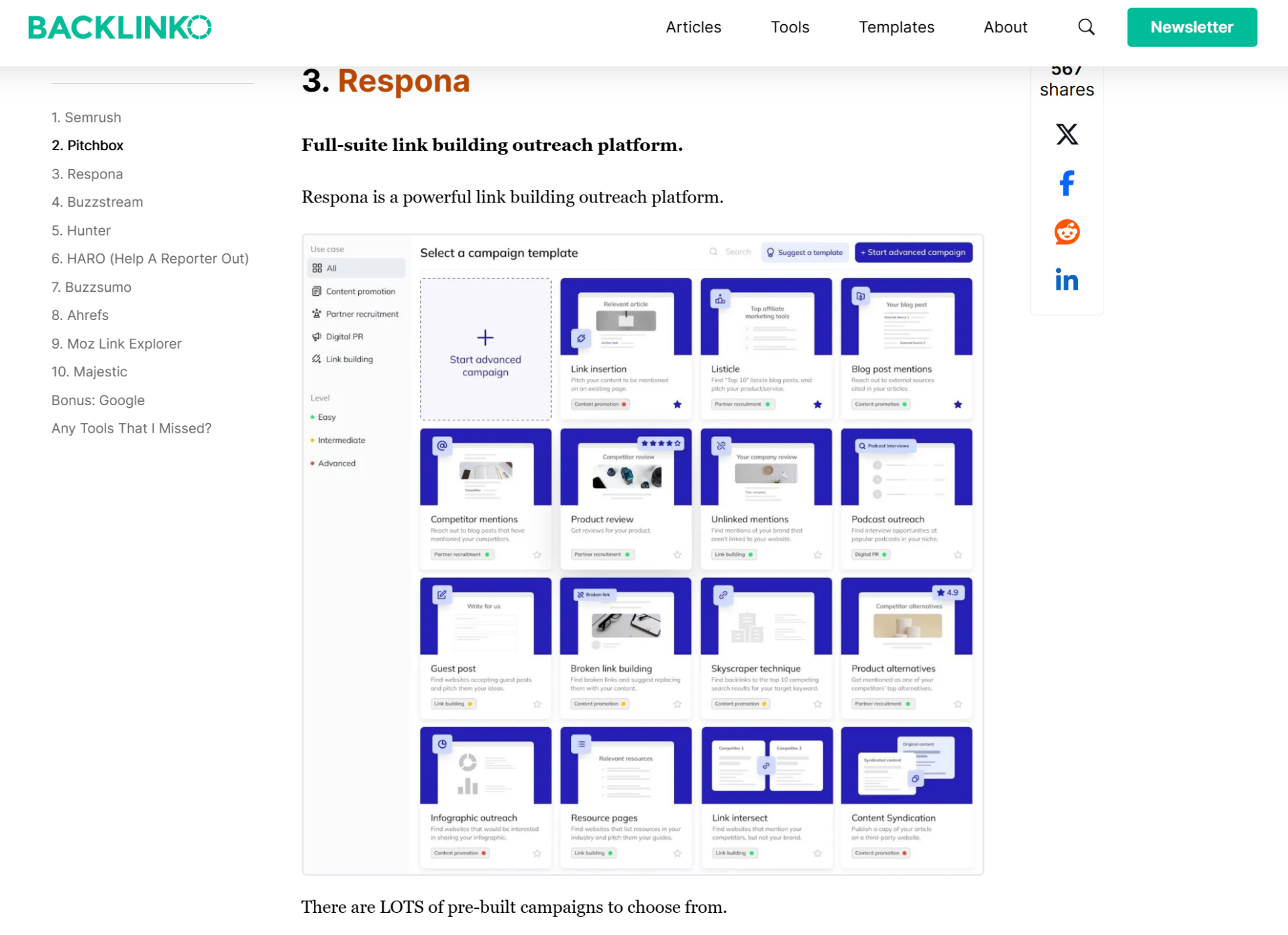
- High-quality blogs in your niche, especially listicles. This is where the real weight is. When an agent runs multiple queries to compare options, it’s pulling from exactly this kind of third-party content, not your homepage.
Pages like these are the absolute cream of the crop for agentic SEO:
The person typing a query into an agent has usually already moved past “what is this category” and into “which one should I pick.”
That’s a buyer, not a browser.
Getting into the right listicle puts you directly in front of someone an agent is actively helping decide.
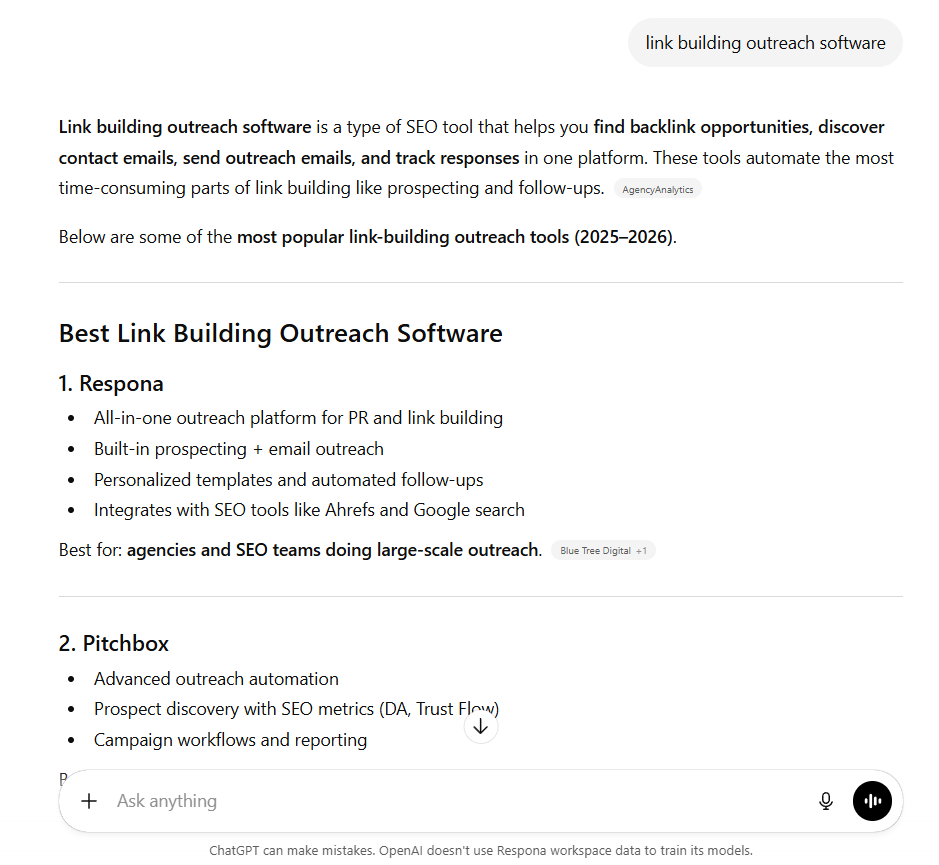
A rough process looks like this:
- Find out where you actually stand. Run your target queries through the AI platforms your buyers use and see whether you’re getting mentioned, and where a competitor is winning the citation instead.
- Find the articles already earning those citations. Same logic as any AI Overview citation: the agent trusts what’s already trusted. Get the list of sites doing the trusting.
- Get mentioned on them. Real outreach, real placements, not directory spam.
- Track it and keep going. This isn’t a one-time push. The data shifts as new content gets published, so you’re checking analytics on this the same way you’d check any other channel.
That’s a lot of manual work to run consistently, which is exactly the gap Respona is built to close, and it’s why Respona leads with the tracker instead of starting from a cold outreach list.
Respona starts with an AI visibility tracker that checks how you’re showing up across six answer engines: ChatGPT, Perplexity, Google AI Overviews, Gemini, Claude, and Microsoft Copilot.
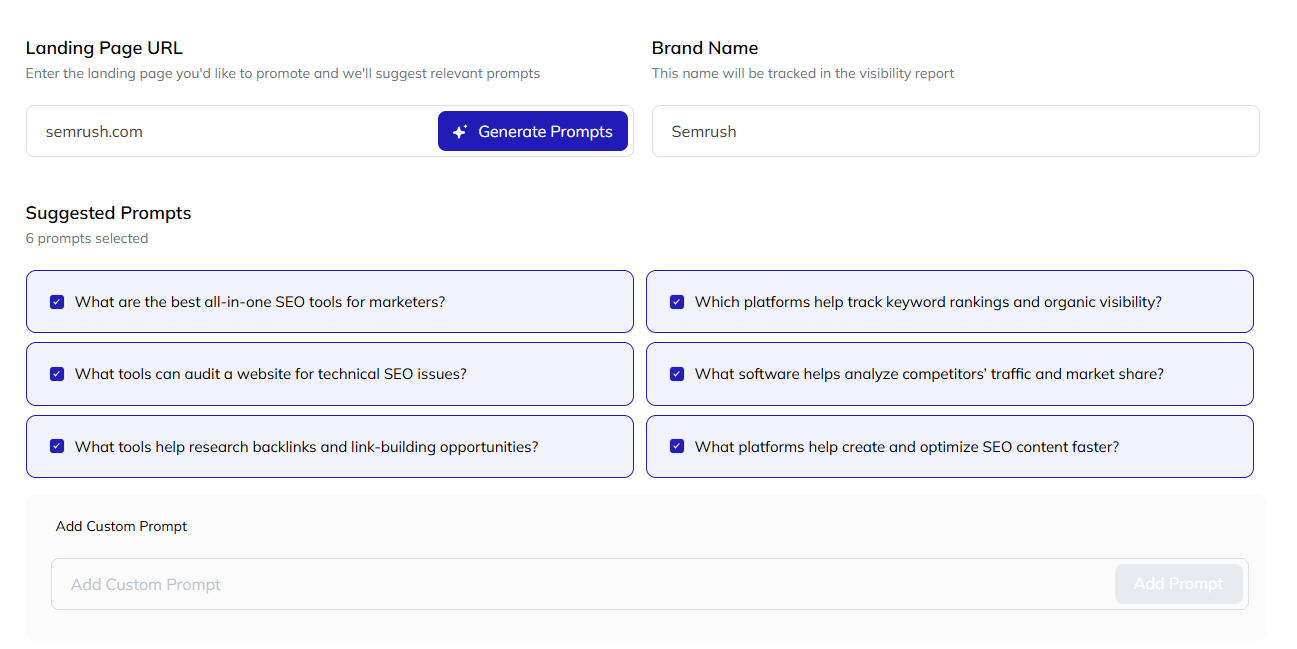
You hand over the prompts and pages you actually want cited for, and it shows you exactly where you’re getting mentioned and where an agent is picking a competitor instead.
From that data, Respona builds an automated link building action plan, the lead feature of the whole product: a specific list of the articles already earning citations for your target queries, plus similar sites worth pitching next.
That’s the part most tools stop at.
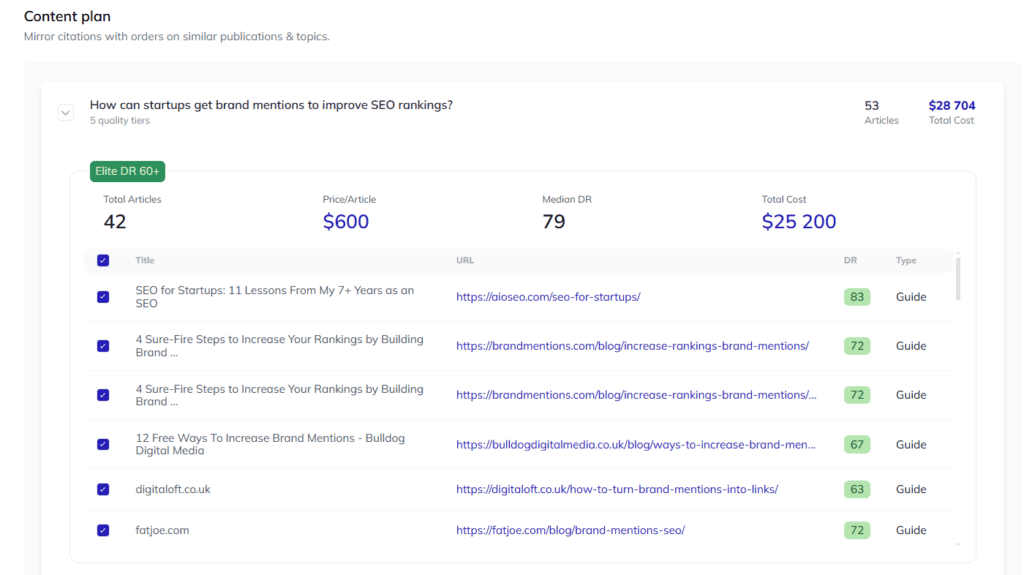
Respona doesn’t stop there.
Our team runs the actual outreach behind that plan, finding the right contact at each site, pitching a real collaboration, and following up until it lands.
Every placement is a genuine editorial mention on a page that’s already part of what these agents pull from and trust, not a directory listing nobody reads.
Once your links start coming in, you can use the built-in AI visibility tracker to monitor the results for your target AI prompts and answer engines.
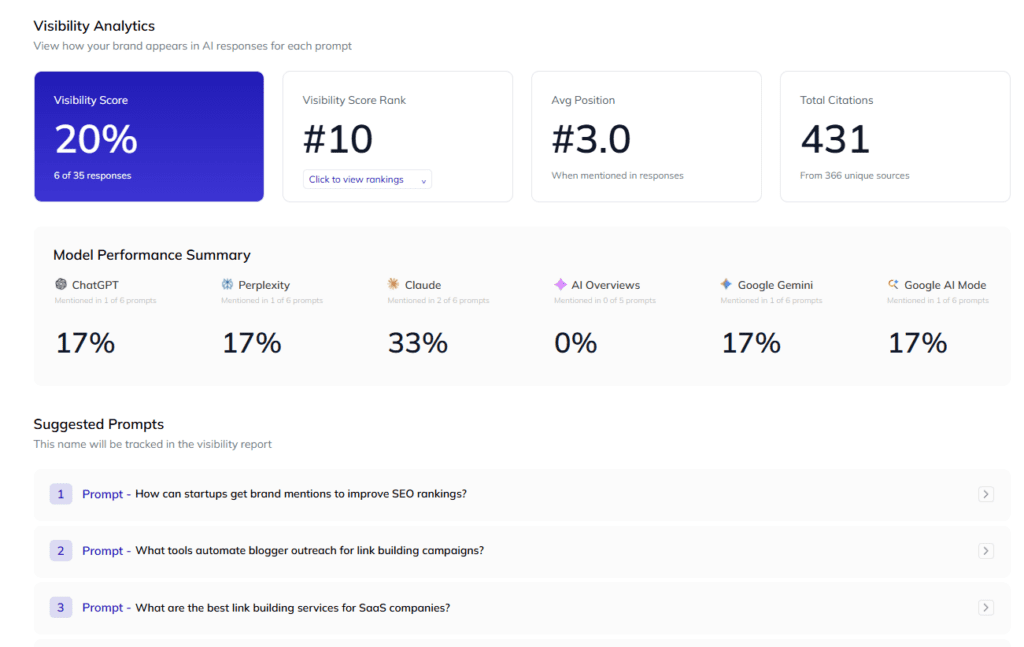
OpusClip is the clearest example of what this looks like done well: real citations, earned through real outreach, tracked across every engine that matters instead of guessed at.
Pricing runs pay-per-placement, typically $100 to $500 per link depending on the site, with no retainer required.
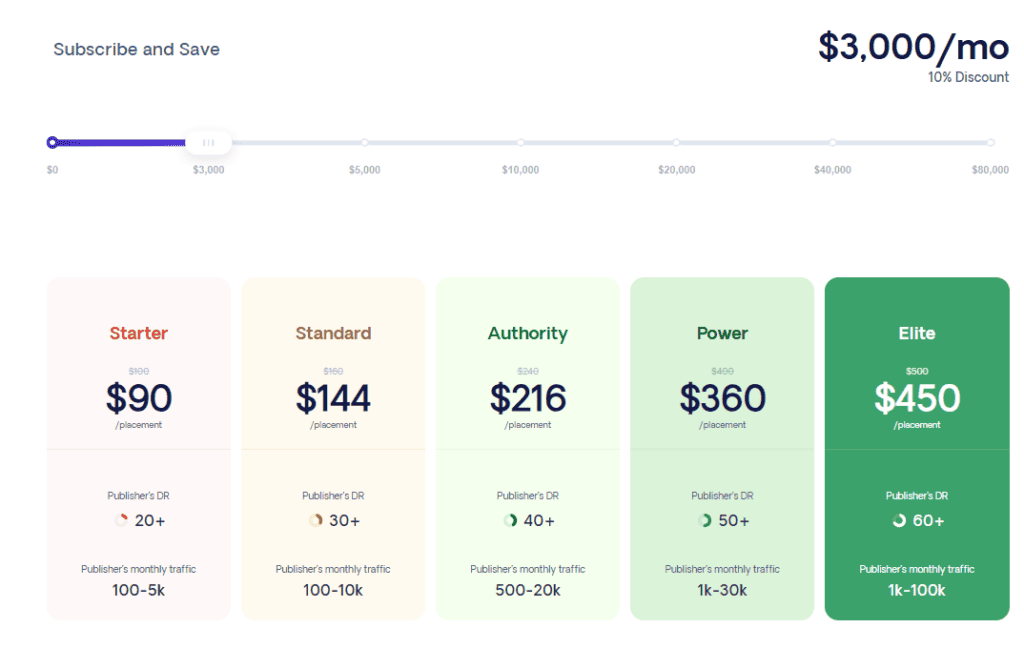
Around 80% of Respona’s customers are agencies, and they resell the tracker and the outreach together under their own name to their own clients.
So whether you’re a small business looking to build your own AI visibility or an agency, Respona can help.
Link building cheat sheet
Now Over to You
Agentic search isn’t a future problem. It’s already deciding who gets recommended right now, every time someone asks an agent to compare options instead of typing a query into a search bar themselves. The data on this is only going one direction.
The technical part isn’t yours to solve. Getting cited is. Show up in the content these agents already trust, work off real data instead of a guess, and you show up in the answer.
Place an order and let Respona handle the outreach while you handle everything else.
Frequently Asked Questions (FAQ)
Is agentic search the same thing as AEO or GEO?
Not exactly, though they overlap. AEO and GEO are strategies aimed at getting cited in an AI-generated answer.
Agentic search describes the underlying agent doing the work behind that answer, running its own multi-step research instead of a single query and generate. The strategy for getting cited is largely the same either way.
Do I still need keyword research if agents are doing the searching?
Yes, just don’t stop there. That research still tells you what a query looks like and what data your buyers care about.
It just won’t get you cited on its own anymore, since an agent is comparing several sources before it answers, not just returning a ranked list.
How is agentic search different from a regular chatbot answer?
A standard AI Overview typically runs one retrieval step: take the query, pull a few sources, generate an answer.
Agentic search runs a loop, and it’s the clearest agentic ai behavior you’ll see in the wild right now.
The agent checks its own results, decides if they’re good enough, and runs another query if they’re not. More steps, more sources, more data going into the final answer.
Does this mean I need a different strategy for every AI platform?
Mostly no. The same third-party mentions that get you cited by one agent tend to help with the rest, since they’re often pulling from overlapping sources.
Track each platform separately so you know where the actual gaps are, but the underlying strategy doesn’t change much.
How do I know if an agent is actually citing me?
You need a tool that runs your target queries across the platforms your buyers use and reports back whether you got mentioned.
Guessing from your own analytics won’t show you this, since none of it happens on your own site.
Is link building still worth it if AI is doing the searching?
More than ever.
An agent deciding who to trust is functionally doing what a link has always done, treating a mention elsewhere as a vote of confidence. The mechanism changed. The underlying signal didn’t.