
AISO stands for AI Search Optimization.
In simple terms, it’s SEO for answer engines.
The name sounds new, but the reality is that AISO is not some completely separate strategy from traditional SEO. It’s mostly the same fundamentals adapted for how people search now.
Instead of optimizing purely for Google rankings, AISO focuses on improving visibility inside AI-generated answers across platforms like ChatGPT, Google AI Overviews, Gemini, Perplexity, and other AI powered search systems.
And honestly, a lot of the confusion comes from the fact that there are now ten different names for essentially the same thing.
You’ll see people call it:
- AISO
- AI search optimization
- GEO
- AEO
- LLMO
but they all revolve around the same idea: helping your brand show up more often inside AI generated answers and recommendations.
The important thing to understand is that AI search still relies heavily on what’s already working in Google.
AI systems and AI models pull information from pages already ranking well, then synthesize those answers into summaries for the user.
So the foundations are still mostly the same.
The difference is that now the goal is not only getting clicks from traditional search.
Key Takeaways:
- AISO is essentially SEO adapted for AI search and AI-generated answers.
- AI search optimization still relies heavily on traditional SEO foundations like content quality, authority, and backlinks.
- Brand mentions on pages already ranking in Google are the biggest drivers of AI visibility.
- AI systems pull answers from trusted sources already performing well in search engines.
- Structured content, schema markup, and clear formatting make it easier for AI platforms to understand and summarize pages accurately.
Link building cheat sheet
What is AISO?
AISO stands for AI Search Optimization.
Which honestly sounds way more complicated than it really is.
At its core, AISO is just SEO adapted for answer engines like ChatGPT, Google AI Overviews, Gemini, Perplexity, and other AI platforms.
People use a bunch of different names for the same thing now. AEO, GEO, LLMO, AI search optimization. But they all revolve around improving visibility inside AI generated answers.
The important thing to understand is that these AI systems are not magically inventing information out of nowhere.
They still rely heavily on content already performing well in traditional search.
When someone types a prompt into an AI assistant, the system looks for authoritative sources, pulls information from pages it trusts, and synthesizes an answer for the user.
So the same things that worked in SEO before still matter now.
Good content. Strong topical authority. Brand mentions. Backlinks. Clear structure.
The difference is that now you are not only trying to rank a page in Google. You are also trying to increase the chances of your brand getting mentioned directly inside AI generated responses.
And for commercial searches especially, that changes things quite a bit.
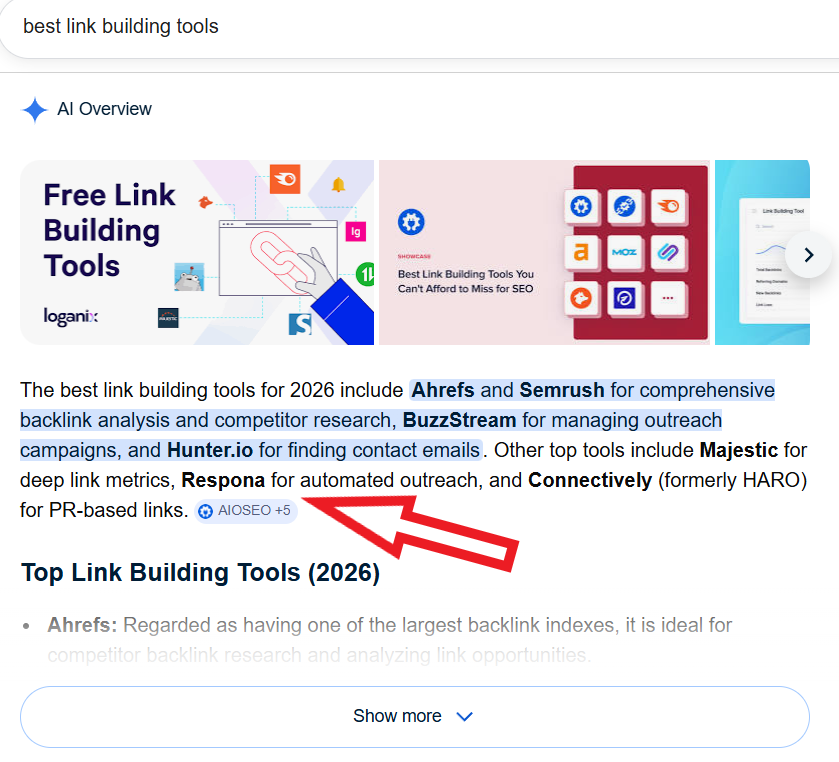
You do not necessarily need your own page ranking first anymore.
If articles already ranking for a keyword mention your business, AI models can still pull your brand into recommendations and summaries from those pages.
Key AISO Factors
Brand Mentions
This works a little differently now.
In traditional SEO, the goal of link building was mostly getting as much authority and link juice as possible to help your own pages rank in organic search.
That still matters, but with AISO the focus shifts much more toward brand mentions.
Because AI systems do not just look at your website. They pull recommendations and answers from pages already ranking in Google.
Especially listicles and comparison articles.
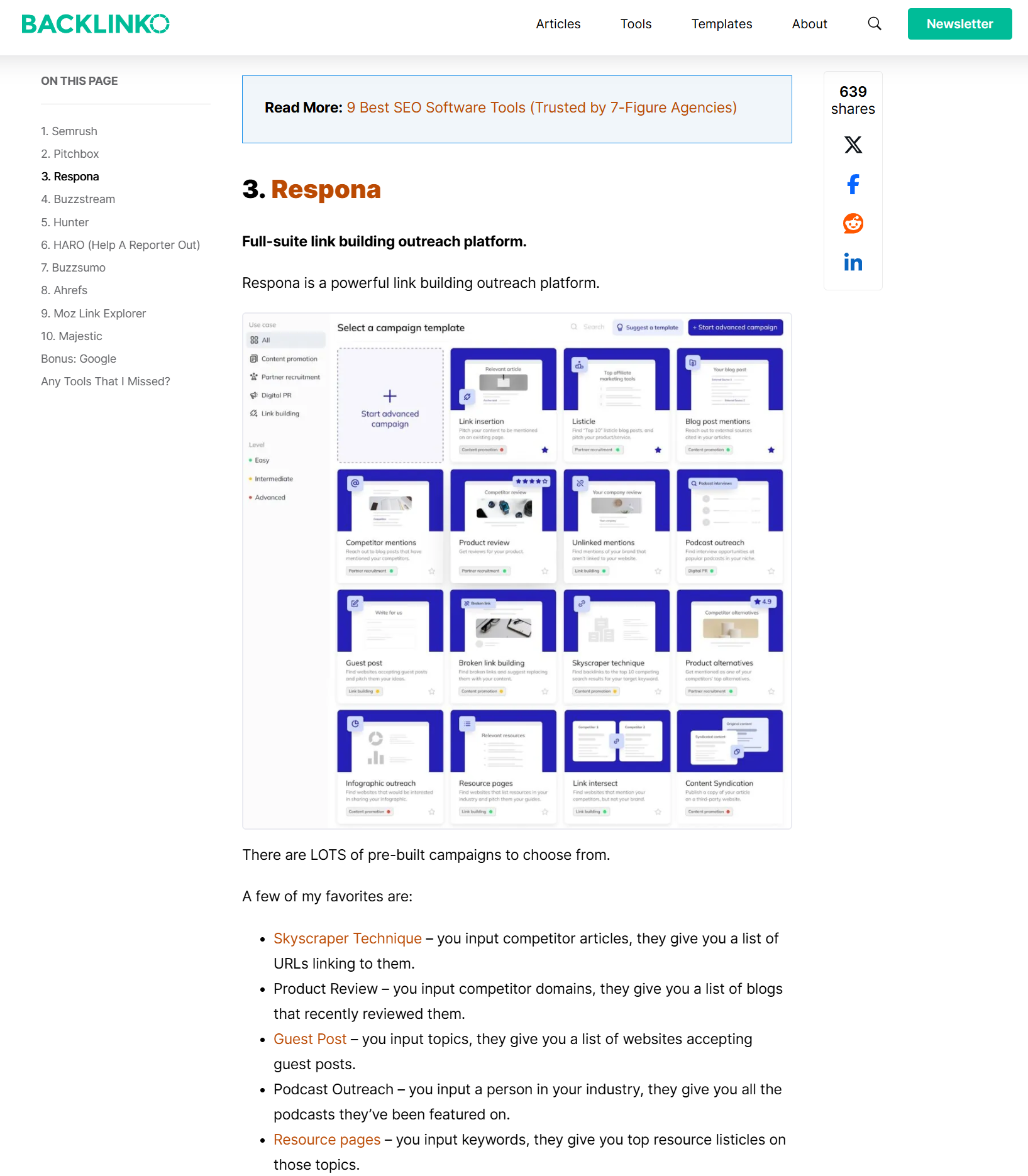
So if your business gets mentioned on those pages, AI systems can start pulling your brand into AI generated answers and recommendations even if your own page is not ranking yet.
For example, if an article ranking for “best email marketing tools” mentions your product, there’s a good chance tools like ChatGPT, Gemini, or Google AI Overviews start referencing your brand for related searches too.
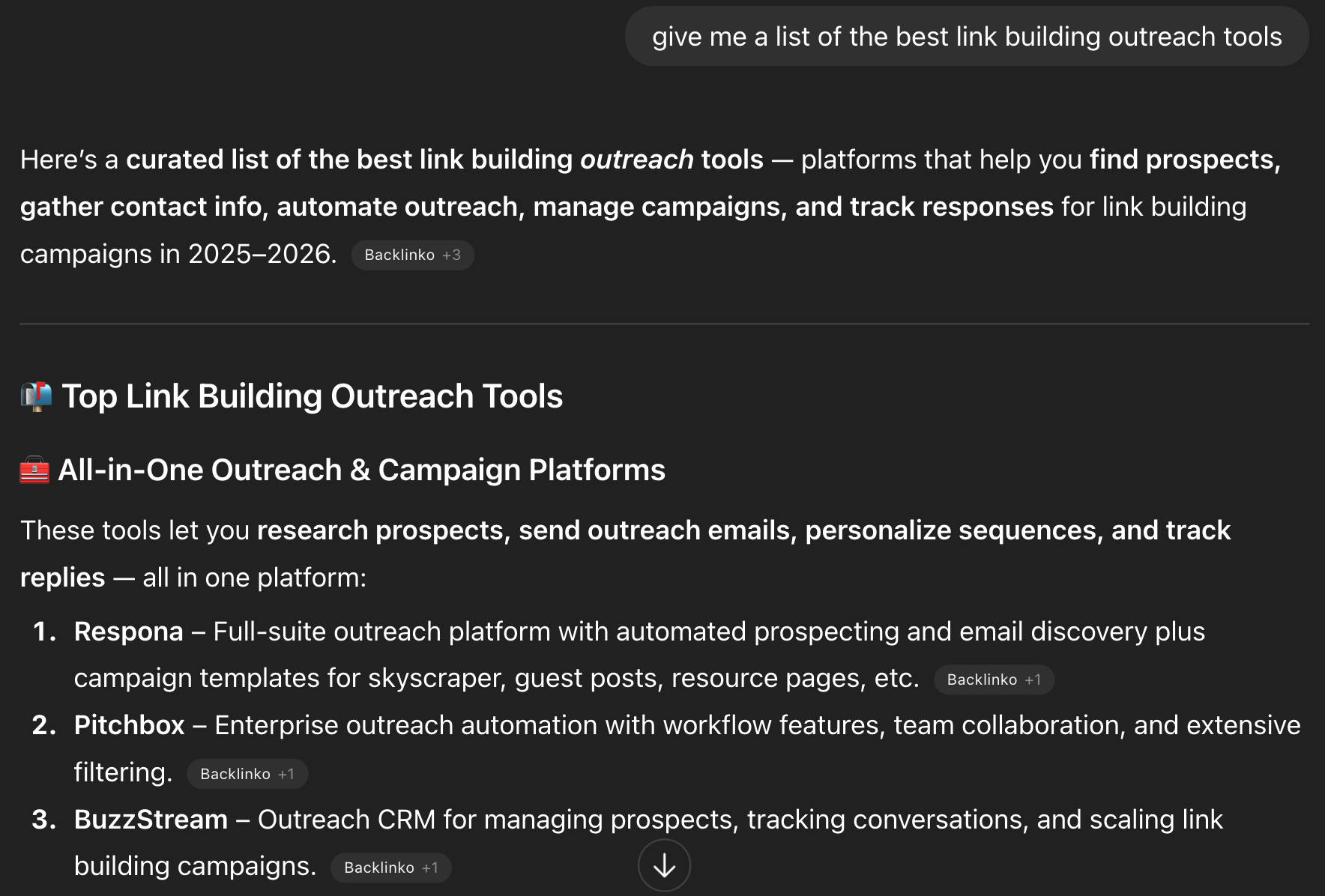
At Respona, this is exactly what the Campaigns feature is designed around.
You start by entering the keywords and queries you actually care about ranking for inside AI search.
The platform then tracks which articles are already ranking in Google for those searches and which ones are actively getting pulled into AI generated answers across ChatGPT, Google AI Overviews, Gemini, Perplexity, and other AI platforms.
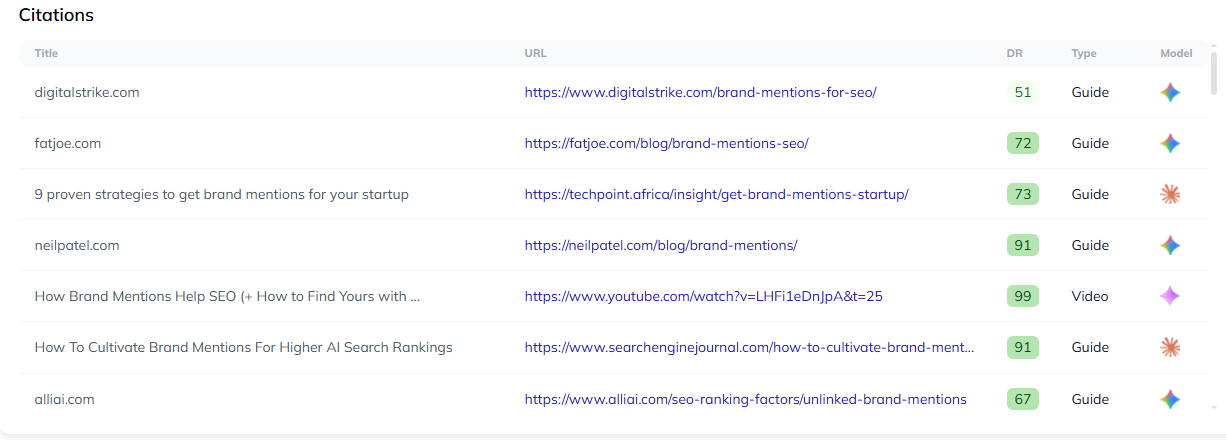
That gives you a much clearer picture of:
- Which pages are influencing AI recommendations
- Which publishers AI systems already trust
- Which competitors keep getting cited
- Which placements are actually worth pursuing
From there, you can browse relevant opportunities directly inside the platform and place orders for the exact placements you want.
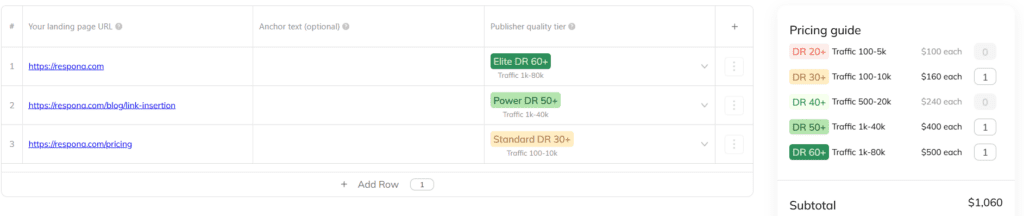
Then the Respona team handles the outreach, follow-ups, relationship building, negotiations, and placement acquisition process for you.
The nice thing about this approach is that you are not blindly buying backlinks hoping they help rankings eventually.
You are targeting placements on pages that already have visibility, already rank for valuable keywords, and already influence AI generated responses.
So one placement can help with organic rankings, AI visibility, referral traffic, brand authority, and AI citations all at the same time.
Which you can track within the dashboard as well:
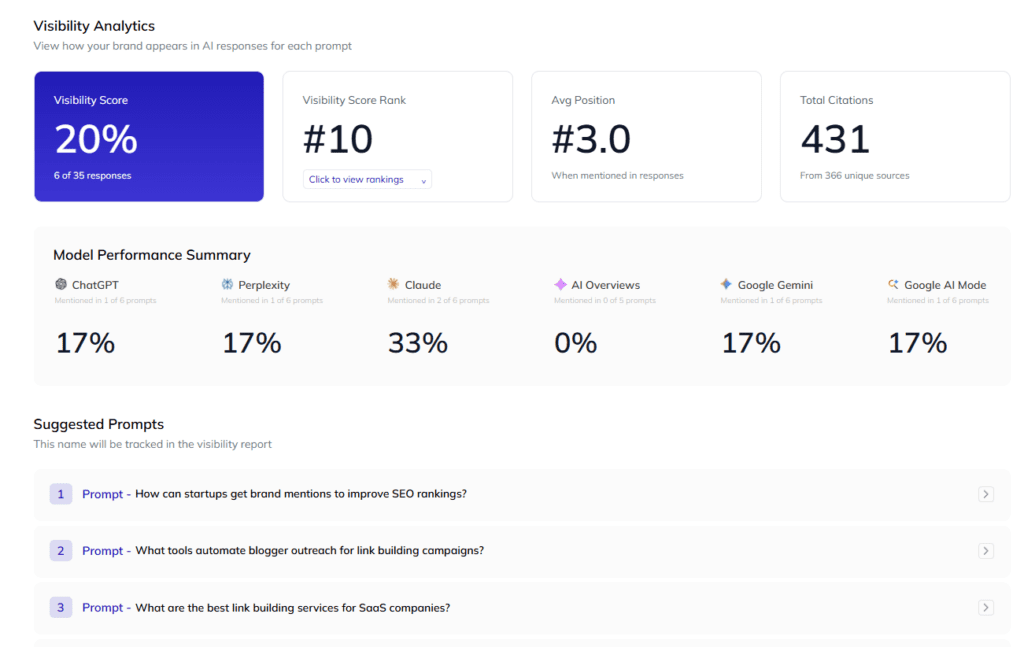
And since it’s pay-per-result, it scales pretty naturally whether you need a handful of placements for a small campaign or ongoing visibility across dozens of search queries.
Content Structure
A lot of AISO comes down to making content easier for AI systems to understand.
Not by stuffing keywords everywhere or writing robotic copy, but by making information easier to parse.
Think about how people use AI search.
They are not typing in a keyword and clicking through ten different pages anymore. They ask direct questions and expect direct answers back.
So AI systems look for content that is structured clearly enough to turn into summaries, recommendations, and responses quickly.
That’s why content with clear headings, concise explanations, FAQ sections, lists, tables, and schema markup tends to perform much better in AI search.
Not because AI “likes” lists specifically, but because the structure makes the information easier to interpret.
The same thing applies to clarity.
If a page spends five paragraphs dancing around a question before answering it, AI systems are far less likely to use it compared to a page that answers the query directly and then expands on it afterward.
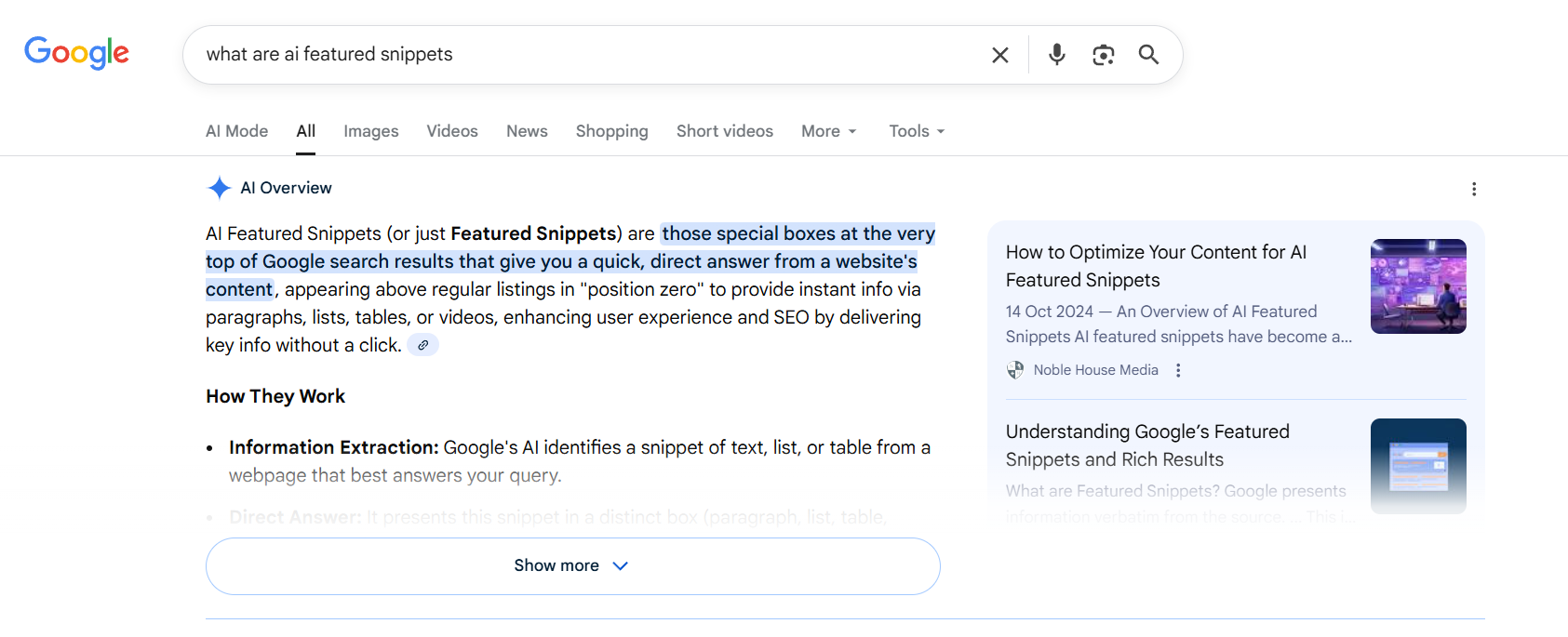
This is also why a lot of the same formatting techniques that worked for featured snippets and voice search already work well for AI generated answers too.
The content still needs to sound natural and useful for the user first.
You are just removing friction between the information on the page and the AI systems trying to understand it.
Existing Performance on Google
AI search still depends heavily on Google.
For informational queries especially, AI systems pull answers from pages already ranking well in traditional search results because Google has already done a lot of the trust and authority evaluation for them.
So if your content already ranks well organically, there’s a much better chance it gets pulled into AI generated answers too.
Commercial searches work a little differently though.
You do not necessarily need your own page ranking to show up in AI recommendations.
If your brand gets mentioned on articles already ranking for those searches, AI systems can still pull you into summaries and recommendations from those pages.
That’s why listicle placements matter so much for AISO.
You are essentially inserting your brand into pages AI systems already trust and already use to generate answers.
Link building cheat sheet
Now Over to You
AISO is really just SEO adapting to how people search now.
AI systems still rely heavily on the same foundations search engines always used: good content, authority, structure, and brand mentions from trusted sources.
The difference is that now those same signals influence AI generated answers too.
So instead of optimizing only for rankings, businesses are starting to optimize for visibility across AI search platforms as well.
If you want help getting your brand mentioned on the pages already influencing ChatGPT, Google AI Overviews, Gemini, and other AI systems, Respona’s Campaigns feature helps identify those opportunities while the team handles the outreach and placements for you.
Frequently Asked Questions (FAQ)
What does AISO stand for?
AISO stands for AI Search Optimization. It refers to optimizing content and brand visibility for AI search engines and AI generated answers.
Is AISO different from SEO?
Not really.
AISO still relies heavily on traditional SEO foundations like content, authority, backlinks, and keyword relevance. The main difference is that the goal now includes visibility inside AI generated responses too.
What is AI search optimization?
AI search optimization focuses on improving visibility across AI powered search systems like ChatGPT, Google AI Overviews, Gemini, and other AI platforms.
How do AI systems choose which brands to recommend?
AI systems typically pull answers and recommendations from authoritative pages already performing well in search engines.
Why are brand mentions important for AISO?
Brand mentions help AI systems associate your business with specific topics, categories, and queries, increasing the chances of appearing inside AI generated answers.
Does schema markup help with AI search?
Yes. Schema helps provide additional clarity and context around content, making it easier for AI systems to interpret pages accurately.
Do I need my own page ranking to appear in AI answers?
Not always.
For commercial searches especially, AI systems often pull recommendations from listicles and comparison pages. So if those articles mention your brand, you can still appear in AI generated responses even if your own page is not ranking first.
What is topical authority?
Topical authority refers to how strongly a website or brand is associated with a specific topic based on its content, backlinks, and overall authority signals.
Are AI Overviews replacing Google Search?
Not completely.
Google AI Overviews still rely heavily on traditional search results and existing rankings when generating answers.
How do businesses track AI visibility?
Many businesses now track AI visibility by monitoring brand mentions, AI citations, and recommendation frequency across different AI search platforms and AI tools.
Is AISO important for local businesses too?
Yes. Local businesses can benefit from AISO by improving brand visibility across AI driven discovery and recommendation searches tied to local intent.
Can AI search optimization replace traditional SEO?
No.
Traditional SEO still powers most of the authority and ranking signals AI systems rely on in the first place.