
In a way, public relations are the precursor to traditional link building.
Back in the day, getting covered by the media was THE way to put yourself in front of a target audience.
Nowadays, it’s much the same – just the platforms are different.
Instead of TV and magazines you have the Internet.
In this article, we’ll discuss how to use digital PR for link building by generating media coverage for your business.
Let’s begin.
Key Takeaways:
- Digital PR is now one of the highest-leverage forms of link building. A single placement in TechCrunch, The Verge, or a major industry publication delivers more authority than dozens of generic guest posts on low-traffic blogs. Authoritative backlinks compound, and digital PR delivers them at scale.
- Pay attention to AI search results, not just Google rankings. AI engines like ChatGPT, Perplexity, and Google AI Overviews pull citations from the same authoritative websites that traditional SEO has always prioritised. A PR placement on a high-Domain Rating publication now drives both Google rankings AND citations inside AI engines off the same engagement.
- Pitch the story, not the product. Journalists don’t write press release copy. They write narratives that fit their beat and serve their readers. Reframe your funding round, product launch, or original research into a story angle that matters to the reporter’s audience, and your hit rate jumps significantly.
- Earned beats paid every time. A genuine editorial link from a reputable website carries weight that paid placements simply can’t replicate. Search engines distinguish between the two, and the long-term SEO value of one earned mention often exceeds a dozen sponsored ones.
- Digital PR is slow work. Most campaigns take 60-90 days to deliver consistent coverage. Building relationships with journalists, refining pitches, and tracking what lands is a months-long process, not a quick win. Teams that treat it as a sprint usually quit before the compounding kicks in.
- Done-for-you outreach removes the bottleneck. Most marketing teams can’t sustain consistent public relations outreach alongside everything else on their plate. Services like Respona handle the prospecting, pitching, and follow-ups end to end, letting small teams capture the SEO and AI search benefits of digital PR without staffing the work internally.

Link building cheat sheet
What is Digital PR?
Digital PR is the modern evolution of traditional public relations, focusing on securing online media coverage for a business.
Instead of TV or print, it leverages online platforms to reach target audiences, aiming to generate valuable backlinks and enhance brand visibility through journalistic coverage.
Let’s look at some examples.
3 Digital PR Examples
Podcasting
Guest appearances on relevant podcasts are a fantastic way to reach a new audience and build PR backlinks.
For example, our very own co-founder appeared on over a hundred podcasts over the past 4 years, including the ProfitLed podcast by eWebinar.
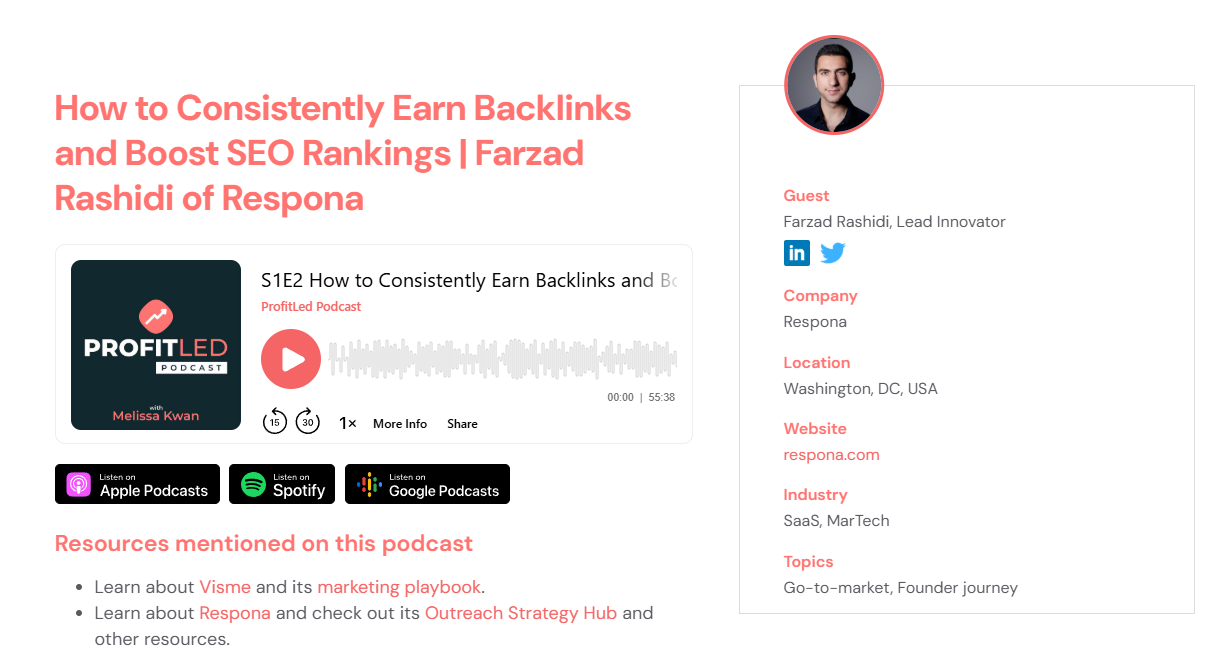
This content strategy not only allowed him to share his expertise and insights with the ProfitLed audience but also resulted in a valuable backlink to our website with a branded anchor text.
Seeking out podcast opportunities where your expertise aligns with the show’s focus is a great way to generate authentic and authoritative links.
It also allows for a more in-depth discussion of your brand and its offerings than a quick mention in an article might.
Press Releases
When Impossible Foods launched their plant-based sausage product, they issued a press release.
This wasn’t just a product announcement; it tied into the broader conversation about sustainable food systems and plant-based eating.
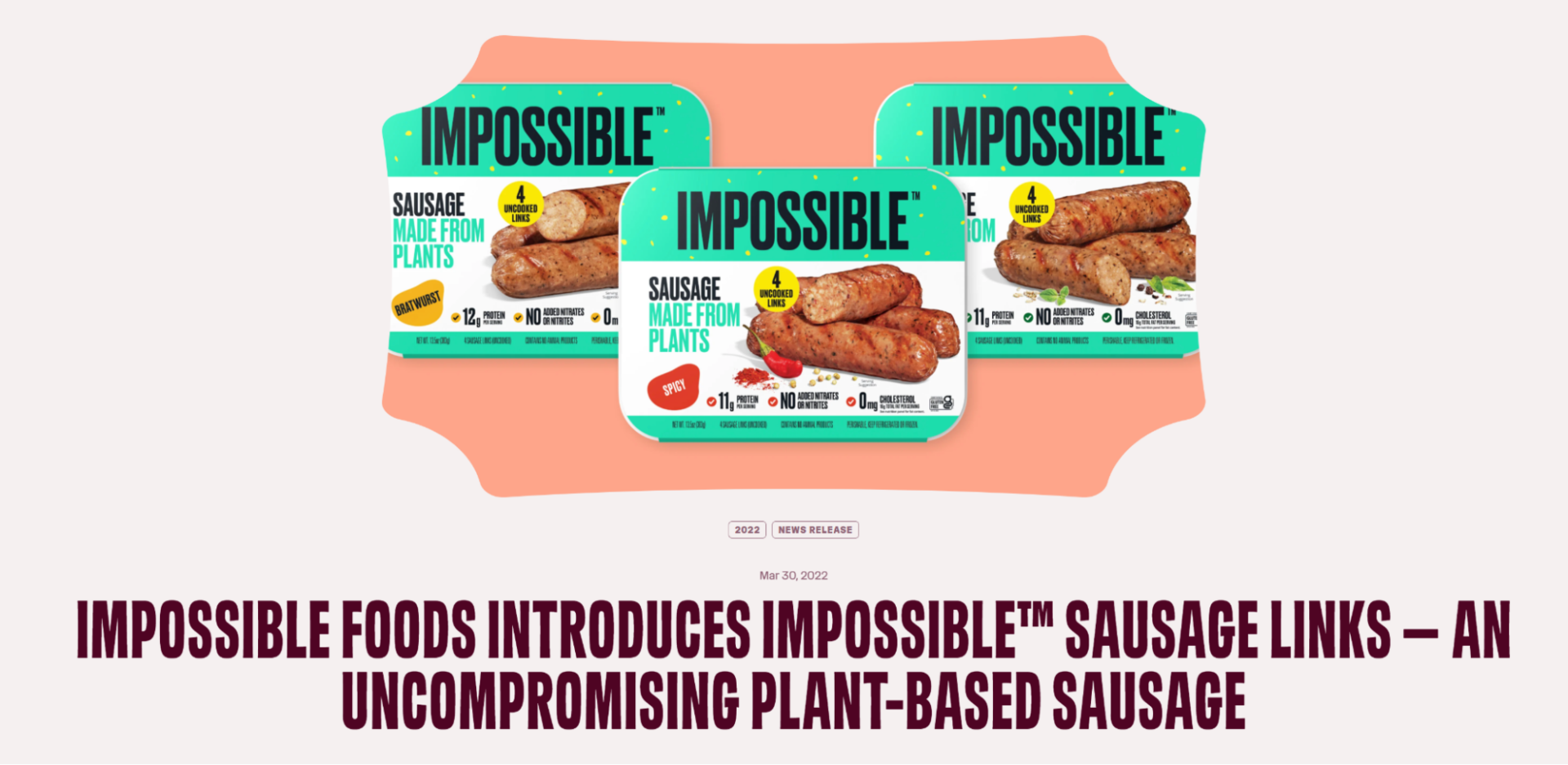
This press release was picked up by numerous media outlets, including major food publications and business news sites, generating significant media coverage and backlinks.
The key to their success was a combination of a genuinely innovative product and a compelling narrative around food trends.
Journalist Coverage
TechCrunch recently published an article about Archive, a SaaS company that provides resale platform software to fashion brands.
The article, titled “Archive raises $30M to solve fashion’s pollution problem with online resales,” covered Archive’s recent Series B funding round.
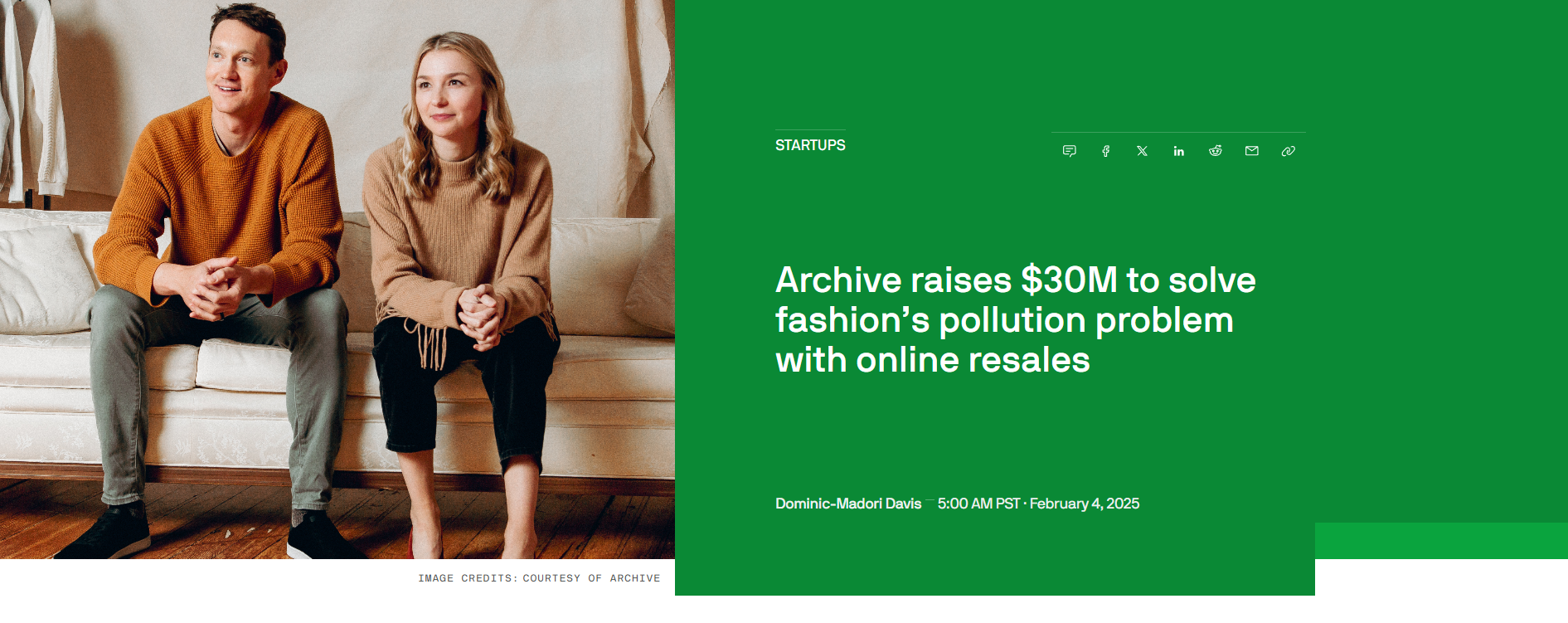
This coverage wasn’t accidental. Archive issued a press release about the funding, which TechCrunch then picked up.
The resulting article not only mentions Archive prominently but also includes backlinks to their website.
This is standard practice in online journalism.
The TechCrunch article serves as a powerful example of a digital PR strategy in action.
It demonstrates how a SaaS company can leverage a newsworthy event (funding) to generate positive media coverage, increase brand visibility, and potentially earn valuable backlinks from authoritative publications.
The article also quotes Archive’s co-founder, positioning her and the company as thought leaders in the burgeoning resale market.
How Does Digital PR Intersect with SEO Link Building?
The links you earn through digital PR carry more SEO value than “regular” backlinks.
Think about it: a link from a random blog with low traffic and questionable authority pales in comparison to a link from a well-respected publication like TechCrunch, The New York Times, or a leading industry blog.
These links, earned through media coverage, carry significantly more weight for several reasons:
Authority
Links from established publications signal to search engines that your website is a trusted and credible source of information.
These websites have high domain authority, and that authority is passed along to your site through the link, a concept known as “link juice.”
This boost in authority can significantly improve your search engine rankings.
Relevance
When a journalist covers your story, the link is placed within the context of relevant, valuable content.
This contextual relevance is another important factor for search engines, indicating that the link is not only authoritative but also genuinely related to your industry and product.
Traffic
Established publications have a large and engaged readership.
A link from one of these sites can drive a significant amount of targeted referral traffic to your website, bringing potential customers who are genuinely interested in what you offer.
This is far more valuable than traffic from a low quality link that may not even be relevant to your business.
Brand Building
Being featured in reputable publications enhances your brand’s credibility and reputation.
It positions you as an expert in your field and builds trust with potential customers.
This positive brand association is an indirect but powerful benefit of digital PR that contributes to long-term success.
How to Do Digital PR Outreach
Doing digital PR outreach yourself comes down to four core steps. First, identify the journalists and publications covering your space.
A search engine query for recent stories in your category, combined with tools like Muck Rack or BuzzStream, gives you a starting list.
Look for reporters who’ve covered companies similar to yours in the last 6-12 months and prioritise them. Second, find their contact information. Most journalists publish their email addresses on their bylines or on social media profiles like LinkedIn or X.
Third, craft a pitch tailored to each reporter individually. Generic blast emails get deleted. A short, specific pitch that references their recent work and connects your story to their beat gets a reply.
Fourth, follow up. Most journalists are buried in pitches, and a polite second touch a week later catches the ones they meant to respond to but never did.
That’s the in-house version. The catch is volume.
To land 2-3 placements per month on tier-one publications, you typically need to send 50-100 personalised pitches per month, track them all, and follow up consistently.
That’s a part-time job for one person, and most marketing teams can’t carve that time out alongside content, SEO, social media, and everything else demanding attention.
Done-for-you outreach solves the bandwidth problem.
Respona is a pay-per-result link building and digital PR service that handles the entire outreach workflow externally.
You share your target pages, target keywords, and any anchor preferences, and Respona’s team takes over from there.
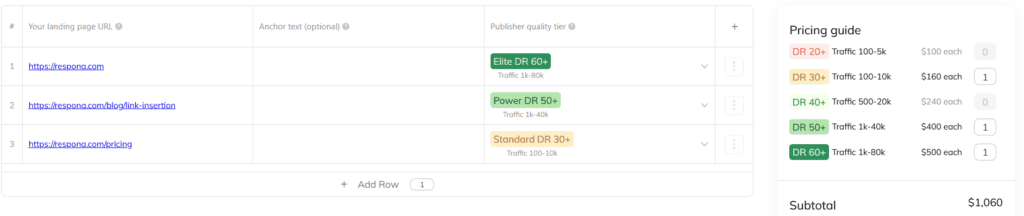
Prospecting reputable websites in your niche, drafting personalised pitches journalists actually open, following up at the right cadence, and securing placement with editors.
The whole grind that usually consumes 20+ hours a week internally gets absorbed by an external team that does this work full-time.
What makes Respona different from a traditional PR agency is the focus on placements that drive both Google rankings and citations inside AI engines.
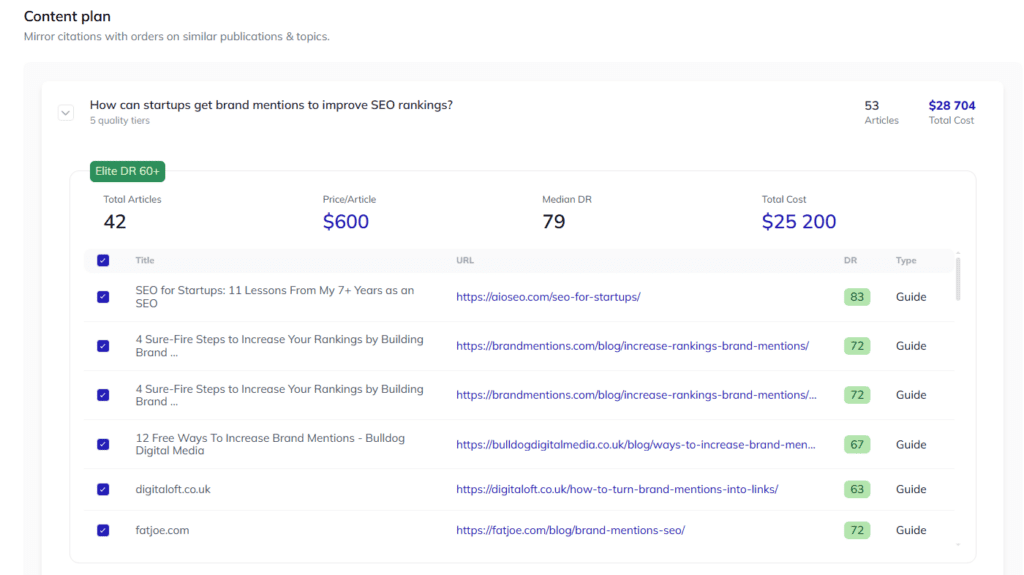
The team specifically targets brand mentions in listicle articles, comparison pieces, and editorial features on publications that already rank in Google AND already get cited inside ChatGPT, Perplexity, and Google AI Overviews.
One placement, two layers of payoff: SEO from the editorial link, and AI search presence from the citation pool. This dual focus is what separates a modern digital pr link building program from a generic press release blast.
It also comes with a convenient AI visibility tracker that monitors your performance across 6 answer engines for your target queries.
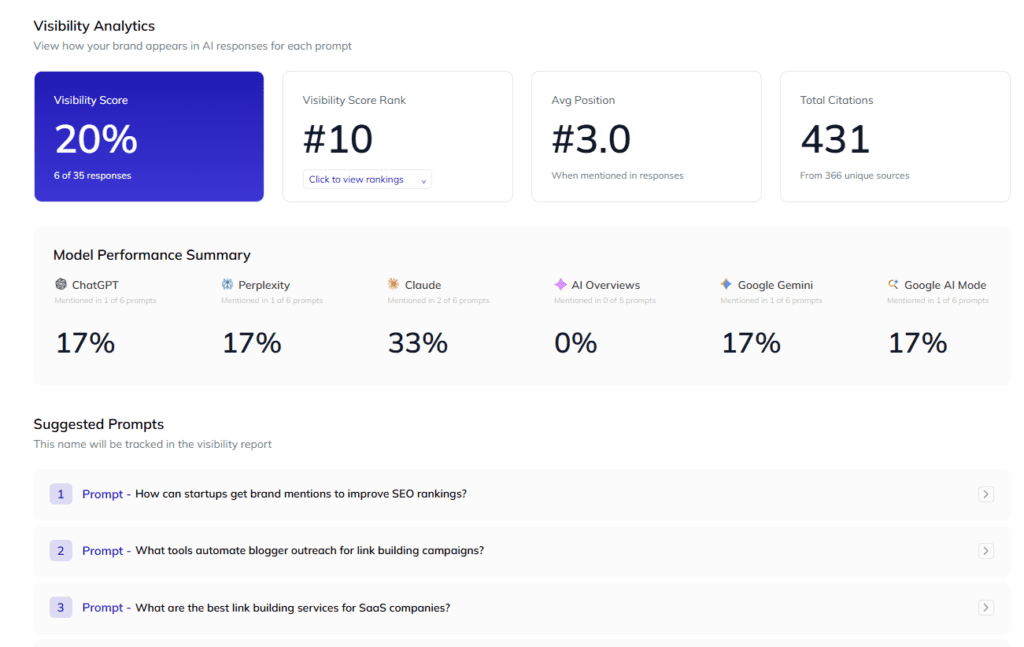
Pricing is pay-per-placement and tiered by Domain Rating, starting at $100 per DR 20+ placement and scaling up to $500 for DR 60+ Elite tier.
No monthly retainer, no surprise hourly bills. You only pay for the backlinks and brand mentions actually delivered.
For small businesses and mid-market teams running PR alongside everything else, the pay-per-placement model removes the unpredictability that makes retainer-based digital pr campaigns risky.
Link building cheat sheet
Now Over to You
Digital PR is one of the most reliable ways to build editorial backlinks and drive long-term organic visibility.
The catch is that earning consistent media coverage takes consistent outreach, and most teams don’t have the bandwidth to keep that work going month after month alongside everything else.
The teams that do stick with it end up with a steady stream of referral traffic from the publications that linked to them.
If you’d rather skip the journalist prospecting and pitch grind, hand it off to Respona.
Share your target pages, target keywords, and anchor preferences, and we’ll handle the prospecting, pitching, and securing live placements on the publications that drive both Google rankings and AI search citations.
Frequently Asked Questions (FAQ)
How much does digital PR cost?
The cost of digital PR can vary widely depending on several factors, including whether you hire an agency, use PR software, or handle it in-house.
Agency fees can range from a few thousand dollars per month to tens of thousands, while PR software subscriptions typically cost a few hundred dollars monthly.
In-house efforts require dedicated time and resources, which also have associated costs.
How long does it take to see results from digital PR?
Digital PR is not a quick fix.
It’s a long-term strategy that requires consistent effort and patience.
Results can vary, but it’s often several months before you start seeing significant increases in media coverage, high quality backlinks, and website traffic.
Building relationships with journalists and earning media coverage takes time.
How do I measure the success of my digital PR efforts?
Key metrics for measuring digital PR tactic success include: number of media mentions, quality and quantity of authoritative backlinks earned, website traffic from referral sources, social media engagement, and changes in brand awareness and sentiment.
Tracking these metrics helps you assess the effectiveness of your campaigns and make adjustments as needed.
What kind of stories are most likely to get media coverage?
Journalists are looking for newsworthy stories that are relevant to their audience.
This could include: new product launches, funding announcements, industry trends, groundbreaking research, data-driven insights, and stories with a human interest angle.
The key is to identify what makes your story unique and compelling.
Do I need to have a big budget to do online PR?
No, you don’t need a huge budget to run an effective digital PR campaign.
While large companies may invest heavily in PR agencies and campaigns, smaller businesses can achieve great results with a more focused and resourceful approach.
Utilizing free or low-cost PR tools, leveraging existing relationships, and content marketing can all contribute to successful digital PR on a budget.
What’s the difference between digital PR and traditional outreach?
Traditional link building focuses on earning links through guest posting, broken link replacement, resource page outreach, and similar tactics. Digital pr link building focuses specifically on earning editorial mentions in news outlets and trade publications.
Both approaches earn backlinks, but the digital PR variety tends to come from higher-authority sources with broader readership, which is why pr link building consistently delivers stronger SEO results when done well.
How does digital PR help with AI search citations specifically?
AI engines like ChatGPT and Perplexity pull citations heavily from authoritative sources, especially recent editorial content from trusted publications. When your brand gets mentioned inside a TechCrunch article or industry roundup, that mention enters the citation pool AI engines reference.
As a result, a strong digital pr strategy in 2026 doubles as an AI visibility play. The same editorial mentions that move Google rankings also influence what ChatGPT and Perplexity recommend.
Can digital PR replace my SEO strategy entirely?
No. Digital PR is one component of a broader link building strategy, not a replacement for SEO fundamentals. You still need optimised pages, healthy site structure, internal linking, and competitive content.
What digital PR adds is the high quality link layer that’s almost impossible to build through pure on-page work. The strongest results come from combining the two.
What kinds of stories make the best digital pr campaign angles?
Newsworthy content tends to fall into a few categories: original research with surprising data, founder stories with a clear narrative, product launches that solve genuinely new problems, funding announcements, industry analyses that frame trends others haven’t yet, and contrarian takes from credible voices.
The thing this kind of content shares is a clear angle a journalist can build a story around, not just a description of what your company does.
Should I use a media outlet database to find journalists?
Yes, especially for scale. Tools like Muck Rack, Cision, and Prowly maintain searchable databases of journalists, their beats, recent stories, and contact information. For a one-off campaign, you can probably get away with manual research.
For ongoing digital pr link building work, a database saves hours per week and keeps your outreach targeted to journalists actively covering your space.
How important is the anchor on a digital PR backlink?
Less important than it is for guest posting or other link acquisition tactics. Most editorial backlinks use branded anchors or natural phrasing, not exact-match keywords, because that’s how real journalists link.
Trying to negotiate exact-match anchor text usually fails and signals manipulation to search engines anyway. The authority of the linking publication matters far more than the specific phrasing used.
Can I track digital PR results in Google Search Console?
Partially. Google Search Console shows which external pages link to your site and the search queries driving traffic. For a more complete picture, pair it with a backlink tool like Ahrefs or Semrush.
A quality backlink earned through a strong digital pr strategy will appear as a new referring domain, and you can track its influence on rankings, referral traffic, and search engine visibility over the following 30-90 days.
What does Search Engine Land say about digital PR’s role in SEO?
Search Engine Land has covered digital PR extensively as one of the most effective long-term tactics for building topical authority and earning editorial links from authoritative websites.
The publication consistently positions it as the cleanest way to build domain authority without crossing into grey-hat territory, particularly for brands competing in saturated markets where traditional content marketing alone isn’t enough.
How does digital PR compare to social media for visibility?
They serve different stages of the funnel. Social media drives short-term reach and engagement but rarely produces durable backlinks. Digital PR produces lasting editorial links and brand mentions that keep delivering ranking gains years after publication.
Most marketing teams that scale visibility well use both: social media for immediate amplification and digital marketing PR campaigns for compounding authority.
Should I aim for high quality links over quantity at scale?
Always. Ten quality links from authoritative publications will move rankings further than a hundred backlinks from low-tier sites. This is especially true for digital PR, where every placement represents an editorial endorsement rather than a transactional link like you’d get from a paid guest post.
A single high quality backlink from a tier-one publication often outperforms a focused digital pr campaign aimed at lower-authority sites combined.