
Backlinks this, inbound link profile that – what’s the big deal?
The deal is that in 2026, high-quality links from relevant resources remain one of the strongest search engine ranking factors.
In this ultimate guide, we’ll teach you what backlinks are and how exactly they work, white-hat ways of building up your backlink profile, along with the answers to the most common questions surrounding link building
Let’s get right into it.
Key Takeaways:
- Backlinks remain one of the strongest ranking signals in Google’s algorithm, even as AI changes how people find content. The fundamentals of how to get backlinks haven’t changed much: build resources worth linking to, then run outreach to relevant websites in your niche.
- Quality matters more than quantity. A handful of high quality backlinks from an authoritative website outperforms hundreds of low-relevance links. Google’s spam updates killed off the volume play.
- Listicle mentions and brand mentions on reputable sites now do double duty in 2026. They drive traditional ranking signals AND get pulled into AI engine answers. That makes editorial placements more valuable than ever.
- Plan for 3-6 months before you see meaningful ranking lifts from your backlink strategy. Anyone promising overnight results is selling something risky.
- The best approach combines multiple white-hat tactics: anchor text targeting, listicle outreach, reverse skyscraper, guest posting, and podcasts. Diversification beats single-channel dependence.
Link building cheat sheet
What are Backlinks?
First things first, a backlink is a hyperlink from one website to another, usually underlined and highlighted in blue or purple.
The process of link building is typically carried out through email outreach.
It goes back to the very inception of Google’s algorithm.
At its core, lies something that’s known as PageRank. In essence, it’s a value that a page gets assigned, depending on the quality and quantity of inbound links.
The higher the score, the more likely the page is likely to show up high in search results.
“But what about the countless link spam updates that Google has been rolling out?” – you will ask.
While it is true that all black-hat link building techniques have faded of obscurity and completely de-valued by Google, relevant links from actual, informative websites within your niche still pass on PageRank, only emphasizing the importance of the entire link building process.
These black-hat link building techniques include:
- Excessive reciprocal link exchanges
- PBN links
- Social bookmarking, low quality resource page and directory links
- Guest posts with over-optimized link anchor texts (exact-match keywords in the anchors)
- Automated link building like using bots to spam comments or using an automated link building service
- Paid links that are not marked with the “rel=sponsored” tag
- And more
These links are to be avoided at all costs. While on a small scale, link schemes can’t hurt you (all that will happen is all these links will be ignored by the ranking algorithm), participating in them excessively will get Google’s attention and may even lead to a penalty, severely reducing your rankings or even preventing your website from showing up in search result pages altogether.
Below, we will teach you 6 effective, white-hat ways of how to get backlinks to your website.
For now, let’s take a closer look at the benefits that link building brings to the table, when executed correctly.
Why Do You Need a Strong Backlink Profile?
Regardless of your niche, if you haven’t been on the market for a decade, it can be difficult to outrank your competition.
So, in order to keep your head above water, you need every advantage you can get.
A strong backlink profile may just be that advantage – it will also make it harder for other competitors to outrank you until they generate a similar quantity (and quality) of inbound links.
AI Visibility
Here’s something that wasn’t part of the link building equation 18 months ago: your backlink profile now directly affects how AI search engines (ChatGPT, Perplexity, Google AI Overviews, Gemini, Claude, Copilot) decide which brands to mention in their answers.
When someone asks an AI engine a category question like “best CRM for startups” or “good marketing agencies for SaaS,” the AI generates its answer by pulling from indexed editorial content on external websites. The brands that show up most often in that content are the ones the AI cites.
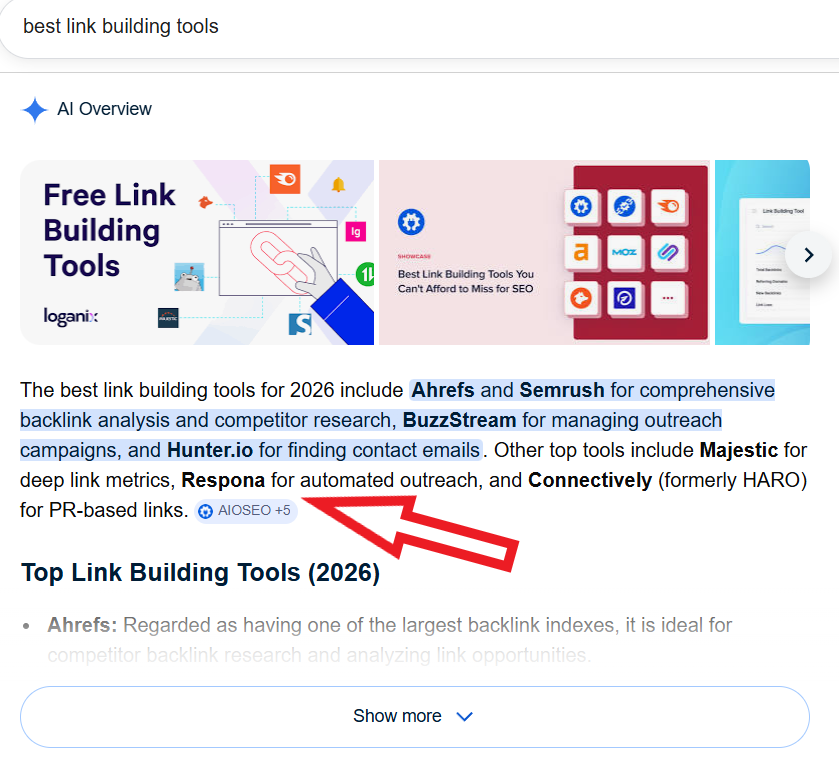
The biggest driver of AI visibility isn’t your own website content. It’s external mentions on reputable sites. And the single highest-leverage type of mention is the listicle.
Why listicles specifically? Two reasons:
- They’re structured. AI engines parse them easily and extract brand mentions cleanly from the “best X tools” or “top Y agencies” format.
- They tend to rank in Google for category queries, which means AI engines already trust them as authoritative sources.
PageRank
We have already mentioned PageRank.
But how do you know how much PageRank your pages have? Unfortunately, there is no way.
A long time ago, there was this thing called the PageRank toolbar. It looked something like this:
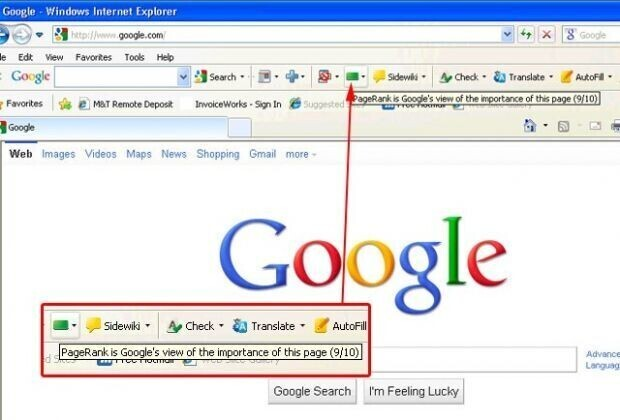
Google has taken it down. Why?
Because people would obsess over the PageRank metric and spam objectively bad links everywhere.
However, even though the exact PageRank value of your pages is impossible to know, there is a way to estimate it, which leads us to the next section.
Domain Authority/Domain Rating
Domain Authority and Domain Rating are metrics developed my Moz and Ahrefs in an attempt to recreate the PageRank toolbar – just on the scale of entire domains rather than individual pages.
They work almost identically – both metrics take into account both the quantity and quality of your inbound links.
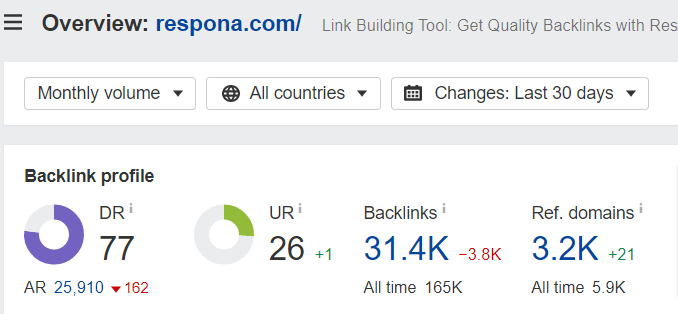
A higher DR/DA score is directly associated with higher rankings on SERPs, as evidenced by a study by Backlinko:
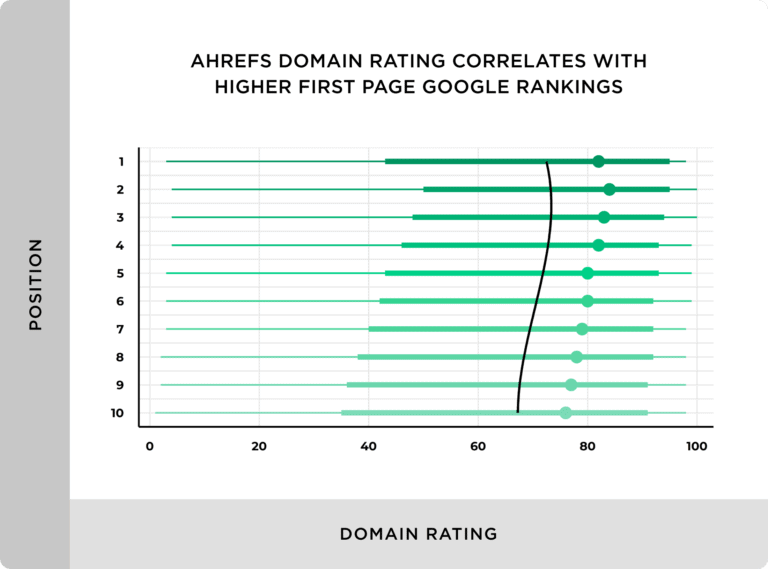
To put it bluntly: more quality links = higher DR/DA = higher rankings.
Referral Traffic
The traffic that links pass on is called referral traffic.
Its advantage over organic traffic is that it can actually be more targeted, seeing as people are following links from another relevant resource, hence they are already interested in what you have to say.
This can have one of the following outcomes:
- The person may become your follower on social media
- They may subscribe to your newsletter
- They may convert to a paying customer
The biggest SEO metric that every website owner tracks is organic traffic, but the value of referral traffic that comes to you through links can not be underestimated.
Before diving headfirst into link building, run a backlink audit to asses the situation.
Now, let’s move on to the next section.
What Do You Need To Start Building Backlinks?
Link building can be an extremely time and resource-intensive process.
So, before diving headfirst into it, you need to understand what you need to actually get any value out of your efforts.
Quality Content
The first thing you need is content. Not just home and product/service page content – blog content.
It’s extremely uncommon to acquire home and product page links from other people – unless you’re getting featured on listicle posts.
Besides just being something to build backlinks to, great content will help you cover a wide variety of relevant keywords, educate your audience, give them a reason to stay on your website, and keep coming back.
In fact, most searches on social media are informational, so if you haven’t invested into a robust blog yet, you’re missing out on an enormous chunk of web traffic.
Time
Unlike some other aspects of SEO (such as on-page and technical) that can be done over the course of a week, link building can take months to fully take into effect.
In addition, to keep growing, you need a steady stream of backlinks.
Not to mention the effort that goes into preparing and launching your email outreach campaigns.
Even with the best email automation tools (such as Respona), you will need at least a few hours to launch a single campaign with roughly a hundred opportunities.
The average reply rate for link building emails is only 10%, and you need to be ready that half of them may be negative.
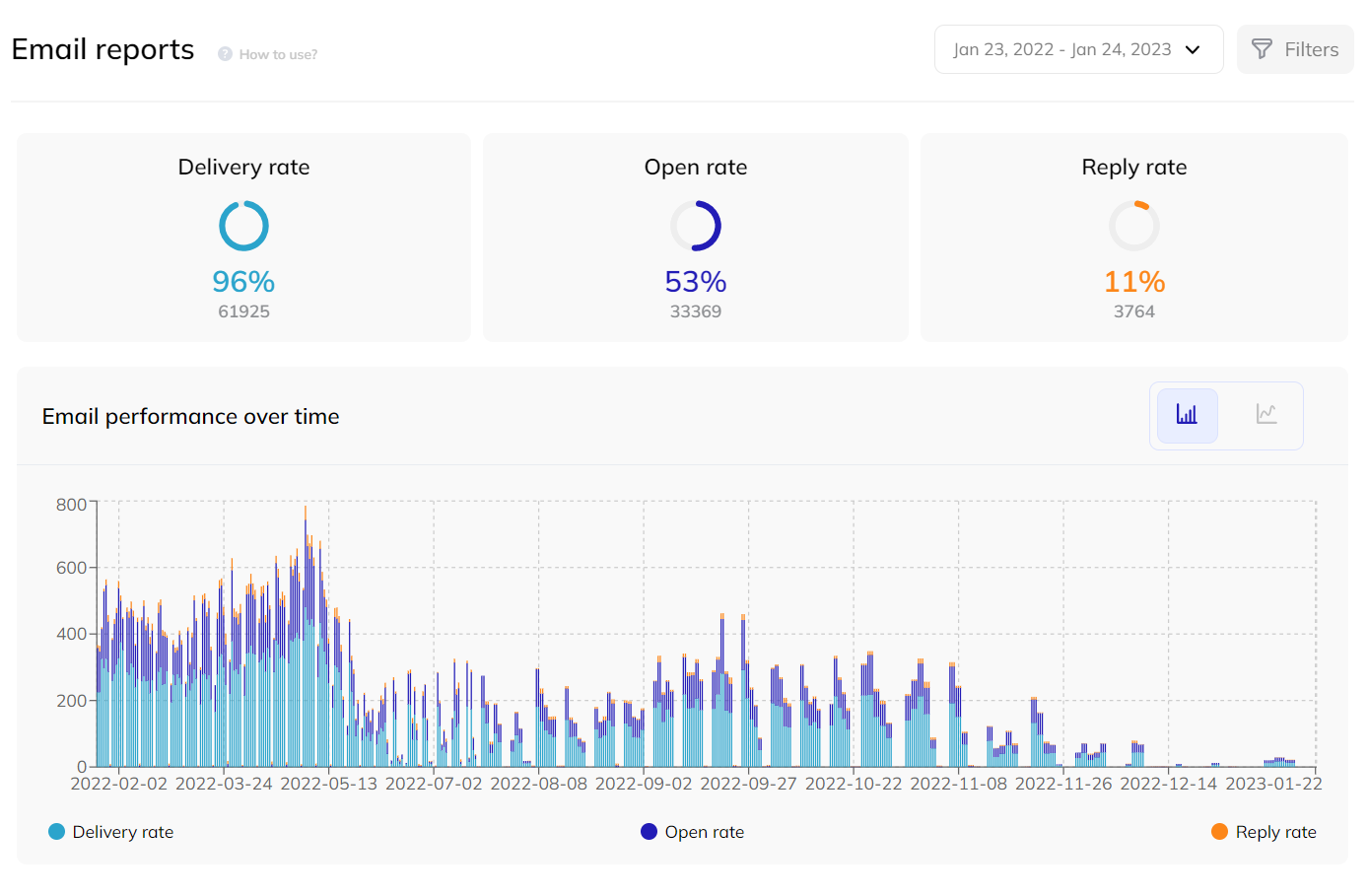
That leaves you with only a ~5% success rate on average.
To really start seeing results, you need hundreds, if not thousands of quality backlinks.
If you do the math, you’ll quickly realize that there’s virtually no end to link building, so be prepared.
Dedicated Team Members
Because of the sheer volume of work that link building entails, it needs to be a full-time job for at least one team member in your company to be realized to its full potential.
As a solopreneur, you can try to take in on your own, but expect it to take a huge chunk of your day.
You can either hire a trusted agency, an in-house link builder or outsource the process to freelancers.
We recommend the second option, as that enables you to have complete control over your entire link building process, ensuring only the best strategies are being employed.
This brings us to the next section – how to actually get backlinks.
Anchor Text Strategy/Listicle Post Mentions
For most of these strategies, we’re going to be using Respona, as it’s primary purpose is link building outreach.
The first one one this list is the anchor text strategy, merged with getting list post mentions, since the process of finding both these types of opportunities is very simple.
We’ll walk through the entire campaign creation process- from prospecting to personalization once – for all the following strategies, we’ll only be focusing on the prospecting, since preparing the outreach sequence, finding contact information, and personalization steps remain more or less the same across the board.
Finding Prospects
The goal of the anchor text strategy is to find non-competing articles that mention our target keyword somewhere in the content, but not the title.
The listicle (top 10) post mentions is all about securing a place for your product in relevant top X articles within your niche.
We can actually run several queries at the same time in Respona’s search engine, so we’ll run searches for both these strategies at once.
These are two of the easiest ways to get backlinks as these strategies are nowhere near as complicated as broken link building and much more easily scalable.
These advanced search operators will help you find opportunities directly in Google.
For the anchor text strategy (finding articles that mention your target keyword without linking to a relevant resource):
“target keyword” -site:yourdomain.com
intitle:”related topic” “target keyword”
“target keyword” + “guide” -site:yourdomain.com
For listicle prospecting (finding “best of” articles in your niche):
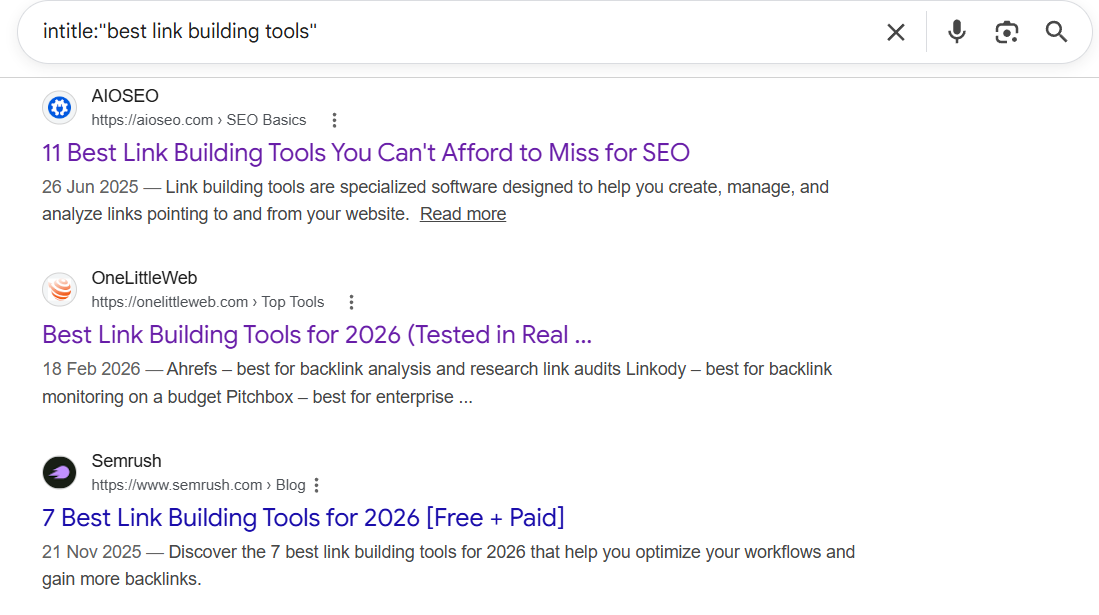
intitle:”best [your category]”
intitle:”top [your category] tools 2026″
“top X” + “your competitor”
“alternatives to [competitor]”
“[category] software” intitle:list
inurl:”best-” “[your category]”
Preparing Your Outreach Sequence
The outreach sequence is the actual emails that you’ll be sending to your prospects.
Here is the template we’ve used for the anchor text strategy:
Hi, @first_name!
I’m Vlad, the outreach manager from Respona. How is your @day_of_week going?
I’m currently writing a few guest blogging pieces (for websites like [website]) and looking for resources to include in them.
I’m wondering whether you have a relevant post you recommend? Happy to share the drafts if you’d like to take a look at the content.
In return, I was thinking maybe you could mention [our article] in your recent post? It talks about [topic] so I thought maybe you’d be open to mentioning [your article] as well :)
Looking forward to hearing from you,
And this is one for listicle outreach:
Hi, {first_name}
[Your name] with [your company] here. How is your {day_of_week} going?
I came across your listicle on [topic]. Great job putting it together!
We actually have our own [service/topic] that could fit into the list organically.
[explain why in 1-2 sentences]
What do you think? We can return the favor by [value proposition].
I can send over the text snippet, if you’re up for such a collaboration.
Cheers,
[signature]
Feel free to use these templates for inspiration but don’t copy and paste them directly into your campaigns to avoid spamming.
As for the follow-ups, we recommend only using one or two (spaced out over 3-5 business days) to avoid getting on your prospects’ nerves.
Once your sequence is ready, it’s time to find your prospects’ actual contact emails.
Finding Contacts
Once you’ve identified the right websites to pitch, the next step is finding the actual email address of the site owner, editor, or content lead who can approve a link placement.
A few options:
Free email finders:
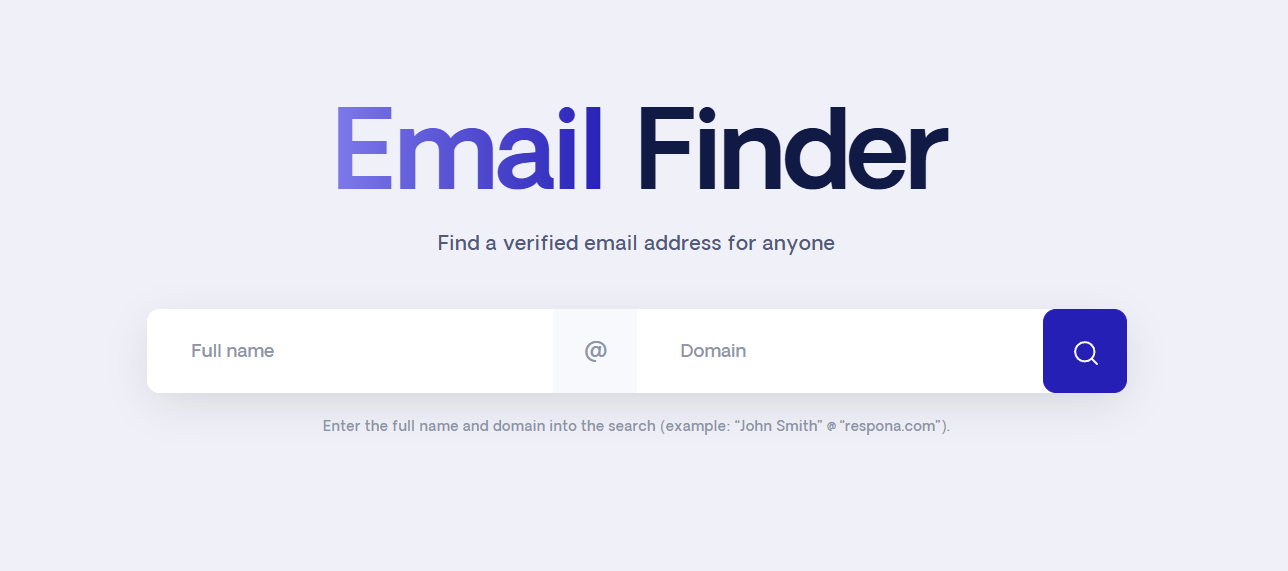
Respona’s free email finder at respona.com/email-finder lets you pull verified contact emails for any domain at no cost, with a daily search limit. Useful for ad-hoc lookups when you’re prospecting a handful of sites.
Paid email finders:
For higher-volume work, paid tools like Hunter, Snov.io, and Apollo give you bulk lookups, verification, and integrations with outreach platforms. Pricing typically starts in the $50-150/month range for solo SEOs and scales up for agency volume.
Whichever route you choose, always verify before adding to your campaign. Sending to invalid addresses tanks your sender reputation and pushes future emails toward spam folders.
Personalization
Just filling in the variables and hitting “send” isn’t enough. You need some manual personalization to make your pitches stand out
Reverse Skyscraper Technique
If you’ve heard the phrase “skyscraper technique” before, you already know where this is going.
The reverse version takes on a similar formula: you’re still going to be finding competing content, extracting its backlinks, and reaching out to the people linking to it, trying to get them to link to you instead.
The only difference with the reverse skyscraper technique is that instead of writing an entire blog post just for link building purposes at the start of each campaign, you’re going to target content that you have already published.
As an example, let’s take our link building outreach guide as a target again.
Next, let’s find some competing content. We can just google our target keyword, “link building outreach”, and see what comes up.
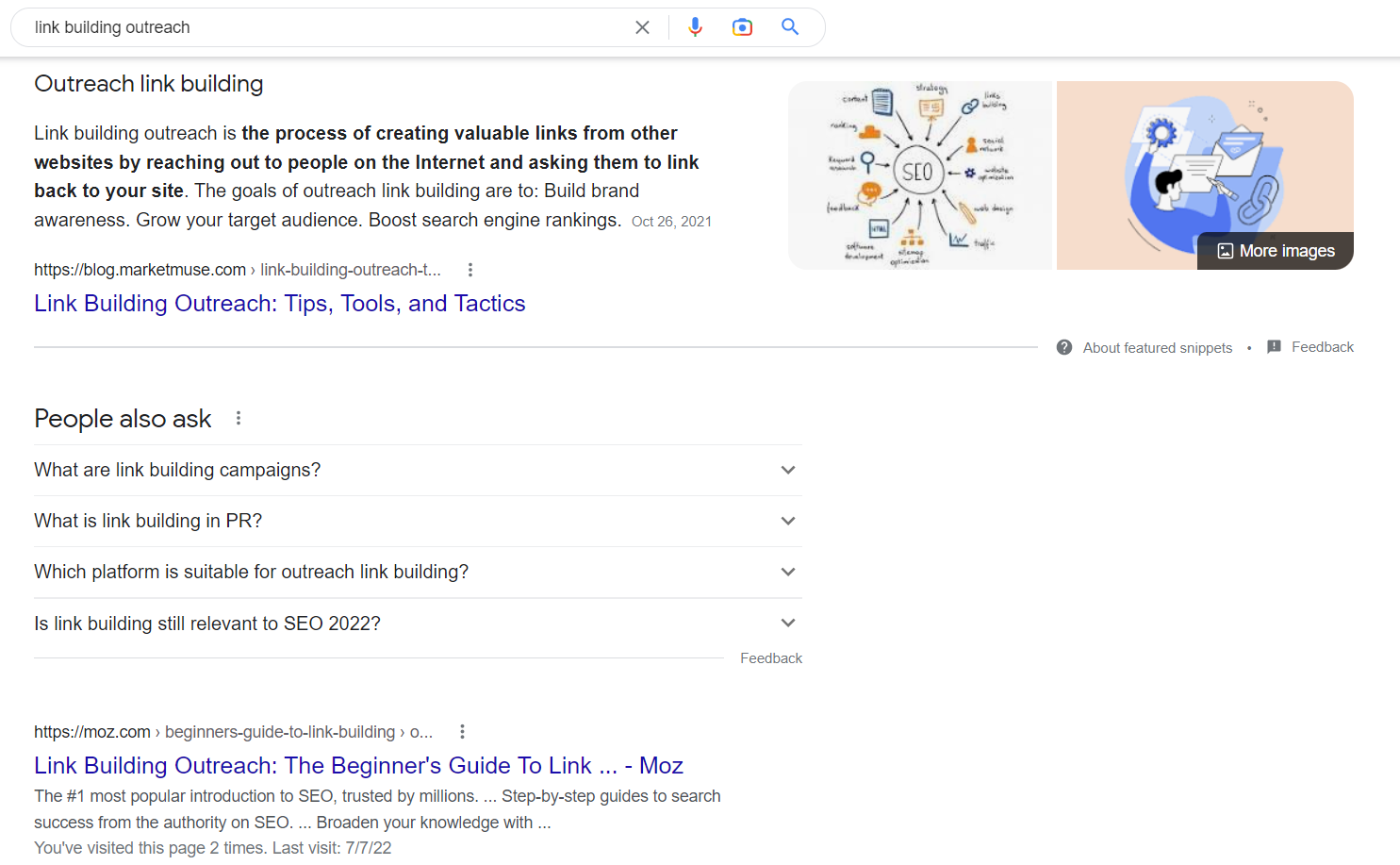
From there on, the campaign creation process will remain the same, with the only difference being the email template.
Hi, {first_name}!
I’m [your name and position]. How is your {day_of_week} going?
Just read your {url_title}, awesome job putting that piece together!
I’m reaching out to you because I noticed that you linked to [competitor’s article].
We actually have our own article [explain how it is better than the one they’re currently linking to].
We can return the favor in a few ways [your value proposition].
Looking forward to hearing from you,
[signature]
Guest Posting
Guest posting is the third most popular link building strategy, even in 2026.
It is the process of writing guest content for other websites, while leaving a link back to your own resource either in the content or your author’s bio.
Guest posts can also be a great way to set up indirect, A-B-C link exchanges.
In such a situation, Site A would be your prospect linking to your website (site B), and site C is your guest post on a third-party resource.
Securing guest post placements is relatively easy. Most websites that accept guest posts actually have a “write for us” page.
Use these search operators in Google to find guest posting opportunities:
“write for us” + “your niche”
“contribute” + “your niche”
“guest post” + “your niche”
“submit a guest post” + “your topic”
inurl:”write-for-us” “your niche”
inurl:”contribute” “your topic”
“guest blogger” + “your niche”
“submit an article” + “your topic”
“become a contributor” + “your niche”
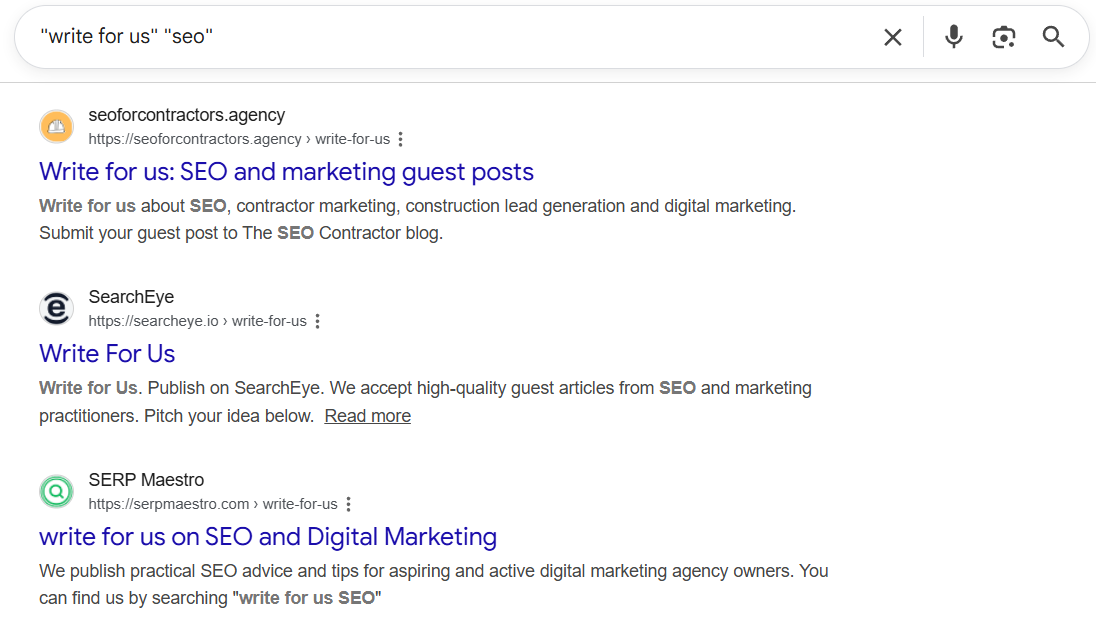
Let’s talk a little bit more about the template we like to use for guest posting.
Thank you, {first_name}!
Would love to collaborate more in the future!
By the way, I was playing around in Ahrefs and noticed that your competitors [list 2 competitors] are ranking for [keyword] but you aren’t.
I actually happen to have a writer in house who is a [keyword] nerd and would love to write a high-quality piece of content covering that topic for you.
Let me know if you’re interested?
[sign-off]
In it, we’re using what’s known as the “Content Gap” strategy. We can do with any keyword tracking SEO tool, such as Ahrefs.
Simply navigate to Ahrefs’ Content Gap and paste two of your prospects’ competitors:

Then, look at the keywords that they are ranking for but your prospect isn’t, and pick a couple of relevant key phrases with a low difficulty score but high search volume.
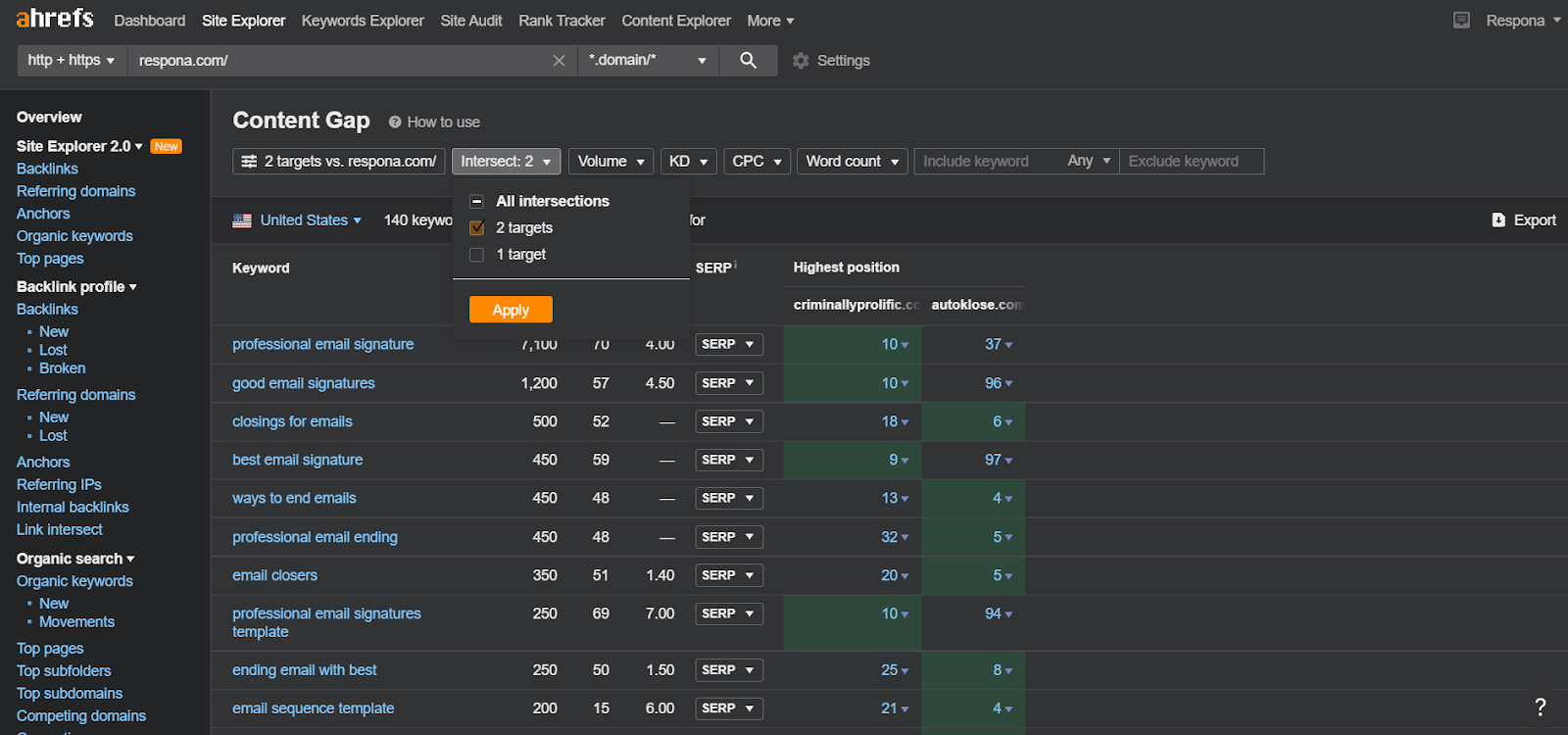
Then, come up with a couple of topics to pitch to your prospects.
And make sure to include a screenshot from Ahrefs showing this window! This will drastically increase your chances of securing a guest post placement, as you’re showing that you actually went through all of the effort to research your prospect’s site and figure out a way to actually help them by closing their keyword gap, and aren’t just pitching random topics for the sake of link building.
Podcasts
Podcasts are more of a digital PR activity, but can be a lucrative of generating backlinks as well, in addition to generating brand awareness and establishing thought leadership.
For prospecting podcast opportunities, the goal is to find shows that cover your topic regularly, accept outside guests, and have an audience that overlaps with yours.
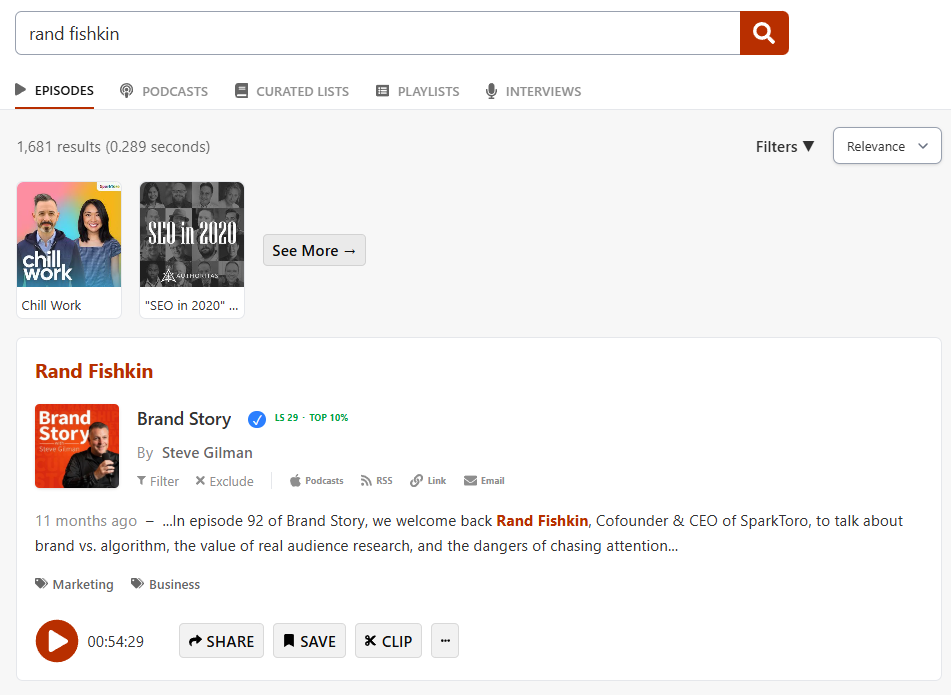
Listennotes is the most comprehensive podcast search engine for this work. You can filter by topic, language, episode count, and rating. Look for podcasts with 10+ episodes (signals they’re past the first burst of enthusiasm), recent activity within the last 90 days, and topical overlap with your area of expertise.
Other useful podcast search engines worth checking:
- Podchaser – Similar to Listennotes with stronger creator profiles and reviews
- Apple Podcasts directory – Good for niche searches across smaller shows
- Spotify’s podcast browser – Large catalog, weaker search filters
Once you’ve found promising shows, listen to one or two recent episodes before pitching. Reference something specific in your outreach email (a guest quote, a topic angle, a takeaway) to prove you’re not just spray-pitching every podcast in the genre.
Haven’t suggested yourself for an interview before? Don’t worry, follow this template and you have a pretty solid chance of making a memorable pitch.
Hi {first_name},
[Your Name] here with [Your Company Name]. Just discovered your podcast on the way to work, loved your last episode where you talked about [Insert the Episode You Listened]
Wanted to reach out and ask whether you’re accepting guests?
[2-3 Sentences About You and Your Accomplishments]
I’ve been also featured on [2-3 Examples of Podcasts/Publications].
Happy to have our team promote the episode to our audience as well on social and newsletter.
Looking forward to hearing from you :)
P.S. Here’re a few topic I can cover:
Idea 1 (30 words max)
Idea 2 (30 words max)
Idea 3 (30 words max)
[Signature]
Use Your Connections
The biggest downside of link building is the fact that you have to rely on cold email outreach to get placements.
So, if you can find a way to skip that, you can achieve much greater success in a shorter amount of time.
If you already have an existing network of contacts built up, we would recommend starting your link building there.
If not, a great way to get acquainted with lots of link builders are the countless link building communities that have popped up across different platforms, such as the Link Building HQ by uSERP.

Need Help Getting Backlinks?
If running outreach campaigns in-house isn’t realistic for your team’s bandwidth, Respona’s done-for-you link building service handles the actual work end-to-end. Here’s how the flow actually works.
Step 1: Register
Create a Respona account. No onboarding calls, no kickoff meetings, no sales rep dance.
Step 2: Tell the platform what you want to rank for
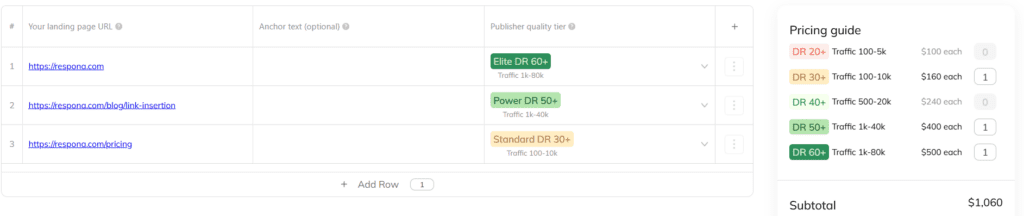
Place an order with your target URLs and the anchor text variations you want for each. Optionally, add a list of AI prompts you want your brand to show up for (e.g. “best CRM for startups,” “top link building agencies”).
Step 3: Get your link building action plan
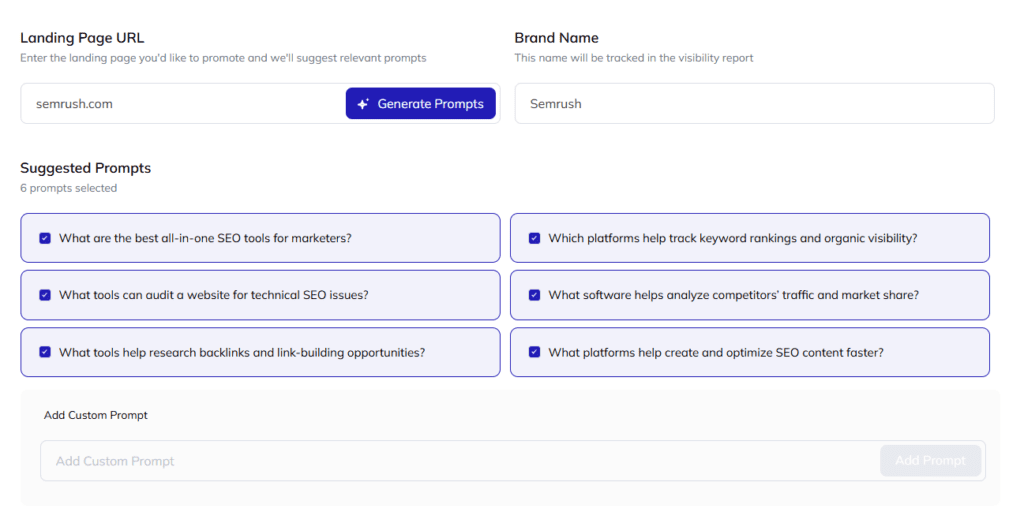
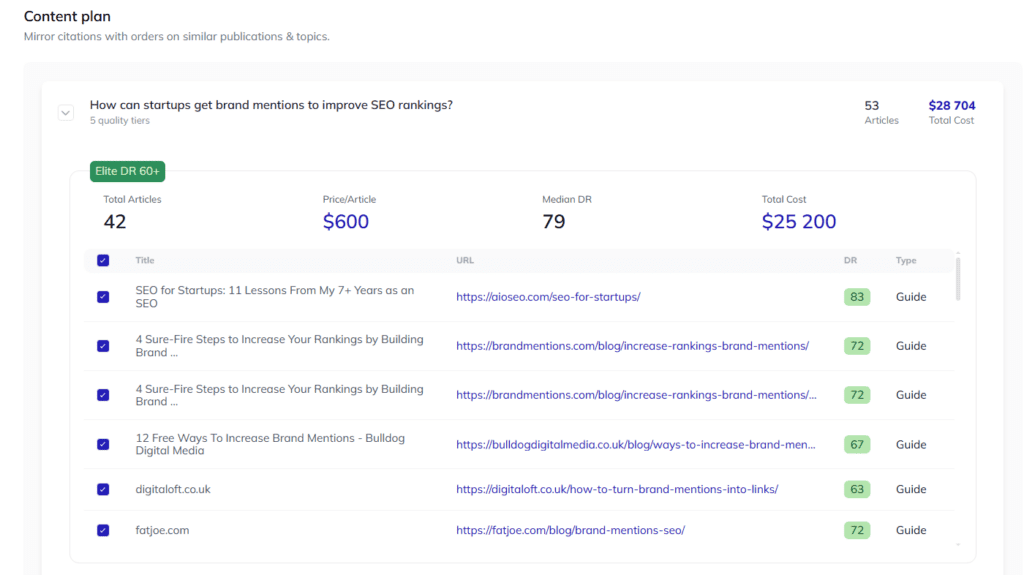
If you added AI prompts, the tool generates a link building action plan automatically. It’s a ranked list of articles already being cited by AI engines for those exact prompts. These are the placements where landing a link does double duty: traditional ranking signals AND AI visibility.
Step 4: Place orders on the placements you want
Browse the recommended articles, pick the ones worth pursuing, and place orders. Pricing is per placement and tied to the publisher’s domain rating.
Step 5: Our team handles the outreach
Once an order is placed, our team takes over: personalized pitches, follow-ups, negotiation with editors, and back-and-forth until the placement is confirmed live. You only pay when a placement actually goes live.
Step 6: Track results in the AI visibility tracker
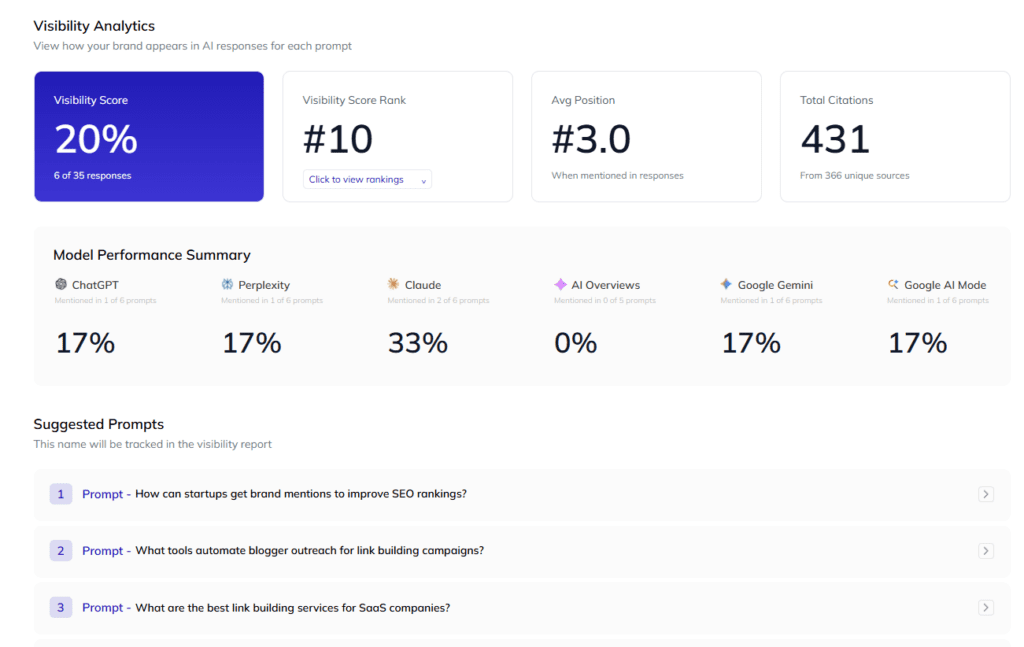
The built-in tracker monitors your brand mentions across the answer engines you chose (ChatGPT, Perplexity, Google AI Overviews, Gemini, Claude, Copilot). Over time, you can see how your placements influence AI citation rates and where gaps remain.
Optional: Pre-approval add-on
If you want manual sign-off on every target before any outreach goes out, enable the pre-approval add-on. It costs an additional 20% on top of placement pricing and puts every email on hold until you green-light the prospect.
Now Over To You
So, to sum it up, to get backlinks, you need to invest a lot of time into email outreach.
More specifically, prospecting, crafting your outreach sequence, finding contact information, and personalization.
This is a lot of work. Most teams don’t have the bandwidth to scale it in-house without trading off something else they should be doing. Building a steady stream of quality links over months requires dedicated focus, and pulling that focus from your core team comes with real opportunity cost.
If you’d rather skip the manual work and have a team execute end-to-end, our done-for-you link building service handles the entire pipeline from prospecting to live placement.
You only pay per placement, with no monthly retainer. The model means you only spend on links that actually go live and contribute to your quality links growth over time.
Place your first order today to get started.
Link building cheat sheet
Frequently Asked Questions (FAQ)
What’s the best way to get backlinks?
The best way to get backlinks is by directly reaching out to bloggers and webmasters with your link pitch.
How do I ask for backlinks?
The sad reality is that most people won’t link to you for free, even if it’s extremely topically relevant.
So, you need to have a strong value proposition in your email pitch. Such a value proposition can be an indirect link back, for example from a guest post of yours.
Do backlinks help SEO?
Dofollow links pass on PageRank (“link juice”), and PageRank translates into Google search engine rankings, so yes, backlinks still massively help search engine optimization, even in 2024.
Which backlinks are considered good?
A good backlink is one that is relevant, contextual, in-content, from blog post to another blog post.
How long until I start seeing results from my backlink building?
Link building is notoriously slow to kick in – you can expect several months to pass from the moment you acquire some strong links until they start having any impact on your SEO and rankings.
Do backlinks help with local SEO?
Yes. If you’re focused on local seo, your backlinks should come from local sources where possible: regional news sites, local industry directories, chambers of commerce, and other community-anchored content.
Use Google Search Console to see which referring domains are sending you traffic. Local backlinks usually correlate with rankings for “near me” and city-specific queries.
What does a high quality backlink look like in 2026?
A high quality backlink is contextual, sits inside relevant content on an authoritative website, and ideally drives some referral clicks. Domain rating alone isn’t enough.
The page the link lives on has to actually receive traffic for the link to do meaningful work for either search engines or AI answer engines.
What are SEO backlinks and how are they different from other links?
When people say “seo backlinks,” they usually mean dofollow links from external websites that pass ranking signals to your site. Nofollow links and links from your own properties don’t pass the same signal.
For a strong backlink strategy, focus on dofollow editorial links from sites that already rank for queries in your category.
How do I find broken links worth pursuing for outreach?
Use Ahrefs or Semrush to plug in your competitors’ URLs and filter for broken external links pointing out from their site. Every broken link on a high-traffic article is a potential outreach opportunity. Pitch the editor your relevant resource as a clean replacement for the dead link.
What’s a good content strategy for earning backlinks?
A solid content strategy for backlink acquisition means publishing relevant content (data studies, original research, definitive guides) that other writers actually want to reference. Generic posts rarely earn natural links. Specific, useful resources do.
How do I tell if a relevant website is worth pitching for a backlink?
A relevant website worth pitching has three signals: it actually ranks in Google for queries in your category, it publishes consistently, and its content receives real traffic (not just direct visits from social shares). Tools like Ahrefs or Semrush show all three at once.
If any of those signals are missing, the placement probably won’t deliver the seo rankings boost you’re hoping for.
Is link building worth it if I’m just starting out?
Yes, but expectations matter. For a brand new site, you probably won’t see meaningful seo rankings movement from your first dozen backlinks. The compounding effect of building backlink momentum kicks in around the 6-month mark.
Solo founders often see better early results by starting with podcast appearances and niche directory placements before scaling to full editorial outreach.