
Guest blogging is one of the oldest tricks in the link building book, and despite numerous Google updates aimed to reduce “link spam”, backlinks from high-quality, relevant resources remain one of the strongest SEO ranking factors in 2026 and beyond.
In this blog post, we will be covering what guest blogging and what are its benefits, how to easily find numerous guest blogging opportunities, and what link schemes are and how to avoid them
Without any further hesitation, let’s dive straight into it.
Key Takeaways:
- Guest blogging still works in 2026. Done right, it drives backlinks from authoritative sites in your niche, builds relationships with editors, and exposes your brand to a wider audience. A solid guest blogging strategy remains one of the highest-leverage tactics in modern SEO.
- The strongest opportunities don’t come from “Write for Us” pages. Sites that openly accept submissions get flooded with low-effort pitches. The best guest post opportunity usually comes from a target blog that doesn’t have a public submissions page, where a smart pitch stands out.
- Quality of host blog matters more than volume. One placement on a high-authority site in your niche outperforms ten on random blogs with no audience. Pay attention to Domain Rating, real traffic, and topical fit, and vet every host site before pitching.
- Guest blogging compounds with the rest of your SEO work. Each placement leads to relationships, related posts, brand mentions, and additional guest posting opportunities. The flywheel matters more than any single article.
- Avoid “link schemes” at all costs. Unmarked paid posts, exact-match anchor stuffing, and reciprocal link exchanges all qualify. Google catches these patterns easily and devalues the links.
- Manual outreach is slow. Identifying prospects, researching each blog owner, drafting personalised pitches, and managing follow-ups takes 20+ hours a week. Most marketing teams can’t sustain that volume in-house, which is where done-for-you services fill the gap.
Link building cheat sheet
What is Guest Blogging?
Guest blogging (or guest posting) is a very familiar term for most of you reading this.
If you’re just dipping your toes into link building and SEO, guest blogging is the process of writing and publishing articles on other websites with the goal of acquiring inbound links to your own website, spreading the word about your business, and, of course, increasing referral traffic to your resource.
It is one of the most popular and effective white-hat link building methods, even to this day.
This is because, as long as your content creation is of outstanding quality, your prospect has zero reasons to turn down your pitch.
You get exposure to a new audience along with a nice link or two, while the other person receives a piece of quality content that has the potential of closing a keyword gap for them and generating traffic.
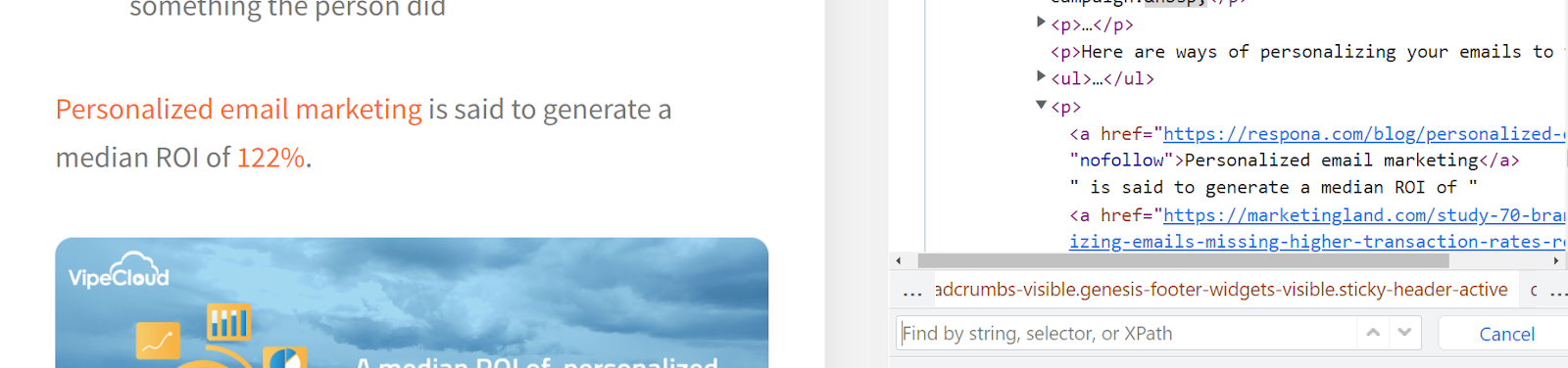
Some websites only allow nofollow links in their guest posts – but that doesn’t mean that they’re useless.
“Nofollow” links are backlinks that do not pass PageRank, also known as “link juice”.
This means that they do not contribute to your website’s rankings, and are effectively excluded from Google’s algorithm.
But, as we mentioned, these links are far from useless, as they help with bringing referral traffic to your website and contribute to overall brand awareness.
Benefits of Guest Blogging
Now, let’s take a look at the specific benefits you can expect to reap by becoming a regular guest blogger.
Links and Referral Traffic
The number one reason for guest blogging is, of course, the backlinks that come in the content and the referral traffic that they drive.
Most websites allow only one link back to your website – usually in the author’s bio.
However, some sites allow more external links in the content – as long as they’re contextual.
This makes guest posts a great way to not only earn links to your own website but also to secure link placements for your partners and set up 3-way, (A-B-C) exchanges.
This doesn’t mean that you must jam-pack your guest posts with dozens of external, exact keyword-match links.
This actually qualifies as a “link scheme” by Google, which we’ll take a closer look at in the next section.
Higher DR/DA
We already mentioned links and PageRank, or “link juice” that they pass on.
This “link juice” has a direct effect on your website’s Domain Rating/Domain Authority.
These are metrics developed by Ahrefs and Moz respectively and are used to measure a website’s backlink profile strength.
While not being official Google metrics, there is a clear correlation between a website’s DR/DA and its rankings on search engines results pages.
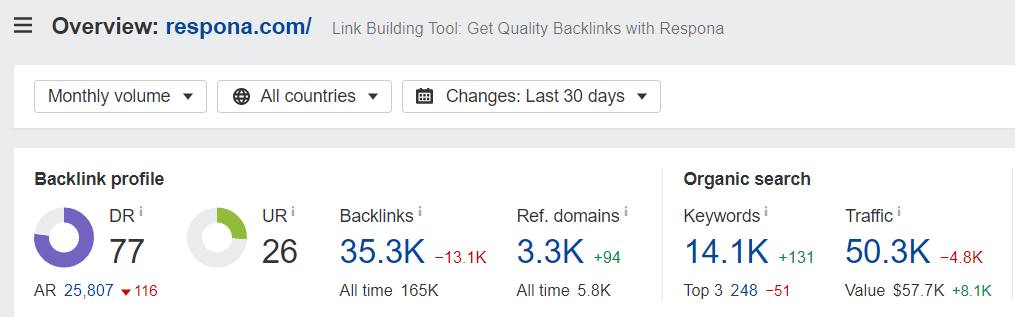
In Layman’s terms, more links = higher DR = higher rankings on Google.
A link or guest post on a high authority site is also more valuable than one from a lower DR resource.
Increased Brand Awareness
While the number one reason why people still publish guest posts is to get high-quality links, the power of guest posts for increasing brand awareness can not be underestimated.
Publishing guest posts in your niche (especially in the top echelon of websites), will slowly gain you more and more articles with your name attached to them.
If people see dozens of guest posts that are actually helpful and informative written by one person, they will start thinking “Hey, they know what they’re talking about!”.
Thought leadership – regardless of the niche your business is in, displaying expertise in your niche and helping people with your content is the best way to win them over.
Builds a Network of Connections
Backlinks and traffic are great.
What’s even greater is the fact that by collaborating with other websites in your niche and writing awesome content for them, you will be slowly building up your connections and relationships, which can be even more valuable.
In the future, these connections can be leveraged for other types of collaborations – not just in terms of publishing content, but co-marketing, running podcasts, co-hosting webinars, and so on.
Guest blogging is a white-hat link building strategy, but it can also be turned into a shady “link scheme” under certain circumstances.
Let’s take a look at what they are and how you can avoid them to stay on Google’s good side.
What are Link Schemes and How to Avoid Them?
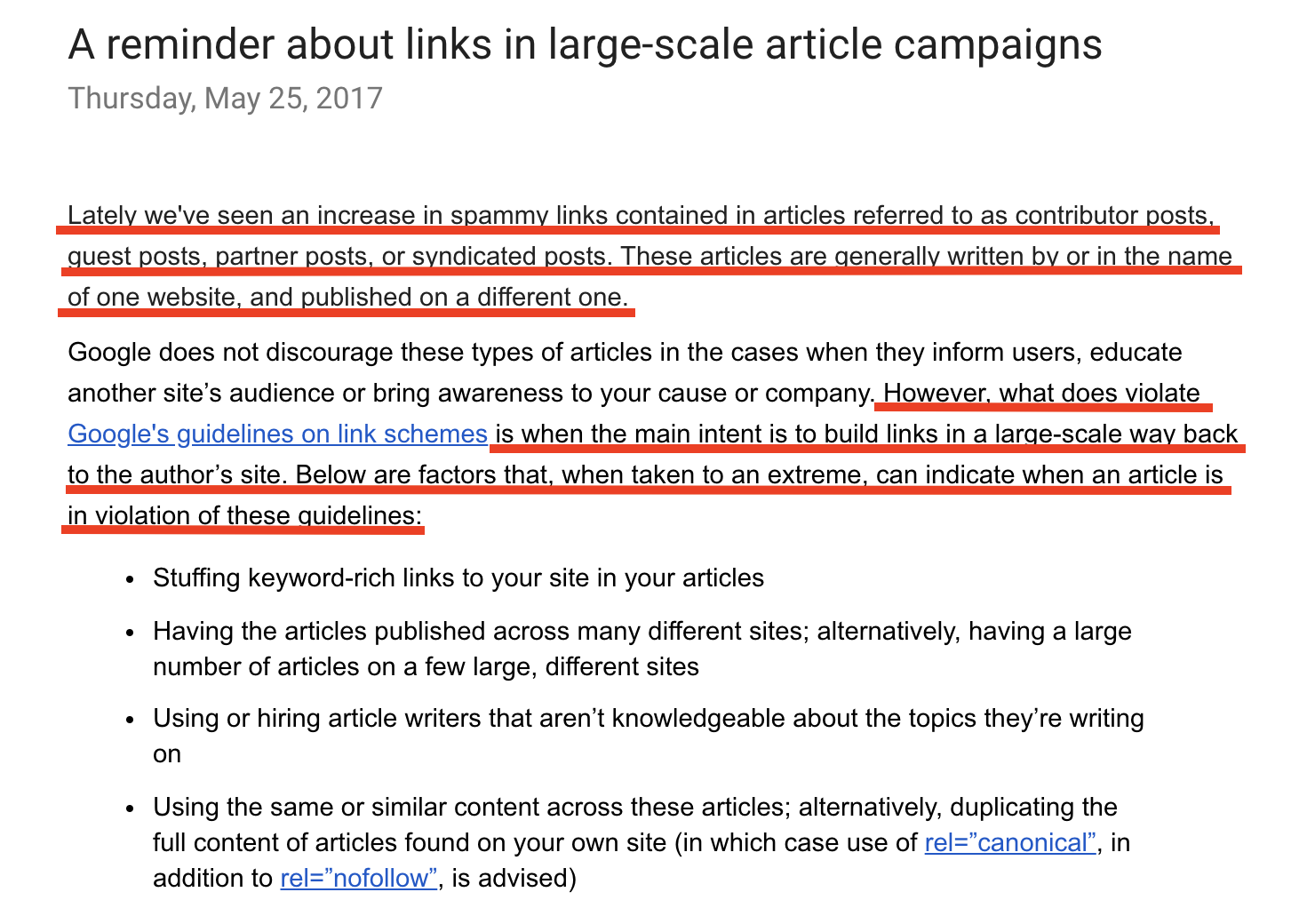
According to Google, a “link scheme” is any type of collaboration with the goal of manipulating search rankings through acquiring or providing links.
In relation to guest posts, this includes:
- Unmarked paid guest posts
- Guest posts with too many links (also exact-match anchor text links)
- Reciprocal link exchanges

Sites that Ask for an “Editorial Fee”
Paid links are very much a black-hat SEO tactic.
This, of course, includes paid guest posts.
Whenever you reach out to someone and they ask for an “editorial fee” to publish your content, don’t pay.
The same goes for using low-quality guest posting services such as the following:
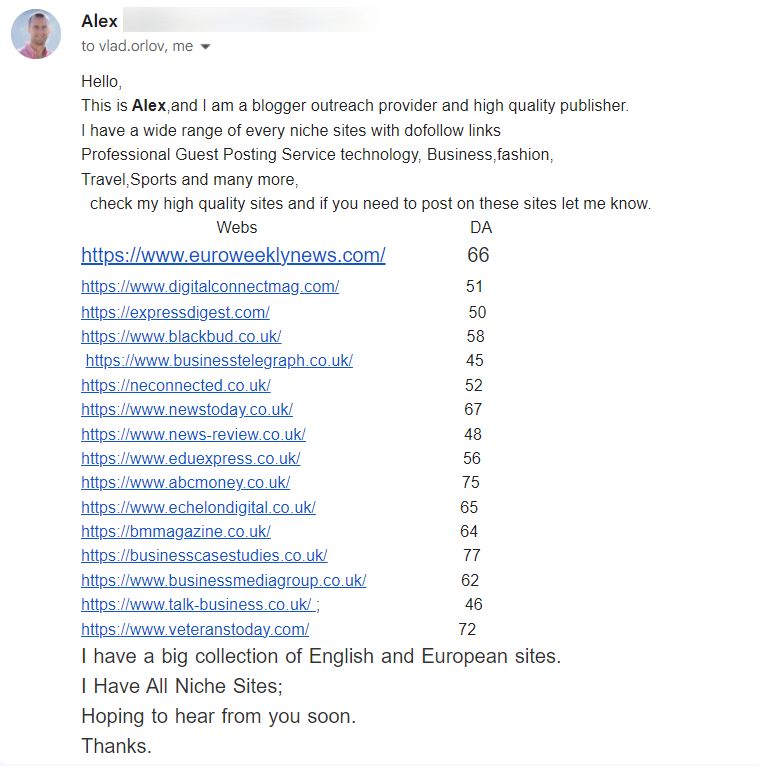
This isn’t just because it’s against Google’s guidelines.
Backlinks from such websites actually hold very little SEO value as they’re typically packed with other links to irrelevant content, and show clear signs of an unnatural outgoing link profile.
However, not all paid links are against the guidelines.
If you acquire a link or a guest article as part of a sponsored collaboration, and it’s marked with the “rel=sponsored” tag, it’s not in violation of any guest post guidelines.
However, one thing that you should know about sponsored links is that function much like “nofollow” links and don’t pass on any ranking signals.
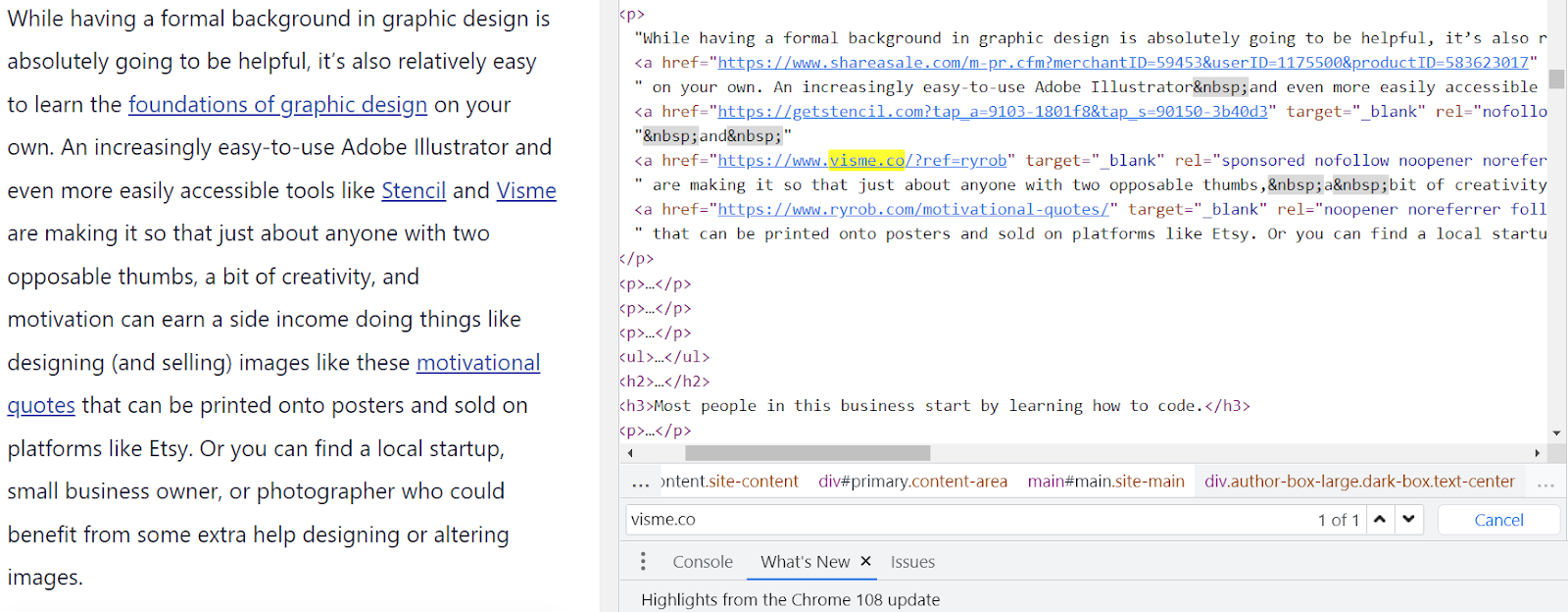
To check which rel tags your link has, open the linking page, right-click anywhere, then click on “Inspect”, and then “Console”.
Start typing in your link’s URL, and all of its attributes will be right next to it.
Guest Posts With Too Many Links
A few links are good.
Two dozen is too many.
There is no set-in-stone rule as to how many links are too many, so use your best judgment.
Bigger guest posts can house more links in a contextual and non-cluttered way.
Another important aspect of outgoing links in your guest posts is their anchor texts.
You should avoid over-optimizing them to include the exact target keywords of their target pages.
Instead, strive for partial-match and semantic keywords.
Sites That Ask For a Link Back
Reciprocal exchanges (link to me and I’ll link to you) are also considered a “link scheme”.
It is also one of the easiest link scheme types for Google to identify.
When the algorithm sees two mutual links appearing on previously unrelated websites in a short time, it’s a tell-tale sign of a reciprocal link exchange.
Next, these links are likely completely devalued by the algorithm.
This means that, most likely, neither site gets any benefits from the link.
So, while mutual exchanges are a black-hat tactic when done on a small scale, they can’t hurt you either.
They can only become a detriment to your SEO when done excessively.
A better way to go about this is to do a 3-way, or an A-B-C exchange.
Guest posts are perfect for this, as you can provide your link building partners with links from your content on third-party sites, helping you stay away from reciprocal links.
How to Do Guest Blogging Effectively?
The manual process for guest blogging at scale comes down to four things: identifying relevant target blogs in your niche, doing the research that makes a pitch worth opening, writing a piece of valuable content the host blog genuinely wants, and sustaining the outreach long enough to compound.
Tools like Ahrefs and Semrush help with prospecting (keyword gap analysis is the strongest hook for any guest post pitch), but the rest is human work. Personalised pitches, follow-ups, content creation tailored to each publication’s voice, and the patience to repeat the process every week.
Done well, this builds the network of editor relationships that turn into recurring guest blogging opportunities.
Done badly, it burns out a marketing team in three months.
Which is why so many businesses choose to just outsource it to a done-for-you guest blogging service like Respona.
You share your target pages, target keywords, and any anchor text preferences, and the Respona team handles the entire workflow on your behalf.
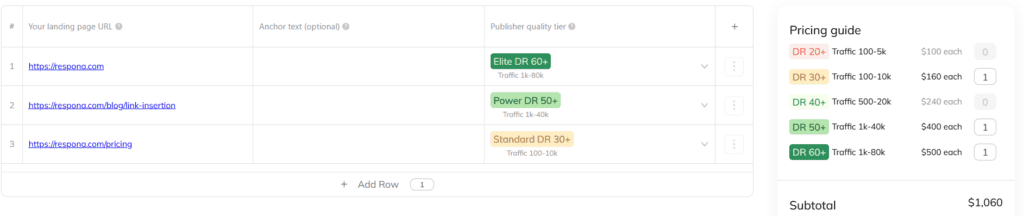
Prospecting niche-relevant blogs that fit your audience. Drafting personalised pitches the blog owner actually wants to read. Negotiating placement with the website owner or site owner.
Securing the live guest blog post. The whole outreach grind that usually takes 20+ hours a week internally gets absorbed entirely.
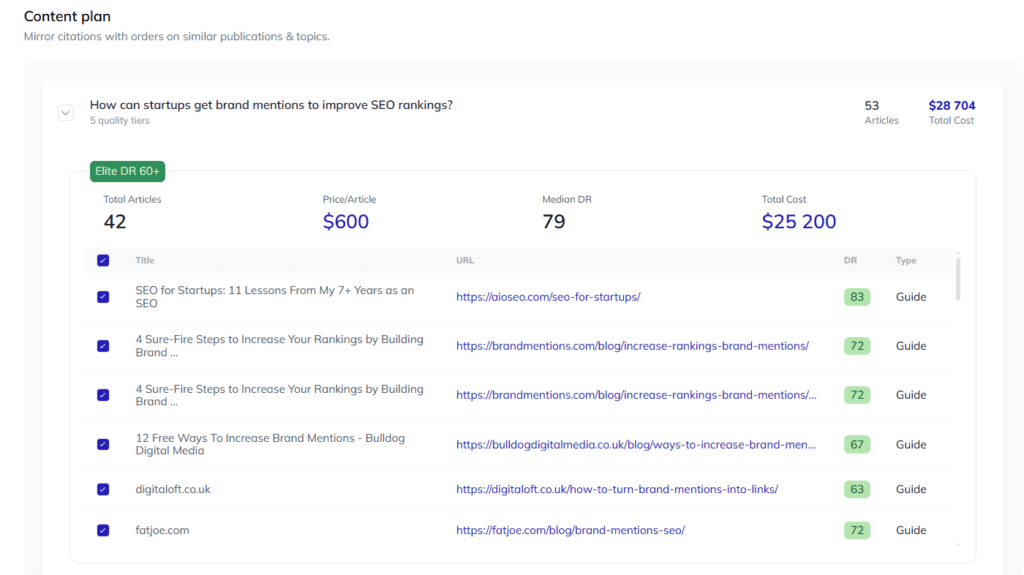
What sets the model apart is what gets prioritised. The team focuses on placements on blogs that already rank in Google AND already get cited inside ChatGPT, Perplexity, and Google AI Overviews.
That dual focus matters because brand mentions inside well-ranked editorial content are the strongest predictor of citations in AI search. You get the traditional SEO benefit (link equity, rankings, organic traffic) plus the newer AI visibility benefit at the same time.
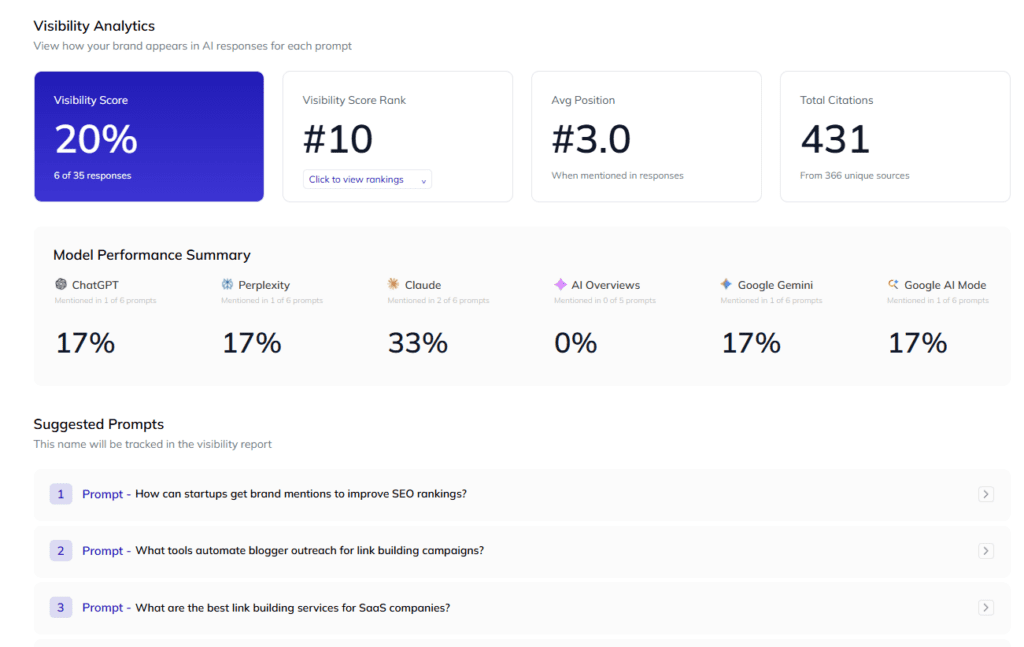
Respona also helps you track your visibility increase across the answer engines of your choosing.
Every guest blogging opportunity can be reviewed and approved by you before any pitch goes out. Nothing lands in your profile that you haven’t said yes to.
The team also handles related work alongside guest articles (listicle placements, brand mentions, broken link replacement) so a single engagement covers most of the off-page bases at once.
Pricing is pay-per-placement and tiered by site authority rather than retainer-based, so the spend lines up with the actual links you receive. For brands serious about guest posting at scale without burning out an in-house team, this kind of done-for-you model handles the part of the work that’s hardest to scale.
Link building cheat sheet
Now Over to You
So, now you know why guest blogging is still one of the strongest tactics in 2026 and what makes a solid posting strategy actually work.
The honest reality is that knowing the strategy is the easy part. Executing on it consistently over months is what separates teams that earn placements from teams that talk about earning them.
If you’d rather skip the prospecting and outreach grind, hand it off to Respona’s team. Share your target pages, target keywords, and anchor preferences, and we’ll handle the rest.
Frequently Asked Questions (FAQ)
Is guest blogging dead in 2026?
Guest blogging is far from dead and remains one of the most popular and effective white-hat link building strategies.
Are nofollow links useless for SEO?
Nofollow links don’t pass ranking signals, so, in terms of SEO, they hold little value.
However, they still work for spreading awareness about your business and attracting new audiences.
Is guest blogging scalable?
Writing great content all the time to get links can get pretty time-consuming, but if you have the capacity (one or more dedicated team members) to manage the guest blogging process from start to finish, it is easily scalable – especially with the help of a tool like Respona.
If you need help actually writing the content, you can hire a guest writer, but make sure that they’re actually knowledgeable about what you want them to write.
What’s the best way to get guest post opportunities?
In our experience, the best way to secure guest blogging opportunities is actually to not do any separate outreach at all – and take advantage of connections that you have already built while doing link building outreach for other strategies.
Should You Avoid Sponsored Posts?
Sponsored posts will not affect your SEO in any way, but strategic placements on the top sites within your niche can be an amazing way to expose your brand to a new target audience and establish thought leadership.
How long should a guest post be?
Most quality contributions land between 1,500 and 3,000 words. Long enough to genuinely cover the topic, short enough that readers finish them.
Always check the publication’s editorial guest post guidelines first, since some publishers prefer shorter posts and others expect deep, long-form content.
Either way, lead with fresh content that adds something the blog doesn’t already cover, and tailor the structure to fit the editorial style of the target blog.
The most experienced guest bloggers treat each guest posting opportunity as a content marketing asset in its own right rather than a quick link-building tactic.
What makes a strong guest post pitch?
A strong pitch demonstrates research. Reference the editor’s recent work, identify a keyword gap their site has versus competitors, and propose a specific guest post idea that fills it.
Generic “I’d love to write for you” emails get ignored. Specific pitches that name the gap, propose a clear angle, and show you understand the publication’s audience get replies.
Many seasoned guest bloggers maintain a running list of ideas tied to specific publications so they’re ready to pitch as soon as the right opportunity opens.
How does guest blogging affect AI search visibility?
Each published placement adds a contextual backlink and a brand mention from an authoritative site in your niche.
Over time, these signals compound into stronger search engine visibility and stronger AI citations. A guest poster who consistently lands placements on high-authority blogs sees measurable improvements in rankings, referral traffic, and AI citations within three to six months.
The guest blogging goal in 2026 isn’t just a single link, it’s accumulating enough brand mentions that AI engines start treating you as the trusted source in your category.
Can social media amplify your guest blogging efforts?
Yes, and you should treat it as essential. When a guest blog post goes live, share it across your own social media channels, tag the publication, and engage genuinely with anyone who comments.
This drives initial traffic that signals quality to the host, makes editors more likely to invite you back, and amplifies the post’s reach across social media beyond the publication’s audience. Email marketing also works well here. Including a “we just got featured on X” line in a newsletter reinforces your authority with your existing audience and pulls referral traffic to the publication.
Most guest posting programs that perform well treat distribution as half the work.
Is guest posting still safe with Google’s recent algorithm updates?
Yes, when done correctly. Google has consistently said that high-quality guest posting on relevant sites is fine. What gets penalised is low-effort guest posting at scale (exact-match anchor stuffing, paying for placements on irrelevant sites, mass-produced content sent to dozens of publications).
Modern guest posting that focuses on relevant, well-written contributions to authoritative sites stays well within the guidelines. Treating every published piece as content marketing first and link building second is the cleanest posting strategy, and a careful guest blogger avoids the patterns Google catches.
How is guest blogging different from other outreach work?
The two often get confused but they’re not the same. Blogger outreach is the broader category, any structured campaign to get bloggers, journalists, or editors to talk about your brand, link to you, review your product, or mention you in their content.
Guest blogging is specifically when you write content that gets published on someone else’s blog. Smart programs combine both: you might pitch the same blogger for a product review one quarter and a guest article the next, building the relationship over time.
What kinds of businesses benefit most from guest blogging?
Almost any, but the ROI varies. SaaS and B2B brands tend to see the strongest returns because their target audience reads industry publications heavily.
Local businesses benefit from regional blogs and trade publications. Even ecommerce stores benefit, though they may need to combine guest blogging with seo services that handle product page optimisation separately.
The common thread: brands selling things to readers who consume editorial content benefit from showing up inside that content as the guest author of relevant pieces.
What’s the relationship between guest blogging and SEO performance?
Guest blogging affects SEO performance in three main ways. First, the inbound links from authoritative sites pass link equity that improves rankings. Second, the brand mentions and citations feed both Google’s authority signals and AI search recommendations.
Third, the referral traffic from each placement reaches a new audience that may later search for your brand directly. A consistent seo strategy combining all three layers tends to outperform any single tactic on its own.