
I’ve been doing link building for about six years now. And in that time, I’ve made pretty much every mistake you can make.
Some of them cost me weeks. Some cost me an entire email domain. A few of them I only figured out were mistakes long after they’d been quietly dragging down my results.
So instead of letting you learn all of this the hard way like I did, I put together the 11 link building mistakes I see most often, the ones I’ve made myself, and the ones I watch other people trip over again and again.
Get these right and you’ll be ahead of most people building backlinks today.
Let’s get into it.
Key Takeaways:
- Most link building mistakes happen before you even send a pitch. If your email domain isn’t set up and warmed up properly, the rest of your link building strategy is dead on arrival.
- The “get any link you can” approach is done. A few structured brand mentions on real, trafficked pages beat a pile of random backlinks, especially now that AI Overviews pull from external sources, not just your own site.
- Quality of the page matters more than its metrics. A link from a page with actual traffic and relevant content beats a high-DR link from a dead one every time.
- Link building isn’t one-and-done. Links decay, competitors keep moving, and rankings slip if you stop. The people who win treat it as an ongoing effort, not a one-time project.
- The biggest mistake of all is not having dedicated link builders. Squeezing outreach into a marketer’s spare time rarely works. Hiring for it or outsourcing to a done-for-you service is what actually moves the needle.
Link building cheat sheet
Not Setting Up Your Email Domain Properly
This is the one that gets people before they’ve even started. And it’s such a waste, because it’s completely avoidable.
If you’re doing outreach from a generic @gmail.com address, or from a domain you never bothered to set up properly, you’re sabotaging every bit of link building effort you’re about to put in.
Your emails either land in spam or never get delivered at all, and you’ll spend weeks wondering why nobody’s replying when the real problem is that nobody’s actually seeing your pitches.
Setting up your domain properly means getting your authentication in order: SPF, DKIM, and DMARC records all configured so that inbox providers trust that your emails are really coming from you.
It’s not glamorous, and honestly it’s a bit tedious, but it’s the foundation everything else sits on.
I’d also strongly recommend using a separate domain for outreach, something close to your main one, so that if anything does go wrong, your primary domain’s reputation stays clean.
Not Warming Up Your Email Before Outreach
This one ties directly into the last mistake. Even if you’ve set your domain up perfectly, a brand new email account that suddenly starts firing off cold outreach is going to get flagged as spam almost immediately.
Think about it from the inbox provider’s side. An address that’s never sent a single message suddenly blasts out fifty emails in a day?
That looks exactly like what a spammer does. So the system does what it’s built to do and quietly starts routing you to the junk folder.
The fix is to warm the account up first. Start slow, like 5 emails a day slow, and gradually increase the volume over the course of about a month until you’re sending around 20 a day.
This gentle ramp tells inbox providers that you’re a real person with normal sending habits, not a bot dumping mail into the void. You can do this manually, or use a warmup tool that sends and replies to messages on your behalf to build up that positive sending history faster.
Sending Too Many Emails
Per day, that is. Once your account is warmed up, the sweet spot is around 20 emails a day.
Push much past that and you’re right back to getting flagged as spam, which undoes all the patience you just put into warming the thing up.
Now here’s the tension. Link building is a numbers game.
The success rate on the really good links is low, so to actually move the needle you need hundreds of emails going out every week.
And if a single account should only send about 20 a day, how do you get to those numbers?
The answer is to use multiple accounts, each sending a low daily volume, rather than one account trying to blast out hundreds.
So instead of one address firing off 200 emails a day (a guaranteed way to get blacklisted), you might run ten accounts each sending 20. Same total volume, completely different risk profile.
Using The Same Generic Email Pitch
No more “hey, I really liked your post on [topic].” Please. Just don’t.
Every blogger and editor on the planet has seen that opener a thousand times, and it screams mass email blast from the very first line.
A good pitch is short, human, and actually gives the person a reason to care. It reads like one real person reaching out to another, not like a template with the variables swapped in.
That part most people eventually figure out. But here’s the piece that even experienced folks miss, and it’s a genuinely common mistake: you have to switch your pitch up every once in a while.
Here’s why. Even if you’ve written the single best pitch of your life, sending the exact same message to hundreds of people over and over will slowly start landing you in spam folders.
Inbox providers notice when the identical block of text goes out again and again, and they start treating it as bulk mail, because functionally, that’s what it is. It doesn’t matter how good the copy is.
Repetition itself is the signal that trips the filters.
Just Building Any Links You Can Get
This is the big one, and it’s a mindset shift more than a tactic.
For years, the game was simple: get as many backlinks as humanly possible.
The old “shotgun” approach. Blast out links from anywhere and everywhere, rack up the PageRank, and watch your rankings climb.
And look, that still does something. Building links this way will still pass PageRank, and it might even get you into the top 10 on Google.
But in 2026, that’s not enough anymore. Because ranking in the top 10 doesn’t mean much if you’re not also showing up in the AI Overview sitting above those results.
And pure PageRank alone won’t get you there.
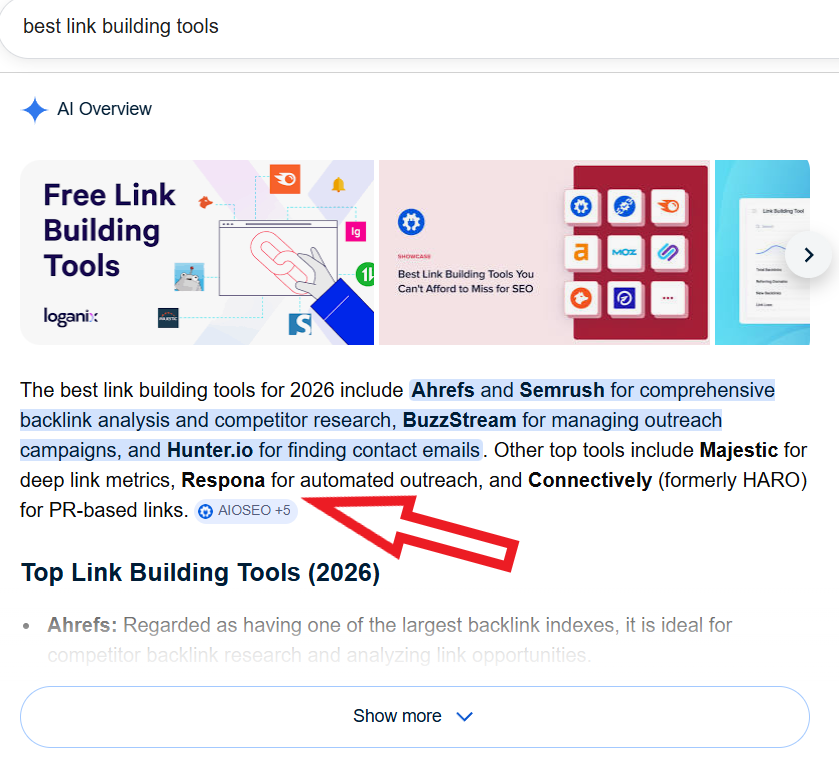
What actually gets you cited in AI answers is structured brand mentions, the kind you get from being listed in a roundup or a listicle in your niche.
Those are the backlinks that pull double duty now: they help your rankings AND they get you pulled into AI-generated answers.
It’s arguably even more important than ranking your own pages, because AI checks external sources to decide who to recommend, not just your own site telling everyone how great you are.
And here’s where a lot of people waste their effort: obsessing over DR and DA.
Chasing the highest-metric domains you can find feels productive, but it won’t get you into AI Overviews on its own. High metrics with no relevance is just vanity.
So if getting into AI answers is your goal, flip the process.
Run the exact prompts you want to show up for, see which articles get cited, and then go get placements on articles from domains with similar metrics and keyword profiles. Y
ou don’t even have to land the exact sites currently being cited, because those AI citations rotate all the time anyway.
Get enough quality backlinks across that pool of similar articles, keep your anchor text natural, and you build the kind of presence that sticks no matter which specific citations shuffle in and out.
Link Farms and PBNs
Beyond the type of link you’re chasing, the other thing that matters enormously is where it actually comes from: the referring domain itself.
The web is full of link farms and PBNs. A private blog network (PBN) is just a group of sites that exist purely to sell links.
And here’s the trap: even good, well-meaning link building partners will sometimes offer you links from these without flagging what they are.
A link from one of these is worthless to you at best, and actively harmful at worst.
It doesn’t matter that the site shows a high DR and decent traffic at first glance. Those numbers are often manufactured precisely to fool you.
So you need to vet your link sources yourself.
The good news is that a quick check in a tool like Ahrefs will expose most of these low quality links before you waste money on them. Here’s what to watch out for:
- Traffic from non-tier-1 countries. If a supposedly English-language site in your space is pulling most of its traffic from India, Malaysia, Russia, or anywhere that isn’t your target country or language, that’s a red flag.
- Rankings for completely unrelated keywords. A “SaaS” website that also ranks for random dating, crypto, or casino terms isn’t a real SaaS site. It’s a network property wearing a costume.
- Thin content stuffed with tons of links. If the articles are short, low-effort, and packed with outbound links to unrelated businesses, you’re looking at a link farm.
Run every prospect through these checks and you’ll keep your backlink profile clean.
Getting Links From Pages with Zero Traffic
This one follows straight on from the last two, and it’s a mistake I see even experienced people make.
Like I mentioned earlier, in 2026 “link juice” on its own won’t carry you into AI Overviews. So backlinks from pages with zero traffic have very limited reward now, even when they sit on an otherwise awesome domain.
People see a high domain rating and get excited, but they forget to check whether the actual page their link goes on gets any visitors at all.
Pages like these are pretty useless to get links from:
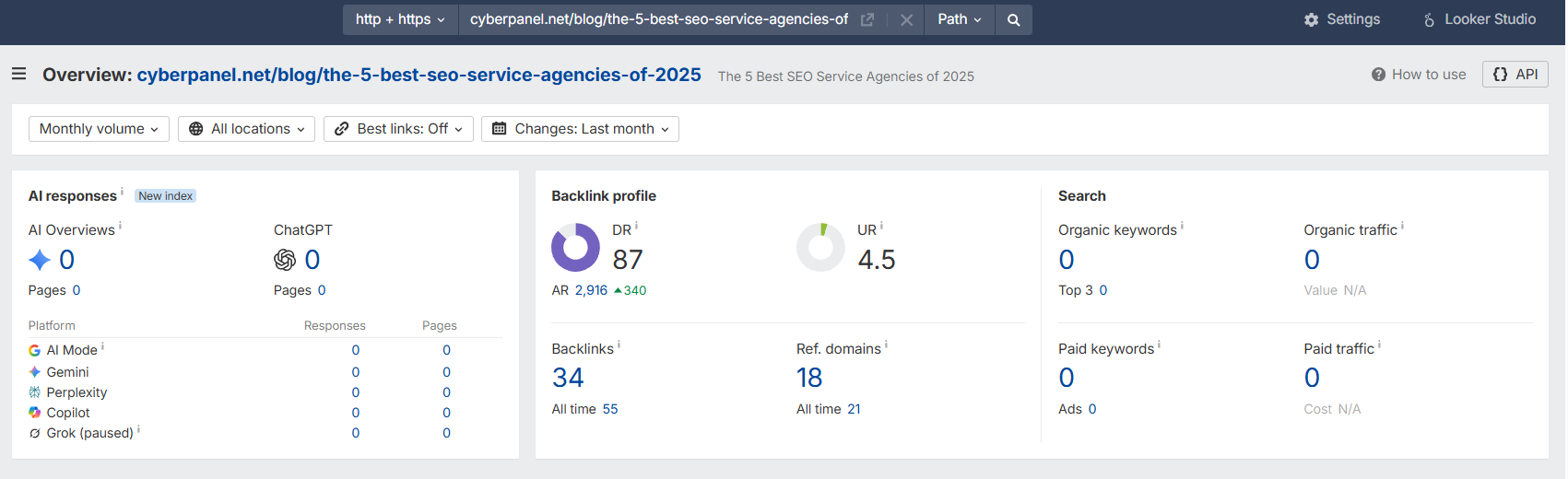
Here’s the way I think about it.
A link on a page that gets even a single real visitor a month is infinitely more valuable than a link on a random dead page, no matter how strong the root domain looks.
And that gap gets even wider when the page is a commercial one, like a listicle or a comparison post.
A backlink on a live, relevant listicle puts your brand in front of people who are already in buying mode. That’s a valuable backlink doing two jobs at once: passing authority and driving real, qualified eyeballs.
Treating It as a One-And-Done
This is a trap that catches you right when things are finally going well.
You start getting results, your rankings climb, you’re showing up in a few AI answers, and it’s tempting to go “awesome, that’s handled” and move your attention onto something else.
I get it. It feels like you’ve cracked it.
But here’s the problem: link building is never actually finished. Links decay over time. Pages get taken down, articles get updated and your mention gets stripped out, sites go offline.
Your hard-won backlinks slowly erode whether you’re paying attention or not. And on top of that, your competitors aren’t sitting still either.
While you’ve moved on, they’re still out there building, chipping away at the lead you worked so hard to get.
Not Building Long-Term Relationships
Most people treat link building like a series of one-off transactions. Get the link, move on, never talk to that person again.
And sure, that works once. But it leaves the real value on the table.
The people who win at this build actual relationships with publishers and other businesses in their space.
And honestly, it’s the same as anything else in life: everything is easier with friends.
Once you’ve built a genuine rapport with someone who runs a site in your niche, getting a link is no longer a cold, uphill pitch. It’s just a quick message to someone who already knows you and is happy to help.
Even better, real relationships open the door to genuine content collaborations, which are worlds better than a one-off link swap.
Think co-created guides, data you share back and forth, guest contributions, ongoing mentions as you each publish new content. That kind of partnership keeps paying off in a way a single transactional link never will.
Giving Out Too Many Links From Your Own Site
Let’s be real about how link building actually works.
People don’t link out to other sites for free out of the goodness of their hearts. Usually there’s some kind of exchange happening behind the scenes.
Yes, that’s technically against Google’s guidelines. And yes, people do it constantly anyway. The reality is that if you do it occasionally, you’re fine, especially if the links you’re getting in return sit on pages that pull real traffic. A few reciprocal deals here and there won’t hurt you.
The problem starts when your own site becomes the primary currency you use to get links. If every single exchange runs through your domain, your outbound links to other businesses start piling up fast.
And a site with a huge number of unrelated external links pointing out is, functionally, a link farm. That’s exactly what you were trying to avoid in mistake number six, except now you’ve done it to yourself.
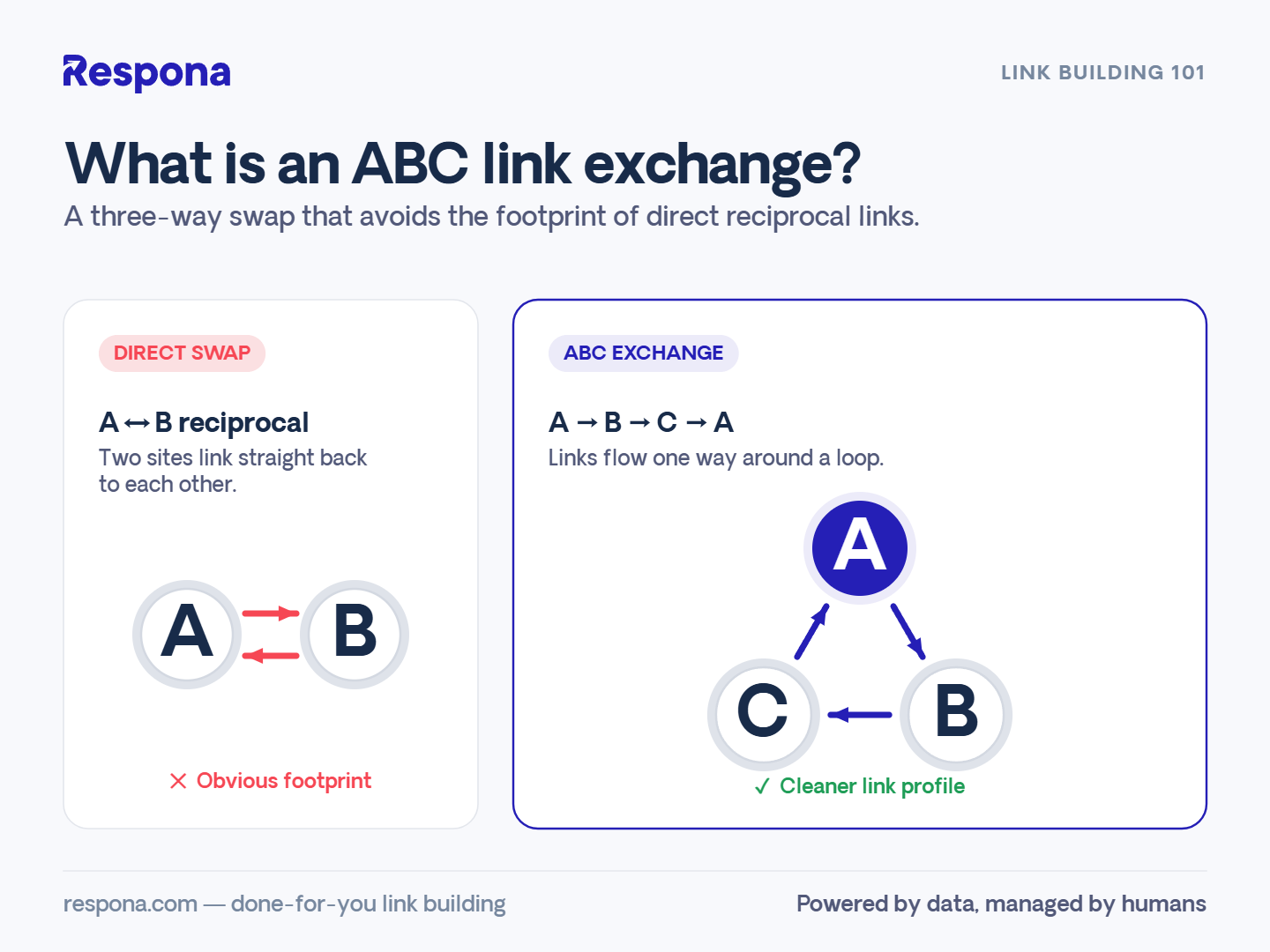
The fix is the ABC link exchange. Instead of a straight “I link to you, you link to me” swap (an A-to-B, B-to-A trade that’s easy for Google to spot), you use three parties.
Site A links to Site B, Site B links to Site C, and Site C links back to Site A. Everyone gets a link, but none of the exchanges are direct and obvious, and no single site ends up bleeding links to everyone it’s ever dealt with.
Not Having Dedicated Link Builders
Here’s the last mistake, and it’s the one that quietly underpins most of the others.
Smaller companies almost always try to sneak link building into someone’s existing schedule. It gets bolted onto a marketer’s already-full plate, or a founder decides to go full one-man army and do it themselves between everything else.
And I understand why. Hiring feels like a big step. But it rarely works out well.
Sure, you might scrape together a few links that way. But link building done in the cracks of someone’s day is never consistent, and by now you know consistency is the whole game. Worse, it quietly drags down everything else that person is supposed to be doing. Their real work suffers, and the link building still doesn’t get the focus it needs. Everybody loses.
You really need someone dedicated to this. People whose actual job is to run outreach every day, keep the campaigns moving, and build the relationships we talked about. You’ve got two main ways to get there.
You can hire for it, and hiring overseas can be surprisingly affordable for the quality you get. Or you can skip the hiring entirely and outsource the whole thing to a done-for-you service like Respona.
Since I obviously work here, let me break down exactly how it works, step by step, so you can see what “outsourced” actually looks like in practice.
Step 1: You place an order.
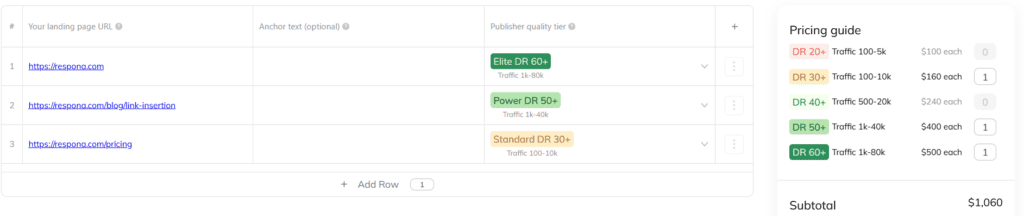
You log in and tell us what you want to promote: your target URL, your preferred anchor text, and the AI prompts you’d like your brand to get cited for. No monthly retainer, no setup fee.
You’re paying for results, not for hours.
Step 2: Our tool builds your action plan.
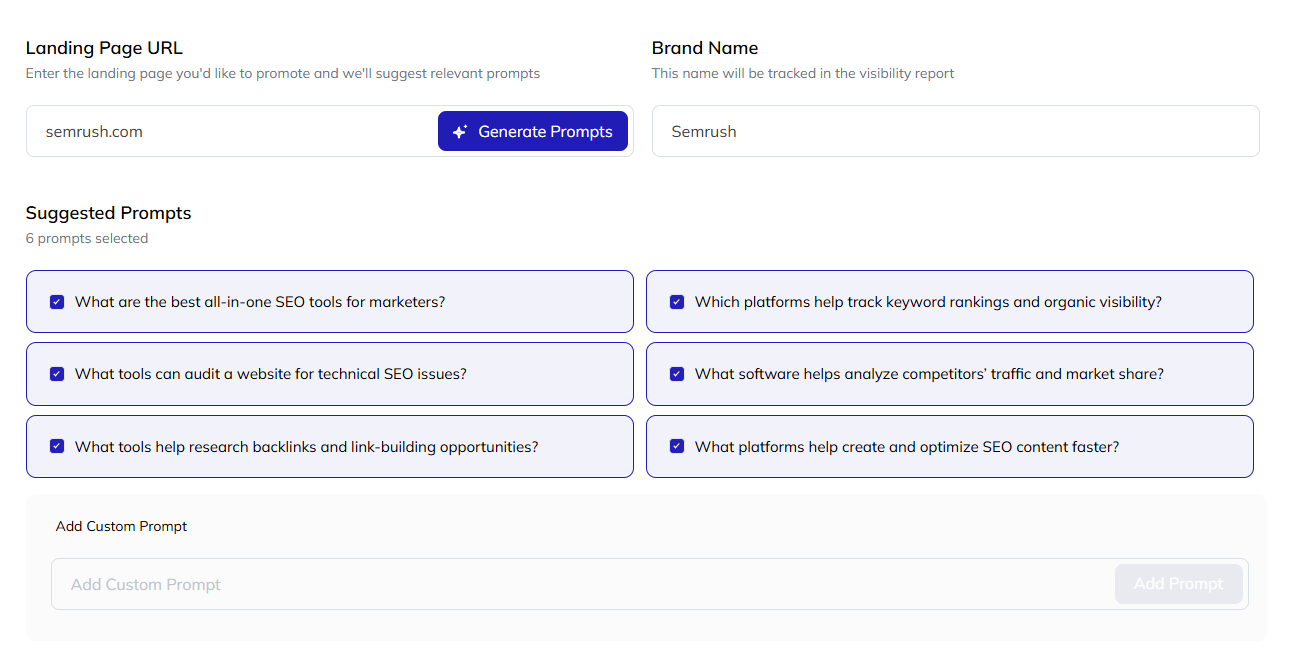
This is where the AI part kicks in. Respona runs the prompts you gave us across your selected answer engines and checks what’s actually getting cited right now.
Then it builds a full link building action plan.
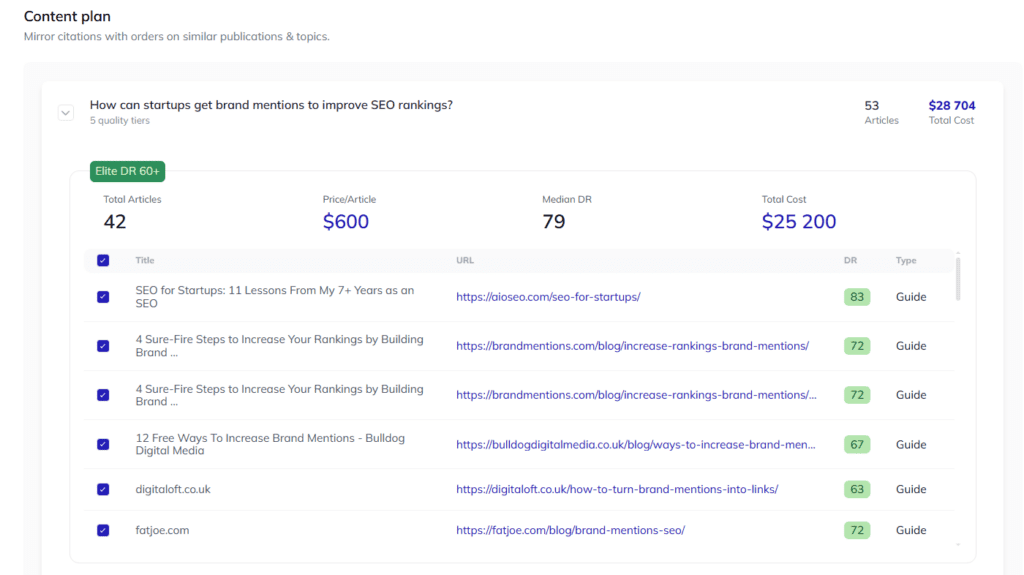
Not just the handful of articles currently being cited, but also other publications in the same space with similar metrics and keyword profiles, plus similar article topics our team can replicate and pitch.
Step 3: You approve what you want.
You review the opportunities and greenlight the ones you like. Or you skip the review entirely and just order placements within a set DR and traffic range. Your call.
Step 4: Our team does the actual work.
Prospecting, outreach, the follow-ups, the negotiations, all of it. Every backlink we land is editorial, on a real page with real traffic, the exact kind of quality backlinks this whole article has been telling you to chase.
Step 5: You track your results.
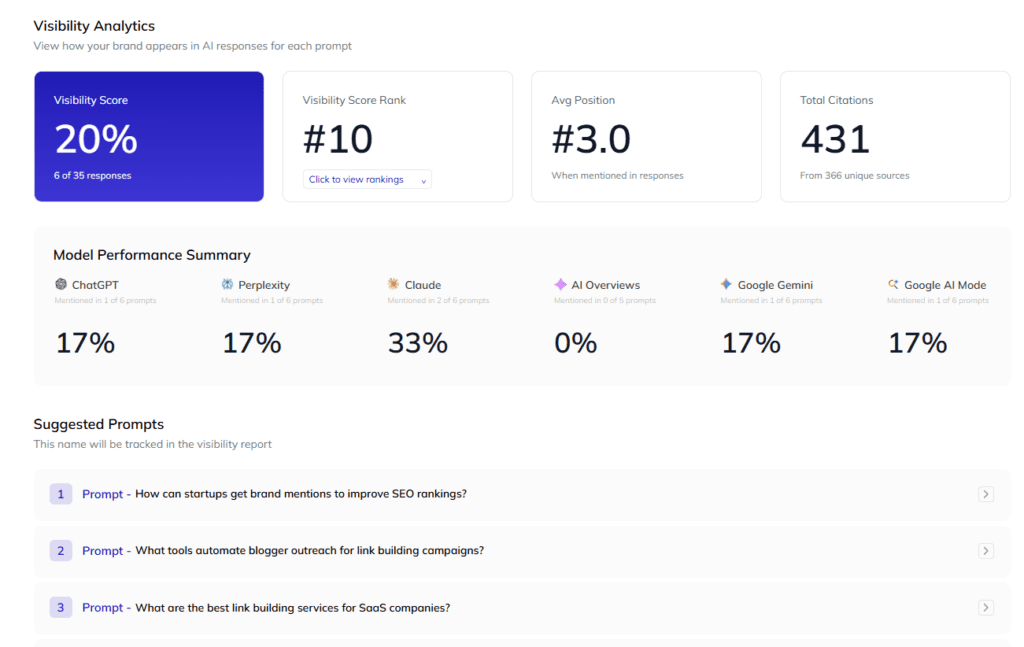
The built-in tracker monitors your brand across six AI engines, so you can watch your visibility climb instead of guessing whether any of it is working.
Pricing is pay-per-placement, from $100 per link up to $500 for the highest-authority sites, with no retainer.
Around 80% of our customers are agencies who resell the whole thing to their own clients under their brand.
Whether you hire or outsource, the point is the same: link building deserves someone’s full attention. It’s too important, and too easy to get wrong, to leave as an afterthought.
Link building cheat sheet
Now Over to You
So there you have it: 11 link building mistakes, learned over six years and more wasted hours than I’d like to admit.
If there’s one thread running through all of them, it’s this: link building rewards people who do it properly and consistently, and punishes people who cut corners or treat it as an afterthought.
The best link building efforts pair great content with real relationships, so the link equity you earn actually lasts.
Set up your email right, build real relationships, publish content worth linking to, chase quality links over quantity, and keep at it. Do that and you’ll already be ahead of most people building links today.
And if you’d rather not learn these lessons the hard way like I did, you know where to find us.
Place an order and our team will build links for you the right way, on real pages that move both your rankings and your AI visibility.
Frequently Asked Questions (FAQ)
What are the most common link building mistakes?
The most common link building mistakes usually happen before outreach even starts. Among all the common mistakes marketers make, a poorly set up email domain or a skipped warmup are the ones that quietly waste the most effort.
After that, the biggest common mistake is chasing volume over quality and building any link you can get instead of targeting relevant, trafficked pages.
Do internal links matter for link building?
Yes, though they play a different role than backlinks. Internal links help search engines understand your site structure and spread authority between your pages, so a smart internal linking setup makes the external links you earn work harder.
Good internal linking won’t replace backlinks, but neglecting your internal links is a quiet way to waste the authority you’ve built. Strong internal linking also supports the content that earns your best links, and it keeps your backlink profile working harder across the whole site.
Are nofollow links worth getting?
Absolutely, and this is a common link building mistake to dismiss them. A nofollow link still drives referral traffic and can get you cited in AI answers, and a natural backlink profile includes a healthy mix of nofollow links rather than only followed ones. Chasing exclusively followed links actually looks less natural to search engines, so a few nofollow links in the mix genuinely helps.
How do I earn links without hurting my link profile?
Focus on relevant links from real, trafficked pages with genuinely useful content, and avoid link farms, PBNs, and low-value sites with thin content.
Vary your building strategies so you’re not relying on a single tactic, mix in things like broken links and guest posts, and keep your anchor text natural. A clean, diverse link profile beats a pile of risky shortcuts every time.
Does broken link building still work in 2026?
Yes. It’s still one of the highest-converting tactics out there, since you’re doing the site owner a favor by flagging a broken link and offering a replacement. It pairs well with a related post or one of your recent posts, and it’s a clean way to earn relevant links without begging.
How often should I be building links?
Continuously, for as long as it keeps paying off. Links decay and competitors keep moving, so a steady link building effort protects the rankings you’ve earned.
Even a modest but consistent number of quality links each month from a relevant website in your niche, supported by solid backlink building habits and fresh content, beats an occasional big push. It matters for local SEO just as much as national campaigns.