
According to Demand Metric, content marketing costs 62% less than “regular” marketing efforts, and at the same time, generates three times as many leads.
And according to Nielsen, partnering with publishers to distribute content results in 50% higher brand lift.
Publishing blog posts on your own website is important, but generating valuable content partnerships is equally as valuable for your business.
In this article, we will discuss what content partnerships are and what are their benefits, types, and even some email pitch templates you can use to reach out to potential partners.
Let’s get into it.
Key Takeaways:
- Content partnerships are one of the highest-leverage growth moves for any brand. They give you access to a partner’s shared audience, expand your reach, and build authentic relationships that compound over time. The right partner can produce more lift in a quarter than months of solo content.
- Listicle mentions and editorial placements are the underrated content collaboration format. They are easier to land than full webinars or joint events, and they show up in Google search results AND inside AI Overviews from ChatGPT, Perplexity, and other AI engines. These mentions are partnership opportunities in disguise.
- Influencer partnerships still work, but the dynamics have shifted. The creator economy is more saturated now, which means brand collaborations need to be more strategic. Pick partners whose content style and audience overlap with yours, not just the ones with the largest followings on social media.
- The best content partner relationships have shared business goals, not just shared audiences. A great content partner brings their own distribution channels and is motivated to make the partnership work because it benefits their own marketing strategy too.
- Don’t underestimate the volume needed to make content partnerships pay off. A single listicle placement or one guest post is rarely enough. The brands seeing the biggest returns are running dozens of content partnerships in parallel with consistent follow-through.
Link building cheat sheet
What is a Content Partnership?
In the simplest terms, a content partnership is an agreement where two or more parties collaborate to develop and share content.
It’s like a symbiotic relationship in the wild—each party brings something unique to the table allowing you to grow together, broaden your audiences, and enrich your content.
It could be as straightforward as a guest blog exchange or as intricate as creating a joint webinar series.
The main goal?
To provide value to your audience while benefitting mutually from increased visibility and audience engagement.
Content Partnership Benefits
Now, let’s get a little bit more in-depth about content partnership benefits.
Backlinks
First up, it’s the backlinks – our favorite SEO tool.
Backlinks placed in high-quality content published on other respected websites in your niche is one of the strongest ways to get to the fabled #1 spot on Google.
And actively sparking up new content partnerships can provide you with a steady stream of them.
Tapping into New Audiences
This one is rather straightforward.
More websites or social media accounts that your content gets published on = more people will see it.
Increases Topical Authority
Topical authority simply means that you’re recognized as an expert in your field.
When your content is only published on your site, it doesn’t provide you with as much of a boost to topical authority and brand awareness as when it is on dozens.

Keep publishing your content on partner’s resources, and sooner or later people will see you as “the link building guy”, or “the sales guy”, or whatever your field of expertise is.
Like Brian Dean from Backlinko, for example.
Affiliate Opportunities
Finally, it’s not uncommon for content partnerships to also grow into affiliate partnerships.
In fact, some websites straight up require you to send an invitation to your affiliate program in order to syndicate your content or publish your guest post.
After all, if you’re going to be publishing each other’s content, why not make some extra revenue by slotting in an affiliate link?
Types of Content Partnerships
Now, let’s talk about some examples of what a content brand partnership could look like.
Listicle Mentions
Listicle mentions are one of the most underrated forms of content collaboration, especially in 2026.
Think about how you find a new product or tool these days. You don’t just ask Google “what is the best [thing]” and click the #1 result.
You scan a few “best of” lists, comparison roundups, and category articles to see which brands keep coming up. The ones that show up across multiple lists are the ones that build trust. Lists like these:
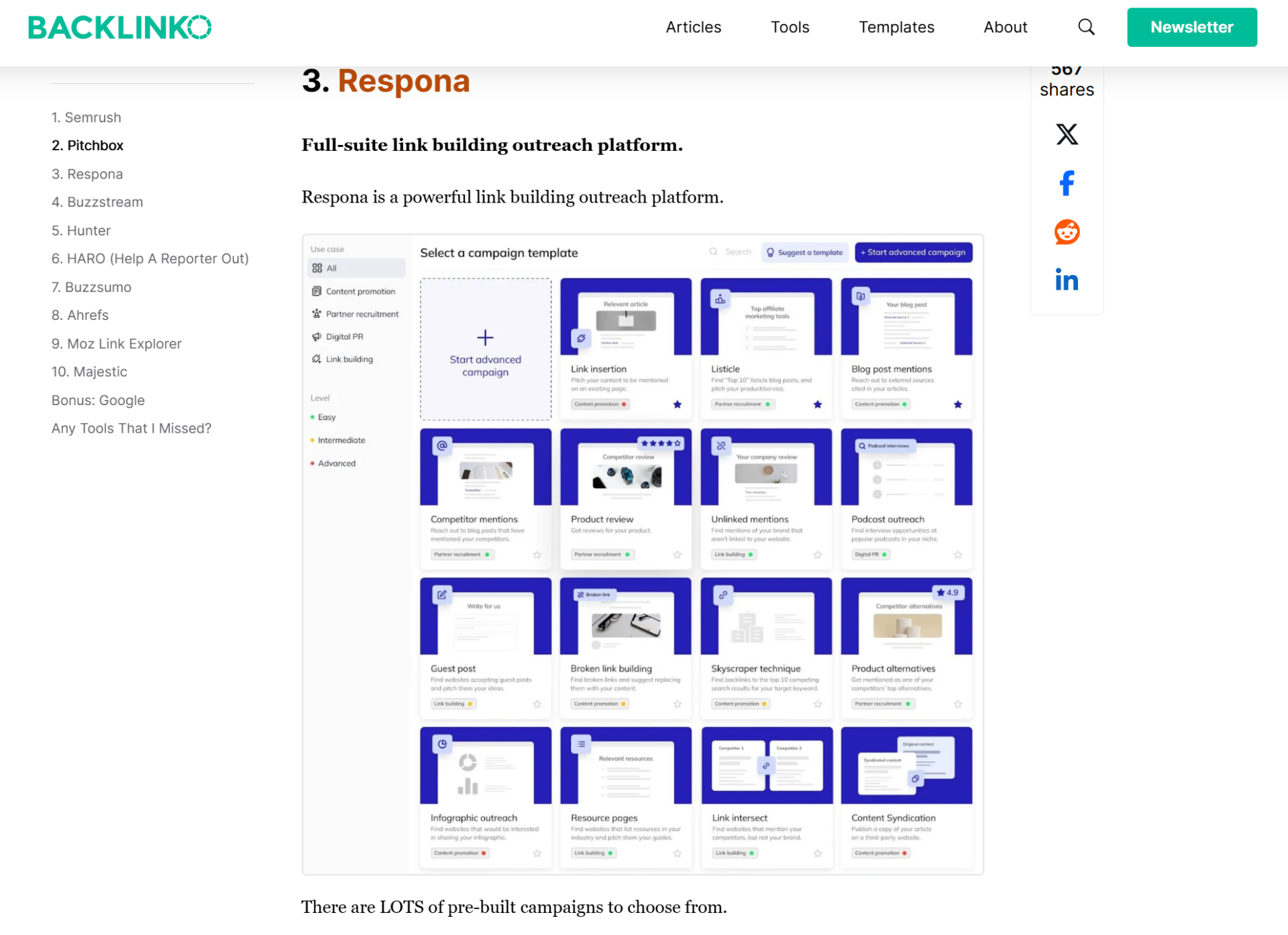
Every listicle mention is essentially a small partnership between you and the publisher. It works in both directions: they get useful, well-researched content that drives engagement on their site. You get exposure to their shared audience, qualified leads, and a backlink that helps both your SEO and your AI visibility. Each side sends value to the other.
Here’s what makes listicle mentions especially valuable now:
- They drive qualified leads. The people reading a “top 10” comparison article are usually in active research mode. These are potential customers, not casual browsers, and they often have a higher engagement rate than other traffic sources.
- They boost both organic AND AI visibility. Listicles tend to rank well in Google search, AND they’re some of the most frequently cited sources inside AI engines like ChatGPT, Perplexity, and Google AI Overviews. One placement, two visibility wins.
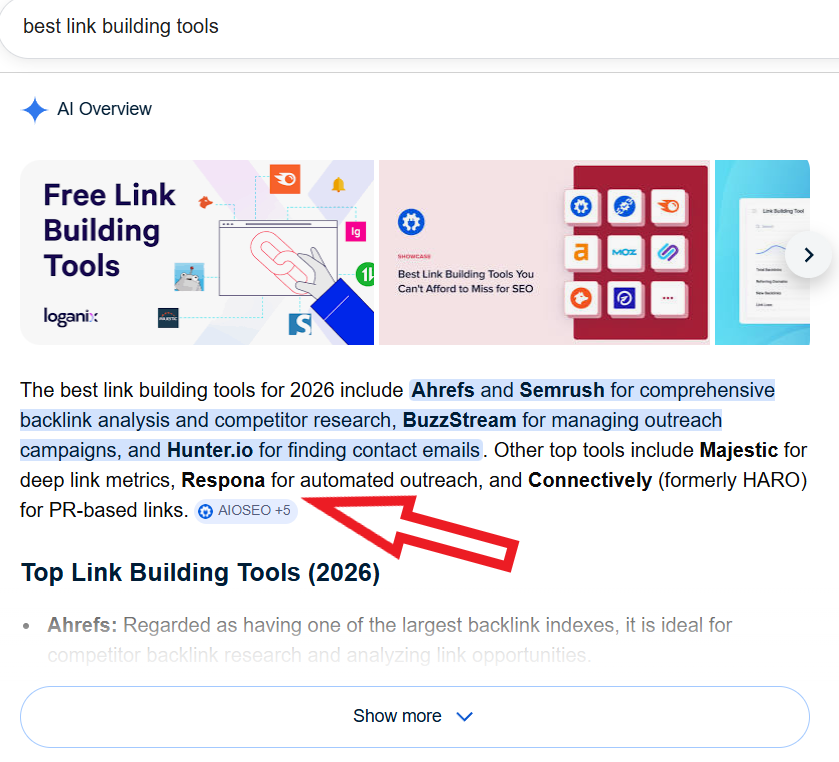
- They build topical authority through volume. A single mention helps. Twenty mentions across category-relevant publications signals to both Google and AI engines that you’re a real player in your space.
- They open doors to other partnership opportunities. Many a successful partnership starts with a single listicle mention. Once you have a working collaboration with a publisher or media outlet, those relationships often expand into future collaborations: guest posts, joint research, co-marketing initiatives. That’s how a successful collaboration in this category often begins.
The catch: consistently landing these placements is a real workflow.
Researching publications, finding the right contact at each one, crafting pitches that land, following up, negotiating placement details, and tracking which placements actually went live, all at the volume needed to move the needle, requires real time and discipline.
Most marketing teams don’t have the bandwidth to run this kind of outreach at scale on top of everything else they’re managing.
We built Respona to handle exactly this kind of work at scale.
Respona is a done-for-you link building service.
You place an order by sharing your target pages and target keywords. Our team handles the rest: prospecting, pitching, follow-ups, and negotiation.
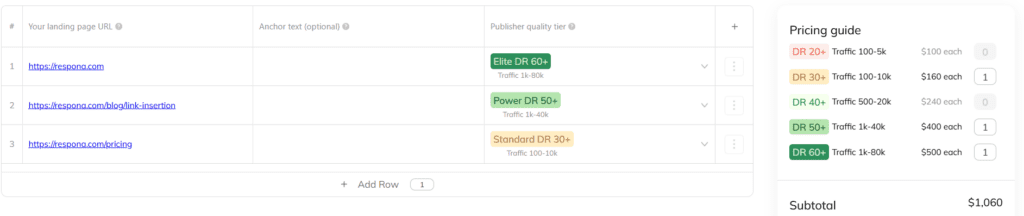
Every prospect comes to you for approval before outreach goes out, and you only pay when a placement actually publishes.
The built-in AI visibility tracker monitors brand mentions across six AI engines (ChatGPT, Perplexity, Google AI Overviews, Gemini, Claude, and Copilot) so you can measure exactly how each listicle placement translates into AI citations alongside organic search visibility.
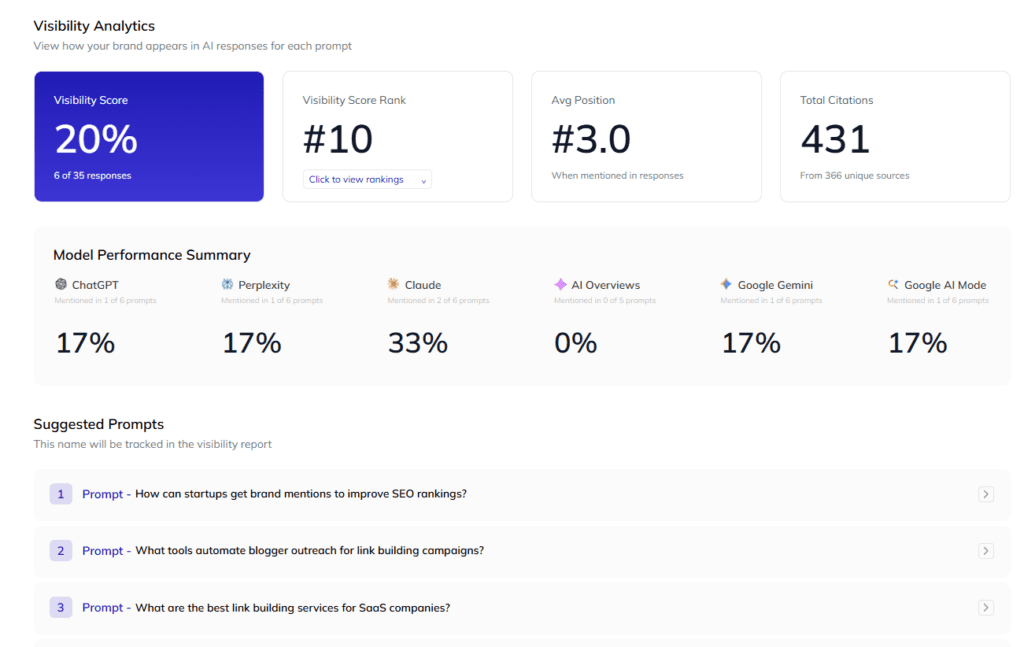
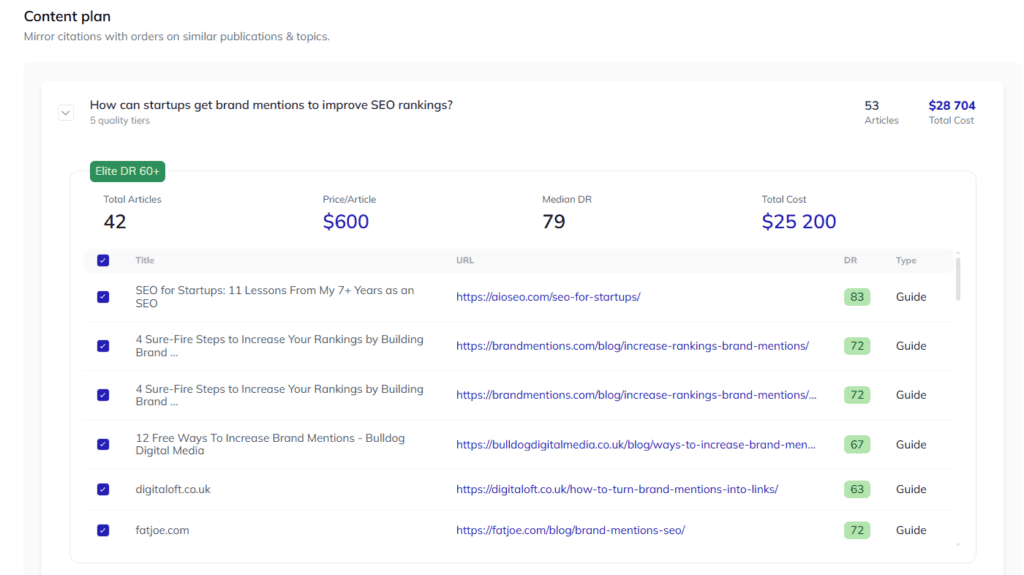
And it doesn’t just track your AI visibility, it finds exact articles that are already being cited for your target AI prompts and ranking in Google simultaneously.
So you can focus on getting placements that you know for sure are going to move the needle.
Content Syndication
Content syndication is all about giving your content a second, third, or even fourth life on other websites or platforms.
Think of it like a rerun of your favorite show on a different channel—it’s still the same great episode, just reaching a whole new audience.
See the note just below the article’s title? This is a tell-tale sign of syndicated content.
This strategy can also help drive more traffic back to your original content and improve your SEO rankings.
Guest Post Exchanges
Guest posting, often also called guest blogging, is the act of writing content for another company’s website.
Generally, guest bloggers write for similar blogs within their industry in order to attract more attention to their own website and improve its SEO positioning.
It’s a win-win situation; the host gets quality content for their readers, and the guest poster boosts their online visibility.
Both guest posting and content syndication can be one-off collaborations or ongoing efforts.
They are also some of the lowest-hanging fruit in terms of content partnerships.
Paid Partnerships
Content and paid partnerships can mean the same thing, but they don’t always.
A “true” content partnership involves both parties creating valuable content.
A paid partnership, on the other hand, can take the form of an influencer endorsement, a relevant advertisement in the beginning of a video, or a sponsorship.
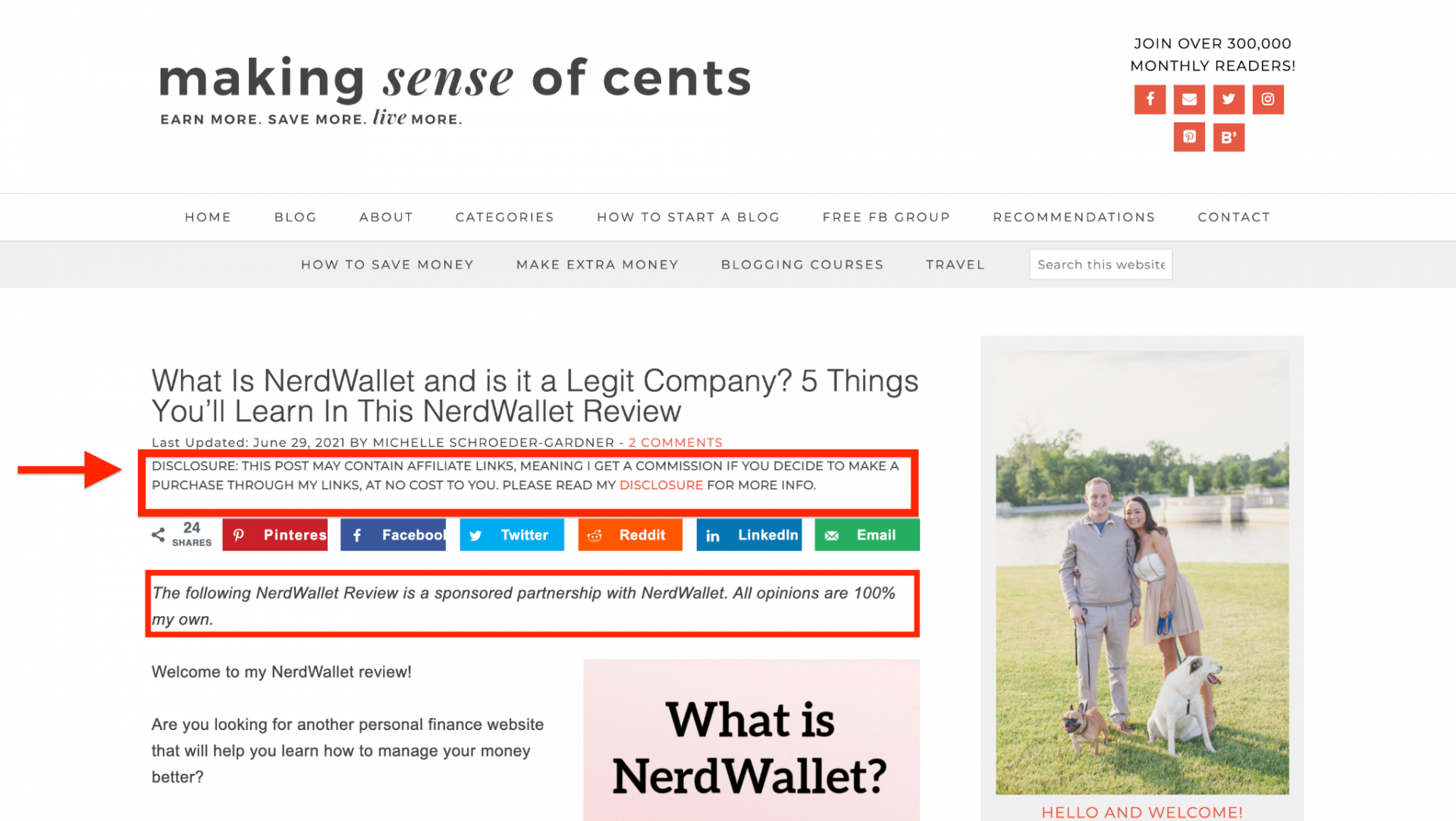
Remember, you’re not just looking to promote yourself, but to deliver valuable and engaging content to your audience.
This differentiates a content partnership from a paid partnership and sets up a unique and relatable approach to market your brand.
Influencer Marketing
Influencer marketing is a trendy buzzword but it’s simply a modern form of collaboration where businesses partner with individuals who have a strong online reputation and a large, engaged audience.
In essence, these businesses leverage the influencer’s digital charisma to promote their product or service.
This strategy can indeed be a form of content partnership.
Take, for example, this joint webinar by Prezly with Rand Fishkin, one of the biggest influencers in the SEO niche.
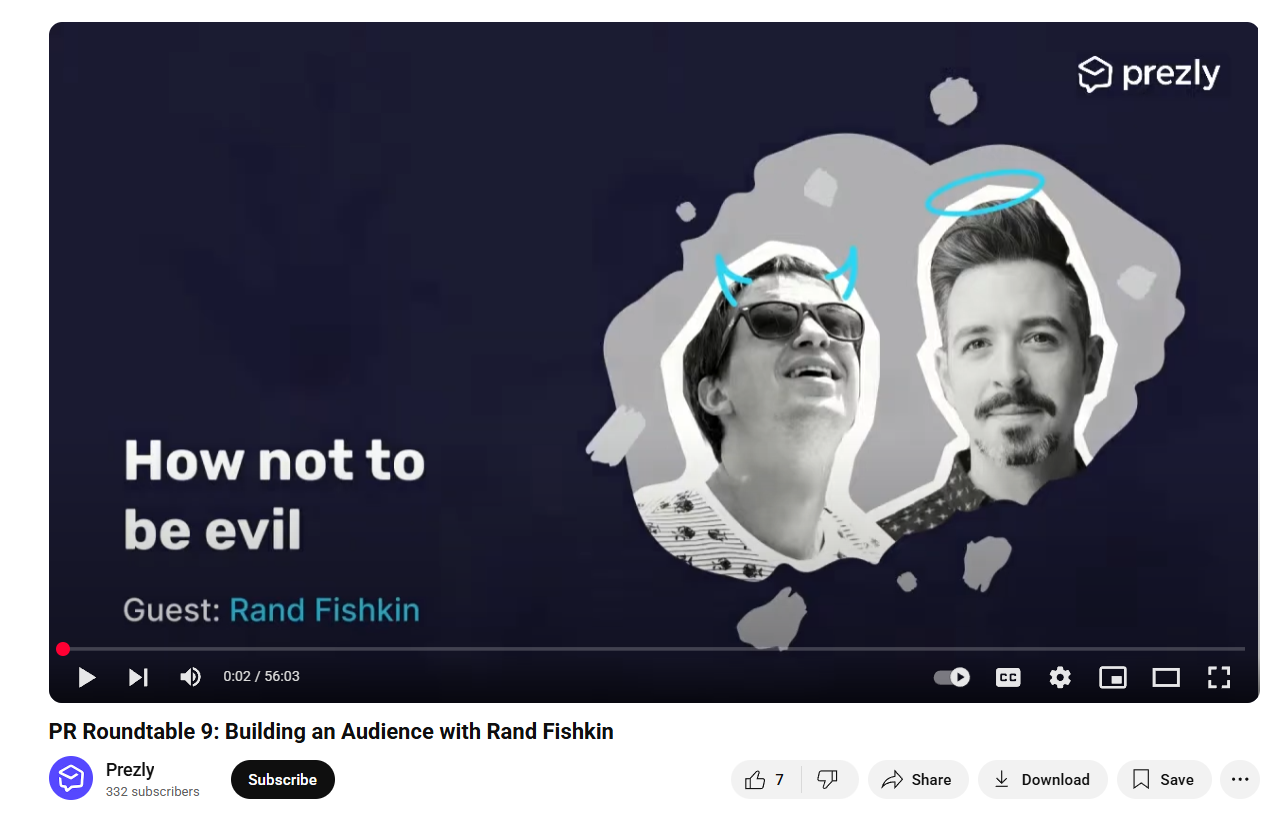
In fact, it’s an excellent example. Here, both the brand and the influencer mutually benefit from creating and sharing content.
The brand gets exposure to a wider, possibly more targeted audience and the influencer has captivating, trusted content for their followers – or even a way to prompt the creation of tons of user generated content.
Finding the right influencer for a strategic partnership requires careful selection.
You’ll want someone whose audience aligns with your target market, and who shares values, aesthetics, or aims similar to your brand, ensuring an organic and effective partnership.
Joint Events/Webinars
Joint webinars and events are some of the most demanding types of content partnerships.
They happen when two or more businesses collaborate to organize a webinar or event, usually around a theme that resonates with their mutual target audience.
This is not just having another brand as a guest; it’s about co-creating and co-hosting the event.

Both partners contribute resources, expertise, and networks to create a webinar or event that would be challenging to pull off alone.
This partnership can help businesses reach more people, share expertise, and provide more value to their audience, making it a win-win for everyone.
It’s a great way of leveraging brand partner relationships while also providing unique, engaging content.
Content Partnership Email Pitch Templates
Content Syndication Email Template
Hi {first_name},
I’m wondering whether you’re open to syndicating our new [Target keyword1] guide on {Website_name}?
[Content description]
I’m happy to help drive traffic by sharing it on our social channels.
[Signature]
Guest Posting Email Template
Hi {first_name},
Would it be ok to send over a few topic ideas for your blog?
I’d love to do keyword research and find what terms your competitors are ranking for, but {Website_name} isn’t.
No strings attached if you didn’t like the topics.
P.S. Here’s an example of a piece I’ve written recently: [Example content URL]
[Signature]
Sponsorship Email Template
Hey {first_name},
My name is [Name] and I am a [Job Title] at [Company Name] — [something about the company].
I was checking out a few [events/podcasts/projects] you sponsored in the last [Time Period].
We’re looking for brands like yours; ones that want to be a part of interesting projects in [Industry] to partner with.
We’re already working with brands like [Brand A], [Brand B], and [Brand C].
Would you be interested in setting up a call to discuss things further?
Here’s a link to my calendar in case you’re interested:
[Link to Calendar]
Thanks,
[Your Name]
Influencer Outreach email template
Hey {First Name},
[Name] here from [Company Name]. We’re [Description] and [What You Do].
We’ve been monitoring your work and see you’re doing a great job with [Topic of Interest].
Really liked what you said recently on [Channel] about [Topic].
Also, it’s interesting to see that your online audience is growing so fast.
We’re looking for people like you to partner up and help us spread the word about [Company Name].
Is that something you’d be interested in?
Let me know how that sounds and we can jump on a call to discuss things further.
Thanks,
[Name]
Now Over to You
So, there you have it.
Now you know what content partnerships are and how to find them.
If you would rather not run partnership outreach yourself, Respona handles the whole workflow for you as a done-for-you service.
We secure listicle placements, brand mentions, and editorial features that drive both organic search and AI visibility, on a pay-per-result basis.
Place your first order today to get started.
Link building cheat sheet
Frequently Asked Questions (FAQ)
What is a content partnership?
A content partnership is a strategic collaboration between two or more parties in creating and distributing unique content to reach common goals.
It could be between businesses, influencers, content creators or media platforms and involves sharing resources like skills, audiences, or platforms to generate increased visibility and engagement through digital marketing channels.
Why should my business consider a content partnership?
A content partnership can be a powerful tool to expand your audience reach, build your brand authority, and generate more engagement.
It offers the potential for new customer acquisition, sharing of expertise, and collaborative promotion which can lead to improved business growth.
How can I find premium content marketing partners?
Start by identifying potential partners who share a similar target audience but aren’t direct competitors.
Look for businesses or individuals who exhibit high-engagement rates, have a strong online presence, and whose values align with your brand.
Approach them with a well-structured proposal and be ready to show the benefits of a partnership.
How can we make the most of a content partnership?
Ensure both parties are clear about their roles, responsibilities and the expected outcomes. Use each other’s strengths to create compelling content.
Complement this with consistent promotion through various channels to maximize reach and engagement.
What should I do if a content partnership is not working?
If a content partnership is not producing the desired results, it’s important to sit down and discuss the issues.
Figure out if the problem lies in the content, its distribution, or in reaching your target audience.
From there, you can either make adjustments or decide if it’s best to end the partnership. Modifications can involve changing the content strategy or utilizing different promotional channels.
Remember, the key is open communication and flexibility.
What is the difference between content partnerships and brand partnerships?
Content partnerships focus on creating and sharing content together: blog posts, guest articles, joint research, webinars, or co-authored guides.
Brand partnerships are usually broader and may include co-branded products, joint campaigns, or shared retail presence. They’re a specific subset of brand collaborations focused on the content layer.
How can a content creator benefit from content partnerships?
A content creator can leverage content partnerships to grow their audience faster than solo work allows.
A creator partnership with a complementary brand exposes both audiences to new content, builds the creator’s credibility in adjacent topics, and often opens up monetization paths through partner programs or paid placements.
What is the role of sponsored content versus branded content in partnerships?
Sponsored content is paid placement where one party compensates the other for inclusion: think of a paid feature in a publication.
Branded content goes further: it’s content created in partnership where the brand contributes meaningfully to the creation process, not just paying for placement. Both have a role, but the partnership-driven format tends to drive better engagement because it’s less obviously transactional.
How does affiliate marketing fit into content partnerships?
Affiliate marketing is an extension of partner marketing where one party promotes the other’s products in exchange for a commission per sale.
Many content partnerships layer affiliate components on top of editorial work: a guest post might include an affiliate link to the partner’s product, or a listicle inclusion might be paired with an invitation to the partner’s affiliate offering.
The affiliate piece works best when it complements (not replaces) the editorial value.
What makes a strategic partnership different from a regular content swap?
Strategic content partnerships are aligned with both parties’ larger business goals rather than being one-off content swaps.
The valuable insights from this kind of work usually come from sharing data, customer research, or proprietary frameworks rather than just trading links. Identifying the right potential partner for this depth of collaboration takes more upfront work, but the long-term payoff is much higher.
Where does video content fit in content partnerships?
Yes, video content is one of the most underused partnership formats. Joint videos, podcast episode swaps, and YouTube collaborations between brands all qualify.
An influencer collaboration on video tends to drive better engagement than a written-only piece because the format suits social media distribution. Content creation costs are higher for video, which is why it’s less common.
How do I find the right partner for content partnerships?
Start by mapping potential partners whose audience overlaps with yours but isn’t competitive. Look at their existing partnership history to gauge how active they are, check their content publishing cadence, and review their engagement rate signals.
Authentic relationships matter more than reach numbers; partnering with someone whose values align with yours leads to a longer-term marketing strategy fit and a broader audience over time.