
SEO myths are everywhere.
Some are leftovers from 2012 that people still repeat like they’re facts. Others are half-truths that sound smart until you actually test them. And a few are just straight-up made up by someone trying to sell you a shortcut.
The annoying part is that these myths don’t just waste your time. They actively mess up your SEO strategy. They make you obsess over things that don’t move rankings, while ignoring the stuff that does.
In this article, I’m going to break down the most common SEO myths I still see people believe, what’s actually true, and what I’d focus on instead if you want results without the nonsense.

Link building cheat sheet
1. SEO is Dead
SEO isn’t dead. People just say that every time Google changes something.
What’s actually happening is that search engine optimization keeps getting harder to game. The shortcuts stop working, the bar goes up, and anyone who relied on “quick wins” starts calling it a dying channel.
But the reality is simple: people still search. Google Search is still where demand lives. Organic traffic still turns into leads and customers.
What has changed is what “SEO” even means now.
It’s not just rankings anymore.
It’s also AI Overview optimization. If your content is structured well, answers questions directly, and is easy to extract, it has a real chance of getting pulled into AI Overviews, which is basically the new version of position zero.
And beyond Google, you’ve got another layer: LLMs recommending brands.
If you want AI tools to mention you as an option, you need your brand showing up across the web in the first place. That comes down to brand mentions, listicle placements, and being referenced on sites these models already trust and learn from.
2. You Need to Rank #1 to Get Traffic
You don’t need to rank #1 to get traffic. You just need to be visible.
Most clicks go to the top results, sure, but ranking #3, #5, even #8 can still bring in consistent traffic, especially if the keyword has decent volume and your title matches what people want.
And now with AI Overviews, it’s even less “winner takes all.” You can be cited inside the overview without being #1, as long as you’re on page one and your content answers the query clearly.
So instead of obsessing over #1, I focus on getting into the top 10 and owning more total keywords. That’s where the traffic stacks up.
Which brings me to the next myth.
3. More Keywords = Better Rankings
More keyword coverage can absolutely lead to more rankings and more traffic.
The myth is thinking you get that by cramming extra keywords into one page through keyword stuffing.
In reality, you get better results by matching one clear search intent per page, then building supporting content around it. That’s how you end up ranking for more queries without diluting the page or confusing search engines.
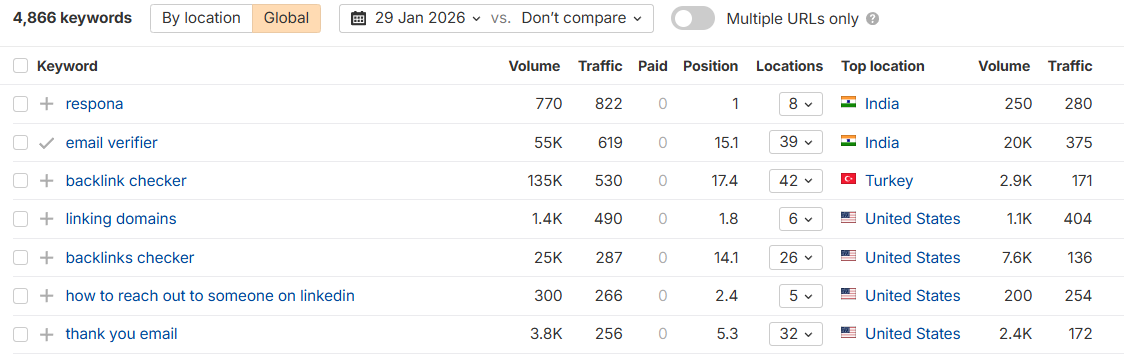
So yes, more keywords can mean more traffic. Just don’t chase it by forcing them into the same URL.
4. Keyword Density is a Ranking Factor
Keyword density isn’t something I optimize for, because Google isn’t ranking pages based on a percentage.
What matters is whether your page clearly matches the search intent and covers the topic in a way that makes sense. If you mention the main keyword naturally in the right places, that’s enough for good user experience and SEO performance.
Trying to hit an exact “2% density” usually just leads to awkward writing and unnecessary repetition, which helps nobody.
5. You Should Put Your Keyword in Every Heading
You don’t need your exact keyword in every H2 to rank.
Headings are there to structure the page for humans first. If every heading repeats the same phrase, it looks unnatural and usually makes the content worse to read.
What works better is using headings to cover subtopics and related questions. Google still understands the page is about the main keyword, and you end up ranking for more variations without forcing anything.
6. Google Hates AI Content
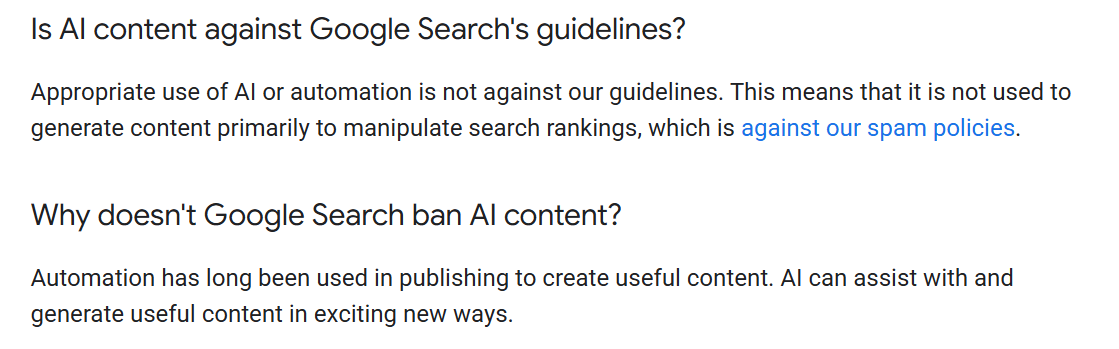
Google doesn’t “hate” AI content. It hates low-quality content.
Ahrefs studied a large set of ranking pages and found basically no relationship between how AI-written a page is and how well it ranks. In other words, pages didn’t rank worse just because AI was involved.
So AI content can rank. The part that still matters is whether it’s actually useful, accurate, and edited to match search intent.
7. Google Automatically Penalizes Duplicate Content
Google doesn’t automatically “penalize” you just because you have duplicate or very similar pages.
What usually happens is something more annoying than a penalty: your pages start competing with each other. Google can’t tell which one is the best result, so rankings bounce around or the wrong page shows up in search results.
That’s keyword cannibalization. And it’s why cleaning up duplicate content, consolidating pages, and using proper canonical tags matters for your SEO strategy.
8. SEO Results Happen Overnight
SEO doesn’t work overnight. If it did, everyone would do it once and be done.
Even when you publish a great page, it takes time for search engines to crawl it, understand it, and see how it performs compared to what’s already ranking.
And a huge chunk of SEO is off-page. Links, mentions, and placements are what push pages up in competitive search results, and those take time to earn. That’s why SEO is usually a slow build, not an instant win.
9. SEO is Just Blogging
Blogging is a big part of SEO, but it’s only one piece.
SEO also includes technical stuff like crawlability, internal linking, and site structure, plus on-page optimization like matching search intent and improving CTR for better user experience.
And then there’s the off-page side: links and brand mentions. You can publish great blog content all day, but without the rest of the system supporting it, it won’t reach its full potential.
10. More Pages Always Means Better SEO
More pages doesn’t automatically mean better SEO.
If the extra pages are thin, repetitive, or targeting the same intent, you usually end up with index bloat and keyword cannibalization. Search engines have more to crawl, but less to trust.
What works is publishing pages that each serve a clear purpose and cover something meaningfully different. Quality and focus beat volume every time: that applies whether you’re running an enterprise site or handling local SEO for small businesses
11. Domain Age is a Major Ranking Factor
Domain age by itself doesn’t mean much.
An old site doesn’t rank just because it’s old, and a new site isn’t doomed just because it’s new.
What actually matters is what the site has built over time: solid content, links, mentions, and a track record of pages that satisfy search intent. Age is just a side effect of that, not the reason it ranks.
This is one of those common SEO myths that sounds logical but doesn’t hold up when you look at actual search engine results.
12. Buying any Backlinks Will Boost Rankings
You can buy backlinks that do absolutely nothing, or worse, links that come from sketchy sites that exist only to sell links. Those don’t help long-term and they can drag your site into a bad neighborhood.
The real value comes from links that are relevant, placed naturally, and actually make sense in context.
Even John Mueller from Google has repeatedly emphasized that quality matters more than quantity when it comes to links.
13. All Backlinks are Equally Valuable
And even when a link is “good,” it doesn’t mean it’s equally good.
Some links move rankings more because they come from stronger, more trusted pages in your niche. Others are valuable because they send real traffic and improve user experience on your site.
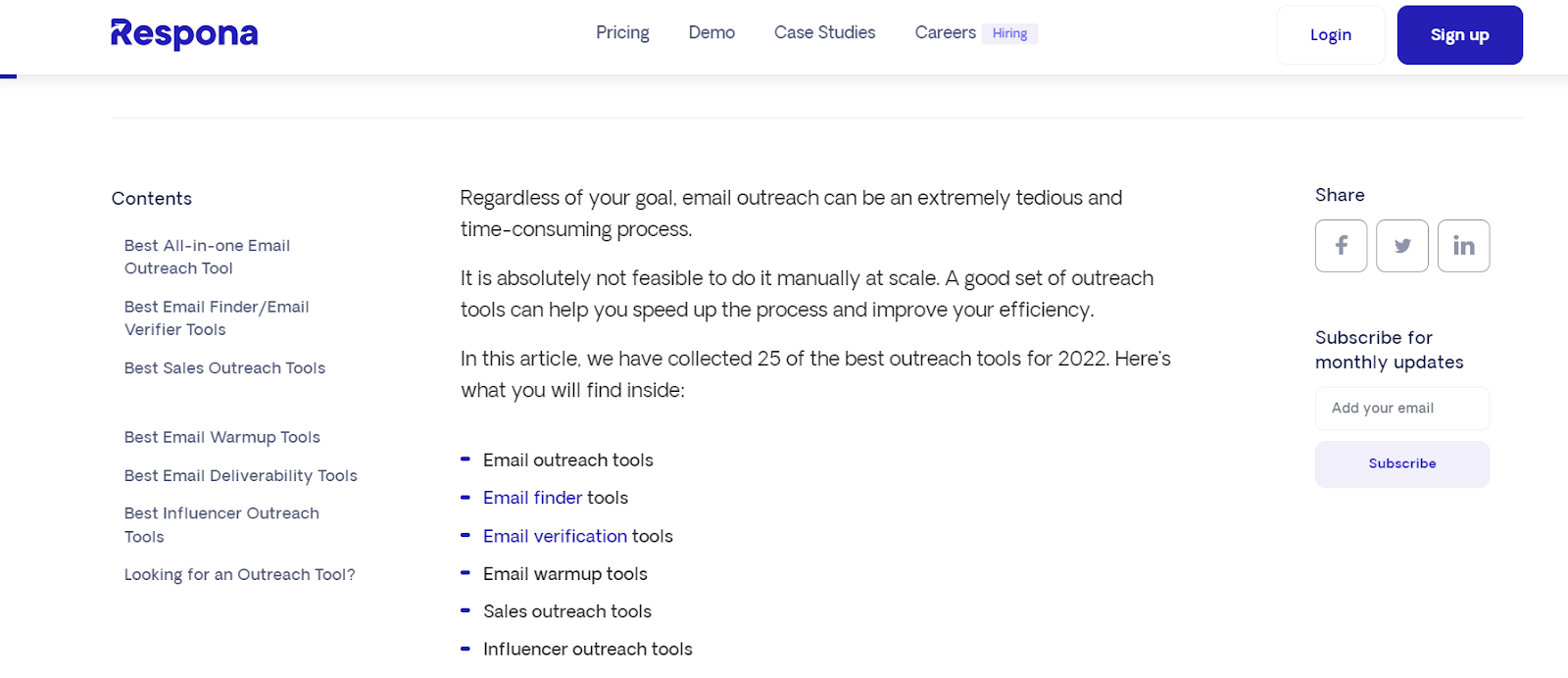
That’s why listicle placements are so powerful when they’re done right, especially on pages people actually read.
Like this shoutout we got from Backlinko:
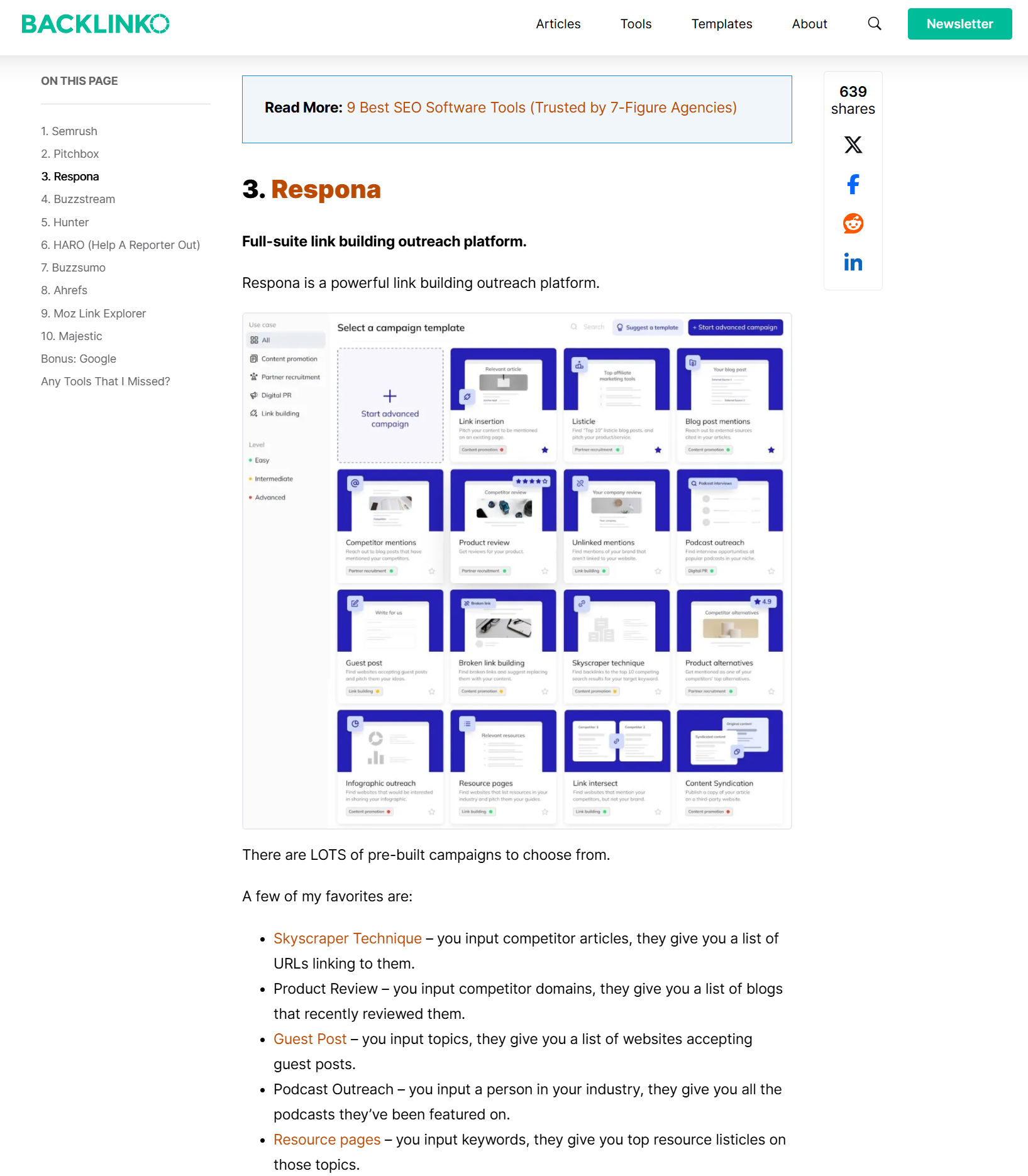
They help with rankings, but they also help with AI visibility. If your brand is mentioned on high-traffic listicles and comparison pages, you’re much more likely to get picked up as a recommendation in AI tools too.
So the goal isn’t “more links.” It’s better links in better places.
14. Nofollow Links are Completely Useless
Nofollow links aren’t worthless.
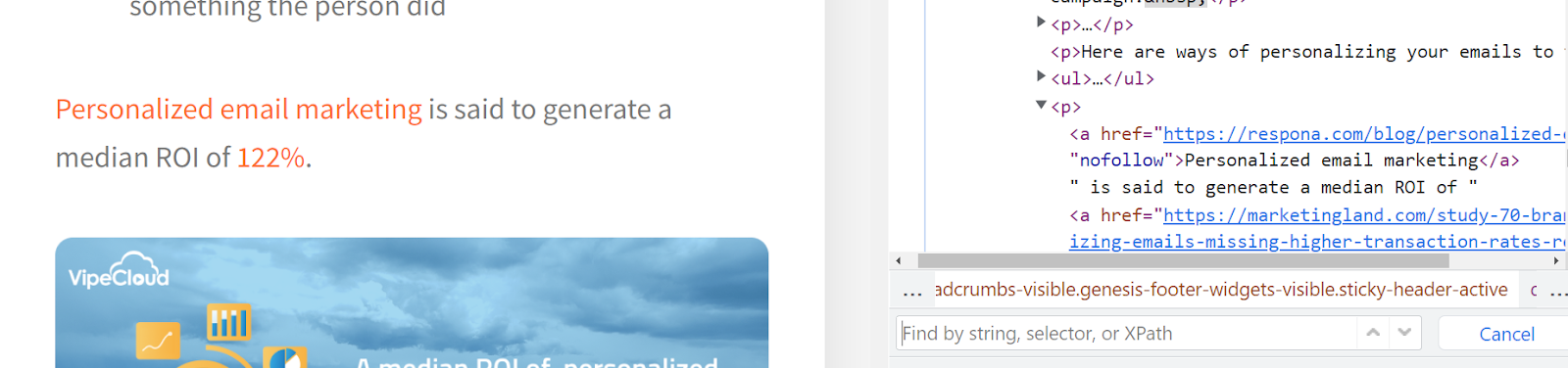
They might not pass the same direct ranking value as a normal followed link, but they can still drive real traffic, get your brand in front of the right audience, and lead to other links later.
Plus, brand mentions matter more than ever for AI visibility. Even if a link is nofollow, being referenced on relevant pages can still be a win for your overall SEO efforts.
15. You Need tons of Backlinks to Rank for Anything
You don’t need a massive backlink profile to rank for every keyword.
For highly competitive queries, sure, you’ll usually need strong links to compete. But plenty of long-tail and low-competition keywords can rank with minimal link building, especially if your content matches intent better than what’s already out there.
The real point is this: you need the right amount of links for the level of competition, not “tons” by default. This SEO misconception causes people to ignore other important ranking factors.
16. DA/DR is a Google Ranking Factor
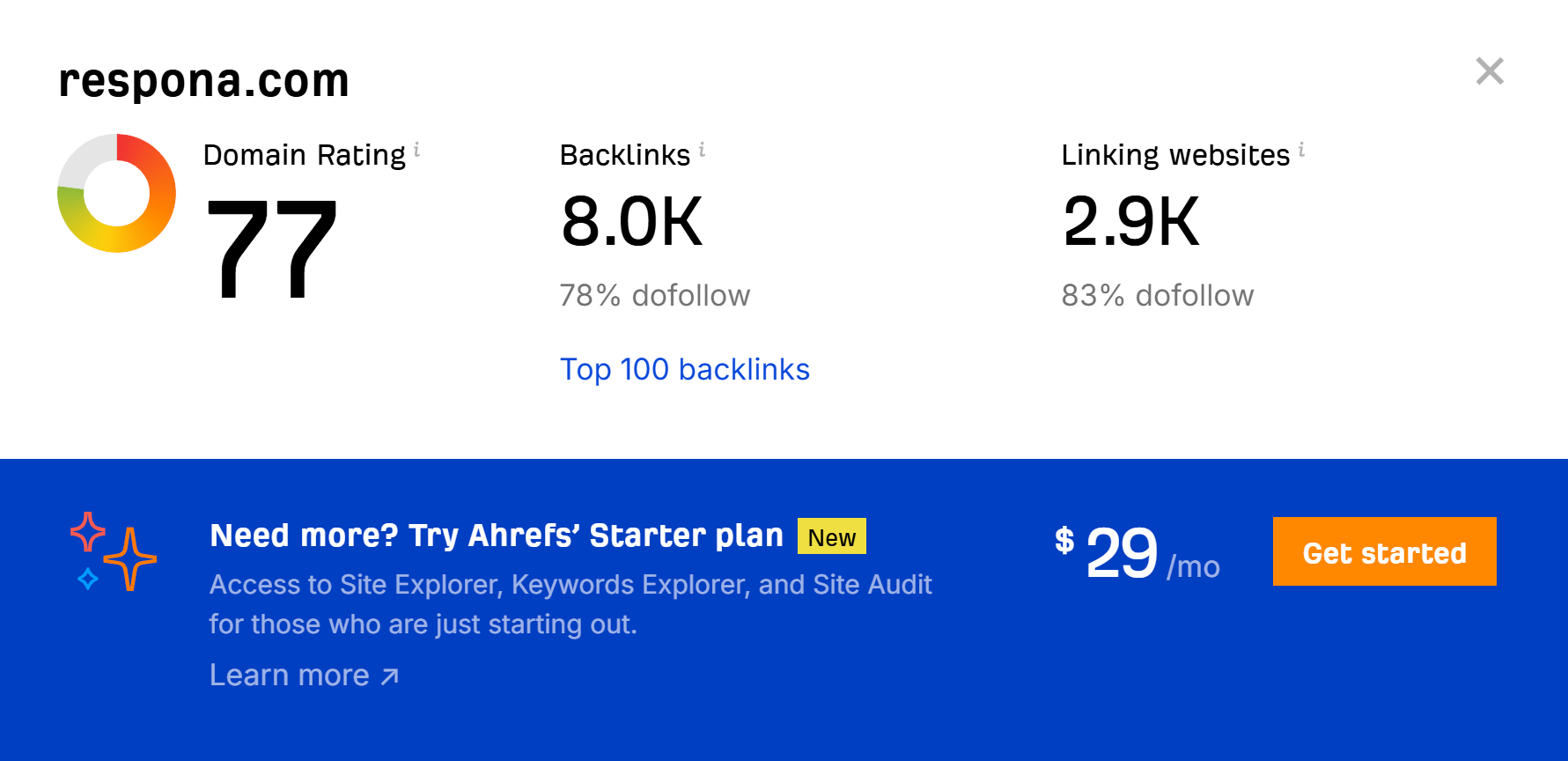
DA and DR aren’t Google ranking factors. Google doesn’t use third-party metrics from Ahrefs, Moz, or anyone else.
But higher DR sites often rank well because DR usually reflects what does matter: a strong backlink profile and lots of quality content with quality links pointing to the domain.
So domain authority doesn’t cause rankings. It’s just a decent shortcut for estimating how hard a site is to compete with.
17. Social Media Signals Directly Improve Rankings
Social media likes, shares, and followers don’t directly boost your Google rankings.
A post going viral on social media doesn’t magically push a page to #1.
What social can do is help indirectly by driving traffic, getting your content in front of people who might link to it, and increasing brand awareness. The rankings come from the SEO factors that follow, not the social signals themselves.
This is another common SEO myth that confuses correlation with causation.
18. You Must Submit Your Site to Google to Rank
You don’t have to manually submit your site to search engines to rank.
Google will usually discover and index your pages on its own through links and crawling. Submitting a sitemap through Google Search Console or requesting indexing just helps speed things up, especially for new pages or new sites.
It’s useful, but it’s not a requirement. You can verify this in Google Search Central documentation.
19. Internal Links Don’t Really Matter for SEO
Internal links matter a lot.
They don’t create new authority out of nowhere, but they do help distribute the PageRank you already have across your site. That’s how you give new or weaker pages a better chance to rank without waiting for external links.
They also help search engines crawl your site and understand what pages are important, which is half the battle for technical SEO.
20. Meta Descriptions Directly Affect Rankings
Meta descriptions don’t directly improve rankings.
Google doesn’t use meta descriptions as a ranking factor. But they do matter because they influence click-through rate. A better meta description can earn more clicks, and more clicks can mean more traffic even if your position stays the same.
Well-crafted meta tags improve user experience and can indirectly support your SEO strategy.
21. More Traffic Automatically Means Better Rankings
More traffic doesn’t automatically improve rankings.
A page can get a ton of traffic from one keyword and still struggle to rank for others. Search engines rank pages based on relevance, intent match, and quality signals, not because they’re “popular.”
Traffic is a result of rankings, not a shortcut to better ones.
22. Google Prefers Longer Content Every Time
Google doesn’t rank content because it’s long. It ranks content because it solves the search query.
Sometimes the best answer is a detailed guide. Other times it’s a simple definition, a quick list, or a short how-to. If the intent is satisfied fast, longer content just adds noise.
Which brings me to the next myth.
23. Short Content Can’t Rank
Short content can absolutely rank.
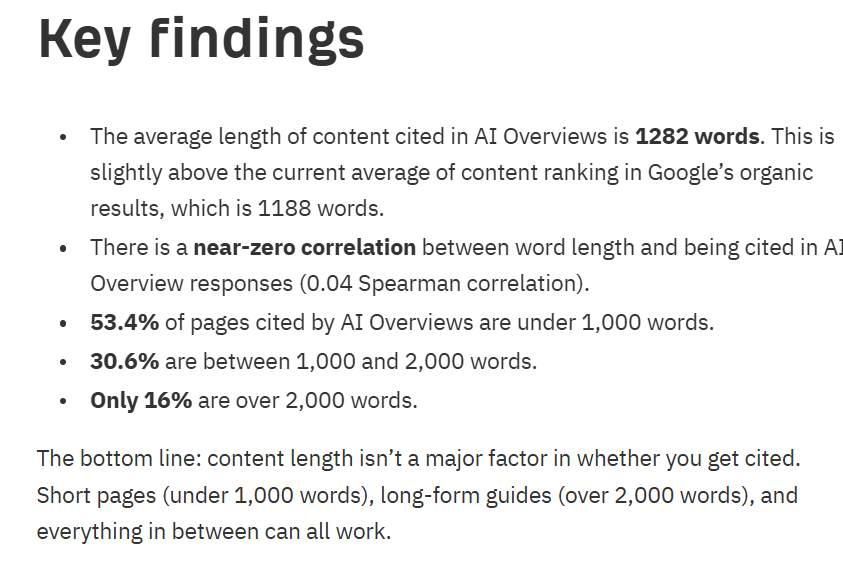
If a page answers the question clearly and matches what people are looking for, it can beat a 3,000-word article that rambles. The goal isn’t word count. It’s being the best result for that search.
Also, according to Arhefs, both long and short content performs equally well in AI overviews:
The focus should always be on creating valuable content that serves the user, regardless of length.
24. You Need to Publish Content Daily to Grow SEO
You don’t need to publish every day to grow SEO.
Consistency helps, but quality and strategy matter more than volume. A few strong pages that target the right keywords, satisfy intent, and earn links will outperform daily filler content.
It’s better to publish less and make each piece count. This SEO practice applies to everyone from SEO professionals to small businesses just getting started.
25. Exact Match Anchor Link Anchor Text is Always Better
Exact match anchor text can help, but it’s not “always better.”
If every link pointing to a page uses the exact same keyword, it looks unnatural and can even limit you. A healthy link profile includes branded anchors, partial matches, and natural phrases that still make sense in context.
The goal is relevance and variety, not forcing the same exact wording every time. Meta tags and anchor text both benefit from a natural approach.
26. Changing URLs Always Kills Rankings
Changing a URL doesn’t automatically kill rankings.
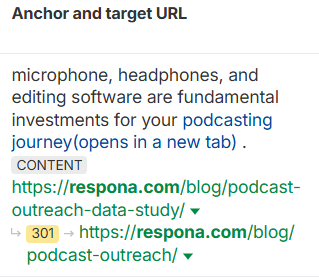
What hurts is changing URLs without handling the migration properly. If you set up clean 301 redirects, update internal links, and keep the content consistent, you can usually preserve most of the value.
It’s still something I avoid unless there’s a real reason, but it’s not a guaranteed disaster.
27. You Should Never Update Old Content if it Ranks
If a page ranks, that’s not a reason to freeze it forever.
Search results change, competitors update their pages, and the “best answer” evolves. Updating old content is often one of the easiest ways to protect rankings and push a page even higher.
The key is improving it without breaking what already works. Track the impact with Google Analytics to measure your SEO success.
28. Technical SEO Doesn’t Matter if Your Content is Good
Great content won’t rank if search engines can’t properly crawl, index, or understand your site.
Technical SEO is what makes your content accessible. Things like broken internal links, slow pages, messy site structure, or pages blocked from indexing can hold you back even if the writing is solid.
You don’t need perfect technical work, but you do need the basics to be clean. This includes monitoring Core Web Vitals and ensuring proper site performance.
29. Site Speed is the Only Technical SEO That Matters
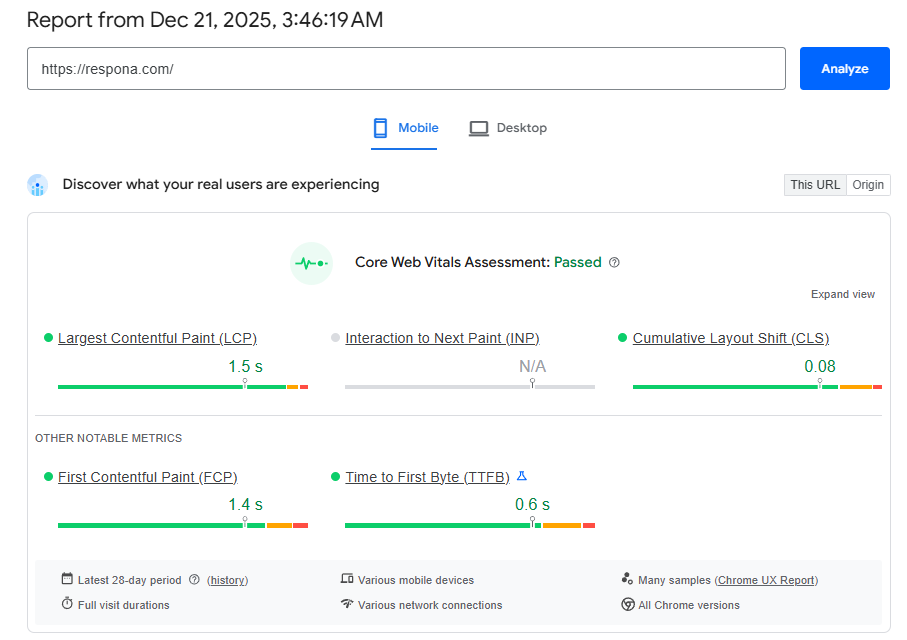
Site speed matters, but it’s not the only technical SEO issue that affects rankings.
Crawlability, indexing, internal linking, redirects, canonical tags, and duplicate content can all have a bigger impact than shaving off 200ms. If search engines can’t find, understand, or trust your pages, speed won’t save you.
Think of speed as one piece of technical work, not the whole game. Google’s algorithm considers dozens of ranking factors beyond just page speed.
30. SEO is a One-Time Setup
SEO isn’t something you “finish.”
Search results change, competitors publish new content, and Google updates how it ranks pages. If you stop, you don’t usually crash overnight, but you slowly lose ground.
SEO is ongoing maintenance and improvement, not a one-time checklist. This applies to all aspects of digital marketing, whether you’re managing local SEO or running an enterprise-level SEO service.
Link building cheat sheet
Now Over to You
Most SEO myths stick around for one reason: they sound simple.
But SEO isn’t simple anymore. It’s not about hacks, secret formulas, or obsessing over tiny “rules.” It’s about doing the fundamentals well, consistently, and focusing on what actually moves rankings and visibility.
Some people try to shortcut the process with tactics like buying Google Ads placement or gaming the system, but sustainable SEO success comes from quality content, smart keyword research, and earning genuine links.
If you want faster results, the biggest lever isn’t another checklist. It’s getting your best pages mentioned and linked on the right sites.
That’s exactly what our done-for-you link building does.
We land real backlinks and listicle placements that help your content climb in Google and get picked up more often by AI platforms.
You keep publishing and improving your site. We handle the part most teams don’t have time for.
Frequently Asked Questions (FAQ)
Are SEO myths actually harmful or just annoying?
They’re harmful because they push you toward the wrong priorities in your SEO strategy. You end up spending time on things that don’t move rankings while ignoring what actually does.
Why do SEO myths keep coming back every year?
Because SEO changes constantly and people love simple explanations. Every update creates confusion, and myths fill the gap when someone wants a quick answer. Even experienced SEO professionals sometimes fall for outdated advice.
What’s the biggest SEO myth you still see people believe?
That there’s one “magic fix” that will rank a site instantly. In reality, SEO is usually a mix of quality content, technical cleanup, and links working together over time.
How do I know if an SEO tip is a myth or legit?
If it sounds like a rule that always applies, it’s probably wrong. The safest approach is to test it, look for real evidence in Google Search Console, and focus on outcomes like SEO rankings and traffic, not “SEO rituals.”
What matters most in SEO today?
Matching search intent with genuinely useful content, making your site easy to crawl, and earning links and mentions from relevant sites. The basics still win, just with less room for shortcuts. Focus on user experience, keyword research, and building valuable content that serves your audience.