
SEO has been “dead” more times than I can count.
First, social media was supposed to replace it.
Then voice search.
Now artificial intelligence.
Spend five minutes on LinkedIn or X and you will see the same take everywhere.
“Why bother with search engine optimization when AI just gives people answers?”
It sounds convincing until you look at how search engines actually works.
AI did not replace SEO. It runs on top of it.
Every AI-generated answer comes from content that already ranks, already earned authority, and already proved its value through links, structure, and real experience.
In this article, I will explain where this narrative comes from, why it is wrong, and what still matters if you want to rank in an AI-driven search landscape.

Link building cheat sheet
Where is This Sentiment Coming From?
Most of the “AI killed SEO” panic can be traced back to one thing: Google’s AI Overview feature.
You look for something on Google Search, and instead of ten blue links, Google gives you a neatly packaged answer at the top of the page. No click required. At least, that’s how it looks.
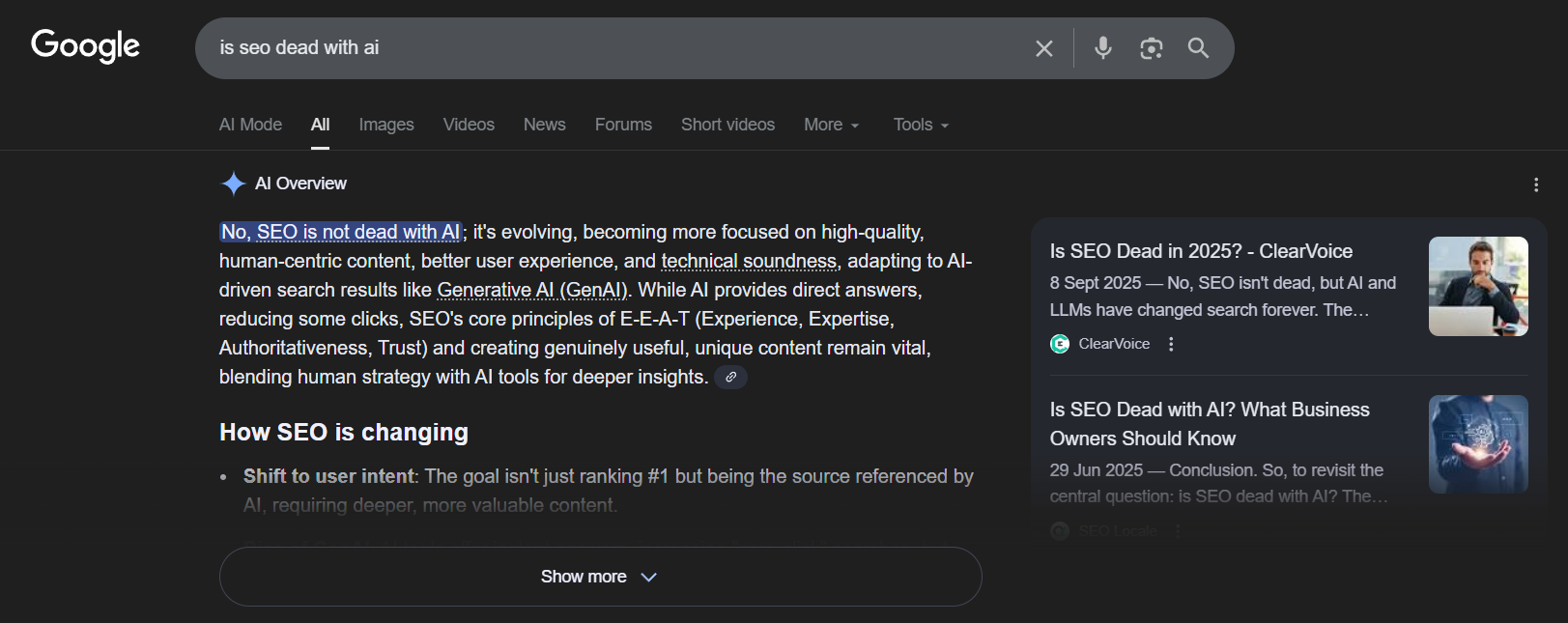
From the outside, it feels like Google is stealing traffic from websites and keeping users inside its own ecosystem. If the answer is already there, why would anyone click?
Here’s the part that gets overlooked.
AI does not come up with answers on its own.
Google’s AI Overviews are not some independent thinking system. They do not research, test, or verify information. They summarize what already exists in Google’s index.
And where does that information come from?
From websites that already rank. Mostly from pages in the top 10 Google search results.
If your content is not ranking, it will not be surfaced in AI Overviews. If it is ranking, there is now an additional way for users to discover it.
That is why the idea that AI “replaces” SEO does not hold up.
In fact, you could argue the opposite.
Before AI Overviews, meaningful traffic usually went to the top three results. Everything below that was fighting for scraps. Now, pages ranking anywhere in the top 10 can get visibility, citations, and clicks through A responses.
That lowers the barrier.
You no longer need to win a brutal race for position one just to get noticed. Being solidly relevant and authoritative is often enough.
The same logic applies to content creation.
Generative AI tools did not make content obsolete. They made bad content easier to spot and good writers more productive.
AI can help with structure, research, and drafting. It cannot replace original experience, opinions, or insights. It simply reshuffles what already exists.
So no, AI cannot replace SEO.
It is not self-aware. It does not create knowledge. It works entirely off existing content that was written, optimized, and earned its rankings the old-fashioned way.
If anything, generative AI has made digital marketing more accessible, not less.
AI is an Extension of SEO, NOT a Replacement
AI could never replace SEO simply because of how the Google algorithm works.
At its foundation, Google Search is still built on PageRank.
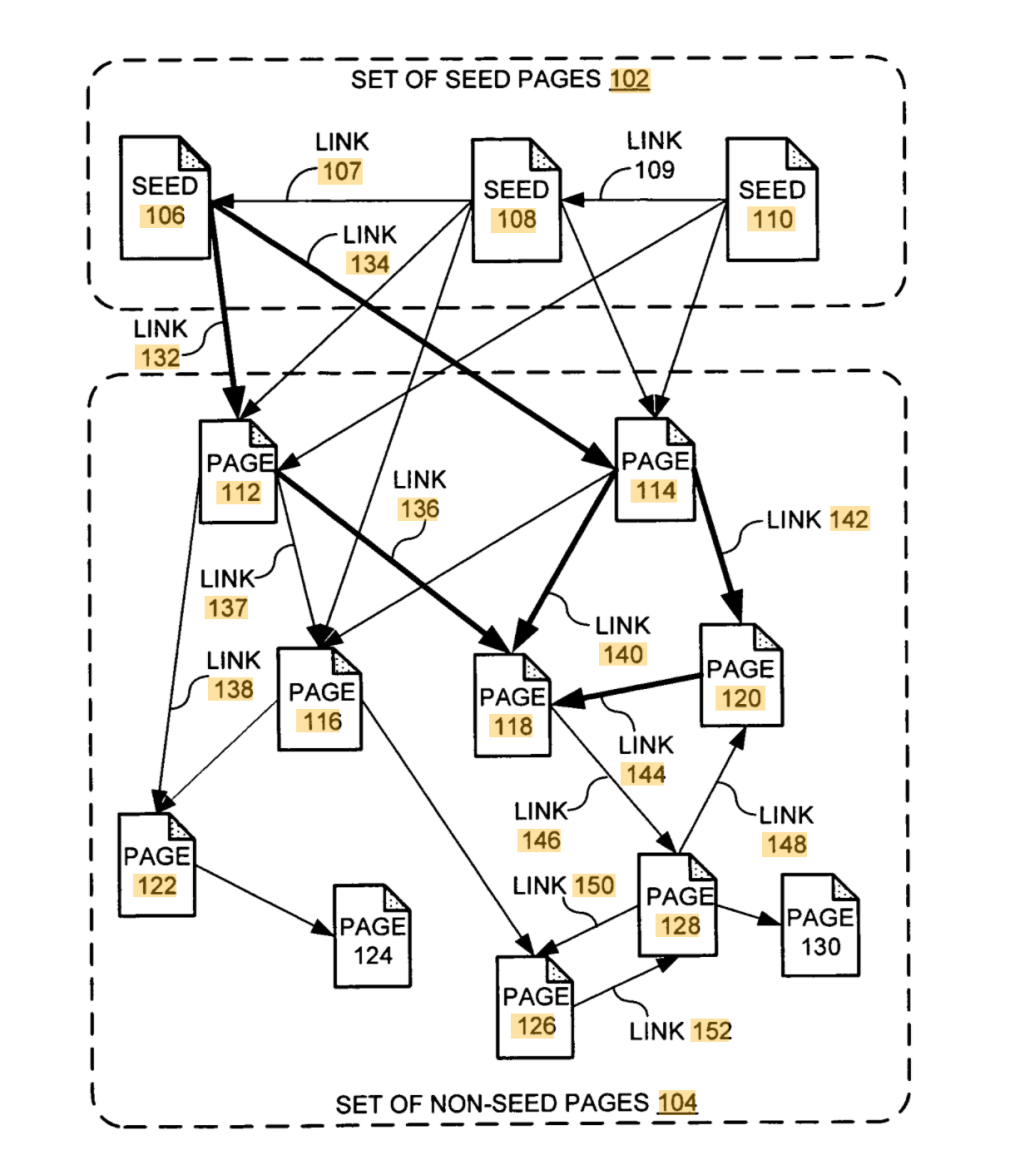
That is the AI algorithm Larry Page and Sergey Brin introduced in the late 1990s, and while it has been refined, layered, and heavily upgraded over the years, the core idea has not changed.
PageRank answers one simple question:
Which pages deserve to be trusted?
It does that by analyzing links.
A link from one page to another is treated as a vote. Not all votes are equal. Links from authoritative pages carry more weight than links from weak or irrelevant ones. Pages that earn more high-quality links accumulate more authority and are more likely to rank.
That system is still very much alive today.
Google has added hundreds of additional signals on top of PageRank, such as relevance, freshness, user intent, content quality, and technical performance. But links remain the backbone that ties everything together.
AI search does not replace this system. It depends on it.
Yes, AI-Generated Content Ranks, BUT
When generative AI first became publicly available, people panicked.
Suddenly, anyone could spin up hundreds of articles in a weekend. Blogs were flooded with low-effort, mass-produced content, and for a short period of time, some of it actually ranked.
That freaked a lot of SEO professionals out.
And to be fair, the concern was not completely unfounded. There was a wave of AI generated content that probably did not deserve to rank, yet still did. Google was clearly playing catch-up.
Fast forward to today, and the landscape looks very different.
Everyone knows what a fully AI-written article looks like now. The generic tone. The em dashes. The lack of real insight. Readers skim it, bounce, and move on.
Google sees that too.
This is why the question is no longer “does AI-generated content rank?” but “is it actually good?”
According to an Ahrefs study, there is no correlation between whether content was AI-generated or human-written and how well it ranks.
Google does not reward or punish content based on how it was created. It evaluates outcomes.
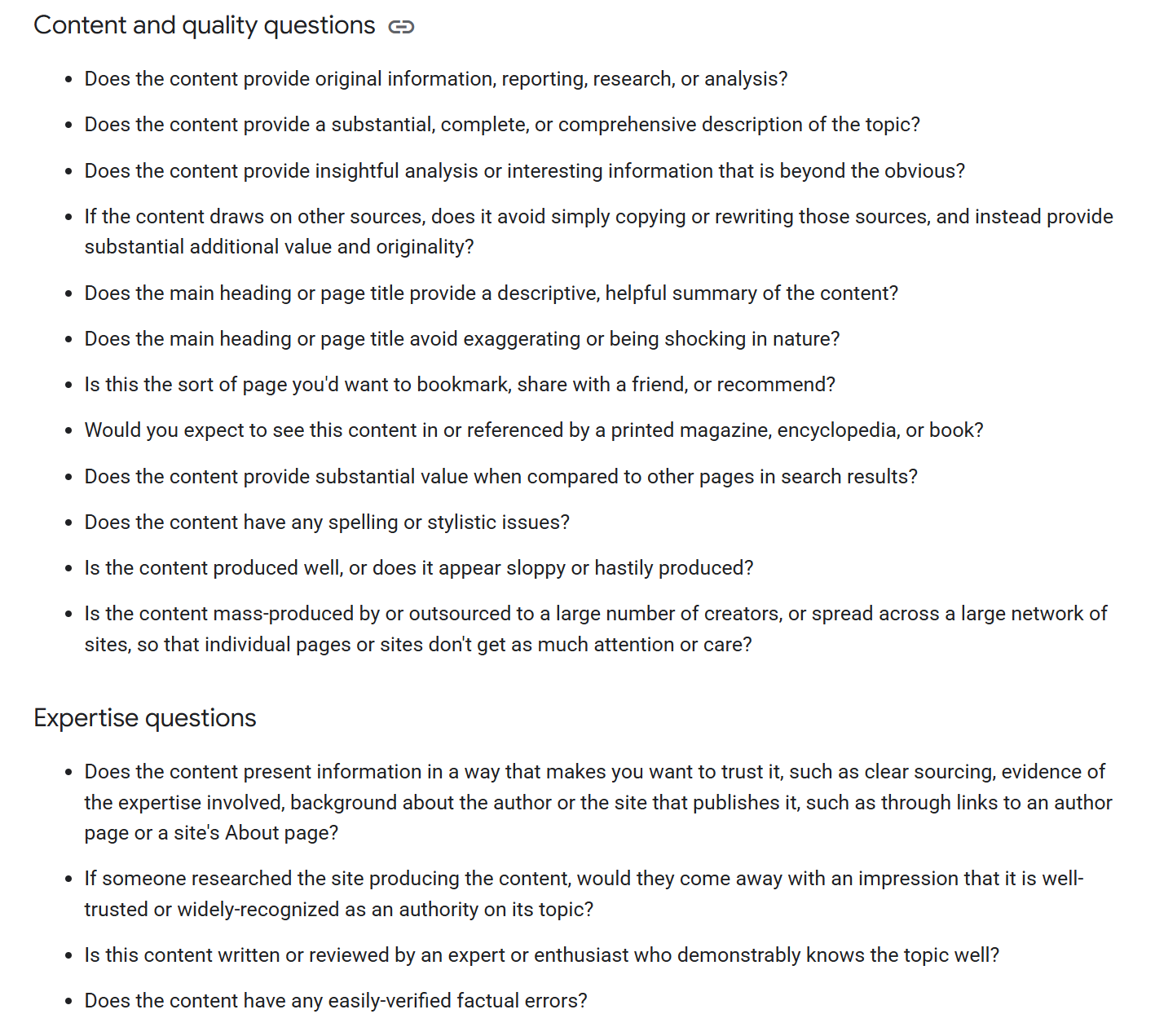
Does the content satisfy search intent? Is it accurate? Is it helpful?
Does it demonstrate experience, expertise, authoritativeness, and trustworthiness?
That is EEAT. And it applies regardless of whether you use AI or not.
This is where many digital marketing professionals get it wrong.
AI tools work best as a writing assistant, not a replacement. It can help you outline faster, overcome blank page syndrome, clean up phrasing, and scale production. What it cannot do is inject real experience, opinions, case studies, or original insight on its own.
If you use AI to assist a knowledgeable writer or SEO specialist, the result is often better content produced faster.
If you use an AI tool to replace the writer entirely, the result is usually forgettable at best.
You Still Need Backlinks
Backlinks are a core part of search engine optimization process. Full stop.
They are not a legacy signal, a temporary workaround, or something AI is slowly phasing out.
Search engines still use links to determine which pages are trusted, authoritative, and worthy of ranking. That has not changed, even as the search experience itself evolves.
Content tells Google what a page is about. Backlinks tell Google whether that page deserves to be taken seriously.
AI search actually reinforces this.
Google’s AI Overviews do not pull from the entire web. They summarize information from pages that already rank, most commonly from the top 10 results. If your content is not there, it does not get cited. It does not get summarized. It effectively does not exist in AI-powered search.
That means backlinks matter more, not less.
Without them, you are unlikely to break into the top 10. And without a top-10 ranking, your content will never be captured by AI Overviews, no matter how well written it is.
Generative AI has lowered the cost of content creation, but it has not lowered the bar for authority. Trust still has to be earned, and links are one of the primary ways Google measures that trust.
If you want consistent rankings and visibility in AI-driven search, link building is not optional. It is foundational.
That is exactly why we offer done-for-you link building. We handle the SEO strategy, outreach, and placements so you earn high-quality, relevant backlinks that actually improve rankings and increase your chances of appearing in AI Overviews.
Technical SEO is a Must
All the great content and AI assistance in the world will not help if your site is technically weak.
Google’s core mantra has always been user experience. And user experience, at its most basic level, means one thing.
Answer the user’s question as fast as possible.
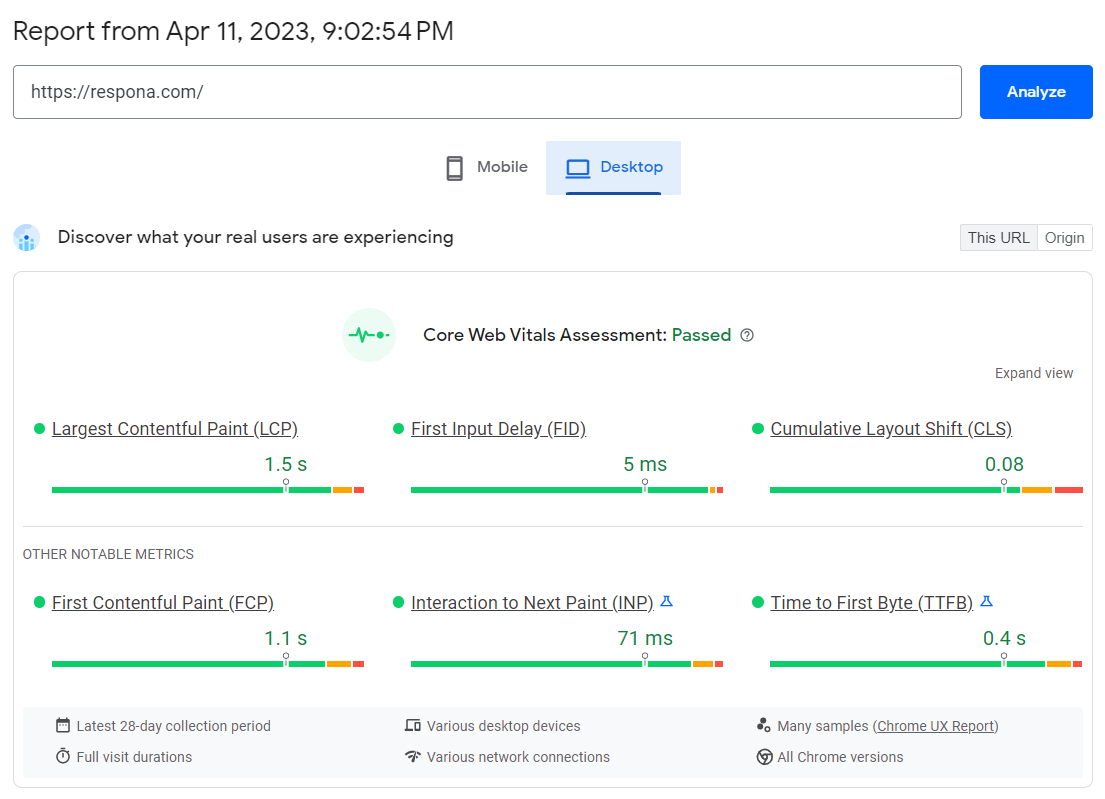
If a site is slow, Google de-prioritizes it. Not because Google is being picky, but because slow pages create friction. Users bounce. Sessions end. Satisfaction drops.
That is a bad outcome for Google.
This matters even more in an AI-driven search environment. When Google chooses which pages to summarize or cite, it favors sources that are fast, stable, and easy to crawl. If your site struggles to load, it is less likely to be trusted as a reliable source.
Google has been mobile-first for years now. That means Google primarily evaluates and ranks the mobile version of your site, not the desktop one. If your mobile experience is slow, cluttered, or broken, your rankings will suffer even if the desktop version looks great.
This is where many sites quietly fall apart.
Heavy themes, bloated scripts, oversized images, and unnecessary plugins all add up. Each one slows your site down and chips away at trust.
The good news is that checking this is simple.
Use Google PageSpeed Insights or Google Analytics.
It gives you a clear breakdown of your site’s performance on both mobile and desktop, highlights what is slowing you down, and provides concrete recommendations to fix it through proper optimization.
AI Does Not Replace Real Experience
AI can summarize what already exists. It cannot live through anything.
It does not run experiments, make mistakes, talk to customers, or ship products. It cannot share lessons learned the hard way or explain why something worked in practice instead of theory.
Google values that kind of experience more than ever.
Content that includes real examples, firsthand insights, original opinions, and practical takeaways stands out. It earns trust from readers and signals credibility to search engines.
AI tools can help you write faster. It cannot replace lived experience.
That human layer is still what separates content that ranks from content that gets ignored: a principle that both SEO specialists and SEO agencies understand well.
Link building cheat sheet
Now Over to You
AI did not kill SEO. It made the gaps more obvious.
Content is easier to produce than ever. Technical fixes are well documented. Optimization best practices are widely understood. But one thing has not changed, and will not change anytime soon.
Authority still has to be earned.
Google’s AI systems pull from pages they already trust. Those pages rank because they have relevance, solid technical foundations, real experience behind the content, and most importantly, high-quality backlinks.
Without backlinks, content struggles to break into the top 10. Without top-10 rankings, AI Overviews ignore you entirely.
That is why link building matters more now than it did before.
If you want your content to rank, get cited, and stay visible as search continues to evolve, you need links from relevant, authoritative websites.
That is exactly what we help with.
Our fully managed link building handles everything from strategy and prospecting to outreach and placement, so you earn links that actually move rankings and increase your chances of appearing in AI Overviews.
Frequently Asked Questions (FAQ)
Will AI replace SEO completely?
No. AI systems rely on search results to generate answers. If content does not rank, AI has nothing to pull from, which means SEO remains the foundation of visibility.
Are AI Overviews stealing all organic traffic?
They reduce clicks for some queries, but they also create new visibility opportunities. Pages ranking in the top 10 can now get exposure even without being in the top three.
Does Google penalize AI-generated content?
No. Google evaluates content based on quality and usefulness, not how it was created. As long as content follows EEAT principles, AI-assisted writing is not an issue.
Is it still worth doing SEO in 2025?
Yes. SEO determines which pages AI search engines trust and summarize. Without SEO, your content will not rank, and it will not appear in AI-powered search results.
What matters most for SEO in an AI-driven search landscape?
Authority. Backlinks remain one of the strongest ranking signals. Strong link profiles increase rankings, trust, and the likelihood of being cited in AI Overviews.