![How to Rank Higher on Google With Link Building [for Beginners]](https://respona.com/wp-content/uploads/RANKLINKS-1024x558.jpg)

Even if you’re a beginner at SEO, chances are, you’re already familiar with how vital high rankings can be to a website’s organic visibility.
What you might not know, however, is how to reach those heights.
After all, nothing gives a content writer, SEO manager, or website owner more satisfaction than seeing their content pieces ranked high in the SERPs (search engine results pages), especially in the first position – or two or three.
It isn’t always a piece of cake; with hundreds of thousands of pages competing for the same target keyword, there are many things to take into account when writing a blog post.
This makes the process of getting ranked high on Google search a multidimensional one.
That’s exactly why we’ve created the following guide; here’s what we’ll be covering the Google ranking factors you need to know along with the process of getting ranked higher on Google
Plus, plenty of tips and ideas to get you started.
Without further ado, let’s get into it.
Key Takeaways:
- Link building is still one of the strongest ways to rank higher on Google search and other search engines.
- High-quality backlinks from reputable websites help improve Google ranking, authority, and visibility in search results.
- Ranking higher is not just about backlinks. Search intent, keyword research, technical SEO, and user experience all matter too.
- Listicle placements and contextual links can improve both organic rankings and AI visibility in answer engines like ChatGPT and Google AI Overviews.
- The best link building strategies focus on relevant placements that drive authority, targeted traffic, and long-term ranking improvements.
Link building cheat sheet
6 Google Ranking Factors You Need to Know
As we noted earlier, creating high-quality content that’ll get noticed by search engines is a multidimensional process.
After all, Google’s algorithm is complex and many SEO strategies and techniques should be used in order to increase the chances of getting higher rankings.
In this guide, we’ve gathered six of the most prominent ones that you should use, whether you’re a small business owner or a blogger wanting to increase your website’s organic traffic.
Let’s get started with the first factor that Google takes into consideration.
Factor #1: Backlinks
Backlinks are one of the most prominent factors that search engines pay attention to and it’s no secret that they play a major role in helping content perform well in Google search results.
In fact, according to a study by Backlinko, top-ranking pages have more backlinks than lower-ranking ones.
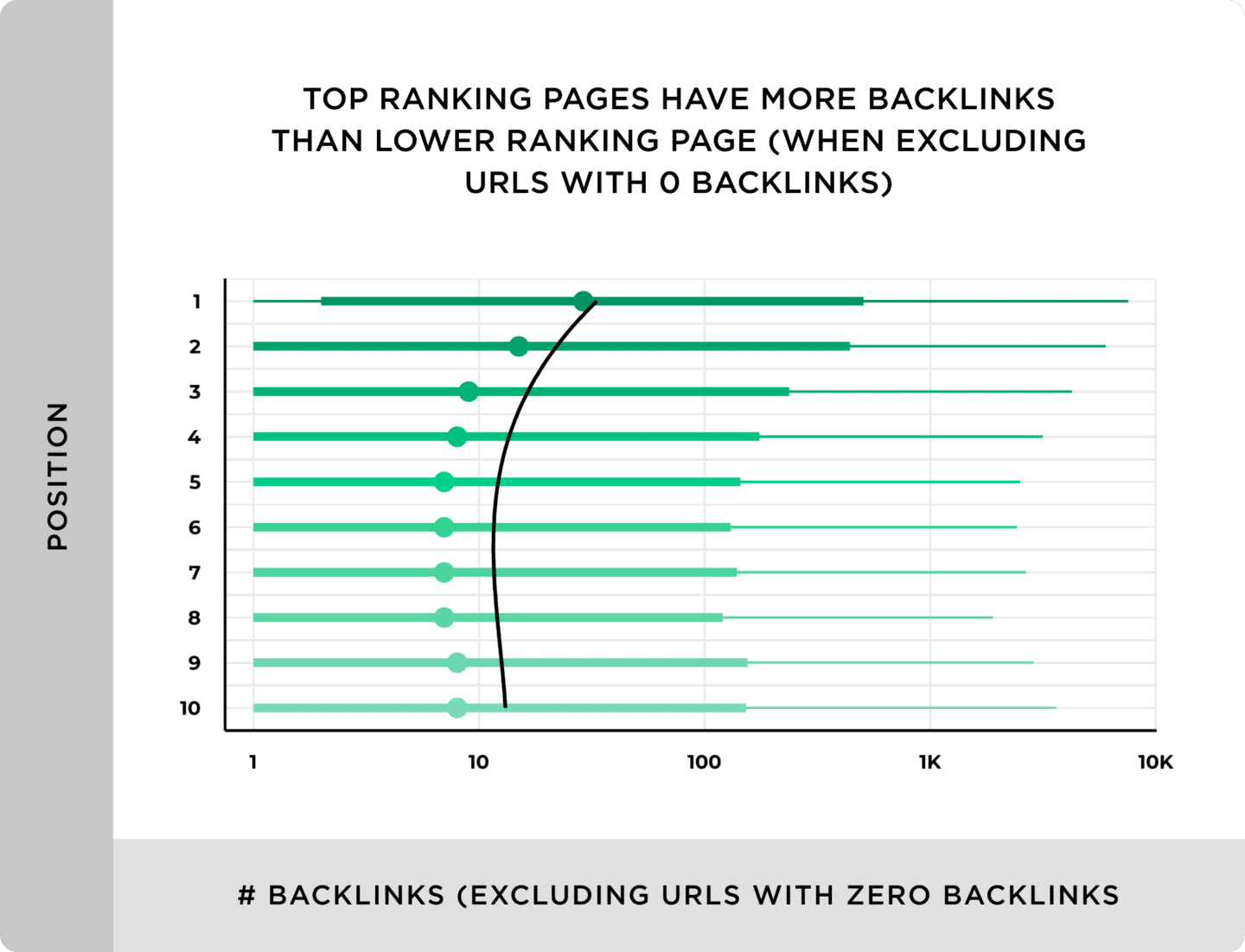
You’ll also see in the study that results in the top position on the SERPs have, on average, 3.8 times more backlinks than the rest of the first page results.
Interesting, right?
The significance of backlinks is something content marketers realized back in the early days of SEO and digital marketing, meaning that various link-building strategies have been established over the years to acquire those links.
Does that mean that the more backlinks, the better?
Certainly not, since what matters most is the quality of them.
In fact, irrelevant links from websites with a low domain authority can do more harm than good.
The importance of this was also confirmed in a study by Sparktoro, where the “quality of linking sites & pages” was the second most important factor in Google’s organic ranking systems, according to 1,500+ SEO professionals.
One great way to increase the number of websites linking back to you is to develop an SEO outreach process.
This involves reaching out to relevant websites with high authority, whose backlinks will be valuable in the eyes of Google; we’ll explain this process in more detail later on.
By doing so, you really increase your chances of gaining better search rankings and thus driving more traffic to your website.
Good backlinks are basically a way of proving to Google that you’re a relevant and high-quality source that can be trusted.
Of course, there are more search engine optimization tactics to be implemented for a successful SEO strategy, which we’ll cover further on, as well.
The importance of backlinks, however, is something we can’t stress enough.
Now let’s have a look at an example of a page that performs great organically, partially due to its backlinks.
Example: Respona
We believe a good example would be our very own piece on reminder email templates.
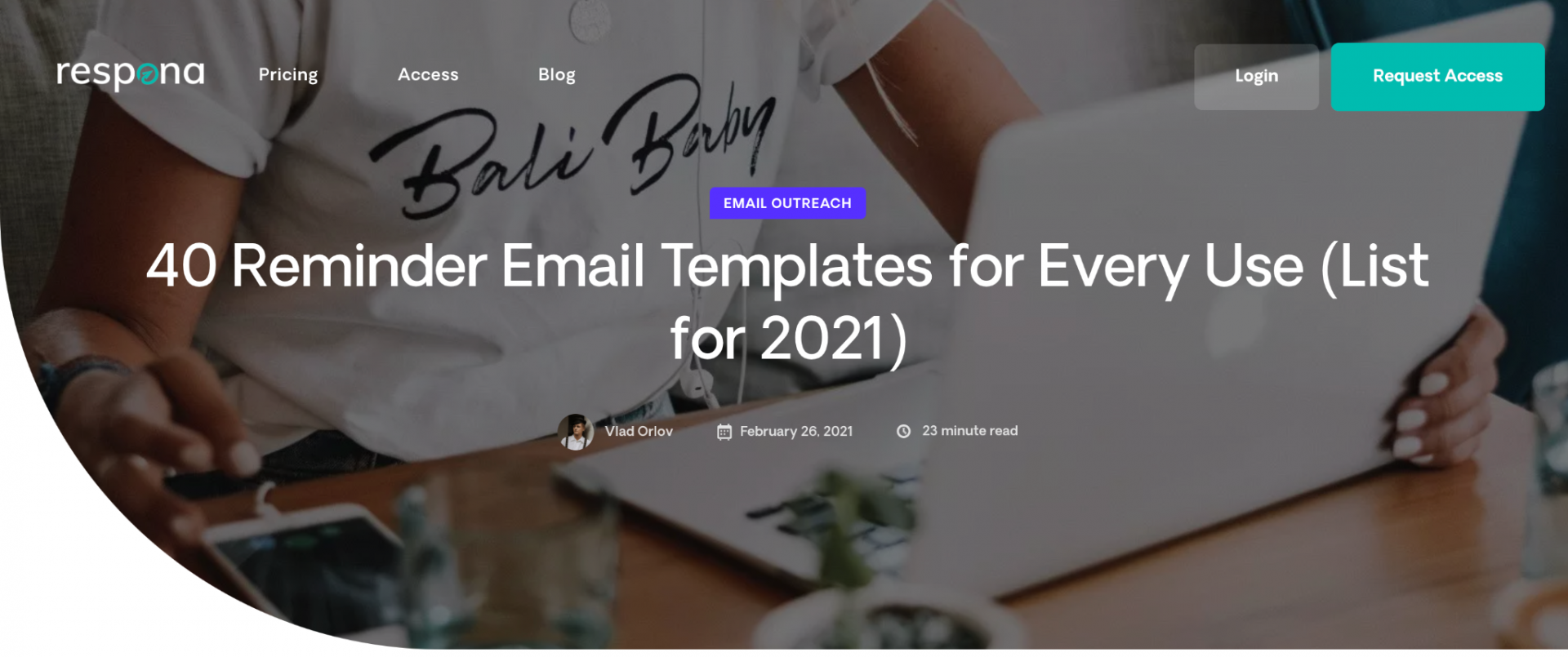
First, let’s have a general look at Respona’s backlink profile with the help of Ahrefs, the SEO tool that we prefer to use.

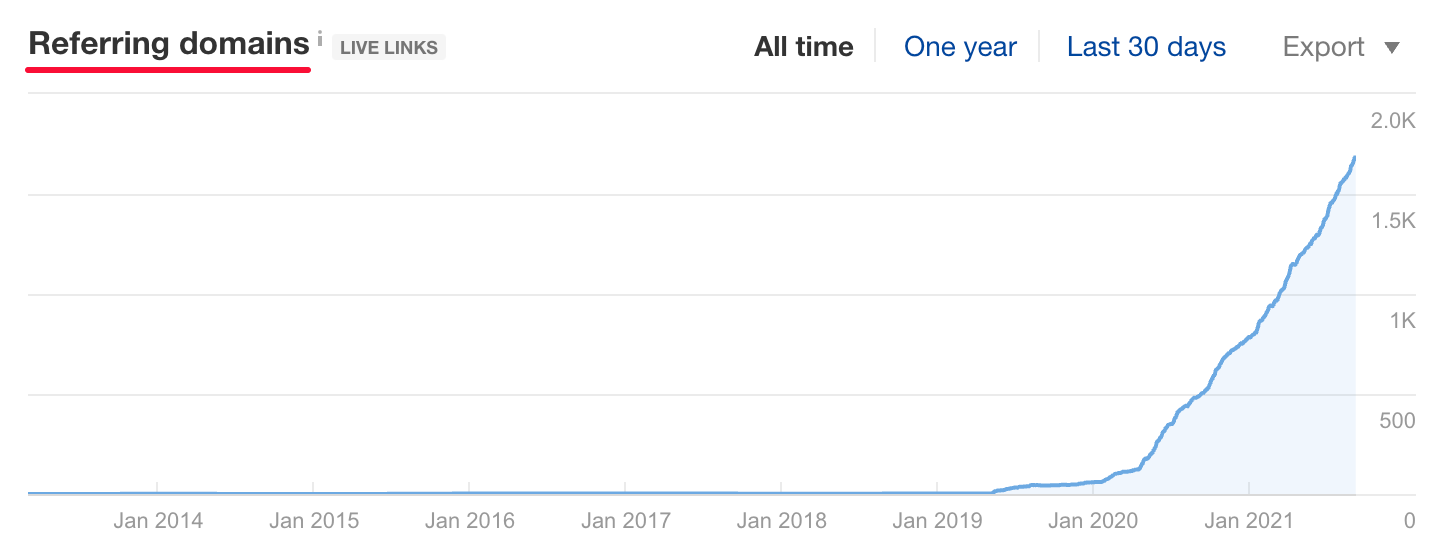
As you can see, our page has so far received 9.8K backlinks, with the number of referring domains being just under 1.7K.
These metrics contribute to a higher Domain Rating (DR), which indicates that we’re a trustworthy website for both users and for search engines.
Referring domains are basically the unique domains that link back to a website, while backlinks refer to the total number of links.
The former has been in a constant uptrend over the last two years…
… as well as the latter, where the newly gained backlinks outnumber the lost ones:
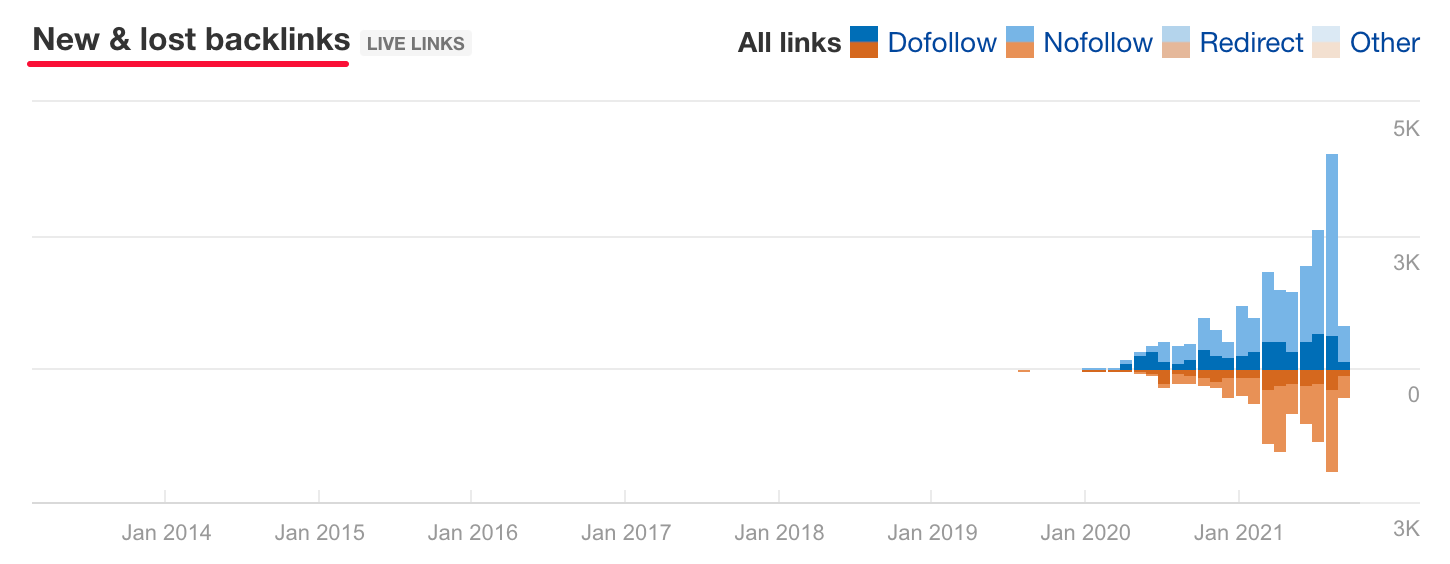
This is a sign of a good backlink profile, but we could delve much deeper into identifying how healthy it actually is by conducting a backlink audit; this involves analyzing the anchor texts used to link back to the website, the broken links, potential spammy links, the TLDs distribution, and more.
For now, we’ll move on to the blog post example we looked at earlier.
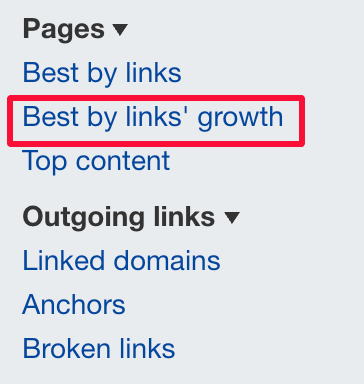
By selecting “Best by link’s growth” on the menu on our left on the Overview page, we can see the top-performing pages our website has in terms of newly acquired referring domains.
In our example, there are quite a few pages with a positive change in their new backlinks, over a 1-day, 7-day, and 30-day time frame.
Our example blog post currently stands in second place with +35 new backlinks in the last month and +12 in the last week.
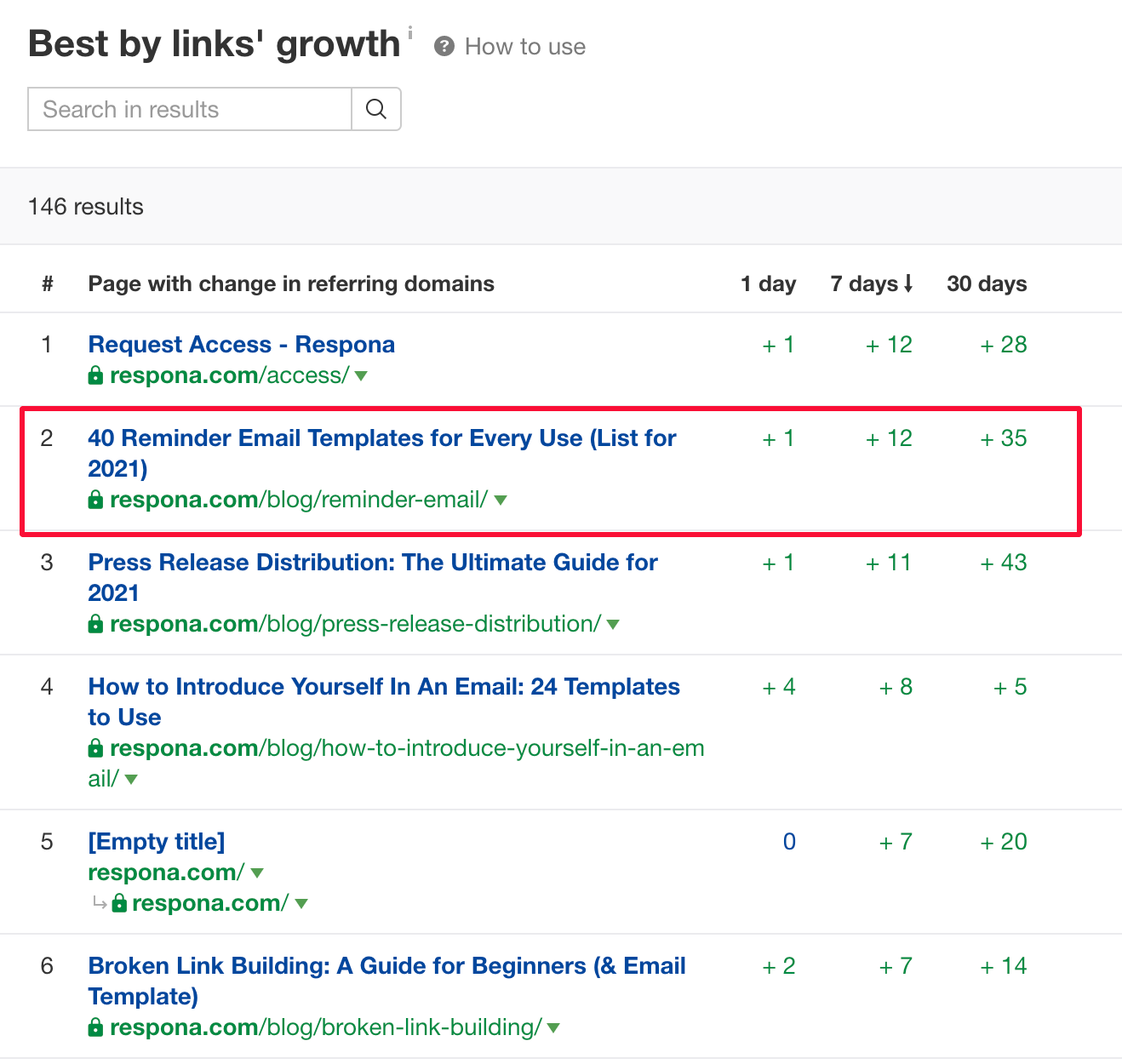
This usually indicates a good-performing page with noticeable organic growth.
When we take a closer look at the page, we can confirm that it is, indeed, performing well and attracting valuable traffic.
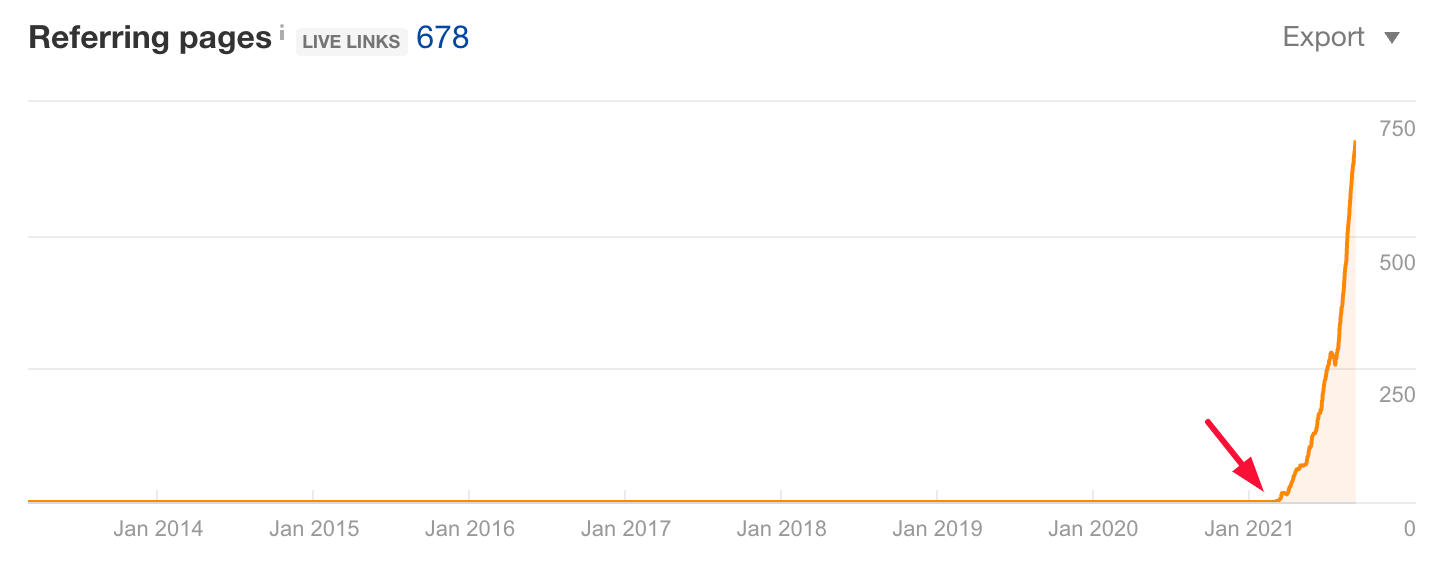
It has actually received 678 backlinks…
… and 117 referring domains in total, with the number increasing exponentially.
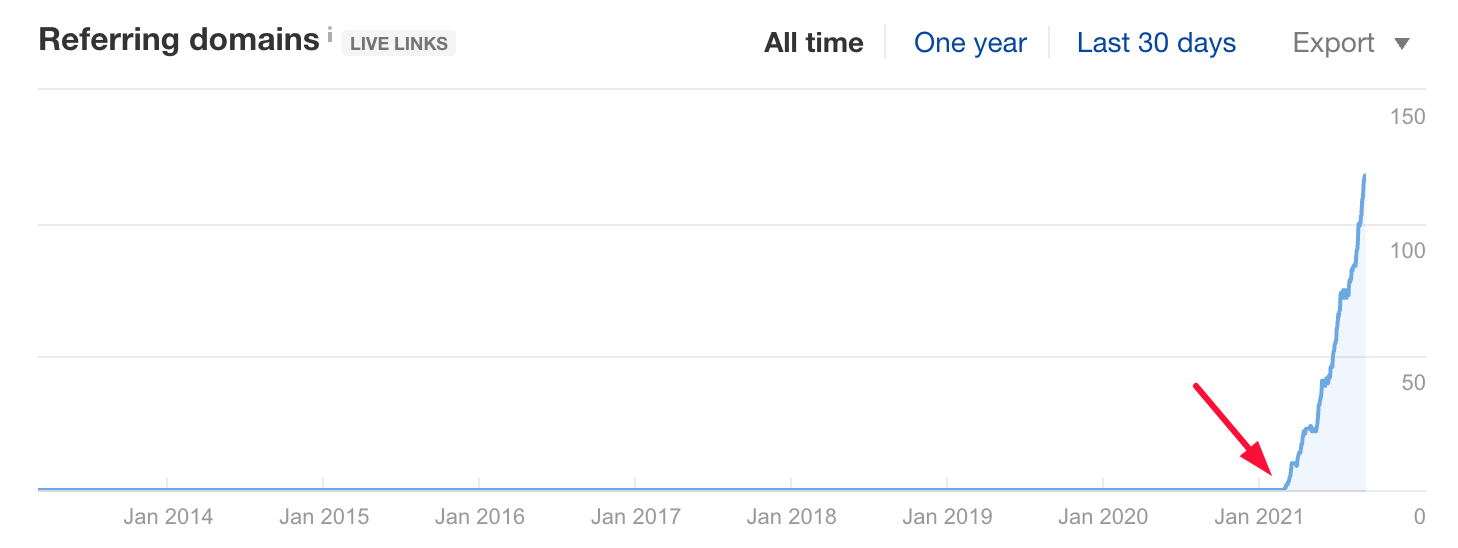
What’s also impressive is the fact that the page first started getting attention in March 2021, meaning that it has generated this many links in just half a year, as of today, September 7th.
The page ranks for 1.4K organic keywords and generates 4.5K organic visits per month.
Pretty impressive, right?
By having a deeper look at the organic keywords it ranks for, we can see that it ranks third on the first page of Google for the key term “reminder email”.
It also ranks high for dozens of other competitive keywords – based on their search volume – such as “reminder email samples” and “reminder email template”.
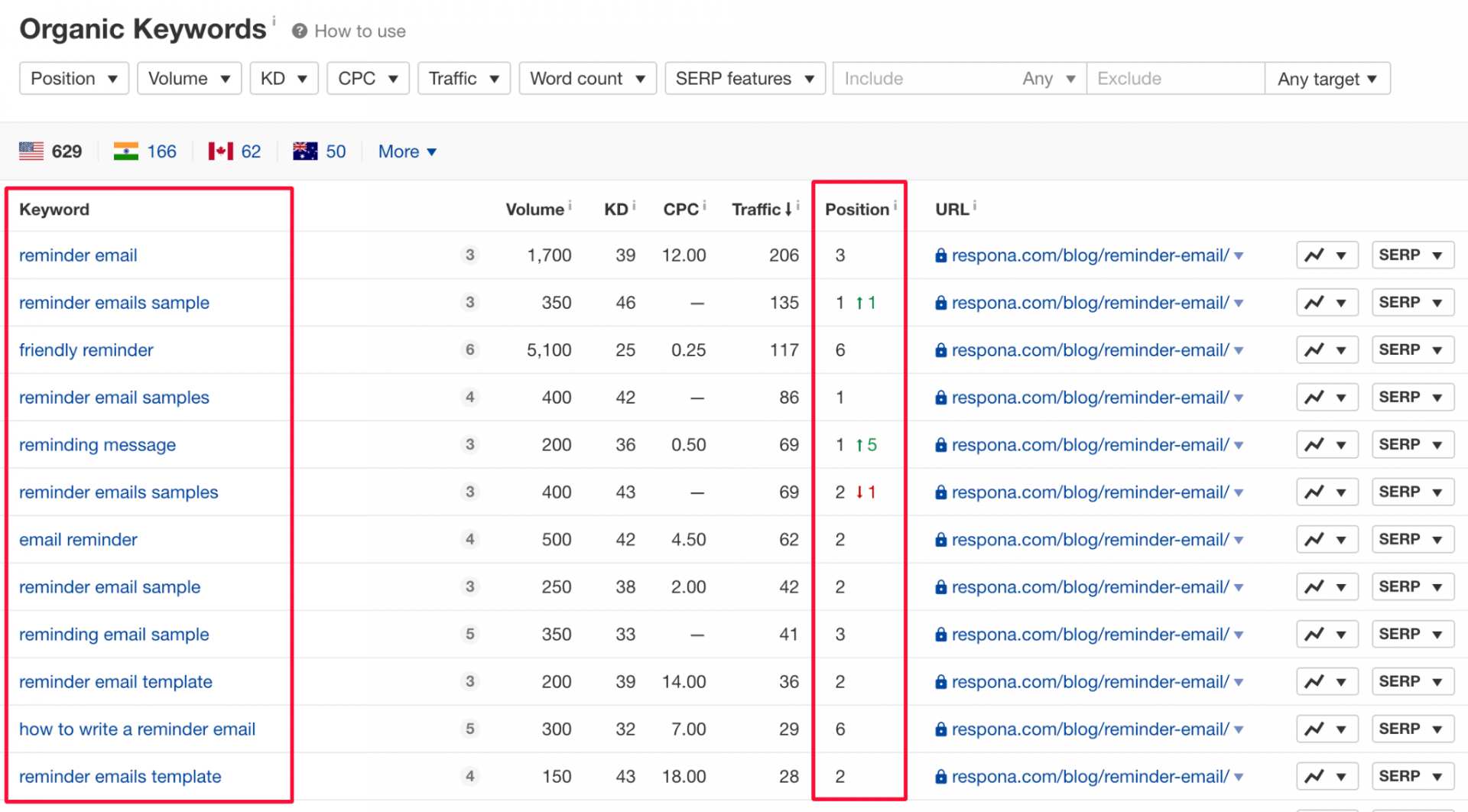
This doesn’t mean that the page is performing well solely due to its backlinks, but they do play an important role.
Other factors that are important are:
- The use of the right keywords
- On-page SEO tactics
- Headers
- Internal links
- A good user experience
And many more that make the page attract valuable search traffic.
What’s more, search intent is another aspect that was – and should be – considered before creating the content piece, since it can greatly affect its organic performance.
Let’s have a closer look at it.
Factor #2: Search intent
To put it simply, search intent is the reason searchers are looking for something online.
Are they looking to buy something? Or maybe simply to learn something from a guide like this one?
Whatever the reason – or intent – each search query has a “why” behind it and it’s the content’s job to satisfy it.
There are typically four types of search intent:
- Informational
- Commercial
- Transactional
- Navigational
Each of those can answer a different type of query a user might have.
Informational intent satisfies queries that indicate the need for information, commercial intent indicates that searchers are interested in buying something, transactional intent shows that they’re ready to spend money, while navigational intent indicates the need to find business-specific information, like a phone number.
What makes them distinguishable from each other are the search intent modifiers; that is, words and phrases in a content’s title that indicate what type of search intent they can satisfy.
For instance, the modifier “vs” when comparing two products clearly shows commercial search intent.
Whereas the modifier “how to” signals informational intent, since the searcher is looking to get information about how to do something, like how to rank higher on Google in the case of this article you’re reading.
After all, when creating any piece of content, it makes sense to try and satisfy that intent because it’s what users have in mind.
How do we know that?
Simply by taking a look at the SERPs, one can get an idea of what users are searching for as well as how they’re searching for it.
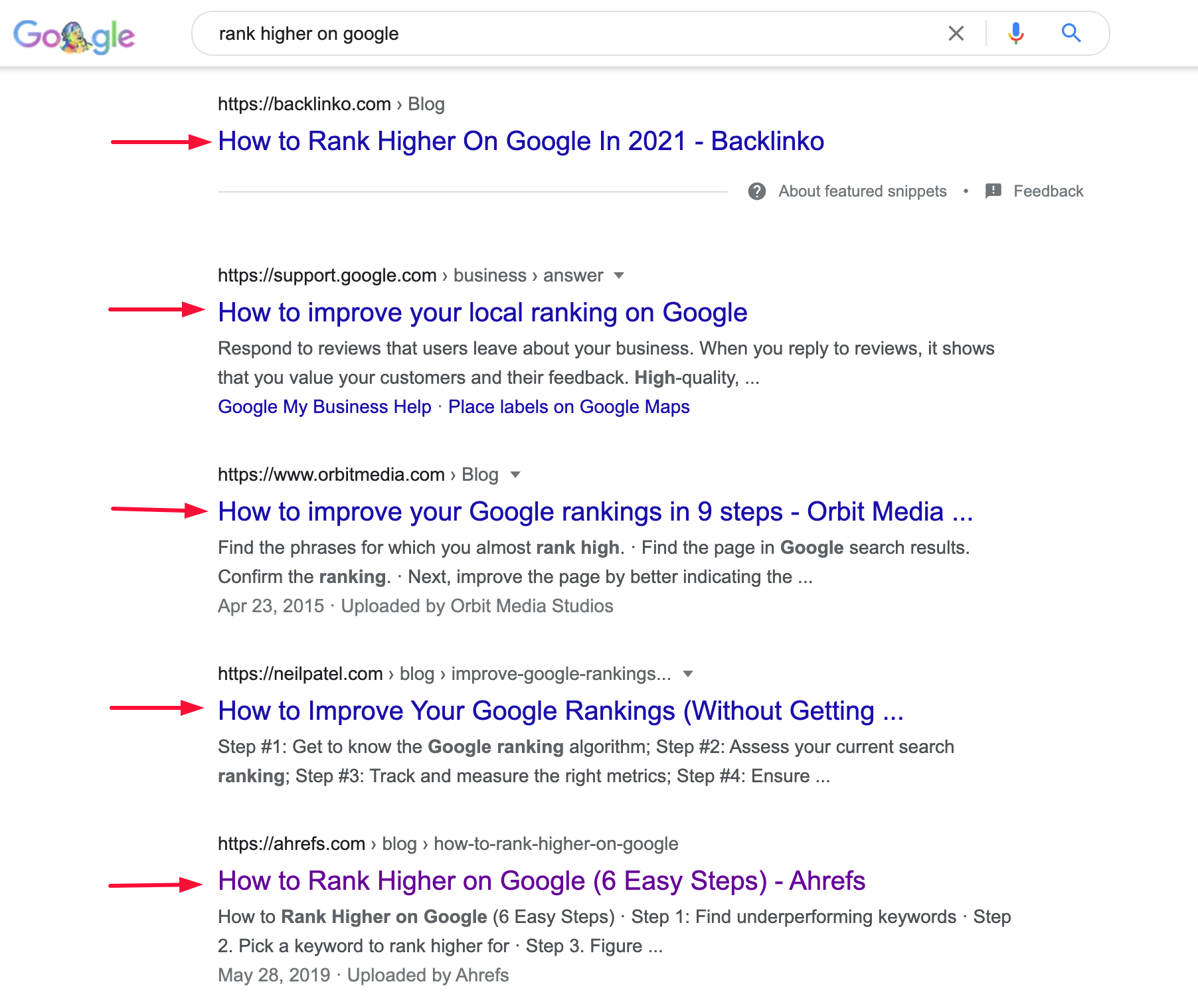
As you can see, all of the top-ranking results use the same modifier.
Were we to create a blog post around a different intent for the same keyword, chances are, we wouldn’t be able to compete with the top search results.
That’s exactly why identifying the right search intent, after conducting keyword research, can be vital to ranking higher with Google.
Let’s have a look at another example, this time by our own tool, Visme.
Example: Visme
Visme has a great case of a content piece that successfully managed to satisfy the intent around a certain keyword; the one on social media image sizes.
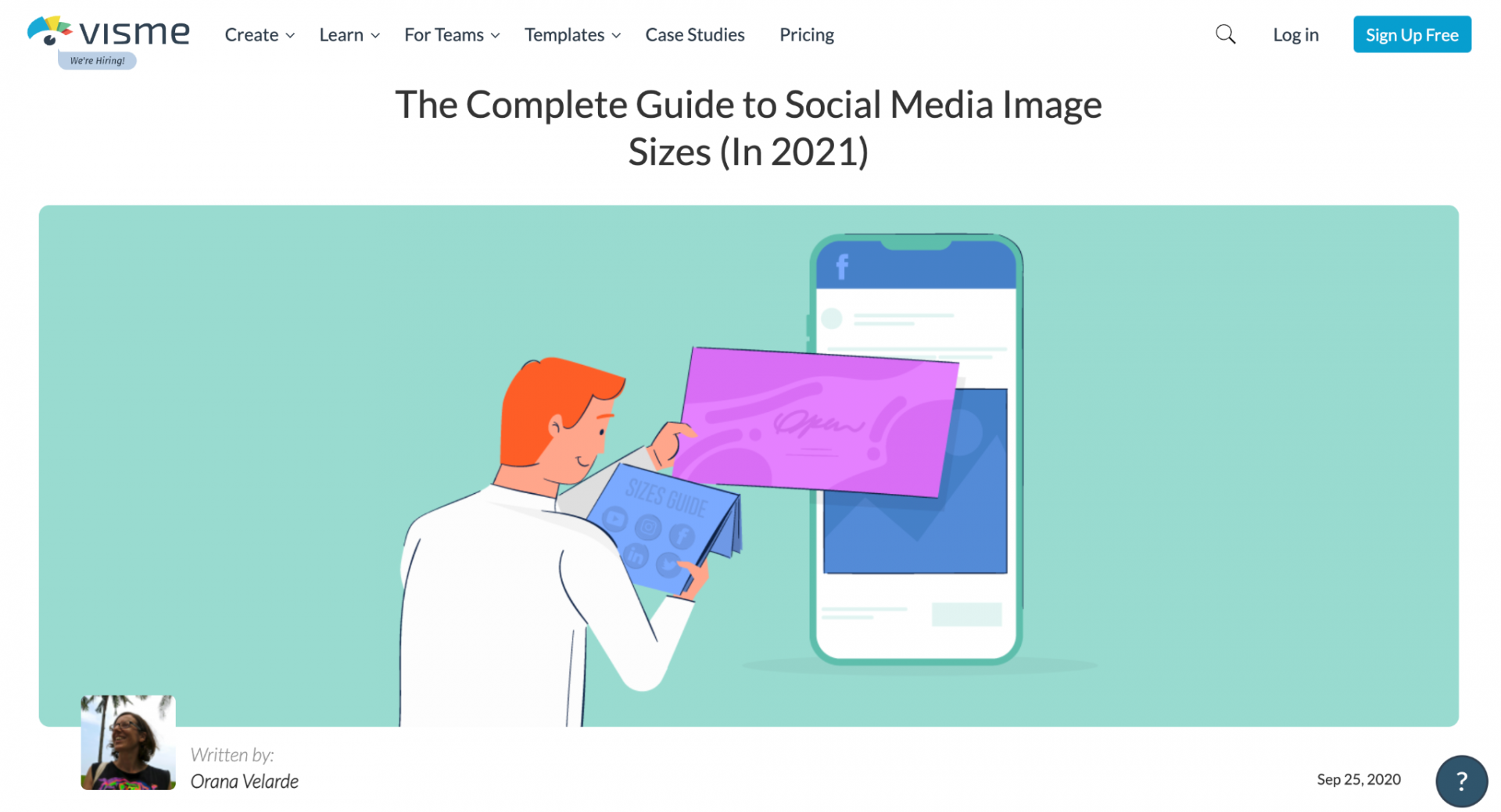
First of all, simply by looking at the page title, a searcher can immediately understand what the content is all about.
What’s more, the modifier “guide” covers informational search intent, just like the other top search results do, despite using different modifiers.
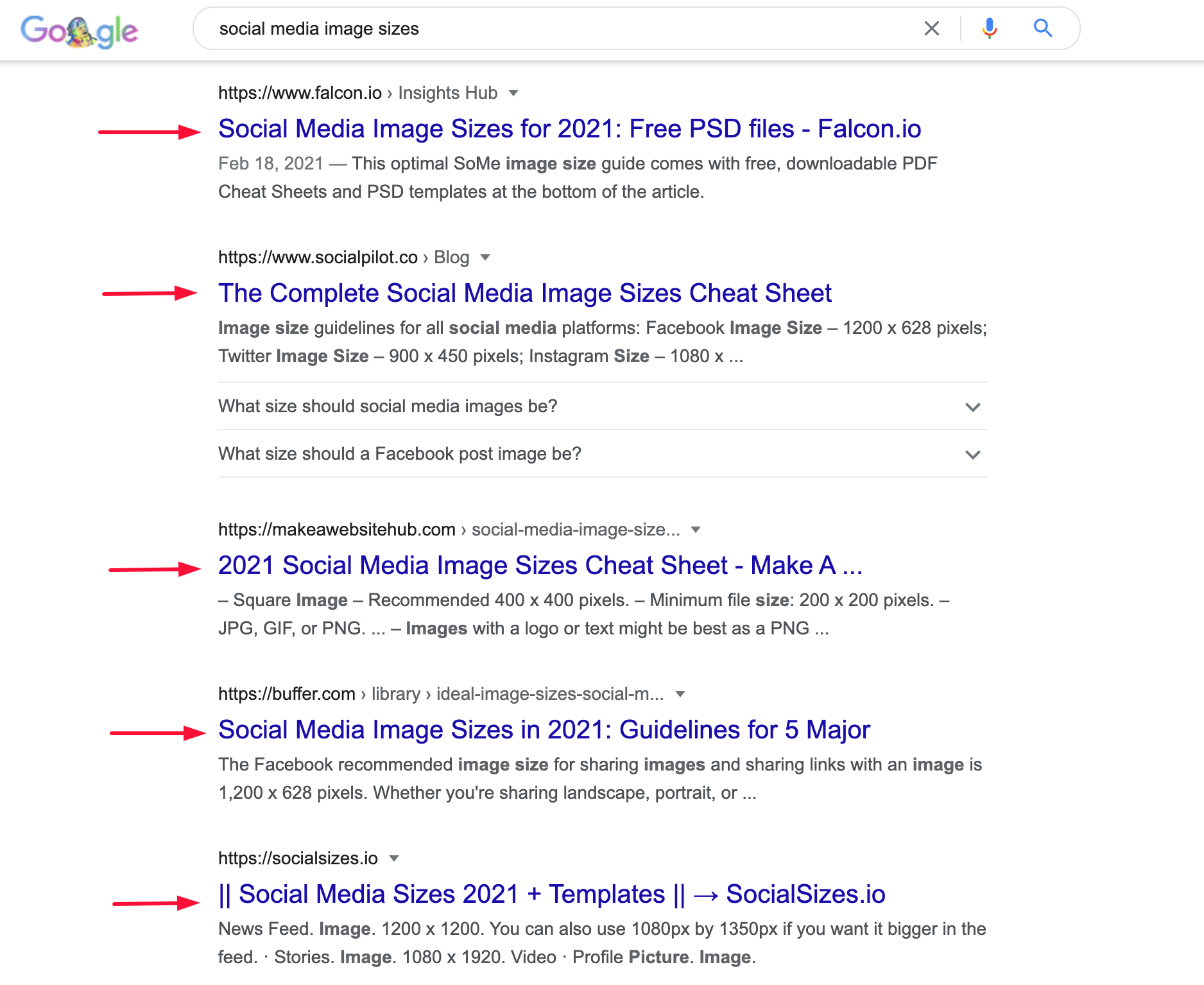
Identifying the right intent and following it increases the chances of a website ranking high, because, no matter how well-written a content piece is, Google won’t promote it if it doesn’t answer what searchers want.
By looking at the table of contents inside the piece, you’ll see that there are guidelines for almost all social media platforms such as Facebook, Twitter, Instagram, and even Spotify.
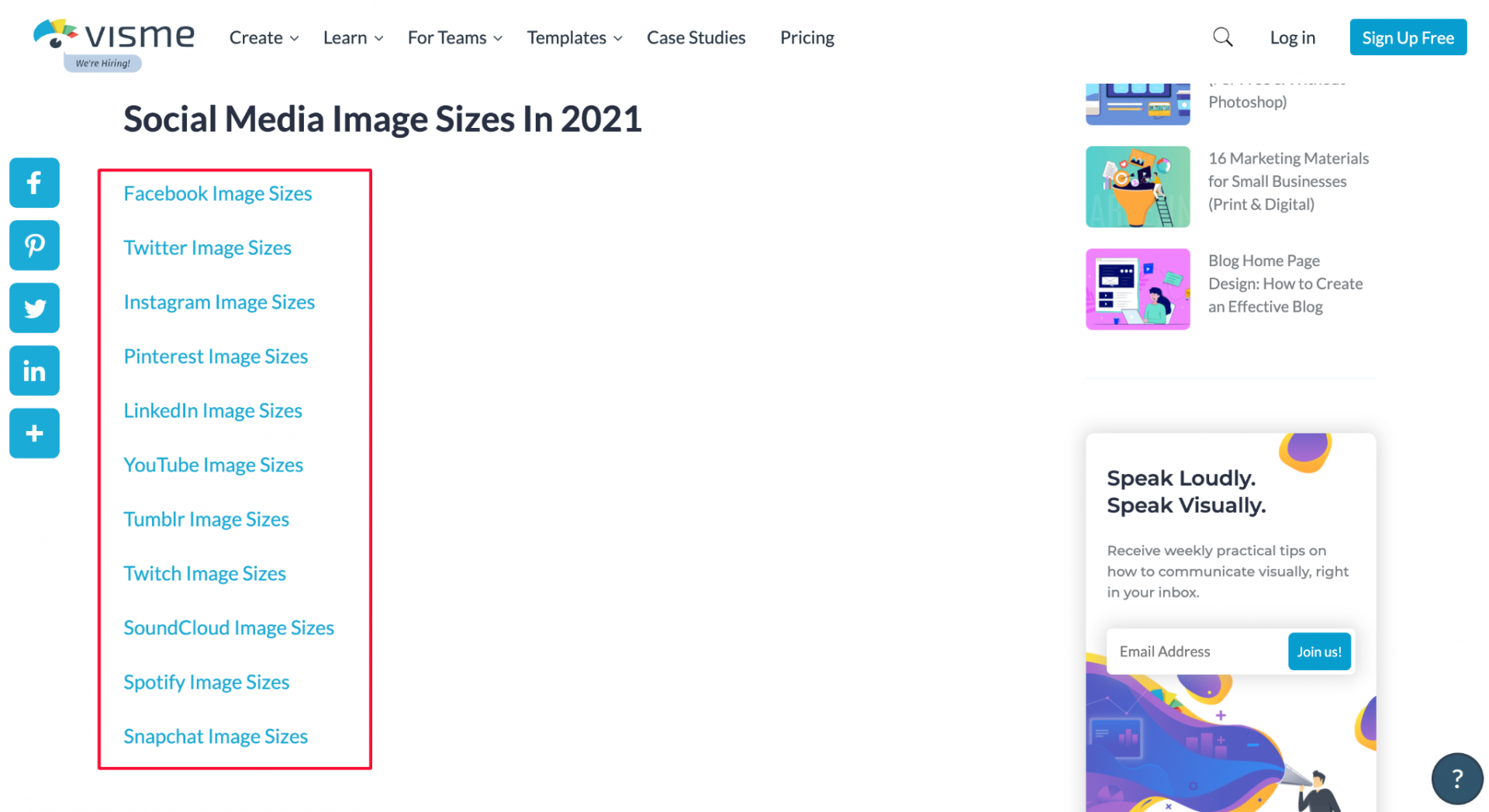
This helps users easily navigate to details about the platform of their choice and get information about it. It’s also an example of good user experience, which is considered a ranking factor.
We’ll talk more about this further down this guide.
The above points have helped this blog post generate over 650 organic visits per month and they were even over 3K, not long ago.
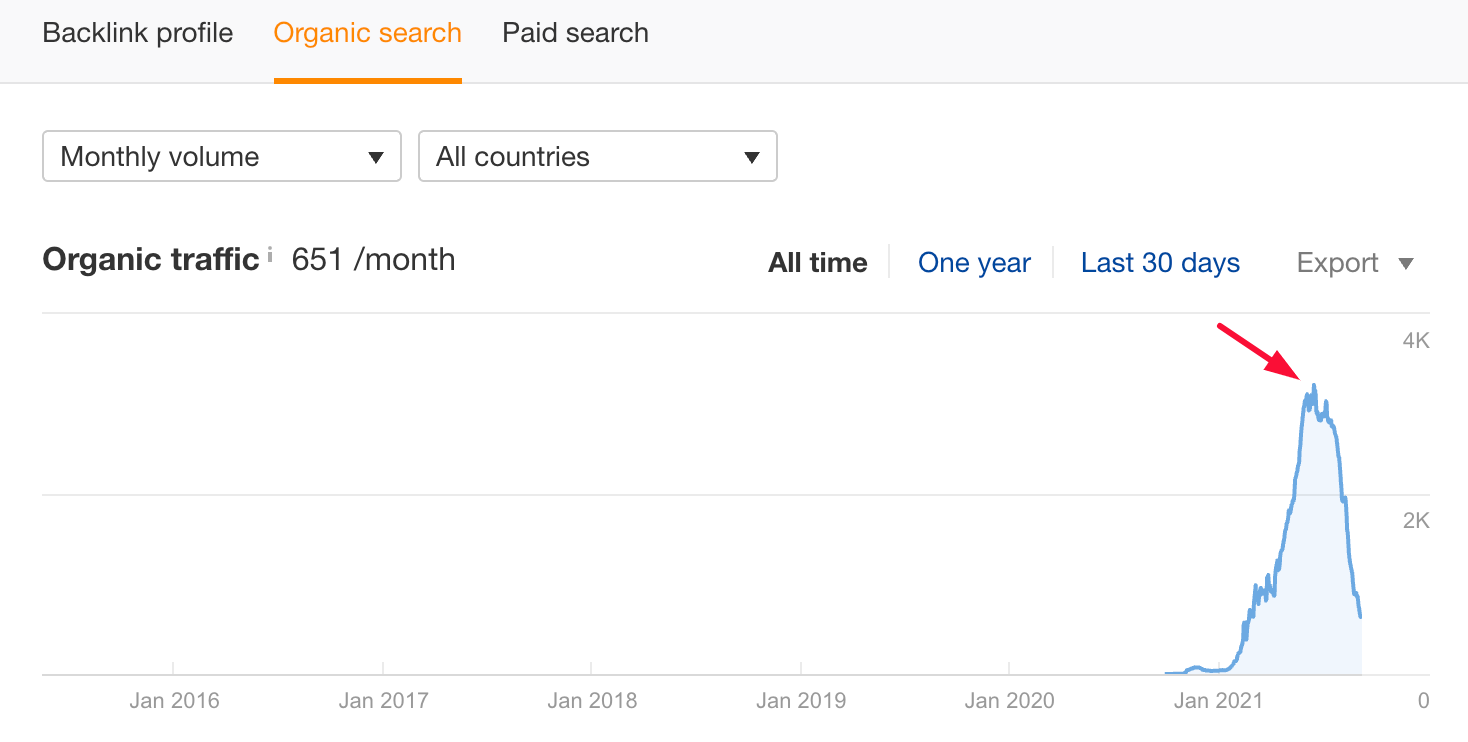
The page also ranks for more than 9.5K organic keywords, including “LinkedIn banner size”, “Facebook post size”, “Spotify banner size”, and many more in high positions.
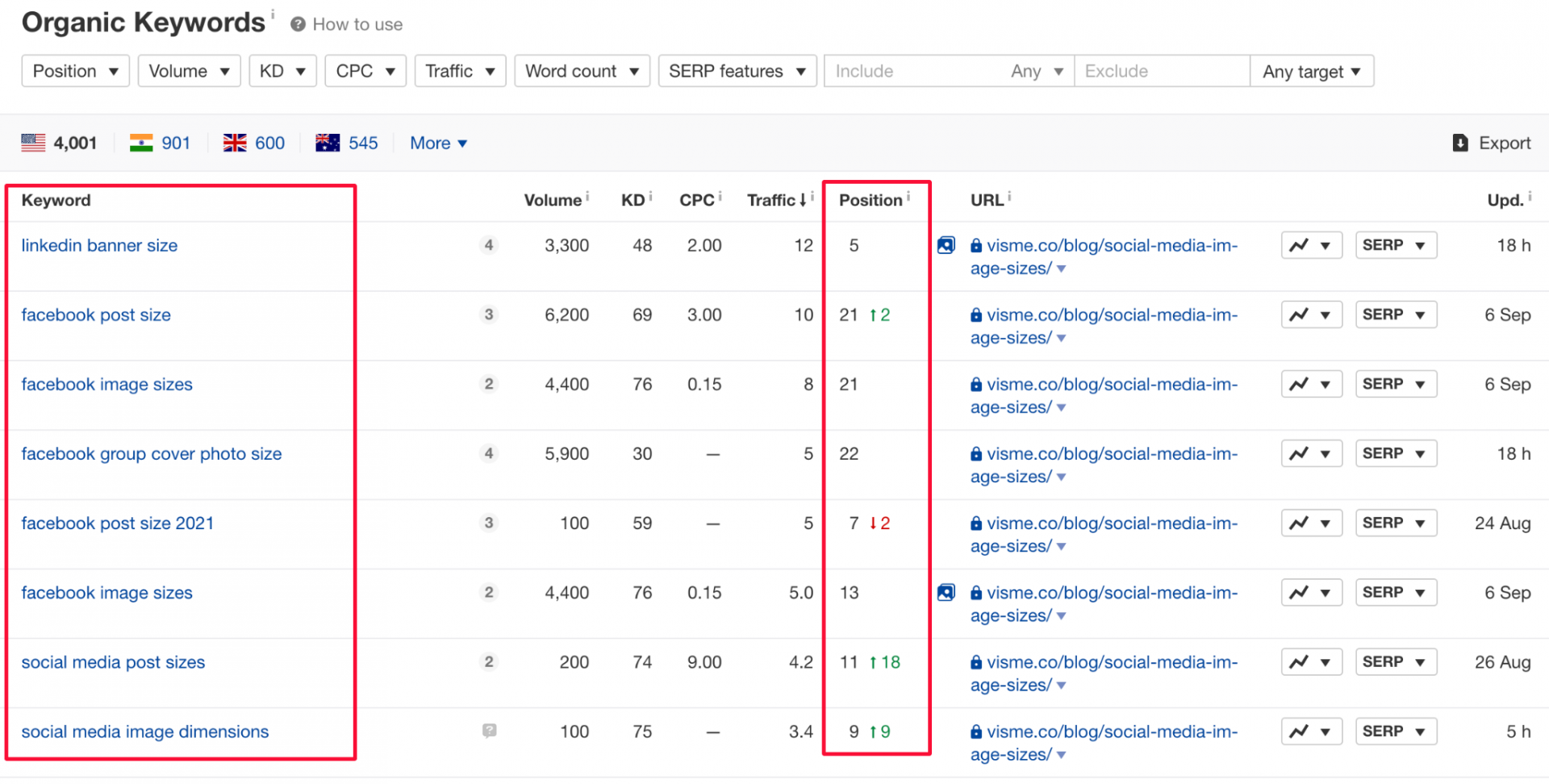
All in all, this is a great example of a web page that satisfies users by answering their queries and, therefore, Google has rewarded it by helping it gain organic visibility through high rankings.
Now that we’ve seen how important search intent is to a successful content marketing strategy, it’s time to move on to the next ranking factor.
Factor #3: Topical authority
Would you read a blog post by Jeff Bezos on the latest fashion trends?
Chances are you wouldn’t, but even if you did, you wouldn’t trust it as much as a piece written by Giorgio Armani, let’s say.
This is because you associate those two people with different sectors or topics; tech and fashion.
Google works in a similar way; if a website already has visibility for a given topic, it’ll be easier for it to rank faster – and possibly higher – for a relevant term.
This is where topical authority comes in.
It’s one of the most important tactics in blogging and something every SEO starter should know about.
To put it simply, topical authority is the expertise someone has on a niche topic, which makes them trustworthy in the eyes of Google and searchers.
This concept was highlighted after Google Hummingbird – a 2013 algorithm update that helped search engines evaluate natural language, analyze relevant terms, and make connections between entities.
This made topical authority an important ranking factor in organic search, especially when gaining extra real estate in the SERPs through snippets.
Let’s have a look at a great example by Uscreen.
Example: Uscreen
Uscreen’s piece on membership platforms is a good case of how topical authority helps a web page rank higher.
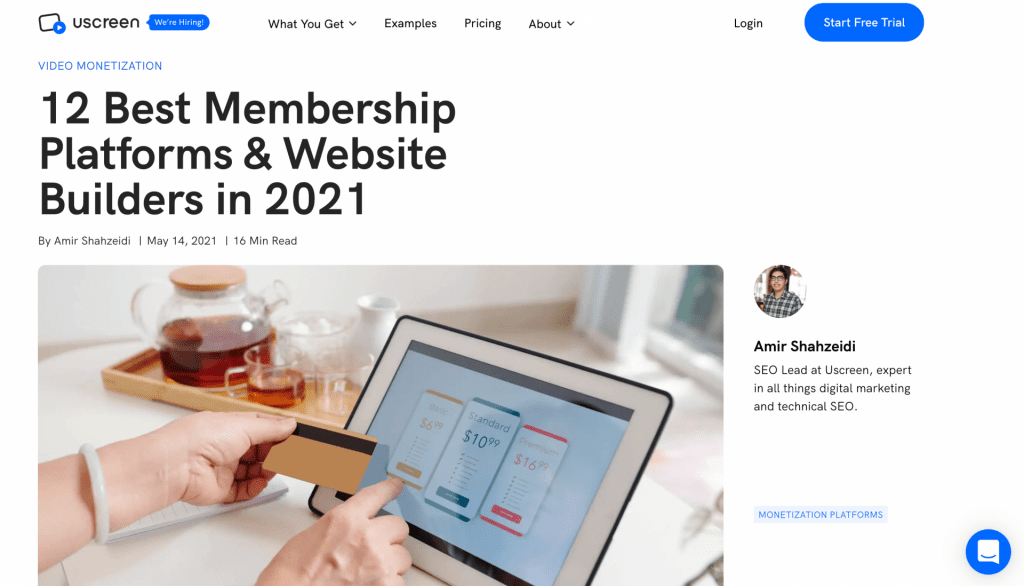
The company already has expertise in sectors like video monetization, streaming, memberships, and so on, and that’s something Google is aware of.
We can see from the keywords Uscreen ranks for in high positions, with terms like “streaming sites”, “subscription websites”, and “top membership sites”.
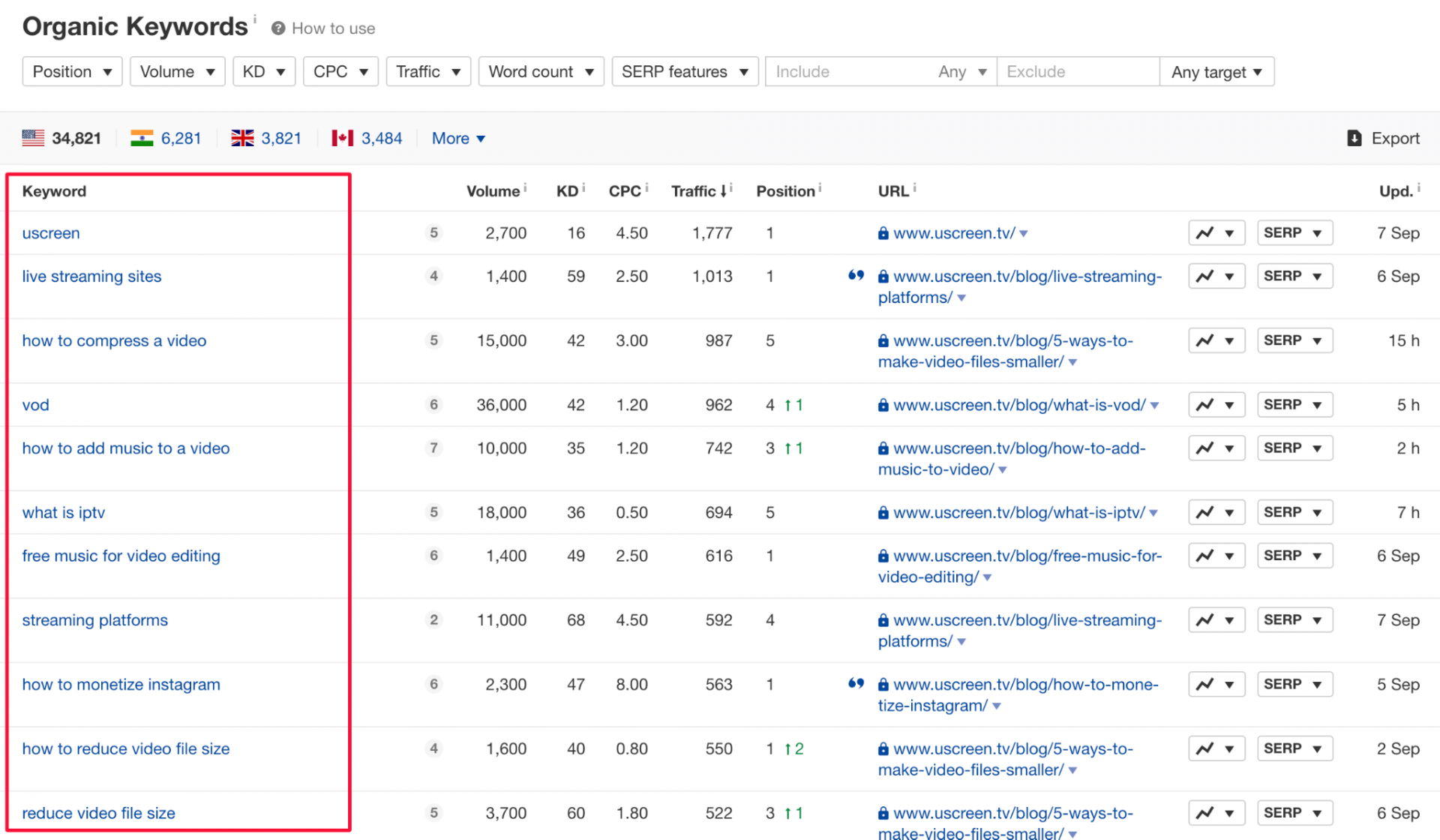
This gives Uscreen the right topical authority to be able to not only create but also gain visibility for content around membership platforms and other related terms.
It’s no surprise that the blog post already has visibility despite it being a new one…
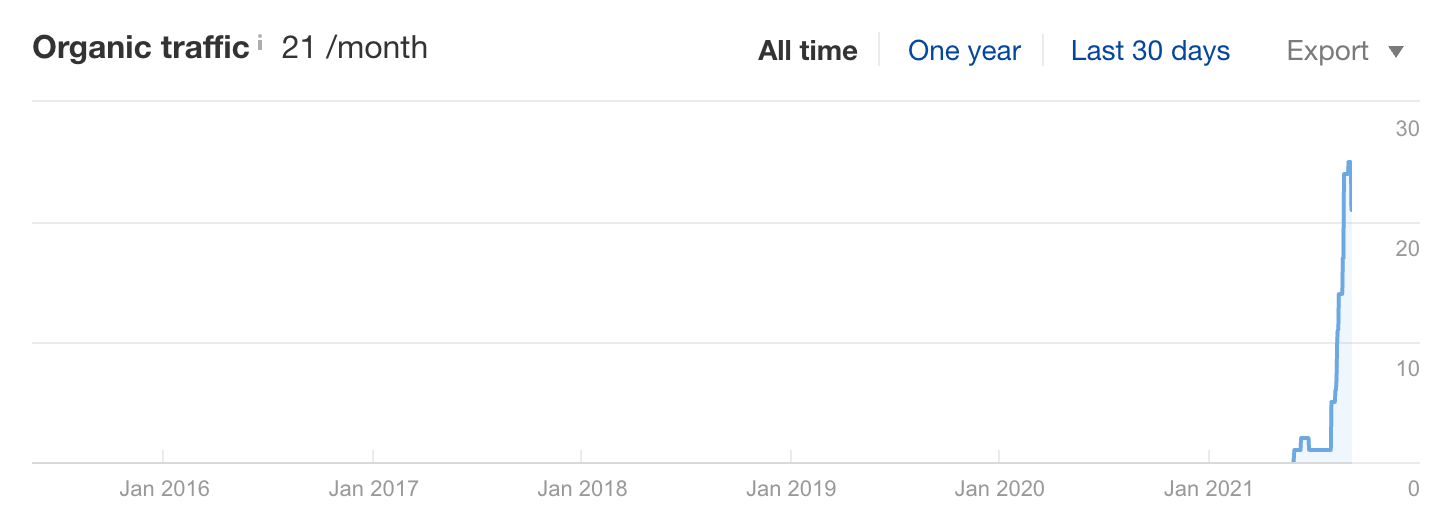
… and ranks for 50 keywords:
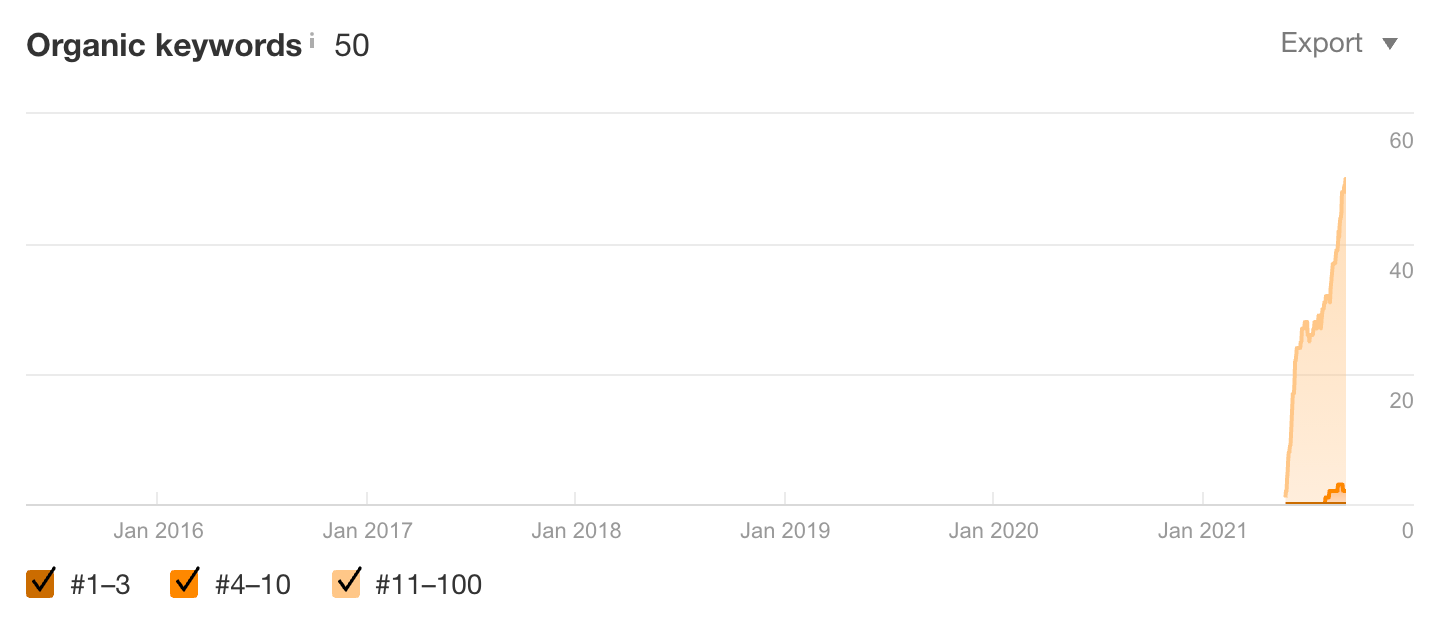
The piece is also currently ranked in ninth position for its target term “membership site platforms”, bringing valuable traffic to the website.
Author’s Tip: You can find great keywords around your niche by using a free tool like Google’s Keyword Planner, or a paid one like Semrush or Ahrefs.
Creating original content that’s high-quality and relevant to your business is vital to helping Google trust you more as a source and rank you higher on the SERPs.
Let’s move on to the next factor.
Factor #4: Content depth
Among other on-page SEO techniques, having the right content depth can play a role as a ranking factor.
While other aspects may be more important such as targeting the right keywords, writing high-quality content, classifying search intent, and more; content depth shouldn’t be underestimated.
After Google’s 2010 Mayday update, pages with thin content saw a significant hit to their organic traffic, while in-depth blog posts with long-tail keywords saw higher conversions and click-through rates (CTR).
Thin content is basically short content with not a lot of value for readers and a poor user experience.
In contrast, deep content is designed to meet a reader’s needs with expert knowledge on one or more fields, provide arguments backed up by data, and generally offer in-depth information.
More often than not, such content may turn out to be lengthier than its competing ones in the SERPs, but this could have a positive impact on its rankings.
Author’s Tip: When creating lengthy content, make sure to enrich it with images, videos, infographics, and other types of multimedia for a better user experience.
A good example is the following piece by content and SEO agency, Minuttia.
Example: Minuttia
The case we’re going to examine is the one on blog post templates.
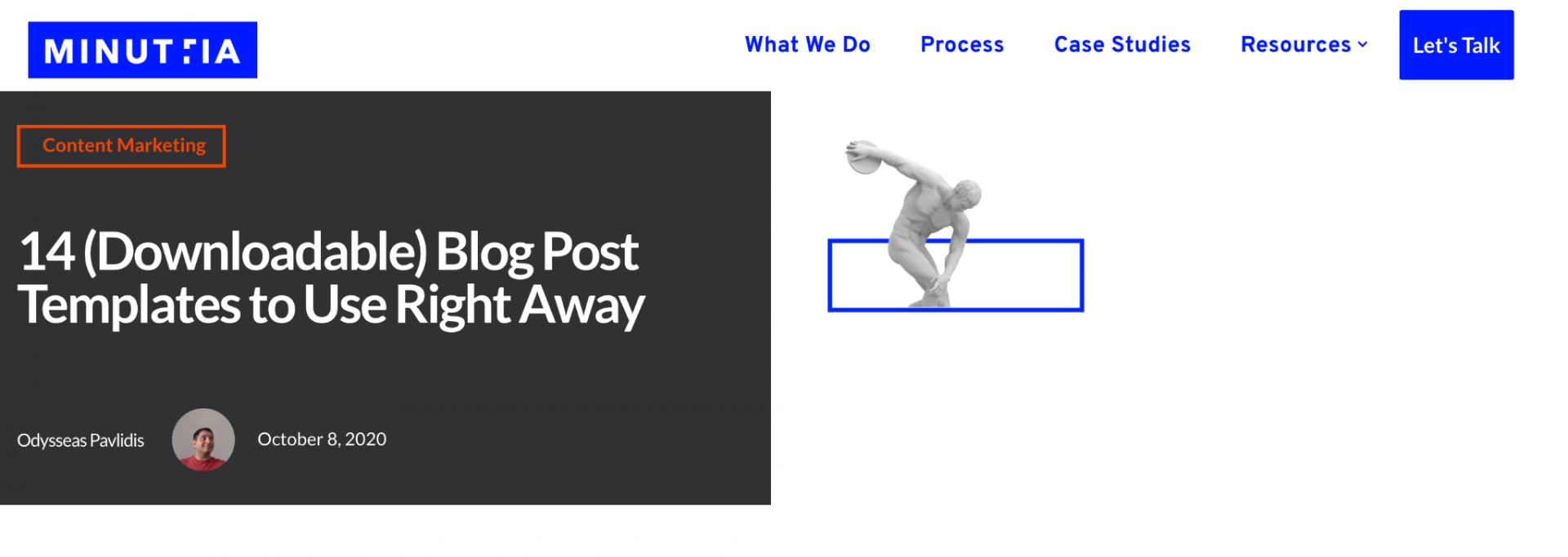
You’ll notice when going through the piece the level of detail for each blog post template; the information about it, tips, examples, links to download it from, and much more.
This is a clear case of an in-depth piece of content, not only judging by the quality of the content itself but also the length of it.
By inserting the piece into Clearscope, a content optimization platform that uses AI, we can see that the word count is almost 11.5K…
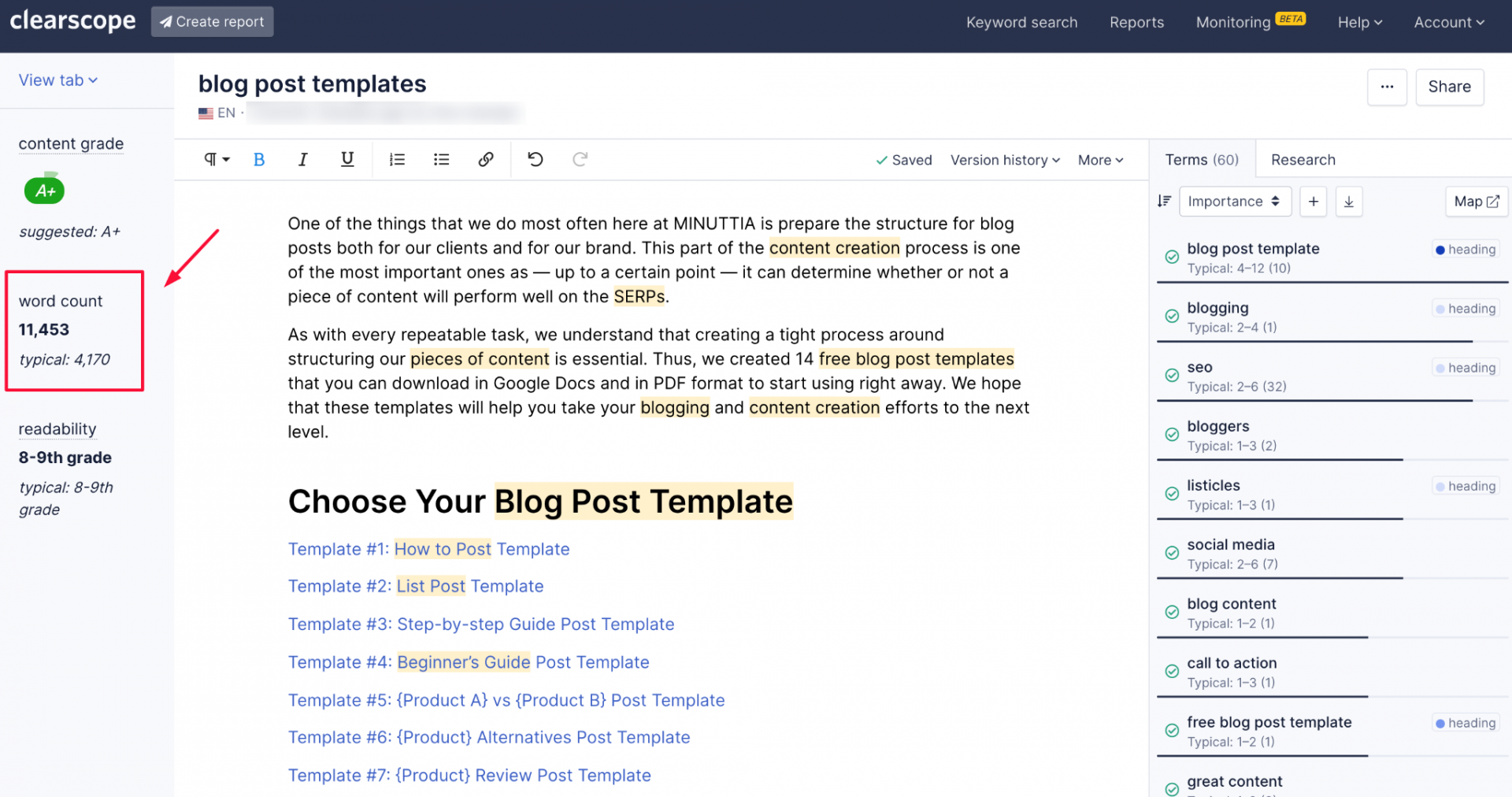
… while the average word count of the top-ranking search results is 4.1K.
This means that Minuttia’s blog post is almost 3x longer than the ones it’s competing against.
Don’t forget, however, that the length itself isn’t enough, since quality is a major factor as well.
What’s interesting to notice is the fact that the piece currently ranks in fifth position, among other pieces which all have a considerably higher domain ranking.
To be precise Minuttia has a DR of 35, while the next lowest one is 72 – more than two times higher – and the highest one is 94.
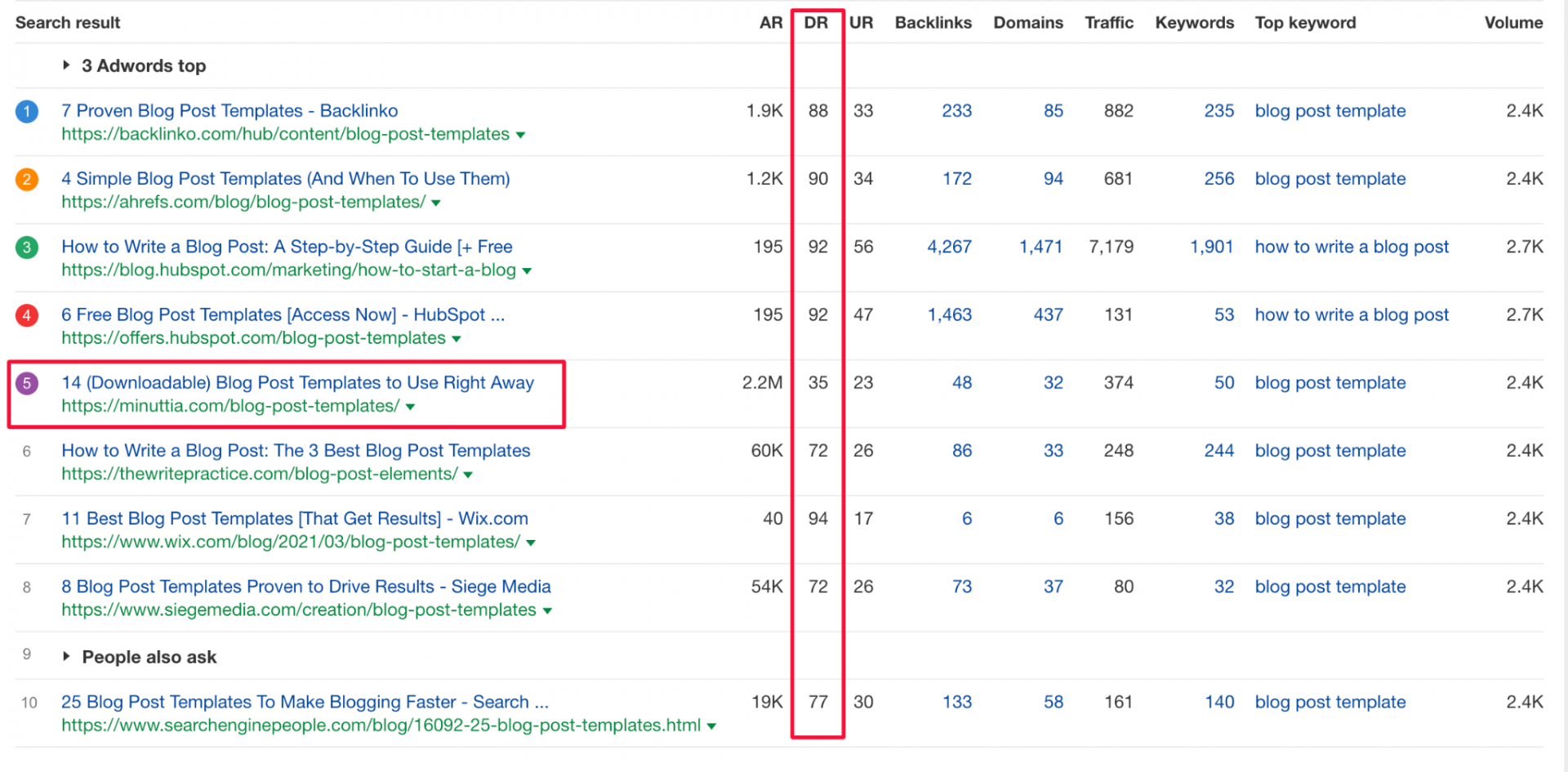
This means that the content depth on the blog post helped it rank high even though it was competing with considerably “stronger” websites; the page now attracts 650 organic visits per month.
Pretty impressive, right?
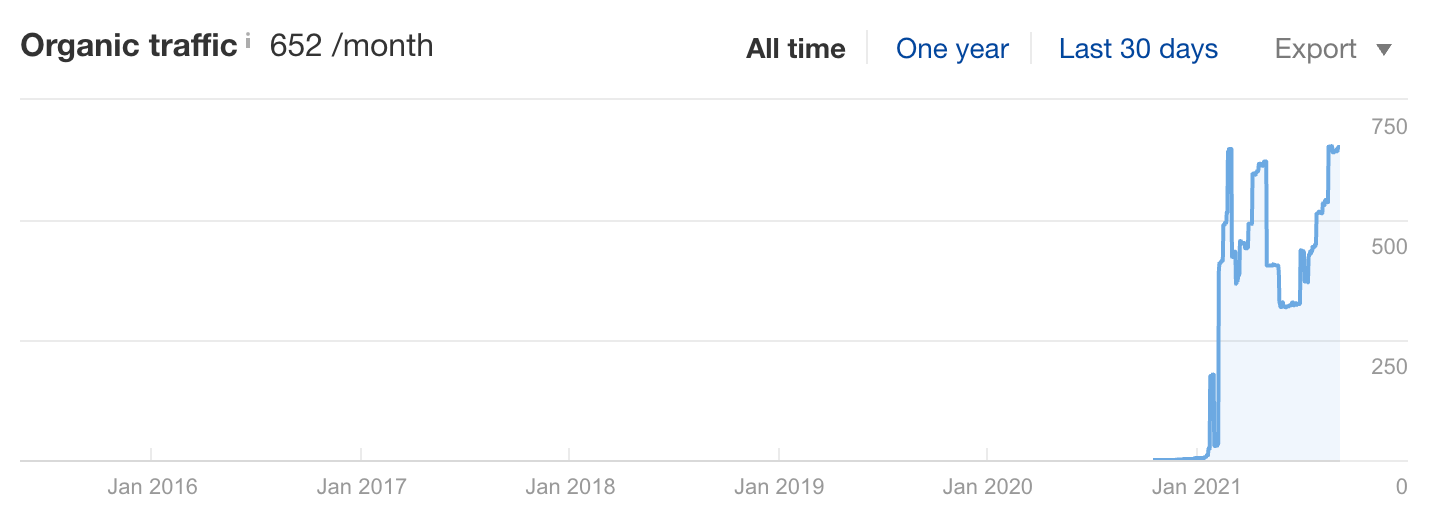
Overall, it’s important to keep content depth and quality in mind as core factors while writing a piece.
Let’s continue.
Factor #5: Freshness
If you came across two blog posts on the same topic and one was up-to-date while the other one was created a few years ago, which one would you click?
Chances are, you’d opt for the one created most recently; it’s more likely to contain the latest information on a given topic.
In simpler words, when content is fresher, it has more chances of gaining more visibility.
This phenomenon was particularly visible after Google released its new indexing feature called Caffeine.
According to the search engine:
“Caffeine provides 50 percent fresher results for web searches than our last index, and it’s the largest collection of web content we’ve offered… you can now find links to relevant content much sooner after it is published than was possible ever before.”
This means that fresh – and high-quality – content is more favorable in the eyes of Google, whether it was created or updated recently.
Contrast this with stale content; posts that haven’t been updated in a while.
However, this isn’t always true and it may differ on a case-by-case basis.
Let’s have a look at a couple of examples.
Example: NerdWallet
A good term where content freshness is important is that of “best credit cards”, a high rank claimed by Nerdwallet.
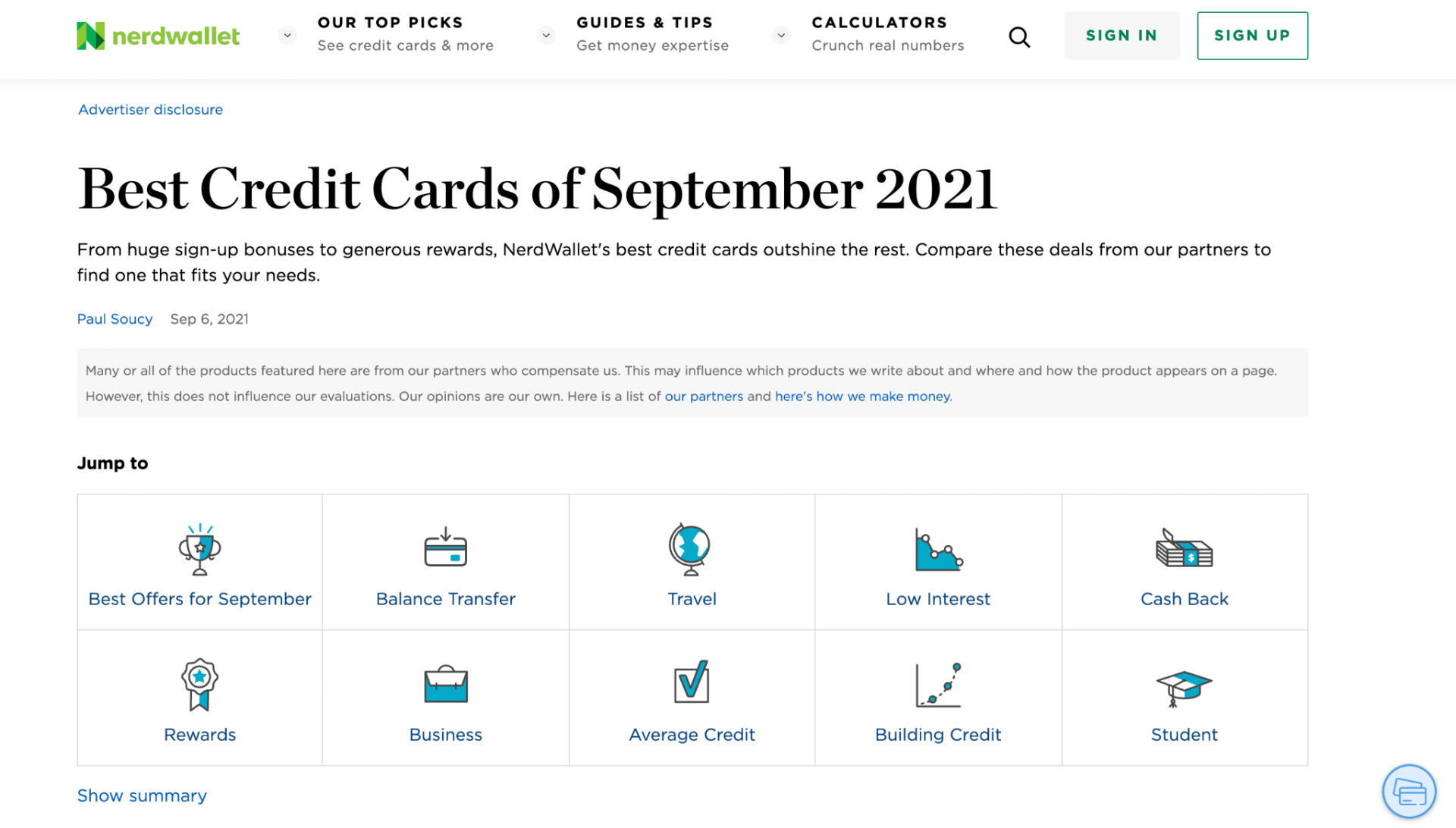
This content piece currently ranks in position two for the term and, by looking at the title on the homepage, you can tell that it’s been updated to contain the current month, despite it generating traffic as far back as 2015.
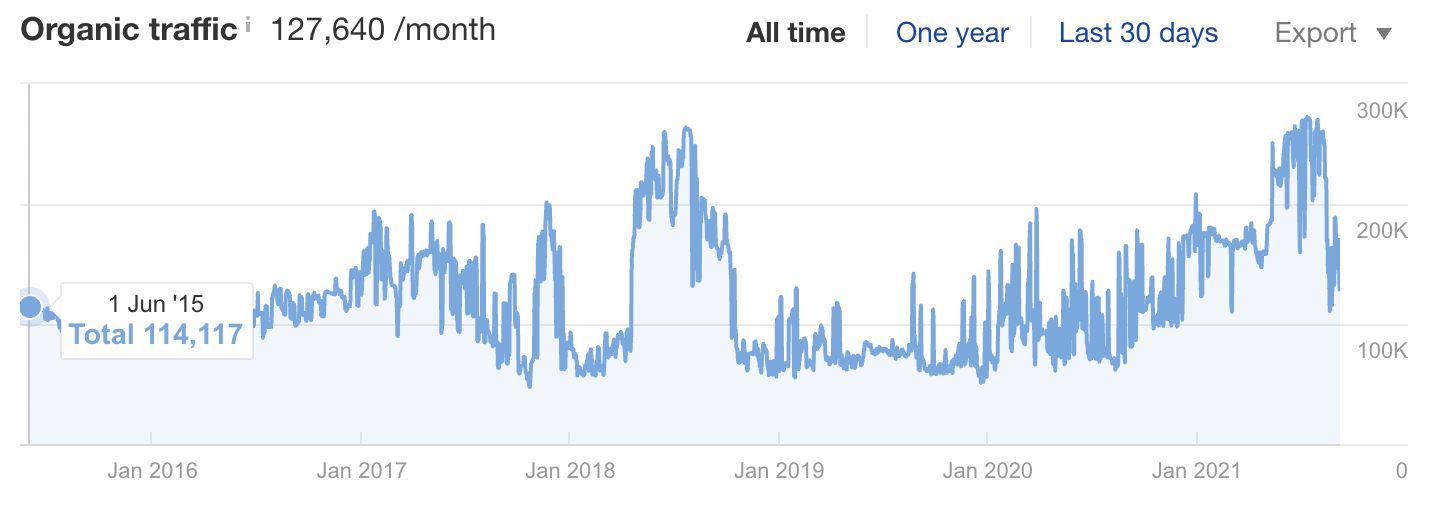
This means that the piece isn’t a new one that was created recently, but the title is being updated regularly.
It’s the same tactic that most of the top-ranking search results for that term follow, too.
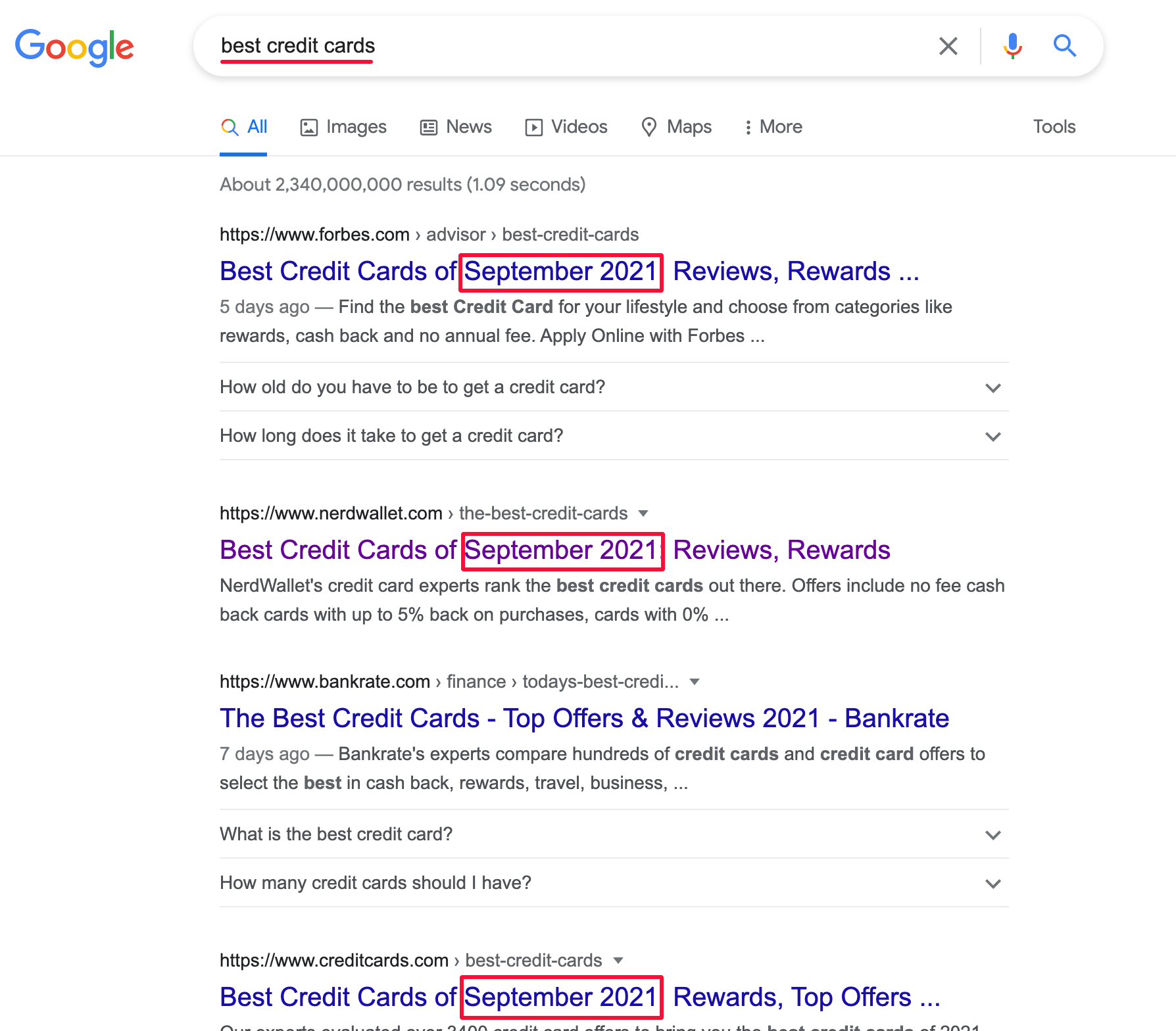
This is a keyword where content freshness plays a major role in the eyes of Google.
As you can imagine, there are terms where this isn’t always the case, since older and outdated pieces of content can still hold high positions in the SERPs.
A good example is a piece by Moz, which currently ranks fifth for the term “content audit”, despite it last being updated in 2017.
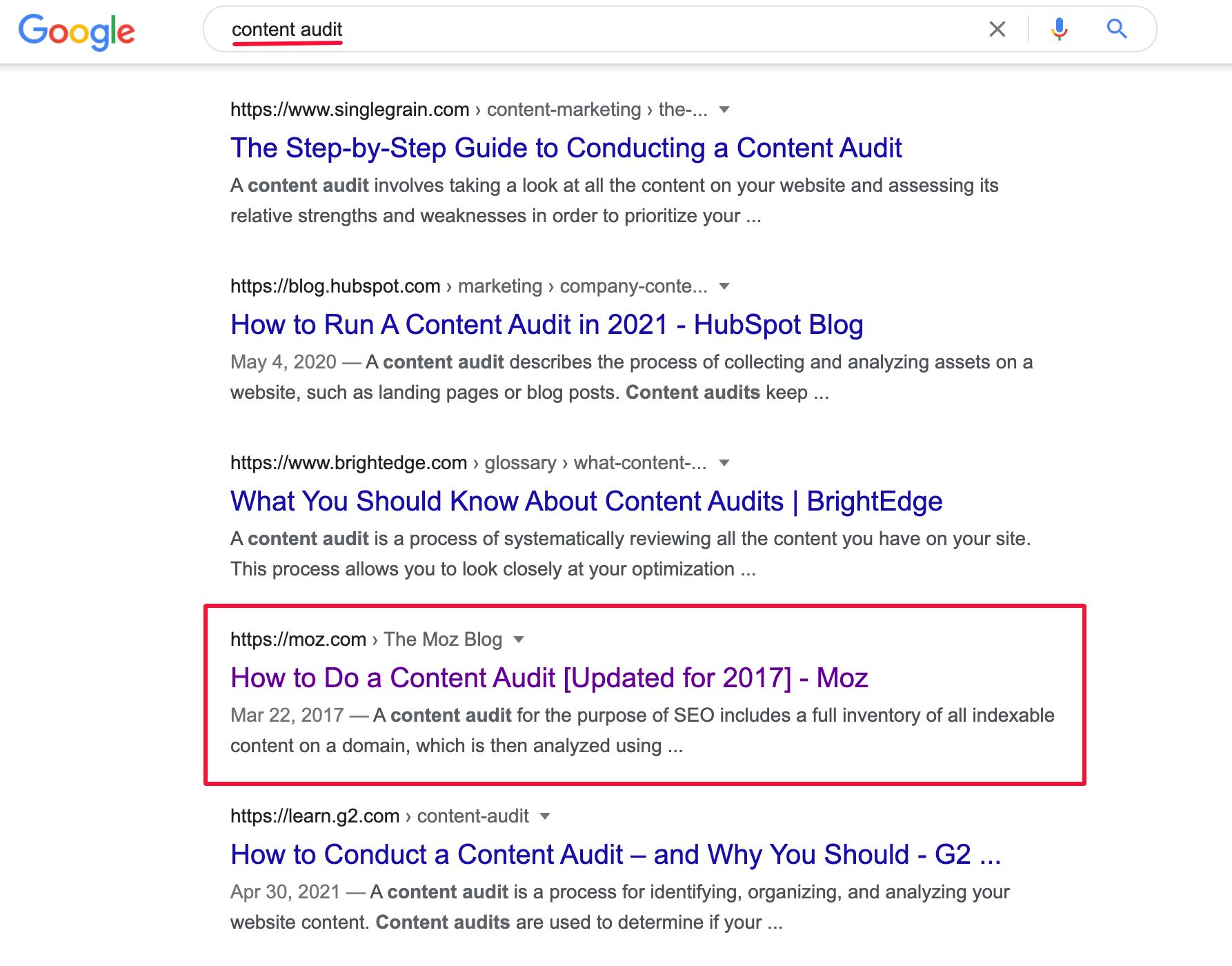
Sometimes, if a page is well written and still provides value to readers, it can rank high among updated competing pieces, as long as it targets a specific keyword where freshness isn’t a big factor.
If you want to take this factor one step further, you can update your content and add the upcoming year in the title tag and meta description, but it doesn’t necessarily mean it’ll rank higher.
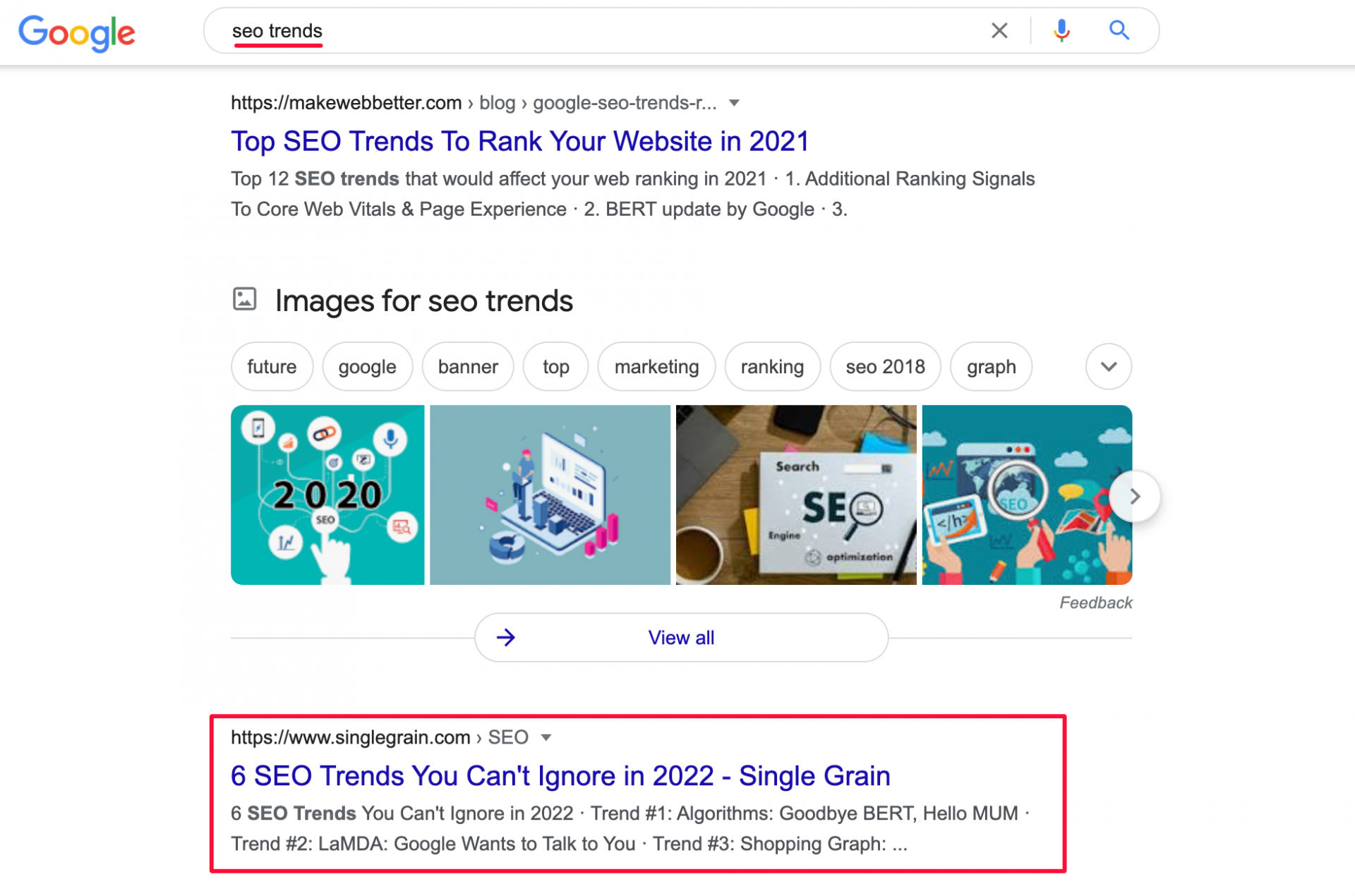
Let’s move on to the last ranking factor we’ve got for you.
Factor #6: User experience signals
One of the more recent ranking factors that appeared is that of user experience, which we briefly discussed earlier.
Especially since Core Web Vitals were introduced by Google, websites have been paying more attention to how user-friendly their pages are.
User experience includes a wide set of factors such as the page speed on both desktop and mobile devices, how mobile-friendly the page is in general, readability levels, and much more.
Note: If you are unsure how your website fairs, we recommend conducting a technical SEO audit to identify and fix the technical issues that could be causing your users to have a bad experience on your site.
Generally speaking, Google ranks content pieces with a positive user experience higher than those with a bad one.
Signs that your web page might have a bad user experience are low conversion rates, high bounce rates, and not being able to achieve higher Google ranks for a targeted term.
These are metrics you can access through Google Analytics or even a WordPress plugin if that’s your CMS of choice.
You can learn more about how to get your website ranked higher on Google with the help of Google Search Central – formerly Google Webmasters – which offers a wide variety of guides and tutorials, even for local businesses through the use of Google My Business and local search optimization.
Let’s have a look at an example of a content piece with a good user experience, by creative merchandise company PRG.
Example: PRG
By reading PRG’s blog post on swag bag ideas, you can get an idea of what to look out for when writing a great piece of content.

First of all, the table of contents allows readers to navigate easily to each swag bag idea without having to scroll up and down trying to find the one they want.
This is a big contributor to a positive user experience.
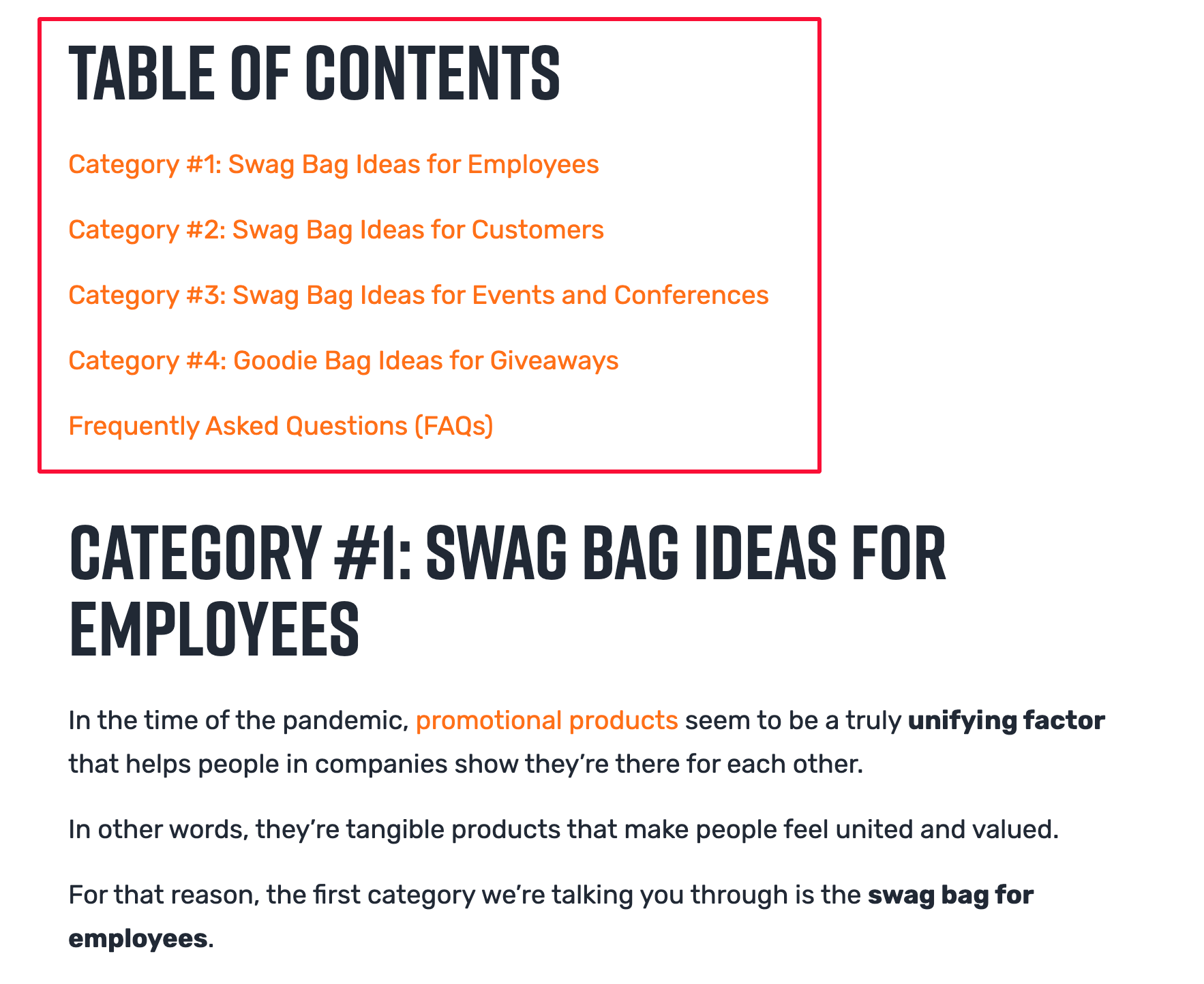
Another element worth talking about is the right use of multimedia; each category has an image dedicated to it in order for users to visually understand what the swag bag might look like.

Images also help in breaking up the text, making the content easier to go through and not overwhelming.
Of course, the faster images load the better; site speed can be important for Google.
Something else worth looking at is the use of short sentences and paragraphs; this is because large walls of text can be tiring and unappealing to read, looking overwhelming at a first glance.
At the end of the piece, there’s a list of FAQs for users to get answers to potential frequently asked questions they might have.
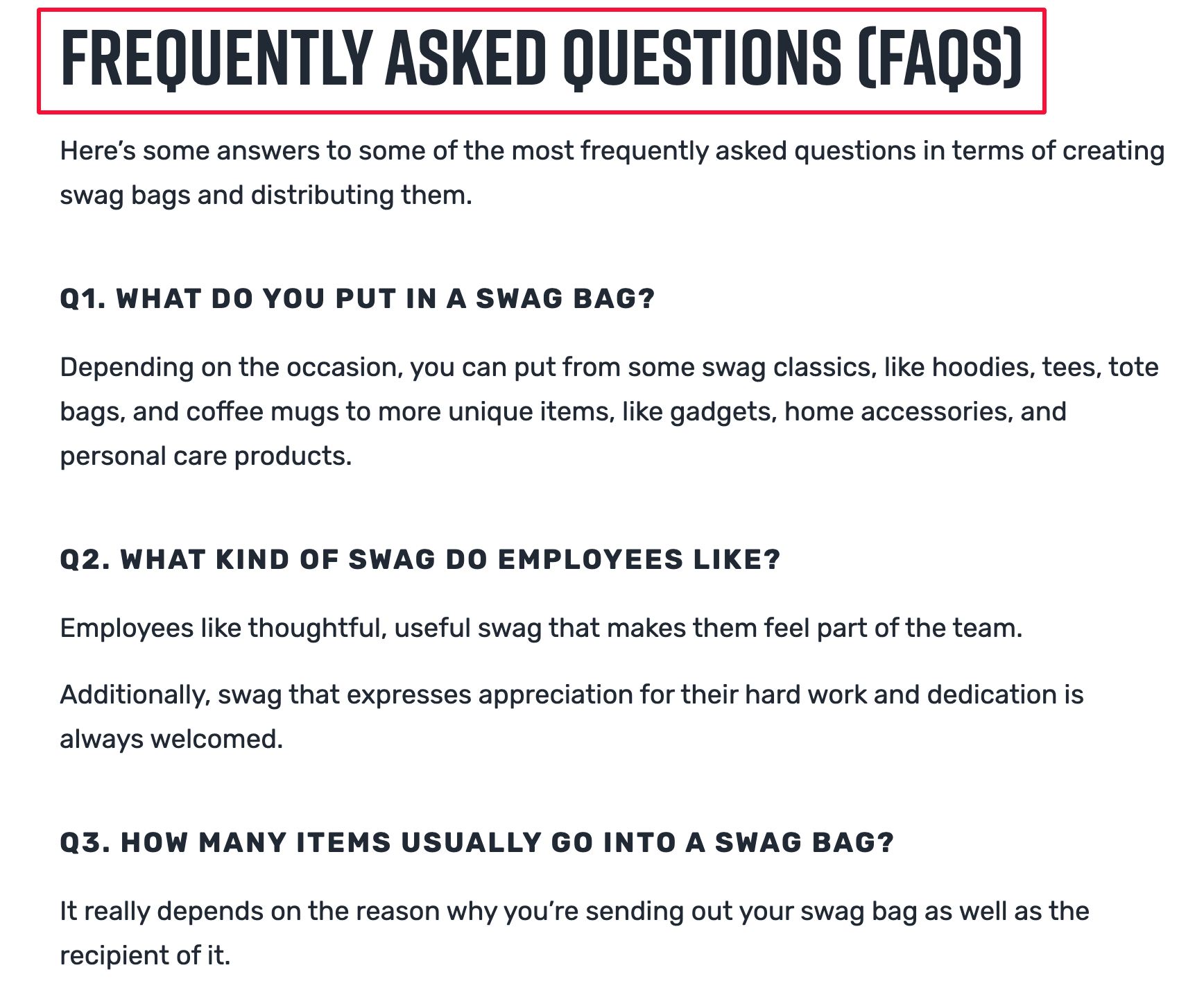
Pretty useful, right?
All in all, each of the points above contributes to a positive user experience that makes the content enjoyable to read, helping users stay on the page longer.
The last thing you want is for your readers to visit your page and exit straight away; Google takes this as a sign that your content shouldn’t be ranked high because it doesn’t offer what searchers want.
Now, let’s move on to the last section of our guide.
How to Get Links That Help You Rank Higher in Google AND Answer Engines
If you want to rank higher on Google search consistently, you need backlinks.
That part of Google’s algorithm has not really changed much over the years.
What has changed is that the same pages helping websites rank in Google search results are now also heavily influencing AI-generated recommendations inside ChatGPT, Gemini, Perplexity, and Google AI Overviews.
Especially listicles and roundup articles like this:
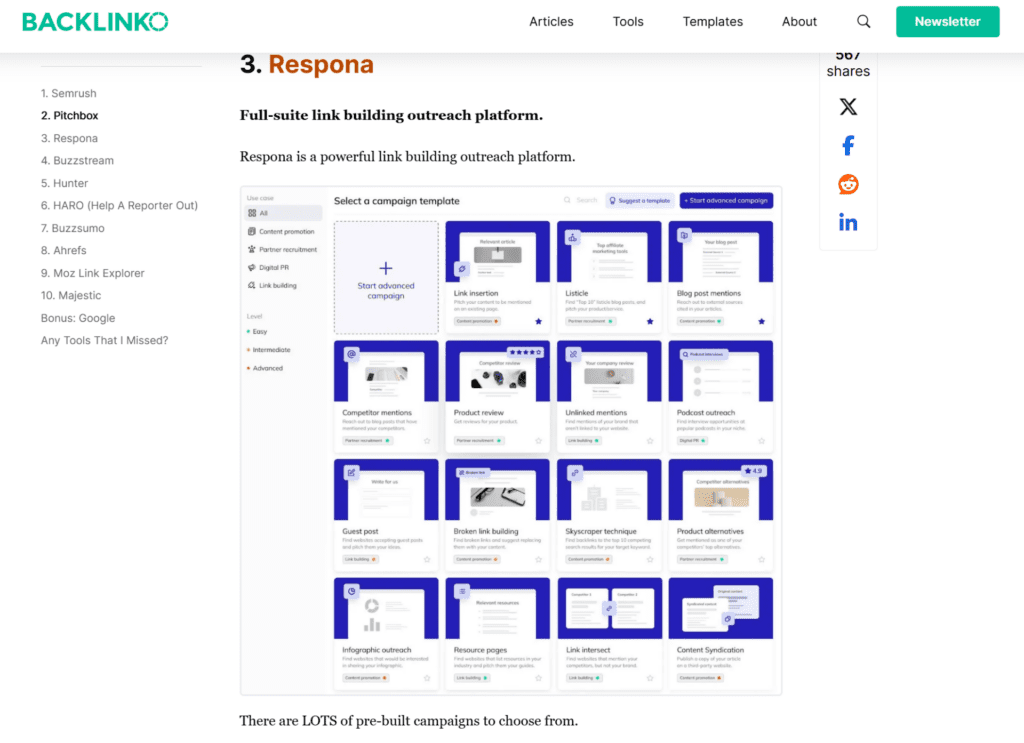
If someone searches for the best SEO tools, CRMs, outreach software, or local SEO platforms, answer engines usually pull recommendations from articles already ranking highly in search engines.
So one quality backlink on the right page now does a lot more than just improve rankings.
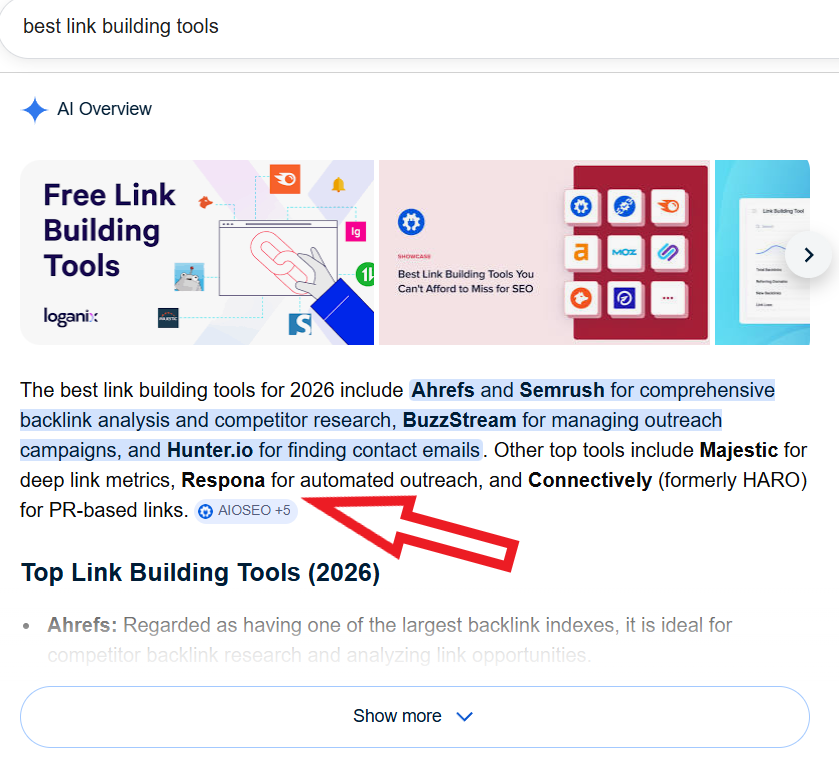
It can:
- Improve organic ranking signals
- Drive targeted commercial traffic
- Increase AI visibility and AI citations
The difficult part is getting those placements consistently.
Finding reputable websites, identifying opportunities, sending outreach, following up, building relationships, and managing campaigns manually takes a huge amount of time once you start scaling SEO efforts.
At Respona, the process is built around handling that entire side for you.
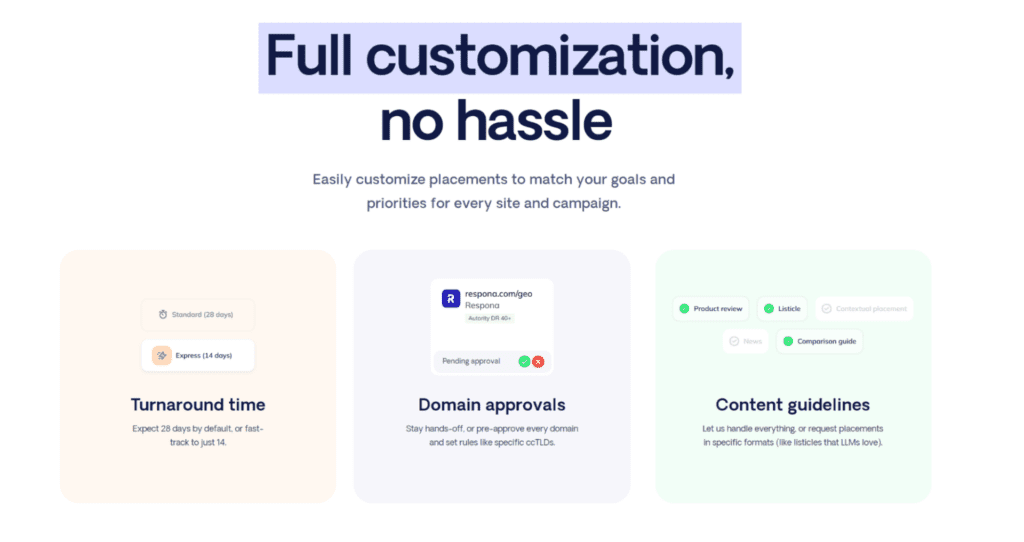
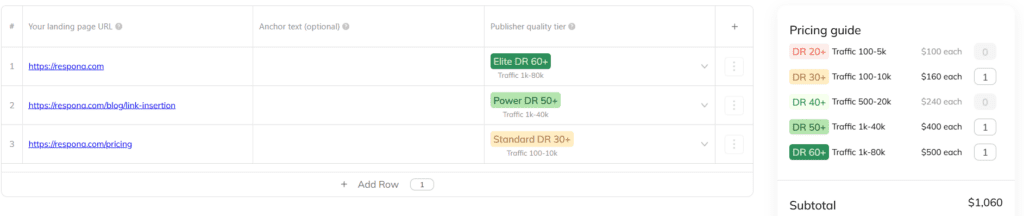
You start by placing an order with the pages you want to rank, your target keywords, anchor text preferences, niche requirements, and any placement guidelines you want the team to follow.
Then the Campaigns feature helps identify articles already ranking well in Google search and already getting cited by AI systems for those same queries.
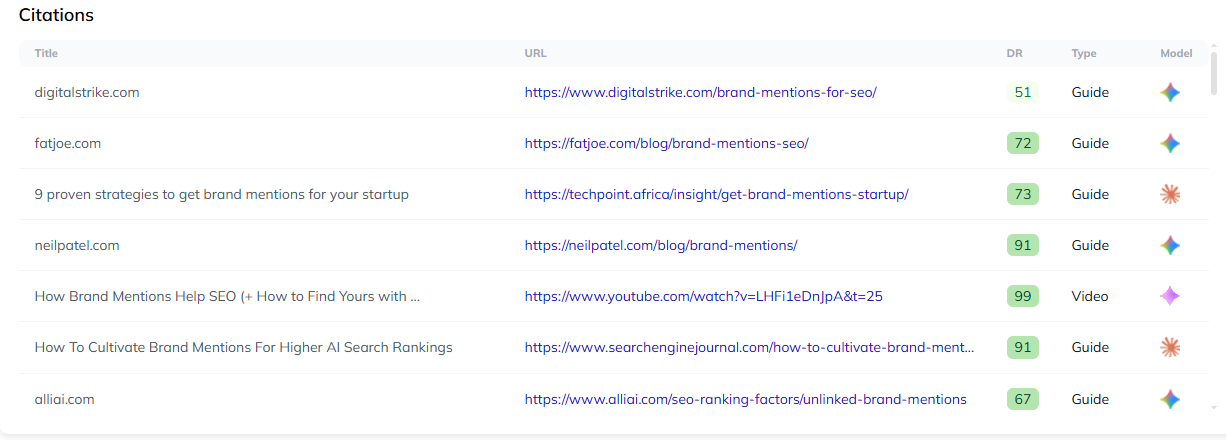
From there, you can review and approve the opportunities you actually want placements from, while the team handles the outreach, negotiations, relationship building, follow-ups, and placement acquisition process for you.
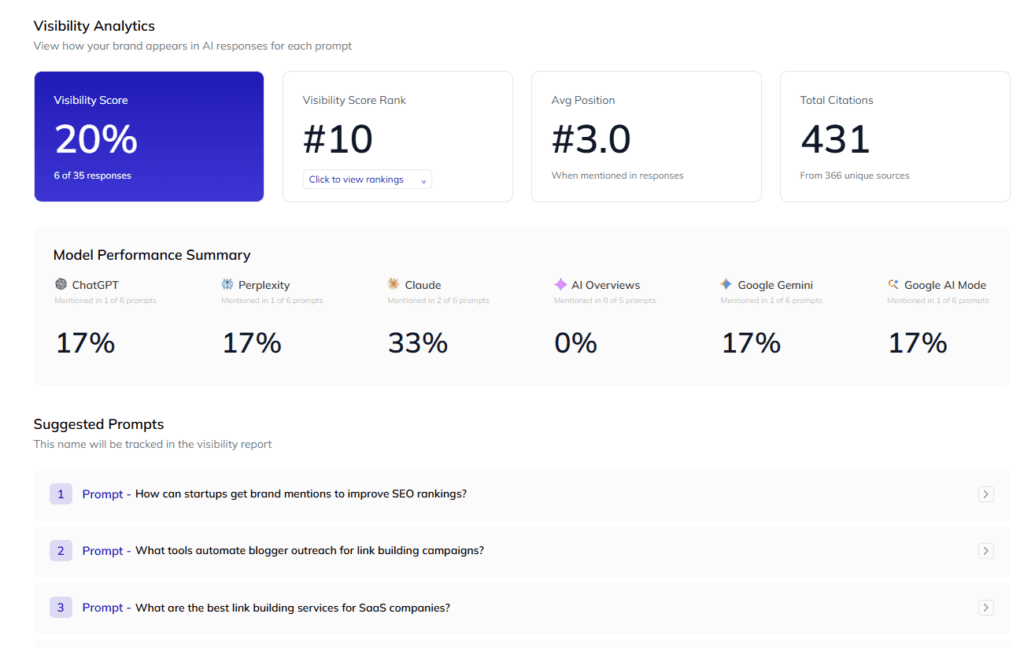
You can also track how your AI visibility changes over time for those queries directly inside the platform.
Since it’s pay-per-result, it works whether you need a few placements for one web page or ongoing link building campaigns across dozens of target keywords.
Link building cheat sheet
Now Over to You
There you have it!
Ranking higher on Google search is usually a combination of good keyword research, strong search intent alignment, technical SEO, quality content, and backlinks from reputable websites.
And while Google’s algorithm continues evolving, authority signals still matter a lot for both traditional search engines and AI-driven search experiences.
If you want help building the kind of links that improve both rankings and AI visibility, you can simply place an order and let Respona handle the outreach, placements, and relationship building for you.
Frequently Asked Questions (FAQ)
How do I rank higher on Google search?
To rank higher on Google search, you usually need strong keyword research, high-quality content, technical SEO optimization, and backlinks from authoritative websites.
How important is link building for Google ranking?
Link building is still one of the strongest ranking factors in Google’s algorithm because backlinks help search engines evaluate authority and trust.
What is the difference between backlinks and referring domains?
Backlinks are individual links pointing to a web page, while referring domains are the unique websites linking back to you.
Does local SEO help businesses rank higher?
Yes. Local SEO helps businesses improve visibility in local search results, Google Maps, and Google Business Profile listings.
What is Google Search Console used for?
Google Search Console helps website owners monitor search performance, indexing, technical SEO issues, keyword visibility, and search result impressions.
Do Core Web Vitals affect rankings?
Yes. Core Web Vitals are part of Google’s page experience signals and can influence rankings and user experience performance.
What is keyword stuffing?
Keyword stuffing is the practice of overusing a target keyword unnaturally inside content, title tags, or meta tags in an attempt to manipulate rankings.
How do I find the right keywords to target?
Most SEO strategies start with keyword research using tools like Google Keyword Planner, Ahrefs, or rank tracker platforms to identify relevant search demand.
Can backlinks help with AI search visibility too?
Yes. Pages already ranking well in Google search results are often referenced by AI systems, so quality backlinks can improve both rankings and AI visibility.
What is a quality backlink?
A quality backlink usually comes from a relevant, trustworthy website with strong authority and real organic traffic.
Do Google reviews affect local ranking?
Yes. Google reviews and overall business profile activity can influence local ranking performance inside Google Maps and local search results.
What does Google PageSpeed Insights measure?
Google PageSpeed Insights measures web page performance, loading speed, Core Web Vitals, and user experience metrics for desktop and mobile devices.