
So, you’re a blogger or influencer and you want to start monetizing your audience.
Creating a brand pitch email template is one of the most important steps for any influencer, creator, or content creator who wants to turn their audience into real business opportunities.
A strong email template helps you approach the right brand with confidence and makes pitching feel far more strategic.
The question is: Where do you get started?
You should start by creating a solid brand pitch email template.
In this guide, I’m going to show you how you can do just that.
We’ll be covering how to craft compelling subject lines, what you need to include in your body text, how to close your email with a powerful CTA, and five more things to include in your brand pitch email.
Let’s get started.
Key Takeaways:
- A strong brand pitch email template should make it easy for a brand to understand who you are, what value you offer, and what kind of collaboration you want.
- Your subject line, introduction, and CTA all play a major role in whether your pitch email gets opened and answered.
- A good brand pitch email should include social proof, a clear partnership idea, and a simple next step for the recipient.
- Whether you are an influencer, ugc creator, or content creator, your pitch should focus on the brand’s goals rather than only talking about yourself.
- Including a media kit, audience demographics, and past campaign results can make your brand pitch more credible.
- Thing to Include #1: Subject Line
- Thing to Include #2: Introduction
- Thing to Include #3: Body Text
- Thing to Include #4: Next Steps
- Thing to Include #5: Call to Action (CTA)
- Thing to Include #6: Closing
- Thing to Include #7: Follow-up Email(s)
- Want More Replies Without Writing Every Pitch Yourself?
- Now Over to You
- Frequently Asked Questions (FAQ)
Link building cheat sheet
Thing to Include #1: Subject Line
So, you want to pitch to a brand for a partnership.
And, you’ve decided to use cold emailing as a way to approach your target brand.
The first thing you need is a great subject line.
Of course, you don’t need me to tell you that subject lines matter when it comes to brand outreach, PR outreach, guest posting outreach, sales outreach or link building outreach.
Your subject line is one of the most important parts of a brand pitch email. If the subject line does not create curiosity or relevance, even the best pitch email may never get opened. That is why every brand pitch email template should start with a subject line that feels personal, clear, and aligned with the target brand.
The truth is, there’s a fine line between creating a compelling subject line and one that sounds spammy and will most likely trigger spam filters.
So, your outreach email should have a great subject line.
For the sake of example, in this guide, we’ll pretend that you’re a lifestyle blogger who wants to establish some business partnerships with lifestyle brands from around the world.
In addition, we’re going to assume that the brand you want to reach out to and establish a partnership with is a lifestyle brand—a startup that creates fine organic foods.
A good starting place for a subject line for this purpose would be something like:
first_name, need help with your products?
Let’s break it down a bit.
First of all, we added the first name of our prospect in our subject line.
Now, the truth is that using the name of your prospect in the subject line doesn’t quite mean that you’ve personalized it.
However, this can definitely help, as it shows that we’ve done our research.
According to a study by Backlinko, “personalized subject lines boost response rate by 30.5%.”
This is why adding the first name of the recipient in the subject line is a smart move.
Next, we included a relevant question in our subject line that at the same time leaves some things unanswered.
“Extra help with your products?”
What kind of help could this be? Help with production, materials, or promotion and marketing?
Our prospect will have to click on that email to find out.
For the subject line we’ve chosen, the spam word count is zero, so we’re good to go.
To add an “additional layer of safety” or just to make sure that your subject line is okay, you can use Refine—a subject line tester by Moosend.

All you need to know from there is to add your subject line and put it to the test by clicking on the “Predict Now!” button.

Moosend’s algorithm will then give you an estimation for an Open Rate and other useful recommendations for your campaign, based on your subject line and your industry.

Note: Refind was originally designed to help people with their email campaigns subject lines, but it can also help you with your brand email pitch subject lines.
For influencer outreach, brand outreach, and cold outreach in general, the goal of the subject line is not to sound clever for the sake of it. The goal is to earn attention and set up the rest of the pitch.
Next, we need to write a stellar introduction for your brand email pitch template.
Thing to Include #2: Introduction
According to an analysis of 12 million outreach emails by Backlinko, only 8.5% of all outreach emails get a response.

The introduction of your brand pitch email should quickly show that you are a serious creator and not just someone sending a generic sales email. Whether you are an influencer, ugc creator, or blogger, this part of the email should communicate genuine interest in the brand and the reason for reaching out.
The fact that the vast majority of emails get ignored may be justified—most emails are generic, too self-promotional or add no value whatsoever to the recipient.
Many such emails look something like this:
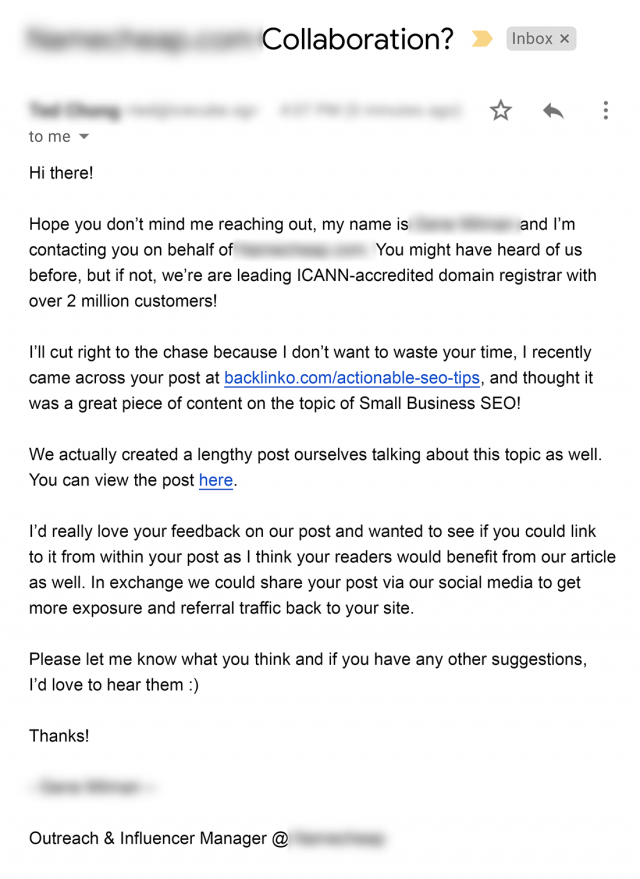
Note: This is a cold email pitching a content piece in the hopes of getting a backlink, but most brand pitch emails look much the same.
If you want to pitch to brands for a collaboration, 9 times out of 10, you’ll have the marketing manager of the company as your point of contact.
Now, there are two things you should keep in mind about marketing managers:
- They’re extremely busy people
- They know every trick in the book
This means you have to be creative, especially if you’re new to this.
I know that doing sponsored posts on Instagram isn’t enough.
However, if you want to get to the next level, you have to master brand pitching, and to do that, you need a great introduction.
So, what should you include in your introduction?
First of all, you have to understand that you’re pitching to a potential business partner.
A good pitch template should also show that you understand the target brand’s audience, positioning, or pain point. This makes the pitch feel more like a potential partnership and less like a one-sided request.
This means that even if you’re a solopreneur, you have to demonstrate that you’re not just another influencer who’s doing sponsored posts and giveaways to make money.
After the subject line, the introduction is the first thing your prospect will see.
My name is [Your Name] and I’m helping brands like [A], [B] and [C] sell more products online.
Right away, you explain what is that you do and what companies are already trusting and working with you.
Keep in mind that those companies have to be relevant to what your prospect does—and if they’re already big, established companies, even better.
By explaining what you do and what companies you’re working with, you get your prospect’s attention.
Adding a captivating introduction is therefore essential to getting your brand pitch email read.
There are no rules as to how you should craft your introduction.
Just to try to be genuine and give your prospect a reason to continue reading.
Thing to Include #3: Body Text
The body text is the thing that comes right after the greeting in our writing process.
The body of your pitch email is where you prove value.
This is the part of your brand pitch email template where you can include social proof, audience demographics, engagement rate, relevant followers, and examples of previous brand collaboration work.
So, what makes a good body text?
According to the same study by Backlinko I mentioned earlier, a personalized body text can make or break your brand pitch email.
In fact, according to the study’s findings:
“Emails with personalized message bodies have a 32.7% better response rate than those that don’t personalize their messages.”
Even though personalization is something that I’ll cover later on in this guide, for now, you should keep in mind that your body text needs to be highly relevant and well-researched.
Something things you can include—assuming you’re a lifestyle blogger who’s reaching out to lifestyle brands—are:
- Examples of other companies you’ve worked with
- Other influencer marketing campaigns you’ve run in the past
- Stats that indicate the value of your posts (e.g. engagement rate, monthly visits)
Every marketing pitch should include at least one of the above elements.
Now, this may be a bit difficult if you’re a new influencer, since you don’t have as much experience to draw from or a client portfolio to showcase, but still you have to demonstrate some kind of value.
If you do not have a long portfolio yet, you can still make your pitch stronger by highlighting your content quality, niche relevance, and the type of audience you have built across your website and social media.
I’m blogging for over [Years] and have a website that gets over [Visits] monthly visits.
For example, mentioning your followers, monthly visits, and audience demographics can help the brand understand whether your target audience is a fit for their campaign goals.
Mentioning the number of years you’ve been blogging gives you extra credibility and makes someone want to work with you.
Meanwhile, mentioning the number of visits your website gets gives your prospect an idea of the size of your audience.
Next, we’re describing how we found our prospect in the first place.
I heard about {organization} from [Conference or Event], checked your Instagram and Facebook and really liked your products.
Conferences and events are important for lifestyle brands.
Thus, mentioning an event that you know your prospect knows (and most likely has attended in the past) is a smart thing to do.
Then, we mention that we’ve done our research about the company, checked their website, Instagram, Twitter, Facebook, LinkedIn, or anything else that makes sense and is relevant.
Be careful though: mention only those things that do indeed make sense and are truly relevant to what your prospect’s business does.
For instance, you can’t mention LinkedIn if the company itself doesn’t have a LinkedIn company profile—that would make them understand that you haven’t actually properly checked their social media outlets.
Next, we’re asking a question that shows exactly what our intentions are with this email.
Would you be interested in discussing a collaboration between us?
It’s only natural that our prospect would like to know the reason we’re reaching out to them.
Thus, after earning some credibility by mentioning all the important things we’ve covered so far, it’s time to explain what we want to achieve through this pitch.
My advice here is this: Try to be as genuine and straightforward as you possibly can.
Be honest about why you’re reaching out and what you want.
Your prospect will appreciate that.
Thing to Include #4: Next Steps
What are the next steps? What do you want your prospect to do right after reading your email?
Keep in mind that—like with the CTA of your email—the next steps have to be crystal clear.
In a strong brand pitch email template, next steps should feel simple and low-friction. The easier it is for the brand to understand the collaboration process, the more likely they are to respond positively to your pitch.
This means that your prospect has to know exactly what to expect if they’re actually interested in working with you.
Here, you have to take the lead and let your prospect know more about the process of working with you.
For example, your process may include that the company will send you a free sample for testing, and once you see how the product actually works, you can start promoting it.
These next steps are (once again) part of your email’s body text.
The next steps in our example are as clear as they can possibly be.
Here’s how it (usually) works:
- You send me some samples of your products,
- I see what I like most about them and if they could be a fit for my audience,
- We decide on the ways we’re going to promote them (e.g., sponsored post, Instagram giveaway).
Since we’re talking about next steps, it’s recommended that you use a numbered list in order to make the process crystal clear for your prospect.
Tip: Here, it is recommended that you also add a link to your media kit or a page that explains how you form partnerships.
Your media kit is one of the most important assets you can include here. A good media kit can showcase your audience demographics, engagement rate, previous brand partnership examples, and the types of content you create. You may also want to include a pitch deck if your collaborations are larger or more structured.
Trust me when I say that most prospects want to be told exactly what they need to do next.
Thus, adding the next steps they should follow in case they’re interested is a wise thing to do.
Just as importantly, mentioning this process will make your prospect think that this is something you’ve done plenty of times in the past.
This will help them trust you more and instantly think that they can do business with you.
Let’s move to the next element you need to include in your brand pitch email template.
Thing to Include #5: Call to Action (CTA)
Every pitch email needs a clear call to action. In many ways, the CTA is what separates a casual email from a true brand pitch. Without it, the brand may like your message but still not know what to do next.
What can this CTA be?
Here are some options:
- A simple question that your prospect is called to reply to
- A link to your calendar so that the prospect can book a call with you
- A link to your website or portfolio to let your prospect learn more about you
The problem is that when most people pitch to brands, they’re afraid to take the lead and add a strong CTA.
Alternatively, they include a CTA that’s too sales-y.
Another thing to keep in mind is that pitching via email isn’t the same as pitching over social media (e.g. sending an Instagram DM).
Unfortunately, with email, you miss the benefit of instant replies.
This means that if your CTA is weak, your prospect may not bother replying at all, or may simply forget to get back to you.
A strong CTA is especially important when pitching for a brand deal, influencer collaboration, or long-term partnership because it guides the conversation toward a real business outcome.
So, let’s craft a good CTA for you to pitch to the lifestyle brands you’re trying to reach out to.

The CTA that we’ve chosen—the action we want our prospect to take next—is to book a meeting on our calendar.
It’s essential that they book a meeting instead of us booking it for them because it changes the dynamics of the relationship completely.
When it is “them” (the prospect) that books a meeting, it is we who have the lead and present ourselves as a solution to their problems.
Last but certainly not least, prompting our prospect to book a meeting “this week” limits the options the prospect has and increases our chances of getting a reply (either positive or negative).
For example, our prospect could reply here:
I’m interested but I can’t do it this week because I’ll be on a business trip. Can we try next week?
Making the time window in which the CTA can be answered gives us an obvious edge.
Of course, we don’t want to make that window too short (e.g. “book a meeting within the next 2 days, or…”), as this will sound sales-y and spammy.
Next, let’s close this email in the proper manner.
Thing to Include #6: Closing
At this point, you need to close your brand pitch email.
Closing your pitch email can be as simple as wishing your prospect a great day, week or weekend ahead, depending on when you send the email.
A professional closing helps reinforce trust and keeps your brand pitch email feeling polished. Even a short closing line can support the tone of the email and make your outreach feel more thoughtful.
You don’t need to reinvent the wheel here, something as simple as this works just fine:
Waiting to talk to you!
Remember: As always, you have to be genuine and honest.
People can sense dishonesty, and you don’t want your P.S. note to break your pitch.
For some added credibility, consider closing your emails with a professional email signature. Having one will add to your trustworthiness and your memorability. The Wisestamp signature generator is a great free option that is super easy to use and set up.
Let’s move on to the final element that you need to include in your pitch.
Thing to Include #7: Follow-up Email(s)
In one of my recent posts, I explained how to create follow-up emails that your prospects can’t ignore.
A common question among many cold email practitioners is:
Should I follow up?
The short answer is yes.
Following up is a key part of email outreach, especially for cold email campaigns. Many brand pitch emails are ignored simply because the recipient is busy, not because the opportunity is a bad fit.
However, it depends on how exactly you do it.
Following up to your previous emails can have a significant impact on your campaign’s overall success.
Relevant studies indicate that “email sequences with multiple attempts and multiple contacts boost response rates by 160%.”
For influencer outreach and brand outreach, a follow-up email can keep your pitch visible without making your messaging feel pushy. This is one of the most practical best practices in any outreach email strategy.
Thus, following up is essential.
Of course, it’s one thing sending 1-2 follow-up emails, and another to be intrusive and annoying.
Want More Replies Without Writing Every Pitch Yourself?
Even with a strong brand pitch email template, most people hit the same wall.
Finding the right contacts, personalizing every email, following up consistently, and managing replies takes time. A lot of time.
That’s why most outreach campaigns fall apart before they get real results.
Our done-for-you link building handles this entire process for you.
We:
- find the right prospects and decision-makers
- personalize every pitch based on their content and brand
- manage follow-ups automatically
- and secure placements on real websites
So instead of sending hundreds of emails and hoping for replies, you get actual results.
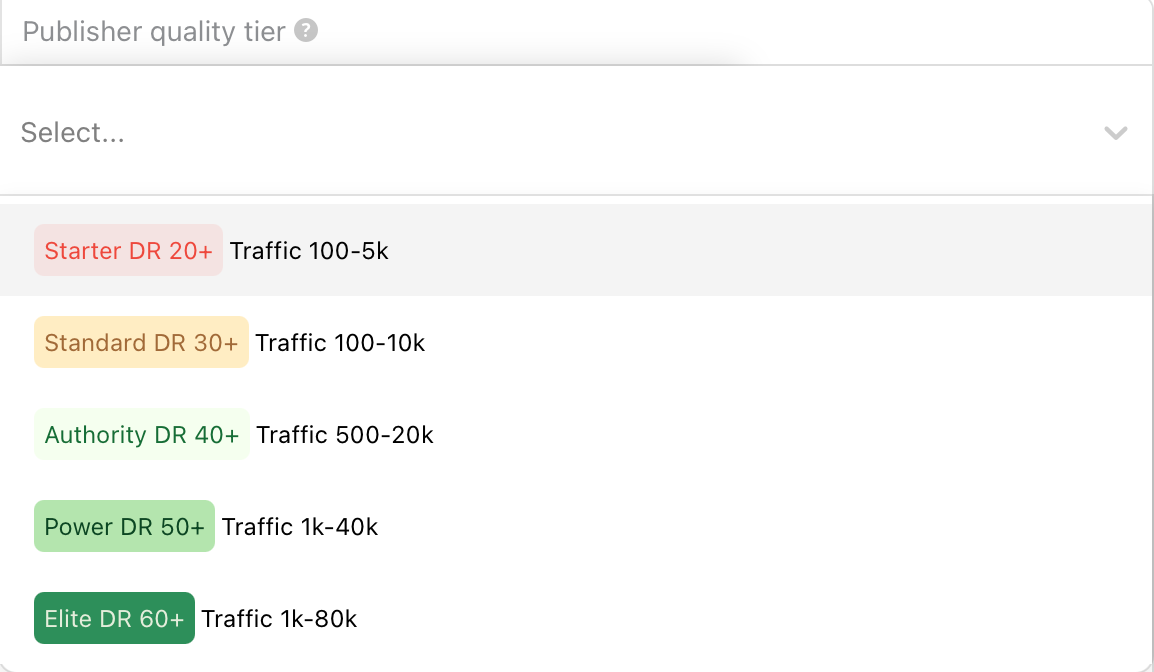
All you have to do is place your order along with quality tier and other guidelines, and we’ll handle the rest.
And those placements do more than just give you backlinks.
They improve your AI visibility.
A lot of AI tools now pull from third-party content when generating answers. If your brand keeps showing up across relevant articles, listicles, and collaborations, you’re much more likely to be mentioned in those responses.
We’ve also built our Campaigns feature to track this.
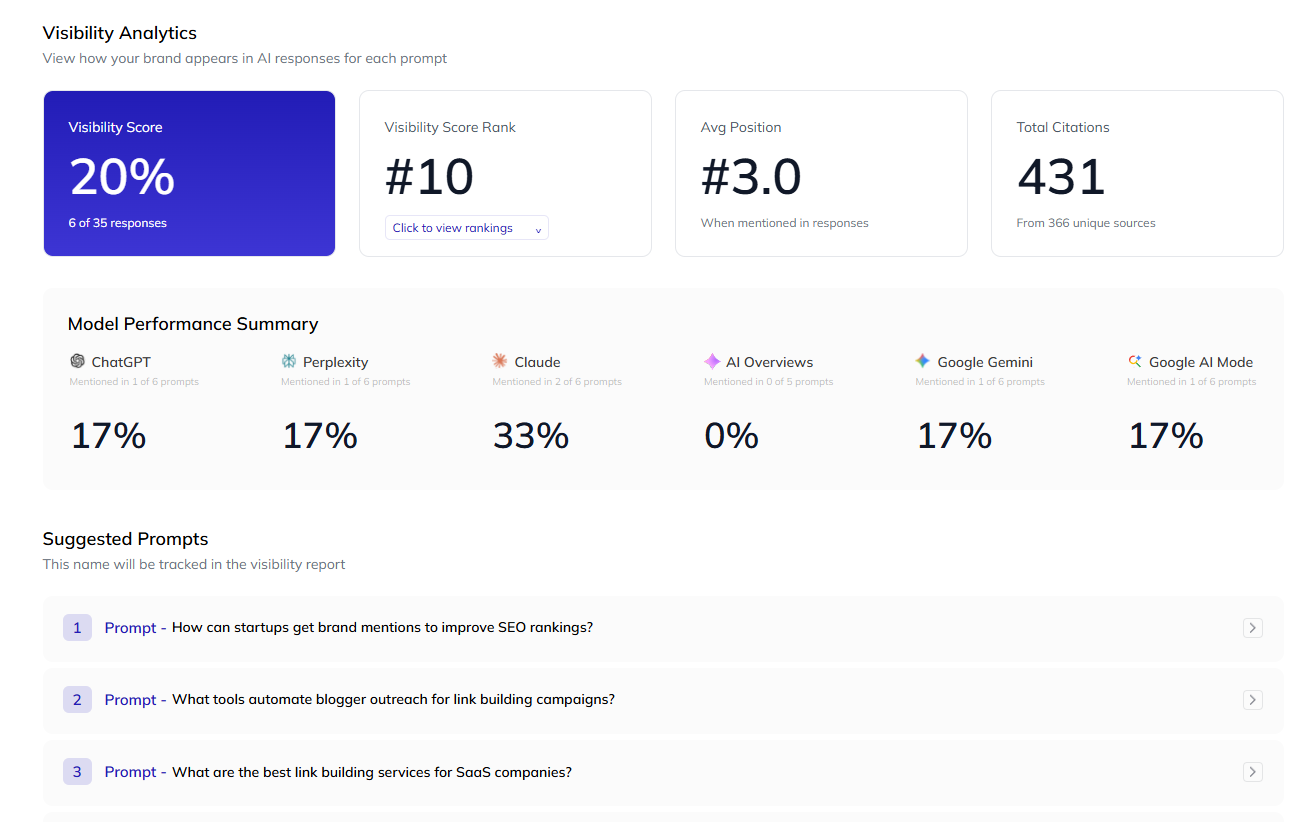
It monitors your visibility across major AI platforms for the prompts that matter to your niche, then shows you which sources are getting cited and where you should be getting placements.
So you’re not guessing who to pitch or where to show up. You’re working off real data.
Link building cheat sheet
Now Over to You
Building a strong brand pitch email template takes more than just writing a nice message. You need the right subject line, relevant content, a clear pitch, and a follow-up process that gives your email the best chance of getting a reply.
Whether you are an influencer, creator, or blogger, pitching successfully comes down to showing value, building trust, and making it easy for the brand to say yes to a collaboration.
The same principle applies to link building outreach.
If you want to earn backlinks from relevant websites, publications, and partners, you need the right outreach strategy, the right messaging, and the right follow-up system in place.
If you would rather skip the manual outreach and let experts handle the process for you, our team can help.
Our done-for-you link building helps brands earn high-quality backlinks through personalized outreach, relationship building, and strategic content promotion. That way, you can grow your visibility and authority without having to manage every pitch yourself.
Frequently Asked Questions (FAQ)
What is a brand pitch email template?
A brand pitch email template is a reusable email structure that helps an influencer, creator, or blogger reach out to a brand for a potential collaboration, partnership, or brand deal. It usually includes a subject line, introduction, proof of value, CTA, and follow-up sequence.
What should a brand pitch email include?
A strong brand pitch email should include a clear subject line, a short introduction, relevant social proof, details about your audience or content, a media kit, and a simple call to action. The goal is to make it easy for the brand to understand the opportunity.
How do you pitch a brand as an influencer?
To pitch a brand as an influencer, start by researching the target brand, identifying the right contact, and writing a personalized pitch email. Focus on the value you can bring through your content, audience, and platform rather than only asking for free products.
Should I include a media kit in my pitch email?
Yes, including a media kit is a smart move. A media kit can give the brand a clearer picture of your followers, engagement rate, audience demographics, and past collaborations, which makes your pitch more credible.
How many follow-ups should I send after a brand pitch email?
In most cases, one or two follow-ups are enough. If a brand does not respond after that, continuing to send emails may hurt your chances rather than improve them.