
A strong backlink profile doesn’t appear out of nowhere.
It takes years of link building, content marketing, and, of course backlink management to build a link profile that actually helps you rank.
If you want to learn how to manage your backlinks effectively, the goal is not just to collect more links. It is to maintain a backlink profile that supports search engine visibility, organic traffic, and long-term SEO growth.
In this article, we’ll teach you how to manage your backlinks in 10 simple steps.
Key Takeaways:
- The most important things to monitor are referring domains, anchor text, link quality, link velocity, and lost links.
- Backlink monitoring is not just about counting links. It is about understanding which backlinks actually support search engine ranking and organic traffic.
- A healthy backlink profile includes a mix of quality backlinks, a natural anchor text distribution, and steady growth from relevant websites.
- Why is Backlink Management Important?
- 1. Check Referring Page Traffic
- 2. Check Dofollow vs Nofollow Link Ratio
- 3. Check Link Velocity
- 4. Check Referring Domains
- 5. Identify Backlink Gaps
- 6. Check Anchor Text Distribution
- 7. Reclaim Lost Backlinks
- 8. Claim Unlinked Mentions
- 9. Disavow Toxic Links (Only If Your Site Was Penalized)
- 10. Build New Links
- Now Over to You
- Frequently Asked Questions (FAQ)

Link building cheat sheet
Why is Backlink Management Important?
Backlink management is the process of building, monitoring, analyzing, and maintaining the backlinks to your website.
Backlinks are links from other websites to yours.
Backlink management matters because your backlink profile changes constantly. Links are gained, lost, updated, redirected, or removed all the time, which means a hands-off approach rarely works for long.
They are a crucial factor in search engine optimization (SEO).
High quality backlinks pass what is known as PageRank, or “link juice” – which is a core part of Google’s algorithm.
More link juice = better rankings for your pages on search engine results pages.
Link management is important because it helps you grow and maintain a quality backlink profile, which in turn will help you rank higher in Google.
Effective backlink management also helps you separate quality backlinks from toxic backlinks, weak links, and links that no longer contribute real value.
Without a strategic approach to your link building process, you’re unlikely to make a difference on your ranking.
There are many tools available for backlink monitoring and management, namely Ahrefs, Semrush, and Moz.
We use Ahrefs, so that’s what we’re going to focus on in our examples.
In no specific order, let’s walk through the 10 steps of managing your backlinks.
1. Check Referring Page Traffic
Besides PageRank, backlinks pass on another vital element of SEO – and that is referral traffic.
This is one of the easiest ways to judge whether a backlink has value beyond SEO signals. A good backlink can send referral traffic and help convert relevant visitors, not just pass authority.
Logically, inbound links from pages that generate a lot of traffic are more valuable, because they can pass more of it to your website.
Referral traffic is also oftentimes much more targeted and has a higher chance of yielding conversions than organic traffic coming from Google.
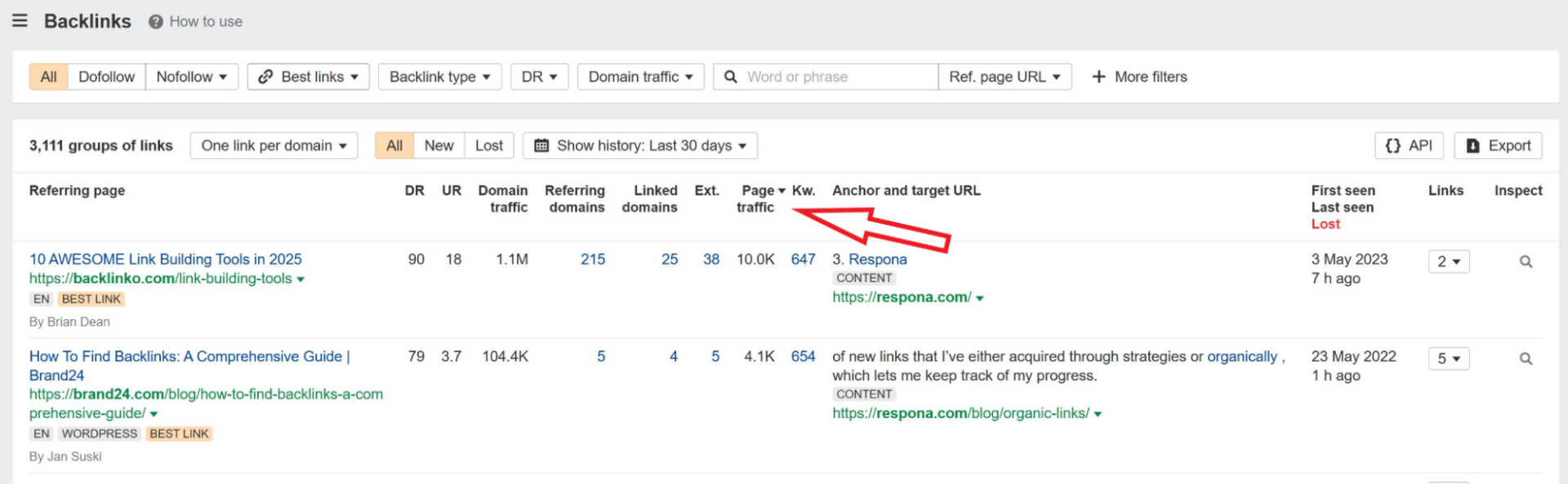
To see how much traffic any referring page gets, go to your backlink report and look for the “Page Traffic” column.
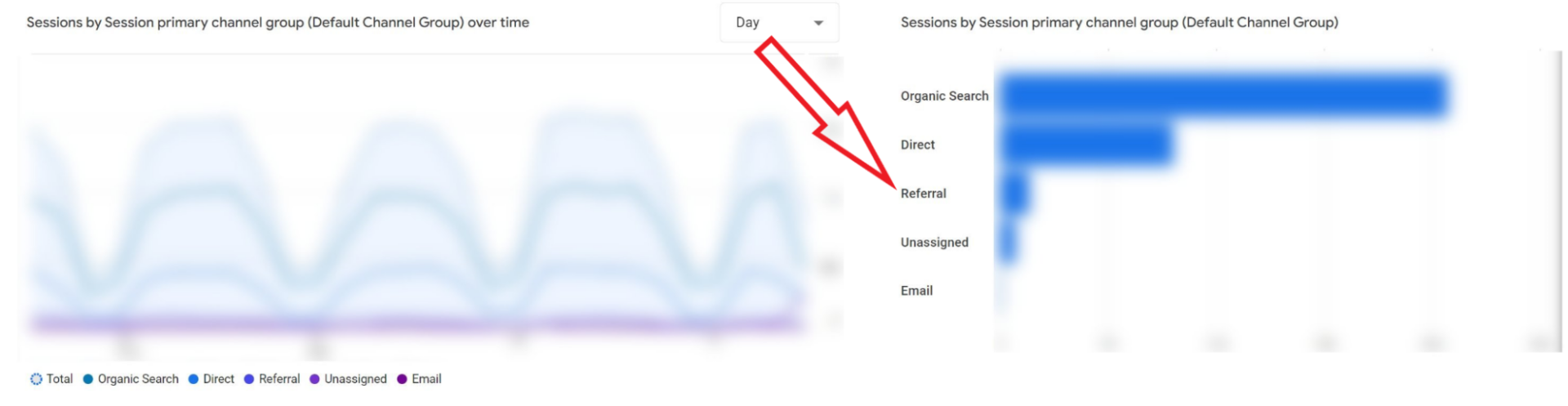
To check how much traffic you’re getting from your backlinks, you’ll need the help of Google Analytics.
2. Check Dofollow vs Nofollow Link Ratio
Dofollow links pass on link juice, nofollow ones do not.
So, for search engine ranking purposes, dofollow links should be a priority.
But that doesn’t mean that nofollow links are useless – they still direct valuable traffic to your website.
A healthy backlink profile consists of both – at a roughly 3:1 ratio, with the majority of your incoming links being dofollow.
However, when looking at your backlink report, you should look at followed vs nofollowed domains rather than backlinks themselves.
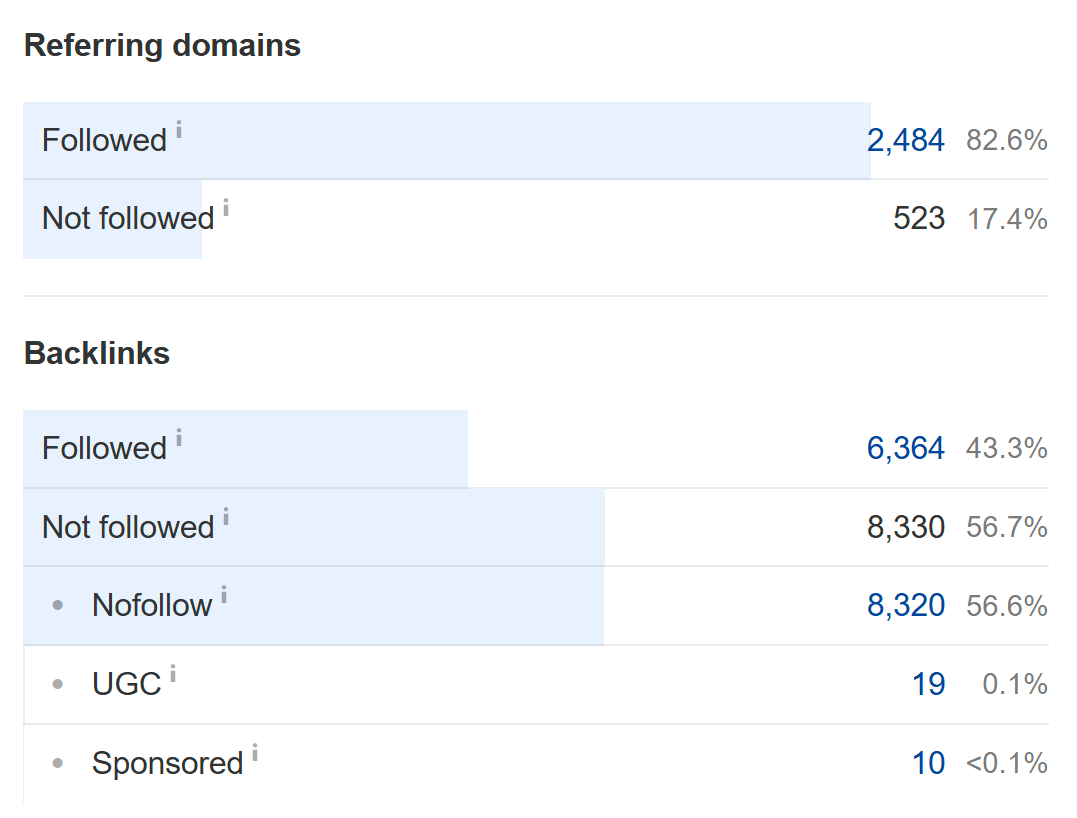
This is because the total number of links includes ones from low-quality websites, social media, automated listings, and so on – which come and go every day.
These don’t count as “real” backlinks – but they don’t hurt your SEO either
This is why backlink management should focus on domain-level quality and relevance rather than obsessing over every individual link type.
3. Check Link Velocity
Link velocity is the rate at which you’re obtaining – or losing – backlink
Tracking link velocity is a core part of backlink monitoring because it helps you understand whether your backlink profile is growing in a healthy way. Steady growth usually looks more natural than sudden spikes followed by steep drops.s.
Of course, you want to always maintain a steady, positive link velocity.
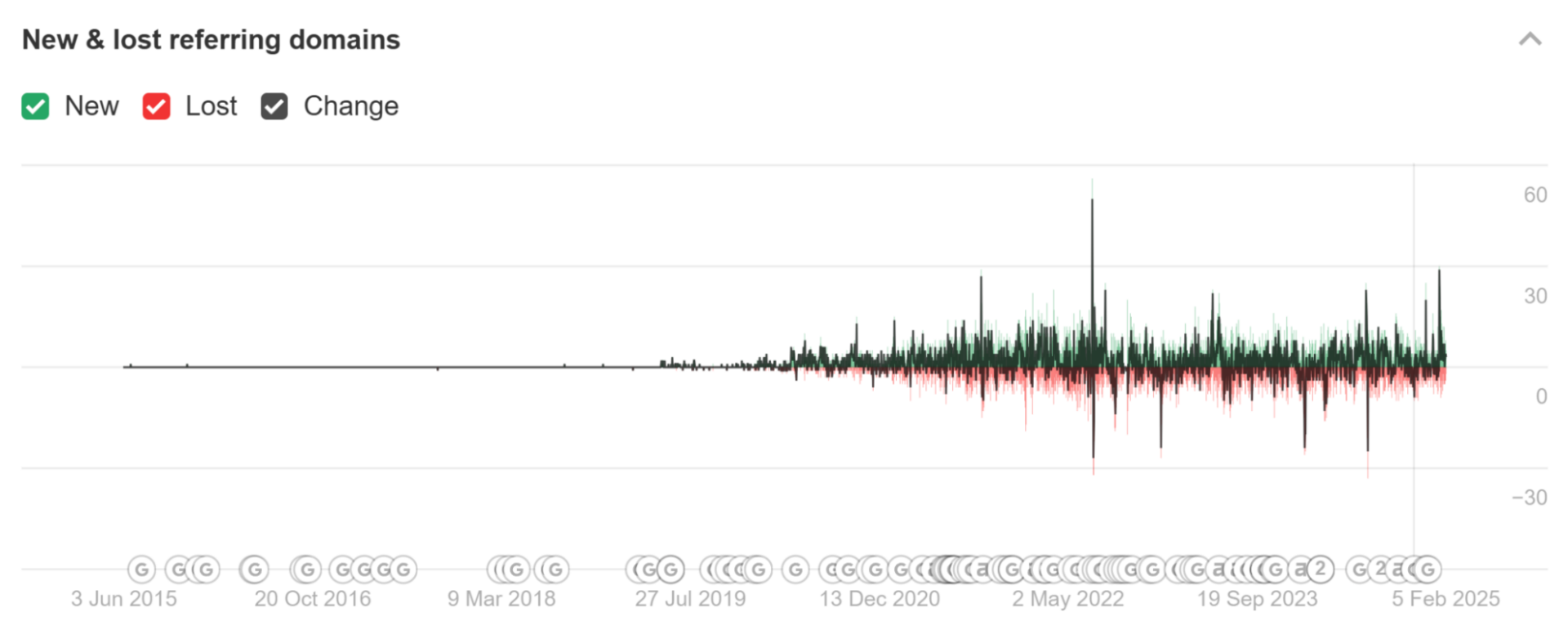
If you’re losing more links than you’re earning, you either have to step up your backlink building game, or check with your partner website in case they are removing your links.
If you notice a sharp decline, check whether you lost high-value referring domains, whether recent campaigns slowed down, or whether a lost backlink needs to be reclaimed.
4. Check Referring Domains
Referring domains are even more important than individual backlinks.
This is because having, for example, one link from 10 different domains is much more valuable than having 10 links from the same one.
While it’s completely fine to have multiple links per referring domain, you should always prioritize getting new domains to link to you as opposed to building links from the same resources over and over.
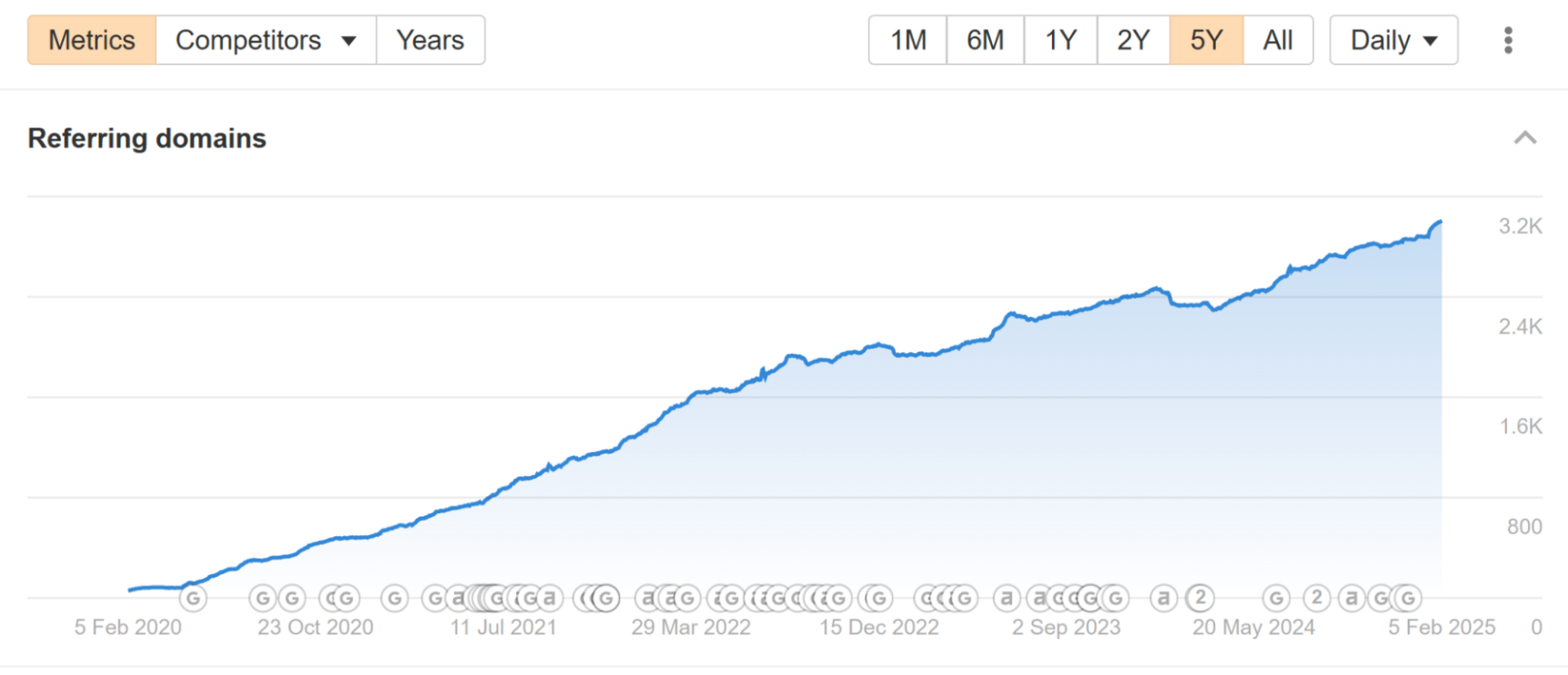
This is also one of the best places to compare your link profile against competitors and spot whether your backlink strategy is producing enough diversity.
5. Identify Backlink Gaps
A backlink gap happens when a website links to your competitor but not you.
Backlink gap analysis helps you find missed opportunities where competitors have already earned links from sites that could realistically link to you as well. This is one of the most practical backlink management habits because it turns competitor data into action.
You always want to find and eliminate these gaps to even the playing field between you and the competition.
Especially if you’re offering very similar products and have the same kinds of content that perform similarly in search.
If they have more unique referring domains than you, it might just be the deciding factor that helps them outrank you on Google.
To find backlink gaps, go to the Competitive Analysis report in Ahrefs – it’s neat because you can check multiple competitors at once.
As well as backlinks, it also shows you missing keywords and even individual referring page gaps.
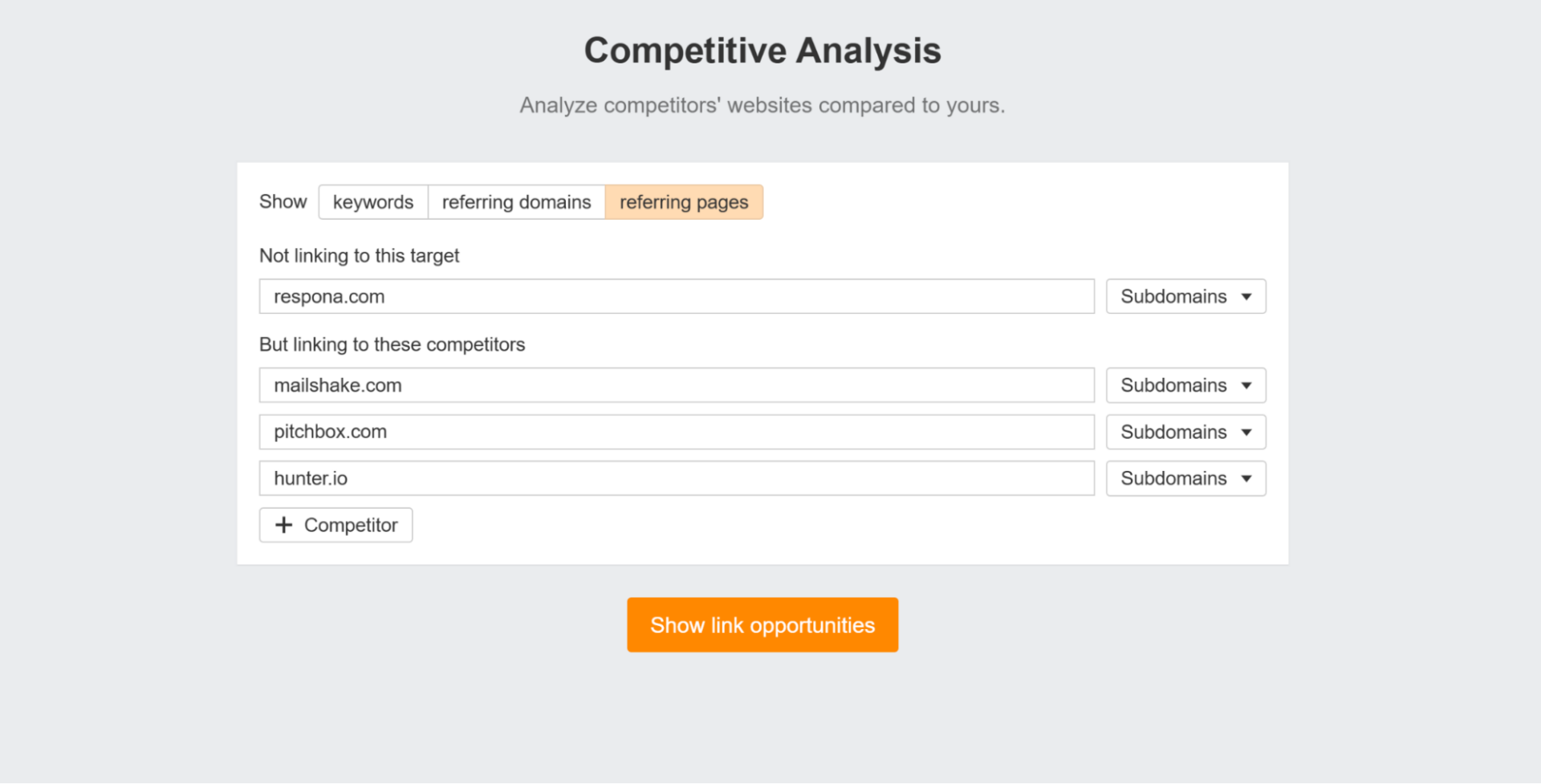
When you find a gap, prioritize pages that are relevant, authoritative, and likely to support your own content or product positioning.
6. Check Anchor Text Distribution
Anchor texts serve a very specific purpose in SEO.
Besides giving the reader an idea of what they can expect to see on the page, they actually help your pages rank on Google based on the keywords included in the anchor text.
Even if the keywords aren’t used on the actual page.
So, for example, if you have a page about link building with links pointing it with “how to get backlinks” in the anchor text, you will start ranking for that keyword as well.
At the same time, it’s important to avoid over-optimization.
You should use both exact-match (the same keywords your page targets), and partial-match keywords (some variations of that keyword) in your anchors.
To check your anchor text distribution in Ahrefs, go to Backlinks > Anchors.
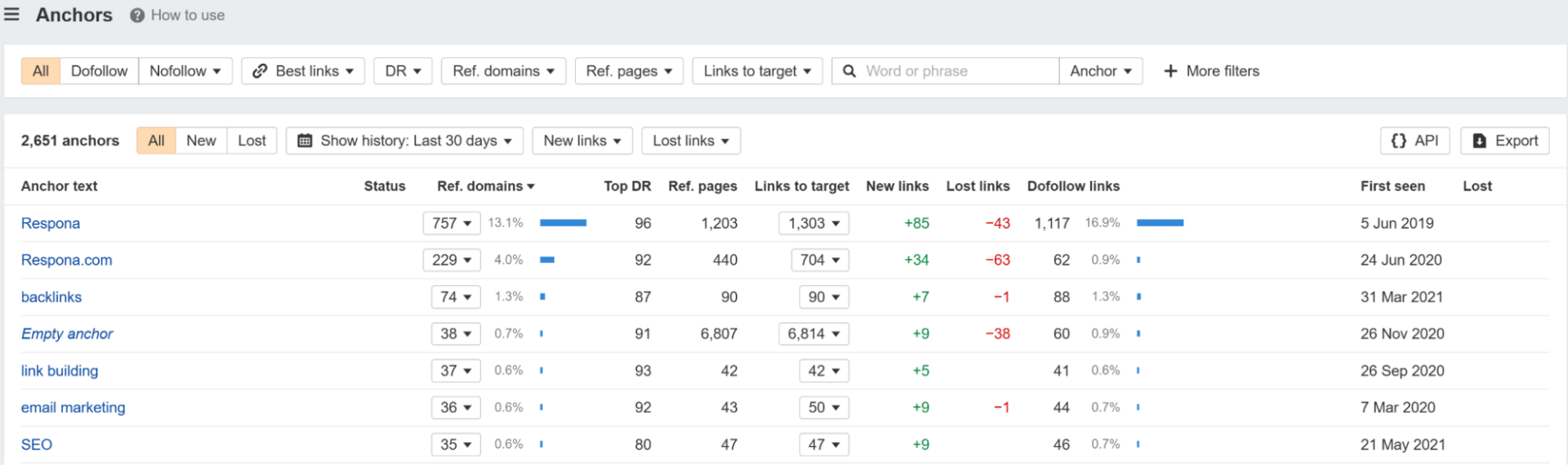
A natural mix of branded, generic, exact-match, and partial-match anchor text usually signals a healthier link profile than one dominated by aggressive keyword anchors.
7. Reclaim Lost Backlinks
Links get removed all the time – it’s just part of their lifecycle.
Whether the linking page underwent an update, or the website editor no longer deemed it relevant to link to you, it’s important to check your lost backlinks from time to time and try to reclaim them.
Lost backlinks are worth reviewing because some of them can be recovered with a simple outreach email. Reclaiming a lost backlink is often faster than earning a completely new one from scratch.
Especially if you acquired them as part of an ABC link exchange and the other party removed it after some time.
To check lost links, simply use the “Lost” filter in your backlink report.
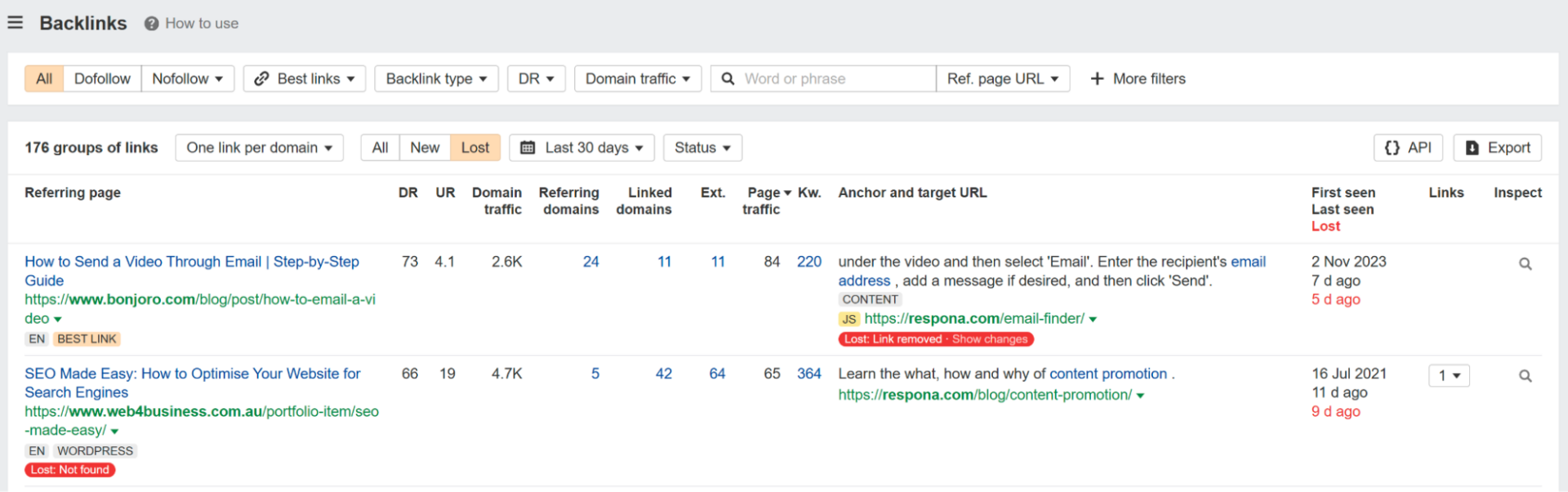
Prioritize lost links from pages that were sending authority, referral traffic, or both.
8. Claim Unlinked Mentions
Unlinked mentions are the easiest links to obtain because half the job is already done – the page is already talking about you.
All you have to do is find a contact email of the editor, reach out, and politely ask to turn the mention into a proper backlink.
Now, be prepared that some webmasters might ask for something in return, like an ABC link exchange.
Depending on the quality of the link, it may very well be worth it.
These often become some of your most natural editorial backlinks because the content was already referencing you without a forced ask.
9. Disavow Toxic Links (Only If Your Site Was Penalized)
Now, in 2026, toxic backlinks aren’t nearly as much of a problem as they used to be.
If your website has never received a Google penalty, and you don’t engage in shady practices like paid links or direct exchanges, you don’t have to disavow anything.
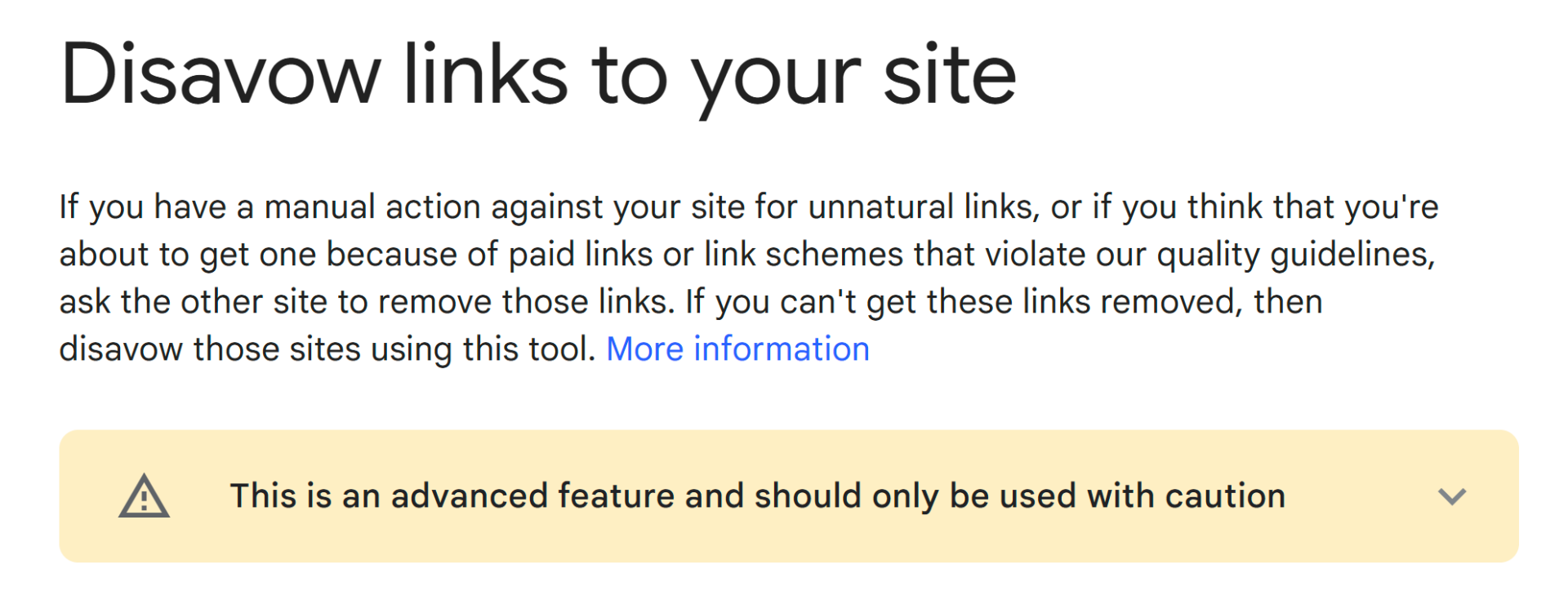
But if you have been hit with a penalty (or suspect you are going to), you’ll have to disavow harmful backlinks to slowly restore your rankings.
For this, use the Google Disavow Tool.
Once again, do not disavow links as a preventative measure – Google is great at spotting toxic links on its own.
If you have never been hit with a penalty, manually disavowing links can do you more harm than good and actually hurt your rankings.
10. Build New Links
At some point, backlink management turns into one simple question:
Are you consistently earning new, high-quality links?
Because no matter how well you monitor, analyze, or clean up your backlink profile, it won’t grow without new links coming in.
And this is where most teams hit a wall.
Building links consistently means:
- finding relevant websites in your niche
- qualifying them for authority and relevance
- reaching out with something worth linking to
- following up and actually securing placements
Doing this once is manageable. Doing it every week, at scale, is where it becomes a bottleneck.
That’s why many teams move away from handling link building internally and instead focus on outcomes.
Our done-for-you link building takes over the entire process.
We handle:
- prospecting relevant link opportunities
- outreach and relationship building
- securing placements on authoritative pages
- building a steady stream of quality backlinks over time
The goal is not just to increase your number of backlinks, but to strengthen your backlink profile in a way that supports rankings, referral traffic, and long-term SEO growth.
There’s also a newer layer to consider.
Backlinks no longer influence just search engine rankings. They also influence where your brand shows up in AI-generated answers.
Large language models often pull information from third-party websites, listicles, and resource pages. If your brand is consistently mentioned across those sources, your chances of appearing in AI responses increase.
That’s exactly what our Campaigns feature helps you track.
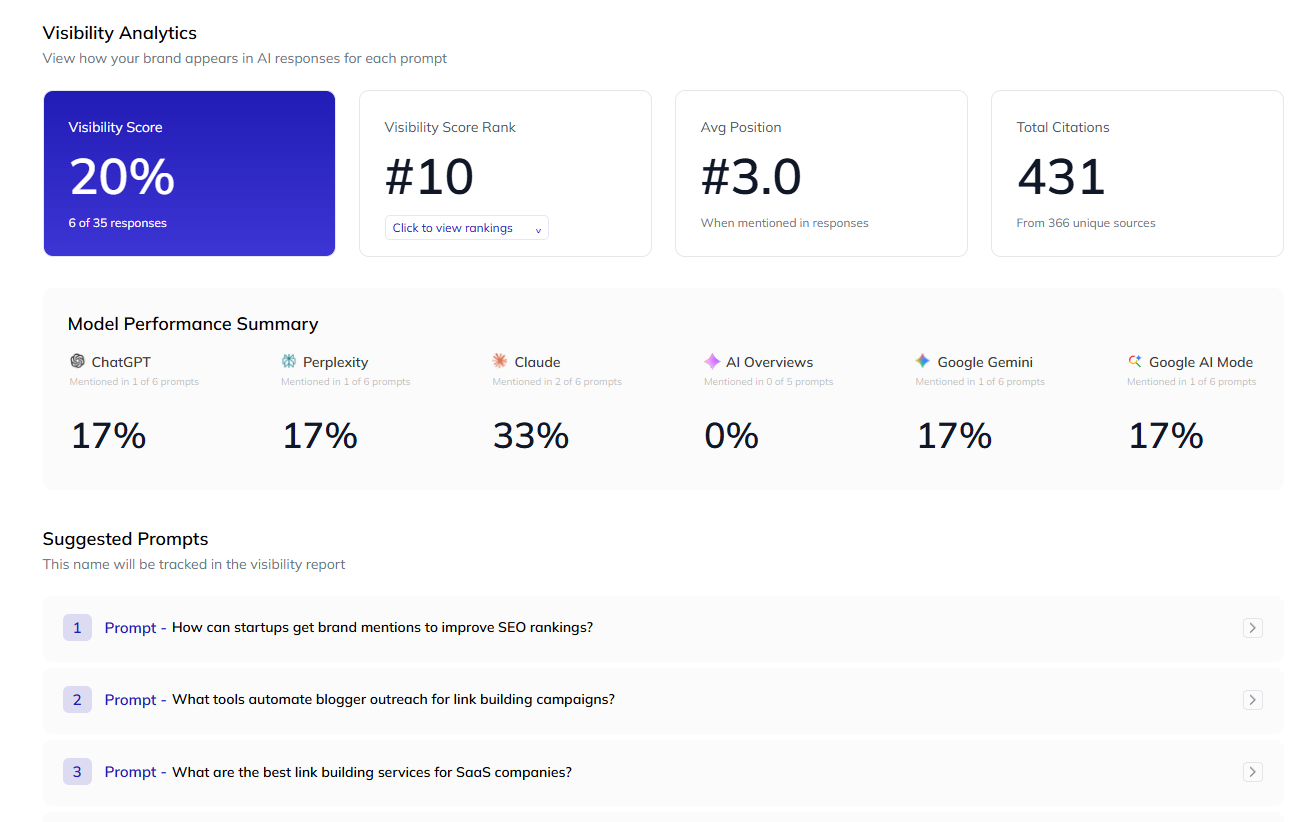
It shows:
- where your brand is being mentioned across AI-driven platforms
- which sources are getting cited for topics in your niche
- where competitors are showing up and you are not
From there, we turn those insights into a targeted link building strategy.
Instead of guessing where to build links, you focus on placements that influence both search rankings and AI visibility.
Link building cheat sheet
Now Over to You
n conclusion, strong backlink management is about more than watching numbers go up.
To manage your backlinks well, you need to review link quality, monitor referring domains, reclaim lost links, track anchor text distribution, and keep building new backlinks that actually support your growth. The strongest backlink profile is not just bigger — it is healthier, more relevant, and more resilient over time.
That is where the right link building support can make a big difference.
If you want to grow your backlink profile with high quality backlinks from relevant websites, our team can help.
Our done-for-you link building service helps brands strengthen their backlink profile through personalized outreach, relationship-driven prospecting, digital PR, and strategic content promotion. Instead of handling backlink monitoring, outreach, reclamation, and new link acquisition yourself, you can rely on our team to build links that support long-term SEO growth.
Frequently Asked Questions (FAQ)
What is a backlink?
A backlink is simply a link from one website to another.
Search engines like Google see backlinks as votes of confidence, indicating that the linked-to website is trustworthy and relevant.
How do I get backlinks?
There are many ways to get backlinks, but some common methods include guest blogging, creating high-quality content that others want to link to, and reaching out to reputable websites and asking them to link to your site.
How do I know if a backlink is good or bad?
Generally, a good backlink comes from a high-quality, relevant website.
A toxic backlink might come from a spammy website or a website that is not relevant to your niche.
How many backlinks do I need?
There is no magic number of backlinks that you need.
The number of backlinks you need will depend on factors like your niche, your competition, and your overall SEO strategy goals.
How often should I check my backlinks?
It’s a good idea to run a regular backlink audit at least once a month to ensure that they are still active and relevant.
You can use a link management tool like Ahrefs or Semrush for backlink tracking and getting alerts for lost backlinks.