
Wondering what media monitoring is and how you can apply it to your business?
Definitions, examples, tools, and more.
You’ll find it all here.
We’ve got a lot to cover so let’s get started.

Link building cheat sheet
What is Media Monitoring?
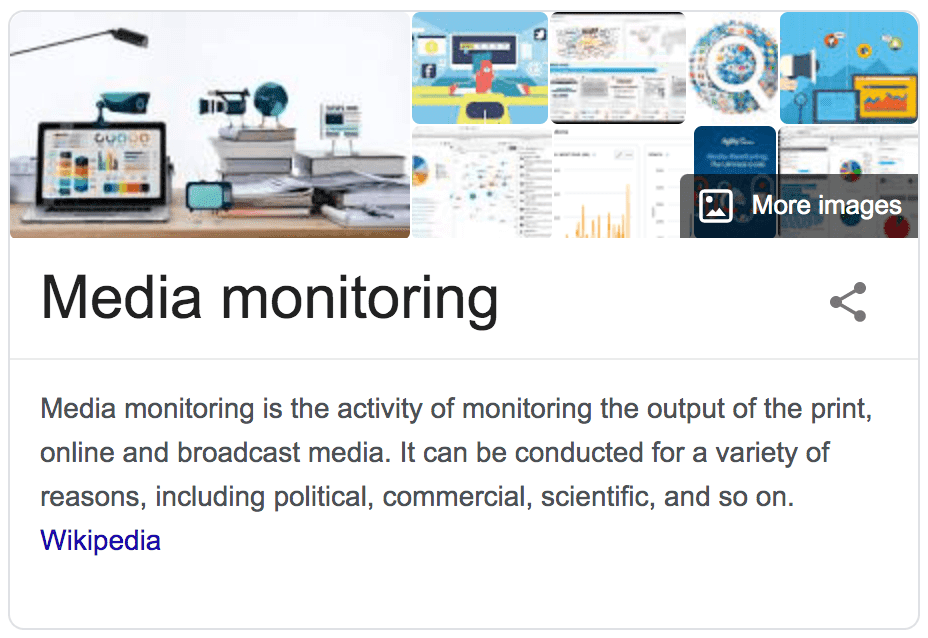
Media monitoring is the process of scanning public information on print or digital platforms looking for keywords on a particular topic.
The rapid development of technology and the wider access to information, through the internet, has increased the importance of media monitoring but luckily media monitoring tools have advanced as well.
The days of manually searching articles and traditional media for a specific topic are over.
Now there are many social media monitoring tools and media monitoring services available.
Some organizations are still hesitant to invest in media monitoring because they feel like it is too expensive or they don’t understand the value in it.
The truth is that the way media monitoring is being applied has changed as the media and the channels companies have to monitor have changed as well.
For example, in the early 2000’s, media monitoring could refer to monitoring television shows or print media such as newspapers.
As we’ve shifted to digital media like Facebook, Twitter, media outlets, and online magazines, the way monitoring is performed has changed.
Nowadays, it’s far more important — and way easier — to monitor mentions in social media, and the web in general, than it once was to monitor mentions on television, the radio, or newspapers.
In that context, the type of media monitoring we refer to is monitoring of modern digital media where people spend their time online and where brands have a strong presence.
We hope this guide will show you the value of media monitoring for your public relations team and will provide several media monitoring software options that will fit into your company’s public relations budget.
If your business works with other people, including customers, partners, investors, etc., media monitoring should be an important part of your marketing and PR stack.
Why is Media Monitoring Important?
A media monitoring tool is important for PR pros and your business so you can see valuable insights into the public perception of your brand, marketing campaigns, products, services, or even your competitors.
With nearly 95% of shoppers reading online reviews before making a purchase and 93% of local consumers using reviews to determine if a local business is good or bad, reputation management is extremely important and media monitoring is a great way to accomplish that.
Here are some examples of how media monitoring can benefit your business:
- Protecting your brand reputation
- Preventing a crisis
- More deeply understanding your audience
- Measuring the results of current PR and marketing campaigns
- Identifying public influencers
- Discover potential opportunities for media coverage
We live in a world where almost everyone is connected to the internet and with positive and negative messages being able to spread worldwide in a matter of minutes, it’s important to monitor the dialogue around your business in real-time.
Protecting your brand reputation is one of the most important reasons for media monitoring.
Chick-fil-a does a great job of responding to every tweet they are mentioned in whether it’s a customer complaint or just a general question about their seasonal products.
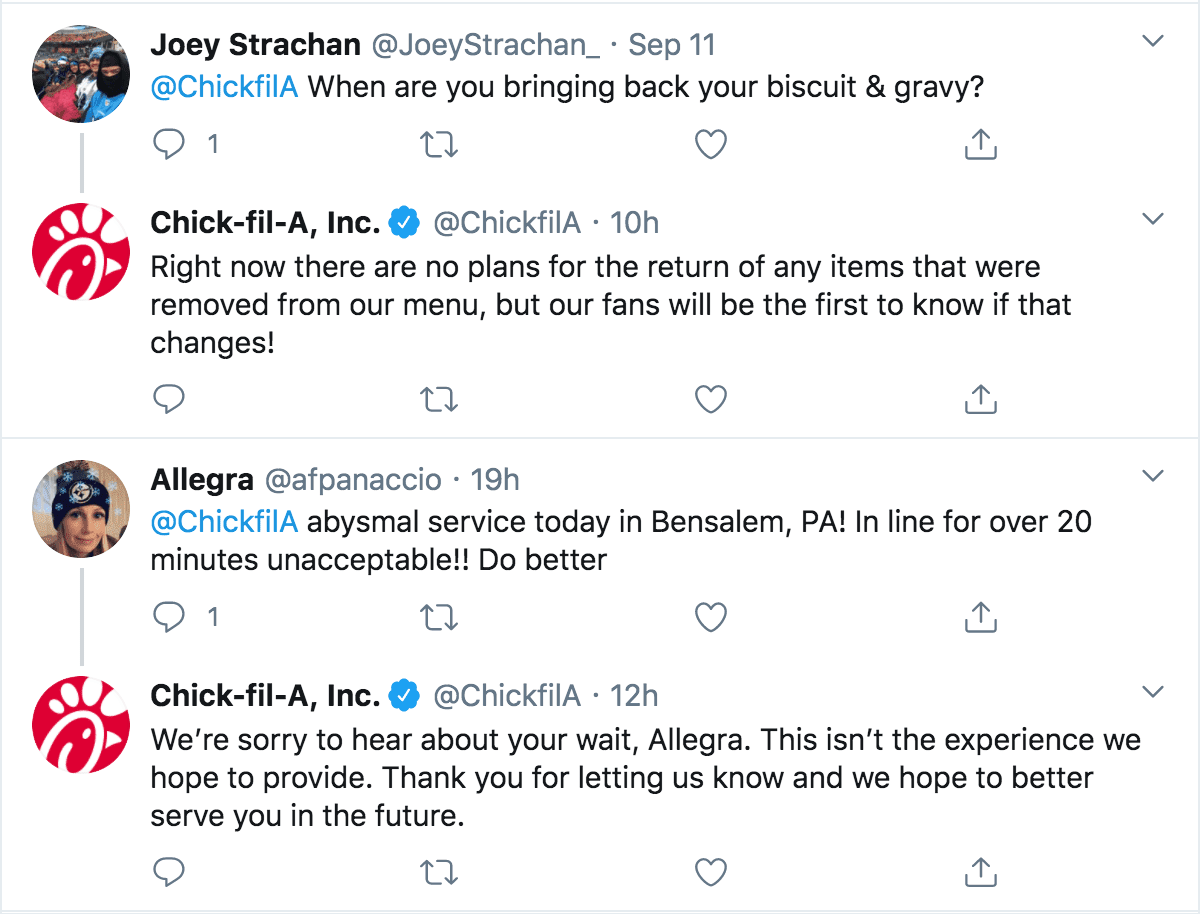
This is important because 7 out of 10 consumers changed their opinion about a brand after the company replied to a review and not responding risks increasing customer churn by up to 15%.
You can even increase sales through social media monitoring.
Target is using a social media management team to monitor all of their engagement.
By monitoring their Instagram comments, they were able to provide a customer with the information they were looking for regarding a product even though the original post had nothing to do with the product in question or sales at all.
Here’s the comment by their customer,

And, here’s the response by the company’s official account on Instagram.

Besides your own social networks, it’s important to monitor online news as well to catch potential issues that may impact your business.
This is important for crisis management and predicting market opportunities.
When the impacts of COVID-19 spread across the nation, Yotpo saw an opportunity for Direct-to-Consumer (D2C) Brands as Amazon struggled to keep up with customer standards.
First, they wrote a press release outlining the opportunities they saw for D2C brands.
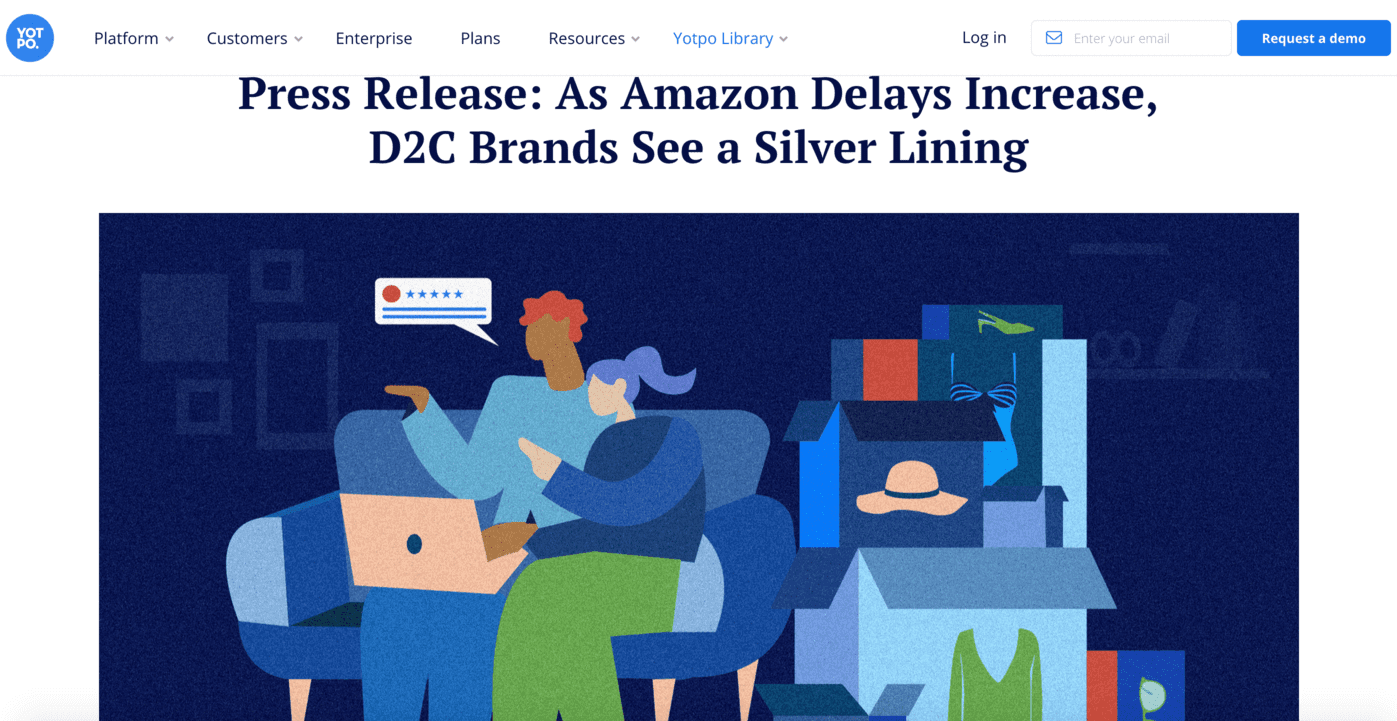
From there, they were able to gain a partnership with UPS and secured $75 Million in funding.
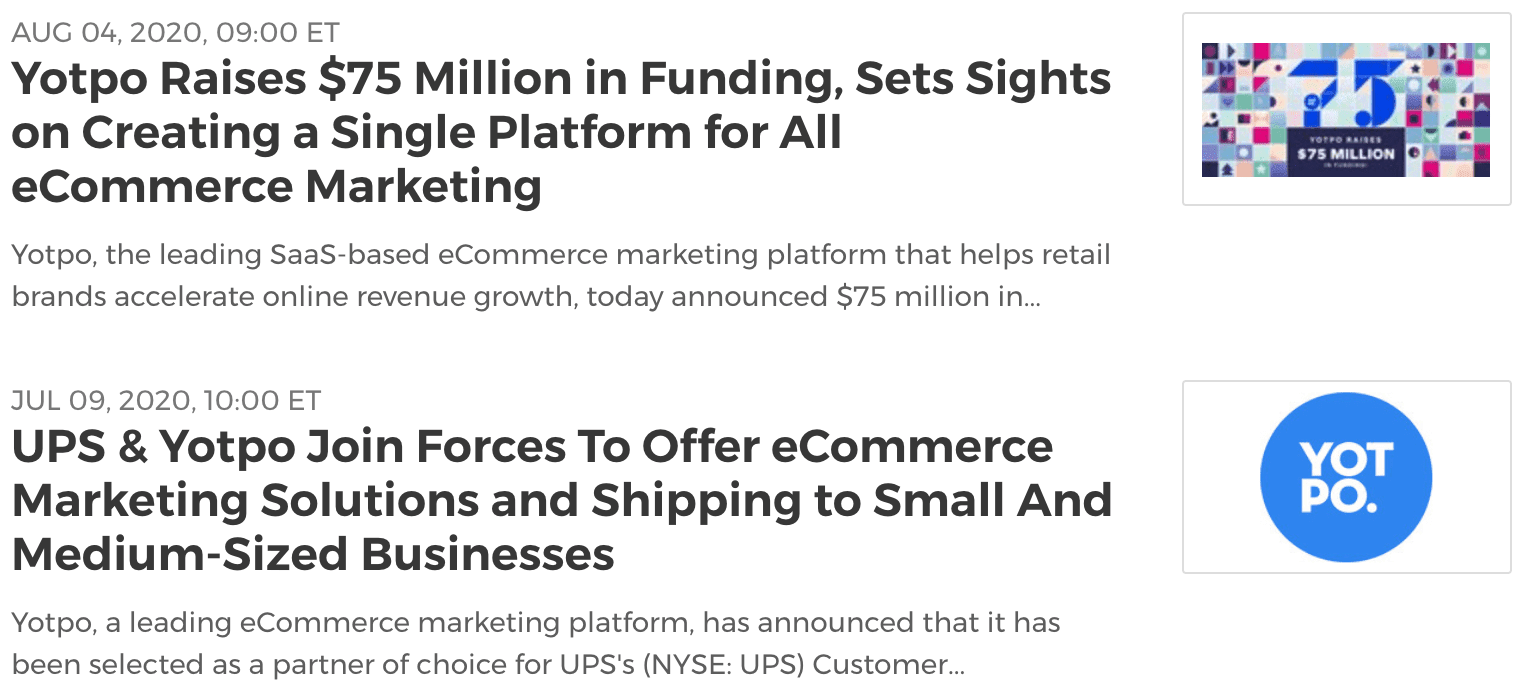
As you can imagine, being present when a new conversation starts is essential when it comes to identifying and leveraging opportunities for growth.
Media monitoring can also help you evaluate your share of voice in the market to give you insights on your competition and make sure you are dominating the conversation in your industry.
These are just a few examples of the importance of media monitoring but it can help many different aspects of your online presence.
Let’s move on to the next section, where we’ll break down the costs of media monitoring.
How Much Does Media Monitoring Cost?
The cost of media monitoring tools can be more complicated than you might first think but basically, the more features you need, the more expensive the subscription to the service will be.
Premium media monitoring software can be more costly but those tools are typically used by larger organizations that have the need for a dedicated consultant.
Luckily for startups and small businesses, most media monitoring tools offer a free trial period so you can test a few options before committing to a tool.
Let’s take a closer look at the pricing and free trial offers for a few media monitoring companies helping pr professionals:
- Respona – Please visit Respona’s pricing page.
- Google Alerts – Free (with Gmail account)
- Ahrefs Alerts – 7-day trial for $7, four plans from $99 to $999 a month
- Critical Mention – Contact vendor for pricing and free trial information
- Hootsuite – Four plans starting at $25 per month
- Crayon.co – Contact vendor for pricing and free trial information
- Brand24 – 14-day free trial, three plans from $49 to $199 a month
- Mention – 14-day free trial, four plans from Free to $450+ a month
- Reputology – Three plans from $180 to $2,500 a month
- Meltwater – Contact vendor for pricing and free trial information
- Mediatoolkit – 7-day free trial, four plans from $117 to $1,100+ a month
- SEMrush – 7-day free trial, three plans from $99.95 to $399.95 a month
Pricing gets a bit more complicated if you factor in opportunity cost and time cost but you can evaluate this deeper once you narrow your list of possible tools down using the features offered, the monetary price, and free trial information.
5 Media Monitoring Tools (That Won’t Break the Bank)
We listed several media monitoring tools when we discussed how much media monitoring costs but we want to take a closer look at 5 specific media monitoring services that won’t break the bank.
Tool #1: Respona
Respona is a SaaS-focused company that helps brands combine media monitoring with done-for-you digital PR and link building execution.
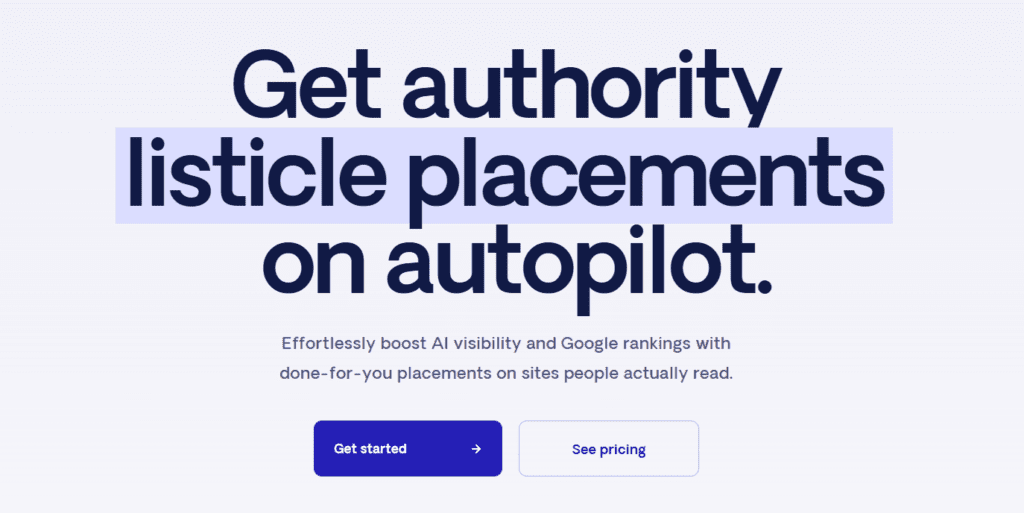
Unlike traditional media monitoring tools that only surface mentions, Respona connects monitoring directly with action. Instead of just tracking where your brand appears, you can use those insights to secure placements on the same sources.
A key part of the platform is its campaigns feature, which acts as a modern media monitoring layer. Campaigns help identify the exact articles and domains that are being cited by search engines and AI answer engines. This gives you clear visibility into which sources are actually influencing rankings and brand exposure.
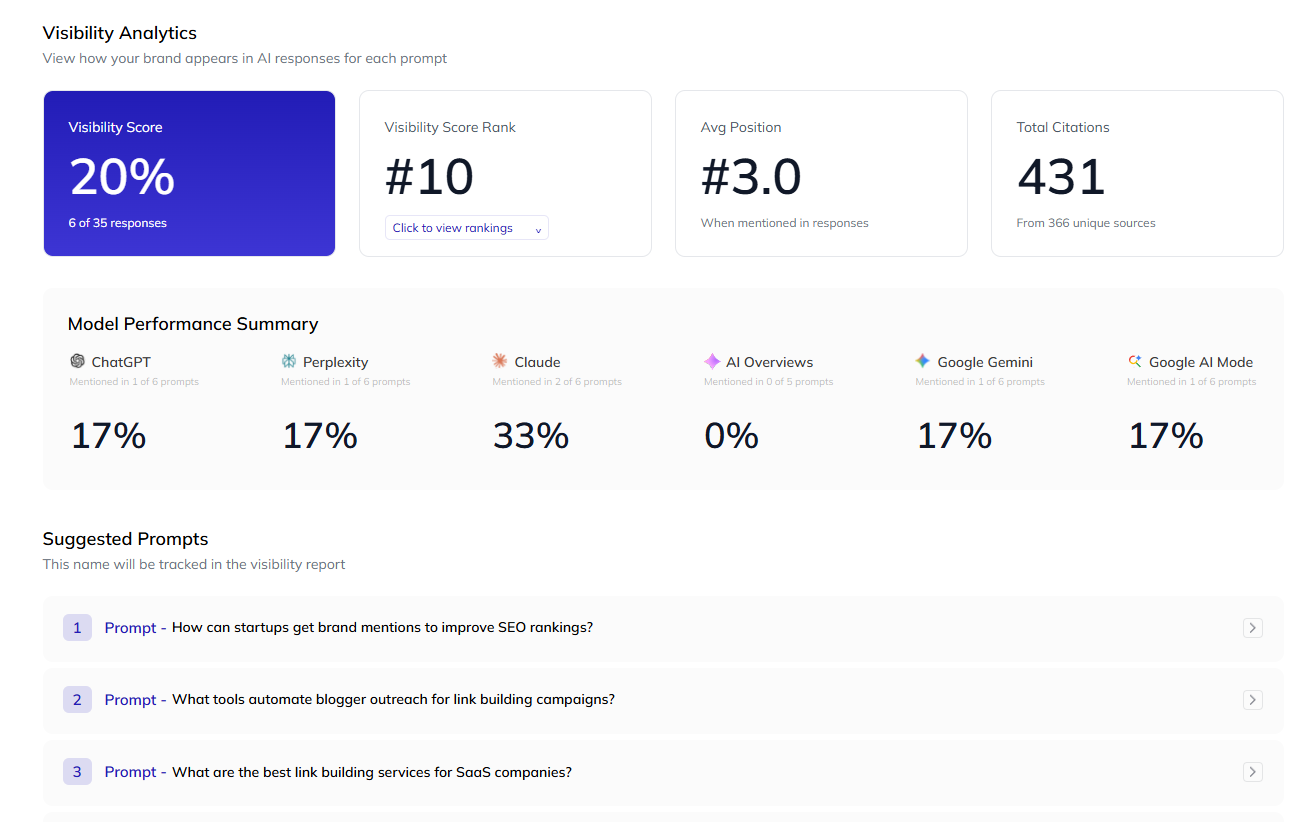
Rather than monitoring mentions in isolation, this allows you to understand where authority is being built and prioritize placements on those same sites.
You can use Respona to:
- Identify articles and domains cited by search engines and AI answer engines
- Monitor where your brand, competitors, or target topics are gaining visibility
- Secure placements such as guest posts, link insertions, and listicle mentions on relevant websites
- Scale digital PR through a done-for-you model without managing outreach internally
In essence, Respona combines media monitoring with execution. It helps you not only discover opportunities, but also act on them by securing placements on sources that already drive visibility.
Why we like it: Combines media monitoring with execution
Favorite feature: Campaigns for identifying AI-cited articles and targeting placements
Pricing: Pay-per-result model, starting at $100 per placement
Tool #2: Google Alerts
Our next tool, Google Alerts, is a free content change detection and notification service offered by the largest search engine in the world, Google.

Google Alerts lets you select specific keywords to receive email alerts for.
Once you set up your alert for the topics you want to be notified about, you will receive an email when that keyword is mentioned in web pages, newspaper articles, blogs, or scientific research.
We suggest setting alerts for your brand name, products/services, and keywords related to your business.
The only downside of Google alerts is that it doesn’t monitor social networks so if you want to know what is being said on those platforms, you’ll need a separate social listening tool.
Why we like it: It is easy to use and free.
Pricing: FREE
Tool #3: Ahrefs (Alerts)
Another great alerts tool is Alerts by Ahrefs.
This software will monitor important SEO metrics for your website, keep an eye on your competitors, and monitor brand mentions.
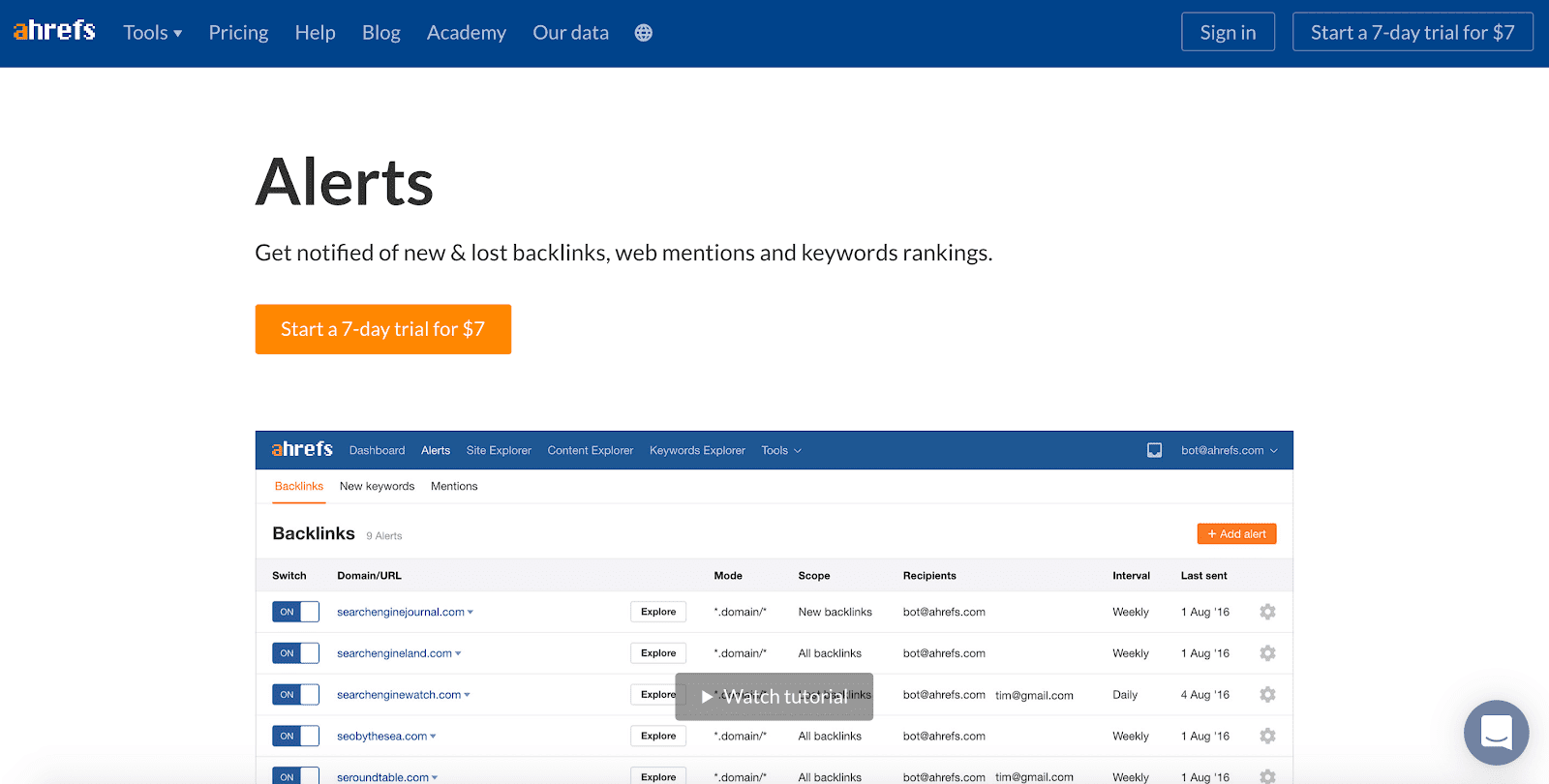
Alerts by Ahrefs tracks web mentions but it goes beyond Google Alerts to also notify you about new & lost backlinks and keyword rankings.
By setting up a backlinks alert on any website or URL, you will get notified when they gain or lose backlinks.
This is beneficial for your own SEO strategy but it is also a great tool to track your competitors’ link building activity.
The keywords alert also goes beyond normal rank tracking tools because it isn’t only scanning the keywords you enter into it.
Ahrefs is scanning millions of keywords in their database to notify you when the software sees any notable changes in the keyword positions.
Why we like it: The data is timely, it is very user friendly, and they add new features often.
Pricing: From $99 to $999
Tool #4: Critical Mention
The next tool we want to look at is Critical Mention, the earned media monitoring and media contact database.
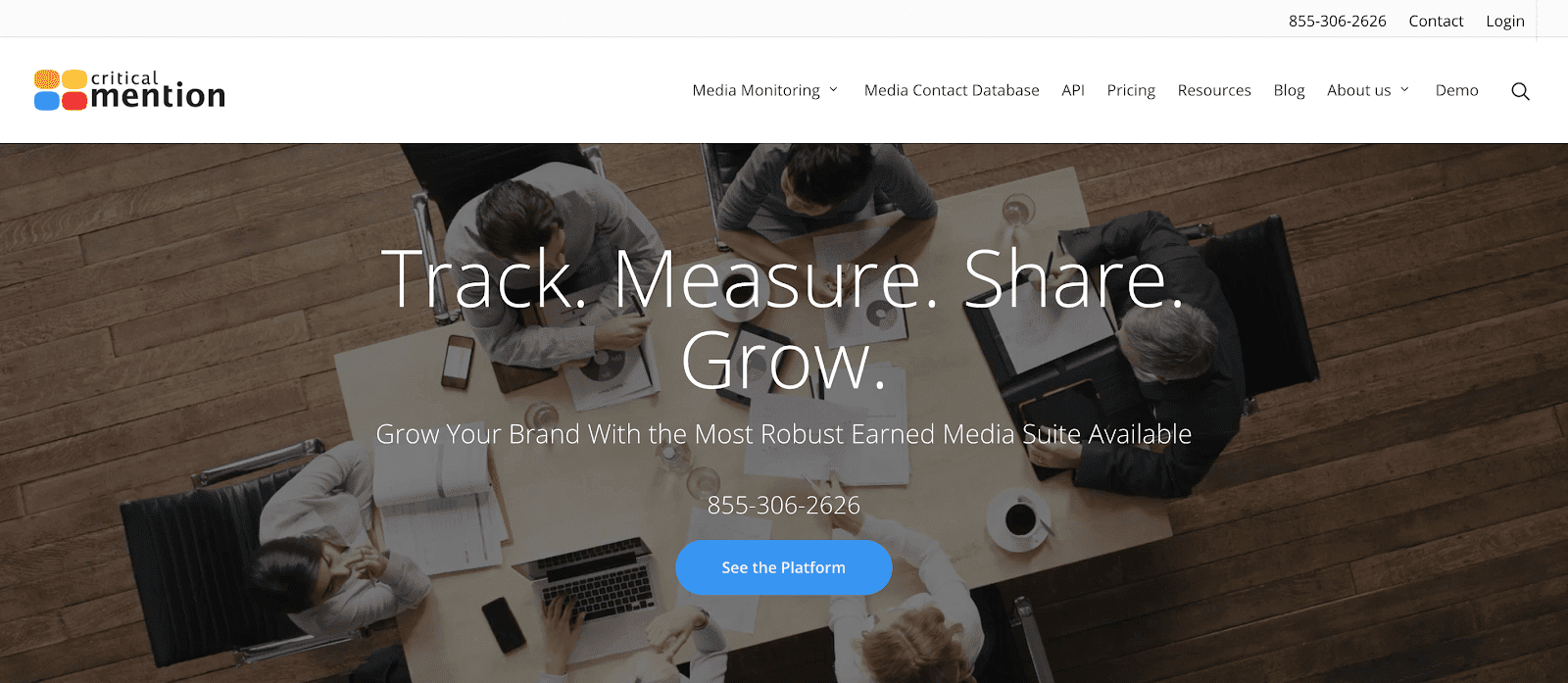
Critical Mention gives your brand opportunities to grow by managing your earned media and showing you the value of the coverage you are getting.
The software is very fast so you get your notifications in real-time and you can customize and share your reports instantly.
Get broadcast, online news, social media, and licensed content alerts through modern cloud technology.
Critical mention also has a comprehensive media contact database that integrates with their media monitoring tools and an API integration that can help you take full advantage of TV and radio coverage.
Why we like it: We like the access to PR analytic tools and TV clips in one software and the visual appeal of the platform.
Pricing: Contact the vendor for pricing details
Tool #5: Hootsuite
Our last tool, Hootsuite, is a very popular social media monitoring software that you can also use for media monitoring.

If you are already using Hootsuite to schedule your social media content, then it makes sense to use Hootsuite to monitor your media as well.
Hootsuite allows you to create custom streams to see the exact topics, trends, and social media profiles you are most interested in.
You can also get real-time audience insights and engage with incoming messages all through the software.
Hootsuite is compatible with over 20 social networks and integrates with over 100 apps such as; Spotify, Adobe, Zapier, Reddit, and many more.
Why we like it: Easily incorporate social listening tools and a variety of other apps from the comfort of one dashboard.
Pricing: From $19 to $599+ a month
Link building cheat sheet
Now Over to You
So there you have it.
You now know what media monitoring is, why it is important, and how to apply it to protect your brand reputation and uncover new opportunities.
Most tools on this list help you track mentions, monitor conversations, and stay informed.
But turning those insights into actual visibility is where most teams struggle.
If you want to go beyond monitoring and start acting on those insights, a more execution-focused approach can make a big difference.
With Respona, you can identify which articles and domains are already being cited by search engines and AI answer engines. You can then secure placements on those same sources through a done-for-you workflow.
If your goal is not just to monitor media, but to increase visibility and authority, Respona provides a more direct way to turn insights into results.
Frequently Asked Questions (FAQ)
What is a media monitoring tool?
A media monitoring tool is software that helps track mentions of your brand, competitors, or keywords across digital media channels. This includes online news, blogs, forums, and social networks. Modern media monitoring tools go beyond simple alerts and provide analytics, media analysis, and valuable insight into public perception.
How does media monitoring work?
Media monitoring works by scanning web pages, social media platforms, and other media channels for specific keywords or phrases. Advanced media monitoring software uses machine learning to deliver real time alerts, identify trends, and provide insight into audience sentiment and industry trends.
What is the difference between media monitoring and social listening?
Media monitoring focuses on tracking media mentions across online news, blogs, and traditional media. Social listening goes deeper by analyzing conversations across social platforms and social channels to understand audience sentiment, behavior, and emerging trends. Many social listening tools also include social media analytics and reporting features.
What are the best media monitoring tools?
The best media monitoring tools depend on your needs, but popular options include Google Alert, Ahrefs Alerts, Brand24, and other media monitoring platforms. Some tools focus on social media monitoring, while others provide broader media intelligence across multiple media channels.
Why is media monitoring important for public relations?
Media monitoring is essential for public relations because it helps communications teams understand public perception, track earned media, and measure media coverage. It also supports crisis management by identifying negative media mentions early and allowing teams to respond in real time.
What should you look for in media monitoring software?
When choosing a media monitoring tool, look for features like real time alerts, social media monitoring, media analysis, and reporting dashboards. A good monitoring tool should also provide insight into coverage, audience sentiment, and emerging trends across social networks and online news.
Can media monitoring help with crisis management?
Yes. Effective media monitoring allows you to detect negative media mentions early, monitor audience sentiment, and respond quickly. This is especially important for managing public perception during a crisis across both digital and broadcast media.
How do media monitoring tools track social media?
Social media monitoring tools track conversations across social media platforms such as Twitter, LinkedIn, and Instagram. They analyze mentions, hashtags, and engagement to provide insight into trends, audience sentiment, and overall performance across social channels.
How can you turn media monitoring into actual results?
Most media monitoring services focus on tracking mentions and providing alerts. However, the real value comes from acting on those insights.
For example, instead of just identifying media coverage, you can use tools like Respona to find which articles are being cited by search engines and AI answer engines. From there, you can secure placements on those same sources and turn monitoring into measurable visibility and growth.