
Backlink monitoring is an essential part of growing and maintaining a healthy link profile.
In this guide, we’ll teach you exactly how to monitor backlinks with 7 essential metrics and 7 awesome tools.
Without further ado, let’s get right into it,
Key Takeaways:
- The most useful metrics to track are link velocity, anchor text, referring domains, broken links, page-level quality, and spam signals.
- A good backlink monitoring tool helps you spot lost links, toxic links, backlink gaps, and new links before they affect performance.
- Monitoring backlinks is not just about cleanup. It also helps you find link building opportunities and measure campaign results.
Link building cheat sheet
Why Should You Monitor Backlinks?
Backlink monitoring isn’t just a buzzword; it’s a strategic practice for any website aiming to improve its search engine visibility and overall online presence.
Backlink monitoring matters because your backlink profile is never static. New links appear, old ones disappear, competitors gain ground, and low-quality links can show up without warning.
By keeping a close eye on your backlinks, you gain invaluable insights that can significantly impact your SEO performance.
A consistent monitoring process helps you protect your backlink profile, evaluate campaign performance, and respond faster when something changes.
See Who’s Linking To You and Your Competitors
First things first, backlink monitoring allows you to gauge where your existing backlink profile is standing against your competition.
You can see which referring domains already link to you, which ones link to a competitor, and where your link profile may be falling behind.
Finding sites that are already linking to you is a great start for sparking up more collaborations – since the foot is already in the door.
It turns competitor backlink data into actionable outreach targets.
Your mentions don’t even have to be linked – just a plain text mention is a great start.
Now, a backlink audit also involves competitive research. This means finding “backlink gaps” – sites that are linking to your competitors but not you.
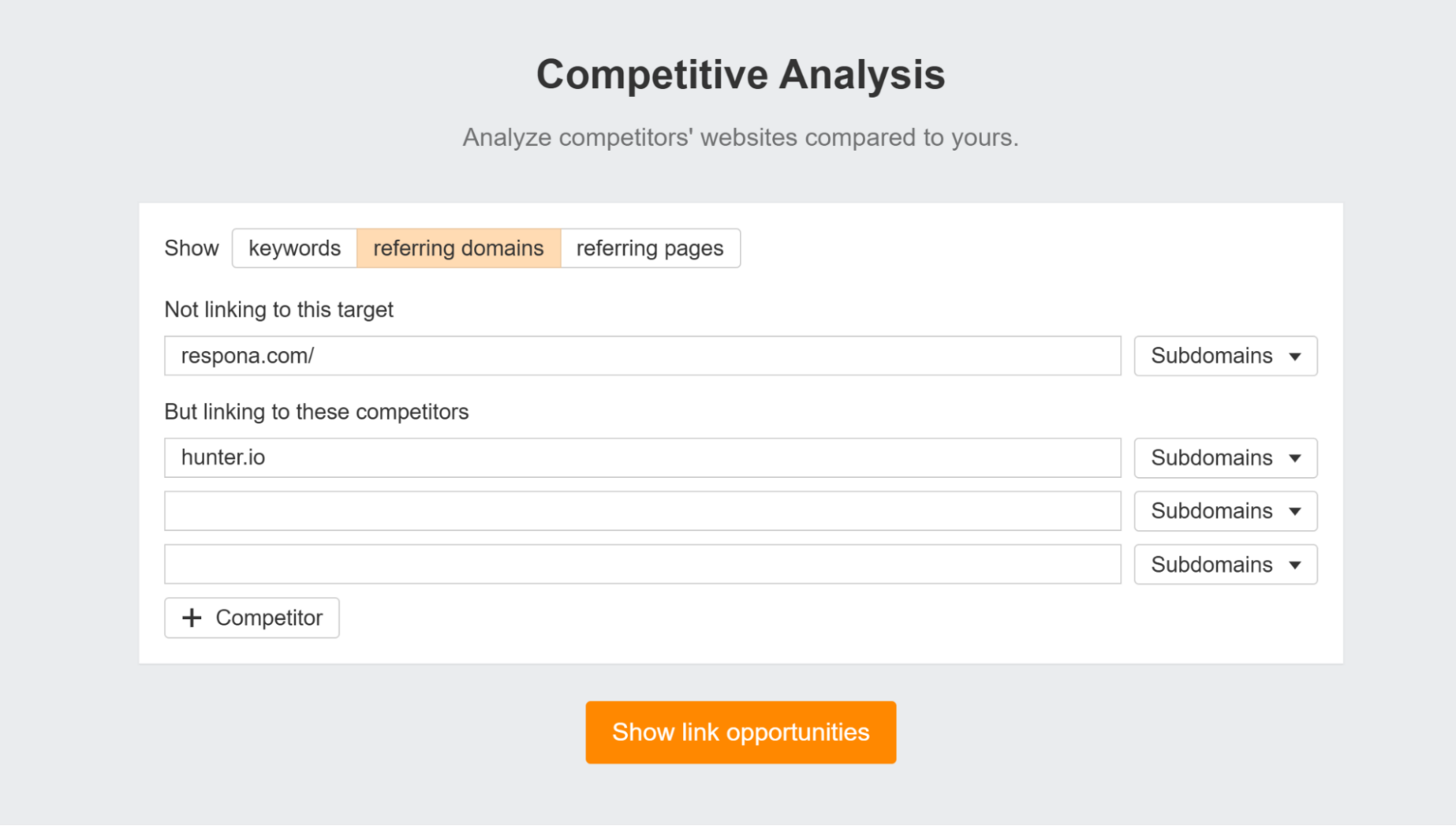
Closing these backlink gaps is a straightforward way to catching up with them in search results.
Measure Your Link Building Results
Link building is an investment of time and resources.
Without backlink monitoring, it is hard to know whether your link building efforts are producing quality backlinks or just more activity on paper. Monitoring lets you connect outreach work with actual backlink growth.
Only by actively checking your links can you determine which aspects of your link building strategy need adjustments.
This makes backlink monitoring a practical part of any link building workflow, not just a reporting task.
Remove Toxic Links (If Necessary)
In most cases, you do not need to panic about toxic backlinks, but monitoring still helps you identify obvious toxic links, suspicious patterns, or penalty-related issues when they do appear.
BUT, in the rare cases where you KNOW you were penalized for bad links (such as too many reciprocal or paid placements) or suspect you’re going to get a penalty, the only way to get out of it is by disavowing them first.
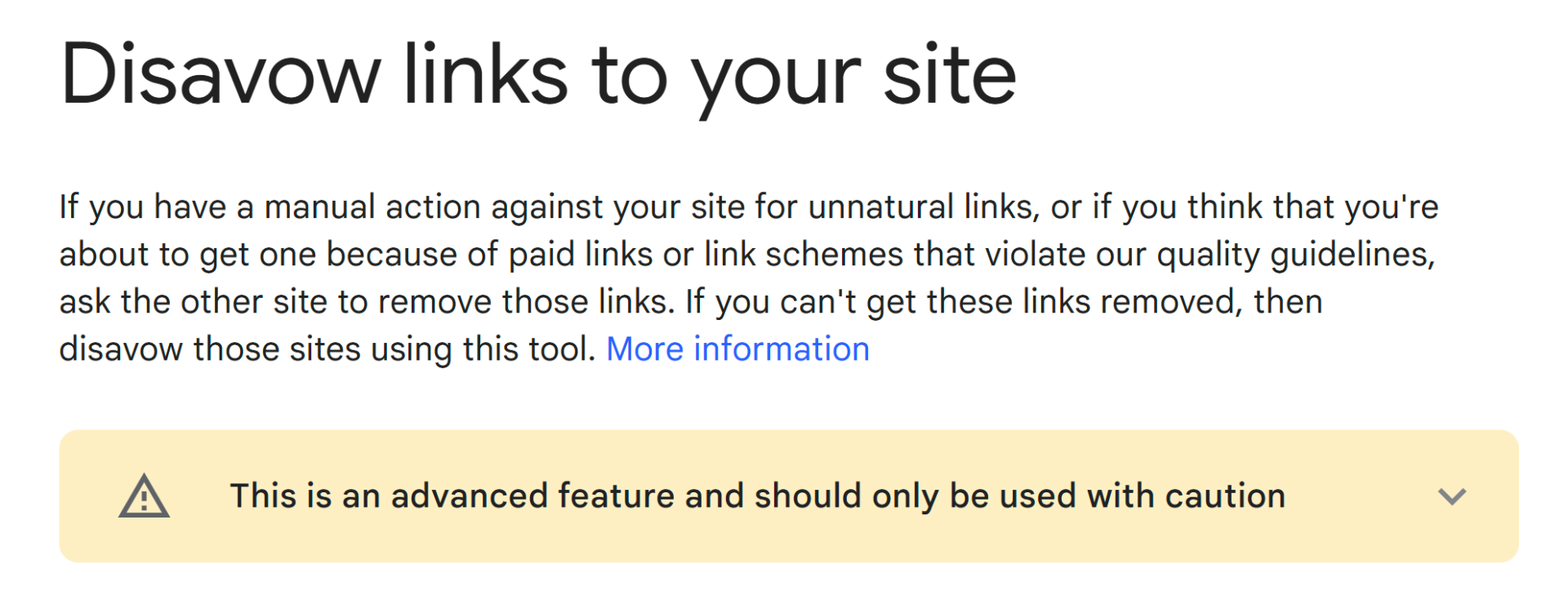
And, obviously, you can’t disavow everything, so you need to go into your link profile and choose just the bad ones.
Author’s note: you don’t have to worry about this if you were never hit with a penalty and never participated in grey and black-hat link building techniques. Don’t disavow links as a preventative measure – you might shoot yourself in the foot.
Now, let’s move on to the most important list metrics to keep an eye on.
7 Link Metrics to Monitor
Link Velocity
Link velocity measures how quickly your website is gaining or losing backlinks. A high positive link velocity indicates that your link building strategy is working.
Link velocity is one of the easiest signals to track in backlink monitoring because it shows whether you are gaining or losing momentum. A healthy profile usually adds new links steadily instead of in erratic bursts.
But, on its own, it’s not a direct guarantee of higher rankings, increased traffic, or improved keyword positions. It’s a third-party metric, not a direct ranking factor used by Google.
While link velocity itself isn’t a direct ranking factor, the links you acquire still hold SEO value. So, you want to maintain a positive link velocity.
The ideal link velocity varies depending on your website’s size and authority.
For a small site, a few dozen new links per month might be sufficient.
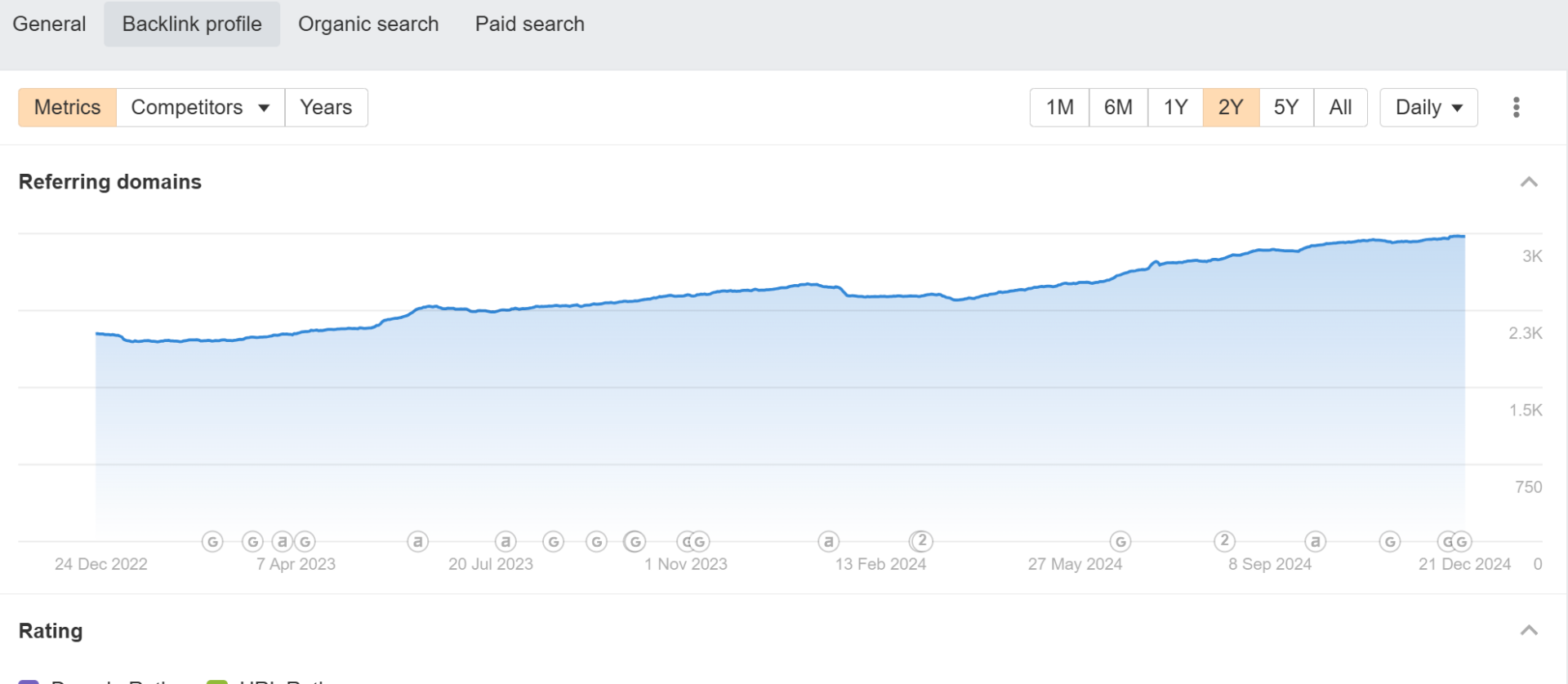
As your site starts generating more and more traffic, its link velocity should also reflect that – shoot for hundreds or even thousands of new links per month.
A healthy link velocity increases gradually as your website grows.
A sudden, dramatic spike in link velocity can actually raise red flags for Google. It might suggest you’re engaging in manipulative link-building practices.
This is easily seen in a chart in any SEO monitoring tool: a gradual increase is way healthier than a “spiky”.
Dofollow vs Nofollow Ratio
The difference between dofollow and nofollow links is simple: the former pass on link juice, the latter does not.
But it doesn’t mean nofollow links are useless – or that you must only go for dofollow links every time.
A healthy backlink profile includes both followed and nofollow links. When you monitor backlinks, this ratio helps you understand how natural your profile looks overall.
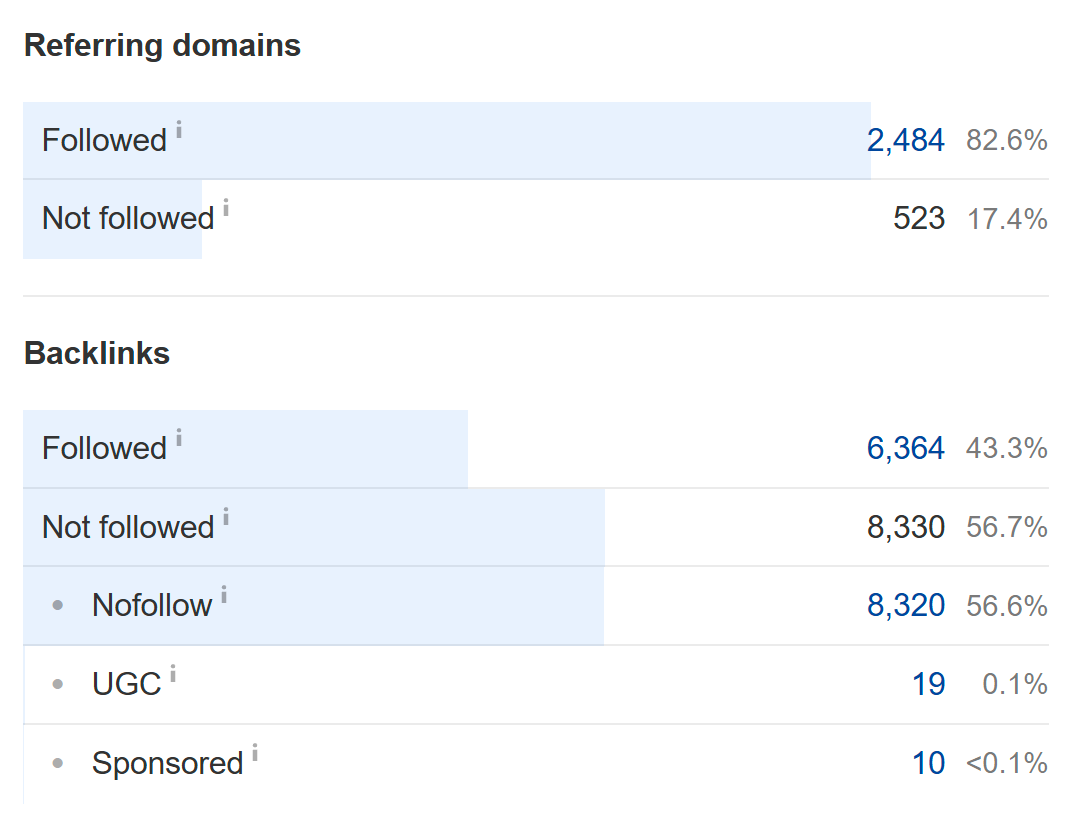
While there’s no magic number, a general guideline is to aim for a higher proportion of “dofollow” links, around a 3:1 ratio.
Pay attention to referring domains here as well, since domain-level diversity matters more than raw link totals.
What’s even more important is the number of referring domains rather than the sheer volume of backlinks.
This distinction is important because a large quantity of links from the same sources holds significantly less value than the same number of unique referring domains.
Anchor Text Distribution
Anchor text, the clickable words within a link, plays a significant role in SEO. Beyond simply guiding users to another page, it provides context to search engines about the linked content.
The anchor anchor text helps search engines (and the user) understand the topic of the destination page.
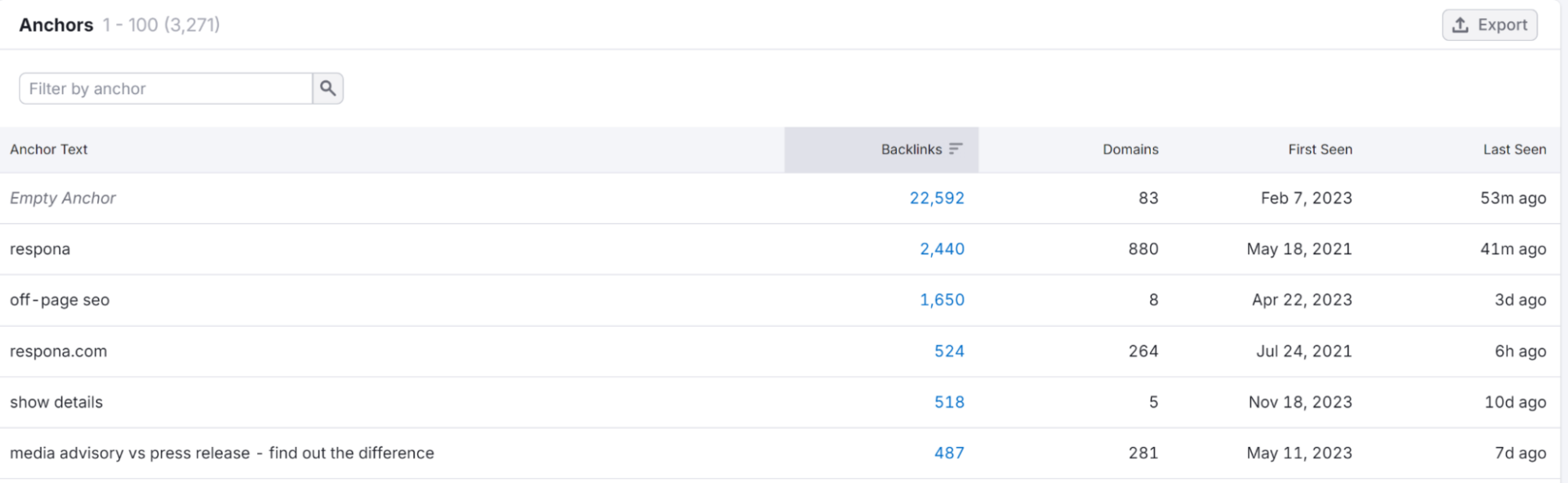
In fact, it can even influence your page’s ranking for specific keywords, even if those exact keywords aren’t featured on the target page itself.
For instance, if you have a page dedicated to “link building strategies” and you receive backlinks with anchor text such as “how to get backlinks,” you’ll actually start ranking for both terms.
However, it’s important not to over-optimize.
An unnatural concentration of exact-match anchor text can raise red flags for search engines, potentially leading to penalties.
A healthy anchor text profile should be diverse and include all of these:
- Exact-match keywords
- Partial-match keywords
- Branded anchor text
- Generic anchor text
- Naked URLs
Check for Broken Links & Reclaim Lost Links
Let’s face it: stumbling upon a broken link is a frustrating experience.
A broken link can hurt both user experience and link value. That is why broken link checks should be part of regular backlink monitoring, especially for pages that once passed strong authority or traffic.
This can happen for a variety of reasons, from simple typos to more complex server issues.
You already know about the “404 Not Found” error, but that’s just the tip of the iceberg.

There’s a whole family of error codes that signal broken links, like “400 Bad Request,” “403 Forbidden,” and “410 Gone,” each indicating a different type of problem.
These errors can stem from incorrectly typed URLs, outdated links due to website changes, or even just temporary server outages.
Regardless of the specific error code, all of these are bad and need to be taken care of.
Search engine bots struggle can’t crawl them, potentially preventing your pages from being indexed and shown in search results.
Plus, they create a poor user experience, leading to increased bounce rates and a perception of unprofessionalism.
And, to top it off, search engines actually consider broken links when evaluating your website’s overall quality.
But broken links can also be a good thing – as long as they’re on someone else’s site.
You can reach out to the owner, point out the issue, and suggest your own content as a replacement. It’s a win-win: they fix a problem, and you gain a valuable backlink.
This is known as broken link building and is a powerful white-hat way to build high quality backlinks and establish relationships within your industry.
TLD Distribution
Analyzing your Top-Level Domain (TLD) distribution – the country codes and general domain extensions, is a valuable technique for identifying potentially toxic or spammy backlinks.
TLD distribution is a useful secondary signal in backlink monitoring because it can reveal whether your profile is growing from relevant places or drifting into suspicious territory.
A healthy backlink profile typically exhibits a diverse range of TLDs, with a significant portion coming from reputable extensions like “.com,” “.net,” and “.org.” Additionally, industry-specific TLDs like “.io” might be prevalent depending on your niche.
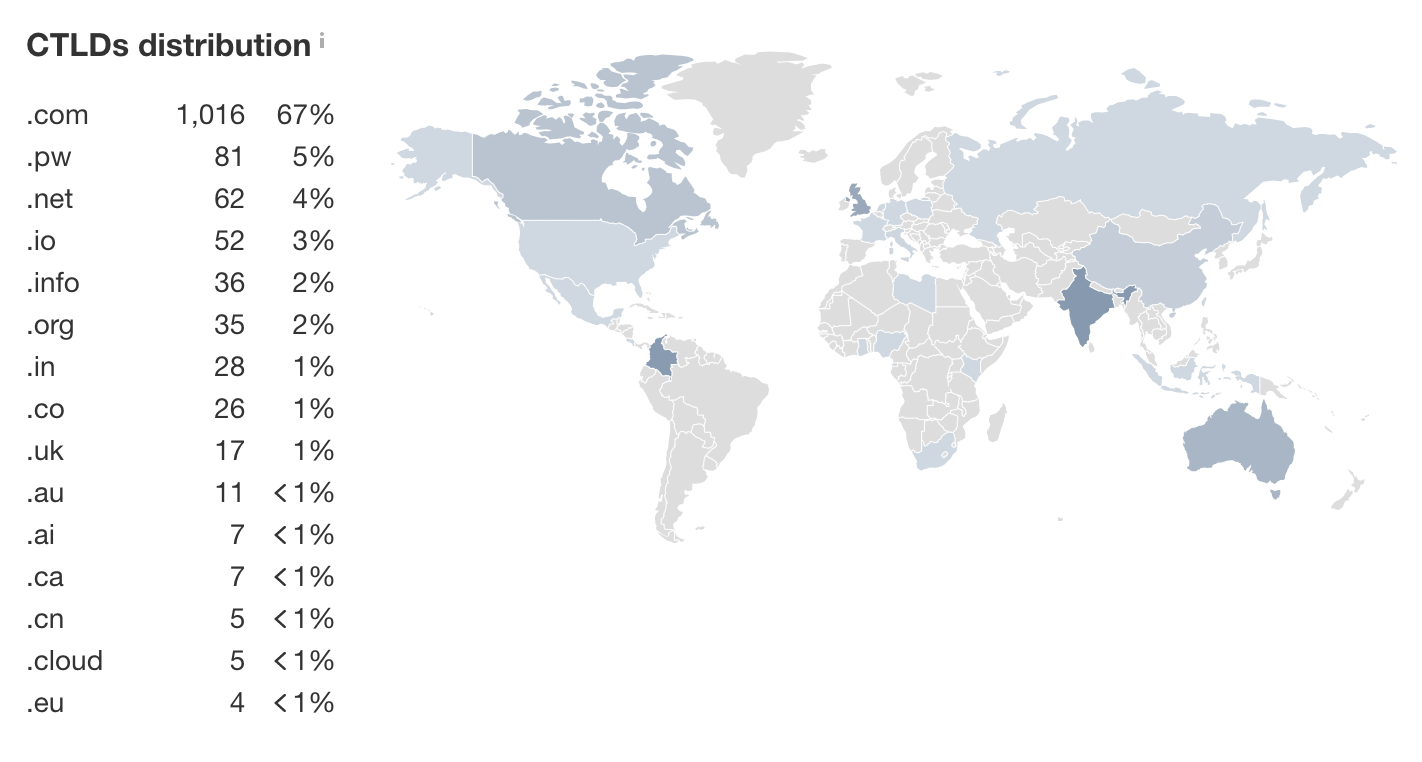
However, a high concentration of backlinks from less common or geographically irrelevant TLDs can raise red flags.
While not all links from these domains are inherently harmful, they’re not necessarily helpful either.
For example, if you notice a significant percentage of backlinks from a TLD associated with a country unrelated to your target market, it could indicate potential spam activity.
A small percentage might be negligible, but a substantial amount should tip you off.
This is not about rejecting every unusual domain, but about spotting patterns that do not match your audience or market.
Link Placement
A good link not only comes from a relevant site, but also from a good spot on that site.
Generally, backlinks fall into a few categories, in content, and image in anchor. The latter, naturally, are attached to images.
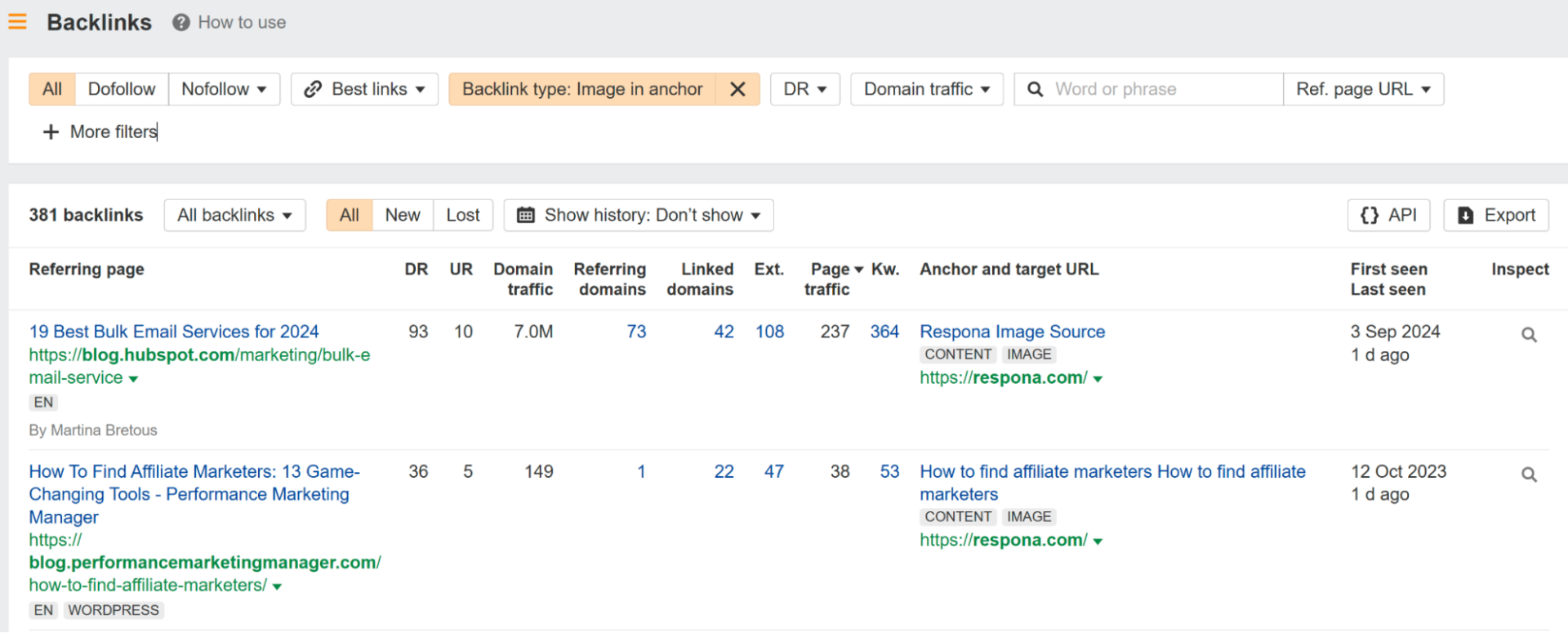
For SEO purposes, in-content links are generally considered the most valuable.
Even within the main content, the exact placement of a link matters.
Links located higher on the page tend to have a higher click-through rate (CTR). This is because users are more likely to see and interact with links near the top of the content.
Conversely, links placed in sidebars, footers, or banners are less valuable and are often seen as spammy.
Referring Page Traffic, Authority and Spam Score
When evaluating a link’s quality, it’s not enough to simply look at the linking website’s domain.
You need to dig deeper and assess the specific page that’s linking to you.
This involves considering its traffic, authority, and potential spam score.
A backlink from a page with traffic, authority, and low spam signals is generally much more valuable than one from a weak or empty page.
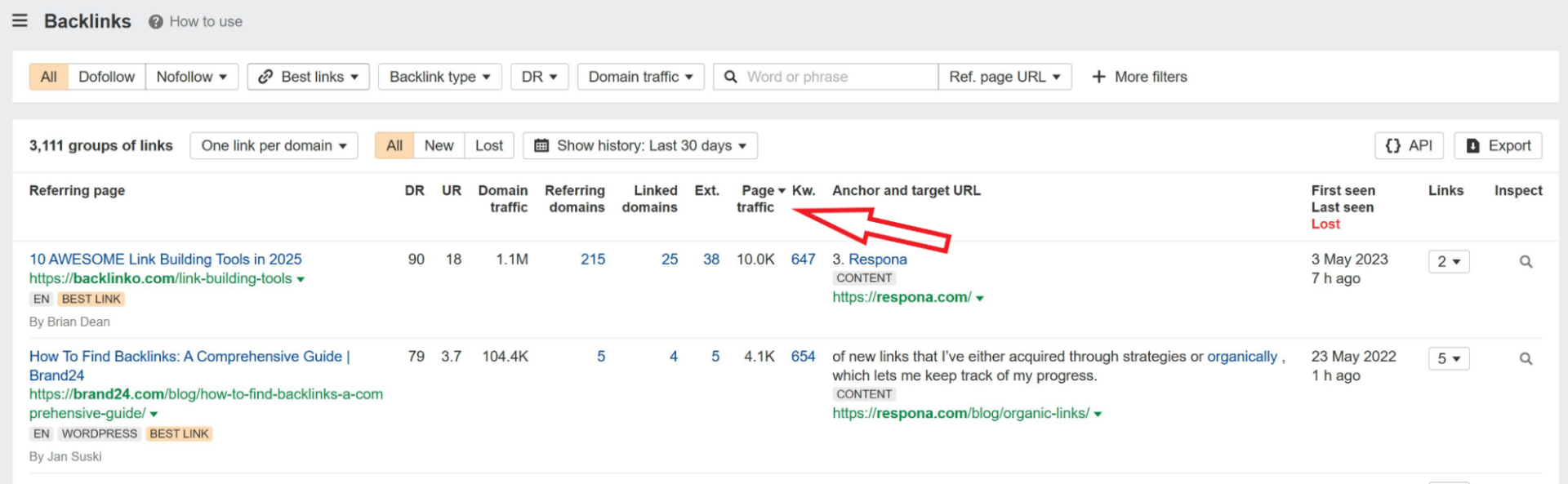
The math is simple – more people visiting the page means more people potentially clicking on your link and even converting.
A link on a page with zero traffic is effectively a link that nobody sees. But it still passes link juice, so don’t disregard them!
Just a point to keep in mind when prospecting.
Just as you assess a website’s overall authority, you should also evaluate the authority of the referring page.
This is also where metrics like domain authority, page authority, trust flow, and citation flow can help you evaluate the strength of a link more consistently.
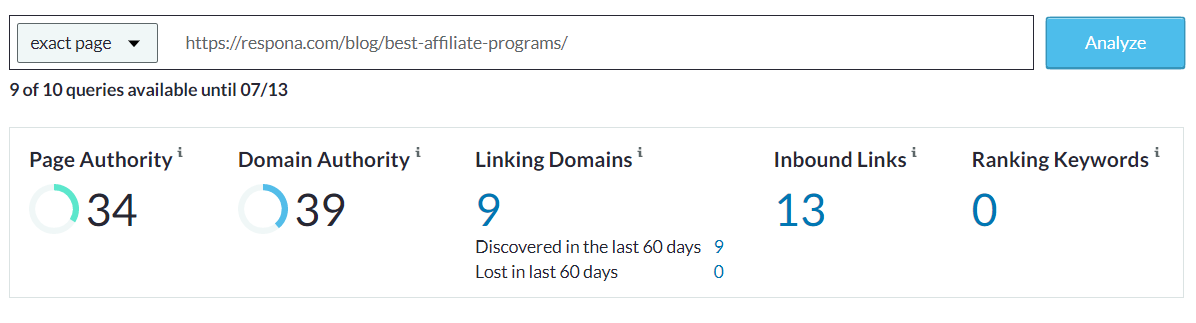
That’s because these metrics are based on individual pages’ backlink profiles.
Now, on to spam score.
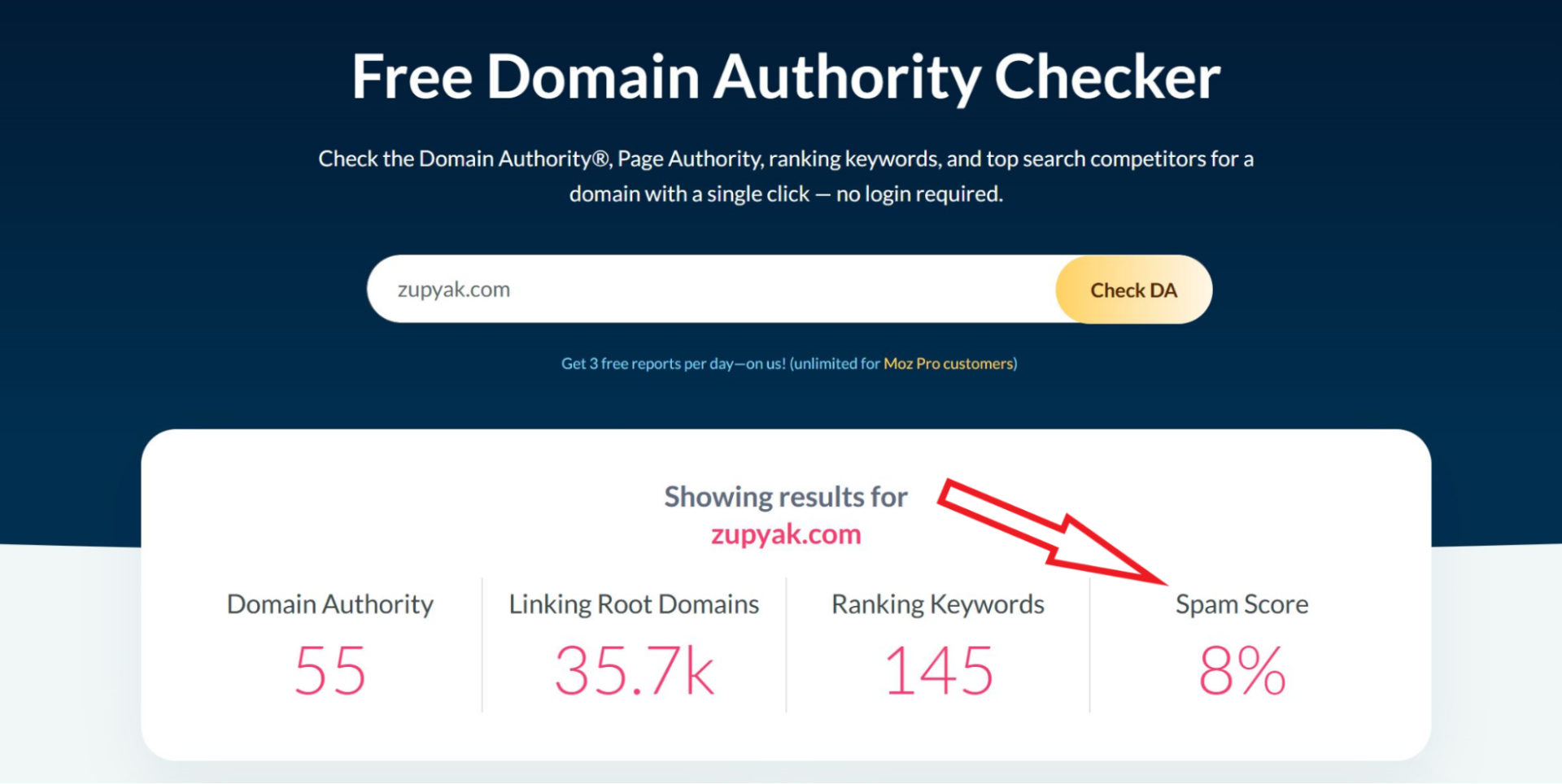
Links from pages with high spam scores can negatively impact your website’s reputation – it’s easy to see why.
Tools like Moz’s Spam Score can help you identify potentially harmful links.
Spam score is not perfect, but it is a useful screening metric when reviewing backlink data at scale.
7 Backlink Monitoring Tools
The best backlink monitoring tools do more than show a list of links. They help you track new links, lost links, anchor text, referring domains, and overall backlink profile health in one place.
Free Backlink Checker
Respona offers a free backlink checker with limited number of daily checks, perfect for occasional spot checks or those just dipping their toes into link analysis.
A free backlink checker tool is useful for quick spot checks, but it usually will not replace a full backlink monitoring tool if you need ongoing analysis.
Ahrefs
A powerhouse tool for in-depth backlink analysis.
Ahrefs provides comprehensive data on backlinks, referring domains, anchor text, and more, making it a favorite among SEO professionals
Ahrefs is strong for backlink analytics, lost and new links tracking, and deep competitor comparison.
Semrush
A versatile SEO platform with robust capabilities for tracking backlinks.
Semrush offers a wide range of features, including competitor backlink analysis, toxic link detection, and detailed backlink reports.
Semrush is especially useful if you want backlink monitoring alongside broader site auditing and toxicity analysis.
Moz
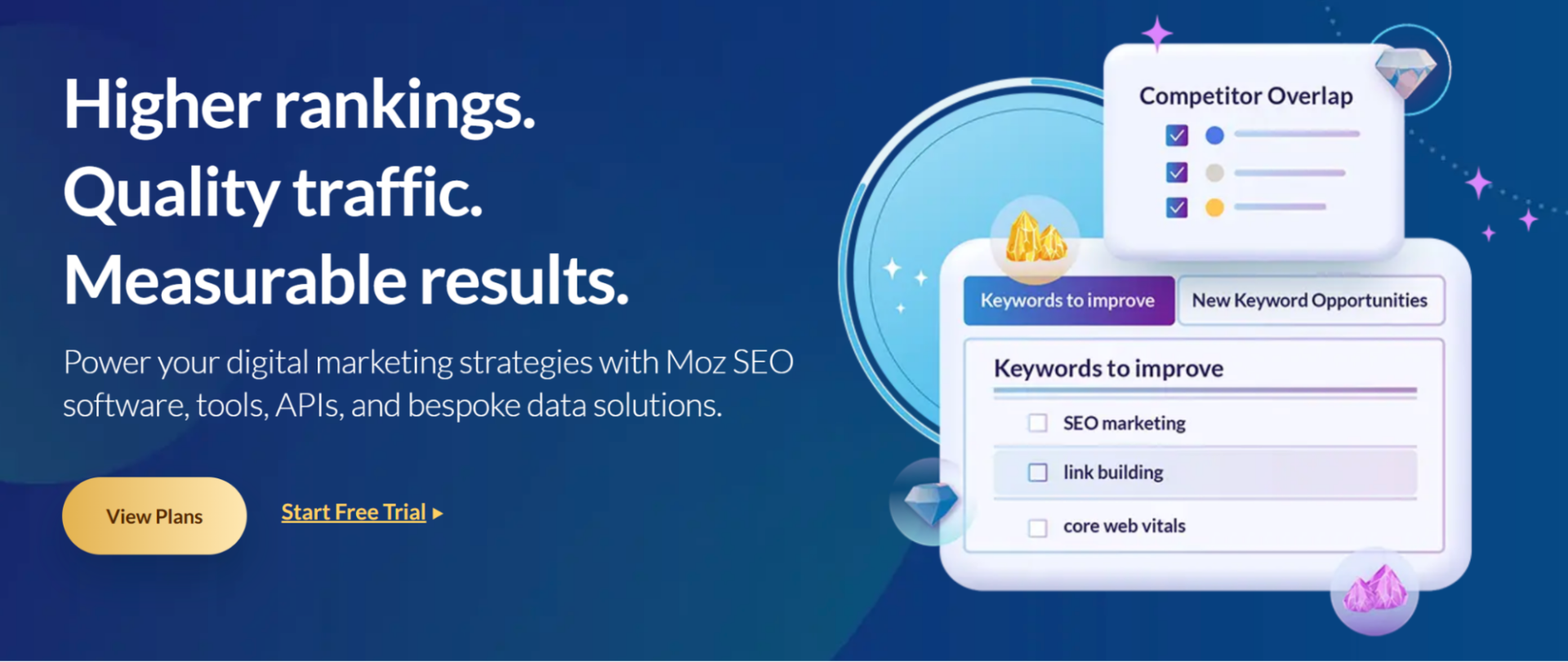
Known for its Domain Authority and Page Authority metrics, Moz’s Link Explorer provides valuable insights into your backlink profile.
It’s a user-friendly backlink tracking tool with a strong emphasis on link quality.
Moz’s Link Explorer is useful when you want to pair backlink data with Domain Authority and Spam Score insights.
Majestic

A dedicated backlink analysis tool with a focus on link intelligence.
Majestic is renowned for its extensive link database and unique metrics like Trust Flow and Citation Flow.
Majestic stands out for Trust Flow and Citation Flow, which some teams use as supporting link quality metrics.
SE Ranking
A comprehensive SEO suite that includes a user-friendly backlink checker tool.
SE Ranking offers affordable plans and provides detailed backlink data, making it a great option for businesses of all sizes.
SE Ranking is a solid option if you want a simpler monitoring tool with backlink tracking and general SEO reporting in one platform.
SpyFu
Primarily a competitor analysis tool, SpyFu also offers valuable backlink insights.
It allows you to uncover your competitors’ backlink strategies and identify potential link-building opportunities.
SpyFu is more competitor-focused, but it can still help uncover link building opportunities and overlapping backlink sources.
Link building cheat sheet
Now Over to You
In conclusion, backlink monitoring works best when you focus on the signals that actually matter.
That means tracking new links, lost links, referring domains, anchor text, broken link issues, and page-level quality instead of just watching a backlink total go up and down.
The right monitoring process helps you protect your backlink profile, improve link quality, and find better link building opportunities over time.
But monitoring alone is not enough. You still need a steady flow of strong new backlinks.
If you want help building high-quality backlinks while keeping your backlink profile healthy, our team can help.
Our done-for-you link building helps brands earn high-quality backlinks through personalized outreach, relationship-driven prospecting, digital PR, and strategic content promotion.
Instead of handling prospecting, outreach, follow-ups, and backlink growth yourself, you can rely on our team to build links that support long-term SEO growth.
Frequently Asked Questions (FAQ)
How often should I monitor my backlinks?
It’s generally recommended to monitor your backlinks at least once a month.
However, the frequency can vary depending on the size of your website and the intensity of your link-building efforts.
More frequent monitoring might be necessary if you’re actively building links or suspect a sudden change in your backlink profile.
What are the most important metrics to track?
While all the metrics mentioned in this guide are valuable, some key ones to prioritize include link velocity, dofollow vs. nofollow link ratio, anchor text distribution, referring page authority, and spam score.
These metrics provide a good overview of your backlink profile’s health and effectiveness.
What should I do if I find toxic backlinks?
If you identify potentially harmful backlinks, the best course of action is to attempt to remove them by contacting the linking website’s owner.
If removal isn’t possible, you can use Google’s Disavow Tool to tell Google to ignore those links.
How can I improve my backlink profile?
Building a strong backlink profile requires a multifaceted approach.
Some effective strategies include creating high-quality content, guest blogging on relevant websites, participating in industry forums and communities, and conducting broken link building.
What tools can I use to monitor backlinks for free?
While most comprehensive backlink analysis tools require a paid subscription, there are some free options available.
Google Search Console provides basic backlink data, and tools like Ubersuggest offer limited free backlink checks. However, for more in-depth analysis and monitoring, investing in a paid backlink monitoring tool is generally recommended.