
Are SEO and public relations connected and if they are how can you use SEO to boost your PR efforts?
In this guide, you’ll learn seven reasons why your public relations strategy absolutely needs SEO.
Here’s what you’ll find inside how backlinks can help you boost your domain authority, how higher rankings in Google can affect brand awareness, and how online mentions can help you create the right associations for your brand.
And much more.
If you’re wondering if SEO efforts should be a part of your PR mix, read on.
Key Takeaways:
- SEO and PR aren’t separate disciplines, they reinforce each other. Higher visibility on Google amplifies your PR efforts, and PR-driven mentions feed your SEO performance by building authority signals and brand authority. The convergence is now called SEO PR by practitioners coming from the search side, and PR SEO by those coming from the PR side.
- Off page SEO is where PR and SEO overlap most. Securing brand mentions on a media outlet, building relationships with PR professionals at major publications, and earning links from authoritative sites is half PR work and half link building.
- The most valuable PR placements in 2026 do double duty. A spot in a tier-1 listicle drives traffic, builds authority across major search engines, AND increasingly shows up as a brand mention inside AI answer engines like ChatGPT, Google AI Overviews, and Perplexity. Your PR work now has a second job.
- Standalone PR is no longer enough. Sending company announcements to a PR agency for distribution doesn’t move the needle on website traffic unless paired with strategic link acquisition. Modern PR efforts need an SEO mindset attached.
- The teams seeing the strongest ROI run outreach-heavy programs targeting listicles, comparison roundups, and “best of” articles. These are the placements that show up in both traditional search engines and AI answer engines, which means each link does double duty for both organic rankings and AI citations.
- The Differences Between Digital PR and SEO
- SEO Types
- Reason #1: Higher Search Rankings Online Mean Higher Brand Awareness
- Reason #2: Brand Mentions Get You AI Citations, Too
- Reason #3: SEO-Friendly Content Will Help You Grow Your Organic Footprint
- Reason #4: Backlinks Can Help You Grow Your Domain Rating and Authority
- Reason #5: Online Mentions Can Help You Improve Your E-A-T
- Reason #6: Guest Blogging Outreach Can Help You Establish Relationships
- Reason #7: More Organic Traffic Can Help You Allocate Budget to Other Initiatives
- Reason #8: Content Marketing is a Form of PR
- How to Track SEO Progress?
- Challenges of Doing SEO for PR
- Now Over to You
- Frequently Asked Questions
Link building cheat sheet
The Differences Between Digital PR and SEO
Before we delve deep into the benefits of search engine optimization for your business, we need to clearly define the boundaries of digital public relations and SEO.
These strategies do have some touching points, but are ultimately distinctly different practices.
Digital PR is the use of digital media channels to create, build, and maintain an organization’s reputation and relationships.
It is a combination of traditional public relations and marketing tactics, such as press releases, social media, influencer marketing, content marketing, and more, all used to create an online presence that engages and grows an organization’s audience, while getting media coverage.
This is done through owned, paid, and earned media channels.
Digital PR is used to build relationships with key stakeholders like customers, influencers, and the media, as well as to create a positive online presence and brand awareness.
It can be summed up in three words: online reputation management.
SEO, on the other hand, is the process of optimizing your website’s pages and content with the goal of securing higher rankings on search engine results pages (SERPs).
It focuses solely on your owned channels: more specifically, your website and its blog.
Digital PR supplements SEO by securing brand mentions and high-quality backlinks from relevant resources.
In a sense, a digital PR campaign is part of SEO, and SEO is part of digital PR, since high search engine rankings also establish your brand’s thought leadership, authority, and improve relations with both existing and potential clients.
There are three sides to search engine optimization, which leads us to the next section.
SEO Types
The three types of SEO are: on-page, off-page, and technical.
On-Page SEO
On-page SEO refers to all of your optimization activities that are done on your pages, hence the name.
These include:
- Researching and creating high-quality content
- Identifying target keywords and optimizing content for them
- Optimizing your pages’ title and meta tags.
Off-Page SEO
Off-page SEO is the one the most related to digital PR.
It focuses on obtaining high-quality, dofollow backlinks from relevant sources, brand mentions, and improving your local SEO.
Technical SEO
Technical SEO is mostly done on the back end to ensure that your website loads quickly, and is easily crawlable by search engines – with the help of internal links, sitemaps, and robots.txt files.
Now, let’s take a look at some reasons why SEO is necessary for bolstering your public relations efforts.
Reason #1: Higher Search Rankings Online Mean Higher Brand Awareness
The first reason why your PR strategy needs SEO is because higher search rankings increase your brand awareness, which, of course, is very important.
Public relations is all about brand awareness.
Higher brand awareness means that customers are more likely to use your brand because they’re more familiar with your product or service. It also helps non-profit organizations expand their reach and achieve their goals quicker.
As search engine algorithms become better and smarter, companies need to find smart and effective ways to deal with the algorithms and place their brand higher and higher in terms of search rankings online.
Let’s look at an example of this by eCommerce platform, BigCommerce.
I did a simple Google search using the term eCommerce platform.
As you can see below, there’s a list of paid results at the top of this search engine results page (SERP).
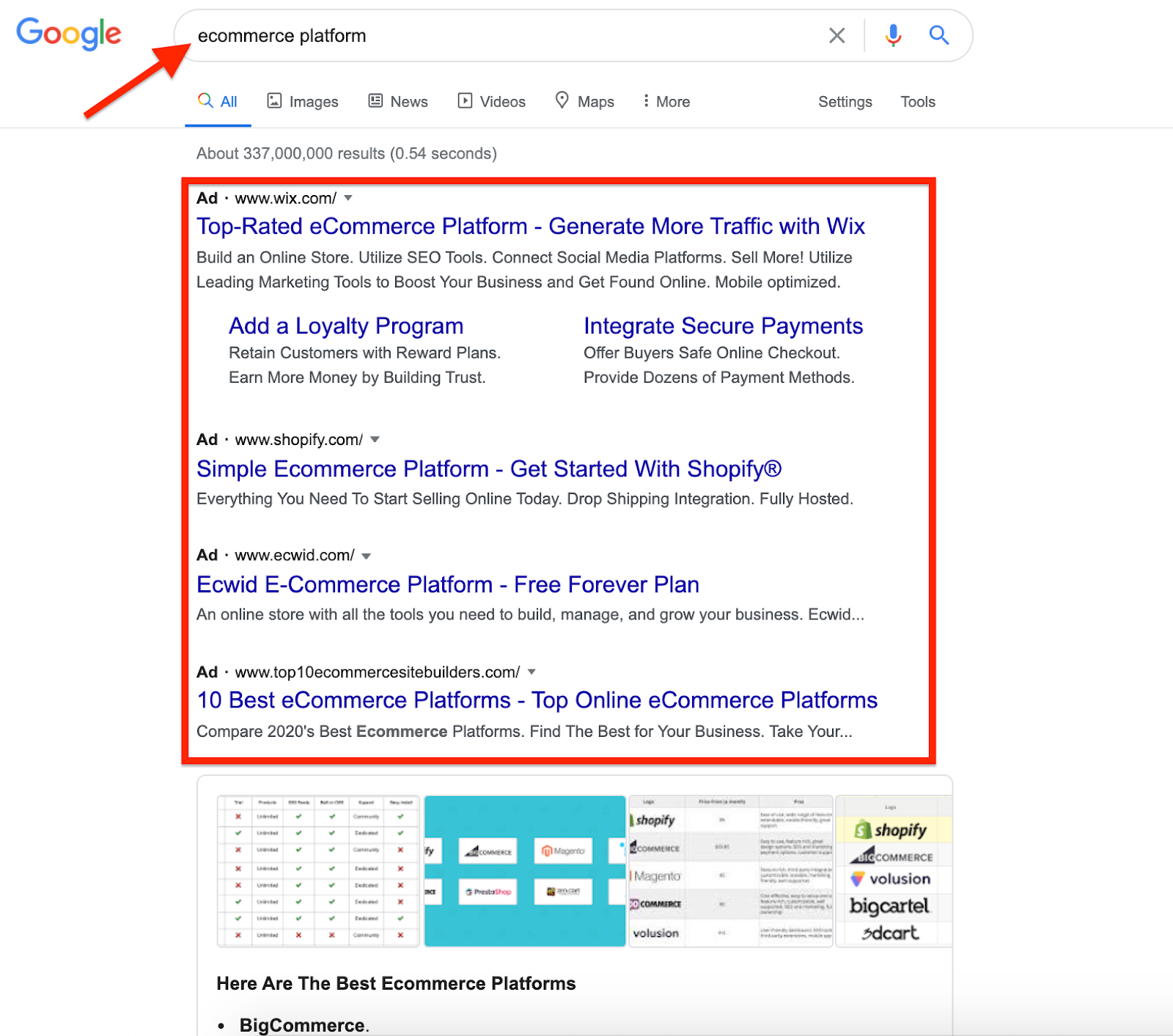
However, the first organic result comes from BigCommerce.
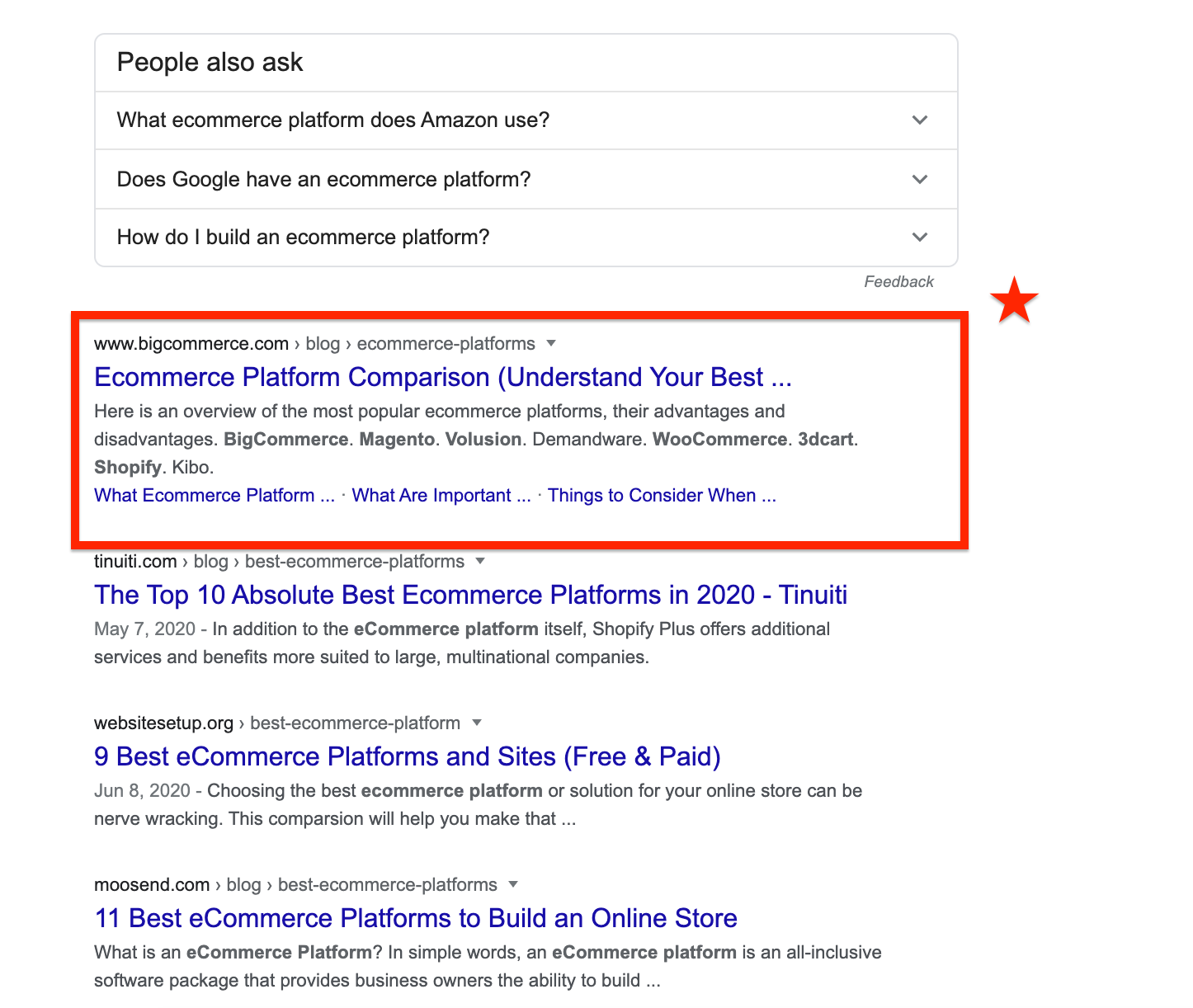
Author’s Note: Search results differ based on your location, browser preferences and overall activity online.
Why is this important?
As users encounter the name of the brand—in this case, BigCommerce—by a simple Google search, it’s more likely that they will choose the company’s service in the future because of familiarity.
In other words, the next time they’ll conduct a search that’s related to the initial one, they’ll be more inclined to choose BigCommerce’s search result because they’re familiar with the brand.
The second example I want to present to you came up through another online search, this time using the term presentation software.
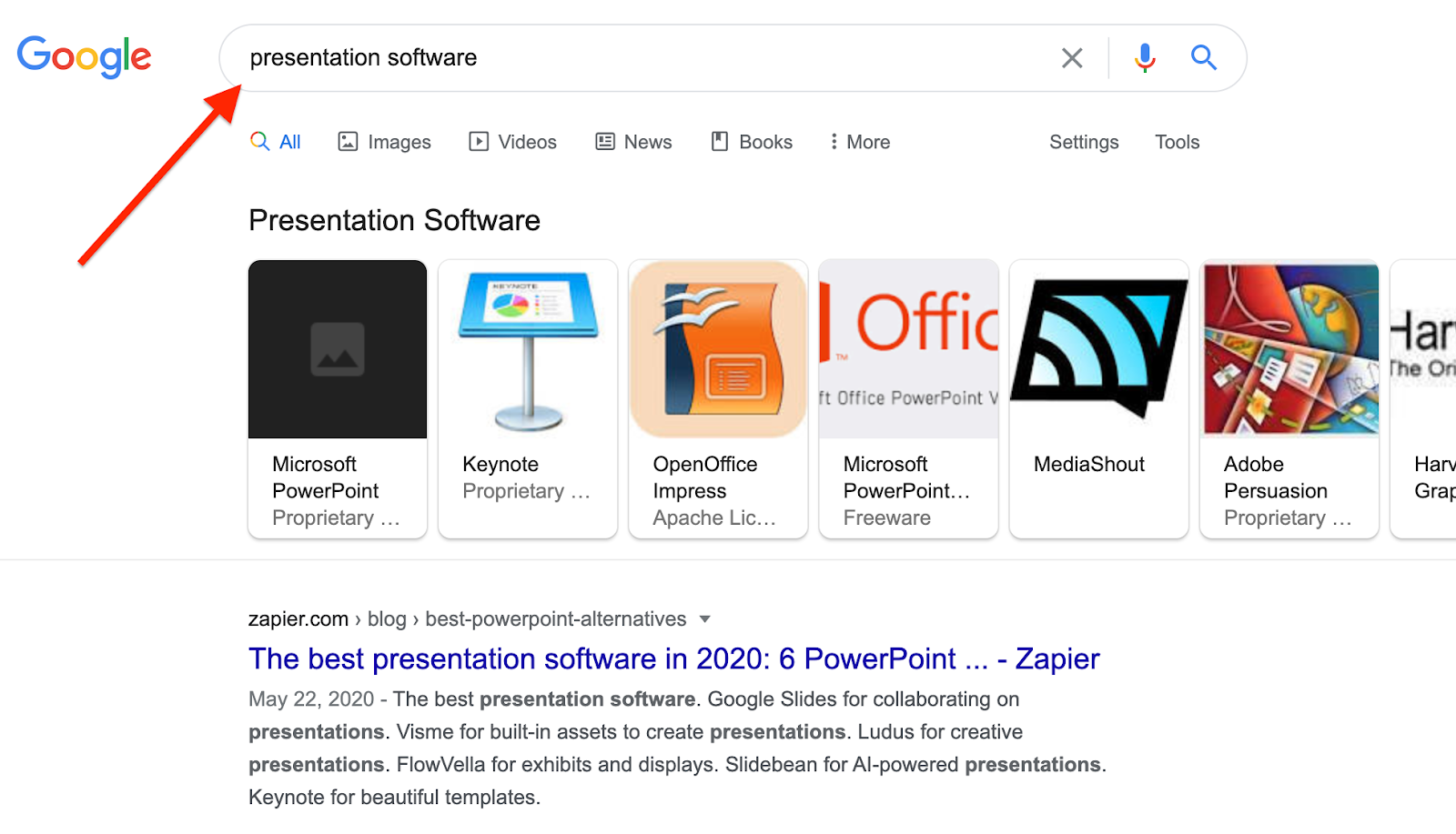
One of the top results for that term is Visme.
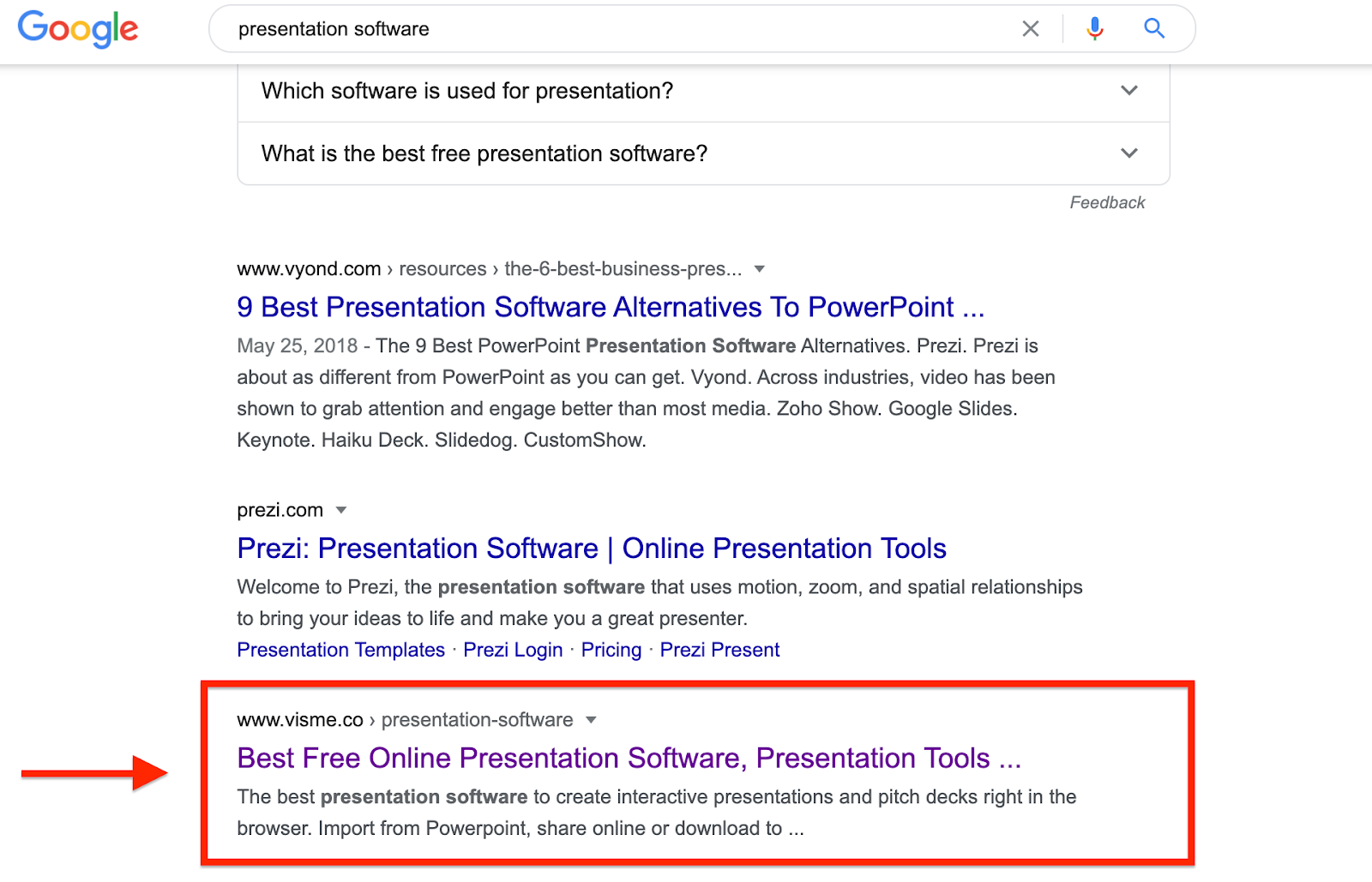
As we explained earlier, this can lead to more and more people trusting Visme, and to start using the product since they already know the name and feel familiar with the company.
The screenshot from Ahrefs, below, shows that the target term in this example (presentation software) is difficult to rank for.
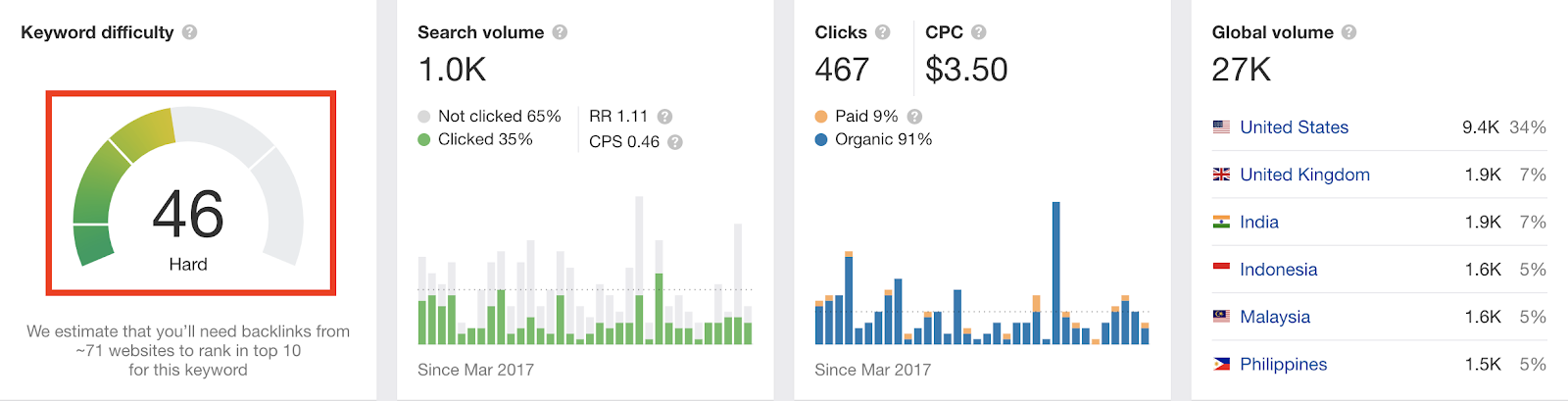
The fact that Visme is ranking for it is like an indirect way of doing PR, thereby enhancing the public relations strategy of the company.
Before we move on to the second reason why your PR strategy needs SEO, I want you to keep in mind that higher rankings are very successful in terms of attracting your target audience through higher brand awareness.
Keep reading!
Reason #2: Brand Mentions Get You AI Citations, Too
Here’s something most PR teams haven’t fully internalized yet: the same brand mentions you’ve been chasing for years are now the primary driver of visibility inside AI answer engines.
When someone asks ChatGPT or Google AI Overviews “what’s the best [X] tool?”, the AI doesn’t pull from one source.
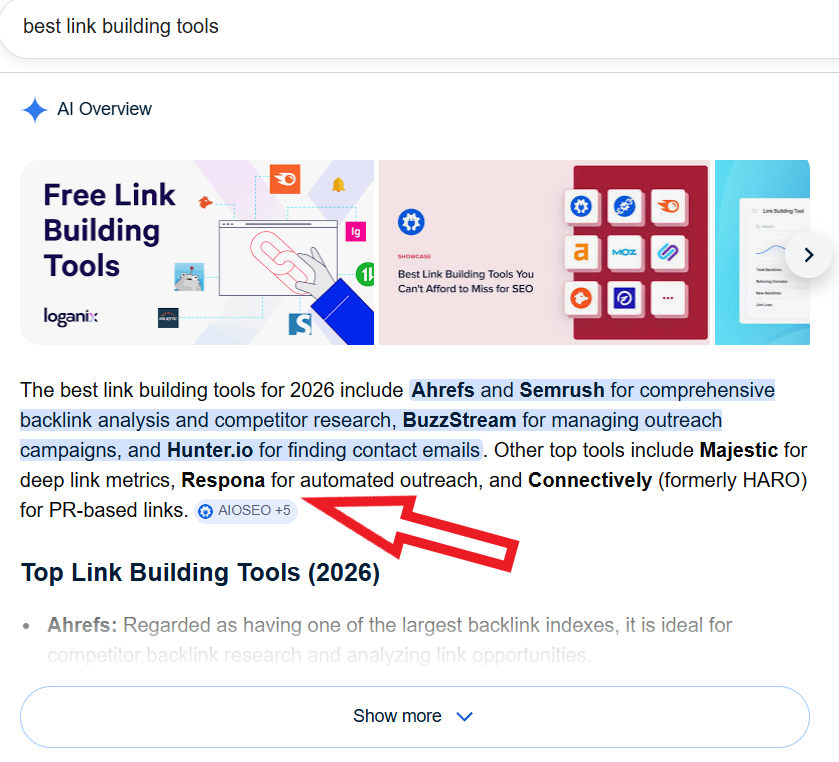
It pulls from listicles, “best of” roundups, and comparison articles that already rank in Google. If your brand isn’t named in those articles, you don’t appear in the AI’s answer. Period.
That makes the brand mention you secure on a tier-1 publication like this one double-duty work:
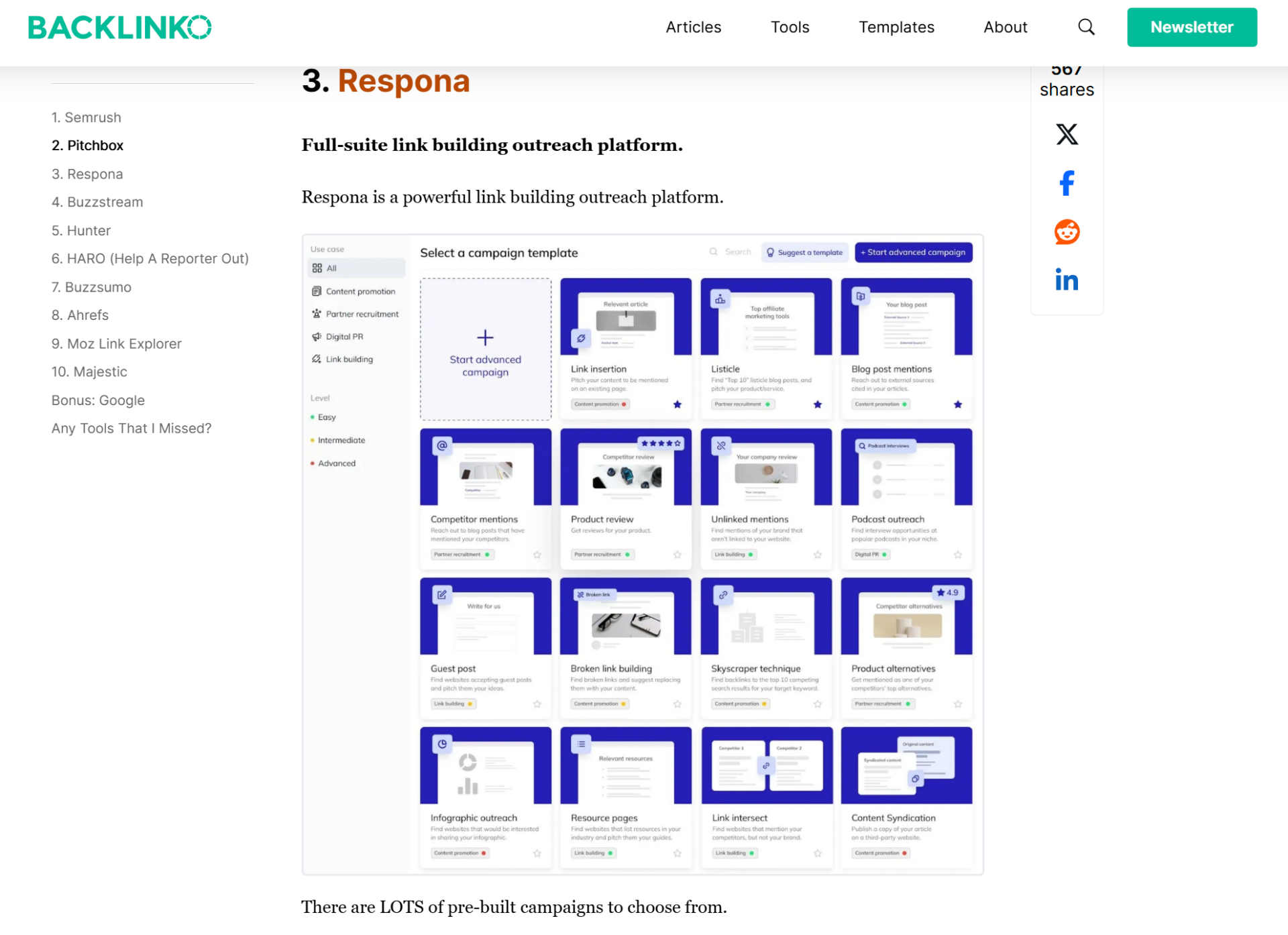
It earns you traditional SEO benefits (link equity, brand authority, referral traffic) AND it makes you eligible to be cited in AI answers when prospects research your category. Same placement, two layers of visibility.
This shift is also why an SEO PR approach matters now more than ever.
The publications that drove your PR results five years ago, including industry blogs and social media platforms, are the same ones training the AI models today.
A digital PR strategy that ignores AI visibility leaves measurable wins on the table, and a classic PR playbook that doesn’t account for digital marketing fundamentals leaves brand reputation gains uncaptured.
The problem is that landing those placements takes serious time. The kind of listicle spot that drives both organic and AI visibility usually requires hours of prospecting, pitching, follow-up, and negotiation per placement.
If you don’t have the capacity for that in-house, you can still get them consistently with some help.
Respona is a done-for-you link building service combined with built-in AI visibility tracking.
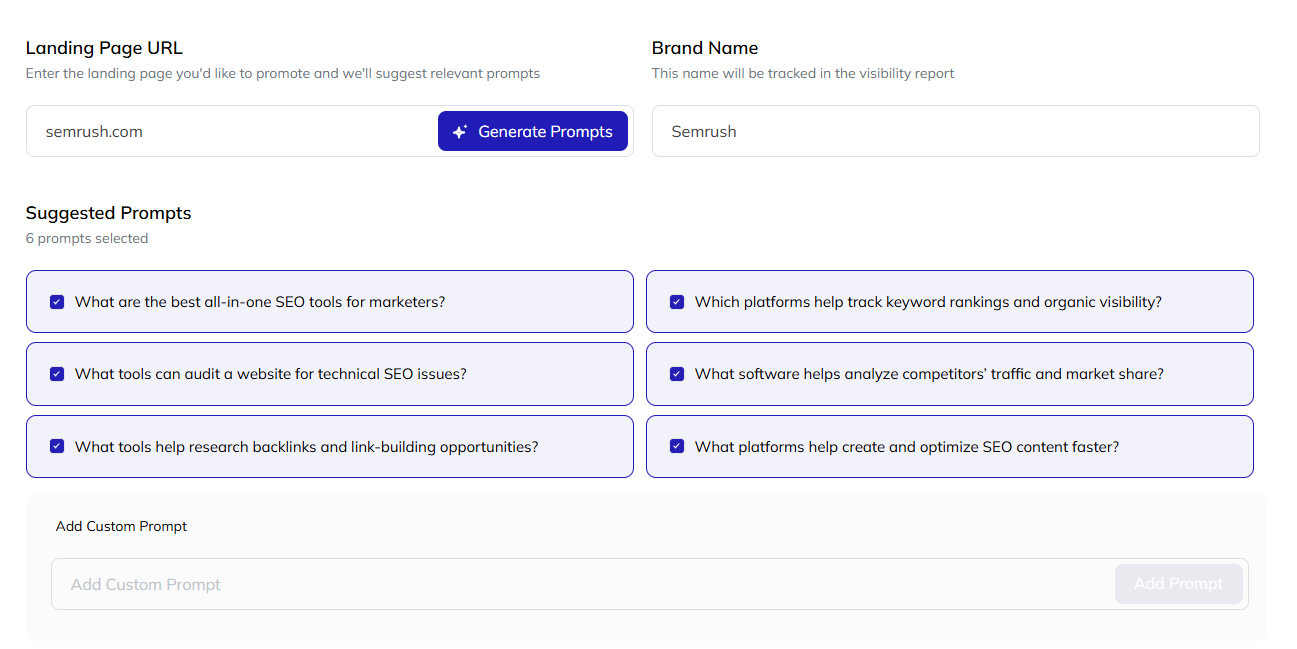
Place an order by sharing your target keywords, target pages, and AI prompts you want to show up in, and Respona’s team handles the prospecting, pitching, and securing each live placement on a pay-per-result basis.
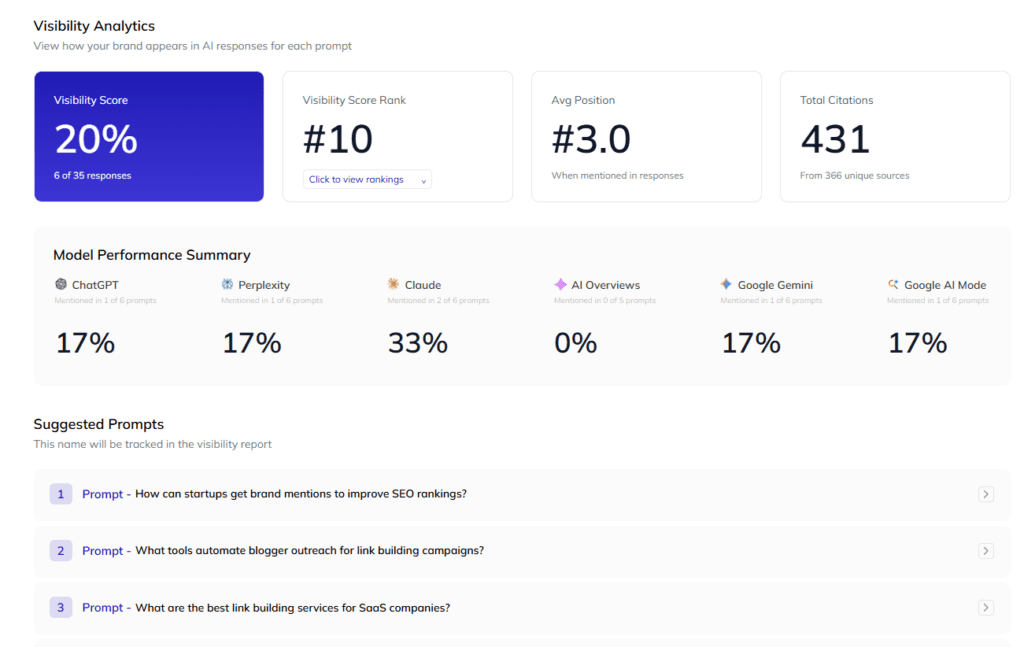
The built-in AI visibility tracker monitors brand mentions across ChatGPT, Perplexity, Google AI Overviews, Gemini, Claude, and Copilot, so you can measure exactly how each PR placement translates into AI citations alongside other organic visibility gains.
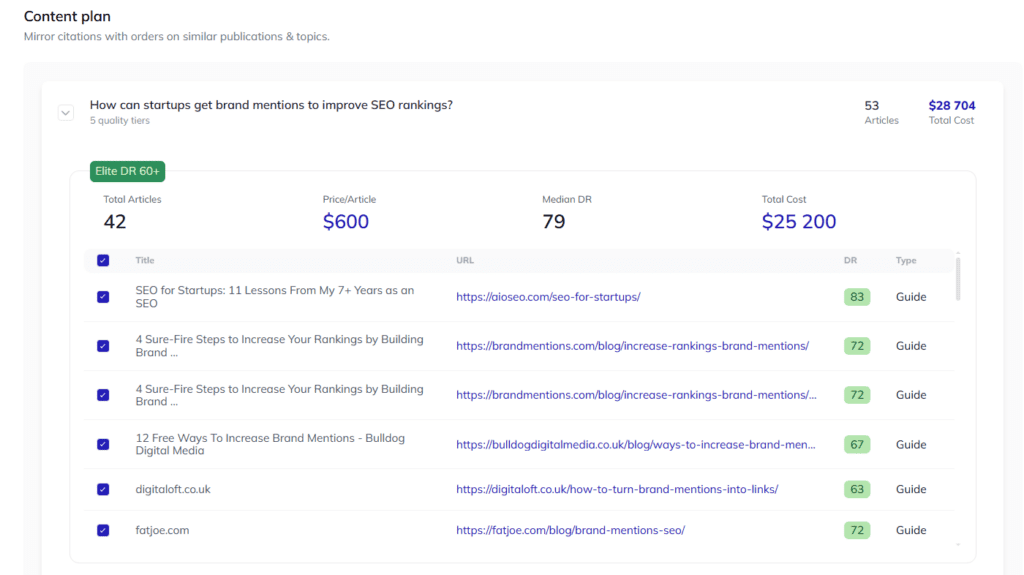
The link building action plan inside Respona pulls articles that already rank in Google AND already get cited inside AI engines for your target prompts.
Each one is a high-value listicle to pursue first.
Pricing starts at $100 per live placement and scales by site authority, with no monthly retainer or contract commitment.
Reason #3: SEO-Friendly Content Will Help You Grow Your Organic Footprint
This section is about SEO-friendly and comprehensive content and how this can help you achieve higher rankings and increase your organic footprint.
I’m going to use data from Backlinko’s analysis of 11.8 million organic Google search results.
Take a look at the findings below—I’ve highlighted finding No.3 for you.
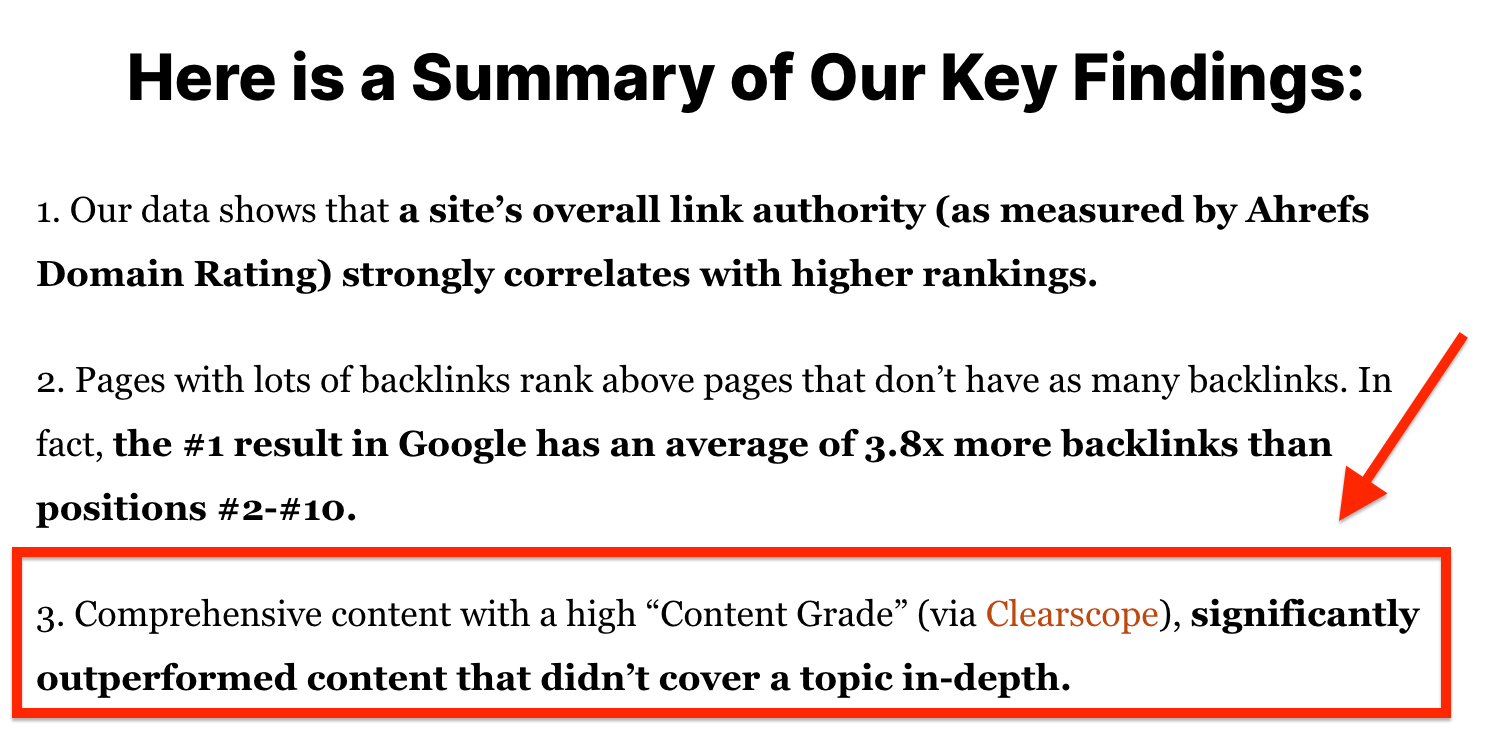
This means that there seems to be a correlation between in-depth content that covers the topic thoroughly and higher rankings.
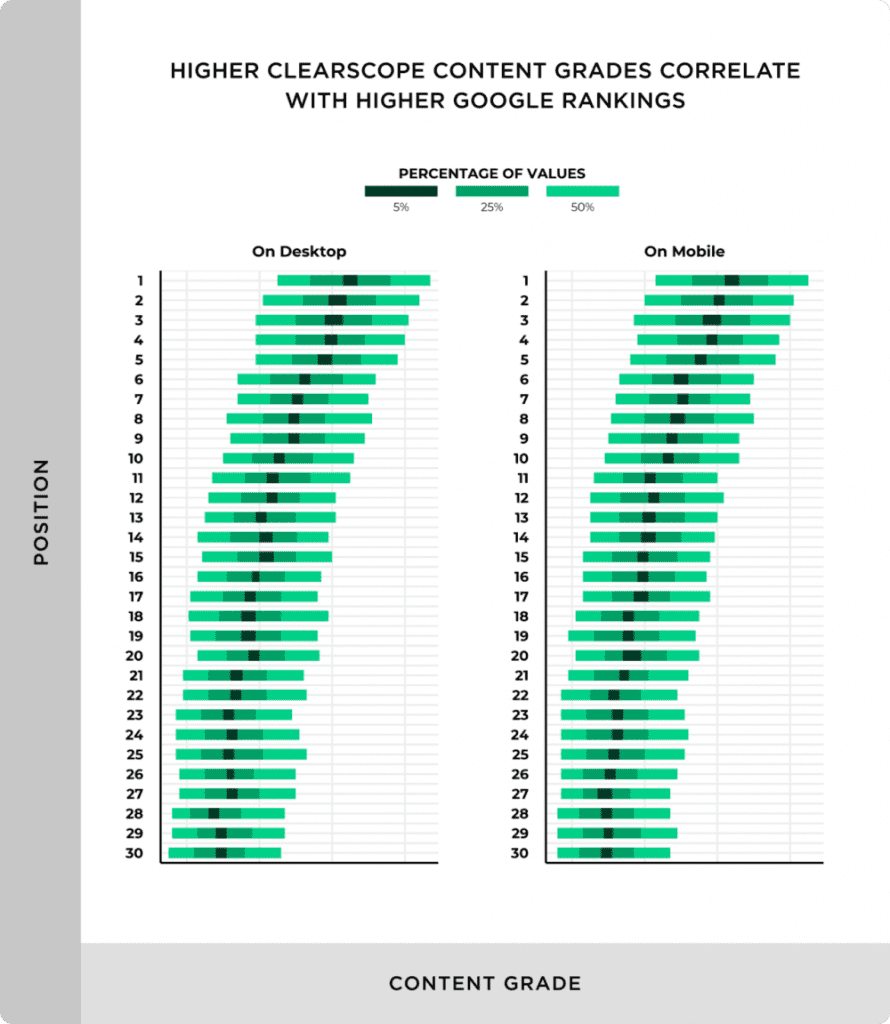
The graph above explains how the use of content optimization tool Clearscope can lead to higher Google rankings.
Put another way, creating comprehensive content that’s SEO-friendly can help you grow your organic visibility and thus raise awareness by indirectly doing PR through the SERPs.
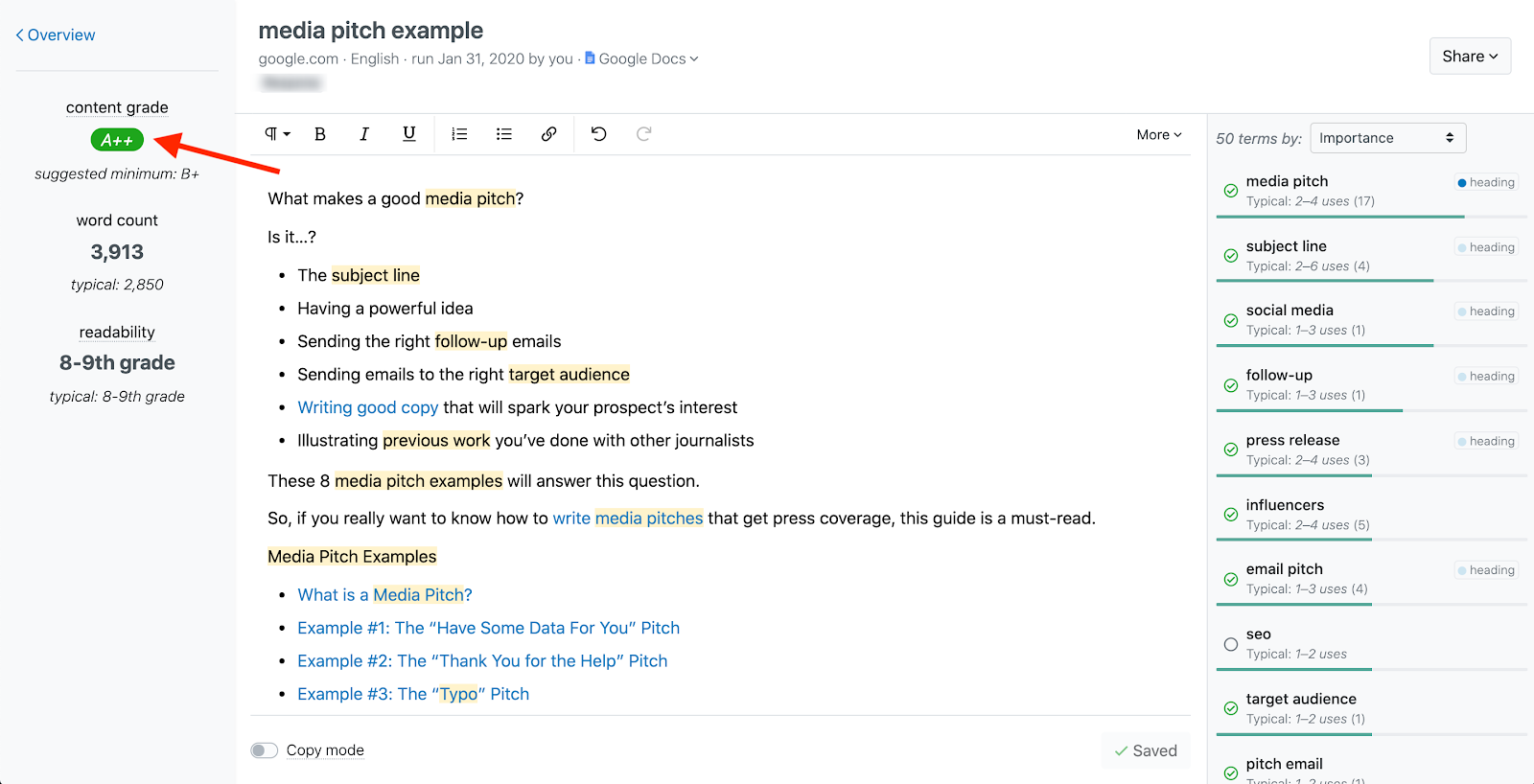
Our Respona media pitch example below will make this a bit more clear.
More specifically, we can see that our published content piece has an A++ content grade on Clearscope.
This basically means that the vast majority of terms suggested by Clearscope—through analyzing the top results on the SERPs—have been used, thus making the content piece one that covers the topic in-depth; it’s comprehensive and SEO-friendly.
Author’s Note: The selection of the right keyword phrase is essential when it comes to getting more visibility online. Thus, try to conduct a thorough keyword research before you start creating any new content. To conduct keyword research, you can use a tool like Ahrefs, SEMrush or Moz.
As you can see below, this piece ranks on the first page for the target term of “media pitch examples”.
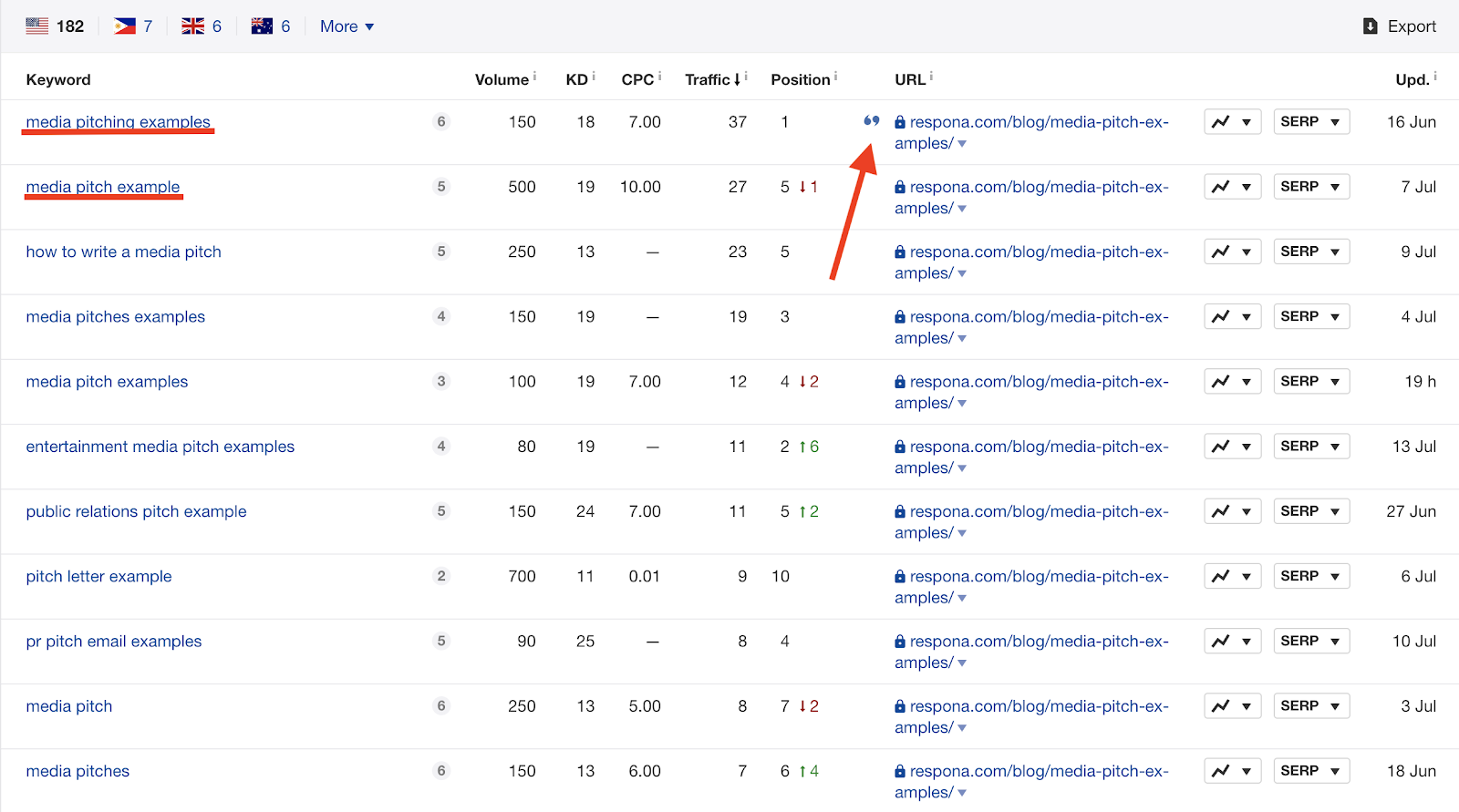
Higher rankings ultimately manage to indirectly reinforce your PR campaign and the digital marketing efforts of your PR team through higher visibility on the SERPs.
What’s worth mentioning is that we also managed to get a featured snippet for the term, which gives us even more visibility.
Let’s now move to the next reason you should be aware of.
Reason #4: Backlinks Can Help You Grow Your Domain Rating and Authority
Link building, in general, can help you grow your Domain Rating (Domain Authority) which is responsible for higher rankings according to correlation studies.
These, as we mentioned earlier, can help you get more exposure online, raise brand awareness, and thus indirectly do some form of PR.
Let’s unpack this.
For this section, I’m going to focus on another two findings of the Backlinko study I mentioned earlier.
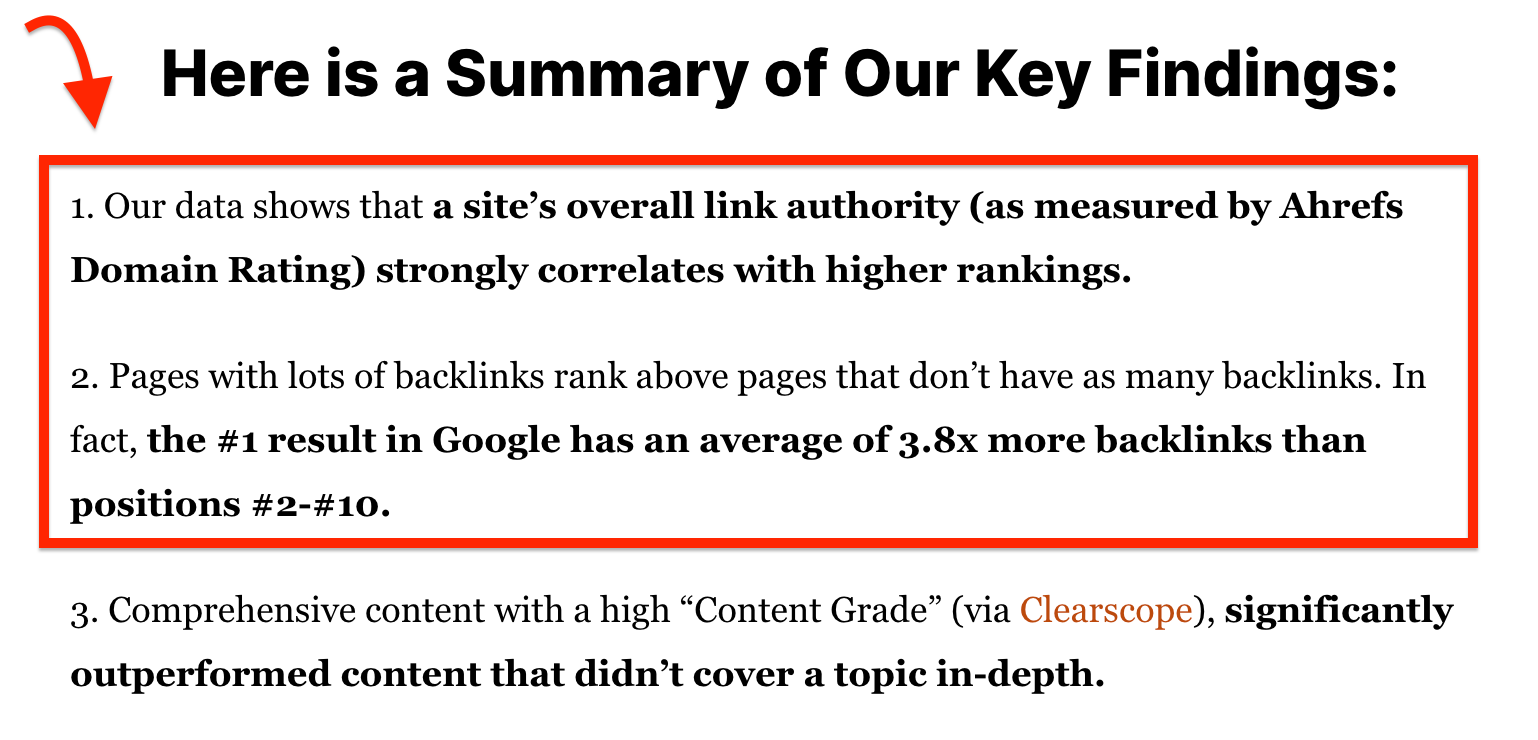
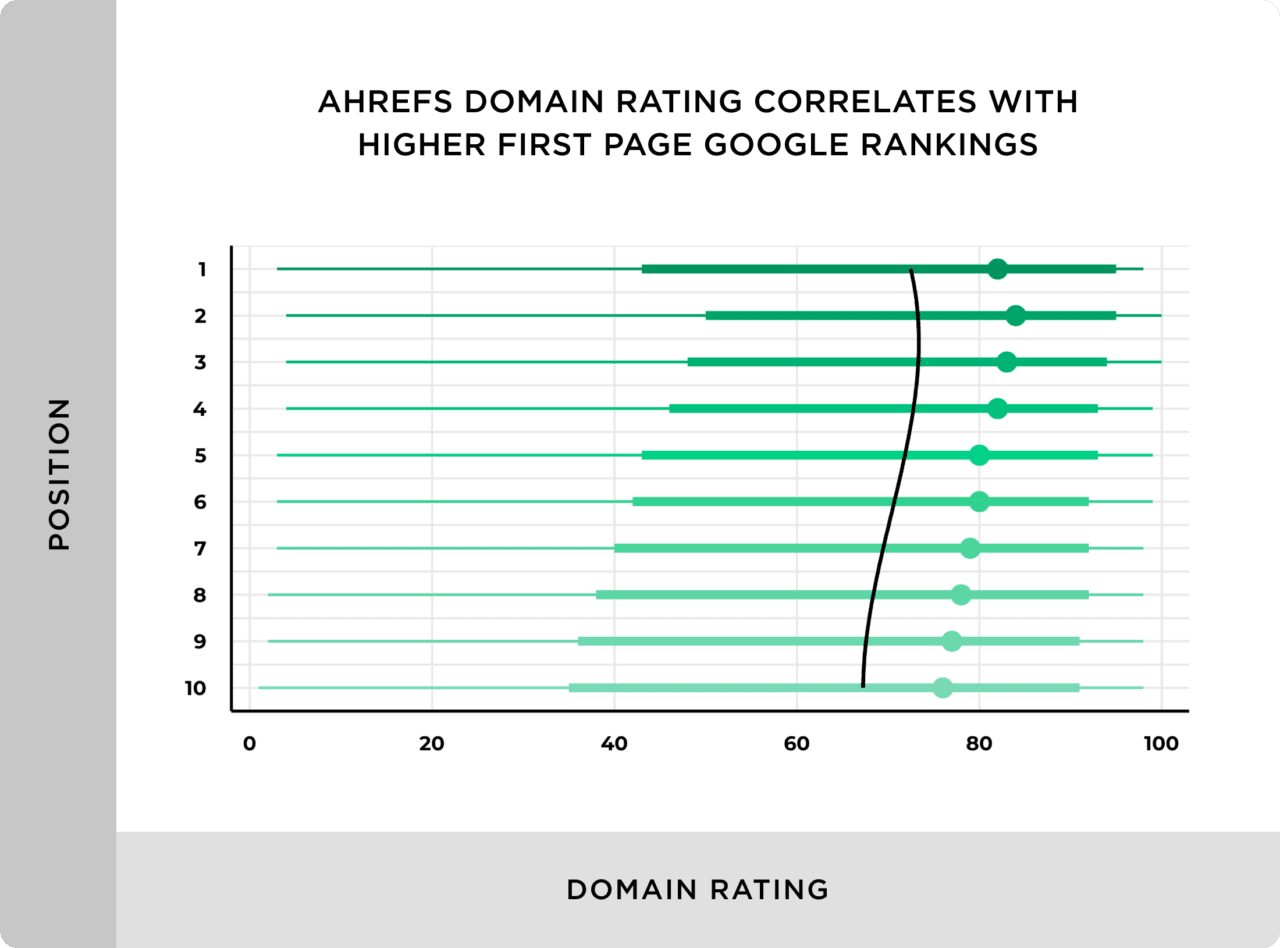
What the study shows us is that there’s a strong correlation between a website’s link authority and high rankings.
The graph below speaks for itself.
Additionally, the study reveals that backlinks cause pages that include them to rank higher and outperform content that doesn’t include as many, or doesn’t include backlinks at all.
Simply put, backlinks are considered one of the most important rankings factors by most search engine optimization experts.
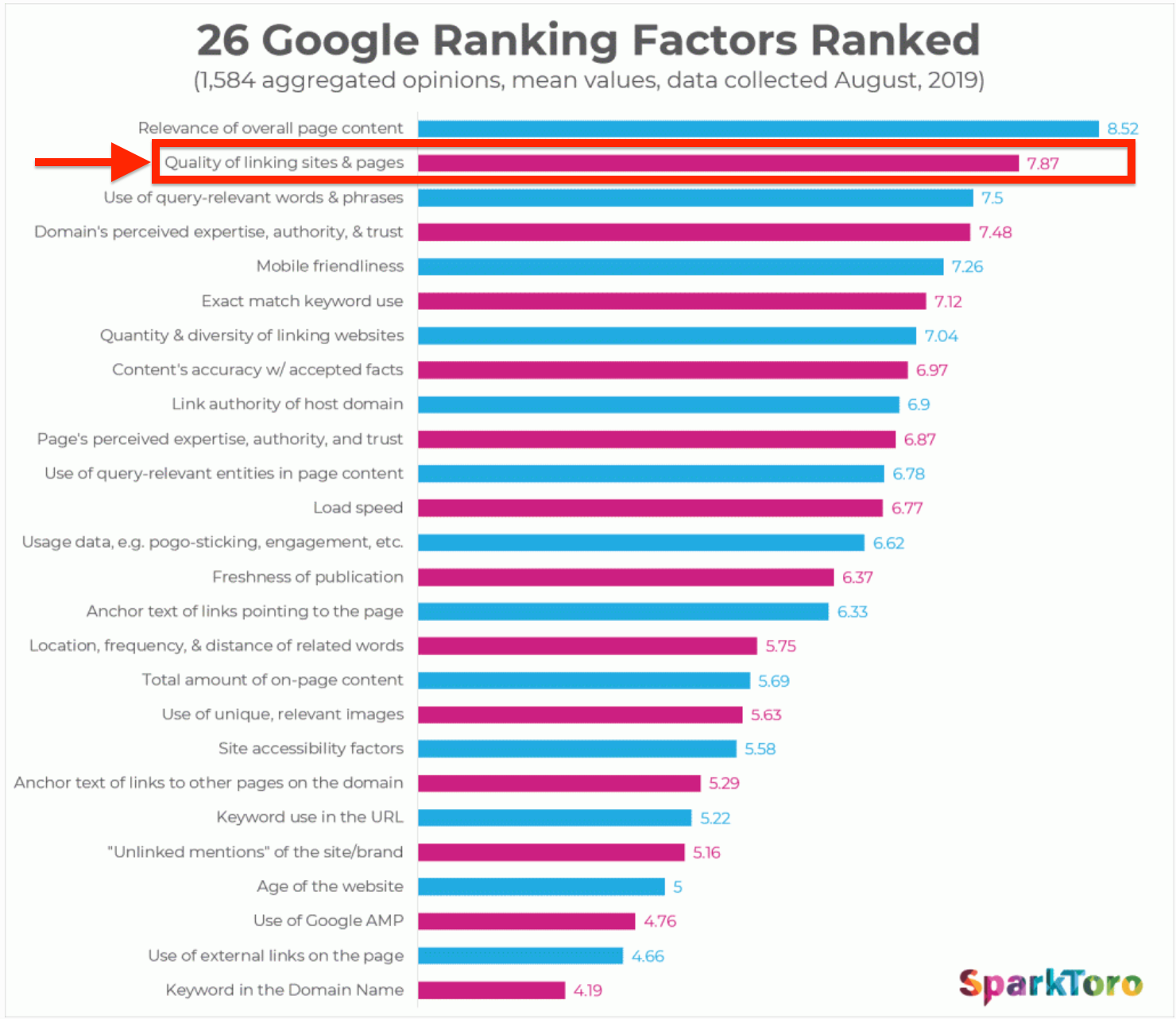
In fact, according to the Sparktoro survey on Google rankings factors, backlinks are the second most important ranking factor.
More specifically, over 1,500 SEO experts have chosen the quality of linking sites and pages as the second most important ranking factor.
Author’s Note: The anchor text, or hyperlinked text, used when linking back to a certain page can give Google context as to what the page is all about. Thus, when building backlinks, it’s always good to do it using anchor text that matches the target term or variations of the target term. You don’t want to overdo it, but you have to keep in mind that using relevant anchor texts helps.
A great example of this is Respona, which managed to get from 0 to higher than 60 DR (Domain Rating, Ahrefs metrics) in less than 6 months.

That helps us grow our search traffic and get higher visibility online.
In other words, the more websites that link back to you, the higher other people and businesses can trust you.
Isn’t that what PR is all about?
PR Links Vs SEO Links
While all backlinks from authoritative sources are good for your website’s well-being in general, some can have purely PR value without any SEO benefits attached.
By “PR value”, we mean online visibility and brand awareness.
And by “SEO benefits”, we mean PageRank, or “link juice”.
PageRank is a part of Google’s ranking algorithm and assigns pages scores depending on the number and quality of inbound links it has.
Link building as a whole is aimed to increase your website’s authority and PageRank of individual pages.
Only dofollow links pass on link juice.
A “dofollow” link is one that has the “rel=dofollow” or “rel=follow” HTML tag, or does not have either of the following three:
- rel=nofollow
- rel=ugc
- rel=sponsored
Thus, only dofollow links can be considered SEO links, as nofollow, user-generated, or sponsored links do not pass on ranking signals – but are still good for PR.
Reason #5: Online Mentions Can Help You Improve Your E-A-T
Here’s another prominent reason why your PR strategy absolutely needs some SEO work.
Getting mentions online can help you improve your E-A-T.
I’d like to use a definition for the term, to give you a bit of context.

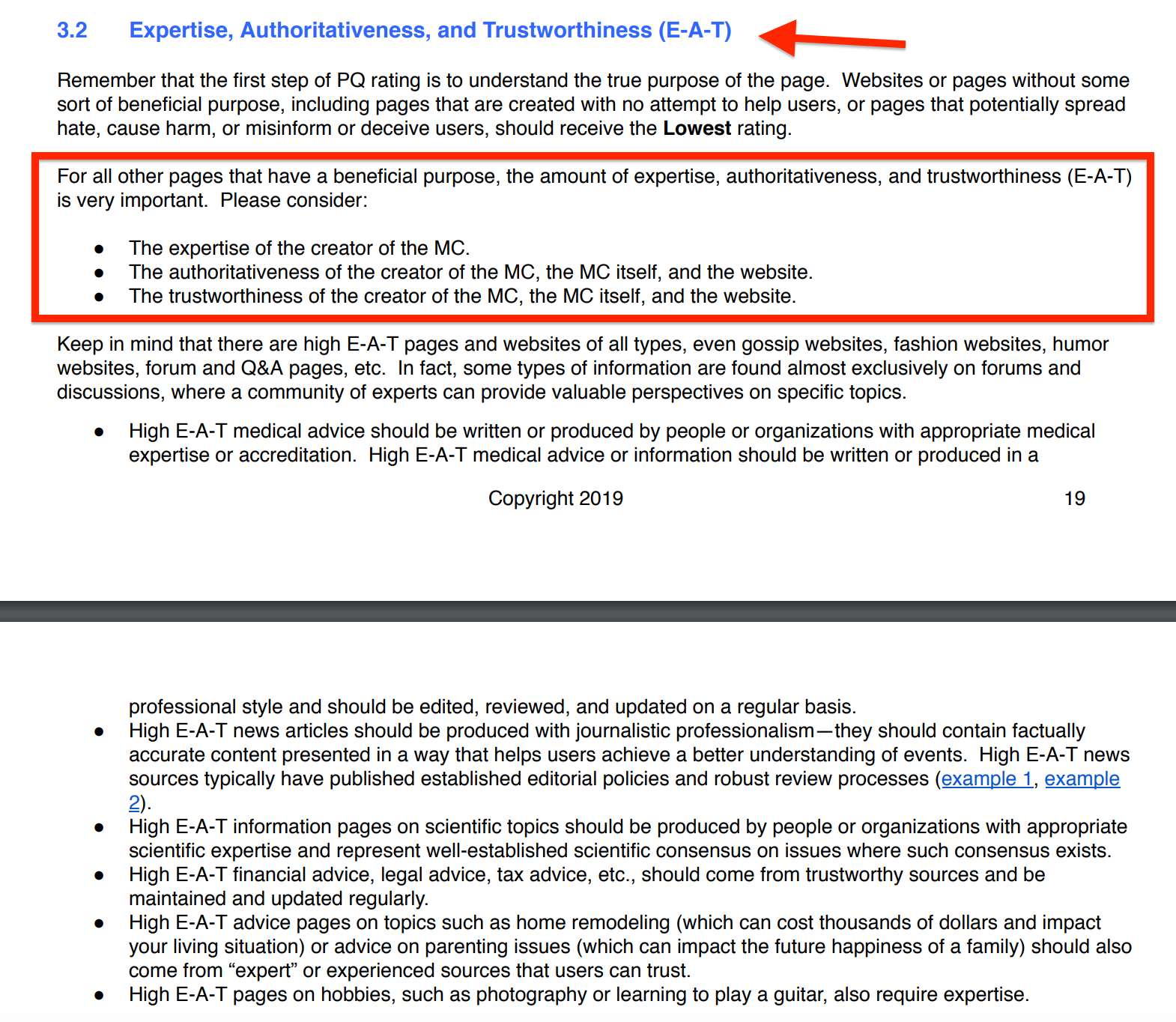
During a Google search quality evaluation, the guidelines mentioned above are used by the reviewers that test and measure the quality and trustworthiness of content pieces.
E-A-T is very important, as we see on Google’s Search Quality Evaluator Guidelines below:
Author’s Note: Besides online mentions and links, you also have to try to enhance the user experience for your website visitors. Offering a great experience can lead to user satisfaction and thus better perception for your business.
In other words, online mentions and links can improve a website’s authority and brand recognition in general, in addition to helping in regards to expertise, authority, and trustworthiness.
Using online mentions and links to improve your E-A-T is also an indirect and effective way to improve your reputation, thus extending your reach and helping boost your overall brand visibility online.
Put another way, by getting online mentions from other businesses, media outlets, and blogs that link back to your content and mention you, you improve your E-A-T.
Your content is then more likely to be reviewed positively by Google as trustworthy and as content that showcases expertise and authority — terms that help you with reputation management and help you increase your brand visibility and awareness.
Keep reading to find out the fifth reason why your PR efforts will benefit from SEO.
Reason #6: Guest Blogging Outreach Can Help You Establish Relationships
This section focuses on guest blogging outreach and how it can help you establish relationships.
The use of guest blogging in terms of the establishment of relationships is quite self-explanatory.
What’s very important is that, through writing a well informed and in-depth guest post, you can establish relationships with a number of people, including relevant businesses and tools, influencers, and bloggers, as well as PR professional groups.
This can also lead to other marketing activities and synergies that help you grow through collaboration with other companies.
My recent guest post on Canny will make this more clear.
We’ve recently published a blog post about visual social proof on Canny’s blog.
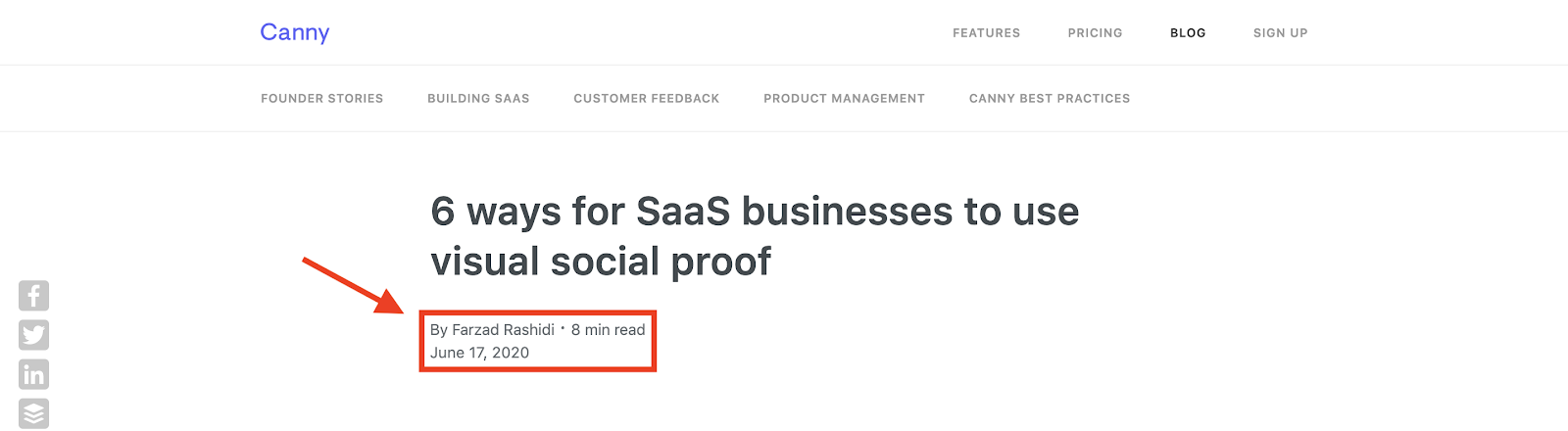
Our guest post helps us establish relationships with other SaaS companies, in this case with Canny.
Additionally, this can help both sides develop a mutually beneficial relationship through co-marketing activities, online mentions, and other initiatives that could help both companies grow.
Once again, that’s an indirect way of doing PR.
Author’s Note: Besides guest blogging, other types of outreach like press release outreach or reaching out to promote a white paper can also help you establish relationships and expand your network.
Let’s now move on to the second to last reason why your PR effort strategy absolutely needs SEO.
Reason #7: More Organic Traffic Can Help You Allocate Budget to Other Initiatives
In this section, I’m going to discuss how acquiring organic traffic through SEO can help you allocate more budget to other initiatives, such as PR or PPC.
As you can see below, customer acquisition cost (CAC) has become much more expensive according to this study by ProfitWell:
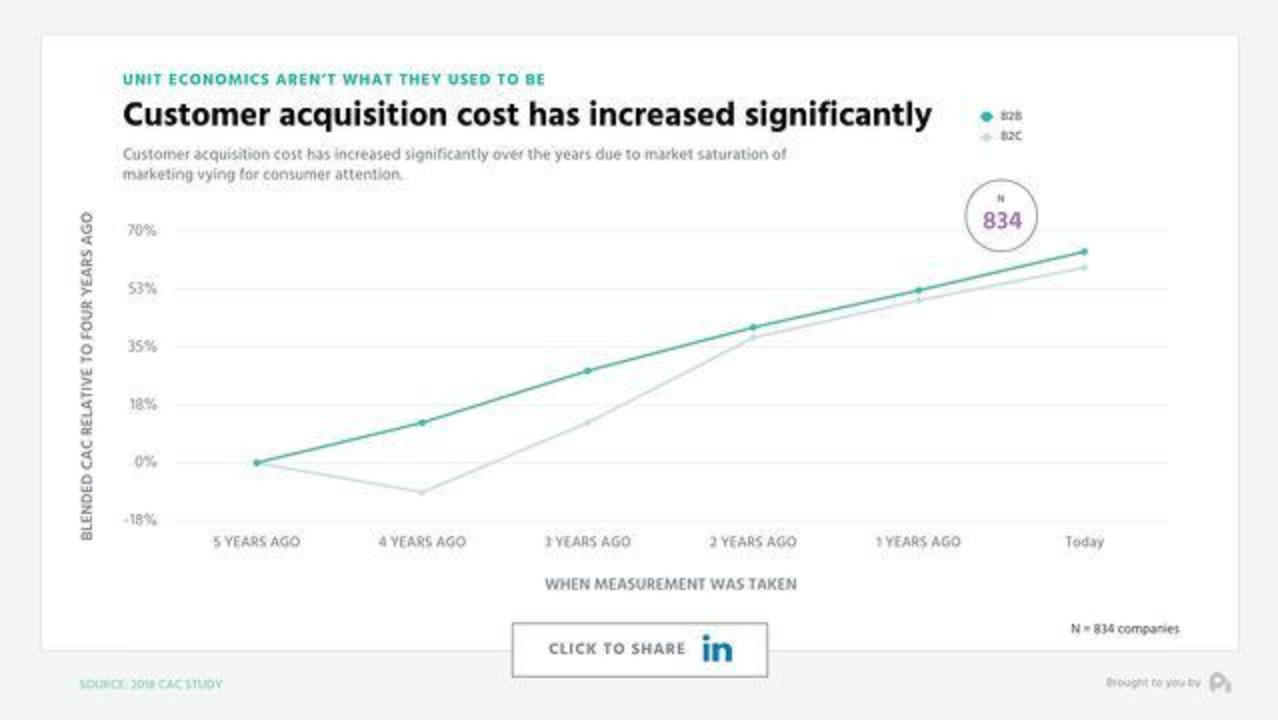
For that reason, it makes more sense for a company to invest in its SEO strategy, thus decreasing the investment in ineffective marketing campaigns.
What you should keep in mind, though, is that the point isn’t to entirely pause your investment in other channels.
It simply means that an investment in your SEO strategy is more likely to provide you with long-lasting results while at the same time, being less expensive than other growth initiatives.
Some data from Visme will clear this up.
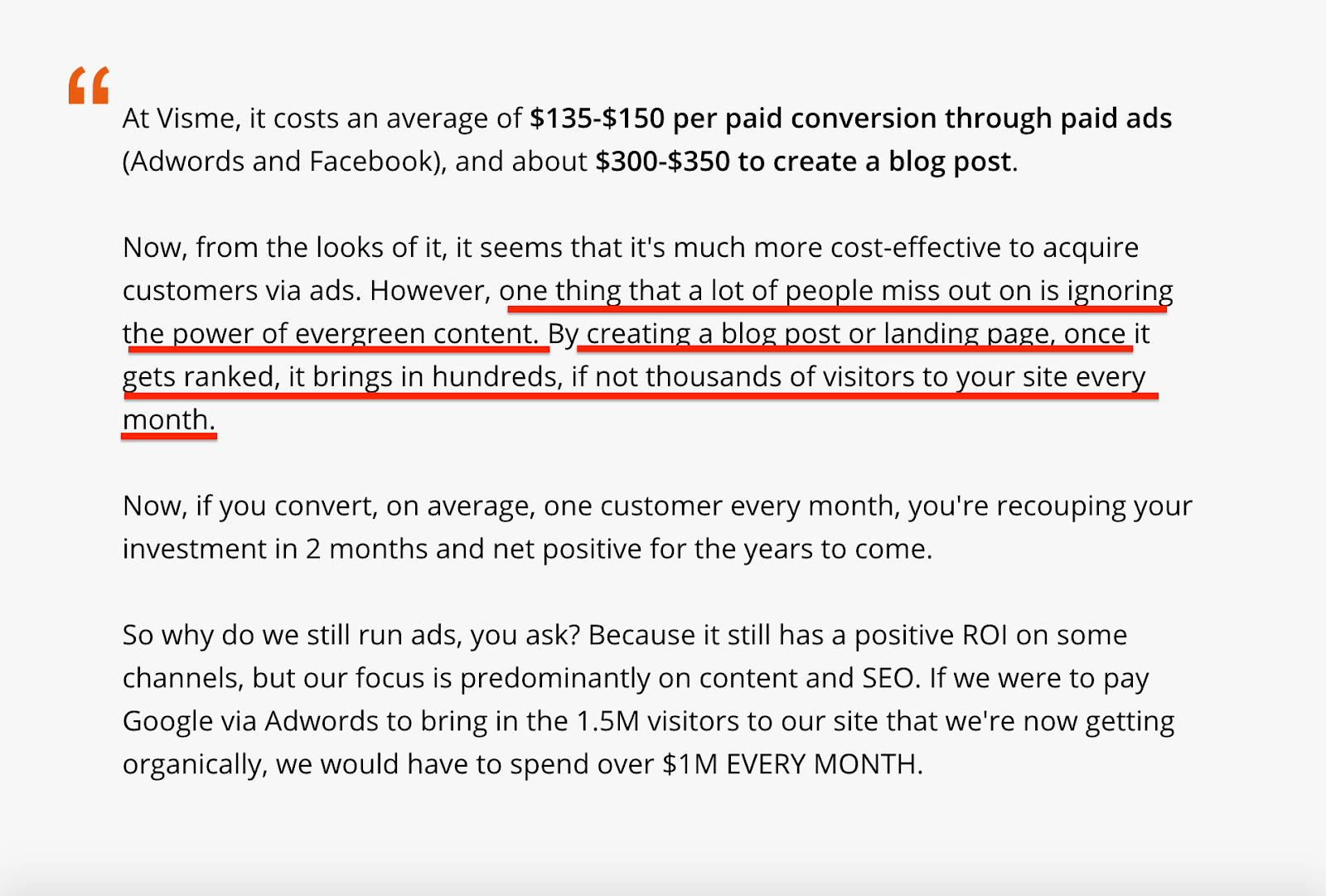
In other words, when you focus on quality in terms of your content strategy, and you invest in the organic traffic your content will bring, you’re basically working toward a strategy with long-term results that will help you allocate budget in other initiatives to grow even further.
To sum up this point before we move on to the last one, I’d like to stress the following:
Right now, only six months in, Respona brings in organic traffic that, according to Ahrefs, would have cost more than $5K every month.

Imagine if we had to pay for, say, advertising to acquire this traffic?
We’re investing in long-term initiatives because we know that;
1) This will help us attain long-term growth
2) This will allow us to also invest in other initiatives that will help us grow even faster.
Let’s get into the last reason I have for you.
Reason #8: Content Marketing is a Form of PR
Content marketing can be firmly linked to the work that public relations professionals do.
The following definition of public relations by HubSpot will help establish the link between the two.
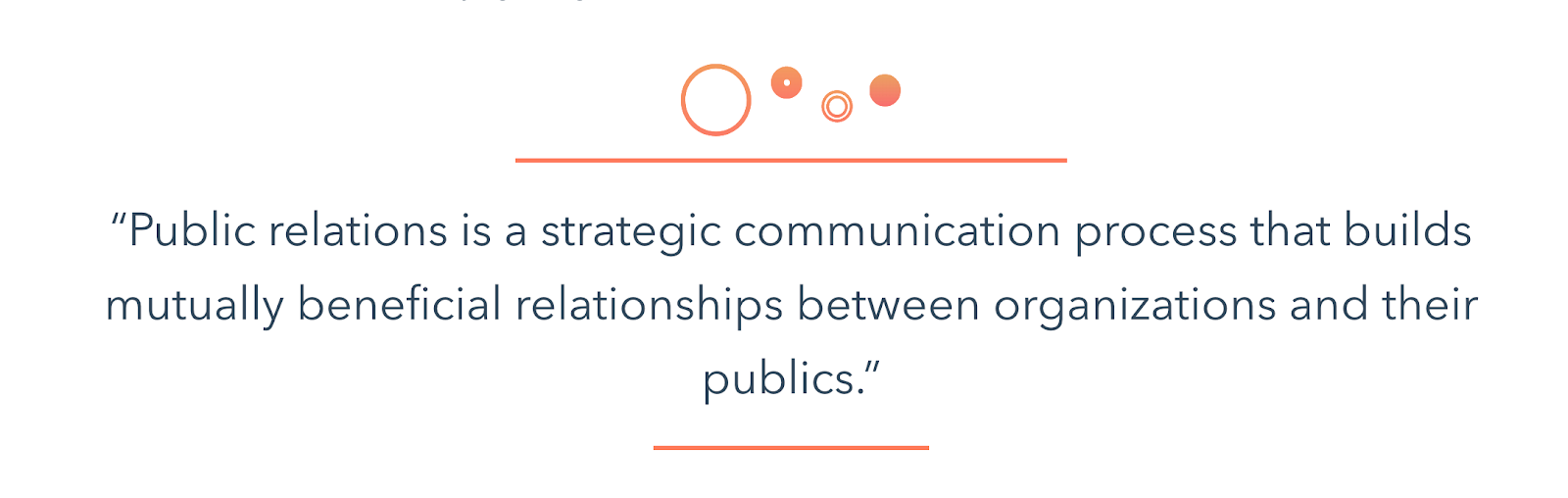
Within the definition above lies the fact that PR is a corporate communications process, exactly like content marketing is.
What I’m trying to show you here is that by incorporating PR efforts into your content marketing strategy, you enhance your PR campaigns and you make your content and SEO strategy count more, as well.
In other words, content marketing helps companies communicate their message, get more exposure, and increase brand awareness.
Undoubtedly, content marketing can help a company perform public relations activities through published content on social media channels, such as Linkedin, as well as on blogs and websites.
Let’s look at a content marketing example that makes the link to public relations in a direct and clear way.
The example comes from online course creation software, Learnworlds.
A few months ago, LearnWorlds published a blog post on e-learning trends where they featured opinions by industry experts.

As you can see, the company called upon a number of industry experts to share their opinions on e-learning trends in 2020.
This—more than just being an interesting and valuable source of information in terms of the quality of the content—is also a smart and effective way to do PR work and establish relationships with those people, in this case, the industry experts that are being featured in the blog post.
Let’s dive a bit deeper into the way these experts are being presented across the content piece.
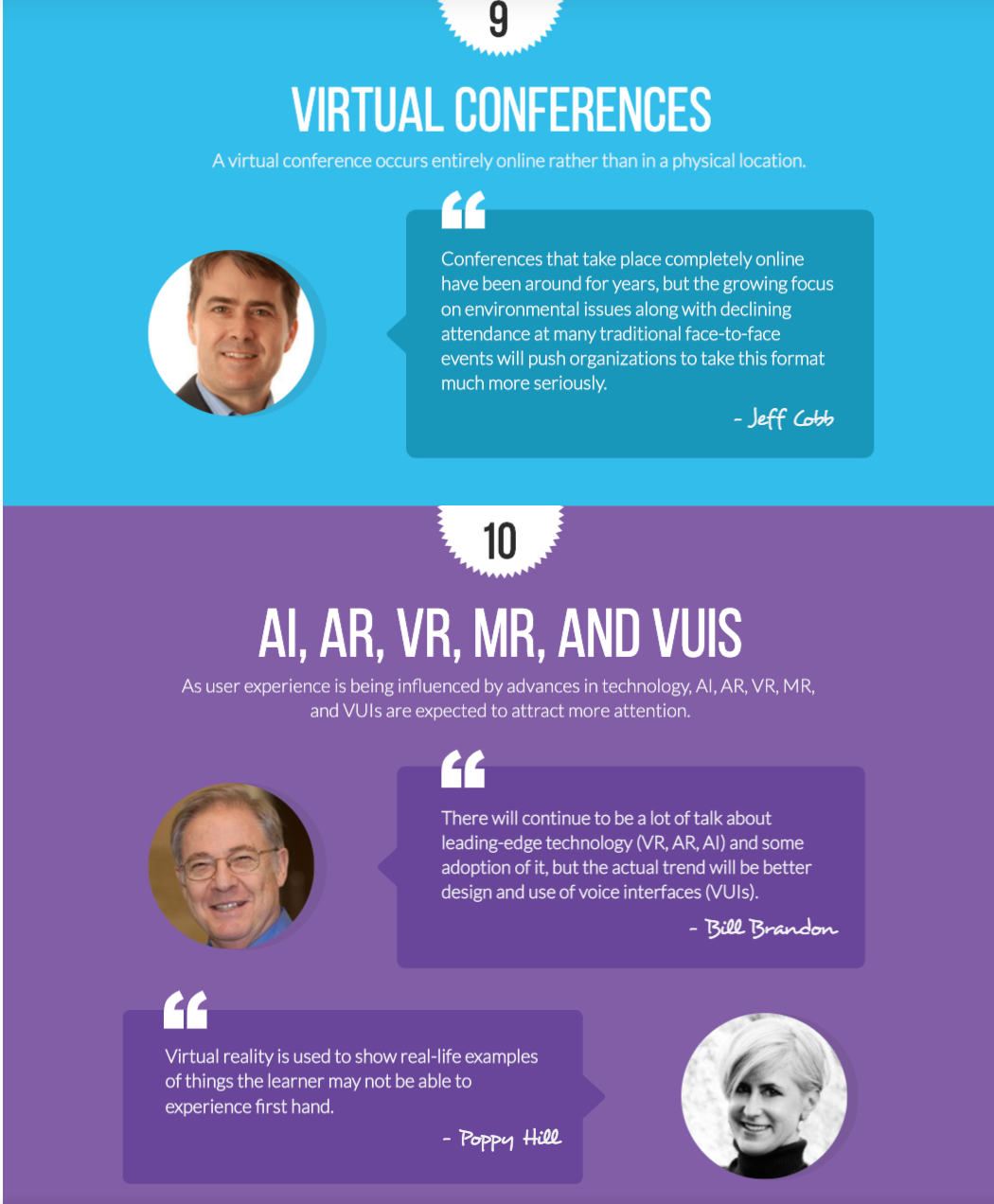
That looks nice, right?
I’m showing you this so you can keep it in mind when you feel like incorporating some PR work into your content, thus making your content and digital marketing even more effective in terms of connecting with industry professionals and other brands.
According to Ahrefs the level of engagement, such as the number of backlinks, is high.
Additionally, through this process you can also extend your organic reach, just like the red arrow shows.

Simply put, connecting with people and companies, as well as creating collaborations and synergies in regards to content, can effectively work as PR whilst also boosting your organic traffic and brand awareness.
Another, similar, example that uses the power of industry experts’ opinions comes from a Visme blog post on how to make information beautiful.

The opinions are beautifully presented in the form of an infographic.

In terms of public relations, they work in a similar way to the example we discussed earlier.
The following is also a compelling way to present someone’s words and communicate your message both visually and textually.
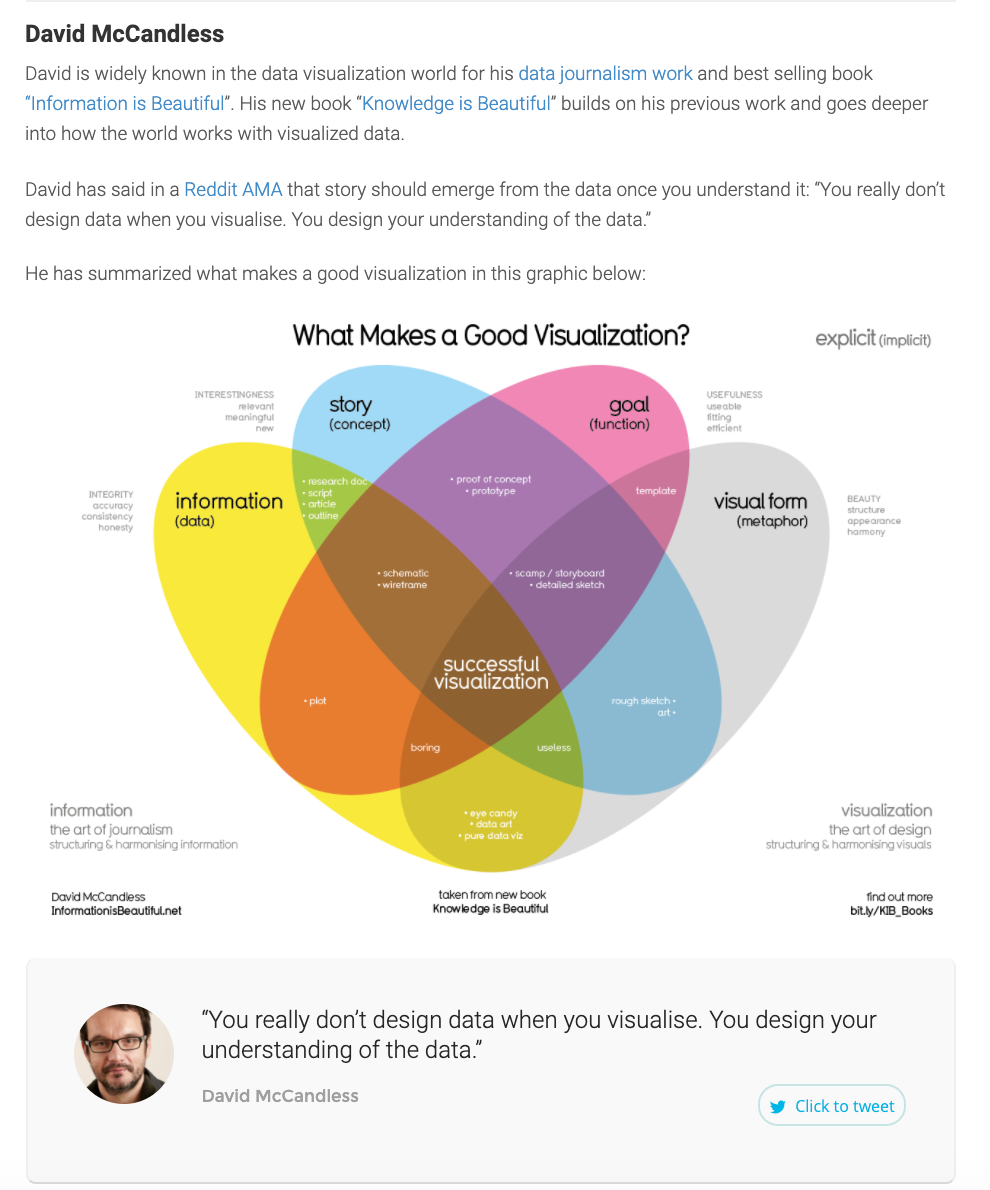
Most importantly though, this form of content marketing allows anyone who’s employing similar tactics to establish relationships that could be leveraged in various ways.
Another point that I’d like to mention is that content promotion, like content marketing, can also be used effectively as a form of PR.
The definition below by Campaign Monitor proves the existence of a connection between the two.
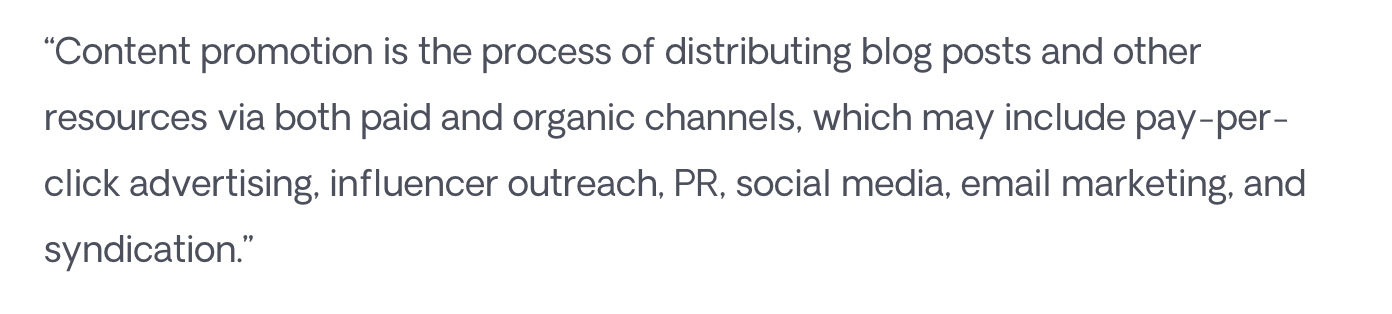
In other words, content promotion is a process that includes PR work.
Plus, content marketing as a form of PR, can help you get your PR efforts up to the next level.
How to Track SEO Progress?
Tracking your SEO activities is an essential part of forming your SEO strategy.
Not only does this allow you to see the progress of your SEO campaigns and their impact, but also identify which SEO tactics are working for you and which aren’t.
For this, you’re going to need the help of SEO tracking tools.
In our example, we’ll provide three: Google Analytics, PageSpeed Insights, and Ahrefs.
Google Analytics

Google Analytics is a free platform that provides you with a detailed overview of your entire site, page-by-page.
It tracks some of the most important SEO KPIs:
- Traffic sources and volume
- Time on page
- Bounce rates
- Conversions
- New and returning visitors
- And more
The best thing about it is that the tool is provided by Google themselves, and their data is being refreshed in real-time, and so is much more accurate than third-party tools.
PageSpeed Insights
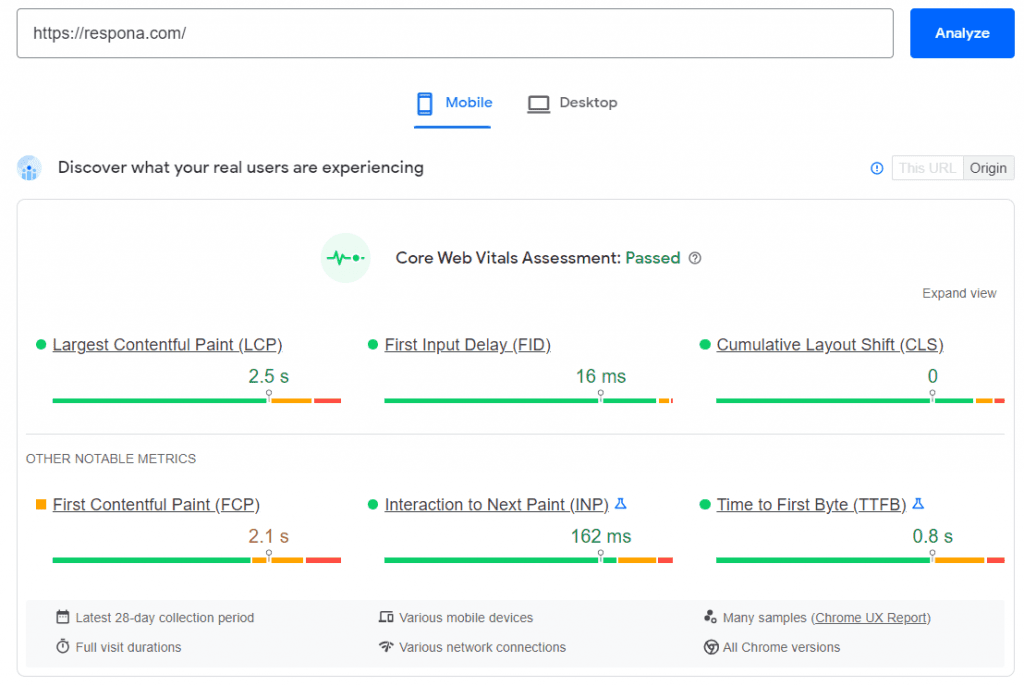
PageSpeed is also a tool that’s provided by Google and completely free to use.
It tracks your site’s performance both on mobile and desktop, and provides suggestions to solve any speed problems that your website may have.
Neither people nor search engines like slow-loading websites, so a regular PageSpeed check-up should be on your SEO to-do list.
Ahrefs

Ahrefs is a comprehensive SEO tool that tracks traffic, page speed, rankings and even keywords that you’re ranking for.
However, one feature that it’s most known for is backlink monitoring.
With it, you can get overviews of all your new and lost links or referring domains, allowing you to effectively track all of your link building and digital PR efforts.
Challenges of Doing SEO for PR
We’ve talked about the benefits of search engine optimization.
Now, let’s look at some challenges that you need to be prepared for.
SEO Needs a Constant Stream of Content
For every niche, there are hundreds of relevant keywords that people are searching for.
If you don’t cover keywords with your own content, that essentially means that you’re giving your competitors free traffic.
Not to mention that new keywords rise in popularity while old ones die off, requiring you to tweak existing content.
Making this much content while maintaining existing pieces is a lot of work and requires the work of an entire content and SEO team.
This can be difficult to allocate resources for smaller companies.
It Never Ends
SEO is a constant struggle to the top. Even after securing a high position, there’s no guarantee that a competitor will outrank you in a few months.
As your website grows and new pages/content gets published, it requires constant maintenance to keep performing.
So, there’s no real end to SEO – but there is always something you can improve on.
Algorithm Updates
Google updates are notorious for making the lives of all online businesses much more complicated than they need to be.
Unfortunately, there is nothing we can do about it on our end except adapt, no matter how volatile the landscape seems to be after a new update (especially core updates).
It may feel discouraging to see all of your efforts seemingly go to waste after a new update, but if you keep learning and improving, it may become an opportunity to overtake your competition while everyone is still figuring out how exactly the new update functions.
Link building cheat sheet
Now Over to You
In this post, we’ve talked about your PR strategy and SEO.
Your public relations are indeed very important because they help you connect with people, increase brand awareness, and ultimately help you grow your business through reaching out to new audiences.
How can you make your PR efforts work effectively?
Remember that part of the answer lies in your SEO and the quality of your content that’ll help you grow your organic footprint.
Additionally, keep in mind that backlinks, online mentions, guest blogging, and the establishment of relationships with brands and professionals can really make a difference and amplify your strategies.
These are all powerful tools and processes that can help you grow.
As a company, make sure that your PR team and SEO team are on the same page and working together.
This way, you will be able to see great results from your PR strategy.
If you’d rather not run outreach-intensive processes like link building and editorial outreach yourself, place an order with Respona.
Our team handles prospecting, pitching, follow-ups, and negotiation to secure live placements on listicles and editorial features that drive both Google visibility and AI citations, on a pay-per-result basis with no monthly retainer.
Frequently Asked Questions
What is the difference between SEO and digital PR?
SEO focuses on optimizing your owned content (mainly your website) to rank higher in search engines. Digital PR focuses on earning mentions and links from external publications to build authority and visibility. The two overlap most clearly in off-page work, which is essentially earned mentions with a search engine optimization lens.
How does SEO PR differ from traditional PR?
SEO PR adds search engine optimization metrics to traditional PR work. Where classic PR measures placements by reach and audience quality, SEO PR also tracks domain rating, anchor text, dofollow status, and contribution to organic visibility. Both approaches are valuable, but SEO PR is increasingly the standard for B2B brands that depend on search-driven discovery.
Can I do SEO PR without hiring an external agency?
Yes. Many in-house teams now combine SEO techniques with PR work without using an external PR agency. The basic approach is to identify the publications your buyers read, pitch them stories worth covering, and ensure each placement includes a dofollow link to a relevant page on your site. SEO tools help you measure the impact on your SEO rankings and overall organic presence.
What’s the connection between PR work and AI search?
Brand mentions earned through PR work feed AI answer engines the same way they feed Google’s organic search algorithms. When ChatGPT, Perplexity, or Google AI Overviews respond to a category-related query, they cite brands mentioned in the listicles and editorial features that already rank in search. A strong outreach strategy now functions as both an SEO program and an AI search visibility play.
How do PR teams measure digital marketing impact?
PR professionals typically track three buckets: classic PR metrics (placements, reach, sentiment), SEO metrics (referring domains, domain rating, organic traffic), and AI visibility metrics (mentions and citations across answer engines). The intersection of these three is where modern digital marketing effort shows up. Tools like Ahrefs, Semrush, and Respona’s AI visibility tracker cover each layer.
Should my PR content be optimized for SEO?
Yes. Modern PR content like company announcements, byline articles, case studies, and social media posts should all be written with target keywords in mind. The same applies to media relations work: when you pitch a journalist, suggest angles that include search terms your buyers actually use. This way, the resulting article serves both PR goals (coverage) and SEO goals (search visibility).
What’s a good way to monitor brand mentions across the web?
Set up a Google Alert for your brand name and key product names. Pair that with regular Ahrefs or Semrush checks for new referring domains. Also monitor social media platforms for unlinked mentions you can convert into backlinks. For AI search specifically, a dedicated AI visibility tracker (like the one built into Respona) is the most direct way to see where you’re being cited inside ChatGPT, Perplexity, and other answer engines.
How long does it take to see SEO benefits from PR work?
Most PR teams see initial SEO rankings movement within 4 to 8 weeks of a strong placement. Domain rating gains compound over months as additional placements accumulate. A consistent outreach strategy targeting the same set of high-authority publications can shift visibility significantly within 6 months.