
Digital PR and link building are a match made in heaven.
You get the best of both worlds: publicity, and high quality backlinks at the same time.
In this article, we’ll be talking about what PR link building is and its benefits, how to start building PR links, and the top 4 PR link building strategies.
Let’s get started.
Key Takeaways
- PR link building combines public relations and link building to secure high quality backlinks from authoritative websites
- Digital PR link building is one of the most effective ways to improve domain authority, domain rating, and search engine rankings
- Unlike traditional link building, PR links come from real coverage on reputable websites, not just guest posts or link insertions
- The best digital PR campaigns focus on creating content that earns coverage, not just sending cold outreach
- PR backlinks drive both SEO value and referral traffic, making them more valuable than most traditional link building methods
- A strong digital PR strategy improves brand visibility, social media presence, and overall digital marketing performance
Link building cheat sheet
What is PR Link Building?
PR Link Building is the strategic practice of combining public relations efforts with link building to secure high quality backlinks from reputable sources.
Essentially, it’s about leveraging your brand’s story and public relations activities to gain valuable links that enhance your website’s authority and search engine rankings.
Unlike traditional link building, which often involves outreach to websites for links, PR Link Building focuses on creating buzz around your brand through journalist outreach, media coverage, press releases, guest posts, and more.
PR Link Building Benefits
Implementing a PR Link Building strategy can yield numerous advantages for your brand, from boosting your search engine rankings to enhancing your brand’s credibility.
Backlinks and Their Link Juice
One of the primary benefits of digital PR link building is acquiring high quality backlinks.
PR backlinks serve as endorsements from other reputable websites, signaling to search engines like Google that your content is valuable and authoritative.
This concept is often referred to as “link juice“.
The more link juice your website accumulates from credible sources, the higher it will rank in search engine results pages (SERPs).
A high quality backlink profile not only improves your search engine visibility but also drives organic traffic to your site – as well as improves metrics like your Domain Rating.
Improved Perception of Your Brand
The “PR” in the name isn’t there just for show.
PR link building relies on a lot of traditional PR tactics like press releases and other stunts, which are ultimately aimed at improving, well… Public relations!
This positive perception isn’t just about search engines; it’s about your audience as well.
Being featured in well-respected publications or on influential blogs can position your brand as a thought leader in your industry. This elevated status can attract more customers, partners, and opportunities, ultimately driving overall business growth.
How to Get Started with PR Link Building
In-House
Managing PR link building in-house involves dedicating team members specifically to this task.
This means producing high quality content, conducting cold email outreach, and securing backlinks over months or years.
Pros:
- Control
- Cost efficiency
- Direct communication
- In-house teams allow for more frequent and detailed updates on progress compared to outsourced agencies.
- n-house employees inherently understand your business better, enabling them to create industry-specific and targeted strategies.
Cons:
- Requires a significant initial investment in hiring and training team members, along with the purchase of necessary tools.
- An in-house team may be resource-constrained, leading to slower campaign progress without the efficiency of specialized agencies.
- Without experienced in-house professionals, you may not achieve optimal results and risk implementing ineffective strategies.
Team & Tools Needed
- Roles: Content Manager, Outreach Specialist, and possibly additional writers.
- Tools: Platforms like Respona for outreach automation, Semrush for tracking and content marketing research, MarketMuse for content optimization, and Wordable for content management.
Estimated Cost: Around $112,000 per year or $9,333 per month for an American-based company with a minimal team.
Outsource to PR Link Building Agencies
Outsourcing to a specialized PR agency involves hiring external experts to handle your link-building efforts.
A managed link building service offers comprehensive packages, including content creation, outreach, and performance tracking.
Pros:
- Expertise
- Time-Saving
- Efficiency
- Better Results
- Cost-Effective in the Long Run
Cons:
- Agencies can be expensive, especially top-tier ones, with prices ranging from $100 to $1,500 per link.
- You have less control over the process and may face communication challenges.
- Risk of lower-quality work or reliance on black-hat tactics if the agency is not thoroughly vetted.
- Creating dependency on a third-party provider can be risky if they fail to meet your needs or go out of business.
Estimated Cost: Around $18,000 per month for an average of 15 high quality backlinks per week.
Choosing between in-house and outsourcing depends on your budget, expertise, and specific needs.
While in-house link-building offers control and cost-efficiency, outsourcing to agencies can be a viable option if you have the budget and prefer a hands-off approach.
4 PR Link Building Strategies
Blogger Outreach
Not every PR link needs to come from a journalist.
In fact, a lot of the most valuable PR backlinks today come from bloggers and publishers who already rank for the keywords you care about.
Think about it.
When someone searches “best CRM for small business” or “top dentists in Chicago,”, “top link building tools” they’re not just seeing news articles. They’re landing on listicles, comparisons, and long-form content on reputable websites.
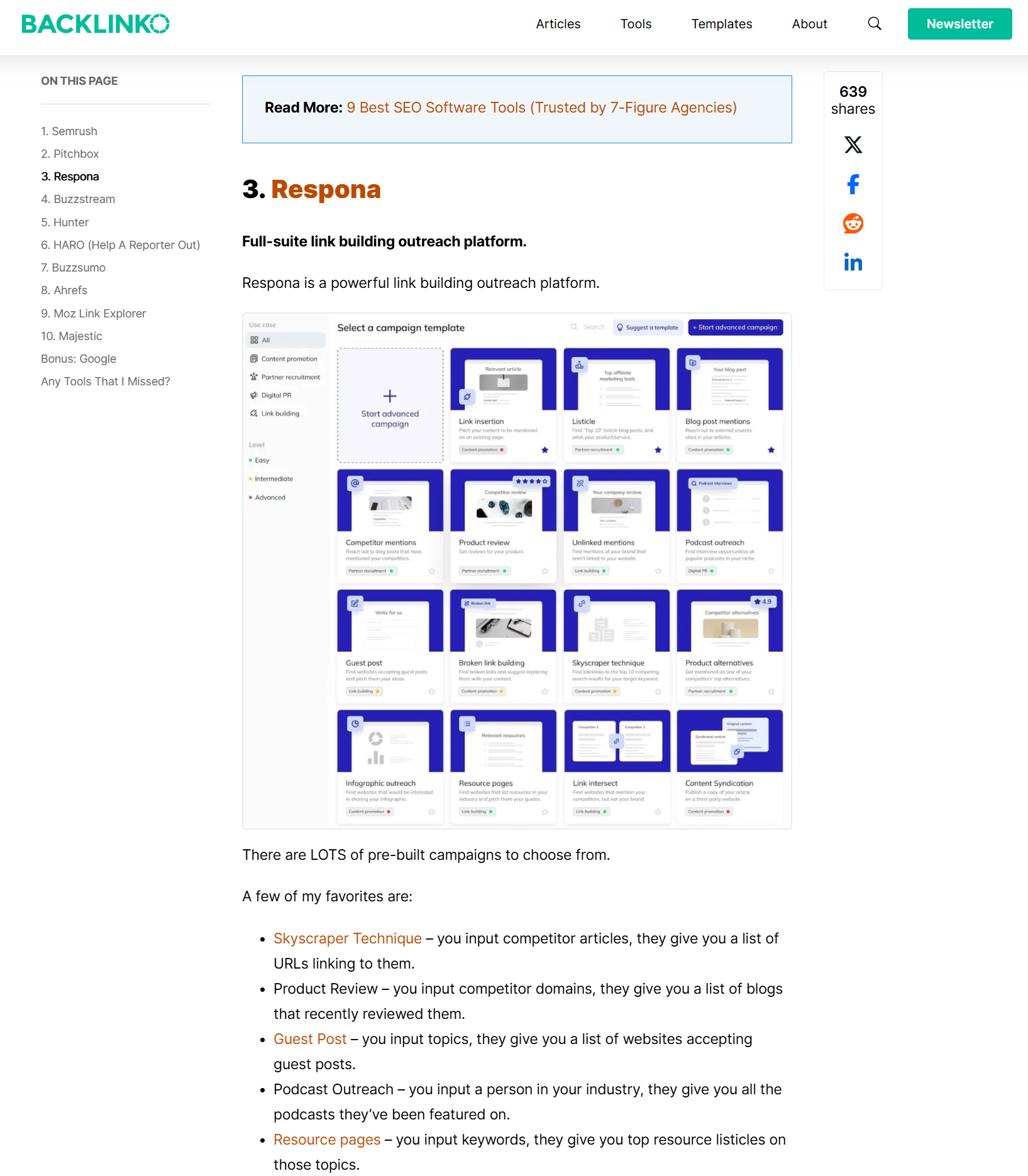
That’s where real buying decisions happen.
Instead of chasing media coverage, you’re getting your brand placed directly into content that already drives traffic, already ranks in search engines, and already influences customers.
That makes it one of the most practical forms of digital PR link building.
The difference compared to traditional link building is intent.
You’re not just trying to get a link. You’re placing your brand inside relevant content, with the right anchor text, on pages that already have domain authority and visibility. That leads to higher quality backlinks, stronger keyword rankings, and steady referral traffic over time.
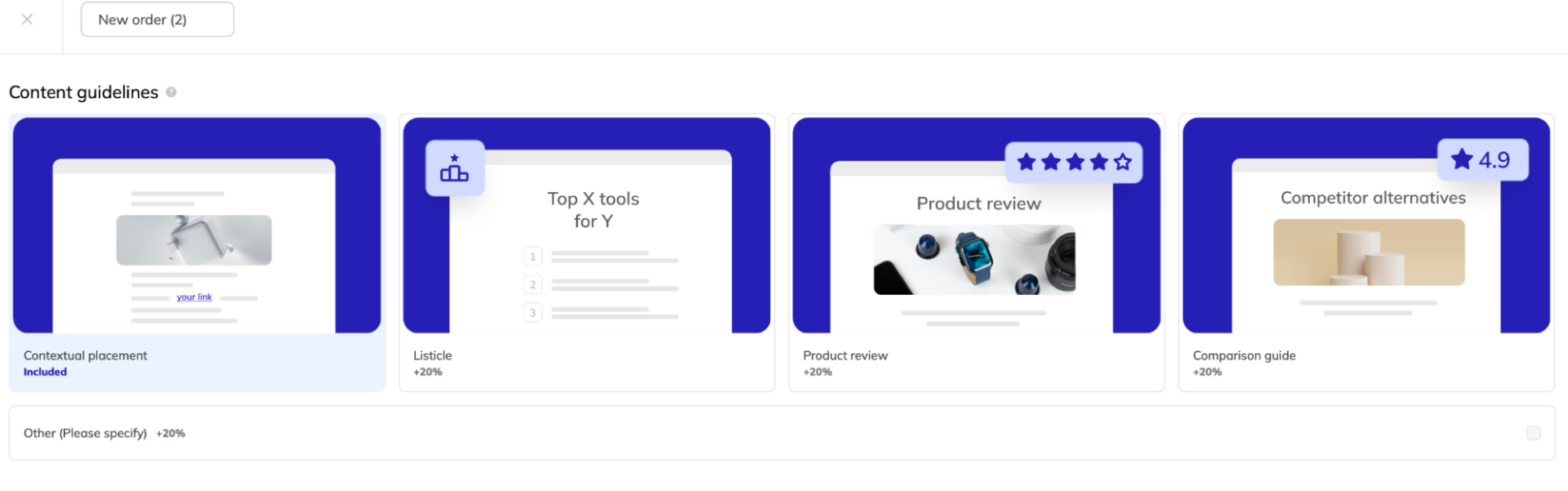
With a done-for-you approach, you don’t have to manage any of the outreach yourself.
You simply define what you need: the page you want to promote, the keywords you’re targeting, and the type of placements you’re after. From there, everything is handled for you, from finding opportunities to securing coverage.
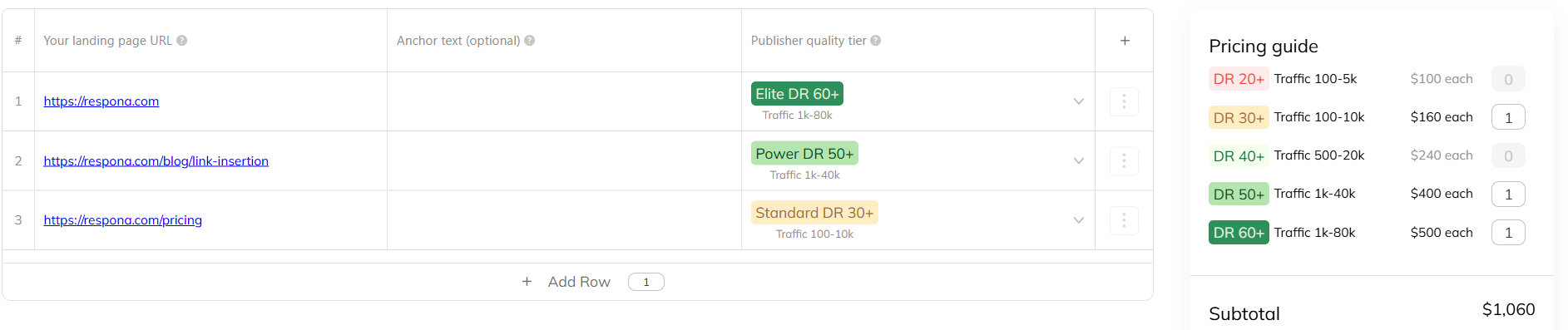
That includes placements in:
- listicles
- comparison posts
- niche blog content
- and other formats that naturally generate PR links
So instead of relying only on traditional PR or one-off campaigns, you’re building a consistent stream of backlinks from content that actually ranks.
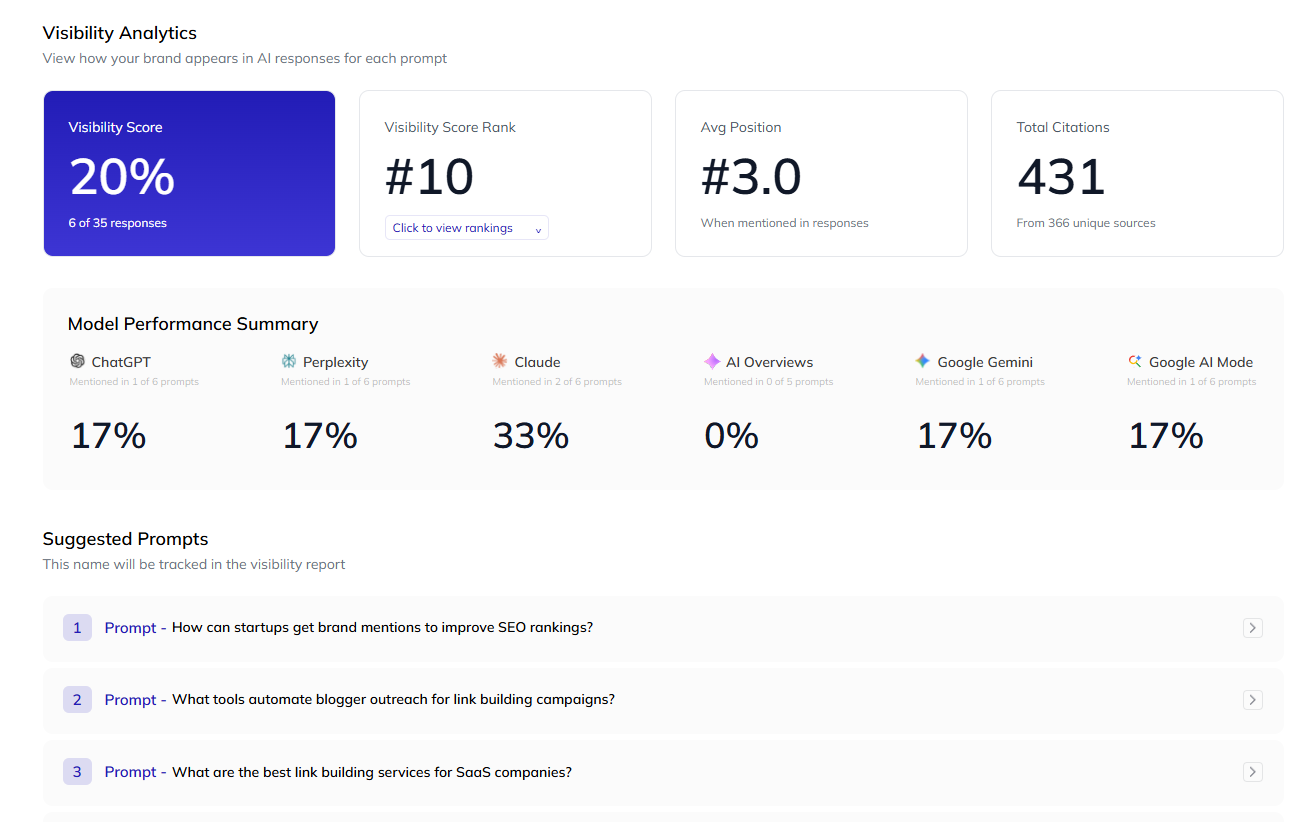
And as proof it works, you can use Respona to track your visibility across 6 answer engines, not just Google – since that’s where a lot of the searches are moving to.
Press Releases
A press release is a written document prepared for and delivered to members of the press. It aims to make a newsworthy announcement or provide information about a particular event.
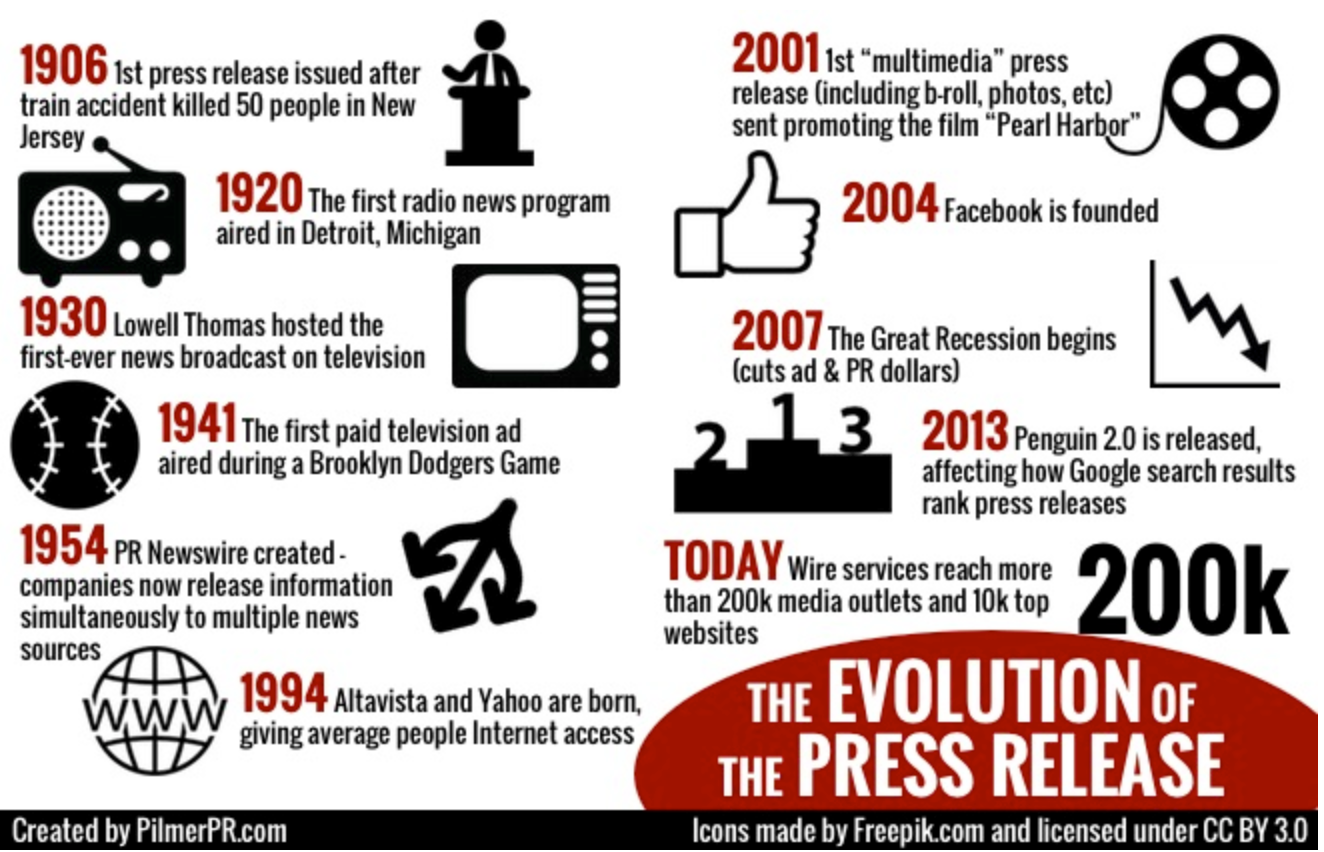
Acting as a bridge between your company and the media, press releases help get your story out to the public, thereby amplifying your reach and impact.
Press releases serve various purposes, including:
- Announcing new products or services
- Company events
- Corporate announcements
- Crisis management
- Awards and achievements
A well-crafted press release typically includes the following elements:
- A compelling headline that grabs attention and summarizes the main point of the release.
- The release date and originating city of the press release.
- A brief introduction that concisely presents the core message.
- Detailed information expanding on the announcement with supporting facts and figures.
- Statements from key company figures or relevant stakeholders to add authenticity.
- A standard paragraph about the company, providing background information.
- Details of the person or department to contact for more information.
Reactive PR
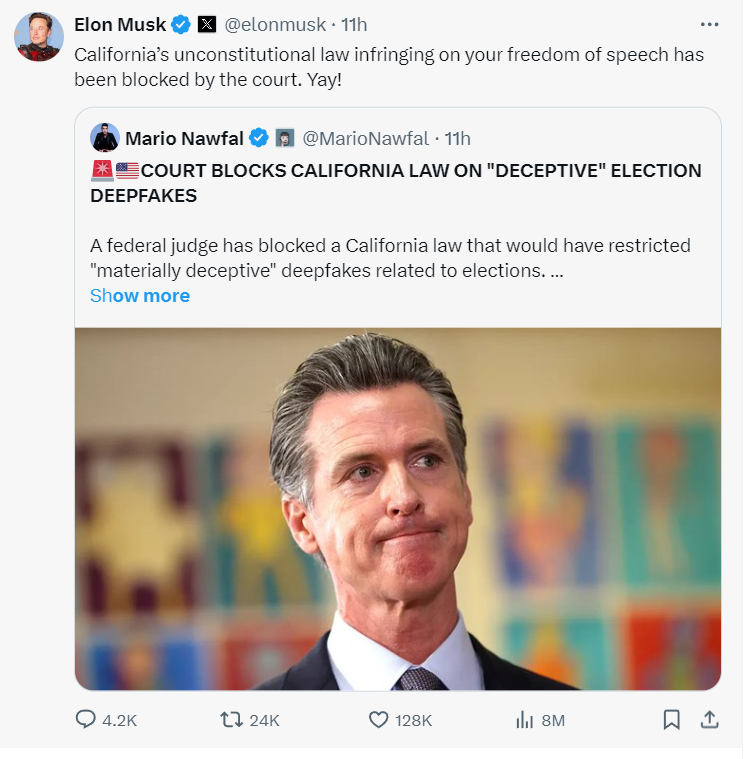
This is a digital PR strategy where brands respond to timely events, news stories, or public conversations with relevant content or commentary.
It can involve a whole digital PR campaign, or a simple tweet by the CEO.
Unlike proactive PR, which involves planned media activity, reactive PR seizes opportunities as they arise.
This approach can position your brand as a thought leader, increase media exposure, and generate valuable backlinks.
Connectively (Formerly HARO)
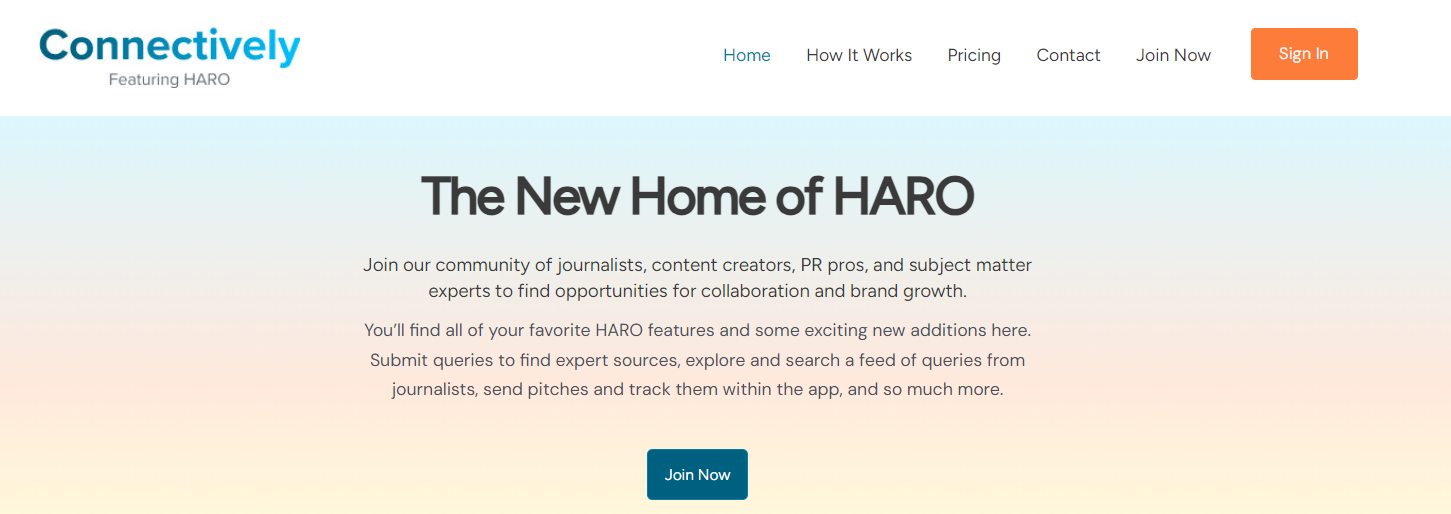
Connectively, formerly known as HARO (Help a Reporter Out), is a platform that connects journalists with expert sources for their stories.
This service provides a unique opportunity for brands to gain media coverage and high quality backlinks by offering expert insights to journalists.
It works like this: journalists post requests for insights, and for a small commission, you can reply to them to get featured in their next article – along with a nice, juice backlink to go.
Link building cheat sheet
Now Over to You
PR link building is no longer just about sending press releases or pitching journalists.
The most effective strategies today combine digital PR, blogger outreach, and content placement to build high quality backlinks that actually impact ranking.
You can invest months into outreach, testing different digital PR campaigns, and trying to secure coverage manually.
Or you can focus on the outcome.
With Respona, you don’t need to manage outreach, follow-ups, or pitching. You simply place an order with your target page, keywords, and requirements, and we handle the rest.
That includes securing PR links, building authoritative backlinks, and getting your brand featured on pages that already rank across search engines.
So instead of guessing which link building strategy will work, you’re investing directly in placements that improve visibility, drive referral traffic, and strengthen your overall SEO strategy.
Frequently Asked Questions (FAQ)
What is the difference between traditional link building and PR link building?
Traditional link building focuses solely on acquiring backlinks through methods like guest blogging and broken link building, while PR link building integrates public relations efforts, such as press releases and media outreach, to naturally generate high quality backlinks.
How does PR link building improve search engine rankings?
PR link building secures backlinks from authoritative and reputable sources, which search engines consider as endorsements.
These high quality backlinks enhance your website’s authority and credibility, leading to improved search engine rankings.
Why are links from press releases valuable for SEO?
Links from press releases are valuable because they often come from reputable news sites and publications.
These high-authority links signal search engines that your content is trustworthy, boosting your site’s SEO.
How can I measure the success of my PR link building efforts?
You can measure the success of your PR link building by tracking metrics such as an increase in backlinks, higher search engine rankings, referral traffic, and media mentions.
Tools like Google Analytics and various SEO software can help you monitor these metrics.
Can PR link building help with online reputation management?
Yes, PR link building aids online reputation management by securing positive media coverage and authoritative backlinks. This enhances your brand’s credibility and visibility, helping to shape a positive public perception and manage any negative information.