
Edu backlinks are somewhat of a myth in the link building community.
This is because of edu domains being a lot more authoritative than your average website.
That, and the fact they’re notoriously difficult to obtain.
But are they actually worth the hassle?
Let’s find out.
Key Takeaways:
- Edu backlinks can be valuable, but they are not automatically better than every other backlink.
- The value of an edu backlink depends on relevance, link placement, anchor text, traffic quality, and the context of the page.
- A valuable edu backlink usually comes from a relevant page on an edu site, not just any random educational website.
- Link building for edu backlinks works best when you offer useful content, job opportunities, scholarship information, or expert collaboration.
- Resource pages, faculty member interviews, and scholarship pages can all create real edu backlink opportunities.
Link building cheat sheet
What are EDU Backlinks?
An edu backlink is a backlink that comes from an edu domain, usually one associated with educational institutions such as colleges, universities, and other accredited schools.
Because these institutions often operate older, well-established websites, many marketers assume every edu link carries extra search engine value. Established websites, many marketers assume every edu link carries extra search engine value.
This perceived authority stems from the fact that these domains are associated with established educational institutions.
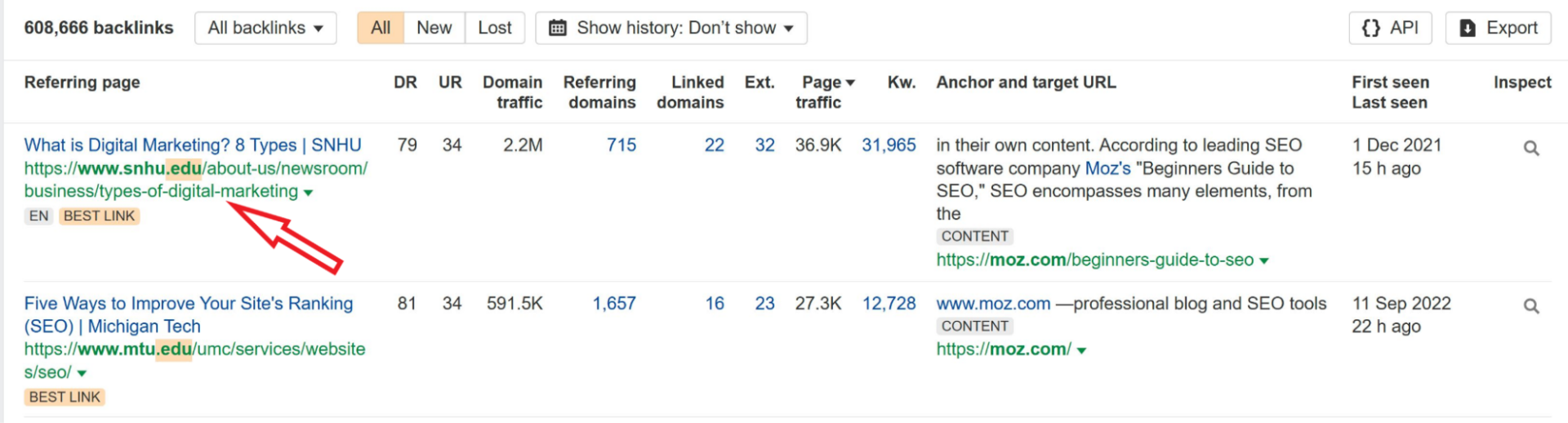
Search engines favor older, more established websites – and since edu domains are often upwards of 20 years old, they’re viewed as more authoritative. Even if they’re ripe with broken links.
So, in theory, links from these sites should have more SEO value.
That assumption is only partly true. An edu website can have strong domain authority, but the strength of any backlink still depends on the specific page, the relevance of the content, and the likelihood that users will actually benefit from the link.
Because edu domains are restricted to educational institutions, obtaining backlinks from them is VERY difficult.
This scarcity contributes to their perceived value.
The logic is that if something is hard to get, it must be valuable.
Essentially, the belief in the “super powers” of EDU backlinks is based on the assumption that they pass on a significant amount of authority and trust from the educational institution to the linked website, more so than links from other types of websites.
In other words, an edu backlink is not powerful just because it comes from an edu site. It becomes a valuable edu backlink only when the page itself is useful, relevant, and contextually appropriate.
Are They Actually More Valuable than “Normal” Backlinks?
On paper, sure.
For search engine optimization, context matters more than the extension alone. A backlink from an edu domain can be valuable, but a relevant backlink from another authority site in your niche may be just as strong or stronger.
Edu backlink value varies wildly on a case-by-case basis.
There is much more that makes a backlink “strong” than just where it’s coming from.
Relevance
Relevance is one of the most important parts of edu link building. A backlink from a university page about careers, research, or student resources can be useful if your page genuinely supports that topic.
That much is obvious.
But in addition to topical relevance, you need to consider the audience of the website.
This is where many edu backlink opportunities fail. A link from an educational website may look impressive on paper, but if the audience has no reason to engage with your page, the link may not provide much real value.
What good is your edu link if it leads students directly to your pricing page?
Are they going to buy your tool or product?
Probably not.
Anchor Text
The anchor text (the clickable part of the link) should be clear, concise, and provide context about the destination page.
Using descriptive anchor texts helps Google better understand what your page is about.
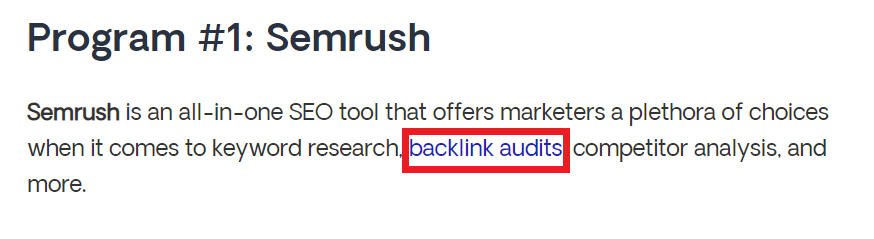
So for example, if you have a blog post that uses “link building” as its primary keyword but has tons of links with an anchor like “link building strategies”, or “building links”, it might start ranking for the latter as well
The same rule applies to edu backlinks. A clear anchor connected to valuable content helps search engine crawlers and users understand why the page was linked in the first place..
Link Attributes
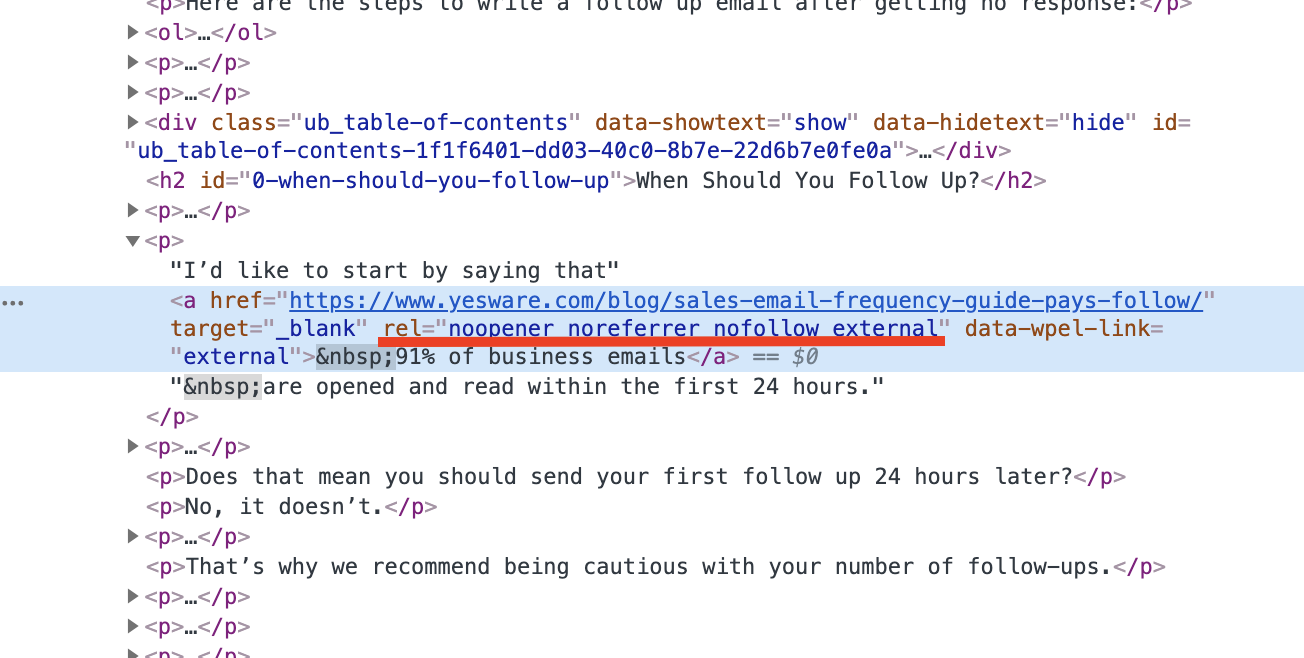
A dofollow edu link is usually the most desirable from an SEO perspective, but even nofollow links from educational institutions can still bring traffic, visibility, and credibility when the page is relevant.
A natural backlink profile still includes a mix of both dofollow and nofollow links.
While nofollow links don’t pass link equity, if the page the link is on receives substantial traffic, it’s still worth getting.
Once again, for a link to be valuable to your overall SEO strategy, you need to consider the KIND of traffic a site generates, not just its AMOUNT.
The majority of traffic of educational websites are high school students looking to enroll, or students who are already in the school.
Once they land on your site, there are two outcomes:
- The good: they stick around and read your content because they found your blog post informative, or they ended up on your career page and there’s an opening right up their alley.
- The bad: they immediately leave never to come back.
So, in conclusion, yes, edu backlinks can be immensely helpful when implemented right.
Keyword here being “right”.
But if your end goal is to try and manipulate Google rankings through college websites, it probably won’t work.
A quality backlink from an edu site should send the right kind of visitors, not just more visitors.
Now, let’s explore some options for obtaining relevant quality edu links.
Get on EDU Resource Pages
This backlink strategy works especially well for careers pages.
After all – how can you be more useful for a college student than offering them a job opportunity?
Other than offering scholarships, of course – but more on that later.
A resource page is one of the most common ways to earn edu backlinks because schools often maintain curated lists of helpful links for students, staff, or job seekers. If your content or opportunity is genuinely useful, these pages can create strong edu backlink opportunities.
For example, Husson University is one of the many schools that has a “Job opportunities” page for its local area:
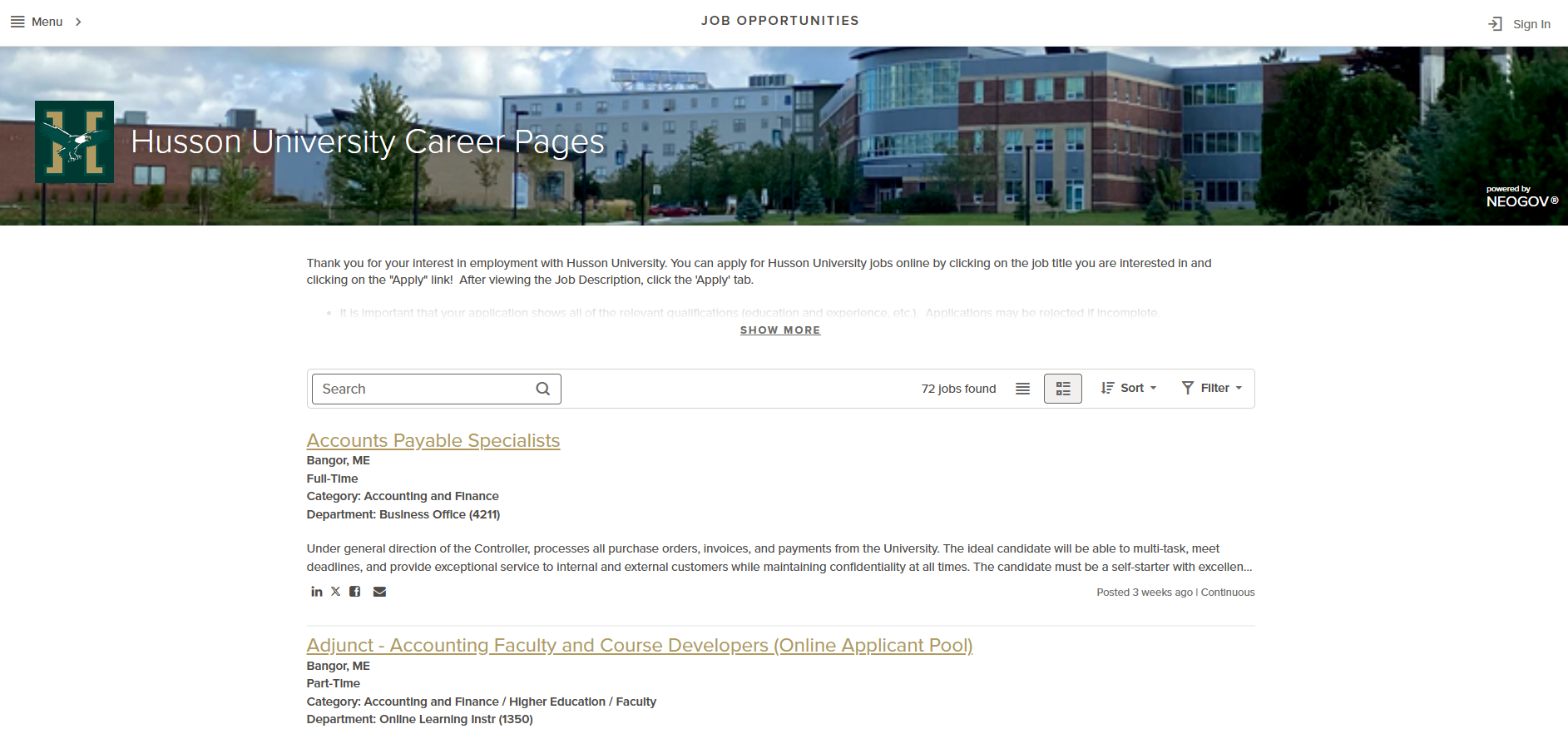
If you have an opening, this would make for a prime edu link building opportunity.
This works well because the link serves a real purpose. Instead of forcing a link into unrelated content, you are matching your page with an existing need on the educational website.
Faculty Member Interviews & Blogger Mentions
If you have a blog, podcast, or even a YouTube channel related to their area of expertise, reach out and ask if they’d be willing to participate.
Interviewing a faculty member is a good example of how to get edu backlinks without relying on scholarships alone. It works best when your content genuinely overlaps with the expertise of the professor or department.
This gives faculty members a platform to share their knowledge and research, and it gives you valuable content for your audience.
In return for their time and expertise, you can offer them a backlink to their faculty page, research publications, or personal website from the interview itself.
Here’s an example: let’s say you run a marketing blog and you want to get a quality backlink from a university’s marketing department website.
You could reach out to a marketing professor who specializes in social media marketing and ask them for an interview about the latest social media trends.
You publish the interview on your blog and, within the interview content, naturally link back to their university profile or a relevant research paper they’ve written.
When done well, this can create a valuable edu backlink because the collaboration is built around real expertise and useful content rather than a purely promotional ask.
Like The Marketing Journal did a few years back:
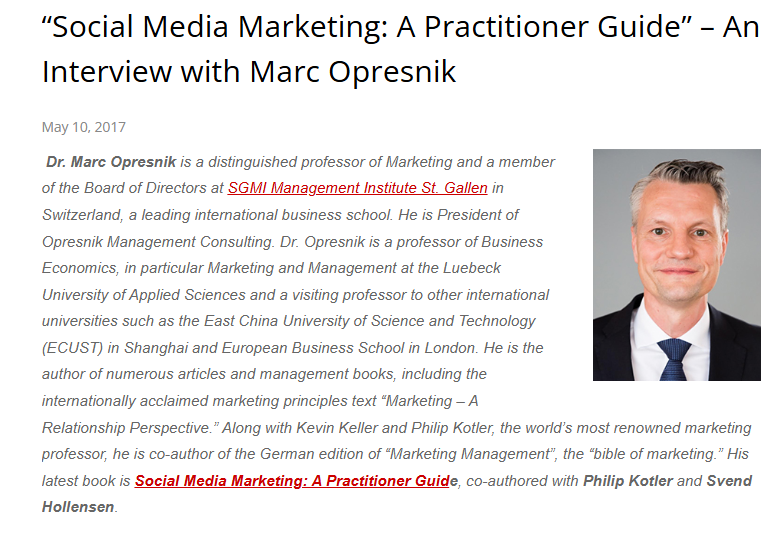
If the professor is active on their department’s blog or their own website, they might also share the interview and link back to your blog, giving you that juicy edu backlink.
This same principle applies to university bloggers.
Many universities have student-run or faculty-managed blogs that cover a wide range of topics.
If your content aligns with their interests, you could offer to write a guest post or provide them with a unique data set or research findings that they can use in their own articles.
The key here is to make it a win-win situation.
You’re not just asking for a link; you’re offering something of value in exchange.
Scholarships and Discounts
Scholarship outreach remains one of the most well-known ways to get edu backlinks, especially from student resource pages and financial aid sections. A scholarship program can create real backlink opportunities, but only if it is legitimate and useful.
As long as you have the budget, of course.
Universities and colleges are constantly looking for ways to help their students manage the rising costs of education.
So scholarship and discount opportunities are often featured on their websites, especially in financial aid or student resource sections.
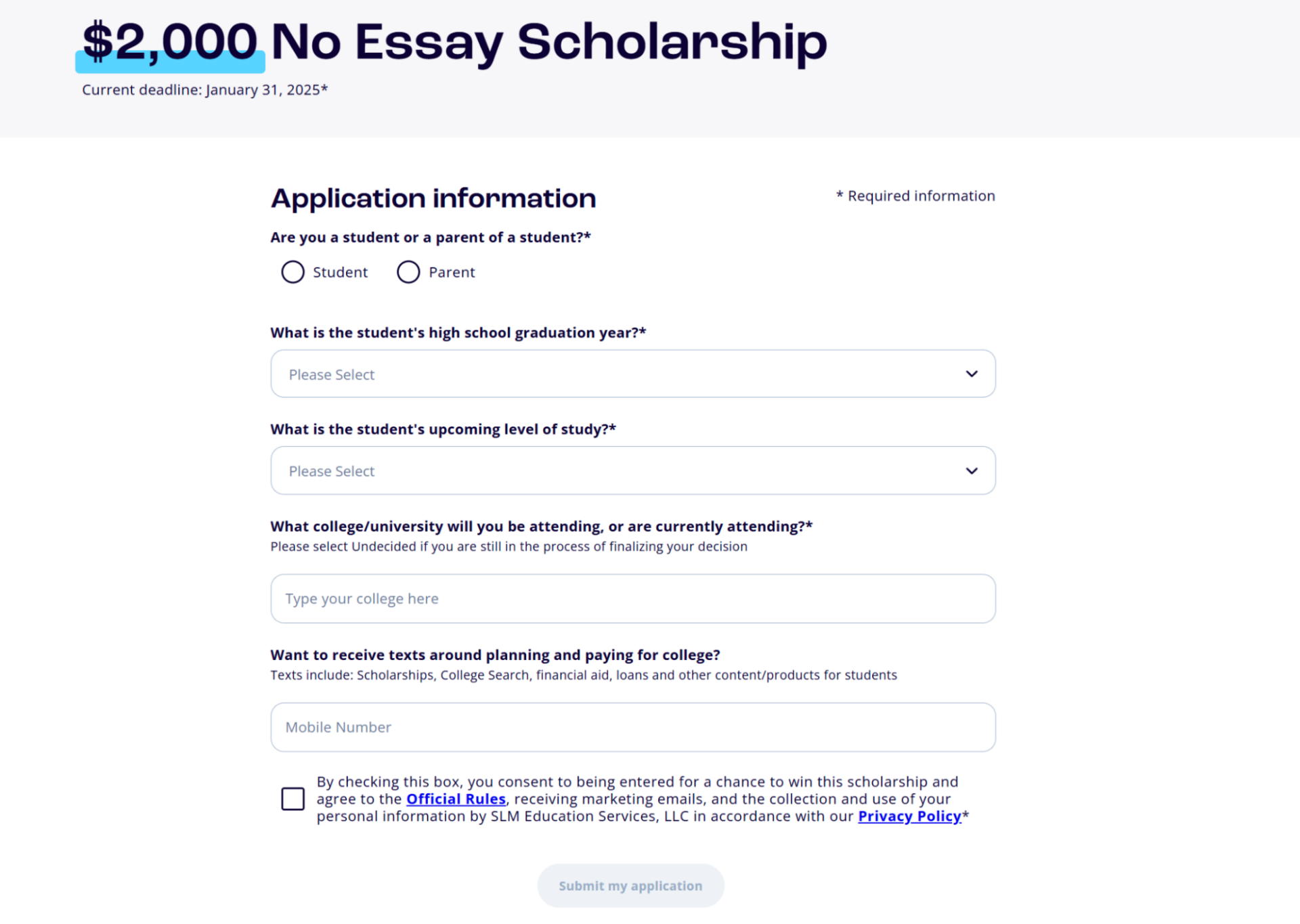
Here’s how this link building strategy works: you create a scholarship or discount program specifically for students enrolled in a particular field of study or at a specific university (or even nationwide).
This could be a monetary award, a discount on your product or service, or even access to exclusive resources or training.
Once you’ve established the program, you reach out to relevant departments, financial aid offices, or student resource centers at universities to inform them about the opportunity.
For example, if you run a web design agency, you could offer a scholarship to students pursuing a degree in web development, graphic design, or a related field.
A strong scholarship program should feel genuine, not like a thin excuse for link building. The better the fit between the scholarship and the educational institution, the more likely the page is to link to it.
You would then contact the computer science department or the financial aid office at various universities to let them know about the scholarship.
Similarly, if you sell software or online courses that are beneficial to students, offering a student discount can also attract attention.
Broken Link Building on EDU Pages
Another tactic worth considering is broken link building. Many edu websites have old resource pages with outdated or broken link entries, which is common on large domains that have been live for years.
If you can find a broken link on an edu site and offer relevant content as a replacement, that can create one of the more natural edu backlink opportunities available. The key is to replace the broken link with quality content that truly fits the original intent of the page.
This approach works especially well when the page is already linking to outside resources and your content is a strong replacement.
Want EDU Backlinks Without Doing the Outreach Yourself?
All of these strategies work.
But they also take a lot of time.
You need to:
- find the right edu pages
- identify the right contact (which is often buried or missing)
- personalize every email
- and follow up consistently
And even then, results aren’t guaranteed.
That’s why most teams don’t scale edu link building effectively.
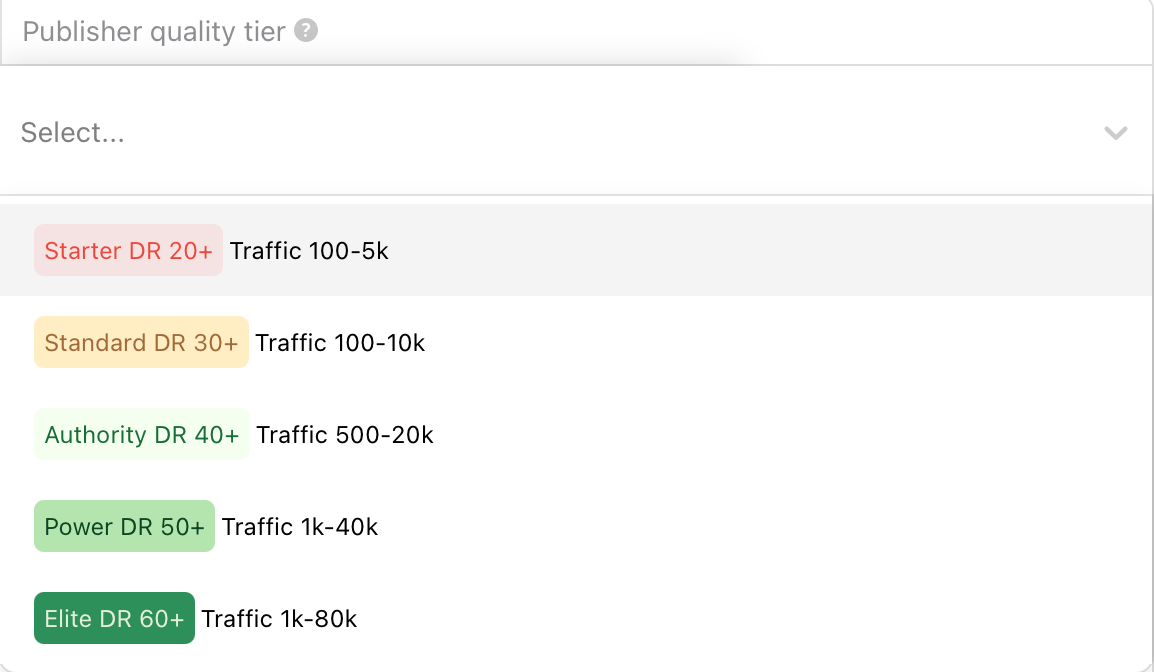
Our done-for-you link building service removes that entire process.
We handle:
- prospecting relevant opportunities (including edu pages where it actually makes sense)
- finding and verifying the right contacts
- sending personalized outreach
- and securing placements on pages that already have authority and traffic
So instead of chasing individual edu backlinks, you’re building a backlink profile that actually drives rankings.
All you have to do is place an order with your requirements and we’ll handle the rest.
And just as importantly, those placements improve your AI visibility.
A lot of AI tools now pull from third-party content like listicles, guides, and resource pages when generating answers. If your brand keeps showing up across those sources, you’re much more likely to be included in AI responses.
That’s exactly what our Campaigns feature is built for.
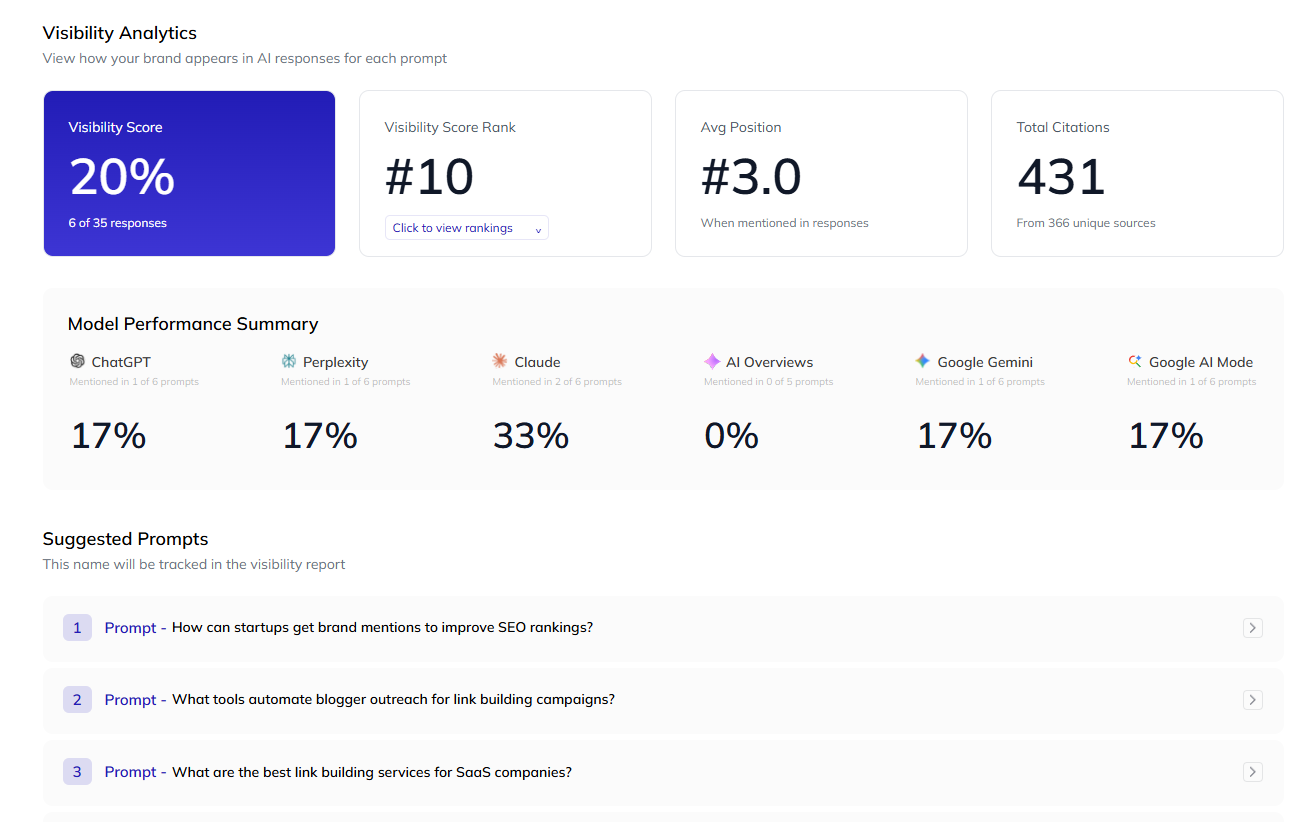
It tracks how often your brand appears across major AI platforms for the prompts that matter to your business, then shows you:
- which sources are getting cited
- where your brand is missing
- and what placements you need to improve visibility
So instead of guessing where to build links, you’re working off real citation data.
If you want to build links (edu or not) that actually impact rankings and AI visibility, this is exactly what we do.
Link building cheat sheet
Now Over to You
In conclusion, edu backlinks can be valuable, but they are not magic.
A backlink from an edu domain is only as useful as the page, the context, and the relevance behind it. In some cases, an edu link can be a strong addition to your backlink profile. In others, a high quality backlink from a relevant site in your niche will do far more for your rankings and referral value.
That is why smart link building should focus on quality, fit, and usefulness, not just domain extension.
If you want to grow your backlink profile with relevant, high-authority links, our team can help.
Our done-for-you link building helps brands earn high-quality backlinks through personalized outreach, relationship-driven prospecting, digital PR, and strategic content promotion.
Instead of spending time chasing every edu backlink opportunity yourself, you can rely on our team to build links that support long-term SEO growth.
Frequently Asked Questions (FAQ)
Are edu backlinks still valuable for SEO?
Yes, edu backlinks can still support search engine optimization, but their value depends on relevance, placement, and the quality of the linking page. A valuable edu backlink from a relevant edu site can help, but it is not automatically better than every other backlink.
How can I get edu backlinks without scholarships or discounts?
You can explore edu backlink opportunities through faculty member interviews, guest post collaborations, resource page outreach, and broken link building on educational websites.
What are some red flags when building backlinks?
Unethical link schemes like link buying or automated link exchanges can harm your website’s ranking.
Focus on acquiring natural backlinks through high-quality content and outreach.
Is it okay to ask for backlinks directly?
It’s okay to directly request a backlink in your outreach, but it’s more effective to focus on providing value first.
Offer guest posts, interviews, or other benefits that incentivize the website owner to link back to you naturally.
How many edu backlinks do I need?
There is no fixed number. Focus on earning quality backlinks from relevant pages, whether they come from edu domains or other authority sites. A small number of valuable edu backlinks is usually better than a large number of weak ones.