
A press release is an official statement about something newsworthy that is sent to journalists, media outlets, and other members of the press to earn media coverage, increase brand awareness, and support public relations efforts.
In this guide, we’re going to take a deeper look into how to send a press release in the most cost-effective and efficient way for small businesses and enterprises.
More specifically, we’re going to give you some simple tips you can follow to make sure your press release has it all.
Additionally, we’re covering the following topics:
- How to find the right media contacts and journalist to pitch your press release to
- How to craft the best press release pitch email to promote your news story
Whether you’re handling press release distribution yourself or replacing an expensive press release distribution service, this guide will walk you through how to send a press release in a practical way.
Plus, plenty more.
Let’s get into it.
Key Takeaways:
- A strong press release email should be short, relevant, and personalized, with a clear subject line and the release attached.
- Sending press releases manually can be more cost-effective than using a press release distribution service, especially for small businesses targeting a specific niche.
- Before sending a press release, make sure it is actually newsworthy, clearly written, and includes the essential press release elements.
- The success of a press release campaign depends heavily on finding the right journalist or media contact, not just sending it to as many outlets as possible.
- Step #1: Make Sure Your Press Release is Ready
- Step #2: Find the Right Journalists to Pitch
- Step #3: Craft Your Email Pitch
- Step #4: Confirm Contacts for Your Press Release Outreach Campaign
- Step #5: Send Your Email & Manage Communications
- Turn Press Coverage Into Long-Term SEO Value
- Now Over to You
- Frequently Asked Questions (FAQ)
Link building cheat sheet
Step #1: Make Sure Your Press Release is Ready
Before we even get to discussing how to send a press release, which is the main focus of our guide here, we need to make sure that we know how to write a press release that’s detailed, is the right length, and communicates our news story in the best way possible.
For matters of efficiency, our first step in sending out press releases is to confirm that our press release is indeed ready to be sent out.
Author’s Tip: Check out our useful press release templates to save yourself and your team both time and money.
Let’s dive right into the first tip we have for you.
Tip #1: Come up with a great press release headline
The very first thing you should do when making sure that your press release is ready is, naturally, to come up with a great press release headline.
If your goal is successful press release submission, your release needs to be easy to understand, easy to scan, and focused on the most important information.
Many may think that this step is basically part of writing a press release and not necessarily part of checking that it’s ready to be sent out.
However, we think that analyzing the content of your headline and ensuring that it’s as compelling, interesting, and engaging as possible can totally help you hit the mark.
In other words, try to read your headlines as if they were someone else’s and try to answer some of the following questions:
- Is it interesting?
- Does it make readers want to know more about the event it’s promoting?
- Is it too long or too short?
And so on and so forth.
After having checked your responses to these questions, make all necessary changes – if any – and move forward with checking your press release.
Wanna see some examples of successful press release headlines to get inspired?
Here’s one:
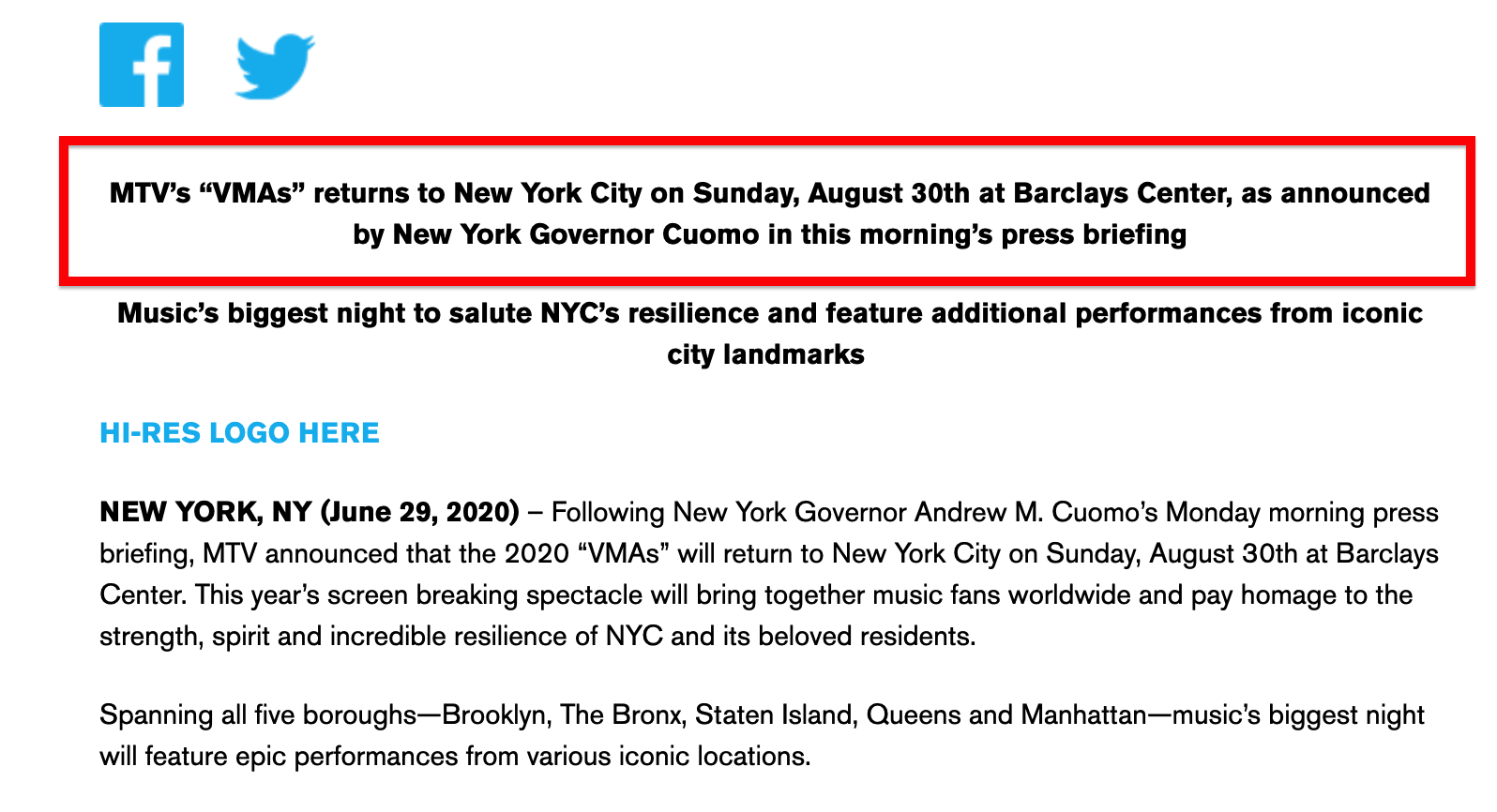
Here’s another:
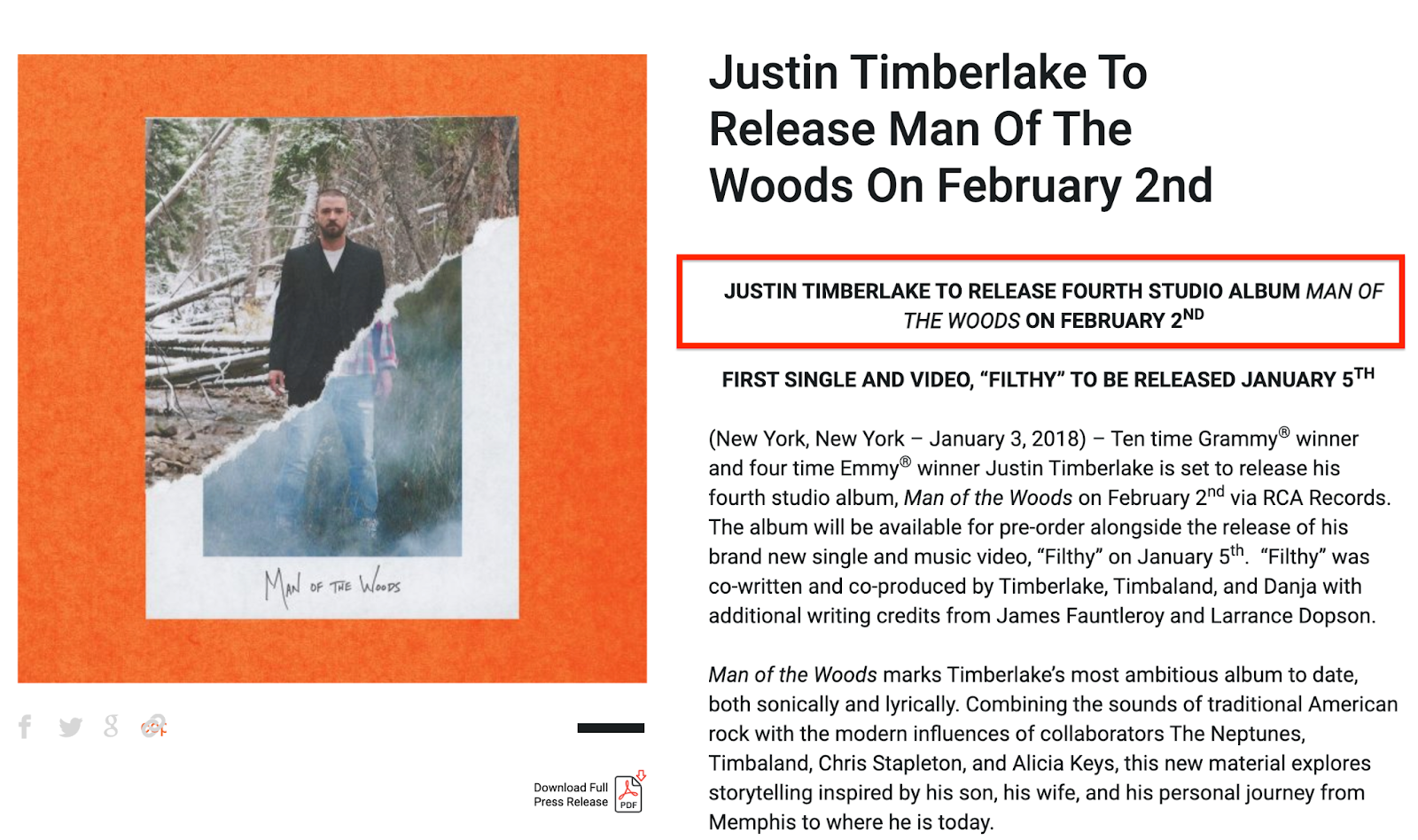
And one more:
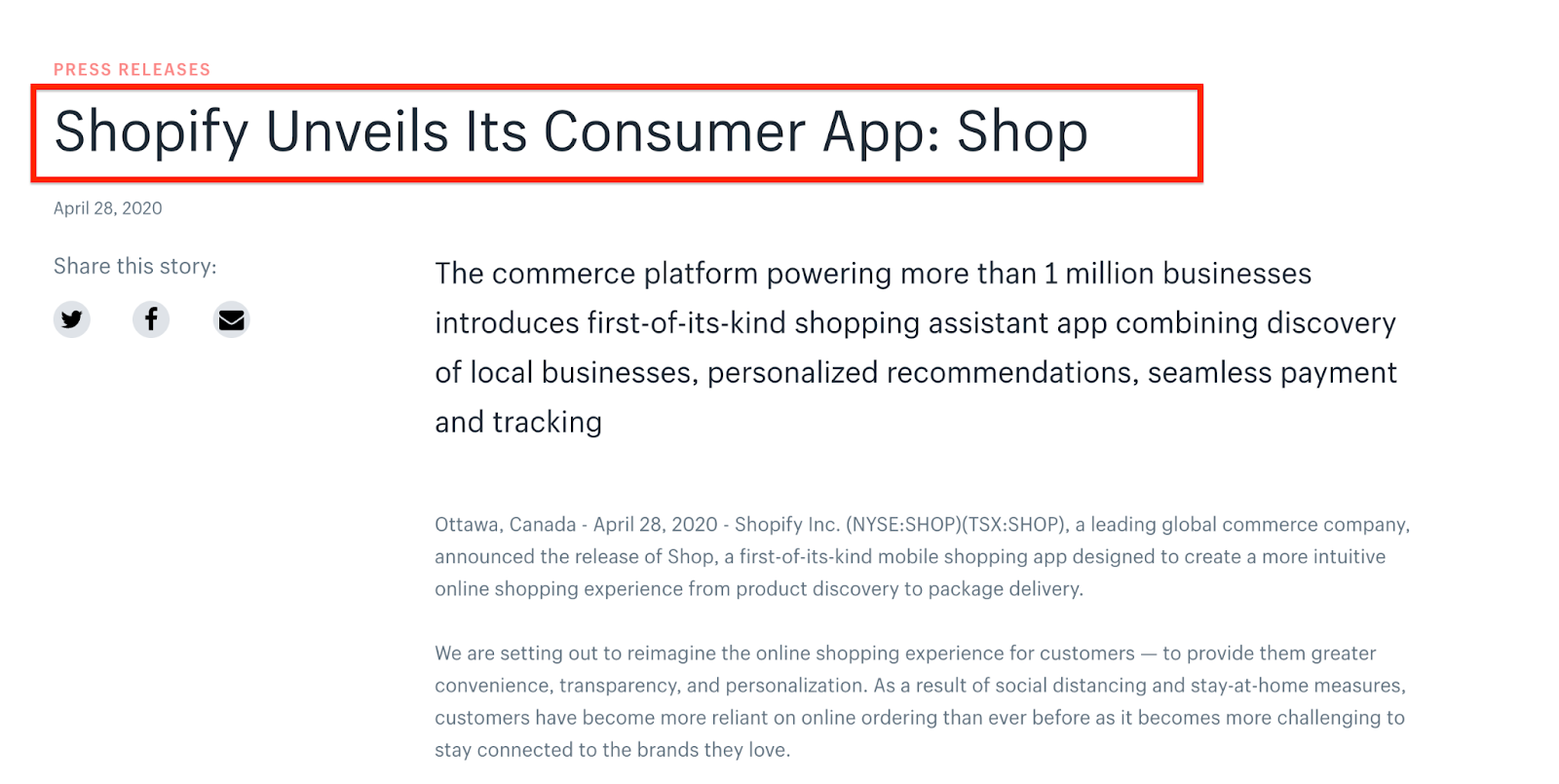
You get my point, right?
Tip #2: Make sure to include the main press release elements
The second tip we think might help you keep track of the efficiency of your press release writing is to ensure that you’ve included all – or at least most! – press release elements.
For those of you who are about to write your first press release; a traditional press or news release includes a number of elements such as:
- Logo
- Contact information
- Dateline
- Headline
- Sub-headline
- Introduction or first paragraph
- Body paragraph
- Boilerplate
- Close
Author’s Note: If you want to know more about these elements, you can also read our recent blog post on what is a press release and what it consists of.
At a minimum, every press release should include clear contact information, the right contact details for follow-up, and enough relevant information for a journalist to evaluate the story quickly.
Because the way public relations happens has evolved and changed in the past decades, some online press releases might not follow the formatting featured above exactly – and that’s definitely not a problem.
However, in order to craft an effective press release, we’d advise you to include at least all items in relation to contact and media information as well as an engaging headline and a boilerplate which is basically your company’s short “About” section.
Tip #3: Keep it short and concise
Whether your press release is going to be shared through social media, email outreach, or media outlets, keep in mind that you need to keep it short – but not too short! – and to the point.
Writing a detailed but concise press release will maximize your chances of journalists, news sites, bloggers, influencers, or anyone in your contact list reading it to actually share it and increase its reach without you having to send endless follow-up emails.
Keeping it short and to the point while also ensuring that you’ve given all important information to the public is key!
Tip #4: Edit and proofread your press release
The final tip for ensuring that you’ll be sending out a good press release is to edit and proofread your press release.
Like with any other social media or blog post you put out there, proper editing will make it more likely for you to make a strong impression with your writing from the very first sentences of your statement.
Additionally, an error-free press release will help you showcase your ability to express your message and news story in the most clear and understandable way possible.
To cut a long story short, no matter if you’re a native or non-native speaker, having an editor doing a quality check is an important step of the process of writing press releases.
We’re now done discussing our easy to follow steps you should take before sending your press release to a list of journalists in your niche, media influencers, or whoever you want to send it to.
In the following sections of this guide, we’ll be taking you through the exciting process of actually finding the right people for your media pitch and reaching out to them.
We’ve got quite a lot to cover, so let’s get right into it.
Step #2: Find the Right Journalists to Pitch
After preparing your press release, the next step is identifying the right journalists to contact.
The goal isn’t to reach as many people as possible—it’s to find relevant journalists who actually cover your topic.
1. Use Google Search (with advanced operators)
Start by searching for recent articles related to your topic using Google:
- your topic + “press release”
- your topic + “news”
- your topic + “site:forbes.com OR site:techcrunch.com”
- your niche + “written by”
You can also use:
- intitle: to find articles focused on your topic
- site: to search within specific publications
Example:
SaaS product launch site:techcrunch.com
Once you find relevant articles:
- Look at the author name
- Click through to their profile
- Check if they regularly cover your niche
2. Use Google News
Search your topic in Google News to find:
- Recently published articles
- Active journalists writing about your space
This helps you prioritize journalists who are currently covering similar stories.
3. Use LinkedIn to Find Journalists
Search on LinkedIn using queries like:
- “journalist + [your niche]”
- “editor + [industry]”
- “writer + [topic]”
Then:
- Check their current role and publication
- Look at their recent posts or activity
- Confirm they actively write about your subject
Step #3: Craft Your Email Pitch
Your email pitch is what determines whether your press release gets opened or ignored.
A strong pitch should be:
- Short and easy to read
- Personalized to the journalist
- Focused on why your story matters to their audience
Best Practices
- Keep it under ~150 words
- Start with a clear, relevant subject line
- Reference something specific they’ve written
- Explain why your story fits their beat
- Attach or link to your press release
- Avoid fluff and generic messaging
Template #1: “Typos” Angle
Hi {first_name},
[Your Name] here with [Company Name]. Respect your reporting a ton, love everything you put out.
Just finished reading your [Topic] article. It was interesting to learn [Insert Article Summary].
Noticed a couple of typos thought I should reach out (it’s my OCD kicking in):
[Spelling error 1]
[Spelling error 2]
Looking forw
Template #2: “Value Add” (Infographic)
Hi {first_name},
Just finished reading your [Topic] article. Thanks for the awesome post! Shared with our PR team over here at [Your Company Name].
Loved the way you said [Insert Article Summary].
We’ve actually written a few in-depth articles about [Topic] in the past and our design team has put together a really neat infographic to go along with it!
Let me know if you want to take a look!
Step #4: Confirm Contacts for Your Press Release Outreach Campaign
Before sending anything, make sure your contact details are accurate.
Even a great pitch won’t work if it lands in the wrong inbox.
1. Find Email Addresses
You can:
- Check the journalist’s author page
- Look for a “Contact” or “About” page on the publication
- Search: “journalist name” + email
2. Use LinkedIn + Email Finder Tools
If emails aren’t publicly available:
- Find the journalist on LinkedIn
- Use tools like SalesQL or similar to extract verified emails
You can also use free email finder tools (including Respona’s free version or alternatives) to locate contact info.
3. Verify Before Sending
- Double-check spelling of names
- Make sure the email domain is correct
- Use an email verifier
- Confirm they still work at that publication
4. Prioritize Quality Over Quantity
It’s better to send 20 highly relevant emails than 200 generic ones
Relevance is what drives results.
Step #5: Send Your Email & Manage Communications
This is the part most people rush through, but it’s actually where a lot of campaigns fall apart.
Hitting send feels like the finish line, but it’s really just the start.
Instead of blasting your entire list at once, it’s worth slowing things down a bit. Send your emails in smaller batches so you can see how people respond.
This will also keep your email reputation and deliverability high, keeping you out of spam.
If something feels off, whether it’s your subject line or your angle, you’ll catch it early and adjust before you’ve burned through your whole list.
Once replies start coming in, speed matters more than people think. Journalists deal with a constant stream of emails, and conversations get buried fast.
If someone responds and you wait a day or two, there’s a good chance the opportunity is already gone. The teams that win here are usually just the ones who reply first.
At the same time, don’t overthink personalization, but don’t ignore it either.
A quick reference to something they recently wrote or a small detail about their beat is usually enough to show this wasn’t sent to 200 other people.
That alone can make the difference between getting ignored and getting a reply.
You’ll also notice that most people won’t respond right away, and that’s completely normal. A simple follow up a few days later is often enough to get your email back to the top of their inbox.
Keep it short, keep it polite, and don’t chase too hard. One or two follow ups is plenty.
Turn Press Coverage Into Long-Term SEO Value
Press releases are typically seen as a brand awareness or PR play.
But when done right, they’re also one of the most effective ways to earn high-authority backlinks.
Every time your story gets picked up by a journalist, mentioned in an article, or cited in a publication, you’re not just getting visibility. You’re earning links from sites that already have trust, authority, and traffic.
That’s the foundation of digital PR.
The challenge is that consistently landing those placements is not easy. It requires:
- identifying the right journalists and publications
- crafting angles that are actually newsworthy
- building relationships over time
- and following up until your story gets picked up
Most teams can send a press release. Very few can turn it into consistent coverage and backlinks.
That’s where our done-for-you link building comes in.
All you have to do is place your order along with guidelines/requirements and we’ll handle the rest.
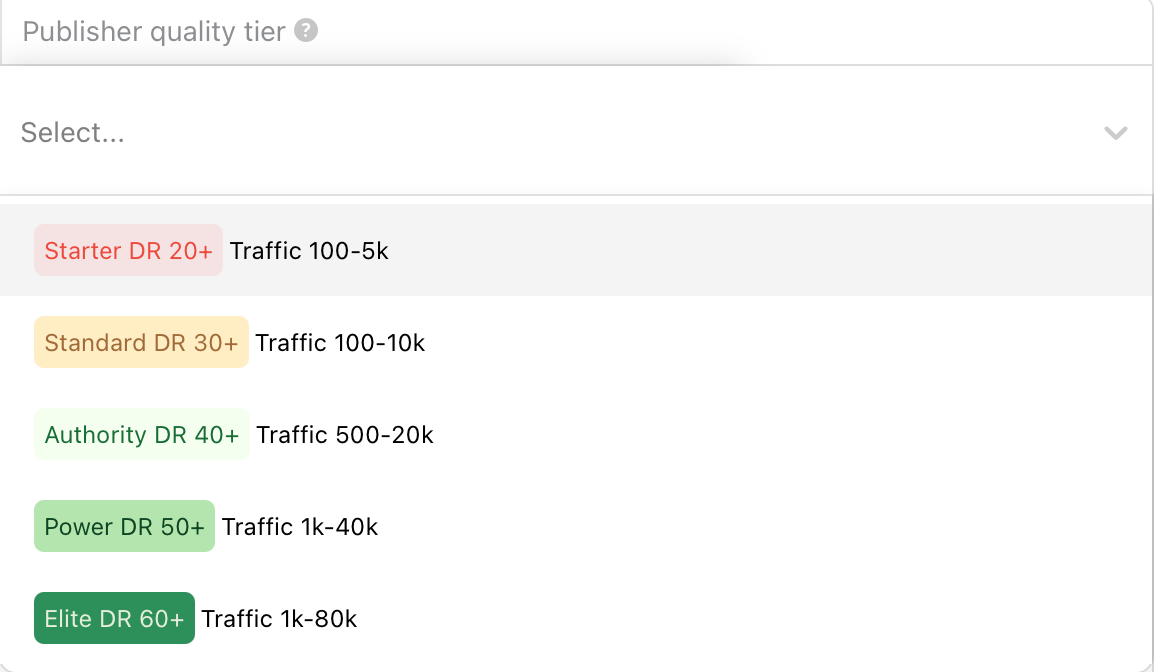
We approach link building as a digital PR channel, not just outreach.
Instead of chasing random backlinks, we focus on earning placements on:
- industry publications
- niche blogs and authority sites
- expert roundups and listicles
- media outlets that already rank and get cited
This means your links come from pages that:
- drive referral traffic
- support your search rankings
- and increase your chances of being mentioned in AI-generated results
Our Campaigns feature takes this one step further.
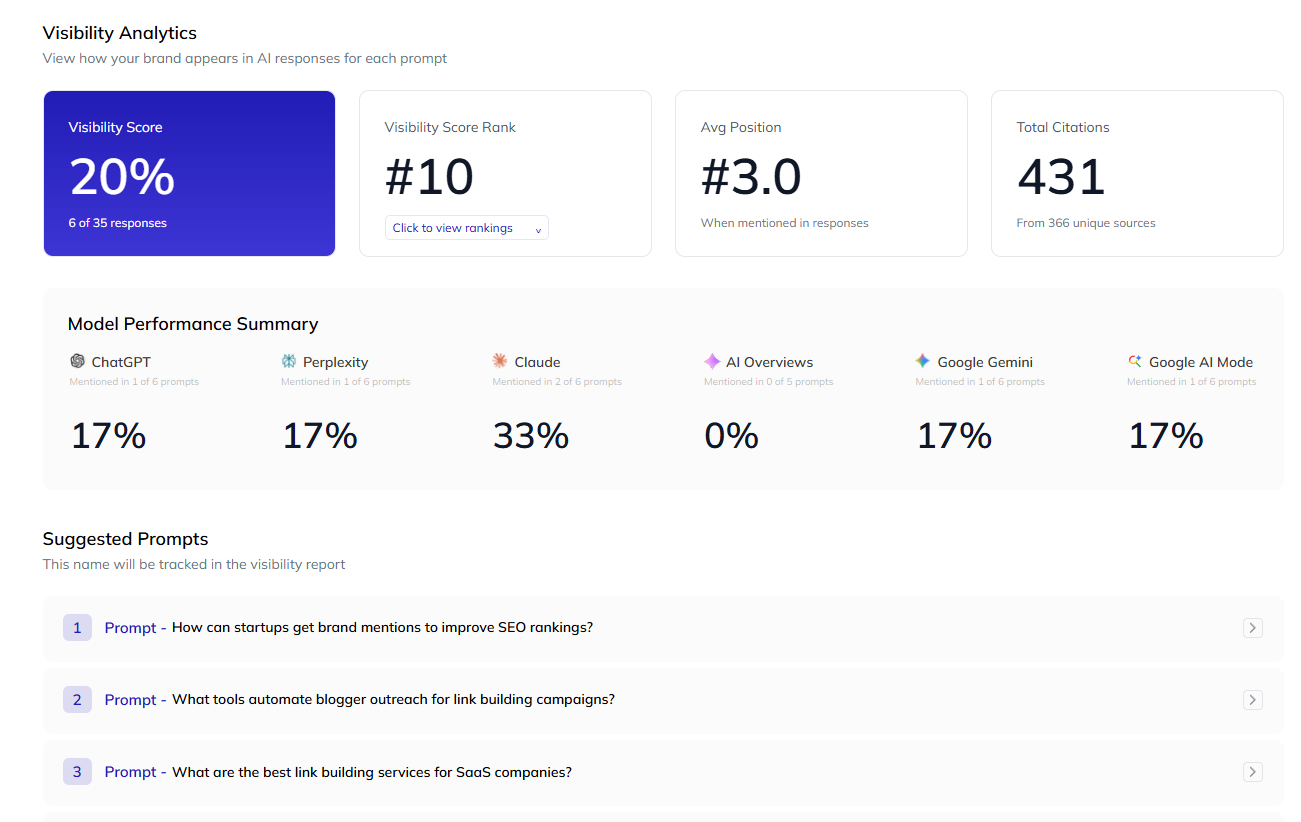
It tracks where your brand is currently being cited across AI platforms and which sources are influencing those results. From there, we identify gaps and prioritize placements on the exact sites that are shaping visibility in your niche.
So instead of treating press releases as one-off announcements, you turn them into part of a broader digital PR strategy that builds links, authority, and long-term visibility.
Link building cheat sheet
Now Over to You
There you have it.
We’ve completed all the main steps in the process of preparing a press release, finding the right journalists, and sending a pitch that has a realistic chance of earning press coverage.
Press release outreach can feel overwhelming at first, but when you focus on relevance, personalization, and strong targeting, the process becomes much more manageable.
If you’d rather skip the manual prospecting and outreach work, our team can help.
Check out our done-for-you link building service. We handle prospecting, outreach, and relationship building to secure high-quality backlinks that improve your search rankings and grow your brand authority.
Frequently Asked Questions (FAQ)
How do you send a press release?
The simplest way to send a press release is to identify relevant journalists or media contacts, write a short press release email with a strong subject line, and attach or link to the release. The more relevant your story is to the journalist’s beat, the better your chances of getting media coverage.
Should I use a press release distribution service?
A press release distribution service can help if you want broad reach, but it isn’t always the best option. For many small businesses, manually sending press releases to carefully selected journalists is more cost-effective and more likely to generate meaningful press coverage.
What should a press release email include?
A press release email should include:
- A clear subject line
- A short introduction to the story
- Why the story is relevant to that journalist or outlet
- A link or attachment to the press release
- Your contact information for follow-up
How do I find the right journalists for my press release?
Start by looking for journalists who already cover your niche, industry, or type of announcement. You can also look at local media, industry publications, Google News results, and recent articles on related topics to build a relevant media list.
Is sending press releases manually better than using a wire service?
It depends on your goal. If you want mass distribution, a service like PR Newswire or a similar press release distribution service may help. But if you want replies from specific journalists and more targeted media relations, manual outreach is usually the better approach.
Can I send a press release to local media?
Yes. In fact, local media can be one of the best options if your story has a regional angle. A local newspaper, city business journal, or local news site may be more likely to cover your story than a large national outlet.
What is the difference between a press release and a media advisory?
A press release shares the full story and gives journalists the details they need to cover it. A media advisory is shorter and is usually used to alert the press about an upcoming event, announcement, or media opportunity.