
Link builders have a very important role in SEO – they help generate high-quality backlinks.
But how? What does their day-to-day work look like?
If you’re looking to hire a link builder (or become one yourself), this guide outlines every element of link building, from start to finish.
Key Takeaways:
- Link builders help websites improve search engine rankings by securing backlinks from relevant websites through outreach, guest posting, digital PR, and relationship building.
- Modern link building involves much more than simply getting links. It also includes content marketing, backlink analysis, outreach management, and maintaining a healthy backlink profile.
- Most link builders spend a large portion of their time prospecting for opportunities, contacting website owners, managing inboxes, and building long-term partnerships.
- High quality backlinks still play a major role in SEO strategy, AI visibility, referral traffic, and overall search engine optimization performance.
- Successful link building efforts focus on earning relevant backlinks from authoritative websites instead of chasing large quantities of low-quality links.
Link building cheat sheet
Find Link Building Opportunities
This process is also known as prospecting.
Depending on your chosen link building strategy, the exact steps are going to be slightly different, but in general, there are two approaches to it – manual and with the help of tools.
The manual one involves Google – and the help of some advanced search operators.
Let’s take a look at how you can find link insertion opportunities manually.
Link Insertion
The key to manual link insertion (also known as niche edits) prospecting is crafting precise search queries.
For example, imagine your keyword is “marketing automation ROI,” and you have a blog post showcasing how to significantly improve marketing automation ROI with specific strategies.
You want to find blogs discussing marketing automation or ROI in general, but haven’t specifically addressed the connection between the two, especially with concrete examples like a case study.
Here’s a sample search string you could use:
inurl:blog intext:”marketing automation” -intitle:”marketing automation ROI”
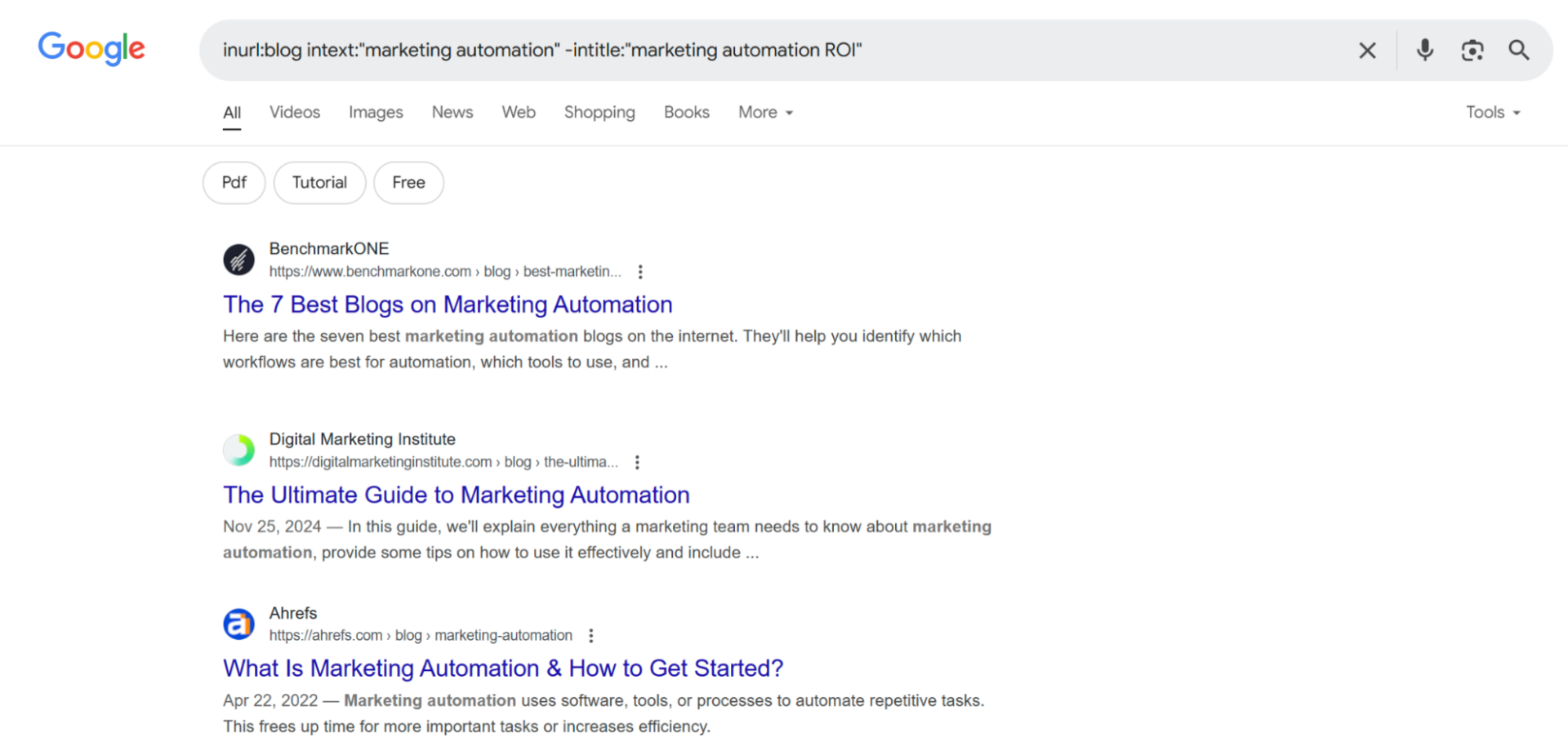
Let’s break down what this search does:
Inurl:blog specifies that you’re looking for pages with “blog” in the URL, helping to target blog articles.
intext:”marketing automation” ensures the page mentions “marketing automation” in its text.
-intitle:”marketing automation ROI” excludes pages that already have “marketing automation ROI” in their title, avoiding direct competition.
This search string helps you find blogs discussing marketing automation where your case study demonstrating ROI could be a valuable, non-competing addition.
Competitor Backlinks
Analyzing your competitors’ backlinks is another day-to-day task of any link builder and a powerful way to identify potential link building opportunities.
Tools like Ahrefs and Semrush offer robust competitive analysis features that help you uncover “backlink gaps” – sites linking to your competitors but not you.
Closing these backlink gaps is crucial for “catching up” to your competitors in search results.
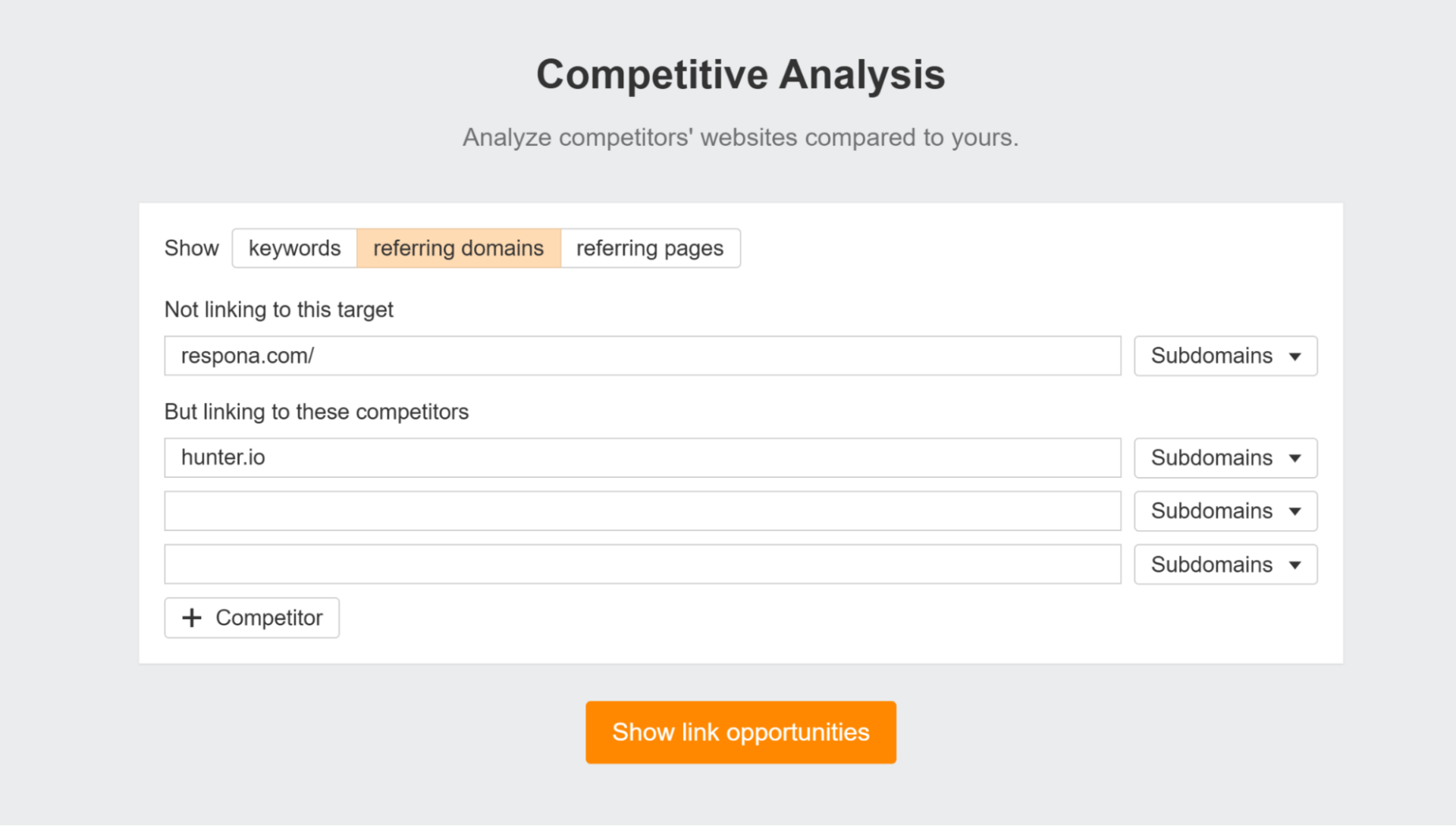
Start by selecting the competitive analysis tool and paste one (or several) of your competitors.
Ahrefs is great for this because it also works for keyword gaps – not just backlinks.
Click “Show link opportunities” to get a list of referring domains linking to your competitors.
You can also click over to the referring pages report to find exact backlinks.
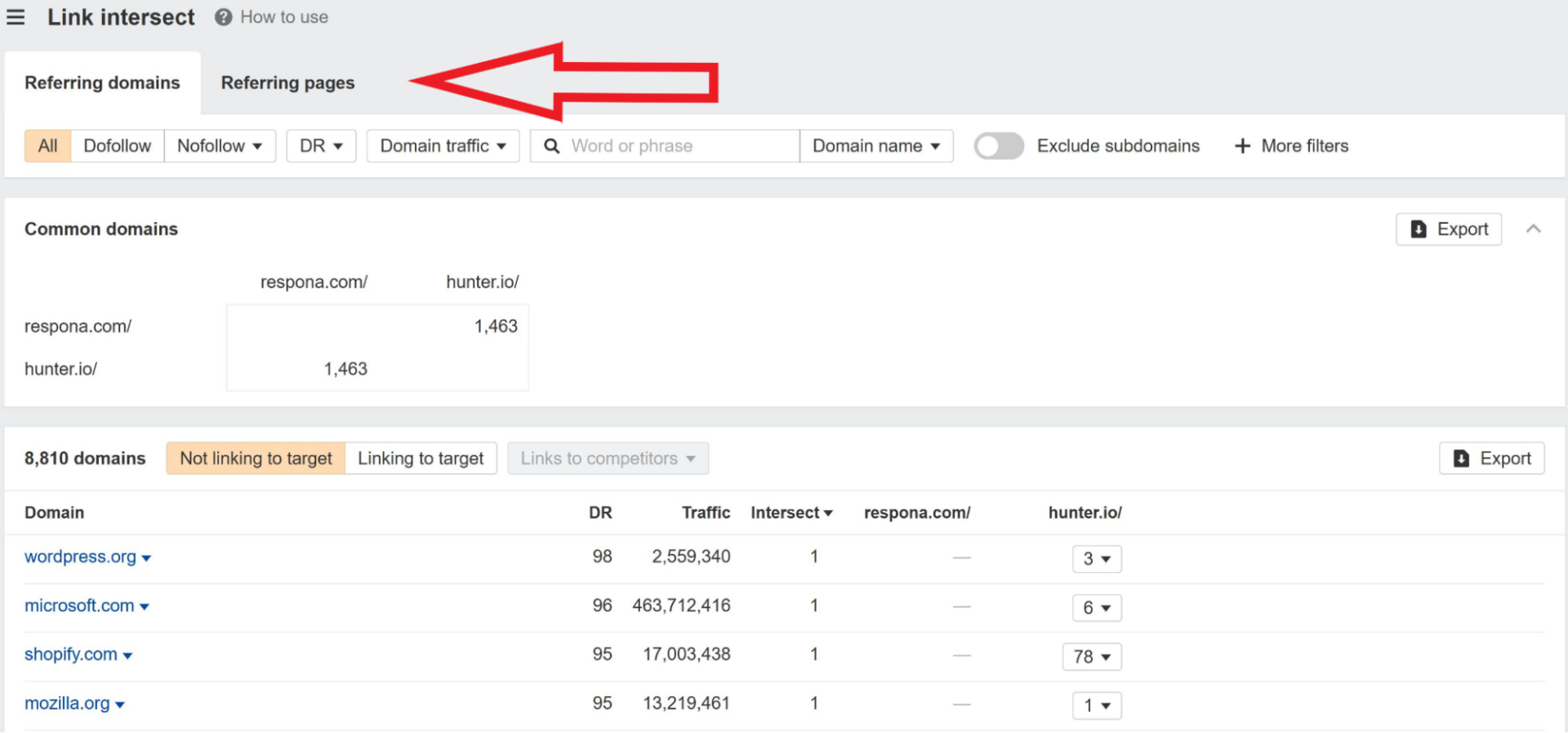
Filter results by metrics like domain authority, traffic, and relevance to prioritize outreach. Many tools also show the specific competitor pages receiving quality links.
Write & Publish Guest Posts
Guest post content creation is a cornerstone of a link builder’s work.
It’s a highly effective way to earn high quality backlinks, drive referral traffic, and establish authority within a specific niche.
Including your link partners’ links in your guest articles is also a prime way to set up ABC link exchanges.
Once again, you can find guest posting opportunities using advanced search operators in Google pretty easily.
Just use this search query: intitle:”write for us” + keyword.
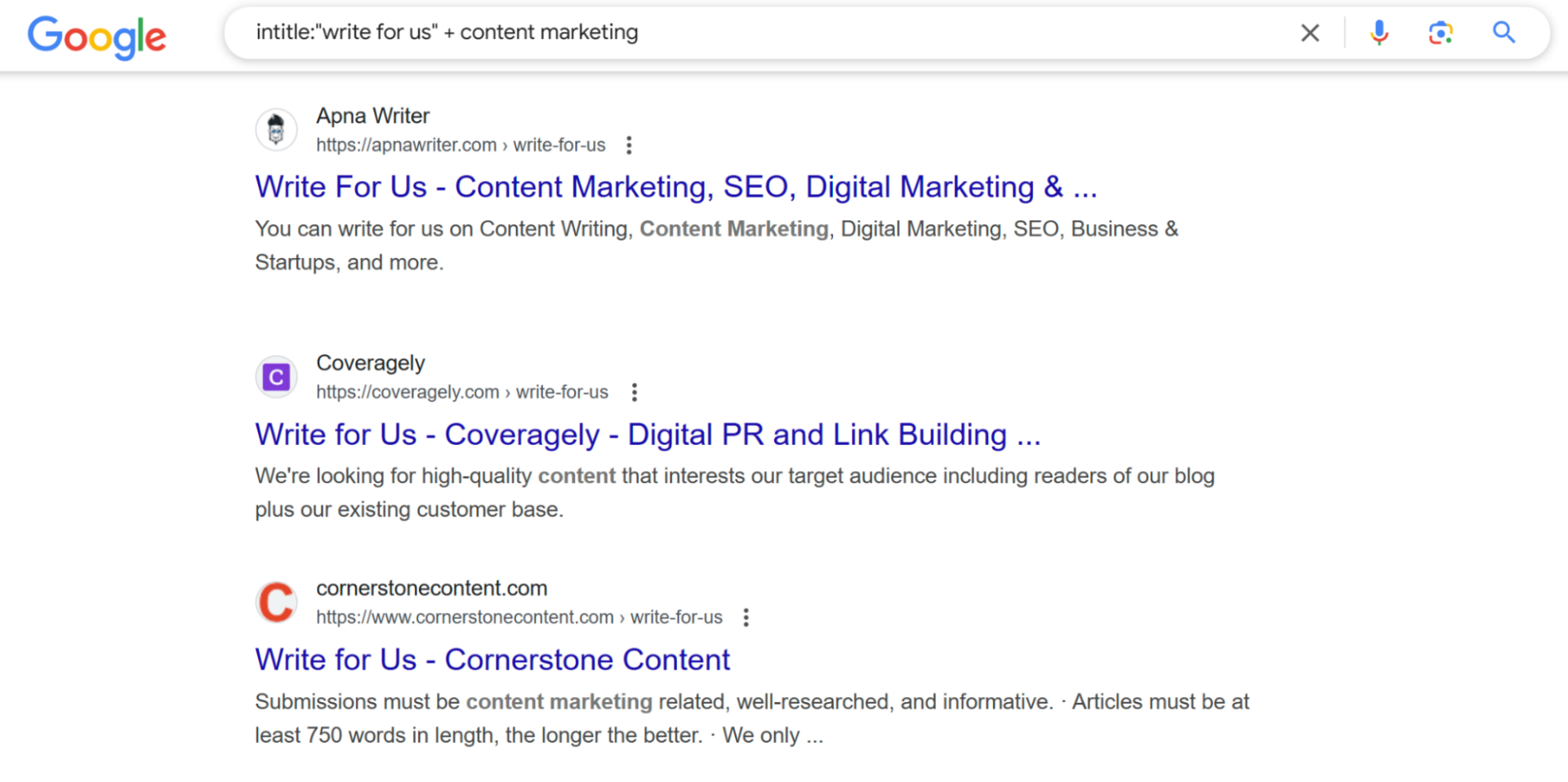
Replace “keyword” with a relevant term related to your industry or the topic of your content.
For example, if you’re in the content marketing niche and want to write about social media, you could search for intitle:”write for us” + content marketing.
This search will return websites that have a “write for us” page (or similar) in their title and also mention “social media” on their site, indicating they likely accept guest posts on that topic.
Find Contact Information
Once you’ve identified potential link building opportunities, whether through competitor backlink analysis, guest post prospecting, or other methods, the next step is finding the right contact information.
Reaching out to the appropriate person is essential for getting replies and securing backlinks.
There are several ways link builders find relevant contact information.
The most obvious place to start is the website itself.
Look for “About Us” or “Contact Us” pages, which often list email addresses or contact forms.
These pages may provide general contact information or specific contacts for different departments, such as editorial, marketing, or the webmaster.
Social media platforms can also be valuable resources.
Check the website’s social media profiles (e.g., Twitter, LinkedIn, Facebook) for contact information or direct messaging options.
LinkedIn, in particular, is a great platform for finding professional contact information.
However, link builders almost never look for email addresses manually because it takes too long.
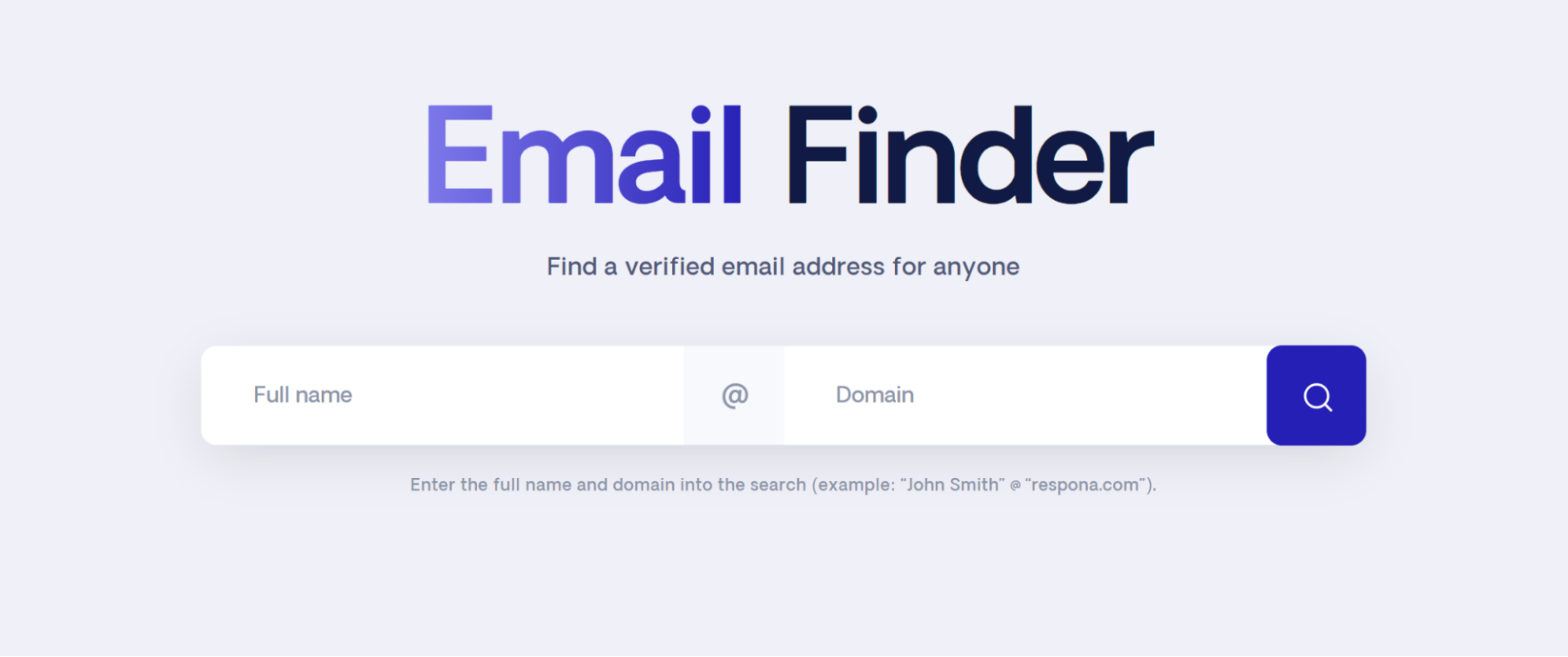
The most effective way to find contact information is to use an automated SEO tool like Respona – it finds and verifies email addresses on auto-pilot, in bulk.
Besides contact finding, it streamlines every other aspect of running a link building campaign as well.
Write & Send Personalized Emails
A significant portion of a link builder’s job involves crafting and sending personalized emails.
Blogger outreach is crucial for building relationships, securing guest post placements, and acquiring valuable backlinks.
Here are some tips for writing link building emails:
Subject Line
- Keep it concise (2-7 words) and intriguing.
- Personalize it with the recipient’s name or company.
- Avoid spammy words or phrases.
- Examples: “Want to collaborate with {company}?” or “broken link in your {topic} blog post.”
Opening Line
- Mention something specific about their work or website.
- Show that you’ve done your research.
- Examples: “I’m writing a few guest posts for sites like [example] and looking for resources to include…” or “I noticed you linked to [competitor] from [your post]…”
Email Body
- Keep it brief (75-125 words) and focused.
- Highlight the value proposition (what’s in it for them).
- Use a clear and concise call to action.
- Avoid excessive formatting or exclamation points.
- Example: “It would be great if we could get a slot in your article as well:)”
Follow-Up
- If you don’t receive a response, follow up once after 3-5 business days.
- Keep the follow-up brief and respectful.
- Mention that it’s a one-time follow-up to avoid being annoying.
Monitor Your Backlink Profile
Besides building new links, link builders also keep an eye on your backlink profile – an ongoing process crucial for maintaining and improving your website’s search engine rankings.
It involves tracking new links you’ve acquired, identifying and reclaiming lost links, and ensuring the overall health and quality of your backlink portfolio.
Reporting New Links
Of course, one of the main KPIs related to link building is the number of new links built.
This demonstrates the effectiveness of your link building efforts and allows you to analyze which strategies are most successful.
Maintain a record of each link you’ve built, including the linking website, the anchor text used, and the target URL on your site.
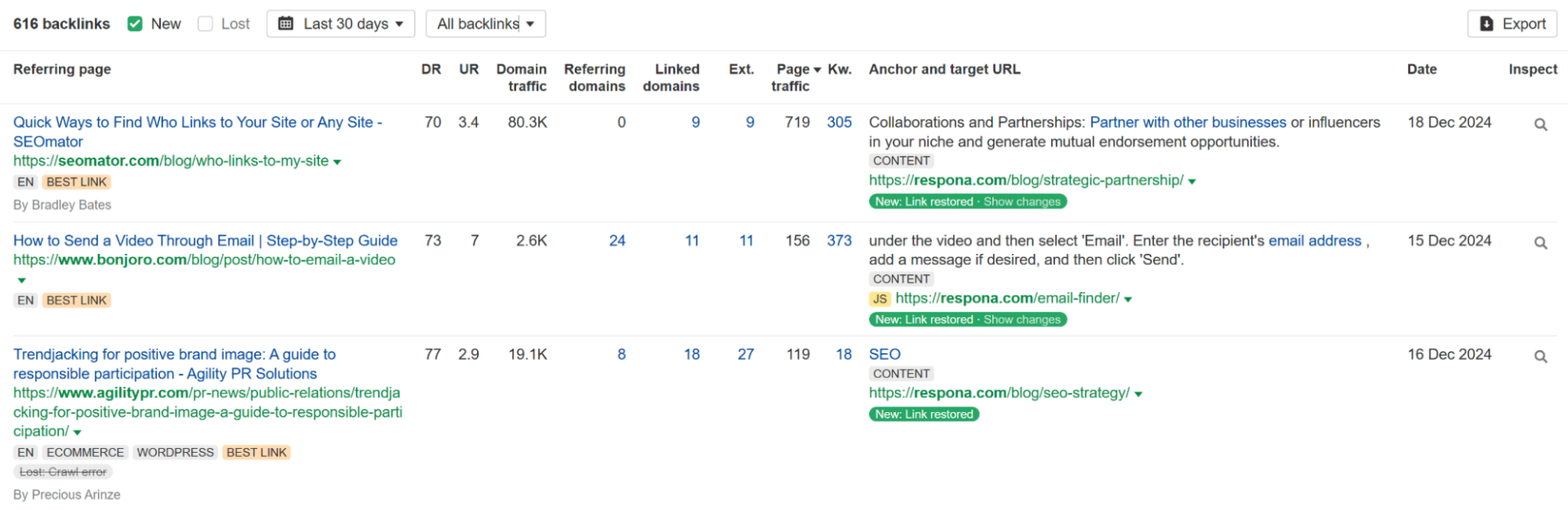
This data can be organized in a spreadsheet or a dedicated link building tool.
Regularly review these new links to ensure they are from reputable sources and that the anchor text is appropriate.
Finding and Reclaiming Lost Links
Links can be lost for various reasons.
The linking website might remove the page, change its URL, or alter the anchor text.
Regularly checking for lost links is vital because these links previously contributed to your website’s authority and ranking.
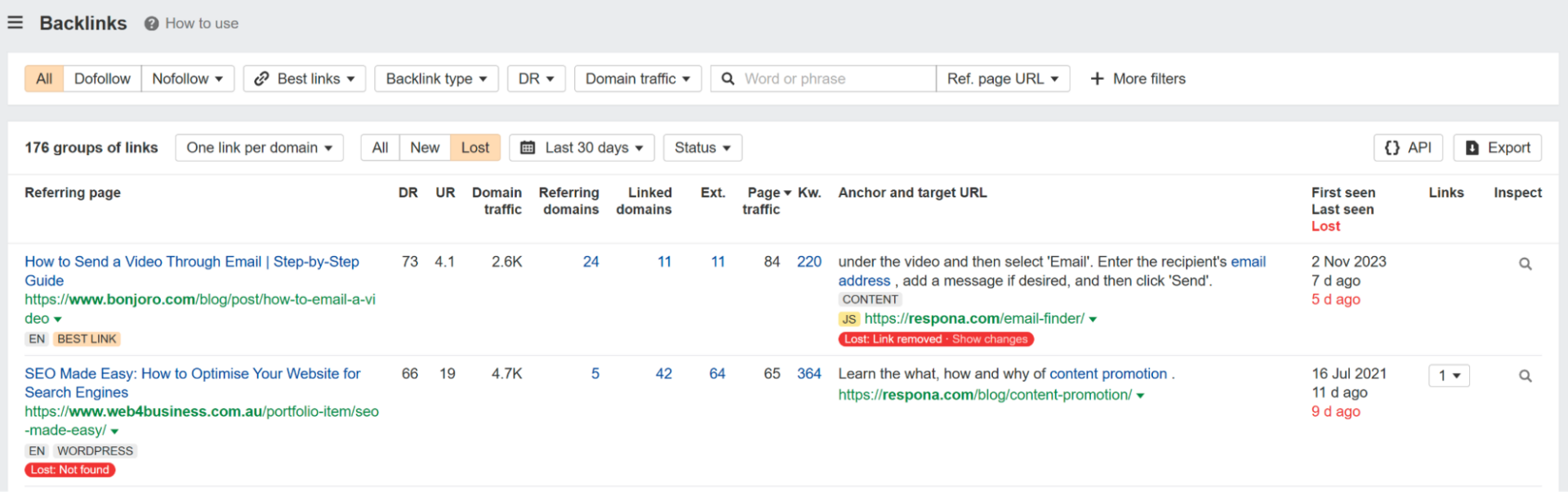
Several tools, including Ahrefs, Semrush, and Google Search Console, can help you identify lost backlinks.
Once you’ve identified a lost link, reach out to the linking website owner or webmaster to inquire about the removal and, if appropriate, request reinstatement.
Establish Long-Term Partnerships
Turning one-time link collaborations into ongoing relationships is a great way to scale up your link building.
Think beyond the single link exchange.
After a successful collaboration, maintain communication with your new contact.
Regularly share your newly published guest posts with your partners, offering them the opportunity to feature your content and potentially exchange links within relevant articles.
There are also many link builder communities available (like the Link Building HQ by uSERP) where you can connect with other link builders directly and recruit partners relatively easily.
Maintain Email Domain Health
Maintaining email domain health is crucial for successful link building outreach.
Avoid large email blasts from a single address; distribute outreach across several emails to minimize spam flags.
Regularly monitor your domain’s presence on major email blacklists and take action if it appears.
If your domain is new or has a low reputation, warm it up by gradually increasing email volume.
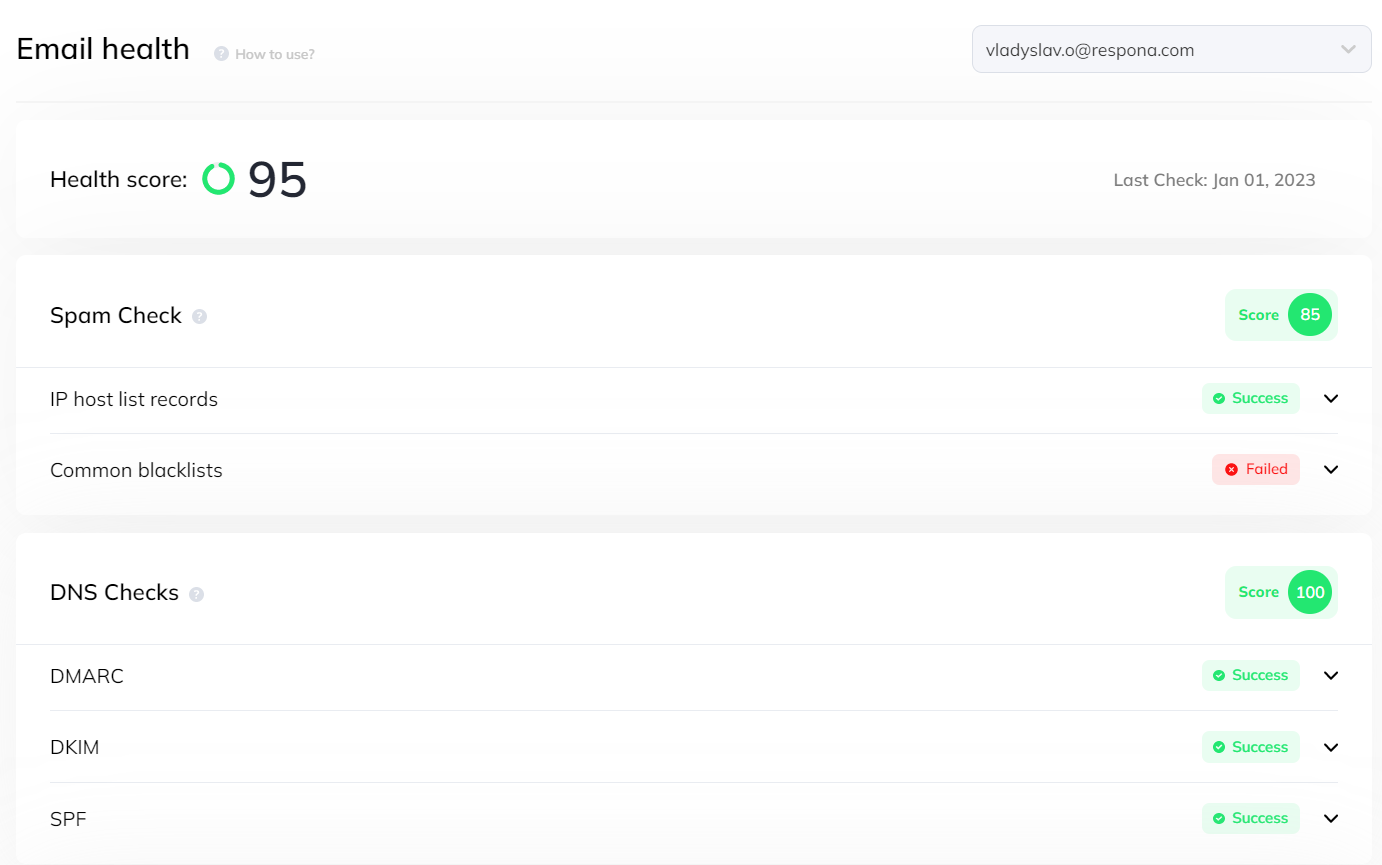
Use tools like Respona to run regular email health checks and identify potential issues.
These practices protect your sender reputation, improve email deliverability, and maximize link building outreach effectiveness.
Manage Inboxes
The lion’s share of a link builder’s day is often spent managing inboxes.
This includes checking emails, responding to inquiries, and fulfilling your partner’ link requests.
Effective inbox management is essential for staying organized, building relationships, and ensuring timely communication with potential link partners.
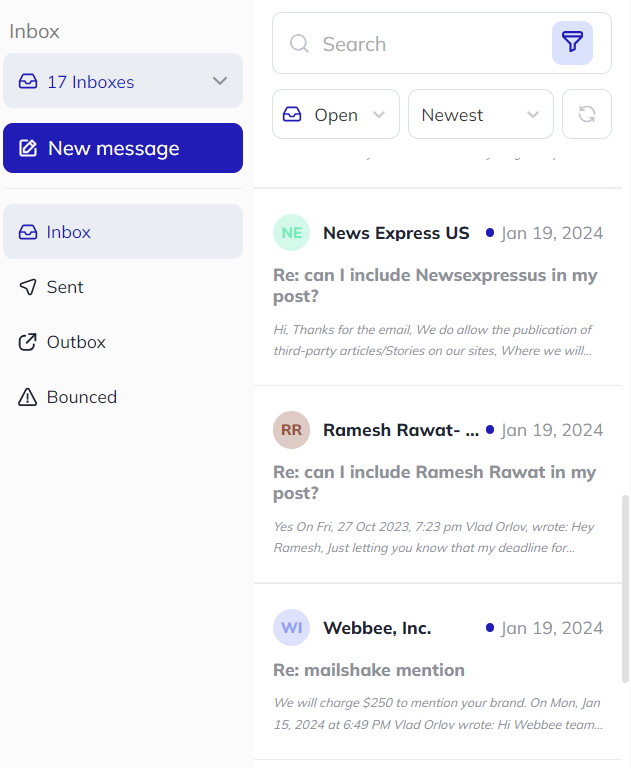
Tools like Respona can significantly streamline this process by offering a unified inbox that integrates all your email accounts into a single, easy-to-manage interface.
This allows link builders to see all their communications in one place, speeding up response times and improving overall efficiency.
Need Help With Link Building?
Hiring an in-house link builder sounds great until you look at the actual cost of running link building internally.
You’re not just paying a salary.
You also need to account for training, management, outreach tools, prospecting tools, content creation, inbox management, publisher relationships, and ongoing campaign oversight.
And even then, a single person can only handle so much outreach before things start slowing down.
That’s why a lot of companies eventually move toward outsourced link building services instead.
Not because they do not understand SEO or outreach, but because scaling link building consistently becomes extremely resource-intensive.
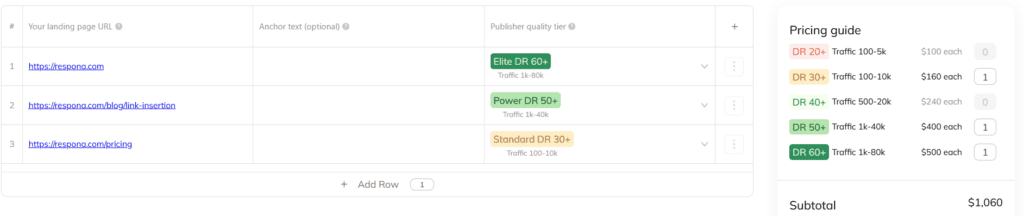
Respona is built around a much simpler model: pay-per-result link building.
Instead of paying retainers for vague outreach efforts, you place orders for the exact types of placements you want based on your preferred DR and traffic ranges.
For companies that want more control over targeting, Campaigns can also identify articles already ranking in search results and already appearing inside AI-generated answers related to your target keywords and topics.
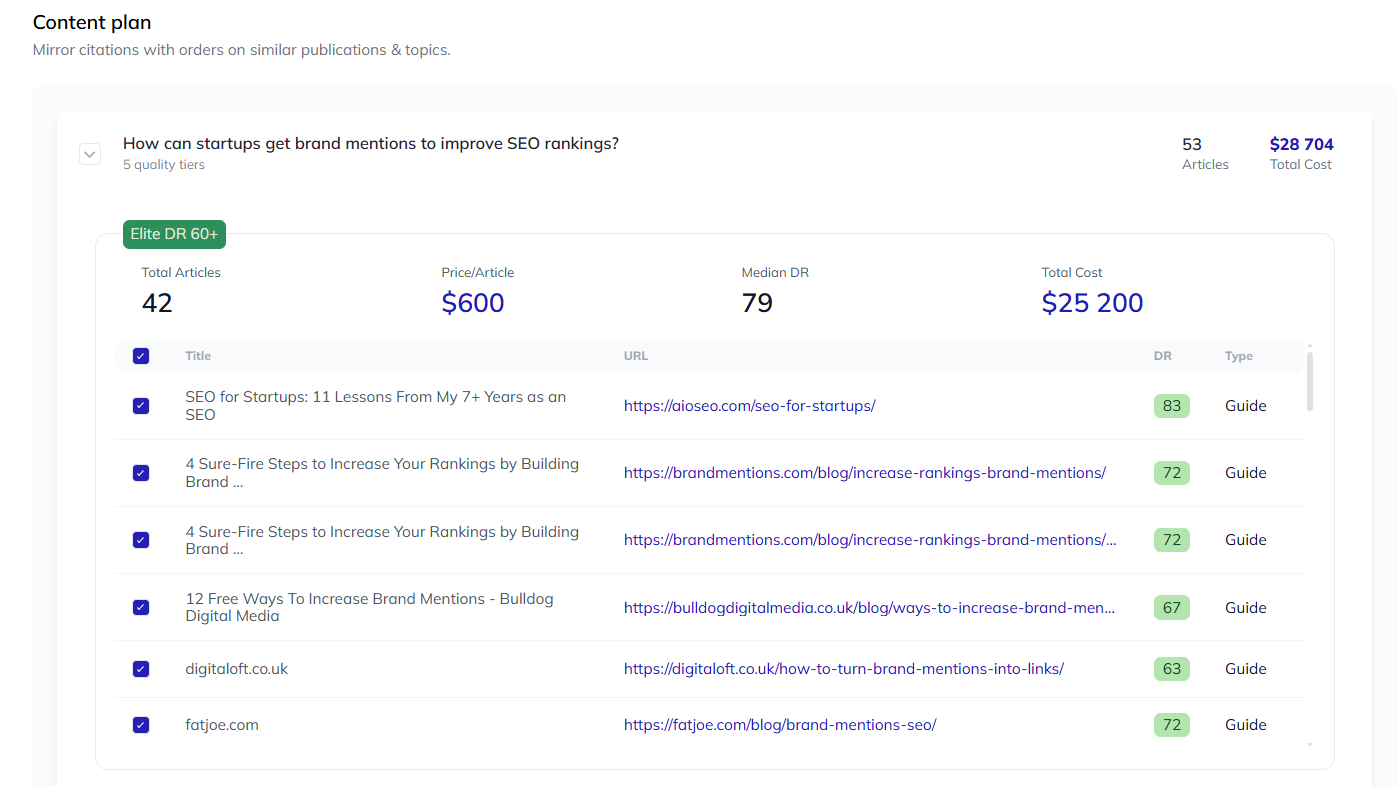
That way, your link building efforts stay focused on pages already driving visibility instead of random placements across irrelevant websites.
From there, the Respona team handles the outreach, publisher conversations, negotiations, and placements for you across guest posts, niche edits, blogger outreach, editorial links, and other authority links.
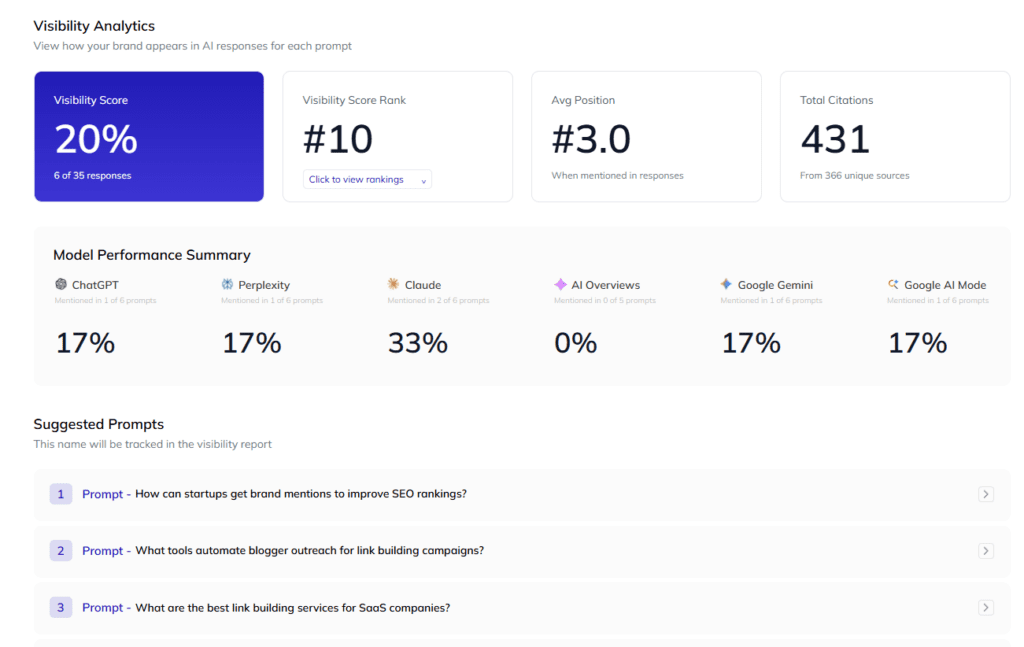
All that’s left for you to do is track your visibility improve over time.
So instead of building and managing an entire outreach operation internally, you can scale link building as needed and pay directly for placements that support your SEO strategy.
Link building cheat sheet
Now Over to You
At the end of the day, link builders do a lot more than just “build links.”
They handle prospecting, outreach, relationship building, guest posting, backlink analysis, and all the operational work required to secure high quality backlinks consistently.
And that process matters a lot because strong backlinks still play a major role in rankings, referral traffic, AI visibility, and long-term search engine optimization growth.
If you want help scaling your link building without managing outreach manually, you can place an order through Respona and let the team handle the placements, outreach, negotiations, and publisher relationships for you.
Frequently Asked Questions (FAQ)
What is the main goal of a link builder?
The main goal of a link builder is to acquire high-quality backlinks from reputable websites to improve a website’s search engine rankings and organic traffic.
How do link builders find link building opportunities?
Link builders use various techniques to find link placement opportunities, including manual searches using Google’s advanced search operators, competitor backlink analysis, identifying and avoiding link farms and using tools like Respona.
What tools do link builders use?
Link builders utilize a variety of tools to streamline their work, including backlink analysis tools like Ahrefs and Semrush, email outreach platforms like Respona for managing campaigns, and email verification tools to ensure deliverability.
How important is email outreach for link building?
Email outreach is a crucial aspect of link building, as it allows link builders to connect with website owners, editors, and content managers to secure guest post placements, build relationships, and acquire backlinks.
What are some key qualities of a successful link builder?
Successful link builders and SEO experts possess strong communication and relationship-building skills, are proficient in SEO and link building techniques, have excellent research and analytical abilities, and are adept at using various tools and technologies to streamline their workflow.
Do backlinks still matter for SEO?
Yes.
Backlinks still play a major role in search engine rankings because Google uses links to understand authority, relevance, and trust across the web.
High quality backlinks from authoritative websites usually have a much bigger impact than large numbers of low-quality links.
What is a link building agency?
A link building agency is a company that manages outreach and backlink acquisition for businesses.
Most link building agencies help with things like:
- guest posting
- blogger outreach
- link placement negotiations
- content creation
- backlink analysis
- outreach campaigns
Some also offer white label link building services for SEO agencies.
What’s the difference between guest posts and niche edits?
Guest posts involve writing new content for another website in exchange for a backlink.
Niche edits, also called link insertions, involve placing a link into existing content already published on another website.
Both are commonly used in modern link building campaigns.
How do link builders find backlink opportunities?
Most link builders use a combination of:
- competitor backlink analysis
- search operators
- outreach tools
- content research
- blogger outreach
- relationship building
to find relevant backlink opportunities and authoritative websites within a niche.
What makes a quality backlink?
A quality backlink usually comes from:
- a relevant website
- a trusted website
- a page with real traffic
- strong content
- natural placement context
Relevant backlinks from authoritative websites tend to help rankings much more than spammy or low-quality links.
What is white label link building?
White label link building is when a company provides link building services under another agency’s branding.
A lot of SEO agencies use white label link building providers to scale client campaigns without building their own internal outreach teams.
Can link building help with AI visibility too?
Yes.
AI systems frequently pull recommendations and citations from pages already ranking well in search results.
That means strong link building can improve both traditional search visibility and visibility inside AI-generated answers.