
Link building is a lot of busywork.
Between the planning, competitive analysis, the actual outreach process, and managing long-term partnerships, there’s a ton to keep in mind.
In this link building checklist, we’ll focus ONLY on points you need to be aware of.
Let’s begin.
Key Takeaways:
- You need linkable assets first, otherwise you have nothing worth building links to.
- Closing backlink gaps is the fastest way to catch up to competitors already ranking above you.
- Not all pages need backlinks equally. Focus on pages ranking just outside page 1 for the biggest impact on organic traffic.
- The number of links you need depends on your competitors, their backlink profile, and domain authority.
- Email deliverability setup (SPF, DKIM, DMARC, warmup) directly impacts outreach success.
- Unlinked brand mentions are one of the easiest ways to earn quick backlinks.
- The most scalable link building strategies include guest posting, competitor backlinks, link insertions, and listicles.
- A link building service can help execute all of this consistently at scale.
Link building cheat sheet
Publish Linkable Assets
Linkable assets are high-quality, shareable content designed to attract backlinks.
Good linkable assets also make content marketing much easier because they give website owners a real reason to link to you instead of ignoring your outreach.
It’s the first step on our checklist because without content, you don’t have anything to build links to.
These “link magnets” can take various forms, even a simple blog post can be a linkable asset – as long as it provides tangible value to the reader. Common and effective types of linkable assets include:
- Industry Studies & Research: Original research and data analysis that provides unique insights not readily available elsewhere.
- Ultimate Guides: Comprehensive resources that cover a topic thoroughly from start to finish.
- Videos: Engaging video content such as tutorials, interviews, or explainer videos.
- Listicles and Resource Pages: Curated lists of valuable resources or tools related to a specific topic.
- Infographics: Visually appealing presentations of data or information.
- Templates: Ready-to-use templates that simplify tasks or processes for users.
- Tools Pages: Free online tools that offer practical utility to users, especially if related to a paid service.
The stronger the asset, the easier it is to earn quality links, high quality links, and improve your backlink profile over time.
Strong assets also tend to perform better on social media, which can indirectly lead to more link opportunities.
And once those assets are live, support them with internal links so they are easier to discover and stronger within your site structure.
Identify Your Backlink Gaps
Next, you’re going to need to find where your link profile stands in relation to your competitors.
The easiest way to catch up to websites ranking higher than you is to close your backlink gaps first, and then build some additional links on top – so your link profile ends up stronger.
Both Ahrefs and Semrush offer powerful SEO tools that are excellent for uncovering backlink gaps.
To utilize it, simply click on Competitive Analysis in the top right, ensure it’s set to referring domains (rather than keywords), and input at least one competitor’s domain.
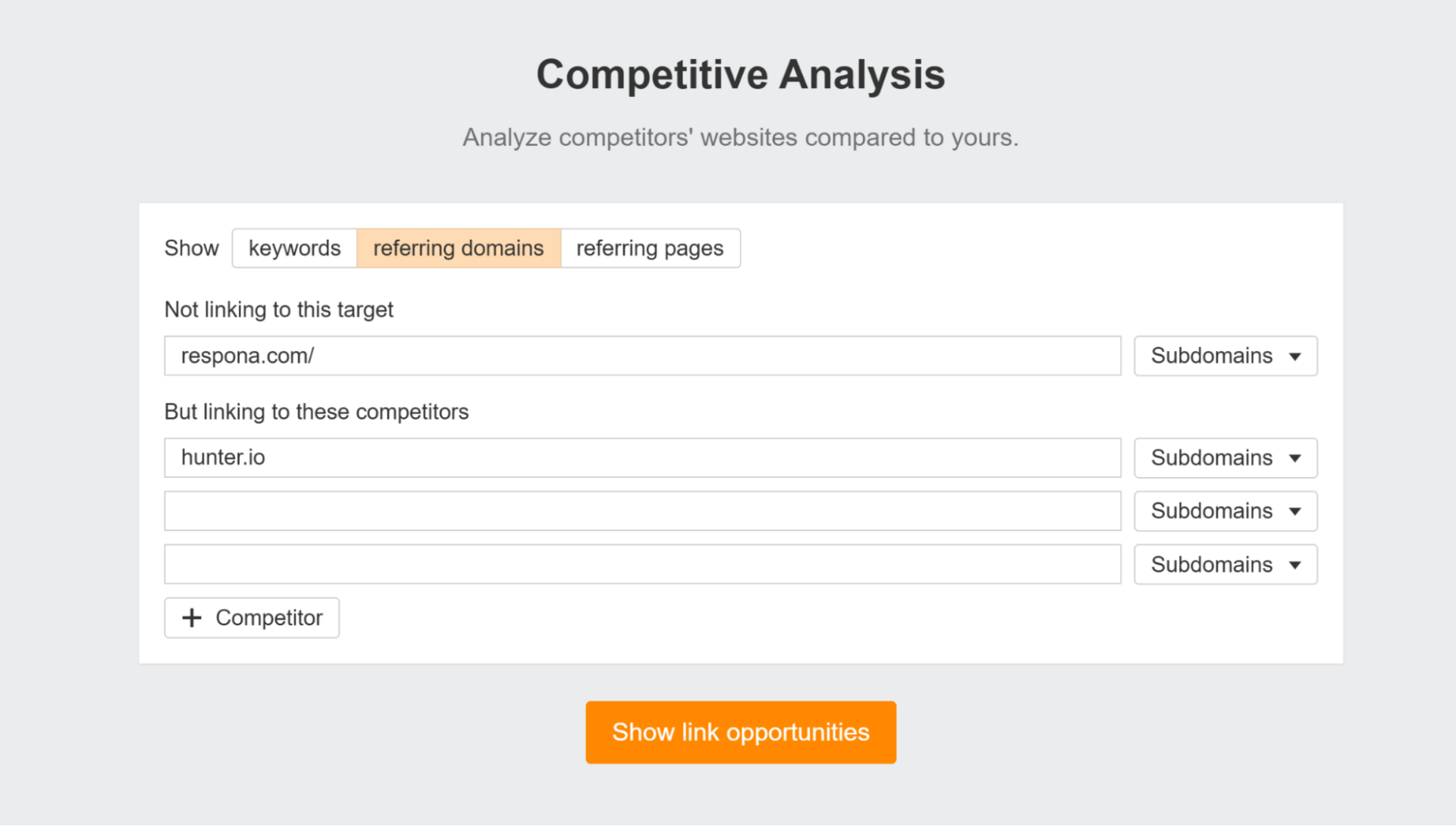
After clicking “Show link opportunities,” the tool will initially display domains linking to your competitors.
To focus on specific linking pages, select “Referring pages” in the upper left corner. All the filtering options from the previous step are also available here.
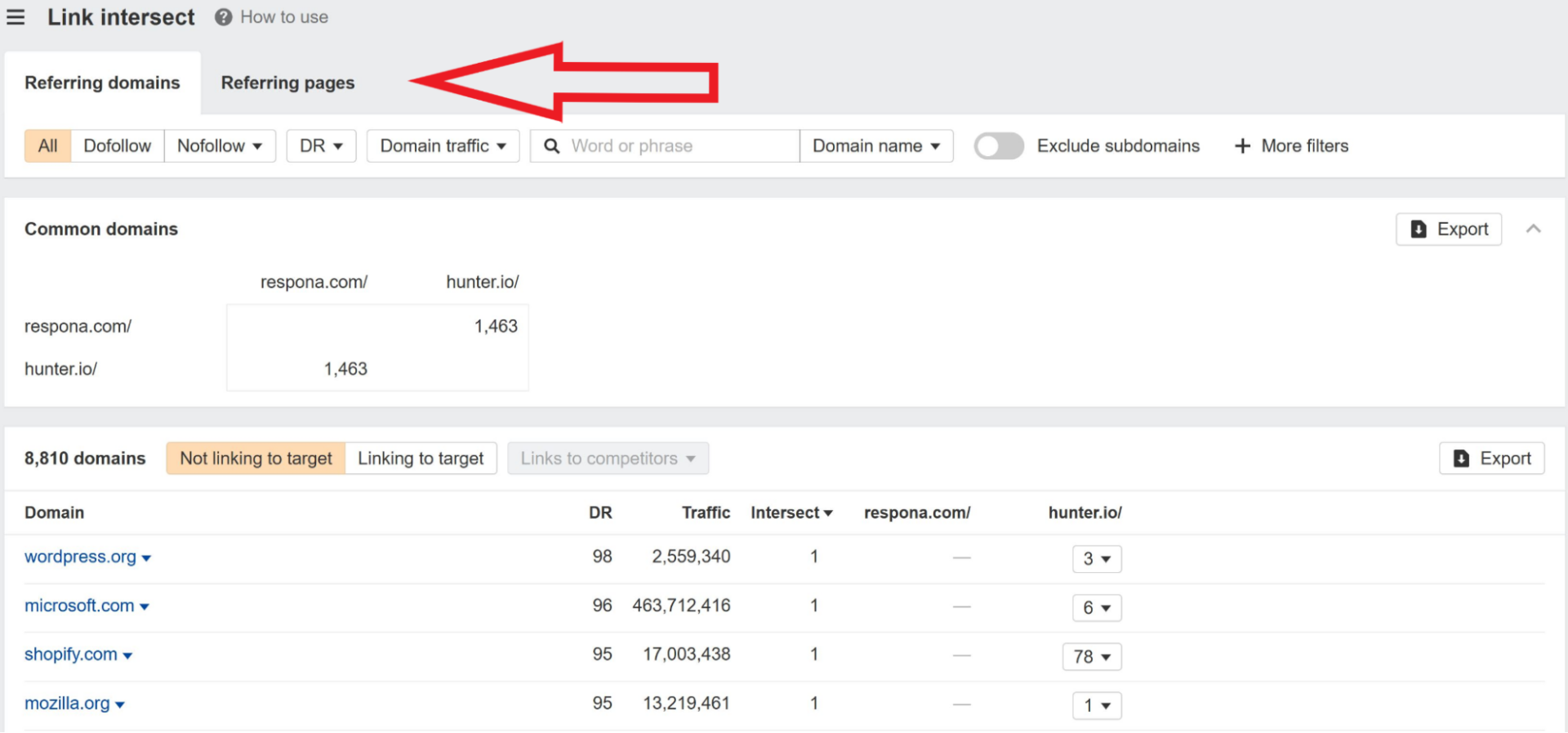
Use filters like DR, domain traffic, and overall domain authority to only focus on high quality backlink opportunities.
We also recommend prioritizing dofollow links since a nofollow link typically doesn’t pass link juice the same way.
Once you’ve compiled a list of competitor backlinks, export the data to a spreadsheet and prepare for outreach.
Drop everything into a Google Sheet and sort link prospects by authority, traffic, and relevance.
Select Pages to Build Links To
Now, of course, nobody’s stopping you from taking a shotgun approach and just get as many links, wherever you can.
But it can be more valuable to strategically pick pages that actually need a boost to start ranking.
A great place to start are pages that are currently ranking on page 2, especially on #11-15.
They can be bumped up to the top 10 with relatively few backlinks, but the organic traffic difference between ranking on page 1 and 2 is be massive.
This is one of the easiest ways to improve SEO success without taking a random approach to building links.
Before scaling your link building efforts, it’s worth running a quick site audit to make sure your internal links are properly set up. A strong internal linking structure helps distribute link equity and makes your external link building more effective.
Determine How Many Links You Need
Now, how many links do you need to rank high on search engines?
It really depends on how many backlinks your competitors have.
If you’re going after a keyword that’s not too competitive, you might only need a handful of links to crack the top 3.
But if you’re targeting something super competitive like “SEO,” you could be looking at hundreds.
To figure out how many links you need to rank, you’ll want to use an SEO tool like Ahrefs or Semrush to check out the competition.
Let’s look at some other articles that are competing with our target keywords.
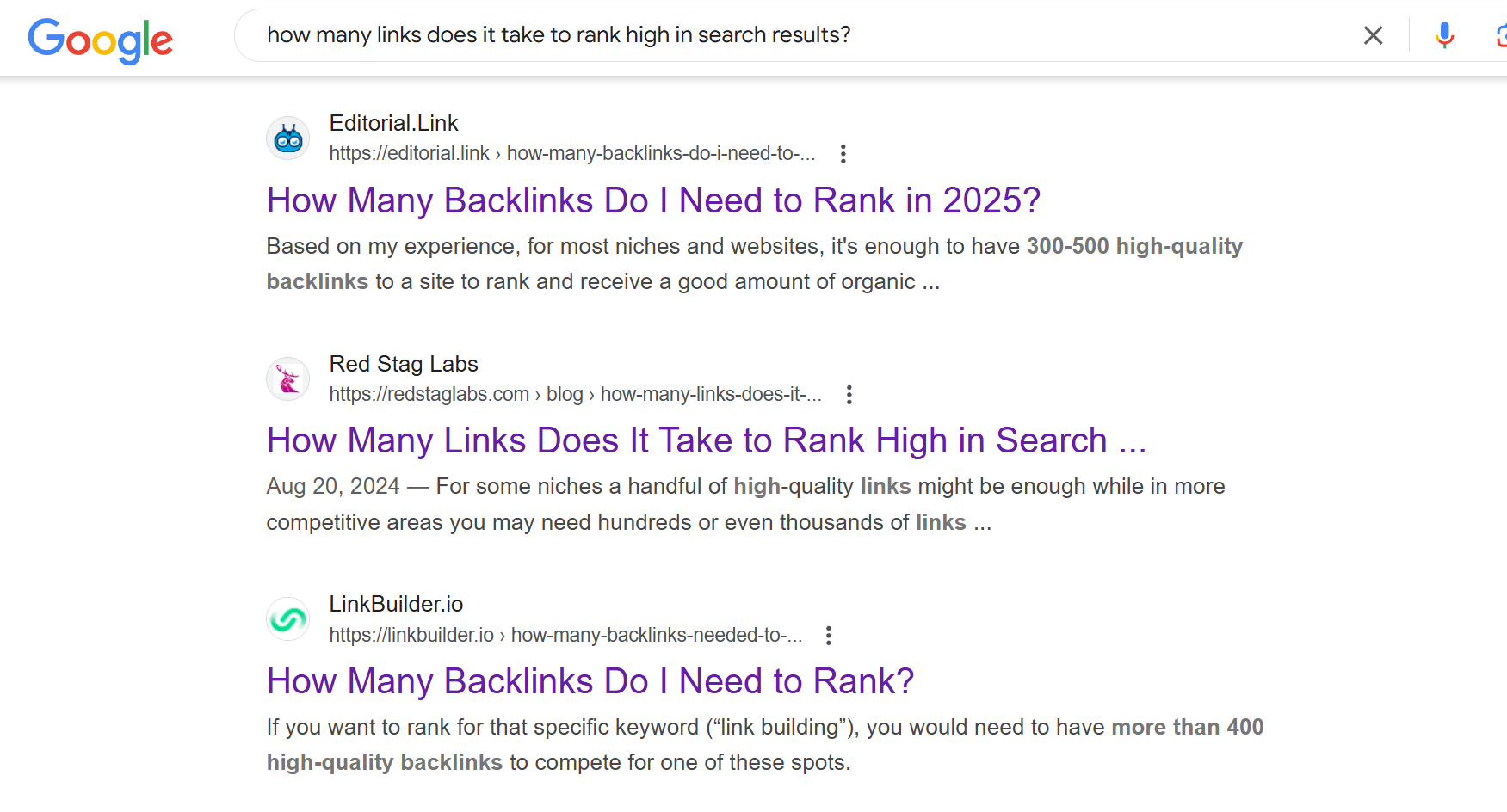
For example, Editorial.Link’s article (which is ranking #2 right now and targeting one of our keywords) has 11 backlinks from 10 different websites.
And get this: 8 of those links are from really authoritative sites with strong domain authority and trust signals.
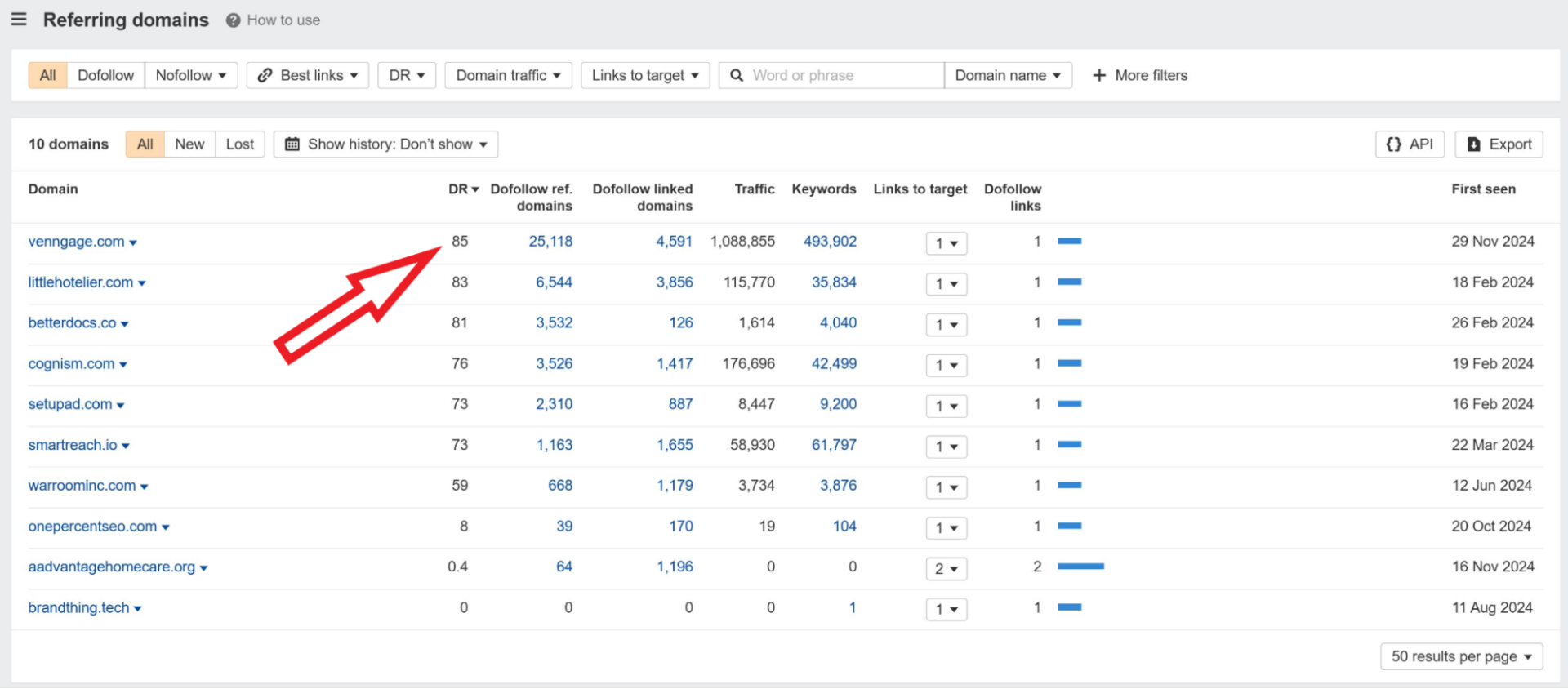
So, if we wanted our own piece on that topic to outrank them, we’d need around 10-20 backlinks of similar quality.
That doesn’t mean 10 random links. It means 10–20 quality backlinks or even a smaller number of high quality backlink placements from strong domains.
I can’t stress this enough: quality is key.
To learn more about what makes a link valuable, check out our backlink quality analysis guide.
At the end of the day, you’re building links to improve how your pages perform in search engine results.
Prepare Your Email Domain
Link building is primarily done through cold email outreach.
If your outreach setup is weak, even the best link building strategy can fail before your email reaches the website owner.
One of the biggest mistakes people make is not properly setting up their domain for mass outreach.
Not only does this lead to little to no replies, but can get your account suspended due to spam.
Set Up DMARC, DKIM, and SPF
There are three key email authentication protocols you should know about:
SPF (Sender Policy Framework): This is an email validation system designed to prevent email spoofing, a type of fraud where someone sends emails using a forged sender address.
DKIM (DomainKeys Identified Mail): This method lets email senders digitally sign their emails using a cryptographic signature.
Recipients can then verify this signature using a public key in the sender’s DNS records.
DKIM ensures the message truly came from the claimed sender and hasn’t been altered during transmission.
DMARC (Domain-based Message Authentication, Reporting and Conformance): This protocol verifies the sender’s identity and ensures the email hasn’t been tampered with.
DMARC also lets senders specify what should happen if an email fails authentication (e.g., reject it or deliver it to the inbox).
Last but not least, for enhanced deliverability, you should also create a custom tracking domain:
You should also connect Google Search Console and Google Analytics to track how new backlinks affect your search engine visibility, search results, and organic traffic.
Warm Up Your Emails
If you’ve got a brand new domain, sending hundreds of emails right off the bat is a surefire way to land in the spam folder.
If your emails land in spam, you won’t earn the quality backlink placements you’re aiming for.
That’s where email warm-up comes in.
The idea is simple: start by sending a small number of emails each day during your first week and slowly increase that number over the next month.
Here’s a possible schedule:
- Week 1: 10-15 emails per day
- Week 2: 20-25 emails per day
- Week 3: 25-35 emails per day
- Week 4: 35-50 emails per day
Respona lets you set daily email limits for all your sender accounts, so you don’t have to manually track everything.
Another option for warming up your email is using a tool like Lemwarm.
This is especially useful if your domain reputation has taken a hit recently. Lemwarm connects you with other users and sends emails on your behalf.
It also automatically replies to emails it receives from you.
Plus, if one of your emails ends up in someone’s spam folder, Lemwarm automatically marks it as “not spam.”
This all looks like real conversations to Gmail and helps boost your email deliverability, engagement, and overall domain reputation.
For more deliverability tips, check out our email deliverability checklist.
Claim Unlinked Mentions
Now that the technical aspect of link building outreach is out of the way, let’s talk about some strategies.
Unlinked mentions are the lowest-hanging fruit since you were already mentioned – now you just need to nudge the website owner to turn that into a proper backlink.
But, to find them, you’re going to need the help of either a brand monitoring tool, or backlink analysis tool with unlinked mention tracking capability, like Ahrefs:
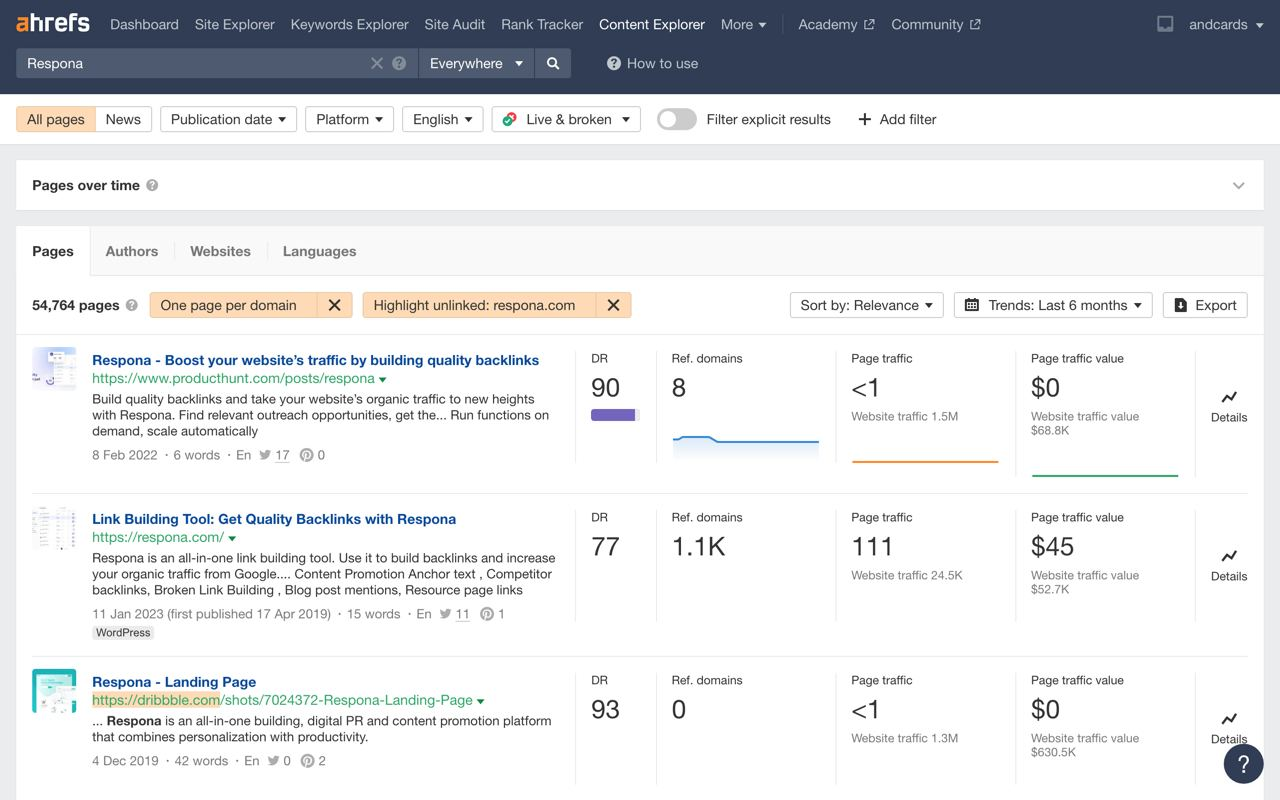
You can also use Google Alerts for basic monitoring, although dedicated tools are much more effective at scale.
Even a single reclaimed link can send referral traffic and contribute to your organic traffic over time.
Find Link Building Opportunities
Now, let’s talk about 4 of our favorite link building strategies and how to find high quality link opportunities manually using Google search and SEO tools.
The goal isn’t just to find any link opportunity, but to find quality backlinks that improve rankings, referral traffic, and SEO performance.
Over time, consistent placements can significantly improve your domain authority, backlink profile, and organic traffic.
Alternatively, you can use Respona to manage every step of building links from here on.
Watch the videos under each strategy to see how.
Guest Posting
Guest posting should be the backbone of your link building efforts.
There are tons of sites that accept guest posts – and offer you at least one link in your author bio.
However, guest posting sites usually also allow placing supporting links in the content – as long as they’re relevant and aren’t to the same site.
So, you can add links to your partner websites in the content, and they’ll return the favor for you in a similar way.
This is one of the most common (and efficient) ways to set up ABC link exchanges.
This is a pretty straightforward way to get guest posts.
Any website with a “Write for Us” page is basically inviting you to contribute.
The good thing about this strategy is that there are tons of these opportunities out there.
The downside?
Many of these sites can be low-quality link farms, take forever to publish your content, or only accept submissions through contact forms which isn’t nearly as effective as talking to someone directly.
To find these pages, just search Google for intitle:”write for us” plus your target keyword.
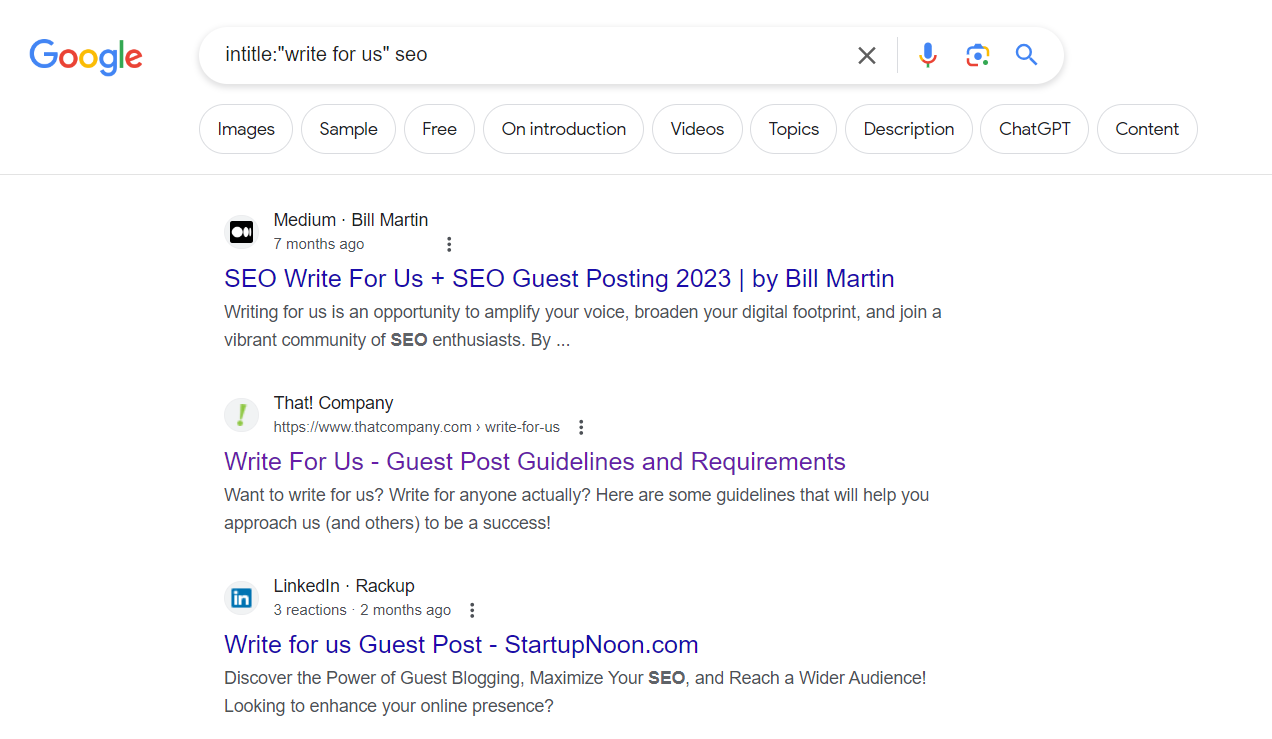
Then, pick relevant websites that look good and reach out to the site owner, either through the contact email on the page or the contact form.
But, as you probably know, doing this manually for a lot of sites is tough.
That’s where Respona’s guest posting campaign template comes in handy.
Competitor Backlinks
Competitor backlinks (AKA the skyscraper technique) is super scalable – especially if you’re in a highly competitive niche.
Our competitors usually have dozens if not thousands of valuable backlinks pointing to their articles, so it takes very little effort to build up a large list of quality backlink opportunities.
We primarily use Ahrefs for our more in-depth work, so that’s what we’ll be demonstrating here.
To check your competitor’s backlinks, the first step is to paste their URL into the Site Explorer tool.
If you enter their main website URL, it will display all of their backlinks after you click on the number listed under “backlinks.”
If you enter the URL of a specific blog post, you’ll only see the links pointing directly to that post.
Our usual practice when we publish a new article is to compile a list of all the competing URLs and then reach out to the websites linking to them.
Let’s run through some helpful filters for finding worthwhile link building opportunities from what could be a huge list of competitor backlinks:
- Dofollow: This is essential, as these are the links that pass on link equity.
- DR (Domain Rating): From 30 (You can tweak this, but we like to target sites with a DR of 30 or above.)
- Domain Traffic: From 1K (This is also adjustable, but we aim for sites getting at least 1,000 visitors per month.)
- One link per domain: (Be sure to turn this on to avoid seeing lots of duplicate entries.)
If you use tools like Majestic, you can also review citation flow and trust flow for an extra layer of quality control. This makes it much easier to identify quality links that are already proven to work.

You can also use this report to find broken link building opportunities.
If you’re targeting a specific region like the United States, you can also filter prospects by relevance and geography.
Link Insertion
Link insertion is a classic strategy that involves finding non-competing articles that mention your target keywords somewhere in the content.
So, for example, an SEO guide might mention link building in a subsection.
If they don’t have a link building guide of their own, that anchor text would make for a high quality link opportunity.
The most straightforward way to find places to insert your links is by using a classic Google search, but with a few advanced search operators to help narrow things down.
Specifically, these three:
- inurl:blog
- intext:”keyword”
- Intitle:”keyword”
These operators help you locate blog posts that mention your target keywords in both the title and within the content itself.
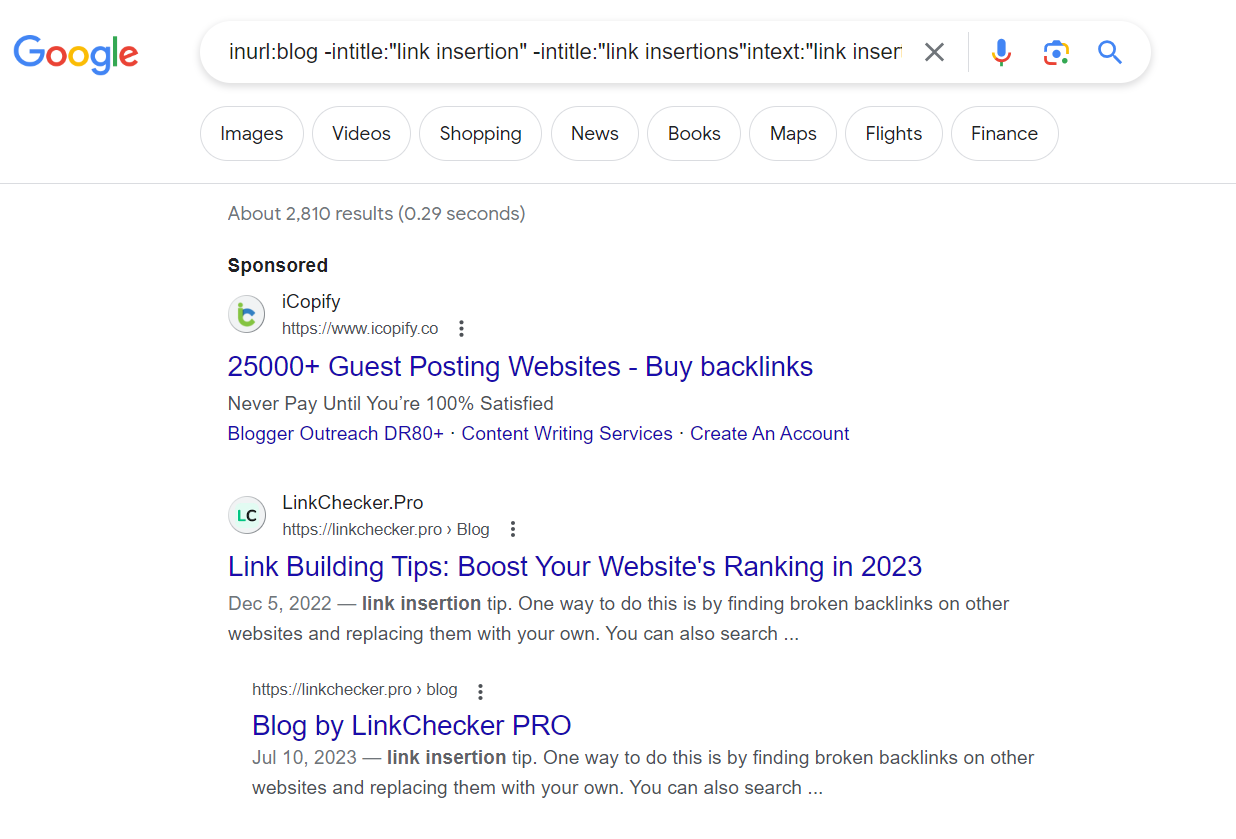
This is also where anchor text matters most. A well-placed anchor text helps the link feel natural and gives search engines better context.
Listicles
Listicles (or “top X” articles) are literally made to feature other businesses.
In addition to getting links, this strategy can be a good way to grow your affiliate network since they’re often used to place affiliate links.
However, if you don’t have an affiliate program to offer, it might be difficult to get included on these lists without some kind of payment.
To find these opportunities, you can use search strings like these:
- intitle:”top” intitle:”[keyword]” -“[your company name]” -[your company domain]
- intitle:”best” intitle:”[keyword]” -“[your company name]” -[your company domain]
- intitle:”the only” intitle:”[keyword]” -“[your company name]” -[your company domain]
- intitle:”Most popular” intitle:”[keyword]”-“[your company name]” -[your company domain]
- intitle:”[keyword]” intitle:”ranked” -“[your company name]” -[your company domain]
- intitle:”[keyword]” intitle:”reviewed” -“[your company name]” -[your company domain]
- intitle:”[keyword]” intitle:”compared” -“[your company name]” -[your company domain]
- intitle:”top” intitle:”[keyword]” -“[your company name]” -[your company domain]
The minus sign before your company name and domain makes sure you don’t see search results that already mention your company or are on your own website.
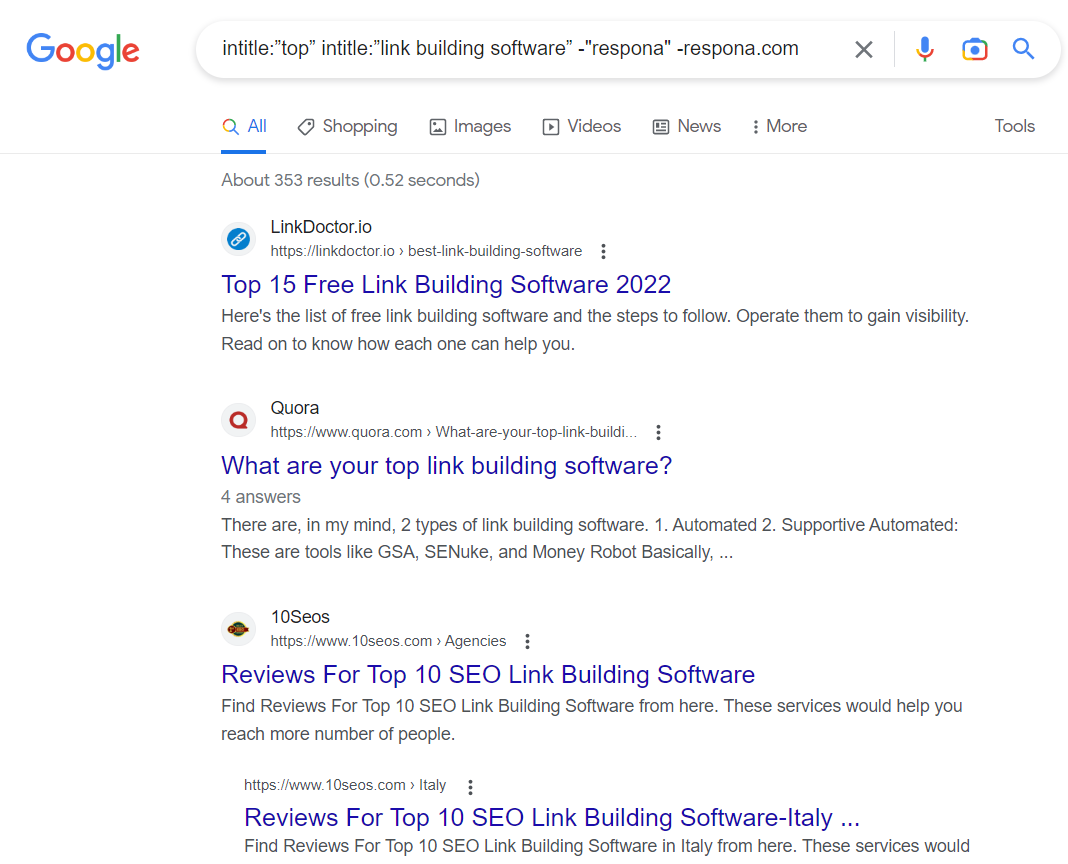
Listicles can also drive organic traffic, social media exposure, and even AI visibility if they rank well or get shared widely.
Find Relevant Contact Information
Now, once you have your list of link building opportunities, you’re going to need to find their contacts.
You can start by checking websites’ footers and Contact Us pages if they have one – as well as connecting with their teams on LinikedIn.
However, this is only really useful for small campaigns with under 50 opportunities.
If you plan on running a large-scale link building campaign, you’re going to need the help of an automated email finder like Respona – a scalable system for finding and managing contact data across link prospects.
Prepare Your Outreach Sequence
So, you’ve got the sites you want links from and the emails of the people responsible for the content.
Now, you need to prepare your email outreach sequence.
Of course, you can use one of the many templates available, but we’d recommend to use them as more of an inspiration and come up with your own.
Writing a link building pitch is too big of a topic in itself to cram it into a subsection of this checklist, so feel free to watch this video to learn more:
Make sure your pitch includes the right anchor text, context, and value proposition. That’s what separates effective outreach from generic link building spam.
Pointing out a broken link and offering a replacement is also one of the simplest ways to create value.
Recruit Long-Term Partners
You can get even more out of your link building efforts if you set up some ongoing collaborations.
Let’s say you’ve been running some blogger outreach campaigns and have already gotten some links from relevant sites.
Why not try to turn these contacts into regular partners?
You’ve already made the initial connection – and that’s the hard part.
A great way to start a long-term collaboration is by pitching a guest post, even if the site doesn’t have a “Write for Us” page.
Here’s a trick we call the Content Gap strategy.
With this strategy, you figure out which keywords your link prospects aren’t ranking for in search engines, but their competitors are.
Then, you take a screenshot of this “missing keywords” report and offer to write an article that fills that content gap.
Don’t use the phrase “guest post” though.
People are tired of hearing about link exchanges, “partnership opportunities,” and guest posts.
Using different wording might help you get an article published on a site that doesn’t usually accept guest posts.
You’ll need a keyword tracking tool like Ahrefs or Semrush. We’ll use Semrush for this example.
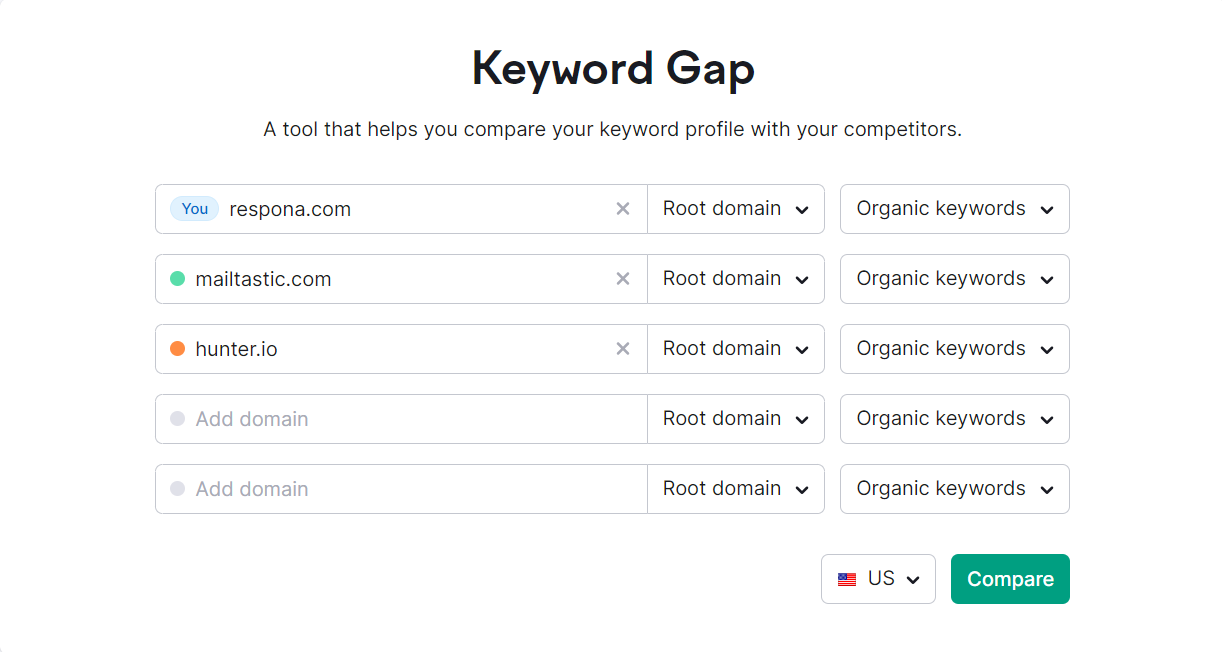
Go to the Keyword Gap report and enter your prospect’s website along with one or two competitors.
Then, click “Compare” and go to the “Missing” tab.
From there, just pick a keyword or two that you think are good opportunities and offer to write an article that covers that gap.
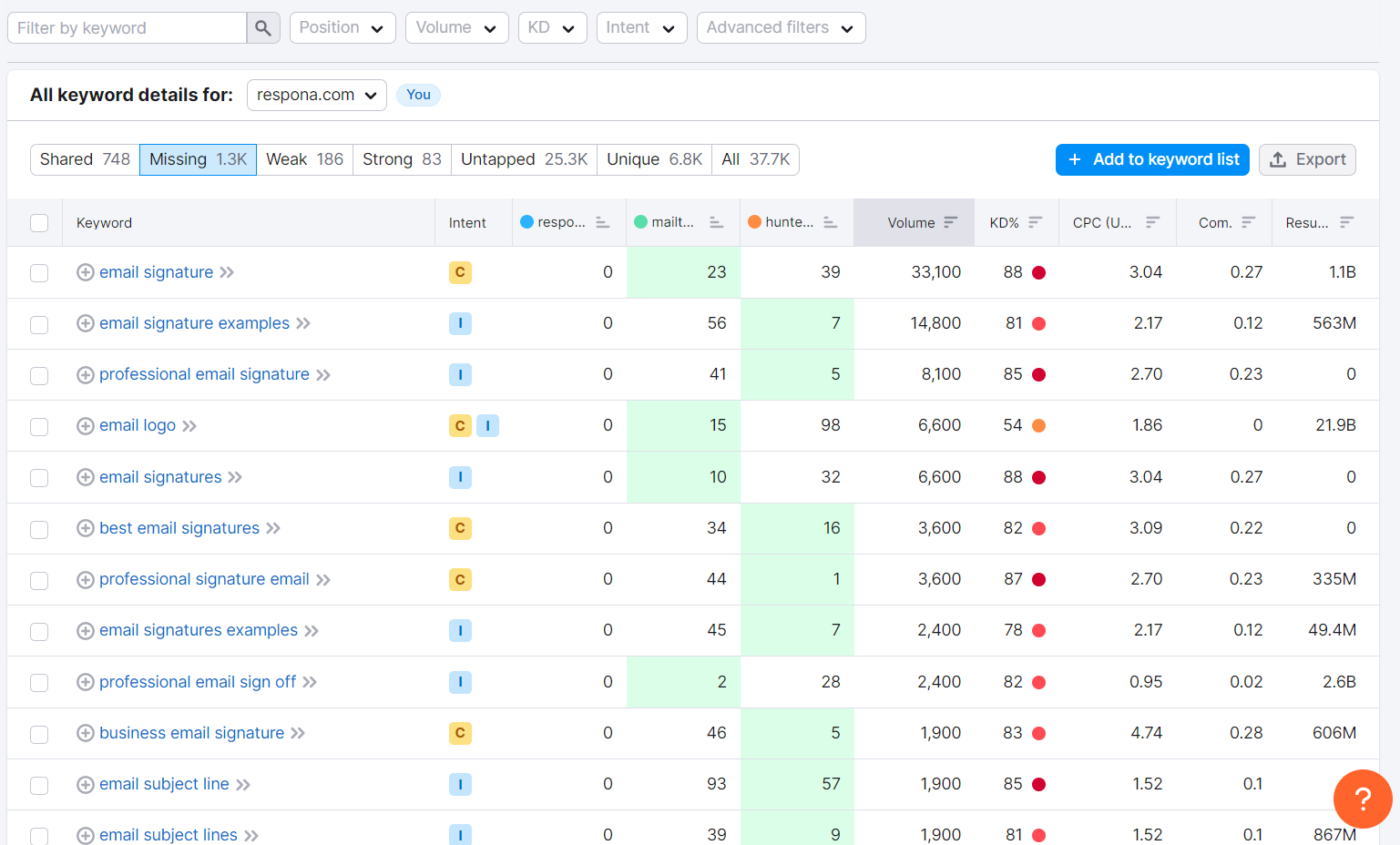
This link building strategy is excellent for building relationships because you’re:
- Providing real value to your prospect by addressing a genuine content gap they have.
- Showing your expertise and initiative by researching their website and their competitors beyond what a simple search could tell you.
- Improving their SEO performance and organic traffic
Outsource Link Building
At some point, link building stops being about knowing what to do and starts being about doing it consistently.
You need to find link opportunities, vet link prospects, find contact info, send outreach, follow up, and repeat.
That’s where a link building service makes sense.
Our done-for-you link building handles prospecting, outreach, and relationship building to earn quality backlinks from relevant sites.
We focus on building a strong backlink profile that improves organic traffic, rankings, and SEO performance.
Our Campaigns feature also helps track AI visibility by showing:
- where your brand appears
- which sources get cited
- where competitors outperform you
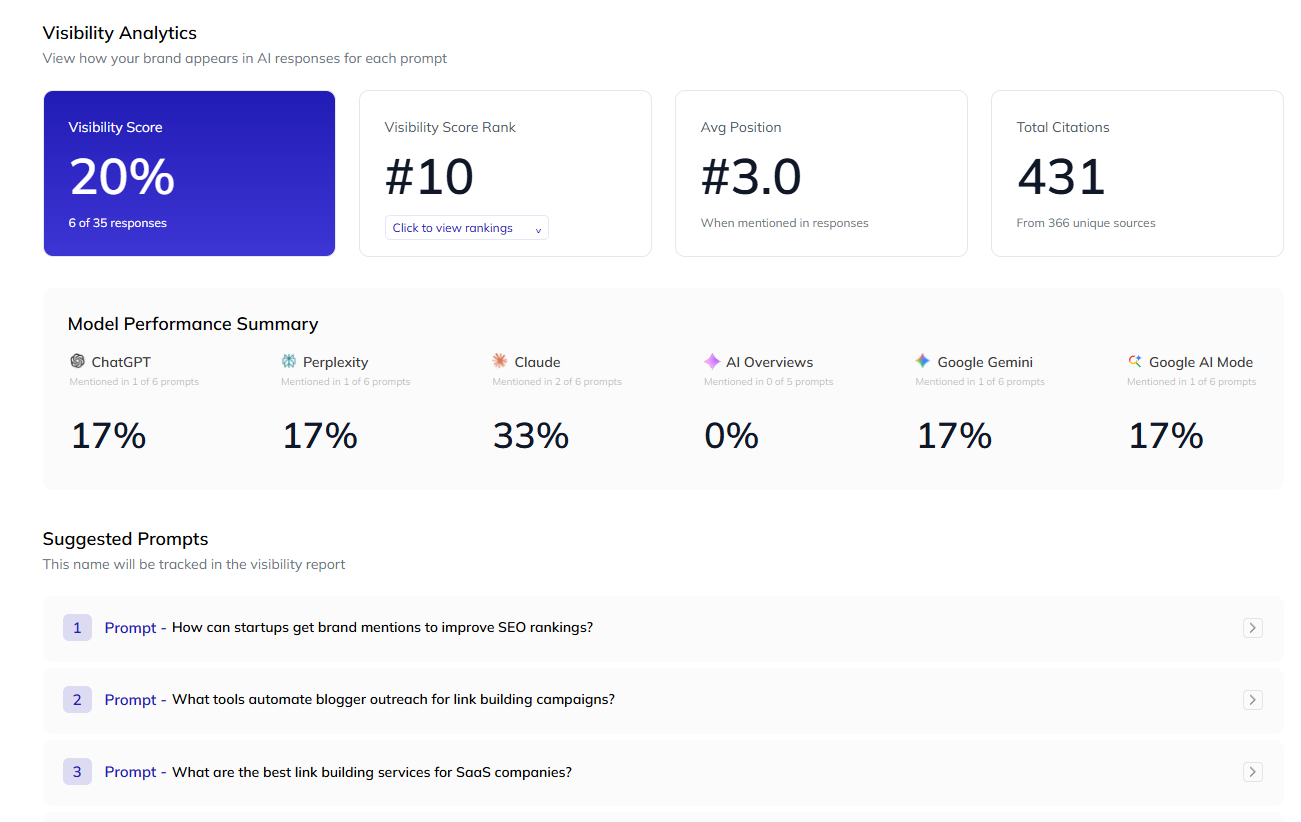
From there, we turn gaps into backlink opportunities that influence both search engine rankings and AI discovery.
Link building cheat sheet
Now Over to You
An effective link building checklist is about consistency.
You need linkable assets, a strong backlink profile, realistic link targets, proper outreach setup, and a repeatable system.
Focus on quality backlinks, not just volume.
That’s what improves domain authority, organic traffic, and SEO performance.
If you want to skip the manual work, our done-for-you link building can handle it.
We focus on high quality backlinks that actually improve rankings, not just inflate numbers.
Frequently Asked Questions (FAQ)
What exactly is link building?
Link building is the process of acquiring links to your website from other websites.
These links act as votes of confidence in your content, which can improve your website’s search engine ranking, improving your domain authority and backlink profile.
Internal link building, on the other hand, focuses on improving your site’s navigation.
How many links do I need to rank high in search engines?
The number of links you need depends on how competitive your target keyword is.
Generally, you’ll need more links for highly competitive keywords than for less competitive ones.
Analyzing your competitor’s backlinks can be a good starting point to understand the backlink profile needed to outrank them.
Also consider anchor text, link quality, and domain strength.
Is it okay to buy links?
No, buying links is a violation of Google’s Webmaster Guidelines and can lead to your website being penalized.
Earn links naturally through strategies that provide value to both your website and the website linking to you.
How can I find relevant contact information for link building outreach?
Start by checking websites’ footers and “Contact Us” pages. LinkedIn can also be helpful for connecting with website teams.
However, for larger campaigns, consider using consider using automation or a link building service.
How can I write a good link building pitch email?
Crafting a good link building pitch requires personalization and offering value. Generic templates might not be effective. Instead, highlight the value for the website owner, including replacing a broken link or improving their content.