
Link velocity refers to the rate at which your website is obtaining or losing backlinks.
But does quicker link acquisition mean better rankings?
Not really.
In this article, we’ll clear up what exactly is link velocity and how to check it, whether or not it is a ranking factor, and how to increase your link velocity if it’s too slow
Let’s begin.
Key Takeaways
- Link velocity measures how quickly you gain or lose backlinks over time
- A steady, natural growth pattern matters more than rapid spikes
- High link velocity alone does not guarantee better search engine rankings
- Losing links can hurt your backlink profile just as much as gaining them helps
- Consistent link building is the only way to maintain positive link velocity
- High-quality backlinks from relevant sites matter more than raw volume
Link building cheat sheet
What is Link Velocity?
Link velocity is a metric measuring how quickly your site is getting or losing backlinks over time.
It is commonly used in link building to track link acquisition and overall backlink growth. Many agencies use link velocity as a KPI to evaluate whether their link building efforts are producing consistent growth.
A high link velocity is often associated with better visibility in search engines, but it is not a direct ranking factor. What matters more is the quality of your backlinks and whether your link growth looks natural.
Strong link velocity comes from consistent link acquisition of high quality backlinks from relevant sites with solid domain authority.
How to Check Link Velocity?
To check link building velocity, log into the backlink monitoring tool of your choice.
We use Ahrefs so that’s what we’ll use for our example.
Paste your site into the search bar and click on “Calendar”.
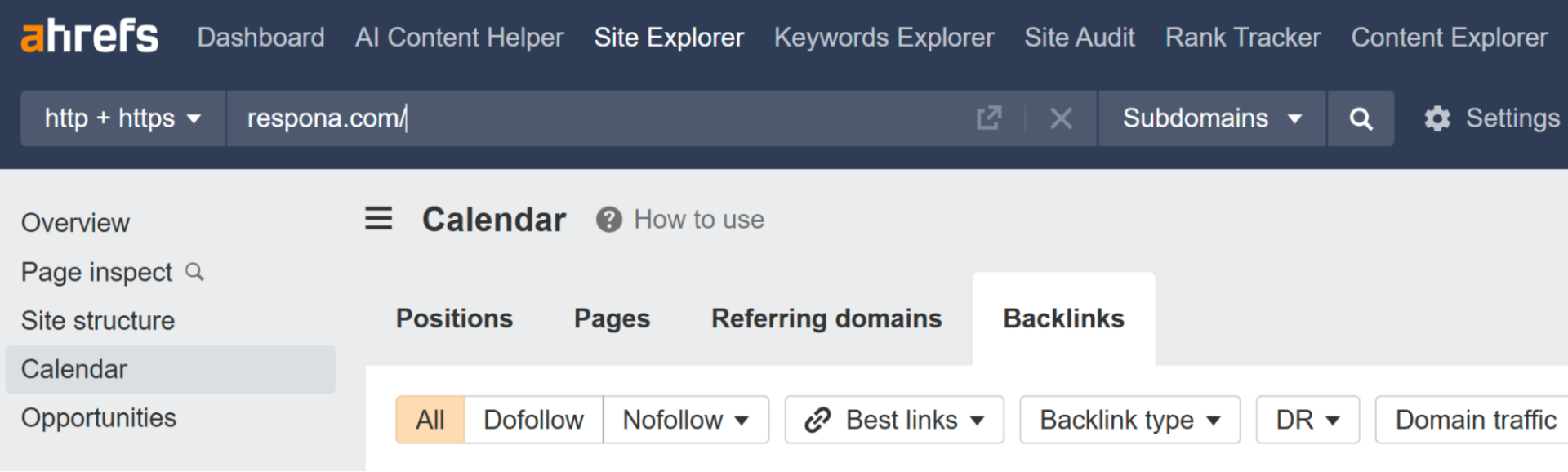
Don’t worry if you’re also on Ahrefs lite – we won’t be needing the calendar only available on higher tiers.
Scroll down to the new and lost backlinks report and uncheck “lost”.
Also, set the date range filter to last 30 days (or your desired date range), and the last filter to “All backlinks”.
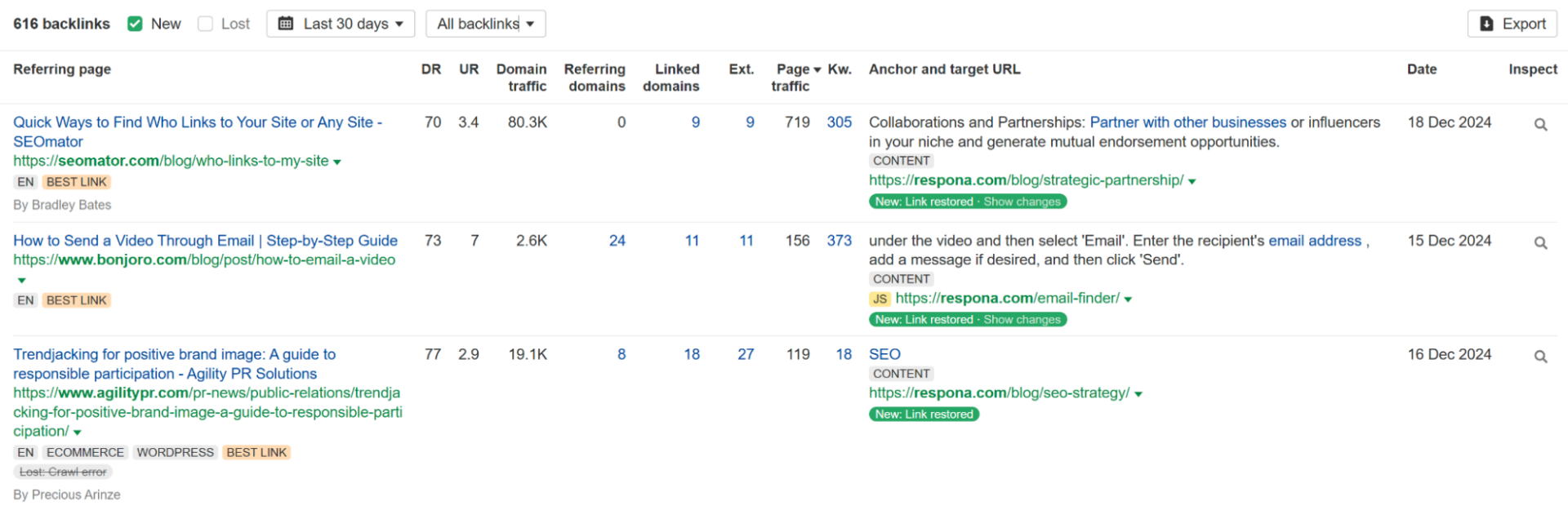
These are all your new backlinks over the selected time period.
Now, let’s check how many we’re losing: disable “New” and toggle “Lost”.
So, in one month, we’re earning 616 links and losing 333, meaning our real link velocity is 283.
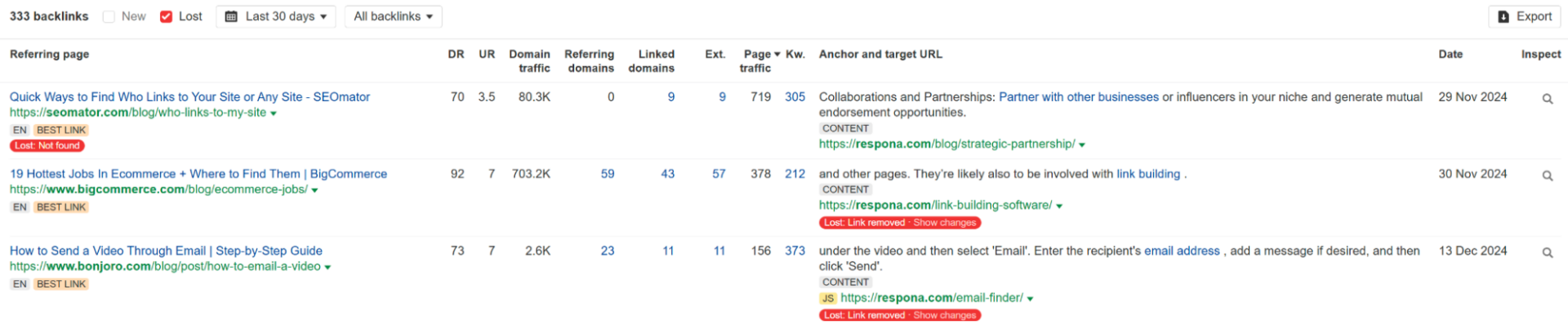
You could use new & lost link velocity as two separate metrics, but in our opinion, it’s unnecessary.
Now, let’s address the elephant in the room.
What Does Healthy Link Velocity Look Like?
A healthy link velocity is steady, consistent, and tied to real content and content marketing efforts.
Instead of chasing high link velocity, focus on:
- gradual backlink growth
- consistent link acquisition
- earning high quality backlinks
- maintaining a strong backlink profile
For smaller sites, even a few dozen new backlinks per month can support organic growth.
For larger sites, link velocity may scale into hundreds or thousands of links per month.
The key is consistency, not volume.
Does Link Velocity Affect Rankings?
On its own, link velocity is not a direct ranking factor used by search engines.
However, the backlinks behind that velocity absolutely impact search engine rankings.
Search engines evaluate:
- the quality of links
- anchor text relevance
- domain authority
- and how natural your link acquisition looks
If your link velocity shows sudden spikes or unnatural patterns, it can signal manipulation of your backlink profile. This is often referred to as unnatural link velocity and can trigger algorithmic reviews or even negative SEO concerns.
A healthy link velocity should show steady growth, without sharp jumps or drops.
That kind of natural link velocity signals consistent link building and supports long-term SEO rankings.
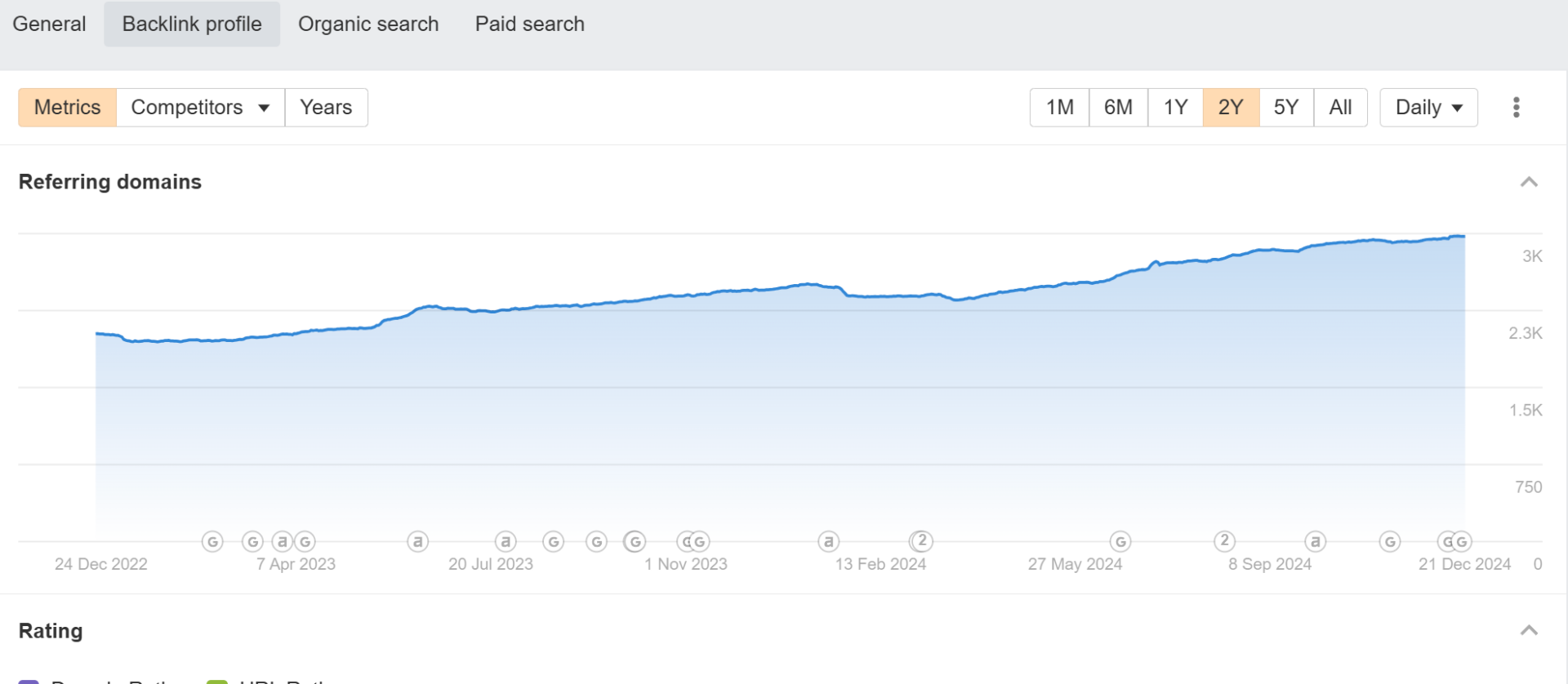
The same applies to your referring domains chart.
On the other hand, a “spiky” positive link velocity chart like the one below can trigger Google’s algorithm and result in an investigation.
And if you’re caught in the middle of a large-scale link scheme, the result of that investigation will be a penalty.
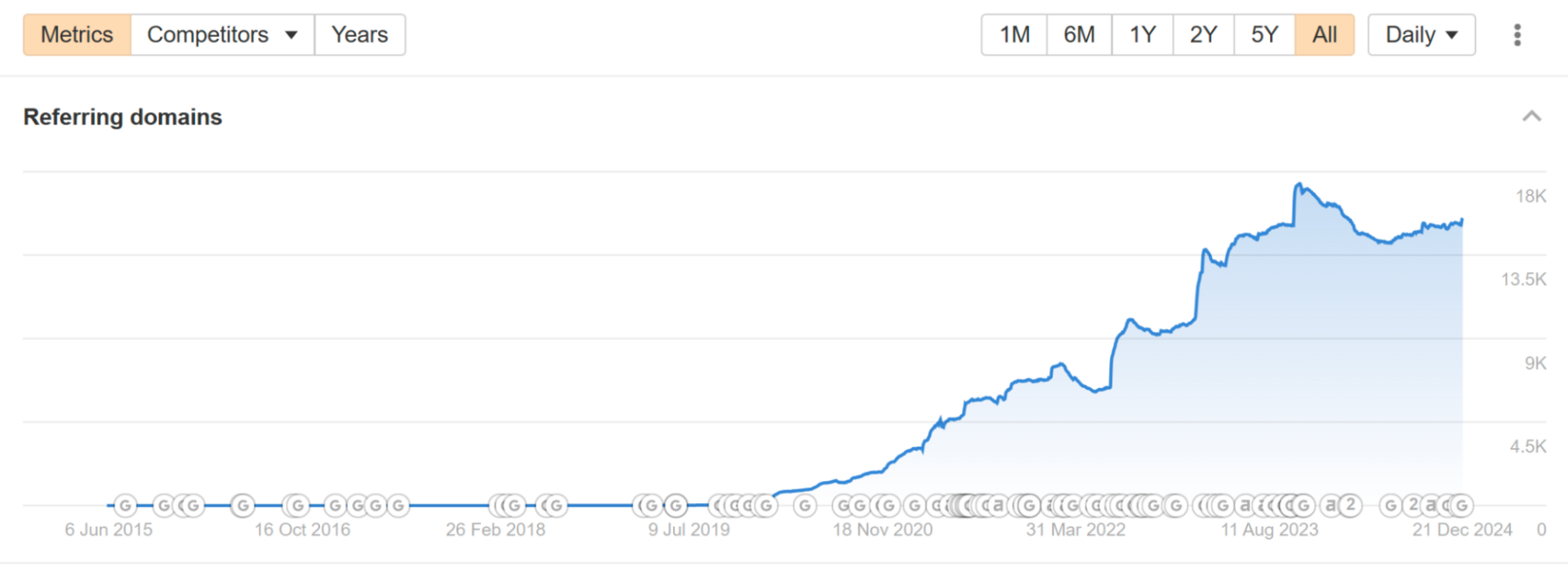
With that being said, despite inbound link velocity not being an actual ranking factor, the links you build still hold SEO value.
So, you want to always keep it above zero.
The exact link velocity that can be considered “healthy” or “good” varies from site to site.
For a small site, a couple dozen links per month is enough.
On the other hand, an optimal link velocity for a bigger site can be measured in the hundreds or even thousands.
One thing is certain, however: it needs to be steady and positive.
A negative link velocity trend is alarming: it means you’re missing out on valuable backlinks, their traffic and search engine ranking signals.
If you don’t already have a link building process in place, you’ll need one to make sure your link velocity stays above zero.
Which brings us to the next section.
How to Increase Link Velocity
The only way to increase your link velocity is through consistent link building and steady link acquisition.
That means building high quality backlinks from relevant websites, using strategies like:
- guest posting
- broken link building
- content marketing
- blogger outreach
Each of these contributes to sustainable backlink growth and helps maintain a healthy link velocity.
The challenge is that managing link building manually takes time and effort. You need to identify opportunities, evaluate domain authority, optimize anchor text, and maintain outreach at scale.
Instead of doing all of this yourself, you can use a done-for-you approach.
You simply submit your target URL, keywords, and requirements, and everything else is handled for you, including prospecting, outreach, and securing placements.
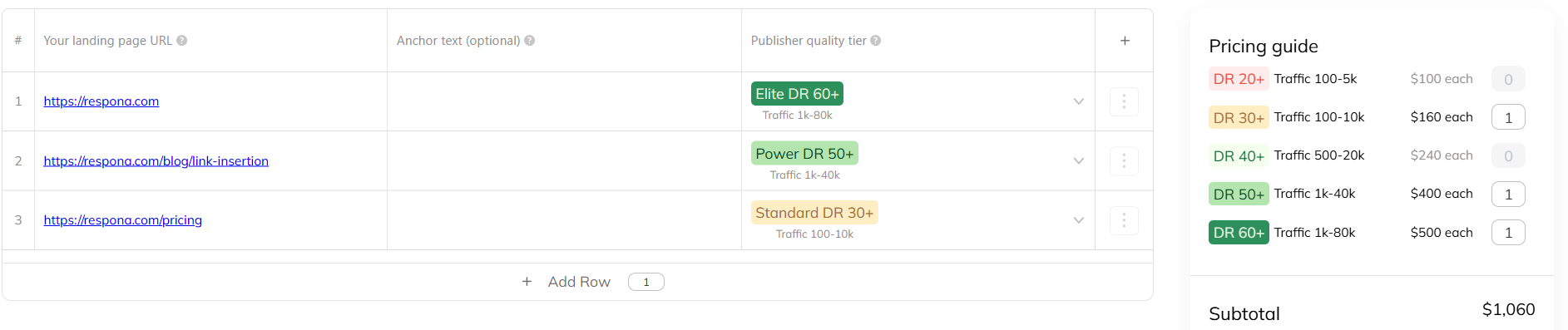
From there, everything is handled for you, including prospecting, outreach, and securing placements on relevant pages.
The focus is not just on increasing link velocity, but on making sure the links you’re getting actually improve your backlink profile and search engine performance.
There’s also another layer to this now.
AI tools and answer engines pull from the same types of pages you’re trying to get featured on. That means your link building directly impacts your AI visibility.
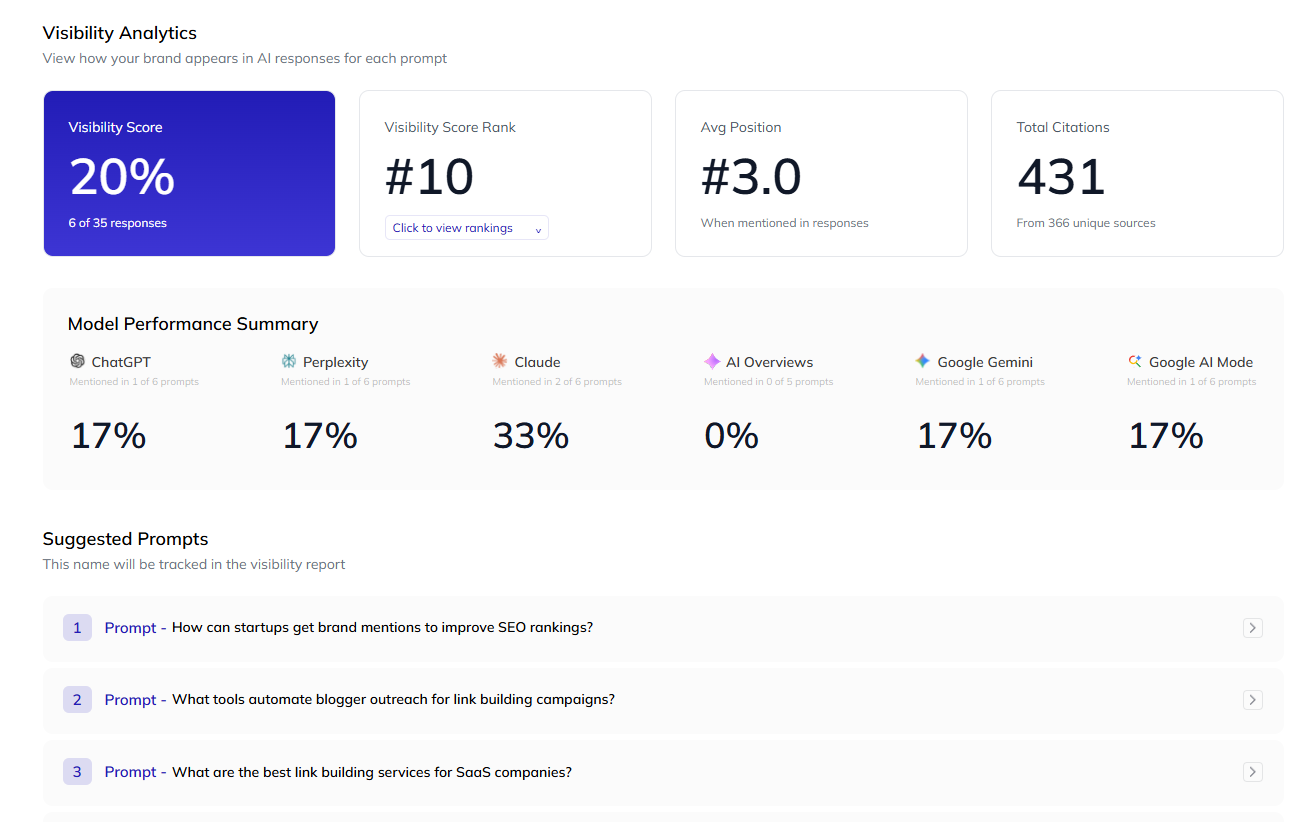
Our Campaigns feature helps you track that.
It shows:
- where your brand is being mentioned
- which sources are being cited in AI-generated results
- and where competitors are getting coverage that you are not
From there, those gaps turn into link building opportunities that help you grow your link velocity in a way that actually moves the needle.
Link building cheat sheet
Now Over to You
In conclusion, link velocity is not a direct ranking factor, but it plays an important role in your overall SEO performance.
A healthy site maintains steady link growth through consistent link building and earns high quality backlinks from relevant sources.
If your link velocity drops or becomes inconsistent, it can slow down your organic growth and weaken your backlink profile.
Need help expanding your backlink profile?Our done-for-you link building handles the entire process for you, from prospecting to placements on relevant, high-authority pages that help you maintain a steady, natural link velocity.
Frequently Asked Questions (FAQ)
What exactly is link velocity?
Link velocity measures the rate at which a website gains or loses backlinks over a specific period.
It helps track the growth or decline of a site’s link profile.
Is link velocity a direct ranking factor in Google?
No, by itself it isn’t a direct ranking factor.
However, the quality and relevance of the backlinks acquired (which contribute to link velocity) do impact rankings.
What’s is a good link velocity?
There’s no magic number; the ideal link velocity depends on the site’s age, industry, and overall backlink profile.
A steady, positive growth is generally a healthy sign, while a sudden spike can be suspicious.
Can a high link velocity hurt my search engine optimization?
Yes, a suspiciously high velocity, especially if achieved through unnatural means like buying links or reciprocal links can trigger Google’s algorithms and potentially lead to penalties.
It’s important to build links naturally and consistently.
How can I improve my link velocity?
Focus on consistent link building and link acquisition.
This includes earning high quality backlinks through:
- guest posting
- content marketing
- broken link building
- outreach
Make sure your anchor text is natural and your links come from relevant sites to maintain a healthy link velocity.