
Backlinks as a ranking factor are so deeply ingrained in Google’s algorithm that they’ll always be important.
But how many do you actually need?
I wish there was an easy answer like “You need 100 backlinks to get on page one.”
But that would be a lie.
In this article, we’ll discuss how to determine how many links each page needs to rank high in search engine results, what makes a good backlink, and how to get high quality backlinks.
Key Takeaways:
- There is no fixed number of backlinks required to rank high in search results.
- Quality links from strong referring domains matter far more than sheer link quantity.
- A smaller number of high quality backlinks often outperforms numerous links from weak websites.
- Listicle placements and editorial links became especially valuable for both Google ranking and AI visibility.
- Strong content, technical SEO, internal linking, and backlink quality all work together as ranking factors.
Link building cheat sheet
How Many Backlinks Do I Need?
It depends entirely on how many backlinks other pages ranking for the same keyword have.
For a low-difficulty keyword, only a handful of links will be enough to get to the top 3.
For a high-difficulty keyword like “SEO”, it may take literal hundreds.
To figure out how many links a web page would need to rank, you’ll need the help of a backlink monitoring tool like Ahrefs or Semrush.
Let’s take a look at other articles targeting the same question as this blog post as an example.
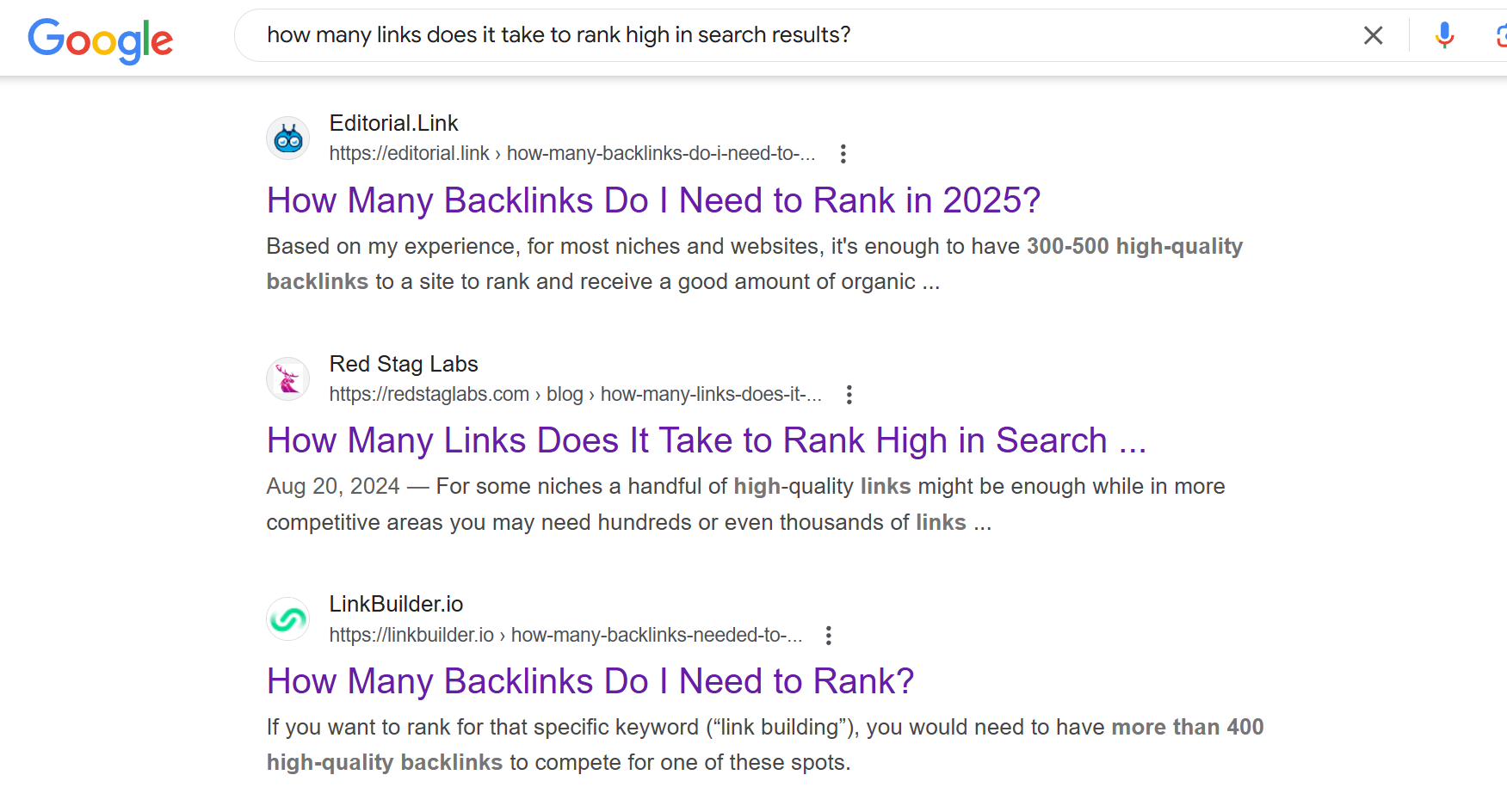
Editorial.Link’s article (that’s ranking at #2 as of the moment of writing this article) has 11 backlinks from 10 unique referring domains.
And 8 of these links are coming from very highly-authoritative domains:
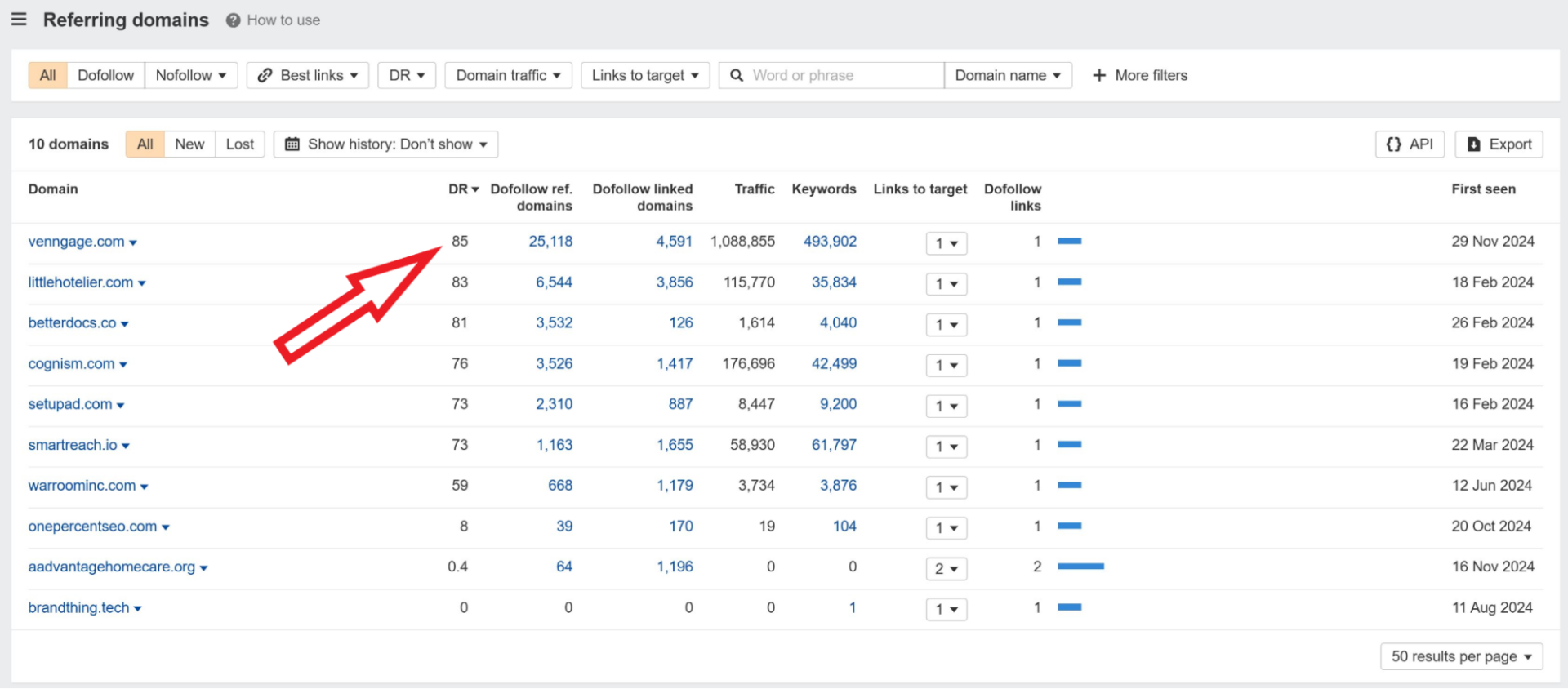
So, in order for the article you’re reading right now to outrank them (if it hasn’t at the time of you reading), it would take 10-20 similar quality backlinks.
BIG emphasis on quality here.
Not every backlink has the same SEO value, so let’s break it down.
What Makes a Good Backlink?
Referring Domain Quality
The first thing that determines how valuable an incoming link is is the site it’s placed on.
Domain Rating (DR) and Domain Authority (DA) are common metrics that estimate a website’s overall strength.
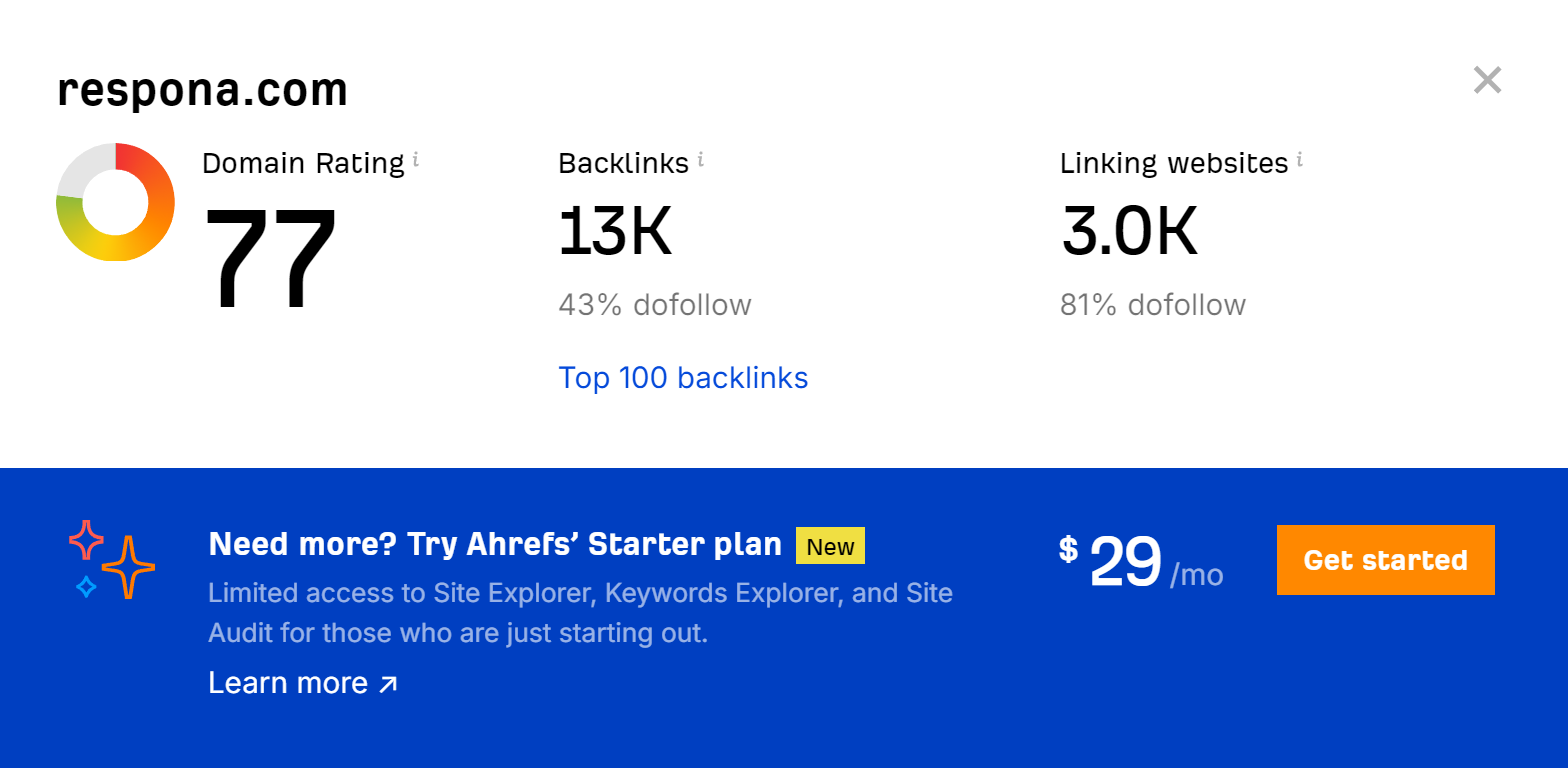
Higher scores generally indicate a more powerful backlink.
The logic is simple – DR and DA are calculated based on the site’s own link profile.
More links = higher DR/DA = more “link juice” sent your way.
However, keep in mind that these are third-party metrics made up by SEO monitoring tools and shouldn’t be the sole indicator.
You should also look at how much traffic a site is getting.
More traffic means more tangible exposure and clicks.
Look at the traffic history, though, as link farms with inflated metrics are super common.
This is the traffic chart of a link farm:
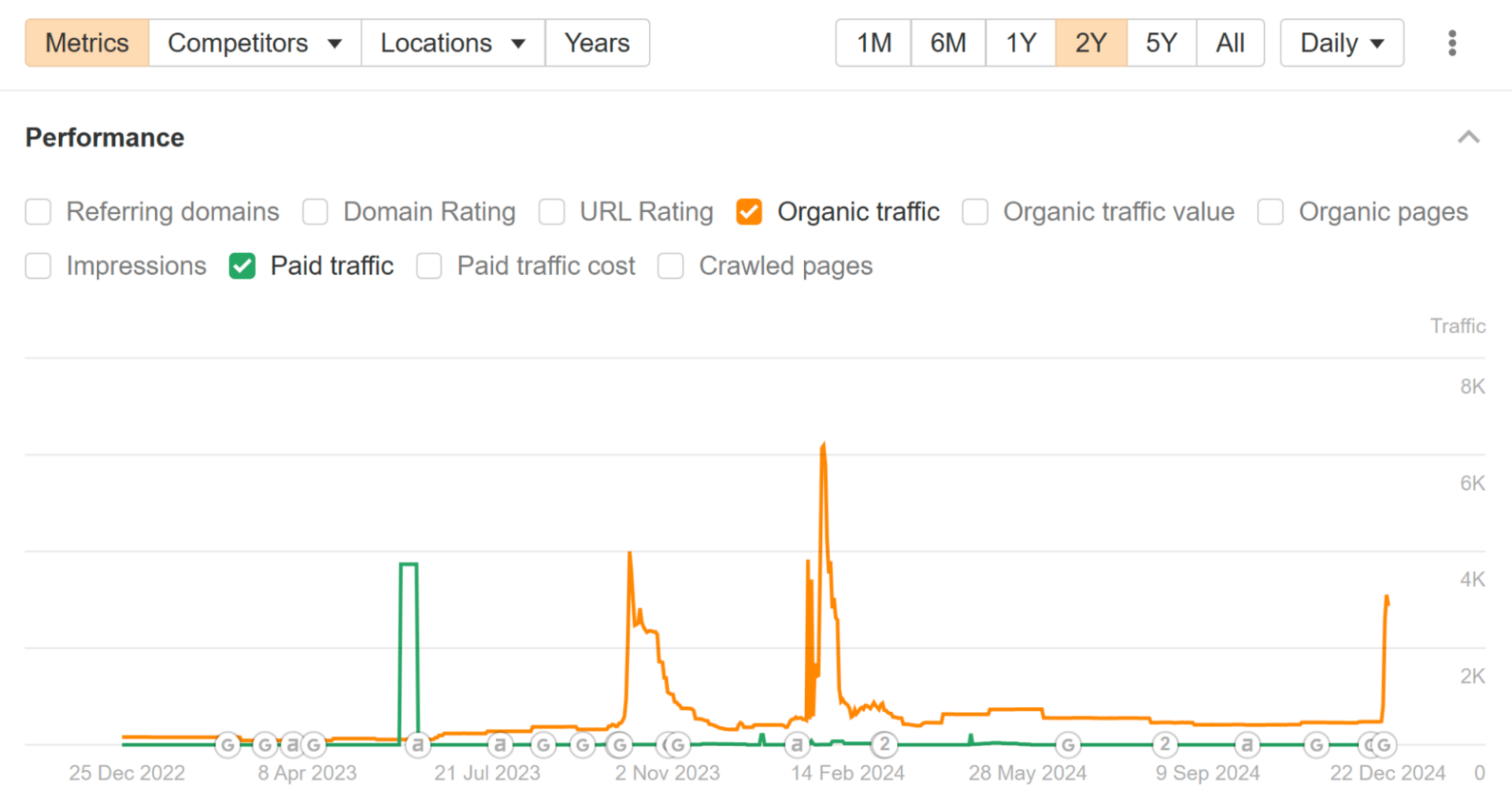
An authoritative website wouldn’t be “spiky” – it would have consistently increasing (or at least plateauing) traffic.
Referring Page Quality
Next, take a look at the linking page.
Even if the site is amazing and gets millions of traffic, but the linking page has 0, how much referral traffic are you going to get?
Exactly.
Besides page traffic, the content needs to be of high quality, and, of course, topically relevant to yours.
Links placed higher on the page tend to have a higher CTR.
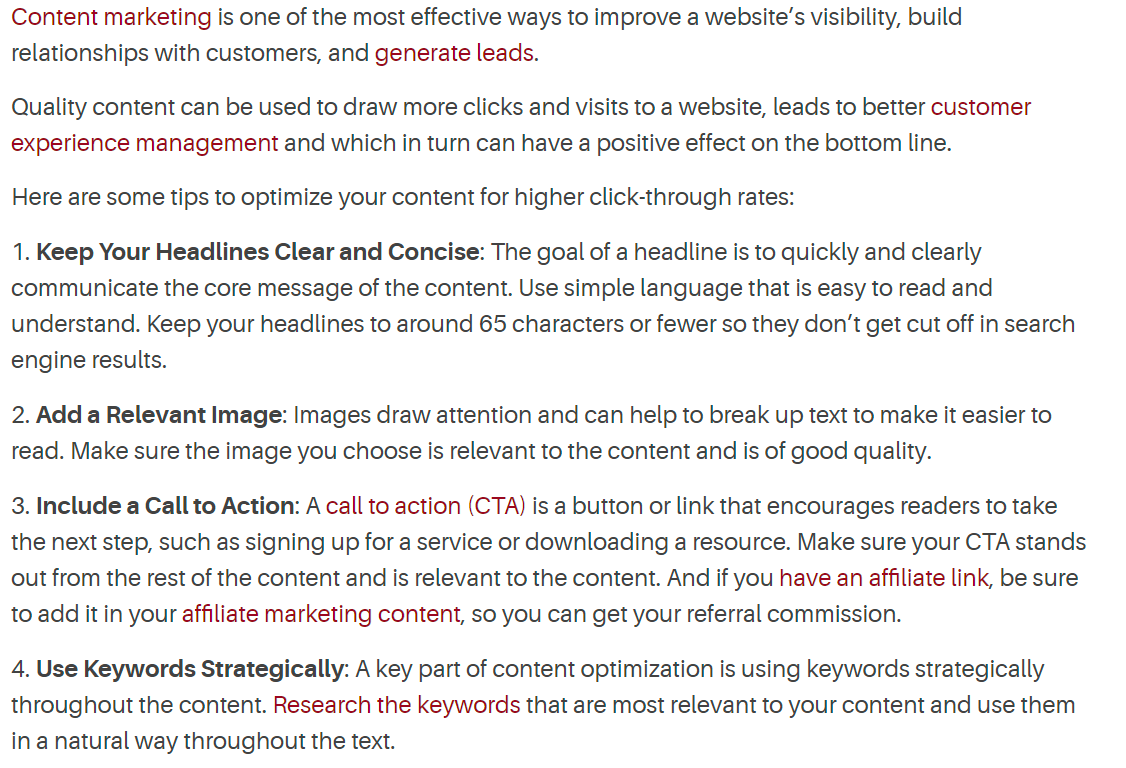
Check for other external links – too many on the same page dilutes the link juice value passed to each one.
1-2 are fine, but something like this is not:
Dofollow or Nofollow
This refers to the link’s HTML attribute.
Dofollow links pass on ranking signals, while nofollow links do not.
To rank higher, you want more dofollow links – but nofollow ones are still good for exposure and generating targeted traffic.

Reciprocity
The way a link is acquired influences its value.
Direct link exchanges qualify as a link scheme and are easily picked up by search engines.
You probably won’t get penalized, but the links will be devalued and lose all their value.
If you’re doing link exchanges, make them A-B-C, or indirect.
Anchor Text
The text used for the link also plays a role.
The anchor text should be relevant to the linked page and provide context for users.
While including keywords can be helpful, avoid over-optimization.
Partial-match keywords are perfect for this.
Don’t be that one guy who tries to cram “best PR agency Houston” everywhere even if it obviously disrupts the flow of text.
Of course, you can still use exact match keywords (like we did just a couple of lines above) where it sounds natural.
It’s Not JUST About The Links
Links are important, yes, but they’re not a magic bullet for easy rankings.
Google aims to provide the best user experience for users and rewards websites that strive for the same.
And what provides a good user experience?
Quality content – so focus on it first.
But you’ve heard this a million times before, so let’s move on to how to get backlinks in the real world, not just in theory.
How do I Get Backlinks?
To get backlinks, you’re going to need to do some outreach – most of it through email.
Link building involves four steps:
- Finding link opportunities – aka prospecting
- Preparing your email sequence
- Personalizing individual emails
- Managing replies, establishing partnerships, writing guest posts, etc
As you can imagine, doing all of that manually takes a long time.
Way too long to be effective, so you’ll need the help of a link building tool like Respona.
To learn more about each individual step and how to do it effectively, feel free to watch our free link building video course:
Which Link Building Strategies Should I Use?
In our experience, link building is at its peak effectiveness when you use multiple strategies at once.
Let’s run through each one and how to carry them out with Respona.
Listicles
Listicles, or top 10 articles are super valuable link opportunities because not only do they get you links, but put your business right in front of potential customers that are actively looking for services like yours.
They also help you get cited by answer engines.
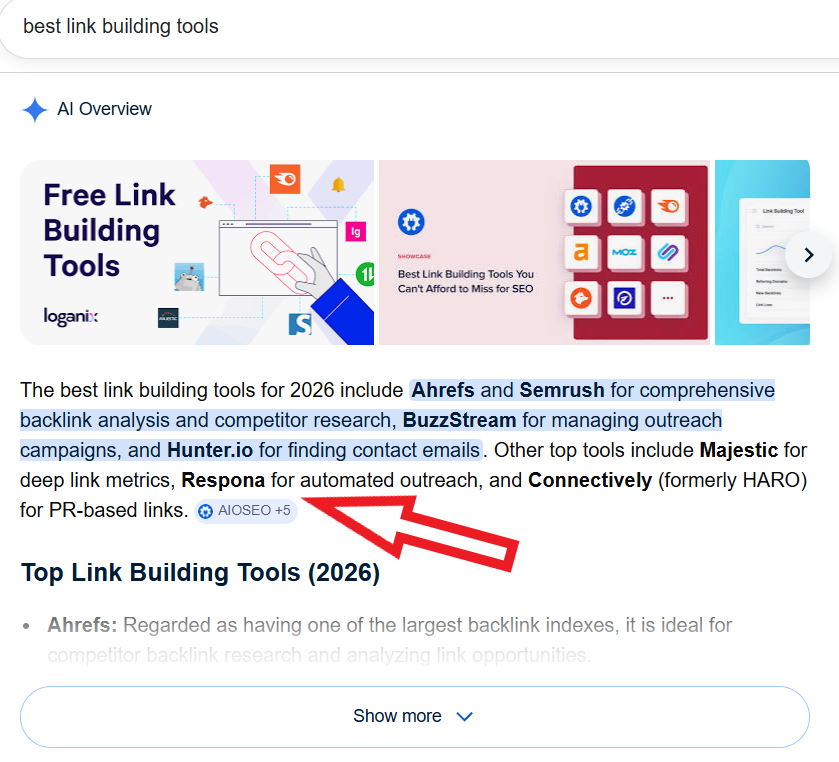
We’d even go as far to say that directly exchanging listicle placements is worth it – even if the links get devalued, the sales can more than make up for it.
If someone searches for:
- best SEO tools
- best CRM software
- best outreach platforms
- best link building services
they’re usually very close to making a decision already.
And unlike random backlinks on low-traffic websites, these placements usually sit on pages already getting traffic and already influencing search engine ranking results.
At Respona, this is what the campaigns feature is built around.
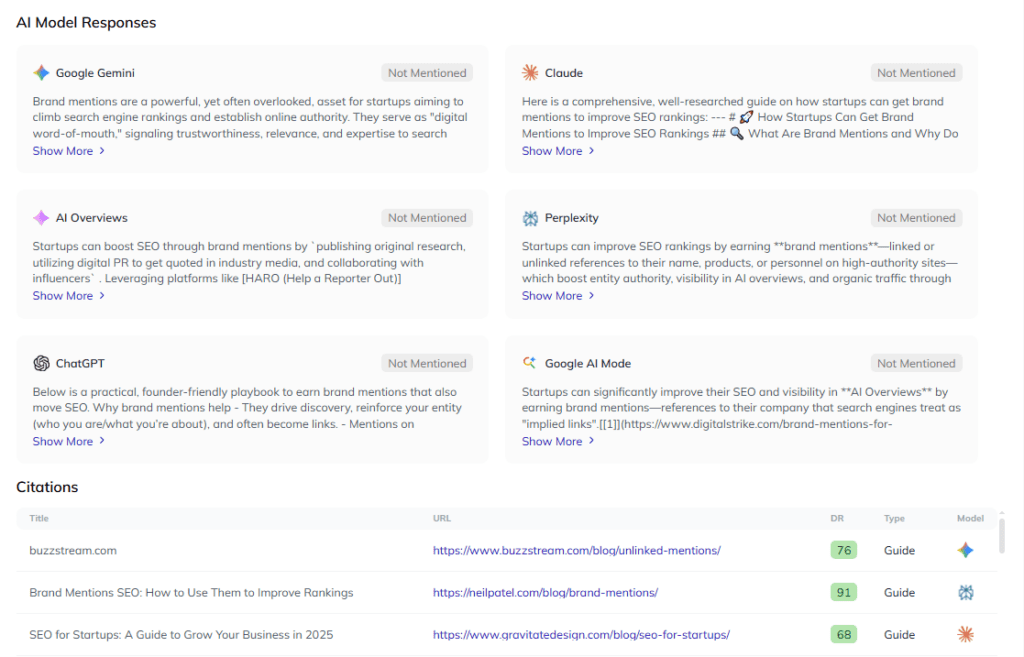
You enter the search queries and target keywords you care about, and the platform finds listicles and articles already ranking well in search results and already getting cited inside AI systems.
Then, just place an order with your target URL along with any additional guidelines you might have.
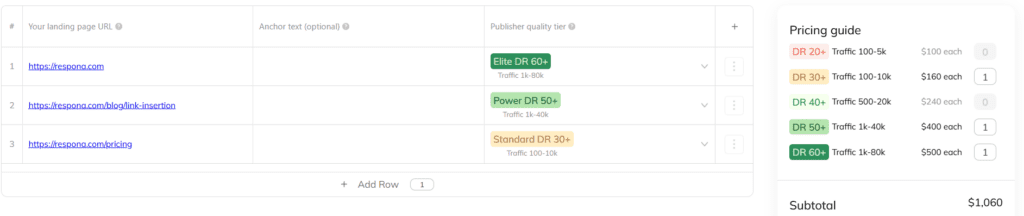
So instead of blindly building backlinks, you focus specifically on placements that already rank high in search engines, drive commercial traffic, and influence AI-generated recommendations
Then the outreach team handles the prospecting, outreach, follow-ups, relationship building, and placements for you.
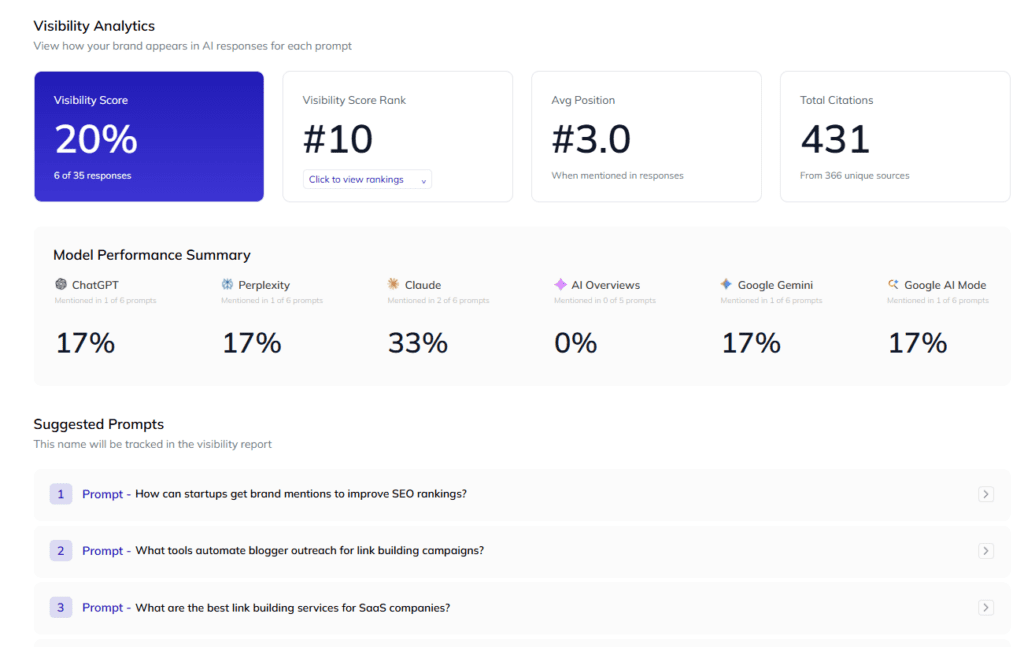
You can also review placements before they go live and track AI visibility for your target queries afterward.
And since it’s pay-per-result, it works whether you need a few high quality links for a specific page or ongoing link building support at scale.
Guest Posting
Guest posting is the process of writing and publishing guest articles on other websites.
Usually, writers leave a link back to their own site in the author bio section.
But, guest posts are much more valuable when you use them as a way to set up indirect link exchanges since most websites allow you to cite supporting sources in the content.
So you write for one site, and include links to your link partners in the post.
In return, they do the same for you, or offer insertions on other resources as well.
Competitor Backlinks
Aka the Skyscraper Technique.
It involves extracting your competitors’ backlink profiles, and winning over their backlinks.
Your links don’t necessarily need to replace the competitors’ – the whole point of this is to close the backlink gap between you and your competition.
It’s also incredibly time-efficient, if your competitors have tons of backlinks.
Link Insertion
Link insertion is another classic strategy that focuses on finding non-competing articles that mention your target keywords somewhere in the content.
The key point being non-competing.
We’ve definitely received emails asking us to link to other link building guides before.
Don’t be that person, please!
Build a Network of Partners
It’s always a good idea to try and turn every link collaboration into a long-term partnership rather than only doing one-off exchanges.
A good place to start is to pitch a guest post after every successful link exchange, even if a site doesn’t openly accept them.
It works especially well if you go through the effort of finding a keyword gap for your partner’s website, and offering to help cover it for them.
Whether it’s regular guest post contributions or continuous link exchanges, you can get way more links if you start working on a partner network.
Here’s how:
Now Over to You
In the end, there’s no universal number of backlinks required to rank high.
Some pages need a handful of quality backlinks. Others need hundreds of referring domains before they move in search results.
The important part is building the right links from relevant, authoritative websites instead of chasing raw backlink numbers.
And if you want help securing those placements without managing the outreach process internally, you can simply place an order and let Respona handle the prospecting, outreach, relationship building, and placements for you.
Especially now that AI search engines rely so heavily on listicles and editorial links already ranking well on Google, getting mentioned on the right pages matters more than ever.
Link building cheat sheet
Frequently Asked Questions (FAQ)
I built some backlinks, but my search engine rankings haven’t changed. How long does it take to see results?
Building backlinks is an investment, and it takes time to see results.
Generally, you can expect to see movement in Google search rankings within 4-6 weeks, but it can take longer for competitive keywords.
Focus on building high-quality backlinks consistently, and be patient – the results will come.
Can I buy backlinks?
While it’s technically possible to buy backlinks, it’s a risky SEO strategy.
Search engine algorithms frown upon paid links, and they can actually remove you from Google search results if they’re discovered.
Focus on earning backlinks naturally through valuable content marketing and outreach.
Is there a penalty for having too many backlinks?
Not necessarily a penalty, but having a large number of low-quality backlinks can dilute the value of your backlink profile.
Focus on acquiring high-quality, relevant backlinks from reputable websites.
Should I use the same anchor text for all my backlinks?
Absolutely not!
Using the same exact-match targeted keyword for all your backlinks looks unnatural and can be flagged by search engines.
Use a variety of anchor texts, including brand mentions, partial-match keywords, and long-tail keywords.
What are some other SEO factors I should focus on besides backlinks?
Backlinks are important, but they’re just one piece of the search engine optimization puzzle.
Other important factors include on-page optimization (keyword research, title tags, meta descriptions), core web vitals, technical SEO, mobile-friendliness, internal linking, local SEO factors like your Google Business Profile and, of course, user experience.
Can fewer backlinks outperform a page with more backlinks?
Yes. A page with fewer backlinks from authoritative and relevant websites will often outrank a page with numerous links from weaker domains.
Does link quality matter more than quantity?
Absolutely. One quality backlink from a reputable website can carry more SEO value than dozens of low-quality links.
Do backlinks still matter for Google ranking in 2026?
Yes. Backlinks are still a major ranking factor in Google’s algorithm and continue to influence search ranking performance heavily.
What are editorial links?
Editorial links are backlinks placed naturally inside content by website editors or authors because they genuinely find the resource valuable.
How do referring domains affect rankings?
Generally, a larger number of quality referring domains helps strengthen a website’s backlink profile and improves its ability to rank for competitive keywords.
Can bad backlinks hurt rankings?
Yes. Link spam and low-quality backlinks from irrelevant websites can negatively affect SEO performance over time.
How can I check my backlink profile?
You can monitor backlinks, referring domains, anchor text, and link quality using SEO tools like Ahrefs, Semrush, Google Search Console, or Google Analytics.
Does internal linking help rankings too?
Yes. Strong internal links help search engines understand website structure and distribute authority across important pages.
What is link velocity?
Link velocity refers to the speed at which a website gains backlinks over time. Extremely unnatural spikes can sometimes look suspicious to search engines.
Are broken link building strategies still effective?
Yes. Broken link building still works well when you replace outdated or broken resources with genuinely useful and relevant content.