
Link building is hard to scale.
But not impossible.
In this ultimate guide, we’ve collected our personal top 8 steps to scale up your link building – whether you want to do it in-house, or outsource the process entirely.
Let’s get into it.
Key Takeaways:
- Scaling link building is mostly a people problem. You can have all the right tactics on paper, but if nobody on your team has time to execute consistently, none of it matters. Outsourcing the grind to a pay-per-result service or hiring dedicated link builders is what actually moves the needle.
- Pay-per-placement beats monthly retainer. Most agencies charge a flat monthly fee regardless of how many backlinks they actually land. A pay-per-result model ties your spend directly to what shows up in your backlink profile.
- Listicle placements drive both Google AND AI search visibility. Brand mentions inside well-ranked “best of” articles are now the strongest signal AI engines use when recommending products. A modern outreach approach that ignores them misses half the upside.
- Quality of placement matters more than volume. A handful of high quality backlinks from authoritative websites outperforms dozens from low-traffic blogs. Don’t chase numbers, chase relevance.
- Build relationships, not transactions. The link builders who scale the furthest are the ones who treat editors like long-term partners rather than one-off targets.
- Track ranking and traffic, not just backlinks. A backlink that doesn’t move your search engine ranking or drive real visits isn’t worth chasing. Use a backlink checker plus your analytics to filter the noise from the wins.
- Link Building Challenges
- Partner With a Pay-Per-Result Link Building Service
- Hire an In-House Outreach Specialist
- Outsourcing Link Building to An Agency or Freelancer
- Tap Into Competitor Backlinks
- Use Guest Posts for ABC Link Exchanges
- Try Different Strategies
- Focus on Pages That Get Real Traffic
- Recruit Partners
- Now Over to You
- Frequently Asked Questions (FAQ)
Link building cheat sheet
Link Building Challenges
Link building is viewed as a challenge for three simple reasons:
- It takes a lot of time and manpower
- It needs an understanding of SEO to be done effectively
- The SEO rules change every few months
Let’s break each of these down in more detail.
Takes a Lot of Time
First up, even with the best link building tools at your disposal, link building requires at least one dedicated team member to do it effectively and get at least 5-10 quality links per week.
This involves finding opportunities along with their contact information, personalizing emails, choosing an anchor text to add your link, tracking exchanges in your Google sheet, writing guest posts…
The list goes on.
In short, link building is a huge time sink and to scale it, you’ll need at least one dedicated team member.
Even better if you have the budget for several.
Requires Niche Knowledge
Of course, you can go at it as a solopreneur – link building is not “hard” from a technical standpoint – it’s only hard because it’s tedious and needs industry knowledge.
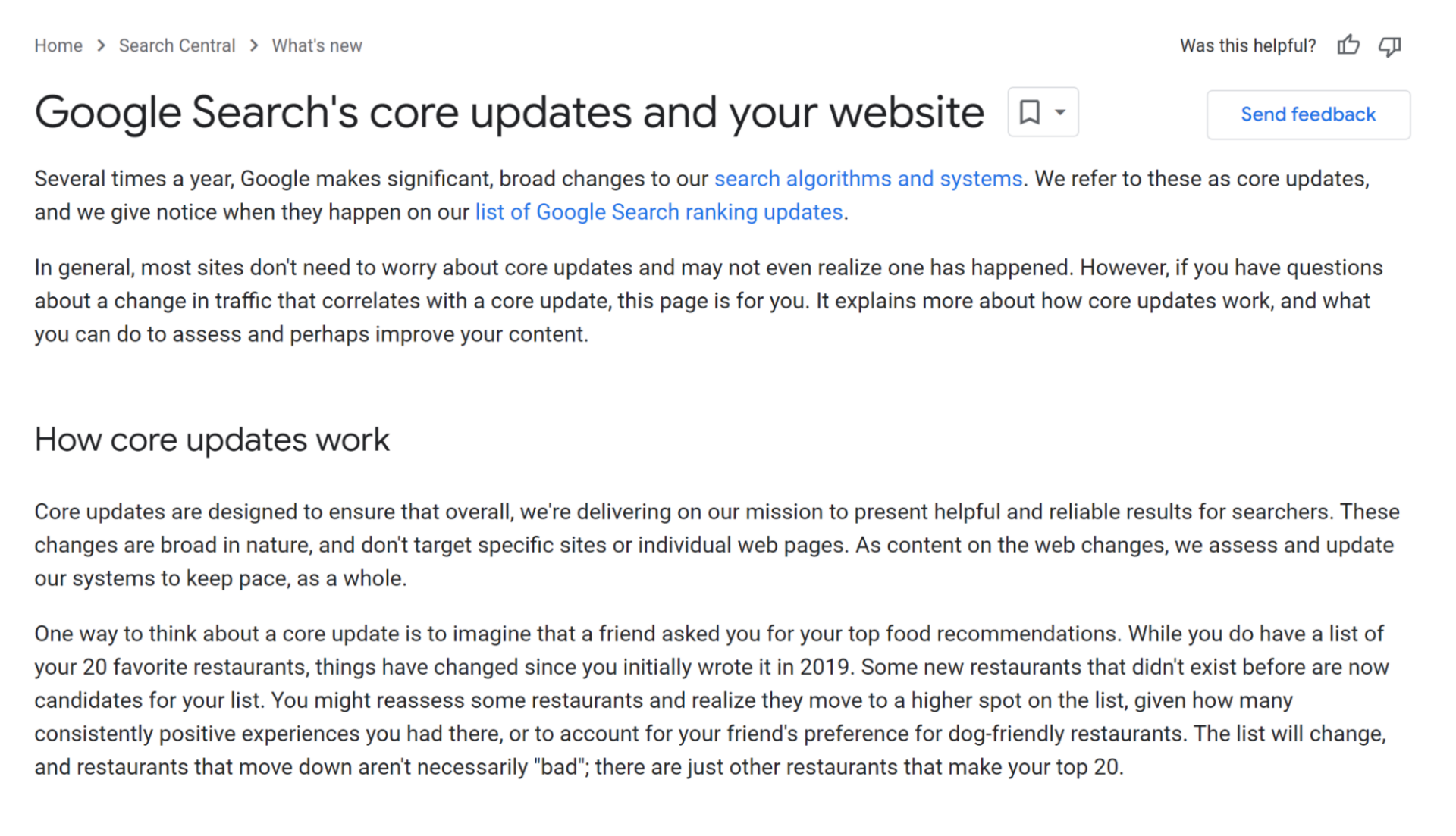
And as you already know, the SEO game changes every few months, so you need to be up-to-date with Google’s goings-on.
Or, at least, the person you hire needs to know what they’re talking about.
Requires Constant Tweaking
This one ties in directly into the previous point.
Even once you set up your team with experts, you haven’t made it yet.
Nobody knows when the next Google update comes around – and once it does, you’ll have to stay on your toes to keep up.
Your beloved strategy might get nerfed by the G-God and you’ll have to come up with a new one to avoid wasting resources on something that doesn’t work anymore.
The only area of search engine optimization that remains relatively unchanged is local SEO.
Partner With a Pay-Per-Result Link Building Service
Hiring an in-house specialist is one path. Outsourcing to an agency is another. There’s a third option worth knowing about that doesn’t get talked about enough: paying for backlinks one at a time, not by the month.
That’s the model Respona runs on.
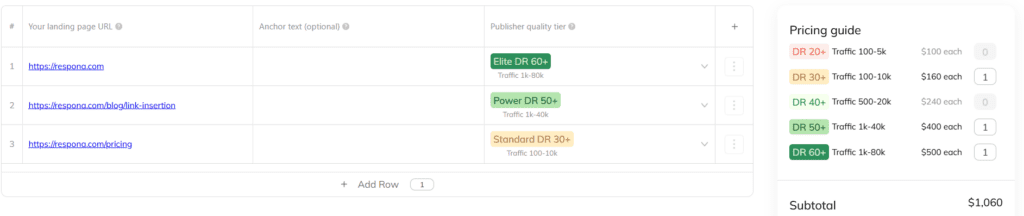
The pitch is straightforward. You don’t sign a retainer. You don’t commit to a quarterly minimum. You browse a tiered pricing menu, decide what you want, and pay for each placement as it lands.
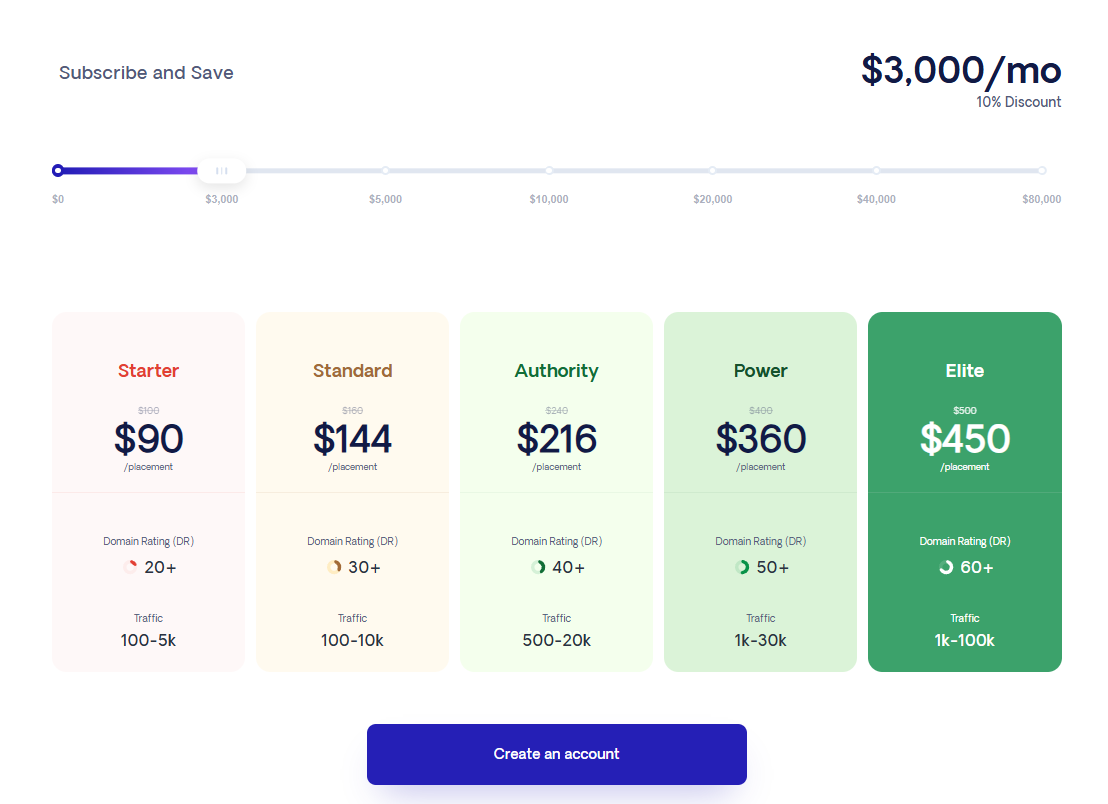
Want five DR 40+ placements this quarter? That’s $1,200. Want fifteen? $3,600. No vague quotas.
Now, the part that takes the most explaining isn’t the pricing. It’s what you’re actually paying for.
Behind each placement is a full workflow most teams underestimate.
Someone has to find a relevant blog, vet whether it’s a real publication or a link farm, identify the right editor, pitch , follow up two or three times, negotiate where the link goes in the article, sort out the anchor text, and confirm the link is actually live and dofollow.
Respona’s team does all of that for you.
All you do is place an order with your target URL and anchor texts.
Respona focuses on listicles, comparison articles, and editorial content pieces that show up in two places at once: Google’s traditional rankings AND the citation pool that ChatGPT, Perplexity, and Google AI Overviews draw from when they recommend products.
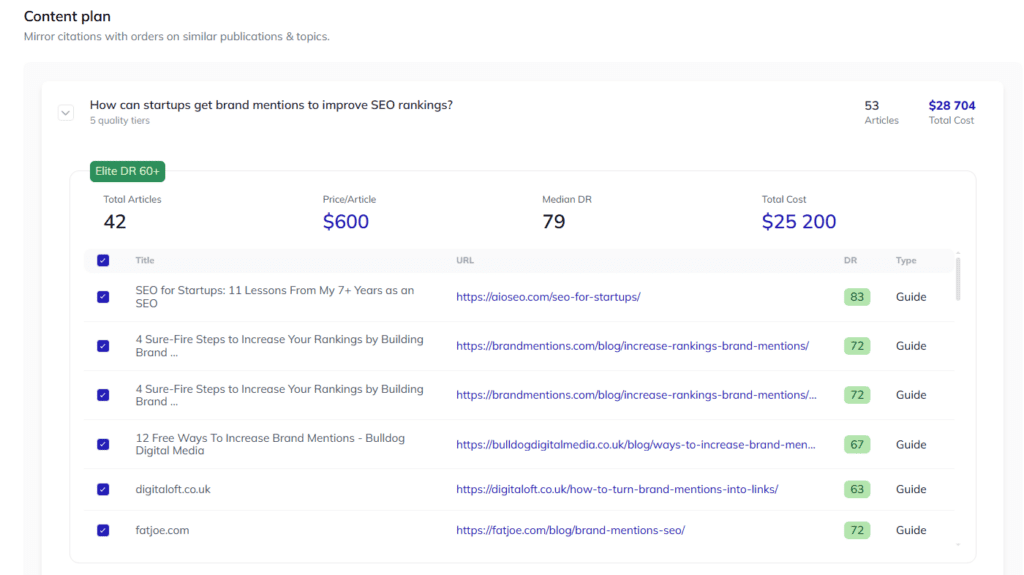
A single placement in the right “best X tools” article puts your brand in front of people searching the old way and people asking an AI assistant, with zero extra work.
This is way more valuable than a generic guest contribution.
How do you know it’s working? Respona tracks your AI visibility across six answer engines for your chosen target queries:
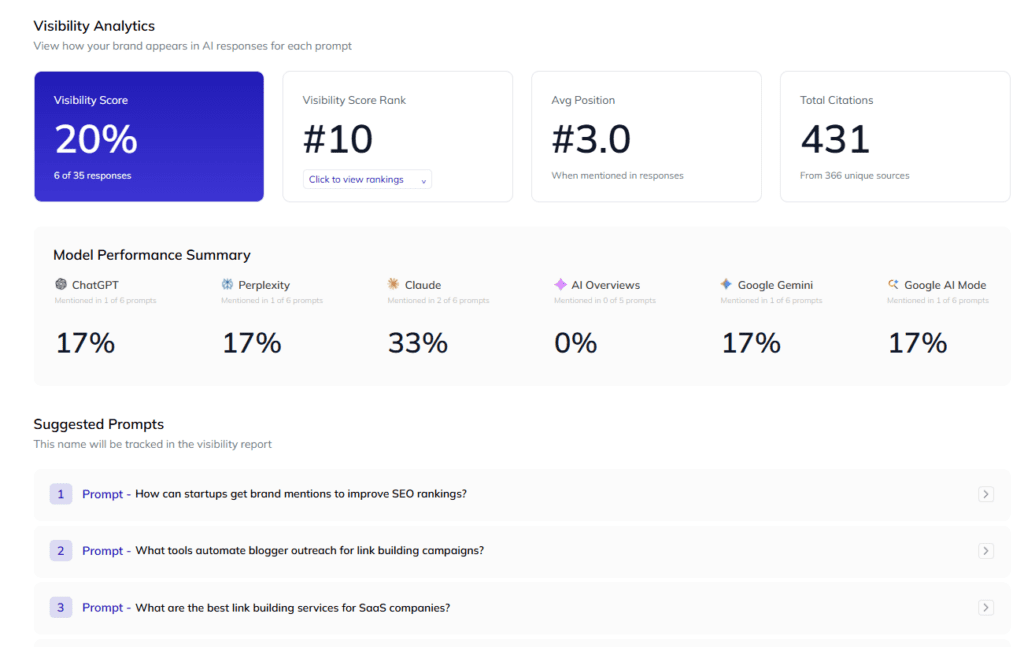
Worth flagging: every prospect goes through you before any pitch is sent. If a site doesn’t pass your judgement, it doesn’t get contacted.
The whole point of pay-per-result is that scaling becomes a budget conversation, not a commitment conversation.
Need to slow down this quarter?
Don’t order placements.
Need to push hard ahead of a launch?
Order more.
The model bends to whatever your scaling rhythm is, and the content you get linked from stays consistent because the prospect pool is always reputable websites in your space.
Hire an In-House Outreach Specialist
Now that we have the SEO tool set covered, it’s time to scale your link building team.
We recommend recruiting an in-house outreach specialist because it allows for more control over your high quality
link building process.
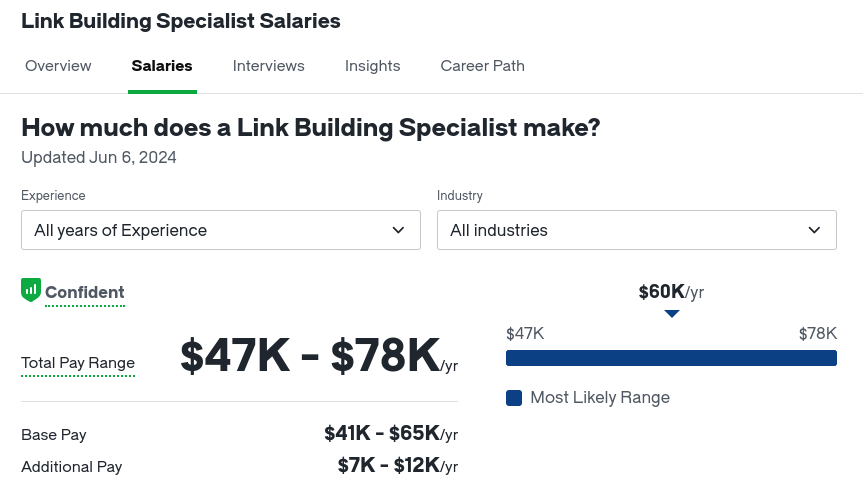
According to Glassdoor, the average link building specialist salary in the USA is $60K/yr.
However, in reality, most link builder positions are fully remote and you can hire internationally for as little as $1000-$1500/month.
The absolute base-case scenario for hiring a link builder is when:
- The position is fully remote
- You possess enough SEO knowledge to tell who’s qualified for the position
- You hire a low-experience person for cheap, and teach them SEO yourself
This way, you’ll be able to save on office space, fully control your link building process, and potentially build rapport and loyalty with your employee by teaching them SEO skills that are cross-applicable in most marketing areas.
Now, let’s suppose you want to spare yourself the headache of teaching and managing entry-level specialists.
In that case, you may want to consider outsourcing to a fully managed link building service – either an agency or a freelancer.
Outsourcing Link Building to An Agency or Freelancer
A link building agency can help scale link building for your business and completely take the headache off you.
As long as you have a budget, of course.
We won’t dive too deep into picking an SEO service to help with link quality, but if you’re looking for a link building package, feel free to go through our list of the top link building services that you can trust.
Tap Into Competitor Backlinks
If you’re a new site looking to outrank already established competitors, this strategy is perfect for you – as it was for us!
A variant of this strategy is also called the skyscraper technique, in which in addition to just finding competitor backlinks, you will also be creating better SEO content than them to outrank.
Instead of spending hours on finding link building opportunities, you can just take a peek at your competitors’ backlinks profiles and try to snatch them.
All you need is a link analysis tool like Ahrefs or Semrush – which should be part of your marketing tech stack even if you’re not actively building links.
Use Guest Posts for ABC Link Exchanges
Guest posting is a solid link building strategy for everybody – that’s not new.
What may be new for you though, is the fact that guest posts are a great way to set up ABC link exchanges without actually giving a link from YOUR site.
Now, I know what you’re thinking: “Wait a minute, aren’t link exchanges considered black hat link building by Google?”
From a purely technical standpoint, you’d be right.
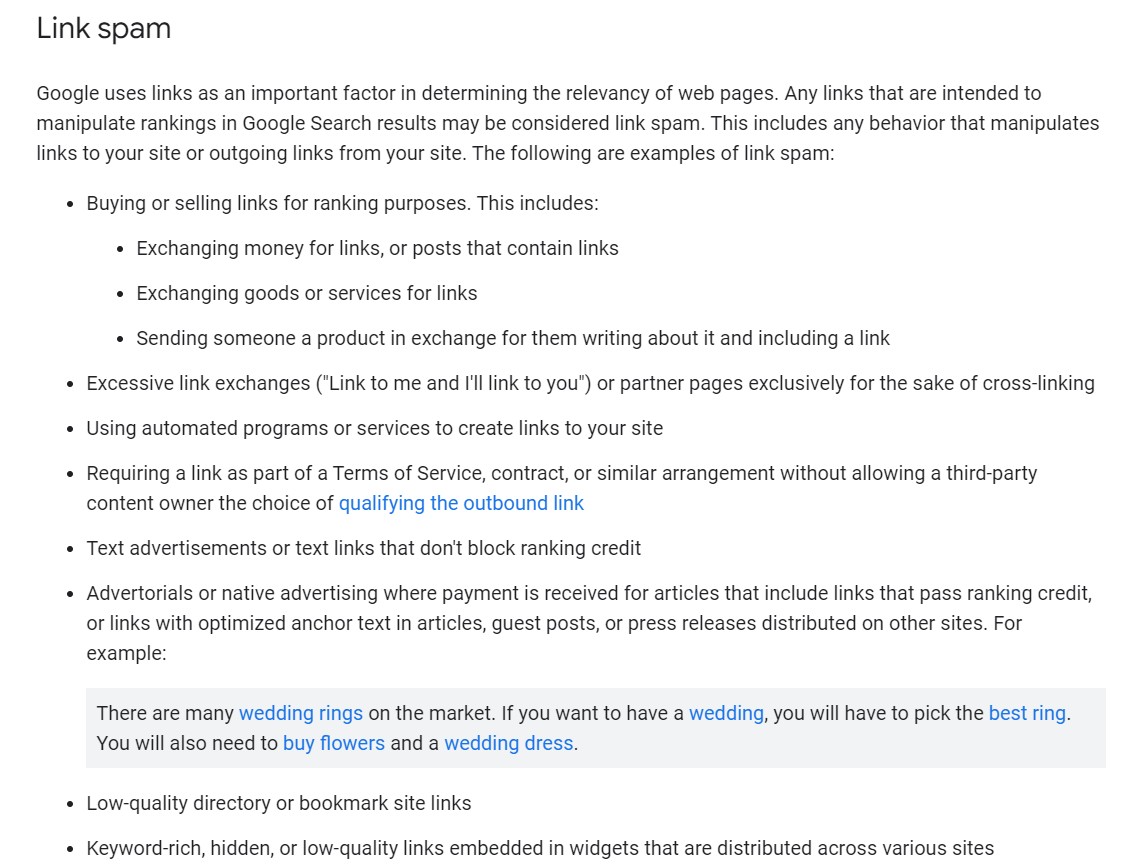
However, in reality, despite Google’s best efforts, these indirect exchanges are incredibly difficult to track.
This makes this link building tactic safe and widely used in the SEO community.
And even if Google does devalue some links, your biggest risk is wasting the little bit of time it took to build them for your quality backlink profile.
As opposed to how it used to be before – and a penalty meant your site disappearing from search results altogether.
Try Different Strategies
A well-oiled link building machine uses multiple white hat link building strategies – not just guest posting and ABC link exchanges.
Some other ways to build links include:
We won’t dissect each of them here, but if you’d like to learn more, we have an entire video link building course detailing the step-by-step processes for 15 different link building strategies.
Focus on Pages That Get Real Traffic
The average response rate for cold emails is only around 10% – and half of these will be negative.
Link building is a numbers game: the more emails you send, the more links you’ll get, right?
It’s easy to fall into that trap and start building lists with thousands of thousands of link opportunities.
Sure, a big prospect list is always good – but is it worth the time spent if you’ll get 0 referral traffic from 99% of the pages on it?
Probably not.
Also, keep in mind that it’ll take some personalization and genuine value to secure links from pages like these:
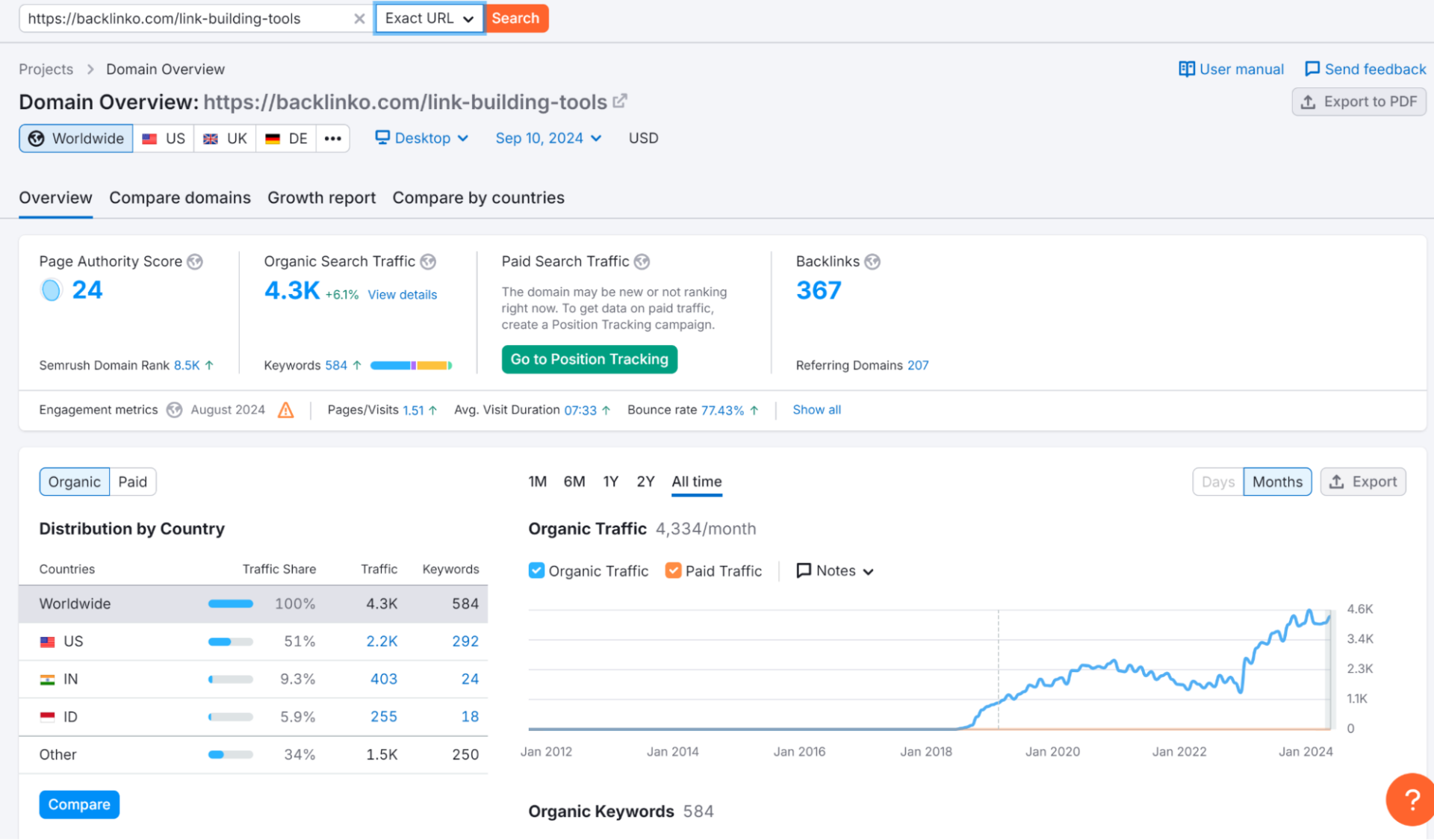
To land opportunities with substantial traffic flow, you’ll need to use every trick in the link building book – much more than just the standard cold email pitch.
Which leads us to the next section.
Recruit Partners
Cold email is the backbone of link building outreach.
But to really scale link building, you’ll have to get in touch with potential link building partners and build strategic partnerships as opposed to one-offs.
This way, you’ll be able to provide your partners with a constant stream of additions to their link profile – and they’ll do the same for you.
Now Over to You
So, to scale link building, you’ll need:
- Access to link building tools
- Dedicated link builders on your team or an agency/freelancer
- Knowledge of different link acquisition strategies
- A network of partners with whom you can regularly exchange links
Or, you can skip the entire setup and opt in to done-for-you, pay-per-result link building.
Share your target pages, target keywords, and anchor preferences, and we’ll take care of the prospecting, pitching, and securing live placements. Pay per placement, not per hour.
Link building cheat sheet
Frequently Asked Questions (FAQ)
How can I effectively scale my link building efforts?
To scale your link building, invest in specialized tools like Respona, hire dedicated outreach specialists, or consider outsourcing to experienced agencies or freelancers.
Utilize multiple strategies such as guest posting, broken link building, and resource pages to diversify your approach.
Is it better to build an in-house team or outsource link building?
Both options have their pros and cons. An in-house team provides more control and the opportunity to train staff according to your needs.
Outsourcing, on the other hand, can save you time and effort by leveraging experts who are already well-versed in link building tactics.
How often should I tweak my link building strategy?
Your strategy should be reviewed and adjusted regularly, especially after major Google algorithm updates.
Regular monitoring helps ensure that your techniques stay effective and compliant with the latest search engines guidelines.
What are the best tools for scaling link building?
Tools like Respona, Ahrefs, and Semrush are essential for scaling link building.
They automate research, outreach, and monitoring processes, saving you valuable time and increasing your efficiency.
How important is content quality for scaling link building?
Quality content and link building go hand in hand – for every linkable asset you have, you can build dozens of links to your site.
So, very important.
What’s the difference between pay-per-result and a monthly retainer?
A monthly retainer means you pay a fixed fee no matter how many backlinks land that month. Pay-per-result ties your spend directly to the placements you actually receive.
For teams that want predictable costs and zero ambiguity, pay-per-result removes the slow-month risk.
How do I know if a backlink is worth pursuing?
Three quick checks. First, the linking site’s traffic and authority. Run it through Ahrefs or any backlink checker; if the site has high DR but no real visitors, skip it.
Second, topical relevance to your niche. A high quality link from a relevant blog beats a higher-DR backlink from an unrelated site.
Third, the position of the link in the content. Links in the body of an article pass more value than ones buried in a footer or sidebar.
Are nofollow links worth scaling for?
Yes, in the right context. A nofollow link won’t pass direct ranking signals, but it still drives referral traffic and builds brand visibility.
Most natural profiles have a healthy mix of dofollow and nofollow, so don’t ignore them. A 100% dofollow profile actually looks suspicious to search engines.
How does scaling link building affect local seo?
Same playbook as broader SEO, just with geography added. Scaling local efforts means earning placements from regional publications, local directories, community sites, and chambers of commerce.
The tactics work the same way; the prospect pool just shrinks to geography-specific authoritative sites.
What’s the right cadence for outreach campaigns?
Most teams that scale well aim for 10-25 new placements per month, depending on niche competitiveness. Going much faster than that tends to attract Google’s attention as unnatural. Going much slower means you’ll lose momentum to competitors.
Consistency over six months beats a single big push and then nothing.
How do I avoid wasting time on bad link opportunities?
Vet every link opportunity before you pitch. Skip sites that look like part of a blog network or have a sudden DR spike without traffic to match. Look at the outbound profile too; sites that link out to dozens of unrelated industries are usually low-quality.
Five minutes of vetting saves hours of outreach to placements that won’t pay off.
Does scaling link building improve search engine ranking on its own?
Not entirely. Backlinks move rankings, but only when paired with the right on-page work. If your target page has thin content, slow load times, or weak internal linking, no amount of backlink building will move it past competitors that have those fundamentals locked in.
Treat backlinks as the amplifier, not the engine.
Should I aim for high quality backlinks or volume at scale?
Quality every time. Ten placements from authoritative sites with real traffic will move rankings further than a hundred placements from low-tier sites.
The math gets clearer at scale: a single quality links placement on a well-ranked listicle that gets cited inside AI search engines is worth more than dozens of forgettable mentions on irrelevant blogs.
How important is building relationships with editors versus one-off outreach?
Very. The link builders who scale the furthest are the ones building relationships with editors over time rather than treating every campaign as a fresh cold outreach push.
A familiar contact at a publication is ten times more likely to say yes to your next pitch than someone you’ve never spoken to. Treat the first placement as the start of the relationship, not the end goal.
What role does social media play in modern link building?
It doesn’t directly affect rankings the way backlinks do, but it amplifies everything.
Sharing each placement publicly drives early traffic that signals quality to the publication, makes editors more likely to invite you back, and pulls valuable content from your guest contributions into broader circulation.
What’s the fastest tactic to scale?
Listicle outreach. You find existing “best of X” articles ranking for your target keywords, then pitch the website owner or editor to add your brand.
Faster than guest contributions because you’re not writing fresh long-form content, and the placements tend to compound because well-ranked listicles deliver quality links for years.
Are resource page placements still worth chasing?
Yes. A resource page is a curated list of useful tools or content in a specific niche, usually maintained by an editor or website owner who actively wants additions if they’re relevant.
The acceptance rate tends to be higher than for guest contributions, and the links are durable.
What about dead-link recovery as a scaling tactic?
Dead links are a goldmine when you find them on high-authority pages. The pitch is simple: “Hey, your link to X is broken, here’s a working alternative on my site.”
Editors appreciate the heads-up and the close rate is unusually high, especially when your replacement uses natural anchor text rather than aggressive exact-match. The constraint is that finding broken links at scale takes the right tools.