
Cold email marketing is one of the most undervalued marketing activities out there.
Why?
It’s simple: Most people are doing it wrong and thus conclude that it’s not working.
In this guide, I’m going to show you how to beat that.
Here’s what we’re going to cover what cold email marketing is, what types of email marketing campaigns there are, and what it takes to write an effective cold email and how to get through spam filters.
Ready? Let’s dive right into it!
Key Takeaways:
- Cold email marketing still works when the outreach is relevant, personalized, and sent to the right people.
- Most cold email campaigns fail because they rely on generic email templates, poor targeting, and weak email deliverability.
- A successful cold email strategy starts with understanding your ideal customer profile and building a clean, relevant email list.
- Small improvements to subject lines, personalization, follow up email sequences, and email content can significantly improve reply rates.
- Email deliverability matters just as much as copywriting. If your emails land in the spam folder, your campaign never has a chance to succeed.

Link building cheat sheet
What is Cold Email Marketing?
The best way to kick things off is by giving a proper explanation of what cold email marketing is.
Cold email marketing is a way of communicating with a list of prospects, by using email as the main way of communication.
A successful cold email strategy is one where your email is not only read by your prospects, but you also receive some replies as part of your campaign.
Even though cold emailing is mostly used by sales teams to build relationships with prospects, there are many other reasons why a company may use this strategy to achieve its goals.
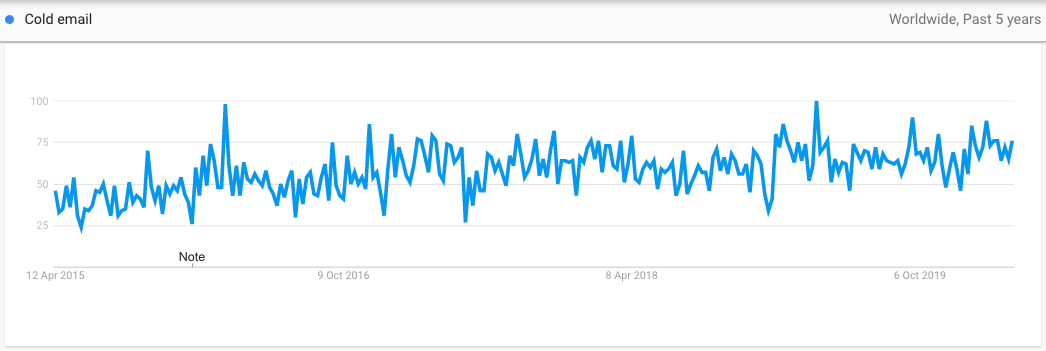
As we can see below, the interest for cold email marketing is growing over time.
Why?
Because in many cases, this type of outreach and relationship building works.
Thus, it’s no wonder that some businesses have thrived using cold email outreach as part of their strategy.
For example, let’s consider the example of Shane Show, the bestselling author of the book Smartcuts: How Hackers, Innovators and Icons Accelerate Success.
In an article he wrote for Fast Company, Show breaks down an experiment he ran, using cold emails to reach out to 1,000 busy executives to see what worked and what didn’t.
The logic behind Show’s experiment was simple:
Collect emails from 500 C and VP-level executives from the Fortune 500, and 500 C-level execs from the Inc 500, and reach out via cold email to see what makes them respond.
Just to give you some context, Fortune 500 companies include names like:
- Apple
- Berkshire Hathaway
- Amazon
- AT&T
So, as you can imagine, these are busy people who receive tons of cold emails every week.
Here’s the email sent by Show:
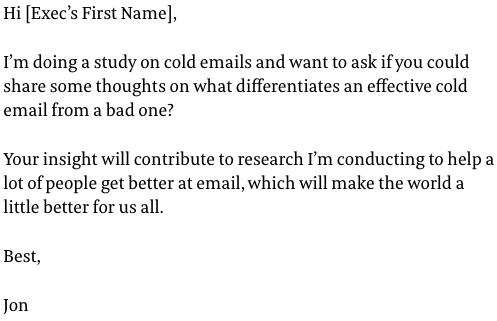
Of course, getting the emails of these executives and just shooting an email would be a waste of time and energy.
This is why Show went things one step further and tested different variables in his list of 1,000 prospects.
Some of the variables he tested were:
- Subject line
- Email length: short vs. Long
- Including a “thank you” note
- CTA: asking for knowledge vs. asking for a favor
Here are the results of Show’s ambitious campaign:
- 293 emails bounced
- Open rate for the remaining 707 emails was 45.5%
- Reply rate for the entire group was 1.7%, which makes 12 responses
Of course, even though open rates were good, these response rates are far more encouraging.
We have to remember something very important though:
These are C-level executives—such people are super busy and thus rarely respond to cold emails.
However, we have to consider the fact that a small number of them replied.
Moreover, an even bigger one opened the email in the first place.
Thus, we can understand that many cold emails—regardless of the purpose they serve—do get read.
Less get a response, but the return on investment may be worth the effort if we consider the economics of this strategy.
Of course, these results are only indicative of what it’s possible to achieve through cold emailing.
Some of the best cold email campaigns get open rates that exceed some of the best averages across different industries.
In fact, even the cold email experiment we just mentioned far exceeds the average open rate for business-like emails, which according to Mailchimp is 21.33%.
Regardless, sending an outreach email to a list of well-targeted prospects can be truly beneficial for your small business.
Some of the most when it comes to cold email marketing are deliverability (open rate), the number of responses you get, and the conversion rates.
However, since there are different types of cold email campaigns, the success of each campaign is measured according to important metrics.
Now that you know what cold email marketing is, let’s move on to the next section, where we’ll present some common types of cold emails.
6 Types of Cold Emails in Marketing
As we mentioned earlier, there are different reasons why someone might send a cold email to a prospect.
From asking questions for a survey to asking for a link for one of your target pages, cold emails are massively used by marketing and sales professionals across industries and verticals.
So, what are some of the reasons why someone might use cold email outreach as a marketing tool?
Here are some of the most prominent ones.
Type #1: Media pitch email
Before diving into the specifics of this category, let me explain what media pitching is first.
Media pitching is the process of promoting (pitching) information about your product or service to journalists, bloggers and people with influence in your industry, with the purpose of getting press coverage, brand mentions and extra exposure for your business.
According to a survey by content marketing agency Fractl on 1,300 top-tier media publishers, the majority of publishers receive between 50 and 500 pitches per week.
It’s therefore all too easy for your email pitch to get lost in the noise.
From those pitches, only 52% are somehow useful for the recipients (the publishers).
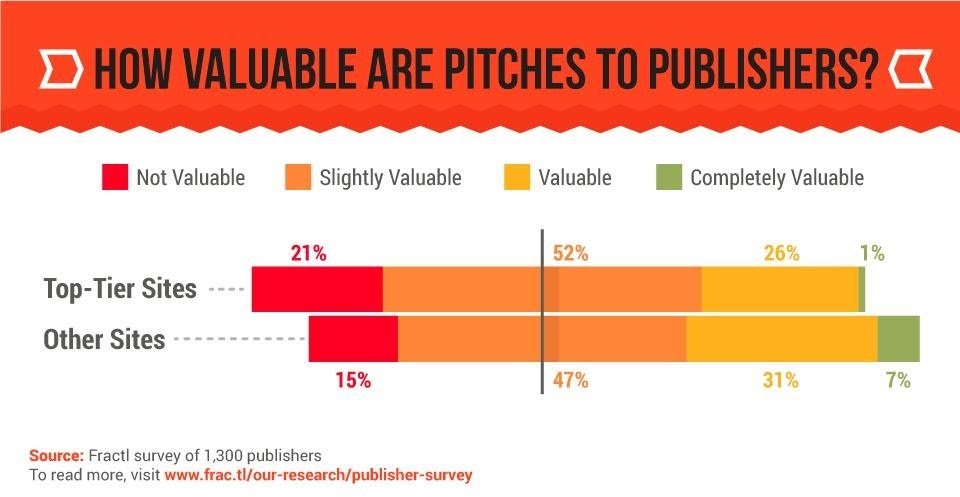
This shows us two things:
- Most publishers receive too many emails
- The vast majority of these emails don’t provide any value to publishers
So, the question is:
How do you get noticed in such a fractured world?
You just have to send something that is well-targeted and provides real value to the recipient.
After all, don’t forget that the above-mentioned results have to do with top-tier publishers.
A blogger (who could help you get some coverage) may receive many emails as well, but they don’t get nearly as close to the kind of numbers we just mentioned.
In general, there are many ways to pitch for media purposes.
Some of the most prominent ones are:
- Reaching out to present the findings of a new study
- Reaching out to thank someone for helping to achieve something
- Reaching out to warn someone about a typo they have on one of their posts
These are only some of the methods you can use to cold email someone for media purposes.
If you’re wondering what such an email might look like, I’ll give you an example of the first email—reaching out to someone to present data on a topic that’s of interest to them.
Author’s Tip: In one of our recent posts, we created a list of 8 media pitch examples to guide you through the tough journey of pitching for media and press coverage. Be sure to take a look for more media pitch templates.
Here’s the email body included in this type of cold email outreach:
Subject: subject
Hey {first_name},
I’ve been looking for a few folks who have covered the topic of technology adoption and found your awesome post on {website_name}.
Loved the way you said [Insert Article Summary].
To conduct the study, we’ve used [technology for retrieving and analyzing data].
Some of the main findings of the study include:
[Point 1]
[Point 2]
[Point 3]
You can take a look here:
example.com/technology-adoption
Could you share your feedback with us when you do?
Thanks,
{Name}
So, with this type of cold email, you’re basically giving your prospect a reason to get featured on a blog post they’ve written or one they can write based on your pitch.
Note that our email doesn’t look like the spam emails we receive, trying to sell us something.
It’s honest, relevant and has a very clear goal:
To get the recipient to take a look at a study we’ve conducted.
Let’s move on to the next type of email.
Type #2: Brand pitch email
This type of email is used when you want to suggest a collaboration between you and a brand that you follow.
The reason why you might want to suggest something like this is because your audience may be relevant to the company you want to reach out to.
Thus, this “intersection” between your audiences can be used for the company you’re pitching to (your prospect) to raise awareness among your audience.
It’s a win-win that’s heavily used nowadays, especially in industries like health and fitness.
Here, once again, you have to be very careful both with your cold email subject line and the content of your email.
Here’s a solid brand pitch email template you can use when pitching brands:
Here’s the email body included in this type of cold email outreach:
Subject: subject
Hey,
My name is [Your Name] and I’m helping brands like [A], [B] and [C] sell more products online.
I’ve been blogging for over [Years] and have a website that gets over [Visits] monthly visits.
I heard about {organization} from [Conference or Event], checked your Instagram and Facebook and really liked your products.
Would you be interested in discussing a collaboration between us?
Here’s how it (usually) works:
- You send me some samples of your products
- I see what I like most about them and if they could be a fit for my audience
- We decide on the ways we’re going to promote them (e.g. sponsored post, Instagram giveaway)
If you’d like to learn more, please book a call on my calendar for this next week.
[URL]
Waiting to talk to you.
Thanks,
Name
For this type of cold email marketing, it’s really important that you cut to the chase and turn your prospect’s attention to how they will benefit.
Also, by mentioning company names of other brands we’ve worked with, we boost our social proof and thus increase the chances of getting a reply.
You have to show that you’re there to add value and not to make easy money.
So, be respectful and always try to answer the “what’s in it for me?” question for your prospect.
Type #3: Link building email
What is a link building cold email?
It’s an email aiming to get an inbound link back to one of your resources.
This type of cold email is heavily used by SEO and outreach professionals.
The decision-maker here is either the person who has written the piece of content and could include a link back to your resource, or the person who has editorial access to the blog of the website.
As we’ve mentioned in a previous post, there are many ways to build links for your website.
- Broken links
- Guest posts
- Link reclamation
- Unlinked brand mentions
- Getting featured on lists posts
- Doing co-marketing activities with other brands
- Creating linkable assets such as infographics or studies
- Getting your press releases featured in major publications
Here’s the email copy included in this type of cold email outreach:
Subject: can I include organization in my post?
Hi {first name},
I’m writing a few articles (for sites like [example]) and looking for resources to include in them.
Do you have a relevant blog post in marketing? I was thinking one of your posts.
Happy to share the drafts if you’d like to take a look at the content.
As you can see, the intro in this example is adjusted to fit what most people think about during these uncertain times: being safe and healthy.
Thus, mentioning that in our opening line makes sense and doesn’t make our email sound spammy.
For this type of cold email marketing, you also have to be very careful with your prospecting.
You need to be sure that the prospects you include in your list are highly relevant to your message.
If used correctly, this type of cold email marketing can get you high-quality links for target pages.
Let’s move on to the next email type.
Type #4: Content promotion email
Content promotion is one of the most obvious reasons why someone might use cold email marketing.
The logic behind it is simple:
You have some pieces of content that are important to you and thus want to promote them.
Content marketing is another type of digital PR to help you get some mentions, links or coverage for your best-performing pieces of content.
It’s necessary if you want to get your blog noticed and increase its traffic.
In the following example, we’re trying to promote our recent post on PR outreach.
Here’s what the first email of our cold email sequence looks like:
Author’s Tip: In our recent post on content promotion, we break down the process of promoting content and explain how to create a content promotion strategy for your business. Be sure to take a look.
Here’s the copy we’re using for this particular type of cold email:
Subject: subject
Hi {first_name},
I just finished reading your post on PR outreach. Loved the way you mentioned [Insert Article Summary].
However, I noticed that your post doesn’t present a step-by-step process on how to do PR outreach.
We have a 6,000+ word guide on PR outreach, with tips, templates, tools to use and a step-by-step process on how to do it right.
Please take a look: https://respona.com/blog/pr-outreach
Let me know what you think?
Thanks!
For this type of outreach, it’s essential to show that we’ve actually read our prospect’s piece of content, as well as provide a substantial reason for including or mentioning our content piece.
Once again, we’re respectfully asking for something and trying not to be intrusive.
The truth?
If used correctly, this tactic can be quite effective.
So, make sure to adjust the email template as you see fit and launch your content promotion campaigns.
Type #5: Networking email
The truth is that when it comes to networking, almost all the cold email types we’ve mentioned so far can work.
If you think about it, one of the “by-products” of cold emailing is networking.
From the moment someone agrees to collaborate with you or link back to one of your pieces of content, they essentially start being a part of your network.
In that context, every cold email is a networking email.
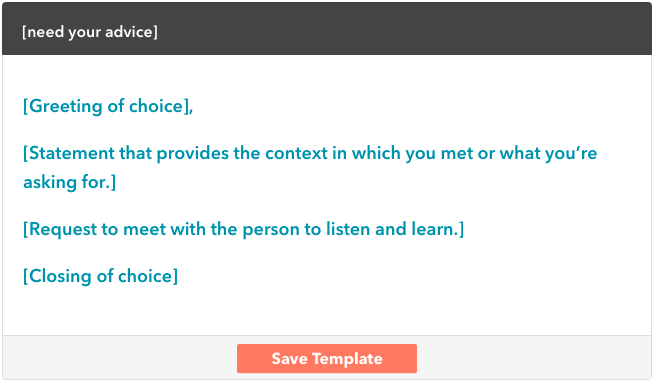
One great networking email template comes from HubSpot and can be used in many different ways.
The email uses the following structure:
Here’s an example of this template when used by an organic pet food owner to (from what we can tell) an industry expert.
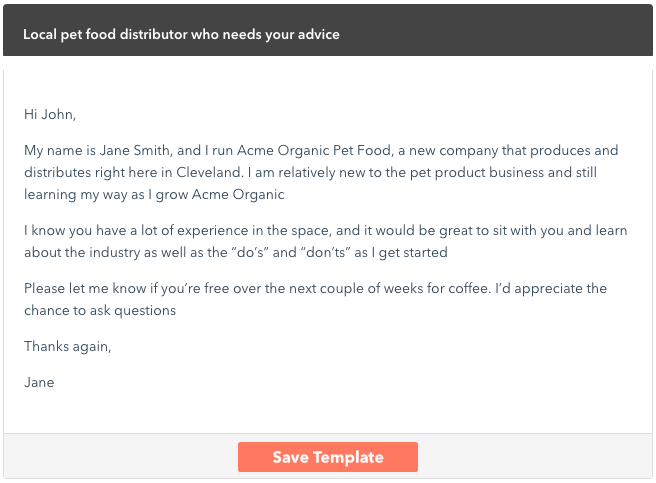
I suggest that the next time you reach out to someone with the goal of networking, you use the structure of this template, as it can be quite effective.
Author’s Tip: In our post on networking email subject lines, you can find 11 templates you can use for your next networking email.
Type #6: Sales email
Sending a sales cold email has the purpose of selling a product/service to someone or moving a prospect further down the sales funnel.
The truth is that some people are really aggressive when it comes to this type of cold email outreach.
They go as far as finding the phone numbers of their prospects and combining their cold emails with actual phone calls (an activity called cold calling). People keep saying cold calling is lost, but many successful enterprises depend on cold calling to make sales revenue.
How far you want to go with this tactic depends on the policy of the company you’re working at and the sales process you’re following.
In general though, the same thing you can achieve by cold calling someone can also be achieved by connecting with them on social media (e.g. LinkedIn or Twitter).
Connecting with your prospects on Twitter and re-sharing one of their recent Tweets can be far more effective and less intrusive than cold calling them in the middle of their day.
What I’m trying to say is that you don’t have to be aggressive to get the results you want.
You can be polite and respectful and still have a positive impact on your bottom line.
You don’t want to be the guy who wrote this email that landed in my Gmail account a few days ago:
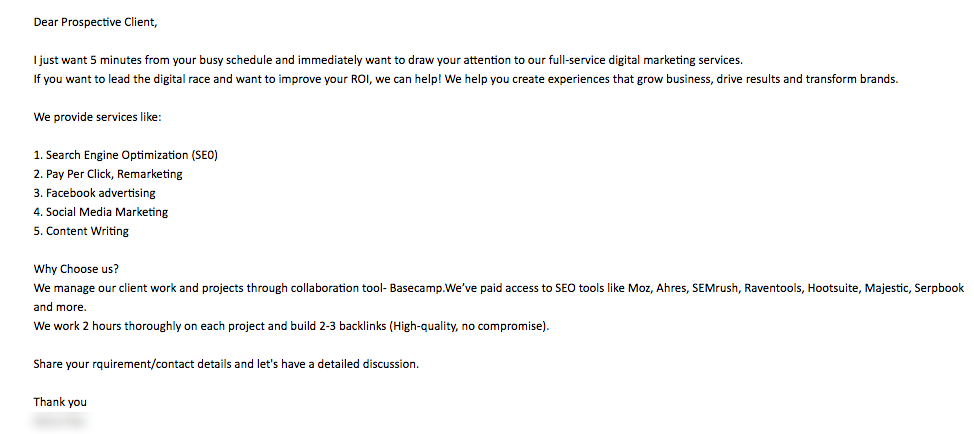
With this type of cold email campaign, it’s important to talk about the pain points you know your prospects have.
Ultimately, you may care only about selling your product/service, but you have to remember that relationships are built on value.
How to Write a Cold Email: 6 Tips You Need to Know
Writing a successful cold email is a kind of science.
From choosing the right prospects to include in your list, to crafting a catchy subject line and using the right call-to-action (CTA), finding success with your cold email campaign isn’t easy.
Although there are countless tips and pieces of advice out there on how to do it right, in the end, you have to depend on your intuition and good knowledge of your target audience.
After all, who knows your target audience better than yourself?
Below, you’ll find some tips on what to pay attention to and why.
Let’s take a look.
Tip #1: Define your target audience (and find the right contact information)
Obviously, the first thing you need to do is define your target audience.
When I say define, I don’t mean you should make a list of the characteristics of your ideal prospect.
You have to dive deep into really knowing your audience.
You may wonder why this is important.
According to research on 12 million outreach emails, Backlinko found that only 8.5% of them ever receive a response.
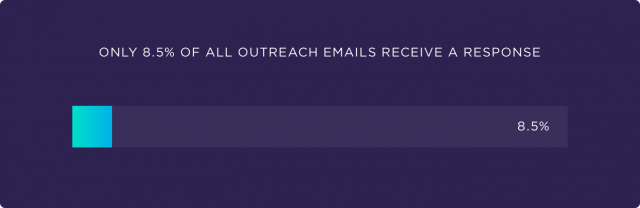
This means that the vast majority of cold emails get ignored.
Thus, it’s essential that you really do your homework to understand your target audience.
Only this way will you have a decent chance of getting a reply.
Moreover, something that we always recommend to all our users is to connect with the people they want to reach out to on social media before sending them an email.
Sending an email out of the blue—regardless of how good your email actually is—isn’t nearly as good as connecting with your prospects first and interacting with them on a human level.
In other words, always try to get to know your audience before launching your cold email campaign.
Author’s Tip: In our recent post on PR outreach, we explain the process of doing research for your target audience (your prospects) when reaching out to them for media purposes or to promote your content. Be sure to take a look.
Tip #2: Write a catchy subject line
For a cold email to get read, you need a compelling subject line.
What does that mean?
Your subject line has to be descriptive but concise, while at the same time prompting the recipient to open the email.
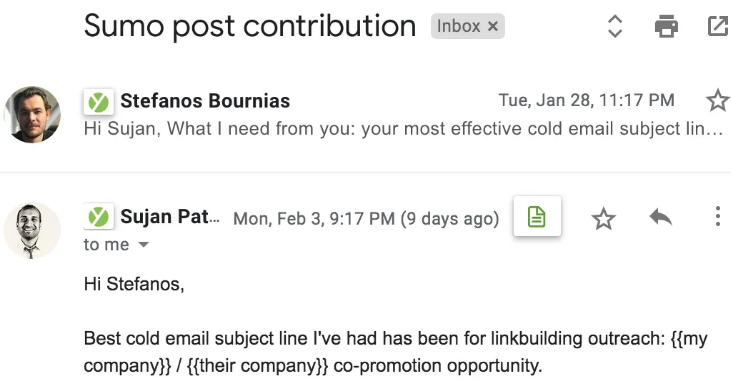
For example, take a look at the following subject line from an email sent by Stefanos Bournias to Sujan Patel.
If you know Sujan Patel, you know he’s a busy guy.
Having him reply to a cold email, even with a simple 2-line answer, is really important.
However, if you take a closer look at the subject line used by Stefanos to get a reply from Sujan, you’ll see that it is:
- Short—Only three words in length.
- Descriptive—With just three words, Stafanos explains exactly what he needs.
- Appealing—It’s easy for anyone to understand that his name will be featured on. Sumo.com (one of the most well-known blogs on all things marketing).
Thus, it’s only natural that Stefanos got a reply to his cold email.
After all, the email wasn’t sales-y or anything.
The truth is that there isn’t any one formula when it comes to writing a good and catchy subject line.
Nonetheless, it seems that some of the things that work best are to a) keep it short, b) be descriptive about the purpose of your email and c) add a touch of personalization.
This brings us to our next tip.
Tip #3: Add personalization
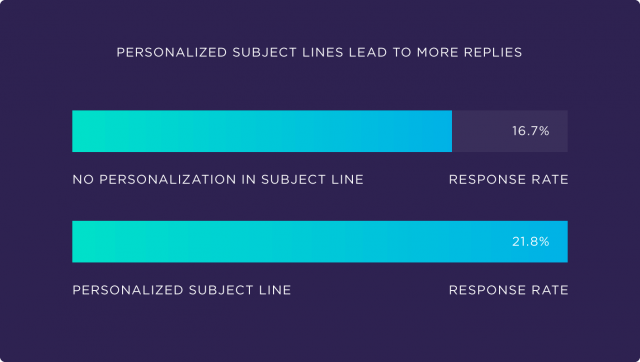
The study from Backlinko that we mentioned earlier found that personalization matters when it comes to cold email marketing.
In fact, personalized subject lines have a response rate of 21.8%, while subject lines without personalization have a response rate of 16.7%.
However, personalization isn’t just about adding your prospect’s name to your subject line.
It’s much more than that.
You also need to keep in mind that personalization differs based on the type of cold email you’re sending.
- For a content promotion email, personalization could mean saying something nice about a blog post that your prospect has published.
- For a media outreach email, personalization could mean mentioning a podcast or show that your prospect has been featured on.
- For a network email, personalization could mean mentioning a common friend or contact with the person you’re trying to reach.
- For a sales email, personalization could mean mentioning something that your prospect has achieved professionally.
Thus, as is evident, personalization can take different forms even for the same type of cold email.
Let me share an example with you.
Let’s assume you’re preparing for outreach to a group of contacts with the goal of promoting one of your content pieces, this based on a piece of content they’ve previously published.
If you think about it, it would make perfect sense to include a part of their published piece of content in your email as a way to a) show appreciation for their work and b) show that you actually read their content piece.
This tactic is particularly useful—and can be really effective—when you’re reaching out for content promotion.
See the grey second and last lines? Both of those were AI variables.
Tip #4: Add a strong (but not sales-y) CTA
What makes a strong CTA?
In my experience, it’s about presenting a clear path to your prospect.
It’s also about making it easy for your prospect to do what is that you’re asking of them.
For example, do you remember the cold email that Stefanos Bournias sent to Sujan Patel we mentioned earlier?
We mentioned it for its subject line, but let’s take a closer look at the CTA here.
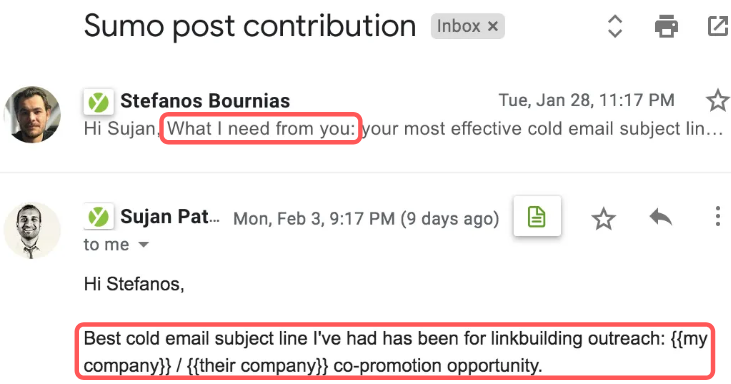
Stefanos makes it super clear as to what he wants from Sujan.
He’s even using the exact words, “What I need from you:…”
Knowing what Stefanos needs, Sujan then gives an extremely clear and precise answer.
Thus, the CTA here makes it very easy to understand and respond.
The recipient of your cold email has to feel like they really don’t have to do much.
In other words, the action you want them to perform through that email should be simple and easy to do.
You have to follow the same logic with the CTAs you include, regardless of the type of cold email you’re sending.
Tip #5: Stay away from email templates
You heard that right.
Stay away from email templates.
Or, to put it better, add your own personal touch to the email templates (I know) you’re using.
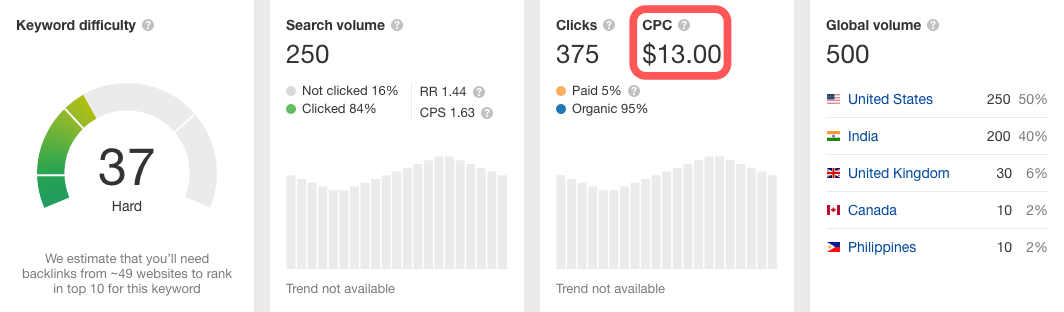
Interestingly enough, “cold email templates” (as a search term) is something that people are looking for online.
The fact that this term has an average Cost per Click (CPC) of $13.00 means that some people are bidding on that term.
Of course, this also means that there are people who are actually interested in trying out those templates.
The problem isn’t in trying these templates.
It’s in believing that these templates will work wonders for you, regardless of other significant aspects of successful cold email outreach, such as personalization.
Put simply, if you haven’t done your research, no template is going to get you the open or response rate you want.
Cold email outreach is the sum of different variables, and that sum can’t be equaled with a ready-to-use template.
Thus, I recommend that you use templates, but use them wisely, knowing that one template can’t—and in most cases won’t—save the day.
Tip #6: Don’t forget to follow up
According to the same research we mentioned earlier about adding a follow-up to your email sequence, “emailing the same contact multiple times leads to 2x more responses.”
Most people avoid using follow-up emails in their sequence because they consider them annoying.
However, if we think about it, sending emails to complete strangers (well, strangers until you make first contact) is kind of annoying.
Thus, you don’t need to view follow-up emails as a way of annoying someone.
Instead, you should see them as a way to increase your chances of getting a reply.
Of course, it’s one thing to send a kind reminder to your prospects and another to send email after email, hoping to get a reply.
Be respectful of people’s time and include a maximum of 2-3 follow-up emails.
More than this could harm your reputation and have the opposite effect to the one you were originally aiming for.
Link building cheat sheet
Now Over to You
So there you have it.
You now know what cold emailing is all about.
You also know what types of cold email campaigns you can launch, how to improve your reply rate, and what it takes to create cold outreach campaigns people actually read.
The important thing to remember is that cold email marketing is not just about sending more emails.
It’s about:
- targeting the right people
- writing relevant email content
- maintaining strong email deliverability
- following up consistently
- keeping your outreach personal
That’s what separates effective cold email campaigns from the spam emails everyone ignores.
And if you’re using cold email outreach specifically for link building, you can also skip the manual outreach process entirely and place an order through Respona instead.
The Respona team handles the prospecting, outreach, follow-ups, negotiations, and placements for you, so you can focus on the strategy side instead of managing cold outreach campaigns manually.
Frequently Asked Questions (FAQ)
What is cold email marketing?
Cold email marketing is the process of sending emails to people who have not interacted with your business before with the goal of starting a conversation, building a relationship, generating leads, or promoting something.
Is cold emailing legal?
Yes, but you still need to follow regulations like the CAN-SPAM Act and avoid misleading subject lines, deceptive messaging, or sending unsolicited email campaigns irresponsibly.
What is the difference between cold email and email marketing?
Traditional email marketing usually targets subscribers who already opted into an email list.
Cold email outreach targets people who have not previously interacted with your business.
How do I improve email deliverability?
Improving email deliverability usually comes down to:
- warming up your email account
- avoiding spam trigger words
- cleaning your email list
- verifying email addresses
- limiting spam complaints
- maintaining good sender reputation
What is a good reply rate for cold email campaigns?
Reply rates vary heavily depending on the industry and targeting quality, but most cold email campaigns consider anything above a few percentage points a solid result.
Why do cold emails go to the spam folder?
Cold emails often land in the spam folder because of:
- poor sender reputation
- spam trigger words
- bad formatting
- unverified email addresses
- sending too many automated emails too quickly
Should I use cold email automation?
Cold email automation can help scale outreach campaigns, but over-automating personalization usually hurts response quality and makes emails feel generic.
How many follow-up emails should I send?
Most cold outreach campaigns work best with 2-3 follow up email messages after the initial email.
Anything beyond that starts feeling overly aggressive.
What makes a good cold email subject line?
A good cold email subject line is usually:
- short
- specific
- relevant
- personalized
without sounding overly sales-y or spammy.
Do I need a separate email account for cold outreach?
In many cases, yes.
Using a dedicated email account for cold outreach helps protect your primary domain and maintain better sender reputation.
What should I include in my email signature?
A professional email signature should usually include:
- your name
- company
- role
- website
- social media profiles
- contact information
without making the email feel overly promotional.
Is cold calling better than cold email?
Not necessarily.
Cold calling can work well in some industries, but cold email outreach is often easier to scale, less intrusive, and better suited for modern digital marketing workflows.
What is a marketing email?
A marketing email is any email sent as part of a broader marketing campaign to promote a product, service, offer, or piece of content.
In cold email marketing, a marketing email is usually sent to a targeted list of potential customers who fit your ideal customer profile.
What is the difference between cold calling and cold emailing?
Cold calling involves reaching out to prospects over the phone, while cold emailing uses email outreach instead.
A lot of businesses prefer cold emailing because it scales more easily and gives prospects time to respond without the pressure of a live cold call.
Why do spam filters block cold emails?
Spam filters look for patterns commonly associated with spam emails, including:
- poor sender reputation
- suspicious links
- spam trigger words
- excessive sending volume
- low engagement rates
- unverified email addresses
If too many signals are triggered, the email may end up in the spam folder instead of the inbox.
What should I look for in cold email software?
Good cold email software should help manage:
- cold email automation
- follow up email sequences
- email deliverability
- campaign tracking
- email warmup
- inbox rotation
- personalization
without damaging your sender reputation.
What makes a good cold outreach campaign?
A successful cold outreach campaign starts with a clean email list and strong targeting.
The best campaigns focus on:
- relevant email content
- personalized email messaging
- clear CTAs
- strong cold email subject lines
- proper follow-up timing
instead of blasting generic automated emails to huge lists.