
As I’m writing this, we’re in the middle of the second lockdown in Ireland, there are elections happening in the US (votes are not fully counted yet), COVID numbers are rising everywhere and I’m pretty sure Christmas will look a lot different for me this year.
So the fact that, under these circumstances, I still have the mental space (and job) to think about email outreach, it makes me feel very lucky.
If you are also planning to use email outreach campaigns, whether that’s for potential customer prospecting, link building, content promotion, PR outreach, blogger outreach, or any other marketing partnership, please take a moment and ponder with me on what this tactic should look like moving forward. Our context has changed, our personal and professional lives blend more than ever, so as marketers we need to adapt our tactics as well.
In this article, I’m sharing my learnings and thoughts after almost one year of outreach efforts and communication during unprecedented social and economic times.
By no means, is this an exhaustive list, but more a reflection of my own experience and what I hope will help you craft your own path.
Key Takeaways:
- Timing matters. Check current events before launching any cold email outreach campaign — if it’s a bad news day, pause your outreach efforts entirely.
- Research is non-negotiable. Spend time finding accurate contact information and learning about each prospect before adding them to your email list.
- Personalization beats automation tricks. Generic merge tags aren’t real personalization — it comes from referencing specific work, a podcast appearance, or recent news about your prospect.
- Subject lines should summarize, not trick. The clearer your subject line, the higher your open and response rate.
- Empathy improves results. Longer follow-up gaps and a softer tone protect both your sender reputation and your long-term relationships.
- The right outreach tool matters. A dedicated cold email tool like Respona, paired with a CRM, helps you track every email campaign, monitor deliverability, and scale outreach without losing the personal touch.
- Warm intros beat cold outreach. Whenever possible, ask mutual connections for an intro before going cold.
- Your network is the multiplier. Every cold emailing effort gets easier when you’re already known in your space.
- What is Email Outreach?
- Tip #1 Check the News Before You Hit Send
- Tip #2 During Exceptional Times, Don’t Send that Cold Email at All
- Tip #3 Dig Deeper & Research Your Prospects
- Tip #4 Be Social & Build Meaningful Connections
- Tip #5 Use Every Opportunity to Strengthen Connections
- Tip #6 Whenever You Can, Lean on Your Network for Warm Intros
- Tip #7 Steal, Don’t Copy Templates
- Tip #8 Only Send Personalized Email Sequences
- Tip #9 Avoid Using Generic, Boring Subject Lines
- Tip #10 Follow-up Less & Practice Empathy
- Tip #11 Be Straight to the Point & Provide Value
- Tip #12 Keep Track of Every Outreach Campaign
- Enjoy the Process
- Frequently Asked Questions (FAQ)
Link building cheat sheet
What is Email Outreach?
Cold email outreach and outbound marketing have a bad reputation and are often associated with spam and poor email deliverability. Most articles that provide hacks/tips/tricks often provide untested advice and underline this view that outreach is ultimately a shady tactic.
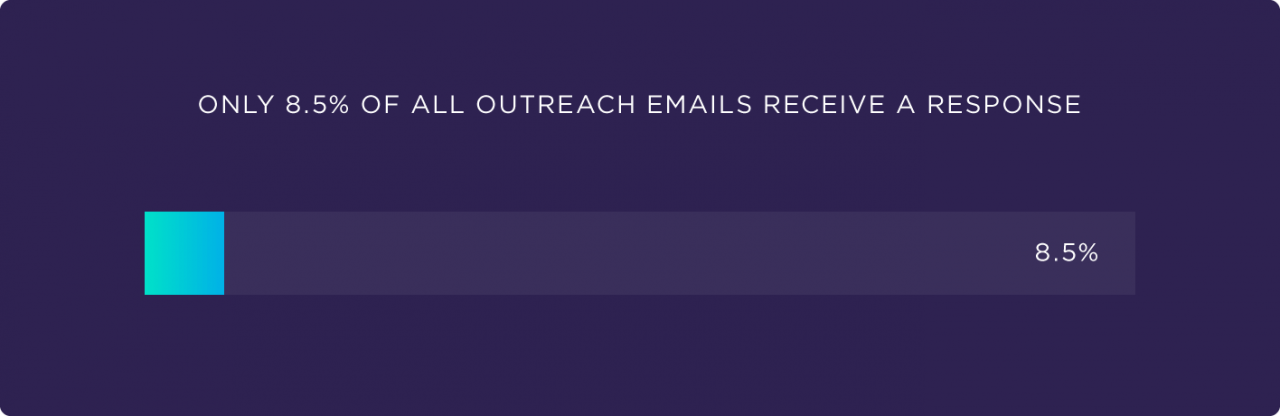
According to a 2019 study by Backlinko, only 8.5% of all outreach messages ever get a response.
That’s why our personal definition of email outreach is very important. Our view on outreach drives our approach and has a real impact on our audience.
So here’s an alternative definition:
Email outreach is a tactic that offers us and our organization the opportunity to connect and build partnerships with like-minded people via email.
The most important part of this definition is related to the purpose of outreach, and that is to treat every email as an opportunity to connect and build long-term partnerships. That should be our main goal with every cold email campaign, no matter if we’re looking to earn backlinks, start a co-marketing partnership or send a press release to a journalist. The relationships we’re able to build will be the gift that keeps on giving.
Also, if 2020 has taught me anything is that none of us know what everybody is going through, and everybody is having a hard time for a lot of different reasons. So it’s probably harder than ever to make sure our emails reach the right people. That’s why it’s critical to take the time, do the research and only send messages when and to whom we believe it makes the most sense.
Tip #1 Check the News Before You Hit Send
Timing is everything. There’s a lot happening in the world and people are anxious to learn what’s going to happen next: are there new restrictions coming? Lockdowns? etc.
So on days where people are expecting big news, like a second lockdown to be enforced in Ireland, your email might be their least important priority.
If you’re using automated follow-ups (and you’ve already started the sequence), this is more difficult to control. But at least try to adjust your outreach strategy and even consider not sending the first message without checking the news first.
Practical tip: Check the news while you’re having breakfast, instead of before going to bed. That way, you avoid getting anxious and losing sleep. This tip has done wonders for my 2020-induced sleep issues.
Tip #2 During Exceptional Times, Don’t Send that Cold Email at All
Check the news, listen to your gut feeling and if it’s not the right time, postpone your email outreach campaign for a while. Whatever it is, it won’t last forever so don’t be afraid to stop outreach for a week or two or even a month.
These are unprecedented times.
Practical tip: If you’re waking up in the middle of the night to check the news, then that’s definitely not the right time to start a new email campaign. Probably others are doing the same, so there’s no point in bombarding them with nonessential information. But if you’re in doubt, go back to basics and just send a small batch of 10-20 emails and see what’s the response.
Tip #3 Dig Deeper & Research Your Prospects
If the timing is right, go ahead and send that message.
The thing you need to make sure though is that you’re being relevant and you send the message to the right people. That’s a difficult task during “normal” times, but it’s even harder now when people are going through so much.
So my third tip is to go that extra mile and research your prospects. Do that even if you’re about to reach out to someone you already know. The reality is they might not be working for the same company anymore.
I personally learned this the hard way. At the beginning of the pandemic, I reached out to a contact I used to work with, but with no response. Then I followed up on LinkedIn, trying to see if my email just got lost, only to learn this person had lost her job in the meantime.
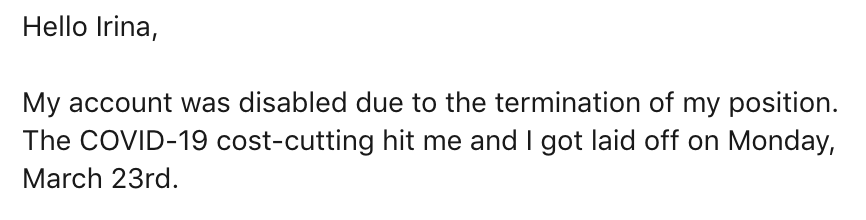
Practical Tip: Bring more empathy in your message, especially when you follow-up with a contact.
Tip #4 Be Social & Build Meaningful Connections
Get to know people. Build meaningful, long-term connections with peers. That’s probably the best practices to make sure your email outreach gets you the results you’re looking for.
If you’re representing a well-known and loved brand, you already have an advantage.
But that doesn’t mean you can’t build a name for yourself. You can write about your work, contribute to others’ blogs, post on LinkedIn and other social media, and engage in communities like TrafficThinkTank (for SEOs) or HubSpot Community (for inbound marketing and HubSpot related stuff).
The connections you make by being out there and social will be your network, no matter where you work.
Shameless plug: If you’re a TrafficThinkTank member, check out my short video course on how to build a scalable link building program with Virtual Assistants. I also talk there about scalable link building and email outreach tactics I used over the last years.
Practical tip: If you want to learn how to be more visible on LinkedIn, check out Gaetano di Nardi, Director of Growth Marketing at Nextiva, a leader in VoIP technology for business.
“One way to get a good reaction on LinkedIn now is this new category of content called <<infotainment>> where you’re teaching people stuff in a relatable way but with humor as a kind of the driver point”, said Gaetano.
Tip #5 Use Every Opportunity to Strengthen Connections
It’s a tough year and every little opportunity to have a better day matters. So get others involved in your projects and praise them for their work. Nobody likes to toot their own horn, but almost everyone likes to be appreciated for their hard work and impact.
In my experience, sharing success and lifting others is probably one of the most rewarding ways to keep connections strong.
For example, this year I worked with Omniscient, where we launched a Content Marketing Course. The launch of the course was a great opportunity to shed some light on the contribution of each specialist to the course:
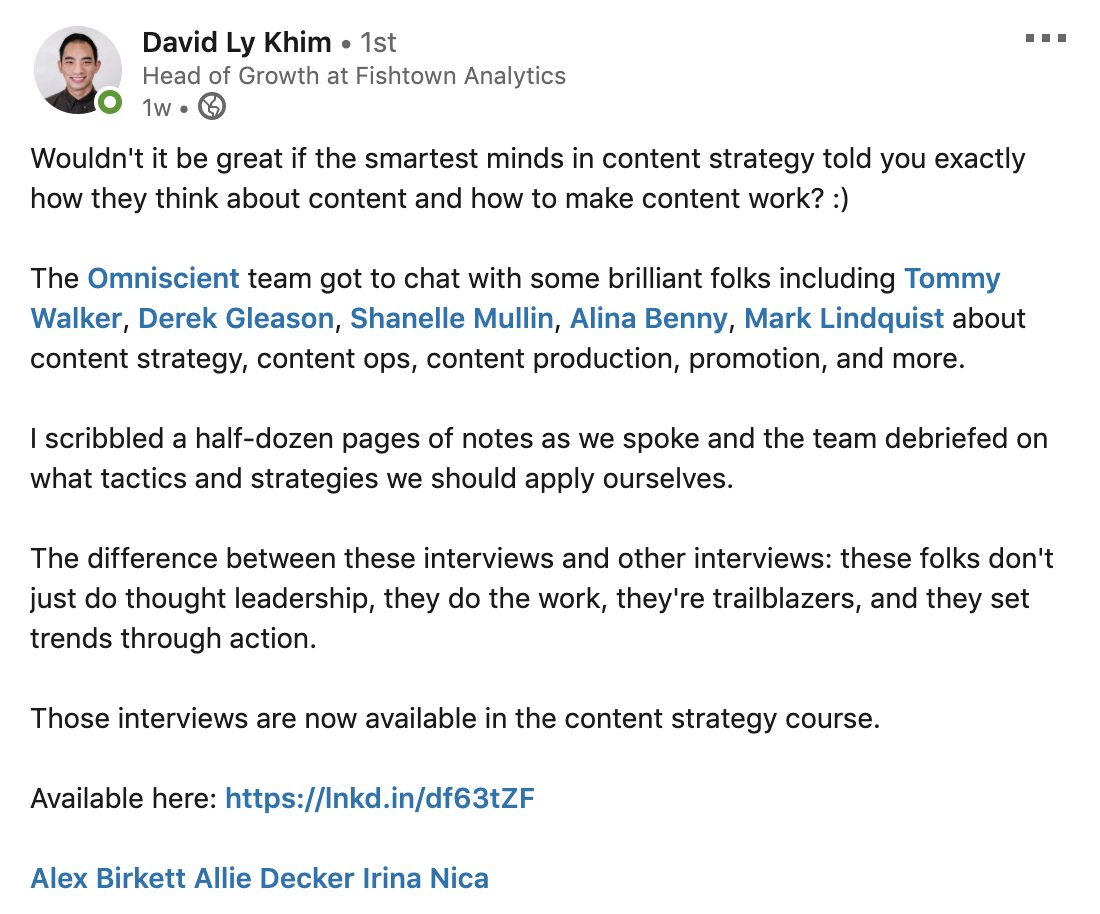
Practical tip: When you write an article, ask for the people you admire to contribute to it with a quote. This makes it more relevant to your readers and it gives you an opportunity to just check in with people.
Tip #6 Whenever You Can, Lean on Your Network for Warm Intros
Let’s say you’re not already connected to a prospect you want to reach out to, whether that’s to earn more backlinks to, publish a press release or start a co-marketing project. In that case, you can (A) try a cold outreach email or (B) try to get a warm intro.
While I believe in the power of a good cold outreach campaign, as long as your message is relevant, there’s a much bigger chance you get a positive response if you get an intro from a mutual connection.
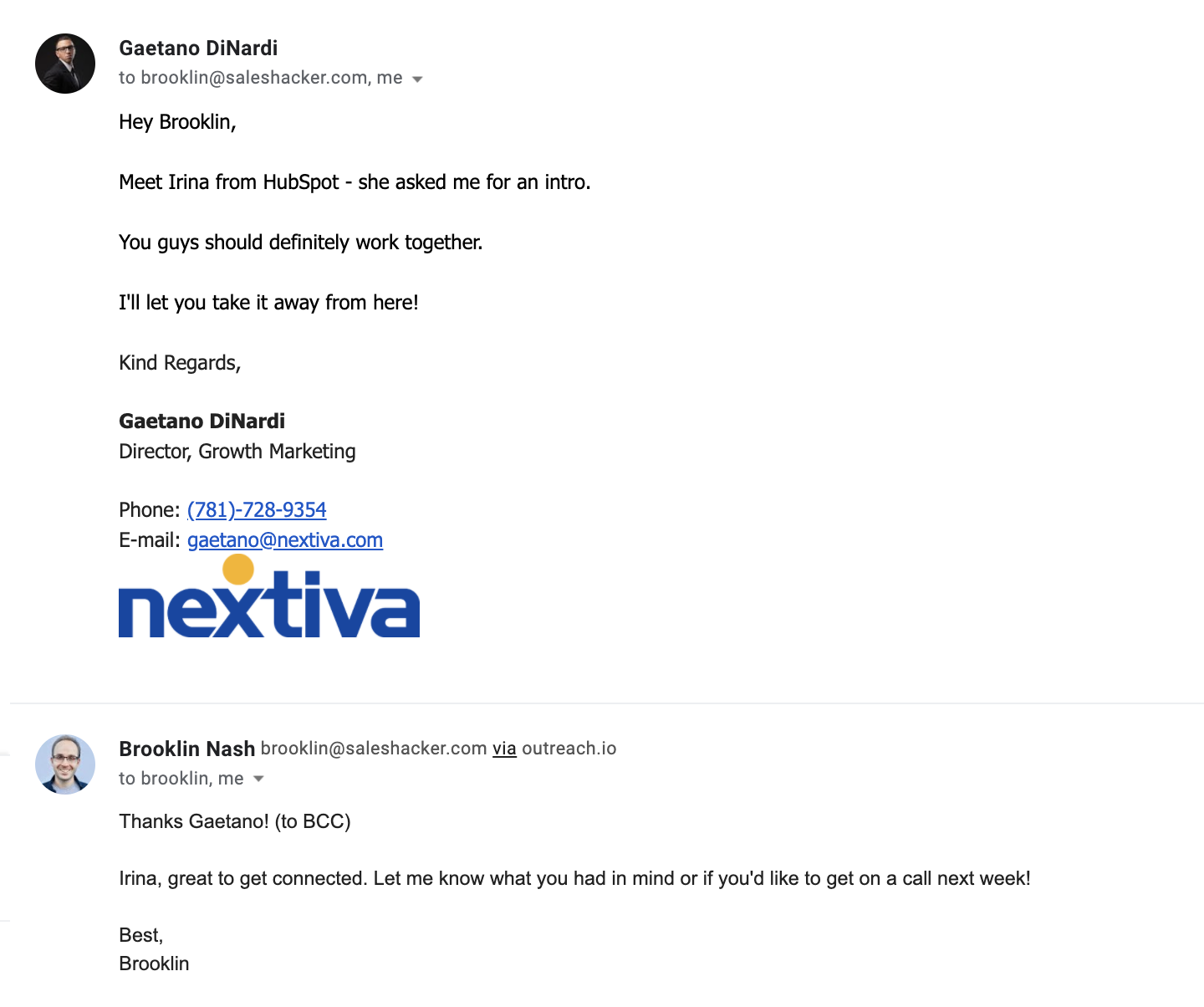
There are a few places you can start with to look for common connections and referrals:
- Your own marketing team
- Your extended team (sales, customer support)
- A potential Client and other business partners
- Previous partners you worked with
- Former work colleagues
- Community/group members
Practical tip: Check your company’s CRM database. You might be surprised to find that a contact you are looking for is already talking to your sales team. Or someone might know them.
Tip #7 Steal, Don’t Copy Templates
When I was 19-20, and just starting my career in marketing, a friend of mine sent a little postcard from a vacation in Spain. That postcard had a quote from Picasso that said:
“Bad artists copy, great artists steal”
At a time when I was learning a lot about marketing from what other companies have done, that quote really left an impression on me. In a way, it’s a mantra I use to remind myself to always look for inspiration where others have done better, but create something of my own.
The moment you want to start an email outreach campaign make sure you first build small cold email template collections. See how others approach the same tactic and learn from them. Then create your own email outreach template, that has a lot of room for personalization.
Practical tip: This is more of a recommendation, but if you’re looking for inspiration on personalizing your next campaign, here are some of my favorite email template libraries:
Also check out this useful guide that includes an outreach cheatsheet.
Tip #8 Only Send Personalized Email Sequences
The second most important thing, aside from creating your own templates, is to personalize every single message. And I’m not talking about the type of personalization that’s actually driven by automation, like:
Hi [First Name],
I’m reaching out to because I recently stumbled upon your article: [URL]
Or
Hi [First Name],
I really enjoyed this article you recently posted: [URL]
A personalized email sequence includes in every message details that show you’ve done your research. These can be anything from information on why you enjoyed reading a piece of content that they published or how you learned about them though a podcast episode or a news piece. This goes back to the part about researching your prospects and making sure your goals aling.
Practical tip: While you’re in the process of gathering the information, make notes that could help you personalize the subject line or the body of the message. You can also use a personalized email signature to build trust and gain more replies to your emails.
Tip #9 Avoid Using Generic, Boring Subject Lines
Whenever possible, your subject lines should be a summary of your message. That way, you immediately catch the attention of your target audience. You don’t need a gimmick or a “hack” to cut through the noise, and you don’t even need to A/B test your way to perfection, as long as you reach out to the right person. Or, you give them the opportunity to delete your email, without wasting their time. I know it sounds counterintuitive, but it’s the moral thing to do.
Maybe it’s just my personal, biased point of view, but I feel like we need to remind ourselves to be kind when sending an email outreach campaign. That kindness can simply be transparency and straightforwardness. No “tricks”, just a simple subject line that actually states the purpose of the message. When we’re all going through tough social-economic times, battling anxiety, lockdown, homeschooling and many other challenges, we need to be mindful of our inboxes.
Here are three examples of email subject lines I used over time and how the open rate evolved:
Subject line #1:
Open Rate: 74%
Subject: Open to partnership talks?
Subject line #2:
Open Rate: 91%
Subject: Is there something we can do together? (Company Name) + HubSpot
Subject line #3:
Open Rate: 100%
Subject: Interested in providing a quote for a HubSpot article?
The more specific the subject line is and the more it’s obvious it is that there’s something of value for them (people in your email list), the higher the open rate. Needless to say, the reply rate goes up as well.
Practical tip: When reaching out to journalists in particular, make sure your subject line is the highlight of your piece. Journalists know every trick in the book when it comes to cold emailing, so make sure to be honest and upfront with your intentions.
Take this case study from Nesta Storage as an example, The largest self-storage company in Dublin. Gustavo Pelogia, their SEO from Wolfgang Digital, who has a solid background in journalism and a keen eye for Digital PR, spotted an internal trend within the company and used it to create a compelling story for the local press.
Here’s a sneak peek into the way they pitched the story. Check out especially how the subject line summarizes their main point:
Subject: Remote Working Boosts Self-Storage Market in Dublin
Hi Chris,
The largest self-storage company in Dublin, Nesta, has registered an all-time high demand for storage facilities due to the changes forced by Covid-19 pandemic.
As office workers were required to work remotely, the company has a substantial increase in requests for self-storage spaces.</p>
According to the company’s CEO, Brian Hefferon, the increase in enquiries is driven by three main reasons:
- A need to declutter to make room for a home office, which has become more long-term and potentially permanent space,
- Business downsizing or restructuring their physical space to comply with government Covid-19 distancing rules
- Temporary repatriation of foreign workers, taking advantage of remote working from their own countries.
If you need more information on this trend that Nesta is seeing, please let us know.
We’d be happy to provide more insights.
Thank you,
As a result, one of the main local publications picked up the story after and made a short interview with the CEO.

The DublinLive journalist replied appreciating the angle of the story
Tip #10 Follow-up Less & Practice Empathy
From the first pitch to the last follow up email, try to show empathy in the language and tone of your email. If you stop putting pressure on the person at the other end, yes, you might lose a “deal”. But you’ll keep a connection and that’s what matters long term.
For example, when I got this email:

…the best way I could respond was just to make sure my reply doesn’t add any additional pressure:
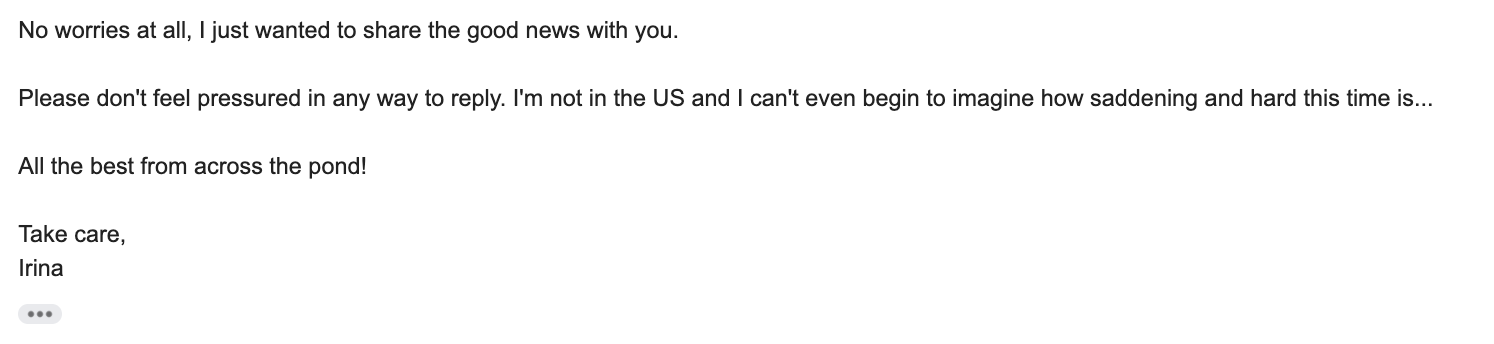
Practical tip: Put more distance between your follow-up emails. If last year, you’d leave 2-3 days between follow-ups in a sequence, now double that period. This will give the person at the other end some extra time to get back to you.
Tip #11 Be Straight to the Point & Provide Value
This one is not new but in a time where you don’t have a lot of time, you want to use that moment of attention to the maximum.
So be concise, be clear, be specific as to what’s in it for them and what’s the next step you want them to take.
Focus on providing value to the recipient and using your position and leverage. That’s one strategy Adam Enfroy uses in his email outreach.
“In every Respona outreach email I send for SEO purposes, I focus on what’s in it for them. I don’t say, ‘I want to write a guest post.’ I say, ‘I can contribute a guest post, and I can also link to you from one of my other guest posts.’ What I’m offering has to be just as good or better than what I’m getting out of the deal”, says blogger Adam Enfroy.
Practical tip: Be concise and provide value up front. This practical tip is actually a mantra I stole from Brian Halligan:
Create value before you attempt to extract value
– Brian Halligan (CEO HubSpot)
Tip #12 Keep Track of Every Outreach Campaign
I can’t emphasise enough the value of using the right systems to keep track of your communication and projects.
There are three things I find essential:
- Having a good email outreach tool, like Respona where you manage your outreach-specific projects, templates, prospecting etc. Using a reliable, scalable tool will help you keep track of your campaign results, compare success rates, response rates, and other campaign-specific metrics, and generally help you make progress in your work. It’s incredible how many marketers are still not taking advantage of the many tools available out there for outreach and are still just relying on Gmail to run link building or guest blogging outreach campaigns.
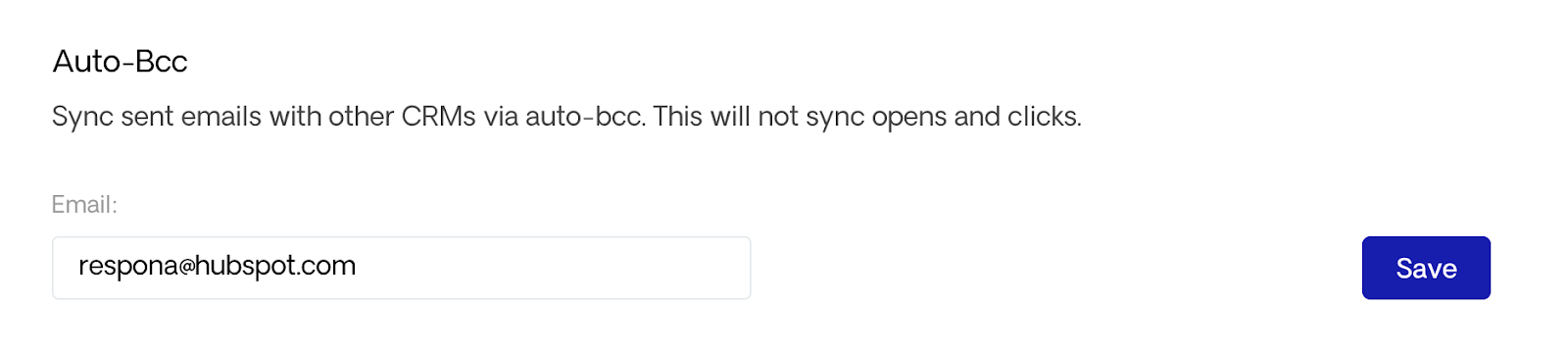
- Having a company-level CRM, like HubSpot’s free CRM — please kindly forgive my second and last shameless plug, but it’s 100% free and I use it daily for exactly what I’m suggesting here. But whatever your CRM choice might be, just make sure that your entire digital marketing, sales rep, and support team uses it, so that you have a unified database of email addresses. You can also connect your Respona account to Hubspot’s CRM and keep track of your conversations by setting up an auto-bcc:
- Having a project management tool — Asana, Trello, Airtable or any other similar tool would work just fine. Aside from helping you organize your own tasks, these project management tools provide transparency and help other teams understand what you’re working on. This is particularly important now when most of us are working remotely and we need to over-communicate to stay aligned. Airtable alternatives provide reliable cloud collaboration opportunities and help eliminate a lot of the confusion associated with remote work.
Link building cheat sheet
Enjoy the Process
If managing everything we just covered (finding prospects, gathering contact information, writing personalized cold emails, monitoring deliverability and sender reputation, running an entire cold email outreach campaign month after month) sounds like more than your marketing team can take on right now, you don’t have to do it alone.
Respona offers a done-for-you link building service. Our in-house team of email outreach pros handles everything: identifying high-value prospects and potential clients, finding accurate email addresses, sending personalized cold emails at scale across multiple email accounts (with proper email warm up to protect deliverability and sender reputation), and following up until the links are placed.
You bring the target pages and topics. We bring the cold email outreach campaigns.
Place an order today and put your cold email outreach on autopilot, without sacrificing the personalization that makes it actually work.
Frequently Asked Questions (FAQ)
Is cold email outreach still effective?
Yes. Cold email outreach remains one of the most effective ways to build links, secure PR coverage, and reach potential customers, as long as it’s done right. The bar is higher than it used to be, and generic, mass cold email no longer cuts through, but personalized cold emails sent at the right moment still drive strong reply rates. Pair real personalization with a reliable email outreach tool and you can run a sustainable, scalable cold email outreach program.
What is the best email outreach tool?
The best email outreach tool depends on what you’re optimizing for. If you need deep prospecting, personalization at scale, and integrated contact information discovery, Respona is one of the best cold email tools on the market. Other cold email tools focus more narrowly on sales engagement or pure volume. Whichever you pick, the best cold email tool is the one that protects your deliverability while saving your team’s time.
How do I improve email deliverability?
Email deliverability comes down to three things: your sender reputation, your email warmup routine, and the quality of your email list. Use an email account that’s been gradually warmed up over weeks, avoid sending identical messages from a fresh email account, and clean your list of bad email addresses regularly. Good cold email software includes built-in email warm up features that protect deliverability automatically. Some platforms even let you connect unlimited email accounts to spread volume and preserve sender reputation.
What’s the difference between cold email and email marketing?
Email marketing typically targets a list of subscribers who opted in to receive your marketing email. Cold email outreach, by contrast, targets potential clients and potential customers who haven’t interacted with your brand yet. Both rely on good deliverability and personalization, but cold outreach demands much more research and care around sender reputation since you’re contacting people without prior permission.
How do I find email addresses for cold email outreach?
Most cold email tools include built-in email finders that surface contact information from public sources. You can also enrich email addresses through LinkedIn, company sites, or your existing CRM. Your marketing team or sales team may already have a path to your prospect. The more accurate your data, the better your deliverability and response rate.
What is multichannel outreach?
Multichannel outreach combines cold email with other channels like LinkedIn, Twitter, even a short phone call, to create multiple touchpoints with the same prospect. It’s a sales engagement tactic that improves reply rate without leaning entirely on a single cold email campaign. Done well, multichannel outreach feels less like a cold pitch and more like a genuine attempt to connect.
How can I scale cold email outreach without hurting deliverability?
To grow your outreach scale without burning your domain, use a cold email tool that supports unlimited email accounts, automated email warmup, and inbox rotation. Spreading volume across multiple inboxes protects sender reputation and deliverability while letting you reach more prospects. The trade-off: never let outreach scale come at the cost of personalization. A personalized cold email at scale will always outperform a generic blast.
How do I write personalized cold emails that get replies?
Real personalization comes from research, not merge tags. Before you write, read something your prospect has published, listened to, or been quoted in, and reference it specifically in the first line. This is the single biggest lever for reply rate in any cold email outreach campaign. The valuable insight underneath all twelve tips in this ultimate guide is the same: treat every cold email as the start of a relationship, not a transaction.
How many follow-ups should I send in a cold email sequence?
For most cold outreach, two to four follow-ups spaced five to seven days apart works best. More than that and you hurt your reply rate and damage your reputation as an email pro. Effective outreach is patient. Give people room to respond, and accept the no when it comes.