
Link building continues to be a vital element of any successful SEO strategy, and as we head into 2026, it’s more important than ever to stay ahead of the curve with the latest techniques and tactics.
High-quality, relevant backlinks remain one of the strongest SEO ranking factors, even with Google’s ongoing efforts to minimize “link spam.”
In this blog post, we’ll be exploring 12 essential link building tips to help you excel in 2026, including how to keep your email domain healthy and avoid spam, how to leverage long-term relationships with your link building partners, best practices for prospecting and scaling up your link building process, along with ideas for securing more link building opportunities.
So without further ado, let’s dive right into these top tips for link building success in 2026.
Key Takeaways:
- Strong content comes first. Without it, you’ve got nothing for people to link to (and no real reason for them to bother).
- Evergreen pieces are your best link building bet long-term. They keep earning quality links and referral traffic years after you hit publish.
- Get your on-page and technical SEO sorted before scaling outreach, otherwise you’re filling a leaky bucket.
- Build a process you can actually scale. Tools, templates, and (ideally) someone whose full-time job is finding link prospects.
- Long-term relationships with website owners beat one-off transactions. Every time.
- Filter your link prospects by traffic, authority, spam score, and relevance. Not every backlink is worth chasing.
- Keep your email domain healthy. Warmup, SPF, DKIM, DMARC. If your emails land in spam, none of this matters.
- Diversify your tactics: broken link building, guest posting, the skyscraper technique, link insertions, listicles, resource pages, and link reclamation all belong in your toolkit.
- Outsourcing your link building (to a service like Respona) is often the smartest move if outreach isn’t your team’s strength.
- Start With the Content
- Ensure Your On-Page and Technical SEO is Mint
- Establish a Scaleable Process
- Relationships vs One-Time Collaborations
- Join Link Building Communities
- Filter Your Prospects
- Maintain Your Email Domain
- Distribute Your Outreach Over Several Sender Emails
- Check for Spam Words
- Diversify Your Link Building Strategies
- Switch Up Your Templates
- Outsource!
- Now Over to You
- Frequently Asked Questions (FAQ)
Link building cheat sheet
Start With the Content
In the ever-evolving world of SEO, it’s easy to get caught up in the excitement of link building as a powerful strategy for improving your search engine rankings.
However, before you dive headfirst into this essential practice, it’s crucial to remember that link building cannot exist as a standalone SEO tactic without a solid foundation of on-site content.
By consistently producing high-quality blog posts and articles, you are essentially creating a well-rounded ecosystem within your website, which in turn, strengthens the case for others to link back to your content.
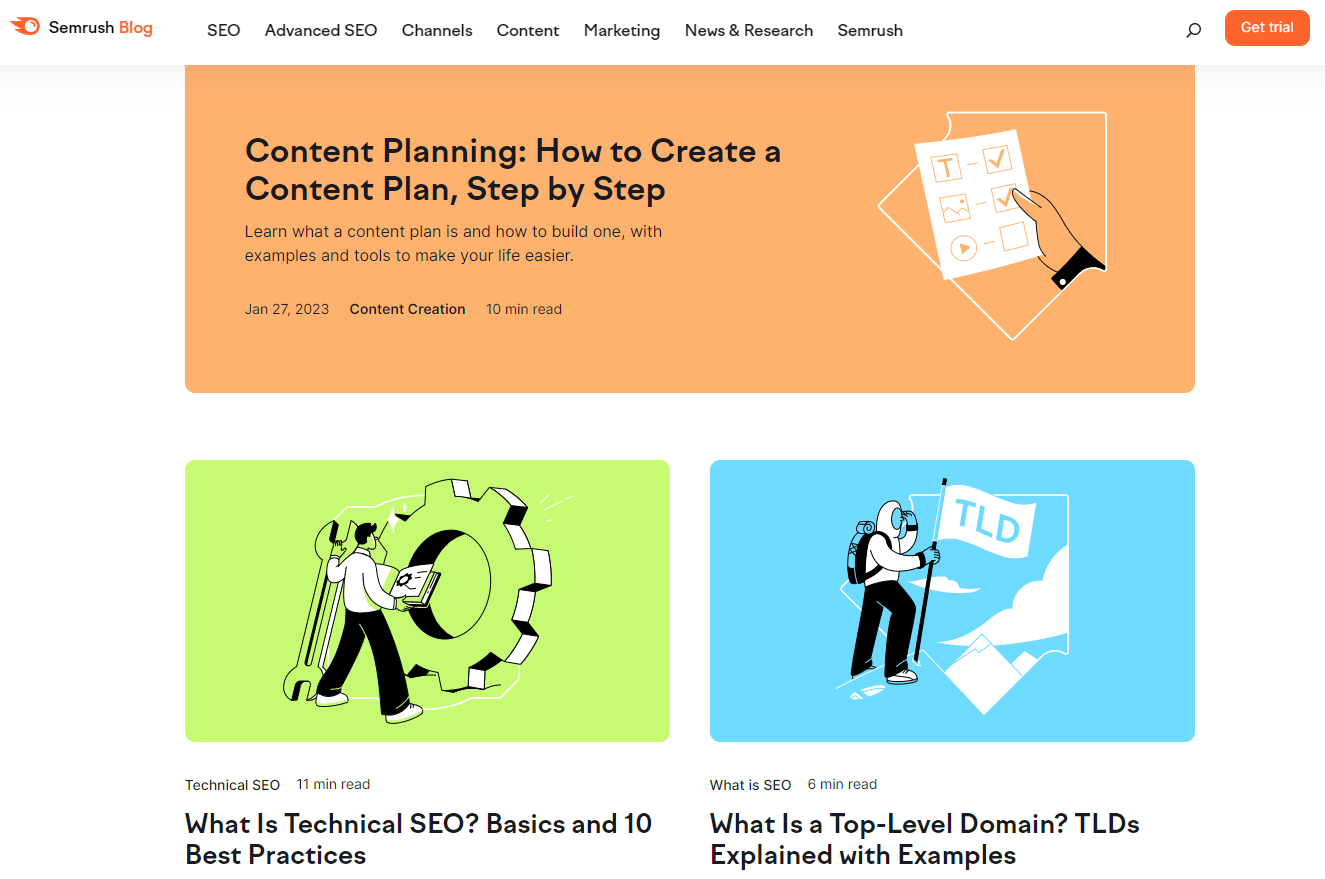
This symbiotic relationship between content production and link building is at the heart of a robust SEO strategy.
Now, let’s explore the reasons why focusing on content before link building is essential:
- High-quality content demonstrates your expertise in your niche, positioning you as a thought leader and a reliable source of information. This credibility will make it more likely for other websites to link back to your content, naturally fostering valuable backlinks.
- Engaging, informative, and relevant content is the main reason users visit your website. By consistently delivering value to your audience, you not only encourage repeat visits but also increase the likelihood of social shares and organic backlinks from satisfied users.
- When you create exceptional content, other websites will be more inclined to link back to your site without much outreach effort on your part. This organic link building is the most sustainable and effective way to improve your SEO in the long run.
- A website rich in content creates a positive user experience, which is a key ranking factor for search engines. As you improve your content, you’ll also be optimizing your website for better user engagement, thereby boosting your SEO efforts.
- Finally, if you don’t have any content on your blog, you can’t effectively build backlinks. Blog posts are the prime link building targets – not home or landing pages, as very few people would actually link to a “money” page of another business unless you already have a strong partnership.
Go Evergreen
Evergreen content refers to articles, blog posts, or any form of content that remains relevant, valuable, and fresh throughout the years.
Just like the leaves of an evergreen tree, this type of content doesn’t wither away with time or changing trends. Instead, it continues to engage, inform, and attract readers long after its initial publication.
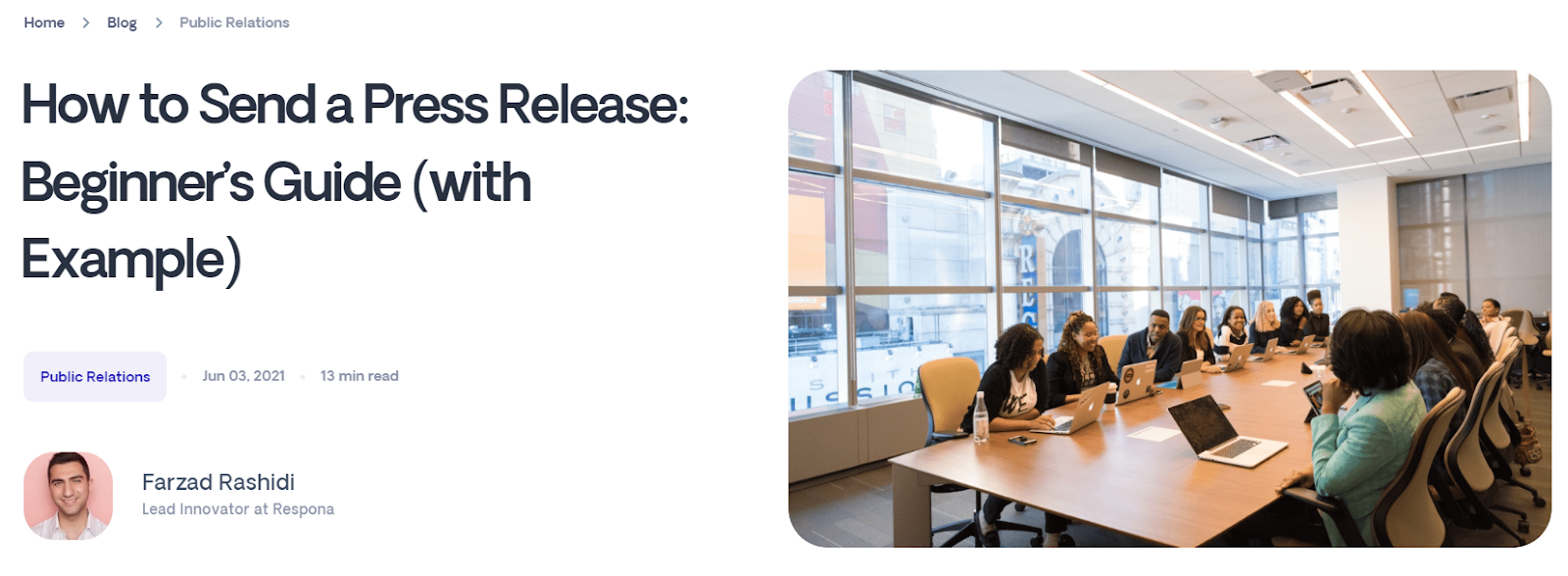
Evergreen content’s timeless nature makes it a prime candidate for generating backlinks over an extended period. A good example of an evergreen piece would be our own guide on how to send a press release since the approach to sending press releases is unlikely to change anytime soon:
Unlike time-sensitive or trending content, evergreen content doesn’t lose its value or relevance as quickly. This means that your content will continue to attract organic and referral traffic, shares, and backlinks for years to come, maximizing your return on investment.
By producing evergreen content on a wide range of topics within your niche, you create a diverse array of resources that cater to different audiences and link building prospects. It also requires little to no maintenance, ensuring you get the biggest bang for your buck.
Ensure Your On-Page and Technical SEO is Mint
On-page and technical SEO serve as the bedrock of your website, optimizing it for both search engines and users.
By creating a strong foundation, you’ll ensure that your link building efforts won’t go to waste and will instead contribute to your site’s overall performance and rankings.
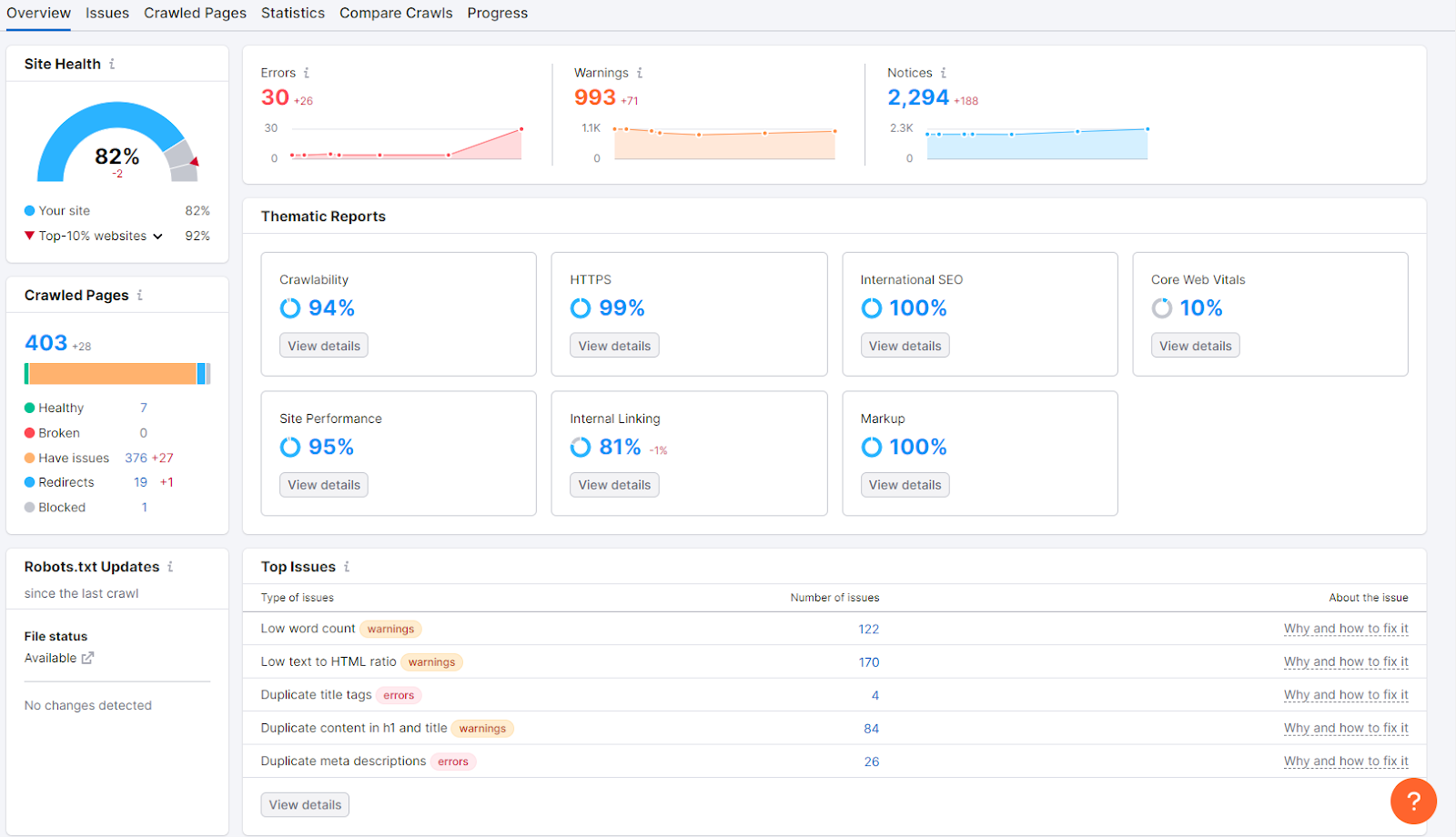
So, let’s explore how to establish a top-notch on-page and technical SEO base camp.
Begin by conducting thorough keyword research to identify relevant, high-traffic keywords for your niche. Then, optimize your title tags, meta descriptions, headings, and content to include these keywords naturally and strategically.
Craft engaging, informative, and well-organized content that meets the needs and expectations of your target audience. Ensure that your content is easy to read and digest by using clear headings, short paragraphs, and bullet points.
In a world where time is of the essence, a slow-loading website is a major turn-off for users and search engines alike. Optimize your site’s speed by compressing images, leveraging browser caching, and minifying code, among other tactics.
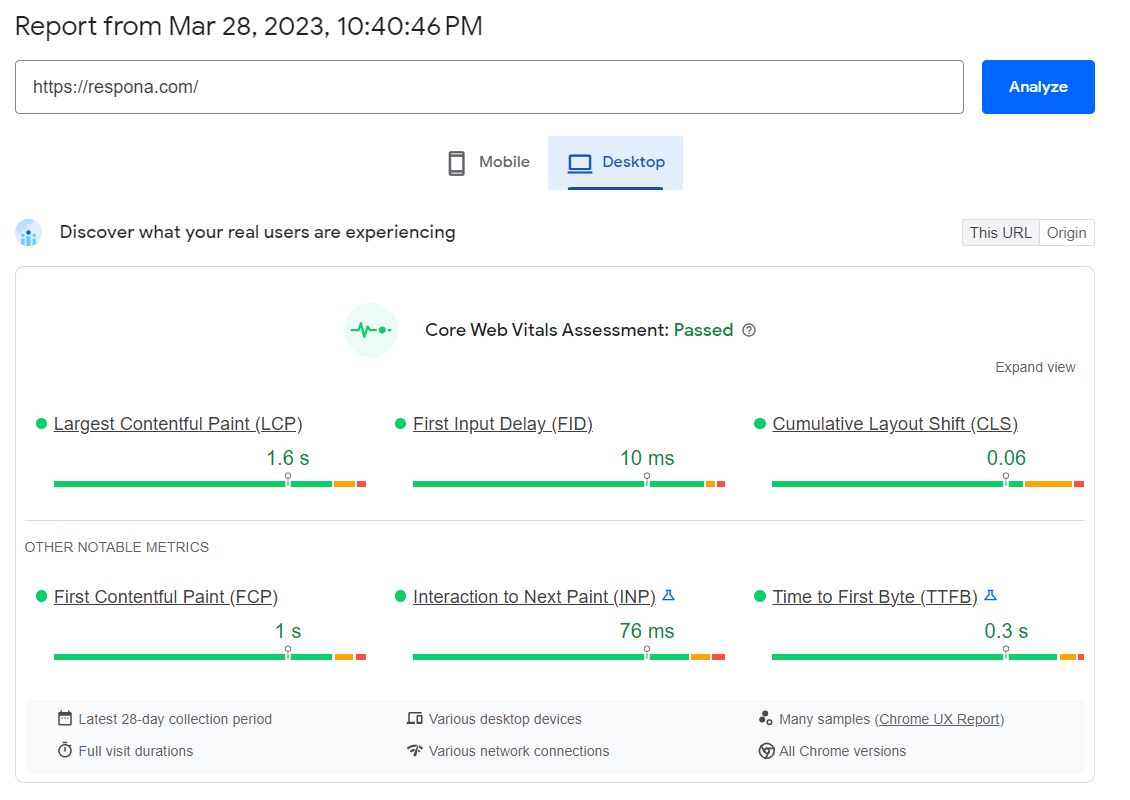
With mobile devices accounting for a significant share of web traffic, it’s essential to ensure that your website is responsive and mobile-friendly. Use tools like Google PageSpeed Insights to evaluate your site’s performance on mobile devices and make any necessary adjustments.
Create clear, concise, and descriptive URLs that accurately convey the content of your pages.
This not only aids in better user experience but also helps search engines understand and index your content more effectively.
Strengthen your website’s architecture by creating a logical and user-friendly internal linking structure. This not only helps users navigate your site more easily but also distributes link equity throughout your pages, boosting your SEO efforts.
Regularly conduct a technical SEO audit to identify and fix any broken links, crawl errors, duplicate content, or other issues that might hinder your site’s performance in search result pages.
These are just the basics of on-page and technical SEO optimization. For more in-depth advice, feel free to refer to our guide on how to create a strong SEO strategy.
Establish a Scaleable Process
The importance of a scalable link building process lies in its ability to adapt to the changing landscape of your business and the digital realm.
As your website gains authority, expands its content, and reaches new audiences, your link building strategy must keep pace to maintain its effectiveness.
So, how can you fine-tune your link building process for seamless scalability?
Depending on your budget and resources, consider hiring full-time link builders or outsourcing to a specialized agency or freelancer. This dedicated team will help you manage and execute your link building efforts, ensuring consistency and efficiency as your business grows.
To keep a watchful eye on your link building performance, leverage powerful tools like Semrush or Ahrefs. These platforms provide comprehensive backlink monitoring and analysis, helping you identify opportunities, track the success of your efforts, and adjust your strategy accordingly.
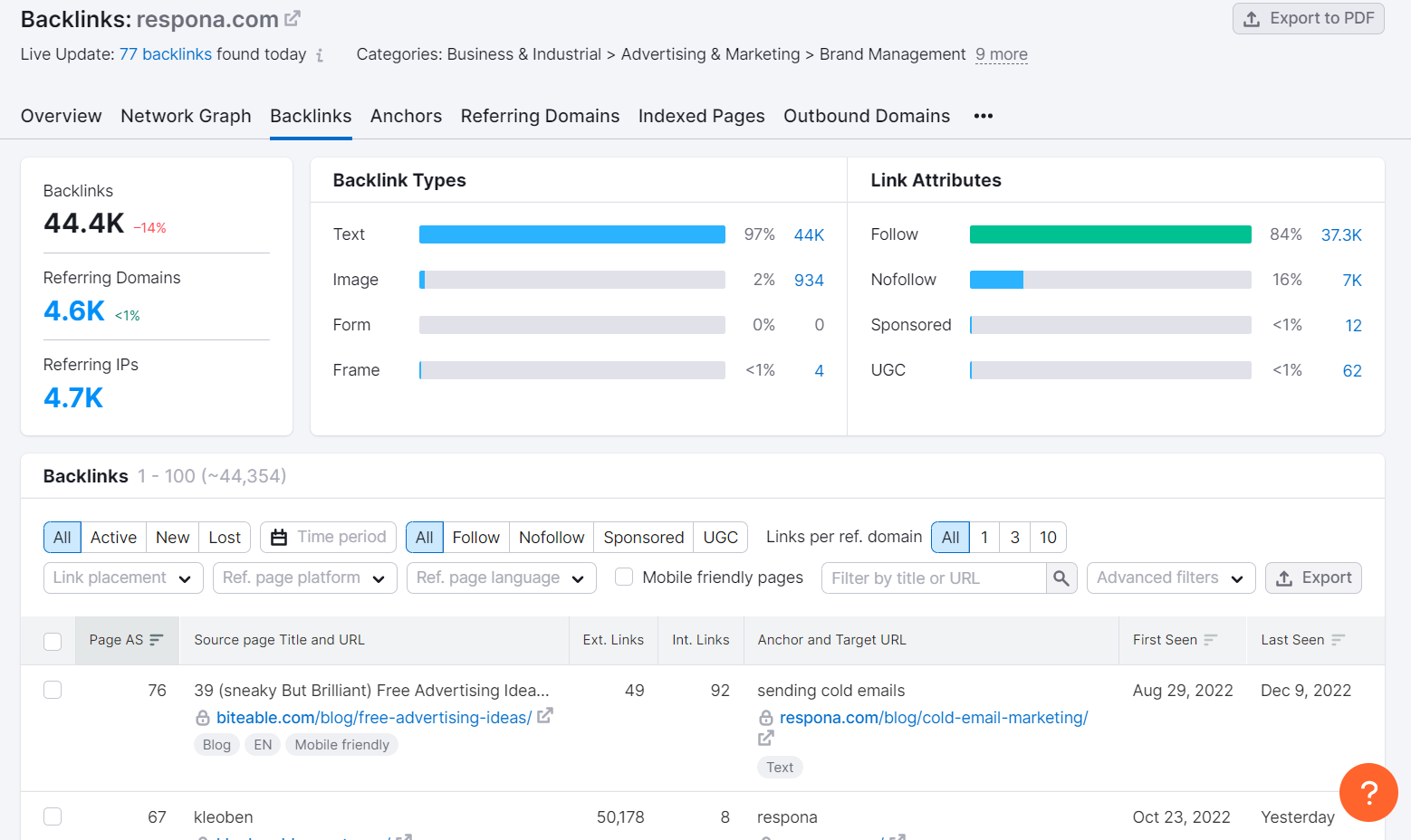
As your website grows, so should your content output. Establish a scalable content creation process that supports the expansion of your link building campaigns. This may involve hiring additional content creators, outsourcing to a content agency, or implementing a more efficient content management system.
Just as a symphony needs constant fine-tuning, your link building process should undergo regular audits and evaluations. Keep track of your campaigns’ results, identify areas for improvement, and adjust your strategies as needed to optimize your link building performance.
By establishing an easily scalable process for your link building, you’ll ensure that your SEO symphony remains pitch-perfect, regardless of the size and scope of your website.
Relationships vs One-Time Collaborations
While most link building collaborations tend to be one-time exchanges, akin to a quick transaction, there’s a wealth of untapped potential in transforming these fleeting encounters into long-term, mutually beneficial partnerships.
By nurturing long-term collaborations, you’re essentially cultivating a thriving network of link building allies, who can help you acquire backlinks from new domains with greater ease and efficiency.
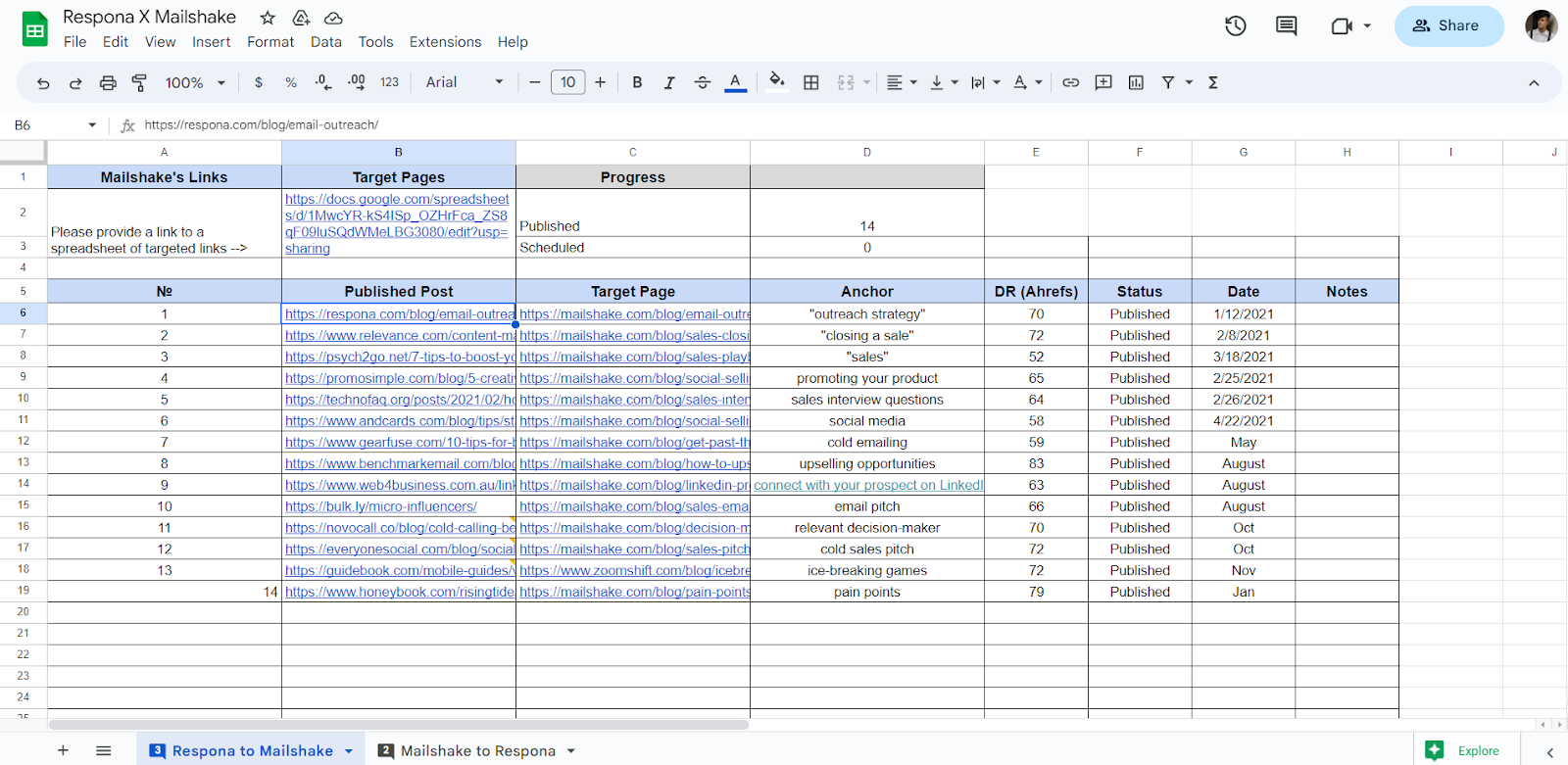
Let’s explore the advantages of fostering enduring link building relationships and how they can elevate your SEO game:
- Long-term collaborations are built upon a foundation of trust and credibility. By consistently delivering high-quality content and maintaining open communication, you forge strong bonds with your link building partners, making them more likely to link back to your content in the future and strengthen your link profile.
- A lasting partnership is a two-way street, where both parties benefit from each other’s success. By supporting your collaborator’s content and linking to their site when relevant, you encourage them to do the same, creating a symbiotic relationship that strengthens both of your link building efforts.
- With a network of established collaborators, your blogger outreach process becomes much more efficient, as you no longer need to spend as much time searching for and pitching to new prospects.
- Long-term collaborations open doors to a wide array of high quality link building opportunities, such as guest posting, content collaborations, joint webinars, or even cross-promotional campaigns. These varied avenues not only help you obtain backlinks from new domains but also expand your brand’s reach and visibility.
- By maintaining ongoing communication with your link building partners, you gain valuable insights into their strategies, successes, and challenges. This continuous learning process enables you to refine your own link building tactics, stay ahead of the curve, and adapt to the ever-changing SEO landscape.
In essence, turning one-time link building exchanges into long-term collaborations is like planting the seeds of a flourishing garden, where each thriving connection bears fruit in the form of valuable backlinks and enhanced SEO performance.
By investing time and effort into cultivating these enduring relationships, you’ll reap the rewards of a more efficient, effective, and sustainable link building effort.
Join Link Building Communities
Imagine embarking on a link building quest, armed with the collective wisdom, support, and camaraderie of fellow travelers, all united by a common goal – acquiring valuable backlinks and boosting search engine optimization.
This is the essence of link building communities on social media platforms and Slack, such as Link Building HQ.
By joining these hubs, you can tap into a wealth of resources, connections, and opportunities that can significantly enhance the efficiency of your link building outreach.
Link building communities serve as a treasure trove of information, with members actively sharing tips, strategies, and insights into the ever-evolving world of link building.
By engaging in these discussions, you can stay up-to-date with the latest trends and techniques, ensuring that your outreach remains relevant and effective.
They are also brimming with like-minded professionals seeking link building collaborations.
By connecting with fellow members, you can identify potential partners, exchange guest posts, or even participate in joint ventures, streamlining your outreach process and increasing your chances of securing valuable backlinks.
As the old saying goes, “your network is your net worth.” By actively participating in link building communities, you can forge connections with industry peers, influencers, and potential partners, ultimately expanding your professional network and unlocking new link building opportunities.
Filter Your Prospects
To find the most valuable allies for your quest, it’s essential to filter your link building prospects and identify the ones that truly align with your goals and offer the most SEO benefits.
Just as a skilled explorer carefully selects the most rewarding path, a savvy link builder knows the importance of filtering prospects based on key SEO metrics.
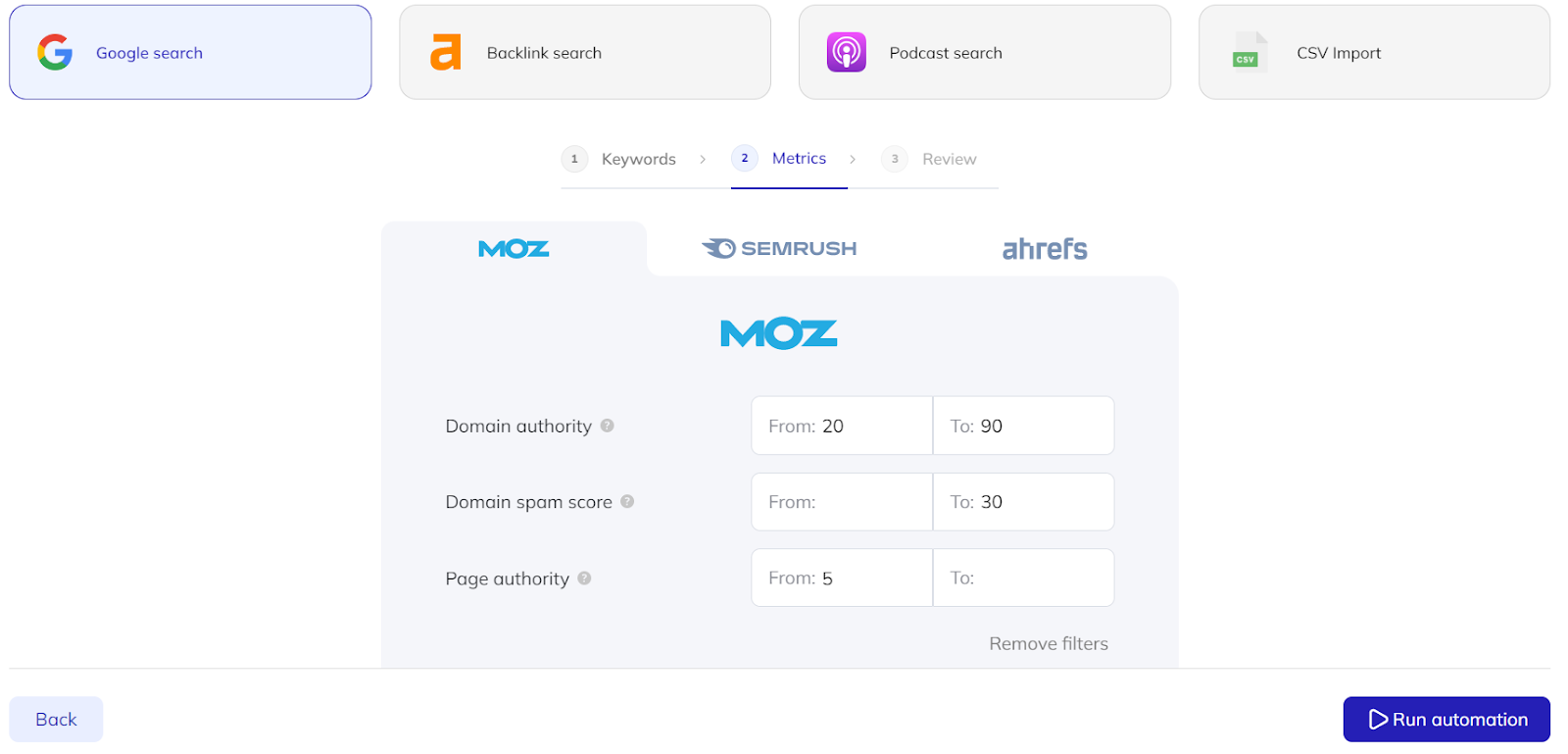
By being selective and focusing on high-quality prospects, you’ll not only improve the efficiency and effectiveness of your link building campaigns but also avoid potential pitfalls, such as spammy backlinks or association with low-quality sites.
So, let’s unveil some common SEO metrics that’ll help you filter your link building prospects:
- Organic traffic: The volume of organic traffic a prospect’s website receives is a strong indicator of its visibility, popularity, and authority in its niche. By acquiring backlinks from sites with high organic traffic, you stand a better chance of driving more traffic to your own site and improving your search engine rankings.
- Domain Authority (DA): Developed by Moz, Domain Authority is a widely used metric that predicts a website’s ranking potential on a scale of 0-100, with higher scores indicating greater authority. Targeting prospects with a higher DA increases the likelihood of obtaining more valuable backlinks, which in turn, strengthens your site’s authority and SEO performance.
- Spam Score: Another Moz metric, Spam Score evaluates the likelihood of a website being penalized by search engines based on various factors, such as low-quality content, excessive ads, or manipulative link practices. To safeguard your own site’s reputation and rankings, it’s crucial to avoid partnering with websites that have a high Spam Score.
- Relevance: Ensuring that a prospect’s website is relevant to your niche is critical in filtering your link building targets. Obtaining backlinks from topically related sites not only signals to search engines that your content is authoritative and valuable but also helps attract a more engaged audience.
- Social engagement: A prospect’s social media presence and engagement can serve as an additional metric to gauge its influence, reach, and credibility. High levels of social engagement can indicate that a website’s content resonates with its audience, making it a potentially valuable link building partner.
By filtering your link building prospects using these SEO metrics, you’ll be able to traverse the link building forest with confidence, knowing that your efforts are focused on the most rewarding and impactful partnerships. So, sharpen your filtering skills and set forth on your quest for high-quality backlinks and SEO success.
Maintain Your Email Domain
To ensure smooth sailing and successful link building, it’s crucial to keep your email domain in shipshape condition, for a healthy domain directly impacts your email deliverability and, ultimately, the efficiency of your outreach efforts.
Maintaining a healthy email domain is paramount for the following reasons:
- A healthy email domain significantly increases the likelihood of your outreach emails reaching their intended recipients’ inboxes, rather than being filtered into spam folders or blocked entirely. High deliverability rates are essential for boosting the efficiency and effectiveness of your link building campaigns.
- Maintaining a healthy domain signals to email service providers (and recipients) that you’re a legitimate sender who follows best email practices. This increased trust and credibility can improve your email open rates and response rates, both critical factors in successful link building outreach.
- Reduced bounce rates: Ensuring your email domain is healthy helps minimize bounce rates, which occur when your emails are returned as undeliverable. High bounce rates can harm your sender reputation and lead to even lower deliverability rates in the future.
- Protection from blacklisting: A healthy email domain helps you avoid being blacklisted by email service providers, which can occur when your domain is associated with spam or other malicious activities. Being blacklisted can significantly hinder your email deliverability, severely impacting the success of your link building outreach.
We will be looking at some practices that have some impact on your domain reputation further down in the content, but in this section, let’s focus on two things with the biggest impact: email warmup and domain authentication.
Warmup
Email warmup is the gradual process of building your email sender reputation by sending low volumes of emails initially and incrementally increasing the daily send limit over time. This strategy helps email service providers (ESPs) recognize and trust your email domain, ultimately improving your email deliverability for cold outreach campaigns.
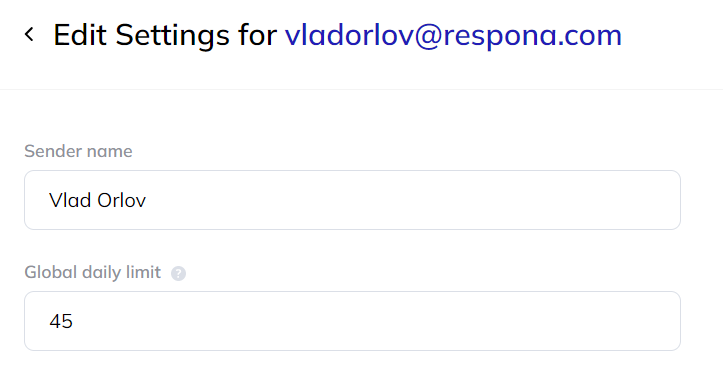
The importance of email warmup for cold outreach lies in its ability to:
- Establish sender credibility
Warming up your email allows ESPs to recognize you as a legitimate and responsible sender, which is crucial for maintaining a healthy sender reputation and increasing your email deliverability rates.
- Minimize the risk of being marked as spam
Sending a high volume of cold emails at once can raise red flags for ESPs, resulting in your emails being flagged as spam or even leading to domain blacklisting. A gradual warmup process helps avoid these potential pitfalls.
- Optimize email deliverability
As you warm up your email and build a positive sender reputation, you’ll experience higher deliverability rates, ensuring that your cold outreach emails reach their intended recipients’ inboxes and increasing your chances of a successful campaign.
To warm up your emails effectively, follow these steps:
- Begin by sending a small number of emails per day (e.g., 10-20), targeting people with whom you have an existing relationship, as they are more likely to open and engage with your messages.
- Over the course of several weeks, slowly increase your daily email send limit. For instance, you can raise the daily limit by 5-10 emails each week until you reach your desired volume (around 50 emails per day or more, depending on your campaign requirements).
- Keep a close eye on key email metrics, such as open rates, click-through rates, and response rates, to ensure that your warmup process is proceeding smoothly and effectively. High engagement rates signal to ESPs that your emails are well-received and trustworthy.
- As you warm up your email, it’s crucial to maintain good email practices, such as personalizing your messages, avoiding spammy language, and promptly addressing any bounced emails or unsubscribes.
Authentication
To authenticate your email domain, three primary mechanisms come into play: DKIM (DomainKeys Identified Mail), DMARC (Domain-based Message Authentication, Reporting, and Conformance), and SPF (Sender Policy Framework).
Let’s delve into how each of these mechanisms works.
DKIM is a cryptographic technique that adds a digital signature to your email, verifying that it originates from your domain and hasn’t been tampered with during transit.
When an email is sent, the sending server attaches a unique DKIM signature to the message header.
Upon receiving the email, the recipient’s server checks this signature against the public DKIM key in your domain’s DNS records. A successful match confirms the email’s authenticity and integrity.
DMARC builds upon DKIM and SPF by providing a set of policies that instruct ESPs on how to handle emails that fail authentication checks.
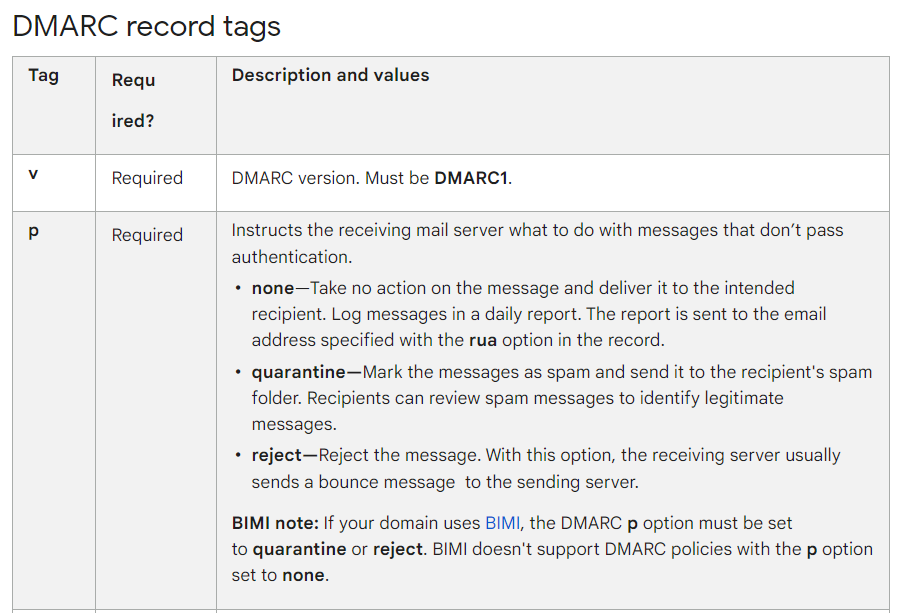
With DMARC, you can specify whether to monitor, quarantine, or reject unauthenticated emails, and you can receive reports on these actions, allowing you to monitor and address potential deliverability or security issues.
By implementing DMARC, you enhance your email security and demonstrate to ESPs that you’re proactive in protecting your domain from fraudulent activities.
SPF is a validation system that helps ESPs verify that an incoming email originates from a server authorized by your domain.
To implement SPF, you create a DNS record that lists all the IP addresses and servers permitted to send emails on behalf of your domain.
When a recipient’s server receives an email claiming to be from your domain, it checks the sending server’s IP address against your SPF record.
If there’s a match, the email passes the SPF check, indicating its legitimacy.
Distribute Your Outreach Over Several Sender Emails
To maximize the success of your campaign and avoid triggering spam filters, it’s crucial to spread out your link building efforts over several emails, rather than launching a massive assault in one go.
Sending large volumes of emails at once can raise red flags for email service providers (ESPs), who may perceive your campaign as spammy or overly aggressive.
By spreading out your link building emails, you demonstrate responsible sending behavior, which helps maintain a healthy sender reputation and improves your email deliverability rates.
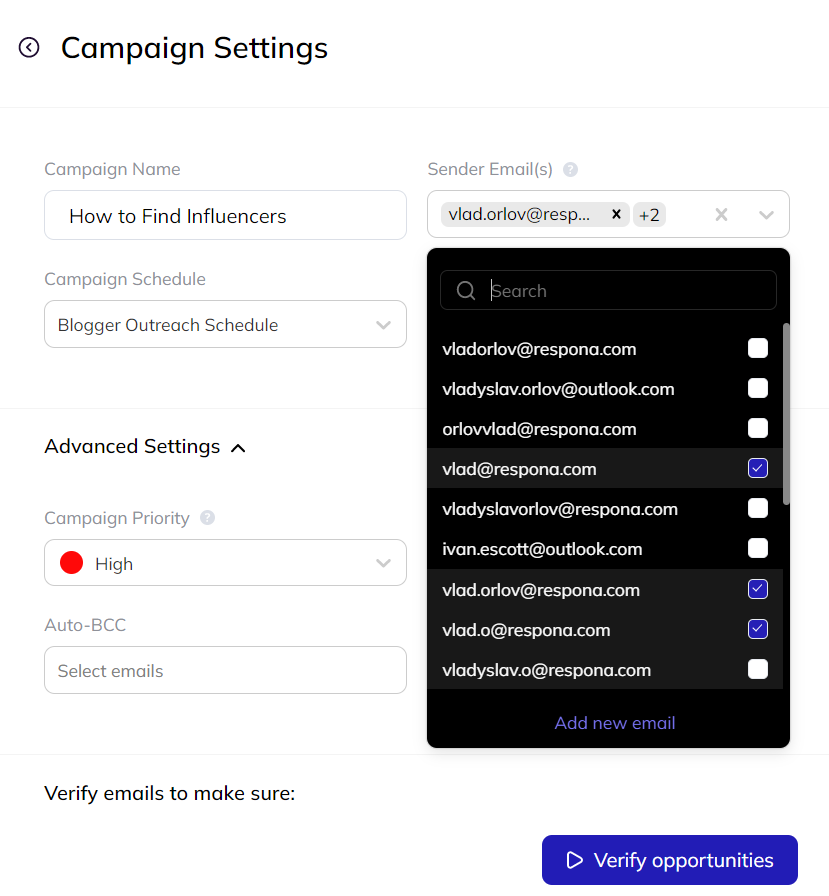
By breaking down your link building campaign into smaller, more manageable segments, you can also better tailor and personalize your email content for each recipient.
This targeted approach not only increases the likelihood of your emails being opened and engaged with but also demonstrates your commitment to providing value, rather than merely seeking backlinks.
In addition, spreading your link building emails over time allows you to strike the right balance between maintaining consistent outreach and avoiding overwhelming your recipients with too many emails. This optimized email frequency helps nurture relationships with potential link building partners, increasing the chances of securing valuable backlinks.
Finally, spreading out your outreach enables you to closely monitor your email metrics, such as open rates, click-through rates, and response rates. This real-time feedback allows you to identify and address any issues, and fine-tune your campaign for optimal success.
Check for Spam Words
Spam words are the number 1 cause for emails landing in the spam foder.
Yes, you may not be using the obvious “buy now”, “free”, or “follow this link” in your messaging, but it’s still a good idea to run your pitches through a spam word checker before hitting “send”.
It only takes a few seconds, but this simple act can make the difference between triggering a spam filter and making it to the top of your recipient’s inbox.
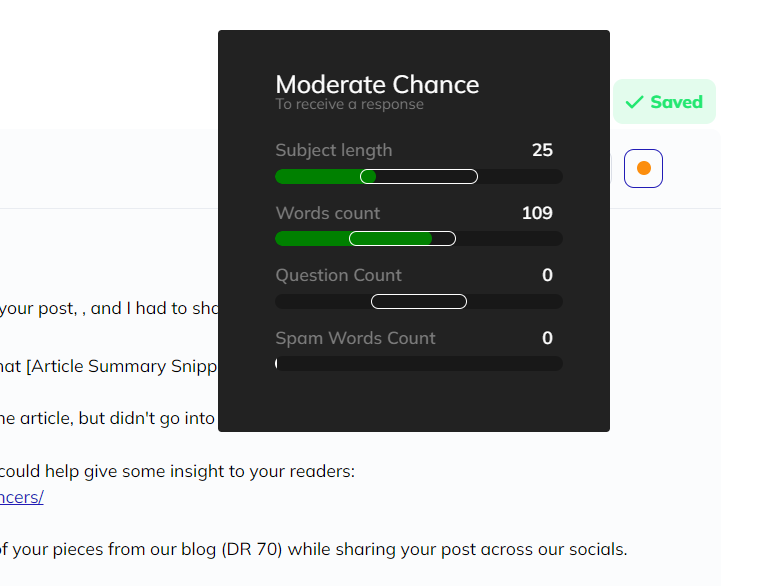
In fact, it doesn’t only check your emails for spam words, it also estimates how likely you are to elicit a response with your current pitch, based on your:
- Subject length
- Word count
- Question count
Modern spam filters are trained to spot thousands of spam word combinations, and even phrases that may not seem spammy at first may trigger them, so running a quick spam word check should absolutely be part of your link building routine.
Diversify Your Link Building Strategies
To get the most out of your link building efforts, it’s best to utilize a variety of approaches.
In this section, we will look at the most effective (in our opinion) link building strategies and what their premises are.
However, we won’t go too in-depth into each one as we already have step-by-step tutorials for carrying out every strategy in our Outreach Strategy Hub.
Link Insertion
The premise of the link insertion strategy is to identify relevant articles that mention your target keyword and have the potential to include a quality link to your website, which can improve your site’s search engine ranking and overall visibility.
This strategy involves leveraging advanced search operators, such as:
- “inurl:blog”: This operator retrieves results that have the word “blog” in the URL, indicating that the content is likely part of a blog.
- “intitle:”: This operator searches for articles that have your target keyword in the title, ensuring that the content is relevant to your niche.
- “intext:”: This operator looks for instances where your target keyword is mentioned within the body of the content, further confirming the relevance of the article.
Guest Posting
The premise of the guest posting strategy is to create and submit high-quality, original content to other websites or blogs within your niche or industry with the primary goal of obtaining backlinks to your own website. In exchange for providing valuable content, you are usually allowed to include one or more links back to your site within the guest post or author bio.
The easiest way to find guest posting opportunities is by searching for websites that have a “write for us” page.
Competitor Backlinks (Skyscraper Technique)
The premise of the Skyscraper link building technique is to identify high-performing content within your niche or industry, create an upgraded or improved version of that content, and then reach out to websites that have linked to the original piece, encouraging them to link to your superior content instead.
Developed by Brian Dean of Backlinko, this technique aims to leverage the popularity and success of existing content to build valuable backlinks and improve your website’s search engine ranking.
Traditionally, inbound link monitoring tools such as Ahrefs and Semrush are used to find skyscraper link building opportunities.
Broken Link Building
Broken link building is a link building technique that involves finding broken or dead links on websites, creating or identifying relevant content on your website that can replace the broken link, and then reaching out to the site owner or editor to suggest replacing the broken link with your working link.
This strategy benefits both parties – the site owner gets to fix a broken link and improve user experience, while you gain a valuable backlink to your site, which can improve your search engine ranking and online visibility.
Here’s how to find broken link building opportunities:
- Start by compiling a list of websites within your niche or industry that are relevant to your target keywords and have good domain authority. These websites should be potential sources of valuable backlinks.
- Utilize an SEO tool like Ahrefs, Semrush, or Broken Link Checker to scan the target websites for broken or dead links. These tools can crawl the backlink profile of any resource and identify any links that return a 404 error or are otherwise non-functional.
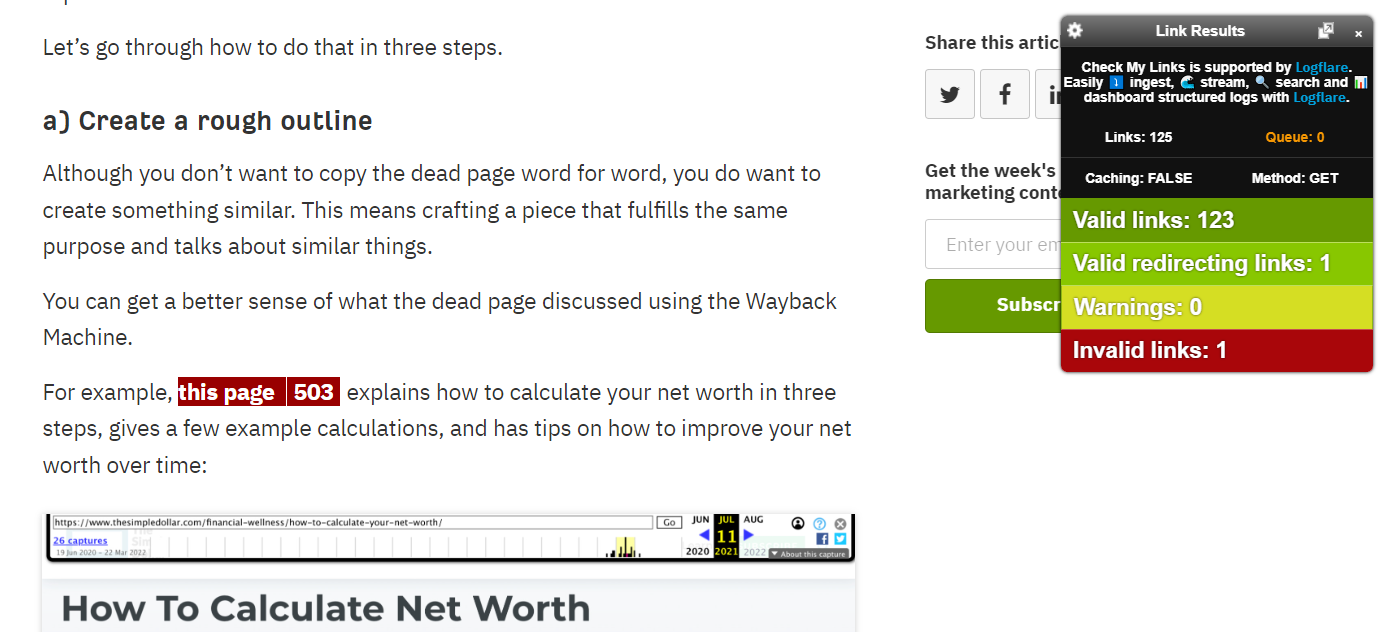
- Review the list of broken links generated by the tools and determine if any are relevant to your website or the content you have created. Look for broken links that can be replaced with content on your website, or identify topics where youcan create new, relevant content to replace the broken link.
- If you already have high quality content related to the broken link, ensure it is high-quality and up-to-date. If you don’t have relevant content, consider creating a new piece that is valuable, informative, and applicable to the broken link’s context.
- Reach out to website owners or editors: Craft a personalized email to the website owner or editor, informing them of the broken link you’ve found on their site. Offer your relevant content as a replacement for the broken link and explain how it would benefit their readers. Be polite, professional, and emphasize the value your content can provide.
Listicle Posts
The listicle post link building strategy involves identifying popular list-based articles (such as “Top 10” or “Best of” articles) within your niche or industry and reaching out to the authors or website owners for a link placement to your site.
The goal is to convince them to include your product, service, or great content as a valuable addition to their list, providing you with a valuable backlink and exposure to their audience.
Again, for finding these opportunities, the “intitle:” search operator comes in handy.
More specifically, the following variations:
- Intitle:”top x”
- Intitle:”x best”
- And other common phrases included in listicle article titles
This is the ultimate link building strategy in 2026 as it not only impacts your visibility across organic channels, but also gets you cited by answer engines.
Unlinked Mentions
The unlinked mentions link-building strategy involves identifying instances where your brand, product, service, or content is mentioned on a website without an accompanying link back to your site.
The goal is to reach out to the website owner or author and request that they add a link to your site, turning the unlinked mention into a valuable backlink. This strategy works especially well since the person has already mentioned you, all they need to do is attach a hyperlink to it.
- Use tools like Google Alerts, Mention, or Brand24 to monitor mentions of your brand, product, service, or content on various websites, forums, or social media platforms. Set up alerts for your target keywords or brand name to receive notifications when they are mentioned online.
- Go through the mentions you’ve identified and determine which ones do not have a link back to your site. Ensure that these mentions are on relevant, high-quality websites with good domain authority, as these will provide the most valuable backlinks.
- Craft a personalized email to the website owner or author, thanking them for mentioning your brand, product, service, or content. Politely request that they consider adding a link back to your site, explaining how it would benefit their readers by providing additional context or valuable resources. Be professional, courteous, and emphasize the value your website can offer to their audience.
- To increase the likelihood of securing a link, consider offering additional value in your outreach, such as providing exclusive content, expert insights, or useful resources that the website owner can use to enhance their content.
- If you don’t receive a response to your initial outreach, consider sending a follow-up email after a reasonable period (e.g., 1-2 weeks). Remain polite and professional, and reiterate your request and the value your link can provide.
Switch Up Your Templates
Switching up your link building templates is a brilliant strategy to keep your approach fresh, engaging, and successful.
In a saturated digital landscape, where recipients are bombarded with countless outreach emails, using unique and varied templates helps you stand out from the competition, drawing attention to your content and increasing the likelihood of securing valuable backlinks.
As your audience and their preferences change over time, your link building templates should adapt accordingly. Periodically updating your templates ensures that your outreach remains relevant, engaging, and tailored to your target recipients’ needs and interests.
Sticking to the same templates can make your outreach feel stale and repetitive, both for you and your recipients. By switching up your templates, you infuse your emails with a fresh and authentic voice, which can lead to better open and response rates.
Regularly updating your link building templates also allows you to experiment with various approaches, formats, and messaging styles.
This process of testing and optimization enables you to identify the most effective strategies for your link building campaigns and continuously refine your approach.
Outsource!
Here’s the honest truth: link building done well is a full-time job. Probably more than one full-time job, actually.
Between writing pitches, finding link prospects, qualifying them, running follow-ups, negotiating placements, and handling all the back-and-forth with website owners, it adds up fast. And if your team is small (or stretched thin), it’s usually the first thing that slips.
That’s where outsourcing comes in.
You can hire freelance link builders, work with an agency, or use a done-for-you link building tool. Each has tradeoffs. Freelancers are cheap but inconsistent. Agencies are pricier and often slow. A specialized service usually hits the sweet spot.
How Respona Helps
Respona is a done-for-you option built around contextual, editorial placements (no link farms, no PBNs).
The process is pretty straightforward:
You tell us what you’re trying to promote, which target queries you care about, your preferred anchor text, and the kind of sites you’d love to land on.
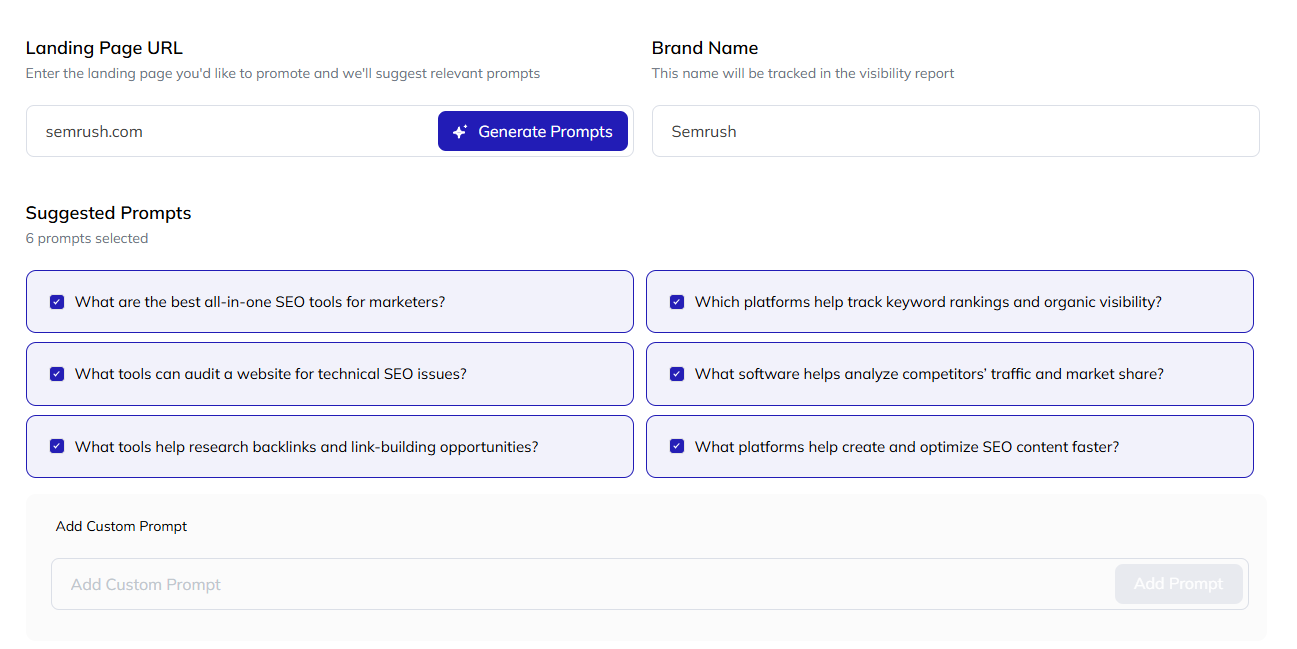
From there, our Campaigns feature brings up articles that already rank in search results and already show up in AI-generated answers for those queries.
So instead of guessing whether a placement will move the needle, you’re targeting the pages already shaping visibility in your space.
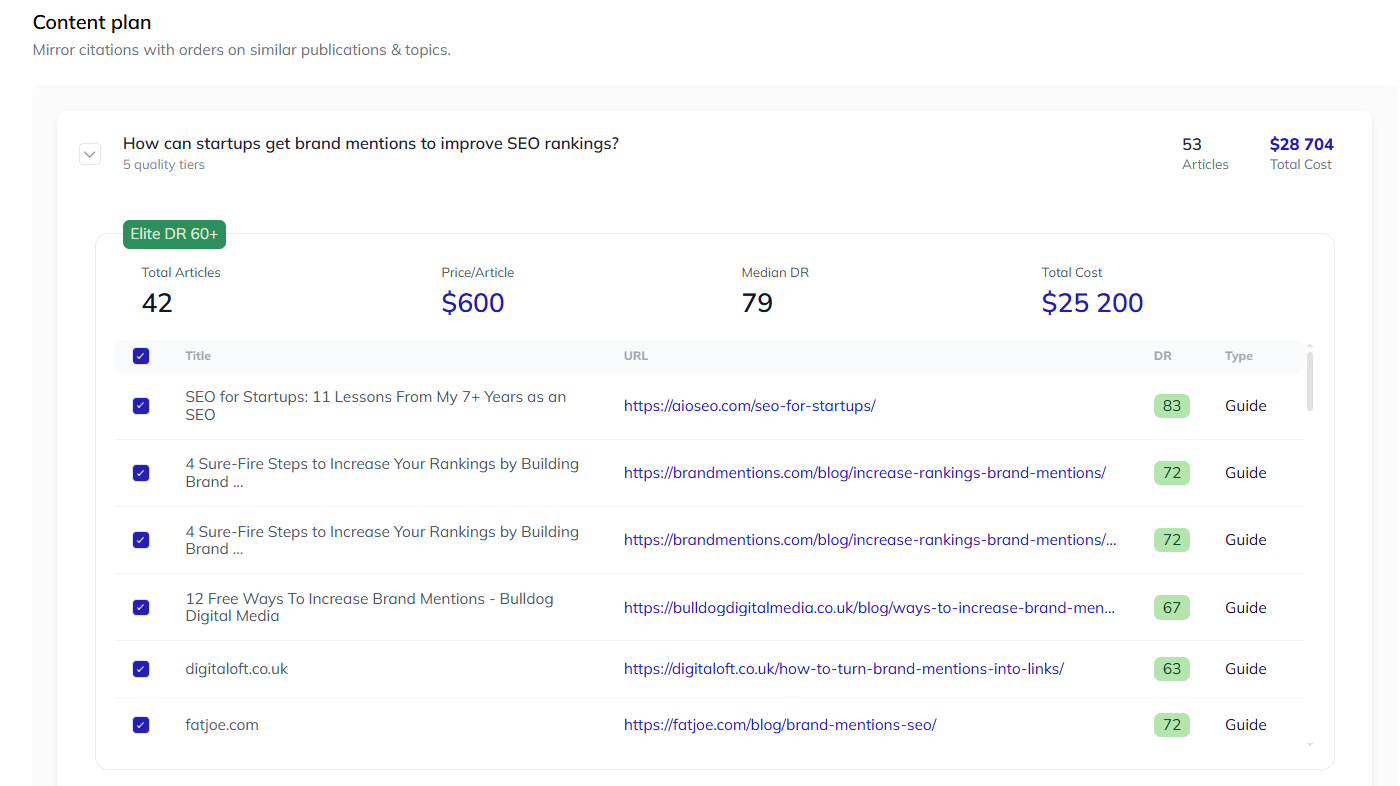
You review the opportunities, approve the ones you want, and we handle the rest: prospecting, blogger outreach, follow-ups, negotiations, and locking in the placement.
If you’d rather skip the review step entirely, you can just place orders for placements within whatever DR and traffic range works for you and let us run with it.
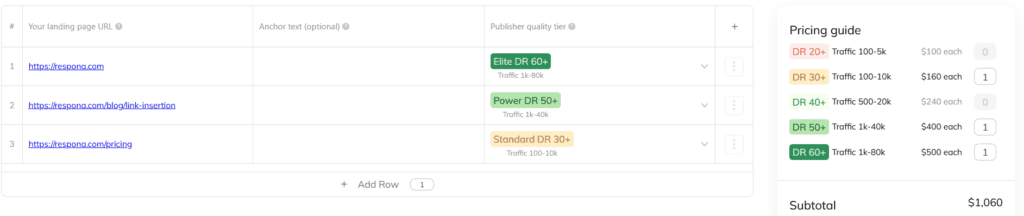
The goal is to get you high quality backlinks (link insertions, guest posts, listicle placements, resource pages) that actually move the needle for both SEO and AI search visibility. Not just a number on a spreadsheet.
And you can verify these links are driving growth by monitoring your visibility across your target queries over time.
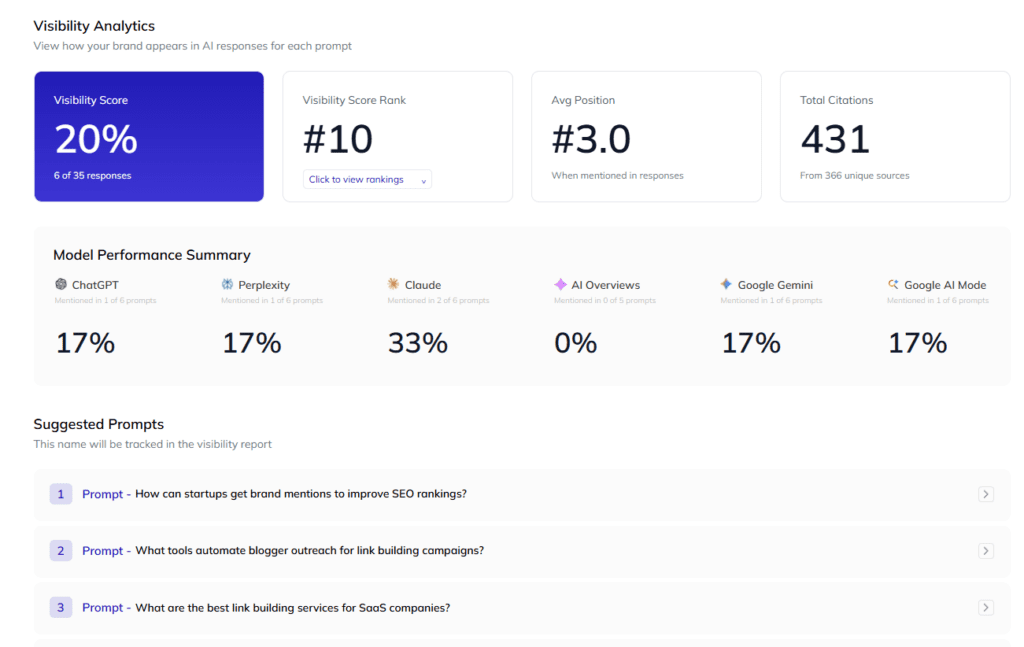
Pricing starts at $100 per placement, with bulk discounts available.
If running outreach internally isn’t working out, this is the easiest way to keep growing your backlink profile without hiring a whole team.
Link building cheat sheet
Now Over to You
Link building isn’t getting any easier in 2026. Between AI-generated content flooding the web, tighter spam filters, and Google rewarding only the cleanest backlink profiles, the bar keeps going up.
The 12 link building tips above will absolutely move the needle if you commit to them. But here’s the thing: most teams don’t have the bandwidth to do all of this consistently. Outreach gets deprioritized, prospects get forgotten, follow-ups don’t happen.
If that sounds familiar, let us handle it.
Place an order with Respona and our team will run your entire link building campaign for you. We’ll find the link prospects already ranking and getting cited in AI answers, pitch them, negotiate the placements, and report back on every backlink we earn.
You stay focused on the rest of your business. We’ll handle building links.
Place your order and we’ll get started.
Frequently Asked Questions (FAQ)
What is link building, and why is it important for SEO?
Link building is the process of acquiring backlinks from other websites to your own, which is essential for improving SEO as it increases your site’s domain authority and search engine rankings.
How do I identify and obtain high-quality backlinks for my website?
To identify and obtain high-quality backlinks, research relevant websites with good domain authority, create valuable content, and use various link-building strategies like guest posting, broken link building, and competitor backlinks, carrying them out through cold email outreach.
What are some common link building techniques and strategies used in the industry?
Common link-building techniques include guest posting, broken link building, Skyscraper technique, unlinked mentions, and leveraging listicles.
Can link building have negative effects on my website’s search engine rankings, and how can I avoid them?
Link building can negatively impact your website’s rankings if you acquire low-quality or spammy backlinks; avoid this by focusing on reputable websites and creating valuable, relevant content.
How long does it typically take to see the benefits of link building in terms of improved search engine rankings and increased organic traffic?
The benefits of link building, such as improved search engine rankings and increased organic traffic, typically become apparent within a few months, but it can vary depending on the strategy used and the competitiveness of your niche.
Here are the FAQs trimmed to match the existing length (one or two short sentences each).
What’s the difference between dofollow and nofollow links?
A dofollow link passes authority to your site and helps your rankings, while a nofollow link doesn’t. Both can drive traffic, but dofollow links are the ones that move the SEO needle.
What are linkable assets, and how do I create them?
Linkable assets are pieces of content built specifically to attract backlinks, such as original research, free tools, ultimate guides, or industry reports. Create them by finding a gap in your niche and filling it better than anyone else.
What is link reclamation, and is it worth doing?
Link reclamation is the process of recovering lost or broken backlinks pointing to your site, usually by asking the site owner to restore or update the link. It’s one of the highest-ROI link building tactics since the editorial relationship already exists.
How do resource pages fit into a link building strategy?
Resource pages are curated lists of helpful links on a specific topic, often hosted by universities or industry blogs. They make great link prospects because their whole purpose is to link out, so pitching a relevant guide or tool for inclusion is usually well received.
How do internal links affect my link building strategy?
Internal links spread the authority you earn from external backlinks across the rest of your site. Audit your internal linking structure before chasing more inbound links so authority flows where you want it.
Should I use anchor text with my target keyword every time?
No. A backlink profile heavy on exact-match anchor text looks unnatural and can trigger penalties, so mix branded, partial-match, generic, and exact-match anchors for a healthy spread.
Are SEO tools enough, or do I need a dedicated link building tool?
SEO tools like Ahrefs and Semrush are great for research, but they’re not built for running outreach campaigns. For actual execution at scale, a dedicated link building tool (or a done-for-you service) will save you significant time.
What are the most advanced link building strategies in 2026?
The most advanced strategies focus on targeting pages already cited by AI answer engines like ChatGPT and Perplexity, since those placements help both traditional SEO and AI search visibility. Digital PR and original data studies are also where the real leverage is.